VIFF ’10: Day Two


Of Love and Other Demons – An adaptation of a Gabriel García Márquez story that I haven’t read, Hilda Hidalgo’s first film is about a teenaged girl in 19th Century Cartagena, the daughter of a Marquis, who gets bit by a rabid dog.  Despite the Marquis’ disbelief, he is unable to prevent the local Catholic authorities from imprisoning her under suspicion of demonic possession (apparently the Devil works through rabies).  The priest assigned to examine her of course falls in love with her (she’s not a stunning beauty, but has a fabulous head of red hair, three feet long and shockingly clean for the 18th century) to the detriment of his ecclesiastical career.  More straightforward than I would expect from García Márquez, the film is essentially an ecofeminist parable about the evils of patriarchy, imperialism and the Church and its destructive effects on the environment (the girl is frequently seen communing with insects, and one of the reasons she’s suspected of being possessed is that she can speak the African languages of her family’s servants).  It does leave open the much more interesting possibility that the girl actually is possessed, with the devil using her to wreak havoc with the nobility and Catholic hierarchy in the later stages of the Spanish Empire.

Get Out of the Car/The Indian Boundary Line – A pair of shortish features, both exploring hidden elements in everyday geography.  Thomas Comerford’s The Indian Boundary Line is about a treaty line  running through what is now Chicago.  The line was supposed to establish the Northwestern limit of American expansion, leaving much of Western Illinois and Southeastern Wisconsin for the Indians.  The film is split into separate sections, each showing a part of the line as it is now (three parks, an intersection, a normal urban street) with accompanying voiceover (personal reminiscences, treaty language, bits of Little House on the Prairie).  For the most part it’s pretty interesting, though there’s a central section where the voiceover is a list of GPS coordinates that goes on interminably.  More fun is Thom Anderson’s Get Out of the Car, a tour of visual oddities in Los Angeles, with a particular focus on out of use billboards and giant murals of Jesus and the Virgin Mary.  The soundtrack is mostly older recordings that were made in LA, though occasionally we hear what appear to be passersby heckling Anderson as he films, which can be pretty funny.  Where The Indian Boundary Line shows the history that surrounds our everyday world, Get Out of the Car tries to highlight the beauty in the urban decay and ugliness we walk past every day.  I haven’t yet had the chance to see Anderson’s acclaimed Los Angeles Play Itself, but this only makes me want to that much more.

Poetry – This is the first Lee Changdong film I’ve seen, and I’m kind of mixed in my response to it.  On the one hand, it’s a wonderful character study of a 66 year old woman, raising her grandson and working part-time as the caretaker for an elderly man who takes a poetry class on a whim and struggles to find poetic inspiration in the world around her.  On the other hand, it’s the story of a grandmother who learns that her son is part of a group of kids who gang-raped a classmate until she killed herself, and is being pressured by the other boys father’s to come up with hush money for the girl’s parents.  I really like that first movie, the second seem unnecessarily exploitive, as if Lee thought audiences wouldn’t be interested enough in the grandmother’s story if there wasn’t some horribly hyperbolical sexual violence mixed in somewhere.  The unreality of that part of the film (not just in its setup but also its coincidence-driven plot mechanics) doesn’t necessarily undermine the rest of the film, but it is fairly distasteful.  The performance by Yun Junghee as the old woman is magnificent.

Icarus Under the Sun – A very low-budget film made by two Japanese women (one wrote and directed and stars, the other shot, directed and plays a supporting role) that’s a grungy, realist account of a young woman trying to find her way in Tokyo.  She gets a job at a mahjong parlor and befriends the eccentrics who work and hang out there: the blind ex-thief owner, the slightly crippled boy named after Alain Delon, the crazy woman who loves the blind owner, etc.  Of all the young adult coming of age films we’ve seen at the several festivals we’ve been to, this is bar far the most serious and probably also the most DIY.  The dreariness of the girl’s life (always in darkness, the various characters dislike of sunshine is a key motif) is almost oppressive.  In the end, she manages to escape into the daytime, but I don’t know that the catharsis is enough to compensate for the misery of the first 75 minutes of the film.  I needed some air.

VIFF ’10: Day One

We’re back at the Vancouver Film festival for the third year in a year and unlike the 08 and 09 festivals I’m going to not only try and write about the films we see before six months have passed, but day by day as we watch them. We’ll see how it goes. Anyway, we arrived in town this afternoon and made it to two films tonight.

Made in Dagenham – Sally Hawkins is already getting some Oscar buzz for her performance in this crowd-pleasing dramatization of a strike at a Ford plant in the UK in 1968.  The workers are the 187 women (out of 55,000 in the country) who sew the interiors of the cars together, and are classed as unskilled labor and make far less than comparable male workers.  The strike quickly becomes about equal pay for equal work, annoying every man in the country (except Bob Hoskins, ho helps the striking women out).  Hawkins is excellent as the leader of the strike, she manages to be both shy and fiery at the same time (and she deserved the Oscar a couple years ago for Happy-Go-Lucky, so even if this performance isn’t as singular as that one, I wouldn’t begrudge her any hardware she gets for it).   Miranda Richardson does a lot of funny yelling as the government minister who follows the strike from a distance, and Richard Schiff (from The West Wing) is appropriately menacing as Ford’s American representative.  Rosamund Pike, as the wife of one of the Ford execs his is nonetheless sympathetic to the cause gets the best speech in a film chock full of speeches, when she explains to Hawkins who her advanced degree from Cambridge somehow doesn’t keep her husband from treating her like she’s an idiot.  Cinematically, the film isn’t much to look at.  The draw here are the big performances and lefty reassurances.

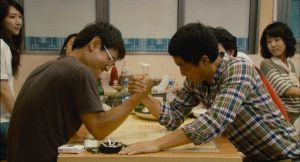
My Film and My Story – At the opposite end of the budget and profile level is this student group project from Korea.  Seven different kids at Konkuk University each directed one segment of this film about workers at a single-screen movie theatre on campus.  The theatre is in the final stages of renovation before reopening (assuming they can win the support of the government), and the newly hired staff and strange customers have a series of mostly comical adventures.  Two guys watch Happy Together and start to question their sexuality, a girl vehemently rebuffs the advances of a kid who talks about Lacan, another girl collects ticket stubs and nitpicks the temperature, but sleeps through the film and so on.  It all looks quite polished (with only one sequence standing out narratively and visually from the whole, its placement at the film’s midpoint is certainly intentional), though the sound is a little rough at times.  Best of all the sequences is one involving the manager of the theatre as she talks to her bartender about the cinema and why she loves it.  It’s not as ambitious as Tsai Ming-liang’s Goodbye, Dragon Inn, but it is more grounded in reality and the day-to-day life of the people who actually work in theatres, which doesn’t make for a transcendent film-going experience, but certainly a pleasant one.

Movie Roundup: VIFF ’09 Edition


About six months ago, I started this roundup of my trip to the Vancouver International Film Festival. I didn’t make it very far then, but since I actually didn’t watch any movies at all this week, I figure now’s as good a time as any to finish it. Plus, It’d be nice to have it done before I go the the San Francisco International Film Festival in a few weeks. Here’s a ranked account of what I saw:


1. Oxhide II – The best film I saw at the festival is this realtime chronicle of the director Liu Jiayin and her parents preparing, cooking and eating dumplings. It consists of only nine shots, with each setup spaced 45 degrees clockwise from the last. This structure doesn’t make the film feel quite as rigid as it sounds, as Liu varies the position of the camera vertically: table height, over the shoulder, on the floor, etc. It’s a film about a process, sure, but one that elevates everyday activities to the level of ritual and tradition. Not a documentary, or an exercise in verité “realism”, but a wholly scripted, formalized film that nevertheless feels as relaxed and effervescent as anything I’ve ever seen.

2. Like You Know It All – Hong Sang-soo’s films, at least the three I’ve seen (this along with Woman on the Beach and Woman is the Future of Man, are what would happen if Apichatpong Weerasethakul decided to make a series of Woody Allen movies. Like Allen, Hong’s films follow the romantic misadventures of a neurotic film director; like Apichatpong, his films have a bifurcated structure, wherein the first half sets up characters, situations and themes with the second half consisting of variations on those characters, situations and themes. In this one, Hong’s director first travels to a film festival, where he’s to serve on the jury. He’s rather indifferent to that task, however, preferring to drink with the staff and nurture a grudge against the younger director being honored with a festival retrospective. In the second, he travels to his old school to lecture, and finds the students are largely indifferent to him and his films. In both halves, the director attempts to hook up with the wife of one of his old friends. It’s lighter and funnier than Hong’s other films, and largely because of that, it’s my favorite.


3. Written By – For the second year in a row, Kelly Lin starred in one of the most entertaining films of the festival. Last year it was in Johnnie To’s Sparrow, this year it’s this film written by frequent To collaborators Wai Ka-fai and Au Kin-Yee, and directed by Wai. It’s a kind of post-modern family dramedy, where the father dies in a car accident and his wife and daughter bring him back to life by writing a novel wherein they die in the accident and he lives. But then, the father in the novel decides to write his own novel where he dies and his wife and daughter live, and realities begin to merge and fall apart, and it gets crazier from there. What makes it great, though, is the very real human emotion that underlies it all: a deep sense of grief and sadness balancing out those narrative games. It’s the kind of balance Charlie Kaufmann strives for and never quite achieves.
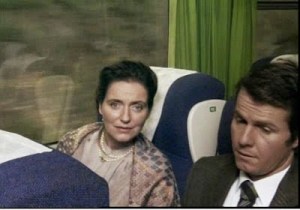

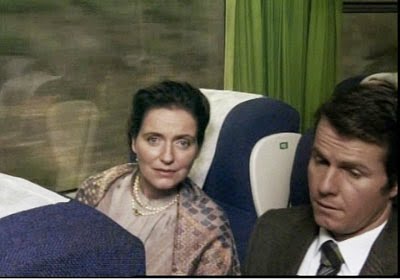
4. Eccentricities of a Blond-Hair Girl – This was my first film by Manoel de Oliveira, the 101 year old Portuguese filmmaker who’s the only director still working who started in silent films. It’s a remarkably elegant little film, one that feels like a perfect short story. It starts with an odd framing device, as a man recounts the tale to the woman next to him on the train (who strangely looks at us the whole time), setting up that this is most definitely a story being told. It’s about a man who becomes obsessed with a beautiful woman, defies his family to marry her, and comes to regret his decision in a more or less surprising way. The film has a relaxed style that’s totally charming and increasingly rare, and at a mere 65 minutes, it’s refreshingly short in a world where the most mediocre romantic comedy manages to be two hours long.


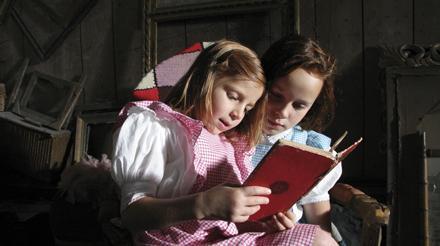
5. Bluebeard – Another first time experiencing a director for me is this film by Catherine Breillat, the descriptions of whose other films don’t sound appealing to me at all. But I really enjoyed this telling of the classic fairy tale about a rich giant who is rumored to kill his young wives. Like Eccentricities it’s a recited narrative, with the framing device being two young girls reading the story in their attic and occasionally (often hilariously) commenting upon it. The performances are uniformly terrific, with Marilou Lopes-Benites as the youngest, cruelest girl stealing the show. The medieval setting is wonderfully realized, especially considering the low budget the film had to have had. The ending though, I didn’t really care for: I thought it was cheap and unnecessarily mean, but my wife didn’t have a problem with it, so maybe I’m being too sensitive.


6. Rembrandt’s J’accuse – Peter Greenaway’s essay film about Rembrandt’s painting “The Night Watch” uses elements of his film Nightwatching as historical recreations to tell the story of the making of the painting and the hidden stories that lie within and behind it, which mainly amount to Rembrandt’s critique of the guys who commissioned the painting, accusing them of murder. The film doubles as a call for increasing public literacy of images, of teaching people how stories can be told without words, a concept that has obvious implications for cinema. Greenaway himself breathlessly narrates the film, and his angry, excitable delivery keeps things exciting, even when it amounts to little more than a history lesson in the politics of medieval Amsterdam. Like de Oliveira and Breillat, this was my first Greenaway film, and I really should see some more.


7. In Search of Beethoven – This documentary about the life of the great composer wouldn’t be anything special, a good story told well, were it not for its insistent focus on the music. So many documentaries focus on personal anecdotes and scandals as if that was what made their subjects great. This film is both smart and humble enough to know that Beethoven is interesting because of the music he wrote first and foremost, the rest (the early struggles, the deafness, his love life) is secondary. All the stories are there too, of course, but we not only get to hear the greatest hits (the Moonlight Sonata, the glorious 9th, etc) but also the less Baby Einsteinish material (like the demented late String Quartets) and director Phil Grabsky not only gives us extended performances of the works, he has his talking heads explain exactly what made them innovative and great. It’s almost certain that a person who knows more about classical music than I do wouldn’t be as excited by this, but as someone who’s both interested and ignorant, I thought it was fascinating.


8. The Headless Woman – Lucrecia Martel’s film has been making the festival rounds since 2008, and my feeling about it in the six months since I saw it has changed more than any other film on this list. María Onetto plays a wealthy woman who may or may not have hit and killed a child with her car. We never see it for sure, and she doesn’t seem to know either. How much of that is caused by the bump on her head and how much a coverup orchestrated by her well-connected family is unclear as well. The film raises a ton of fascinating possible allegorical meanings: the guilt of rich white people, the powerlessness of bourgeois women, the history of people being “disappeared” in Martel’s native Argentina, and so on. The problem is that while those ideas are lots of fun to talk about and bat around, the actual experience of watching the movie is kind of boring. I go back and forth with which aspect to emphasize.
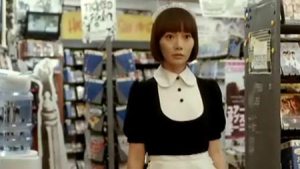

9. Air Doll – Like Bluebeard, a fine film that takes an unpleasant turn at the end. Directed by Kore-eda Hirokazu, it’s about an inflatable sex doll that comes to life. The story is a muted Pinocchio with the doll wandering the streets and learning about human life (including getting a job at a video store, which seems natural enough). The relaxed pace is nice, helped along by a cute score and some very pretty lyrical imagery and the makeup effects on Bae Doona, who plays the doll, are quite good. The ending more or less destroys the film’s mood of cock-eyed innocence and wonder, which is nice if you’re going for pointed satire or dark comedy, but I just found the tonal shift jarring.


10. Unmade Beds – This film by Alexis Dos Santos comes dangerously close to obnoxiousness, following as it does a pair of hipster immigrant kids as they try to sort out and get going with their lives. But the characters, and the young actors who play them (Fernando Tielve and Déborah François), are charming and heart-felt enough to overcome their generational stereotypeness. François in particular is quite adorable. It’s a touching movie that captures the kids of its moment in the way few mainstream films have managed to thus far.
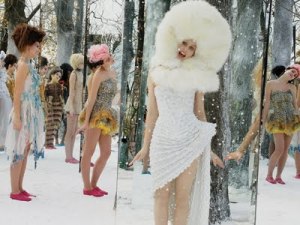

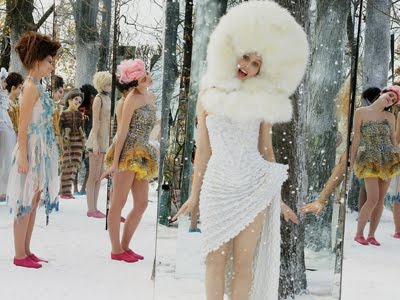
11. Face – The craziest Tsai Ming-liang film I’ve yet seen. Recurring star Lee Kang-sheng is off directing a movie in Paris, but is having idea and cast problems. It’s basically Tsai’s homage to Truffaut’s Day for Night, with a little 8 1/2 surreality thrown in for good measure. There’s even an amazing Wellesian Hall of Mirrors sequence in a snowy forest. One’s enjoyment of it is entirely dependent on your tolerance for watching Laetitia Casta slowly black out a window with electrical tape or writhe around as a vampire Salome. Me, I’d watch her do anything. The wife though, she hated this movie.


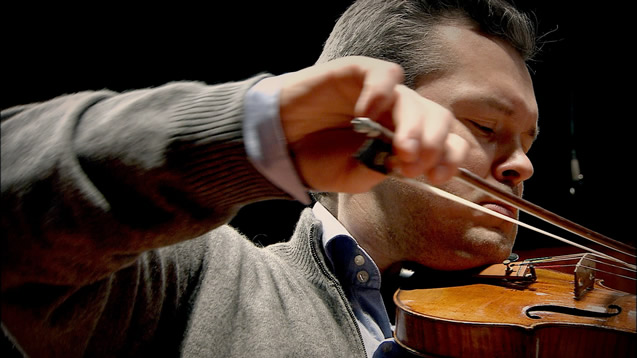
12. Pelléas and Mélisande: The Song of the Blind – A documentary about the staging of the Impressionist opera by Claude Debussy that manages to convey both the demented beauty of the music, the weird and rather confusing staging of the opera and the love the performers have for the music and their profession. It’s a cool insight to a world we don’t see much of, but doesn’t really do anything new with the form, certainly not compared to Greenaway’s Rembrandt doc, nor does it explore the music, or Debussy, as comprehensively as the Beethoven doc.


13. The Young Victoria – The only film we saw at the festival to get any kind of real theatrical release, which is unfortunate because while it’s a fine film for what it is, obviously I liked a lot of other movies a lot more. Emily Blunt is pretty terrific as the Queen-to-be, even if she’s way too pretty for the part. The film works well for the most part, focusing on Victoria’s romance with Albert and her learning how to wield what power she has, and there’s relatively little melodramatization of history (though a late sequence with Albert getting shot in an assassination stands out as particularly ridiculous). Still, pretty costumes, pretty sets, pretty people with pretty accents. Whee!
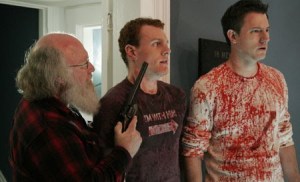

14. ZMD: Zombies of Mass Destruction – This low-budget horror film takes a scattershot approach to social commentary that tends toward the funny and entertaining, if not particularly mind-blowing side. A small town in the Pacific Northwest is overrun with zombies, which the locals alternately assume is God’s punishment for tolerating gay people or a plot by Islamic terrorists. This creates a few problems for our heros: a gay couple in town to visit one of their mothers and the local Iranian-American family. Humor both broad and gory ensues. It’s a fun movie that tries a bit too hard to be a cult classic.


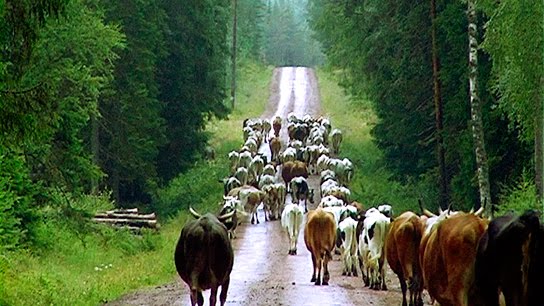
15. Way of Nature – This near-wordless documentary chronicles a year in the life of a Swedish farm. It’s kind of cool, but really not as interesting as it sounds. Nor is it particularly pretty to look at. It’s just a process film that is only fitfully fascinating. The nice moments it does have are pretty cool (yet another film showing sheep giving birth, must be some kind of zeitgeist thing).


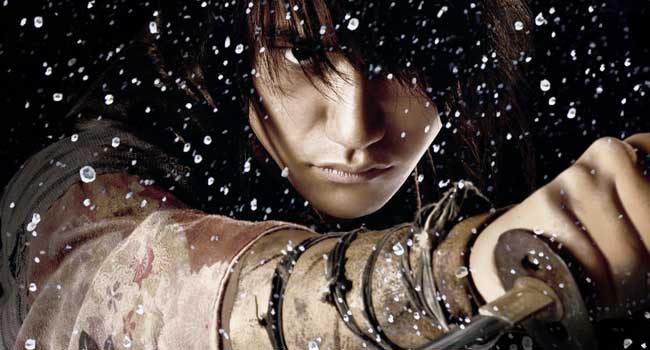
16. Kamui – A sweeping ninja epic that somehow manages to feel about five hours long. It’s not that it’s slow or anything, on the contrary the cutting is as fast as any Hollywood actioner, but rather it packs so much plot, and changes setting so many times that it feels less like one story than a five-part serial jammed together. Unfortunately, there isn’t much in the way of character to hold one’s interest. In tone and look it’s somewhat similar to Tony Jaa’s Ong Bak 2, but without the great stunt work, intensity or commitment to true thematic darkness. But, you know, it’s got ninjas.
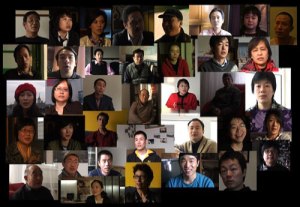

17. Queer China, ‘Comrade’ China – A documentary about LGBT folks in China that shines a light on an important subject, but does so in the cheapest way possible, filmically speaking. Really, it looks like a public access show, which gives it a certain samizdat charm but makes it really hard to look at. Which is too bad, because some of the stories are really interesting.
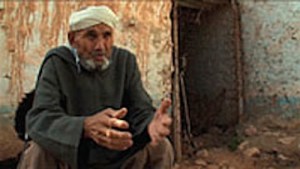

18. Moroccan Labyrinth – Normally, with any kind of film, fiction or non-, I like when the filmmakers refuse to pander to the audience by explaining every little detail of their story. However, this documentary about the history of Morocco’s relationship with its across-the-Strait neighbor Spain assumes way too much about its audiences familiarity with the subject, such that a term will be used for 30 minutes of the film before someone explains what it means, and then only obliquely and in another context. What I did get out of the film, though, was that it’s mainly a call for elderly Moroccans to get full military pensions from Spain because they fought for and helped win the Civil War for Franco and the Fascists. Well, sign me up for that cause. Ugh.


Movie Roundup: VIFF Edition

The wife and I are just back from the Vancouver International Film Festival, where we saw eleven films in four and a half days. It was my first festival ever, I believe she’d seen some films at the Seattle one before, but this was the first outside of our hometown. It was a lot of fun, I only wish I’d bought an umbrella.

Waltz With Bashir – Good, but I expected better from all the buzz around it. The animation is quite nice, not particularly smooth or realistic, but it works for the story. The music is great. At times, the movie feels like it’s trying to absolve Israelis of the atrocities in Lebanon by telling them it wasn’t their fault, that it was the Christians, that the Israelis were just young and didn’t know any better. There’s a fine line between coping with guilt over your actions and making excuses to yourself for yourself. I don’t know that the film is entirely successful at walking that line.

Sparrow – A tremendous amount of fun from director Johnnie To. It takes the style of the modern HK action film and makes a goofy, lighthearted near-musical out of a gang of pickpockets trying to rescue a pretty girl. The humor isn’t over the top in the way a lot of HK comedies I’ve seen from the 90s are, instead it feels closer to The Young Girls Of Rochefort (without the singing and dancing) than I’ve seen in a Chinese film. The wife liked it a lot too, its our favorite of the festival so far.

Of Time And The City – Terence Davies documentary about his hometown of Liverpool, feels like his attempt at a My Winnipeg (which I’ve yet to see). Over mostly archival footage he rectites poetry, muses on the passage of time, makes fun of the Queen and The Beatles and talks a bit about growing up gay and Catholic. The historical shots are fascinating, slice of life images of Liverpudlians going about their rather dull days surrounded by hideously ugly buildings. The narration is alright when Davies is musing, obnoxious when he’s being bitchy. The film breaks down near the end, where it had been chronicling the urban decay he grew up with, as soon as he comes out and declares atheism, his personal stoyr ends (sometime in the mid60s) and all of a sudden we’re transported from the rundown town of that era to the shiny new metropolis from the present. No explanation, no more personal history. It feels slapped together in the end. The wife disliked it a lot more than I did. At least I enjoyed the reallife documentary images. She just thought it was all pretty pointless.

Happy Go Lucky – I’m with what i think the consensus is: Hawkins is terrific, the film is a lot of fun. It’s an interesting study the MPDG character. She starts off as the annoying cliche, but as the film goes along, she becomes more and more an actual character as we see the stereotype deal with actual human problems (and not just movie problems). With this and Topsy-Turvy, I like Mike leigh a lot when he’s not trying to be depressing (ahem, Secrets & Lies).

The Rest Is Silence – Entertaining Romanian film about the making of that countries first silent feature. Very mainstream in style (and far away, I imagine, from those Romanian films getting raves at Cannes). There’s a twist at the end I didn’t like at all.

Sita Sings The Blues – Irreverent animated telling of the Ramayana, interspersed with some great songs of the 20s. Hilarious, the animation (in at least four different styles) is really cool, and a nice message the ways we use narrative to explain and cope with issues in our own lives, at how little this aspect of human nature has changed over the centuries. My wife’s favorite of the whole festival, it might be mine too.

Equation Of Love And Death – A well-made Chinese thriller with comic and romantic elements about a taxi driver kidnapped by inept drug runners while almost finding her long lost boyfriend. Zhou Xun is really terrific as the cab driver. It feels more Hong Kong than Chinese, but maybe I’ve only seen a lot of slow-paced, esoteric Chinese films. The wife liked this one a lot too.

Let The Right One In – Swedish adolescent vampire movie. A 12 year old outcast boy makes friends with the unnaturally pale girl next door. Some nice moments, but all-in-all, a rather depressing film. It’s alright, but I was never particularly excited about it.

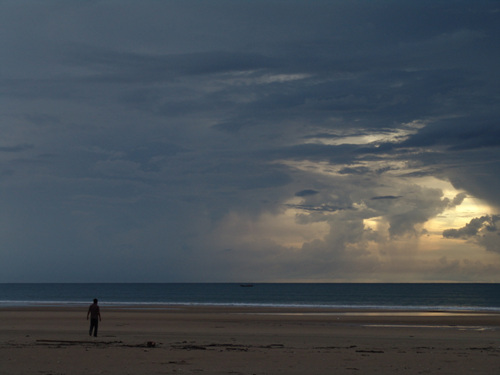
Wonderful Town – Thai movie about an architect helping to rebuild a coastal resort post-tsunami. He has an affair with the local hotel owner, scandalizing her brother and leading to some small town outrage. It occupies a kind of middle ground between Pen-Ek and Apichatpong, plot-wise. A beautiful film, but I’m a sucker for images of Thai beaches, especially with the weird grey-brown overcast light they seem to have. The wife thought it was pretty dull.

Good Cats – Ultra-low budget Chinese film (video) about a chauffeur for a petty gangster/real-estate developer. His boss’ deal with a local village is going badly, the his mentor is really depressed due to debt, his wife hates him for not being more successful, and their apartment appears to be trying to kill him. If that wasn’t enough, every 20 minutes or so, a Chinese metal band walks out of the scenery and sings/growls bizarre lyrics somewhat related to the story, Greek Chorus-style. Filmed in the single long motionless take style of Asian minimalism, but with an quite interesting use of depth. Not quite as ornate as Hou’s compositions, but still pretty cool. The wife really didn’t like this one. It was the rock band that put it over the top for her.

Rachel Getting Married – Anne Hathaway is good. I’m not good with acting, but she created what seemed like a real character for me, although it never really felt spontaneous. The whole film feels kind of planned out like that, if that makes any sense at all. It’s often funny, Rosemarie deWitt (from Mad Men is great as Rachel, there’s a weird guy who couldn’t look (and act) more like George Clooney if he tried (seriously, for while I thought Clooney might have dyed his hair and appeared unbilled, its creepy), I totally failed to spot Roger Corman, despite looking for him the whole movie. I liked it better than Margot as it was less sensationalistic (but still too much so for me), the wife prefers Margot (the message of which, she says and agrees with, is that “some people just shouldn’t have children”. She believes this is the message of Squid as well). The music is terrific.

All in all, I’d say:

1. Sita Sings The Blues
2. Sparrow
3. Wonderful Town
4. Rachel Getting Married
5. Happy Go Lucky
6. Equation Of Love And Death
7. Good Cats
8. Waltz With Bashir
9. The Rest Is Silence
10. Of Time And The City
11. Let the Right One In