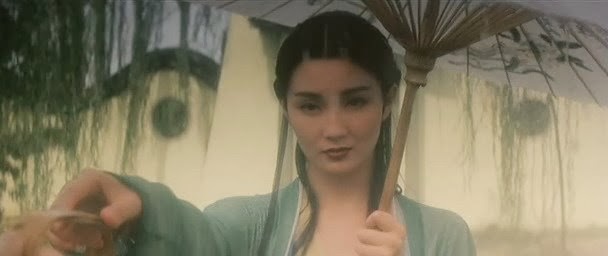
Running Out of Karma: Tsui Hark’s Peking Opera Blues

Running Out of Karma is my on-going series on Johnnie To and Hong Kong cinema. Here is an index.

I first saw this eight months ago, on my first night home after the birth of my second kid (I had rented it from Scarecrow Video and needed to watch it before returning it the next day). Needless to say, exhausted and occasionally interrupted, I remembered very little of the experience, other than that I liked the film quite a bit. Happily, a more clear-headed rewatch confirms that initial vague impression: this is a great movie, perhaps the best melding of director Tsui Hark’s twin impulses toward subversion and entertainment I’ve seen yet.

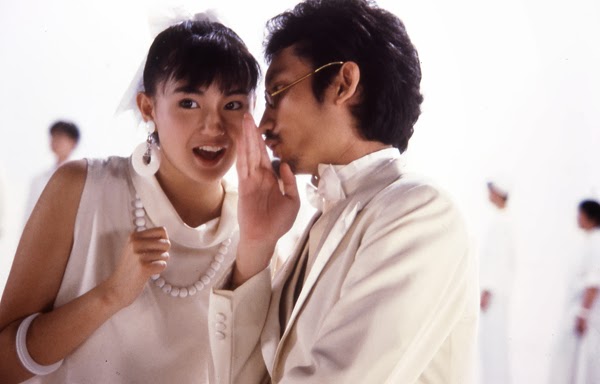
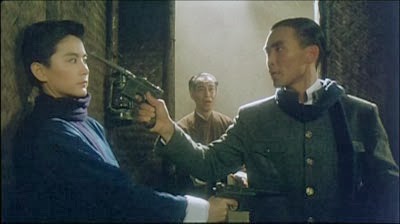
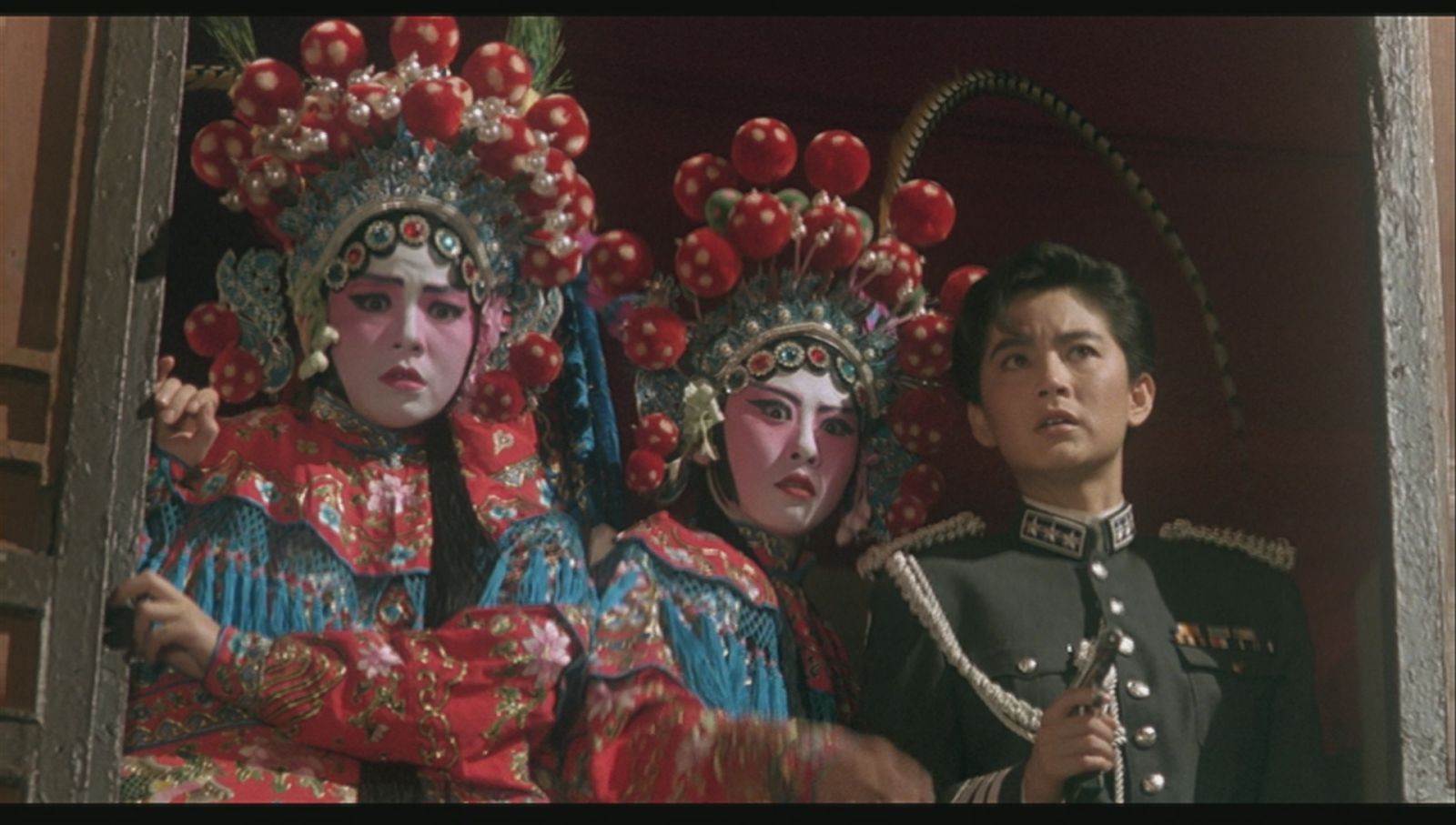
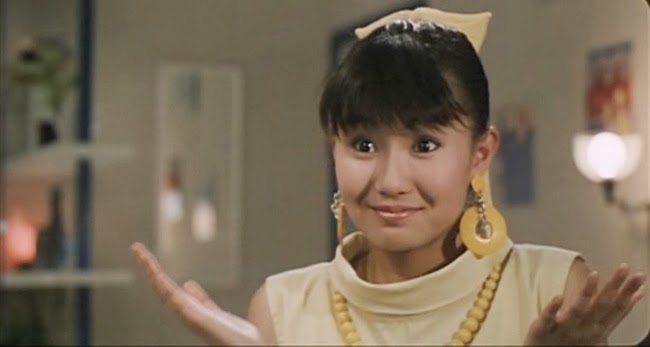
The setup follows two plotlines that will come together and intertwine with a third, each focused on a female protagonist. Brigitte Lin plays the daughter of a local warlord. She dresses like a man (having spent time studying in the West, and also because she’s Brigitte Lin) and is secretly a revolutionary. She and fellow revolutionary Mark Cheng (memorable as Louis Koo’s able assistant in Johnnie To’s Election 2) have to steal some MacGuffins from the general’s safe. Cherie Chung (from The Enigmatic Case) plays a musician who stole a box of jewelry from a soldier (Tung Man, played by Cheung Kwok Keung) in the chaos after the previous general was run out of town. Through a series of complications, the box ends up at a local theatre troupe, where Sally Yeh, daughter of the director (played by film director, actor, clock Wu Ma), wants very much to go on-stage but can’t because women aren’t allowed to perform. Lin and Cheng also find themselves at the troupe, as it’s the favored entertainment for the most powerful people in town, including the local police commander/gangster Liu, who becomes infatuated with the star actor, Fa.

That covers the first 20 minutes or so of the film, what follows is an elegantly structured twisting and deepening of the characters and their relations as the film progresses through a variety of suspense and comic set pieces. Ching Siu-tung choreographs some exceptional action scenes, usually featuring Mark Cheng jumping into or shooting a bunch of bad guys (the sequences at the theatre make ingenious use of the space’s multi-leveled design, with Cheng diving under and jumping over tables and benches, then on the main stage and up to the stage above it before swinging across the rafters and finally onto the rooftops), but there are also cunningly designed short sequences like the one David Bordwell describes early in Planet Hong Kong, where Mark and Cheung and Cherie hide in Sally’s bed from her father. The two father-daughter relationships are especially poignant, with Lin’s eyes exploring every aspect of her self-hatred for destroying the father she loves while opposing everything he stands for politically. It’s most remarkable to see her usually implacable image break down in anguish near the end of the film and even in happiness in a brief middle section where she gets drunk with the other girls. As well Wu Ma brings a note of knowing sadness to the theatre director father, a man who we took as a stock type gains nuance when we realize exactly why he so strictly keeps his daughter away from the stage: because if she catches the eye of the powerful, she’ll be forced to prostitute herself for the sake of the company (as Liu attempts with Fa). Complex as well are the film’s romantic relationships. Not so much the main one between Mark and Brigitte (if that even is a romance given Lin’s ambiguous orientation), but the all but unspoken one between Cheung (whose soldier I don’t think is even named in the screenplay) and Cherie, which exists almost entirely in the subtle looks he gives her of longing and disappointment at her more venal moments. That soldier, in fact, is one of the more fascinating characters in the film: a hapless guy, bullied by his fellows, who joins the revolutionaries by chance, falls in love with a girl and ends up saving the life of the heroine in a spectacular last minute rescue. There are few martial arts films I know of that have so many richly developed characters and relationships. The only one that even comes to mind in Tsui’s own epic Once Upon a Time in China.

The Peking Opera setting provides Tsui a world full of potential meaning, and he plays it up beautifully. The gender reversals required of the all-male stage echo the real-life reversals of Lin’s character, as she not only dresses like a man but takes on the traditional hero role (note that it’s the women who rescue the men time and again). When the other two women make it on stage, they become women impersonating men impersonating women, just as they more or less unwillingly take on the roles of revolutionaries. Eventually, the politics that undergirds the plot comes to be seen as a form of performance, with one general shuffling on stage as the other exits, the rebels scheme amounting to a lifting of a curtain (exposing certain warlords as conspiring with foreigners) all while the real power lurks behind the scenes, in the form of the black clad local police force. That the local commander is both bluntly evil and homosexual (as well as the ultra-effeminate depictions of the male actors) might be a cause for concern were it not for the sincere warmth with which Tsui depicts the homoerotic relations between the three women (Sally in particular seems infatuated with Brigitte). Instead, what we see is sexuality, with politics, as another kind of performance that serves to either mask our baser urges (the violence of the commander, the greed of Cherie) and/or complicate our nobler ones (the father-daughter relations, the multiple instances of self-sacrifice throughout the film, as each hero in turn faces death to save the others).

The result is a film not too far in spirit from the anarchic nihilism of Tsui’s earliest films, the burn-it-all youth drama Dangerous Encounters – First Kind or the cannibal comedy We’re Going to Eat You. But instead of merely exposing the world, politics, and human relations as a sham, Tsui instead finds a humane warmth at our core, while simultaneously celebrating the artistry of that disguising performance itself: Mark’s ultra-cool secret agent and Lin’s resolute stoicism, as well as the athleticism of the opera performers. The film opens with a series of close up shots of Peking Opera costumes and props and actors, scored to a traditional sounding song with a modern synthesizer beat. And it ends with a close-up from that same series of a performer in full make-up, laughing maniacally at us, or maybe with us.

Running Out of Karma: Cinema City and A Better Tomorrow 2

Running Out of Karma is my on-going series on Johnnie To and Hong Kong cinema. Here is an index.

After its formation in 1980 by actors Dean Shek, Karl Maka and Raymond Wong, the first film released by Hong Kong studio Cinema City & Films Co. was 1981’s Laughing Times, a comedy starring Shek as “the Chinese Charlie Chaplin” that appears to be some kind of mash-up of The Kid and City Lights (I haven’t seen it yet). It was directed by a young director who had spent the previous decade wandering from studio to studio with modest success with both action movies and comedies, John Woo. Also in 1981, Cinema City produced the fourth film, and the first hit, from director Tsui Hark, whose previous three features had helped launch the Hong Kong New Wave with their anarchic punk attitude and mixture of Western techniques, genres and themes with more traditional Hong Kong genres. All the Wrong Clues for the Right Solution was a clean break from all that, a comedy starring Karl Maka and Teddy Robin that Tsui called a “silly movie. All the movies I’ve done before were very serious and very depressing.” (That’s what it sounds like at least, I haven’t seen this one yet either. I have a lot of movies to watch and this project is growing bigger by the day.) For the next decade Cinema City provided a home for some of the best directors working in Hong Kong. Not just Woo and Tsui, but Ringo Lam, Eric Tsang (who launched the Aces Go Places series, some of the most popular films of the decade), Ronny Yu, Corey Yuen, Yuen Woo-ping, Lau Kar-leung, Clifton Ko and, of course, Johnnie To.

After Laughing Times, Woo made a few more comedies I also haven’t seen: the promising-looking if dubiously titled Plain Jane 3: Plain Jane to the Rescue, starring Josephine Siao and Ricky Hui; Run, Tiger Run, scripted by Raymond Wong and starring Teddy Robin and Bin Bin as characters named “Teddy Shit” and “Benny Shit” (Bin Bin also starred in the Andy Lau/Cynthia Rothrock film The Magic Crystal, a Wong Jing phenomenon that recently played at Scarecrow Video in Seattle); and The Time You Need A Friend, which is apparently a remake of The Sunshine Boys co-written with Raymond Wong. The last two of those were also produced by Cinema City. He also made an action film called Heroes Shed No Tears at Golden Harvest, which he was reportedly unhappy with and had shelved (it shares a title with an epic Chor Yuen fantasy film). Then, seemingly out of nowhere, Woo directed one of the greatest action films of all-time. A smash hit that made Chow Yun-fat a superstar and whose visual style revolutionized action cinema the world over while all but inventing a new genre, which I guess we’ve decided to call the “heroic bloodshed” film.

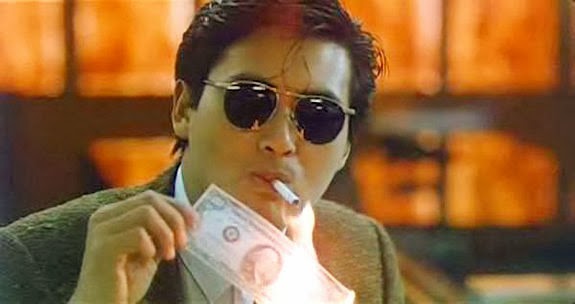
A Better Tomorrow is a wonder. Working on themes inherited from a variety of sources, including but not limited to the crime films of Jean-Pierre Melville, American gangster and noir films, Westerns and the wuxia films of Chang Cheh, with whom Woo had worked as an assistant director in the early 70s (and which are on display in an early form in his own Shaw Brothers swordplay film Last Hurrah for Chivalry from 1979), the story focuses on a gangster (played by Ti Lung, star of many a film by Chang and Chor) and his three “brothers”. The youngest is literally his brother, played by Leslie Cheung, who is training to become a cop and is unaware of Ti’s criminal life. The other two are his Triad brothers: Chow Yun-fat as Mark, a badass with cool sunglasses and an iconic jacket and Waise Lee as Shing, a new member of the gang. The film explores the shifting demands of loyalty and the warrior code, as Ti attempts to go straight and Mark becomes a laughing-stock after he is severely injured in a gun fight, leaving him with an awkward limp. This is contrasted with the unraveling familial bond between Cheung and Ti, cop and crook. Loyalty and honor, and evil as the lack of respect for those ideals (as Shing betrays his brothers for personal gain) is a thematic hallmark of the genre, as is the mirroring of hero and villain, the creation of equivalencies between characters on opposite sides of the law. Beyond the film’s contributions to fashion and visual style (which are considerable) it is this thematic scheme that forms the foundation for most of the crime films that follow in Hong Kong cinema, and in particular the work of Johnnie To, who continued to explore the genre’s complexities after Woo left for Hollywood in 1993.

A Better Tomorrow was a massive hit for Cinema City, Woo and the film’s producer and co-writer, Tsui Hark. As such, a sequel was inevitable. But almost immediately problems began. Chow Yun-fat’s character had died at the end of the first film, but a sequel without the man who’d become the biggest star in Hong Kong was unthinkable. So, of course, they decided Mark had a twin brother that nobody bothered to mention in the first film. The film is most horribly marred by a new character, a former Triad gone straight named Lung and played by Dean Shek. After Lung is betrayed by one of his underlings, Shek goes crazy and ends up in an insane asylum, where he is found by Mark’s twin brother Ken who nurses him back to health in tedious and endless scenes where Shek refuses to eat. Shek’s performance in these scenes is abysmally broad, so much so that it out-balances his later scenes, when he’s returned to his apparently bad motherfucker real self. The film’s most bizarre food-related scene, though, is a notorious one in which Ken, a restauranteur in New York, is shaken down by some mafia hoods and harangues them in badly dubbed English, with Chow giving his loudest DeNiro impression while the dubber channels Pacino. (The best part of the scene is at the end, where a cop shows up, sees Ken trying to force the mafia guys to eat some rice at gunpoint and tells the hoods, “You’d better eat it!”)

Woo and Tsui bitterly fought over the final cut of the film, though as far as I know many of the stories circulating about the film’s production are merely apocryphal, including this one from wikipedia that claims Cinema City’s editors cut each reel individually, with no supervision by Woo or Tsui or communication with each other. Tsui reportedly wanted the film to focus more on Shek, my only guess as to the reason for that is that he was trying to make a parody of the first film, while Woo wanted to play it as a straight epic. The first film is incredibly tight, its melodrama flowing logically from the restrictions imposed on the characters by their code, with the result that all the death and destruction seems to inevitably and tragically spring from one initial act of betrayal, from one code-violation. But the second film is meandering and unfocused, with bizarre twists of logic and character (especially almost every scene involving Leslie Cheung), with no flow or momentum to the story (multiple times a suspense scene will cut away to a 90 second scene with Cheung’s pregnant wife crying about something dumb, only to cut right back to another bit of suspense). My favorite bit of nonsense is the insertion of an unexplained character who makes what appear to be comic book or storyboard characters out of the people and events from the first film. Is this a thing? How does this guy know all that? And how exactly is he the (only) one who knows Mark has a twin brother?

Reportedly Woo has all but disowned the film, excepting its final shoot-out sequence, a spectacular showdown in which the three heroes take on a house full of bad guys that truly is something to be proud of. The action choreographer on the film was none other than Ching Siu-tung. I’m inclined to give Woo auteurial credit for the sequence, however, as it’s more in keeping with his approach to action than Ching or Tsui’s. Ching and Tsui are of the fast-cutting, impressionist school, well-adapted to fantasy films like Zu: Warriors from the Magic Mountain or Swordsman II, whereas Woo’s films are notable for their precise compositions, smoothness of motion and occasionally strikingly long-takes (best exemplified in what I still think is his finest film, 1992’s Hard-Boiled). Ching is always in rapid motion, with bits of movement cut together to create a dizzying effect where Woo is most known for his extensive use of slow-motion, not an abstraction of the body as it moves through space but a reification of it, lending his figures a quasi-religious significance. The final fight of A Better Tomorrow II leans more toward that Woo style than anything else. It’s capped by a beautiful showdown between Chow and a silent assassin (you know he’s a super-bad guy because he never says anything) that is perhaps the only scene in the film to depict anything like the moral complexity of the honor codes that drive the first film.

Ching Siu-tung would have a massive hit of his own in 1987 starring Leslie Cheung with A Chinese Ghost Story, produced by Tsui Hark for Cinema City and his own company, Film Workshop. Ching would continue to work with Tsui (as well as Johnnie To, a longtime friend going back to their time working in television) throughout the late 80s and early 90s. But Tsui and Woo, after making 1989’s The Killer, Woo’s breakthrough film in the West, split over the next A Better Tomorrow movie, a prequel which Tsui  took over and directed as A Better Tomorrow III: Love and Death in Saigon and Woo adapted into one of his greatest films, 1990’s Bullet in the Head with Tony Leung, Jacky Cheung and Simon Yam. Both Woo and Tsui moved to Hollywood in the early 90s, in anticipation of the colony’s handover to China. There they both directed films starring Jean-Claude Van Damme and found moderate success. Both are back working in Hong Kong, where Tsui has had a renaissance with CGI-fueled fantasy films like the Detective Dee series, while Woo’s last completed (solo) feature is the massive (and stunning) epic Red Cliff. Cinema City has produced only two films since 1991.

Running Out of Karma: The Enigmatic Case

Running Out of Karma is my on-going series on Johnnie To and Hong Kong cinema. Here is an index.

After getting his start working in television at Hong Kong’s TVB studio in the mid-1970s, Johnnie To made his feature debut in 1980 with a dark, stylish martial arts film made on the cheap for a small, leftist studio. Though quite similar in tone and style to the debut films of other Hong Kong New Wave directors made around this time, especially Tsui Hark’s The Butterfly Murders and Patrick Tam’s The Sword, The Enigmatic Case failed to find an audience and To retreated to television for another six years. To was a mere 25 years old when he made it (in 1980 Tsui was 29, Tam 32, Sammo Hung 28, Yuen Woo-ping 35, Jackie Chan 26, John Woo 34 , Ching Siu-tung 27 and Ann Hui 33. To is the same age as Ringo Lam, two years older than Stanley Kwan and three years older than Wong-Kar-wai) and it does seem like the film of an inexperienced director. Like a child learning to crawl, To in his debut demonstrates all the individual technical skills necessary to make an excellent film, but can’t quite coordinate them enough to send the film off in the proper direction.

Like The Butterfly Murders, The Enigmatic Case is a genre mashup of noir mystery tropes with the traditional Chinese wuxia film. Wuxia films typically revolve around “knight errant” figures, wandering swordsmen who don’t quite fit into the societies they defend and whose values they uphold. The genre traces its roots to classical Chinese literature, but in film form, at least, was heavily influenced by international action cinema, in particular the Hollywood Western (and its Italian variations) and the Japanese samurai film (particularly the work of Akira Kurosawa, with Yojimbo as the launch point for next fifty-plus years of action film). To’s film follows an adventure of a wandering swordsman named Lu Tien-chun, who becomes caught up in the theft of government gold and the murder of its thieves. Framed for the murders, he must find the real villain in order to clear his name. Told with a convoluted flashback structure, the narrative always seems less intelligible than it really is, as characters routinely appear before their backstory is made clear and occasionally are never really explained (after seeing it twice I’m still unsure of the nature of the man who helps Lu escape from prison, then returns near the end only to disappear again – just another wandering swordsman?)

Cherie Chung, in the first screen credit for one of the brighter Hong Kong stars of the 80s (Sammo Hung’s Winners & Sinners, Patrick Tam’s Cherie and To’s own The Eighth Happiness), plays a young woman Lu meets on his quest. They have a falling out when she discovers he’s the man wanted for killing her father, whom she is out to avenge. Lu protests his innocence and the two oscillate a few times: she likes him, she suspects him, and back again, with little rhyme or reason. Unlike most subsequent To heroines, Chung’s character lacks much of an internal life. She mostly just functions as a plot device, something for Lu to agonize over as he stares blankly into space (To really doesn’t get much out of star Damian Lau, who I recall as unremarkable in John Woo’s Last Hurrah for Chivalry and Tsui’s Zu: Warriors From the Magic Mountain). While the film begins with an extensive credit sequence music video, of a scarred Lu wandering the countryside looking mournful, getting into spectacular swordfights and seeing images of Cherie, the film itself never again captures that kind of romanticism. Aside from their meet cute, a cunningly staged sequence in a rainstorm that ends with them realizing they’ve been sheltering under the same tree (a visual trope To will revisit much later in his career: it’s the foundation of Turn Left, Turn Right, for example), their relationship remains almost entirely unexplored.

In To’s later films, the plots often have an air of inevitability, a clockwork precision founded in the nature of his characters and the whims of the universe. An intriguing nesting of chance with predestination, with the heroes in constant struggle against their fate, often to the point of rewriting the rules of reality itself. That’s not the case here, as Lu the protagonist is essentially a passive figure: he more or less wanders around aimlessly until the plot is revealed to him. (Compare to The Butterfly Murders, whose scholar-investigator hero is often on the sidelines of the action, but is always pushing forward to solve the mystery. When he solves it, he leaves and takes us with him, letting the resolution of the climactic fight scene play out entirely off-screen). When Lu does take action, he is always ineffective: the people he tries to protect tend to end up dead. This is what happens in the film’s final fight, and what I’d bet was the biggest reason for the film’s box office failure. The (final) villain holds Cherie with a sword to her throat, telling Lu to stand down or she’ll get it. Lu doesn’t believe him (“You ain’t that mean, ” he says) and the bad guy kills her. This darkness is very much in line with other New Wave wuxias (Tam’s The Sword is similarly nihilistic, as are some of Sammo Hung’s darker moments), and also To’s later films, especially the first series of gangster movies he produced at his Milkyway Image studio (Expect the Unexpected, The Longest Night, The Odd One Dies). But To at this point doesn’t have the visual artistry on display in Tam’s film (sub-Tarkovskian modernism melded with spectacular Ching Siu-tung co-ordinated stuntwork) or the charismatic and athletic superstars of Hung’s films. And those dark late-90s films very nearly bankrupted Milkyway anyway.

What The Enigmatic Case does show is that Johnnie To always had a keen eye for composition, as the most consistent thing about the film is that it’s almost always lovely to look at. He also shows a flair for innovation in the film’s finale, which features an extended, probably too-extended, experiment with step-printed slow motion, as Cherie attempts to get in-between Lu and her father as they duel. There are similarly choreographed fight scenes in earlier Hong Kong films (one in Lau Kar-leung’s Dirty Ho comes immediately to mind), but To’s slow-motion has an unusual abstracting effect on the action, an aesthetic approach that Wong Kar-wai would fully realize in Ashes of Time 15 years later. As well it shows a filmmaker very much in line with the sensibilities of his contemporaries. As the Hong Kong New Wave would mutate throughout the 1980s, with Tsui Hark softening his punkier edges for special effects and moguldom, John Woo moving from Shaw Brothers swordplay films to reinvent the gangster genre with his cycle of so-called “heroic bloodshed” films and Tam and Hui pursuing more traditionally high-class fare like Nomad or Boat People, Johnnie To would spend the first half of the 1980s working in television. When he returned to features, it would be as a director for hire, working for Tsui Hark helming the Maggie Cheung – Raymond Wong vehicle Happy Ghost III, a film which has almost nothing in common with The Enigmatic Case. But pairing these first two films together gives us a glimpse of the two Tos to come: the director of dark, edgy, violent thrillers and the maker of bright, warm and wild romantic comedies. They’re the same guy.

Next Up: Happy Ghost III

Running Out of Karma: Introduction

I’ve spent much of 2013 immersed in Hong Kong cinema. This summer, which I declared The Summer of Sammo, I watched over 80 Hong Kong films, covering the heyday of the Shaw Brothers through the New Wave of the 80s and 90s and into the present day, delving deep into the work of directors like Sammo Hung, Chor Yuen, Lau Kar-leung, Patrick Tam, Tsui Hark, King Hu and Chang Cheh. But my year in cinematic Hong Kong actually began a few months earlier, in February, when on a whim I rented a couple of Johnnie To movies I that hadn’t yet seen. That led to more and more To rentals (along with a few other Hong Kong films I’d been meaning to check out), the purchase and actual reading of a pair of books (two events that rarely go together for me), and the recording of a Johnnie To podcast (They Shot Pictures #13). But I didn’t do a whole lot of writing. I talked To on twitter and made some occasionally pithy comments on letterboxd, but unlike with the Summer of Sammo, for which I managed to produce 29 long reviews and three podcasts, I really don’t have a whole lot to show for my time with To. So I’m setting myself the task of writing about each and every Johnnie To movie, in chronological order.

Johnnie To has never been more popular in the US than he is right now, on the heels of the reasonably successful release this summer of his 2012 film Drug War (it’s yet to be seen if that will translate to an American release for his 2013 film Blind Detective). As more and more people discover his work, there’s been an explosion in writing about him, at least in the various corners of the internet I seem to frequent. But while much of that writing has been terrific, and I welcome all efforts to introduce what I think is one of the greatest filmmakers working today to a wider audience, I remain disappointed in the lack of a clear, comprehensive overview of his work, one that attempts to describe him as an auteur, as a product of a national film tradition and as a maker of genre films. First and foremost such an approach must deal with all of the director’s films, not just, as is most often the case with To, the films in the most familiar or lofty genres. Even a very good book like Stephen Teo’s study of To’s career focuses almost exclusively on his crime films while neglecting the romantic comedies that have made up a significant chunk of his output (as Teo himself readily points out: the book is called Director in Action: Johnnie To and the Hong Kong Action Film) while barely covering the first 15 or so years of his career. I’ve read my fair share of books about film directors over the years, and I can’t recall any that have had so much of their extant work so readily ignored. It’s as if someone wrote about John Ford and dismissed his Westerns with a few stock phrases (as genre quickies, as works-for-hire, as films made to pay the bill for the movies he really wanted to make, which I guess in Ford’s case would be highbrow literary adaptations like The Plough and the Stars or The Fugitive). Such an approach seems self-evidently non-sensical to me.

While a film like To’s second feature, the goofy 1986 comedy Happy Ghost III, may not be the key to unlocking the mysteries of the Election series, or even show much of an auteurist “signature” at all, it nevertheless might have a lot to say about the state of the Hong Kong film industry in the mid-80s (the role of Tsui Hark and Raymond Wong’s Cinema City studio, a subject ripe for a study of its own, for example). And the ways To navigated that climate, successfully or not, may tell us something about the approach he continues to take in running his own studio. And it may end up revealing something interesting about the auteur after all. One of my goals of this project, in fact, is to demonstrate just how vital the romantic comedies are to To’s work, how they connect both thematically and stylistically with the “edgier” crime melodramas on which his reputation in the US almost exclusively rests. This was the goal of our They Shot Pictures episode: to develop and present a Grand Unified Theory of Johnnie To, and now I hope to put it in writing.

Additionally, just as I found that Sammo Hung could not be understood in isolation  and needed to be put in context, which meant exploring the films and filmmakers that influenced him as well as his predecessors and contemporaries, I hope to do the same with Johnnie To. To that end, not only am I hoping to watch and write about all of To’s films, I plan to continue to explore the last 30-plus years of Hong Kong cinema, to better place him in context and present a fuller picture of the world in which he works. So directors of To’s generation such as John Woo, Ringo Lam, Tsui Hark, Ching Siu-tung, Corey Yuen, Wong Kar-wai, Stanley Kwan and Ann Hui will be covered here, as will newer generations of directors that may have been influenced by him, both in Hong Kong and around the world.

One of the great paradoxes of cinephilia is that the more movies you watch, the more movies there are that you want to watch; the more you see, the more you realize how much there is you haven’t seen yet. In that way, a project like this is never ending. So I might as well get started.

Next up: Running Out of Karma: Index

This Week in Rankings

Between my semi-annual head cold and a dangerous obsession with Candy Crush, I haven’t done much writing since my last rankings update: just reviews of the experimental docu-drama Yumen and Tsui Hark’s wuxia fantasy Green Snake. I have put out a whole lot of podcasts though. For They Shot Pictures, three episodes including one on Akira Kurosawa’s Samurai Films and a twoparter recapping the Vancouver and Toronto Film Festivals. For The George Sanders Show, we’ve done episodes on Belle de jour and Belle toujours, The Black Cat and Cat People and Ingeborg Holm and The Holy Mountain.

Over at letterboxd I have some new and updated lists: 144 Great Musicals, VIFF 2013 Ranked and a lot of director lists: George Cukor, Jean-Luc Godard, Sammo HungTsai Ming-liangJia ZhangkeApichatpong Weerasethakul, John CarpenterHong SangsooBrian DePalmaTsui HarkClaire Denis, and, of course, Johnnie To.

Speaking of Johnnie To, as I often am, I’m hoping to start a series of reviews, going through his filmography in chronological order. I haven’t gotten off to a good start, as I’ve now seen the first two in the last two weeks without writing about them and had to rent the first one again to refresh my memory (by the way, go rent movies at Scarecrow Video). I’d like to do the same with Hong Sangsoo as well, leading up to a They Shot Pictures episode about him. We have several other directors in mind for that show, but have given up on the idea of sticking to a schedule. But we should be recording a Claire Denis episode in the very near future. The George Sanders Show has the next few weeks planned out as well.

These are the movies I’ve watched and rewatched over the last couple of weeks, and where they place on my year-by-year rankings. Links are to my letterboxd comments, where applicable.

Ingeborg Holm (Victor Sjöström) – 2, 1913
The Big Parade (King Vidor) – 3, 1925
The Black Cat (Edgar G. Ulmer) – 9, 1934
It’s the Great Pumpkin, Charlie Brown – 4, 1966
Belle de jour (Luis Buñuel) – 9, 1967

The Holy Mountain (Alejandro Jodorowsky) – 10, 1973
Dark Star (John Carpenter) – 7, 1974
Obsession (Brian DePalma) – 6, 1976
The Enigmatic Case (Johnnie To) – 22, 1980
Cat People (Paul Schrader) – 24, 1982

Body Double (Brian DePalma) – 7, 1984
Happy Ghost III (Johnnie To) – 24, 1986
Green Snake (Tsui Hark) – 14, 1993
In the Mouth of Madness (John Carpenter) – 18, 1994
The Day a Pig Fell into the Well (Hong Sangsoo) – 11, 1996

Beau travail (Claire Denis) – 2, 1999
Trouble Every Day (Claire Denis) – 12, 2001
L’intrus (Claire Denis) – 16, 2004
Belle toujours (Manoel de Oliveira) – 13, 2006
35 Shots of Rum (Claire Denis) – 8, 2008

On Tsui Hark’s Green Snake

Tsui Hark merges the punk outrage of his early films with the lavish, effects-driven wuxia of his later, much more financially successful works in this pointed denunciation of the hypocrisies both sexual and racial of China’s religious traditions, the backward superstitional blindness of Taoism and the calcification of Buddhism into a rules-based organizational structure that has forgotten the most basic rule of all major religions and moral philosophies: “Be excellent to each other.”

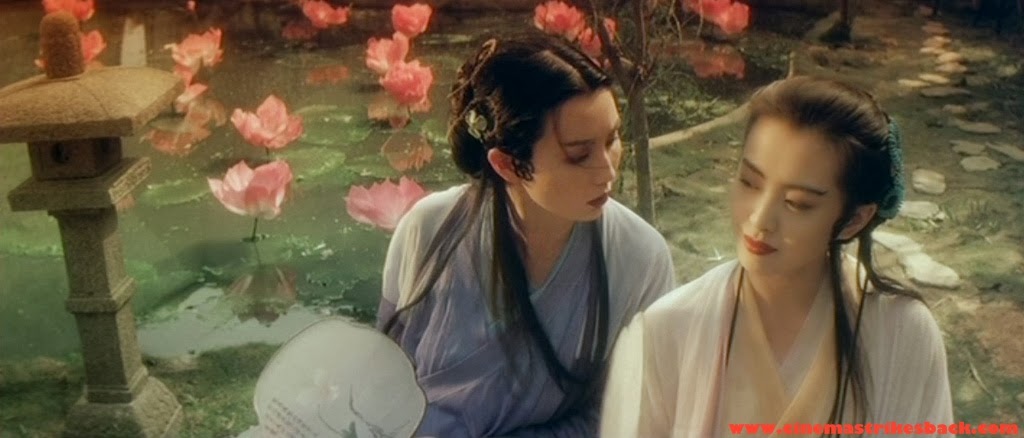
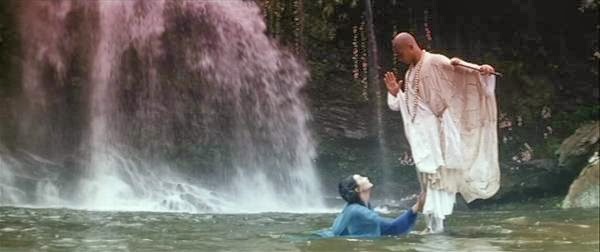
Based on an oft-told story of two snakes who over 500+ years master enough kung fu that they’re able to transform into humans, Tsui shifts focus from the usual hero of the story, the White Snake (played by Joey Wang) who falls in love with a hapless but decent young scholar, to her younger sister the Green Snake (Maggie Cheung), who is much more suspicious of the benefits of becoming human in the first place. As the White Snake’s tragic fairy tale plays itself out in self-sacrifice and honor and all those things myths tell us are important, the Green Snake sees only the lies and corruptions of the self-righteous and ultimately decides she’d rather be a snake.

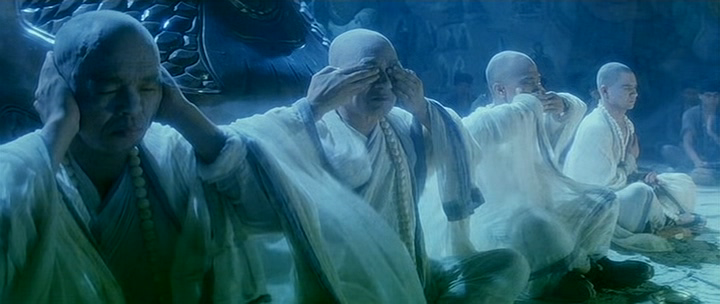
The villain of the film is a super-powerful Buddhist monk who has made it his mission to keep non-humans and humans separate. Whether the non-humans are enlightened or not, whether they are moral or not, makes no difference. His xenophobia is pure. Similarly, his belief system demands that he totally repress any sexual desires he may have. The Green Snake challenges him on this and succeeds in turning him on. Surely any god would understand, seeing as she’s Maggie Cheung, of course. But rather than accept his defeat with humility, he lashes out in anger and refuses to uphold his end of their wager. He then kidnaps the scholar, forcing the young man into what can only be described as a Buddhist re-education camp (shades of the Cultural Revolution here), where he is literally rendered insensate by the mindless chanting of the monks (it’s a kind of spell where, deep in meditation, the monks’ ability to see, hear and speak is removed).

Eventually there is a final battle in which the snakes, in self-protection, unleash a violent flood. The monk lifts the mountain holding his monastery above the waters, destroying the nearby town and killing hundreds of people. Out of a mad desire for doctrinal purity, he tries to rise above the flood of emotion and worldly desire, only to cause mass destruction. I couldn’t help but be reminded of The Missing Picture, Rithy Panh’s documentary about the Khmer Rouge that was one of my favorite films at this year’s Vancouver International Film Festival. The Khmer Rouge, like the Cultural Revolution, were human catastrophes on a massive, almost unimaginable scale, driven by the desire for ideological purity above all else. In a hyperkinetic fantasy film driven by Maggie Cheung and Joey Wang playing sexy snake/humans, Tsui presents much the same critique. But he seems to have mellowed a bit from the nihilistic explosiveness of the Hong Kong New Wave from 15 years earlier (best exemplified in his third film, and one of his greatest, Dangerous Encounters – First Kind). Rather than seeing the world as hopelessly corrupted and in need of burning down (the way the monk sees normal humans in the films remarkable opening sequence: ugly, deformed, lower beings), Green Snake offers the possibility that we might someday become decent enough for her to return. All we need to do is learn to prioritize basic human decency over the dictates of the arbitrary rules and regulations of our organizing institutions and ideologies.

VIFF 2013: Yumen

Part of my on-going coverage of VIFF 2013. Here is an index.

The Harvard Sensory Ethnography Lab is apparently bent on domination of the documentary world, or at least its cutting edge. While Lucien Castaing-Taylor has taken the film world by storm with his Sweetgrass and now Leviathan (co-directed with Verena Paravel), films about sheepherding and fishing that have become minor hits of the avant-garde, respectively, JP Sniadecki has been working in China, producing a number of films including last VIFF’s People’s Park (co-directed with Libbie Cohn) and now Yumen (co-directed with Xu Ruotao and Huang Xiang). The HSEL also produced Manakamana, which played the fest after I left but has also received rave reviews, and I’m pretty sure I saw a credit thanking them on A Spell to Ward Off the Darkness. All of these films (that I’ve seen) are notable for their use of sound, and Sniadecki in particular seems interested in the clashing of sounds, in the discordances between sound and image that can create unexpected meanings.

In People’s Park, this manifested itself in a kind of filmed version of early 20th century American composer Charles Ives’s experiments, best heard in Central Park in the Dark, where a three-dimenensional soundscape is created traverses and ordinary park and picks up all the sounds of music and chatter and laughter that one would hear (in the film this is accomplished in one single roving take through the park). Ives’s father, a quirky local band leader, used to march two separate bands in opposite directions around a square, listening for the discordances and unexpected harmonies as their different tunes slowly came together and broke apart. Ives’s work is full of such clashes, with bits of popular or folk tunes blended into a larger, more classically structured whole. Note that the integration of folk tunes into classical composition neither began or ended with Charles Ives, but Ives seems more interested in rupturing or fracturing the whole than someone like Brahms was in incorporating Eastern European folk melodies into catchy Hungarian Dances, to take one example.

Yumen is a similarly fractured whole, not just in soundtrack, but in narrative as well. Lying somewhere between documentary and fiction, it follows a handful of people as they wander around the ruins of a mid-20th Century industrial area, a hospital and some apartment buildings near an abandoned oil field. Shot in a scratchy 16mm that occasionally burns out in flashes of color (an effect used as well in La última película), the narrative builds from the ground up as we slowly piece together who the characters are via their bizarre actions (painting faces on walls, standing naked on pillars, dancing) and the narration which appears to be townspeople recalling the stories and history of the town, either form their personal experience or local legend. Mixed in as well seemingly at random (but of course not) are snippets of popular music or sound from TV programs. Yumen is located in the same Gansu province, in Western China, that is the subject of Chai Chunya’s Four Ways to Die in My Hometown, and like that film it depicts the area as a cultural crossroads, a wholly unique mixture of ancient and modern, of Chinese and outside influences. But where Chai’s film is suffused with the mysteries of  Tibetan Buddhism and the mystical Sufi strain of Islam, along with other more primal legends and imagery, Yumen mystifies recent history, making the industrial world as magically ghost-ridden and full of possibility as the pre-modern past.

It’s an unfortunate irony that movies like this, so dense and challenging to take in and unpack at times, can largely only be seen in film festivals, smashed together against so many other films (four a day for a week, for me) that without careful notes, or a superhuman ability to write coherently quickly, details can easily be lost or forgotten. But on the other hand, sometimes those clashes produce serendipitous comparisons (I’ve already compared this one to three other festival films, a fourth is Yang Zhengfan’s Distant, a long-take film that sources sound in unexpected, and very different ways). As the festival recedes into my past, certain things, movies or simply moments within movies, tend to separate in my memory and stand in stark relief from the general wash, moments that take root and plant themselves in my consciousness. I don’t know if this is necessarily a marker of greatness in a film, but it seems like it should be.

The highlight of Yumen, and one of my favorite moments of the festival, comes near the end, when one of the girls who had been wandering the ruins takes a walk through the market of the village that remains behind in the wake of the vanished industrial boom. It’s a single long take, tracking backwards as she moves towards the camera. She’s listening to an iPod and singing along quietly to the song, Bruce Springsteen’s My Hometown.

VIFF 2013: They Shot Pictures Recap Podcast

Part of my on-going coverage of VIFF 2013. Here is an index.

In addition to writing here at The End about the movies I saw at the Vancouver International Film Festival this year, I am also podcasting about them on They Shot Pictures, an auteur-focused show I co-host with my pal Seema. She went to the Toronto Film Festival this year and we recorded two episodes comparing our experiences (well, it was one really long episode that we split in half). Part One is available now, in which we talk about the movies we both saw:

Tsai Ming-liang’s Stray Dogs
Hong Sangsoo’s Our Sunhi
Ben Russell and Ben Rivers’s A Spell to Ward Off the Darkness
Mark Peranson and Raya Martin’s La última película
Jia Zhangke’s A Touch of Sin
Miguel Gomes’s Redemption
João Pedro Rodrigues’s The King’s Body
Johnnie To’s Blind Detective

I’ll update this post in a couple of days when Part Two goes live.

This Week in Rankings

I’m back and almost recovered from the Vancouver International Film Festival, so it’s time for a rankings update. My on-going festival coverage can be found here on its own index (now featuring a ranked list!), so far I’ve got reviews of seven of the films I saw there, along with reviews of Hong Sangsoo’s Nobody’s Daughter Haewon (which didn’t play at the festival) and Johnnie To’s Blind Detective (which did play there, but only after I left). I’ll have a couple episodes of They Shot Pictures coming soon as well, the one on Akira Kurosawa’s Samurai movies we recorded weeks ago and a festival wrap-up episode on Vancouver and Toronto. The last couple episodes of The George Sanders Show have covered a pair of classics and their remakes, Harakiris and Solarises.

These are the films I’ve watched and rewatched over the last couple of weeks, and where they place on my year-by-year rankings. Links are to my letterboxd comments, where applicable. For this week I’ve ranked the films of 2013 for the first time, but certainly not the last.

Harakiri (Masaki Kobayashi) – 12, 1962
Solaris (Andrei Tarkovsky) – 8, 1972
Dressed to Kill (Brian dePalma) – 11, 1980
Poltergeist (Tobe Hooper) – 21, 1982
Millionaire’s Express (Sammo Hung) – 21, 1986

Solaris (Steven Soderbergh) – 36, 2002
Hara-kiri: Death of a Samurai (Takashi Miike) – 24, 2011
Wolf Children (Mamoru Hosada) – 8, 2012
Four Ways to Die in My Hometown (Chai Chunya) – 23, 2012
Room 237 (Rodney Ascher) – 27, 2012

Dredd (Pete Travis) – 31, 2012
Gebo and the Shadow (Manoel de Oliveira) – 34, 2012
9 Muses of Star Empire (Lee Harkjoon) – 41, 2012
Good Vibrations (Lisa Barros D’Sa & Glenn Leyburn) – 51, 2012
The King’s Body (João Pedro Rodrigues) – 54, 2012

La última película (Raya Martin & Mark Peranson) – 1, 2013
The Missing Picture (Rithy Panh) – 2, 2013
A Touch of Sin (Jia Zhangke) – 3, 2013
Blind Detective (Johnnie To) – 4, 2013
Our Sunhi (Hong Sangsoo) – 5, 2013

A Spell to Ward Off the Darkness (Ben Rivers & Ben Russell) – 6, 2013
Nobody’s Daughter Haewon (Hong Sangsoo) – 7, 2013
Stray Dogs (Tsai Ming-liang) – 9, 2013
Yumen (JP Sniadecki, Xu Ruotao, & Huang Xiang) – 10, 2013
The Great Passage (Yuya Ishii) – 11, 2013

Trap Street (Vivian Qu) – 12, 2013
New World (Park Hoonjung) – 13, 2013
Distant (Yang Zhengfan) – 14, 2013
Mahjong (João Rui Guerra da Mata & João Pedro Rodrigues) – 15, 2013
Anatomy of a Paperclip (Ikeda Akira) – 16, 2013

Gravity (Alfonso Cuarón) – 17, 2013
Redemption (Miguel Gomes) – 19, 2013
Burn Release Explode The Invincible (Kim Soohyun) – 20, 2013
Bends (Flora Lau) – 22, 2013
3x3D (Peter Greenaway, Edgar Pera, Jean-Luc Godard) – 23, 2013

My First Love (Keiko Tsuruoka) – 24, 2013
Grigris (Mahamat-Saleh Haroun) – 25, 2013
Longing for the Rain (Yang Lina) – 26, 2013
The Spider’s Lair (Jason Paul Laxamana) – 27, 2013
Camille Claudel 1915 (Bruno Dumont) – 28, 2013

VIFF 2013: Stray Dogs

Part of my on-going coverage of VIFF 2013. Here is an index.

The latest film from Tsai Ming-liang finds his hero, played as always by the axiomatic Lee Kang-sheng, in precarious circumstances. When last we saw him (not counting last VIFF’s terrific short Walker, in which Lee was a slow-moving monk just trying to get a McMuffin) was in Visage, where is was directing a vampire movie in the Louvre with Laetitia Casta and Jean-Pierre Leaud. It’s been since that year’s VIFF since I’ve seen that one, but if I remember correctly, his film shoot was interrupted by the death of his mother and a flood of sadness. Stray Dogs is the story of Lee’s life after the flood (at least as far as I understand it after only sitting with it for a few days).

Unfolding in 76 shots over two and a half hours (at least by my count), the film is nonetheless not quite as rigidly minimalistic as Tsai’s other work. At times the camera moves and there’s even a short sequence with some shot/reverse shot editing (an action sequence near the end of the film). But most of the film is made up of very long takes, often featuring very little in the way of action, most notably the final two shots (which echo one from the center of the film) of people looking at an image. (There’s something spirallingly funny about us as an audience staring seemingly endlessly at an image of people staring at an image.) I cannot possibly do justice to how gorgeous the film looks, stunning blues and blacks and white and sparks of color and light and rain and mud and trees and rivers. I haven’t seen all of Tsai’s work, and only a couple in a theatre as opposed to mediocre DVD copies, but this is the prettiest I’ve seen so far.

The plot of the film, such as it is, revolves around Lee and his two children, a boy and a girl, as they live homelessly in the industrial rubble of Taipai. The kids spend their days wandering around a supermarket, which Tsai seems to take as a challenge to shoot in the weirdest ways possible (inside freezers and milk displays, from the points of view of the objects on display, frames distorted by reflections and refractions from glass and chrome). Lee makes a meager living as a human billboard, standing in the middle of a busy intersection holding a sign for hours at a time, buffeted by the wind and rain, barely noticed by passing motorists (at one point, a highlight, Lee breaks into song, a stirring anthem about crushing one’s enemies).

Not long after adopting a cabbage as a doll (a cabbage patch kid, get it?), the girl meets a woman (Lu Yi-ching) who works at the market and takes an interest in her, or at least an interest in cleaning her hair. Lu feeds stray dogs at night, wandering through abandoned buildings with freshly expired food products. One night she stands for a long time before a mural, a black and white landscape, and it’s after seeing the mural that she begins to help out the kids, eventually finding where they live. It seems pretty clear that they’d be better off with her, especially after Lee gets drunk and murders the cabbage.

The other woman in the film, Chen Shiang-shyi, opens and closes it. The first shot has her brushing her hair on the bed while the kids are sleeping. The last section of the film takes place in this same house, streaked black and white with flood damage, where Chen and Lee appear to be married with kids. She’s a doting mother, helping with homework, while Lee seems a drone, taking a long bath, sitting in a fancy massage chair, barely acknowledging the birthday celebration they’ve made for him. One night, Lee and Chen go for a walk to feed the stray dogs in the ruin. They look at the mural for a long time and she walks away, leaving Lee, and us, alone in the dark.

So my reading, as of now at least, is that the bookend scenes depict the dissolution of Lee’s marriage. Engulfed in sadness over his mother’s death, Lee has turned their home into a moldy ruin. The wife leaves and takes the kids or does not take them. Either way, they end up desperately needing a mother figure, as Lee proves himself wholly incapable of properly caring for them. Though the kids seem reasonably happy, they live, barely hygienically, in a literal hole in a wall. So being a single dad only teaches Lee how important having a mother is, which in turn only deepens his depression at the loss of his own. Perhaps the middle section of the film is only imagined, Lee working out what would happen if his wife did leave him as he soaks in the tub. Perhaps he still has time to save his family, to move them out of the blackness to the big, airy, white modernist mansion just down the way. We all just want Lee Kang-sheng to be happy.