1901

1. The Pan-American Exposition By Night – Directed by Edwin S. Porter and James Blair Smith, working for the Edison company, this one minute film consists only of a slow pan across the eponymous exposition.  Midway though, the shot fades to black and returns, only now it is nighttime and the exposition is lit by the wonder of electric light.  As cinematic miracles go, this is about as simple as it gets, but it’s a miracle nonetheless.

2. Excelsior! The Prince of the Magicians – Magician Georges Méliès uses the power of editing to create a magic routine greater than any possible in continuous reality.  Some of the edits are pretty obvious, but the speed and abandon with which Méliès commits himself makes it all work.

3. What Happened on Twenty-Third Street – A cute little joke movie, anticipating a certain iconic Marilyn Monroe image by over 50 years.  Edwin Porter directs what appears to be a documentary street scene that turns risqué when an actress comes onscreen.

4. The Devil and the Statue – Another Méliès magic movie, though much clunkier and pedestrian than Excesior!.

On The Spanish Earth

Is it just me or does the Hemingway narrator in everyone else’s head always sound like Orson Welles?  Anyway, Welles narrates Hemingway and Jon Dos Passos’s text in this documentary film, made in the midst of the Spanish Civil War by Dutch filmmaker Joris Ivens.  As if that wasn’t enough star power, the musical score is by Marc Blitzstein (Cradle Will Rock) and Virgil Thomson, one of the first great American classical composers (along with Charles Ives, Aaron Copland and George Gershwin).  Thomson won a Pulitzer for his score to Robert Flaherty’s Louisiana Story, and while this isn’t that good (there’s a lot of pastiche Spanishness to it, as opposed to Thomson’s usual all-American style), it’s still pretty charming.  The film is newsreel-style footage with sound effects and voiceover added later, but Ivens has an eye for striking images and some of his editing is quite clever (a particular cut from a gun firing to a hole of sunlight peeking through the crook of a soldier’s elbow comes to mind).

Set during the fascists’ march on Madrid, the film splits the focus onto two stories, that of the capital’s populace preparing themselves for the eventual attack (evacuating children, forming militias out of soccer players and bullfighters) and a nearby village’s construction of an irrigation ditch to turn their unoccupied waste land into crops to feed the to-be-beseiged city. The script throughout is filled with pithy Hemingwayisms, sounding at times like the parody Hemingway in Woody Allen’s Midnight in Paris.  My favorite: a post-battle riff on how sixes went out and only twos and threes came back.  The farm scenes are OK, but they pale in comparison to the similar construction effort in King Vidor’s communitarian classic Our Daily Bread, released three years earlier.  Perhaps the final scenes of water flowing to relieve the parched Spanish earth (get it?) would have had a more triumphant effect if we didn’t already know the ultimate fate of the Loyalists and those farmers.  Then again, that adds an unintentional poignancy to the whole film, and Vidor’s communist farmers likely didn’t end up much better off when McCarthyism and groups like Vidor’s own Randian anti-Communist Motion Picture Alliance for the Preservation of American Ideals got ahold of them.

There’s something that continues to fascinate me about this war.  Unlike the fascist takeovers in Germany and Italy, it wasn’t a matter of an evil political party capitalizing on social conditions to get itself elected to power.  Unlike totalitarianism in France and Russia it wasn’t the byproduct of a revolution corrupted by its own power.  Like many dictatorships, this one began with a coup, but only a partially successful one.  Instead of creating a military junta overnight, which could then proceed to its dastardly ends (purging the population, annoying and/or allying with US corporations, etc), the Spanish coup only managed to split the country politically in half, between the Monarchists and Fascists on the right and the Republicans, Communists and Anarchists on the left.  And so the war makes manifest, in a way no other conflict does, the divide between the political left and right in Western politics.  World War II, for example, wasn’t a fight for Democracy against Totalitarianism, it was a fight against territorial aggression by rogue nations that happened to be totalitarian (with one of Democracy’s key allies, the Soviet Union, being itself a totalitarian state).  But the Spanish Civil War was a real left vs. right conflict, where the political rhetoric of the most extreme elements of both sides for once became a reality.  The idea that these arguments between Left and Right really could degenerate into the kind of civil war Spain went through is an idea that seems wholly alien to us (though it can be found in many political films of the 1930s, particularly those of Frank Capra, which I think are greatly enhanced by seeing through the politics of the time, where Democracy was an existential choice and not merely a platitude), where our political parties throw around words like fascism and socialism with little regard to their actual meaning or their relevance to the people being so accused.  No one really believes Dick Cheney would organize a military coup to overthrow the elected government of the United States, nor does anyone serious believe that Barack Obama is plotting a government takeover of American industry or a mass collectivization project.

It is this seemingly obvious fact that Ivens’s documentary makes clear to me: that this was a war fought by actual people who actually believed in and put into action the most extreme variants of modern political theory.  He focuses on the Left, the loyalist side with its poor folks banding together in a communitarian ideal to protect themselves from the invading fascists (helped, he repeatedly notes, by the foreign influence of the Germans and Italians, the assistance the Loyalist side received from the Soviets goes unmentioned), but in seeing those Loyalists as individuals, the fact that the fascists were also a mass movement becomes clear.  We don’t see them in The Spanish Earth, I imagine Ivens would prefer to see the fascists not as individuals but as abstract forces of evil, but in their conspicuously off-screen existence, their presence, their threat, is inescapable.  Spain didn’t have its democracy stolen, or totalitarianism imposed upon it: a sizable portion of the Spanish population wanted to live under dictatorship so much that they fought and killed and died for the right to create a fascist state.  I find that truth to be absolutely terrifying.

On a much lighter note, this was the first film my daughter watched, and she made it almost the whole way through its 55 minute runtime.  I don’t know what exactly about it fascinated her so much, she usually prefers color images and flashier editing, and has very few interesting opinions on politics or history.  Maybe it was the score (she’s heard a lot of Thomson over her 13 1/2 weeks of life), or maybe she just likes Orson Welles’s voice (who doesn’t?).  Regardless, she was rapt with attention until she slumped over asleep.  As far as she knows, the war had a happy ending.

On the Late Films of Buster Keaton

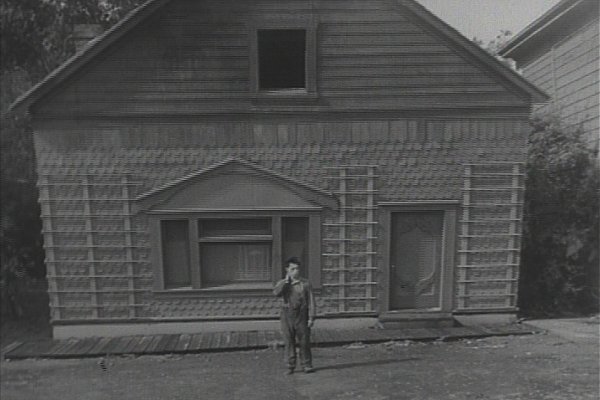
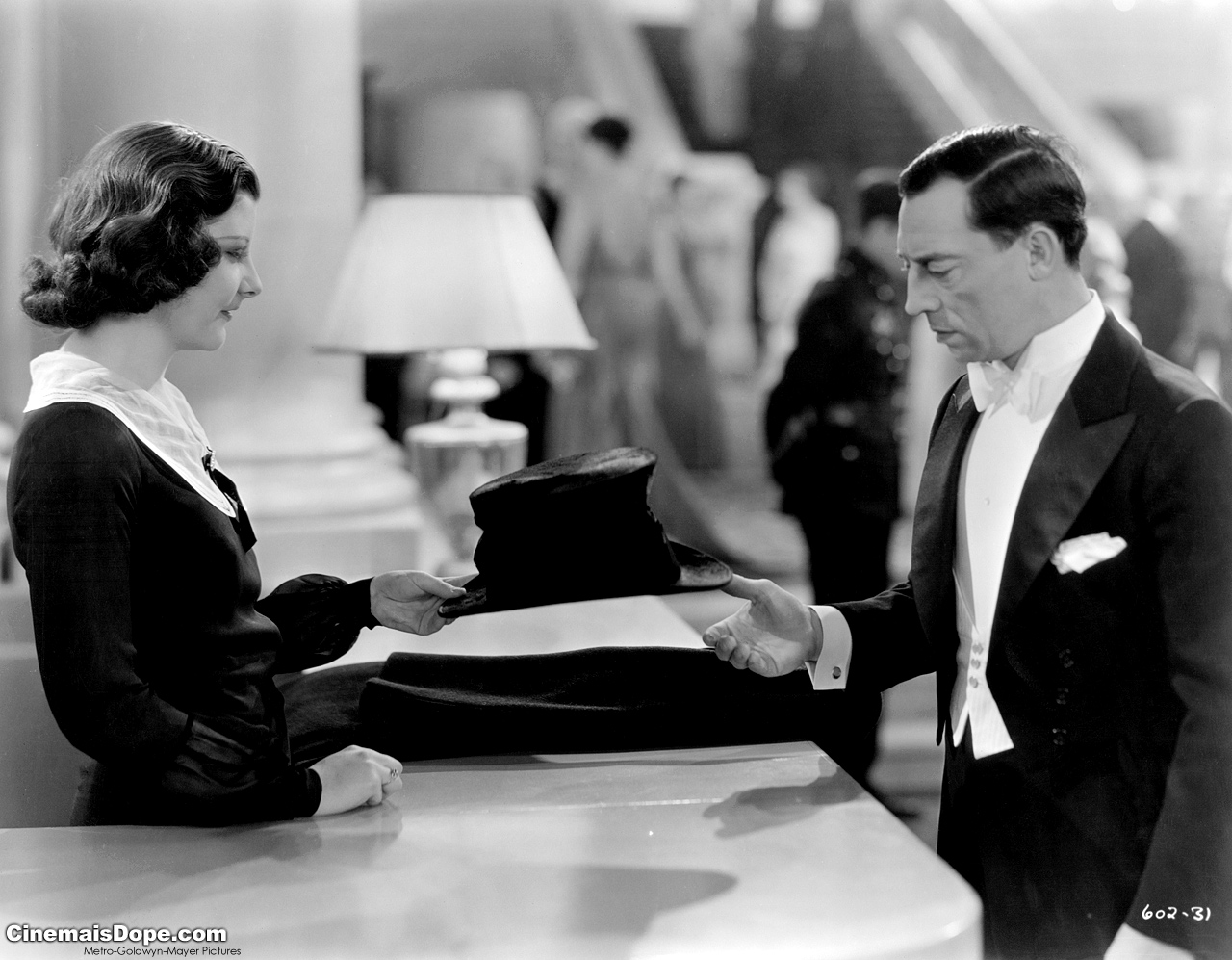
In May of 1928, Buster Keaton released Steamboat Bill, Jr, one of his greatest films, with perhaps his most elaborate and memorable stunt work, featuring the facade of a house falling on top of him in the midst of a hurricane, a small window clearing his body with inches to spare, the difference between comedy and death.  It received mediocre reviews and failed to do much at the box office.  For almost a decade, Keaton had functioned autonomously in Hollywood, with complete creative control of his films, first producing a remarkable string of 19 short films, then a series of 10 wildly innovative features, work that by itself has earned him the status of one of the single greatest filmmakers in history.  But after Steamboat Bill, Keaton signed with MGM, the biggest, most powerful studio in town.  In September of 1928, he released The Cameraman, made at the studio, but under his own system.  Within a year, the studio would take over supervision of his features, leading to a series of popular, but highly mediocre films that, combined with a couple disastrous marriages and a bout of alcoholism nearly meant the end of one of the greatest talents Hollywood has ever known.  Keaton survived, eventually kicking alcohol and finding a stable apparently healthy marital relationship, and his career continued in bit parts and TV and writing gigs until his death in the late 1960s.  In the end, he left us with 19 feature films, half of which are the highest example of what a true artist can do with the medium, and half of which are a textbook example of the money-making blandness corporate bureaucracy would prefer the medium to produce.

(That it all happened within 15 years (about the length of Wes Anderson’s career) surely says something about art and bureaucracy as well.  The great artistic peaks of the 20th Century all occurred in a remarkably compressed amount of time.  The Beatles and Bob Dylan from 1962-70, Jean-Luc Godard from 1960-67, DW Griffith from 1909-19 and so on.  Keaton’s run from 1920-1928 ranks with any of them.)

Over the last few weeks, I’ve managed to catch all the Buster Keaton sound films thanks to TCM.  Knowing the backstory made me apprehensive, and for the most part my fears were confirmed.  These are simply not very good films.  But I like to think that there are good things to find in just about any movie, and when a filmmaker and performer is as brilliant and gifted as Buster Keaton is it is almost impossible for them to do nothing interesting over the course of a feature film.  So in watching these movies, with low expectations and the understanding that not a single one of them can be considered anything like a masterpiece, the viewing experience changes, or rather, it shifts into what it probably should be all the time, but usually isn’t.  Instead of being carried away by the film, either by the artistry of its visual style or the cleverness of its screenplay and story construction, or the emotional implications and philosophical or political ideas it is trying to convey, I find myself instead waiting for the moments of inspiration, the small gestures or expressions or moments of balletic grace that transcend the surrounding mediocrity and where we can catch a glimpse of the buried genius within.  Watching the late Keaton films is not to be swept away by the fulfillment of a cinematic vision, but instead to be reminded that artistry can be found in the most unlikely places; that though it can be incredibly fragile, it is more indestructible than we think.
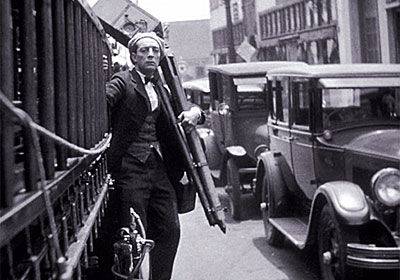
The Cameraman – The last true Buster Keaton feature has a bit of an out-sized reputation.  It is not at the level of his greatest films, Sherlock Jr or The General or Steamboat Bill, but it’s pretty good nonetheless.  He plays a photographer who tries to become an MGM newsreel photographer to impress a girl.  There are some very good bits: a recurring gag with Keaton breaking an office window is a bit obvious, but nicely built, a pool changing room sequence that, like many of Keaton’s best and worst routines, feels more like a record of a historic vaudeville performance than a comic innovation, a rousing climactic gang war in Chinatown, with Keaton (and a monkey!) finding himself perilously close to the action as he attempts to film it.  Most magical of all is a sequence where Keaton finds himself alone on a diamond and he plays an imaginary game of baseball.
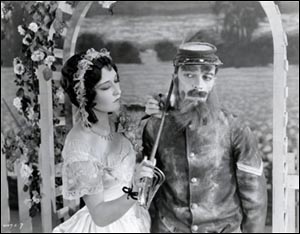
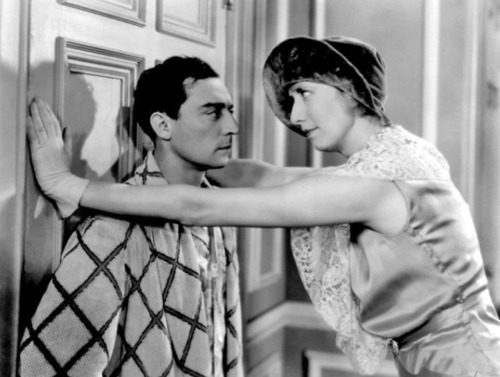
Spite Marriage – This was Keaton’s last silent film, and it’s more or less a whimper.  He plays a sap who idolizes a stage actress who ends up marrying Keaton to spite (get it?) an actor who rejected her.  There’s a great scene of Keaton trying to put his passed-out-drunk wife to bed on their wedding night, and the first of what would become a recurring trope in Keaton’s MGM films: the destruction of a serious theatrical production by Keaton’s cluelessly chaotic behavior.
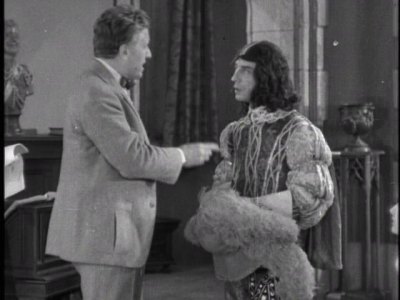
Free and Easy – Taking that last idea and running with it through early sound era Hollywood makes this my favorite of the Keaton talking pictures.  He plays a slow-witted but well-meaning small town type who accompanies a young lady and her mother to Hollywood, where the girl will attempt to become a star.  She ends up dating Robert Montgomery, and Keaton destroys a number of film projects, most memorably when he’s cast in a small part in a Fred Niblo costume picture (his repeated inability to enter a scene without destroying the entire set is a masterpiece of slow-burning slapstick).  Somehow, Keaton and the mother end up with major parts in Montgomery’s film, which is apparently a musical, while the girl (played by Anita Page, who was excellent the year before in the Oscar-winning The Broadway Melody, and who would also star with Keaton in Sidewalks of New York) decides she’d rather be a housewife than an actress.  There are a couple of fine comic musical numbers: the first a duet with Keaton and the mother that harkens back to vaudeville, the second a big group production number featuring a slick little dance by Keaton to the film’s catchy title song.
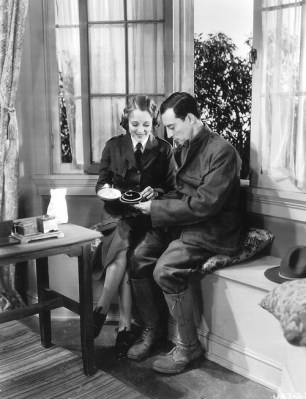
Doughboys – Basically a comic version of King Vidor’s The Big Parade, except not as funny as the original (which isn’t particularly funny).  Keaton plays a rich guy who accidentally joins the army, goes through basic training and gets shipped off to World War I.  During all this, he falls in love with a girl who is not Clara Bow, as impossible as that may sound.  It’s about as funny as your average Beetle Bailey strip.  Someone had to invent all the comic tropes we know and hate about army life (the mean sergeant, peeling potatoes, guard duty in the rain), I really doubt this is that ur-Army film, though it does provide a thorough survey of everything you’ve seen before.  There is a really cool musical sequence with Keaton, Cliff Edwards and a ukelele.
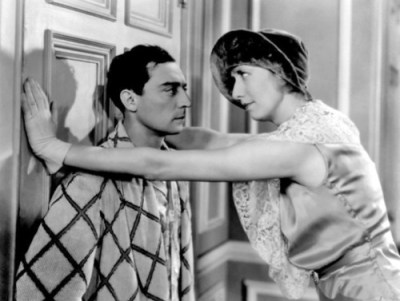
Parlor, Bedroom and Bath – This is a prime example of one of the worst trends in the MGM films, which is the stupidification of the Keaton character.  In his own films, Keaton always played a reasonably intelligent ordinary little guy, generally unlucky with love and machinery, often a fish out of water.  By the end of the film, though, he would have learned to master his environment (a ship or a train or a house, etc) and would win the girl through acts of bravery and physical competence.  In the MGM films, however, Keaton increasingly plays a character (seemingly always named “Elmer” for some reason) for whom a developmental disability is a very real possibility.  It’s not that he’s an ordinary guy who finds himself out of his comfort zone: he’s an incompetent with no discernible skills who manages to survive to the end of the film not through learning to master his surroundings, but through sheer dumb luck.  For example, in this film, Keaton plays a guy who gets hired by rich people to pretend to be a womanizer in order to attract the attention of the older sister of the girl Reginald Denny wants to marry (it’s a Taming of the Shrew type scenario).  The twist is that Keaton knows absolutely nothing about women, apparently only discovering their existence some 15 minutes into the film.  This remarkable ignorance leads Denny to hire a giantess to teach Keaton the ways of romance, leading to some occasionally inspired chaos (despite the complete lack of believability of anything any of the characters do) during a series of unmaskings and a wild chase at the film’s climax that is the only sequence in the film where Keaton’s genius peeks through, despite the horrific material he’s given to work with.

Sidewalks of New York – Just like the film above, but instead of rich swells, Keaton stars with a bunch of proto-Dead End kids.  He’s a rich guy who tries to start a community center for the inner city youth in order to impress a girl.  But the kids would rather join gangs instead and keep beating Keaton up.  One of the kids gets mixed up with a grown up gangster and there’s some cross dressing and eventually a chase in a mansion that’s so uninspired you can hardly believe it stars the same man as The High Sign.  The only high point is a boxing match with Keaton and a goon he’s hired to throw the fight that double crosses him, but even that looks lame in comparison to Charlie Chaplin’s boxing match in the same year’s City Lights.  In fact, that should give a good idea of where Keaton and Chaplin were at this point in their careers:  Chaplin making arguably his best film, Keaton his worst.
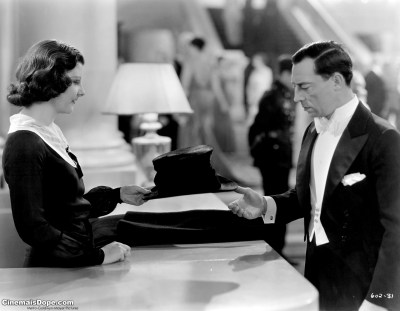
The Passionate Plumber – With this we have the unlikely pairing of Keaton with comic Jimmy Durante.  The two make an amiable, if totally mismatched duo, but they probably had a lot of fun during the shoots.  Unfortunately, on-screen, they’re a mess. As with Parlor, Bedroom and Bath, MGM cast Keaton in a remake of a play that had already been adapted for film, and again the material is completely wrong for him.  He plays a plumber/inventor who gets mixed up in the tedious love lives of the rich, and fights a duel with someone for some reason (he invented a kind of gun or something).  I was wrong before: this has got to be the low point of Keaton’s career.  Or maybe not, I’m having trouble remembering anything else about it.
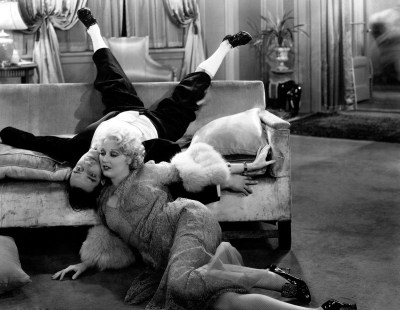
Speak Easily – A slight improvement is this return to the magic of Free and Easy, with Keaton joining a terrible traveling acting troupe (led by Durante) and bankrolling their production on Broadway (to impress a girl, naturally) while under the mistaken impression that he (an oblivious college professor) has inherited a fortune.  The film is pretty lackluster (though Durante gives a much more interesting performance here, he got lost in the European setting of The Passionate Plumber, but we get the full Schnozzola here, and there’s a fun sequence of Keaton getting drunk with a scheming actress played by Thelma Todd), at least until the end, where Keaton again works his chaos magic on a stage performance, his unintentional nuttiness driving the audience wild and saving the day.  Again, this is in distinction to the arc of his silent features, when the Keaton character would save the day not by accident, but because he had learned to master the machines and environments that he’d found himself so comically mismatched with at the beginning of the film.  In the silents, he overcomes obstacles through his bravery and ingenuity.  In the MGM films, a bunch of random stuff happens and sometimes it’s funny.
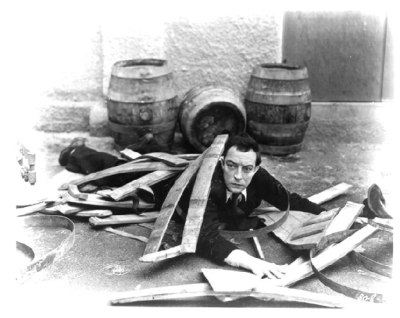
What!  No Beer? – Surely one of the all-time greatest film titles deserves a better movie than this.  Under the mistaken impression that Prohibition has been lifted, Keaton and Durante go into the beer-brewing business, inadvertently underselling the local bootleggers and inspiring a gang war.  Again, the Keaton character is pretty dumb, his interactions with the women in the film are ridiculously juvenile (Keaton was 38 years old at this point, did the studio really expect us to take him as so seriously, ignorantly virginal?).  The best visual sequence in the film is an homage to/rip-off of the famous boulder chase scene in Seven Chances, this time with Keaton fleeing a bunch of beer barrels.  A comparison of the two would show the obvious superiority of the silent version, as it not only exists on a bigger scale (dozens and dozens of boulders on a massive hillside vs. a handful of barrels quickly rolling down a couple city blocks) but lasts longer and is filmed so as to maximize the visceral impact of the chase (whereas the beer barrel sequence is filmed mostly in long shot, keeping us at a respectable distance from the danger).  Still, at least Keaton gets a suitable finale in this film, as he manages to come up with a brilliant plan to save his crew from a police raid on their brewery by getting the entire town drunk on free beer.  Despite its shortcomings, this does manage to be the second-best talking film of Keaton’s MGM career.

Essay & Podcast Index

And index of my written reviews can be found over here. This is an index of the non-review pieces I’ve written here at The End of Cinema, as well as various other websites. And also the episodes of The George Sanders Show and They Shot Pictures that I’ve appeared on.

Podcasts:

The George Sanders Show:

Episode One: The Big Heat and Drug War  Jun 29, 2013
Episode Two: Dead Man and Ride Lonesome  Jul 06, 2013
Episode Three: Charade and The Truth About Charlie  Jul 12, 2013
Episode Four: Duel of Fists and Tears of the Black Tiger  Jul 20, 2013
Episode Five: Sneakers and Whirlpool  Jul 27, 2013
Episode Six: Two Lovers and Two English Girls  Aug 02, 2013
Episode Seven: Logan’s Run and WALL-E  Aug 09, 2013
Episode Eight: Gun Crazy and Point Break  Aug 16, 2013
Episode Nine: Ishtar and Sons of the Desert  Aug 26, 2013
Episode Ten: The Grandmaster and A Touch of Zen  Aug 29, 2013

Episode Eleven: The Top Ten Films of All-Time  Sep 05, 2013
Episode Twelve: The Black Stallion and The Killing  Sep 12, 2013
Episode Thirteen: Once Upon a Time in America and The Roaring Twenties  Sep 19, 2013
Episode Fourteen: Harakiri and Hara-Kiri: Death of a Samurai  Sep 27, 2013
Episode Fifteen: Solaris and Solaris  Oct 10, 2013
Episode Sixteen: Belle de jour and Belle toujours  Oct 17, 2013
Episode Seventeen: Cat People and The Black Cat  Oct 24, 2013
Episode Eighteen: Ingeborg Holm and The Holy Mountain  Oct 31, 2013
Episode Nineteen: The Big Parade and The Red and the White  Nov 10, 2013
Episode Twenty: Bill & Ted’s Excellent Adventure and Three Ages  Nov 18, 2013

Episode Twenty-One: Monsieur Verdoux and Bonfire of the Vanities  Nov 25, 2013
Episode Twenty-Two: Computer Chess and The Chess Players  Dec 01, 2013
Episode Twenty-Three: The Hudsucker Proxy and Lady for a Day  Dec 08, 2013
Episode Twenty-Four: Crank and The Victim  Dec 15, 2013
Episode Twenty-Five: Meet Me in St. Louis and A Christmas Tale  Dec 23, 2013
Episode Twenty-Six: I’m No Angel, Dragnet Girl and 1933 in Review  Dec 30, 2013
Episode Twenty-Seven: The Wolf of Wall Street and L’Argent  Jan 14, 2014
Episode Twenty-Eight: Her and The Doll  Jan 27, 2014
Episode Twenty-Nine: The Train and Emperor of the North  Feb 12, 2014
Episode Thirty: Oscar Spectacular, The Great Ziegfeld & Chicago  Feb 24, 2014

Episode 31: The Three Musketeers and Jason & the Argonauts  Mar 13, 2014
Episode 32: Pride of the Yankees and The Bingo Long Traveling All-Stars and Motor Kings Mar 24, 2014
Episode 33: The Magnificent Ambersons and Platform  Apr 07, 2014
Episode 34: La ultima película and Never Give a Sucker an Even Break  Apr 22, 2014
Episode 35: Under the Skin and Starman  May 05, 2014
Episode 36: Hatari! and White Hunter, Black Heart  May 20, 2014
Episode 37: The 2014 Seattle International Film Festival  Jun 11, 2014
Episode 38: Snowpiercer and Virgin Stripped Bare by Her Bachelors  Jun 30, 2014
Episode 39: Lola and Lola  Jul 13, 2014
Episode 40: The Genius of the System, Hellzapoppin’ and The Barefoot Contessa  Jul 29, 2014

Episode 41: Rock ‘N’ Roll High School and Pitch Perfect  Aug 20, 2014
Episode 42: Strike and Matewan  Sep 01, 2014
Episode 43: Top Ten Films of All-Time  Sep 07, 2014
Episode 44: Videodrome and Wavelength  Sep 20, 2014
Episode 45: How to Marry a Millionaire and Down with Love  Oct 06, 2014
Episode 46: Gone Girl and The Vanishing  Oct 18, 2014
Episode 47: Toute la mémoire du monde and Russian Ark  Nov 03, 2014
Episode 48: Renaldo & Clara, Masked & Anonymous and Don’t Go Breaking My Heart 2  Nov 15, 2014
Episode 49: Awaara and Sholay  Nov 29, 2014
Episode 50: Coffy, Golden Chicken and 2014 Discoveries  Dec 13, 2014

Episode 51: Love Streams, Streets of Fire and the Best of 1984  Dec 27, 2014
Episode 52: The Shopworn Angel and The Cheyenne Social Club Jan 10, 2015
Episode 53: Selma and Malcolm X Jan 24, 2015
Episode 54: Alphaville and A Separation Feb 11, 2015
Episode 55: Doctor Zhivago and Darling Feb 22, 2015
Episode 56: Where Danger Lives and Farewell, My Lovely Mar 06, 2015
Episode 57: Days of Thunder and Red Line 7000 Apr 11, 2015
Episode 58: Jauja and Three Crowns of the Sailor Apr 18, 2015
Episode 59: The Clouds of Sils Maria and Centre Stage May 2, 2015
Episode 60: Linda Linda Linda and The Affairs of Dobie Gillis May 17, 2015

Episode 61: SIFF Special – Interview with Atticus Ross May 30, 2015
Episode 62: 2015 Seattle International Film Festival Recap Jun 13, 2015
Episode 63: Blackhat and A Better Tomorrow Jun 29, 2015
Episode 64: Summer Interlude and Songs from the Second Floor Jul 11, 2015
Episode 65: The Green Ray and X: The Man with X-Ray Eyes Jul 29, 2015

They Shot Pictures:

They Shot Pictures #7: Hou Hsiao-hsien  Aug 28, 2012
They Shot Pictures #11: Mikio Naruse  Feb 25, 2013
They Shot Pictures #13: Johnnie To  Mar 26, 2013
They Shot Pictures #15: Akira Kurosawa Part One  Jun 15, 2013
They Shot Pictures #16: Jane Campion  Jul 01, 2013
They Shot Pictures #17: Sammo Hung  Jul 08, 2013
They Shot Pictures #19: John Ford Part One  Aug 31, 2013
They Shot Pictures #21: Festival Recap Part One  Oct 17, 2013

They Shot Pictures #22: Festival Recap Part Two  Oct 30, 2013
They Shot Pictures #23: Akira Kurosawa Part Two  Oct 31, 2013
They Shot Pictures #24: Claire Denis  Nov 28, 2013
They Shot Pictures #25: John Ford Part Two  Dec 19, 2013
They Shot Pictures #26: 2013 Year in Review Part One  Dec 22, 2013
They Shot Pictures #27: 2013 Year in Review Part Two  Dec 22, 2013
They Shot Picutres #28: FW Murnau  Feb 15, 2014
They Shot Pictures #29: Hayao Miyazaki & Studio Ghibli  Mar 04, 2014
They Shot Pictures #30: Vincente Minnelli Musicals  Apr 19, 2014
They Shot Pictures #32: Lau Kar-leung  Jun 25, 2014
They Shot Pictures #34: King Hu  Nov 17, 2014
They Shot Pictures #35: 2014 Year in Review Part One   Dec 25, 2014
They Shot Pictures #36: 2014 Year in Review Part Two  Dec 25, 2014

Essays and Lists at The End of Cinema and Seattle Screen Scene and Elsewhere:

Coen Fatigue  Jan 02, 2008
Movie Roundup: VIFF ’09 Edition  Apr 11, 2010
Movie Roundup: SFIFF Edition Part One  July 19, 2010
Movie Roundup: SFIFF Edition Part Two  July 27, 2010
VIFF ’10: Wrap-up  Oct 11, 2010
On the Late Films of Buster Keaton  Nov 22, 2011
For the Love of Film: One Week with Hitchcock  May 13, 2012
Ozu’s Fun with Salt  Jul 16, 2012
On the 2012 Sight and Sound Poll  Jul 31, 2012
More on the 2012 Sight and Sound Poll  Aug 02, 2012

Last Notes on the Sight and Sound Poll  Aug 16, 2012
Flights of the Red Balloons  Aug 21, 2012
VIFF 2012 Index  Nov 03, 2012
On Some Objections to Auteurism  Mar 08, 2013
The Johnnie To Whimsicality Index  Mar 17, 2013
On Infernal Affairs, The Departed and Johnnie To  Mar 19, 2013
Army of Milla: Resident Evil and Modern Auteurism: Part One: On Vulgar Auteurism  Apr 16, 2013
Army of Milla: Resident Evil and Modern Auteurism: Part Two: What are the Resident Evil Movies?  May 01, 2013
Army of Milla: Resident Evil and Modern Auteurism: Part Three: Resident Evil and Classical Auteurism  Jun 02, 2013
The Best 2012 Movies of 2013, So Far  Jul 13, 2013

VIFF 2013: Dragons & Tigers Awards  Oct 04, 2013
Running Out of Karma: Introduction  Nov 14, 2013
A Top 25 Films of 2013, More or Less  Dec 31, 2013
Favorite Film Discoveries of 2013 Jan 09, 2014
The Best War Movies of All-Time  May 26, 2014
The Best 2014 (and 2013) Movies of the Year (So Far)  Jul 01, 2014
A Top 50 Films of 2014, More or Less Dec 21, 2014
The Best Older Movies I Saw in 2014  Dec 30, 2014
Favorite Film Discoveries of 2014 Feb 12, 2015
Seattle Screen Valentine Scene Feb 13, 2015

The 87th Annual Academy Awards Preview Feb 20, 2015
On the 2014 Academy Awards (Or, the Vice of Intended Ignorance) Feb 27, 2015
Fists and Fury at the Cinerama Feb 27, 2015
Hitchcock at the Uptown Mar 12, 2015
The Seattle Hou Hsiao-hsien Retrospective Mar 19, 2015
Underrated 1985 Films Apr 11, 2015
Underrated ’65 Jul 02, 2015

Essays at Metro Classics:

All About Bette  Aug 17, 2009
A Short History Of The Western Genre, And Why The Wild Bunch Was Ahead Of Its Time  Sept 07, 2009
A Short History Of The Musical Genre, Towards Defending As Essential The Arguably Extraneous Dance Sequence At The End Of Singin’ In The Rain  Oct 02, 2009
Clint Eastwood And The Myth Of The Last Golden Age  Oct 26, 2009
A Filmography Of Wong Kar-wai In Eighteen Images (Or, Yay! Pretty Pictures!)  Nov 09, 2009
Why Charlie Chaplin Is Better Than Buster Keaton  Nov 16, 2009
Disjointed Musings Somewhat Related To Gone With The Wind  Dec 01, 2009
On Eric Rohmer  Jan 12, 2010
Following Up On Eric Rohmer  Feb 01, 2010

Pre-Game Warm-Up: Gloria Swanson Edition  Mar 22, 2010
What If Double Feature: Meet Me in St. Louis  Aug 22, 2010
What If Double Feature: All That Heaven Allows  Aug 30, 2010
Hell is Other Movies: One Week with Nicholas Ray  Mar 29, 2011
Hell is Other Movies: Seven Samurai for Seven Samurai  Apr 12, 2011
Eric Rohmer: Comedies and Proverbs  Aug 23, 2011