Running Out of Karma: Edmund Pang Ho-cheung’s Isabella

Running Out of Karma is my on-going series on Johnnie To and Hong Kong cinema. Here is an index.

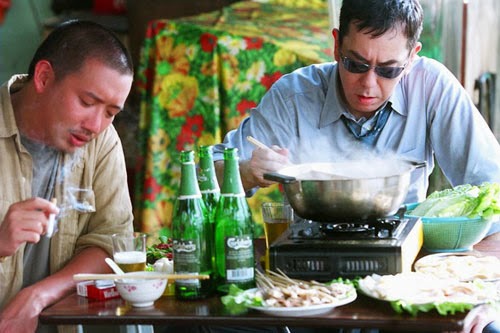
First things first: Anthony Wong is in this movie. He is in three scenes and he is eating in every one of them. It’s set in Macao and was released in 2006. I’m pretty sure he filmed his scenes on his lunch breaks during the making of Exiled. Anthony Wong is the best.

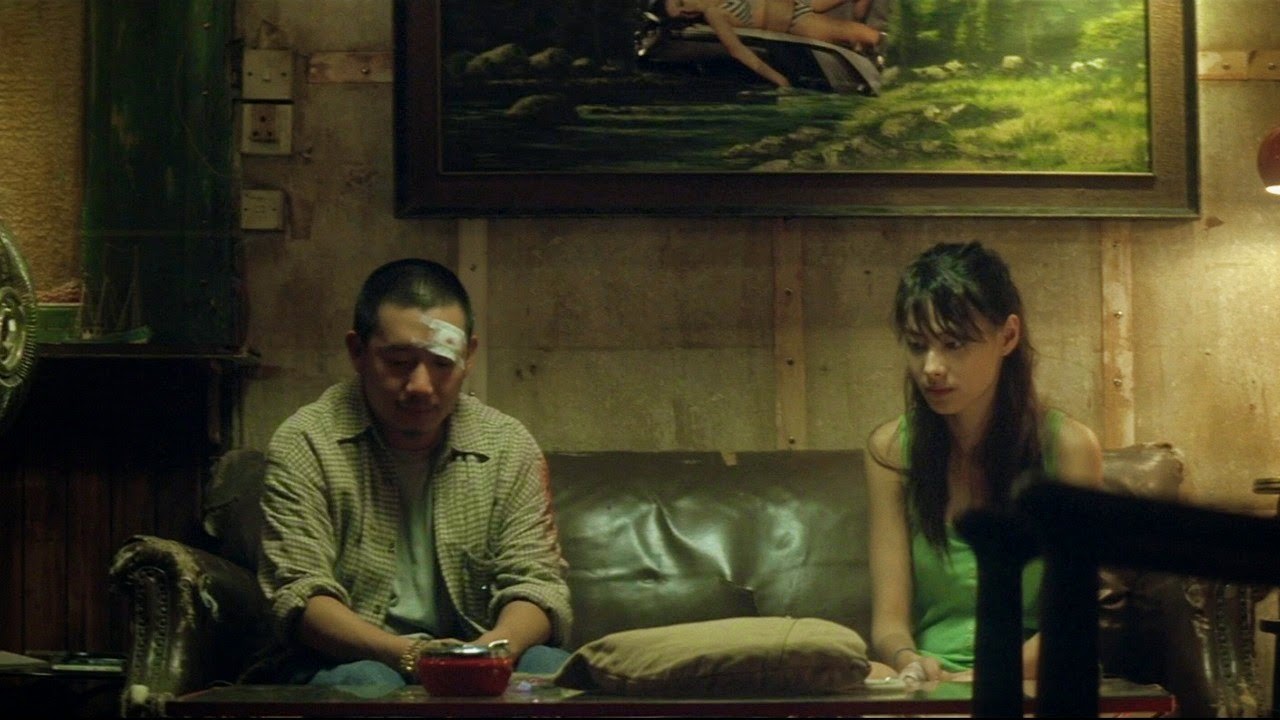
Set in the months leading up to the handover of Macao to the People’s Republic in 1999, it’s an off-beat father-daughter story. Literally off-beat, as the film has a rhythm I’ve never seen before. A seemingly inexplicable event will be shown, followed by the scenes which explain what happened. For the first half hour or so this weird push-pull structure slowly draws you into the story of a corrupt cop who meets his 16 year old daughter and tries to help her find her lost dog.

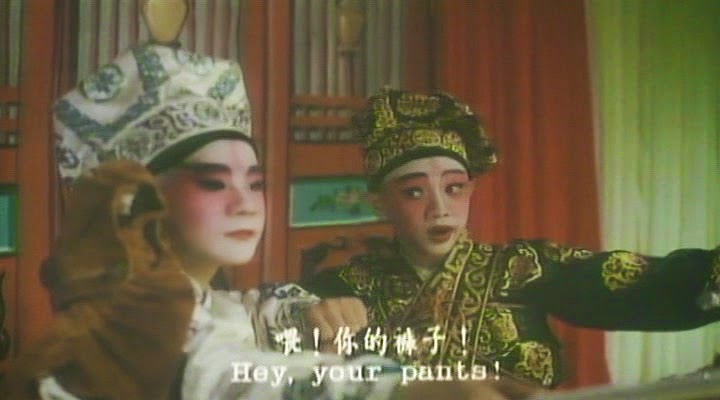
The dog is named Isabella, and so is the lead actress. A Portuguese name for a movie about a city moving on from its Portuguese past. Isabella Leong plays the daughter. 18 years old at the film’s release, she was already a pop star and from her performance her, well on her way to a great film career. Spindle-limbed, all elbows and knees bursting across the screen with a manic energy that blows apart her father’s sad decadent life. Their scenes in her father’s languid, dilapidated apartment recall the middle section of Pen-Ek Ratanaruang’s masterpiece Last Life in the Universe, a joyless space revivified. Leong is strikingly pretty, with sharp eyebrows and melancholy eyes. She appears to have retired from music and film in 2009 (after her only American film, the dreadful The Mummy: Tomb of the Dragon Emperor, a film mostly notable for wasting both Jet Li and Michelle Yeoh). That year, she married Richard Li, the son of Li Ka-shing, a Hong Kong legend and one of the richest men in Asia (he appears as a character in Peter Chan’s He Ain’t Heavy, He’s My Father, played by Waise Lee), though they’ve since split up.

Anyway, as father and daughter get to know each other, bits of their pasts flash back. The dad’s relationship with her mother, as well as the police corruption scandals he is somehow involved in (the passage of time is marked by intertitles informing us of various uncovered criminal conspiracies involving the Macao police force). Also the girl’s relationship with a boy at school, one who loves her but whom she keeps at a distance, telling wild stories that don’t quite fit the truth of who her father is and what he represents. Chapman To as the father has the more difficult role, making a guy who in most respects is a lout, boorish, womanizing, drunk, violent and corrupt, not only lovable, but admirable. It’s a remarkable performance.

Set amid the crumbling colonial concrete of the city (so different from the shimmering skyscrapers of Hong Kong – there is an alien quality to Macao that is a world apart from the other colony, see it as well in João Pedro Rodrigues and João Rui Guerra da Mata’s eerie 2012 film The Last Time I Saw Macao) and scored with a wistful Iberian guitar (the score, by veteran Hong Kong composer Peter Kam, won an award at the Berlin Film Festival. Kam also did the music for Johnnie To’s Throw Down, Peter Chan’s meta-musical Perhaps Love and the first two Golden Chicken movies), director Edmund Pang Ho-cheung conjures something truly unusual: a lament for a lost world that probably wasn’t so great, and hope for an unknown future that might be even worse.

Running Out of Karma: Peter Chan’s He Ain’t Heavy, He’s My Father

Running Out of Karma is my on-going series on Johnnie To and Hong Kong cinema. Here is an index.

Peter Chan Ho-sun’s 1993 comedy is a variation on Back to the Future, with Tony Leung (Chiu-wai) sent back 30 years to see what his father, Tony Leung (Ka-fai), was like when he was young, though it presents a very different take on the past and our relation to it than Robert Zemeckis’s classic. The plot device isn’t science-fiction, but rather one of those goofy folkloric premises like the Freaky Friday variations. In this case, Jupiter crossing the Moon’s path on Mid-Autumn night causes a manhole to turn into a wish-fulfillment portal. This grounding in magic rather than pseudo-science  mirrors the larger difference between the two films, that He Ain’t Heavy is steeped in local tradition and culture (however made-up for the purpose of the film the plot is, the Mid-Autumn Festival is surely a thing) while Future values the present above all else, about instant gratification.

In Back to the Future, Marty McFly is embarrassed by his father’s weakness. He travels back in time and his manipulation of past events transforms his dad from a shy, lower-middle class geek into a paragon of Reaganite manliness: confident, wealthy and draped in pastels. In the Hong Kong version of the fable, however, Tony Leung is embarrassed by his father’s charity, by his unwillingness to engage in the kind of cut-throat economic and social ruthlessness that marked the colony as exactly the laissez-faire ideal the Reaganites desired. Traveling back in time, he sees the roots of that community: the tenement slums where dozens of people live crammed together, part of the massive immigrant wave into Hong Kong in the wake of the post-World War II Civil War which overwhelmed the colony’s capacity to house and feed its population. The disparate crew barely eking out an existence only through the help and sacrifice of the others, his father towering as the strongest and most noble among them.

The reference is to The House of 72 Tenants, a film directed by Chor Yuen in 1973. It was the first in a wave of Cantonese language hits in the colony, leading the transition away from the Mandarin language films of the Shaw Brothers (who were themselves war-time transplants from Shanghai). Chor’s film, following the episodic adventures of just such a group of slum-dwellers (think a sit-comic version of The Lower Depths), was enormously popular and remains a bedrock film of Hong Kong cinema (you can see its influence as well in Stephen Chow’s Kung Fu Hustle, among other films). Tony Leung Chiu-wai’s character in He Ain’t Heavy is actually named “Chor Yuen” and Chor himself appears in a small role as an actor in the film (when the two are introduced, someone gasps “There’s another Chor Yuen!?”).

Anyway, rather than the young man reforming his father, He Ain’t Heavy is about the younger generation (greedy, promiscuous and nihilistic as seen in countless films from the Hong Kong New Wave) learning the values their parents’ found in the slums. It’s about a son learning to appreciate the father he has, and in turn the son is changed by his encounter with history, as opposed to the other way around in the more ego-centric Hollywood film. Where the world revolves around Marty McFly, he transforms it to serve his immediate desires (nicer house, bigger car); the younger Tony Leung learns to see himself as a part of a whole, and all the more valuable and happy for it. The lesson Marty learns from that past is to ‘stand up for yourself’, which in this context means asserting your desires with a willingness to resort to physical violence, which will in turn earn the respect and love of the pretty girl next door and send the bullies of the world into groveling submission, shock and awe followed by being greeted as a liberator. The lesson Tony learns is that personal success is worthless if it is individual, that the only real happiness comes from family and community.

Running Out of Karma: Three Hong Kong Romantic Comedies

Running Out of Karma is my on-going series on Johnnie To and Hong Kong cinema. Here is an index.

Sophie’s Revenge (Eva Jin, 2009)

Zhang Ziyi is the manic pixie at the center of a swirl of CGI whimsy in this romantic comedy, which is weird because while she’s no doubt a terrific actress, she’d previously shown no aptitude whatsoever for comedy. She fares OK all things considered, showing an admirable willingness to make a complete fool of herself, as her character is repeatedly subject to all manner of slapstick abuse (drunkenness, wall climbing sabotage, a gushing catheter), though she projects adorability more than charisma.

Zhang plays a comic book artist who is dumped by her boyfriend for a popular actress (Fan Bingbing). As she plots her revenge (win the guy back and then publicly dump him) she’s helped by another guy, who falls for her. The plot is a little sloppy, and while initially enlivened by Michel Gondry/Scott Pilgrim/Pushing Daisies-esque animations and dream sequences, it becomes exhausting after the first hour or so, at which point the film kicks the plot forward with a series of unnecessary and confusing twists (at one-time her conspirator doesn’t seem to know her plan, then does, and then doesn’t again) and a lame reveal. It’s a Skittles movie: looks tasty, but you don’t want to eat the whole bag.

Zhang starred in a prequel (My Lucky Star) released last year. That film was directed by Dennie Gordon, an American TV director who also directed Joe Dirt and What a Girl Wants. The writer-director of Sophie’s Revenge, Eva Jin, doesn’t appear to have been involved in the sequel.

Love in a Puff (Pang Ho-cheung, 2010)

Watching this immediately after Sophie’s Revenge was whiplash-inducing. That film is an international co-production set in a characterless, near invisible Beijing, a high concept, glossy stab at Hollywood style romantic comedy (with Zhang Ziyi channeling everything from Bridget Jones to Caroline in the City). Pang Ho-chuneg’s romantic comedy, on the other hand, is a indie (or “indie”) take on the genre, filmed seemingly on the fly in the alleys, cellphones and nightclubs of Hong Kong at the pace and rhythm of everyday life. Where Sophie’s Revenge was a big hit, Love in a Puff saw its box office take suffer when it was given a Category III rating. Hong Kong’s Category III is roughly a combination of America’s R and NC-17 ratings. It’s traditionally the home of porn and ultra-violence and horror. There’s no such thing in Love in a Puff, which as far as I can tell got the rating simply because of its profane language, or in other words ‘No other Hong Kong movies in recent memory give a more vivid sense of how Hong Kong people talk in real life.’ (Perry Lam in Muse Magazine).

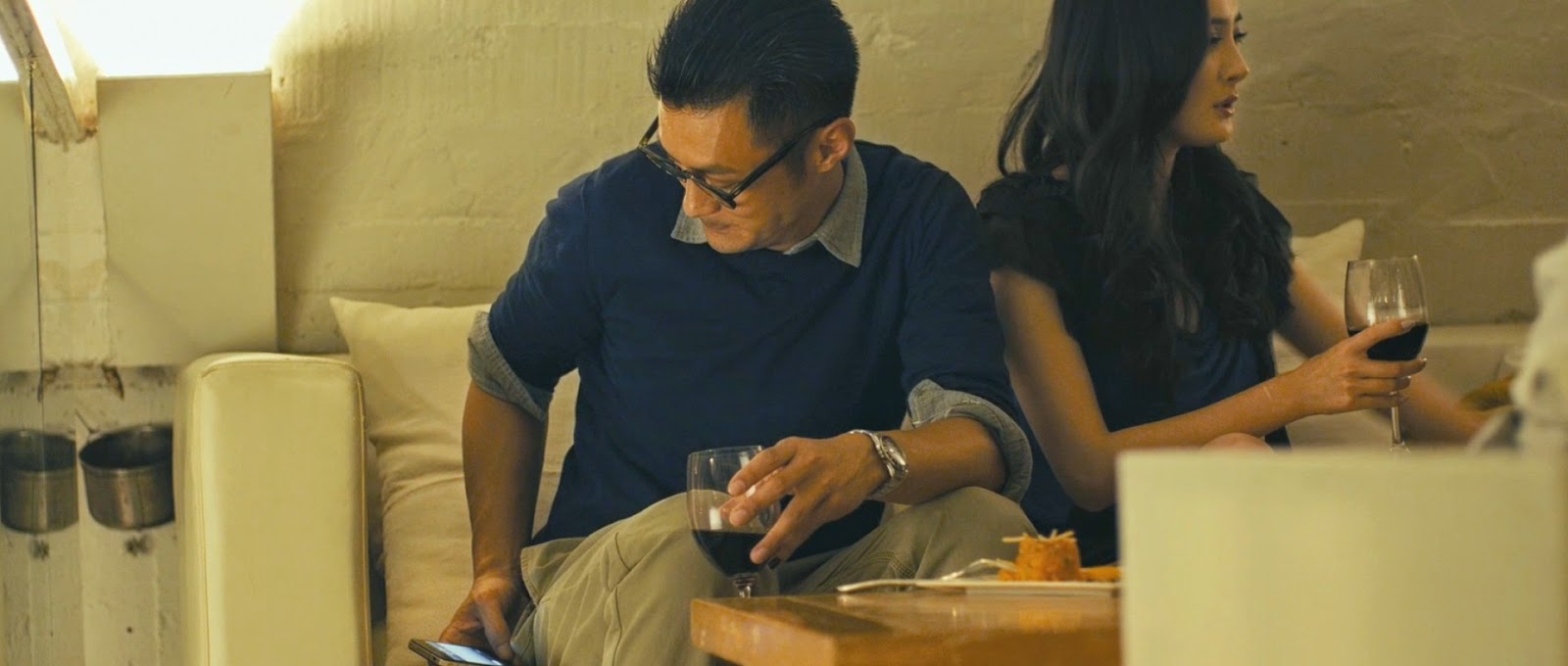
The film follows the meeting and developing relationship of Cherie (Miriam Yeung) and Jimmy (Shawn Yue) over the course of a week. The two meet at a communal smoking area, Hong Kong having initiated an anti-indoor smoking ordinance, driving the tobacco addicts into the few remaining dark corners of the city. Pang intersperses short interviews with the various characters, in the style of TV mockumentary-style confessionals, but the bulk of the film is devoted to following the characters and the very small moments that lead them to fall in love. It’s shot in the peripatetic style that’s become international shorthand for Realism!, but with the off-hand kind of pictorial virtuosity that defines Hong Kong cinema. Where the images of Sophie’s Revenge are pretty but artificial, manufactured, Pang’s images are just as colorful, just as beautiful, but seem to arise, like the love story itself, spontaneously out of Hong Kong itself.

Love in the Buff (Pang Ho-cheung, 2012)

Pang Ho-cheung’s sequel to Love in a Puff, released two years later but following the previous film directly. Cherie and Jimmy, after dating for some time, breakup and move, separately, to Beijing. There they strike up new relationships (Jimmy with a flight attendant played by Mi Yang (who looks so much like someone but I can’t figure out who); Cherie with a very nice bald guy), but when they meet they’re inevitably drawn back together.

While not as ground-breaking as the first film, both in the language (toned down) and the characters (inevitable, since we already know these two people so well), it is a step forward in filmmaking for Pang. Gone are the funny but otherwise obtrusive interview segments and the camera is a little more grounded. We do get some meta-comic guest appearances from Ekin Cheng, Huang Xiaoming and Linda Wong that are reasonably successful, but it’s mostly the performances of Miriam Yeung and Shawn Yue that make this one so compelling. Yeung won the Best Actress Hong Kong Film Award for her performance, and Yue is just as good, with an understated, cock-eyed charm reminiscent of a young Chow Yun-fat.

Before watching these films, I’d known Pang only as the author of the novel that Johnnie To’s Fulltime Killer was based on (he wrote it in his mid-20s). I’m putting him firmly in the Subject for Further Research column.

On Primary Colors

“Come back, Shane! Run for president!” 

Bill Clinton would have made a terrific Roman emperor. His personal shortcomings (gluttony and lust) would have been minor blemishes, expected really, and his intelligence and genuine desire to do good would have had the chance to flourish. As it is, the need to compromise for political reasons (the fury with which his opponents attacked him fueled in no small part by their disbelief that the American public simply didn’t care that he lied about sex) severely blunted any positive effect he may have had and the generational hope of his presidency ended up mired in half measures.

Of course, this only makes him a perfect avatar of the Baby Boom generation, colossally self-obsessed and self-mythologizing, with little of substance to back it up (the flip side is his successor, the only other Boomer president, driven by self-righteousness to countless national disasters).

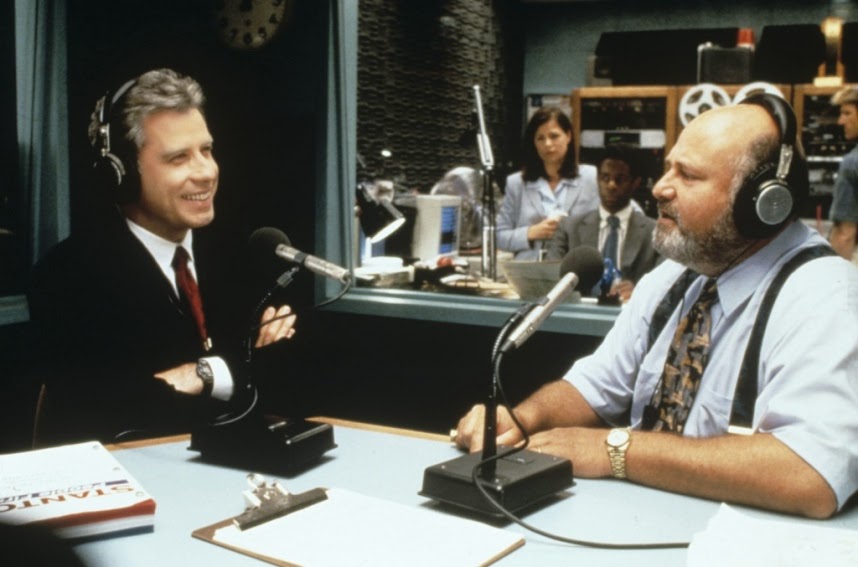
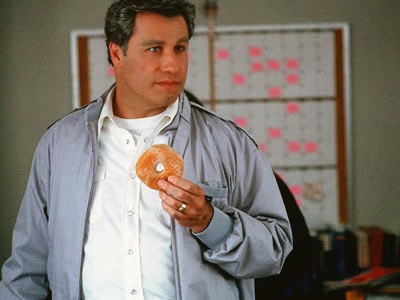
Mike Nichols’s film is much funnier than it should be, considering its basis in a novel by a political reporter, thanks largely to Elaine May’s script (if she and Stanley Donen actually get that rumored film in motion, I hope Billy Bob Thornton and Kathy Bates are around to deliver her lines). Nichols direction is crisp and a bit blunt, the camera tracing circles around the actors in moments of moral entrapment, a long slow zoom into Edward Hopper’s Krispy Kreme, but for the most part the emphasis is on performance and dialogue. The film when received was largely criticized for sagging a bit towards the end, as it becomes less about the mechanics of a political campaign and more a rumination on a moral dilemma. On the contrary, this transformation might be its greatest strength, if it isn’t quite as fun as Billy Bob unleashing his python.

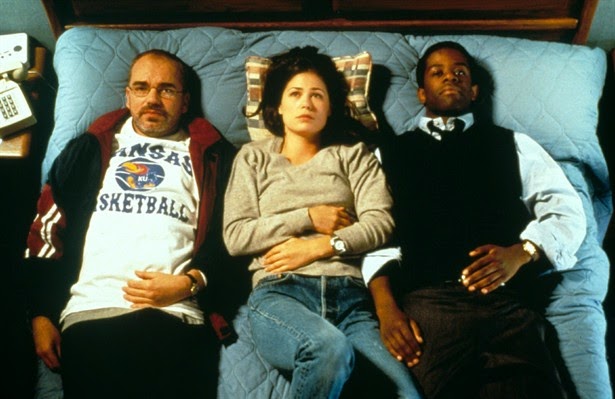
Just how far are we willing to compromise with our votes, how much are we willing to forgive? Audience avatar Henry Burton (played by Adrien Lester, the only no name in the cast (at least by Hollywood standards, he’s a British theatre and TV star), in a role that probably should have been Don Cheadle’s), a young operative notably a generation younger than the Clintons, says early in the film that he’d rather support a man who believes the same things he does but lies about it to get elected than a man who is honest and ineffectual. The second half of the film puts that cynical theory to the test.

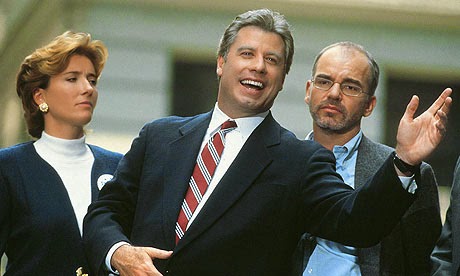
By making candidate Jack Stanton’s crimes much worse than anything Bill Clinton has been accused of, the film is working out the logical conclusions of the beliefs that must have been uttered by Clinton’s staffers and supporters during his campaign and presidency. It’s a divergence from historical record only in fact, not in theory, a reducto ad absurdum of Clinton’s lusts and evasions. It complicates the film’s relation to history, so thinly veiled at times (Thornton’s James Carville, Emma Thompson’s Hillary Clinton stand out in particular, but also Kathy Bates’s conflation of Betsey Wright and Vincent Foster), but ultimately this is not a docudrama of historical recreation (like Oliver Stone’s W. or the Jay Roach/Danny Strong HBO movies Recount and Game Change, let alone a fantasy of a Hawksian White House as in its most direct descendant, Aaron Sorkin’s The West Wing). It turns instead into something far more ambitious: a meditation on generational compromise, on how the idealism of the 60s died in the 90s, pinning the blame not on a vast right wing conspiracy, but on the old hippies themselves.

It ends with Burton refusing to compromise any further. Deciding that large scale, national politics is too inevitably corrupt for him, he resolves to work small, to become a community organizer. Another generation’s ideal of hope.

The Best 2014 (and 2013) Movies of the Year (So Far)

As I did last year, this is going to be two lists. The first is the Best Films of 2014 (So Far), which is a pretty small list as I’ve only seen 10 movies that were first released this year. This is the Top Five, with links to where I’ve written and/or talked about them.

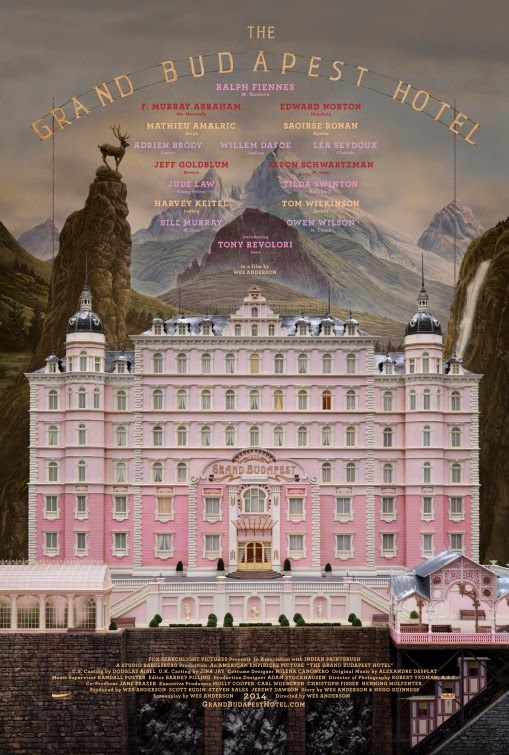
1. The Grand Budapest Hotel (Wes Anderson)

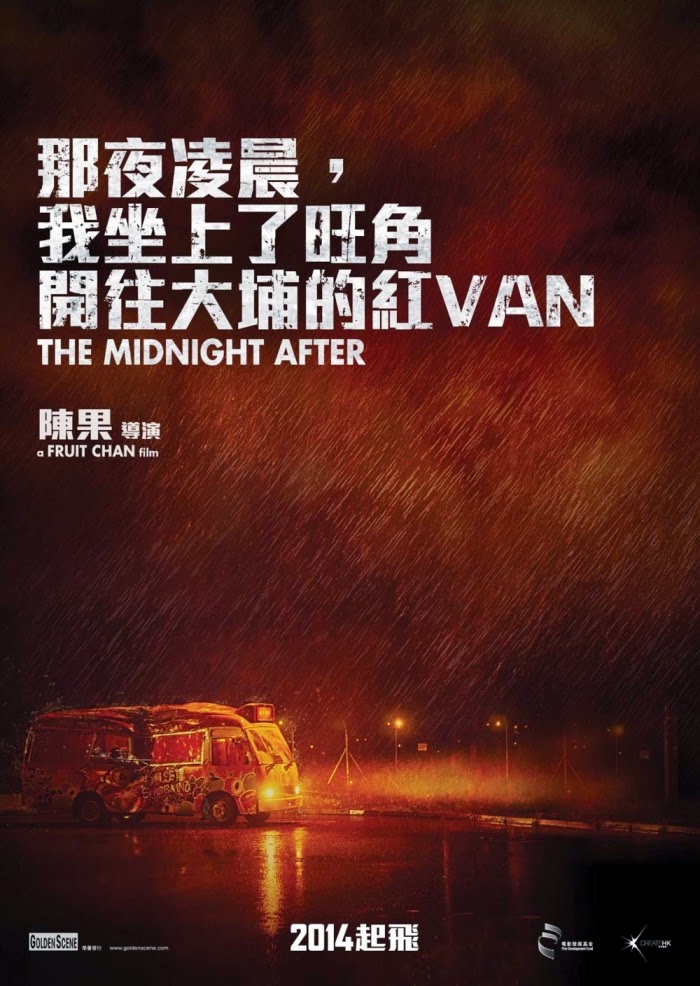
2. The Midnight After (Fruit Chan)

3. Journey to the West (Tsai Ming-liang)

4. Boyhood (Richard Linklater)

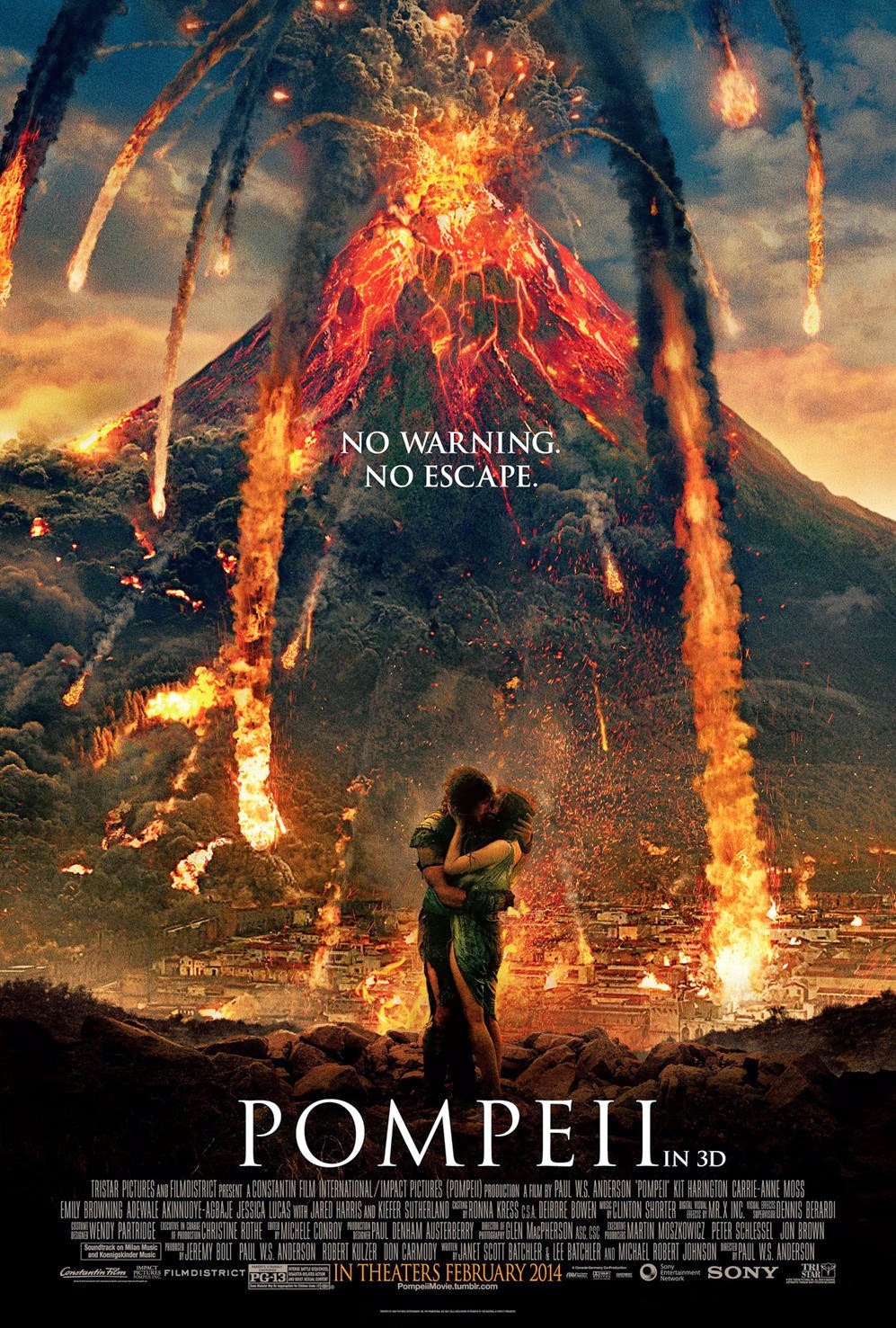
5. Pompeii (Paul WS Anderson)

The other list is the Best 2013 Films of 2014 (So Far), which includes all those movies that were first released last year but only made it to a general audience venue in the US in the past six months. These are all officially part of the 2013 section of my year-by-year rankings, but you may find them on the 2014 lists of the temporally confused or negligent.

1. La última película (Raya Martin & Mark Peranson)

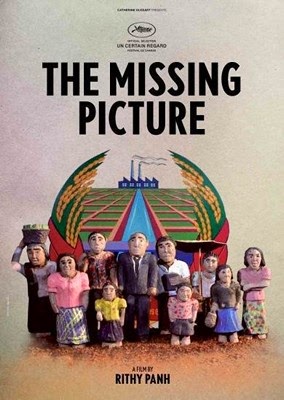
2. The Missing Picture (Rithy Panh)

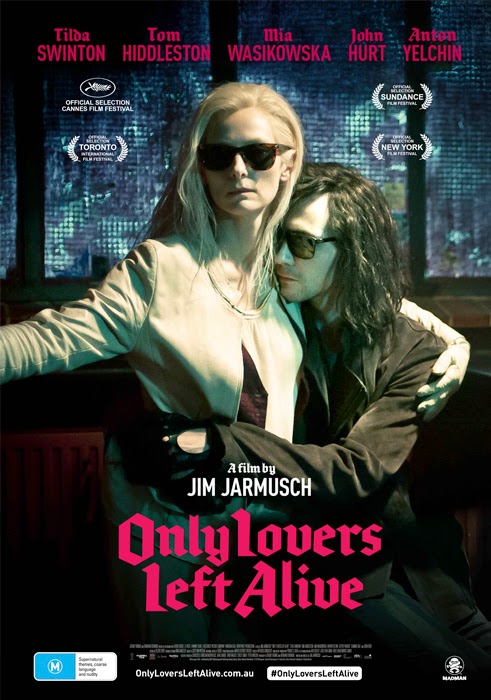
3. Only Lovers Left Alive (Jim Jarmusch)

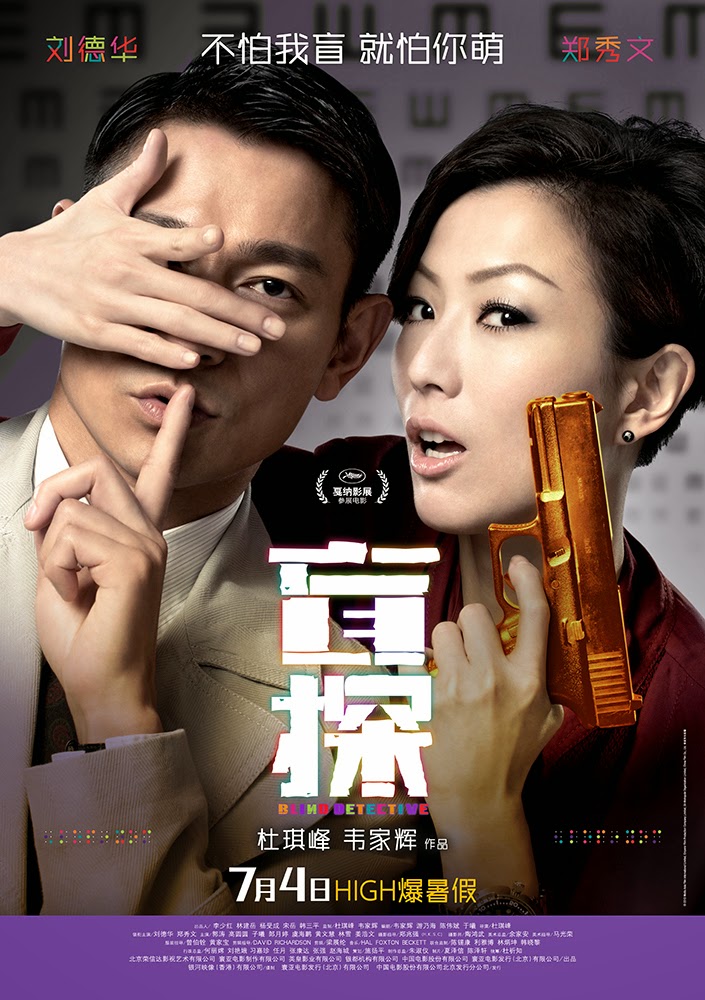
4. Blind Detective (Johnnie To)

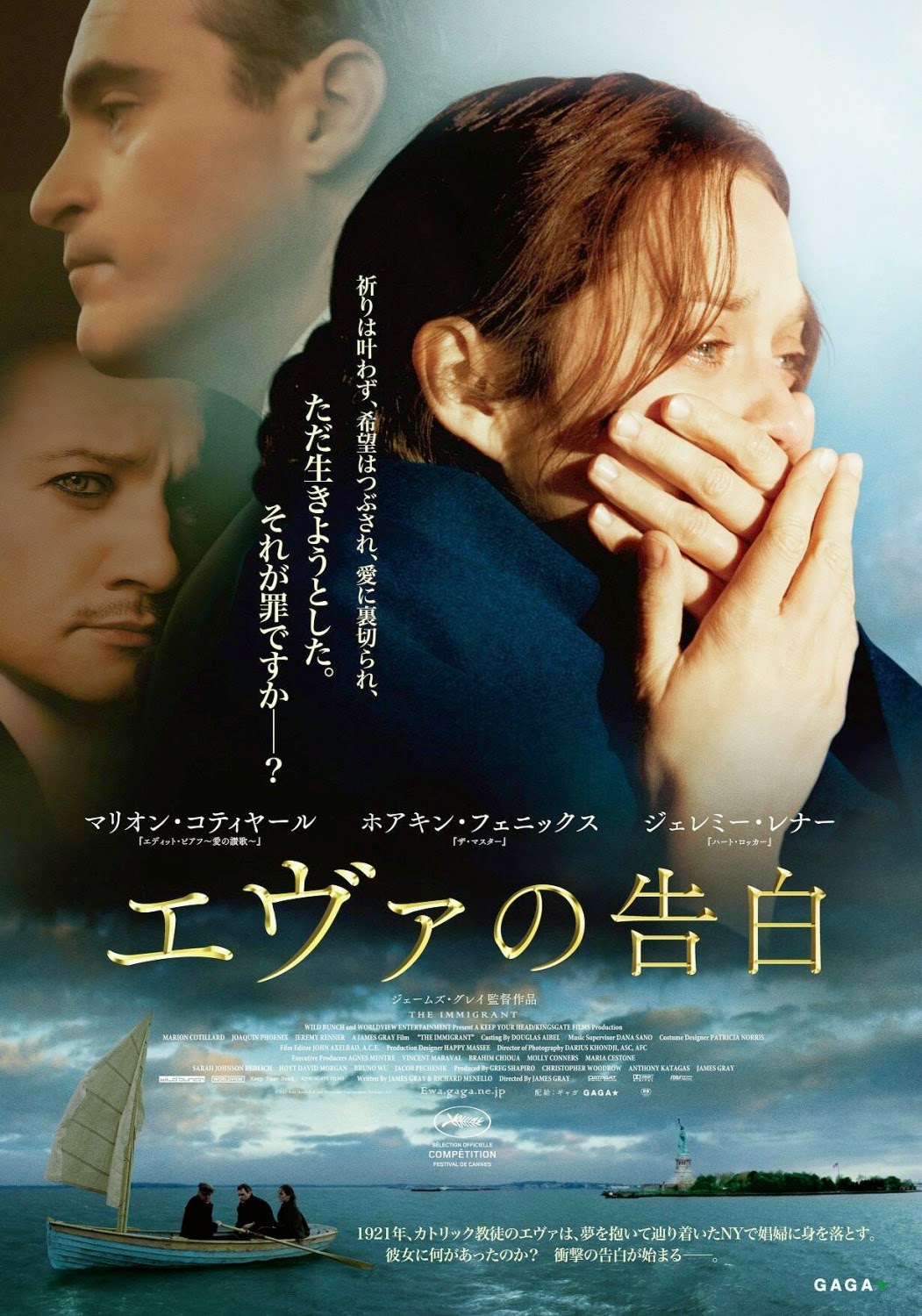
5. The Immigrant (James Gray)

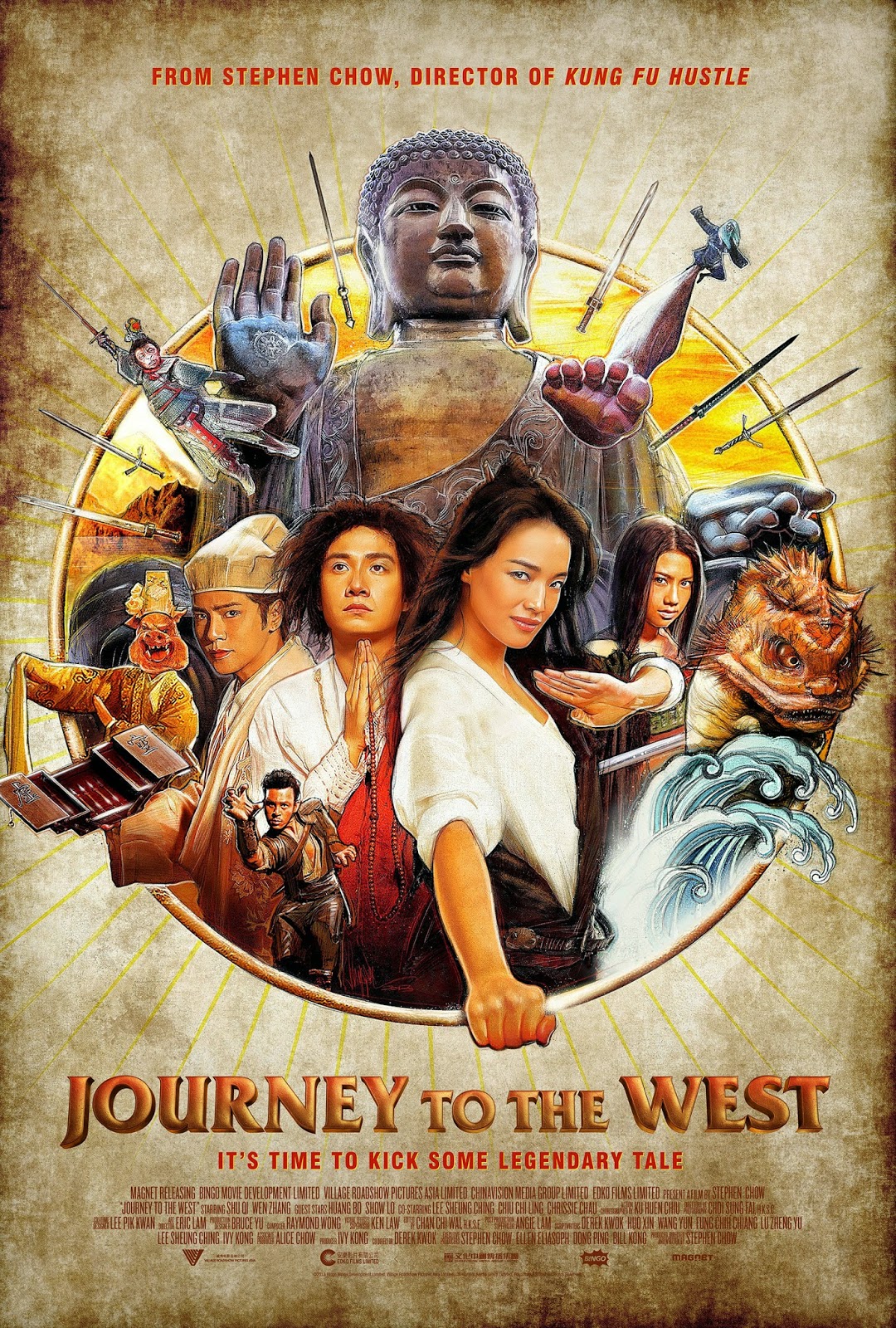
6. Journey to the West: Conquering the Demons (Stephen Chow)

7. Stray Dogs (Tsai Ming-liang)

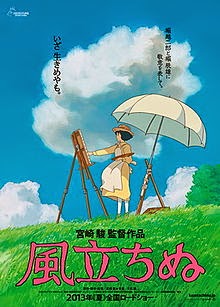
8. The Wind Rises (Hayao Miyazaki)

9. A Spell to Ward Off the Darkness (Ben Rivers & Ben Russell)

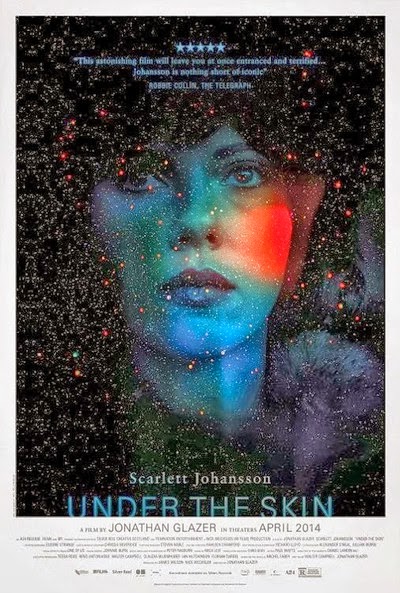
10. Under the Skin (Jonathan Glazer)

This Week in Rankings

Between buying one house, moving into it and selling another house, updates have been spotty around here lately. I made it to a few films at this year’s Seattle International Film Festival, with written reviews here of The Midnight After, Night Moves and Unforgiven, and the rest covered on our Festival Episode of The George Sanders Show. I also did an episode of They Shot Pictures on Lau Kar-leung (here’s a review of his Martial Club, and here’s a general Lau Index). I also wrote a bit about the Terminator movies and The Bride with White Hair and put together a whole bunch of lists of War Movies.

These are the movies I’ve watched at rewatched over the last several weeks and where they place on my year-by-year rankings. Short reviews for almost all of them, along with various lists and stuff, can be found over at letterboxd.

Symphonie diagonale (Viking Eggling) – 11, 1924
Foreign Correspondent (Alfred Hitchcock) – 21, 1940
Meshes of the Afternoon (Maya Deren & Alexander Hammid) – 5, 1943
Hatari! (Howard Hawks) – 7, 1962
The Love Eterne (Li Han-hsiang) – 7, 1963

Dead End (Chang Cheh) – 4, 1969
The Singing Thief (Chang Cheh) – 16, 1969
The Sword (Jimmy Wang Yu) – 29, 1971
The Spiritual Boxer (Lau Kar-leung) – 11, 1975
Challenge of the Masters (Lau Kar-leung) – 14, 1976

Dream of the Red Chamber (Li Han-hsiang) – 8, 1977
The 36th Chamber of Shaolin (Lau Kar-leung) – 2, 1978
Heroes of the East (Lau Kar-leung) – 9, 1978
Shaolin Mantis (Lau Kar-leung) – 14, 1978
Dirty Ho (Lau Kar-leung) – 3, 1979

The Shadow Boxing (Lau Kar-leung) – 21, 1979
My Young Auntie (Lau Kar-leung) – 7, 1981
Martial Club (Lau Kar-leung) – 10, 1981
One from the Heart (Francis Ford Coppola) – 6, 1982
Legendary Weapons of China (Lau Kar-leung) – 12, 1982

Legend of a Fighter (Yuen Wo-ping) – 19, 1982
Cat vs. Rat (Lau Kar-leung) – 36, 1982
The Lady is the Boss (Lau Kar-leung) – 18, 1983
Eight Diagram Pole Fighter (Lau Kar-leung) – 3, 1984
The Terminator (James Cameron) – 11, 1984

Beverly Hills Cop (Martin Brest) – 32, 1984
Big Trouble in Little China (John Carpenter) – 14, 1986
Three Amigos (John Landis) – 31, 1986
Martial Arts of Shaolin (Lau Kar-leung) – 41, 1986
White Hunter, Black Heart (Clint Eastwood) – 12, 1990

Tiger on the Beat 2 (Lau Kar-leung) – 47, 1990
Terminator 2: Judgement Day (James Cameron) – 37, 1991
Last Action Hero (John McTiernan) – 15, 1993
The Bride with White Hair (Ronny Yu) – 16, 1993
Drunken Master III (Lau Kar-leung) – 63, 1994

Virgin Stripped Bare by Her Bachelors (Hong Sangsoo) – 7, 2000
Legend of the Fist: The Return of Chen Zhen (Andrew Lau) – 14, 2010
Pitch Perfect (Jason Moore) – 15, 2012
The Immigrant (James Gray) – 7, 2013
Night Moves (Kelly Reichardt) – 42, 2013

Unforgiven (Lee Sang-il) – 54, 2013
The Midnight After (Fruit Chan) – 2, 2014
Black Coal, Thin Ice (Diao Yinan) – 6, 2014
Transformers: The Premake (Kevin B. Lee) – 7, 2014
Once Upon a Time in Shanghai (Wong Ching-po) – 8, 2014

Lau Kar-leung

The latest episode of They Shot Pictures went up today, wherein I talk about Hong Kong kung fu director Lau Kar-leung with Matt Lynch and CJ Roy. You can listen to or download the show over at the podcast website or via iTunes.

Along with that, I decided to index the various reviews of Lau’s movies I’ve written over the last year and a half, most of which were part of the Summer of Sammo and Running Out of Karma series (I did a similar index earlier this year for Tsui Hark).

Long Reviews:

Executioners from Shaolin (Lau, 77) – Dec 21, 2012
Mad Monkey Kung Fu (Lau, 79) – Dec 27, 2012
Dirty Ho (Lau, 76) – Jun 30, 2013
The Spiritual Boxer (Lau, 75) – Jul 15, 2013
Martial Club (Lau, 81) – Jun 11, 2014

Capsules:

Drunken Master II (Lau, 94) – Jun 26, 2013
Challenge of the Masters (Lau, 76) – Jun 29, 2013
Tiger on the Beat (Lau, 88) – Jul 01, 2013
Eight Diagram Pole Fighter (Lau, 84) – Jul 03, 2013
Drunken Monkey (Lau, 03) – Jul 08, 2013

The Spiritual Boxer (Lau Kar-leung, 75) – Jun 06, 1014
Black Coal, Thin Ice (Diao Yinan, 14) – Jun 07, 2014
Challenge of the Masters (Lau Kar-leung, 76) – Jun 09, 2014
The Love Eterne (Li Han-hsiang, 63) – Jun 11, 2014

The Shadow Boxing (Lau Kar-leung, 79) – Jun 12, 2014
Cat vs. Rat (Lau Kar-leung, 82) – Jun 14, 2014
Heroes of the East (Lau Kar-leung, 78) – Jun 15, 2014
My Young Auntie (Lau Kar-leung, 81) – Jun 16, 2014
Shaolin Mantis (Lau Kar-leung, 78) – Jun 17, 2014

The Lady is the Boss (Lau Kar-leung, 83) – Jun 17, 2014
Martial Arts of Shaolin (Lau Kar-leung, 86) – Jun 18, 2014
The 36th Chamber of Shaolin (Lau Kar-leung, 78) – Jun 19, 2014
Drunken Master III (Lau Kar-leung, 94) – Jun 20, 2014
Tiger on the Beat 2 (Lau Kar-leung, 90) – Jun 20, 2014

The Dream of the Red Chamber (Li Han-hsiang, 77) – Jun 21, 2014
Eight Diagram Pole Fighter (Lau Kar-leung, 84) – Jun 21, 2014
Dirty Ho (Lau Kar-leung, 79) – Jun 22, 2014

Running Out of Karma: Ronny Yu’s The Bride with White Hair

Running Out of Karma is my on-going series on Johnnie To and Hong Kong cinema. Here is an index.

All the same comic book mythology elements as so many other post-Zu: Warriors from the Magic Mountain wuxia films, A Chinese Ghost Story, Swordsman II and Ashes of Time in particular, but director Ronny Yu slows the pace down, both in plot and editing, which allows more time to take in the phantasmagoric visuals (Hong Kong blues and reds dominate of course) and the pure melodrama of the doomed romance plot. Li Han-hsiang’s 1977 Dream of the Red Chamber (an early starring role for Brigitte Lin, seen here at the pinnacle of her career) similarly revels in tragedy, spending most of its final half on just a few scenes as the lovers lament the forces that have led to their destruction, teasing out the anguish to epic lengths. Something similar is at work here, mounting a different kind of sensory assault than the Tsui Hark-Ching Siu-tung whiplash school (as in Ching and Johnnie To’s Heroic Trio films, also released in 1993). Yu appears to have conceived this as less a wuxia film (though it takes place in the world of flying Wu Tang swordsmen and enchanted Siamese twin devils) and more a purely tragic romance, a Romeo and Juliet tale, but with demons and magic and stuff.

Set at the end of the Ming Dynasty, the invasion of the Manchurian Qing forms the background for the tale (though it could just as well have been set 1500 years earlier, at the dawn of the Qin Dynasty for how ancient its world seems). Leslie Cheung is the favored student of the head of the 8 Clans, a confederacy of martial arts organizations (he’s part of the, ahem, Wu Tang Clan). But, as he tells us in wistfully voice-overed flashbacks that were a Cheung trademark, he’s a more sensitive and romantic soul than the hardened warriors that surround him, barely interested in joining in the Clans’ various wars (versus the Qing as well as more supernatural enemies). When he meets Brigitte Lin, a Wolf Girl (literally she was raised by wolves), they fall in love, despite the fact that she’s the top assassin for the Evil Cult (a name which I assume sounds better in Chinese), which are bent on destroying the 8 Clans.

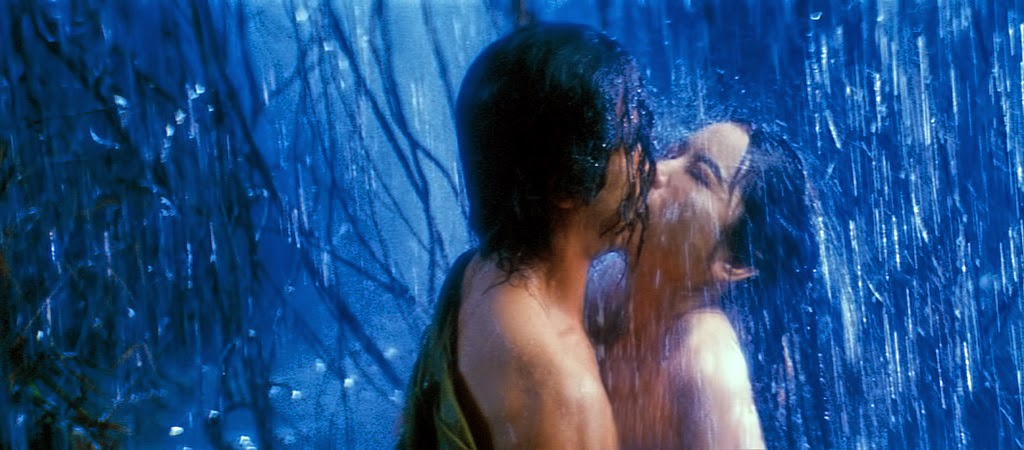
Lin and Cheung spend a lengthy idyll together in a cave under a waterfall, frolicking and sucking out poison and making grand pledges to the gods and the elements. But eventually they must return to their respective sides and ask to be set free so they can withdraw from worldly wars and just hang out together, possibly somewhere dry. This leads to the film’s greatest (only?) act of heroism, as Lin walks out of the Evil Cult, across hot coals and through a gauntlets of murderous savages beating her with sticks (she’s not allowed to use her kung fu, she has to leave like a normal common person). But, tragically of course, Cheung does not match her commitment. He returns home to find most of the rest of the Wu Tang slaughtered, including his master. Everyone assumes Lin did it (because she’s the assassin for the Evil Cult) and when Cheung asks her and she denies it, he doesn’t believe her. As is to be expected, this act of betrayal, of faithlessness on Cheung’s part, turns Lin into a witch with ghostly white hair which she then uses to kill all the rest of the Wu Tang.

Even still, she returns at the end to save Cheung from the Siamese twins. The film ends inclusively (there was a sequel, directed by David Wu, released later a few months later in 1993). Cheung had been telling us the story ten years in the future, where he’s apparently spent the intervening decade sitting on a melancholy rock waiting for a magic flower to bloom, quietly singing pop ballads to himself, and thinking about how terrible men are. The credits roll over highlights from the movie we’ve just seen, Cheung’s song on the soundtrack, a flashback of a flashback.

Running Out of Karma: Lau Kar-leung’s Martial Club

Running Out of Karma is my on-going series on Johnnie To and Hong Kong cinema. Here is an index.

In the prologue to this 1981 film, Lau Kar-leung himself comes on stage to tell us about some of the unwritten rules of lion-dancing, the ways one dancer can offend another and thus incite a brawl (blinking your eyes, lifting a leg, sniffing the other lion’s butt). The next scene then involves just such a lion dance, where one club intentionally provokes another, nearly leading to an all-out brawl. Explanation followed by narrative demonstration.

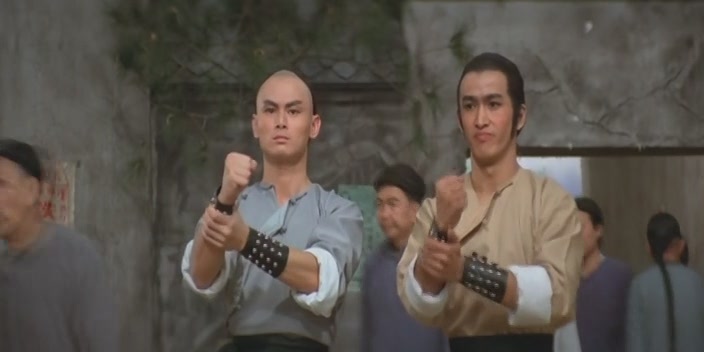
The bulk of the movie though (in fact we never really return to lion-dancing) follows Gordon Liu as the young Wong fei-hung (reprising his role from Lau’s earlier Challenge of the Masters, though this doesn’t appear to be considered a direct sequel) as he and his buddy (Hsiao Hou) from a rival club engage in friendly competition and raise the ire of another, more evil school. At stake is the respect of a visiting Northern kung fu master (played by Wang Lung-wei, who played one of the primary villains in Chang Cheh’s Shaolin cycle), invited by the evil school to help give them an edge in prestige versus their Southern rivals, led by Wong’s father’s school. The plot then revolves around the intricacies of the social codes that the clubs have established for themselves, the esoteric ways in which they can be violated, and the clever means the up-standing heroes have of resolving the conflicts with minimal bloodshed.

Similarly, Lau explores the intricacies of Wong’s Hung Gar fighting style, notably in the film’s final fight, set in a narrow alleyway. Lau and Liu demonstrate how the different modes of the technique are designed for confined spaces (6 feet, 4 feet, and less), spaces endemic to the overcrowded cities of the South (Guangzhou and Hong Kong in particular) neatly conveying not merely the spectacle of actors doing cool stuff on screen, but the ideology behind why the actor is moving the way he is. No major director is better able to utilize the kung fu film as pedagogic tool than Lau Kar-leung, or more insistent about doing so.

Thus we get not merely and explication of the ideology governing the martial clubs, but an explanation of the ideology governing the specific martial art practiced by Wong Fei-hung (a real person, remember: his disciple Lam Sai-wing was the teacher of Lau Cham, who was the father and adopted father of Lau Kar-leung and Gordon Liu, respectively). Like Challenge of the Masters, it presents the heroic ideal version of Wong (far from Yuen Wo-ping and Jackie Chan’s irreverent Drunken Master), a young version of the Confucian patriarch played by Kwan Tak-hing in dozens of films from the 1940s through the 1960s. As such it is a conservative film, or at least a classicist one, attempting to preserve and record an ideology that was quickly on the way out. Codes in Hong Kong films are usually there to be subverted: their contradictions teased out in melodramas that inevitably lead to tragedy and death, heroic bloodshed. Here Lau gives us an alternative to the Chang Cheh/John Woo/Johnnie To tradition, one where it is possible to navigate the competing interests and loyalties and drives of the martial world without anyone having to die, heroically or otherwise. But it takes a Wong Fei-hung to do it.

SIFF 2014 Index

This is an index of my coverage of the 2014 Seattle International Film Festival:

Reviews:

The Midnight After (Fruit Chan, 14) – May 25, 2014
Night Moves (Kelly Reichardt, 13) – May 27, 2014
Unforgiven (Lee Sang-il, 13) – May 28, 2014

Capsules:

Once Upon a Time in Shanghai (Wong Ching-po, 14) – May 28, 2014
Black Coal, Thin Ice (Diao Yinan, 14) – Jun 07, 2014

Podcast:

The George Sanders Show #37: The 2014 Seattle International Film Festival

Ranking:

1. The Midnight After
2. Black Coal, Thin Ice
3. Once Upon a Time in Shanghai
4. Night Moves
5. Unforgiven