Movie Roundup: All Saints’ Day Edition

Trying to catch up on what’s been a busy month of movie watching and working. So many movies, so little time to not blog.

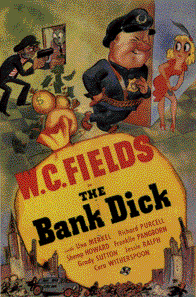
The Bank Dick – My first W. C. Fields experience is a happy one with this quite hilarious misanthropic fantasy about an old drunk who accidentally foils a bank robbery and gets a job out of it. Complications ensue when he encourages his prospective son-in-law to embezzle some money in order to invest it on the eve of the bank examiner’s inspection. The supporting actors are rather poor, barely above the level of props for Fields’s brilliant combination of laziness, solipsism, alcohol and spite. Definitely a subject for further research.

Nothing Sacred – Fredric March and Carole Lombard star in this screwball comedy about a reporter writing a series of stories on a young girl dying from radium poisoning. Turns out the girl isn’t dying after all, but just pretending to get a free trip to New York. Girl and reporter fall in love and madcap hilarity ensues. Lombard’s terrific, as usual, but March is way too stiff and dull for this genre, lacking the fluidity of Cary Grant or Jimmy Stewart. It’s an entertaining enough film, though shot in an early version of Technicolor that looks way too green.

Ball Of Fire – This Howard Hawks screwball comedy stars Gary Cooper as the head of an eccentric group of brainy encyclopedists made up of some of the best character actors of the 30s and 40s. their little world is disrupted when they venture into the streets to further their knowledge of contemporary slang (for an encyclopedia entry) and come home with floozy Barbara Stanwyck. Stanwyck’s on the run from the cops who want her to testify against her boyfriend (Dana Andrews, a gangster). Cooper, of course, falls for the girl, apparently the first on of them those guys have seen in decades. It’s not as anarchic or brilliant as Hawks’s best comedies (Bringing Up Baby, His Girl Friday), but it’s a fun film with fine performances all around, especially by Richard Haydn (the guy who was the voice of the caterpillar in Disney’s Alice In Wonderland) as one of the wistful old professors. Even Gary Cooper managed to impress me as an actual human being, a first for him.

Smiles Of A Summer Night – This early Ingmar Bergman film is a little overlabeled as a comedy. It is instead a member of the upper-class partner switching genre, who’s most illustrious example is Jean Renoir’s masterpiece The Rules Of The Game. This film plays as a pale imitation of that one, with less characters the love geometry is less complicated, and the film lacks all the social commentary of the other, with it’s intersecting relationships between the various French classes on the eve of World War II and it’s complex nostalgia for a more civilized time. Bergman’s film, by comparison, is set at the turn of the century almost entirely among the upper class. There is a sequence with a maid and a butler in the final third of the film that to some extent works as a comparison to the more complicated lives of the rich characters, but it feels tacked on and simplistic (if not condescending) relative to Renoir’s film.
Anyway, aside from not being as good as one of the five greatest films of all-time, this is a fine film, easily the most pleasant and charming Bergman I’ve seen. the performances are all quite good, though I was surprised not to find Max von Sydow, who i believe is in every other Swedish film I’ve ever seen.

Imitation Of Life – I’ve finally seen my first Douglas Sirk film, despite the fact that I managed to write a short paper on this film in college. It’s a melodrama of the ungrateful daughter variety, with some very impressive examinations of racism, passing and white liberal hypocrisy. Lana turner plays the mom who wants to be an actress and Juanita Moore plays her maid. The two ladies also have daughters (Saundra Dee plays the grown-up white girl and Susan Kohner the grown-up black girl who wishes she wasn’t), and Turner has a love interest, the treelike John Gavin (Psycho, Spartacus). Like all of Sirk’s classics, the drama is uber-melo and the acting is heightened to (past?) the point of hysteria and the colors are vibrant and Techni. There’s a lot going on with Sirk and I really need to see more of his films and watch them a lot more closely. The number 11 film of 1959, a truly terrific year for film.

Ordet – Another Carl Theodor Dreyer classic, this time revolving around a small farming family (one father, three sons) and their religious squabble with a neighboring family as a son from one family wants to marry the daughter of another. Complicating matters is that one of the other sons is crazy (thinks he’s Jesus) and the third has a wonderful wife who faces death while giving birth one night. The film’s generally described as “a profound examination of faith and what it means to believe in God” or something, and that’s true. But the film succeeds not because of the depth of its philosophy, but because of the realism and convincing drama of its scenario and mise en scène (long shots, slow editing, theatrical, yet convincing performances, especially by the actors who play the crazy son and the father).

Bride Of The Monster – Another Ed Wood classic, though it lacks the terrifying autobiography and just plain weirdness of Glen Or Glenda or the let’s put on a show comic bravado of Plan 9 From Outer Space. Bela Lugosi plays a mad scientist who creates radioactive monsters and kidnaps a young female journalist (Loretta King) with the help of his professional wrestling henchman Tor Johnson. The acting is terrible, the props as cheap as they come and the story generic as any sci-fi film of the 50s. It’s Wood’s most successful film in this Hollywood sense, but the least interesting of his work I’ve seen.

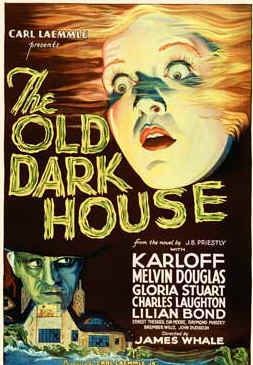
The Old Dark House – Refugees from a driving rainstorm find shelter in a creepy house populated by a demented family in this 1932 James Whale creepfest starring Boris Karloff and Charles Laughton. Even more effectively than in Frankenstein, Whale adapts the shadowy darkness of the silent German Expressionist classics to the early sound era, a time when most Hollywood directors had seemingly forgotten everything that had been learned about the creation of mood, atmosphere and meaning through image over the prior 20 years in the struggle to capture the novelty of actors actually talking (By 1932, this phase of film was thankfully on it’s way out, thanks to Whale, Howard Hawks (Scarface) and Busby Berkeley). In this sense, this film is a prototype of the cheap, atmospheric horror films Val Lewton and Jacques Tourneur would make in the 40s (Cat People, The Leopard Man, I Walked With A Zombie), which were all shadows and psychology and without much in the way of violence. This film, though, does end with a lengthy fight scene and conflagration as somebody lets the crazy brother out of his cell in the basement and he terrorizes the women, beats up the men and sets the whole dark house on fire.

Beyond A Reasonable Doubt – Dana Andrews plays a reporter who conspires with his future father-in-law to frame himself for a murder in order to prove the lunacy of applying the death penalty based on circumstantial evidence. unfortunately for him, but not too surprising, is when the old guy dies, there’s no one around to prove his actual innocence. Director Fritz Lang reportedly hated this film, and it shows in the perfunctory job he did directing it. It has none of the aggressive style and outrage of his classic anti-lynching film Fury, to say nothing of the experimentality of his noir classics (M, Metropolis, The Big Heat, etc). This is Lang going through the motions, and it works as a kind of entertainment. Like an episode of Murder, She Wrote. With Joan Fontaine as the unfortunate fiancée.

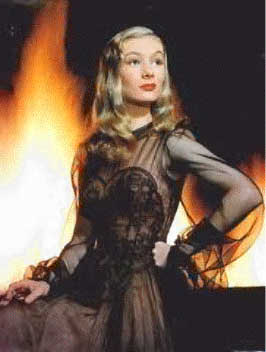
I Married A Witch – French director René Clair is responsible for some classic films which I’ve never seen (Le Million, À Nous La Liberté), but I have seen this charmingly titled Hollywood film from 1942. The adorable Veronica Lake plays the eponymous bride, who, along with her witch relatives is trapped in a tree in Puritan New England only to be released and unleashed on the family that captured her 300 years later, where, through the unfortunate application of a love spell, she falls in love with the descendent of the man who tormented her originally. The emergence of Lake and her father from their tree prison as wisps of smoke that float across the land and find themselves watching a party of swells from inside beer bottles is lyrical and lovely, while in keeping with the absurd spirit of the film. It’s just the best of many fine sequences from Clair, a director who I’ll now have to seek out more from (ah, the ever-expanding queue). Lake is wonderful as the witch, and not just because she wears a succession of quite clingy dresses. She has the ethereality necessary for playing a wisp of smoke, and the comic ability to pull off the screwballity of the comedy. Fredric March, on the other hand, is just as stiff as he was in Nothing Sacred five years earlier.

Movies Of The Year: 1957

Back to the list, while watching the Russ Meyer exploitation classic Faster, Pussycat Kill! Kill!, which Rob Zombie had the audacity to claim is not camp. Pfft, Rob Zombie. Anyway, check out The Big List for previous results, explanations and disclaimers.

13. Old Yeller – The classic Disney film of a boy and his dog notable mainly for scarring millions of children with it’s sappy act of doggy euthanasia. It seems like there was a lot more death in the Disney movies of the mid-20th century than they’d allow now, but I’d have to watch some of the “family” films out today to know for sure, and that is not going to happen.

12. Sayonara – Costume melodrama of the most mediocre variety about a group of American servicemen who fall in love with Japanese women during the Korean War. Notable as the film with the first Oscar-winning performance by an Asian actor (Myoshi Umecki as Red Buttons’ girl), but that’s about it. The cast also includes Marlon Brando, Ricardo Montalbon and James Garner. Adapted from a james Michener novel and directed by Joshua Logan, the man responsible for the Eastwood/Marvin musical classic Paint Your Wagon.

11. An Affair To Remember – Leo McCarey’s remake of his own 1939 film Love Affair stars Deborah Kerr and Cary grant as a couple who meet on a cruise and fall in love, despite each being engaged to other people. After the cruise, they agree to meet six months later at the top of the Empire State Building. A classic story, decisively influential on many a film, including Sleepless In Seattle (#61, 1993) and Before Sunrise (#9, 1995), the film itself is quiet and classically styled, with an elegance and earnestness that’s been lacking in romantic films for decades. Kerr and grant are quite good, as they always are; McCarey was a comedy writer/director going back to the early 20s, but the only other movies of his I’ve seen are The Awful Truth and Duck Soup.

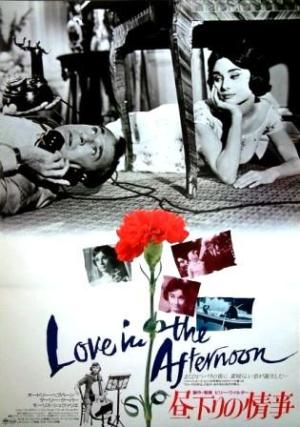
10. Love In The Afternoon – One of the mellower Billy Wilder romantic comedies, starring Audrey Hepburn as a young girl out to seduce the way too old Gary Cooper. Hepburn’s the Veronica Marsesque daughter of PI Maurice Chevalier, who’s be hired to prove that Cooper, a notorious womanizer has been sleeping with his clients wife. Hepburn falls in love with Cooper and pretends to be a slutty socialite to make him jealous. Hepburn’s as great as ever, but Cooper’s not only too old (creepy!), but neither comic nor romantic enough to be the star of a romantic comedy.

9. 12 Angry Men – Sidney Lumet’s classic film debut about a jury’s deliberations in a murder case has a terrific, all-star cast, featuring great performances from Henry Fonda, Lee J. Cobb, along with character actors Martn Balsam, E. G. Marshall, Jack Klugman, Jack Warden and Ed Begley. Based on a play, this film could very easily have fallen into the category of “filmed theater”, but Lumet manages to keep things moving and interesting despite the confined space and static, talky, nature of the story. One of those films that everyone probably saw in junior high school, but is still actually pretty good.

8. Bridge On The River Kwai – Alec Guinness stars in this David Lean epic about British soldiers in a Japanese POW camp during World War 2 who are forced to build the eponymous bridge. The battle of wills between Guinness (as the leader of the British) and Sessue Hayakawa (as the camp commandant) is wonderful, with great performances from both, especially Guinness as his character descends from hard-nosed, stiff-lipped ideal of British manliness to lunatic obsessive. The film is quite nearly ruined, unfortunately by a terrible performance (from a terribly written character) by William Holden as an American soldier in the camp who escape and leads the return to liberate the camp. In no way is anything involving Holden in this film any good at all. His character is written and acted seemingly as a parody of what the British think Americans are like (compare Holden here to Steve McQueen in The Great Escape). It’s really unfortunate, considering the rest of the film is as good as anything Lean ever did.

7. Witness For The Prosecution – Billy Wilder’s adaptation of Agatha Christie’s courtroom drama hasn’t the least relation to any kind of realistic depiction of a murder trial, but thanks to two great actors (and one terrible one) it’s a quite funny and entertaining genre piece. Charles Laughton (perhaps the ugliest, and greatest, actor in film history) stars as the defense attorney for Tyrone Power (who’s terrible), who has been accused of killing a middle-aged widow. Marlene Dietrich plays the defendant’s wife, the title character. Elsa Lanchester (Laughton’s real-life wife) also stars.

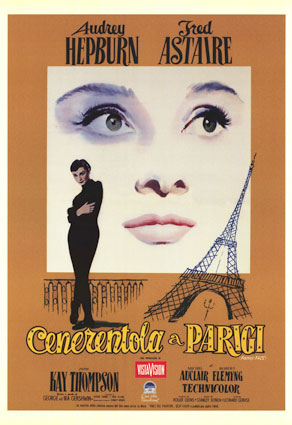
6. Funny Face – One of my favorite musicals, Audrey Hepburn stars in this Stanley Donen film as a bohemian bookworm who gets whisked away to Paris to be a fashion model for a famous photographer played by Fred Astaire. The music’s almost all Gershwin, which always helps in a musical and there’s a great supporting performance from Kay Thompson, the inventor of the word “pizzaz,” as the editor of a fashion magazine. Astaire’s way too old for Hepburn, and the dancing doesn’t especially stand out (though there’s an interesting overthetop Beat parody Hepburn performs in a club), at least relative to some of Donen’s other films like Singin’ In The Rain or Royal Wedding.

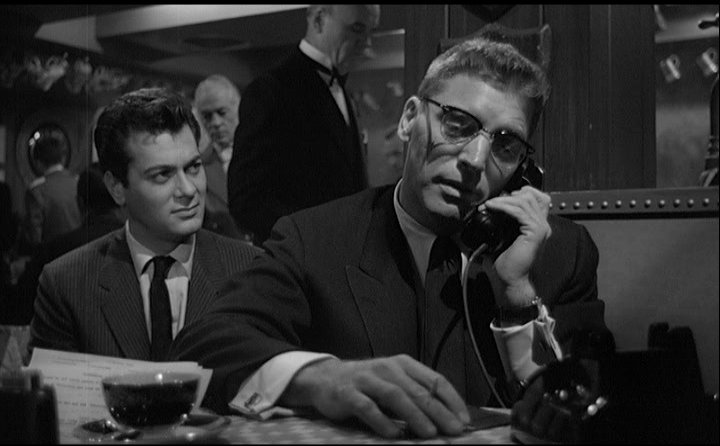
5. The Sweet Smell Of Success – Acid indictment of the nihilistic amorality of the entertainment industry starring Tony Curtis in his best role as a small-time press agent (Sidney Falco) trying to ingratiate himself with big-time gossip columnist Burt Lancaster (J. J. Hunsecker), in one of his good performances. Directed in a crisply dark noir style by Alexander Mackendrick (The Ladykillers), with cinematography by James Wong Howe. The screenplay’s even better than the visual look of the film (high praise), written by playwright Clifford Odets and the great Ernest Lehman (Sabrina, North By Northwest).


4. Paths Of Glory – One of my favorite, and one of the least misanthropist, of all of Stanley Kubrick’s films is this courtroom drama in which Kirk Douglas tries to save three men from being executed for cowardice in the wake of a disastrous and idiotic offensive during World War I. Kubrick directs in a crisp, deep focus black and white, and his depiction of the battle, a long tracking shot of the horrors of trench warfare, is one of the most powerful scenes he ever shot. All the actors are quite good, but Douglas especially stands out as the idealistic warrior-attorney. The film’s final scene, that of a young girl singing beautifully before a barroom full of rapt soldiers is the most romantic and humanist thing Kubrick ever did. And he even went and married the girl.

3. Nights Of Cabiria – Giulietta Masina gives one of the all-time great performances as the classic hooker with a heart of gold in this picaresque Federico Fellini film. There are three main sections in the film: an encounter with a celebrity, a trip with a massive crowd to a church for some religious festival, and an apparent discovery of true love. Each time Cabiria’s hope and faith is raised, beaten down and yet somehow reemerges and she goes on to her next adventure. I suppose this makes her the ideal existentialist hero, trudging on with good humor despite all the horrible things that seem to unavoidably keep happening to her.

2. The Seventh Seal – Ingmar Bergman’s masterpiece of life and Death in the Middle Ages stars Max von Sydow as a returning Crusader who meets Death on a beach and challenges him to a game of chess in one of the cinema’s better metaphors for life. While the game is going on, the Knight gets to continue his journey. Along the way he meets a young family of traveling actors. Together, they all travel through the countryside in the wake of the Black Plague, where they meet crazy villagers, flagellant priests and various other medieval types. A beautifully, even profoundly filmed existentialist meditation of the nature and meaning of life and death, with one of the great final shots in all of cinema. One of my favorite films and deservedly regarded as one of the essential classics of film history.

1. Throne Of Blood – Akira Kurosawa’s expressionist adaptation of Macbeth stars Toshiro Mifune as the tragic general who allows his (and his wife’s) ambition to lead him into betrayal, murder and insanity. Much like he later did with Ran (#1, 1985), Kurosawa doesn’t bother to adapt the language of the Shakespeare play into Japanese, but instead focuses on translating the raw emotions of the works into cinematic equivalents. Mifune is perfect here as the noble warrior who allows himself to be manipulated by a witch in the woods and his own scheming wife and then descends into a demented, elemental paranoia. Kurosawa modeled the look of the film on the Noh theater tradition (like he did with Ran and Kagemusha, #8, 1980), with mask-like faces, a slow paces and a hauntingly eerie soundtrack. The dark, dark, look of the film clearly has a lot in common with Orson Welles’s own film of Macbeth, but only Kurosawa could pull off a seen as lyrical and horrifically beautiful as the final battle sequence, when an entire forest comes alive to attack Mifune, his own soldiers turn against him and dozens, if not hundreds, of arrows are actually shot at the clearly terrified actor. the cast includes Takeshi Shimura, Minoru Chiaki and Isuzu Yamada who is very good as the Lady Macbeth character, if not quite as purely evil as Mieko Harada’s Lady Kaede in Ran. It doesn’t get as much notice as Kurosawa’s other masterpieces (let alone the Bergman film it beats out on this list) but it’s as powerful as anything he ever made.

32 Unseen films this year might be some kind of a record, if I kept track of such things. There’s a couple Samuel Fuller films, a Boetticher, a Bergman, a Chaplin, a Tashlin and an Ozu, among many others.

Wild Strawberies
The Tall T
Run Of The Arrow
Tokyo Twilight
A King In New York
3:10 To Yuma
Forty Guns
The Lower Depths
Will Success Spoil Rock Hunter?
The Enemy Bleow
A Face In The Crowd
Gunfight At The OK Corral
Desk Set
Night Of The Demon
Jailhouse Rock
The Cranes Are Flying
Heaven Knows, Mr. Allison
Aparajito
The Three Faces Of Eve
Peyton Place
Pal Joey
The Pajama Game
Raintree Country
The Wings Of Eagles
I Was A Teenage Werewolf
The Sun Also Rises
Fear Strikes Out
White Nights
Bitter Victory
La Casa Del Angel
Kiss
Les Maitres Fous

Movie Roundup: Travelogue Edition

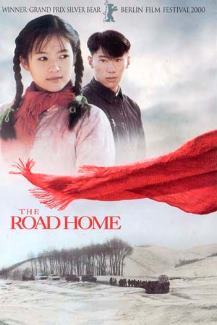
The Road Home – Favorite Actress Zhang Ziyi’s debut film is this Zhang Yimou film. Beginning in grainy black and white, a young man returns to his small village on the occasion of his father’s death. As he and his mother make funeral arrangements, we get the story of his parents’ relationship. Zhang plays the mother as a young peasant girl who becomes enamored (kind of obsessed, really) with the local teacher. It’s a love story told in small gestures and quiet rituals, filmed in the kind of beautifully tasteful color cinematography you expect (and I love) from Zhang Yimou. Speaking of Zhang and Zhang, Senses Of Cinema has an interesting, comprehensive and somewhat confusing article on House Of Flying Daggers, Hero and Crouching Tiger, Hidden Dragon. I think he’s too hard (and literal) in his criticism of Crouching Tiger (nihilism), but his complaints about Hero (fascism) are basically the same as mine. The #8 film of 1999.

Meet Me In St. Louis – Vincente Minelli’s musical ode to turn of the century small town America stars Judy Garland and Margaret O’Brien as two of several daughters of an uppers class STL family that may be moving to New York. It’s a very competent and largely inoffensive film, but aside from a number or two (Have Yourself A Merry Little Christmas, The Trolly Song) it’s not anything that I find particularly interesting. I’m generally a fan of dancing, as opposed to singing musicals, so that’s part of the problem (I like dancing musicals for the same reason I like kung fu films, by the way). But really, the film’s just so archetypal that it’s impossible to watch it today with fresh eyes.

The Heart Of The World – This short film by Winnipeg-based director Guy Maddin is one of the most vibrant, energetic and fascinating six minutes in the history of film. It’s an entire sci-fi epic on fast-forward, told in a winking homage to the montage-heavy Russian silent films. A girl, a scientist is in love with two brothers, one an actor (playing Jesus is the Passion Play), the other an undertaker. When she discovers that the world’s about to end (have a heart attack), the world falls into chaos and she falls for an evil industrialist. But she comes to her senses and saves the world. Any summary, certainly this one, is inadequate to describe this amazing film, the #3 film of 2000. Best to just watch it for yourself:

Archangel – Speaking of Guy Maddin, the only feature film of his I’ve seen is this 1990 film, a perplexing mix of Silent Cinema and campy/arty sci-fi horror. Set at the end of World War I, or so, the film revolves around a number of people with memory problems, who can’t seem to remember who they or anyone else is. As imdb effectively summarizes: “(one-legged Lt. John) Boles loves Iris, who is dead, and meets Veronkha, whom he mistakes for Iris. But Veronkha is already married to Philbin, who forgets he is married to Veronkha. Veronkha thinks Boles is Philbin. . . .” There’s also a peasant family, with a cowardly father and a mother who falls in love with the aforementioned Lt. Boles. When the family is attacked in the middle of the night by cannibalistic Bolsheviks, the father saves the son’s life with the greatest intertitle I’ve ever seen in a film: “Strangled! By an intestine!” The #6 film of 1990.

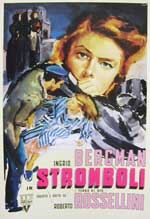
Stromboli – My first Roberto Rossellini film stars Ingrid Bergman as a WW2 refugee who marries a young Italian man to escape the refugee camp. The young man takes her to his home island of Stromboli, a conservative little village dominated by an active volcano. The volcano metaphor isn’t exactly subtle, but neither is Bergman’s performance as she becomes increasingly hysterical in her struggle against the provincialism of small-town life. But somehow, teetering on the edge of camp, it manages to be sincere and moving. I definitely need to see more Rossellini: I’ve had Open City on the tivo for months now. . . .

Queen Christina – Greta Garbo playing a cross-dressing Swedish monarch? Yee-haw! This potentially great film gets off to a great start, with Garbo’s Queen picking up a guy in a bar, this first third of the film falling somewhere between Henry V and The Crying Game. The rest of the film, unfortunately, becomes a rather dull story of class differences keeping the poor Queen and her lover apart. Competently directed by Rouben Mamoulian, with John Gilbert ineffective as the Queen’s boyfriend, but Garbo’s as amazing as ever.

The Departed – Martin Scorsese’s latest film is an adaptation of the very good Hong Kong film Infernal Affairs (#6, 2002). It’s quite different from the earlier film, both in length (much longer), tone (much funnier), and style (much more freewheeling, especially in the performances). It’s Scorsese’s best film in a long time, since Kundun at least. Matt Damon plays a gangster who goes undercover as a cop and Leonardo DiCaprio plays a cop who goes undercover as a gangster. Both are drawn to the head gangster of South Boston, played by Jack Nicholson (in a performance that starts restrained and becomes weirder and more “Jack” as the film’s sense of paranoid hysteria increases), and both have legit cops as potential father figures: DiCaprio has the ideal good father in Martin Sheen, Damon has amoral (and hilarious) company man Alec Baldwin, in a less frightening variation on his great Glengarry Glen Ross performance. And both Damon and DiCaprio (in a sharp break from the original) fall in love with a psychiatrist, played adequately by Vera Farmiga.


The film it most reminds me of is Hitchcock’s North By Northwest. It has the same kind of combination of dark humor (especially from Baldwin and Marky Mark Wahlberg’s ill-tempered cop), suspense and hidden potential depth. It’s much more entertaining than the original, though (despite an overlong middle section of Leo coming unglued) without nearly the depth of character or emotion. Any depth The Departed does have is therefore, like most of Hitchcock, not emotional but intellectual. In this way the two films are complementary instead of oppositional: I think they’re both great and each is enhanced by the other.

Like Dylan In The Movies

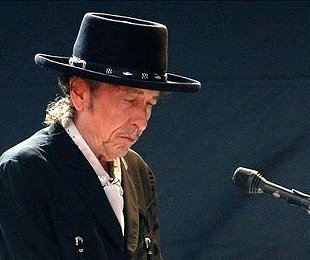
The wife and I went to see Bob Dylan at Key Arena last Friday night. The opening act, Kings Of Leon, was terrible. I didn’t think that there were bands around today that wished they were Mother Love Bone, but apparently there are. The three non-singers in the band were at least competent musicians, though lacking in creativity. The singer, and whoever is the songwriter are pretty bad. they were a complete waste of time and a bizarre thing to see before a Dylan show.

Anyway, the Dylan part of the show was amazing, perhaps the best concert I’ve ever seen. I generally say Nirvana in January of 94 or the first time I saw Dylan (June 95) when asked what the best concert I’ve ever seen was. But this one may have topped them both. My expectations were pretty low for this show. The wife and I saw him a year and a half ago and his voice was in pretty poor shape and he just looked tired and bored on the stage. He was off to the side of the stage and didn’t seem his old Dylan self.

Well, that was far from the case this time around. His voice was in top form and while he’s still playing keyboards, he threw in some harmonica and some hilarious old man dancing and pointing at the crowd. He was back to being the coolest person on the planet, a title he’s held off and on for the last 40 years or so.

I managed to write down the setlist, so here’s a short rundown of what transpired:

The show started with a very mellow, breezy version of Maggie’s Farm. It’s a common set opening for Dylan, but usually in an angry, rocking version. Instead, this , with it’s heavy emphasis on Dylan’s keyboards, sounded like a refugee of his 80s period. Second was a similarly keyboard heavy (but more conventional sounding) version of She Belongs To Me. Lonesome Day Blues was third, sounding much like it did on Love And Theft. A breezy version of Positively 4th Street, an angry song wrapped in a slow, wholesome melody that again emphasized the keyboards wrapped up the first section of the show: light, ethereal sounds disguising the true nature of the lyrics.

The highlight of last spring’s Dylan show was a blues adaptation of It’s Alright, Ma, one of Dylan’s greatest, and most angry songs. He played the same version again here, but it was an order of magnitude better. The band was more violent and Dylan’s delivery was more coherent. Next was a rather pedestrian version of Just Like A Woman, like the song itself, it was well done, but I’m just not a fan of it. Perhaps Woody Allen forever scarred me against it with Shelly Duvall’s character in Annie Hall. A conventionally ricking version of Highway 61 Revisited was next, followed by When The Deal Goes Down, the first single from Modern Times, in an identical-to-the-album version.

Next up was the highlight of the show for me, and one of my all-time favorite concert moments ever (along with the acoustic set at the Nirvana show, and Dinosaur Jr explaining my life at age 17 to me at Lollapalooza), my all-time favorite song, Tangled Up In Blue (no, I’m not afraid to be obvious, as any TINAB reader should know by now). The bulk of the song was typical of a Dylan performance of the last decade or so (he sang the multiple pronoun version while altering the lyrics of the strip club episode, gotta take the good with the bad), but it ended with (IIRC) the second harmonica solo of the night. I don’t recall Dylan playing harmonica at the last show, but this time each solo started out tentatively and then builded to a point when the full band comes in. In Tangled Up In Blue it was perfect: the whole band together, fully integrated into each other, the song and the audience (or at least, me). It was one of those transcendent moments you go to a concert (or movie) hoping to experience.

Next up was a decent, if traditional A Hard Rain’s A-Gonna Fall. For me, though, nothing tops the rollicking Rolling Thunder version of this song on Live 1975. It’s the one version where the song doesn’t feel bloated or pretentious. Watching the River Flow followed, but I have to admit I didn’t recognize it (despite putting it on a birthday mixtape for the wife just two days earlier) because of the radical bluesy reconfiguration Dylan gave it. It’s a great song., a personal favorite much akin to John Lennon’s Watching The Wheels. I’m also certain it was a theme song to something, TV show, movie, whatever, but I can’t remember what it is.

Next was a close-to-album version of Modern Times’s Workingman’s Blues #2, which brings up and interesting thing about the audience at Key arena that night. Yeah, they cheered quite loudly for the working man, but almost none of them were. They were almost entirely old and sold out. We were on the floor of the Arena, and it was dominated by folks in late middle age asking the people in front of them to sit down. Apparently those Ed Sullivan shows are wrong and in the 60s everyone sat politely at rock concerts. I even heard one guy claim that “John Cougar’s version is better than Dylan’s”. Suffice it to say this elderly yokel was wearing an annoying vest. Anyway, the set closed with a rocking, if predictable version of Summer Days from Love And Theft.

There were three encores. First was Modern Times’s opener Thunder On the Mountain. Played exactly as it appears on the album, Bob’s apparently still thinking about Alicia Keyes. Next was Like A Rolling Stone, played fairly conventionally, notable mostly for the lighting effects. At the chorus’s shout of “How does it feel?” the spotlights turned on the audience, essentially accusing them (us) of being the target of the song’s accusation against the yuppies’ ignorance of the plight of the poor. Considering the makeup of the audience, it was quite the accurate critique, not that any of them got it or anything. They’d all stand up and cheer when Dylan played the old favorites. Whenever he played a new song (three from the new album, 2 from Love And Theft) they’d sit down. Jackasses.

The show closed with an apocalyptic All Along The Watchtower, which, combined with the accusing Rolling Stone, and the angry It’s Alright, Ma left me with the feeling that Dylan’s one pissed off old man. Combined with his cooler than thou old man posing at the keyboards, and the positively ancient costuming of his band (grey suits and fedoras) he can’t help but come off as a pissed off old man scolding his fans for their superficiality and ignorance. Same as he’s been doing for 45 years. Same as it ever was.

Movie Roundup: Movie Mutations Edition

Been reading a number of movie books lately. I reread Jonathan Rosenbaum’s Movie Wars, much of which was quickly outdated by the DVD/Netflix phenomenon in the five years since it was written. I’ve been making my way through Phillip Lopate’s Library Of America Anthology of American Film Critics, which has it’s flaws but is still pretty interesting (in addition to it’s having the first Manny Farber and Andrew Sarris I’ve been able to read). In the mail today came Movie Mutations, an anthology of essays on contemporary world cinema edited by Rosenbaum and Australian film critic Adrian Martin. Can’t wait to read it.

Raise The Red Lantern – Period melodrama starring Gong Li in which she’s the newest of four wives for a castle-dwelling fellow in 1920s China. Like every other Zhang Yimou movie I’ve seen, the film is beautiful: vibrant colors, with a very structured, composed mise-en-scène, which, combined with the length of the shots and the slow pace of the film effectively inspires a sense of restriction and entrapment. Whether this atmosphere is a subtle condemnation of life in totalitarian China or simply an evocation of the unfortunate circumstances the hero finds herself in is a matter of opinion. I think Zhang’s a lot more ambivalent politically than his Western admirers like to think he is, but I haven’t seen enough of his early films to say for sure. The #8 film of 1991.

The Black Dahlia – Brian DePalma’s a hack. This mishmash of Hitchcock and noir and the true story of a grisly murder is an incoherent mess, both in terms of a nonsensical plot, absurd, motiveless characters and a visual style that’s a nonsensical collection of shots from other, better movies. The Out Of The Past podcast (see the link in the sidebar) devoted their last episode to this travesty, and did an excellent job explaining the many ways it goes horribly wrong. It’s part of DePalma’s “style” to ripoff shots and scenes from other scenes and insert them willy-nilly into his own films, and the OOTP guys go into detail on how this radical decontextualization creates an incoherent mess of a film that can’t possibly contain any actual meaning, at best, and at worst perverts the original meanings to DePalma’s vaguely fascist (or misogynistic, if you like) purposes, as in the famous appropriation of the tumbling baby cart sequence in The Untouchables. Worth seeing for those who like train wrecks.

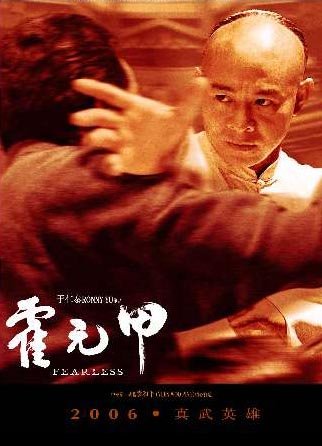
Fearless – In supposedly his last major role as a kung fu star, Jet Li reprises just about every other kung fu hero he’s ever played in this mildly interesting film directed flashily by Ronny Yu (The Bride With White Hair). Li plays a cocky young man who experiences a tragedy that forces him to grow up. he retreats for a time and achieves some level of Taoist enlightenment, which he subsequently uses to make his kung fu even better, and then he defeats all his enemies, furthering the glory of his native people, in this case defeating a group of foreigners in a four on one martial arts contest. It’s a fine film, well made with some great action sequences, but I prefer his earlier, funnier films.

Clash By Night – This Fritz Lang film has the title of a film noir, and it’s a part of Warner’s second film noir box set, but I don’t think it’s a film noir at all. It’s a fairly conventional small-town melodrama type film, with a terrific cast and fine direction by the great Fritz Lang. Barbara Stanwick’s a big city woman who comes home to small town Monteray, California. She marries a local lug Paul Douglas, but carries on an affair with the local movie theatre projectionist, Robert Ryan. Eventually, affairs are discovered and children are born and Stanwick’s brother marries Marilyn Monroe, but aside for an unusually accepting treatment of infidelity for a studio-era Hollywood film, there wasn’t a lot to interest me here. Lang’s, of course, a great director, so it’s likely I missed something somewhere along the way.

Day Of Wrath – Over the last few months I’ve been trying to catch up on all the auteurs I missed out on in college. One of the most prominent of those is Carl Theodor Dreyer. Despite the fact that I took a whole class on Scandinavian film (taught by a respectable scholar in the field no less: she did the commentary for the Criterion edition of Bergman’s The Virgin Spring) I’d never seen a Dreyer film until The Passion Of Jeanne D’Arc less than a year ago. That’s his most famous (and probably best) film, and I next watched his last film, Gertrud, which is stylized to the point of difficulty, at least on first viewing, but still very interesting. Over the last couple weeks I’ve seen Day Of Wrath and Ordet, and two more Dreyer’s are upcoming this month on TCM (Vampyr and Leaves From Satan’s Book). Anyway, Day Of Wrath’s a terrific film, a claustrophobic story of witches and infidelity set in 17th Century Denmark. The local minister sentences an old woman to death for witchcraft, then his own young wife (herself the daughter of a witch) seduces his son. Largely restricted to the minister’s house, the film nonetheless finds a varied visual style, most obviously a motif of crosses which dominates the first half of the film. Quite possibly a perfect film.

Wild At Heart – I’ve never been a David Lynch fan, and I can’t say this film changed my mind. At least it didn’t actively annoy me like Dune or Blue Velvet managed to. Nicolas Cage and Laura Dern star as young lovers on the run in this twisted genre exercise that reaches for some level of parallel with The Wizard Of Oz. They’re on the run from Dern’s mother, who sends some bounty hunters after them, then thinks better of it, with over the top bloody consequences for everyone involved (certainly the mom in a ridiculous scene). It’s a fun enough ride, and Lynch once again manages to ensnare a far greater cast than he deserves: Cage, Dern, Diane Ladd, Willem Defoe, Harry Dean Stanton, Isabella Rosselini, Cripsin Glover and Sherilyn Fenn. The #32 film of 1990.

Movies Of The Year: 1958

With The Man Who Shot Liberty Valance (#3, 1962) on the TV and a nice martini having it’s way with my psyche (and my typing), it’s onto 1958, a year in which I’ve managed to miss almost all the highest repped films. Anyway, see The Big List for previous years and various disclaimers and methodologies.

9. Separate Tables – Perhaps the film most responsible for my irrational hatred of Burt Lancaster, this dull drawing room drama stars Lancaster, Deborah Kerr, David Niven (who won an Oscar) and Rita Hayworth as various residents of a vacation hotel who have a variety of tedious problems. It’s based on a play, and it shows.

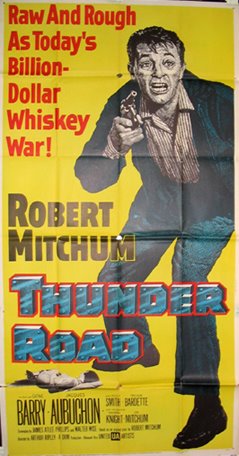
8. Thunder Road – Some kind of action film starring (and co-written by) Robert Mitchum about a vet who comes home and takes over the driving in the family moonshine business, the kind of business that led to the creation of NASCAR. I don’t exactly see the charm in the film, I thought it was kind of dull and overwrought myself, but some folks consider it a classic. I like the Bruce Springsteen song a lot better (“You ain’t a beauty, but, hey, you’re alright” and so on).

7. Gigi – I’m the first to admit my ignorance of the wonders of Vincente Minelli. I recognize that there’s something going on here, but I don’t know what it is. I just watched Meet Me In St. Louis today, another Minelli musical whose charms completely escape me. One of the gaps in my film education I guess. Anyway, Gigi stars Leslie Caron as a young fin de siècle courtesan to be who charms the pants off a young cad about town. Maurice Chevalier provides the film’s most memorable scene with his more than vaguely disturbing song “Thank Heaven For Little Girls.”

6. The Legend Of Sleepy Hollow – Short Disney adaptation of the Washington Irving Story about a nerd chased by a Pumpkin-headed monstrosity because he somehow managed to charm the local hot chick. Good advice to the young and geeky, I think: stay away from the pretty girls or else you’ll get yourself killed. Thanks, Uncle Walt.

5. The Left-Handed Gun – A young Paul Newman gives one of my favorite of his performances as a psychotic Billy The Kid in this Arthur Penn film based on a Gore Vidal play. The 1966 film Young Guns (#28) is basically an amalgamation of this and Sam Peckinpaugh’s Pat Garrett & Billy The Kid (#6, 1973), set to a hopping 80s score. Newman’s in full anti-hero mode as he exacts bloody revenge on the people who killed his English (read: gay) father figure. Penn plays up the serious psychosis in Billy, while Peckinpaugh went more for the charm. Young Guns, on the other hand, had Emilio Estavez.

4. Vertigo – The consensus pick for the greatest of all Alfred Hitchcock films, a movie dangerously close to supplanting Citizen Kane from the #1 spot in the decennial Sight And Sound poll, but I’ve only got it rated the fourth best film of its year. James Stewart plays a detective afflicted with the eponymous acrophobia who becomes obsessed with a client who thinks her past life is trying to kill her. When she dies, he finds a girl who looks just like her and really goes nuts. Frankly, it’s a film whose charm I understand but have never felt much of a connection with. Somewhere in the middle it loses me, and I can’t exactly explain it. Partly it’s Kim Novak, who I really think is terrible. I know she’s supposed to be remote and robotic, but it’s too much for me. I just can’t care anything about her (either version) and thus find James Stewart’s obsession with her to be rather inexplicable. It’s a film I admire more than like, too cold and clinical for me to really care about.

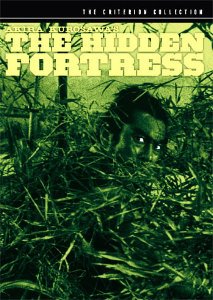
3. The Hidden Fortress – I may get my film geek card taken away for ranking this Kurosawa swashbuckler over Hitchcock’s classic of perversity, but screw those freaks, this is my not a blog. Two peasants on the run from war get caught up with a general trying to smuggle a princess across the enemy border into safety. It’s Kurosawa’s first widescreen film, and he uses it to good effect with complex, detail-filled compositions that, combined with the space-flattening effects of his use of the telephoto lens create a vivid medieval tapestry and emphasizes the oppressiveness of the nature the main characters must traverse. The plot is a pure distillation of the adventure epic, but in the margins Kurosawa transcends the typical genre film and creates something truly interesting and entertaining, if never entirely original: the sheer greediness of the two peasants, their quarreling comic relief has been copied endlessly by lesser filmmakers (George Lucas most obviously), the transformation of the princess from haughty to fully human (done many times) elegantly reaches its climax in a powerful fire festival sequence that’s somewhat clumsily referenced at the film’s conclusion and the friendship and respect between Mifune and Susumu Fujita’s enemy general (Fujita starred in Kurosawa’s first film, Sanshiro Sugata, 15 years earlier), individuals on opposite sides of a war yet bound by a common class sense of honor and duty. Though there’s a decent Criterion DVD of this, it really does need to be seen in a theatre for it to have it’s full, populist entertainment effect.

2. Ivan The Terrible Part 2 – I wrote about this a couple weeks ago here. The second part of Sergei Eisenstein’s planned trilogy about the first Tsar of Russia, this film was banned by Stalin (who felt its depiction of Ivan’s use of a secret police to silence his political opponents was a bit too familiar) and not released until well after both Eisenstein and Stalin were dead. Abandoning his silent movie dialectical montage techniques, Eisenstein instead uses long takes, a distorted, artificial and grotesque mise-en-scène and acting styles to create a kind of feverish dream state, that only gets more bizarre halfway through the film when it all suddenly shifts from stark black and white to a vibrant bloody red pseudo-technicolor for a party sequence. Visually astonishing from start to finish, it is, it goes without saying, one of the minor crimes of the Stalin regime, but one of the great ones against film that Eisenstein never got a chance to finish his trilogy.

1. Touch Of Evil – One of my all-time favorite films is Orson Welles ultimate film noir. The film is generally used to mark the end of the classic periods of films noir, and in the same way Unforgiven (#1, 1992) represents the carrying of the Western genre to it’s most fundamental extreme, so Touch Of Evil is the ultimate noir both stylistically and thematically. The most recent version of the film, re-edited in 1998 along specifications laid out by Welles and ignored for 40 years, the disconcerting style of the film becomes much more clear. Much of what was changed was an increase in intercutting between the various plotlines involving newlyweds Janet Leigh and her Mexican lawyer husband Charlton Heston (“He don’t look Mexican”). The new version follows neither the original (which played each sequence to it’s conclusion then moved to the next) nor the rhythms of standard police procedural intercutting, but instead leave everything slightly off-balance, all of which occurs after the famous opening shot, a long track from one border town to another. In other words, the continuity of the world is disrupted and thrown off balance by the explosion that gets the plot of the film rolling. Similarly, the framing, dialogue and casting are also off-kilter, bizarre (and hilarious) Marlene Dietrich playing a Mexican prostitute/fortune teller with a German accent, the aforementioned Charlton Heston as a Mexican symbol of the impotence, squareness and just plain lameness of the law, Dennis Weaver as the world’s weirdest hotel clerk, and Orson Welles at his most grotesque as the fat drunk sheriff who likes to beat confessions out of the suspects he’s framed. The film is endlessly fascinating thematically as a meditation on the nature of police work (“it should only be easy in a police state”). It’s currently #5 on my ymdb Top 20 films list (link in the sidebar) and I could write pages and pages about it. “He was some kind of a man. What does it matter what you say about people?” Indeed.

A whole lot of Unseen movies from this year, Including films by Tati, Ozu, Malle and Wajda that I’d really like to see sometime soon. The version of Brothers Karamozov below stars none other than William Shatner as Alyosha, one of the greatest crimes a film ever perpetrated on a novel.

Mon Oncle
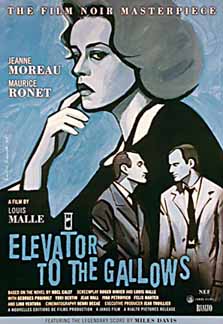
Elevator To The Gallows
I Want To Live!
Equinox Flower
Party Girl
Ajantrik
Ashes And Diamonds
Curse Of The Demon
Man Of The West
Murder By Contract
Rock-a-bye Baby
Une Simple Histoire
The Tarnished Angels
A Time To Love And A Time To Die
Wind Across The Everglades
The Magician
Cat On A Hot Tin Roof
The Blob
A Night To Remember
The Fly
Fiend Without A Face
The Quiet American
The Naked & The Dead
Run Silent, Run Deep
South Pacific
The Defiant Ones
Bonjour Tristesse
The Brothers Karamozov

Movies Of The Year: 1959

Getting started on another list late at night while drinking some beer and watching the second half of David Lynch’s Wild At Heart, which I originally started watching two weeks ago. Been a weird day as I did some housework, watched some TV and movies and had my mind blown by Susan Sontag’s essay Against Interpretation, which if I had managed to read seven years ago would have made me feel a lot better about how much I hated the academic world.
Anyway, back to the list. As always, previous years’ lists along with methodology and disclaimers can be found at The Big List.

15. The Shaggy Dog – Yet another tragic scarring by a Disney Channel dominated youth. Fred MacMurray plays a nuclear dad who gets transformed into a dog. Much hilarity ensues. Costars Jean Hagen (Singin’ In The Rain) and seemingly the entire cast of The Mickey Mouse Club.

14. Plan 9 From Outer Space – Ed Wood’s famously terrible film is as bad as you’ve heard, but not quite as funny. It’s hard to rate the unintentionally hilarious in a format such as this. It fails in just about every way a film can fail, lacking even the bizarre horrible terror that his Glen Or Glenda inspires. Still, I’d rather have directed this travesty than The Shaggy Dog.

13. The Diary Of Anne Frank – George Stevens’s film, along with the book, is, I assume, still a requirement in junior high schools around the country. That’s where I saw it and I can’t say I’ll ever see it again. Like many a Hollywood social conscience film, it’s well-meaning, well-acted, competently made and makes you feel like a heel for not liking. Guess I’m a heel then. It’s just not that interesting to me. Sure its a tragic story, but I’ve real moral problems with the whole idea of making a movie about the Holocaust, let alone one that’s so very obvious and lacking in nuance. Is there more we are supposed to learn from this story than that the Holocaust is bad?

12. Ben-Hur – William Wyler’s film of Lew Wallace’s best-selling historical melodrama is an overblown epic in the way that only the late Hollywood studio system could overblow something. Charlton Heston stars as the eponymous hero, a Roman Jew gets himself punished for something, gets sent to a galley, competes in a vicious chariot race, then meets Jesus on his way to get crucified. It’s a fine example of the way only Hollywood could combine action violence, homoeroticism and sanctimoniously cheap religious piety in a way that makes way too many of people think it’s the greatest film ever made.

11. Darby O’Gill And The Little People – One of the few films I’ve seen that ever actually scared me, though granted I was aged in single digits at the time. A Disney compendium of over-the-top Irish clichés, leprechauns, banshees, comical drunkenness. Daarby O’Gill’s a cantankerous old drunk whose stories of leprechauns no one believes. He actually finds the pot of gold, but had to give it up when the banshee comes for his daughter (who’s been dating none other than Sean Connery). It’s the banshee arriving in his Coach Of death that terrified me, and probably still would. Along with Connery’s singing, truly scary.

10. Anatomy Of A Murder – Otto Preminger’s film is one of the greatest of all courtroom dramas. James Stewart stars as a small town lawyer acting as defense attorney for Ben Gazzara, accused of killing the man who supposedly raped his wife, Lee Remick. George C. Scott also stars as the prosecutor from the city. Stewart gives a fine, folksy performance as the kind of smarter than he seems country guy that Stewart’s perfect at. The greatness of the film comes from its ambiguity: we never know when or if Gazzara or Remick are lying, and it’s questionable whether or not it matters, to us or to Stewart. And the score’s by Duke Ellington, if all that wasn’t enough.

9. Good Morning – Yasujiro Ozu’s remake of his own I Was Born But. . ., it’s the story of a small suburban neighborhood, and specifically the kids in it who don’t understand their parents. The kids want their folks to buy a TV so they can watch sumo matches. The parents complain that all the kids do is whine. The kids complain that the adults are always talking and not saying anything, which of course, is true. The adult conversations are all politeness and formalism (“Good morning”) while the kids just say what on their mind (usually fart jokes). A fine introduction to Ozu, it’s got all the hallmarks of his style but is a little faster paced and a little funnier than his best films. If the idea of Ozu intimidates you, start here.

8. Pickpocket – Speaking of difficult directors how aren’t really as tough as their reps, acolytes or imitators want you to think, we’ve got Robert Bresson’s Pickpocket, a film about the life and art of a Raskolnikovian pickpocket. A brainy young man dedicates himself to the pursuit of picking pockets, which we see demonstrated in some wonderfully informative yet stylish shots (closeups of various techniques and such). Along the way he attracts the attention of a local cop, who wants to reform him (or failing that, imprison him) and his mom’s nurse, a cute neighbor girl he pretends he’s not in love with. It’s a pretty, odd little film. The Criterion edition has an interesting bit of Paul Schrader talking about the film, where he points out that Bresson cuts everything just a little longer than you’d expect, which works to minutely unsettle the viewer and exacerbate the strangeness of the film. I can’t say the ending was as cathartic for me as it apparently is for Schrader (seemed more silly to me), but it’s still quite a fun film.

7. Sleeping Beauty – My favorite of all Disney animated films. The film uses the score of Tchaikovsky’s ballet, which I like a lot, even though the Disneyfy it with some silly lyrics and cute woodland creatures. And it’s one of the few Disney films with a distinctive visual style, modeled after medieval paintings (angular, two-dimensional people, lack of shadow, etc). It’s also got on the of the scariest villains in Disney films and the greatest, fastest climactic battle sequence. Cutting the comic relief of the annoying witches (faeries?) would make it a near perfect film. As it is, it can only be very good. Damn you Walt Disney!

6. Some Like It Hot – Often called the greatest comedy of all-time, I can’t agree with that though it is a very good film. Tony Curtis and Jack Lemmon star as musicians on the run from the mob who disguise themselves as women and join an all-girls band bound for Florida. In the band they meet Marilyn Monroe, playing your basic Monroe character: hot, sad, and a little dim. Curtis adopts another disguise (a wealthy yet impotent playboy, his Cary Grant impression) to try to seduce Monroe, while Lemmon is courted (in his woman disguise) by a rich old man played by Joe E. Brown. It’s got some classic comic moments, but I don’t think the drag comedy is as funny to my generation, one that grew up with Tom Hanks an Peter Scolari in Bosom Buddies.

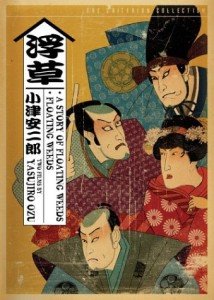
5. Floating Weeds – The second Ozu film from this year, and the second that’s a remake of one of his own silent films. It’s a bigger, more dramatic film than Good Morning. A traveling acting troupe comes to a small fishing village, where they lead to some romantic trouble. The leader of the troupe has a son who doesn’t know he’s his son working as a mailman in the town. As the leader spends time with the boy’s mother, his girlfriend (one of the actors) becomes jealous. She gets one of the whorier actresses to seduce the son to punish the father. The actress and the son then fall in love. All this happens in Ozu’s simple, calm visual style (camera never moving, low angles, beautiful compositions of ordinary objects, long takes, no close-ups, etc), the serenity of the style plays of the violence of the emotions involved in the same way the characters hide their emotions behind politesse and restraint (to a point).

4. The 400 Blows – François Truffaut’s first film is a largely autobiographical coming of age story about a young boy who gets ignored by his parents, does poorly in school, loves movies, steals a typewriter and gets sent away to reform school. Jean-Pierre Léaud stars as the boy, Antoine Doinel, a character he’d play again in several other Truffaut films as he aged. Truffaut uses a black and white, smoothly realistic style that’s light years away from what Jean-Luc Godard was doing in Breathless (co-written by Truffaut and released the next year) or even the lyricism of Resnais or Demy, French but not quite New Wave directors. There’s little in the way of stylistic intrusion into the film. Instead, Truffaut Not having seen enough of the other New Wavers films (I’ve never seen any Rohmer or Chabrol, or any of Louis Malle’s French films), I can’t say for sure whether Truffaut is more or less typical of their style. I suspect that the crazy experimental nature of Godard (and Jacques Rivette) is the oddball in the group. Harvey Weinstein claims that he and his brother snuck into this film as kids thinking it was a porn movie. They stuck around and were entranced by it. They then fell in love with art movies and went on to found Miramax.

3. Rio Bravo – Howard Hawks’s refutation of Fred Zinneman’s prechy Western High Noon, this film stars John Wayne as a sheriff who must face a band of outlaws. The only help he accepts is from his deputy (the ancient Walter Brennan), his old friend and recovering drunk (Dean Martin, and a hotshot gunfighter who tries to stay out of the fight (Ricky Nelson). Wayne also manages to get Angie Dickenson to fall in love with him along the way. As entertainment, it’s questionable whether there’s a better Western. The balance between action and comedy and sex and music is as good as in any great Howard Hawks film (To have And Have Not, The Big Sleep, Only Angels Have Wings). The performances are uniformly terrific: Brennan’s cantankerous and funny as the still reliable comic relief, Nelson’s engaging and charming as the handsome young singer, Wayne’s terrific as usual but it’s Martin that steals the film as the old drunk trying to stay sober and redeem himself.

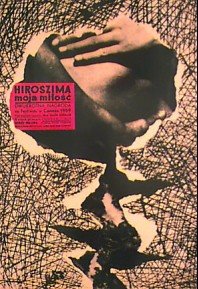
2. Hiroshima Mon Amour – One of the more beautiful films of all time is this Alain Resnais film about a French actress who meets, has a one-night stand with and falls in love with a Japanese man (Eiji Okada) while shooting a film in Paris. The first third of the film is a terrifying series of images of the aftermath of the atomic bombing of Hiroshima, with the woman (Emmanuelle Riva, who gives one of the very best performances ever) narrating the transition from horrific images of victims and destruction to the transformation of the city to a museum and theme park. The film takes place over a single day, as the two try to figure out if they should stay together (the man is married, the woman set to return to France). The middle section of the film centers on the woman’s experience of World War 2, her own personal atom bomb. The film’s shot in a variety of styles and succeeds in, as Resnais claimed it did, shattering time, from the dreamy abstract images of the two bodies intercut with the hyperreal post-bomb footage in the opening sequence, to a lot of jump cuts and cuts between flashback and present time. The images often appear realistic, but as the scene progresses they become more poetic, as in a scene of protest marchers in the film the woman is working on, or in the final scene of the film, a long shot in a restaurant that we can’t tell is the past or the future or both.

1. North By Northwest – My current favorite Alfred Hitchcock film is perhaps the most successful of his relatively light films. Cary Grant plays a regular guy with a job and a mom who gets mistaken for a secret agent, kidnapped and framed for murder by James Mason. On the run from both the cops and the bad guys, Grant tries to find the guy for whom he’s been mistaken. Along the way, he meets and falls in love with Eva Marie Saint, who’s got a few secret identities of her own. Filled with iconic sequences (the killer cropduster, the fight on Mt. Rushmore, the train entering a tunnel at a, well, climactic moment), clever comic dialogue (written by Ernest Lehman, who wrote Sabrina, West Side Story, The Sound Of Music and the great Sweet Smell Of Success), and more than a few subtle Hitchcock touches of terror and humor. Grant’s character is named Roger O. Thornhill, and the O stands for nothing, in more ways than one. He’s an everyman nothing hunted down by forces he can’t understand for reasons he doesn’t know, a Kafkaesque story of post-war modernity if ever there was. Hitchcock is one of the few directors in history to so successfully combine top-notch entertainment with psychological perverseness and subtlety. This multivalent brilliance is what makes his film so endlessly fascinating.

Not too much I’m in a hurry to see on the Unseen list this year. The Sirk movie is on TCM all the time, and I keep meaning to finally get around to it but haven’t yet. Satayajit Ray’s films, however, are not really available on decent DVDs in this country, as far as I know, so I’ve still not seen any of them.

Imitation Of Life
The World Of Apu
Shadows
Compulsion
The Human Condition
Pillow Talk
Operation Petticoat
Suddenly, Last Summer
The Mouse That Roared
Black Orpheus
The Horse Soldiers
Gidget
The FBI Story
Odds Against Tomorrow
On The Beach
Nazarin
The Tiger Of Eschnapur
The Indian Tomb
India

Movie Roundup: Perfectly Cromulent Edition

Been watching a lot of TV series recently. I’m almost finished with Veronica Mars, which is a very good, Buffy meets film noir show with an interesting mix of bubbly cuteness and horrible tragic crime and perversion. I also bought and purchased seasons four and five of The Simpsons, inspired by the book Planet Simpson by Chris Turner, which is one of the best cultural studies books I’ve ever read. Turner charts and analyzes seemingly the whole of pop culture from punk and grunge to American independent film, the Republican Revolution, the rise of the SUV, the internet and the multi-national corporation as seen through the lens of the best television show ever.

Snakes On A Plane – The next step in the information age’s destruction of modernity is this intentionally unintentionally funny animal action movie pastiche. The end result of every genre is self-conscious referentiality, and SOAP is to the animal action genre what Touch Of Evil is to film noir: the reducto ad absurdum of the genre, it’s distillation to its most essential elements and taken way over the top. The difference is that Touch Of Evil actually has a point to it (a lot of points, actually) while with SOAP the absurdum is the end in itself. While that makes for an entertaining night at the movies, especially with the benefit of some refreshing beverages, it doesn’t exactly make it a great film. Or maybe it does, that’s post-modernity for you.

Ivan The Terrible Part 2 – The second part of Sergei Eisenstein’s trilogy about the first great Russian Tsar ended up being the last as Stalin thought Ivan’s use of the secret police to destroy his enemies was a little to familiar. This film continues the radically bizarre staging of the first (described in an earlier roundup). Ivan returns at the behest of the people to Moscow, but finds the local gentry is still trying to kill him. His wife’s been killed, his best friend and general ran off to join with the Poles and his aunt wants him dead so her son, an idiot can be Tsar. No wonder he’s depressed. He tries to make friend’s with a priest, but even he ends up out to get him. The highly stylized mise-en-scène and acting is back from the first film, though 2/3 of the was through the film changes from black and white to a very strange color (imdb calls it Bi-Color, “an early experimental form of color film which has only blue and red shades, producing a vividly abstract effect) for a long party sequence, which only makes things weirder. The film wasn’t released until 1958, long after both Stalin and Eisenstein were dead.

Talladega Nights – A perfectly entertaining Will Farrell NASCAR comedy that’s pretty much exactly what you expect it to be. Sasha Baron Cohen, John C. Reilly and Gary Cole are the competent comic foils and Amy Adams is in it far too little as a hot redhead. It’s funny, but not as brilliant as Farrell’s Anchorman or any of the other great 00s comedies (The 40-year Old Virgin, Dodgeball, etc).

Henry V – Laurence Olivier’s version of Shakespeare’s play has an interesting idea, the film starts in a replica of the Globe Theatre and eventually expands to a broader, but still stagey, landscape. It’s also shot in a vibrant Technicolor. Other than that, I can’t say I liked it. The staginess extends to the performances, which are that brand of Shakespeare that are more recitation than actual performance. Especially Olivier, who I’ve always liked and, of course, has an unmatched reputation as an actor. I found him unbearable. Henry V is supposed to be a fiery leader of men, with his experience slumming with falstaff putting him in touch with the common man. With Olivier, he seems like a rich kid who had to memorize this speech for English class and has no idea what it means. Give me Kenneth Branagh’s version any time. As obnoxious a person he may be, his Henry V (#2, 1989) at least has some life to it.

The Three Musketeers – This probably isn’t the worst Three Musketeers film ever, but it certainly ain’t good. It gets off to a nice start, with Gene Kelly as D’Artagnan bouncing around in a fun opening action scene. But the middle of the film is long and dull with hardly any action. It does follow the book surprisingly closely, except it seems to have actually cut out a number of action sequences. The big cast includes Lana Turner, Angela Lansbury, Keenan Wynn and Vincent Price, of all people, as Cardinal Richelieu.

Safe Men – Mediocre Ishtar wanna-be with a great cast. Steve Zahn and Sam Rockwell are bad singers mistaken for safecrackers Mark Ruffalo and someone else by Paul Giamatti and his gangster boss, Michael Lerner. They’re forced by the gangsters to crack safes, despite their total inability to do so. Along the way, one of them falls in love with a girl and the other becomes reconciled with his father, or something. The #53 film of 1998.

Meet John Doe – Barbara Stanwyck plays a reporter who, to save herself from getting fired, invents a suicide letter from a Depression victim who says he’ll jump off a building to protest society’s evils. The letter becomes a sensation and she and her newspaper hire Gary Cooper to pretend to be the guy who wrote the letter. He becomes the leader of a social movement of the disaffected masses. When the owner of the paper conspires to use Cooper’s popularity as a tool to increase his own political power, Cooper admits the ruse and the movement fails. It’s lesser Capra, not as moving as Mr. Smith or as brilliant as It’s A Wonderful Life, and it suffers most of all from having the bland Cooper in the lead instead of the great Jimmy Stewart. Like most Capra films, it’s a lot darker than it’s reputation, but the politics is much more obvious and heavy-handed than in those other films.

La Strada – Federico Fellini’s first big international hit stars his wife, the great Giulietta Masina as an innocent (with a capital ‘I’) waif who gets sold by her mom to be a wife for a traveling strongman (Anthony Quinn). The strongman’s a brute (pun intended) who beats his wife and cheats on her. They meet Richard Baseheart (looking eerily like Bobby Flay and nothing like I remember him looking in He Walked By Night), a tightrope walker who loves to taunt Quinn and suggests to Masina that Quinn may actually love her. If this all sounds familiar, it’s because Woody Allen made the same movie and called it Sweet And Lowdown. The difference is that in Allen’s film, the strongman is an artist, a brilliant guitar player played by Sean Penn as a sympathetic misanthropist with major inferiority issues with the great gypsy guitarist Django Reinhardt. Quinn’s strongman, on the other hand, is no artist and is totally lacking in charm or sympathy. While this makes us feel worse for Masina, she’s such a terrific actress that we don’t really need any more reason to sympathize with her. What it does, though, is make us care a lot less for the plight Quinn finds himself in once Masina’s actually left him. Anyway, it’s still a great film, shot beautifully and with great performances, especially by Masina, who’s almost as brilliant as she is in Nights Of Cabiria, made a few years later.

Beauty And The Beast – Writer, painter, poet, director Jean Cocteau’s surrealist version of the fairy tale abut the young woman who falls in love with the beast with a heart of gold. It’s got a certain low-fi magical beauty to it, disembodied arms holding candlesticks and such that gives the film a sense of poetry. And the story itself is a hotbed of possible interpretations and dissertations, especially given who the Beast turns into at the end of the film. But honestly, I was a little bored by it all. Maybe it was just my mood, but I was far from enchanted. It all seemed far too amateurish for me, like a dilettante making a film with his friends and a shoestring budget.

The Sands Of Iwo Jima – This quite generic WW2 movie stars John Wayne as the leader of the squad that famously raised the flag on Mt. Suribachi. The movie starts with the new recruits and follows the way Wayne trains them into an effective fighting force. The requisite plot elements all line up: the resentful soldier who doesn’t like how mean Wayne is, the tragic death of a squad member, Wayne proving his heroism in battle in front of his men, along with lots of homoerotic “wrestling” from two blond, midwestern “brothers”. The action sequences are quite good, with some seamless interpolations of stock footage, but the fights just aren’t enough of the film. When there’s no action, the film’s just a clichéfest.

Millenium Mambo – My second Hou Hsiao-hsien film (he also did Café Lumière, #3, 2003), and I’m on the verge of just getting everyone I can get if they keep being this good. Hou’s reputation is for Ozu-like slowness and lack of movement in his films, and CL certainly followed that profile with it’s total lack of camera movement. This film, however, is nothing but camera movement. There’s still no close-ups or any kind of traditional editing, but the camera is still in constant motion (much like it is in Noah Baumbach’s classic Kicking And Screaming (#4, 1995), just out on a very nice Criterion DVD). It’s befitting, if a little obvious, that this constant motion is indicative of the chaotic nature of the film’s heroine’s life. Qi Shu plays a young woman trying to escape her drug-using, quite jealous boyfriend. She leaves and returns to him a few times, tries to get a decent job, does drugs herself,. and goes to a film festival in snowy Japan. It’s a simple, even generic story elevated by the brilliance and artistry of the direction. The #2 film of 2001.

What Time Is It There? – The first Tsai Ming-liang film I’ve seen is one of the strangest movies I’ve seen in awhile. A young Taiwanese street-vending watch salesman sells his watch to a woman on her way to Paris. He becomes a little obsessed, changing all the clocks he can find to Paris time, while she has a very weird vacation in France, including some events that seem somehow linked to what the guy’s doing in Taiwan. It’s a slow movie, with a static camera and little in the way of traditional editing (Tsai’s part of the same Ozu revival as Hou and Jim Jarmusch, among others), and takes awhile to get going, but once it does, there are some absolutely hilarious moments. The #7 film of 2001.

Blackboard Jungle – The film that launched rock and roll (Rock Around The Clock plays over the opening credits) is a prototypical idealistic teacher at an inner-city high school movie. Glenn Ford plays the teacher, trying to tame a group of juvenile delinquents led by Sidney Poitier and Vic Morrow. The delinquents talk a crazy 50s teenager lingo that Ford struggles to understand. He tries a variety of ways to get through to the kids, while fending of muggings, random acts of destruction and insinuating phone calls and letters to his wife. Directed by Richard Brooks, who did Cat On A Hot Tin Roof, Looking For Mr. Goodbar and a god awful version of The Brothers Karamazov starring William Shatner.

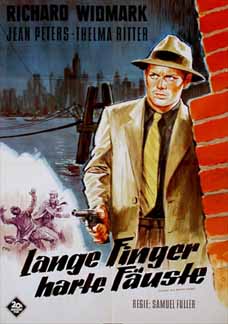
Pickup On South Street – Classic Samuel Fuller film noir in which Richard Widmark lays a pickpocket who accidently picks up some microfilm being stolen by communist agents. The FBI had the agent under surveillance, and with the help of Thelma Ritter’s professional snitch, they soon track Widmark down. Like all Fuller’s films, this one is vibrant and direct and emotional, though it’s more restrained than, say, Naked Kiss or Shock Corridor. It’s the most cohesive, realistic world I’ve yet seen from Fuller. Widmark and Ritter are terrific, though Jean Peters is weak in the role of the pickpocketed courier.

Coffee And Cigarettes – A collection of short films made by Jim Jarmusch over several years with a variety of famous people sitting and talking over, well, coffee and cigarettes. Some of the shorts are great, some are boring, but I didn’t think any of them were particularly terrible. I especially liked: Jack and Meg White and Jack’s Tesla coil, Roberto Benigni and Steven Wright, Steve Coogan and Alfredo Molina, Cate Blanchet and herself, GZA, RZA and Bill Murray and especially Tom Waits and Iggy Pop.

Scarface – The original Howard Hawks film, from 1932, is near impossible to separate from the genre it created and the Brian DePalma flm that’s every gangsta rapper and frat boy’s favorite bulletfest. Paul Muni plays Tony, the psychotic gangster to shoots his way to the top of the bootlegging racket. His sister p[roves to be his downfall as she tries to escape his “overprotectiveness”. The great Ben Hecht (The Front Page, Twentieth Century, Gunga Din, Notorious, Kiss Of Death, and a whole lot of uncredited work on some of the best films of the 40s and 50s) wrote the screenplay.

The Protector – Tony Jaa’s follow-up to Ong-Bak ( #6, 2003) had over 20 minutes of it cut out for it’s US release, and what’s left is an inane, non-stop action movie about a young man out to avenge his father’s murder and free his elephants from the Australian-Thai gangsters that have kidnapped them. “You killed my father, and STOLE MY ELEPHANT!!” is typical of the dialogue. But no one’s watching a Jaa movie for dialogue, or character or plot or any silly thing like that. Instead, it’s all about the action sequences, which are as amazing as you’d expect. There’s a silly nod to X-Gamers, a humorous boat chase, a never-ending series of bone-crunching bone-crunching and one of the greatest sequences in the whole history of martial arts movies: a four-minute plus single-take Steadicam shot of Jaa beating the hell out of an endless supply of bad guys while ascending a giant spiral staircase. One of the coolest, and most difficult, things I think I’ve ever seen on film. The #22 film of 2005.

The Conformist – Bernardo Bertolucci’s breakthrough film stars Jean-Louis Trintignant (Three Colors: Red) as a pre-WW2 young man so traumatized by a childhood brush with a homosexual chauffeur that he marries a dumb bourgeoise and becomes a fascist assassin so that people will think he’s normal. When he’s sent on his honeymoon to Paris, his superiors order him to kill his old professor, an anti-fascist communist exile. He meets the professor and falls for his wife, played by the very beautiful Dominique Sanda, and so has to decide if he’s going to kill them anyway. If this all sounds vaguely silly to you, that’s because it is. But still, the film is beautifully shot by Vittorio Storaro, who went on to be the cinematographer for Apocalypse Now, Reds, Ladyhawke, and Ishtar. The #5 film of 1970.
Movies Of The Year: 1960

Back to the lists. You can, as always, find updated lists for the years 1961-2005 at The Big List.

16. Pollyanna – Ah the horror of a youth dominated by the Disney channel. Hayley Mills plays a very happy girl who uses the power of positive thinking to crush her stodgy enemies in small-town America. It is indeed as horrifying as it sounds. Also stars Jane Wyman, Karl Malden and Agnes Moorehead, of all people.

15. Swiss Family Robinson – Robinson Crusoe Disneyfied and given a massive nuclear family of wacky kinds who love hijinks like racing ostriches and blowing up pirates. The pirate chief is played by Sessue Hayakawa, who played the prison camp commander in The Bridge On The River Kwai and whose film career goes back to 1914, when he was one of the first Asian-American film stars (he was the star of Cecil B. DeMille’s hit The Cheat). The director, Ken Annakin, also directed the 1975 David Niven-Toshiro Mifune film Paper Tiger, and for some reason imdb claim’s George Lucas named Darth Vader after him, but I don’t think I believe it.

14. Exodus – This Otto Preminger epic stars Paul Newman as one of a group of Jews who flee Europe to Palestine after World War 2 and get attacked when they declare themselves the state of Israel. I haven’t seen this since I was a kid, but I remember it being very long, but with some exciting action sequences, and it succeeded in relating the basic facts of the time period. Also stars Eva Marie Saint, Ralph Richardson, Sal Mineo, Peter Lawford and Lee J. Cobb. The screenplay’s by Dalton Trumbo, the blacklisted writer who also wrote Roman Holiday and Spartacus.

13. The Magnificent Seven – John Sturges’s cheesy and vastly inferior remake of Akira Kurosawa’s The Seven Samurai. The cast is great, as well as the score (very catchy) and the action sequences, but transplanted out of the social context of feudal Japan, the story loses any resonance or meaning beyond simple action. Yul Brenner, Eli Wallach, Steve McQueen, James Coburn, Charles Bronson and Robert Vaughn star.

12. Inherit The Wind – This straightforward adaptation of the play about the Scopes Monkey Trial (It’s very thinly veiled), gets the good performances you’d expect out of Spencer Tracy and Fredric March, but director Stanley Kramer doesn’t really bring anything interesting to the film (not unprecedented in Kramer’s career). The trials interestng though, and those performances are really good. Also stars Gene Kelly, Dick York, Henry Morgan and Norman Fell.
11. L’Avventura – A group of swells have a party on a deserted island, from which one girl just disappears. Her friend and boyfriend search the island for her. Suspecting she caught a boat back to the mainland, they head off to town to look for her, where they forget about her because they’re too busy doing each other. It’s very slow, beautiful, and depressing, chock full of good old existential angst and the ennui of the rich. As yet it’s the only Michelangelo Antonioni film I’ve seen, but I really need to rewatch it and check out more of his work.

10. Tunes Of Glory – This stagey film is notable for a great performance from Alec Guiness (despite the overthetop accent). Guiness plays the leader of a Scottish regiment who gets passed over for promotion and does what he can to subvert the new commanding officer, John Mills (who was also in Swiss Family Robinson). IMDB claims James Kennaway adapted the screenplay from his own novel, which surprises me because I would have sworn this film was simply transplated straight from the stage. Directed by Ronald Neame, who was a cinematogropher (In Which We Serve, One Of Our Aircraft Is Missing) and went on to direct The Poseidon Adventure.

9. Ocean’s Eleven – As far as I can tell, the best of the Brat Pack films. Frank Sinatra leads a gang of hipsters as the ripoff five Vegas casinos in one night. The heist sequence itself is exciting and suspenseful, and the maybe to long buildup to it has some fun martini-drenched humor and songs. The fun-having cast includes Dean Martin, Sammy Davis Jr, Peter Lawford, Angie Dickenson, Shirley MacLaine, Cesar Romero, Joey Bishop, Richad Conte, George Raft, Red Skelton and Akim Tamiroff. Directed by Lewis Milestone (All Quiet On The Western Front). I understand the Soderberg remake changed the ending, which makes me never want to watch that travesty.

8. La Dolce Vita – Federico Fellini’s epic of urban hipster dissipation stars Marcello Mastrionni as a paparazzi bored with his fake life of parties and glamour and his troubles with women and his father. The famous opening shot of a statue of Jesus flying over the city is very cool, and some of the sequences are very interesting, but frankly I just got bored with the film after awhile. That may be intentional, getting us to empathize with the main character’s boredom or something, I don’t know, I probably need to see it again, as it’s been about 10 years. Also stars Anita Eckberg and Anouk Aimée.

7. The Apartment – I’ve never understood the worship this very fine Billy Wilder film seems to evoke in so many people. It’s good, but it’s not that good. Jack Lemmon plays a loser accountant who lets his bosses (Fred MacMurray, Ray Walston, etc) use his apartment so they can hook up with their mistresses. When Lemmon falls for one of MacMurray’s girls, the suicidal Shirley MacLaine, he tries to quit being a loser to bittersweet comical effect. It can’t think of any real flaw the film has, it just doesn’t inspire the passion in me that it seems to in others. I wonder how much its many Best Picture wins had to do with the prior year’s Some Like It Hot. . . .

6. The Bad Sleep Well – Akira Kurosawa loosely adapts Hamlet to a contemporary Japanese business world. After Toshiro Mifune’s father kills himself by jumping out a window in his company’s headquarters, Mifune sets out to expose the corruption and murder at the heart of the corporation. One of Kurosawa’s most slowly paced films, the plot is a convolution of betrayals and villainies, told deliberately in high-contrast black and white. The tremendous cast features Takeshi Shimura, Masayuki Mori, Chishu Ryu, Susumu Fujita, Ko Nishimura, Takeshi Kato and Kamatari Fujiwara.

5. Peeping Tom – Oner of the first great serial killer films, and also a very dark satire on the nature of film directing and viewing. Michael Powell’s late masterpiece stars Carl Boehm as an assistant camera operator who moonlights as an underground pinup photographer who also happens to be a murderer with some serious issues with his father, a psychologist who used his son in his experiments on the nature of fear. The great Moira Shearer (The Red Shoes) plays one of his victims in the best sequence in the film, a photo shoot in the film studio that everyone but the poor girl knows is going to end badly for her. Suspenseful and endlessly useful as fodder for grad student essays.

4. Spartacus – This classic of Hollywood’s obsession with films set in Ancient Rome started as an Anthony Mann film and ended up directed by Stanley Kubrick and feels like a weird combination of those two very different directors and screenwriter Dalton Trumbo. This muddles the directorial aspects of the film and allows the truly great thing about it to take over, and that’s the performances, especially by Charles Laughton and Laurence Olivier. Peter Ustinov and Tony Curtis (oyster fan) and Jean Simmons also star. Kirk Douglas, as Spartacus, is occasionally very good,, but really I think is the weak link of the entire film. Still, it’s probably the best of this cycle of films.

3. Breathless – Jean-Luc Godard’s first full-length film is a simple story of a wanna-be gangster who steals a car, finds he’s shot a policeman and tries to get an American girl to go on the lam with him. The middle third of the film is a long, poetic, pretentious, confusing series of conversations between the thief (Jean-Paul Belmondo) and the girl (Jean Seberg). The rumor is that Godard asked director Jean-Pierre Melville (Le Samourai, Army Of Shadows) for advice when cutting the film and he told him to cut out the boring parts, the result is the jump-cutting that the film is famous for. I don’t think I believe that. This is Godard being Godard right from the start: taking the whole history of cinema, chewing it up and spitting it back out in a form wholly new and yet totally recognizable. It’s as good a place to start with Godard as any.

2. Shoot The Piano Player – Speaking of the French New Wave, here’s François Trufffaut’s second film, and my favorite of his. It’s a film noir, more or less that doesn’t exactly deconstruct the genre but rather plays with its conventions as a sideline instead of as the main focus of the film (in the manner of Scorsese’s Mean Streets as opposed to the Coens Big Lebowski). Charles Aznavour (the feature artist in Godard’s A Woman Is A Woman) plays a former great pianist slumming in the wake of his wife’s suicide. He’s brother shows up on the run from gangsters and drags him and the waitress who’s sweet on him into a noir adventure filled with shootouts, kidnappings and snow. A beautiful, funny and tragic film, it’s my favorite Truffaut.

1. Psycho – Perhaps the most famous of all Hitchcock films, and one of the 4 or 5 films that alternate as my favorite Hitchcocks. Anthony Perkins is brilliant as the hotelier with mommy issues who interrupts Janet Leigh’s shower. A profoundly weird film, it can be experienced any number of ways: Freudian satire, straight comedy, lurid serial killer pot-boiler, slasher-film archetype. It’s all of those things and more.

It’s often said that the speech at the end of the film, the one where the psychiatrist explains what and why Norman has done is either pointless, really badly acted and/or idiotic, but I don’t know why. I can’t say it’s ever bothered me. Hitchcock explains things, the only time I can think of him leaving the central mystery of the film a mystery is in The Birds. Every other film ends with an explanatory resolution. It works great in The Birds, of course, and maybe it’d work here too. But I’m generally skeptical of films that leave out their resolutions. they tend to do it because they can’t think of an intelligent way to end their film, or to make the film seem more profound than it really is (see Michael Haneke’s Caché or any number of American indie films). Anyway, Psycho’s one of the first great classic films I ever saw, and it’s still one of my favorite, probably in my top 40 or 50 films of all-time.

A lot of Unseen movies this year as I’ve gone ahead and added any films Jonathon Rosenbaum included in his top 1000 that I haven’t seen, which I’ll be doing for the rest of the Movies Of The Year lists.

The Thousand Eyes Of Dr. Mabuse
Purple Noon
The Virgin Spring
Le Testament d’Orphee
The Bellboy
Late Autumn
When A Woman Ascends The Stairs
Les Bonnes Femmes
The Naked Island
Cruel Story Of Youth
The Savage Innocents
Sergeant Rutledge
Bells Are Ringing
The Cloud-Capped Star
Elmer Gantry
Devi
The False Student
Let’s Make Love
Wild River
Zazie Dans Le Metro
The Young One
The Alamo
Le Trou
North To Alaska
Two Women
Butterfield 8
Murder, Inc.
Eyes Without A Face
13 Ghosts

Looking For Alicia Keys


Notes on the new Dylan album:

Modern Times finally arrived in the mail yesterday, and I’ve been listening to it non-stop ever since. On first listen, it’s very mellow sounding, light and even pretty. There appears to be a lot of cynical darkness lurking in the lyrics, however. “Some young lazy slut has charmed away my brains” and “This woman so crazy I swear I ain’t gonna touch another one for years” are some fine examples from Rollin’ and Tumblin’.

The album generally has the same loud/soft/loud/soft pattern that Love And Theft followed, though the album as a whole flows very nicely, whether that’s a flaw of Dylan’s producing or, more likely, exactly the effect he was looking for I can’t say.

My favorite song on first listen was Workingman’s Blues #2, a deceptively pretty tune holding such lyrical gems as:

There’s an evenin’ haze settlin’ over town
Starlight by the edge of the creek
The buyin’ power of the proletariat’s gone down
Money’s gettin’ shallow and weak

My favorite moment on first listen, however, was in the song Nettie Moore, a melancholy balled whose first couple of minutes are punctuated by a slow insistent heartbeat drum. As the chorus begins, however, the music suddenly swells and the drum is taken over by what appears to be an actual string section. It comes as a complete surprise, which, in my foolishness, I didn’t think was possible for Dylan at this point. I don’t know if it’s possible, but I think I may have swooned.

The rollicking album opener, Thunder On The Mountain, has some fun lyrics, including this striking passage:

Gonna raise me an army, some tough sons of bitches
I’ll recruit my army from the orphanages
I been to St. Herman’s church, said my religious vows
I’ve sucked the milk out of a thousand cows

At this point, I’m thinking the album is akin to John Wesley Harding, in it’s smoothness, apparent simplicity and its relation to the albums that came before it (Love And Theft as Blonde on Blonde, Time Out Of Mind as Highway 61 Revisted).

I got the porkchops, she got the pie.
She ain’t no angel, and neither am I.