Movie Roundup: Down With Ghana Edition

Between the World Cup, a DVD buying binge and a nice couple of months on TCM I’m way, way behind on my film capsuling. I’ll try to speed things along with some shorter comments here, though, powered by rum and cola (we’re out of vodka) who knows how that’ll work.

Nights Of Cabiria – There has been many a film about a hooker with a heart of gold, but none is so good as this Federico Fellini film starring his wife, Giulietta Masina in what appears to be universally regarded as one of the all-time great screen performances. Everything terrible that can happen to her does, yet she continues to trudge through life with a charmingly enigmatic smile. One of those must-see films that for some reason I’m only know getting around to seeing, even though the film played for weeks at my theatre when I started working there some eight years ago (and was a huge hit, by the way).

The Wind And The Lion – In early 20th Century Morocco, Sean Connery, the leader of the Berbers, kidnaps Candace Bergan and the US government, led by show-boating president Teddy Roosevelt (played by Brian Keith, the dad in The Parent Trap) tries to get her back. Of course, Bergan gradually comes to see the justice of the Berbers cause (independence or something) as she develops something like a romantic relationship with Connery, Written and directed by John Milius, the auteur behind Conan The Barbarian (#10, 1982) and Red Dawn (#25, 1984). The #9 film of 1975.

Take Me Out To The Ballgame – Mediocrity of a musical starring Gene Kelly and Frank Sinatra, who did much better in On The Town. There’s some historical baseball truth to it’s story of ballplayers who moonlights as vaudevillians, and of course in the gambling scandal that ensues as part of the “plot”. It’s nice to see co-star Esther Williams find a pool to take a quick swim in, she always seems so parched. Other than that there’s not much to love here.

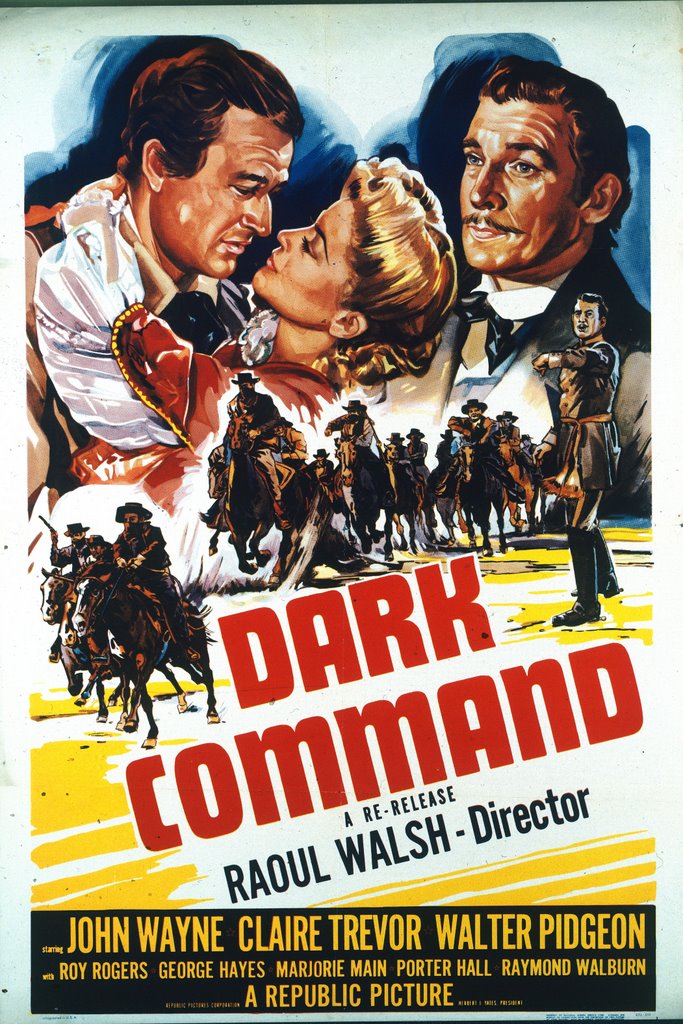
Dark Command – Coming off their breakthrough hit in John Ford’s Stagecoach, John Wayne and Claire Trevor were reunited in this early noir Western directed by Raoul Walsh, a very good action film director who doesn’t seem to have ever reached the heights of Ford or Hawks or even Curtiz, and thus has a sizable following among film geeks. It’s an odd adaptation of the “Bloody Quantrill” story from Kansas during the Civil War. Wayne plays an uneducated yet honorable sheriff, Walter Pidgeon the villainous school teacher turned vicious Confederate guerrilla, Claire Trevor the woman they inevitably fight over and Roy Rogers plays her brother, who adds some interesting moral complexity as her brother, a sympathetic character who commits cold-blooded murder. It’s an entertaining yet surprisingly dark film that marks perhaps the first incursion of the noir style onto the generic Western formula.

The Cat’s Meow – Put Charlie Chaplin, William Randolph Hearst, Marion Davies and Thomas Ince together on a yacht and what could go wrong? Well, according to director Peter Bogdanovich, Hearst killed Ince because Chaplin was hitting on Davies. This movie seems like it should be good, but it really isn’t. Kirsten Dunst is as cute as ever as Davies, but Edward Hermann (a character actor I generally like) is just silly as Hearst, Cary Elwes is largely annoying as Ince and Eddie Izzard’s Chaplin is just plain dull. Jennifer Tilly is mildly amusing as proto-gossip columnist Louella Parsons, and Joanna Lumley from Absolutely Fabulous is in there somewhere. It’s obvious Bogdanovich has a lot of love for these characters and this time period, but too much so: his inner geek is showing and it isn’t pretty, it’s mediocre. The #21 film of 2001, right behind Michael Bay’s Pearl Harbor.

Tomorrow Is Forever – Decent melodrama starring Orson Welles and Claudette Colbert. Welles goes off to World War I, leaving wife Colbert behind. When he’s horribly maimed and disfigured in the war, he makes sure she thinks he’s dead. 20 some years later, Welles, with a nice German accent and a beard (and a very young Natalie Wood) comes to work with Colbert’s new husband on some anti-Nazi thing for the next war, and tries to persuade his son (who he didn’t know existed) not to join the army like he did. I kept hoping Welles would actually turn out to be a Nazi spy or something, but instead it’s just a relatively conventional family melodrama.

Gentlemen Prefer Blondes – Marilyn Monroe and jane Russell on a boat to Paris, in search of love and riches. The film is bookended by two terrific musical sequences: the can’t look away opening duet (Two Little Girls From Little Rock) and the justly famous Diamonds Are A Girl’s Best Friend. In between is a brilliant comic performance from Monroe, some interestingly twisted and even subversive plot and one truly weird courtroom scene.

X-Men 3 – Not as good, but not appreciably worse than either of the first two films, which, unlike most geeks I know, I wasn’t a big fan of anyway. There’s lots of potential for political commentary here, gay rights, racism, abortion, what have you, but it’s way too much of a mess, and director Brett Ratner is too much of a hack, for anything coherent to come out of it. There are some decent action sequences, but like the first two, far too many characters too care about, and not enough action to overwhelm the conventional theatrics of their relationships. The ideal X-Men movie would have less characters and the same amount of action or the same amount of characters and more action. instead all three strike a middle ground that doesn’t work well enough on either level for the films to be successful.

Donovan’s Reef – A late career comedy from John Ford and John Wayne about a group of WW2 vets retired to a quiet Pacific Island. Their peace is disrupted when one of their daughters (Elizabeth Allen) shows up from Boston to inspect their way of life. Lee Marvin is merely underused as Wayne’s brawl-happy buddy, but Jack Warden, as Allen’s father, is absent for almost the entire film. The movie’s high on light comedy and entertaining, non-insulting exotica. I liked best that Allen figured out the silly ruse Wayne and the Polynesian kids were perpetrating on their own, without any of the audience pandering you expect from light comedies nowadays.

Mission: Impossible 3 – Writer-director J. J. Abrams essentially adapts the themes of his fine TV series Alias to the Mission: Impossible universe in this decent action film. It’s not nearly as good as Brian DePalma’s frenetic original, but neither is it nearly as bad as John Woo’s execrable part 2. The action sequences are fine, the plot is decent, the performances are good (though Keri Russell (Felicity) is woefully underused). Philip Seymour Hoffman acts Tom Cruise off the screen, but you’d expect that, wouldn’t you?

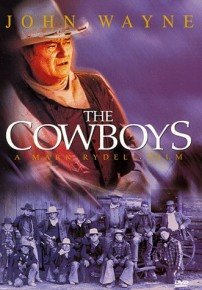
Flying Leathernecks – Nicholas Ray directs John Wayne and Robert Ryan in this seemingly conventional World War II film about conflict methods of commanding men. Wayne’s the hard-ass tyrant and Ryan’s the sensitive everybody’s his friend type. What’s interesting is that both men are whole characters, and each has a reasonable claim to correctness, though in the end Wayne is clearly the winner of this ideological struggle. Both actors are terrific, as always, and the action sequences (dogfights and all that) are very effective.

The Hill – Sean Connery stars in this Sidney Lumet film about abuses at a British prison camp during World War 2. Kind of like The Bridge On The River Kwai, except the prison is for and run by British soldiers and instead of a bridge to build there’s a hill to march up and down. The black and white cinematography (lots of close-ups) and the hysterical performances build a great amount of tension as Connery’s small band of prisoners are tortured by a sadistic commandant and that abuse is ignored by the bureaucratic camp boss. The real revelation, however, is Ossie Davis, who I’d never seen but as a little old man (in films like Do The Right Thing) but is instead big and muscular and athletic here. His acting’s great, his character is a bit like the black man in the insane asylum in Samuel Fuller’s Shock Corridor who thinks he’s a KKK member. An interesting performance in an intense, effective prison melodrama. The #13 film of 1965.

She Done Him Wrong – Cary Grant stars in this Mae West film. The plot’s impenetrable, neither the wife nor I really had any idea what was going on, but West’s a charismatic enough performer that you could almost forgive it that. It was West’s first feature film, and does have some of her signature one-liners and inimitable style.

Ninotchka – Greta Garbo plays a straight-laced Soviet bureaucrat sent to Paris to corral some drunken agents who then flaws into a romantic corruption herself in this Ernst Lubitsch film that’s as fine an example of any of his unique and brilliant comic “touch”. A decade after her peak in the silent era, its still quite clear why Garbo was such a tremendous star, she’s a brilliant actress and it’s near impossible to take your eyes off her. I think I may prefer Lubitsch’s The Shop Around The Corner, but I certainly love them both. The screenplay was co-written by no less than Billy Wilder.

Battleground – The dictionary definition of a World War II movie is this William Wellman film about the Battle Of The Bulge with members of the 101st Airborne who were trapped behind enemy lines at Bastogne. The cast is fine: Van Johnson, James Whitmore, John Hodiak and Ricardo Montalban (Khan!) are the biggest names. Essential viewing for any fan of the genre, but probably not otherwise.

Baby Doll – Elia Kazan adapts another Tenessee Williams play, this one starring Karl Malden as a man who has his very young bride romanced away from him by Eli Wallach. Wallach thinks malden burned down his cotton gin (which he did) so he tries to get his wife away from him on her birthday (the date when Malden will finally be allowed to consummate their marriage. It’s Wallach’s first feature film, and he’s really good. Malden’s fine as well and Carroll Baker’s exactly what she’s supposed to be. One can’t help but suspect that Baker’s given age in the film is at least 5 years older than what Williams intended, though the film drew protests and got itself banned anyway.

The River – Jean Renoir goes to India in this beautiful film about the twin wonders of the subcontinent and Technicolor. The plot is typical coming of age story stuff about three girls in love with a handicapped veteran who moves in next door to their family’s big colonial house. Renoir manages to avoid travelogue exoticism, but still manages to depict the fascinating beauty of an unfamiliar place. The film is episodic in nature, but some of those episodes are truly amazing: when two girls following the third as she walks with and kisses the veteran, a heartbreaking exchange at a dinner table after a tragedy (daughter asks mother: “So we just go on as if nothing has happened?” mother replies: “No, we just go on.”) and one of my all-time favorite dance sequences.

Hell Is For Heroes – This World War 2 film stars Steve McQueen as a loose cannon private who refuses to follow orders properly yet ends up saving the platoon anyway. Along for the ride are James Coburn, Bobby Darin, Fess Parker and, uh, Bob Newhart. A taut little film about a small group of GIs holding off a much larger German force, first through subterfuge, then through good old-fashioned American bravery. Directed by Don Siegel, an interesting action movie auteur (Dirty Harry, Invasion Of The Body Snatchers, The Shootist).

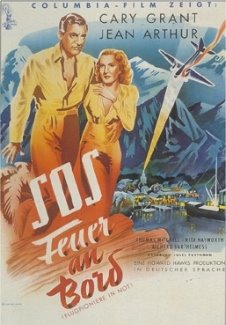
Only Angels Have Wings – Howard hawks film in which Cary Grant leads a group of pilots who deliver the mail high in the Andes. Jean Arthur costars as the new woman in town who can’t help but fall in love with him, Rita Hayworth plays his ex-girlfriend in town with her new husband, a pilot formerly blackballed for cowardice. It’s a prototypical Hawks drama, with different generations of men struggling to live up to an idealized code of honor and headstrong women trying to break them down and get them to loosen up. You see the same thing in To Have And Have Not, Rio Bravo and even Red River. This formula doesn’t really fit his comedies though (Gentlemen Prefer Blondes? Monkey Business? there’s something else going on there, I’m sure. Though Bringing Up Baby almost seems to fit, His Girl Friday too, hmmm).

Monkey Business – Speaking of Hawks, this time Cary Grant plays a research scientist looking for the fountain of youth. One of his lab monkeys manages to perfect the formula without his knowledge, and he and his wife (Ginger Rogers) take turn accidentally taking the formula and acting like crazed teenagers. Charles Coburn and the Marilyn Monroe costar. As a screwball comedy it’s perfectly fine, though not up to the standards of Hawks and Grant’s best.

Movies Of The Year: 1964

It’s been awhile, but back to the lists we go. See The Big List for later year’s lists as well as some new disclaimers and methodological explanations.

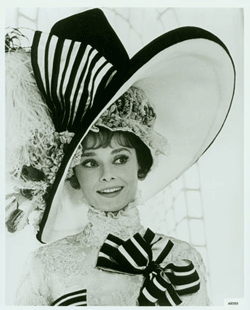
13. My Fair Lady – As much as I love Audrey Hepburn and flashy hats, I really can’t stand this movie. It’s big and bloated and obvious and she doesn’t do her own singing and did I mention it’s long? I don’t have anything against Rex Harrison, and he’s fine as the professor trying to teach Hepburn’s street urchin how to act like a lady. The director, George Cukor goes way back, he did the 1933 version of Little Women (with Katharine Hepburn) along with Sylvia Scarlett, The Philadelphia Story, Gaslight, Adam’s Rib, Born Yesterday and the Judy garland version of A Star Is Born.

12. Robin And The 7 Hoods – A Rat Pack mob epic (and Robin hood adaptatio) starring the usual suspects (Sinatra, Martin, Davis) along with Peter Falk, Bing Crosby, Tony Randall and Edward G. Robinson. It’s nowhere near as fun as Ocean’s Eleven (the original, of course) and it’s way too long, but it isn’t terrible. The director, Gordon Douglas also directed the Unseen sequel In Like Flint, a film that was a major contributor to my irrational fear of insects: the giant ant classic Them!, and a whole lot of B movies going back to the mid-30s.

11. A Shot In The Dark – I probably shouldn’t count this, because the only time I’ve seen it was an old print that had faded to the point everything was pretty much pink. But what the hell, it is a Pink Panther movie, after all. Peter Sellers plays Inspector Clouseau, the clumsy detective who bumbles his way to solving a crime. Sellers is predictably hilarious as he tries to prove that Elke Summer did not commit the murder everyone else thinks she did. Also stars the very great George Sanders (Rebecca, All About Eve) and Tracy Reed, who is also in another film on this list. Can you guess which one?

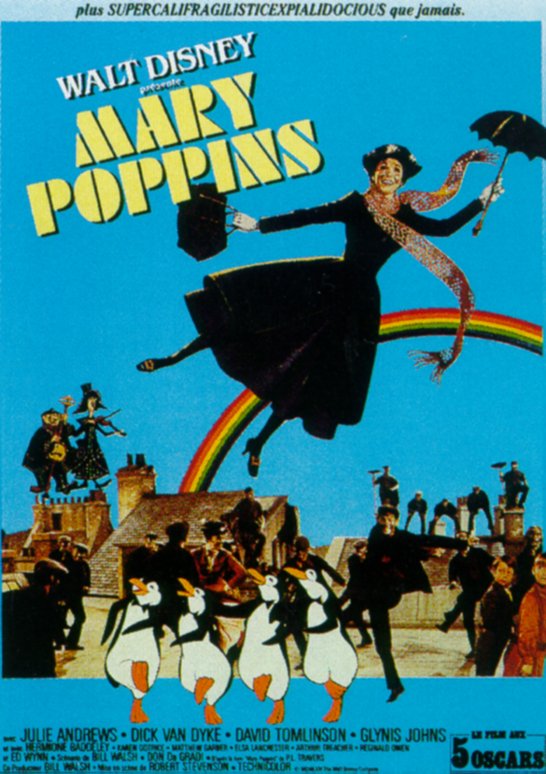
10. Mary Poppins – The best live-action Disney movie ever? Julie Andrews stars as the singing magic nanny in this musical about the evils of capitalism, Victorian repression and the dangers of feminism. For the first, we have the character of the father, who learns that flying a kite is more fun than working in a bank, along with the old homeless lady with nothing to do but talk to birds as she’s been abandoned by an unfeeling system. For the second we have the freedom loving chimney sweeps lead by Ms. Poppins boyfriend, Dick Van Dyke, who dance across the rooftops of London, travel into hallucinatory cartoon worlds via magic sidewalk chalk art and the always funny Ed Wynn in his Uncle Albert/tea party on the ceiling sequence. For the third, we have the children’s mother, too busy with her suffragette causes to pay attention to her children, which necessitates the hiring of a magic nanny in the first place. It’s a fascinating film, positively bursting with meaning, hidden under a sugary sheen of silly musical tropes.

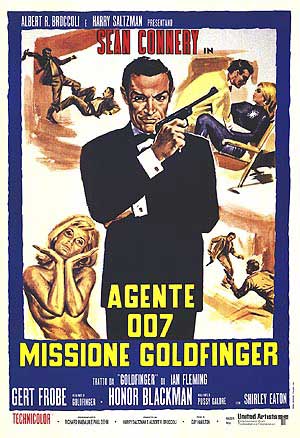
9. Goldfinger – One of the very best of the James Bond films has Sean Connery pit against Auric Glodfinger, who wants to do something or other to the gold in Fort Knox to destroy the world economy, or something. Along the way he’s got to dodge the sinister hat-throwing henchman Oddjob and the feminine wiles of Goldfinger’s pilot, the iconically named Pussy Galore. There’s no truth to the rumor that being covered in paint causes asphyxiation, by the way, or that the actress in the opening died on set. Some people will believe anything.

8. Gertrud – Director Carl Theodor Dreyer’s last film was a flop in it’s time (it’s easy to see why) and has only recently been rehabilitated into classic status. Jonathan Rosenbaum has written glowingly about and, and while I can’t say I agree with him, it certainly is an interesting film. I wrote about it here and I can’t say my opinion has changed in the last month. It’s a weird, beautiful, intense, exasperating, alienating and, most would say, dreadfully dull film.

7. A Fistful Of Dollars – The first Clint Eastwood-Sergio Leone Western is a blatant ripoff of Akira Kurosawa’s samurai Western Yojimbo, so much so that Kurosawa actually sued and won against Leone. Based, like the other film, loosely on Dashiell Hammett’s Red Harvest (an entirely different genre of novel from either film), Eastwood plays a drifter who wanders into a violent mess of a town being torn apart by two rival gangs. He proceeds to get himself in-between both groups and play one against the other until they tear each other and the town apart. It’s a fine film, but doesn’t hold a candle to either Yojimbo or Leone’s later epics.

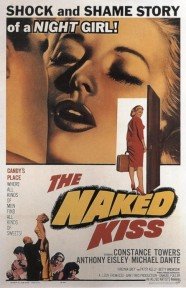
6. The Naked Kiss – Justly famous for it’s opening sequence in which a prostitute beats the hell out of a subjective camera (a john who hasn’t paid her) with a handbag and has her wig pulled off revealing a Telly Savalas skull. This Samuel Fuller classic only becomes stranger from there. The hooker moves to a small town and tries to rebuild her life by working with handicapped children. She begins a romance with the son of the most powerful family in town and then discovers that there are things far more disturbing beneath the surface of small town America than a bald prostitute beating up a camera. It’s got everything you expect and want from a Samuel Fuller movie.

5. Marnie – Perhaps Alfred Hitchcock’s most disturbing film is this story of a frigid kleptomaniac woman and the man who loves her, blackmails her, rapes her and forces her to re-experience the childhood trauma that screwed her up in the first place. A lot of Hitchcock’s films are expressions of his own neuroses, especially his obsession with blonde women, but this one, with it’s sadistic treatment of Tippi Hedren’s lead character, combined with what is rumored to be Hitchcock’s real-life stalking of Hedren make the film truly perverse. Sean Connery, in an odd comment of his by then famous and misogynistic James Bond persona plays Marnie’s husband, who forces her to resolve her issues, among other things.

4. Zulu – One of my all-time favorite war films is this true story of a small band of british troops surrounded by the entire Zulu army. All day and all night they have to hold there fort against the Zulus, despite being outnumbered 4,000 to 140. Michael Caine plays the wholly inexperienced dandy of a commanding officer, who because of seniority cedes command to Stanley Baker’s passing engineer. Ulla Jacobson, from Bergman’s Smiles Of A Summer Night plays the daughter of a minister who tries to convince them all to run away. Though the Zulus are portrayed more as a mass than as individual characters, it’d be hard to argue that the film doesn’t treat them or their cause (the expelling of foreign invaders) unjustly. Director Cy Endfield was a victim of the McCarthy blacklist and moved to England to find work.

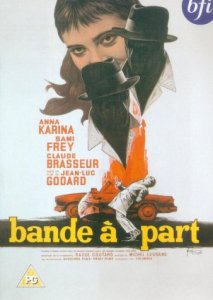
3. Band Of Outsiders – The movie that gave Quentin Tarantino his production company’s name stars the always great Anna Karina as a girl being romanced by two would-be hoodlums played by Claude Brasseur and Sami Frey. The three of them meet in English class, go out for a soda and one of the greatest dance sequences of all-time (music by Michel Legrand) and hang around, dreaming of being film noir characters. The two guys eventually convince Karina to help them rob her uncle’s house. It’s not my favorite of Jean-Luc Godard’s films, but it might be his most popular and accessible. As such it’s as good a place as any to start if you need to familiarize yourself with his work (and you do).

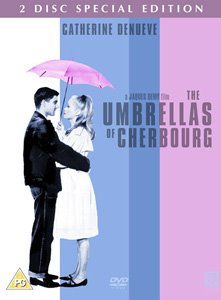
2. The Umbrellas Of Cherbourg – Jacques Demy’s melodrama as opera stars Catherine Denueve as the daughter of an Umbrella shop owner who’s in love with a mechanic named Guy, played by Nino Castelnuovo. Guy ships off to Algeria for two years, leaving a pregnant Deneuve unable to resist the charms of the wealthy Roland, whom her mother loves and can solve all their financial troubles (the own an umbrella shop, after all). Guy returns to find his Aunt dying, his girlfriend married and his child being raised by another man. The story is the simplest soap opera melodrama, but by virtue of the music, every line of dialogue is sung to a brilliant Michel Legrand score, and the mise en scène (filled with more vibrant than life primary colors) the everyday is elevated to the level of great tragedy. This is what Demy appears to be all about, at least in the two films I’ve seen of his (Young Girls Of Rochefort, #3, 1967, being the other), showing the beauty of what we tend to see as the mundane of everyday life.

1. Dr. Strangelove – One of my all-time favorite films of any genre is this Stanley Kubrick film about the inevitability and hilarity of nuclear apocalypse. Peter Sellers, of course, is brilliant in a triple role as the eponymous doctor, the ineffective president and the British officer who almost saves the day. Sterling Hayden plays a lunatic general who launches a nuclear strike on the USSR because he’s convinced a case of impotence was caused by the communist water fluoridation scheme. Slim Pickens plays the pilot of a B-52 who doesn’t get the mission abort code and ends up destroying the world. Rumor is that Kubrick didn’t bother to tell Pickens that the movie was a satire and had him play the whole thing straight. true or not, it certainly works. James Earl Jones plays one of Pickens’s flight crew, Keenan Wynn has a great little role as a soldier who’s a big fan of the Coca-cola corporation, but George C. Scott gives my favorite performance in the film as General Buck Turgidson, the gung ho commander terrified the Russians might see The Big Board. This is what satire is supposed to be: a scathing indictment of the lunacy of Cold War decision-making and paranoia that’s as funny and disturbing as it is persuasive.

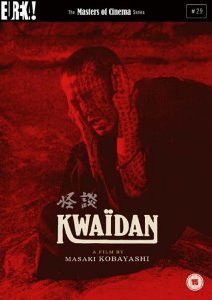
A lot of great Unseen movies this year as 1964 appears to be another great year for films in general. I’ve got the new Masters Of Cinema DVD of Kwaidan on the way from the UK, should be here any day now.

A Hard Day’s Night
Fail-Safe
Zorba The Greek
Seven Days In May
Hush. . . Hush, Sweet Charlotte
The Night Of The Iguana
The Pawnbroker
Topkapi
The Fall Of The Roman Empire
The Gospel According To St. Matthew
Kwaidan
The Masque Of The Red Death
Onibaba
Woman In The Dunes
Diary Of A Chambermaid
The Killers
The Red Desert
I Am Cuba
7 Faces Of Dr. Lao
The Soft Skin
Cheyanne Autumn
Charulata
Becket

Movie Roundup: Fire Bruce Arena Edition

Some quick comments while watching France attempt to out-lackluster the Americans in the World Cup.

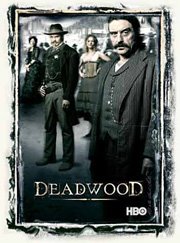
Deadwood – The third season started on Sunday of this great HBO series. Nancy Franklin wrote a comically inept review of it for last week’s New Yorker, something film critic Dave Kehr has a nice post about on his blog. Franklin’s generally a fine critic, but with this and her inability to understand My Name Is Earl, I fear she may be succumbing to creeping Anthony Lane Syndrome, wherein a reasonably good critic comes to hate the very medium they work in, and thus becomes unable to ever see things for what they are and instead begins to write reviews as if they are competing in a cleverest zinger contest. Anyway, Deadwood’s a terrific show, a linguistically obscene, yet poetic, examination of the core conflict at the heart of the whole Western genre: how order comes to be imposed upon chaos. You can phrase it any number of ways: civilization vs. barbarity, capitalism vs. pre-agrarian hunter-gatherers, genocidal white men vs. outgunned indians, and so on, depending on your personal political axe-grind. One of the posters on Kehr’s blog points out that Deadwood’s Al Swearingen, the murderous, vicious, outrageously profane, amoral saloon keeper who is paradoxically the only hope the community has to avoid being swallowed up by the rapacious laissez-faire capitalist George Hearst, is uncoincidentally quite similar to many of John Wayne’s characters, especially Ethan Edwards in The Searchers (a killer who embarks on a decade long quest to rescue his niece only to find that the community he restored has no place for a man like him) and Tom Doniphon in The Man Who Shot Liberty Valance (which is what that film is all about: civilization needs these men to tame the wilderness (Indians, outlaws) but once tamed, it has no place for them and they are left, at best, to simply fade away).

Thank You For Smoking – I thought this movie was enjoyable enough while I was watching it, but the more I think about it, the more I don’t like it. It supposedly is a satire, but I can’t figure out what it’s supposed to be satirizing, or even if surrounding one reasonably intelligent protagonist with a world full of blithering idiots actually counts as satire. The problem, I think, is that the film isn’t willing to take a stand and either celebrate or indict the protagonist, Nick Naylor, a lobbyist for the tobacco industry. The thing is, Naylor never says anything all that outrageous, though the movie seems to think it is. The great revelation we get at the end of the film is that adults should have the right to choose whether they want to smoke or not. This is either mind-numbingly obvious or not the least bit funny, either way, it’s a pretty lame ending. The film appears to want it both ways, writer-director Jason Reitman wants to make fun of the anti-smoking lobby (an unbelievably stupid Senator played by William H. Macy, shadowy “terrorists” who kidnap Naylor) and the tobacco industry (a pointless character played by Robert Duvall, perhaps meant to satirize old Southern men who like mint juleps? and an ultimately irrelevant subplot involving Rob Lowe, Adam Brody and a whole mess of cheap anti-Hollywood jokes). It’s as though the film wants you to think that Naylor’s right and personal responsibility is important, but Reitman isn’t so sure and doesn’t want anyone to think he actually agrees with that. Pointedly, there is no smoking of any kind in the film, in interviews, Reitman has said that he didn’t want to glamorize it or make anyone think he might actually approve of the habit. What a mess. It does have its redeeming features though. Most of the funny lines are in the trailer, but the best part of the film is Aaron Eckhart’s gleeful performance as Naylor. He perfectly captures the joy Naylor feels when he wins an argument and the childlike gleam in his eye when he gets some of the perks of being a successful lobbyist (a private jet, a trip to Hollywood, Katie Holmes). For a first film, it’s really not that bad, and it was fun watching it in a surprisingly crowded theatre for a Monday night many weeks after the movie’s release, but I really expected better. The #38 film of 2005.

Movie Roundup: Fire Hargrove Edition

More movies I’ve seen recently while perfecting my martini recipe:

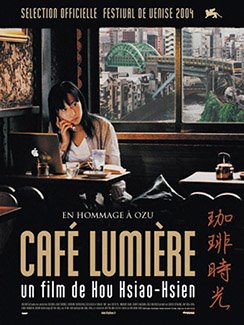
Café Lumière – I’ve been wanting to watch a Hou Hsiao-hsien movie for years, ever since I read about him in one of Jonathan Rosenbaum’s books in 1998 or so. This was certainly a fine place to start with the Taiwanese director accalaimed as one of the world’s best, despite never getting any real distribution in the US. Yo Hitoto stars as a young journalist just returned from Taiwan to her home in Tokyo. She tells her parents she’s pregnant and enlists her friend, a bookstore owner (Tadanobu Asano, from Last Life In The Universe, #2, 2003) in her efforts to track down a missing composer. Created as a tribute for the 100th anniversary of the birth of Yasujiro Ozu, the film is obviously influenced by great director, as apparently Hou is in all his films. Plotwise, the film is ridiculously slow, if anything ever actually happens at all, but it’s a beautiful and always interesting movie, with some beautifully composed shots of trains and the small houses, apartments, restaurants and shops of Tokyo. The #3 film of 2003.

Gaslight – Ingrid Bergman stars as a persecuted wife in this Rebecca-esque film noir. Bergman’s as good as ever, though watching this I realized I’ve only seen her in a few movies: the two Hitchcock’s (Notorious and Spellbound), Casablanca and The Murder On The Orient Express. I really need to see her Rosselini films, and Renoir’s Elena Et Les Hommes sounds good as well. Anyway, Charles Boyer plays her husband who’s slowly trying to drive her crazy by convincing her that she’s crazy. Joseph Cotten plays the man who comes to her rescue. The noir style and Bergman’s performance is what creates the psychological intensity necessary for the film’s suspense to work. Director George Cukor had a long and interesting career, though I don’t think anyone’s ever called him an auteur. His films include: Little Women, Sylvia Scarlett, Holiday, Gone With The Wind, The Philadelphia Story, Gaslight, Adam’s Rib, Born Yesterday, A Star Is Born, Lust For Life and My Fair Lady.

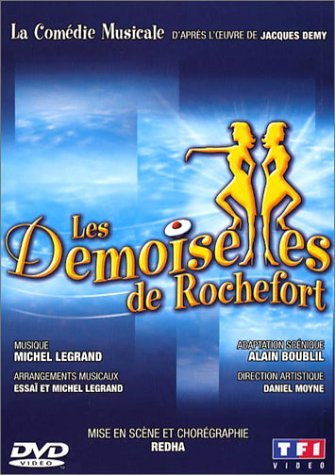
The Young Girls Of Rochefort – One of the best and most complicated musicals I’ve ever seen is this highly acclaimed sequel top Jacques Demy’s The Umbrellas Of Cherbourg. Unlike that film, this is a full-on tribute to Hollywood musicals, complete with elaborately choreographed dance numbers and even a French speaking and singing Gene Kelly (still spry in his old age, by the way). Catherine Deneuve and her real-life half-sister Françoise Dorléac plays a pair of twins in search of true love, as is their mother, Danielle Darrieux, a pair of traveling dancers, George Chakiris and Grover Dale, an artist, Jacques Perrin, and a music shop owner, Michel Piccoli. The various characters keep barely missing their true loves, in a choreography as elaborate as any dance sequence in film history. The film may be the purest expression of the musical idea: that life is so weird and wonderful that the fullness of it can never be expressed in mere prose, but requires poetry, a melody and some bizarre patterns of movements to fully express it. The #3 film of 1967.

Mildred Pierce – You wouldn’t think the world was clamoring for a mash-up of women’s melodrama and film noir, but apparently in the 40s they were. Joan Crawford stars as a typical woman how builds a restaurant empire for the sake of her daughter who is nonetheless rejected by that snobby daughter because she isn’t aristocratic enough for her. A whole new level of irony is added when you consider Crawford’s real-life reputation as a mother. Only the second Crawford movie I’ve ever seen, after Grand Hotel (in which a much younger Joan is quite cute), I haven’t even seen Mommie Dearest. I have been meaning to see Johnny Guitar for almost a decade but have never gotten around to it. Based on the James M. Cain (The Postman Always Ring Twice and Double Indemnity) novel and directed by Michael Curtiz (Casablanca, The Adventures Of Robin Hood, Angels With Dirty Faces, Captain Blood, Yankee Doodle Dandy).

The DaVinci Code – Ron Howard’s adaptation of what A. O. Scott brilliantly dubbed “Dan Brown’s best-selling primer on how not to write an English sentence” is the worst movie of his I’ve ever seen. The film combines all the charms of plagiarism, stupidity, wooden acting and pathetically unthrilling thrills. Tom Hanks, an actor who generally can’t help but be charming, despite how bad the material is manages to give his worst performance as a professor of symbology (sic, seriously sic. I can;t tell you how much that word pisses me off) with a total lack of personality. Audrey Tautou, looking cuter than ever, plays the stupidest cryptologist in the history of cryptology. Only Ian McKellen was apparently smart enough to realize this film was a joke and infuses his role with a bit of ironic glee. I’ve read three of the book Dan Brown ripped off for this book, Umberto Eco’s Foucault’s Pendulum and Leigh, Baigent and Lincoln’s Holy Blood Holy Grail and The Messianic Legacy, all of which are more interesting, more insightful and more suspenseful than this dreadfully stupid movie.

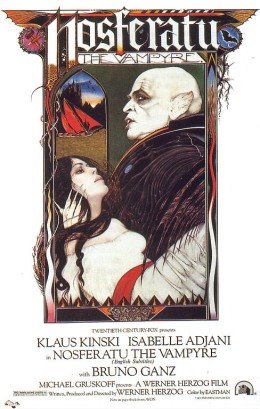
Nosferatu – This Werner Herzog version of the familiar story I had seen the first part of several years ago but couldn’t stay awake long enough to finish, I won’t go into detail why I couldn’t. The film exists in a kind of middle-ground between Murnau’s classic Expressionist horror film and Francis Ford Coppola’s camp classic (can it be that already?) that rated #15 in 1992. Like the Murnau but not the Coppola, the movie is only tangentially related to Bram Stoker’s original novel, but also like Murnau, that isn’t exactly a flaw. Herzog manages to make the material his own, as I’m sure he can;t help but do, and adds the best ending for any Dracula movie ever, which has to be the invention of his own brilliant and twisted mind. I just finally got around to reading the New Yorker profile on Herzog yesterday, and man does it make me want to watch all his films. How can you not love that crazy German freak? The #6 film of 1979.

Seven Hundred And Fifteen

I’ve been watching so many movies it seems I have no time for any proper blogging. Here’s some of what I’ve seen recently:

Gun Crazy – Quite a perverse little film noir directed by Joseph H. Lewis and starring John Dall (the actor who wasn’t awful in Hitchcock’s Rope) as a sharpshooter with a gun fetish and Peggy Cummins as one of the most evil femmes fatale in the noir canon. The alternate title is ‘Deadly Is The Female’ which is great, but better might be ‘Guns Don’t Kill People, Women Kill People”.

The Killing – One of the few Kubrick movies I hadn’t seen was this innovative noir heist film about a robbery at a race track. Sterling Hayden stars as the head of the criminal enterprise and the great minor character actor Elisha Cook Jr. plays the man whose wife blows the whole operation. Femme fatale indeed. The Out Of The Past podcast did a two-part series comparing this to Reservoir Dogs, in that both are heist films that feature fractured timelines, but that’s about all they have in common. In the Tarantino film, the heist is a minor part of the story, it’s the interactions between characters that’s of interest. The Kubrick film, on the other hand, places the mechanics of the heist itself at the center of the narrative, and uses the complicated structure to heighten the tension of that heist. Anyway, it’s a terrific Kubrick film with one of the better endings in noir history.

Harakiri – Anti-samurai film by director Masaki Kobayashi (Samurai Rebellion, #11, 1967; Kwaidan) and starring Tatsuya Nakadai (Sword Of Doom, #3, 1966; Ran, #1, 1985). Nakadai plays a ronin who shows up at a samurai castle asking to be allowed to kill himself in their courtyard. He’s out to avenge the young samurai whom the callously forced to commit seppuku there with a bamboo sword. It’s a nasty and violent, yet slowly paced film about the hypocrisy between the samurai’s professed code of honor and the pragmatic politics necessary to being a ruling class. A very nice looking film, with yet another great performance by Nakadai, but the politics of it all was a bit heavy-handed for me.

How To Marry A Millionaire – Three hot chicks looking for rich husbands in what seems to have been a popular trope in the world of 1950s romantic comedies. An entertaining, if predictable trifle enlivened by the presence of Lauren Bacall and Marilyn Monroe. And Betty Grable’s alright too, I guess.

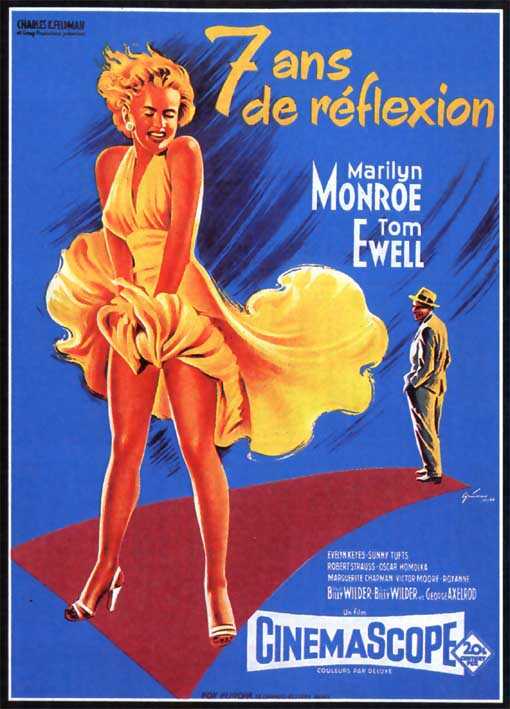
The Seven Year Itch – Another Monroe film, this one unfortunately doesn’t seem to have aged very well. Tom Ewell reprises the role he played on Broadway as a mid-life crisied yuppie daydreaming about having an affair with his upstairs neighbor. Monroe’s terrific, of course, but Ewell is far from it. The conventional line appears to be that he’s too stagy and not enough filmy, which sounds about right. My least favorite Billy Wilder film, thus far.

Freaks – Eh. Circus freaks are abused by an evil and annoying woman who turn on her, get her drunk and, apparently turn her into a chicken lady. An innovative and influential film, I’m sure, but not in a genre I’m particularly a fan of. The tension between the film’s ostensible theme that people should be nicer to freaks and the fact that the main reason anybody ever watches it is to, well, look at the freaks is interesting. But not that interesting.

Ride The High Country – Early Peckinpaugh Western about two old gunfighters trying to adjust to a modern world where their kind aren’t especially useful or welcome. Joel McRea (Sullivan’s Travels) is great as the wizened honorable lawman hired to escort some gold to a bank, and Randolph Scott is alright as his old partner along for the ride (and the hope of stealing the gold). It’s a bit slow in the beginning, some may say elegiac, but the elegy’s a little obvious for me, but picks up when the action gets rolling in the second half: then we get to see the Peckinpaugh that made The Wild Bunch (#4, 1969) and Pat Garret And Billy The Kid (#6, 1973) start to shine.

Just One Punch Away

The Set-Up – I haven’t seen a lot of Robert Wise movies (see the comments on The Sound Of Music in the 1965 list for a list of some of his highlights), but this is easily my favorite. It’s the opposite of The Sound Of Music. Where that was bloated, colorful, sunny and epic this is dark, taught, and efficient. An essential film noir, it tells the real-time story of an overthehill boxer whose wife can’t watch him fight anymore and whose managers have brokered a deal with a gangster for him to throw the fight but haven’t bothered to tell him. Robert Ryan excels as the fighter with an unshakable belief that if he wins just one more fight he’ll finally be on his way to greatness. But it’s the mise en scène that’s the real star here. The film essentially takes place on one corner, where a cheap hotel, the boxing arena, an arcade and a bar lie. The sense of seediness, the dark underbelly of urban life that noir so effectively evokes has never been better exemplified than Wise does here, despite the apparent B-level of the production (it’s only about 70 minutes long and looks about as expensive as a Twilight Zone episode). The fight scenes are impressive, shot, like the rest of the film, in real time, and I never noticed them looking fake. Certainly as good as any boxing scenes until Scorsese’s Raging Bull (#3, 1980), for which this film was a major influence. I’d recommend it for fans of film noir, and fans of sports movies, which must cover two-thirds of the world at least.

Movies Of The Year: 1965

I put this off for awhile because I hoped to watch Akira Kurosawa’s Red Beard first, after having owned the very nice Criterion DVD of it for several years. But it doesn’t look like I’m going to get around to it anytime soon, and I can always add it to The Big List when I do finally watch it.

15. That Darn Cat! – One of the greatest movie titles of all time is this live-action Disney film about a crime-solving cat. The cast is remarkable: Disney stalwarts Haley Mills and Dean Jones star along with Elsa Lanchester, William Demarest, Frank Gorshin, Ed Wynn and Roddy McDowell.

14. The Sound Of Music – Julie Andrews stars as a singing nun who abandons God for Christopher Plummer and his obnoxious children. In turn, God sends Nazis after them. Directed by Robert Wise, who edited Citizen Kane and The Magnificent Ambersons, directed The Set-Up, The Day The Earth Stood Still, West Side Story and Star Trek: The Motion Picture. According to imdb, Christopher Plummer “likened working with Julie Andrews to ‘being hit over the head with a big Valentine’s Day card, every day.'” Sounds about right.

13. The Sons Of Katie Elder – Remade last year by John Singleton as Four Brothers, starring Marky Mark. John Wayne and Dean Martin reunite 6 years after Rio Bravo in this mediocre Western about some brothers avenging their parents. Also stars Dennis Hopper and George Kennedy. Directed by Henry Hathaway, who made true Grit, Niagara and a series of films noirs in the 40s (Kiss Of Death, Call Northside 777, The House On 92nd Street) that I haven’t seen.

12. Repulsion – One of the most horrific experiences I’ve ever had watching a movie. Roman Polanski’s film stars Catherine Deneuve as a disturbed young room left alone in her sister’s apartment for a weekend who becomes increasingly deranged and terrified as she’s overcome by possible hallucinations of murder and rape. It’s a brilliantly done film, if what Polanski was going for was a cinematic kick to the groin. Ranks this low because I personally don’t like to be kicked there or anywhere else.

11. Dr. Zhivago – For a beautiful woman, Julie Christie does look pretty terrible in a whole lot of movies. This is a prime example. Mostly I blame the lipstick. David Lean’s bloated, dull, painfully melodramatic epic about poetry and infidelity in the time of the Russian Revolution has a tremendous cast and, like you expect from Lean, is a big, beautiful film. But I can’t say I liked any of it. Lawrence of Arabia I can watch over and over again, Zhivago was like a visit to the Cinemascope dentist. I think I may have slept through the middle hour, but I’m not sure. Stars Christie, Omar Sharif, Alec Guiness, Tom Courtney, Geraldine Chaplin, Rod Steiger, Ralph Richardson and, believe it or not, Klaus Kinski.

10. For A Few Dollars More – The ubiquitous Kinski also co-stars in this, the second of Sergio Leone’s so-called Man With No Name trilogy. It’s a transitional film between the Kurosawa ripoff that was A Fistfull of Dollars and the truly epic style that Leone would master in The Good, The Bad & The Ugly (#2, 1966), Once Upon A Time In The West (#3, 1968) and once Upon A Time In America (#7, 1984). Clint Eastwood and Lee Van Cleef play a pair of bounty hunters on the trail of Gian Maria Volantè.

9. Shenendoah – I reviewed this back in August here on TINAB (which you can read here). It’s an anti-war pseudo-Western starring James Stewart as the head of family that doesn’t want to, but inevitably must get involved in the Civil War. katharine Ross is the only high point among a pretty dreadful supporting cast. Director Andrew V. McLagen had a long career highlighted by generic John Wayne mediocrities and “sequels” to good films (The Dirty Dozen: The Second Mission, Return From The Riv er Kwai).

8. Thunderball – One of the better James Bond films, rather pathetically remade in the 80s as Never Say Never Again ( #22, 1983). SPECTRE steals a bomber loaded with a couple for nuclear weapons and holds the world ransom for 100 million dollars (say it like Dr. Evil). Fortunately, Sean Connery’s around to track them down and save the day, but not before stealing the bad guy’s girlfriend Domino, naturally. Claudine Auger plays Domino (it was the terrible Kim Basinger in the ’83 film), Adolfo Celi plays the villainous Emilio Largo and Luciana Paluzzi plays the wonderfully named Fiona Volpe.

7. A Charlie Brown Christmas – The best remembered of the Peanuts specials, and not just because Robert Schmigel seems to love it (he does the cartoons on Saturday Night Live that have been the best part of the show for the last decade or so). It’s success lies in the fact that while it’s critique of the commercialization of Christmas (and by extension, the secularization of modern life) is unsubtle and simplistic, it’s told with complete honest such that the viewer never feels manipulated. Which is, of course, the best way to manipulate someone. It’s telling that the climactic speech Linus gives at the pageant is not about any of the great Christian values (charity, mercy, compassion, forgiveness) but rather an assertion of that Christmas is merely the celebration of the birth of a God-figure (Jesus, if you didn’t know). Certainly an odd message, if you ask me, that Christmas isn’t about values at all but about the birth of one particular religious group’s deity. The film then is about how good Christians are being corrupted by the technological and capitalistic advances of secular society (pink aluminum Christmas trees, for example). I propose that for next years battle in the Liberal War On Christmas, we expose this piece of non-inclusive propaganda for what it is: a radical combination of Marxist and Fundamentalist Christian critiques of modern American society. Just be sure to ignore the fact that Peanuts is the most successfully merchandised and commercialized comic in history. But the dancing’s real cool.

6. The Cincinnati Kid – This definitive poker movie stars the always cool Steve McQueen as the title gambler who hopes to unseat Edward G. Robinson as the best of the best. It’s a simple plot device that works for any genre film from The Hustler to Enter The Dragon. This being a gambling film, our hero must resist the temptation of gangsters who want to cheat and a overcome a dealer who has been compromised. Not surprisingly, he must also juggle the attentions of two women (a madonna and a whore, of course) played by Tuesday Weld and Ann-Margaret (poor bastard). Karl Malden, Joan Blondell, Jack Weston, Cab Calloway and Rip Torn also star. Norman Jewison directed, Hal Ashby edited and Ring Lardner Jr (Laura, MASH) and Terry Southern (Dr. Strangelove, Barabarella) adapted the screenplay.

5. Alphaville – Jean-Luc Godard making a ultra-low budget sci-fi film starring Anna Karina? Sign me up. Eddie Constantine plays Lemmy Caution, an American private eye who travels to a futuristic, Orwellian city run by a computer that doesn’t like emotion or self-expression or poetry and all that. Karina’s the daughter of the evil scientist who built the computer, Dr. Von Braun, who Lemmy’s supposed to kill or something. A crazy, mystifying Godardian soup of sci-fi, film noir, in-jokes, puns, overthetop pretentiousness and Akim Tamiroff. This was the second Godard film I saw, after Breathless and it confused the hell out of me a decade ago. I haven’t watched it since, but not because I don’t love it. I’ve a cheap used video copy of it, but I hear the Criterion version is pretty bare bones, it’s on the list of movies to buy.

4. Samurai Spy – Masahiro Shinoda directed this beautiful film about warring gangs of spies in the early days of Tokogawa Japan. The only film I’ve seen that successfully mingles samurai and ninja, two of the coolest things ever. One of the ninjas, a leper, is clearly the influence for the look of Snake Eyes’s arch-enemy, Storm Shadow. The plot’s ridiculously complex, with a Sanada clan spy caught in-between a spy war among the Tokogawa and Toyotomi clans, trying to hunt down a spy named Nojiri, Seven Samurai’s master swordsman Seiji Miyaguchi showing somewhere along with a group of persecuted Christians. It’s a beautiful black and white film, filled with dramatic, thematically appropriate shadows. A perfect example of samurai noir.

3. The Spy Who Came In From The Cold – One of those movies that I love and that no one else seems to have seen, let alone really like. In this John Le Carré adaptation, Richard Burton plays burned-out spy Alec Leamas who leaves his agency after his last agent is killed, becomes a librarian, romances Marxist bookworm Claire Bloom all in an elaborate scheme to frame his East German rival, Hans-Dieter Mundt. Burton is brilliant, as always, Peter Van Eyck is very good as the menacing Mundt and Oskar Werner is exceptional as the German agent who interrogates Leamas. Director Martin Ritt brings a seedy noir style to the film that matches perfectly Le Carré’s deglamourized, anti-Bond spy world. One of those rare movies that’s actually better than the book, though I did enjoy the book very much.

2. Chimes At Midnight – Orson Welles took all the parts of Shakespeare’s Henry IV parts 1 & 2, Henry V and Richard II that involved the character Sir John Falstaff and reedited them into one film about him and his relationship with Prince Hal, later Henry V. Falstaff is one of the more remarkable characters in the history of literature: fat, obnoxious, drunk, boastful, and melancholy. Flastaff is a bit of a joke, we laugh at him and we laugh with him. He’s Hal’s friend when he’s slumming among the common people, and he gets abandoned when Hal has to grow up and become the King. You might recognize the plotline from Gus Van Sant’s My Own Private Idaho (#12, 1991), in which Keanu Reeves plays the Prince Hal role, abandoning his homeless and gay prostitute friends when he takes his role in society as the son of the mayor of Portland. Anyway, Welles’s film is, like you’d expect, beautiful, with a tremendous performance by Welles and great work from John Gielgud as Henry IV and Jeanne Moreau around somewhere. It’s criminally unavailable in a decent DVD version, there is a crappy Spanish version of it out there. Hopefully Criterion or someone will get around to releasing it. I saw it on video 8 years ago, it was one of the first movies I rented the first day I moved to the big city a couple blocks away from “the best video store in the world”.

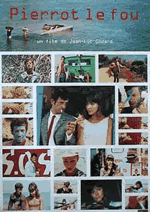
1. Pierrot Le Fou – After a party where everyone speaks in advertising slogans except for Samuel Fuller, Jean-Paul Belmondo escapes with the babysitter, Anna Karina, who’s fleeing a group of Algerian gangsters. The two lovers run to the Mediterranean, where they live a life filled with romance, music, poetry, art, movie references, bizarre dialogue and Godardian absurdity until the hit-men catch up with them, Karina leaves with them and Belmondo blows himself up. Like any Godard film, the plot is both impossible to summarize and the least interesting thing about the movie. It’s another beautiful Godard film, with typically great performances from the two leads. This is the peak of a remarkable run for Godard from 1960-68, where he was putting out two or three films a year, most of them masterpieces: Breathless, A Woman Is A Woman, My Life To Live, Le Petit Soldat, Les Carabiniers, Contempt, Band Of Outsiders, A Married Woman, Alphaville, Pierrot Le Fou, Masculin-Femenin, 2 or 3 Things I Know About Her, Made In USA, La Chinoise, and Week-End. An artistic peak rivaled only by The Beatles from 1965-70 or Bob Dylan 1963-1966.

Red Beard leads the list of Unseen from this year, but there’s some other interesting stuff as well:

Flight Of The Phoenix
Help!
Cat Ballou
What’s New, Pussycat
Battle Of The Bulge
Red Beard
Faster, Pussycat! Kill! Kill!
Juliet Of The Spirits
The Greatest Story Ever Told
The Shop On Main Street
The Agony And The Ecstasy
Darling
The Loves Of A Blonde
Simon Of The Desert
Lord Jim
The Saragossa Manuscript

Movie Roundup – Last Life In The Universe, Murder My Sweet, Gilda

Last Life In The Universe – A possibly suicidal Japanese librarian (he keeps failing to kill himself) hangs out with a Thai girl after his brother and her sister are killed. He’s an obsessive compulsive neatfreak while she’s a pot-smoking slob. He spends a couple days cleaning up her house (right by the beach), they fall in love and are separated and learn a lot about life and love and all that. Neither one speaks the other’s language, so they spend most of their time communicating in English, and eventually each of them spends some time transformed into their deceased sibling, both of whom are cultural stereotypes (Japanese yakuza and Thai prostitute). It’s Harold & Maude with the gap the lovers overcome being culture instead of age. It’s a beautiful movie, some of Christopher Doyle’s finest cinematography, though it’s totally different than his work with Wong Kar-wai. It looks more like Danny Boyle circa Trainspotting. It’s the only film I’ve seen by director Pen-Ek Ratanaruang, though his film 6ixtynin9 has gone right into the queue. The #2 film of 2003.

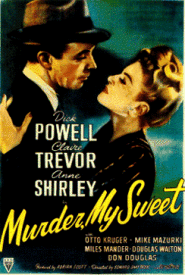
Murder, My Sweet – Edward Dmytryk’s adaptation of raymond Chandler’s Farewell, My Lovely stars Dick Powell as the detective Philip Marlowe. It’s an odd choice for a hard-boiled film noir, as Powell was mostly known for his work in light musical comedies, and he doesn’t entirely pull off Marlowe, at least not as I imagine him (that’d be Humphrey Bogart in the Big Sleep) but he’s not bad. Marlowe’s hired by a bulky thug to find his missing girlfriend and manages to get himself mixed up with a wealthy family that’s being blackmailed. He gets beat up, a lot, which leads to one of the more unfortunate parts of the film, a cheesy pool of blackness that fills the screen every time Marlowe gets knocked unconscious (this many concussions in such a short period of time can be extremely dangerous, by the way, even if you’re a hockey player) that was apparently greeted with guffaws when the film eventually played in Paris. More successful is a hallucination sequence when Marlowe’s forcibly injected with heroin for some inexplicable reason. But really, the main attraction here is the Chandler dialogue. A nice, summarizing example: “‘Okay Marlowe,’ I said to myself. ‘You’re a tough guy. You’ve been sapped twice, choked, beaten silly with a gun, shot in the arm until you’re crazy as a couple of waltzing mice. Now let’s see you do something really tough – like putting your pants on.'”

Gilda – Another mediocre film noir, this one featuring a superstar-making performance by Rita Hayworth as the title object of desire. Much like in Paul Thomas Anderson’s Hard Eight (#8, 1996), a young gambler is adopted by an older man and shown how to survive. This time it’s Glenn Ford who’s taken in by George Macready’s Buenos Aires casino owner and would-be tungsten magnate. Things fall apart, as they must, when a woman gets involved, Hayworth in this case, Macready’s new bride and Ford’s ex-girlfriend. There’s more than just a hint of a homosexual relationship between Ford and Macready that isn’t exactly minimize by the hostility with which Ford treats Hayworth throughout the entire run of the film. Even after Macready fakes his death and he and Hayworth get married, he proceeds to lock her up in an apartment to punish her for her mistreatment of his “friend”. Of course, they all live heterosexually ever after, but we know what’s really going on. Hayworth, by the way, is as advertised, especially in her famous striptease in which all she manages to remove is a single glove. But I think she looked better in The Lady From Shanghai.

Movie Roundup- After Life, The Producers, Limelight, Gertrud

After Life – In the tradition of Stairway To Heaven and Defending Your Life, Kore-eda Hirokazu’s film has an odd take on what happens when you die. Instead of angels or demons, you get civil servants, who live in a big mansion and make you pick one memory from your life to take with you. After three days of memory picking, the staff makes the memory into a movie. Once you watch the movie, you go off to spend eternity with your favorite memory. It’s a quirky little film, with a light humanistic touch and obvious affection for its characters. It isn’t an especially profound movie: there are hints at a Rashomon-like idea that people can’t tell the truth, even to themselves, as a few characters can’t help but embellish or misremember their own lives, but it doesn’t really go anywhere. There’s also a vaguely translated theme about choosing a single memory from your life as a way to “take responsibility” for that life, but I don’t think I know what that’s supposed to mean, so maybe it’s me that isn’t all that profound. . . . Anyway, despite it’s slow pace and low-key style, the movie never fails to be both interesting and entertaining. The #9 film of 1998.

The Producers – Between the musical, the movie of the musical and the whole season of Curb Your Enthusiasm devoted to it, it was pretty much impossible for me to get anything new out of finally getting around to watching this movie. basically, watching it for the first time was like watching it for the 12th time, I knew all the jokes and the whole plot, so I can’t even say if it was funny or not. I imagine it is though. I enjoyed the hysterical performance by Gene Wilder and the ridiculous cuteness of Lee Meredith and was disturbed by the similarity of Dick Shawn’s performance as the Hitler-playing hippie to Robin Williams, especially in his stand-up. The #9 film of 1968.

Limelight – Charlie Chaplin plays an aging drunk vaudevillian who can’t get work anymore who saves Claire Bloom, a neighboring ballet dancer, from killing herself. Her nurses her back to health, teaches her that life’s worth living, and helps make her a huge star. In turn, she thinks she falls in love with him and tries to revive his career. It all ends with a gala vaudeville show, complete with Chaplin and Buster Keaton combining for a very funny performance. I’ve always been a little put-off by Chaplin’s sentimentality, Modern Times is my favorite of his silent films over City Lights and The Gold Rush for that reason, and I’ve always preferred Keaton (it’s like an Elvis/Beatles thing I guess). But Chaplin is always so honest about his sentimentality that it’s really hard to criticize him for it. He may be a big ball of cheese, but he never tries to hide it, and you’ve got to respect that.

Gertrud – I’ve seen two movies by Carl Theodor Dreyer, and they couldn’t be more different. The Passion Of Joan Of Arc is a silent, highly stylized, visually exciting movie highlighted by a brilliant performance by Maria Falconetti in the lead role. Gertrud, on the other hand, is all talk, fairly static and dull visually (though the camera does move, its movements aren’t exactly exciting, and there is some interesting stuff in the mise-en-scene, specifically a rococo mirror and a dream turned into a tapestry) with some very odd acting by all of the actors. The film seems to consist of long scenes of the actors making monotone speeches while not looking at each other. Gertrud leaves her husband, a successful politician, for a young composer. The next day at a party, her old boyfriend tells her the composer was bragging about sleeping with her the night before at another party at the home of a courtesan. So, she leaves all three men and goes off to Paris to hang out with a gang of psychiatrists. It’s an emotionally intense film, made in such an alienating way that it’d be really easy to make fun of. The style is extreme to that point that it’s almost a parody of the European art movie of the 60s, which is, I assume, the reason it wasn’t particularly well-received when it first came out.

Movie Roundup – King Kong, United 93, Centre Stage

King Kong – Finally got around to watching this as Netflix decided it had been out long enough for a frequent movie watcher like me to be allowed to see it. The special effects are as advertised, it’s a beautiful film, more so than any of the Lord Of The Rings movies in fact. Naomi Watts is terrific and Jack Black’s not too bad either. However, instead of thinking the movie was too long, as most commentators seem to, I think it was actually too short. I dug all the set-up in Act One, especially the idea that this trip to skull island to make this movie is fate, totally out of their control. The little subplots on the boat didn’t work for me at all: the kid and the first mate, the Captain not wanting to got to the island, blah. Once they get on the island, everything’s great again: spooky natives, cool effects, a lot of fun action (though does anyone else wonder why these people never get lost on that island?). It’s Act Three that I have a problem with. None of the interesting themes for Act One are revived or concluded, it all becomes subservient to the (admittedly spectacular) action and the pseudo-love story. The final scenes at the top of the Empire State Building even managed to trigger my fear of heights, which kind of ruined the romance, I guess. A summary of some plot holes: there’s no explanation of why Watts and Adrian Brody are separated at the beginning of Act Three, after he spent the previous hour and a half fighting dangerous computer beasts to rescue her from the giant ape; there’s no explanation for why the cowardly actor came to deus ex machina them back on the island (and where’s his moustache?); there’s no further elaboration, or even mention of the destiny theme. Maybe in a year Peter jackson will release the 5 hour director’s cut and I’ll be satisfied. As is, the movie has everything in common with Titanic but the massive box office gross: it’s big, pretty and simple. The #18 film of 2005.

United 93 – Is this movie any good? The better question is is it possible for this movie to be good? What would a good movie about 9/11 look like? Paul Greengrass seems to think that a verité-style approach is appropriate. We get fly on the wall views of the events on the plane, intercut with scenes in various air traffic and military control centers. This style, and various comments about the film in advertising and some reviews, and the total lack of outside context in the film (no resolution, no mention of anything that happens after the plane goes down) seem to indicate a desire to take no political position on the events in order to avoid offending anyone, to not be seen as exploiting a tragedy for political purposes. However, I don’t think it’s even possible to make a film (certainly not a film like this) without being political, and Greengrass does seem to drive home the unpreparedness and inefficiency of our disaster-response system (“Where is the President?”). The idea that a film should be made of events like this at all is questionable: reducing a very real and very human tragedy to an anecdote, a simple narrative or even worse, and action movie is intrinsically distasteful. But at least when it’s made with a political purpose, such a narrative has some kind of larger purpose. Without that, the narrative is just an action story, the real human tragedy is reduced to, well, a movie. It’s similar to the Schindler’s List argument: the quality of the film as a film necessarily trivializes the real experience of 9/11 or the Holocaust. At least if the narrative has some kind of context or political agenda, the skill in telling it can be seen as a means to education and the prevention of further tragedies. As is, this film, by doing everything it can to be non-political (and necessarily failing) does nothing to further or deepen our understanding of 9/11 and what it means. The best we can take out of it is sympathy and admiration for the collective hero of the airplane’s passengers. But did we really need a movie to show us how heroic those people were? If so, doesn’t that say something horrible about us and the way we deal with reality? Is it not really real until we’ve seen the movie (and wasn’t 9/11 cinematic enough the first time)? Anyway, I don’t think we’ve had a great film about 9/11 yet, but when we do I’m certain it’ll look a lot more than Fahrenheit 911 than United 93.

Centre Stage – A funky biopic about Chinese silent film star Ruan Ling-yu played by Maggie Cheung and directed by Stanley Kwan. Ruan killed herself at age 25 after only a few years of making movies, most of which no longer exist. After reading Jonathan Rosenbaum rave about it in his Essential Cinema book (where it’s called Actress, a much better title), I snagged it from Netflix. Problem is the Region 1 copy of the movie sucks. The subtitles are bad and absent at inconvenient times, the transfer is really bad and apparently 20 minutes have been cut out of the film. As is, there’s enough to see what Rosenbaum dug about the film: Kwan mixes archival footage of the silent films with Cheung reenacting those same film scenes and interviews with actors in the film and some of the people they’re portraying mixed with dramatic recreations of scenes from Ruan’s life. Incoherence is a necessary part of the film because there are so many gaps in what we know of Ruan’s life, but the cuts take it to far (not too mention that a key newspaper headline remains untranslated, not being able to read Chinese, I have no idea what the tabloids were attacking her about right before she killed herself. Seems like whoever subtitled this film would have thought that might be important. . . . Recognizing that it’s incomplete, I’ll rate it the #21 film of 1992.