Movie Roundup – Brick, Young Mr. Lincoln, As Tears Go By, Days Of Being Wild

I had a version of this mostly finished the other day when I accidentally closed Safari and deleted it all. That’s always awesome. Anyway, catching up with some movies I’ve seen recently, in-between baseball games. More to come in a couple of days, as it’s late and I want to watch a movie.

Brick – Is it a film noir set in a high school, or a high school movie set in a film noir? Either way, I don’t think there’s much here beside an interesting conceit and a competent exercise in stylized dialogue. Writer-director Rian Johnson has a clever mastery of the type of hard-boiled dialogue you hear in a noir, but the film lacks any of the feel or visual style of true noir. Pre-dawn grayness just doesn’t work as a substitute for chiaroscuro, at least not in creating a sense of existential fear or dread. Instead, the dullness of palette and general lack of visual flourish creates only a feeling of boredom and disconnection. Perhaps this is intentional, going along with the idea of only being able to viewing high school through the mediation of old movies, the bland real world contrasted with the vividness of artificial, borrowed, dialogue. . .a reflection of post-modernity or something like that. This being Johnson’s first film, it’s too early to say. I rate it the #23 film of 2005.

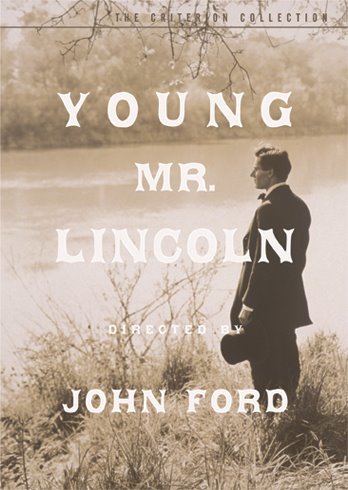
Young Mr. Lincoln – I didn’t expect to like this movie as much as I did, considering how disappointed I’ve been by so many biopics I’ve seen recently. But there’s simply no comparison between this kind of mythmaking and such mediocrities as Walk the Line or Ray. To start with, Henry Fonda was better than I expected, amazing how much a little bit of make up can change a man’s appearance (he also seems taller and lankier than in any other Fonda movie, which might just be my imagination). I was most surprised by how beautiful the movie is, it may be John Ford’s best in that sense, and that’s saying something. The many shots framing Lincoln against his environment, especially the river, are my favorites, but the shot of him blocking the jail door from the enraged lynch mob is amazing as well. For a 1930s Hollywood biopic, this film is remarkably strange and poetic. The ending is an obvious example of this, as Lincoln walks up a hill in the face of an oncoming storm, but even better is the scene at the dance, when Mary Todd drags Lincoln to the porch and he just stands there staring off at the river in the distance.

Best movies I’ve seen from 1939:

1. The Rules Of The Game
2. Stagecoach
3. Mr. Smith Goes To Washington
4. Young Mr. Lincoln
5. The Wizard Of Oz
6. Gunga Din
7. Destry Rides Again
8. Goodbye Mr. Chips
9. The Four Feathers
10. The Roaring Twenties
11. Gone With The Wind

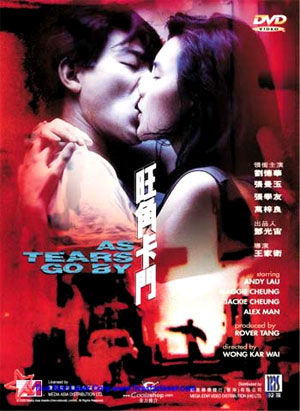
As Tears Go By – Wong Kar-wai’s first film is essentially a remake of Martin Scorsese’s Mean Streets (#1, 1973), with a little bit of Jim Jarmusch’s Stranger Than Paradise (#4, 1984) to start things up and a dash of Tony Scott’s Top Gun (#6, 1986) just to keep you on your toes (you’ll know it when you hear it). Andy Lau (House Of Flying Daggers) stars as an experienced, slightly disillusioned triad who has to juggle his burgeoning romance with his cousin (the adorable Maggie Cheung, in one of her first non-girl-in-kung-fu-peril roles) and the increasingly dangerous antics of his irresponsible and incompetent “little brother” played by Jacky Cheung. Visually speaking, all the basic elements of Wong’s style are here for all you who think Christopher Doyle made Wong Kar-wai, you surely see this. By taking Scorsese’s plot but leaving behind all his Catholic guilt and madonna-whore complexes, Wong makes an entertaining genre film that lacks any of the depth or resonance of Scorsese’s masterpiece. Which isn’t so terrible considering one of the three movies Wong wrote this same year was Haunted Cop Shop Of Horrors 2. As a first directorial effort, this certainly isn’t bad, but it’s still the worst film Wong’s made so far. I rate it the #8 film of 1988.

Days Of Being Wild – The first part of a trilogy set in 1960s Hong Kong by Wong Kar-wai that simply gets better as it goes along, though all three (including In The Mood For Love, #4, 2000 and 2046, #2, 2004) are classics. The movie starts with Maggie Cheung’s Su Lizhen (the same name as her character from ITMFL, who is also incarnated twice in 2046, though it’s unclear if any of these four characters are the same woman) who works at a snack counter (think Chungking Express) is picked up by Luddy (the name is translated differently on imdb and my DVD), played by Leslie Cheung (Happy Together). The two have a relationship that ends when she asks to move in with him. He dumps her and starts dating Mimi (Carina Lau, the longtime girlfriend of Tony Leung in real life), a character who turns up on the train in 2046. Su, unable to deal with the breakup, begins hanging around outside Luddy’s apartment where she meets a cop (Andy Lau). Su and the cop spend a long night walking the streets and talking, he tells her about his wish to become a sailor so he can leave Hong Kong and travel (think Faye Wong in Chungking Express). Eventually, Luddy and the cop end up on a train in The Phillipines, Luddy’s sidekick (Jacky Cheung) falls in love with Mimi and Su goes on to break Tony Leung’s heart. Speaking of Leung, his name is prominently displayed on the poster I have from the revival of the film last year, and as he’s one of my favorite current actors, I was waiting all movie for him to show up. Eventually he does, at the end, in one little dialogueless scene that Steven Spielberg may have ripped of a year later for the beginning of Schindler’s List. The movie’s a big step up from As Tears Go By, though it’s not as visually ravishing or as abstract as his more recent films. Quentin Tarantino, in his unintentionally hilarious comments on the Chungking Express DVD compares this to American Graffiti, which I guess makes a kind of sense. Though it’s set in the same time period as Lucas’s film, it has much more in common with the early 90s cycle of mid-to-highbrow coming-of-age movies like Dazed And Confused, Singles, Metropolitan and Kicking And Screaming. I rate it the #6 film of 1991.

Movies Of The Year: 1966

The further we move back in time, the more stratified the movies I’ve seen become. Generally there will be a bunch of great, classic films at the top of the lists, and a few mediocre at best movies at the bottom that I watched as a kid (thanks Disney Channel, ugh.) That isn’t the case this year, when pretty much all of the movies are pretty good.

14. Winne The Pooh And The Honey Tree – The first Disney Pooh film, it’s much the same as the others, only a little worse. I believe this film was instrumental in the development of my intense fear of bees. Did I mention The Tao Of Pooh is a great book?

13. A Man For All Seasons – Paul Scofield is one of my favorite actors, I especially like his performance in Quiz Show (#3, 1994). He won the Best Actor Oscar playing Thomas More in this film, and while he’s very good, it wasn’t enough for me to really like the film. There’s a real overblown 1960s Hollywood vibe to the film that I found very off-putting, and when I saw it, on VHS, it looked to be a pretty ugly, all the bad things about Technicolor, kind of film. I probably need to watch it again, there are too many people I like involved in it for me not to like it. Orson Welles, John Hurt and Robert Shaw star and Fred Zinneman directs Robert Bolt’s screenplay.

12. Hunger – My favorite discovery in my Scandinavian Film class (yeah, it was as dull as it sounds) was this film and novel. Both the film and the book are about a struggling writer who wanders the streets of Christiania being, well, hungry, largely by choice. It’s a very weird movie of a very weird book. The film was directed by Henning Carlsen, who doesn’t appear to have done anything else I’ve ever heard of. Knut Hamsun wrote the novel, he was recently the subject of a long New Yorker profile.

11. Fahrenheit 451 – Another film I watched in class, this time in a crappy Communications 101 course. François Truffaut’s adaptation of the Ray Bradbury novel stars Oscar Werner and Julie Christie. The plot should be familiar: at some point in the future, books are banned and firefighters run around rounding them up and burning them. Werner plays a fireman who has some doubts about whether or not this is a good idea. Another movie I should see again, but I’m wrong about this not being a great film.

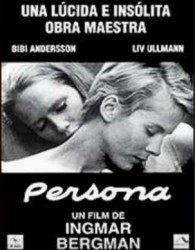
10. Persona – The movie that turned me off Bergman, whether that his fault or mine I will leave as an open question. Bibi Andersson plays a nurse taking care of a mute actress (Liv Ullman) in some remote place in the country. Gradually, the two women begin to merge into the same person. This is the movie people who hate of foreign art movies are thinking of when they make fun of them. Since it was over a decade ago that I watched this, I intend to give it, and especially Bergman another try. This seems to be a theme with the bottom half of this list. With so many movies to see once, how will I ever find time for all the ones to see twice?

9. How The Grinch Stole Christmas – Hayao Miyazaki may be the trendy pick, but I’ve no doubt that Chuck Jones is the greatest animation director of all-time. This is his most famous non-Looney Tunes film, an adaptation of a Dr. Seuss book. If you haven’t seen it, I congratulate you on waking from your 40 year coma. Welcome to the world of the mobile! I am honored you choose this blog as your initial foray into the modern world. Now, go watch this movie.

8. It’s The Great Pumpkin, Charlie Brown – It’s a tough call on which is the best Peanuts film, but it’s either this one or the Christmas one. I’d say Christmas is the better film, while this one is my personal favorite. Let’s just say I can relate a lot more to the idea of faith expressed by Linus in the pumpkin patch than I can by his speech for the Christmas play. Plus it’s got one of the greatest and most resonant lines in all of film history: “I got a rock.”

7. Who’s Afraid Of Virginia Woolf? – This film of Edward Albee’s play is perhaps the meanest movie I’ve ever seen. Richard Burton and Elizabeth Taylor are at their best as a vicious old married couple who torture each other and their young dinner guests over the course of one awful evening. George Segal and Sandy Dennis play the clueless young couple, Mike Nichols directs (it was his first film) and Ernest Lehman wrote the screenplay. Lehman has a bizarre list of credits: North By Northwest, West Side Story, The Sound Of Music, Sabrina, The King And I, Black Sunday, Sabrina, Family Plot, Hello Dolly! and The Sweet Smell Of Success.

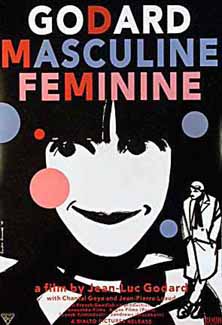
6. Masculin Féminin – Young, pretty, disillusioned French kids awash in consumerism, Americanism and the stirrings of the 60s cultural revolutions in pre-1968 Paris. It’s Jean-Luc Godard midway between his more politically explicit films of the 70s and his early chaotic, fun and romantic films. Jean-Pierre Leaud (from the 400 Blows and other Truffaut films) and Chantal Goya (who was a pop star in France at the time) are the lead actors, but as always in his films, Godard is the star.

5. What’s Up, Tiger Lilly? – Back in the dark ages before Woody Allen invented the modern romantic comedy, before he began dissecting and satirizing the New York upper class much to their delight, before he became the most improbable sex symbol in film history, he took a cheap Japanese James Bond rip-off called “International Secret Police: Key of Keys” and redubbed all the dialogue to create a comic masterpiece, a defining post-modernist film and what is perhaps the funniest movie in his long career. The star, Tatsuya Mihashi was also in The Bad Sleep Well and Inagaki’s version of the 47 Ronin, Chushnigura.

4. The Battle Of Algiers – Strikingly realistic seeming film about the war between, for want of a better word, terrorists and the military in French-occupied Algiers in the 1950s. Storywise, it’s essentially an epic police procedural, and like all great procedurals, it’s fascinating in it’s depth and detail, both in describing the tactics of the army and the terrorists. The films sympathy pretty squarely lies with the anti-colonial side, though it stops short of actually condoning their tactics. It’s a more nuanced and interesting examination of the political relationship between the West and Islam than would seemingly ever be made nowadays, unfortunately.

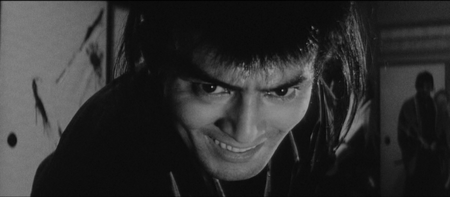
3. The Sword Of Doom – An amazing movie, one of the darkest action movies I’ve ever seen, and the best non-Kurosawa samurai film. Tatsuya Nakadai plays a truly evil swordsman, walking the earth in search of more evil to do. The first thing he does in the film is cut an old man in half for no particular reason, and he only gets worse from there. Toshiro Mifune has a small role as a fencing instructor and he also gets one great action sequence. This is one of the all-time great film endings, wholly by accident, I guess, as this was supposed to be only the first part of a trilogy. A beautiful black and white film, directed by Kihachi Okamoto, who also directed Nakadai in the Sanjuro remake Kill! (#6, 1968).

2. The Good, The Bad & The Ugly – The third part of Sergio Leone’s Man With No Name Trilogy is perhaps the greatest action movie ever made. It’s certainly one of the prettiest. It doesn’t have the same resonance as his Once Upon A Time films (In The West, #3, 1968; In America, #7, 1984), but it’s still an ambitious, epic film. The story couldn’t be simpler: three outlaws each know one third of the secret of where some buried treasure is located. All three hate and mistrust each other, but no one can get the treasure without the other three (sounds like some game theory scenario). But, this being a Sergio Leone film, the joy is not in the plot, but in the slow, grand, sweeping unraveling of that story, building tension past all reasonable expectations until the final paroxysm of violence. The three leads have become iconic: Clint Eastwood, Lee Van Cleef and Eli Wallach.

1. Au Hasard Balthazar – The simple story of a girl and her donkey, Robert Bresson’s masterpiece may be a trendy film geek favorite, but I love it nonetheless. It’s basically a biopic about a donkey, we follow Balthazar from his birth and idyllic childhood on a farm, his separation from the girl he loves, the varying degrees of mistreatment he receives as he passes from one owner to another (somehow always finding his way back to the girl). Paralleling Balthazar’s story is that of the girl, a fairly stupid, self-destructive kid who constantly makes the wrong choices. Also along for the ride are the girl’s father, an absurdly stubborn man who loses everything in a near-unbelievable attack of stubborn pride, and a young hoodlum who owns Balthazar for awhile and dates the stupid girl. Most people will claim the film is an allegory for something or other, usually whatever religion or philosophy they already happen to have. That’s what makes the film so unique: it can mean literally anything and everything. The simplicity of the story, the blankness of the acting (a Bresson trademark), the near invisibility of the visual style and score (though both are beautiful) create a blank slate of a film which the viewer must then give some kind of larger meaning (much like life? nah).

Some interesting Unseen films from this year: classics from Swinging London, pseudo-New Wave French films, Howard Hawks’s remake of his own Rio Bravo, and Tokyo Drifter, by Seijun Suzuki, none of whose films I’ve seen, but I plan to in the near future.

Manos: The Hands Of Fate
Blowup
Torn Curtain
El Dorado
Fantastic Voyage
Alfie
How To Steal A Million
Seconds
Our Man Flint
Closely Watched Trains
One Million Years B.C.
Django
Born Free
Tokyo Drifter
Is Paris Burning?
La Guerre Est Finie
Fighting Elegy
The Fortune Cookie
Un Homme Est Une Femme

Movie Roundup

Well, between the start of baseball season and a lot of movie buying and watching and a lot of working, it’s been awhile since I’ve done any blogging. So, here’s some reviews of the movies I’ve seen lately, and I’ll get around to putting up the 1966 list hopefully in the next couple of days.

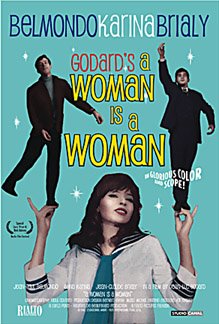
A Woman Is A Woman – Jean-Luc Godard’s idea of a musical instantly becomes one of my favorite Godard films (and, thanks to the sale at DeepDiscountDVD.com, the only Godard I own on DVD). Anna Karina is at her best as a part-time stripper who, on a whim, decides she wants to have a baby. Her boyfriend, jean-Claude Brialy doesn’t want to, and mockingly suggests she enlist the help of their friend, Jean-Paul Belmondo, who happens to be in love with Karina. The story is overthetop melodramatic, but the great thing about the movie is Michel Legrand’s score: the music constantly wants to turn the film into a musical, but never quite gets going. It’s the broken, demented, yet still romantic cousin of The Umbrellas of Cherbourg. Like Brialy says, “I don’t know if it’s a comedy or a tragedy, but it’s a masterpiece.”

V For Vendetta – A very good action film with a surprisingly good script. Hugo Weaving’s great as V, he’s got one of the best voices in film today. Natalie Portman’s accent comes and goes. I like the joke of having John Hurt play the Big Brother dictator (he was the lead in the movie of 1984). I have a few minor quibbles with parts of the film (the backstory, the last action sequence, an unexplored and unresolved theme which might involve predestination vs. freedom) and the more I think about the movie, the more of them I come up with. But it was still very entertaining. The number 15 film of 2005.

Night Watch – This movie gets an incomplete, first because its only the first part part of a trilogy but more importantly because of the loud Russian teenagers in the theatre who totally ruined the mood by whispering, laughing randomly and playing with their cell phones. At least they stopped having actual conversations (in Russian, naturally) after I yelled at them. Anyway, it was a cool looking movie and may end up being a pretty good trilogy. I’m rating it # 20 for 2004.

The Squid & The Whale – A nice little film, though I didn’t like it as much as Kicking And Screaming (#4, 1995). A different look to the film than Baumbach’s first two, what with the hand-held camera and a hint of arty, almost jump-cutty editing. I don’t know why Laura Linney got any Oscar buzz for this, not that she was bad or anything, she was just unremarkable. Thankfully, she did not get a nomination. Jeff Daniels was very good though. Very evocative of its time and place and culture and I liked that it stayed within the kids’ point of view instead of explaining the parents’ side as well. I’ve ranked it the #9 film of 2005.

DOA – Mediocre psuedo-noir. Edmund O’Brien gives a fun, semi-hysterical lead performance, and the story’s interesting enough. But there isn’t really much all that new here aside from the clever set-up:

“I’m here to report a murder.”

“Who’s the victim?”

“I am.”

There’s some good misdirection in the plot, a compelling score by Dmitri Tiomkin (including a great hallucinatory scene in a night club), but it lacks the visual style of the really great films noir though the movie has an exciting pace and energy. The supporting actors, though, are really pretty bad.

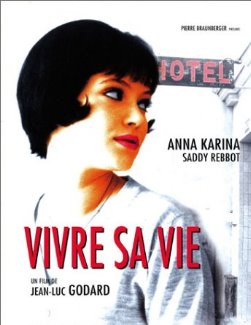
My Life To Live – It’s a great movie and all, but I like Godard better when he’s having fun. Still, Anna Karina is amazing, this is the best performance I’ve seen from her yet., though it’s my least favorite of her movies. Some of the “tableaux” are great, I particularly enjoyed the old professor, the scene in the record store, the dance sequence, the documentary-style montage as Nana’s being taught how to be a professional, and especially, the whole last chapter. My Godard list, keeping in mind that they are all great:

1. Pierrot Le Fou
2. A Woman Is A Woman
3. Weekend
4. Band Of Outsiders
5. Alphaville
6. Breathless
7. Contempt
8. Masculin-Femenin
9. My Life To Live

Inside Man– An above average thriller/heist movie from Spike Lee, though I have this weird feeling that there’s something more profound going on in the film that I can’t quite put my finger on. . . . Something about racism and terrorism and the banality of evil and the emptiness of threats and public fears. . . I don’t know. All the actors are very good, and Lee’s direction was stylish and effective. The last act does kind of drag, but I think that’s intentional. Weird performance by Jodie Foster, but I liked it.

Sword Of Doom – Wow. Reading about this film, I see it was supposed to be but Part One of a trilogy, and it’s a damn shame it never got finished. I like the ending a lot as is, but some of the duller stretches of subplot would be more excusable if they’d ever gotten resolved. Still, a beautiful film, a fine performance from Toshiro Mifune and a brilliant intense, physical one from Tatsuya Nakadai. This film was clearly a big influence on George Lucas (Nakadai would have made an amazing Vader, instead we got a whiny Hayden Christiansen; Yoda’s death scene in Return of the Jedi is almost wholly ripped off from a scene here) and Tarantino for Kill Bill Vol. 1 (that should be real obvious). My favorite non-Kurosawa Samurai film.

They Live By Night – Noirish young-lovers-on-the-run movie that’s nearly totally ruined by Farley Granger. He was merely a bad actor playing a preppie in a pair of Hitchcock films (Rope and Strangers On A Train), but playing a young ex-con/former circus performer? Ugh. Nicholas Ray’s direction is slick and stylish, and Cathy O’Donnell is quite cute (and acts circles around Granger), but that just isn’t enough to make me like this movie.

F For Fake – Everything you could possibly want from an Orson Welles movie: a brilliant visual style (though created by editing here instead his usual techniques), a multilayered, profound yet entertaining story, a great lead performance from Welles himself, and one good-looking Hungarian woman. I’ve rated it the #2 film of 1974). This was my first DVD blind buy, but it was a pretty safe bet that I’d love it, as I have loved every one of Welles’s films that I’ve seen:

1. Touch Of Evil
2. Citizen Kane
3. Chimes At Midnight
4. Lady from Shanghai
5. F For Fake
6. Mr. Arkadin
7. Macbeth
8. Othello
9. Magnificent Ambersons
10. The Trial
11. The Stranger

Orson Welles: One Man Band – Bonus film on the Criterion F For Fake DVD. As a documentary, it’s not much. It’s not, as it apparently wants to be, an essay film along the lines of F For Fake. And it doesn’t really work as a traditional documentary either: too unfocused; doesn’t follow any apparent order, chronological or otherwise; isn’t particularly informative about much of the footage it does show; and it only covers the work that Welles left unfinished during the last 20 years of his life, while glossing over the unfinished work from the first 25 years of his career (like Don Quixote). Anyway, it’s worth seeing just for all the footage of Welles, fragmented and disorganized though it might be.

King Of Kings – The Nicholas Ray version from 1961, it was pretty interesting. Maybe it’s just because I watched the end of Do The Right Thing earlier that day, but I thought the film seemed to be paralleling the MLK/Malcolm X argument from the civil rights movement in the early 60s: violence or non-violence. Jeffery Hunter’s Jesus is a uncomplicated symbol of peaceful non-violence, and he’s contrasted with Barrabas and Judas (played by an unrecognizable Rip Torn), who are violent revolutionaries. Of course, this means some parts of the Jesus story have to be left out: no talk of swords for him, and certainly no attacking of moneychangers. The production is what you’d expect from a Hollywood bible epic from the time, and the direction and the performances are quite good. Some of the voices are a little weird, and the dubbing has some flaws, but it isn’t terrible. Orson Welles’s narration is, of course, excellent.

49th Parallel – British-Canadian propaganda film from the early days of World War 2 by Powell and Pressburger. The basic idea is to get Canadians involved in the war effort by showing them how wonderful they are and that the Nazis can get them too. A U-Boat crew gets stranded in Canada and makes its way across the country, encountering various Canadian stereotypes along the way. Laurence Olivier is hilarious as a French-Canadian trapper with an outrageous accent. Anton Walbrook is great as the leader of an Amish-type sect of German émigrés, he and the leader of the Nazis (Eric Portman) have a great scene of dueling speeches. Leslie Howard plays an effete intellectual who learns to bravely confront the Nazis and Raymond Massey plays a seemingly honorary American: loud and lazy but who becomes mobilized to join the fight in the end. Very entertaining and effective propaganda.

Winchester ’73 – The first Jimmy Stewart-Anthony Mann Western, it wasn’t as dark or noirish as I expected it to be. The story’s quite good, with Stewart’s revenge quest (and his concurrent gun search) providing an effective frame for what is essentially a tour of the West, descending into lower and lower levels of civilization (it starts with Dodge City, peaceful and ably run by famous lawmen, then is a battle between Indians and Cavalry, finally the chaotic violence of psychotic bandits). There’s even a nice twist at the end, not in the same class with a movie like, say, Oldboy (#8, 2003), but it did elicit a minor exclamtion of “that’s fucked up!” from me.

Friends With Money – Interesting attempt at discovering what happens if you make an ensemble character study without any interesting characters. Also, it teaches the profound truth that money cannot, in fact, buy happiness. Many great actresses are wasted in this mediocrity.

Movies Of The Year: 1967

I’ve been a bit busy lately, with a trip to Spokane, a birthday and lots of work. But I’ve finally gotten around to finishing this that I started almost two weeks ago.

Well, I certainly didn’t expect this. You have to go all the year forward until 1981 to find a year from which I’ve seen so many movies. And there’s quality too: the top 8 or 9 are all great, and every movie on the list is pretty good.

19. The Jungle Book
18. Barefoot In The Park
17. In The Heat Of The Night
16. Who’s That Knocking At My Door?

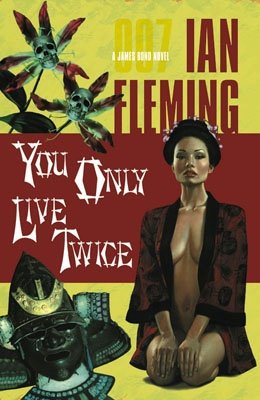
15. You Only Live Twice – One of my earliest film memories is going to see a James Bond quadruple feature at the local drive-in. Goldfinger was the first movie, and I stayed awake through that. I think I fell asleep during this one, which was the second film. I did manage to stay awake long enough to think that the evil redheaded girl was hot. Anyway, this is one of the very best Bond films, as he teams up with ninjas to save outer space, or something. The screenplay was by Roald Dahl, of all people.

14. Casino Royale – Speaking of Bond movies, this all-star parody film is bizarrely prescient as the plot hinges on their being a number of different actors playing James Bonds (including Woody Allen). A mess of a film, behind the camera as much as one it. IMDB lists the following with uncredited writing on the film: Woody Allen, Ben Hecht, Joseph Heller, Terry Southern, Billy Wilder and Peter Sellers. The cats includes: Allen, Sellers, Orson Welles, Jean-Paul Belmondo, Deborah Kerr, Jaqueline Bisset, Ursula Andress, David Niven, John Huston, Charles Boyer, George Raft, William Holden, David Prowse, Peter O’Toole and Anjelica huston’s hands. The newest Bond movie is also Casino Royale, but they’re playing it seriously this time.

13. Guess Who’s Coming To Dinner – Social problem film in which Upper middle class white people are shocked when their daughter brings home a black fiance. Katharine Hepburn and Spencer Tracy play the old couple, Hepburn’s neeice Katharine Houghton and Sidney Poitier play the young couple. It’s the kind of film that doesn’t age very well, but the brilliance of the performers still stands up.

12. Cool Hand Luke – Nobody can eat 50 eggs. Paul Newman created his definitive antihero character, the type he’d been playing for almost a decade in this movie about a non-conformist on a chain gang. It’s a lot like One Flew Over The Cukoo’s Nest, come to think of it, but with a more quotable screenplay. Frank pierson cowrote the screenplay. he also wrote Cat Ballou, Dog Day Afternoon and Presumed Innocent.

11. The Fearless Vampire Killers – Very strange little horror-comedy by Roman Polanski. He also co-stars as the assistant to a vampire-hunting professor. A weird and funny movie made poignant by the fact that Polanski’s love interest in the film is played by his wife, Sharon Tate, just a couple years before she was murdered by the Manson Family.

10. Samurai Rebellion – Toshiro Mifune stars as a aging samurai who’s first commanded to have his son marry his lord’s mistress, and then give her back after the two have fallen in love. He, predictably (thanks title!) refuses to do so, with lots of bloody samurai fun to result. Tatsuya Nakadai also stars. Directed by Masaki Kobayashi, who also did Harakiri, Kwaidan and The Human Condition Trilogy, none of which have I seen.

9. The Dirty Dozen – All-star World War II action movie about a group of criminally insane misfits who get assigned a suicide mission to kill a bunch of Nazis. We follow them from their selection, through their training at the hands of the great Lee Marvin and finally their attack on a house full of German generals. The cast is ridiculously good: Marvin, John Cassavettes, Robert Ryan, Telly Savalas, Donald Sutherland, Charles Bronson, Ernest Borgnine, Jim Brown, George Kennedy and Ralph meeker. Director Robert Aldrich also did The Longest Yard, What Ever Happened To Baby Jane?, The Big Knife, Vera Cruz and one of my all-time favorite films noir, Kiss Me Deadly.

8. Belle De Jour – Luis Buñuel’s satire of bourgeois repression is also a loving tribute to perversion. Catherine Deneuve plays a bored housewife who decides to become a prostitute in her spare time. One of her clients, of course, falls in love with her, but that’s not the point. The film is full of little jokes. It’s not as weird as some of Buñuel’s other work, but there are a few surrealist touches here and there.

7. Le Samouraï – Jean-Pierre Melville made a whole series of films noir in the 60s, and this is the only one I’ve seen. Alain Delon plays a very cool hitman in this very cool movie about very cool people double crossing each other and such. Did I mention this movie was cool? Parts of this film were a big influence on John Woo, especially for The Killer (#6, 1989), just as American noir was an influence on Melville. Delon’s hitman is named Jeff, just like Chow Yun-fat’s in The Killer and Robert Mitchum’s in Out Of The Past.

6. Point Blank – John Boorman directed this stylish neo-noir revenge tale in which Lee Marvin comes back from being betrayed and left for dead by his friend and his cuckholding wife. Also stars Angie Dickenson, Keenan Wynn and Carroll O’Connor. It’s a dark, violent film told in a flashy New Wave style, with lots of weird cuts and flashes forward and backward in time. Marvin, as always, is terrific in the lead role. It was remade by Mel Gibson as Payback, a dreadful film, I rated it dead last, the #54 film of 1999.

5. The Graduate – Mike Nichols’s classic film about a disaffected young man and his affairs with a rich housewife and her daughter. If you haven’t seen it, you’ve probably been in some kind of tragic coma for the past 40 years, but I’m glad to see you’ve come out of it and have your priorities straight by reading this before doing anything else. It hasn’t really dated at all, despite what I’ve heard multiple times in the last month or so, instead it really only works if you’re close to the same age as Dustin Hoffman’s character. You have to be young for the aimlessness and angst to really make sense.

4. Don’t Look Back – One of the best and most influential documentaries ever is this DA Pennebaker film about Bob Dylan. It chronicles Dylan’s 1965 tour of England, the one right before he went electric and freaked out the lunatic folkies. It’s one of the pioneering cinema verité documentaries, where the filmmaker appears to leave his opinion out of the film, giving the impression that the audience is just a fly on the wall. Dylan’s hilarious, young, cocky, mean, sarcastic and brilliant. The are several extended sequences of him just toying with other people: reporters, annoying fans, Donovan. It also starts with a proto-musical video, for Subterranean Homesick Blues. A must see whether you’re a Dylan fan or not (and of course, you should be.)

3. Bonnie And Clyde – One of the more influential films in history, this film marks the end of the studio system and the rise of the independent-minded, personal studio films of the early 70s. Both Jean-Luc Godard and Francois Truffaut were both slated to direct it at one time, but eventually producer/star Warren Beatty settled on Arthur Penn to direct. Penn also directed Little Big Man (#7, 1970), The Chase, Alice’s Restaurant and the great Paul Newman/Billy The Kid movie The Left-Handed Gun. The cast was largely unknown at the time, including Beatty, Faye Dunaway, Gene Hackman, Estelle Parsons, Gene Wilder and Michael J. Pollard, with Morgan Fairchild, of all people, as Dunaway’s double. The screenplay was by David Newman and Robert Benton who both also wrote Oh Calcutta, What’s Up, Doc? and Superman: The Movie. Newman went on to write Superman II and III, along with Santa Claus: The Movie, while Benton became a successful writer/director with Kramer vs. Kramer and Nobody’s Fool.

2. Week End – Jean-Luc Godard’s fractured road movie about a bourgeois couple lost in an apocalyptic rural highway system. Along the way to try to kill one of their parents to inherit some money, they meet singers, cannibals, revolutionaries, poets, actors and more lunatic rich people. The long tracking shot of the traffic jam is one of the greatest scenes in all of film. It’s not a perfect film, but even the episodes that seem dull (a long justification for terrorism against capitalism) or silly (the revolutionary cannibals at the end) can’t overcome the sheer audacity and brilliance of the film. The movie ends with Godard’s famous proclamation of The End of Cinema, which I can’t wait to open someday.

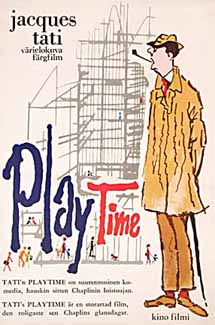
1. Playtime – Jacques Tati hated his famous character M. Hulot, but audiences just wouldn’t accept him as anything else. So, with this film, instead of Tati alone as Hulot, everyone becomes Hulot: a regular guy, maybe a bit clumsy, a bit oblivious, trapped in a modern world that, chaotic as it is, as much as it appears that he doesn’t fit in, in fact is perfectly interconnected, seamless and maybe even purposeful. The effect of the film is difficult to describe. . . . if it was possible to combine the best parts of the silent comedies of Chaplin and Keaton with the grace and musicality of an Astaire and Rogers film. Tati creates a symphony of movement without any actual music, just the sounds of an office, a roundabout, or a crowded restaurant. If you’ve ever wondered what that cliché about the ‘poetry of motion’ is all about, this film is the purest expression of it I’ve ever seen. The movie’s currently unavailable on DVD, and I’ve only seen it one time on video, but Criterion’s rereleasing it later this year, and I’ll be buying it as soon as possible. One of my all-time favorite movies.

Some good stuff I haven’t seen this year, including a Jacques Demy musical, a couple Godard films, a Bresson , a Hepburn and George Lucas’s first movie.

Wait Until Dark
In Cold Blood
To Sir With Love
Bedazzled
Camelot
Hombre
Doctor Doolittle
In Like Flint
Magical Mystery Tour
Branded To Kill
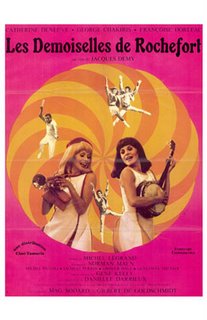
The Young Girls Of Rochefort
Mouchette
THX 1138
Two Or Three Things I Know About Her
I Am Curious (Yellow)
Hour Of The Gun
La Chinoise
The Collector
The Shooting

Movies Of The Year: 1968

Now this is a great year. Four indisputable classics, along with plenty of other pretty good movies. It’s also got the most moves I’ve seen since 1972.

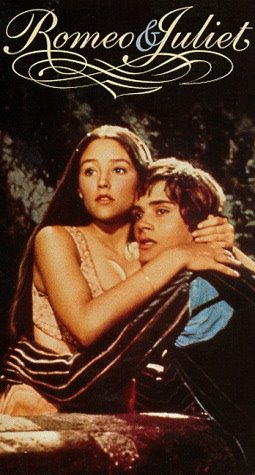
12. Romeo And Juliet – This gauzy adaptation is far inferior to the lively Baz Luhrman film that ranked 11th in 1996. It’s directed by Franco Zeffirelli, who also directed the Mel Gibson version of Hamlet (#8, 1990), which too is much better than this film. Both the leads are very pretty.

11. The Love Bug – The best movie about a sentient car ever made. Director Robert Stevenson did almost all the truly great live-action Disney films: Mary Poppins, Darby O’Gill And The Little People, Old Yeller, The Absent-Minded Professor, The Misadventures Of Merlin Jones, and so on.

10. The Odd Couple – The movie version of the play that turned into a TV series. Neil Simon wrote the screenplay and Jack Lemmon and Walter Matthau start the legendary onscreen collaboration that would ultimately lead to the genius of Grumpier Old Men (#75, 1995).

9. Planet Of The Apes – One of the greatest of all camp classics. It lead to a second career peak for star Charlton Heston. The man who played Moses and Ben-Hur soon become the greatest of all crappy SF movie actors in films like this, The Omega Man and Soylent Green. Roddy McDowell and Kim Hunter co-star. You remember Hunter as the Stella that Brando was yelling about in A Streetcar Named Desire. She won and Oscar for that, but not for this.

8. Winnie The Pooh And The Blustery Day – The second of three animated Disney Pooh movies. This is the one that introduces Piglet and Tigger. I read the Tao Of Pooh in high school and it’s a great book. I never got around to reading The Te Of Piglet though, so I don’t know what that’s about.

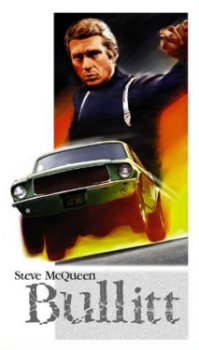
7. Bullitt – The ultra-cool Steve McQueen stars in this otherwise unremarkable cop movie. It’s got one of the all-time great car chases, right up there with The French Connection (#8, 1971) and Ronin (#15, 1998). And it co-stars Jaqueline Bisset, Norman Fell, Robert Vaughn and Robert Duvall.

6. Night Of The Living Dead – A transitional film between the old b-movie horror films of the 50s and 60s and the splatter films of the late 70s and 80s. George Romero’s first Zombie movie is also the best. It’s ultra low-budget, more taught and suspenseful than the latter three films (Dawn Of The Dead, #7, 1978; Day Of Thee Dead, #24, 1985; and Land Of The Dead, #30, 2005) which are more about social satire and action than anything else. First a hysterical woman, then a heroic black men, then a lunatic family hide from the zombies in a farmhouse and are surrounded. The scenes are intercut with the coverage of the zombie attacks on TV, in a kind of homage to 50s sci-fi films. It’s a perfect example of it’s genre, as scary as any horror film ever.

5. Barbarella – The movie that gave Duran Duran their name. Jane Fonda plays a secret agent (in space!) who must track down a missing and evil scientist who wants to destroy the universe, or something. Along the way, she often finds herself in various states of undress, falls in love with a pretty blind angel and must confront the dangers of the evil scientist’s Excessive Machine. The best movie about sex ever made.

4. Rosemary’s Baby – The other side of the sex coin is this film, wherein Mia Farrow becomes impregnated with Satan’s baby. Farrow’s terrific, as is John Cassavetes as her husband. Ruth Gordon won an Oscar for playing the annoying neighbor, but I really just find her annoying. Maybe director Roman Polanski’s best film, though most would claim Chinatown is better. Certainly one of the creepiest movies I’ve ever seen.

3. Once Upon A Time In The West – Sergio Leone’s masterpiece is this summation of everything the Western genre represents. It’s the story of how civilization came to be imposed upon chaos. All Westerns are about that conflict, some more explicitly than others. In this sense, this film is the purest expression of the genre. Henry Fonda famously plays against type as the villain, in one of the better performances of his career. In his character, the twin evils of murderous outlawry and rampant capitalism are united. Opposed to him are Jason Robards, as the honorable thief type perfected by Eli Wallach in The Good, The Bad And The Ugly, and Charles Bronson, also playing somewhat against type as the nameless harmonica-playing, revenge-seeking hero. Claudia Cardinale plays the widow of a visionary man who wanted to build a town in the middle of a desert, which, like I said, is what it’s all about. If Unforgiven (#1, 1992) represents the thematic end of the Western, then this represents its pinnacle.

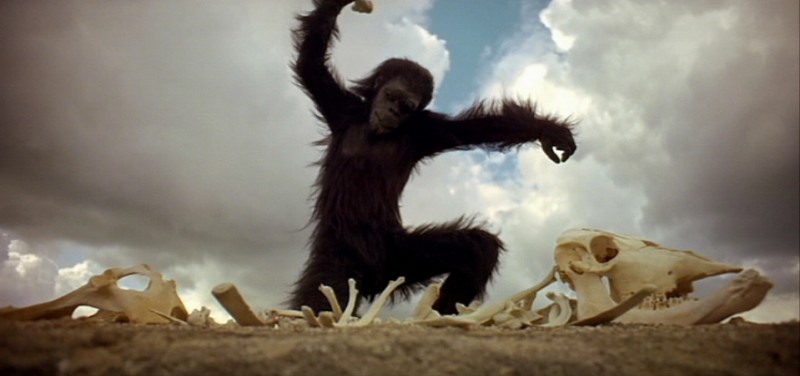
2. 2001: A Space Odyssey – Speaking of genres, I once wrote a paper about 2001 in which I argued that science-fiction is not a genre, but rather a mode or a setting. It makes sense really: what does films like Star Wars, Alien, Solaris, Blade Runner and 2001 have in common but being set in the future with as yet undeveloped technology? It’d be like calling Gone With The Wind, Ben-Hur, All Quiet On The Western Front, Caligula and The Life Of Brian all part of the same genre simply because they all take place in the past.

Anyway, 2001’s a great movie, on of the few pre-Star Wars films whose special effects still hold up over time. It’s split in thirds: the first section, about the monkeys, is my favorite; the second, about the computer, is the most accessible, it’s often remarked how Hal is the most human character in the movie; the third, about, well, that depends. It’s weird and trippy and it is what you make of it. I think it’s supposed to be about the evolution of humankind into a purer consciousness, unbound by physical limitations (which is why you can’t see the aliens). But it’s not really clear.

1. The Lion In Winter – An idiosyncratic pick for the top spot to be sure. I can’t objectively argue that this is a better film than the previous two, but there’s no doubt which among them is my favorite. Being essentially a filmed play, the movie doesn’t have any of the stylistic elements you look for in a great film, but it does have a plethora of fantastic performances and one of my favorite scripts of all-time. At Christmastime 1183, the royal family of England gathers to figure out who’s going to be the new heir to the throne. King Henry wants troglodyte John to succeed him, Queen Eleanor (of Aquitaine) wants Richard (the Lion-Heart), and nobody likes Geoffrey. Joining the party are Henry’s girlfriend Alys and her brother Philip, the King Of France. Whoever marries Alys gets to be King. The dialogue is a retro-screwball-comedy dialogue, which makes a nice anachronistic contrast with the period-specific grimy sets and props. The actors are uniformly outstanding. Katherine Hepburn won her third Oscar as the Queen, Peter O’Toole was robbed, again, for playing the King. Anthony Hopkins and Timothy Dalton make their film debuts as Richard and Philip and Nigel Terry plays John (he was Arthur in Excalibur (#7, 1981). It was written by James Goldman (William’s brother) and based on his play. One of my all-time favorite films.

Some pretty good Unseen movies this year, most notably the ones by Truffaut, Brooks, and Cassavettes. though I hear the Russian version of War And Peace is really good. It can’t be worse than the Hollywood one with Audrey Hepburn and Henry Fonda playing Russians.

The Producers
Where Eagles Dare
The Party
Oliver!
Hang ‘Em High
Chitty Chitty Bang Bang
The Green Berets
The Thomas Crown Affair
If . . . .
Funny Girl
Ice Station Zebra
Stolen Kisses
Faces
The Bride Wore Black
Finian’s Rainbow
War And Peace
Monterey Pop
Rachel, Rachel

Movies Of The Year: 1969

A strange mix of movies this year: foreign art classics and American Westerns. And another year where all of the movies I’ve seen are pretty good.

9. Take The Money And Run – One of my least favorite Woody Allen movies is this uneven film where he tries to be a bank robber. There are some very funny bits, but on the whole, the movie doesn’t really work. The scene where the bank teller he’s robbing can’t read the handwriting on the note he’s given her is a classic.

8. Easy Rider – Overrated by boomer culture, but there’s some great stuff in this movie, mostly in the breakthrough performance by Jack Nicholson. After years on the fringes of Hollywood, this is the movie that finally made him a star. The New Orleans sequence, wherein director Dennis Hopper set the cast loose in Mardi Gras with a bunch of 16mm cameras is just plain annoying.

7. On Her Majesty’s Secret Service – This underrated Bond film is the only one that starred George Lazenby. He isn’t particularly great, but the Bond movieness of it is as Bond movieish as any of Connery’s films. Plus it has by far the best ending to any Bond movie, and one of the best action movie endings of all-time. If you’ve seen the movie, you know what I mean, if not. . . . go watch it and find out.

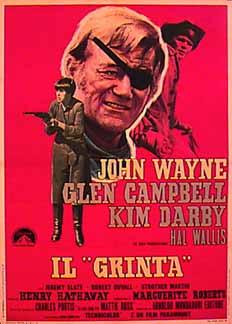
6. True Grit – John Wayne won his lifetime achievement award Oscar for his performance in this film. He’s good, but it’s certainly not a remarkable job he does. Not as good as his work in The Searchers or Rio Bravo or Red River or even The Quiet Man, but it’s still a lot of fun. The movie itself is fun too: it’s a relic and it knows it.

5. Z – Mystery-thriller about the overthrow of the liberal Greek government. It stars Yves Montand (The Wages Of Fear, Le Cercle Rouge), Irene Papas (The Guns Of Navaronne) and Jean-Louis Trintignant (Three Colors: Red). The director, Costa-Gavras, was one of many directors to have a cameo in Spies Like Us (#22, 1985). Set the template for all the political thrillers to come in the 70s, like The Parallax View (#5, 1974) and All The President’s Men (#5, 1976). As far as I can tell, it’s just a coincidence that all three of those movies are #5 in their year.

4. The Wild Bunch – Sam Peckinpaugh’s apocalyptic Western is great, but I’ve seen it at least three times and it’s never been able to stick in my memory. I remember individual parts of it, the brilliant opening sequence especially, but I just can’t recall the whole of the film. The mood is what’s important though, as Peckinpaugh turns the romantic, mythic Western into a chaotic, bloody hell, and that’s always fun. Ernest Borgnine, who I don’t really have an opinion of, and William Holden, who I’ve just never liked, are the unlikely stars, along with Robert Ryan, Edmond O’Brien, Ben Johnson and Warren Oates.

3. The Sorrow And The Pity – The only movie Woody Allen wants to watch in Annie Hall is this very long documentary about France during the Nazi occupation during World War II. The film is endlessly fascinating. The director, Marcel Ophüls (son of the great director Max Ophüls) interviews regular Frenchmen, collaborators, unrepentant fascists, people who claim to have been in the Resistance and people who actually were in the Resistance. One of the greatest documentaries of all-time.

2. Butch Cassidy And The Sundance Kid – This almost impossible not to like film, written by the great William Goldman and directed by George Roy Hill stars Paul Newman and Robert Redford as real-life bank robbers who get chased all the out way out of the US and to Bolivia. If you didn’t already know that, then I congratulate you on finally awaking from your coma. For creating the buddy-action-comedy genre, the film world is forever in debt to this film.

1. Andrei Rublev – I just wrote about this earlier this week, you can read those comments here. It’s a beautiful film by trendy movie geek icon Andrei Tarkovsky about a legendary Russian icon painter. It isn’t a traditional biopic by any means, and that’s a good thing. Rublev himself is only in about half the film. The movie seems more a chronicle of the moral chaos of the time: a mass gathering of witches, a Mongol invasion, a hot-air balloon ride, the difficulties of converting Russia to Christianity and how that religion can explain all the horrible things in the world, and how to make a really big bell. It’s a massive and serious film about serious things, but unlike with Solaris, Tarkovsky is able to let the movie, and his characters breathe. By the end, there’s still some hope for redemption for humanity (through art, naturally).

Not much I’m too concerned about having missed from this year. I’ve seen parts of Midnight Cowboy, but slept through most of it. I’ve had it on VHS for a decade and never gotten around to it.

Midnight Cowboy
The Italian Job
They Shoot Horses, Don’t They?
Paint Your Wagon
Topaz
Satyricon
Hello, Dolly!
The Prime Of Miss Jean brodie
Alice’s Restaurant
The Great Silence
My Night At Maud’s
The Passion Of Anna
Goodbye Mr. Chips
Medium Cool

Movies Of The Year: 1970

Even fewer movies this year, but they’re all definitely worth seeing. That might be the only year so far that I can say that about, though 1982, 1981, 1979 and 1978 come close. The worst film this year is probably better than any of those years though.

9. The Aristocats – One of the strangest animated Disney films is this jazzy story about cats in 1910 Paris trying to save an inheritance or something. It’s the trippy visuals and cool music that make this memorable. Eva Gabor, Sterling Holloway and Scatman Crothers are some of the voices. Director Wolfgang Reitherman also directed the two Winnie The Pooh movies, Robin Hood, The Sword In The Stone, 101 Dalmations and The Jungle Book.

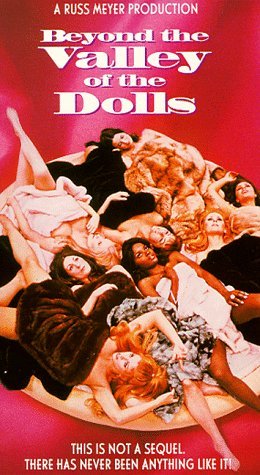
8. Beyond The Valley Of The Dolls – Director Russ Meyer’s story of the rise and fall of a girl band in Hollywood features a screenplay by none other than Roger Ebert. When Ebert mentions it, he cites a review that calls it “simultaneously the best and worst movie ever made.” And that pretty much sums it up.

7. Little Big Man – Revisionist Western starring Dustin Hoffman. This isn’t really fair of me to rank it, because the only time I saw it was just after I had my wisdom teeth removed and was full of painkillers. But, it’s my list and I’m not planning on watching it again anytime soon.

6. Catch-22 – Another perhaps unfair rating, considering that I’ve only seen this Mike Nichols film on TV. A few years ago, it seemed Turner ran this every other night on TNT or TBS, so I’ve seen it a lot, I just don’t think I’ve ever seen it from beginning to end uncut and without commercials. It’s got a cast of thousands: Jon Voight, Art Garfunkel, Bob Newhart, Martin Balsam, Buck Henry, Anthony Perkins, Martin Sheen, Bob Balaban, Norman Fell, Charles Grodin and Orson Welles. Alan Arkin is outstanding in the lead role as Yossarian, the WW2 bombardier that gets caught up in the insanity of war and bureaucracy. I’ve been wanting to read the book for years too, but I’ve yet to get around to buying it.

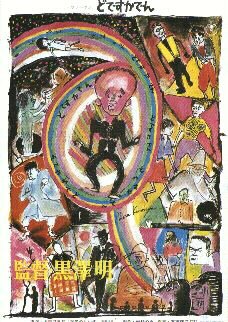
5. Dodes’ka-den – Akira Kurosawa’s first color film is a collection of stories set in a Tokyo slum. The individual stories aren’t particularly memorable, much like the sentimental parts of Dreams (#3, 1990). This film actually has a lot in common with that one, made 20 years later. While the politics are somewhat simplistic and the stories melodramatic, the visual style and beauty of the images is remarkable. The film isn’t so much shot as it is painted.

4. The Wild Child – From what I’ve seen, period films are a rarity among the french New Wave. This film by Francois Truffaut is the only one I can think of off the top of my head. Based on a true story, Truffaut himself plays a doctor who attempts to socialize a young boy who was found raised in the French countryside in the late 18th Century. The story’s very simple, and Truffaut keeps the stylization to a minimum. There’s some cool old fashioned wipes and irises, but as far as I can remember, that’s about it, all of which helps the period feel of the film. A very nice little movie.

3. Woodstock – I’ve been saying for years that Martin Scorsese won an Oscar for helping to edit this massive concert film, but I was wrong. While it was nominated, this film did not when the Best Editing Oscar. He really hasn’t ever won one for anything. Anyway, while this works great as a concert film: great performances from The Who, Crosby, Stills and Nash, Ritchie Havens, Joe Cocker, Santana, Janis Joplin, Sly & The Family Stone and, of course, Jimi Hendrix. But more than that, it’s the record of an era, the Boomer Ideal that they’ve all spent the last 36 years selling out, betraying, and generally making a mockery of.

2. MASH – It’s tough to separate this film from the TV series that was so ubiquitous on TV when I was growing up. I wonder if kids today, or people who’ve just never seen the series have a totally different reaction than I have. It’s a lot better than the TV show, of course, more anarchic, funnier, darker and not nearly as melodramatic. The cast is great: Elliot Gould, Donald Sutherland, Robert Duvall, Tom Skerritt, Rene Auberjonois and Sally Kellerman.

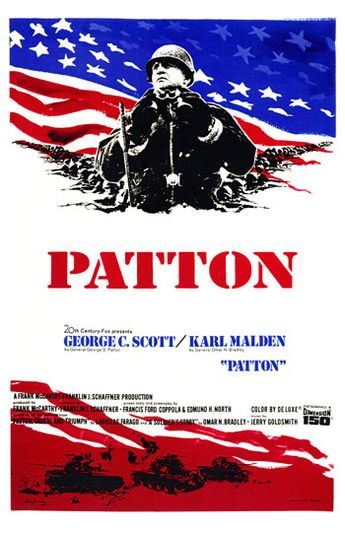
1. Patton – A strange film. George C. Scott is brilliant as the famous general, it’s one of the most famous biopic portrayals ever. Karl Malden is great as General Omar Bradley. It’s not an anti-war film, and it’s not really a pro-war film either. It doesn’t seem to take any position on war at all, just as it doesn’t really take any position on Patton himself. He’s shown as both brilliant and crazy, inspiring, authoritarian, scary, funny and nice to dogs. While confining it to only a few years out of Patton’s life, it still manages to create a whole portrait of the man, in a way that’s always compelling, something that few biopics can manage to do. It’s closest analogue has to be another war movie that is ultimately ambivalent on war itself and features a remarkable lead performance: Lawrence Of Arabia.
During the aftermath of the Oscars, I looked up how many Best Picture winners also managed to be my #1 Movie Of The Year. I came up with six: The Godfather, The Godfather Part II, Annie Hall, Amadeus, Unforgiven and Schindler’s List. This will make seven.

A few big Unseen movies this year, mostly lesser films by art directors like Melville, Herzog, Bertolucci and Altman. I’ve made it halfway through Five Easy Pieces twice, does that count as watching the whole thing?

Five Easy Pieces
Kelly’s Heroes
Tora! Tora! Tora!
Love Story
Airport
The Conformist
Zabriskie Point
Gimme Shelter
Le Cercle Rouge
El Topo
Rio Lobo
The Garden Of The Finzi-Continis
Husbands
The Honeymoon Killers
Darling Lili
Tristana
Bed & Board
Claire’s Knee
Even Dwarfs Started Small
Ryan’s Daughter
Brewster McCloud

Movies Of The Year: 1971

Not a particularly good year, either for movies I’ve seen or for ones I haven’t seen, as far as I can tell. A couple good ones at the top of the list, though.

10. Bedknobs And Broomsticks – Generic Disney musical starring Angela Lansbury, far away from her role in the Manchurian Candidate. There’s a Mary Poppins-esque mix of live-action and animation, but nothing especially remarkable.

9. Carnal Knowledge – Disappointing Mike Nichols film that I guess is supposed to be a comedy but really isn’t all that funny. It’s three episodes in the life of Jack Nicholson’s character (college with Art Garfunkel and Candace Bergen, mid 20s with Ann-Margaret and middle age, by himself), tracing his descent into annoying misogyny. Bleh.

8. The French Connection – William Friedkin’s ode to the wonderful world of police brutality and fascism. It has something in common with 24 in that it makes an argument that the police should be allowed to do whatever they want, but 24 is nuanced and thoughtful in a way this isn’t (and 24 ain’t that nuanced or thoughtful). Nice car chase though.

7. Diamonds Are Forever – Speaking of misogyny and violence, this is Sean Connery’s last James Bond movie. I honestly don’t remember anything about this movie, but I’m sure I’ve seen it. Someday, I’m going to take a week and watch all of the Bond movies in order. With martinis, of course.

6. The Last Picture Show – Peter Bogdanovich’s first movie, and the only of his I’ve seen (or want to see). There are some nice performances, and some pretty black and white images, but it’s just not as good as other nostalgic films (American Graffiti) or films about Texas (Hud). I like Bogdanovich better as an actor (he’s great in a recurring role on The Sopranos) and film expert (commentaries on DVDs and such).

5. Harold And Maude – Overrated cult classic that’s a fine film, but not the masterpiece it’s often made out to be. Hal Ashby directed the story of a suicidal young man and an elderly woman who fall in love. It’s fairly funny and romantic, but it’s hard to separate it from all the hype.

4. Willy Wonka & The Chocolate Factory – Much better, on the whole, than Tim Burton’s remake, largely because of Gene Wilder’s performance in the lead role. Johnny Depp’s is way too close to Michael Jackson to be enjoyable, whereas Wilder’s Wonka is funny, magical and not a little mean and nasty. That’s part of the fun of the film, watching the bad kids get their comeuppance by that instrument of divine retribution: Wonka candy. The kid who plays Charlie is really bad though, that’s one thing that was really good about Burton’s film.

3. Bananas – Woody Allen heads off to the jungle to fight the revolution in one of his wackier comedies. It’s more hit and miss than his next few comedies, but there’s good stuff here. A famous performance as an extra on a subway by Sylvester Stallone, and a moderately funny performance by Howard Cosell as a commentator on Allen’s life.

2. McCabe & Mrs. Miller – Robert Altman’s great film isn’t really a western in the way the genre is generally thought of. It is the story of how the West was built, which is the subtext of all westerns, sometimes more explicitly (The Outlaw Josey Wales, The Man Who Shot Liberty Valence, Once Upon A Time In The West, Deadwood) than others (Unforgiven, Rio Bravo, The Searchers). Warren Beatty and Julie Christie star as the brains behind the creation of a mining town in the Northwest, centered, of course, around the tavern and brothel. Rene Auberjonois, Keith Carradine, Shelly Duvall and William Devane co-star. Oh, and the soundtrack’s all by Leonard Cohen, and it’s great.

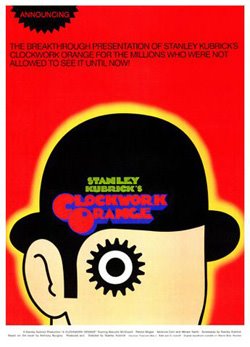
1. A Clockwork Orange – Might be Stanley Kubrick’s most misanthropic film, and that’s saying something. It’s a classic, of course, something every movie fan has seen, so there isn’t much to say about it that you don’t already know. What I like most about it, and the reason I can watch it again and again is the sound. Namely the narration by Malcolm McDowell with the famous Anthony Burgess dialect and the music, mostly various incarnations of Beethoven’s Ninth Symphony. Off the top of my head, my favorite Stanley Kubrick films: 1. Dr. Strangelove 2. Paths Of Glory 3. 2001 4. The Shining 5. A Clockwork Orange 6. Spartacus 7. Eyes Wide Shut 8. Full Metal Jacket 9. Lolita 10. Barry Lyndon.

Some fine Unseen movies this year, I’m sure, but nothing too spectacular, as far as I know. And yes, while I’ve seen both Shaft sequels, I’ve never made it all the way through the original film, at least not that I can recall.

Straw Dogs
Get Carter
Walkabout
Johnny Got His Gun
Duel
Dirty Harry
Fiddler On The Roof
THX 1138
Shaft
Play Misty For Me
Klute
Vanishing Point
Big Jake
Panic In Needle Park
Two-Lane Blacktop
Sweet Sweetback’s Baad Asssss Song
Sunday Bloody Sunday
Minnie And Moskowitz

Movie Roundup

Lots of movies to catch up with here.

Andrei Rublev – Long, slow and depressing, but a masterpiece nonetheless. Not as famous as Solaris, but this is a much better Tarkovsky film. Not nearly as solipsistic or pessimistic as that one, there’s actually some hope for humanity and society by the end of this film, though the three hours leading up to that point aren’t exactly fun.

Floating Weeds – I haven’t seen his silent film that this is a remake of, but I plan to eventually. The Criterion version comes with both versions. This is the third Ozu I’ve seen, and all of them are great. Late Spring’s my favorite, and that’s coming out later this year. Tokyo Story’s the most famous, the first I saw and the one I enjoyed the least. I probably should watch it again.

Hiroshima Mon Amour – A pretty perfect little movie. The lead actress, Emmanuelle Riva, played Juliette Binoche’s mom in Three Colors: Blue and gives an outstanding performance here. My first Alain Resnais movie, I really want to see Last Year At Marienbad though.

Band Of Outsiders – Totally charming. It’s easy to forget just how fun Godard can be. Anna Karina was, predictably, adorable and Michel Legrand’s score was terrific. I think it’s now my second favorite Godard, after Pierrot Le Fou.

Fitzcarraldo – My new #1 film from 1982 is this Werner Herzog movie about a crazy guy who wants to move a boat over a mountain so he can bring opera to the jungle. Stars Klaus Kinski (also crazy) and Claudia Cardinale (from Once Upon A Time In The West).

Dave Chappelle’s Block Party – Really just a pretty good concert film. The Fugees reunion at the end of the show was pretty cool, but the highlight was an amazing performance by The Roots with Jill Scott and Erikah Badu. Not a ground-breaking film by any means, but I certainly liked it more than the only other Michel Gondry film I’ve seen, the drastically overrated Eternal Sunshine of The Spotless Mind. Now my #22 rated film of 2005.

Week End – Another wacky Godard film, this one is like Pierrot Le Fou, but mixed with cynicism and Maoist politics. There’s so much to love about it, though, that I can overlook the long anti-colonialist speeches (which are nothing but simple-minded justifications of terrorism). Someday, when I have my own movie theatre, I’m going to name it the End Of Cinemas.

Tristram Shandy – Very funny. It’s in a close race with The 40 Year Old Virgin as the Best Comedy of 2005 (I ended up rating it 9th, two spots behind Virgin). Right up there with the best movies about making movies (Living In Oblivion, The Stunt Man, Day for Night, etc.)

Burden Of Dreams – Les Blank’s documentary about the making of Fitzcarraldo is alright, but the only really great parts are a pair of rants by Herzog (The birds are not singing, they are screaming in pain!”). The second best movie about crazy people making a movie in a jungle. The #11 film of 1982.

George Washington – Indie film overrated for it’s admittedly very cool visual style (very Ozu influenced, naturally), while overlooking the fundamental silliness of its plot. There are some attempts at poetry, in the narration and the ending that mostly just don’t work. Still, a fine first film for director David Gordon Green. The #7 film of 2000.

The World – A stunningly beautiful film about workers at a Beijing amusement park that recreates the whole world, or at least the famous parts: Manhattan, the Eiffel Tower, London Bridge, the Pyramids. It’s magic realist Ozu, with text messaging. The film revolves around the two of the workers, with a little bit of every type of post-communist social issue thrown in: foreign workers forced into prostitution, country folk moving to the big city to try to make their fortune and failing, organized crime, overworked workers in unsafe conditions, plus your typical romantic issues. Interspersed are chapter breaks (one chapter’s even called “Tokyo Story”) and some clever animated sequences. A great first big-budget film by director Jia Khang-ze. I wish I had grabbed the poster when I had the chance last year, but I forgot. The #4 film of 2004.

Kill! – Adapted from the same source novel as Akira Kurosawa’s Sanjuro, I have a feeling that this is closer to thee novel than that one, the sequel to Yojimbo. This is a darker, less satirical, more densely plotted film than that one, but it’s still a very fine film. Tatsuya Nakadai’s performance in the lead role, while it can’t match the comic intensity of Toshiro Mifune’s in Sanjuro, is still quite good. The film is very nice looking: crowded frames, at times shockingly graphic violence, and New Wavy editing. Director Kihachi Okamoto also did Sword Of Doom, which stars Mifune and Nakadai and which I’ll be seeing very soon.

Samurai Spy – Another part of Criterion’s Rebel Samurai boxset (along with Kill!, Sword Of The Beast and Samurai Rebellion, which I saw years ago). Directed by Masahiro Shinoda, this is a remarkably beautiful film about, well, samurai spies (they actually seem more like ninjas, but I don’t know if there’s a difference). The plot’s ridiculously complex, but that’s OK because the movie’s just so damn cool. And there’s even a nice supporting role for the guy who played the Master Swordsman in The Seven Samurai.

Oldboy – If Danny Boyle made a Takeshi Miike film, this is what would result. It’s not nearly as original or interesting visually as Boyle’s films, though it does have some nice flourishes. And it’s not nearly as gross or disturbing as Miike’s (the the end comes pretty close), which in my opinion is a good thing. There’s one long fight that’s pretty cool looking, but this film has more in common with Japanese horror than Hong Kong action. Still, a pretty good revenge movie. The #8 film of 2003.

Oscarfever!

Louis Menand, writing about some guy’s book in The New Yorker a couple months ago:

‘When you have prizes for art, you will always have people complaining that prizes are just politics, or that they reward in-group popularity or commercial success, or that they are pointless and offensive because art is not a competition. English believes that contempt for prizes is not harmful to the prize system; that, on the contrary, contempt for prizes is what the system is all about. ‘The threat of scandal,’ as he puts it, ‘is constitutive of the cultural prize.’ His theory is that when people make these objections to the nature of prizes they are helping to sustain a collective belief that true art has nothing to do with things like politics, money, in-group tastes and beating out the other guy. As long as we want to believe that creative achievement is special, that a work of art is not just one more commodity seeking to aggrandize itself in the marketplace at the expense of other works of art, we need prizes so that we can complain about how stupid they are. In this respect, it is at least as important that the prize go to the wrong person as to the right one, No one thinks that Tolstoy was less than a great writer because he failed to win a Nobel. The failure to win the Nobel has become, in the end, a mark of his greatness.”
And so, my Oscar Picks:

Best Picture

Will Win: Brokeback Mountain
Should Win: Munich

Best Director

Will Win: Ang Lee, Brokeback Mountain
Should Win: Robert Rodriguez, Frank Miller and Quentin Tarantino, Sin City

Best Actor

Will: Philip Seymour Hoffman, Capote
Should: Hoffman

Best Actress

Will: Reese Witherspoon, Walk The Line
Should: Q’Orianka Kilcher, The New World

Supporting Actor

Will: George Clooney, Syriana
Should: Mickey Rourke, Sin City

Supporting Actress

Will: Rachel Weisz, The Constant Gardener
Should: Maria Bello, A History Of Violence

Original Screenplay

Will: Crash
Should: Good Night And Good Luck

Adapted Screeenplay

Will: Brokeback Mountain
Should: Munich

Film Editing

Will: Crash
Should: Sin City

Cinematography

Will: Brokeback Mountain
Should: Sin City

Foreign Language Film

Will: Tsotsi
Should: Caché

Documentary Feature

Will: March Of The Penguins
Should: No Direction Home

Documentary Short

Will: the Rwanda one
Should: NA

Animated Feature

Will: Wallace & Gromit
Should: NA

Animated Short
Will: the long one with “Jasper” in the title
Should: NA

Live Action Short
Will: Six Shooter
Should: NA

Art Direction
Will: Memoirs Of A Geisha
Should: Memoirs Of A Geisha

Make-Up
Will: Chronicles Of Narnia
Should: Sin City

Costume Design
Will: Memoirs Of A Geisha
Should: Memoirs Of A Geisha

Original Score
Will: Brokeback Mountain
Should: Brokeback Mountain

Original Song
Will: Crash
Should: NA

Sound Editing
Will: King Kong
Should: Revenge Of The Sith

Sound Mixing
Will: Walk The Line
Should: Walk The Line

Visual Effects
Will: King Kong
Should: Revenge Of The Sith