Movies Of The Year: 1976

Starting a new feature here on TINAB, I’m going to countdown the top movies of the year for every year for as long as I can. I’m going to start with 1976, because that’s the year I was born and it’s as good a year as any. Each year will rank the top ten or so films from that year, along with some mentions of films I haven’t seen yet. What year a film is categorized as will be determined by IMDB.

So here we go, the top films of 1976:

12. The Omen – A truly awful movie, though it was a big hit and is interesting as a cultural relic.

11. The Song Remains The Same – A mediocre Led Zeppelin concert film. The introductions of the band members before the show are pretty cool, especially the devilish Jimmy Page. Robert Plant is really bad as he manages to butcher his own songs.

10. Rocky – I’ve tried to watch it many times, but I’ve only made it all the way through once. It’s a good movie. Stallone really isn’t that bad. And the story is terrific. The problem is that it is BORING. I put it in all-caps, so you know it must be true. Not even the best sports movie of the year.

9. Network – One of those movies that you’re supposed to like, so you watch it, think it’s alright, and then can never remember anything about it. I’ve seen Network 4 times at least, yet I can remember hardly any of it.

8. The Seven Percent Solution – A terrific cast (Alan Arkin, Laurence Oivier, Robert Duvall, Joel Grey, Nicol Williamson) stars in this Sherlock Holmes meets Sigmund Freud movie. I remember liking it quite a bit, but don’t remember enough to rank it any higher than this.

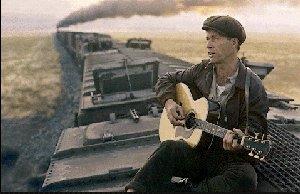
7. Bound For Glory – Hal Ashby’s biopic of Woody Guthrie,starring David Carradine, who’s very good in the role. Ashby’s a great underrated director, this isn’t his best movie, but is still pretty good. The biggest problem is that there just isn’t enough there. The film stops just as Guthrie’s career gets going.

6. Carrie – Perhaps the only good Brian DePalma movie. A dark version of Buffy the Vampire Slayer, wherein adolescence = freaky demonism. Great horror movie performances from Piper Laurie and Sissy Spacek.

5. All The President’s Men – Another film that just isn’t long enough. Very slick, efficient film. Redford, Hoffman and Robards are great. Great script by William Goldman. But you only get the beginnings of the Watergate story. Maybe that’s where Woodward and Bernstein’s story ends, but it doesn’t make for a wholly satisfying film.

4. The Bad News Bears – A classic sports movie. The vicious anti-establishment humor still works. One of the great last scenes in movie history. I plan to avoid the remake at all costs. I recommend you do the same.

3. Marathon Man – The second Goldman/Hoffman pairing of the year is a near-perfect suspense thriller. It shares the lean efficiency of All the President’s Men, but manages to tell a complete story. One of Laurence Olivier’s last great performances as the Evil Nazi Dentist.

2. Taxi Driver – Please don’t take away my Film Geek Merit Badge. It’s a great movie, but the ending never really worked for me. After two hours of angry misanthropy, with a horrifically violent climax, the even more misanthropic satire of the coda is just too much. For a long time I just ignored it. Now I understand it’s supposed to be funny. I guess I’m just not demented enough to agree. DeNiro though, he’s good.

1. The Outlaw Josey Wales– Clint Eastwood’s second-best film as a director. A great revisonist Western, it makes the Western as chronicle of the development of civilization theme quite explict. But it does so with much more respect to Indians than any other Western I know of (especially Dances With Wolves). It’s the yin to Unforgiven’s yang.

Now the ones I haven’t seen:

Logan’s Run
Small Change
The Front
1900
The Shootist
Family Plot
Assault On Precinct 13
Car Wash
Midway
Silver Streak

I’ll Know My Song Well Before I Start Singin’


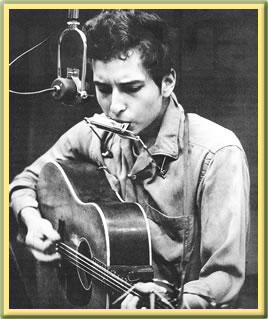
There were two new Dylan albums released today. The soundtrack for the upcoming Scorsese documentary (on DVD Sept. 20th, on PBS the week after that). “No Direction Home” and a Starbucks CD “Live At The Gaslight 1962”. On first listen, both are worth picking up for Dylanphiles (if you aren’t one, you should be).

No Direction Home is the 7th Bootleg Series, the first 5 of which are essential for any Dylan fan. It’s 2 discs cover 1959-1966, just like the movie will. Disc 1 highlights include fantastic covers of This Land Is Your Land and Dink’s Song, very good live versions of A Hard Rain’s A-Gonna Fall, When The Ship Comes In, Blowin’ In The Wind and It’s All Over Now, Baby Blue.

Disc 2 is mostly alternate version of songs from Highway 61 Revisted and Blonde On Blonde, some of which are substantially different than the album versions. Just Like Tom Thumb’s Blues, She Belongs To Me, Desolation Row, Leopard Skin Pill-Box Hat and Stuck Inside Of Mobile With The Memphis Blues Again are the highlights. The album closes with Like A Rolling Stone from the ‘Royal Albert Hall’ concert, previously available in its entirety as Bootleg Series Volume 4. If you don’t already have it, you need to: probably my favorite live performance by anyone, ever.

The Live at the Gaslight album is actually 2 concerts spliced together. Only 3 of the songs are Dylan originals (Hard Rain, Don’t Think Twice It’s Alright, and the previously unreleased Rocks and Gravel). The last 7 are all covers of folk songs. All are interesting, but the best are John Brown (previously available only on the Dylan Unplugged album), Cocaine and Barbara Allen. definitely worth going into Starbucks to buy it.

New Age Girl

On Air America this week, Al Franken is on vacation. Filling in for him is Rachel Maddow, the best news broadcaster I’ve seen or heard in a long time. I’ve been addicted to her daily one hour show (5 – 6 AM eastern) for months now. It’s informative and entertaining and very efficient. Should be an interesting week on AA as Maddow’s backup does her show, she does Franken’s show, and interns or something do Morning Sedition while Mark and Marc are on vacation. All these shows can either be podcast through iTunes or downloaded from http://www.airamericaplace.com. Highly recommended.

Sunday Olio (Not Oleo, That’s A Butter Substitute)


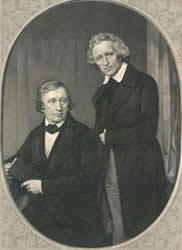
Watched Brothers Grimm last night. I was disappointed. It’s well down. The actors are good. The story is fairly interesting. There just isn’t anything more there. It reminded me quite a bit of Tim Burton’s Sleepy Hollow, another well-made, good-looking movie that I felt just didn’t have any reason to exist. It feels like important parts of this film are missing, which is very possible. Terry Gilliam’s set a very high standard for his films, and this is easily the worst one I’ve seen.

A couple days ago, I watched Spider-Man 2. It was good, but not as good as the first one. Just about what you’d expect I guess. I’m annoyed that they basically just recycled the conflicts of the first movie. Peter has issues with the responsibility of being a superhero, and committing to the hot girl. A scientist he likes and admires is twisted into a supervillain against his will. If they make a third one, it could potentially be the best of the three, what with a villain with a different motive (Peter’s friend chooses to become the Hobgoblin in order to get revenge), and with (hopefully) the resolution of the inane Mary Jane-Peter conflict.

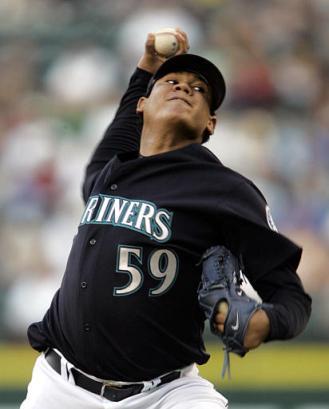
Felix Herndandez finally gave up an extra-base hit. Three of them in fact. But 8 Ks and 1 walk over seven innings, with only 3 runs allowed is nothing to sneeze at.

36 IP 23 H 8 R 7 ER 2 HR 5 BB 38 K 1.75 ERA

Wednesday night, The King takes on The Big Unit at Safeco. If you watch one Mariner games this year, this should be it.

And this is hilarious.

When Someone Asks You If You Are A God, You Say "Yes!"


Watched that Ghostbusters DVD tonight. Haven’t seen the movie in years, because I’ve only been able to get it panned-and-scanned. That didn’t bother me when I was a kid and didn’t know what it was, I must have watched it dozens of times on VHS (it pretty much defines the way I remember the 1980s). But now, thanks to the miracle of DVD, I’m able to watch it widescreen for the first time since seeing it in the theatre when I was eight years old.

I can’t imagine a person not liking Ghostbusters, I bet even Pat Robertson likes it. It’s pretty much a perfect movie comedy. Murray, Ackroyd and Ramis at their peak. A great supporting cast (Rick Moranis, Sigourney Weaver, Annie Potts, William Atherton). Tremendously quotable movie (the biggest ‘Memorable Quotes’ page I’ve ever seen at IMDB is in the link in the title).

The odd thing about it, seeing it now, is that there’s absolutely no cynicism in it. Not that its sappy or cheesy, because it isn’t at all. But there’s a kind of wide-eyed optimism to the film. Maybe that’s just a residue of my having watched it so much as a kid, but I really think that’s why it was such the hit that it was. These guys have done funnier movies (Stripes, Vacation) and better movies (Trading Places, The Blues Brothers, Animal House, Groundhog Day) but I don’t think they’ve ever done anything that is so appealing to so many people.

Chavez And Castro Offer Welfare To Poor Americans

HAVANA, Cuba (Reuters) — Venezuelan President Hugo Chavez, popular with the poor at home, offered on Tuesday to help needy Americans with cheap supplies of gasoline.

“We want to sell gasoline and heating fuel directly to poor communities in the United States,” the populist leader told reporters at the end of a visit to Communist-run Cuba.

. . . .

Chavez said Venezuela could supply gasoline to Americans at half the price they now pay if intermediaries who “speculated … and exploited consumers” were cut out.

Venezuela supplies Cuba with generously financed oil and plans to help Caribbean nations foot their oil bills.

Chavez, in Cuba to attend the graduation of Cuban-trained doctors from 28 countries, was seen off at the airport by Cuban President Fidel Castro. Washington has accused the two leaders of being a destabilizing influence in South America.

Chavez and Castro offered to give poor Americans free health care and train doctors free of charge.

Masters Of War

American Legion Declares War on Protestors — Media Next?

By E&P Staff

Published: August 24, 2005 4:20 PM ET
NEW YORK The American Legion, which has 2.7 million members, has declared war on antiwar protestors, and the media could be next. Speaking at its national convention in Honolulu, the group’s national commander called for an end to all “public protests” and “media events” against the war, even though they are protected by the Bill of Rights.

“The American Legion will stand against anyone and any group that would demoralize our troops, or worse, endanger their lives by encouraging terrorists to continue their cowardly attacks against freedom-loving peoples,” Thomas Cadmus, national commander, told delegates at the group’s national convention in Honolulu.

The delegates voted to use whatever means necessary to “ensure the united backing of the American people to support our troops and the global war on terrorism.”

In his speech, Cadmus declared: “It would be tragic if the freedoms our veterans fought so valiantly to protect would be used against their successors today as they battle terrorists bent on our destruction.”

He explained, “No one respects the right to protest more than one who has fought for it, but we hope that Americans will present their views in correspondence to their elected officials rather than by public media events guaranteed to be picked up and used as tools of encouragement by our enemies.” This might suggest to some, however, that American freedoms are worth dying for but not exercising.

Without mentioning any current protestor, such as Cindy Sheehan, by name, Cadmus recalled: “For many of us, the visions of Jane Fonda glibly spouting anti-American messages with the North Vietnamese and protestors denouncing our own forces four decades ago is forever etched in our memories. We must never let that happen again….

“We had hoped that the lessons learned from the Vietnam War would be clear to our fellow citizens. Public protests against the war here at home while our young men and women are in harm’s way on the other side of the globe only provide aid and comfort to our enemies.”

Resolution 3, which was passed unanimously by 4,000 delegates to the annual event, states: “The American Legion fully supports the president of the United States, the United States Congress and the men, women and leadership of our armed forces as they are engaged in the global war on terrorism and the troops who are engaged in protecting our values and way of life.”

Cadmus advised: “Let’s not repeat the mistakes of our past. I urge all Americans to rally around our armed forces and remember our fellow Americans who were viciously murdered on Sept. 11, 2001.”

Pat Apologizes, Says Chavez = Hitler

(CNN) — After two days of criticism, Christian broadcaster Pat Robertson apologized for his controversial suggestion that the United States should assassinate Venezuelan President Hugo Chavez.

“Is it right to call for assassination? No, and I apologize for that statement,” Robertson said. “I spoke in frustration that we should accommodate the man who thinks the U.S. is out to kill him.”

But he compared Chavez to Iraq’s Saddam Hussein and Adolph Hitler and quoted German Lutheran theologian Dietrich Bonhoeffer: “[That if a madman were] driving a car into a group of innocent bystanders, then I can’t, as a Christian, simply wait for the catastrophe and then comfort the wounded and bury the dead. I must try to wrestle the steering wheel out of the hands of the driver.”

Bonhoeffer was hanged by the Nazis for his involvement in a 1944 plot to assassinate Hitler.

Robertson’s rationale for his statement remained unchanged.

“I said before the war in Iraq began that the wisest course would be to wage war against Saddam Hussein, not the whole nation of Iraq,” Robertson said. “When faced with the threat of a comparable dictator in our own hemisphere, would it not be wiser to wage war against one person rather than finding ourselves down the road locked in a bitter struggle with a whole nation?”

So far there has been no reaction from Venezuela to Robertson’s apology.

Earlier Wednesday, on his “The 700 Club” program, Robertson said the media had taken his remarks out of context.

“I didn’t say ‘assassination.’ I said our special forces should ‘take him out.’ And ‘take him out’ can be a number of things, including kidnapping; there are a number of ways to take out a dictator from power besides killing him. I was misinterpreted by the AP [Associated Press], but that happens all the time,” Robertson said on “The 700 Club.” (Watch video)

The controversy began Monday when Robertson called Chavez “a terrific danger” bent on exporting Communism and Islamic extremism across the Americas. (Full story)

“If he thinks we’re trying to assassinate him, I think we really ought to go ahead and do it,” said Robertson Monday. “It’s a whole lot cheaper than starting a war.” (Watch Robertson’s comments)

“We have the ability to take him out, and I think the time has come that we exercise that ability,” he said. “We don’t need another $200 billion war to get rid of one strong-arm dictator. It’s a whole lot easier to have some of the covert operatives do the job and then get it over with.”

Chavez, a close ally of Cuban President Fidel Castro, has said in the past he believes the United States is trying to kill him and vowed that Venezuela, which accounts for more than 10 percent of U.S. oil imports, would shut off the flow of oil if that happened.

Tuesday, the Venezuelan leader shrugged off Robertson’s comments during a trip to Cuba.

“I don’t know who that person is,” he said. “I don’t know him, and as far as his opinion of me goes, I couldn’t care less.”

. . . . .

His opponents, largely drawn from the country’s middle and upper classes, accuse him of undermining democratic institutions.

Chavez was re-elected under a new constitution in 2000. In 2004, he won a recall referendum with the support of 58 percent of voters.

He has become an increasingly outspoken critic of the United States, which he accuses of having been behind a 2002 coup attempt that forced him from office for two days.

The Bush administration denied involvement but refused to condemn the attempted coup.

. . . . .

Controversial statements are not new to the 75-year-old Robertson.

He has suggested in the past that a meteor could strike Florida because of unofficial “Gay Days” at Disney World and that feminism caused women to kill their children, practice witchcraft and become lesbians.

Deeper Into Movies


Watched Destry Rides Again a few days ago. Stars Jimmy Stewart, in one of his first starring roles and Marlene Dietrich. Advertised as a comedy, it isn’t really, though it does have funny moments. It’s a lot like The Man Who Shot Liberty Valance, a film Stewart made 20 years later, in that it makes explicit the underlying theme of every Western: the transition from anarchy to civilization. Like Shenandoah, the movie is remarkable mostly for Stewart’s performance. He’s terrific as a zen genius of a deputy sherriff who doesn’t believe in guns, essentially the same character he played in Harvey, only without the delusions.

Disappointing, though, was Marlene Dietrich. Her acting’s fine, and her scenes with Stewart are terrific, but her songs are awful and she looks as bad as I’ve ever seen her. Which is weird, considering she was electric in Josef von Sternberg’s The Devil Is A Woman just four years earlier, and she looked great in films through the 40s and into the 50s. Must be the excessive make-up and ridiculous Western costumes.


Watched Kill Bill Vol. 2 last night. While I liked it better than the first time I saw it, I still prefer the first part. Volume 1 is overflowing with manic energy and joy of making movies fun. The second is much more controlled, more static. The first is inspired by Kung-Fu and exploitation movies but it transcends its genre models, takes them to new artistic heights. Vol. 2, however, simply does not match up to the Films Noir and Spaghetti Westerns it is modeled after.

It might be the soundtrack. The reason those Sergio Leone movies never seem slow, despite the long takes where not much happens, is Ennio Morricone’s scores. While the soundtrack to Kill Bill Vol. 1 is perfect, there’s hardly anything memorable about the sound in Vol. 2.

There are great parts of the film though: the whole Pai Mei chapter, a great performance by Michael Madsen, the fight with Darryl Hannah. It’s just never as exciting or innovative as Volume 1. It is Jackie Brown to Volume 1’s Pulp Fiction.


Just finished, literally, watching Captain Blood. Released in 1935, it’s Errol Flynn’s first starring role. Basically the same team got together a few years later and made the Adventures of Robin Hood, a much superior film. Flynn, Basil Rathbone, and Olivia de Havilland star in and Michael Curtiz directs both films. The whole first hour of the movie as devoid of action, as Flynn is arrested and sold into slavery and slowly, very slowly, works his way into becoming a pirate. Once that happens, the film picks up pace and becomes interesting. Rathbone is criminally underused as an evil pirate, he really only gets two scenes, one of which is a good fight scene with Flynn, but not as good as the ones in Robin Hood. The ship to ship battles are also very good, but it just isn’t enough to save the film. Doomed by a boring first half and a second half dotted with sanctimonious speech-making.

I Need Japanese Steel


Went DVD shopping today and picked up Ghostbusters and a trio of Tarantino films (Pulp Fiction, Reservoir Dogs and Kill Bill Vol. 2). Which leads me to a question John posed below in the comments. He writes:

I thought “Kill Bill, Vol. 1” was too violent and had a lot of pointless running around. I must be missing something, especially considering I haven’t seen many samurai movies at all.

Why on earth do you think it’s easily the best movie of 2003?

Well, first of all, these things are subjective. Some people don’t like violent movies, that’s OK. I’m not gonna tell you you should like it, just try to explain why I do.

First off, some background. Kill Bill is an homage to a certain genre of film. The Martial Arts, Samurai/Yakuza and Blaxploitation films of the 70s, to be specific. What these films all have in common is violence. Not just plain old Die Hard style violence, but crush your head like a melon, spray the screen with fake blood level violence. The violence is not meant to be realistic, nor do people look at it that way. Usually, in these films, its all in fun: people like to see blood geysering out of a severed head. Well. . .some people do. There is that element of playfulness and jokiness to the violence in Kill Bill, but there’s more to it than just that.

Take, for example, the sequence near the end of the big fight scene between the Bride and the Crazy 88s. Someone (for no apparent reason) shuts off the power in the Inn. The Bride and her combatant are only visible as black silhouettes on a blue background. The fight is abstracted to it’s essence: bodies moving through space. This is what people mean when they compare kung fu movies to ballet: both art forms are primarily concerned with the image of the human body as it moves and interacts with other bodies. In ballet, you have toe shoes and a tutu. In Kill Bill, a motorcycle suit and a badass sword. The point is the same: it looks pretty, and it looks cool.

Another, non-violent yet terrific thing about Kill Bill is the way it’s written. Not just the catchy dialogue, of which there’s less of than in any other Tarantino film, but in the structure and economy of the narrative.

It may be cliche now to start a movie in the middle and jumble up it’s timeline (Tarantino’s done it in three of his four films) but it still works as a way of keeping the audience on edge and guessing and involved with the plot. In fact, that might be one of the reasons I prefer Vol. 1 to Vol. 2: aside from the long flashback sequence, the narrative in Vol. 2 is strictly A to B.

But it’s the economy of the script that really stands out to me. The way Tarantino can create wholly unique, interesting and memorable characters with just a few lines of dialogue is amazing. For a film with so little dialogue, there are a remarkable number of fascinating characters in Kill Bill: Hattori Hanzo, GoGo Yubari, O-Ren Ishii, Buck, The Sherriff, not to mention The Bride herself.

And there’s more: terrific acting by Uma Thurman, Lucy Liu, and, especially, Sonny Chiba, the best use of music of any Tarantino film, and any film at all since Boogie Nights, the great, long steadycam tracking shot setting the scene for the House of The Blue Leaves sequence, the absurd, yet beautiful, snowscape for the final battle between The Bride and O-Ren, the audacity of putting a long (violent) anime sequence right in the middle of the film, and on and on.

There isn’t a filmmaker alive who loves movies more than Quentin Tarantino, and that shows in every frame of this movie. It’s a movie for people who love movies by people who love movies. It isn’t surprising, then, that film geeks tend to like it a lot more than normal people.