This Week in Rankings

After recording the last episode of They Shot Pictures, the one on Lau Kar-leung, I decided to take a few weeks off from Hong Kong film.  It’s been a year and a half now since a more or less random decision to rent a couple Johnnie To movies I hadn’t seen yet around Valentine’s Day of 2013 led first to a massive To and Milkyway binge and podcast and then an off-hand rental of Eastern Condors followed by The Summer of Sammo, an exploration of Hong Kong martial arts cinema centered around the rotund yet mercurial Sammo Hung. That in turn was followed by a more consciously-determined look at Hong Kong film with Running Out of Karma, ostensibly primarily concerned with Johnnie To and his influences and contemporaries, but really an exploration of the whole panorama of Hong Kong and Chinese language cinema. Along the way I’ve watched dozens (if not hundreds) of films, which is great, but every once in awhile I need to step back and re-orient myself with some classical Hollywood cinema, which had been the main focus of my movie-watching for years before I caught the Hong Kong bug. Of course, after about three weeks of this, I couldn’t help but dive right back into Hong Kong and am now in the midst of preparations for the next They Shot Pictures, on King Hu.

Over the last few weeks I’ve posted a number of reviews here, as well as my mid-year look at the Best Films of the Year So Far (or rather, the Best Films from Last Year that Have Come Out this Year, So Far). I’ve got some other big lists over at letterboxd as well. For The George Sanders Show, Mike and I created an Alternate Top 100 Films of All-Time list (you can see my individual list here). On the occasion of Filmspotting‘s 500th episode, I came up with a Top 50 Films of the Last Ten Years list. And in response to a Film4 list that I feel neglected Chinese-language cinema, I wrote a 100 Must-See Chinese Language Films of the 21st Century list.

In addition to the big list, we’ve also had a couple episodes of The George Sanders Show since my last update. We covered Bong Joonho’s Snowpiercer and Hong Sangsoo’s Virgin Stripped Bare by Her Bachelors (the episode features a great interview Mike did with Bong himself), a couple of films called Lola by Jacques Demy and Rainer Werner Fassbinder, and a pair of Hollywood studio films with Hellzapoppin’ and The Barefoot Contessa. The last includes our discussion of Thomas Schatz’s seminal history of the studio-era, The Genius of the System, a book about which I had some serious reservations and disagreements.

These are the movies I’ve watched and rewatched over the last few weeks and where they place on my Year-By-Year Rankings. Links are to the reviews I’ve written here. Reviews or comments for the rest can be found over at letterboxd.

Napoleon (Abel Gance) – 6, 1927
The Criminal Code (Howard Hawks) – 13, 1931
Come and Get It (Howard Hawks, William Wyler) – 9, 1936
The Road to Glory (Howard Hawks) – 13, 1936
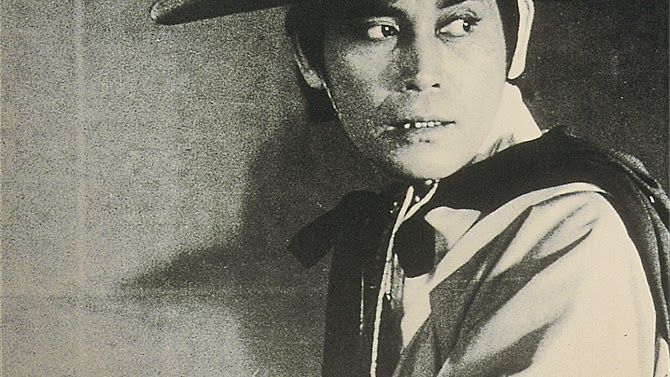
Empress Wu Zetien (Fang Peilin) – 29, 1939

Hellzapoppin’ (HC Potter) – 4, 1941
Dream of the Red Chamber (Bu Wancang) – 19, 1943
Christmas Holiday (Robert Siodmak) – 23, 1944
The Breaking Point (Michael Curtiz) – 22, 1950
Anne of the Indies (Jacques Tourner) – 21, 1951

French Cancan (Jean Renoir) – 5, 1954
The Barefoot Contessa (Joseph L. Mankiewicz) – 12, 1954
Indiscreet (Stanley Donen) – 29, 1958
The Enchanting Shadow (Li Han-hsiang) – 10, 1960
The Grass is Greener (Stanley Donen) – 17, 1960

Lola (Jacques Demy) – 2, 1961
The Story of Sue San (King Hu) – 24, 1964
Sons of the Good Earth (King Hu) – 15, 1965
The Young Girls of Rochefort (Jacques Demy) – 2, 1967
Dragon Gate Inn (King Hu) – 3, 1967

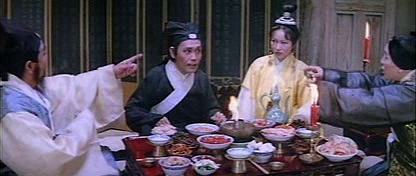
The Fate of Lee Khan (King Hu) – 11, 1973
The Fury (Brian DePalma) – 11, 1978
The Driver (Walter Hill) – 13, 1978
Legend of the Mountain (King Hu) – 7, 1979
Lola (Rainer Werner Fassbinder) – 13, 1981

Une chambre en ville (Jacques Demy) – 13, 1982
Gung Ho (Ron Howard) – 50, 1986
Maurice (James Ivory) – 47, 1987
He Ain’t Heavy, He’s My Father (Peter Chan) – 24, 1993
Painted Skin (King Hu) – 51, 1993

Crimson Tide (Tony Scott) – 37, 1995
Jackie Brown (Quentin Tarantino) – 3, 1997
Full Alert (Ringo Lam) – 26, 1997
Primary Colors (Mike Nichols) – 27, 1998
Devils on the Doorstep (Jiang Wen) – 9, 2000

The House of Mirth (Terence Davies) – 10, 2000
Golden Chicken (Samson Chiu) – 9, 2002
Golden Chicken 2 (Samson Chiu) – 12, 2003
House of Flying Daggers (Zhang Yimou) – 14, 2004
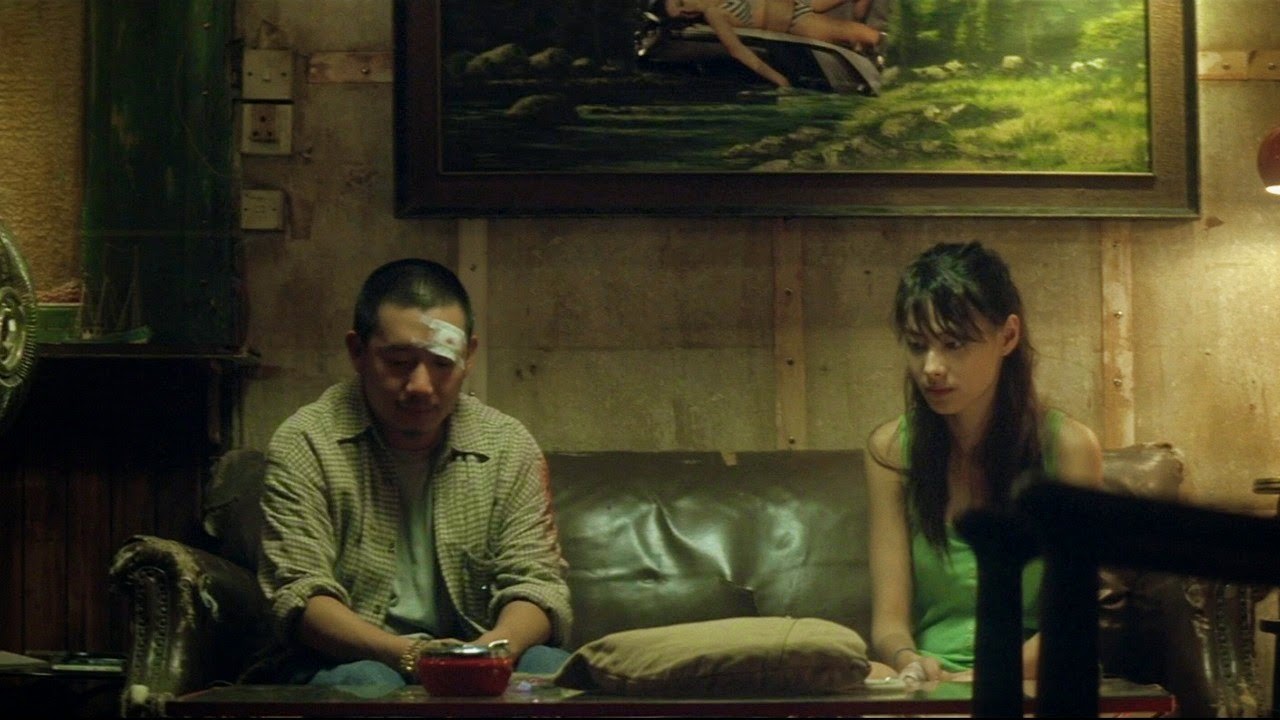
Oxhide (Liu Jiayin) – 3, 2005

Isabella (Edmund Pang Ho-cheung) – 5, 2006
Summer Palace (Lou Ye) – 41, 2006
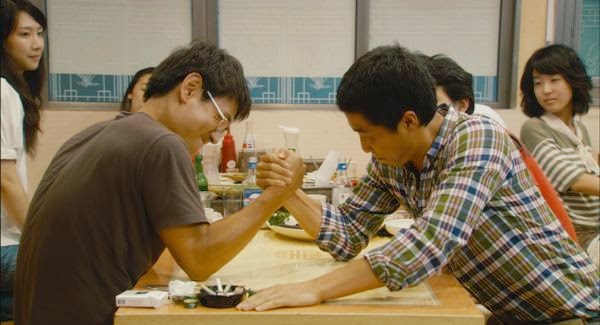
Like You Know It All (Hong Sangsoo) – 8, 2009
Sophie’s Revenge (Eva Jin) – 31, 2009
Love in a Puff (Edmund Pang Ho-cheung) – 9, 2010

Love in the Buff (Edmund Pang Ho-cheung) – 30, 2012
Snowpiercer (Bong Joonho) – 33, 2013
Enough Said (Nicole Holofcener) – 42, 2013
Lucy (Luc Besson) – 6, 2014
They Came Together (David Wain) – 8, 2014
Guardians of the Galaxy (James Gunn) – 11, 2014

Running Out of Karma: King Hu’s Legend of the Mountain

Running Out of Karma is my on-going series on Johnnie To, Hong Kong and Chinese-language cinema. Here is an index.

It starts with a Wagnerian incantation: elemental imagery calling forth the natural world, music rising with the sun, the mountain, the clouds and the river, always the river, rushing, falling, churning. A Touch of Zen begins much the same way, but this world is depopulated, not even a spider mars its surface. When the lone scholar does appear, he’s dwarfed by his surroundings, a pinprick of consciousness in an beautifully indifferent nature.

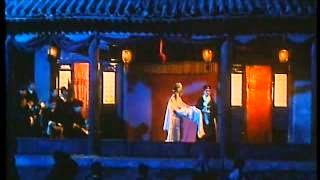
What follows is a ghost story, one that, unlike A Touch of Zen, Painted Skin and The Enchanting Shadow is not an adaptation from medieval Chinese literature (at least as far as I can tell, credits are murky) but rather an original screenplay by King Hu himself. An itinerant scholar, played by Hu mainstay Shih Chun, is tasked with translating a powerful Buddhist sutra. So he can work in peace, he’s sent to a remote, supposedly abandoned temple complex. The people he finds there are a little odd, most notably Tien Feng’s demonic mute servant Chang and Hsu Feng’s pretty young girl Melody. Shih gets drunk one night and ends up marrying Melody, but it turns out she’s a ghost who wants to steal the sutra for herself (in reciting it, an evil spirit will gain the power to control any human). Exactly how many people Shih meets are ghosts and how many aren’t becomes the central mystery of the film, with everyone, his friend Tsui, a mysterious pair of priests (one Buddhist, one Taoist) and a local barmaid (Sylvia Chang, looking impossibly pretty) knowing more than they’re willing to say, everyone’s hiding something, no one will simply tell poor Shih what is going on. Throughout Shih will remain largely clueless to this other world that surrounds, guides, manipulates and tricks him.

Where A Touch of Zen follows a kind of religious progression from everyday superstition to the abstract awesomeness of Roy Chiao’s Buddha-nature, Legend of the Mountain looks backward, not to any one religious doctrine, but to a fundamental level of reality that neither Buddhism nor Taoism can fully explain or control. For long stretches the film is wordless, with the music and Harry Chan’s images of nature giving us a glimpse, a feeling of this foundational world, one where the border between life and death, past and present and future is more porous than we are trained to believe it is.

But yet, far from a dry spiritual meditation, or even a Malickian heartfelt grasp at inexplicable profundity, Legend of the Mountain is also really funny. The film’s central montage, on the occasion of Shih Chun’s wedding night, duplicates the rhythm of the opening, but throws in lots of shots of insect sex, because, you know, nature (I nominate “King Hu’s Nature-Sex Montage” as the next great band name). The ghosts are constantly bickering and conspiring amongst themselves, no one listens, everyone is afraid of everyone else. Hu plays out these shifting alliances and secrets, the quick eyes, the halting speech, in long shots, where we always see more than any one character, most especially the hapless Shih Chun. As a wuxia mystery film, it feels more in the spirit of Tsui Hark’s debut The Butterfly Murders (also from 1979) and other New Wave works than it does the contemporary kung fu films of Sammo Hung, Yuen Woo-ping, Lau Kar-leung and Chang Cheh. Hu was always slightly out of step with the mainstream of martial arts cinema, but always leading the way forward.

Shih is terrific as the scholar, dogged yet constantly befuddled, but ultimately competent (you do feel for him when he finally discovers how much he’s been manipulated and the film’s final shots wouldn’t work if we didn’t know this man so well as he stands alone against a raging river). It’s a very different character than his ultra-confident swordsman in Dragon Gate Inn or even his not-as-clever-as-he-thinks scholar in A Touch of Zen. And enough cannot be said about Sylvia Chang, her ingenue performance here, as in Li han-hsiang’s 1977 Dream of the Red Chamber (a stunning musical she starred in with Brigitte Lin), is almost unrecognizable from her grown-up roles in the late 80s (the Johnnie To films Seven Years Itch and All About Ah-long (which she also wrote), let alone her work as the best thing about the Aces Go Places sequels. More recently she’s become a director of note, though I’ve only seen her short from the Taiwanese 10 + 10 compilation, a very moving film about capital punishment and religion.

The film was shot in Korea, at the same time and with some of the same sets as Hu’s other 1979 film, the similarly titled Raining in the Mountain. There’s apparently a longer, three hour cut of the film (the one I saw was just of the standard 100 minutes) that sounds amazing. Harry Chan shot both films, two of his first screen credits (he shot two other films in 1979: Ronny Yu and Philip Chan’s The Servant and Cecile Tang Shu-shuen’s The Hong Kong Tycoon. Chan spent the 80s and 90s working mostly in Hong Kong, on a couple of the Aces Go Places films as well as Tsui Hark’s Working Class, and worked for Peter Chan’s UFO in the 90s (He’s a Woman, She’s a Man). He’s apparently spent the last 15 years or so working in Canadian television, including The Collector, jPod (his last credit, in 2008) and Saban’s Ninja Turtles: The Next Mutation.

Running Out of Karma: Liu Jiayin’s Oxhide

Running Out of Karma is my on-going series on Johnnie To and Hong Kong and Chinese cinema. Here is an index.

Liu Jiayin’s Oxhide II was my favorite film at the 2009 Vancouver Film Festival. It’s one of those marvelous film-going experiences where you don’t know what you’re seeing, and it turns out to be something wondrous, in this case a two and a half hour movie about a family making dumplings, shot in nine long takes, each set-up 45 degrees counterclockwise from the previous shot. It remains one of my favorites, and her short 607, which I saw at the 2010 VIFF (the family in a hotel room bathroom, making an undersea adventure out of their hands and a few mundane props), only confirmed by belief that Liu is one of the great filmmakers of our time.

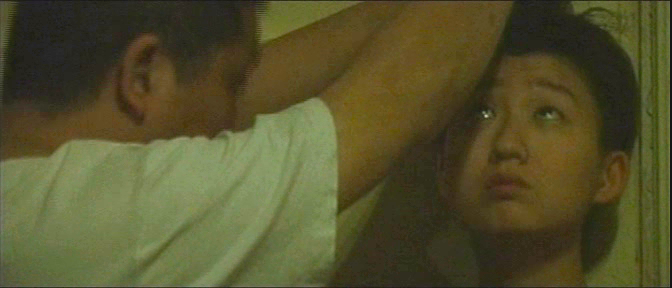
So it was with great trepidation that I finally sat down to watch her first film, Oxhide, which won the VIFF Dragons & Tigers competition at the 2005 festival. I’ve had it here for months, but finally I built up the nerve and was not disappointed. Not as rigid as the sequel, or as magical as the short, it is nonetheless a striking piece of filmmaking. Again starring Liu and her parents, her long, oblique takes follow some period of time in their day to day lives. Process sequences: examining a piece of leather for defects, making sesame paste fit for consumption with noodles, cleaning some dirty windows, are interspersed with family arguments, which tend to be about one of two things: money and why Jiayin isn’t growing any taller.

The money angle is somewhat expected, but Liu brings a fresh take on it. Her father initially prints some signs for a sale: everything 50% off. This works and he brings in some much needed cash to their tiny apartment (made all the tiny by Liu’s compressed scope frames). But soon he becomes disgusted with this. He’s set a fair price that compensates him for his labor. Why should he be forced to offer things at a discount, even a fake discount (by raising the initial price)? It’s the charming obstinance with which a generation that’s seen massive economic and social change negotiates the truly weird places they find themselves. You can’t help but admire the guy for all his pig-headed foolishness.

Always Liu’s camera is looking slightly away, she’s giving us only side-long glances at her family (the murky quality of the available images certainly doesn’t help, on film Oxhide II looked much brighter than what I have available here). Like what we’re seeing is caught accidentally, not framed and composed for the cinema (though, as I recall, everything is carefully scripted beforehand in both Oxhide films). This can be frustrating at times (we spend five minutes staring at a table as Jiayin and her father work on the computer – why can’t we see what they’re working on), but I wonder why we’re so curious. Shouldn’t we be somewhat ashamed to look straight-on into other people’s lives? Nothing tabloid-like or scandalous goes on here, and maybe that makes our peeping even worse.

Running Out of Karma: King Hu’s Painted Skin

Running Out of Karma is my on-going series on Johnnie To and Hong Kong cinema. Here is an index.

King Hu’s final film, it is, like his greatest work (A Touch of Zen) and his first film as an assistant director (The Enchanting Shadow), an adaptation of a story from the 18th Century collection of folk and supernatural tales Strange Stories from a  Chinese Studio by Pu Songling. Hu’s previous film had been a failed collaboration with Tsui Hark and Ching Siu-tung on the first Swordsman film, and I wonder if there wasn’t a bit of “I’ll show you” at work in Hu’s decision to make a film so closely related to Tsui and Ching’s A Chinese Ghost Story, going so far as to include that film’s female star, Joey Wong, in his cast.

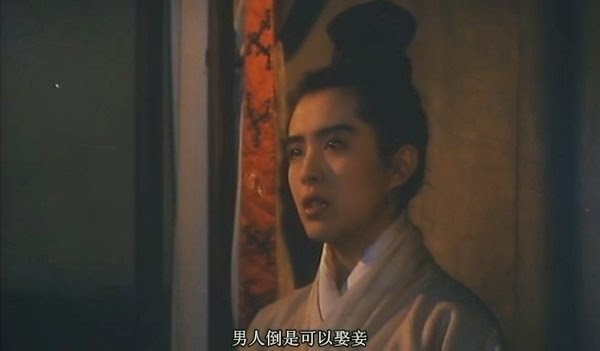
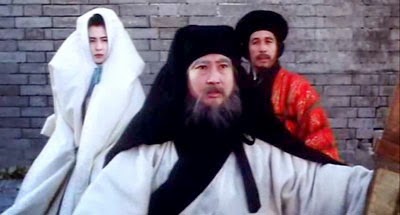
Like Zen and Come Drink with Me, Painted Skin features a shifting protagonist. We begin with Adam Cheng’s bourgeois nobody. He meets the ghost of Joey Wang and learns she’s being trapped in-between the afterlife and reincarnation by a demon called “The King of Yin/Yang” and seeks out two Taoist priests to help her out. Then Cheng disappears from the narrative and we follow the priests (played by veteran supporting performers Wu Ma and Shun Lau) for awhile as they seek out an even better priest to fight the demon. Then we follow the super-priest (Sammo Hung) through the final third of the story.

In Zen, the similar progression from everyman to super-priest is tied up with  every other element of the film, as the heroes become less worldly and more divine, Hu’s filmmaking becomes more abstract, more purely visual, more inexplicable. Painted Skin though remains grounded in the same kind of swathed in pale blue light early 90s wuxia world from beginning to end. The villains, whether through poor subtitling or lack of budget or both, always seem slightly comical and ridiculous, even when they’re committing horrible acts (a far cry from the baby-killing demons in Ching Siu-tung and Johnnie To’s The Heroic Trio, which also was released in 1993 and involves the netherworld creeping into the everyday and a journey into darkness to defeat it). Hu doesn’t cut his wire-work stunts at the dizzying pace Ching does, but neither does he find time or space for more realistic fighting. The result is just a slower version of silly fights. If Hu didn’t have such a brilliant eye for composition, light and space, the film would be intolerable.

It’s fitting that Hu’s final film would star Sammo Hung. The two had a long and fruitful collaboration, with Hung reportedly serving as an assistant action director on Come Drink with Me, though he was only 14 years old. He had small supporting roles in Dragon Gate Inn, A Touch of Zen and The Valiant Ones, and served as action director on the latter two as well as The Fate of Lee Khan. He looks old here, made up with a gray beard and wizard robes, aside from his introductory scenes, he doesn’t really get time or space to develop his Taoist Gandalf character, nor does he have much opportunity to show off his fighting skills, given the supernatural nature of the action (Lam Ching-ying gets such a chance in a too-small cameo role as “The Purple Taoist”).

Sammo appears to have peaked with 1989’s Pedicab Driver. His 1990s directorial efforts are of low reputation (the only one I’ve seen is his final film, Once Upon a Time in China in America, the idea for which he either stole from Jackie Chan (Shanghai Noon) or vice versa) and he hasn’t directed anything at all since 1997. That year he left Hong Kong for the US (oh how I long for a DVD set of his cop show with Arsenio Hall, Martial Law) and since his return to Hong Kong, has worked exclusively as choreographer, producer and supporting actor. All lot of small roles like his performance in Painted Skin, tantalizing with memories of past greatness but almost never reaching the heights of his previous work.

Running Out of Karma: Samson Chiu’s Golden Chicken 2

Running Out of Karma is my on-going series on Johnnie To and Hong Kong cinema. Here is an index.

The first Golden Chicken filtered 30 years of Hong Kong history through the life of one ridiculous prostitute and dared you not to be moved by her. Samson Chiu’s sequel, released one year later tries the same trick, but with 30 years of Hong Kong cinema instead, most specifically the work of Wong Kar-wai.

Beginning in the year 2046 (the year Hong Kong finally will be fully incorporated into the People’s Republic, and also of course the title of Wong’s career-summarizing masterpiece, the editing for which was still in progress when this film was released), we meet Sandra Ng’s Kum, the eponymous hooker. Now an old lady (she’s had some work done), she meets a despondent young man and tries to talk him out of erasing his memory (as Hong Kongers of the future will do to deal with their romantic traumas). She tells him stories of a very bad year she had, 2003, with the message that as bad as it was, she wouldn’t give up the memory for anything. The bulk of the film then is three stories of Kum’s year. The first is her comical involvement with a couple of terrible johns: Ronald Cheng plays a man who is weirdly obsessed with her body hair (he has a memory problem: keeps forgetting his wife, Angelica Lee) and Anthony Wong as a client who’s apparent goofy kinkiness is actually suicidal. Next is a section devoted to the SARS epidemic and the medical workers who work tirelessly to fight it, epitomized by a masked doctor played by Leon Lai. The third and by far longest story is Kum’s lifelong relationship with her cousin (think As Tears Go By) Quincy, played by Jacky Cheung.

This story weaves Quincy into the margins of Kum’s life as told in the first film. He’s an inveterate schemer, an amoral capitalist who shows up every few years to charm Kum out of some money and break her heart. He’s an ideal of a kind of Hong Kong ideology: one Christmas his big romantic gesture is a massive set of Christmas lights covering a skyscraper, drawing a giant $ on the HK skyline. Cheung matches Ng’s manic performance, and both wring surprising pathos out of a film where the main character is named “Kum”.

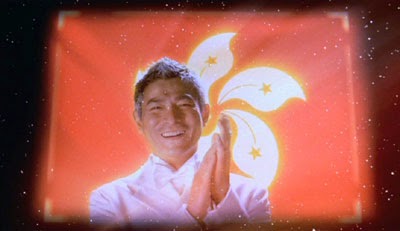
As in the first film, the high point comes with an Andy Lau cameo at the end. He leaves us, and Kum, with the promise that when we close our eyes and open them, we’ll see our Hong Kong, the one we love most. Kum sees the 1980s skyline at night, blue and red and yellow and black, bright and in constant motion, a shot that could have come from any number of John Woo or Tsui Hark or Ringo Lam classics. I’m going to say it’s from A Better Tomorrow.

Running Out of Karma: Notes on Alex Law’s Painted Faces

Running Out of Karma is my on-going series on Johnnie To and Hong Kong cinema. Here is an index.

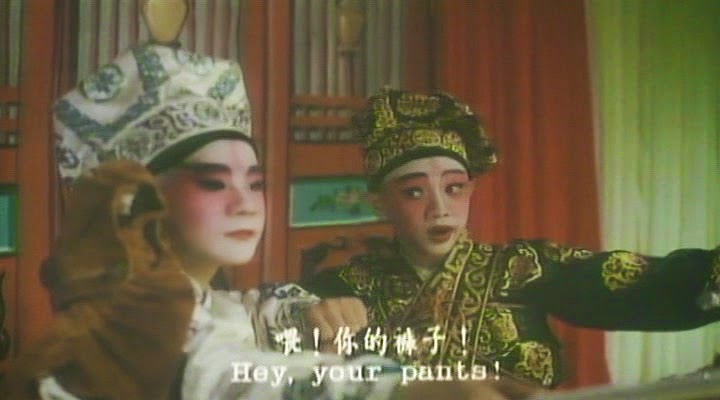
A lovely account of youth spent in the China Drama Academy Peking Opera school, based on the experiences of Sammo Hung, Jackie Chan, Yuen Biao, Corey Yuen and the other members of the Seven Little Fortunes performing troupe that grew up to dominate Hong Kong Cinema from the late 70s through the mid-90s (and beyond). Sammo himself plays their teacher, Yu Jim-yuen (“Yu Ho” in the film) tough (hitting the kids with a stick is his preferred method of punishment) but sentimental and adorably awkward at times. In a sweetly romantic subplot, Sammo walks all over the island looking for a birthday cake for Cheng Pei-pei, a fellow teacher he’s sweet on. Each of the interactions between these two kung fu movie icons is gold, and with nary a punch or kick between them.

The film is somewhat unexpectedly effective at conveying the double outsider status of the students: not only are many of them immigrants to Hong Kong (the master himself is from Peking) but their devotion to a dying artform, and the anti-modern schooling methods that make them great at it (most of the kids are essentially illiterate) doubly separate them from the quickly Westernizing world around them.

The film even takes the time to explore the world of Shaw Brothers stunt men, with Lam Ching-ying as Sammo’s old friend, trying to get by, who takes one blow to the head too many. We and the young students witness his on-set breakdown, a scene made horrifying as much by the fact that we know what these kids are going to spend their lives doing as it is by Lam’s harrowing performance.

I like to think that the scene of Jackie Chan (known throughout as “Big Nose”) standing on a railing serenading his teacher on the eve of the school’s closure served as an inspiration for the end of Dead Poets Society.

There’s an odd Mobius effect whenever Sammo the actor is talking to Sammo the character, we’re watching an older man constantly in the presence of his younger self, knowing that this kid will grow up to be this actor, making this movie about this kid who will grow up to be this actor. Sammo’s performance is brilliant regardless (he won the Hong Kong Film Award for Best Actor), but that extra element makes the movie all the more poignant. Also he uses a turtle to prop up his bed, a position which said turtle appears perfectly happy to occupy for years and years.

This is the first of only three movies directed by Alex Law, who previously co-wrote the very solid Chow Yun-fat-Cherie Chung melodrama An Autumn’s Tale, which was directed by Mabel Cheung, who co-wrote Painted Faces with Alex Law.

Running Out of Karma: Edmund Pang Ho-cheung’s Isabella

Running Out of Karma is my on-going series on Johnnie To and Hong Kong cinema. Here is an index.

First things first: Anthony Wong is in this movie. He is in three scenes and he is eating in every one of them. It’s set in Macao and was released in 2006. I’m pretty sure he filmed his scenes on his lunch breaks during the making of Exiled. Anthony Wong is the best.

Set in the months leading up to the handover of Macao to the People’s Republic in 1999, it’s an off-beat father-daughter story. Literally off-beat, as the film has a rhythm I’ve never seen before. A seemingly inexplicable event will be shown, followed by the scenes which explain what happened. For the first half hour or so this weird push-pull structure slowly draws you into the story of a corrupt cop who meets his 16 year old daughter and tries to help her find her lost dog.

The dog is named Isabella, and so is the lead actress. A Portuguese name for a movie about a city moving on from its Portuguese past. Isabella Leong plays the daughter. 18 years old at the film’s release, she was already a pop star and from her performance her, well on her way to a great film career. Spindle-limbed, all elbows and knees bursting across the screen with a manic energy that blows apart her father’s sad decadent life. Their scenes in her father’s languid, dilapidated apartment recall the middle section of Pen-Ek Ratanaruang’s masterpiece Last Life in the Universe, a joyless space revivified. Leong is strikingly pretty, with sharp eyebrows and melancholy eyes. She appears to have retired from music and film in 2009 (after her only American film, the dreadful The Mummy: Tomb of the Dragon Emperor, a film mostly notable for wasting both Jet Li and Michelle Yeoh). That year, she married Richard Li, the son of Li Ka-shing, a Hong Kong legend and one of the richest men in Asia (he appears as a character in Peter Chan’s He Ain’t Heavy, He’s My Father, played by Waise Lee), though they’ve since split up.

Anyway, as father and daughter get to know each other, bits of their pasts flash back. The dad’s relationship with her mother, as well as the police corruption scandals he is somehow involved in (the passage of time is marked by intertitles informing us of various uncovered criminal conspiracies involving the Macao police force). Also the girl’s relationship with a boy at school, one who loves her but whom she keeps at a distance, telling wild stories that don’t quite fit the truth of who her father is and what he represents. Chapman To as the father has the more difficult role, making a guy who in most respects is a lout, boorish, womanizing, drunk, violent and corrupt, not only lovable, but admirable. It’s a remarkable performance.

Set amid the crumbling colonial concrete of the city (so different from the shimmering skyscrapers of Hong Kong – there is an alien quality to Macao that is a world apart from the other colony, see it as well in João Pedro Rodrigues and João Rui Guerra da Mata’s eerie 2012 film The Last Time I Saw Macao) and scored with a wistful Iberian guitar (the score, by veteran Hong Kong composer Peter Kam, won an award at the Berlin Film Festival. Kam also did the music for Johnnie To’s Throw Down, Peter Chan’s meta-musical Perhaps Love and the first two Golden Chicken movies), director Edmund Pang Ho-cheung conjures something truly unusual: a lament for a lost world that probably wasn’t so great, and hope for an unknown future that might be even worse.

Running Out of Karma: Peter Chan’s He Ain’t Heavy, He’s My Father

Running Out of Karma is my on-going series on Johnnie To and Hong Kong cinema. Here is an index.

Peter Chan Ho-sun’s 1993 comedy is a variation on Back to the Future, with Tony Leung (Chiu-wai) sent back 30 years to see what his father, Tony Leung (Ka-fai), was like when he was young, though it presents a very different take on the past and our relation to it than Robert Zemeckis’s classic. The plot device isn’t science-fiction, but rather one of those goofy folkloric premises like the Freaky Friday variations. In this case, Jupiter crossing the Moon’s path on Mid-Autumn night causes a manhole to turn into a wish-fulfillment portal. This grounding in magic rather than pseudo-science  mirrors the larger difference between the two films, that He Ain’t Heavy is steeped in local tradition and culture (however made-up for the purpose of the film the plot is, the Mid-Autumn Festival is surely a thing) while Future values the present above all else, about instant gratification.

In Back to the Future, Marty McFly is embarrassed by his father’s weakness. He travels back in time and his manipulation of past events transforms his dad from a shy, lower-middle class geek into a paragon of Reaganite manliness: confident, wealthy and draped in pastels. In the Hong Kong version of the fable, however, Tony Leung is embarrassed by his father’s charity, by his unwillingness to engage in the kind of cut-throat economic and social ruthlessness that marked the colony as exactly the laissez-faire ideal the Reaganites desired. Traveling back in time, he sees the roots of that community: the tenement slums where dozens of people live crammed together, part of the massive immigrant wave into Hong Kong in the wake of the post-World War II Civil War which overwhelmed the colony’s capacity to house and feed its population. The disparate crew barely eking out an existence only through the help and sacrifice of the others, his father towering as the strongest and most noble among them.

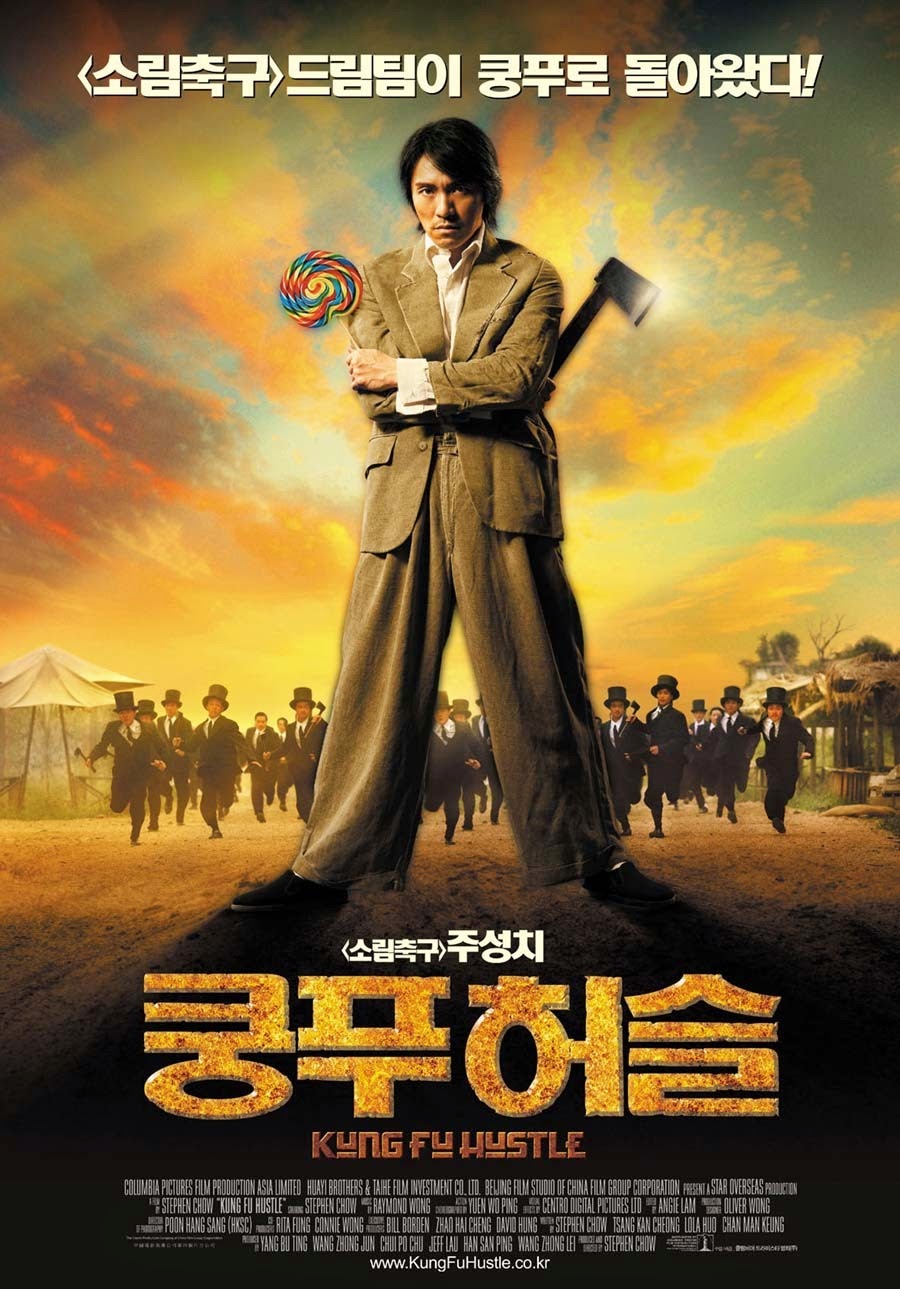
The reference is to The House of 72 Tenants, a film directed by Chor Yuen in 1973. It was the first in a wave of Cantonese language hits in the colony, leading the transition away from the Mandarin language films of the Shaw Brothers (who were themselves war-time transplants from Shanghai). Chor’s film, following the episodic adventures of just such a group of slum-dwellers (think a sit-comic version of The Lower Depths), was enormously popular and remains a bedrock film of Hong Kong cinema (you can see its influence as well in Stephen Chow’s Kung Fu Hustle, among other films). Tony Leung Chiu-wai’s character in He Ain’t Heavy is actually named “Chor Yuen” and Chor himself appears in a small role as an actor in the film (when the two are introduced, someone gasps “There’s another Chor Yuen!?”).

Anyway, rather than the young man reforming his father, He Ain’t Heavy is about the younger generation (greedy, promiscuous and nihilistic as seen in countless films from the Hong Kong New Wave) learning the values their parents’ found in the slums. It’s about a son learning to appreciate the father he has, and in turn the son is changed by his encounter with history, as opposed to the other way around in the more ego-centric Hollywood film. Where the world revolves around Marty McFly, he transforms it to serve his immediate desires (nicer house, bigger car); the younger Tony Leung learns to see himself as a part of a whole, and all the more valuable and happy for it. The lesson Marty learns from that past is to ‘stand up for yourself’, which in this context means asserting your desires with a willingness to resort to physical violence, which will in turn earn the respect and love of the pretty girl next door and send the bullies of the world into groveling submission, shock and awe followed by being greeted as a liberator. The lesson Tony learns is that personal success is worthless if it is individual, that the only real happiness comes from family and community.

Running Out of Karma: Three Hong Kong Romantic Comedies

Running Out of Karma is my on-going series on Johnnie To and Hong Kong cinema. Here is an index.

Sophie’s Revenge (Eva Jin, 2009)

Zhang Ziyi is the manic pixie at the center of a swirl of CGI whimsy in this romantic comedy, which is weird because while she’s no doubt a terrific actress, she’d previously shown no aptitude whatsoever for comedy. She fares OK all things considered, showing an admirable willingness to make a complete fool of herself, as her character is repeatedly subject to all manner of slapstick abuse (drunkenness, wall climbing sabotage, a gushing catheter), though she projects adorability more than charisma.

Zhang plays a comic book artist who is dumped by her boyfriend for a popular actress (Fan Bingbing). As she plots her revenge (win the guy back and then publicly dump him) she’s helped by another guy, who falls for her. The plot is a little sloppy, and while initially enlivened by Michel Gondry/Scott Pilgrim/Pushing Daisies-esque animations and dream sequences, it becomes exhausting after the first hour or so, at which point the film kicks the plot forward with a series of unnecessary and confusing twists (at one-time her conspirator doesn’t seem to know her plan, then does, and then doesn’t again) and a lame reveal. It’s a Skittles movie: looks tasty, but you don’t want to eat the whole bag.

Zhang starred in a prequel (My Lucky Star) released last year. That film was directed by Dennie Gordon, an American TV director who also directed Joe Dirt and What a Girl Wants. The writer-director of Sophie’s Revenge, Eva Jin, doesn’t appear to have been involved in the sequel.

Love in a Puff (Pang Ho-cheung, 2010)

Watching this immediately after Sophie’s Revenge was whiplash-inducing. That film is an international co-production set in a characterless, near invisible Beijing, a high concept, glossy stab at Hollywood style romantic comedy (with Zhang Ziyi channeling everything from Bridget Jones to Caroline in the City). Pang Ho-chuneg’s romantic comedy, on the other hand, is a indie (or “indie”) take on the genre, filmed seemingly on the fly in the alleys, cellphones and nightclubs of Hong Kong at the pace and rhythm of everyday life. Where Sophie’s Revenge was a big hit, Love in a Puff saw its box office take suffer when it was given a Category III rating. Hong Kong’s Category III is roughly a combination of America’s R and NC-17 ratings. It’s traditionally the home of porn and ultra-violence and horror. There’s no such thing in Love in a Puff, which as far as I can tell got the rating simply because of its profane language, or in other words ‘No other Hong Kong movies in recent memory give a more vivid sense of how Hong Kong people talk in real life.’ (Perry Lam in Muse Magazine).

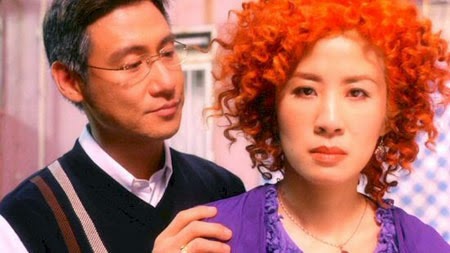
The film follows the meeting and developing relationship of Cherie (Miriam Yeung) and Jimmy (Shawn Yue) over the course of a week. The two meet at a communal smoking area, Hong Kong having initiated an anti-indoor smoking ordinance, driving the tobacco addicts into the few remaining dark corners of the city. Pang intersperses short interviews with the various characters, in the style of TV mockumentary-style confessionals, but the bulk of the film is devoted to following the characters and the very small moments that lead them to fall in love. It’s shot in the peripatetic style that’s become international shorthand for Realism!, but with the off-hand kind of pictorial virtuosity that defines Hong Kong cinema. Where the images of Sophie’s Revenge are pretty but artificial, manufactured, Pang’s images are just as colorful, just as beautiful, but seem to arise, like the love story itself, spontaneously out of Hong Kong itself.

Love in the Buff (Pang Ho-cheung, 2012)

Pang Ho-cheung’s sequel to Love in a Puff, released two years later but following the previous film directly. Cherie and Jimmy, after dating for some time, breakup and move, separately, to Beijing. There they strike up new relationships (Jimmy with a flight attendant played by Mi Yang (who looks so much like someone but I can’t figure out who); Cherie with a very nice bald guy), but when they meet they’re inevitably drawn back together.

While not as ground-breaking as the first film, both in the language (toned down) and the characters (inevitable, since we already know these two people so well), it is a step forward in filmmaking for Pang. Gone are the funny but otherwise obtrusive interview segments and the camera is a little more grounded. We do get some meta-comic guest appearances from Ekin Cheng, Huang Xiaoming and Linda Wong that are reasonably successful, but it’s mostly the performances of Miriam Yeung and Shawn Yue that make this one so compelling. Yeung won the Best Actress Hong Kong Film Award for her performance, and Yue is just as good, with an understated, cock-eyed charm reminiscent of a young Chow Yun-fat.

Before watching these films, I’d known Pang only as the author of the novel that Johnnie To’s Fulltime Killer was based on (he wrote it in his mid-20s). I’m putting him firmly in the Subject for Further Research column.

On Primary Colors

“Come back, Shane! Run for president!” 

Bill Clinton would have made a terrific Roman emperor. His personal shortcomings (gluttony and lust) would have been minor blemishes, expected really, and his intelligence and genuine desire to do good would have had the chance to flourish. As it is, the need to compromise for political reasons (the fury with which his opponents attacked him fueled in no small part by their disbelief that the American public simply didn’t care that he lied about sex) severely blunted any positive effect he may have had and the generational hope of his presidency ended up mired in half measures.

Of course, this only makes him a perfect avatar of the Baby Boom generation, colossally self-obsessed and self-mythologizing, with little of substance to back it up (the flip side is his successor, the only other Boomer president, driven by self-righteousness to countless national disasters).

Mike Nichols’s film is much funnier than it should be, considering its basis in a novel by a political reporter, thanks largely to Elaine May’s script (if she and Stanley Donen actually get that rumored film in motion, I hope Billy Bob Thornton and Kathy Bates are around to deliver her lines). Nichols direction is crisp and a bit blunt, the camera tracing circles around the actors in moments of moral entrapment, a long slow zoom into Edward Hopper’s Krispy Kreme, but for the most part the emphasis is on performance and dialogue. The film when received was largely criticized for sagging a bit towards the end, as it becomes less about the mechanics of a political campaign and more a rumination on a moral dilemma. On the contrary, this transformation might be its greatest strength, if it isn’t quite as fun as Billy Bob unleashing his python.

Just how far are we willing to compromise with our votes, how much are we willing to forgive? Audience avatar Henry Burton (played by Adrien Lester, the only no name in the cast (at least by Hollywood standards, he’s a British theatre and TV star), in a role that probably should have been Don Cheadle’s), a young operative notably a generation younger than the Clintons, says early in the film that he’d rather support a man who believes the same things he does but lies about it to get elected than a man who is honest and ineffectual. The second half of the film puts that cynical theory to the test.

By making candidate Jack Stanton’s crimes much worse than anything Bill Clinton has been accused of, the film is working out the logical conclusions of the beliefs that must have been uttered by Clinton’s staffers and supporters during his campaign and presidency. It’s a divergence from historical record only in fact, not in theory, a reducto ad absurdum of Clinton’s lusts and evasions. It complicates the film’s relation to history, so thinly veiled at times (Thornton’s James Carville, Emma Thompson’s Hillary Clinton stand out in particular, but also Kathy Bates’s conflation of Betsey Wright and Vincent Foster), but ultimately this is not a docudrama of historical recreation (like Oliver Stone’s W. or the Jay Roach/Danny Strong HBO movies Recount and Game Change, let alone a fantasy of a Hawksian White House as in its most direct descendant, Aaron Sorkin’s The West Wing). It turns instead into something far more ambitious: a meditation on generational compromise, on how the idealism of the 60s died in the 90s, pinning the blame not on a vast right wing conspiracy, but on the old hippies themselves.

It ends with Burton refusing to compromise any further. Deciding that large scale, national politics is too inevitably corrupt for him, he resolves to work small, to become a community organizer. Another generation’s ideal of hope.