Running Out of Karma: Tsui Hark’s Shanghai Blues

Running Out of Karma is my on-going series on Johnnie To and Hong Kong cinema. Here is an index.

In his essential book Planet Hong Kong, David Bordwell examines a sequence in Peking Opera Blues where Tsui Hark deftly coordinates the movements of his actors as they try to remain hidden from an inquisitive father (three of them are in his daughter’s bed and two of them shouldn’t be, if I remember correctly). It’s a short little scene, and Bordwell uses it as an example of the creativity of Hong Kong artists, how they’re able to make an exciting and fun sequence out of almost nothing, budget-wise, and how Tsui’s mastery of cutting and framing keeps the whole sequence light and airy. Shanghai Blues is essentially a feature length version of that scene.

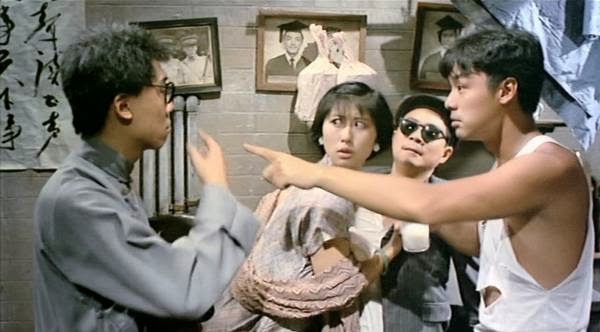
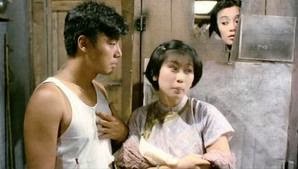
Set in the chaotic interregnum between the end of World War II and the end of the Civil War that would bring the Communists to power, Kenny Bee plays a veteran trying to make a living as a songwriter while searching for a girl he met only briefly, in the dark and under a bridge, ten years earlier during an air raid. He becomes entangled with his downstairs neighbors, Sally Yeh, a recent arrival who promptly has her pocket picked, and Sylvia Chang, a showgirl (who we know is the girl from the bridge). An early scene of Yeh and Bee just missing seeing each other as they do their roof-top laundry is compounded in the film’s central, and most extraordinary segment, when Chang, to get out of the rain, goes into Bee’s apartment to change clothes, but mid-change, Yeh arrives (she now has a crush on Bee) and so Chang hides in a closet. At the same time, the same pickpocket from early in the film is trying to rob the apartment and hiding from everyone else. Finally, one of Bee’s pals shows up, so Yeh goes into hiding as well. Bee attempting to hide the two girls from the friend and from each other while the thief tries to hide from everyone. All in the confines of a tiny, cunningly laid out apartment to which Tsui has spent the first half of the film slyly orienting us. It’s as remarkable a tour de force of choreography as you’ll find in any kung fu film.

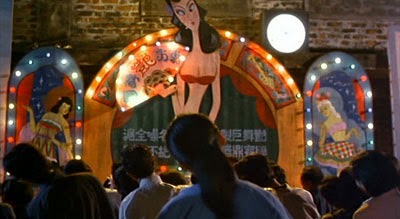
This kind of romance, where the two heroes can’t see each other, though they occupy the same space (same frame) dates back at least as far as Paul Fejos’s 1928 Lonesome, and Tsui appears to be specifically riffing on it. The early shot of Bee and Chang’s separation in the crowd in particular recalls that film. Johnnie To’s Turn Left, Turn Right, what I’d consider one of his most underrated films (even among his romantic comedies: I think it has a lower profile because it lacks any of his signature stars, with Takeshi Kaneshiro and Gigi Leung instead of Sammi Cheng or Andy Lau or Louis Koo), follows that tradition as well, even adopting Lonesome‘s conceit that the two destined lovers are unwitting neighbors. But I wonder if Shanghai Blues isn’t the more proximate influence. In Lonesome, the heroes just miss each other through their parallel stories, but they rarely share the same filmic space. In Shanghai Blues, they’re often in the same space, looking right at and not recognizing each other, while everyone else in the film seems to be actively attempting to avoid being seen by someone (a girl at the nightclub hides from a lecherous gangster, Yeh mistakenly joins a modeling audition and is appalled by people looking at her (when she later gets the job, she’s mobbed by men everywhere she goes)). In the To film, no one is hiding, it is instead apparently chance and fate that prevents them from meeting, though through much of the film we see them together in the same frame. Tsui sets his avoidance dances in confined spaces (tiny apartments, dressing rooms), but To’s is set out in the open: a fountain in a public park, a street corner, a sidewalk (a similar scene plays out early in Romancing in Thin Air, itself a kind of compendium of all of To’s romantic comedies, where Sammi Cheng and Louis Koo wander outside the grounds of the hotel, oblivious to each others’ presence).

The three films are somewhat different in their thematic ends as well. Lonesome as all about the city, growing out of the city symphony subgenre of films in the late 20s, a time of rapid urbanization throughout the Western world, as people flocked from the farms and the countryside to new, anonymous urban centers, cut off from the family and communal structures that had supported their lives for generations. Turn Left, Turn Right is about chance and fate, the interplay of which forms one of the thematic cores of To’s work, expressed across genres in romantic comedies and gangster epics alike (exploring the development of this theme is one of the ultimate goals of Running Out of Karma). Shanghai Blues seems to me to be about in-betweenness, about a world that’s lost all its moorings, and the fear that what’s to come may be even worse. It’s about trying to keep your head down and get by, while dreaming of being a star. There doesn’t seem to be any metaphysical element to Tsui’s work; To and Wai Ka-fai have a spiritual preoccupation I’ve yet to identify in any of Tsui’s films. Peking Opera Blues ends with its heroes, having saved the day, riding off saying they’ll meet again soon, though we know the contingencies of the wars make that extremely unlikely. Similarly, as two of the heroes here leave Shanghai for Hong Kong, while the others stay behind, we know they too will never meet again. Just another pair of couples lost in the churn of history.

2007 Endy Awards

These are the 2007 Endy Awards, wherein I pretend to give out maneki-neko statues to the best in that year in film. Awards for many other years can be found in the Rankings & Awards Index. Eligibility is determined by imdb date and by whether or not I’ve seen the movie in question. Nominees are listed in alphabetical order and the winners are bolded. And the Endy goes to. . .


Best Picture:

1. 5 Centimeters per Second
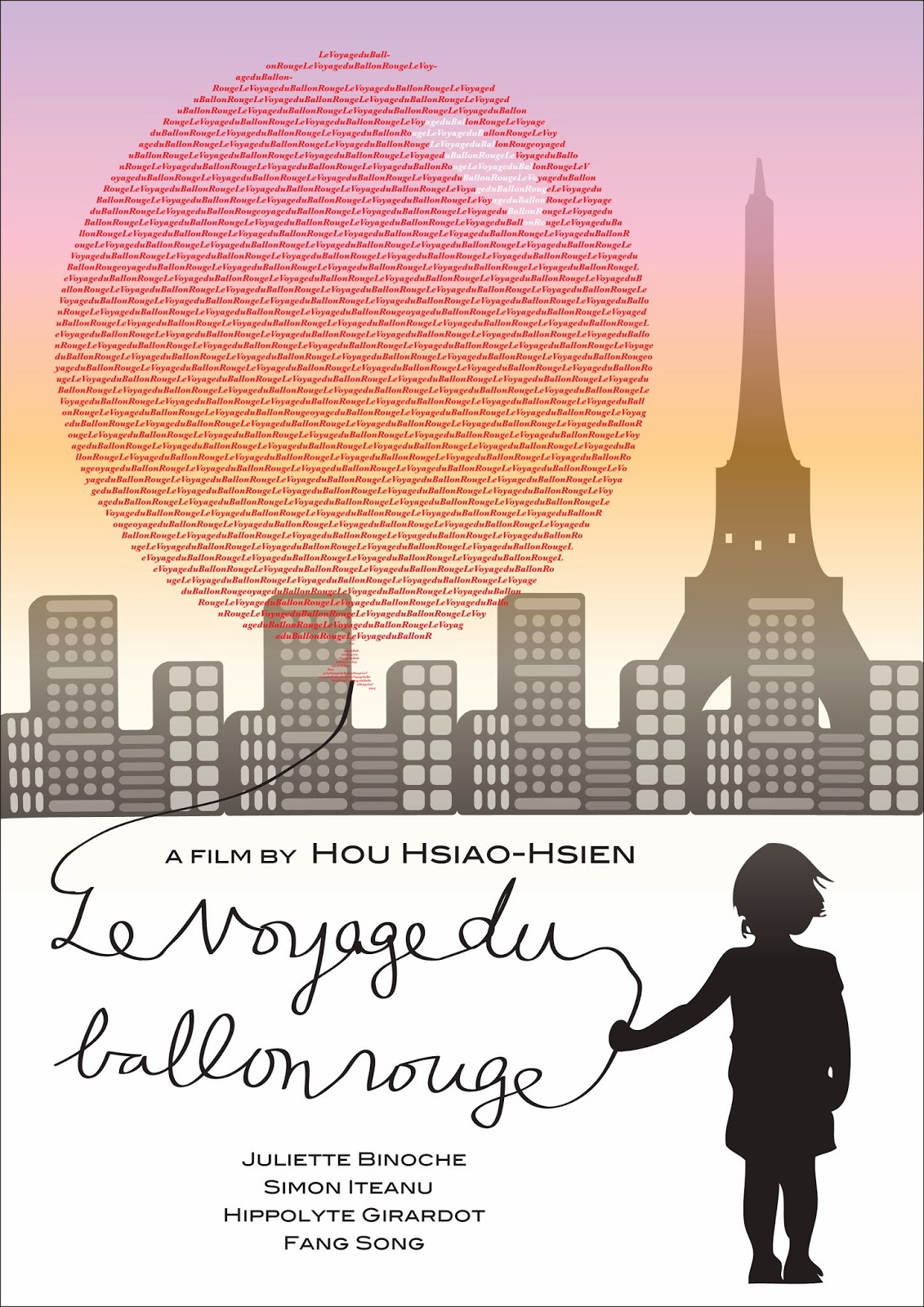
2. Flight of the Red Balloon
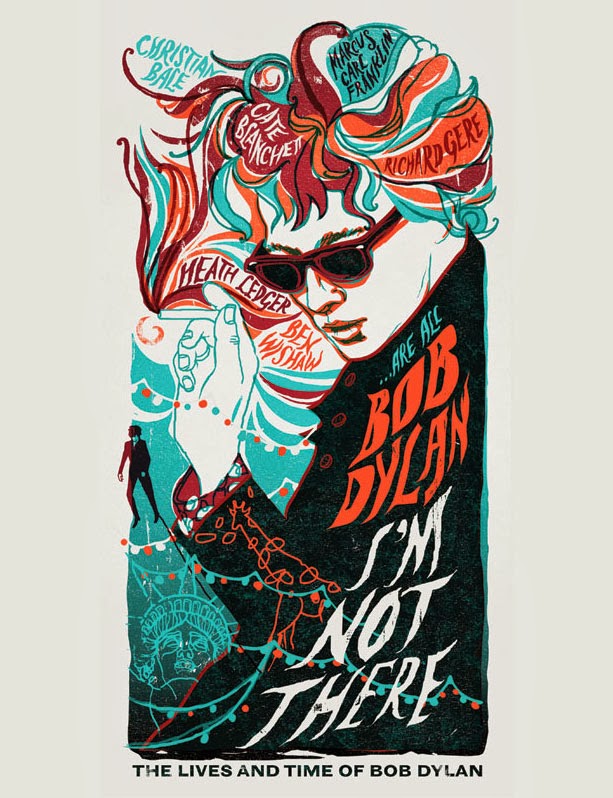
3. I’m Not There
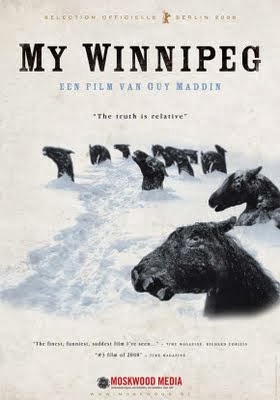
4. My Winnipeg
5. No Country for Old Men
6. Ratatouille
7. The Romance of Astrea and Celadon
8. The Sun Also Rises
9. There Will Be Blood
10. The Trap: What Happened to Our Dream of Freedom

Best Director:

1. Makoto Shinkai, 5 Centimeters per Second
2. Hou Hsiao-hsien, Flight of the Red Balloon
3. Todd Haynes, I’m Not There
4. Guy Maddin, My Winnipeg
5. Paul Thomas Anderson, There Will Be Blood

Best Actor:

1. Mathieu Amalric, The Diving Bell & the Butterfly
2. Alejandro Polanco, Chop Shop
3. Lau Ching-wan, Mad Detective
4. Josh Brolin, No Country for Old Men
5. Daniel Day-Lewis, There Will Be Blood

Best Actress:

1. Anamaria Marinca, 4 Months, 3 Weeks, 2 Days
2. Asia Argento, Boarding Gate
3. Juliette Binoche, Flight of the Red Balloon
4. Tang Wei, Lust, Caution
5. Nicole Kidman, Margot at the Wedding

Supporting Actor:

1. Kurt Russell, Grindhouse
2. Ben Whishaw, I’m Not There
3. Marcus Carl Franklin, I’m Not There
4. Javier Bardem, No Country for Old Men
5. Tommy Lee Jones, No Country for Old Men

Supporting Actress:

1. Marie-Josée Croze, The Diving Bell & the Butterfly
2. Song Fang, Flight of the Red Balloon
3. Cate Blanchett, I’m Not There
4. Tilda Swinton, Michael Clayton
5. Rachel Weisz, My Blueberry Nights

Original Screenplay:

1. Makoto Shinkai, 5 Centimeters per Second
2. Hou Hsiao-hsien & François Margolin, Flight of the Red Balloon
3. Todd Haynes & Oren Moverman, I’m Not There
4. Wai Ka-fai & Au Kin-yee, Mad Detective
5. Guy Maddin & George Toles, My Winnipeg

Adapted Screenplay:

1. Joel & Ethan Coen, No Country for Old Men
2. Gus van Sant, Paranoid Park
3. Eric Rohmer, The Romance of Astrea and Celadon
4. Paul Thomas Anderson, There Will Be Blood
5. James Vanderbilt, Zodiac

Non-English Language Film:

1. 5 Centimeters per Second (Makoto Shinkai)
2. Flight of the Red Balloon (Hou Hsiao-hsien)
3. Mad Detective (Johnnie To & Wai Ka-fai)
4. The Romance of Astrea and Celadon (Eric Rohmer)
5. The Sun Also Rises (Jiang Wen)

Documentary Film:

1. Encounters at the End of the World (Werner Herzog)
2. Helvetica (Gary Hustwit)
3. The King of Kong (Seth Gordon)
4. My Winnipeg (Guy Maddin)
5. The Trap: What Happened to Our Dream of Freedom (Adam Curtis)

Animated Film:

1. 5 Centimeters per Second (Makoto Shinkai)
2. Beowulf (Robert Zemeckis)
3. Ratatouille (Brad Bird)
4. The Simpsons Movie (David Silverman)

Unseen Film:

1. The Duchess of Langeais (Jacques Rivette)
2. The Man from London (Bela Tarr & Ágnes Hranitzky)
3. Persepolis (Vincent Paronnaud & Marjane Satrapi)
4. Secret Sunshine (Lee Changdong)
5. We Own the Night (James Gray)

Film Editing:

1. I’m Not There
2. My Winnipeg
3. No Country for Old Men
4. There Will Be Blood
5. You, the Living

Cinematography:

1. Flight of the Red Balloon
2. My Blueberry Nights
3. The Sun Also Rises
4. There Will Be Blood
5. Zodiac

Art Direction:

1. The Darjeeling Limited
2. I’m Not There
3. The Romance of Astrea and Celadon
4. You, the Living
5. Zodiac

Costume Design:

1. I’m Not There
2. The Romance of Astrea and Celadon
3. There Will Be Blood
4. You, the Living
5. Zodiac

Make-up:

1. The Diving Bell and the Butterfly
2. Grindhouse
3. Mad Detective
4. Pirates of the Caribbean: At World’s End
5. Sukiyaki Western Django

Original Score:

1. Atonement
2. 5 Centimeters per Second
3. No Country for Old Men
4. Ratatouille
5. There Will Be Blood

Adapted Score:

1. The Darjeeling Limited
2. The Diving Bell & the Butterfly
3. I’m Not There
4. Paranoid Park
5. Sweeney Todd: The Demon Barber of Fleet Street

Sound:

1. Grindhouse
2. I’m Not There
3. No Country for Old Men
4. Ratatouille
5. There Will Be Blood

Sound Editing:

1. The Bourne Ultimatum
2. No Country for Old Men
3. Pirates of the Caribbean: At World’s End
4. Ratatouille
5. There Will Be Blood

Visual Effects:

1. Grindhouse
2. Pirates of the Caribbean: At World’s End
3. Resident Evil: Extinction
4. Transformers
5. Zodiac

b5-celadon

2008 Endy Awards

These are the 2008 Endy Awards, wherein I pretend to give out maneki-neko statues to the best in that year in film. I did one of these five years ago, but things have changed so this is the revision. Awards for many other years can be found in the Rankings & Awards Index. Eligibility is determined by imdb date and by whether or not I’ve seen the movie in question. Nominees are listed in alphabetical order and the winners are bolded. And the Endy goes to. . .

Best Picture:

1. 24 City
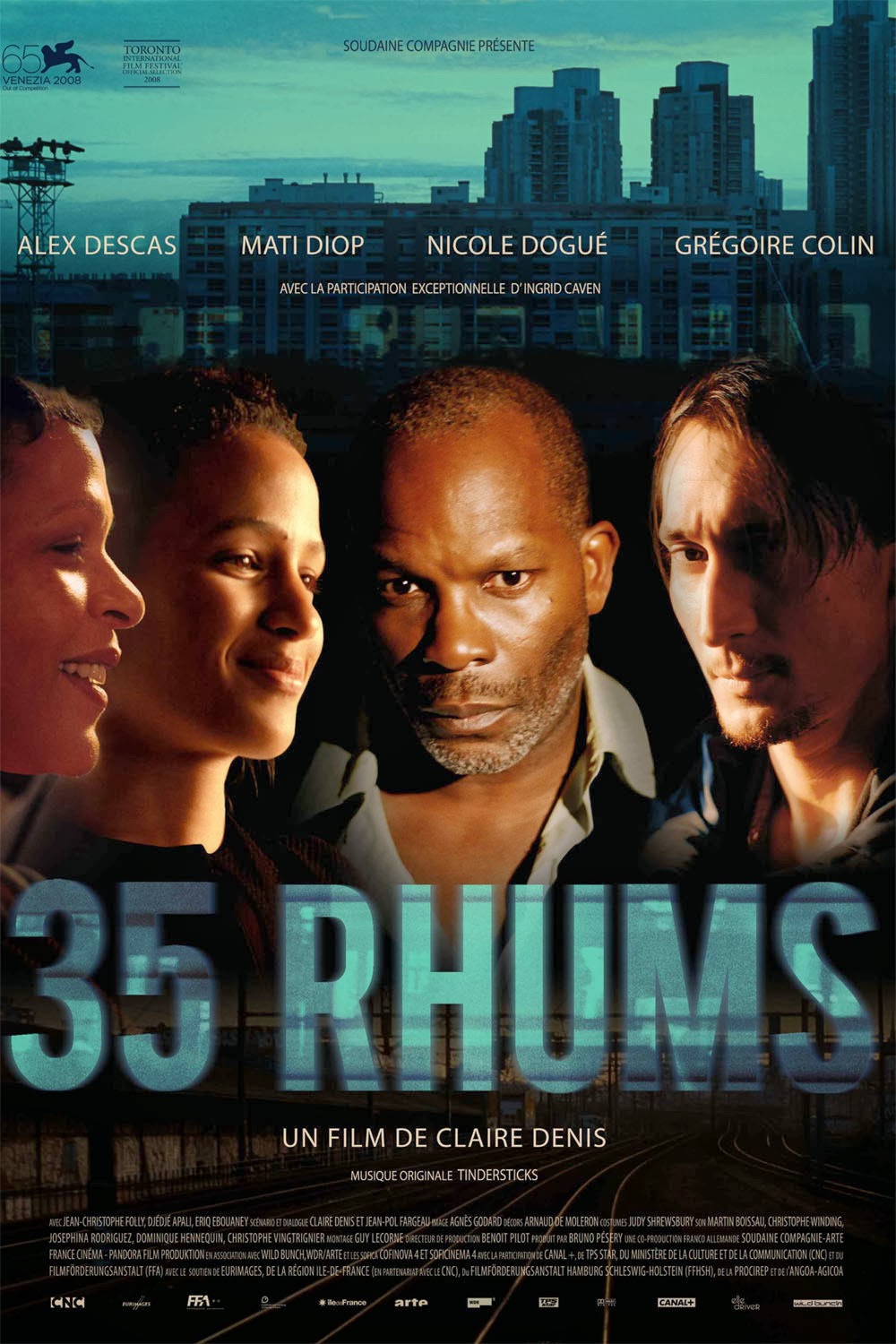
2. 35 Shots of Rum
3. Love Exposure
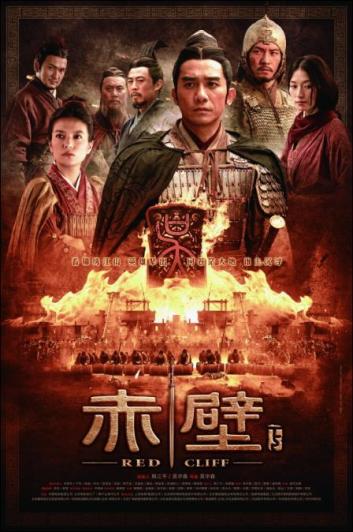
4. Red Cliff
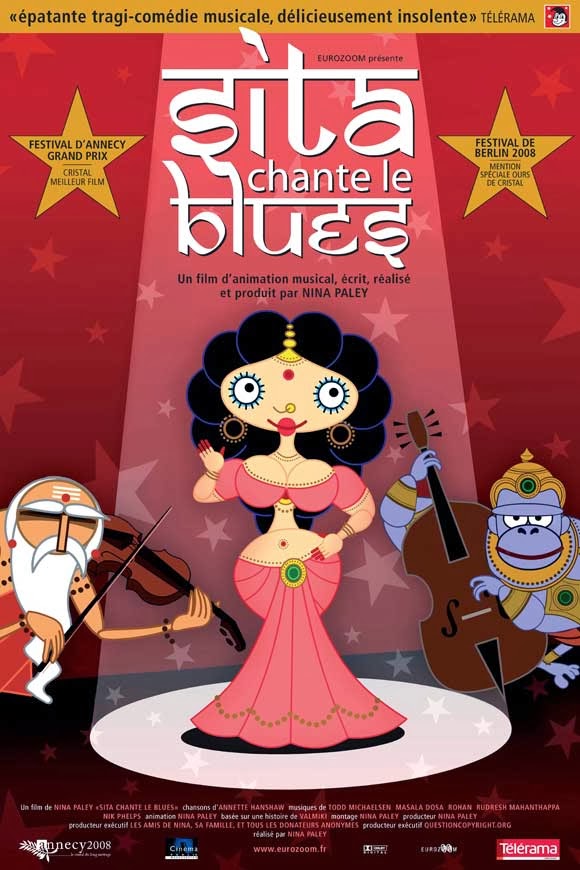
5. Sita Sings the Blues
6. Sparrow
7. Speed Racer
8. Tokyo Sonata
9. Two Lovers
10. WALL-E

Best Director:

1. Claire Denis, 35 Shots of Rum
2. Sion Sono, Love Exposure
3. John Woo, Red Cliff
4. Johnnie To, Sparrow
5. Lana and Lilly Wachowski, Speed Racer

Best Actor:

1. Alex Descas, 35 Shots of Rum
2. Benicio Del Toro, Che
3. Ge You, If You Are the One
4. Takahiro Nishijima, Love Exposure
5. Joaquin Phoenix, Two Lovers

Best Actress:

1. Zhou Xun, All About Women
2. Sally Hawkins, Happy Go Lucky
3. Anne Hathaway, Rachel Getting Married
4. Mati Diop, 35 Shots of Rum
5. Michelle Williams, Wendy and Lucy

Supporting Actor:

1. Mathieu Amalric, A Christmas Tale
2. Heath Ledger, The Dark Knight
3. Eddie Marsan, Happy Go Lucky
4. Bill Irwin, Rachel Getting Married
5. Robert Downey Jr, Tropic Thunder

Supporting Actress:

1. Anne Consigny, A Christmas Tale
2. Chiara Mastrioanni, A Christmas Tale
3. Sakura Ando, Love Exposure
4. Rosemarie DeWitt, Rachel Getting Married
5. Kirin Kiki, Still Walking


Original Screenplay:

1. Claire Denis & Jean-Pol Fargeau, 35 Shots of Rum
2. Sion Sono, Love Exposure
3. Hong Sangsoo, Night and Day
4. Chan Kin-chung, Fung Chih-chiang & the Milkyway Creative Team, Sparrow
5. Kiyoshi Kurosawa, Max Mannix & Sachiko Tanaka, Tokyo Sonata

Adapted Screenplay:

1. Peter Buchman and Benjamen van der Veen, Che
2. Arnaud Desplechin & Emmanuel Bourdieu, A Christmas Tale
3. Holly Gent Palmo & Vincent Palmo Jr., Me and Orson Welles
4. Nina Paley, Sita Sings the Blues
5. James Gray & Ric Menello, Two Lovers

Non-English Language Film:

1. 24 City (Jia Zhangke)
2. 35 Shots of Rum (Claire Denis)
3. Love Exposure (Sion Sono)
4. Red Cliff (John Woo)
5. Sparrow (Johnnie To)

Short Film:

1. Dr. Horrible’s Sing-Along Blog (Joss Whedon)

Documentary Film:

1. 24 City (Jia Zhangke)
2. The Beaches of Agnes (Agnes Varda)
3. Of Time and the City (Terence Davies)
4. Rembrandt’s J’accuse (Peter Greenaway)
5. Waltz with Bashir (Ari Folman)

Animated Film:

1. Ponyo on the Cliff By the Sea (Hayao Miyazaki)
2. Sita Sings the Blues (Nina Paley)
3. WALL-E (Andrew Stanton)
4. Waltz with Bashir (Ari Folman)

Unseen Film:

1. The Curious Case of Benjamin Button (David Fincher)
2. JCVD (Mabrouk El Mechri)
3. Shirin (Abbas Kiarostami)


Film Editing:

1. A Christmas Tale
2. The Hurt Locker
3. Love Exposure
4. Sparrow
5. Speed Racer

Cinematography:

1. 35 Shots of Rum
2. A Christmas Tale
3. Love Exposure
4. Speed Racer
5. Summer Hours

Art Direction:

1. A Christmas Tale
2. Red Cliff
3. Speed Racer
4. Summer Hours
5. WALL-E

Costume Design:

1. Dr. Horrible’s Sing-along Blog
2. Love Exposure
3. Miss Pettigrew Lives for a Day
4. Red Cliff
5. Speed Racer

Make-up:

1. Cloverfield
2. The Dark Knight
3. Hellboy II: The Golden Army
4. Red Cliff
5. Speed Racer

b5-loveexposure-b

Original Score:

1. Dr. Horrible’s Sing-along Blog
2. Slumdog Millionaire
3. Sparrow
4. 35 Shots of Rum
5. WALL-E

Adapted Score:

1. Love Exposure
2. Pineapple Express
3. Rachel Getting Married
4. Sita Sings The Blues
5. Slumdog Millionaire

Sound:

1. Cloverfield
2. The Hurt Locker
3. Love Exposure
4. Speed Racer
5. WALL-E

Sound Editing:

1. Cloverfield
2. Hellboy II
3. The Hurt Locker
4. Speed Racer
5. WALL-E

Visual Effects:

1. Cloverfield
2. Red Cliff
3. Hellboy II
4. Speed Racer
5. Synecdoche, New York

red-cliff-2009-1


Predictions for the 86th Academy Awards

These are my predictions for the winners of this year’s Academy Awards. Alongside the winner, I’m including the winner of the 2013 Endy Award in that category.

Best Picture:
Endy: La última película
Oscar: 12 Years a Slave
Best Director:
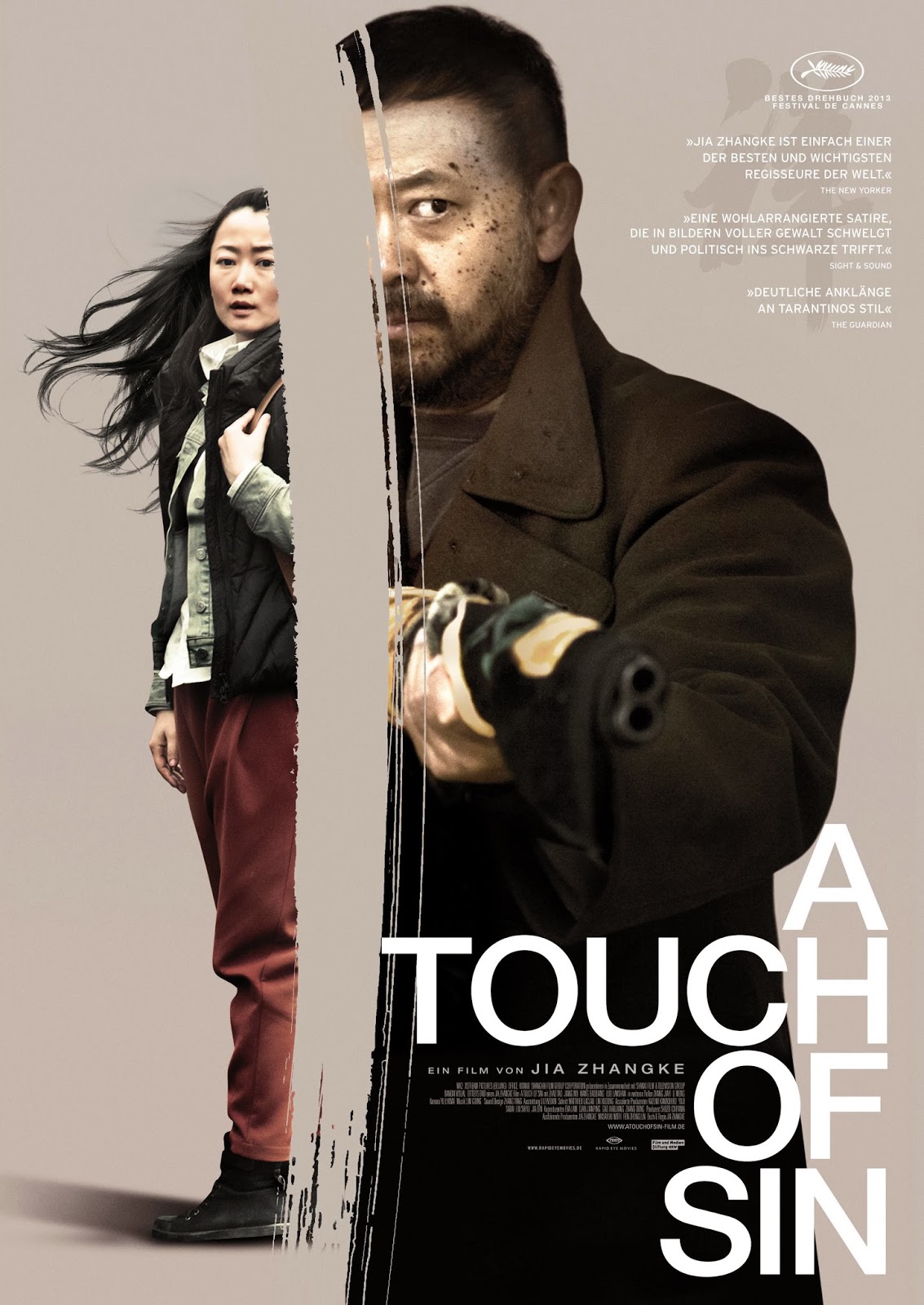
Endy: Jia Zhangke, A Touch of Sin
Oscar: Steve McQueen, 12 Years a Slave
Actor:
Endy: Leonardo DiCaprio, The Great Gatsby & The Wolf of Wall Street
Oscar: Matthew McConaughey, Dallas Buyers Club
Actress:
Endy: Adèle Exarchopoulos, Blue is the Warmest Color
Oscar: Cate Blanchett, Blue Jasmine
Supporting Actor:
Endy: Nick Frost, The World’s End
Oscar: Jared Leto, Dallas Buyers Club
Supporting Actress:
Endy: Léa Seydoux, Blue is the Warmest Color
Oscar: Lupita Nyong’o, 12 Years a Slave
Original Screenplay:
Endy: Computer Chess
Oscar: American Hustle
Adapted Screenplay:
Endy: The Wolf of Wall Street
Oscar: 12 Years a Slave
Foreign Language Film:
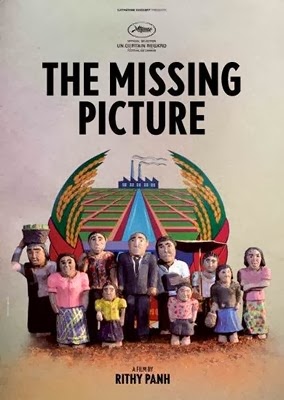
Endy: The Missing Picture
Oscar: The Great Beauty
Documentary Feature:
Endy: The Missing Picture
Oscar: 20 Feet from Stardom
Animated Feature:
Endy: The Wind Rises
Oscar: Frozen
Film Editing:
Endy: La última película
Oscar: Gravity
Cinematography:
Endy: La última película
Oscar: Gravity
Art Direction:
Endy: The Missing Picture
Oscar: The Great Gatsby
Costume Design:
Endy: Her
Oscar: The Great Gatsby
Make-Up:
Endy: Blind Detective
Oscar: Dallas Buyers Club
Sound Mixing:
Endy: A Spell to Ward Off the Darkness
Oscar: Gravity
Sound Editing:
Endy: Gravity
Oscar: Gravity
Visual Effects:
Endy: Gravity
Oscar: Gravity
Original Score:
Endy: A Touch of Sin
Oscar: Gravity
Original Song:
Oscar: “Let It Go”, Frozen
Documentary Short:
Endy: The Three Disasters
Oscar: The Lady in Number 6: Music Saved My Life
Animated Short:
Oscar: Get a Horse!
Live Action Short:
Endy: Hard to Say
Oscar: The Voorman Problem

2013 Endy Awards

These are the 2013 Endy Awards, wherein I pretend to give out maneki-neko statues to the best in the past year in film. You can also check out the special Oscar episode of The George Sanders Show, discussing a couple of former Best Picture winners in addition to award-giving and predicting, as well as the big end of the year double episode of They Shot Pictures. Awards for many other years can be found in the Rankings & Awards Index. Eligibility is determined by imdb date and by whether or not I’ve seen the movie in question. Nominees are listed in alphabetical order and the winners are bolded. And the Endy goes to. . .
Best Picture:

1. Blind Detective
2. Computer Chess
3. Journey to the West: Conquering the Demons
4. The Missing Picture
5. Only Lovers Left Alive
6. Stray Dogs
7. The Tale of the Princess Kaguya
8. A Touch of Sin
9. La última película
10. The Wind Rises

Best Director:

1. Johnnie To, Blind Detective
2. Rithy Panh, The Missing Picture
3. Isao Takahata, The Tale of the Princess Kaguya
4. Jia Zhangke, A Touch of Sin
5. Raya Martin & Mark Peranson, La última película
I’m going with Jia Zhangke, who seamlessly blended his long-take, not quite realist visual style into wuxia genre traditions while retaining, amplifying even, the sense of social and political outrage.

Best Actor:

1. Robert Redford, All is Lost
2. Andy Lau, Blind Detective
3. Leonardo DiCaprio, The Wolf of Wall Street
4. Lee Kang-sheng, Stray Dogs
5. Simon Pegg, The World’s End

Leo’s performance in Wolf is the best work he’s ever done. I’d say the same for Lee Kang-sheng and Simon Pegg as well. Tough to leave out James Gandolfini in Enough Said, but this is a strong category this year.

Best Actress:

1. Adèle Exarchopoulos, Blue is the Warmest Color
2. Zhang Ziyi, The Grandmaster
3. Marion Cotillard, The Immigrant
4. Tilda Swinton, Only Lovers Left Alive
5. Jung Yoo-mi, Our Sunhi

A really tough category this year, but I’m going with the newcomer from the movie with “Blue” in the title while the veteran and former Endy winner from the movie with “Blue” in the title just misses the cut for a nomination, edged out by a perennial Endy favorite, whose voice once starred in a movie called Blue. Meanwhile, Jung Yoo-mi in Our Sunhi might be the most interesting performance in any Hong Sangsoo movie, ever.

Supporting Actor:

1. Jung Jae-young, Our Sunhi
2. Dwayne Johnson, Pain & Gain
3. Gabino Rodríguez, La última película
4. Mathew McConaughey, The Wolf of Wall Street
5. Nick Frost, The World’s End

Supporting Actress:

1. Sally Hawkins, Blue Jasmine
2. Léa Seydoux, Blue is the Warmest Color
3. Aoi Miyazaki, The Great Passage
4. Shu Qi, Journey to the West: Conquering the Demons
5. Zhao Tao, A Touch of Sin

Original Screenplay:

1. Wai Ka-fai, Blind Detective
2. Andrew Bujalski, Computer Chess
3. Rithy Panh, The Missing Picture
4. Hong Sangsoo, Our Sunhi
5. Raya Martin & Mark Peranson (et al), La última película

The sheer unexpected weirdness of Bujalski’s Computer Chess wins the Endy over perennial favorite Hong, Rithy Panh’s wrenching reminiscence and La última película‘s swirling and hilarious ode to film. A truly great year for original screenplays.

Adapted Screenplay:

1. Kensaku Watanabe, The Great Passage
2. Stephen Chow & Derek Kwok, et al, Journey to the West: Conquering the Demons
3. Isao Takahata & Riko Sakaguchi, The Tale of the Princess Kaguya
4. Hayao Miyazaki, The Wind Rises
5. Terence Winter, The Wolf of Wall Street

Non-English Language Film:

1. Blind Detective (Johnnie To)
2. Journey to the West: Conquering the Demons (Stephen Chow & Derek Kwok)
3. The Missing Picture (Rithy Panh)
4. The Tale of the Princess Kaguya (Isao Takahata)
5. A Touch of Sin (Jia Zhangke)

Short Film:

1. Hard to Say (Lee Kwangkuk)
2. Just in Time (Peter Greenaway)
3. Mahjong (João Rui Guerra da Mata & João Pedro Rodrigues)
4. Redemption (Miguel Gomes)
5. The Three Disasters (Jean-Luc Godard)

Lee is a former assistant director for Hong Sangsoo (Hard to Say ran before Our Sunhi in Vancouver) who made a feature a couple years ago that I really liked but have never heard anything else about called Romance Joe.

Documentary Film:

1. At Berkeley (Frederick Wiseman)
2. A Fuller Life (Samantha Fuller)
3. The Missing Picture (Rithy Panh)
4. A Spell to Ward Off the Darkness (Ben Rivers & Ben Russell)
5. Yumen (JP Sniadecki, et al)

Animated Film:

1. Frozen (Jennifer Lee & Chris Buck)
2. The Garden of Words (Makoto Shinkai)
3. The Tale of the Princess Kaguya (Isao Takahata)
4. The Wind Rises (Hayao Miyazaki)

Unseen Film:

1. Hard to Be a God (Aleksey German)
2. Like Father, Like Son (Koreeda Hirokazu)
3. Norte, the End of History (Lav Diaz)
4. The Past (Asghar Farhadi)
5. The Strange Little Cat (Ramon Zürcher)

Film Editing:

1. Blind Detective
2. The Grandmaster
3. La última película
4. The Wolf of Wall Street
5. Yumen

Cinematography:

1. Computer Chess
2. The Grandmaster
3. Gravity
4. A Touch of Sin
5. La última película

Art Direction:

1. The Grandmaster
2. Gravity
3. Her
4. Journey to the West: Conquering the Demons
5. The Missing Picture

Going with Rithy Panh’s heartbreaking dioramas over Spike Jonze’s Apple Store dystopia.

Costume Design:

1. Computer Chess
2. The Grandmaster
3. The Great Gatsby
4. Her
5. Only Lovers Left Alive

Her‘s high-waisted pants over Computer Chess‘s high-waisted pants.

Make-up:

1. Blind Detective
2. Blue Jasmine
3. Journey to the West: Conquering the Demons
4. A Touch of Sin
5. The World’s End

Original Score:

1. 12 Years a Slave
2. The Grandmaster
3. The Tale of the Princess Kaguya
4. A Touch of Sin
5. The Wind Rises

Soundtrack:

1. Inside Llewyn Davis
2. Only Lovers Left Alive
3. La última película
4. The Wolf of Wall Street
5. The World’s End

I’m still annoyed that the Coens’ renamed “Dink’s Song” for the movie, but whatever. As usual their (and T Bone Burnett’s) song choices are impeccable.

Sound:

1. Distant
2. Gravity
3. A Spell to Ward Off the Darkness
4. La última película
5. Yumen

Sound Editing:

1. Blind Detective
2. The Grandmaster
3. Gravity
4. Star Trek Into Darkness
5. The World’s End

Visual Effects:

1. Gravity
2. Journey to the West: Conquering the Demons
3. La última película
4. The World’s End
5. Young Detective Dee and the Rise of the Sea Dragon

 
The_Tale_of_the_Princess_Kaguya_(poster)

2009 Endy Awards, Revised

Four years ago, I gave out a bunch of awards for the best films of 2009. Of course, due to the vagaries of film distribution, many great films from that year were only released (or became available to me) long after I handed them out. So here is an up-to-date accounting of the 2009 Endy Awards.
>Other years can be found in the Rankings & Awards Index. Eligibility is determined by imdb date and by whether or not I’ve seen the movie in question. Nominees are presented in alphabetical order, the winner is bolded. And the Endy goes to. . .

Best Picture:

1. Bright Star
2. Bluebeard
3. La danse
4. Fantastic Mr. Fox
5. Inglourious Basterds
6. It Felt Like a Kiss
7. The Limits of Control
8. Oxhide II
9. Phantoms of Nabua
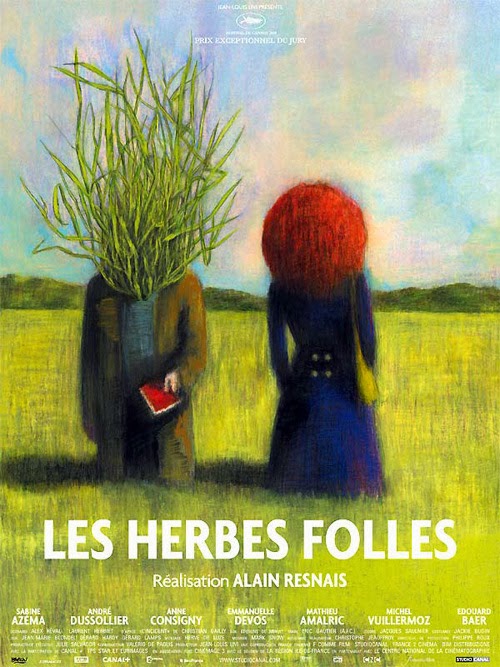
10. Wild Grass

Best Director:

1. Frederick Wiseman, La danse
2. Wes Anderson, Fantastic Mr. Fox
3. Adam Curtis, It Felt Like a Kiss
4. Liu Jiayin, Oxhide II
5. Alain Resnais, Wild Grass

Best Actor:

1. Nicholas Cage, Bad Lieutenant: Port of Call New Orleans
2. Ben Whishaw, Bright Star
3. Isaach De Bankolé, The Limits of Control
4. Michael Stuhlbarg, A Serious Man
5. André Dussollier, Wild Grass

Best Actress:

1. Bae Doona, Air Doll
2. Lola Créton, Bluebeard
3. Abbie Cornish, Bright Star
4. Tilda Swinton, I Am Love
5. Sabine Azéma, Wild Grass

Supporting Actor:

1. Mathieu Amalric, Wild Grass
2. Christoph Waltz, Inglourious Basterds
3. Peter Capaldi, In the Loop
4. Dolph Lundgren, Universal Soldier: Regeneration
5. Simon Yam, Vengeance

Supporting Actress:

1. Marilou Lopes-Benites, Bluebeard
2. Melanie Laurent, Inglourious Basterds
3. Anna Kendrick, Up in the Air
4. Anne Consigny, Wild Grass
5. Kelly Lin, Written By

Original Screenplay:

1. Quentin Tarantino, Inglourious Basterds
2. Hong Sang-soo, Like You Know It All
3. Liu Jiayin, Oxhide II
4. Corneliu Porumboiu, Police Adjective
5. Wai Ka-fai & Au Kin-yee, Written By

Adapted Screenplay:

1. Catherine Breillat, Bluebeard
2. Manoel de Oliveira, Eccentricities of a Blond-Haired Girl
3. Wes Anderson & Noah Baumbach, Fantastic Mr. Fox
4. Armando Iannucci et al, In the Loop
5. Alain Resnais & Laurent Herbiet, Wild Grass

Foreign Language Film:

1. Bluebeard (Catherine Breillat)
2. La danse (Frederick Wiseman)
3. Oxhide II (Liu Jiayin)
4. Phantoms of Nabua (Apichatpong Weerasethakul)
5. Wild Grass (Alain Resnais)

Documentary Feature:

1. The Art of the Steal (Don Argott)
2. It Felt Like a Kiss (Adam Curtis)
3. La danse (Frederick Wiseman)
4. In Search of Beethoven (Phil Grabsky)
5. The September Issue (RJ Cutler)

Unseen Film:

1. About Elly (Asghar Farhadi)
2. The Box (Richard Kelly)
3. Magadheera (SS Rajamouli)
4. A Single Man (Tom Ford)
5. White Material (Claire Denis)

Animated Feature:

1. Coraline (Henry Selick)
2. Fantastic Mr. Fox (Wes Anderson)
3. The Secret of Kells (Tomm Moore & Nora Twomey)
4. Summer Wars (Mamoru Hosada)
5. Up (Pete Docter & Bob Peterson)

Film Editing:

1. Accident
2. La danse
3. Inglourious Basterds
4. It Felt Like a Kiss
5. Public Enemies

Cinematography:

1. Greig Fraser, Bright Star
2. Robert Richardson, Inglourious Basterds
3. Christopher Doyle, The Limits of Control
4. Dante Spinotti, Public Enemies
5. Eric Gautier, Wild Grass

Art Direction:

1. Fantastic Mr. Fox
2. Gamer
3. Inglourious Basterds
4. The Limits of Control
5. Written By

Costume Design:

1. Bright Star
2. Fantastic Mr. Fox
3. I Am Love
4. The Limits of Control
5. Where the Wild Things Are

Make-up:

1. Crank: High Voltage
2. District 9
3. Drag Me to Hell
4. Star Trek
5. Watchmen

Sound:

1. Fantastic Mr. Fox
2. Inglourious Basterds
3. Phantoms of Nabua
4. Public Enemies
5. Universal Soldier: Regeneration

Sound Editing:

1. Avatar
2. Drag Me to Hell
3. Fantastic Mr. Fox
4. Public Enemies
5. Star Trek

Visual Effects:

1. Avatar
2. Sophie’s Revenge
3. Star Trek
4. Watchmen
5. Written By

Original Score:

1. Alexandre Desplat, Fantastic Mr. Fox
2. Justin Hurwitz, Guy and Madeline on a Park Bench
3. John Adams, I Am Love
4. Boris, The Limits of Control
5. Carter Burwell, A Serious Man

Adapted Score:

1. Adventureland
2. Fantastic Mr. Fox
3. Inglourious Basterds
4. In Search of Beethoven
5. The Limits of Control

VIFF 2013: La última película

Part of my on-going coverage of VIFF 2013. Here is an index.


This blog takes its name from a game my coworkers Mike and Ryland and I used to play during deathly slow Thursday afternoons at the now defunct Metro Cinemas. We used to imagine what it would be like to have our own theatre, and what movies we’d play there. Usually this took the form of the double feature game, wherein you pick the weirdest pair of movies you can, films which might unexepctedly have a lot to say in conversation with each other (an echo of this survives in the format of the podcast that same Mike and I now do, The George Sanders Show). But one day we tried to think of what we’d call this fantasy movie theatre of ours. I picked, playing off the famous final title in Jean-Luc Godard’s adieu to all that, Week-End, “The End Of”, which combined with a generic specifier, would become “The End Of Cinema”. It had nothing at all to do with what not long thereafterwards bubbled over into the hot thinkpiece subject for awhile, the end of celluloid as the dominant medium of motion pictures and its replacement by digital filmmaking and projecting.

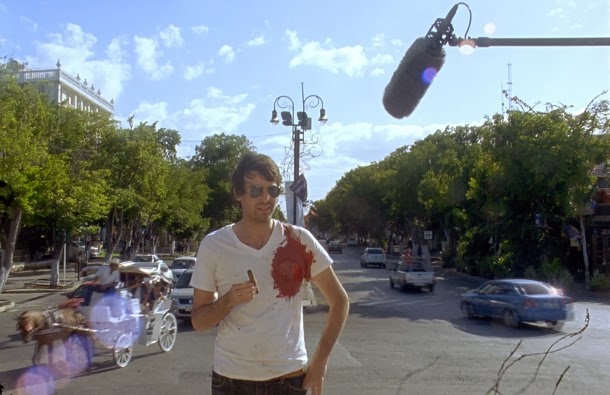
That is the The End apparently referred to in the title of my favorite film of 2013, La última película, directed by the veteran/first-timer team of filmmaker Raya Martin and critic Mark Peranson. A kind of remake of Dennis Hopper’s notorious Easy Rider follow-up The Last Movie (the more literal translation of the title), Alex Ross Perry plays a director named Alex who travels to Mexico on the eve of the Mayan Apocalypse in December of 2012 in order to make the last movie at the end of the world. To this end, he’s gathered all the remaining celluloid film and is going to use it all up. But that’s merely the starting point for a film less concerned with narrative (or rather with a single narrative) than a mishmash of ideas and theories and jokes and experiments with the technology of filmmaking. It’s a celebration not merely of film as a medium, but of talking about film, of the rabbit holes and circles and odd resonances and meanings we find when we truly dive into the movies. Goodbye cinema, hello cinephilia.

When we meet Alex, he’s filming in a wooded area talking with his guide, played by Mexican actor Gabino Rodríguez. Alex is asking about a stone wall he sees, if it is one of the ruins he’s come to use as the backdrop for his film. Gabino, nonplussed, tells him “No, man. That’s just a fence.” (All quotes herein are approximate, I’m going off my aged and inadequate memory.) They appear to have a relationship somewhat like that of William Blake and Nobody in Dead Man, with Alex in the role of the “stupid fucking white man”. Alex continues to question Gabino about the garbage he finds around him, a bottle, a TV set (“Do people just dump their old TV sets outside, on their own land here?” “Yeah man, it’s shitty.”), but this line of inquiry becomes more resonant shortly thereafter, when the two go to a museum and discuss the film Alex wants to make in relation to the things they find in the museum. He wants to make something that lasts, that stands the test of time. Yet what they find in the museum is that most of the stuff that survives is the junk that gets thrown out: old pots, cheap jewelry. It lasts long enough and it becomes history, it becomes art. Of course, 1000 years from now, none of the images we have today stored on film will exist in their present media, it decays too quickly. That’s one of the fatal flaws of film (and digital storage at present is even worse, though one hopes for technological advance in this area), but that ephemerality also makes it special, precious.
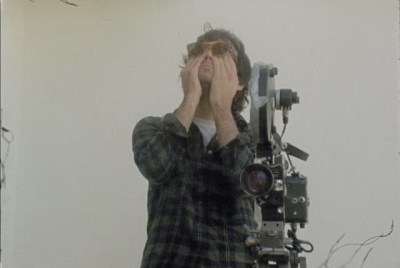
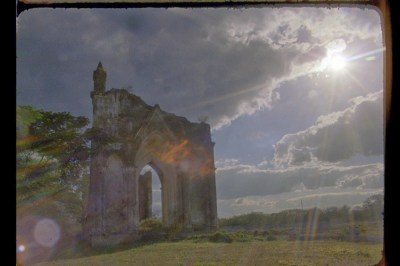
The flaws of filmmaking technology, and the specific beauties that result from them is the apparent subject of many of the interstitial sections of the movie. Martin and Peranson shot using a vast assortment of equipment, including Super 8, 16mm, a few kinds of digital camera, an iPhone, everything but 35mm in fact (which, in a neat twist, was the format the movie played on at Vancouver, one of only two film screenings at the entire festival). We revel in the fuzzy hypercolors of 16mm, recognize the hairs and scratches in the silent 8mm footage¹ (effects so warm and nostalgic that they form the basis of Instagram’s business model), dazzle at an underwater GoPro shot (apparently contributed by Leviathan director Verena Paravel², yes, the Sensory Ethnography Lab makes its presence felt here as well), and marvel at a long traveling shot of an inverted world achieved by simply holding the iPhone upside down and walking around³. That this digital technology is celebrated alongside the archaic photographic forms as well I think is important. Far from a maudlin lament about The Death of Cinema, as so many of those, heartfelt I’m sure, op-ed’s from a few years ago were, La última película looks as much to the future as it does the past. As Alex speculates at one point: time isn’t necessarily linear, it can be cyclical. Cinema ends, cinema is reborn. While there are certain effects, certain grains and textures we lose in the transition, there are things to gain as well. The end of film is not the end of cinema.

The funniest section of the film, and the part most apparently concerned with the non-cinematic world, is a central section wherein Alex and Gabino wander around the crowd gathered at some Mayan pyramids⁴ in anticipation of The End. It’s a hilarious, “Look at these fucking people” bit as Alex skewers the absurd white hippies gathered around, acting like clowns. It’s their presumption that they understand Mayan culture, Mayan philosophy that appalls him. Their eclectic blend of New Age sophistry gives them no real connection to the ruins, to the land. “They don’t understand what it would be like to stand in this empty field and want to build something. The hard labor of building these magnificent structures.” Perhaps this is about film after all, a complaint about those who don’t understand what it takes to make a movie? I doubt it, I find that complaint about critics being nothing but failed filmmakers, wannabe artists who have neither the talent nor the work ethic to actually create art, to be pretty ridiculous, but here at least is a critic in Mark Peranson who has made a film, for whatever that’s worth⁵. More to the point, I think, is the issue of appropriation. Cultural appropriation in this specific instance as a bunch of white people revel in the otherness of trendy Mayanness, but also in a larger sense. La última película itself is a remake, an appropriation of Hoper’s original film. And all criticism is appropriation in one form or another, it’s the taking of one thing and making something else out of it. The problem with these stupid white people then isn’t so much their borrowing, but rather the superficial nature of it. They’ve adopting bits and pieces, the trappings of an alien philosophy and integrated it into their own, rather lame, ideologies. If they better understood the Mayans, what it meant to be Mayan, what these pyramids, what this Apocalypse, is really about, they wouldn’t be so ridiculous. It’s their shallowness that is so offensive. As he discussed in the museum, Alex wants his film to be able to survive outside the context of its creation, he wants to make something that lasts, that will still be meaningful long after he and his world is gone. But seeing the crowds gathered at the remains of another past civilization, he has to wonder if that is impossible. If his film, which he’s poured so much into, is destined, at best, to be appropriated by the silly weirdos of the future.

As Alex’s film shoot progresses, his film becomes about a director who runs afoul of the local authorities, it becomes about himself as the stupid white man violating an ancient culture. At first, he merely spends an innocuous night in jail (we see him go into a bar, followed by a “Scene Missing” title card ala Grindhouse)⁶. But later, as we learn through a helpful child’s drawing (yet another image medium)⁷, one of the crewmembers is accidentally killed and the director (Alex, playing himself) is sacrificed on a pyramid to the gods. We see this as “making of” style footage, with shots of the actors at work on a “ruin” that appears to be in the middle of a traffic circle with the crew and directors lining up the shot, working out the choreography of the movements and special effect and even lining up the clapboard. In this final third of the film, its folding in on itself becomes so tangled even the actors themselves have trouble understanding what’s going on. In a scene reminiscent of Peter Watkins’ La commune (Paris 1871), Alex and Gabino sit by a fire and discuss the film Alex is making. Then the actors Alex and Gabino begin talking about the film Raya and Mark are making, and how they don’t understand any of it. Apparently each had assumed the other knew what was going on. It’s not entirely clear that anyone does, and that seems to be the point: I don’t think the film is about any particular idea or set of ideas so much as it is about how much fun it is to think and talk about the ideas that films inspire within us. When you really get into a movie, talking about it with friends or just sitting and pondering, watching and rewatching it, it lights a fire, sends off sparks in all directions. Dead ends and curlicues and swirls of meaning that sometimes, usually, lead nowhere but every once in awhile change the way you think about, the way you see the world. La última película is a film as much in love with the love of movies as it is with the physical, tangible properties of the many forms film takes.

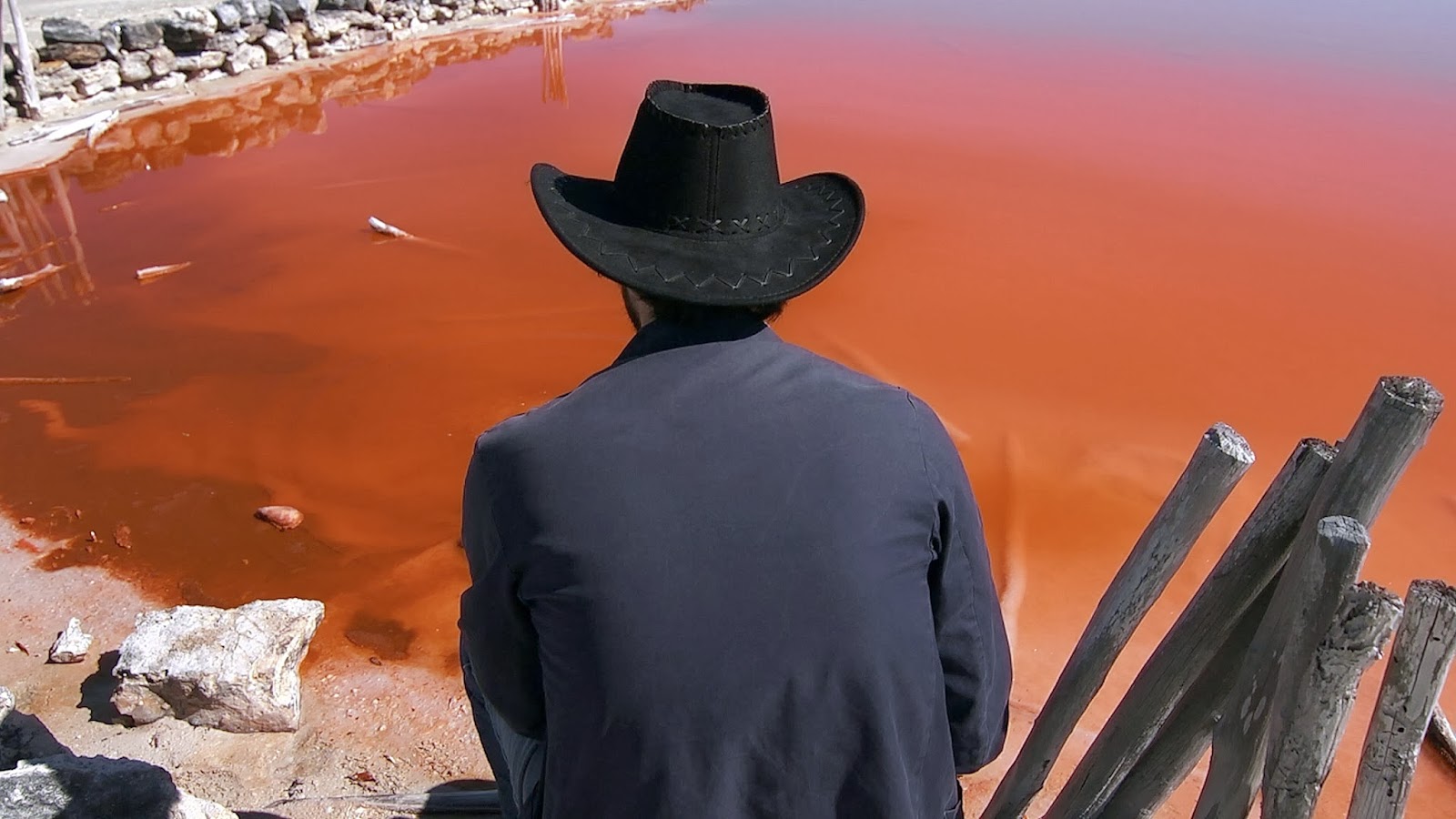
There are two extended song sequences in the film. The first shows an apocalypse⁸, the meteor that crashed into the Yucatan and destroyed the dinosaurs millennia ago, depicted in a beautiful practical effect (none of the film was digitally altered, according to Peranson at the Vancouver Q & A), a double exposure of a man on a beach watching a giant rock crash into the sea⁹. The second plays a version of “Me and Bobby McGee” as the world turns an incandescent red and Alex burns the final shreds of celluloid film and slowly fades into blackness. Alex gives a long speech in this section, which sounds like it may have come from Hopper’s film (I haven’t seen it yet, intentionally so. I want to figure out my reaction to this film before and after knowing Hopper’s. For some reason I feel this is important.)¹⁰ Alex, sitting by a blood red lake, talks about the film he wants to make, about how it won’t be like any other film. He wants to lay bare the machinery of cinema, to show all the takes of a single action for example, to show the audience the process of filmmaking. To demonstrate what it means to make a movie, to make choices. Art isn’t made simply by pointing the camera at something interesting. It has a form, an intelligence goes into it, it requires work and it means something.
Update: Mark Peranson helpfully sent along a few corrections on some of my mistakes and misremembrances and some explanations for some of the things I was unclear on. These are noted below.

1. The hairs and scratches are in 16mm
2. She didn’t shoot that, she shot the scene with the live shrimp in the restaurant, though you are certainly welcome to draw a connection there to Leviathan.
3. That one is on GoPro, not iPhone.
4. It’s Chichen Itza.
5. Well, I made another.
6. The “Scene Missing” card is an exact replica of the one used in The Last Movie — both are, and they occur at roughly the same points in both films.
7. It’s an ex voto, a drawing typically made by the Catholic Church, especially in Mexico, to commemorate miracles.
8. Well, it begins over a slide montage of Gabino’s parents’ Yucatan vacation.
9. It’s both Raya and myself on the beach, first him, then me. The song by the way is “My God and I” which also appears in The Last Movie, by John Buck Wilkin, who sings the version of “Bobby McGee” at the end as well.
10. The speeches he gives are somewhat influenced by the speeches in American Dreamer, but are not verbatim, except for two lines, when he’s shooting the guns and talks about Welles.

Running Out of Karma: Tsui Hark’s Young Detective Dee and the Rise of the Sea Dragon


Running Out of Karma is my on-going series on Johnnie To and Hong Kong cinema. Here is an index

The anarchist prankster Tsui Hark who burst onto the Hong Kong scene over 30 years ago with Dangerous Encounters – First Kind and We’re Going to Eat You still lurks underneath layers of glossy CGI as the eponymous detective, in order to counter-act their poisoned tea, orders all 1200 members of the Tang Dynasty Imperial household to drink bowls of eunuch urine.

Like the first Detective Dee film, this one is a tightly plotted adventure film, more Indiana Jones than Sherlock Holmes, set in a semi-magical 7th Century China (Dee was a real historical figure, fictionalized in an 18th Century detective novel that was translated into a series of English language novels in the 1940s and 50s by Robert van Gulik). It’s missing the star presence of Andy Lau, but Mark Chao does a creditable job taking over the starring role in this prequel, tall and thin with a neat goatee, he looks a bit like Tsui himself. (His rival, a fellow detective played by Feng Shaofeng, looks unnervingly like James Spader or Martin Sheen or some unholy combination thereof). Like Tsui’s last several films, digital effects dominate, not just in spectacular destruction sequences or massive background sets, but in the manipulation of actors and space in the fight scenes.

At some point, I’d like to explore in detail the effect of CGI on Hong Kong martial arts films. Since The Matrix (of course choreographed by HK legend Yuen Woo-ping), digital filmmaking has come to dominate the industry, the much-needed infusion of cash from the opening of the mainland market has made reasonably competent effects a part of seemingly every film. This is a fulfillment of the vision Tsui Hark himself had 30 years ago when he imported Hollywood technicians to work on the effects for Zu: Warriors form the Magic Mountain, but in doing so it seems to have shifted the balance away from the verisimilitude that so many people value in certain Hong Kong films. It’s the Jet Li vs. Jackie Chan, wire fu vs. realistic stunts argument again, but never has one side seemed so close to winning the argument outright, with even this generation’s most talented fighters choosing the safer, CGI-driven route (see the difference between Tony Jaa’s first Ong Bak film, all bone-crunching stuntwork and its two digital sequels (well, prequels I guess) in another, parallel film industry).
The problem with this is that so much of the CGI in these films is cheap-looking, at least to those of us used to the state of the art effects produced in Hollywood. But that was always the case. Zu, and the fantasy wuxia films that followed it, always looked phony compared to the blockbusters Hollywood was putting out in the 80s and 90s, and of course Hong Kong’s sound technology has made a tradition of cheap dubbing. But is there something about this particular version of cheapness that is somehow worse? I don’t know. We can look back now at the effects in, say, Ching Siu-tung’s 80s and 90s films like Swordsman II or the Heroic Trio films he did with Johnnie To and appreciate the verve of the filmmaking and the dizzying speed of his choreography. We don’t really get hung up on how cheap they look compared to The Abyss or Beetlejuice. Maybe it’s that we need more time, that eventually cheap CGI will acquire a patina of charming nostalgia.

I do know this, the quality of the effects is not enough alone to obscure the quality of the filmmaking. Despite its relative cheapness, Young Detective Dee contains more visual imagination, more creative sequences, more memorable images than any Marvel superhero film. The fight scenes, choreographed by longtime Johnnie To stunt coordinator Yuen Bun, are clever and fun, and Tsui films them with a youthful elan, cutting into slow motion to emphasize the beauty of a (yes digitally-enhanced) movement, or into a Matrix-inspired split image as a man flashes his sword faster than the eye could track to dispatch a swarm of angry digital bees. There’s even the best hanging from a cliff fight since Temple of Doom. Who cares how textured the image is when it’s of a man racing a horse across the half sunken remains of a battleship with poisoned fish flying through the air all around him and into the gaping maw of a giant sea dragon?

On Blue is the Warmest Color

What if everyone color-coded their outfits with the people they happened to be in love with?

I found the span of time to be a bit confusing, it seems like the movie covers about ten years in the life of Adele (two years of high school, followed by six years of college (she says she needs a master’s then specific training to be a teacher, in the US at least that’s 6 years, more if the master’s is in something other than teaching), then the crisis occurs her first year of teaching and the meet again at least one but no more than three, years after that. So by the end of the film, Adele should be 27-30 years old. Maybe she skipped college and went right to work?

I say it’s confusing because Adele shows none of the signs of maturation or growth that most humans go through during their twenties. She begins her love affair in intoxication, seemingly convinced that not only have they discovered sex, but invented it as well. Perhaps it’s that addiction that stunts her growth, that prevents her from forming a fully adult relationship. Their meeting in the last third plays like a junkie taking heroin out for coffee, trying to be friends when they both know they have only one thing in common. Kechiche wants to get right up close and examine the tragedy (helpfully defined in class as the inevitability of destruction) of a person whose libido is limited to a single other person, who may not be that compatible otherwise.

As such, the film is strongest in its first half, a minute exploration of the first stages of love and teenage life (17 years old in France in 2013 is apparently much different than 17 years old in Spokane in 1993 was). The plot points are bluntly melodramatic (Adele’s friends react poorly to her apparent lesbianism, Emma’s parents are open while Adele is closed to hers), but the relaxed pace and close-up camera allows the actors room to create a realistic world (I especially liked the overlapping dialogue of her friends, as they argue about whether one girl was too harsh: clearly not all of them are jerks, but its unclear who the friends and enemies are as the group begins taking sides and Adele wanders off). The verisimilitude of course extends to the sex scenes, which seem a bit excessive, but that’s also kind of the point I guess.

I guess too that the realism falls apart with that ending. I just have never met anyone that was (or at least thought she was, which amounts to the same thing) attracted to only one other person. But the world is a weird place, what do I know? I think it likely that the film elides over Emma and Adele’s adult years because they never really have an adult relationship. They try to extend that chaotic passion of first love for as long as possible, but seem incapable of relating to each other as fully-formed individuals. Perhaps a useful comparison is Annie Hall, a far more convincing examination of the destruction of a relationship founded in some of the same issues (lack of self-respect driven by a perceived difference in class and intelligence). Annie and Alvy break up, reunite, break up again as they love each other but kind of hate each other as well. Adele and Emma have a passive aggressive fight, exchange some mournful glances at a party and then infidelity (of all things! In a movie about sexual obsession with one person, to be ruined by a dalliance with another!) ruins everything. Kechiche can’t dramatize a more interesting relationship, and a more interesting collapse to the relationship, because its sole basis is in that first look, that rush of lust and love that comes with a sidelong glance in a crosswalk. The film can’t go any deeper than that, but I’m also not sure that it should.

2010 Endy Awards

Two years ago, I gave out a bunch of awards for the best films of 2010. Of course, due to the vagaries of film distribution, many great films from that year were only released (or became available to me) long after I handed them out. So here is an up-to-date accounting of my 2010 Endy Awards.

Other years can be found in the Rankings & Awards Index. Eligibility is determined by imdb date and by whether or not I’ve seen the movie in question. Nominees are presented in alphabetical order, the winner is bolded. And the Endy goes to. . .


Best Picture:

1. Carlos
2. Certified Copy
3. Hahaha
4. Let the Bullets Fly
5. Love in a Puff
6. Meek’s Cutoff
7. Mysteries of Lisbon
8. Oki’s Movie
9. Thomas Mao
10. Uncle Boonmee Who Can Recall His Past Lives

Best Director:

1. Olivier Assays, Carlos
2. Abbas Kiarostami, Certified Copy
3. Hong Sangsoo, Oki’s Movie
4. Kelly Reichardt, Meek’s Cutoff
5. Raúl Ruiz, Mysteries of Lisbon

Best Actor:

1. James Franco, 127 Hours
2. Edgar Ramirez, Carlos
3. Jiang Wen, Let the Bullets Fly
4. Leonardo DiCaprio, Shutter Island
5. Jesse Eisenberg, The Social Network

Best Actress:

1. Juliette Binoche, Certified Copy
2. Emma Stone, Easy A
3. Miriam Yeung, Love in a Puff
4. Michelle Williams, Meek’s Cutoff
5. Jung Yoo-mi, Oki’s Movie

Supporting Actor:

1. Teddy Robin Kwan, Gallants
2. Mark Ruffalo, The Kids are All Right
3. Chow Yun-fat, Let the Bullets Fly
4. Bruce Greenwood, Meek’s Cutoff
5. John Hawkes, Winter’s Bone

Teddy Robin Kwan is a Hong Kong icon, a rock star from the 60s and 70s who appeared in a number of films, in particular wacky Cinema City and Tsui Hark comedies.

Supporting Actress:

1. Lesley Manville, Another Year
2. Wei Wei, The Drunkard
3. Greta Gerwig, Greenberg
4. Rosamund Pike, Made in Dagenham
5. Rooney Mara, The Social Network

This is the first of three consecutive Endy wins for Gerwig, as she’ll go on to win Best Actress Awards for Damsels in Distress and then Frances Ha. Safe to say she’s a favorite here at The End.


Original Screenplay:
 

1. Olivier Assayas, Dan Franck & Daniel Leconte, Carlos
2. Abbas Kiarostami, Certified Copy
3. Pang Ho-cheung & Heiward Mak, Love in a Puff
4. Hong Sangsoo, Oki’s Movie
5. Zhu Wen, Thomas Mao

Adapted Screenplay:

1. Carlos Saboga, Mysteries of Lisbon
2. Laeta Kalogridis, Shutter Island
3. Catherine Breillat, The Sleeping Beauty
4. Aaron Sorkin, The Social Network
5. Joel & Ethan Coen, True Grit

Foreign Language Film:

1. Carlos (Olivier Assayas)
2. Certified Copy (Abbas Kiarostami)
3. Mysteries of Lisbon (Raoul Ruiz)
4. Oki’s Movie (Hong Sangsoo)
5. Uncle Boonmee Who Can Recall His Past Lives (Apichatpong Weerasethakul)

Documentary Feature:

1. Boxing Gym (Frederick Wiseman)
2. Cave of Forgotten Dreams (Werner Herzog)
3. Exit Through the Gift Shop (Banksy)
4. I Wish I Knew (Jia Zhangke)
5. Nostalgia for the Light (Patricio Guzman)

Unseen Film:

1. Insidious (James Wan)
2. Aftershock (Feng Xiaogang)
3. Norwegian Wood (Tran Anh Hung)
4. Outrage (Takashi Kitano)
5. The Princess of Montpensier (Bertrand Tavernier)

Had some trouble coming up with five movies I really wanted to see. I must be overlooking a bunch.

Animated Feature:

1. A Cat in Paris (Jean-Loup Felicioli & Alain Gagnol)
2. The Illusionist (Sylvain Chomet)
4. The Secret World of Arrietty (Hiromasa Yonebayashi)
3. Toy Story 3 (Lee Unkrich)

Short Film:

1. 607 (Liu Jiayin)
2. Day and Night (Teddy Newton)
3. Inhalation (Edmund Yeo)


Film Editing:

1. Carlos
2. Film Socialisme
3. Hahaha
4. Mysteries of Lisbon
5. Shutter Island

Cinematography:

1. Andrew Lau & Ng Man-ching, Legend of the Fist
2. Luca Bigazzi, Certified Copy
3. Christopher Blauvelt, Meek’s Cutoff
4. Jeff Cronenweth, The Social Network
5. Roger Deakins, True Grit

Art Direction:

1. Detective Dee and the Mystery of the Phantom Flame
2. Let the Bullets Fly
3. Mysteries of Lisbon
3. True Grit
5. Uncle Boonmee Who Can Recall His Past Lives

Costume Design:

1. Carlos
2. Detective Dee and the Mystery of the Phantom Flame
3. Meek’s Cutoff
4. Mysteries of Lisbon
5. The Sleeping Beauty

Make-up:

1. 127 Hours
2. Black Swan
3. Detective Dee and the Mystery of the Phantom Flame
4. Meek’s Cutoff
5. Shutter Island

Sound Mixing:

1. Black Swan
2. Film Socialisme
3. Meek’s Cutoff
4. Scott Pilgrim vs. the World
5. Shutter Island

Sound Editing:

1. Let the Bullets Fly
2. Scott Pilgrim vs. the World
3. Shutter Island
4. True Grit
5. Unstoppable

Visual Effects:

1. 127 Hours
2. Gallants
3. Inception
4. Resident Evil: Afterlife
5. Scott Pilgrim vs. the World

Give me an Army of Millas over Christopher Nolan any day.

Original Score:

1. 127 Hours
2. The Illusionist
3. Never Let Me Go
4. The Social Network
5. True Grit

Adapted Score:

1. Black Swan
2. Carlos
3. Greenberg
4. Scott Pilgrim vs. the World
5. Shutter Island

Olivier Assayas will win Adapted Score again in 2012 for Something in the Air. The man has good taste in music.