Top 5 Lists for Each Decade, Because Why Not?

I haven’t gotten around to ranking the 1890s yet.  Maybe by the end of this year.  I did Top 50s for each decade a couple years ago (index here).  Here’s a new stab at it:


1900s:

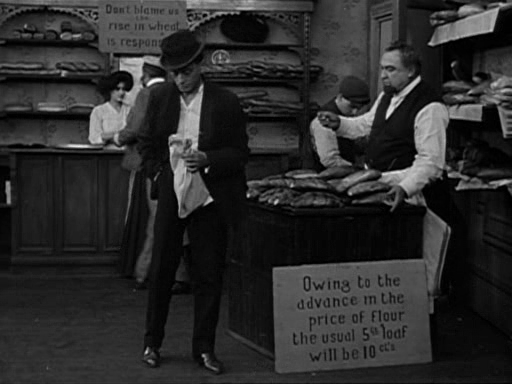
1. A Corner in Wheat (DW Griffith)
2. A Trip to the Moon (George Melies)
3. The Great Train Robbery (Edwin S. Porter)
4. The Pan-American Exposition by Night (Edwin S. Porter)
5. The Dream of a Rarebit Fiend (Edwin S. Porter)


1910s:

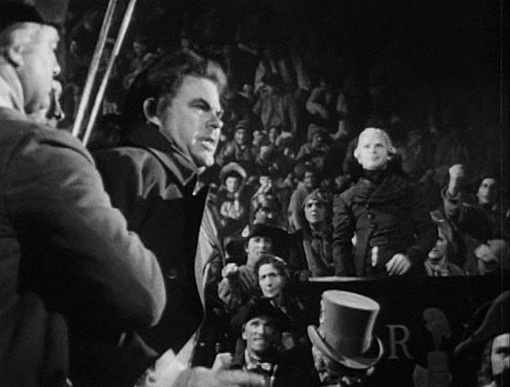
1. Intolerance (DW Griffith)
2. The Musketeers of Pig Alley (DW Griffith)
3. The Immigrant (Charles Chaplin)
4. Regeneration (Raoul Walsh)
5. Les Vampires (Louis Feuillade)

1920s:

1. Sunrise (FW Murnau)
2. The Docks of New York (Josef von Sternberg)
3. The General (Buster Keaton)
4. Sherlock Jr (Buster Keaton)
5. The Man with a Movie Camera (Dziga Vertov)

1930s:

1. The Rules of the Game (Jean Renoir)
2. Duck Soup (Leo McCarey)
3. Stagecoach (John Ford)
4. City Lights (Charlie Chaplin)
5. Bringing Up Baby (Howard Hawks)

1940s:

1. Casablanca (Michael Curtiz)
2. The Red Shoes (Michael Powell & Emeric Pressburger)
3. The Shop Around the Corner (Ernst Lubitsch)
4. Children of Paradise (Marcel Carne)
5. Citizen Kane (Orson Welles)

1950s:

1. Seven Samurai (Akira Kurosawa)
2. Vertigo (Alfred Hitchcock)
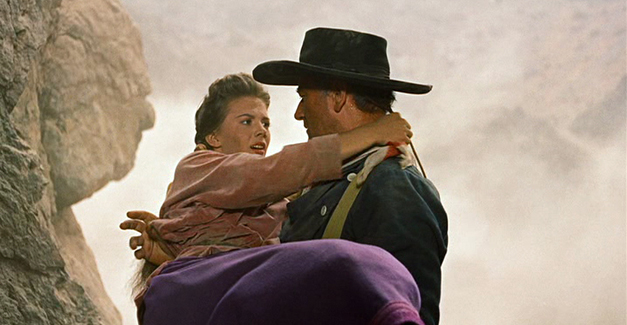
3. The Searchers (John Ford)
4. Singin’ in the Rain (Stanley Donen & Gene Kelly)
5. Night of the Hunter (Charles Laughton)

1960s:

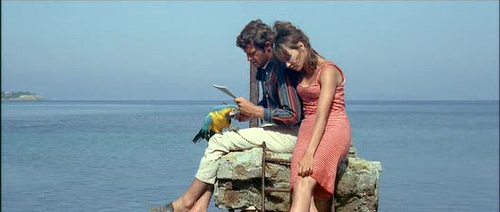
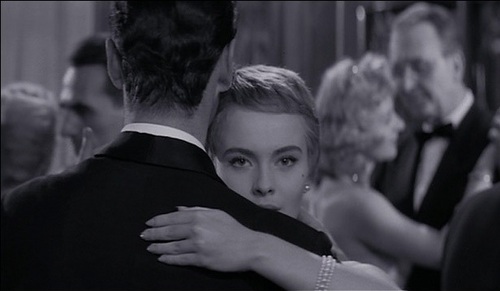
1. Pierrot le fou (Jean-Luc Godard)
2. Once Upon a Time in the West (Sergio Leone)
3. Psycho (Alfred Hitchcock)
4. The Umbrellas of Cherbourg (Jacques Demy)
5. Playtime (Jacques Tati)


1970s:

1. Annie Hall (Woody Allen)
2. Days of Heaven (Terrence Malick)
3. Manhattan (Woody Allen)
4. F for Fake (Orson Welles)
5. Two-Lane Blacktop (Monte Hellman)

1980s:

1. Stranger than Paradise (Jim Jarmusch)
2. Ran (Akira Kurosawa)
3. Hannah and Her Sisters (Woody Allen)
4. Sans soleil (Chris Marker)
5. The Green Ray (Eric Rohmer)

1990s:

1. Chungking Express (Wong Kar-wai)
2. The Thin Red Line (Terrence Malick)
3. The Big Lebowski (The Coen Brothers)
4. Dead Man (Jim Jarmusch)
5. Rushmore (Wes Anderson)

2000s:

1. The New World (Terrence Malick)
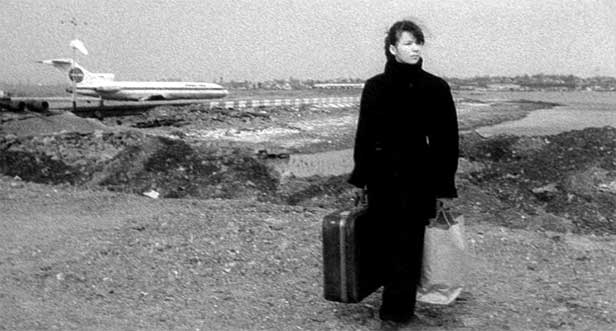
2. Millennium Mambo (Hou Hsiao-hsien)
3. 2046 (Wong Kar-wai)
4. The Royal Tenenbaums (Wes Anderson)
5. Mulholland Dr. (David Lynch)

2010s:

1. Certified Copy (Abbas Kiarostami)
2. The Tree of Life (Terrence Malick)
3. Oki’s Movie (Hong Sangsoo)
4. Uncle Boonmee Who Can Recall His Past Lives (Apichatpong Weerasethakul)
5. Meek’s Cutoff (Kelly Reichardt)

Movie Roundup: The Last Six Months Edition

There’s simply no way I’m going to be able to write about this massive backlog of movies I’ve watched over the last six months.  And since I’m trying anyway to transition from writing a little bit about every movie I’ve watched to writing a lot about the movies that most catch my interest, it seems kind of foolish to keep this list of films staring at me, waiting for me to write about them and judging me when I don’t.  So I’m just going to list them here, along with their current ranks in The Big List.  Since my current plan for The BIg List is to have updatable entires for every movie in every year (I’ve done the first two already), these will all eventually get written about, at least a little, someday far into the distant future.  Some I hope to write about in more depth, I have ambitions of posts about King Vidor, Raoul Walsh, Satyajit Ray and pre-Code films dancing around my head, laughing at me.

Cabiria – 1,1914
The Four Horsemen of the Apocalypse – 4, 1921
The Phantom Carriage – 7, 1921
Camille – 9, 1921
He Who Gets Slapped – 4, 1924
The Thief of Bagdad – 6, 1924
The Sea Hawk – 8, 1924
What Price Glory? – 2, 1926
The Scarlet Letter – 4, 1926
The Wind – 4, 1928
Two Tars – 6, 1928
Show People – 10, 1928
Spione – 11, 1928
Un chien andalou – 2, 1929
The Broadway Melody – 7, 1929

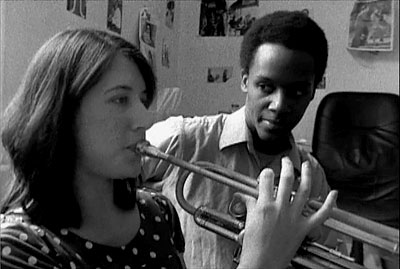
People on Sunday – 3, 1930
Not So Dumb – 13, 1930
Street Scene – 3, 1931
One Way Passage – 5, 1932
Three on a Match – 15, 1932
American Madness – 16, 1932
Payment Deferred – 30, 1932
White Zombie – 35, 1932
Wild Boys of the Road – 9, 1933
Man’s Castle – 10, 1933
The Testament of Dr. Mabuse – 12, 1933
Heroes for Sale – 22, 1933
Heat Lightning – 14, 1934
Carnival in Flanders – 5, 1935
Annie Oakley – 16, 1935
She – 23, 1935
Things to Come – 14, 1936
The Plough and the Stars – 17, 1936
History is Made at Night – 7, 1937
Swing High, Swing Low – 16, 1937
A Damsel in Distress – 19, 1937
Pygmalion – 12, 1938

Night Train to Munich – 19, 1940
Son of Fury – 17, 1942
Passage to Marseille – 9, 1944
Jammin’ the Blues – 11, 1944
Our Vines Have Tender Grapes – 18, 1945
Mr. Blandings Builds His Dream House – 27, 1948
The Black Book – 7, 1949
I Was A Male War Bride – 12, 1949
Colorado Territory – 17, 1949
A Woman’s Secret – 28, 1949

Born to be Bad – 24, 1950
Annie Get Your Gun – 26, 1950
The Crimson Pirate – 23, 1952
Blackbeard, the Pirate – 25, 1952
Night and Fog – 16, 1955
The Curse of Frankenstein – 22, 1957
The Music Room – 6, 1958
Elevator to the Gallows – 12, 1958
Jazz on a Summer’s Day – 12, 1959

Les bonnes femmes – 8, 1960
The Innocents – 11, 1961
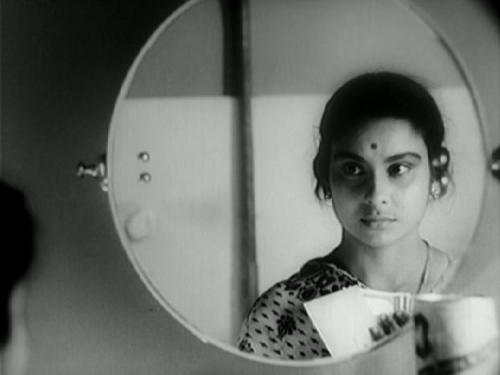
Mahanagar – 6, 1964
Charulata – 10, 1964
Journey to Jerusalem – 21, 1968
Paper Moon – 10, 1973
Edvard Munch – 13, 1974

Mon oncle d’Amérique – 5, 1980
Sherman’s March – 22, 1986
All for the Winner – 24, 1990
God of Gamblers 2 – 26, 1991
God of Gamblers 3 – 38, 1991
The River – 13, 1997

Guy and Madeline on a Park Bench – 12, 2009
Alamar – 22, 2009
Another Year – 8, 2010
Boxing Gym – 17, 2010
Film Socialisme – 18, 2010
The Trip – 31, 2010
Bill Cunningham, New York – 33, 2010
Senna – 38, 2010
Tiny Furniture – 44, 2010

Drive – 2011
The Muppets – 2011
Happiness is a Warm Blanket, Charlie Brown – 2011
Hugo – 2011
Moneyball – 2011
Super 8 – 2011
Fragments: Surviving Pieces of Lost Films – 2011
Don’t Expect Too Much – 2011
Page One – 2011
Rango – 2011
These Amazing Shadows – 2011

Annie-thing You Can Do I Can Do Worse: On the Two Annie Oakleys

Knowing nothing about Annie Oakley, either the true story or the legend, but always up for a musical or a Barbara Stanwyck film, I watched two versions of her story a couple weeks ago, thanks to the good people at TCM.  The first was a musical version, Annie Get Your Gun, based on a hit Broadway show that starred Ethel Merman and featuring songs by Irving Berlin (“There’s No Business Like Show Business” and “Anything You Can Do, I Can Do Better” being the two big hits).  The film adaptation stars Betty Hutton, who I’m almost completely unfamiliar with, I liked her in Preston Sturges’s Miracle at Morgan’s Creek, which is the only other movie I’ve seen her in, and Howard Keel, a giant ham whose hand-on-his-hips pomposity I’ve come to find quite endearing in films like Seven Brides for Seven Brothers, Kismet and one of my favorite musicals, Kiss Me Kate.  The director of that last film, George Sydney directed this one as well, and I’ve generally found his films (Anchors Aweigh, The Harvey Girls) to be pleasant if unexceptional (my Kate love notwithstanding), so all things considered, my hopes were relatively high.  Instead, I found Annie Get Your Gun to be an abomination.

The film starts reasonably well, but takes a drastic turn for the worse the moment Hutton appears, bug-eyed and dressed like one of Peter Pan’s lost boys exclaiming her dialogue in a ridiculous accent at an incredible volume, like a ten year old girl doing a Cletus the Slack-Jawed Yokel impression in a wind tunnel.  Hutton’s Annie is a great marksman who takes up the challenge of dueling the star attraction of Buffalo Bill’s traveling Wild West show, Howard Keel’s Frank Butler.  However, the moment she sees Butler, she’s stunned into mouth-agape lust at his beauty.  Setting that aside for now, she wins the contest and joins the show.  As the months go on, Butler becomes increasingly distressed that Annie’s a better shot than he is, which complicates their budding romance.  Annie learns to read and be more ladylike (wearing dresses, taking baths).  Eventually, Butler leaves her after Annie performs a breathtaking stunt in the show, proving that she is the bigger star.  The two are apart for awhile, with Butler having joined a rival show, but come together again in the end after a grudge match Annie throws, allowing Butler to be proclaimed the best sharpshooter in the world.  Running alongside the love story plot is Annie’s relationship with Sitting Bull, the great Sioux Indian chief who was part of the Buffalo Bill show.

There’s three things that offended me most about the film.  The first is on the basic level of craft, and by this I don’t just mean Hutton’s performance.  Ethel Merman originated the role on Broadway, and I can see how she would work playing the role this big: Merman was a titanic force of nature, everything she did was huge.  Hutton though, seems like she’s playing at being big and every note comes out false.  Judy Garland was originally going to star in the film, and her unique dramatic intensity would probably have made the film work.  I certainly can’t imagine her mugging about the way Hutton does.  This was pretty much the end of the line for Garland as a major star though.  During this time she was replaced in The Barkleys of Broadway and Royal Wedding was released from her MGM contract.  At age 28 her film career, aside from a brilliant performance in George Cukor’s A Star is Born and an Oscar nominated, supporting role in Judgement at Nuremburg, was essentially over.  

Be a clown by tobiagorrio

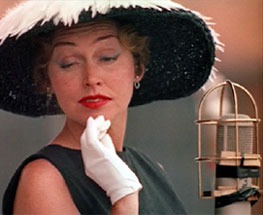
Garland wasn’t the only person fired from the film though.  It was originally directed by Busby Berkeley, who was replaced by Charles Walters, who was then replaced by George Sydney.  There’s a hint of Berkeley left in the film in the final shot, an arial view of dancing horses forming one of Berkeley’s trademark geometric patterns, but for the most part the film feels completely generic.  More than that though, there’s an incongruity between the apparent attempt at verisimilitude in the directing and the other major elements of the film.  Not just Hutton’s performance, which is jarringly unnaturalistic next to the supporting performances by Louis Calhern, Keenan Wynn and Howard Keel (none of whom were ever particularly notable for their restraint, this is a side effect of Hutton’s egregious broadness), but also in the musical numbers.  Some of Irving Berlin’s music, especially the film’s signature song “There’s No Business Like Show Business” indicate an artificiality in the production.  They seem to acknowledge that they exist as a part of a musical comedy on a Broadway stage.  But in the film, they take place entirely in natural settings.  Actors singing about Broadway while on a dusty Indianapolis fairground is just weird, which can be a virtue, but Sydney never develops the incongruity in any way.  This should be as playful a film as Vincente Minnelli’s The Pirate, where Garland and Gene Kelly’s performances, along with the screenplay and Minnelli’s direction of the musical numbers create a constant back and forth between fantasy and reality which leads to a fundamental, ecstatic declaration of the joy of performance at the film’s climax with Cole Porter’s “Be A Clown”.  I’m not sure exactly whose fault this is, but Sydney did a fine job walking this tightrope in Kiss Me Kate, another musical written by Cole Porter that plays with the conflict between performance and reality.  I guess, then, the issue is not so much a matter of Sydney’s inadequacy for the material (though Berkeley and Garland might have made something of it) but rather simply the difference between Cole Porter and Irving Berlin.

The next two major issues I have with the film are political in nature, and I’m not sure which is more off-putting.  The first is the inherent sexism of the story.  Annie is the best sharpshooter in the world, but she can’t have the man she loves because his ego demands that he be superior to her in every way.  The conflict in the film is her independence, and only when she throws a final match to him, allowing him to be the dominant, superior one can they live happily ever after.  The parallels to the post-war issue of men returning home only to find their wives occupying the workforce, and the need therefore to assert them back into the home via a hollow ideology of male superiority are obvious and needn’t be lingered on.  Suffice it to say that the fact that we are expected to cheer and swoon with romance when Annie finally puts herself in her proper place is nauseating at best.

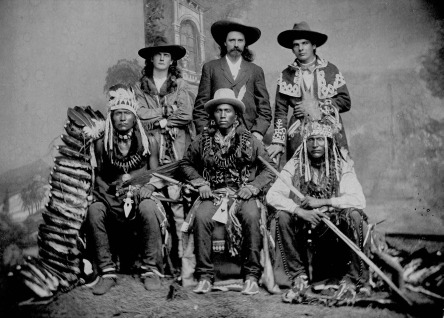
The racism in the film is only slightly less obvious, and has to do with the way it treats its Indian characters.  A couple weeks ago I ranted about the way the documentary These Amazing Shadows used John Ford’s The Searchers to show the negative ways in which Hollywood has portrayed Indians throughout the years, despite the fact that The Searchers is itself about that very issue and is very much against it.  They should have used Annie Get Your Gun instead.  Buffalo Bill’s Wild West Show, in reality, had a fairly complex relationship with Indians.  On the one hand, the shows itself generally cast the Indians in the role of villain, with big set pieces wherein Indian attacks are fought off by settlers and cavalry.  On the other, Bill encouraged the Indians to set up traditional camps, which onlookers could walk through and see the people as they actually lived.  (See his wikipedia entry:  “He called them “the former foe, present friend, the American”, and once said, “Every Indian outbreak that I have ever known has resulted from broken promises and broken treaties by the government.”‘)  None of this tension is present in Annie Get Your Gun.  The Indians are presented as cartoons on-stage, with Sitting Bull as goofy comic relief, and even worse off-stage.  Our first introduction to them has them destroying a train car for no apparent reason (literally, the shot foregrounds an Indian meaninglessly tearing apart a seat cushion with a tomahawk).  When they go to France they destroying a pastry shop devouring eclairs left and right.  The Indians in the film are children at best, monsters at worst.  That the best they come off is in the goofy, casually hideous “I’m an Indian Too” number is saying something.  That this film was made the same year as Anthony Mann’s defiant Devil’s Doorway, two years after John Ford’s nuanced yet damning Fort Apache, and was more popular than either is appaling.

Fortunately, all these issues are resolved in an earlier version of the Annie Oakley story, directed by George Stevens and starring Barbara Stanwyck, though it is by no means a perfect film.  To begin with, Stanwyck, in my opinion the greatest star in motion picture history, was constitutionally incapable of giving a false performance, one without nuance or intelligence or, most in contrast to Hutton’s work, dignity.  The contrast between her Annie and Hutton’s is apparent from the very start.  Hutton literally walks out of a bush, Stanwyck lives in a town, a small town, but one populated by recognizable human characters.  She has a mother, a wagon, dresses and washes like any other human and can even read and write.  In other words, she’s just a small town girl who knows how to shoot, rather than a freak of nature (a competent woman?  Egads, how bizarre!)  Stanwyck too falls in love at first sight of Buffalo Bill’s star sharpshooter (here renamed Toby Walker for some reason, Frank Butler was the name of Oakley’s real-life husband), and their first contest proceeds along the same lines as in the musical.  But, after seeing how good Annie is, the crowd begins to heckle Toby and Annie misses on purpose to let him save face.  Afterwards, she’s quite open about her throwing the match (to everyone, including Toby), but Bill hires her anyway and she joins the show.  The vital difference here is that as Annie and Toby fall in love, he insists they pretend to be rivals for the sake of showmanship.  In reality, he doesn’t care one bit that’s she’s a better shot than he is, in fact, he’s quite proud of her skill, but he understands that the audience is more likely to be hooked if he plays the role of the villain.  In other words, Toby is a recognizable human being, well-rounded and thoughtful, whereas the musical’s Frank Butler is defined only by his one neurosis (along with his prettiness and height).  Also, this construction of the plot sets up a tension between reality and performance that the musical could have profitably explored.

Similarly, the Indians fare much better in Annie Oakley than they did in Annie Get Your Gun.  Sitting Bull still functions as comic relief, though his cultural misunderstandings are far fewer here and less signs of his own idiocy than the fact that he just doesn’t particularly care about white people’s sense of propriety.  Sitting Bull here is almost a tragic figure, played by Chief Thunderbird, a Cheyenne actor and technical advisor (the musical cast J. Carrol Naish, an Irish-American actor who played General Sheridan that same year in John Ford’s Rio Grande) as a man out of step with reality, but determined to survive regardless of how ridiculous or bleak his and his people’s situation becomes.  This is nowhere more apparent than at the film’s climax, where Sitting Bull on his horse looks into the crowd and sees Toby (he and Annie have broken up over a misunderstanding, and he’s left the show to run a shooting gallery in New York City).  Toby knows he’s been spotted and takes off, with Sitting Bull in hot pursuit.  He tracks him through the city streets, creating a wonderfully incongruous image of an Indian chief in full regalia stalking through a modern metropolis.

Annie Oakley is a flawed film.  The plotting is full of the kinds of conflicts that would easily be resolved if only everyone let everyone else speak.  In fact, the big dramatic scene that causes Annie and Toby’s breakup is a textbook example of this kind of lazy screenwriting, as Annie is literally interrupted by everyone every time she tries to explain what actually happened.  But still, given just how purely awful my experience of Annie Get Your Gun was, watching it was a revelation.  I’m not sure if this is always the case with 1950s remakes of 1930s films.  Both John Ford’s Mogambo and George Cukor’s A Star is Born build on their antecedents (Victor Fleming’s Red Dust and William Wellman’s A Star is Born, respectively) in interesting and thoughtful ways.  But the parallel I’m best able to draw between what 1950 did to the 1935 Annie Oakley story is the contrast between the two film versions of Show Boat.  The first, by James Whale from 1936 is a nuanced portrait of a racially complex society, with dignified performances from its minority characters (including the electrifying Paul Robeson) which is turned into a much simplified musical starring Howard Keel and directed by George Sydney.

Best of 2011

An annual tradition here at The End, here are my favorite movies I saw for the first time over the past year, excluding newly released films:

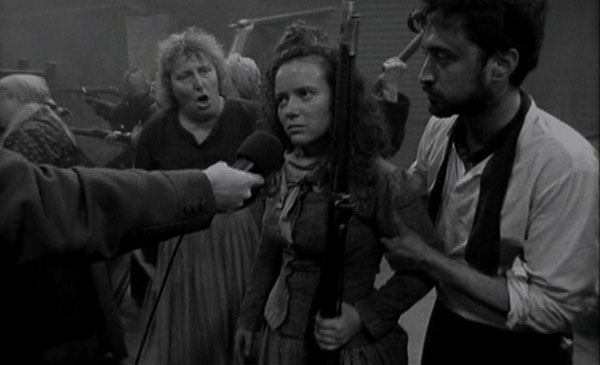
1. La Commune (Paris 1871) (Peter Watkins, 2000)
2. The Wind (Victor Sjöström, 1928)
3. Pauline at the Beach (Eric Rohmer, 1983)
4. Street Scene (King Vidor, 1931)
5. Bitter Victory (Nicholas Ray, 1957)
6. Louisiana Story (Robert Flaherty, 1948)
7. Merry Christmas, Mr. Lawrence (Nagisa Oshima, 1983)
8. The Music Room (Satyajit Ray, 1958)
9. Run of the Arrow (Samuel Fuller, 1957)
10. Under Capricorn (Alfred Hitchcock, 1949)
11. The Savage Innocents (Nicholas Ray, 1960)
12. An Autumn Afternoon (Yasujiro Ozu, 1962)
13. Gone in 60 Seconds (HB Halicki, 1974)
14. The Mission (Johnnie To, 1999)
15. People on Sunday (Siodmaks, Ulmer & Zinneman, 1930)
16. Mahanagar (Satyajit Ray, 1964)
17. Culloden (Peter Watkins, 1964)

18. The Black Book (Anthony Mann, 1949)
19. Wild Boys of the Road (William Wellman, 1933)

20. Street Angel (Frank Borzage, 1928)

21. One Way Passage (Tay Garnett, 1932)
22. Charulata (Satyajit Ray, 1964)
23. The Sign of the Cross (Cecil B. DeMille, 1932)
24. When a Woman Ascends the Stairs (Mikio Naruse, 1960)
25. Man’s Castle (Frank Borzage, 1933)

26. The Heartbreak Kid (Elaine May, 1972)
27. Kiss Me, Stupid (Billy Wilder, 1964)
28. I was a Male War Bride (Howard Hawks, 1949)
29. The Furies (Anthony Mann, 1950)
30. The Indian Epic (Fritz Lang, 1959)

31. The Aviator’s Wife (Eric Rohmer, 1981)
32. Regeneration (Raoul Walsh, 1915)
33. Carnival in Flanders (Jacques Feyder, 1935)
34. History is Made at Night (Frank Borzage, 1937)
35. Un Chien Andalou (Luis Buñuel, 1929)
36. Two Tars (James Parrott, 1928)
37. The Marquise of O (Eric Rohmer, 1976)
38. Humanity and Paper Balloons (Sadao Yamanaka, 1937)
39. There was a Father (Yasujiro Ozu, 1942)
40. What Price Glory? (Raoul Walsh, 1926)

41. Bonjour tristesse (Otto Preminger, 1958)
42. Les bonnes femmes (Claude Chabrol, 1960)
43. My Girlfriend’s Boyfriend (Eric Rohmer, 1987)
44. The Masseurs and a Woman (Hiroshi Shimizu, 1938)
45. Mon oncle d’Amerique (Alain Resnais, 1980)
46. My Sister Eileen (Richard Quine, 1955)
47. Socrates (Roberto Rossellini, 1971)
48. Night and Fog (Alain Resnais, 1955)
49. The Four Horsemen of the Apocalypse (Rex Ingram, 1921)
50. The Testament of Dr. Mabuse (Fritz Lang, 1933)
51. Avanti! (Billy Wilder, 1972)
52. Jazz on a Summer’s Day (Aram Avakian & Bert Stern,1959)
53. Election (Johnnie To, 2005)
54. The War Game (Peter Watkins, 1965)
55. Ornamental Hairpin (Hiroshi Shimizu, 1941)
56. Leaves from Satan’s Book (Carl Theodor Dreyer, 1921)
57. The Cameraman (Edward Sedgwick & Buster Keaton, 1928)
58. The Prowler (Joseph Losey, 1951)
59. The King of Kings (Cecil B. DeMille, 1927)
60. He Who Gets Slapped (Victor Sjöström, 1924)

61. Caught (Max Ophuls, 1949)
62. American Madness (Frank Capra, 1932)
63. The Scarlet Letter (Victor Sjöström, 1926)
64. Colorado Territory (Raoul Walsh, 1949)
65. Pygmalion (Anthony Asquith & Leslie Howard, 1938)
66. Full Moon in Paris (Eric Rohmer, 1984)
67. God of Gamblers (Wong Jing, 1989)
68. Five Graves to Cairo (Billy Wilder, 1943)
69. Paper Moon (Peter Bogdanovich, 1973)
70. The Innocents (Jack Clayton, 1961)
71. Three on a Match (Mervyn LeRoy, 1932)
72. The Thief of Bagdad (Raoul Walsh, 1924)
73. A Good Marriage (Eric Rohmer, 1982)
74. Heat Lightning (Mervyn LeRoy, 1934)
75. Onibaba (Kaneto Shindo, 1964)
76. Ministry of Fear (Fritz Lang, 1944)
77. Family Plot (Alfred Hitchcock, 1976)
78. The Only Son (Yasujiro Ozu, 1936)
79. Elevator to the Gallows (Louis Malle, 1958)
80. Phantom Lady (Robert Siodmak, 1944)
81. Run for Cover (Nicholas Ray, 1955)
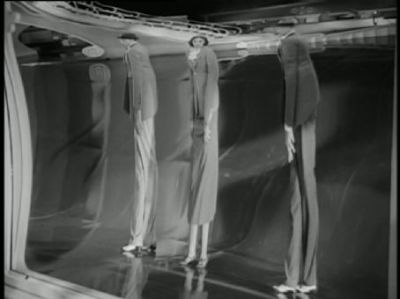
82. A Damsel in Distress (George Stevens, 1937)
83. Spione (Fritz Lang, 1928)
84. The Strange Affair of Uncle Harry (Robert Siodmak, 1945)
85. The Moon is Blue (Otto Preminger, 1953)
86. My Young Auntie (Lau Kar-leung, 1981)
87. Midnight Mary (William Wellman, 1933)
88. HM Pulham, Esq. (King Vidor, 1941)
89. Mademoiselle Fifi (Robert Wise, 1944)
90. Things to Come (William Cameron Menzies, 1936)
91. The Phantom Carriage (Victor Sjöström, 1921)
92. The Broadway Melody (Harry Beaumont, 1929)
93. Cabiria (Giovanni Pastrone, 1914)
94. Night Train to Munich (Carol Reed, 1940)
95. The Pajama Game (George Abbott & Stanley Donen, 1957)
96. A Hero Never Dies (Johnnie To, 1998)
97. Jewel Robbery (William Dieterle, 1932)
98. September Affair (William Dieterle, 1950)
99. Camille (Ray C. Smallwood, 1921)
100. Shockproof (Douglas Sirk, 1949)
101. The Battle of the River Plate (Michael Powell & Emeric Pressburger, 1956)

102. Drunken Master (Yuen Woo-ping, 1978)
103. Born to be Bad (Nicholas Ray, 1950)
104. The Plough and the Stars (John Ford, 1936)
105. All for the Winner (Jeffrey Lau & Corey Yuen, 1990)
106. Torn Curtain (Alfred Hitchcock, 1966)
107. Free and Easy (Edward Sedgwick, 1930)
108. The Curse of Frankenstein (Terence Fisher, 1957)
109. Blackbeard, the Pirate (Raoul Walsh, 1952)
110. The Tale of Zatoichi (Kenji Misumi, 1962)
111. Withnail & I (Bruce Robinson, 1987)
112. Edvard Munch (Peter Watkins, 1974)
113. The True Story of Jesse James (Nicholas Ray, 1957)
114. Sherman’s March (Ross McElwee, 1986)
115. Wait Until Dark (Terence Young, 1967)
116. Samson and Delilah (Cecil B. DeMille, 1949)
117. What! No Beer? (Edward Sedgwick, 1933)
118. Sabotage (Alfred Hitchcock, 1936)
119. A Woman’s Secret (Nicholas Ray, 1949)
120. Topaz (Alfred Hitchcock, 1969)
121. The Lady Hermit (Ho Meng Hua, 1971)
Top 20 Albums of 2011

These were my favorites:

1. Hilary Hahn & Valentina Lisitsa – Charles Ives: Four Sonatas
2. Oregon Symphony – Music for a Time of War
3. Lorraine Hunt-Lieberson – Berlioz: Les nuits d’été – Handel: Arias
4. Radiohead – The King of Limbs
5. Lise de la Salle – Liszt
6. TV on the Radio – Nine Types of Light
7. Various Artists – Jonathan Harvey: Bird Concerto with Pianosong
8. Thomas Gould & Aurora Orchestra – Nico Muhly: Seeing is Believing
9. Hélène Grimaud – Mozart
10. The Decemberists – The King is Dead
11. Tom Waits – Bad as Me
12. Béla Fleck & The Flecktones – Rocket Science
13. John Adams – Son of Chamber Symphony & String Quartet
14. Alexandere Desplat/Various Artists – Tree of Life Score/Soundtrack
15. Various Artists – The Muppets Soundtrack
16. Los Angeles Philharmonic – DG Concerts: Adams: Slonimsky’s Earbox – Bernstein: Symphony No. 1 “Jeremiah”
17. Okko Kamu & Lahti Symphony Orchestra – Sibelius: The Tempest; The Bard; Tapiola
18. Stephen Malkmus – Mirror Traffic
19. Danger Mouse & Daniele Luppi – Rome
20. Thurston Moore – Demolished Thoughts

On These Amazing Shadows


A run of the mill advertisement for the National Film Registry, which is an admirable foundation (a subset of the Library of Congress) with a fascinating group of films covering a surprisingly wide range of American film.  The doc is all talking heads and movie clips, but the clips are great and some of the heads are inspired (Nina Paley!, The Self-Styled Siren!, George Takei!).  Unfortunately, the last 20 minutes devolves into a minority roundup, with boxes checked for marginalized groups the Registry recognizes: documentaries, animation, experimental film, women directors, African and Native Americans, etc.  This wouldn’t be so bad, merely plainly schematic and a bit pandering, if they didn’t pair The Searchers with The Birth of a Nation as racist films that are countered in turn by The Exiles and Boyz N the Hood.  Setting aside the fact that Boyz N the Hood is a pretty lame film, the mistreatment of The Searchers is criminal.  And it’s not just the filmmakers at fault, though they include clips from the film taken out of context to prove how racist Hollywood was against Indians (which is kinda the point of the film but never mind), they get a Native American studies professor to talk about it, though it’s unclear if they’ve misedited him.  No, the worst is Charles Burnett, director of the marvelous Killer of Sheep, talking about how he never knew how racist The Searchers was until he watched it with a friend who walked out in the middle of it.  When he asked her what was wrong, she asked “Can’t you see all the racism?”  I don’t know which is worse, Burnett for not realizing the film was about racism despite seeing it several times, or the woman drawing such an extreme conclusion after walking out halfway through.  I don’t know how this idea that one of the most complex, powerful and moving indictments of racism ever to come out of Hollywood was in fact racist itself merely because it showed acts of racism in all their ugliness, but this kind of thing has got to stop.  And equating this with one of the most vile perversions of the art form in its history?  Unconscionable.

On Vincente Minnelli’s Tea and Sympathy

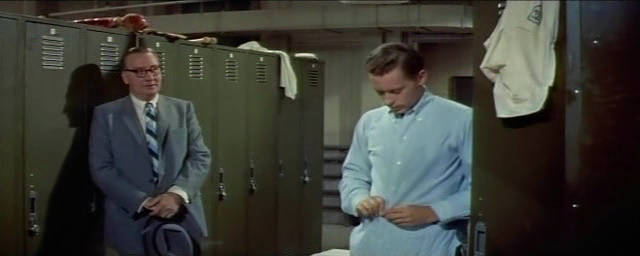
Vincente Minnelli’s 1956 adaptation of the play Tea and Sympathy by Robert Anderson necessitated a few changes in order to make it past Hollywood censors.  As a result, the film is often derided as a watered down version of the original, another casualty of a culture that sought to systematically tame the daring and provocative in the name of of bourgeois morality.  On the contrary, I think the film as is is much superior to the play, that the censor-forced changes Minnelli and Anderson made make the film a simultaneously broader and deeper work, with a more nuanced view of human sexuality and relationships.  The film as Minnelli made it is one of the great melodramas of the 1950s, and one of the key works in this brilliant director’s career.

This synopsis from the questionably named All Movie Guide provides a reasonable example of the general attitude toward the film, as well as a decent summary of the plot:

1956’s Tea and Sympathy is a diluted filmization of Robert Anderson‘s Broadway play. The original production was considered quite daring in its attitudes towards homosexuality (both actual and alleged) and marital infidelity; the film softpedals these elements, as much by adding to the text as by subtracting from it. John Kerr (Tom) plays a sensitive college student who prefers the arts to sports; as such, he is ridiculed as a “sissy” by his classmates and hounded mercilessly by his macho-obsessed father Edward Andrews. Only student Darryl Hickman treats Kerr with any decency, perceiving that being different is not the same as being effeminate. Deborah Kerr (Laura), the wife of testosterone-driven housemaster Leif Erickson, likewise does her best to understand rather than condemn John for his “strangeness.” Desperate to prove his manhood, John is about to visit town trollop Norma Crane. Though nothing really happens, the girl cries “rape!” Both John’s father and Deborah’s husband adopt a thick-eared “Boys will be boys” attitude, which only exacerbates John’s insecurities. Feeling pity for John and at the same time resenting her own husband’s boorishness, Deborah offers her own body to the mixed-up boy. “When you speak of this in future years…and you will…be kind.” With this classic closing line, the original stage production of Tea and Sympathy came to an end. Fearing censorship interference, MGM insisted upon a stupid epilogue, indicating that Deborah Kerr deeply regretted her “wrong” behavior.

The changes from the original play occur mainly at the beginning and end of the film.  In the beginning of the play, the event that touches off the bullying Tom receives is that he’s caught swimming naked with a (male) teacher.  The teacher is fired and Tom becomes an assumed homosexual and his every action (the way he walks, the way he cuts his hair, the music he listens to) is used as further evidence of his deviance.  In the film, the inciting incident is much less obvious, Tom is espied one afternoon sewing with Laura and some of the other older women, instead of playing sports and roughhousing with the other boys on the beach (the homoerotic elements of the “straight” boys’ play is apparent but not emphasized, one of the many ironies Minnelli plays with in the film).  For this, he is taunted as “Sister Boy” for the remainder of the film, which follows the events of the play more or less closely until the end.  By making the inciting incident less sexual (sewing is hardly akin to skinny dipping), the film muddies up the question of Tom’s homosexuality.  Indeed, for most of the film, it’s unclear if Tom has any sexual inclinations one way or the other (or both).

For Nathan Rabin, this makes the film a necessarily flawed work.  He writes at The AV Club:

Simultaneously bold and a cop-out, Tea And Sympathy is a film divided against itself, a drama about a young gay man’s awkward, fumbling initiation into the adult world of sexuality that doesn’t have the courage to embrace its destiny as a groundbreaking queer film. (Unsurprisingly, the film features prominently in the stellar film and book The Celluloid Closet.) Yet this subtext makes the film even more poignant during its many subdued scenes where John and Deborah Kerr talk around what they’re really feeling because they can’t come right out and say what’s on their minds. Like the film’s troubled protagonist, Minnelli simply made the best out of an impossible situation with this flawed, fascinating time capsule.

On the contrary, the film as is is not a failed attempt at a “groundbreaking queer film”, but rather it is queerer than Rabin realizes.  For queer doesn’t simply mean “homosexual”, but rather a rejection of the dominant image of sexuality, that of the middle class heterosexual masculinity of the 1950s which was seen as the only viable option for a man to be a productive member of society.  Minnelli has taken a play that appears to be about sex (gay kid gets teased, may sleep with Deborah Kerr) to one about sexual identity and its relation to social codes.  In the film, there’s every reason to believe that Tom is gay, but he’s just as likely to be a straight kid who just happens to like to sew and listen to classical music, or even a straight kid who doesn’t like sewing at all, but is just pretending to so he can hang out with the older woman he’s passionately in love with.  Or all of the above.  The point is that none of those things (sewing, classical music, Deborah Kerr) prove anything definitive about Tom.

Tom’s relationship with Laura is highly ambiguous: he may see her as a friend, another lonely person who needs someone to talk to (Laura’s husband is cold and distant towards her, and is explicitly identified throughout the film with Tom, especially in his youthful love of classical music (to which he regresses in the end) and the bullying he received when he was Tom’s age for that non-conformity, thus her husband can be read as a homosexual who has been closeted since his late teens); a mother figure (Tom’s own mother abandoned the family when he was very young, Laura throughout the film is wearing earth tones, greens and yellows (Tom always wears light blue: powder blue for his effeminacy or baby blue because he has not yet matured into a proper man) and Tom first sees her in her garden and their sexual encounter takes place in an Edenic, womblike forest (in the play, it takes place in Tom’s dorm room, I believe), Minnelli thus identifies her with Nature, whether that is Mother Nature, or a comment on her effect on Tom’s true nature (fulfilling it if he’s straight or repressing it if he’s gay) is undetermined); or a potential lover (this is apparently what Laura believes: he is acting strange because of his burning unrequited passion for her, by sleeping with him, Laura is helping Tom “become a man” in the sense of maturation, not repression).

The film’s epilogue settles none of this.  Here, Tom receives a letter Laura has written him after confessing her infidelity to her husband.  The husband is wrecked and alone (listening to classical music), Laura is apparently also alone, and Tom is a successful writer, married with children.  Suffice it to say, being married and having children in the 1950s says very little about one’s “true” sexual orientation, so even this tacked on, mandated-by-censors ending solves none of the ambiguities Minnelli has opened up.  Far from dividing the film against itself, the epilogue concludes the film in the same variable state the rest of the film has occupied.

The film rejects the idea that Tom can be defined by any of the usual methods we use to identify someone as “gay” or “straight” and in so doing undermines the very idea that people in general can be so defined.  The truth is, we don’t know anything about Tom’s inner life, all we ever see are outward manifestations that we then choose to interpret one way or the other.  By making those outward clues more ambiguous and potentially contradictory than they are in the play, the film opens up more possibilities for Tom’s sexuality, and forces us to consider whether he really is gay or not, and what it is that makes us think so and why.  Thus the film, instead of being merely an admirably pro-gay melodrama is instead a deeply subversive work, one that undermines not only homophobia, but all of our assumptions about what it means to be a “man” (non-biologically speaking, of course) as well as the very idea that we should have such definitions to begin with.  It’s a wholesale rejection of heteronormativity in the name of non-definitional ambiguity.

Thematically, this ties in with a recurring strain in Minnelli’s films, one that it is very tempting to read as autobiographical (though we should probably refrain from such things).  That is the story of an artist’s struggle to fit into or escape from a constricting social environment.  Tom’s ambition in life is to become a folk singer (very prescient for a film from 1956, a full five years before Dylan showed up in the Village).  He also reads poetry, likes to listen to classical music, and by the end of the film has become a writer.  His troubles in school arise largely because his artistic inclinations are read as “gay” by the other kids at school (as well as his father).  The film is therefore not only about a sexually ambiguous man struggling against social mores, but also about a society that reads “art” as “deviance” and attempts to repress its manifestations.  Tom therefore joins other Minnelli heroes like Tootie in Meet Me in St. Louis, Manuela and Serafin in The Pirate, Jerry in An American in Paris, Van Gogh in Lust for Life and Dave in Some Came Running (along with many others) as artists trying to remake the world to match their vision of it, despite all the pressures of social obligation and expectation weighing them down, repressing them.  The results aren’t always the same: in Minnelli’s dramas, the artist usually fails and ends in tragedy (Tom can be read as either fully closeted or finally free); in the musicals, the artists usually triumph — after all, what is a musical if not a fundamental subversion of restrictive social codes (it is highly improper to just start singing and dancing whenever you feel like it).  The conflict is uniquely sexualized in Tea and Sympathy, but Minnelli’s goal, and his hero’s, remains the same: the breaking down of normalcy in the name of a freer, more open world full of possibilities.

1902

1. A Trip to the Moon –  Possibly the first great narrative film, George Méliès loosely adapted Jules Verne and HG Wells into this film about a group of bearded scientists shooting themselves to the moon in a giant cannon, where they take a nap, assassinate the King of the Moonmen then make their escape back to Earth.  The parallels with European colonial adventures are obvious.  The wonder of the film though is its ambition: Méliès weds the stop motion magic tricks he perfected through the first 6 years of cinema to fantastical, multi-layered and interactive set design, elaborate costumes and a cast of dozens to create a unique cinematic world, one that, for one of the first times in movie history is less a recorded artifact of a stage performance and more its own creation.  The movie starts a bit slow, as the scientists pose for an interminable group photograph, but once they change into their space suits (really just suits) and get loaded into the cannon by what appear to be a phalanx of chorus girls, the film piles mind-blowing image upon image.  My favorite: that the moonmen, after what must have been millennia of evolution prove vulnerable only to that most dangerous weapon of all: the umbrella.

2. Gulliver’s Travels – Another Méliès literary adaptation, though a much less successful one.  Rather than a coherent narrative in its own right, this is more a set of illustrations of scenes from the book.  The best part is a tour de force bit of double exposure split screen action at the center of the film, where Gulliver is served a meal by the Lilliputians.  Méliès almost seamlessly integrates the two images (filmed on separate sets with the camera at different distances, to create the size distortions, it looks like) in a way that remains marvelous even to modern eyes.

1901

1. The Pan-American Exposition By Night – Directed by Edwin S. Porter and James Blair Smith, working for the Edison company, this one minute film consists only of a slow pan across the eponymous exposition.  Midway though, the shot fades to black and returns, only now it is nighttime and the exposition is lit by the wonder of electric light.  As cinematic miracles go, this is about as simple as it gets, but it’s a miracle nonetheless.

2. Excelsior! The Prince of the Magicians – Magician Georges Méliès uses the power of editing to create a magic routine greater than any possible in continuous reality.  Some of the edits are pretty obvious, but the speed and abandon with which Méliès commits himself makes it all work.

3. What Happened on Twenty-Third Street – A cute little joke movie, anticipating a certain iconic Marilyn Monroe image by over 50 years.  Edwin Porter directs what appears to be a documentary street scene that turns risqué when an actress comes onscreen.

4. The Devil and the Statue – Another Méliès magic movie, though much clunkier and pedestrian than Excesior!.

On The Spanish Earth

Is it just me or does the Hemingway narrator in everyone else’s head always sound like Orson Welles?  Anyway, Welles narrates Hemingway and Jon Dos Passos’s text in this documentary film, made in the midst of the Spanish Civil War by Dutch filmmaker Joris Ivens.  As if that wasn’t enough star power, the musical score is by Marc Blitzstein (Cradle Will Rock) and Virgil Thomson, one of the first great American classical composers (along with Charles Ives, Aaron Copland and George Gershwin).  Thomson won a Pulitzer for his score to Robert Flaherty’s Louisiana Story, and while this isn’t that good (there’s a lot of pastiche Spanishness to it, as opposed to Thomson’s usual all-American style), it’s still pretty charming.  The film is newsreel-style footage with sound effects and voiceover added later, but Ivens has an eye for striking images and some of his editing is quite clever (a particular cut from a gun firing to a hole of sunlight peeking through the crook of a soldier’s elbow comes to mind).

Set during the fascists’ march on Madrid, the film splits the focus onto two stories, that of the capital’s populace preparing themselves for the eventual attack (evacuating children, forming militias out of soccer players and bullfighters) and a nearby village’s construction of an irrigation ditch to turn their unoccupied waste land into crops to feed the to-be-beseiged city. The script throughout is filled with pithy Hemingwayisms, sounding at times like the parody Hemingway in Woody Allen’s Midnight in Paris.  My favorite: a post-battle riff on how sixes went out and only twos and threes came back.  The farm scenes are OK, but they pale in comparison to the similar construction effort in King Vidor’s communitarian classic Our Daily Bread, released three years earlier.  Perhaps the final scenes of water flowing to relieve the parched Spanish earth (get it?) would have had a more triumphant effect if we didn’t already know the ultimate fate of the Loyalists and those farmers.  Then again, that adds an unintentional poignancy to the whole film, and Vidor’s communist farmers likely didn’t end up much better off when McCarthyism and groups like Vidor’s own Randian anti-Communist Motion Picture Alliance for the Preservation of American Ideals got ahold of them.

There’s something that continues to fascinate me about this war.  Unlike the fascist takeovers in Germany and Italy, it wasn’t a matter of an evil political party capitalizing on social conditions to get itself elected to power.  Unlike totalitarianism in France and Russia it wasn’t the byproduct of a revolution corrupted by its own power.  Like many dictatorships, this one began with a coup, but only a partially successful one.  Instead of creating a military junta overnight, which could then proceed to its dastardly ends (purging the population, annoying and/or allying with US corporations, etc), the Spanish coup only managed to split the country politically in half, between the Monarchists and Fascists on the right and the Republicans, Communists and Anarchists on the left.  And so the war makes manifest, in a way no other conflict does, the divide between the political left and right in Western politics.  World War II, for example, wasn’t a fight for Democracy against Totalitarianism, it was a fight against territorial aggression by rogue nations that happened to be totalitarian (with one of Democracy’s key allies, the Soviet Union, being itself a totalitarian state).  But the Spanish Civil War was a real left vs. right conflict, where the political rhetoric of the most extreme elements of both sides for once became a reality.  The idea that these arguments between Left and Right really could degenerate into the kind of civil war Spain went through is an idea that seems wholly alien to us (though it can be found in many political films of the 1930s, particularly those of Frank Capra, which I think are greatly enhanced by seeing through the politics of the time, where Democracy was an existential choice and not merely a platitude), where our political parties throw around words like fascism and socialism with little regard to their actual meaning or their relevance to the people being so accused.  No one really believes Dick Cheney would organize a military coup to overthrow the elected government of the United States, nor does anyone serious believe that Barack Obama is plotting a government takeover of American industry or a mass collectivization project.

It is this seemingly obvious fact that Ivens’s documentary makes clear to me: that this was a war fought by actual people who actually believed in and put into action the most extreme variants of modern political theory.  He focuses on the Left, the loyalist side with its poor folks banding together in a communitarian ideal to protect themselves from the invading fascists (helped, he repeatedly notes, by the foreign influence of the Germans and Italians, the assistance the Loyalist side received from the Soviets goes unmentioned), but in seeing those Loyalists as individuals, the fact that the fascists were also a mass movement becomes clear.  We don’t see them in The Spanish Earth, I imagine Ivens would prefer to see the fascists not as individuals but as abstract forces of evil, but in their conspicuously off-screen existence, their presence, their threat, is inescapable.  Spain didn’t have its democracy stolen, or totalitarianism imposed upon it: a sizable portion of the Spanish population wanted to live under dictatorship so much that they fought and killed and died for the right to create a fascist state.  I find that truth to be absolutely terrifying.

On a much lighter note, this was the first film my daughter watched, and she made it almost the whole way through its 55 minute runtime.  I don’t know what exactly about it fascinated her so much, she usually prefers color images and flashier editing, and has very few interesting opinions on politics or history.  Maybe it was the score (she’s heard a lot of Thomson over her 13 1/2 weeks of life), or maybe she just likes Orson Welles’s voice (who doesn’t?).  Regardless, she was rapt with attention until she slumped over asleep.  As far as she knows, the war had a happy ending.