Movie Roundup: 55 Movies To Go Edition

Meek’s Cutoff – A group of settlers making their way through the Oregon Territory break off from their main group to follow a mountain man named Meek’s shortcut.  When we join them, they appear to be most definitely lost, though Meek, in a well-mumbled performance by Bruce Greenwood, insists he knows exactly where they are and where they are going.  As the settler’s distrust of Meek grows, and their water supply dwindles, they come across a lone, silent Indian.  Led by Michelle Williams, they slowly take their faith away from Meek and place it onto the Indian, who claims (wordlessly) to be able to lead them to safety but may very well be leading them to their doom.  A major step up from director Kelly Reichardt’s last film, Wendy and Lucy which, despite an excellent performance from Williams I thought was a little lacking in the plot motivation department.  Reichardt films in 1.33, an aspect ratio that not only recalls the classical Western, of which this is in many ways a subversion (there’s an interesting compare and contrast to be made here to Ford’s Wagon Master) but also mimics the POV of the women in the group, their heads bound by 19th Century bonnets, their blinder-vision making palpable both the claustrophobia of their place in society and the group’s limited knowledge of where they are going and the world around them.  It’s a movie about faith and feminism, about a group of women learning to reject the authority of their alpha male and place their trust in a despised and mysterious other, with no assurances that their new guide will be any better.  One of those movies whose resonances grow the more I think about it.  The #4 film of 2010.

Cave of Forgotten Dreams – The consensus line on this Werner Herzog documentary about cave paintings is that it’s the best argument to date for 3D cinema and I’m not going to disagree with that.  The paintings, found in pristine condition in Southern France, are the earliest yet discovered and Herzog examines them in exhaustive detail.  His narration, as always, is a blend of sardonic rationality and breathless cheesiness, but it’s the images that are unforgettable.  Because the cave walls and ceilings are contoured and uneven, and because the paintings were made with these surfaces in mind, the 3D camera brings them to life in a way that would be impossible with a conventional film.  We can see the ripples of the limestone and the way the uneven surface serves to almost animate the images on the walls, especially when combined with the flickering shadows that must have accompanied their ceremonial use as religious totems.  Herzog, as usual, doesn’t so much have an idea about the paintings as he has a dozen questions to which he poses possible answers.  Who made the paintings and why and what does that say about us, about the urge to create?  His speculations lead him, again as usual, to some strange places, but any film that starts with 30,000 year old cave paintings and ends with albino alligators has to be doing something right.  The #14 film of 2010.
The Tale of Zatoichi – The first of a massive series of films about a blind samurai (charmingly played by Shintaru Katsu) who solves crimes (or something, this is the only one I’ve seen), its debt to Akira Kurosawa’s Yojimbo is obvious.  Like in that film, a wandering ronin comes to a town and is hired by one side of a local gang war.  The ronin here is blind, a masseur (a common profession for the blind in Japan, in the movies if not in reality) who is both jovial and cunning (he repeatedly plays on other people’s underestimation of him due to his blindness, not only in swordplay but in everyday tasks like gambling as well).  Unlike in Yojimbo (itself indebted to Dashiell Hammett), the ronin does not play both sides of the war against each other, instead he bonds with the ronin the rival gang has hired (who is dying of tuberculosis) and the two stand apart from the petty criminals who employ them by their samurai codes of honor and dignity.  That doesn’t prevent them from fighting, of course.  Zatoichi very much lives in the same world as Yojimbo‘s Sanjuro, but he’s a bit more amoral and a little bit more sentimental.  But the major difference between the two films is in the visual style, where Kurosawa’s meticulous genius imbues every shot with meaning and purpose and Zatoichi director Kenji Misumi performs a competent job filming his actors in a noiry, occasionally flashy black and white.  The #16 film of 1962.

The Pajama Game – Doris Day becomes a union leader at a pajama factory and attracts the eye of the company’s superintendent John Raitt (looking like Rene Auberjonois as a Lifetime movie villain).  Their romance complicates union negotiations, as the uppity Miss Day won’t know her place as a proper 1950s housewife.  Until she does when Raitt proves the company had been ripping off the workers even more than was previously thought.  The workers get their little raise, Day goes home to raise Raitt’s kids and everyone lives happily ever after.  The plot manages to combine the glories of capitalist patriarchy with all the excitement of union negotiations.  Ah, but there’s music.  A couple of pretty great numbers, choreographed by the man who can do no wrong, Bob Fosse.  The standout is Broadway actress Carol Haney (she danced with Fosse in the memorable number in Kiss Me Kate) and her two big numbers here, “Steam Heat” and “Hernando’s Hideaway”, which ends up somewhere between the finale from The Gang’s All Here and the “Bohemian Rhapsody” video, are exceptional.  In general though, this was a big disappointment coming from director Stanley Donen.  I’m going to blame his co-director George Abbott.  The #26 film of 1957.
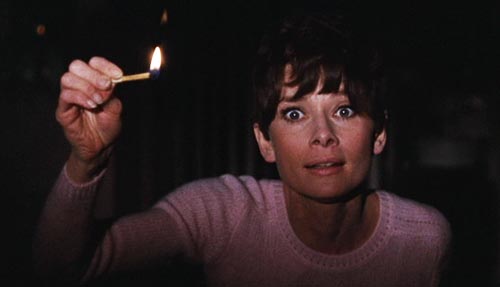
Wait Until Dark – An effective thriller with a somewhat perplexingly out-sized reputation.  Audrey Hepburn plays a blind woman who’s apartment accidentally contains a MacGuffin wanted by a gang of criminals led by Alan Arkin.  The crooks play on her blindness in an attempt to either find the object or get her to give it to them, and there are plenty of solid suspense sequences built by director Terrence Young, the man behind two of the better James Bond films (From Russia with Love and Thunderball).  But other than that, there’s not a whole lot to appreciate here.  The plot rests on a card house of contrivances, which wouldn’t be too bad if there was more going on underneath.  This is the fundamental difference between Hitchcock and his imitators: with Hitch, the suspense was never enough, there was always another layer, a set of meanings beyond the visceral experiences technique and construction can provide.  Neither of Hepburn’s Hitchcockian films (this and Charade, which is much more fun, one of the most charming movies ever made) have the depth of even a middling Hitchcock.  Without that, there’s nothing to see here but a very frightened woman.  The #16 film of 1967.

Movie Roundup: Four DeMilles and a Lang Edition


Samson and Delilah – Victor Mature plays Samson and Hedy Lamarr Delilah in Cecil B. DeMille’s way way way overblown biblical epic.  Samson is the popular Jewish judge from the tribe of Dan who is engaged to a pretty young Philistine (played by Angela Lansbury).  But he attracts the eye of Lansbury’s sister, Delilah, a vicious, lusty girl who sets a riot in motion at their wedding feast which leads to Samson killing a bunch of people and Lansbury herself getting killed.  Samson becomes an anti-Philistine revolutionary cutting down bad guys left and right armed with a jawbone.  The local ruler, played by George Sanders, of course, conspires with Delilah to capture Samson.  She seduces him and gives him a haircut.  Brought to the Philistine temple in chains, Samson is tortured until he brings the whole thing crashing down in a spectacular finale.  The whole thing is pretty ridiculous, yet the sheer perversity of the Samson/Delilah relationship is fascinating.  Unfortunately, it all has to be sold by Lamarr, who is certainly up to the task, but Mature, in trying to portray Samson as the ultimate square, sacrifices the seediness he brought to another twisted relationship, that between him and Gene Tierney in Josef von Sternberg’s The Shanghai Gesture.  It’s important, of course, that Samson be virtuous and upstanding, but without the spark of illicit uncontrollable desire for Delilah, his actions come off as just plain stupid, rather than tragic.  It’s probably my least favorite DeMille film, feeling more like a dry run for the corny greatness of The Ten Commandments, and a far cry from the potent mix of religion and sex of his thirties bible movies.  The #24 film of 1949.

The Sign of the Cross – This is much more like it.  Not technically a bible movie, as it takes place during the early years of Christianity, when the small cult was trying to grow within the Roman Empire under Nero.  Frederic March plays a Roman prefect who becomes enamored with a young Christian girl named Mercia (really), despite his long-standing relationship with Nero’s wife Poppaea.  When March releases a couple of accused Christians on the girl’s behalf, Poppaea (played by Claudette Colbert at her most amorally luscious) arranges with a rival prefect to have the girl and the other Christians attacked and arrested.  March saves the girl, barely (the sequence of the soldiers descending on the large Christian prayer meeting is all the more terrifying for the very real feeling of persecuted brotherhood we get right before the arrows start to fly), and proposes to her, but she accuses him of just wanting her for sex.  Somehow they all end up at an orgy, which has some creepy and intense dance sequences as March tries and fails either to get Mercia to loosen up or face his own evil lusts and convert to her religion.  In the end, Nero, played by Charles Laughton as an imbecilic lunatic, has the Christians fed to the lions (and various other animals) in another spectacular finale.  This is probably DeMille’s greatest blend of the sacred and the profane, as sequences like a lesbian orgy dance and Claudette Colbert nude in a milk bath are balanced by scenes of genuine Christian belief and piety.  The mixture is as self-contradictory as it gets, at least if you happen to belong to the particularly prim version of Christianity that got the film banned and censored for years and years.  For the rest of us, it’s a whole lot of fun, and might reasonably be seen as an attempt to resolve the tension between body and spirit that has been so fundamental to the religion for two thousand years.  That, or DeMille is just a huge hypocrite: he wants us to root for both the Christians and the lions.  The #5 film of 1932.
Cleopatra – A less successful DeMille/Colbert collaboration tells the familiar story of the Egyptian queen and her two Roman lovers.  From the first meeting with Julius Caesar (smuggling herself in a carpet), to his assassination, to her affair with Marc Antony, the film offers few surprises, other than making Cleopatra a much bigger part of the story than she really was (it’s her who has a vision of Caesar’s impending death, for example).  Colbert is fine, but Warren William (as Caesar) and Henry Wilcoxon (as Antony) are pretty dull.  Actually, I’m having trouble remembering any real differences between this version and the Joseph L. Mankiewicz version with Elizabeth Taylor, other than that one is more than twice as long.  For once, someone topped DeMille in the overblowing department.  The #14 film of 1934.
The King of Kings – This film though is much different from its early 60s remake, which was directed by Nicholas Ray with Jesus as a Martin Luther King-style non-violent revolutionary.  HB Warner plays Jesus here, and DeMille plays the Passion story absolutely straight, except for a little prologue where we see Mary Magdalene being all whorey (kind of like in Scorsese’s The Last Temptation of Christ, except more flapperish).  Other than that, the film follows the various events pretty closely (many of the intertitles are direct quotes from the Gospels): Jesus performs some miracles, enters Jerusalem, gives some speeches, gets betrayed by Judas (who in this version is a monarchist who hopes to make Jesus King and conspires with Caiaphas and the Romans to have him arrested), meets with Pontius Pilate (always a great sequence, and here is no exception as Jesus calmly freaks Pilate out) is crucified and rises again (in Technicolor!).  It’s a heartfelt, moving and reasonable telling of the story, DeMille reportedly went out of his way to tone down the anti-Semitism that had been a fundamental part of Passion stories for centuries.  Though Caiaphas and the rest of the evil Jews are shown to be largely to blame for Jesus’s execution, DeMille makes sure to show that they were not representative of the Jews as a whole.  HB Warner, who played the druggist in It’s a Wonderful Life 20 years later, brings a real otherworldly quality to Jesus, which, along with DeMille giving him a heavenly glow in every scene, manages to be both ridiculous and totally convincing.  The #6 film of 1927.
The Indian Epic – In the late 50s and early 60s, massive costume epics by great old directors like William Wyler (Ben-Hur), Cecil B. DeMille (The Ten Commandments), Howard Hawks (The Land of the Pharaohs), Nicholas Ray (The King of Kings), Joseph L. Mankiewicz (Cleopatra), Anthony Mann (Spartacus, until he got fired), etc were all the rage.  The trend even spread to Germany, where Fritz Lang returned after almost three decades in Hollywood and managed to top them all with this film, a totally different kind of epic from a totally different kind of filmmaker from the DeMille films I’ve been discussing.  This two-part film (The Tiger of Eschnapur and The Indian Tomb are the two titles, based on a novel by his ex-wife Thea von Harbou that had been previously filmed way back in 1921 by director Joe May from a Lang and von Harbou script) is about a German architect who is hired to build a temple for the local maharaja. On the way, he meets a dancer and saves her from a tiger.  He and the dancer, played by Debra Paget, fall in love, but she belongs to a religious order and will be given to the maharaja.  After various intrigues and setup and a sexy dance sequence, the two escape and are recaptured in the desert.  Brought back to the palace, they’re imprisoned just as the architect’s sister and her husband show up.  They in turn try to solve the mystery of her missing brother.  More intrigue, some mazes, another, sexier dance and wild animal attacks follow.  It’s a fantastic film, in the sense that all kinds of crazy things happen (at one point the lovers are saved by a helpful spider) and in that it’s just a tremendous amount of fun.  It’s the ultimate expression of Fritz Lang’s comic book side (and I don’t just mean the cartoonish version of India that probably should never be taken to have any relation to reality), where evil geniuses develop elaborate schemes for power and revenge, while young lovers struggle not merely to understand the nature of the trap they’re in, but that they’re even trapped at all.  The #9 film of 1959.

Movie Roundup: 66 Movies Behind Edition, Take Two

That’s right, due to various factors, I’ve fallen a full 66 movies behind in rounding up what I’ve watched.  The last time I actually wrote one of this roundups (not counting the one that just disappeared into the internet when I was almost finished) was way back in June, and I was plenty far behind then.  Ugh.  I will catch up at some point as life around here starts to settle down. For now, I’ll just have to plow through as best I can.

First up, I wrote about Eric Rohmer’s Comedies and Proverbs series over at the Metro Classics website.  You can read about those there, and here are their various Movies of the Year rankings:

The Aviator’s Wife – 3, 1981
A Good Marriage – 6, 1982
Pauline at the Beach – 3, 1983
Full Moon in Paris – 8, 1984
My Girlfriend’s Boyfriend – 3, 1987

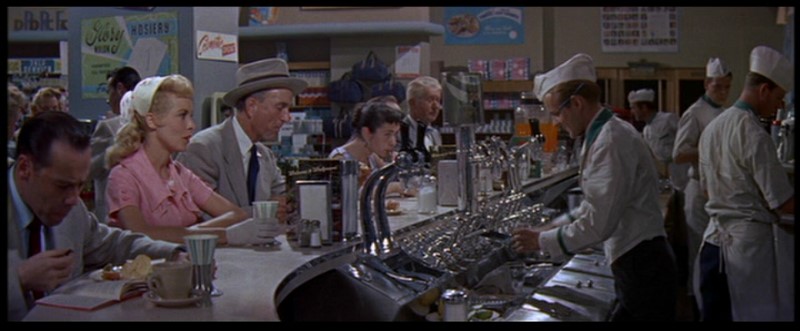
My Sister Eileen – Somehow, everything Bob Fosse touches turns to magic.  Betty Garrett and Janet Leigh play sisters who move to the big city and get a basement apartment in Greenwich Village.  Leigh tries to make it as an actress, wherein she is wooed by Fosse’s soda jerk and a journalist played by Tommy Rall (the two of them have a memorable dance-off, another standout sequence from Fosse, who continued the ridiculous roll he’d been on since 1953’s mesmerizing trifecta of Kiss Me Kate, Give a Girl a Break and The Affairs of Dobie Gillis).  Garrett is an aspiring writer, and sells Jack Lemmon, a publisher who she also wishes to date, on a story about her sister, by claiming it is autobiographical.  Somehow Dick York is involved as a wacky neighbor.  It all comes to a head with the Brazilian Navy and all of the Village uniting to convince the girls that city life is really swell after all, in one of the most glorious musical sequences of the 1950s.  Directed by Richard Quine, who I’ve been lukewarm on in the past, with a screenplay by Blake Edwards.  The #11 film of 1955.

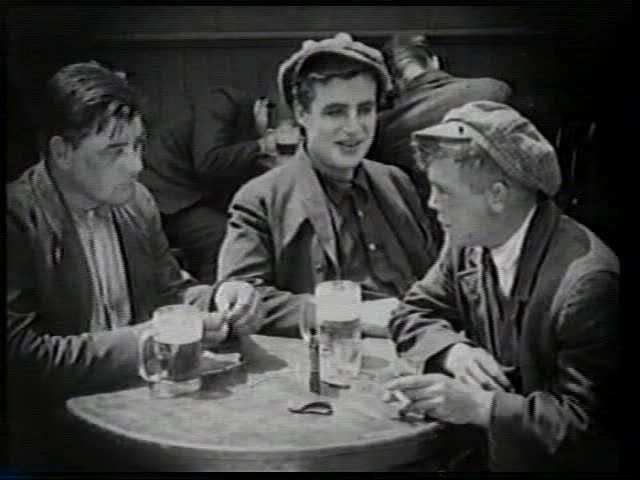
Regeneration – An early film from director Raoul Walsh, and the prototype for many a gangster film that would follow over the next few decades.  Rockliffe Fellowes (what a name!) stars as a young man, orphaned and forced to live out on the streets who grows to become the head of the local mob.  One day, he meets a saintly social worker (Anna Q. Nilsson, one of the bridge players in Sunset Blvd.) who teaches him to read.  He tries to reform himself, but his old cronies keep pulling him back into the gangster life.  Shot on location in The Bowery and Hell’s Kitchen, using local bums, whores and gangsters as extras, Walsh, in addition to kind of inventing the gangster melodrama (with all due credit to DW Griffith’s The Musketeers of Pig-Alley, released three years earlier), also sets a standard that would be picked up again in the 1940s and be called neo-realism.  Or rather, the film is a prime example of a strain of American filmmaking that would largely disappear as the Hollywood studios gained near-monopoly power in the late teens and 20s and that would then be rediscovered in the 40s.  The #1 film of 1915.

Going Hollywood – Walsh seems largely out of his element here though, directing Bing Crosby and Marion Davies in a would-be screwball musical comedy.  Crosby is a big movie star, and Davies a schoolteacher who’s obsessed with him.  She goes out to Hollywood, gets a job in the chorus of his latest movie and ends up taking the lead role when her rival for his affections and costar Lili Yvonne (played by Fifi D’Orsay, seriously) walks off the set.  It’s a pleasant enough film, but it lacks the fire of the really great comedies and musicals being made elsewhere at the same time.  I don’t know if the blame belongs to Walsh, the actors, or screenwriter Donald Ogden Stewart (one of the better writers of the 30s).  I really like Crosby in the Father O’Malley films he made 15 years later for Leo McCarey, but this is the first I’ve seen of Davies.  The #29 film of 1933.


HM Pulham, Esq – Mid-life crisis, 1940s style.  Robert Young plays a wealthy Boston businessman who leads a regimented, extremely dull life.  One night, while organizing his 25th anniversary college reunion, he reminisces about his youth as a young go-getter who got to hang out with Hedy Lamarr drinking, smoking and working in advertising in the days before World War I.  A lengthy flashback ensues, as we see Young and Lamarr’s romance grow and then fizzle when she refuses to relinquish her independence to his family’s patriarchal traditions.  So instead he marries boring Ruth Hussey and leads a life of luxury.  Returning to the present, Young looks up Lamarr and the two consider having another go at it, but this being 1940s Hollywood, he can’t abandon his marriage.  Instead, Hussey agrees to try to loosen up a bit.  A very solid film from director King Vidor, lying somewhere in between his political extremes of the socialist Our Daily Bread and the Ayn Rand adaptation The Fountainhead (which I’m still not convinced is not a self-parody).  It never quite rises to the level of William Wyler’s Dodsworth, another film about a rich guy’s mid-life crisis that is both more pointed in its indictment of the upper class and more romantic in the relationship between said rich guy (Walter Hutson) and the independent woman he meets (Mary Astor). However, that film is completely lacking in Hedy Lamarr, both her magnetic on-screen presence and her proto-feminist character.  The #16 film of 1941.


Street Angel – Another transcendent love story from director Frank Borzage, following up the previous year’s Seventh Heaven and reuniting that film’s stars, Janet Gaynor and Charles Farrell.  Gaynor plays a young woman who attempts to prostitute herself to pay for her dying mother’s medication.  She fails (of course) and is arrested.  Escaping from the police, she joins a circus where she meets Farrell, an aspiring painter.  The two fall in love and move back to the city, with Gaynor ever-fearful that her past will catch up to her.  When it inevitably does, she convinces the cop who’s found her to give them one last night together, sparking one of the all-time heart-breaking film sequences as the two share a big meal and a bunch of wine in what only Gaynor knows will be the last time they will ever be happy.  Of course she’s wrong, the movie must have its happy ending, but there’s a whole lot of darkness before that can happen, as Farrell turns into a dissolute drunk before he’s saved by their inevitable reunion.  Like with Seventh Heaven (and Murnau’s Sunrise) Borzage creates a believable world of petty crime and poverty on a soundstage and then infuses it with expressionist romanticism, an always intoxicating mixture.  The #5 film of 1928.

My Top 1000 Films of All-Time: 1-100


This is part five, the Top 100 of my Top 1000 films of all time.  Other entries: 101-200, 201-500, 501-750, 751-1000, honorable mentions.  Disclaimer: list-making like this is completely ridiculous for many reasons.  It’s arbitrary, dependent on personal whims and whatever mood I might be in at the time of ranking, the imperfections of my memory (growing more imperfect by the year), the limitations of what movies I have and haven’t seen, the vagueness of the criteria I use to rank them (there really aren’t any), and simply because the very idea of saying one film is 10 (or 50 or 200) better than another is completely absurd.  But lists are fun and can occasionally be useful.


1 Seven Samurai (Akira Kurosawa, 1954)


2 Chungking Express (Wong Kar-wai, 1994)


3 Casablanca (Michael Curtiz, 1942)


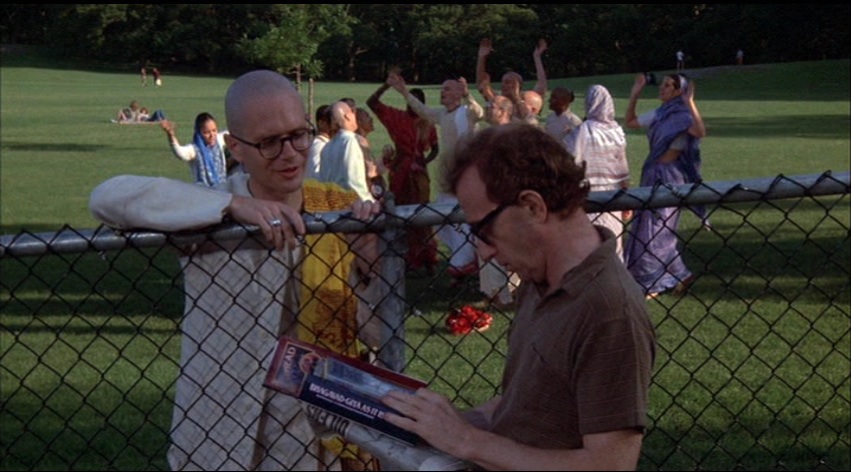
4 Annie Hall (Woody Allen, 1977)


5 Singin’ in the Rain (Stanley Donen & Gene Kelly, 1952)


6 Sunrise: A Song of Two Humans (FW Murnau, 1927)


7 Duck Soup (Leo McCarey, 1933)


8 Night of the Hunter (Charles Laughton, 1955)


9 The Rules of the Game (Jean Renoir, 1939)


10 The Searchers (John Ford, 1956)


11 Days of Heaven (Terrence Malick, 1978)

 
12 Playtime (Jacques Tati, 1967)


13 Vertigo (Alfred Hitchcock, 1958)


14 The Red Shoes (Powell & Pressburger, 1948)


15 Touch of Evil (Orson Welles, 1958)


16 Rear Window (Alfred Hitchcock, 1954)


17 Manhattan (Woody Allen, 1979)


18 All About Eve (Joseph L. Mankiewicz, 1950)


19 The Big Lebowski (The Coen Brothers, 1998)


20 Pierrot le fou (Jean-Luc Godard, 1965)


21 The Docks of New York (Josef von Sternberg, 1928)


22 Chimes at Midnight (Orson Welles, 1965)


23 The New World (Terrence Malick, 2005)


24 Children of Paradise (Marcel Carné, 1945)


25 La Commune (Paris, 1871) (Peter Watkins, 2000)


26 A Canterbury Tale (Powell & Pressburger, 1944)


27 Bringing Up Baby (Howard Hawks, 1938)


28 North By Northwest (Alfred Hitchcock, 1959)


29 Miller’s Crossing (The Coen Brothers, 1990)


30 Sherlock, Jr (Buster Keaton, 1924)


31 I Am Cuba (Mikhail Kalatozov, 1964)


32 City Lights (Charles Chaplin, 1931)


33 It’s a Wonderful Life (Frank Capra, 1946)


34 Dazed and Confused (Rochard Linklater, 1993)


35 Fitzcarraldo (Werner Herzog, 1982)


36 Millennium Mambo (Hou Hsiao-hsien, 2001)


37 Ugetsu (Kenji Mizoguchi, 1953)


38 Citizen Kane (Orson Welles, 1941)


39 Black Narcissus (Powell & Pressburger, 1947)


40 The Shop Around the Corner (Ernst Lubitsch, 1940)


41 Out of the Past (Jacques Tourneur, 1947)


42 Rio Bravo (Howard Hawks, 1959)


43 Dead Man (Jim Jarmusch, 1995)


44 2001: A Space Odyssey (Stanley Kubrick, 1968)


45 Funny Face (Stanley Donen, 1957)


46 A Matter of Life and Death (Powell & Pressburger, 1946) 


47 Late Spring (Yasujirô Ozu,1949) 


48 The Philadelphia Story (George Cukor, 1940)


49 All That Jazz (Bob Fosse, 1979)


50 M. Hulot’s Holiday (Jacques Tati, 1953)


51 A Woman is a Woman (Jean-Luc Godard, 1961)


52 F For Fake (Orson Welles, 1973)


53 The Thin Red Line (Terrence Malick, 1998)


54 Mulholland Dr. (David Lynch, 2001)


55 Hard-Boiled (John Woo, 1992)


56 Once Upon a Time in the West (Sergio Leone, 1968)


57 The General (Buster Keaton & Clyde Bruckman, 1926)


58 Celine and Julie Go Boating (Jacques Rivette, 1974)


59 Stagecoach (John Ford, 1939)


60 The Third Man (Carol Reed, 1949)


61 The 36th Chamber of Shaolin (Lau Kar-leung, 1978)


62 Stranger than Paradise (Jim Jarmusch, 1984)


63 Two-Lane Blacktop (Monte Hellman, 1971)


64 Mr. Smith Goes to Washington (Frank Capra, 1939)
 
65 An American in Paris (Vincente Minnelli, 1951)


66 Slacker (Richard Linklater, 1991)


67 The Royal Tenenbaums (Wes Anderson, 2001)


68 Voyage in Italy (Roberto Rossellini, 1954)


69 The Big Sleep (Howard Hawks, 1946)


70 Last Year at Marienbad (Alain Resnais, 1961)


71 The Lady Eve (Preston Sturges, 1941)


72 Swing Time (George Stevens, 1936)


73 Psycho (Alfred HItchcock, 1960)


74 The Adventures of Robin Hood (Michael Curtiz, 1938)


75 Only Angels Have Wings (Howard Hawks, 1939)


76 Punch-Drunk Love (Paul Thomas Anderson, 2002)


77 Histoire(s) du cinéma (Jean-Luc Godard, 1998)


78 L’Eclisse (Michelangelo Antonioni, 1962)


79 Ran (Akira Kurosawa, 1985)


80 Dr. Strangelove (Stanley Kubrick, 1964)


81 The Umbrellas of Cherbourg (Jacques Demy, 1964)


82 Zulu (Cy Endfield, 1964)


83 The Tree of Life (Terrence Malick, 2011)


84 The Green Ray (Eric Rohmer, 1986)


85 Certified Copy (Abbas Kiarostami, 2010)


86 The Lion in Winter (Anthony Harvey, 1968)


87 2046 (Wong Kar-wai, 2004)


88 The Quiet Man (John Ford, 1952)


89 The Birds (Alfred Hitchcock, 1963)


90 Airplane! (Zucker/Abrahams/Zucker, 1980)


91 The Band Wagon (Vincente Minnelli, 1953)


92 Au hasard Balthazar (Robert Bresson, 1966)


93 Morocco (Josef von Sternberg, 1930)


94 Miami Vice (Michael Mann, 2006)


95 The Man Who Shot Liberty Valance (John Ford, 1962)


96 Los Angeles Plays Itself (Thom Anderson, 2003)


97 Crouching Tiger, Hidden Dragon (Ang Lee, 2000)


98 Johnny Guitar (Nicholas Ray, 1954)


99 Tabu: A Story of the South Seas (FW Murnau, 1931)
100 Gone with the Wind (Victor Fleming, 1939)