Movie Roundup: Four Days of Rain Edition

The Lusty Men – In director Nicholas Ray’s low-key and grungy sports film, Robert Mitchum plays a broken down rodeo star who tries to go straight as a ranch hand but ends up igniting the bull-riding dreams of a young cowboy (Arthur Kennedy, always solid in supporting roles and quite good in a bigger part here).  Much of the plot of The Color of Money follows, with Kennedy’s early success leading to the kind of arrogance that alienates his wife.  Susan Hayward, as the stick in the mud wife that’s become a cliche in modern sports films, is a revelation here.  I’d only seen her before in Beau Geste and I Married a Witch, in neither of which does she convey the weary steeliness she displays here and she manages to make her stock character easily the most sympathetic one in the film.  Ray sticks so tenaciously to the modest dreams of his characters and makes so real their world that for awhile we actually believe that managing to stay on a bull for 10 seconds in Calgary is enough to make a man legendary and wealthy beyond imagining.  And of course it is.  The #11 film of 1952.
Greenberg –  Strange that this and The Social Network would come out within a few months of each other, both being attempts by aging Gen Xers to understand the younger generation.  Or maybe not, I guess these things can come in pairs, like volcano or asteroid movies.  In The Social Network, David Fincher and Aaron Sorkin try a few different ways of filtering 26 year old billionaire Mark Zuckerberg through the nerd stereotypes of their own generation, never coming up with an adequate solution to the mystery of why he seems like such a jerk.  In Greenberg, Noah Baumbach and Jennifer Jason Leigh use Ben Stiller’s character as a kind of generational surrogate.  He’s the Chris Eigeman character from Baumbach’s masterpiece Kicking and Screaming, 15 years later and having never grown up.  That’s not the right phrase though, as it implies maturity, which no one in Baumbach’s films ever achieves.  Rather, he failed to adapt as the world changed.  He’s a musician who refused to sell out (a Gen X ideal if ever there was) and now spends his time writing letters to the editor.  While house-sitting for his (successful) brother, he has a tentative romance with mumblecore starlet Greta Gerwig, as much an avatar for her generation as Stiller is for his.  The film follows Stiller as he tries, via his relationship with Gerwig, to adapt to the new while resolving and moving on from the old (via his relationships with his old bandmate (Rhys Ifans) and girlfriend (Leigh)).  It’s a mid-level film for Baumbach, I think, not as funny as his first two films, but less angry and misanthropic that his last two (The Squid and the Whale and Margot at the Wedding).  It instead provides the best balance between those two strains in his work, and Stiller gives his best performance in years.  The climactic scene when Stiller monologues about how much he hates and fears these kids today is one of the best scenes of the year, and comes closer than anything I’ve seen yet at really understanding this generation gap.

Undercurrent – A variation on the Rebecca/Suspicion/Secret Beyond the Door formula, though it isn’t nearly as good as any of those, wherein an innocent young woman marries a man who may or may not be a murderer.  Katharine Hepburn’s the woman, trying her best to appear naive, who marries Robert Taylor, a wealthy businessman who gets unusually angry whenever his brother, missing for some time now, gets mentioned.  Did he kill his brother?  How does Robert Mitchum fit into this?  And most importantly, is this really a Vincente Minnelli film?  It has few of the obvious touches that would mark it as Minnellian, as this kind of noir isn’t really a genre he’s known for (is The Bad and the Beautiful the next most noir Minnelli?).  But still in its early sections, with the focus on Hepburn’s humble, science-devoted life with her father and then her troubles fitting into her new husband’s high society world, there are flashes of the man who made Meet Me in St. Louis, Gigi and Tea and Sympathy.  Unfortunately, it’s not enough to inject more than a little life into the formula, and the film drags much more than it should, without any of the compensatory weirdness of the above Hitchcock and Fritz Lang films.  The #17 film of 1946.

The Canterville Ghost – Margaret O’Brien stars as the child owner of a big English estate that serves as a home to American troops during the war.  Said estate also happens to be haunted by the most notorious ghost in England: Charles Laughton, sporting his second worst mustache ever.  Laughton was ghostified 300 years earlier when he failed to come to the aid of his brother, Peter Lawford(!) and was walled up in the house and cursed by his father.  Only if one of his descendants commits an act of courage will he be freed.  It turns out one of the GIs, Robert Young, is just such a descendant, so the three of them contrive various ways to be brave.  It’s based on a story by Oscar Wilde and directed by Jules Dassin, and despite the greatness of Laughton and O’Brien (who is almost as brilliant as she was this same year in Meet Me in St. Louis), who share some great scenes together, it’s really never as good as all that talent would lead you to believe.  Still, it’s a fun little movie.  The #16 film of 1944.

St. Martin’s Lane – A much better Laughton film is this one, known as Sidewalks of London in the US (which I think is actually a better title).  He plays a street performer who earns his money reciting poetry very loudly and with little feeling before lines of theatre-goers.  Vivien Leigh steals his hatful of money, he chases her, espies her dancing in a moonlit, shadowy abandoned mansion (a lovely scene) and convinces her to join up with him in the performing business.  Being Vivien Leigh, though, her talent is uncontainable and she’s soon a star, performing indoors and dating Rex Harrison and leaving poor Laughton drunk and in the dust.  It’s a variation on the A Star is Born formula, and one of the best, buoyed by a heartbreaking performance from Laughton and an electric one from Leigh.  You do have to get past their outrageous accents though, they are well over the top.  Director Tim Whelan began his career as a writer with Harold Lloyd and went on to be one of the directors behind the 1940 Thief of Baghdad.  The #7 film of 1938.

Movie Roundup: Share The Gnus Edition


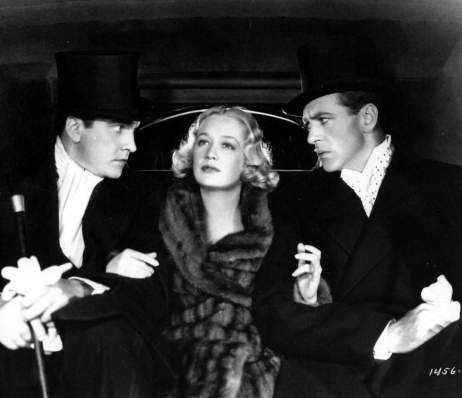
Design for Living – Miriam Hopkins can’t decide between a pair of struggling artists, playwright Frederic March and painter Gary Cooper, so they all agree to a joint, non-sexual cohabitation.  Predictably, as soon as March goes away for awhile, she hooks up with Cooper, because the young Gary Cooper is almost as irresistible as Miriam Hopkins. But since writers write movies, this one by Ben Hecht from a Noel Coward play, March gets a chance to win her back, whereupon she, predictably, leaves them both for Edward Everett Horton.  OK, maybe that isn’t so predictable.  Director Ernst Lubitsch is a perfect fit for this material, his lightness managing to avoid the self-indulgent ponderousness, and narrowly masculine point-of-view that François Truffaut would bring to similar material in Jules and Jim.  The #7 film of 1933.
Barbary Coast – Miriam Hopkins again, this time as a woman of loose morals who arrives in frontier San Francisco to find her fiancée dead.  So she gets a job at Edward G. Robinson’s casino as a physical attraction/roulette cooler.  Robinson’s the beruffled bad guy (and is apparently French: he sports the ridiculous name “Luis Chamalis”) who runs the town and is crazy for Miriam, and she’s pretty much resigned to her miserable life until she meets an idealistic prospector played by Joel McRea, who is Robinson’s opposite in pretty much every way.  In the background is the formation of a kind of law and order in the nascent community, which quickly turns into the ugliest kind of mob violence, and Walter Brennan with an early, gleefully immoral version of the character he’d play in later Hawks films like To Have and Have NotRed River and Rio Bravo.  The resulting film is a bit of a mess, and was originally a William Wyler film (Hawks was brought on after Wyler was fired), but it was written by Ben Hecht and Charles MacArthur, which means it’s good enough even when it doesn’t make a whole lot of sense.  The #10 film of 1935.
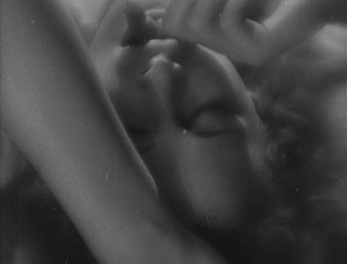
Ecstasy – A movie that attempts to answer the age-old question: is it possible to be really beautiful and utterly silly at the same time?  Made in Czechoslovakia by Gustav Machatý, it stars Hedy Lamarr as a girl who marries a much older man.  The opening, near silent sequence depicts her horrible disappointment on her wedding night and every night thereafter, when her husband would rather sleep than sleep with her.  One day, she’s off bathing naked in a pond when her horse, who is holding her clothes, takes off in a wild search for a lady horse, leaving poor Hedy to run naked through the countryside in pursuit and in full view of us and some road workers.  Who among us hasn’t been there?  She meets the engineer in charge of the project and yadda, yadda, yadda, she’s made very happy and leaves her husband.  The film was quite famous/notorious in its time for the extended nude scene as well as what was reportedly the first sex scene in a non-porn film, it may also be credited with creating the “foreign art movie = boobies!” idea that has been so vital to the art house movie theatre industry.  It’d be easy to dismiss it were it not for the fact that it’s such a beautifully crafted film, more rooted in the style of the great films from the late silent era than the early sound films of the period.  Three of the four main sections of the film (the opening wedding night, the sex scene and the tragic conclusion; with the fourth being Lamarr’s naked fun run) are masterpieces of mood created through lighting, editing and score with almost no dialogue.  Machatý didn’t have much of a film career following this film, but it made Lamarr an international star and she went on to invent cell phones.  The #13 film of 1933.

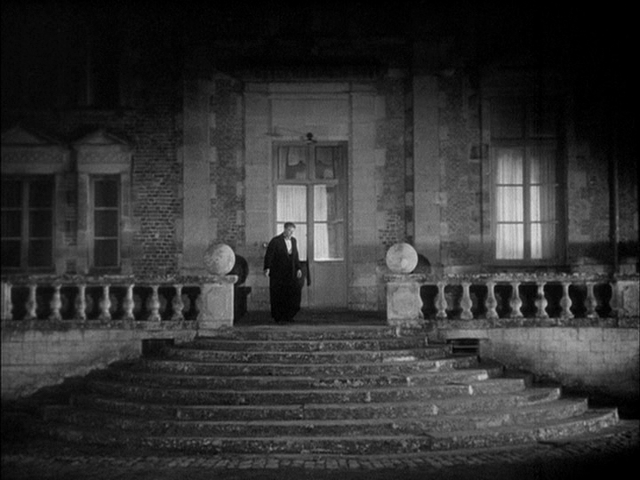
Love Me Tonight – Maurice Chevalier and Jeanette MacDonald interrupted their string of musicals directed by Ernst Lubitsch set among European nobility to star in this musical directed by Rouben Mamoulian set among European nobility.  Chevalier plays a tailor who get mistaken for a nobleman when he tries to collect a bill from drunken black sheep Charles Ruggles.  While at Ruggles’s family estate, he meets MacDonald, a princess or something, who despises him and then loves him as one can only despise and love Maurice Chevalier.  Chevalier falls for her too, which is inconceivable considering Myrna Loy is prowling around the estate as well.  Jeanette MacDonald is not without her charms, but there is no world in which she is preferable to Myrna Loy (MacDonald and the censors apparently agreed, as the one demanded wardrobe changes for Loy and the other cut some of her scenes for being too sexy).  Anyway, aside from a lovely opening sequence seemingly inspired by René Clair’s musicals form the same era (Under the Roofs of Paris, À nous la liberté) and the great “Isn’t It Romantic”, the songs are merely OK and MacDonald’s singing is as annoying as ever.  There’s enough else going on that it may very well be better than any of the Lubitsch Chevalier/MacDonalds, but these actors just are not for me.  The #13 film of 1932.

Roberta – What’s the point of a Fred Astaire/Ginger Rogers film that has only three dance sequences?  I really don’t know.  Instead we have a romantic comedy of sorts with Randolph Scott as the heir to a fashion empire and Irene Dunne as the head designer.  They quarrel over ladies’ outfits: he thinks they should show less skin, thus confirming that he is indeed the Worst Fashion Designer Ever.  Astaire’s his buddy who’s in Paris with a band, Rogers is a fashion client pretending to be a Russian countess or something.  I like Irene Dunne as much as the next guy, but in 1935 no woman in Hollywood was a match for Ginger Rogers, it’s a travesty that she’s barely in the picture.  The #15 film of 1935.
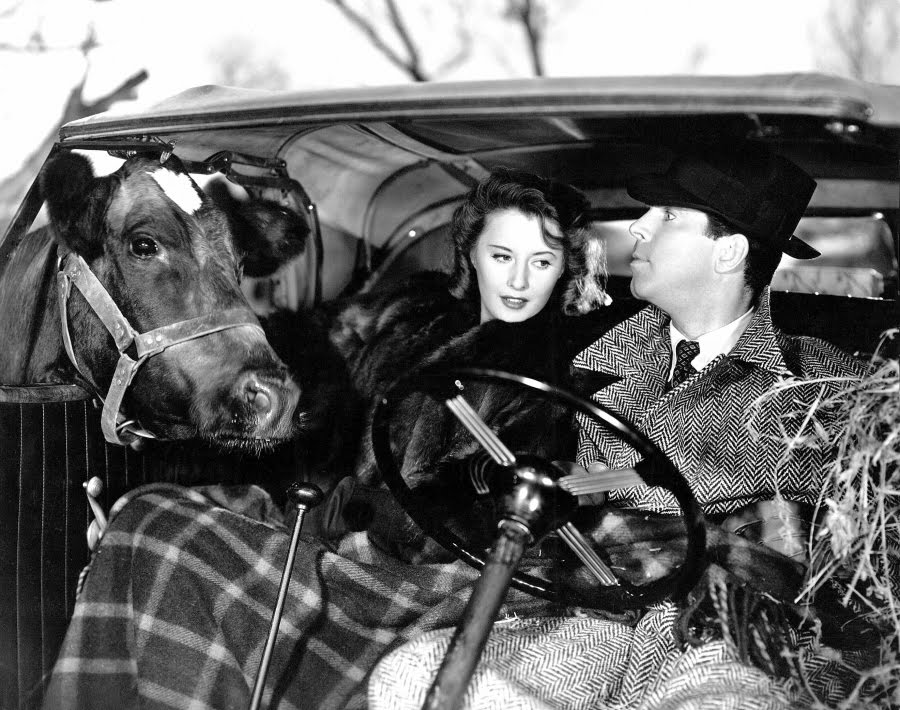
The Egg and I – Claudette Colbert and Fred MacMurray are cityfolk who buy a chicken farm in the middle of nowhere.  Their new place is a dump and everything from nature to their thieving neighbors Ma and Pa Kettle seem to be conspiring to make them fail.  Hilarity ensues.  Well, not really, but it’s pleasant enough and even gets a little dark at the end.  It’s like Funny Farm, but better.  Did you know Funny Farm is available on Blu-Ray?  This cannot be good for our civilization.  The #18 film of 1947.

Way Down East – A very naive country girl (Lillian Gish, lovely as ever) is tricked into thinking she’s married to rich jerk Lowell Sherman.  After she gets knocked up, he abandons her, telling her they were never married after all and she’s doomed to a reputation of sluttiness forever.  After giving birth, she tries to make a new life for herself as the maid to a wealthy family, but Sherman turns out to be their neighbor (and have romantic designs on one of their relations) and even though Richard Barthelmess, the son in the family falls for her (and how could he not, she being Lillian Gish?) tragedy will surely strike when her secret is revealed.  It may be even more florid a melodrama than typical from director DW Griffith, a master of florid melodrama, but the final chase sequence (it can’t be Griffith without a chase sequence) across melting river ice is one of his best.  The #3 film of 1920.


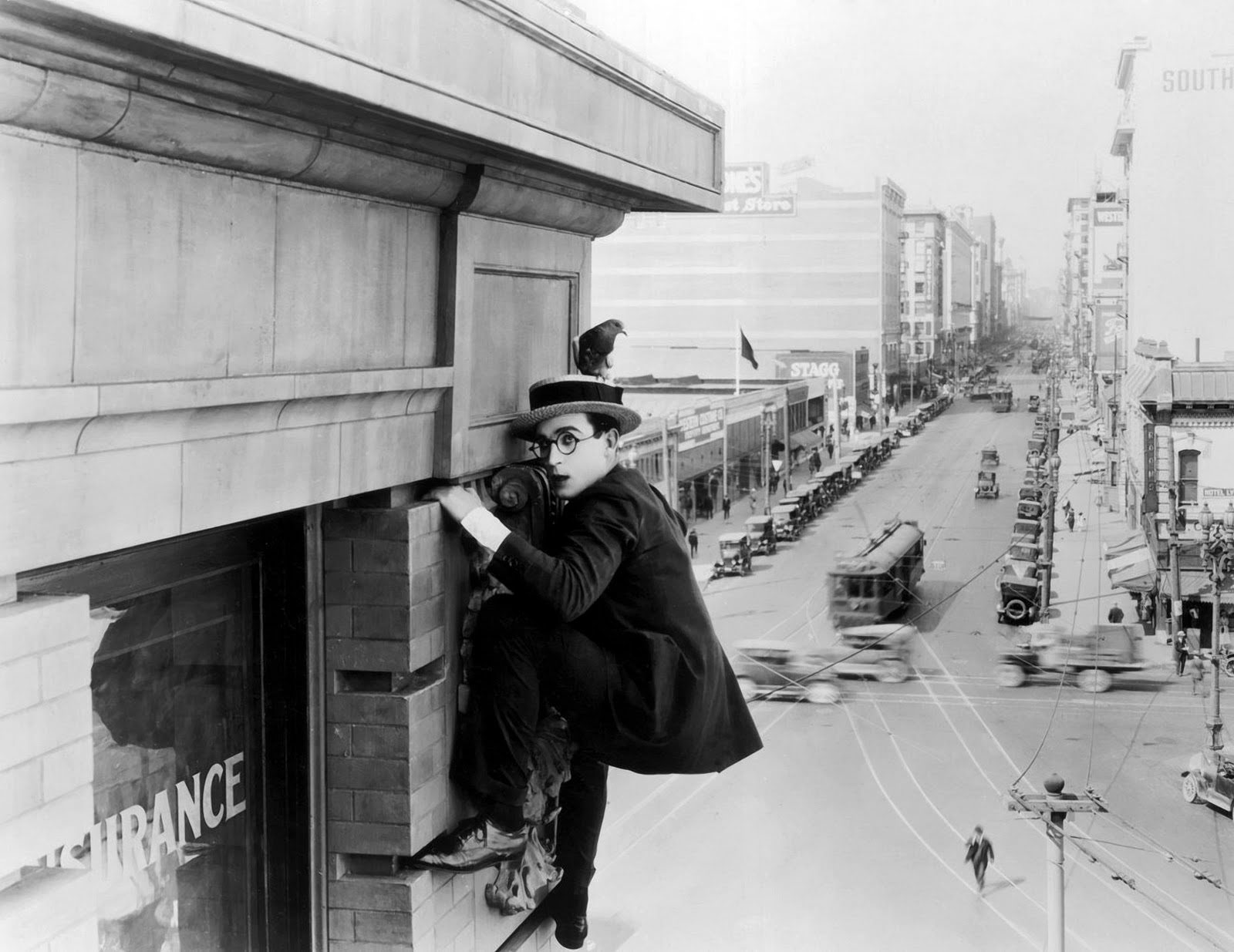
Safety Last! – This is the third Harold Lloyd film I’ve seen, and it’s easily my favorite.  I still don’t think he’s particularly funny, but the second half of this movie, where he climbs a building in order to get a promotion so he can get married (don’t ask) is as remarkable and suspenseful a sequence as I’ve seen in silent comedy.  This is where the famous shot of Lloyd hanging off the face of a clock comes from.  Of course, Buster Keaton would have actually climbed the building instead of relying on below the shot platforms*, but it’s Lloyd’s curse to perpetually be compared to Keaton and Chaplin, where he will always come up short.  The first half of the film is pretty good as well, with some good slapstick as Lloyd tries to deal with dozens of customers at once. Though, as usual with Lloyd, the jokes are overlong and underfunny.  The #2 film of 1923.

*Edit: Turns out Lloyd was missing a thumb and two fingers on his right hand, thanks to a prop explosion in 1919.  That excuses him from resorting to camera tricks for his great stunt, I think.

Movie Roundup: Beautiful Dark Twisted Edition

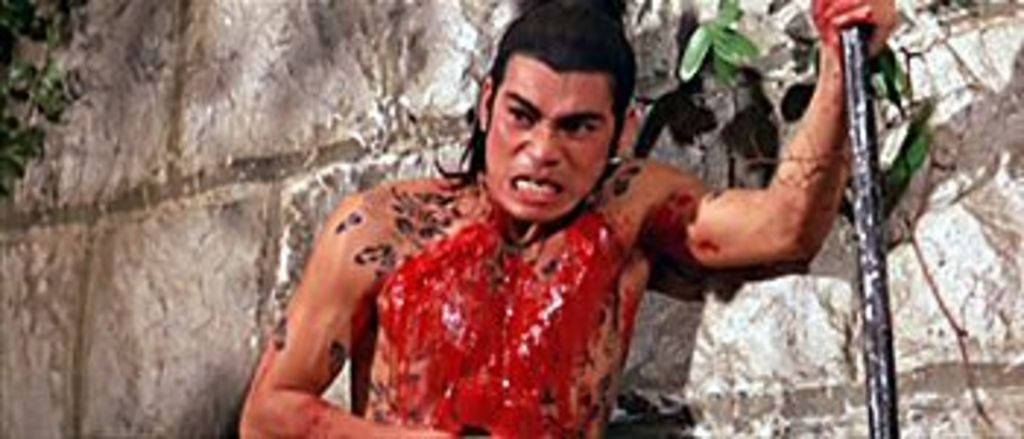
All Men Are Brothers – A sequel to the Chang Cheh-directed adaptation of a section of the classic Chinese epic The Water Margin, which I wrote a little about here.  This one isn’t quite as good, though it is more focused in story and character.  The band of outlaws from the first film, now reconciled with the Emperor, attempts to capture the seaside town Hongchow.  Spies infiltrate the city, come up with a plan, and execute it.  In the meanwhile, lots of heroes get the chance to prove their heroism by dying heroically in Cheh’s characteristically brutal kung fu sequences.  David Chiang again stars, though he doesn’t get the chance to be as charming as he was in the first film.  The #11 film of 1975.

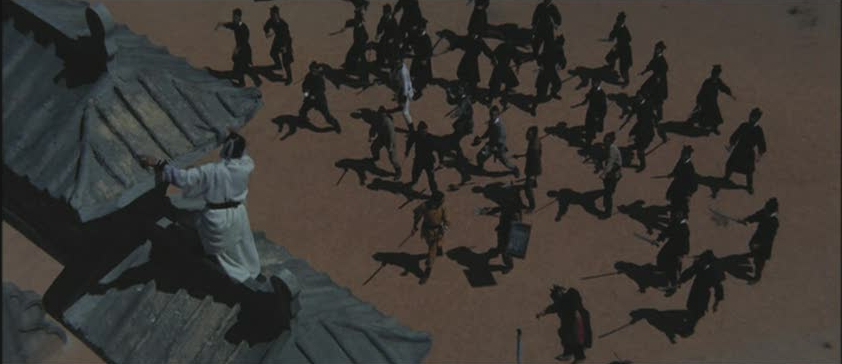
Brothers Five – More interesting is this film starring Cheng Pei-pei (Come Drink With Me, Crouching Tiger, Hidden Dragon).  She plays the daughter of kung fu master who’s sworn to reunite the separated children of the title so they can take revenge on the villain who killed their father and whose gang terrorizes the local town and countryside.  The brothers have no idea of their family history, but have each learned complementary skills that only they can combine, Voltron-style, to defeat the bad guy.  Again, the fight scenes are the big draw here, and they are impressive.  More unusual is the way director Lo Wei films them, often in overhead longshots that are far more panoramic and lyrical than you usually get in Shaw Brothers films of this period.  This lends his big action set-pieces, with dozens of soldiers fighting multiple heroes in discreet parts of the frame, a scope and grandeur unlike anything else I’ve seen.  Lo went on to direct a couple of Bruce Lee films I haven’t seen yet (Fist of Fury and The Big Boss).  I guess I need to watch those now.  The #6 film of 1970.
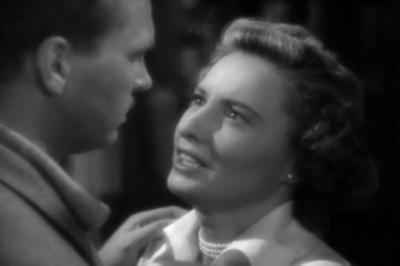
No Man of Her Own – Directed by Mitchell Leisen, Barbara Stanwyck plays a poor knocked up girl abandoned by her jerk of a boyfriend who gets mistaken for the new daughter-in-law of a rich family after a train crash (the real daughter and son are killed, no one knew what the actual bride looked like).  She goes along with it, for the sake of her kid, naturally, and falls for her dead supposed husband’s brother.  When the old boyfriend shows up talking blackmail, we get to find out just how noir the movie’s going to get.  It’s a solid film, but Stanwyck could do roles like this in her sleep.  The rest of the cast and crew are very competent, but the film never really gets as twisted as the material, and Stanwyck, seems to want it to be.  Instead, Leisen goes for the melodramatic punch and pretty well succeeds, or maybe I’m just a sucker for sad moms.  The #18 film of 1950.
Remember the Night – An even better Stanwyck/Leisen collaboration is this screwball melodrama written by Preston Sturges.  Stanwyck is a petty thief who gets arrested right before Christmas break; Fred MacMurray’s her prosecutor.  Through irrelevant narrative maneuverings, Fred ends up taking Barbara to his family’s idyllic middle American homestead for the holidays.  Along the way, her hard-boiledness melts away thanks to the generous awesomeness of the American rural middle class (personified as usual by Beulah Bondi).  It sounds silly, but the actors are so good, and Sturges’s script so smooth, that by the time I realized what was happening, I was hooked and believed every bit of it.  It’s not as crazy as the films Sturges directed himself, I have to think that’s due to Leisen, a director who seems more at home in the midwest than the anarchic city.  Not that he didn’t make great straight screwballs: Midnight and Easy Living are unassailable, but even they aren’t as wild as the best of Sturges.  This film seems a pretty perfect middle ground between the two of them.  The #11 film of 1940.
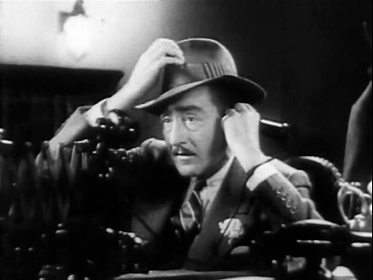
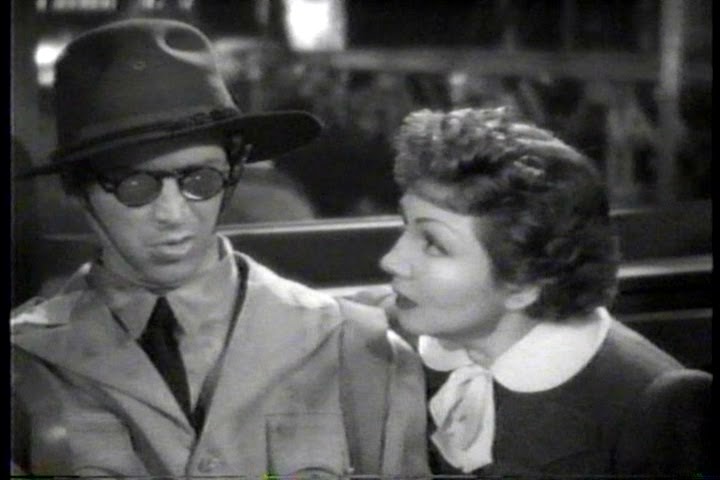
It’s a Wonderful World – Few screwball comedies are as wild, though, as this one by WS Van Dyke from a screenplay by Ben Hecht and Herman Mankiewicz.  A kind of combination of The 39 Steps and It Happened One Night, Jimmy Stewart is a private eye who’s going to jail for protecting his client, a rich drunk who’s been framed for murder.  He escapes, daringly jumping from a moving train into a river while handcuffed to a cop, who he then beats into unconsciousness, as only Jimmy Stewart can.  Reaching shore, he kidnaps Claudette Colbert and drags her along as a hostage, beard and eventual generally unhelpful co-conspirator.  While of trying to evade the police and gather the evidence needed to free the rich drunk before his execution, the two adopt a dizzying array of disguises and knock many, many people on the head.  It’s everything you want a zany screwball proto-noir to be.  The #21 film of 1939.
Los Angeles Plays Itself – Thanks to the wonderful world of copyright law, this magisterial documentary by Thom Anderson is unavailable on DVD.  It’s a two and a half hour look at representations of Los Angeles (not “L. A.”) in Hollywood cinema throughout the 20th Century, and mostly about how bad or annoying or wrong those representations are.  It seems that, like the rest of us, Los Angeles hates itself.  Consisting entirely of film clips (there are hundreds, hence the rights issues), Anderson manages not only a highly personal history of a city (along the lines of the more recent My Winnipeg by Guy Maddin, Of Time and the City by Terrence Davies and I Wish I Knew by Jia Zhangke) but also a fascinating study of the way film uses architecture and environment to convey meaning (almost always, quite literally, in the background) and occasionally different meanings with the same architecture.  Most damning, for Anderson, is Hollywood’s demonization of mid-century modern architecture, which we see again and again in the movies as proxies for villainy (the Lethal Weapon 2 clip here is possibly the funniest moment in a very funny film).  I’d never before seen an entire film over the internet, and a don’t like watching them on computers, but this singular film is absolutely worth seeking out by whatever means are available to you.  The #3 film of 2003.
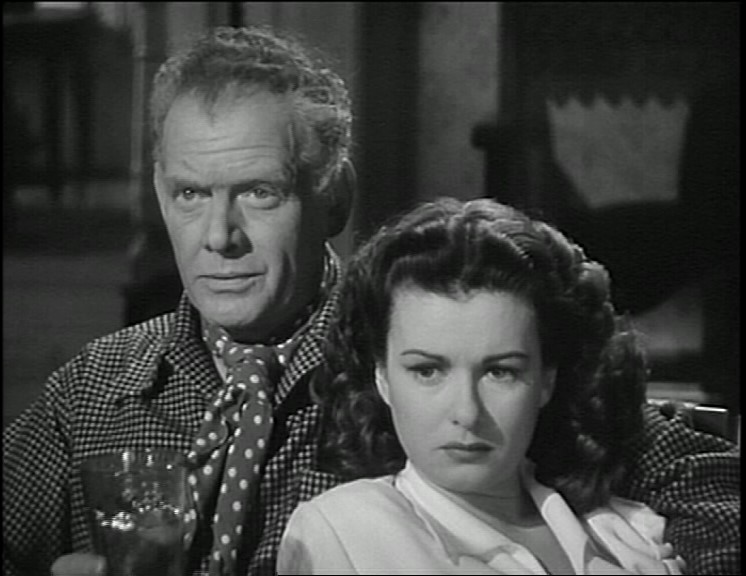
The Woman on the Beach – Jean Renoir left France for Hollywood in the wake of the disastrous opening of The Rules of the Game and the German invasion.  He made a few films while here, this being the last of them (the only other one I’ve seen, The Southerner, I liked quite a bit).  This one was apparently extensively altered after he finished with it, in an attempt to make it more popular, but that, as it usually does, failed.  It’s a moody noir with Robert Ryan as a Coast Guard officer with PTSD who falls for Joan Bennett, who’s married to a blind painter played by Charles Bickford.  Ryan thinks the painter’s faking his blindness as an excuse to keep Bennett around, but he’s really just nuts (both because of his personal trauma and Bennett’s considerable charms).  Crazy as well are Bennett and Bickford, who have traumas of their own they aren’t dealing with productively, so it all makes for a wild love triangle where everyone is mean to everyone and three horribly damaged people can’t quite manage to get past what damaged them.  It might be the saddest noir I’ve ever seen, but I’m not sure any of it makes the least bit of sense.  The #11 film of 1947.
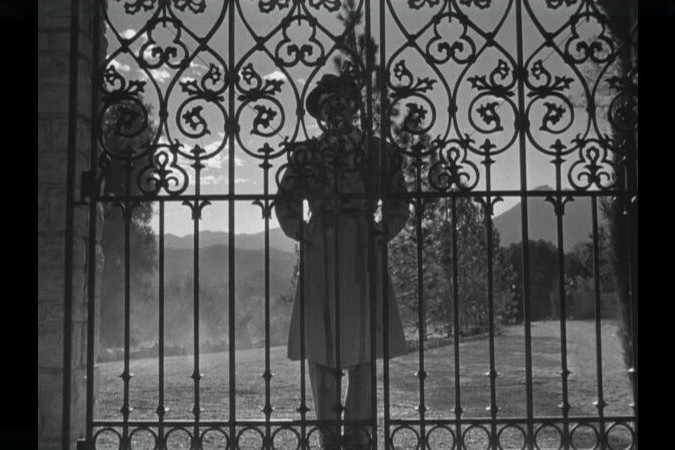
Les Misérables – This is the massive French version of the Victor Hugo novel, directed by Raymond Bernard and running about four and a half hours long in three parts.  The only experience I had of the story before watching this was the 1998 version with Liam Neeson, Geoffrey Rush and Claire Danes, which I passionately hated, and the song from the musical version that Katie Holmes sang near the end of Season One of Dawson’s Creek, which is awesome.  I’d pretty much forgotten why I didn’t like that other movie, though watching this brought it all back.  Jean Valjean is an excon who tries to go straight, only to be hounded by a police inspector who keeps running into him.  In the ’98 version, Valjean’s persecution seemed nonsensical to me: there’s no reason given other than that poor people have a tough life and this particular inspector hates him beyond all reason.  This version does a better job of motivating Inspector Javert and even makes him somewhat sympathetic.  But still, despite the massive running time, the film feels schematic, like Hugo had a point he wanted to make rather than a world or people he wanted to create, or a story he wanted to tell.  Bernard does pretty well with the material, especially with the film’s most exciting sequences, the climaxes to parts one and two and an extended vision of one corner of the street fighting during the 1832 Rebellion.  Harry Baur is pretty well perfect as the outsized (physically, morally, intellectually) Jean Valjean, he’s kind of a slower, more Gallic Charles Laughton.  I imagine that if this is a story you like, then this would be the version to see.  As it is, and despite its virtues, it’s probably my least favorite four hour plus movie.  The #13 film of 1934.

Movie Roundup: Chance of Snow Edition


Moonrise – The last film of director Frank Borzage’s career as a steadily working director (he doesn’t have another imdb credit for ten years) is one of his best.  A swampy noir set in the deep South, in some ways it anticipates Charles Laughton’s Night of the Hunter, though it lacks that film’s wild genius.  Dane Clark plays the son of a convicted and executed murderer who grows up barely enduring the taunts of the other children in his small town.  Finally, in young adulthood, he fights back and accidentally kills one of his tormentors.  He succeeds in hiding the body, for awhile, but his guilt begins to eat away at him and the law eventually picks up his trail.  More than a vehicle for noir-plotting, the film is a close-up look at the prejudices and pleasures of small town life, a distant, dark cousin of Jacques Tourneur’s great Stars in My Crown.  The #10 film of 1948.

No Greater Glory – Another excellent Borzage film, this one from the middle of his career.  It follows a gang of kids who occupy a local vacant lot with militaristic games, and their war against a rival, older gang that wants to take over their lot.  The hero is the smallest and weakest kid, the only one of the gang who isn’t allowed to pretend to be an officer, and we follow his increasingly self-endangering attempts to prove his courage to his friends. The allegorical reading of the film is too obvious to be interesting.  Instead, it’s a warmly fascinating look at the games kids play, the ways they interpret and distort the adult world around them.  The film looks at the kids not as avatars for a message of world peace (or whatever), but rather directly as fully functional human beings, ones just as capable of foolishness, bravery, treachery and redemption as any grown up.  few films have ever treated children with so much respect.  The #8 film of 1934.

Topper – A pleasant, relatively minor entry in the screwball comedy genre.  Cary Grant (underused) and Constance Bennett (awesome) play a Nick and Nora-esque couple of rich drunks who die in a car accident and begin haunting their fuddy-duddy friend, bank executive Cosmo Topper (Roland Young, Uncle Willy in The Philadelphia Story).  Grant and Bennett help Topper lighten up with their crazy ghost hijinks, and lessons are learned all around.  It’s fun and mostly harmless, but it could have been better.  This is a problem I have with some screwball comedies: I keep wishing they were written by Ben Hecht or Howard Hawks or Preston Sturges.  This is, of course, unfair.  I’d still rather watch an above average but not great romantic comedy from the 1930s than almost any romantic comedy from the 2000s.  The #14 film of 1937.

The Unsuspected – This Michael Curtiz film falls somewhere between a classy mystery film and a twisted film noir.  Claude Rains is a famous radio personality (he relates tales of murder!) whose secretary and niece have both died.  When a man shows up claiming to be the dead niece’s husband, Rains, another niece (Audrey Totter, always welcome) and her drunk husband are suspicious.  They’re more so when the supposedly dead niece returns and doesn’t remember her husband.  Amnesia, a gold-digging scam, revenge?  It all turns out to be a lot more obvious than the setup promises, but still, it’s a very fun film, not least because Claude Rains is always awesome.  I swear, the man could have made a Dan Brown movie seem brilliant.  The #13 film of 1947.

The Social Network – The best Hollywood film of the year thus far, David Fincher’s account of the founding of facebook is better than its screenplay tries to make it.  Screenwriter Aaron Sorkin, as always a wizard with musical exchanges of dialogue, seems to think the film is about facebook founder Mark Zuckerberg and the Kaneian question of why he did what he did.  He proposes two not necessarily mutually exclusive theories, grounded in a pair of lawsuits filed against Zuckerberg by his former associates.  The first is that Zuckerberg was a social climber, jealous of his rich Harvard classmates’ fancy clubs and boat-rowing abilities (this is the lawsuit filed by the Winklevoss twins and Divya Narendra).  The second is that he was brainwashed by a coke-addled Justin Timberlake into putting his own “coolness” above his relationship with his best friend (Eduardo Saverin, the source of this lawsuit).  Fortunately, the film presents both theories as inadequate explanations of the facts (pretty much every idea Saverin has for the company is terrible, which should be a fireable offense, and the Winklevoss-Narendra claim on the idea is mostly groundless (the social network idea was already out there, it was Zuckerberg that made the leap that made facebook possible, etc)).  Both of these possible interpretations can be taken as just that, theories proposed by individuals who are suing the person we’re trying to understand, as such, we can accept them as unreliable possibilities (the Kane/Rashomon connection).  There is a third possibility as well, which is that Zuckerberg did it all to impress girls.  This appears to be Sorkin’s theory, as evidenced by the fact that it is not based in court testimony or tell-all books.  Instead, Sorkin embellishes an ex-girlfriend (exaggerating the offensiveness of what Zuckerberg wrote about her in his blog), stupidly makes the facemash website sexist and ignores the fact that through this whole period, Zuckerberg had a steady girlfriend, one whom he is still seeing.  In Sorkin’s version, Zuckerberg gained the whole world, but all for Rooney Mara to be his friend.

Anyway, all this plot and theme nonsense is just that, what makes the film great is everything else.  Not just the performances, which are uniformly excellent, but Fincher’s direction and pacing and willingness to do crazy things like spend several minutes on a crew race in London (in contradiction to the facts, naturally) scored to a Trent Reznorized version of “In the Hall of the Mountain King” that begins with a tilt-shift establishing shot just for the hell of it (or is it that to the rich and powerful, the world is a toy?  Nah, it just looks cool).  Basically, I love everything about this movie except what it keeps trying to tell me it’s about, which is false and dumb and kinda sad.  The movie is like ABBA: pop musical perfection trumping lyrical vapidity.

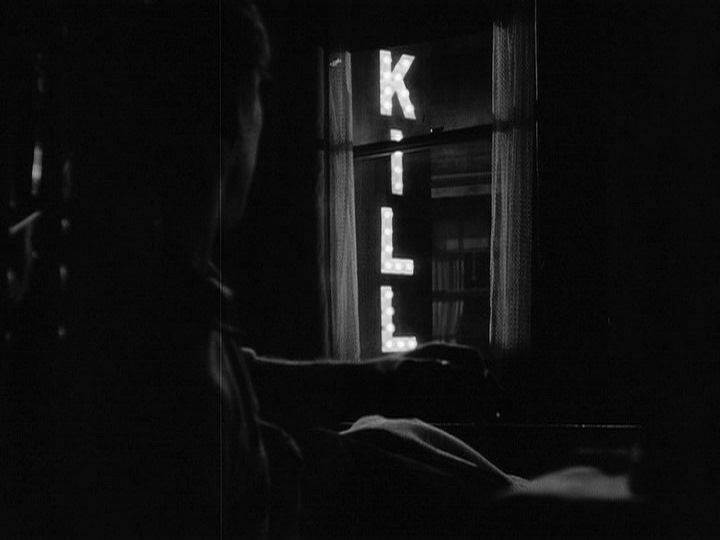
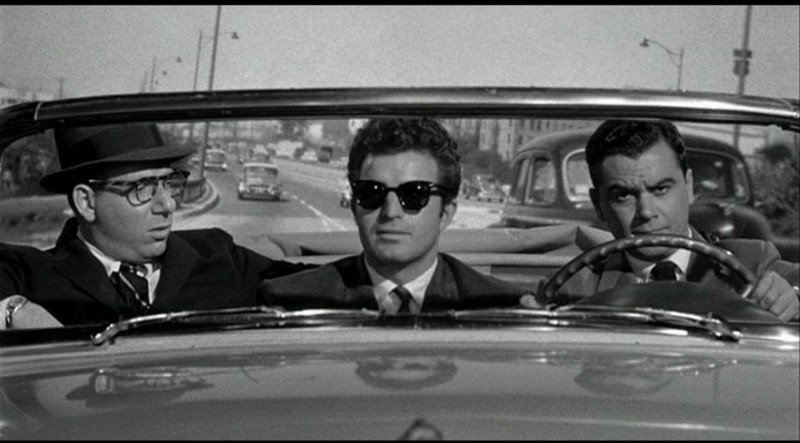
The Lineup – A taut noir procedural from director Don Siegel about heroin smugglers in San Francisco.  The drugs are being put in unsuspecting travelers’ luggage, and Eli Wallach has to go around collecting the packages, killing anyone who gets in his way, before the cops catch up with him.  It’s a precursor to the crime films of the late 60s and early 70s, with coolness and quiet professionalism the highest value (as in Bullitt or Le cercle rouge), as well as a fantastic bit of on-location filming (set in San Francisco, the city Siegel would return to in one of the seminal films of that later cycle, Dirty Harry).  Ruthless and increasingly desperate, Wallach is as electric as always.  His attempts to keep cool pay off in then end when he finally he loses it, leading to a terrific car chase, another hallmark of those later films.  It might be Siegel’s best film, it’s certainly the most flawless I’ve seen.  The #9 film of 1958.

5 Against the House – A weird mix of 50s college comedy, heist film and study of the psychological effects of war on young men.  Brian Keith is the shell shocked one of his four vet buddies, now enrolled, thanks to the GI Bill, in a generic Midwestern University, the one prone to violent rages when some guy looks at his girl the wrong way.  The brainy buddy comes up with a way to rob a casino, and the guys (plus one girl, Kim Novak) set off for Reno to pretend to pull off the crime, you know, for kicks.  Then Keith goes nuts and everything gets real.  It’s all pretty ridiculous, but the film deserves some credit for treating the Korean War vets with some sympathy and respect.  Director Phil Karlson’s done a lot better though.  Also Mike Nichols ripped off The Graduate‘s most famous shot from it.  The #29 film of 1955.

Murder By Contract – Right up there with Blast of Silence, Detour and The Hitch-Hiker among the greatest truly B-level noirs ever made.  Vince Edwards wants to be a hired killer, asks for the chance, waits a long time and gets the job, a job he shows remarkable skill at.  That’s the first third of the film.  The rest follows one job, killing a mob witness at her well-guarded Los Angeles house (the setup should be familiar to fans of Jim Jarmusch’s The Limits of Control, which might be a remake of this film).  For this he’s got an audience, a pair of dumbasses along to make sure he doesn’t bungle things (not surprisingly they get in the way).  Like the best low-budget films, this one takes its time.  In its editing rhythms, it actually feels more like a Robert Bresson film (Pickpocket is the natural correlation) than anything being made in Hollywood at the time, though with a score inspired by The Third Man (guitar over zither, this being California).  A beautiful, nasty, melancholy film, I can’t wait to see more from director Irving Lerner.  The #6 film of 1958.

The Sniper – Another film that recalls Dirty Harry, which also revolves around the hunt for a serial killing sniper in San Francisco.  Directed by Edward Dmytryk (and produced by none other than Stanley Kramer), the film veers dangerously close to the social problem genre, as we learn that the killer is targeting brunettes because of his mother or something.  But there’s enough suspense both in the procedural aspects of the hunt and in the killer’s attempts to stop himself from killing to keep things watchable.  The #21 film of 1952.
Scandal Sheet – The B-movie version of The Big Clock, with direction by Phil Karlson from a novel by Samuel Fuller.  Broderick Crawford is the sleazy editor of a tabloid about to push circulation to the level that’ll make him rich when he accidentally meets his abandoned wife and kills her.  He covers up the crime, but his protege and best reporter, egged on by none other than Donna Reed, are hot on his trail.  It doesn’t have the investigating yourself aspect of The Big Clock and while that film is set in the rarified A picture air of rich magazine people played by big stars (Charles Laughton and Ray Milland where this film gets the volcanic Crawford, the lovely Reed and the inadequate John Derek), this film revels in its lower class world: pawnshops, broken down drunks by the dozen and the saddest dance you’ve ever seen. It’s Fuller and Karlson at their grungy best.  The #15 film of 1952.