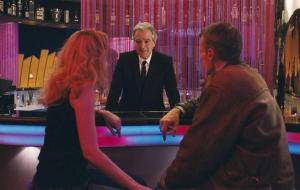
Private Fears in Public Places – After liking Wild Grass so much, I decided I need to make more of an effort to see Alain Resnais movies (the only others I’ve seen are his first three features, the last of which was released almost 50 years ago). This is his second most recent film, and it’s an adaptation of Alan Ayckbourn play featuring six interrelated characters and their romantic misadventures. As network narratives go, it’s refreshingly low-key, not nearly as hyperbolically metaphysical as something like Magnolia or Crash. Instead, it manages to be whimsically depressing, a tonal mix one doesn’t see very often (Roy Andersson’s You, the Living comes to mind as a recent example). As the various characters try and fail to connect at pretty much any kind of level, not just romantically, we’re not overwhelmed by the impossibility of human happiness: the film’s simply too kooky and too pretty for that (the cinematography is by the omnipresent Eric Gautier (A Christmas Tale, Summer Hours), the kook comes largely from Sabine Azéma, the red-headed star of Wild Grass). The visual plan reflects this double effect: beautifully shot scenes of snow and strikingly designed sets that are themselves subdivided such that the characters are constantly separated and isolated by their physical environments. But those environments are aesthetically enjoyable enough, and the possibilities of their fictional world crazy enough, that their lives don’t seem totally devoid of hope. The #6 film of 2006.

Dodsworth – Voyage in Italy has a rival in the “old married couple goes on vacation and falls apart” genre with this William Wyler film. Walter Huston and Ruth Chatterton star as the couple, he a just retired automobile executive and she a housewife who wants to live a wild high class life in Europe. The two go on their adventure (Huston’s adorable in his enthusiasm to see all the sights after a lifetime of work) and Chatterton almost immediately begins plotting classy infidelities. Well, at first she turns down David Niven, but as nobler (in title only) options become available to her, she becomes more available to them, if you know what I mean. Huston, heartbroken but understanding, gives his wife a chance to have some fun, expecting an eventual reunion. When that doesn’t work, he falls for Irene Dunne Mary Astor, a divorcee who’s pretty much perfect. It certainly isn’t as transcendent a film as Voyage in Italy (what is?), but Huston in particular is marvelous, a fully-realized character and my favorite of his many great performances. The film is a bit unfair to Chatterton’s character: she has the Betty Draper problem of how to make a spoiled, immature character sympathetic, or at least understandable. To Wyler and Chatterton’s credit, it almost succeeds. The #2 film of 1936.

Underworld – The prototype gangster film from Josef von Sternberg stars George Bancroft as the enormous in size and mirth Bull Weed who adopts a professorial drunk named Rolls Royce and dates a girl named Feathers (the resemblance in setup and character names to Rio Bravo can be traced to the fact that Howard Hawks himself supposedly had a hand in this screenplay, it was also based on a story by frequent Hawks collaborator Ben Hecht). The centerpiece of a film is a delirious party in an even more delirious Sternbergian space where Weed, overcome with jealousy over Feathers, kills rival gangster and florist Buck Mulligan (the Joycean name can’t be a coincidence). A prison break leads to a climax that would become all-too-familiar to fans of the gangster genre over the next 5-10 years, albeit one with an ending that could only come from Sternberg. The #3 film of 1927.
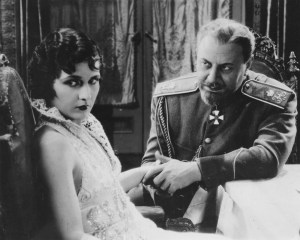
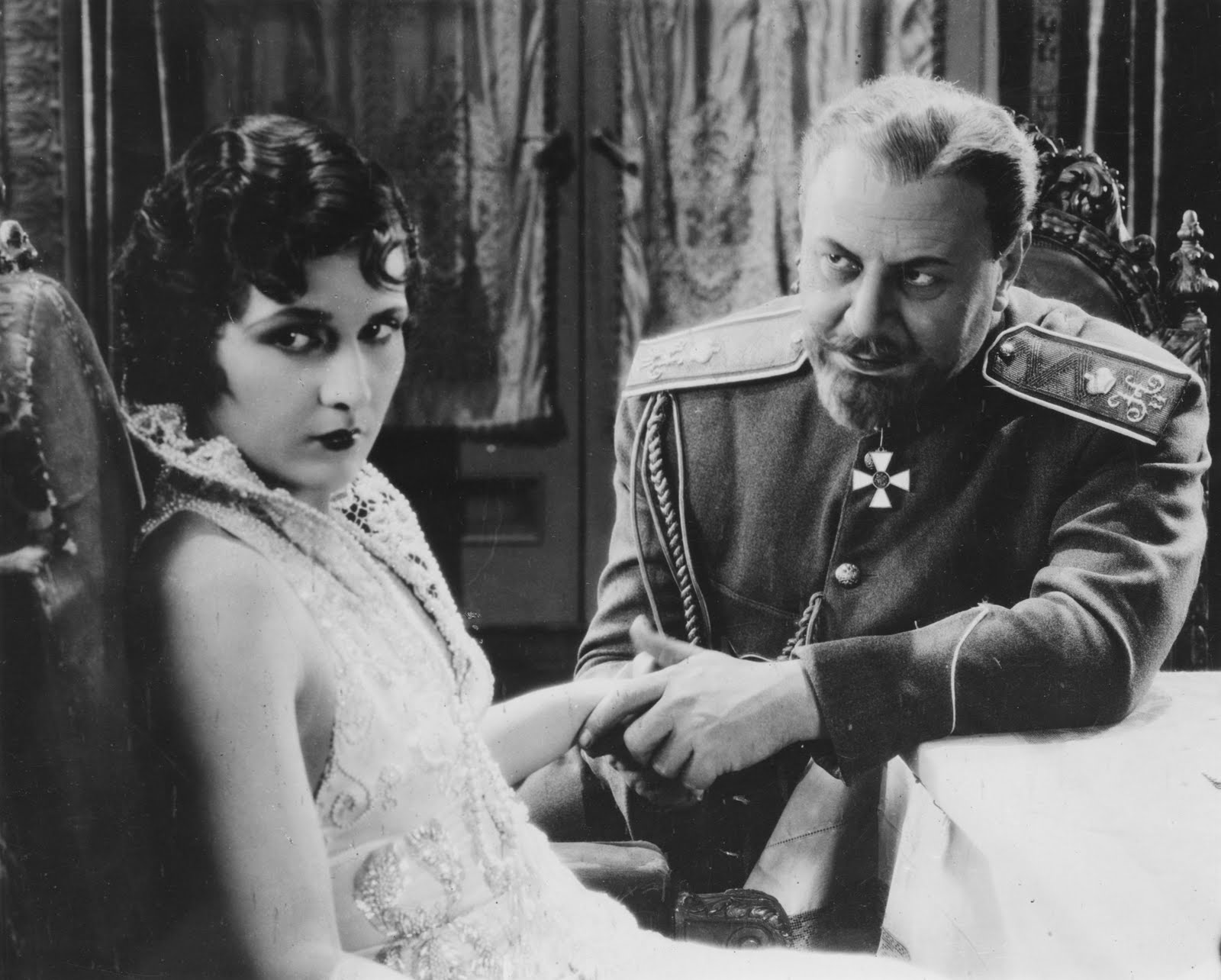
The Last Command – The least of the films in Criterion’s Silent Sternberg boxset, but that’s a very high standard. Legendary German silent film star Emil Jannings stars as a former Tsarist general who’s been reduced to the life of a Hollywood extra a decade after the Revolution. The film opens with a hilarious and detailed look at the life of an extra in the 1920s, as the massive crowds are shoved from window to window to collect the various parts of their uniform: a character assembly line. The end of the film as well is a rare look at how films were made at the time (notice two cameras, one for the US version, one for the rest of the world). But the bulk of the movie is a flashback about the general’s fall: how a Bolshevik spy (Evelyn Brent, Feathers in Underworld)) got close enough to assassinate him but fell in love instead, and their romance’s tragic end as the Revolution ruins everything. With William Powell almost unrecognizable as another Bolshevik agent who ends up the director of the film Jannings is to be an extra in. The ending is totally far-fetched, ridiculous even, but Jannings and Sternberg make it work pretty much through sheer force of genius. The #5 film of 1928.
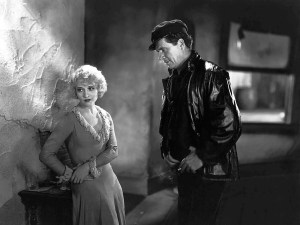
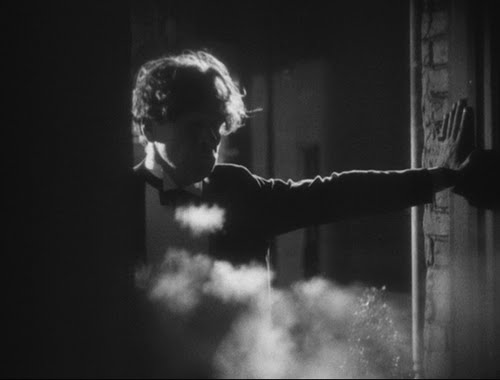
The Docks of New York – The third and greatest film in the Silent Josef von Sternberg set, I find it hard to write about this without just gushing a nonsensical stream of superlatives. George Bancroft stars as a stoker on a ship who, while on shore leave, rescues a girl who’d tried to kill herself by jumping in the water. He fishes her out and takes her to the local bar, where they spend the evening while he gets drunk, pushes people around, and tries to cheer her up. The obnoxious engineer of the stoker’s ship causes trouble (he doesn’t like the stoker, and does like the girl), leading to a robbery, a wedding and a murder (not necessarily in that order). LIke Japanese Girls at the Harbor, another silent film I saw recently and adored beyond all reason, the plot is the least interesting thing about this movie. While that film was beautifully composed, this movie is literally breathtaking. The opening 30 minutes is visual storytelling at its greatest, not just interesting compositions, or striking uses of shadows and light, or weirdly expressive set design, but instead in unifying all those things it seems to represent the core of what cinema is all about. Like FW Murnau’s Sunrise, really the only film I can compare it with, it is the absolute peak of silent filmmaking, by which I mean the peak of any kind of filmmaking. The #1 film of 1928.

Scott Pilgrim vs. the World – A far cry from the world of Sternberg and silent film is this comic book adaptation by Edgar Wright in which Michael Cera must defeat his new girlfriend’s exes in videogame-style combat. Mary Elizabeth Winstead plays the girl, Ramona Flowers, and the exes include Brandon Routh, Jason Schwartzman and Ann from Arrested Development (her?). It’s an amiable (ie Canadian) coming of age story, with tons of in-jokes for video game players in their 30s (Cera’s world has a lot in common with Super Mario’s). The ending doesn’t entirely make sense, however, and apparently that’s due to a major change from the book. In the film, Cera ends up teaming with his ex (the too cutely-named Knives Chau) to defeat Ramona’s final ex (Schwartzman) which he’s able to do because he’s achieved self-actualization or something. But the way that Ramona’s exes work as manifestation’s of Cera’s neuroses is both clever and unsatisfying, because it reduces Ramona herself (who you would think would have her own issues revealed and be overcome through ex combat) to a passive prize, Cera’s goal instead of a fully realized character of her own. I know it’s called Scott Pilgrim vs. the World, but still, that kind of focus on the hero seems unnecessarily myopic, especially since his own exes, which dominant the periphery of the film, are basically dealt with by acknowledging that they exist. Bleh. Like Edgar Wright’s last two films (Shaun of the Dead and Hot Fuzz), this one is a lot uglier than it should be, though he did an excellent job framing and cutting the fight scenes, at least relative to the deplorable standard of contemporary Hollywood action films. Still, while I’ve enjoyed those last two films, I didn’t rate them as highly as the consensus seems to. This one, with its subpar reviews, I enjoyed a lot more. Go figure.

There’s Always Tomorrow – In a kind of companion film to the great All That Heaven Allows, Fred MacMurray plays a suburban businessman (a toy manufacturer) who is marginalized and ignored in his suburban home by his wife (Joan Bennett) and children and strikes up a friendship with an old co-worker, played by Barbara Stanwyck. His children discover the friendship and suspect hanky-panky, and their subsequent hostility and his wife’s near-total obliviousness drives him to the edge of infidelity. It ends tragically, with pretty much everyone missing out on their last chance at happiness. It’s one of the very best Douglas Sirk films: he manages to pack just as much power and emotion into his black and white images here as he does with lurid Technicolor in Heaven or Written on the Wind and the plot is more realistic and the characters more grounded than in his craziest melodramas (Magnificent Obsession, for example). The result very well may be a new favorite Sirk for me. The #2 film of 1956.
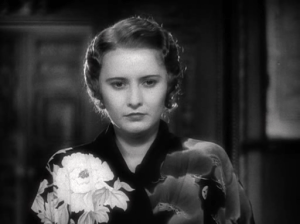
The Bitter Tea of General Yen – Another Barbara Stanwyck film, this time one of her early films directed by Frank Capra. She plays the pretty new fiancée of a missionary in China during the war with the Japanese. In the chaos around Shanghai, she’s abducted by scary warlord General Yen, who attempts to woo her with his advanced civilization. Blinded by racism, albeit the condescending imperialist kind, she can only see him as barbarous. When one of the general’s women is accused of spying, Stanwyck defends her, with disastrous results for all involved. It’s a fun, twisted little movie, subverting all kinds of pieties and bigotries, left and right; it’s Capra in one of his darkly comic moods. The #10 film of 1933.
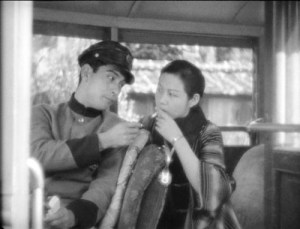
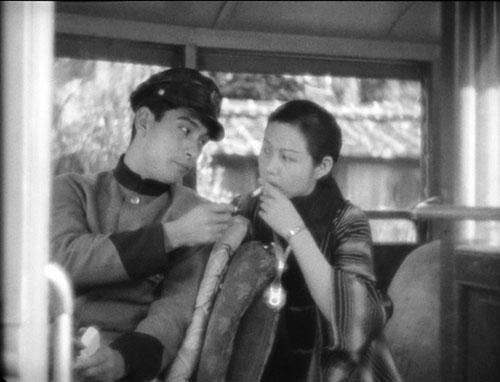
Mr. Thank You – This is the second film by Hiroshi Shimizu I’ve seen. The first, Japanese Girls at the Harbor, became an instant favorite. I found its carefully composed, wall-worthy frames and elementally melodramatic plot were completely entrancing. While those compositions were classically beautiful, there’s nary a static shot to be found in this one. It’s the story of a ride over a mountain in a rickety bus, and of the people the driver, the titular Mr. Thank You, so named for the “arigato” he shouts to everyone he passes on the road, meets along the way. Plotwise, it’s just as basic as Japanese Girls was; the story is essentially the same as Stagecoach, a structure that dates back at least to The Canterbury Tales. The characters include a mother accompanying her daughter to the city in order to sell her into prostitution (there’s a Depression on and the family needs money, the daughter is resigned to her fate, but is having trouble appearing happy about it), a weirdly mustachioed older man who keeps trying to hit on the girl (a stand-in for capitalism or imperialism or some other -ism), a slightly older girl who seems experienced in the ways of being sold into prostitution, some eager-to-drink laborers, a Korean girl who’s part of a road construction crew (it was daring at the time for Shimizu to acknowledge the existence of Koreans), and various other folks the bus passes by. While the camera in Japanese Girls is largely static, or at least always carefully framed, Mr. Thank You is in constant motion. The film’s singular sequence is of a POV shot looking out the front of the bus moving towards people about to be passed in the middle of the road, followed by a dissolve to a POV shot looking out the rear of the bus at those same people (with a pleasant “Arigato!” from the driver). The elision is both economical and strangely beautiful: we pass through the people as if they are ghosts, which being images of people (and a way of life) long dead, they are. The #12 film of 1936.

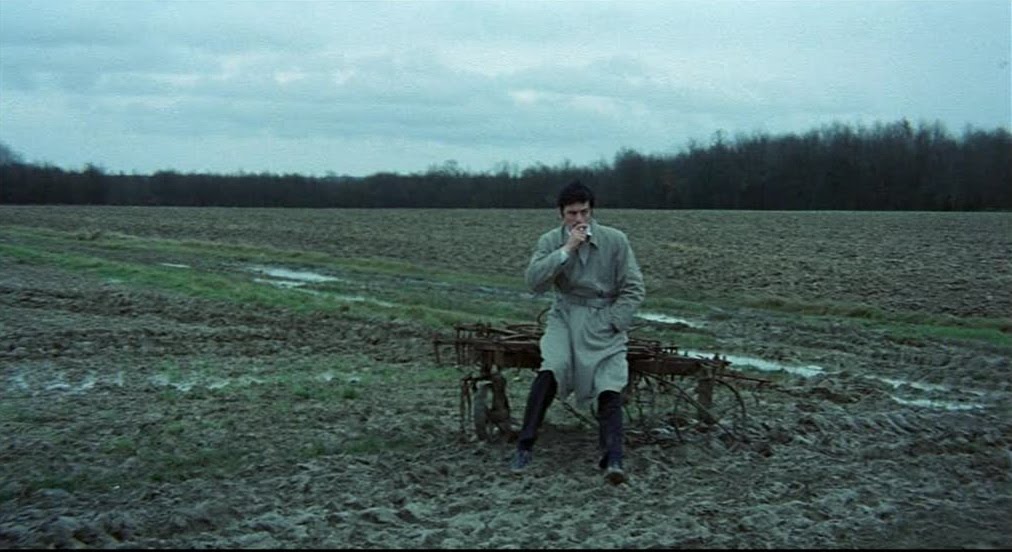
Le cercle rouge – Jean-Pierre Melville’s attempt at the heist movie to end all heist movies, it reminded me more of Once Upon a Time in the West than classics of the genre such as The Asphalt Jungle or Rififi in its attempted scope. However, where Once Upon is so expansive as to, eventually, encompass an entire civilization at its most hopeful beginning, Le cercle rouge is closed off, insular and tragic. It, more than any other Melville film I’ve seen, carries the weight of life after World War II: everyone, good and bad, seems to have had all the life sucked out of them. Their only escape from nihilism is work, cops and robbers alike. What separates Alain Delon, Gian Maria Volanté and Yves Montand (the three thieves) from Sterling Hayden and Sam Jaffe in The Asphalt Jungle is that Hayden and Jaffe have dreams. Their robbery is a means to an end, one last score then retirement to a horse farm, or some kind of future with a pretty girl. For the gang in Le cercle rouge, there is nothing else: no horses, no women. The chief of police drives this point home with his repeated lecture to the Spencer Tracy-like inspector on their trail: all men are guilty. It’s terribly depressing, but nonetheless as riveting and tense and suspenseful as anything the genre has produced. The #4 film of 1970.

Fucking Åmål – That’s “fucking” as an adjective, as in the teen girls who come of age in this film really fucking hate their town, Åmål. Agnes is the nerdy, friendless, relatively new in town girl who has a crush on Elin, blonde, popular and not especially bright. Through a series of painful misunderstandings, Elin and Agnes end up spending a romantic evening together, which Elin, fearing for her reputation quickly ignores. But she can’t quite go back to her old life. Lessons are learned and kids grow up. While not a particularly new story, the specificity of the characters and performances elevate this above your standard teen flick. And director Lukas Moodysson uses an elegant, handheld indie style that captures the rough realism of the performances (not just from the main girls, but from the excellent supporting cast as well) and keeps the whole thing from feeling less generic than it really is. It’s all very quite lovely, and all that realism pays off by making a wildly improbable ending far more emotionally satisfying than it has any right to be. The #10 film of 1998.












 The End of Cinema
