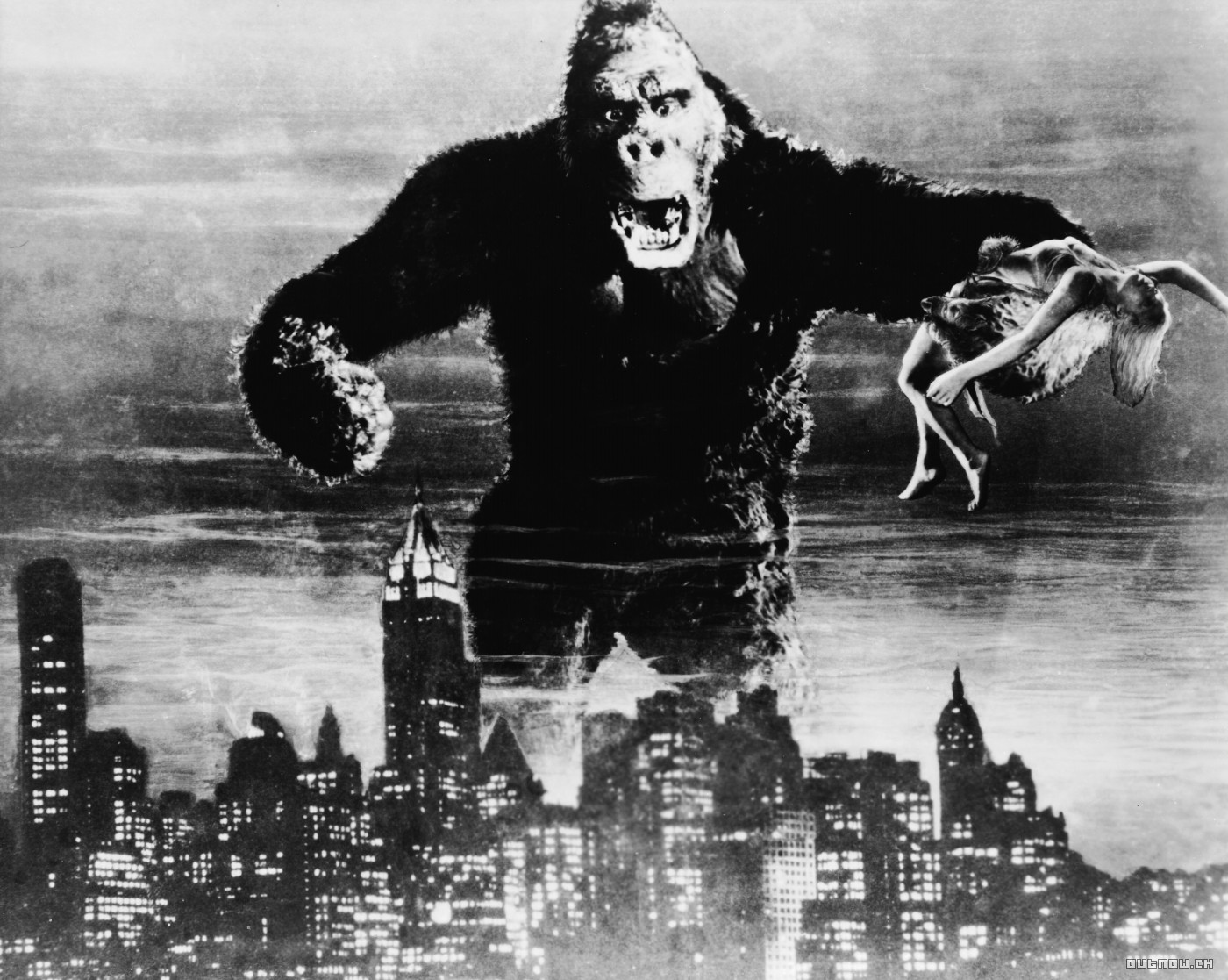


Movie Roundup: Classics Returns! Edition

La danse – Director Frederick Wiseman’s documentary about the about the Paris Opera Ballet surely can’t be called verité: it’s too damned pretty for that ugly moniker. The film follows several dancers and choreographers as they plan and perform several different ballets. Wiseman’s hands-off approach results in near total confusion in terms of who is doing what and when, you know, all those irrelevant things that so often seem like the sole purpose of narrative film. With nary a narrator to tell us what’s going on, we’re instead forced to focus on what we are seeing, namely, the dance itself. Almost devoid of context (we do hear a little of the conversations between choreographer and dancer, which sometimes provides motivation but is just as often baffling to the untrained observer), we take in the movements of the dancers on the most visceral level: it’s the human body in motion in its purest form, and purity of the image of that motion is the purity of cinema itself. More than just being a neutral observer, however, Wiseman consistently finds the most striking of angles in which to frame his long takes, using the mirrors and clutter of the studios to full effect, as well as adopting any angle but the straight-ahead proscenium view for the performances. It’s one of the best pure documentaries I’ve seen in quite awhile and it has forever ruined So You Think You Can Dance for me. The #5 film of 2009.

Artists and Models – I think I just don’t think Jerry Lewis is funny. Sorry. I’m more than willing to admit that it must by my own failing. I do like director Frank Tashlin quite a bit, but this Lewis and Dean Martin comedy just didn’t work like I wanted it to. Martin’s a struggling painter and Lewis is his mentally disabled roommate who dreams up fabulous scenarios for comic books. Martin gets a job turning those dreams into actual comics, but tries to hide it from Dorothy Malone, who also draws comics (exploiting her roommate (Shirley MacLaine) in the process. There are also spies a Gabor and Anita Ekberg. Zaniness (but not much aactual hilarity) ensues. I thought MacLaine stole the movie: she managed to be both funny and likable, her singing of “Innamorata” to Lewis on a staircase is easily the highlight of the movie. The #23 film of 1955.

The Last Airbender – It’s really not that bad. I saw it in 2D, Roger Ebert’s 1/2 star review seems mostly to be a critique of the crappy 3D. The rest of the reviews I’ve seen, seem to be about the TV show. As I’d never heard of the show until a couple weeks before the film’s release, I don’t have anything to say about that. As a film, it’s fine. Really choppy and full of exposition, it feels very much like a movie targeted at little kids, attention span-wise. The child actors are generally pretty bad, they say every line with exclamation marks, but the adults are OK. Shyamalan keeps things interesting visually through most of the film, with his standard slightly off-kilter set-ups and angle choices and generally mellow editing (which I always appreciate in an action film). The action sequences are often pretty cool, especially at the climax, and the effects are decent enough, though nothing spectacular. There’s only one scene I thought was poorly shot (a bit of conversational exposition between three of the kids that’s inexplicably shot in alternating extreme close-ups) and there’s certainly nothing as audacious as some of the camera movements in Unbreakable or The Happening.
In the end, I think the source material overwhelmed him, or at least the running time. There’s obviously way too much to fit into 90 minutes and consequently it all feels rushed and worst of all, impersonal. Slowness of pace is one of Shyamalan’s hallmarks as a director: his films always know how to breathe. This one suffocates under the amount of story it feels it has to tell, the plot just never lets up. The result feels weirdly impersonal for such an idiosyncratic filmmaker. Maybe if in the next one the Avatar journeys to the Philadelphia area. . . .
I was hoping for something along the lines of The Happening or Speed Racer, movies that were trashed by critics at their opening but that I really liked (and one of which has grown a kind of cult following). It’s not that good, but neither is it as bad as The Mummy 3 or Quantum of Solace. As mainstream movies go, it’s about the level of Spiderman 3 or a Fantastic Four movie. Not terrible, but I’d hoped for better from Shyamalan.
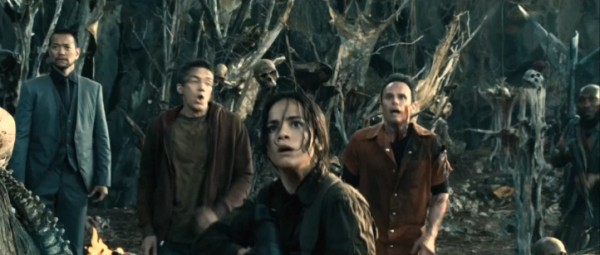
Predators – Solid, retro action filmmaking, well put together, scripted and acted but it’s missing both the originality and mystery of Predator and the sense of environment and horror from Predator 2 (I might be the only person who likes that one). The cast is great: Adrien Brody, Danny Trejo, Laurence Fishburne, Alice Braga, Topher Grace, Walton Goggins and Louis Ozawa Changchien are a weird but really cool mix. In the end, it’s harmless.
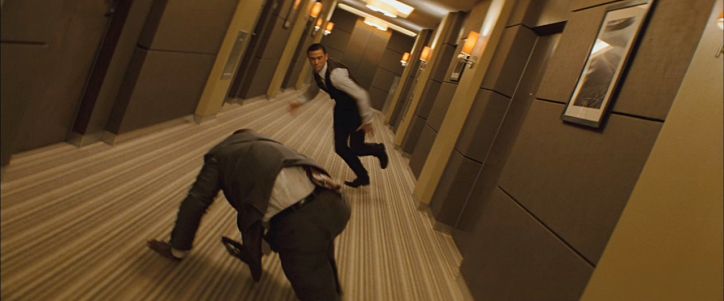
Inception – Meh, it was alright. Like the rest of Christopher Nolan’s films, the thematic confusion is masked by piles of narrative and exposition. It is an improvement editing-wise, for him, though most of the action scenes are still cut pretty badly. That can be explained away in the first two chase scenes by the dream nature of the environments (assuming the first chase (where Saito rescues Leo) is a dream as well), but the snow sequence is just a mess.
The fight sequence with Joseph Gordon-Leavitt in the rotating hotel is easily the best thing Nolan’s ever done. I think the hotel’s rotating too fast according to the established physics of the world, then again, Nolan ignores that physics whenever it’s convenient (remember when Leo says the van has 20 seconds, JGL 3 minutes and the rest of them 60 minutes? Then five minutes later he says they have 30 minutes and JGL has “a couple”, then JGL spends at least 15 minutes setting up the elevator? Yeah, physics.)
The film’s big accomplishment, as far as I can tell, is that it didn’t piss me off as much as the rest of Nolan’s films have. It was mercifully free of the kind of misanthropic nastiness that made Memento and The Prestige so unpleasant, the acting and editing was much better than Batman Begins and it wasn’t nearly as sloppy in theme or filmmaking as The Dark Knight. So I guess he’s improving.
As for the end, I don’t think the film really makes sense whether it’s all a dream or not. That’s OK for an action/heist movie. I don’t think the film works emotionally, with it all being about Leo’s guilt. Maybe that’s because of Shutter Island, which as everyone has said is pretty much about the same thing and which I think does it better in just about every way. But it might also be because the guilt he feels rests on all these piles of technomumbojumbo about dream technology that doesn’t make any real sense. Your wife killing herself because you convinced her her world was not real and that death was the only way to escape it is not a particularly relatable dilemma. At least not for me, your mileage may vary.
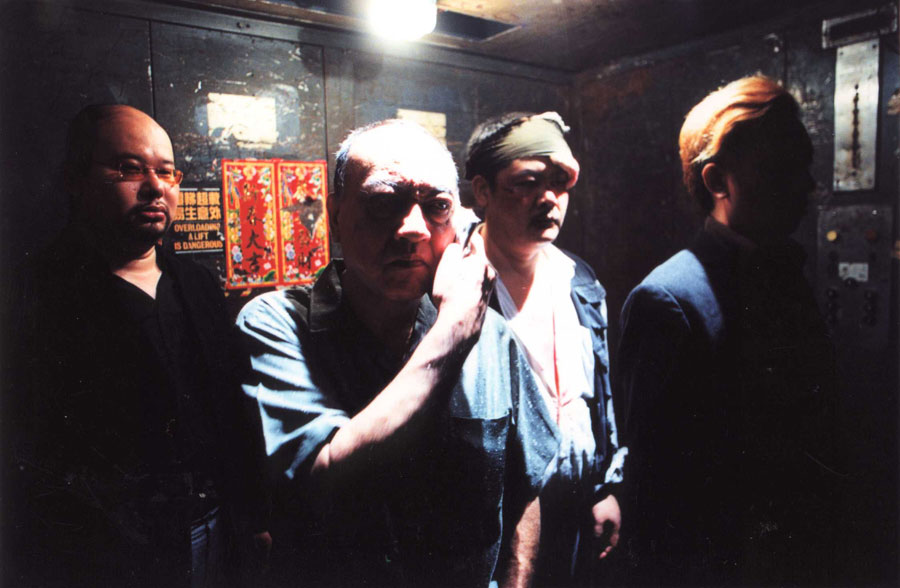
PTU – Another extraordinary Johnnie To film, perhaps the one I’ve seen that is most definitive of his visual style. This story set over the course of one night as a cop (Lam Suet) tries to find his gun while covering up the fact that he lost it and his friends in the Police Tactical Unit (led by Simon Yam) do what they can to help him (and occasionally cross the line into outright brutality) while also trying to solve a murder is fairly straightforward, at least considering the narrative strangeness the later Milky Way films explore. The look is one of the better attempts at a color analogue to film noir I’ve ever seen, with brilliant white lights highlighting pitch-black frames. To’s not the only one to use that style, nor is this the only time he does it, but I don’t recall seeing the trope utilized as relentlessly as it is here. It’s nothing less than stunning. The #7 film of 2003.
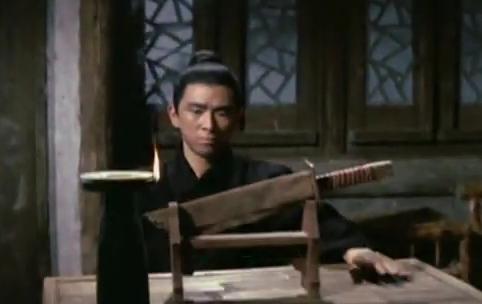
Return of the One-Armed Swordsman – Jimmy Wang Yu returns as the titular amputee in director Chang Cheh’s followup to his masterful 1967 film. Leaving behind much of the dramatic intensity of the first film (when the hero lost his arm and had to struggle to relearn his martial arts skills), this time there’s a flimsy motivation for heaps of bloody violence. Bad guys want to prove they’re the best so they start killing everyone else. TOAS doesn’t want to fight anymore, but when his wife is kidnapped he turns into a one-armed killing machine. Good times. The #12 film of 1969.

Assault on Precinct 13 – About as perfect as action movies get, John Carpenter’s classic is a little bit Rio Bravo and a whole lot of Night of the Living Dead with a fair amount of Zulu thrown in. A small group is trapped in an about-to-close police station as an unending army of gang members tries to kill them all. Spare and precise, Carpenter slowly builds character and location through the first half which completely pays off in the second, where the lack of effects or budget are unnoticeable through the unrelenting suspense. Even Carpenter’s score is amazing: it sounds like the Platonic version of every 1980s electronic score. I shudder to think what the remake is like. The #3 film of 1976.

Tarzan, the Ape Man – In retrospect, it was obvious, but I’d never really noticed just how kinky the Tarzan stories are. But then, this is really the first one I’ve sat down and watched from beginning to end in a very long time. Good Victorian girl Jane goes to visit her pops in Africa, gets lost and rescued/kidnapped by a brutish swimmer (Johnny Weissmuller, a very handsome man) who takes her to his treetop lair, introduces her to his monkey family and makes her yodel. This film version ups the ante by making Maureen O’Sullivan’s Jane more of a flirty flapper to begin with, so her sexual transformation moves her even further away from the Puritan ideal. The action sequences here are really good, with both actual animals and guys in animal suits (my favorite: a wounded Tarzan is attacked by and barely defeats a lion, only to be attacked moments later by. . . another lion!) Would I be crazy to call it Tabu: A Story of the South Seas meets King Kong? The #7 film of 1932.
Movie Roundup: SFIFF Edition Part Two

Here’s the rest of what we saw at the San Francisco International Film Festival.
Wild Grass – The most divisive film of the festival for us, as I loved every minute of it and the wife renewed her hatred of all things French (though to be fair, she did not hate this as much as last Vancouver’s showing of Tsai Ming-liang’s Face, which may have been divorce-inspiring if I wasn’t so otherwise awesome). Anyway, this is the latest from director Alain Resnais, whose only other films I’ve seen are his first three features (Hiroshima, mon amour, Last Year at Marienbad and Muriel), the last of which was made almost 50 years ago. The plot’s about an old guy (André Dussollier) who finds a stolen purse and becomes infatuated with its redheaded owner (Sabine Azéma) after returning it to her, despite his lovely young wife (Anne Consigny) and the suspicions of a local cop (Mathieu Amalric). Emmanuelle Devos has a small part as well, proving, along with the fact that the film was shot by Eric Gautier, that there are really only about a dozen people working in the French film industry right now. The purse owner is at first freaked out by her new stalker, but they eventually go to a movie and then ride in an airplane together. The whole thing plays like a demented version of Amelie, with Dussolier as the deranged do-gooder who tries to make everyone else see the world through Gautier’s candy colors, whether they want to or not. The ending seems puzzling, but I don’t think it was meant to be. Resnais apparently explained it in Film Comment, but I liked my explanation(s) better. The #4 film of 2009.

Woman on Fire Looks for Water – Our requisite Asian Minimalist (or however you want to label it) film of the festival was this coming of age film out of Malaysia, written and directed by Woo Ming Jin. The son of a fisherman is rejected by one girl, gets a job catching shellfish for the father of another girl (who likes him) while his father, convinced he’s about to die, tries to woo his old girlfriend. It’s got everything you want in this kind of film: a relaxed pace, some pretty images (I recall some strangeness with focus in the beginning, but mostly the visual style is familiar) a little bit of humor and just enough weirdness to keep you on your toes. Plus, it had the second best title of the festival. Catching a movie like this in the early afternoon at a strange theatre in a strange town is one of my favorite film festival experiences. The #28 film of 2009.

My Queen Karo – I was pleasantly surprised to find out that this film about growing up in a Dutch commune in the 70s starred Déborah François. Aside from her obvious attractions, this also made two festivals in a row in which we got to see Ms. François living in an abandoned warehouse (last Vancouver’s Unmade Beds being the other). The film’s a semi-autobiographical coming of age thing, with the title girl growing up as her parents try to live out their radical ideas of free love, social protest and not paying the rent. Dad’s mostly a jerk, using his ideas as an excuse to cheat on mom (François) and rationalize her into staying around anyway. It’s a solid movie with good performances and a cool sense of place (the many languages spoken in the commune in particular being a nice touch, and also reflective of the multi-national makeup of the cast). The #34 film of 2009.

You Think You’re the Prettiest, but You Are the Sluttiest – The best title of the festival for sure belongs to this Chilean film, the graduate thesis for director Che Sandoval. In the great tradition of one-night-in-the-life-of-a-teenager films like Dazed and Confused or American Graffiti or Can’t Hardly Wait, this one follows Javier as he tries to hook up with Valentina, convinced that his best friend Nicolas, who’s already sleeping with Javier’s ex-girlfriend Francisca, will get to her first. Javier’s a fully-realized teenager: arrogant and incompetent and insecure and cruel all at once. The film seems inspired by Jim Jarmusch, both in its mellow pace, chapter-segmented structure and indie grittiness. Easily the funniest film we saw at the festival. The #14 film of 2008.
Final rankings for SFIFF 2010:
1. Wild Grass
2. Vengeance
3. You Think You’re the Prettiest, but You are the Sluttiest
4. Senso
5. I Am Love
6. Bodyguards & Assassins
7. Woman on Fire Looks for Water
8. My Queen Karo
9. 20,000 Leagues Under the Sea (which would move up if I counted the score, but really not that much)
Movie Roundup: SFIFF Edition Part One

Catching up with what we saw at this year’s San Francisco International Film Festival:
Vengeance – The official Johnnie To-related film of the festival was directed by the man himself. It’s possibly the most explicit homage to Jean-Pierre Melville’s gangster films yet to come out of Milky Way Studios. The main character is a old French guy (played by “the French Elvis”, Johnny Hallyday) seeking revenge for the brutal assassination of his daughter, grandchildren and son-in-law, who had fallen afoul of Macao triads. He hires the old To crew (Anthony Wong, Lam Suet and Gordon Lam, who play similar roles in Exiled and The Mission, which constitute a kind of trilogy with this film) to help carry out his revenge. The mind-blowing twist (de rigueur in recent Milky Way films like Written By and Mad Detective) is that Hallyday suffers from a Memento-like inability to form new memories. So he wants revenge, but he can’t remember why! Unfortunately, unlike in those other Milky Way films, the conceit never really develops beyond the pithy metaphor stage (vengeance is ultimately meaningless etc). The film’s quality, instead, rests on the character relationships and the performances of the actors, all of which are exceptional. And of course, To’s direction, which is less flashy than at times in his past, more in keeping with Sparrow, his last film as a director, but still shiny and sleek. The #12 film of 2009.

I Am Love – Tilda Swinton stars as a rich housewife who’s surprised to learn she’s not all that happy with her life in this melodrama from Italian director Luca Guadagnino. It’s big and lush and beautiful and skirts the fine line between deliriously wonderful and over-the-top silliness that all the best melodramas have to navigate. Swinton is as awesome as she always is and the score is entirely made up of bits of John Adams works(!) The #19 film of 2009.

Bodyguards & Assassins – Another historical epic from China, in the manner of John Woo’s Red Cliff, set in the early 20th Century as Sun Yat-sen arrives in Hong Kong to plan the overthrow of the Qing Dynasty and has to be protected from the titular assassins by the titular bodyguards. It’s classical filmmaking in the Seven Samurai mode, as the first half lays the groundwork for an impressive, extended action sequence that accounts for most of the second half of the film. It stars the great Donnie Yen and Leon Lai and Simon Yam and the other Tony Leung. The #22 film of 2009.

Senso – One of SFIFF’s archival presentations was this restoration of Luchino Visconti’s melodrama set in the mid-19th Century during Venice’s war against Austria. Alida Valli (from The Third Man) plays a Venetian countess who has an affair with Austrian soldier Farley Granger (Rope, They Lived By Night) that has disastrous consequences for both herself and her country. It’s all quite glorious and the restoration looked pretty great, especially on the giant screen at the Castro Theatre. The #13 film of 1954.

20,000 Leagues Under the Sea – Stephin Merritt (the genius behind The Magnetic Fields and several other musical groups) composed and performed a new score to the silent version of HG WellsJules Verne’s sci-fi classic. The movie itself, made in 1916 by Stuart Paton, is not without interest. It boasts of its innovative underwater filming techniques, the veracity of which claim I’m not capable of confirming (though it looked to me like they just filmed an aquarium). The plot follows the crazy Captain Nemo, who’s invented a submarine and rescues some people from a shipwreck and takes them to a mysterious island. Adventure ensues. It bears only a passing resemblance to the Disney film with Kirk Douglas, Peter Lorre and James Mason, having more in common with Mysterious Island, a film notable for Ray Harryhausen’s effects creating such terrifying animals as a giant chicken. (Note: there are no giant chickens in the silent film version). Anyway, the draw was the score, performed live by Merritt and some of his pals (including organist David Hegarty and Lemony Snicket). It wasn’t your typical silent film score, with the musicians occasionally adding dialogue to the action (some of which is very funny, but never really in a derisive MST3K kind of way), and including a pop song or two. The #2 film of 1916.
Raising Classics Consciousness

The latest Metro Classics series has been announced over at our website. Every Wednesday for nine weeks from August 4th through September 29th. Check it out.
Movie Roundup: Beat Slovenia Edition
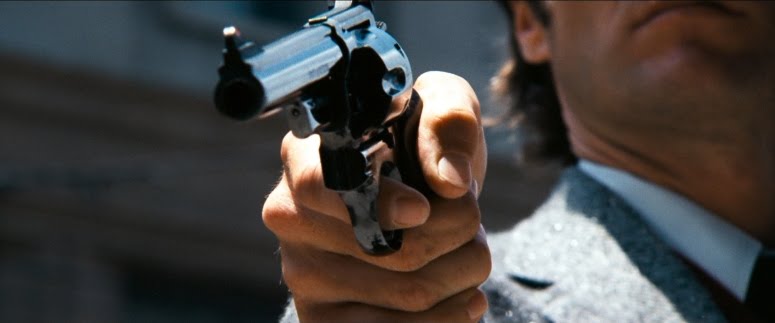
Dirty Harry – Clint Eastwood stars in another of the late-60s/early-70s cycle of cop film, an interesting period that seems to have evolved from the darkest strains of film noir (Kiss Me Deadly or The Big Heat, say) into outright vigilantism. Released the same year as The French Connection, but pulpier and less self-consciously arty, and even more ideologically problematic. Eastwood’s Harry Callahan (nicknamed because he gets all the “dirty” jobs) is on the trail of a Zodiac-inspired serial killer (cleverly disguised as “Scorpio”). While attempting to apprehend him during a ransom payoff (the killer has told the cops that the girl he’s kidnapped will die in a few hours unless he gets paid), Eastwood stabs him in the leg, but Scorpio escapes. After a doctor treats the killer’s leg, he calls the cops and tells Callahan he thinks the killer lives in the old football stadium across the street (Kezar Stadium: like Bullitt, this film is set in San Francisco, epicenter of hippieness). With only an hour to spare, Callahan rushes to the stadium, breaks into the killer’s residence (without a warrant) and apprehends him. With the killer howling for his lawyer, Callahan steps on his wounded leg until he gives up the girl’s location. This all happens with 40 minutes left in the film. We’re then treated to what appears to be the film’s political message: the DA releases Scorpio for two reasons: 1) the search of Scorpio’s residence was illegal and 2) the charge of brutality against Callahan makes the confession inadmissible. Point 1 is clearly nonsensical, and after being made a big deal of, apparently solely for the audience’s benefit, even the DA admits that exigent circumstances obviated the need for a warrant. Point 2 makes more sense, but is rather unrealistic. Even now, in the post-Rodney King era, charges of police brutality are hard to prove and not particularly likely to win in front of a jury. And given the nature of the crimes Scorpio admitted to, the fact that it’s his word against Callahan (a decorated and admired police officer), it is extremely unlikely that any DA would refuse to prosecute based on that.
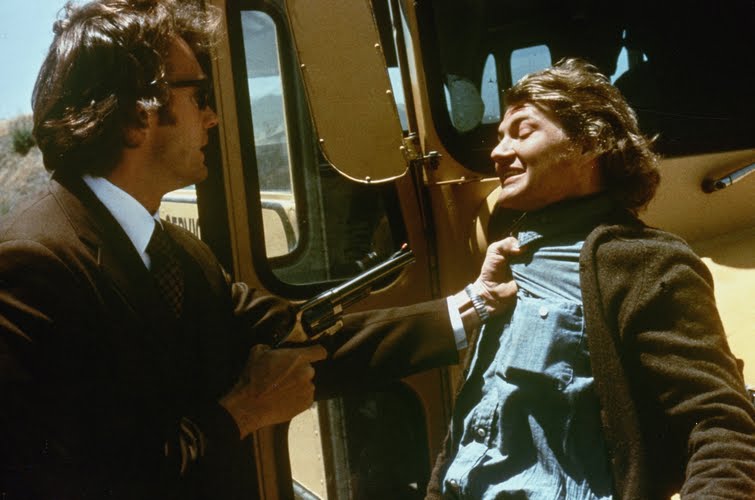
So what, then, are we to think of the politics of Dirty Harry? On the surface, it’s a reactionary argument against Miranda rights and the coddling of criminals nascent in the late 60s liberal era. However, it stacks the deck so ludicrously against said liberalism that the question of whether it’s actually satire has to be raised. Is director Don Siegel actually lampooning the critics of Miranda and other constitutional protections by reducing both their argument and their idea of what a police officer should be to absurd extremes? Callahan, by the end of the film, has become superman, leaping off bridges onto moving buses, rescuing school children and dispensing his own brand of justice with a .44 Magnum and a canned speech.
I think so, that like Starship Troopers 20 years later, Dirty Harry is a satire that is almost indistinguishable from that which it is satirizing. Both films were taken as straight at the time of their release. I suppose it can therefore be taken as a sign of progress for our society that while Dirty Harry was a smash hit, Paul Veerhoeven’s masterpiece utterly failed to appeal to the popular imagination. The #9 film of 1971.

The Puppetmaster – The life of a puppeteer parallels the history of Taiwan during the first half of the 20th century, when it was run by Japan. Events from Li Tianlu’s life are enacted in Hou’s unique style (long, distant shots on a constant plane with little camera movement) interspersed with Li himself telling stories about his life, sometimes as narration, sometimes as on-screen interview. Li’s stories are more or less related to what is about to be dramatized, more often it explains what we had just seen. It’s fascinating for its whole 2 1/2 hours, one of the most interesting approaches to the biopic genre I’ve seen; it’d make a great double feature with another great biopic from around the same time, Stanley Kwan’s Centre Stage. The DVD is cropped to 1.33, which sucks, but the movie still looks pretty great and it seems like most of the pertinent information (plot-wise) is shown, what we don’t get is the full artistry of Hou’s compositions. The #7 film of 1993.

Life on a String – A old blind banjo player and his young blind apprentice wander the countryside, waiting for the old man to break his 1000th string so he can open his banjo and find the cure to his blindness (seriously). Stopping off in the desert, the young one hooks up with a local girl while the old man breaks up a gang fight by singing a song that’s got terrible lyrics by even Chinese pop standards. Written by Chen himself, the song’s about why can’t we see that we’re all brothers, etc, pounding that metaphor like a mediocre 8th grade creative writing student. Visually, Chen makes nice use of the desolate landscapes and cool locations. But all the drama is undone by the silliness of the plot and bluntness of the metaphors. After watching this, I read Jonathan Rosenbaum’s capsule to see why he liked it. My only guess is the version he saw didn’t translate the dialogue and lyrics correctly. The #45 film of 1991.
Movie Roundup: Beat England Edition

Hard to believe it’s World Cup time again. Hopefully the US does better this year than at the last one. I’ll have a wrapup of what I saw at the San Francisco International Film Festival eventually (keeping in mind that it only took eight months or so for me to recap the Vancouver Film Festival), but I did write about some of the films I saw there at the Metro Classics website. In the meantime, here’s a few other movies I’ve seen over the last couple of months. Not that many actually, as vacation and a stolen TV and tivo catchup and a relatively minor case of Doctor Whoitis have limited me to only seven new movies seen since mid-April.
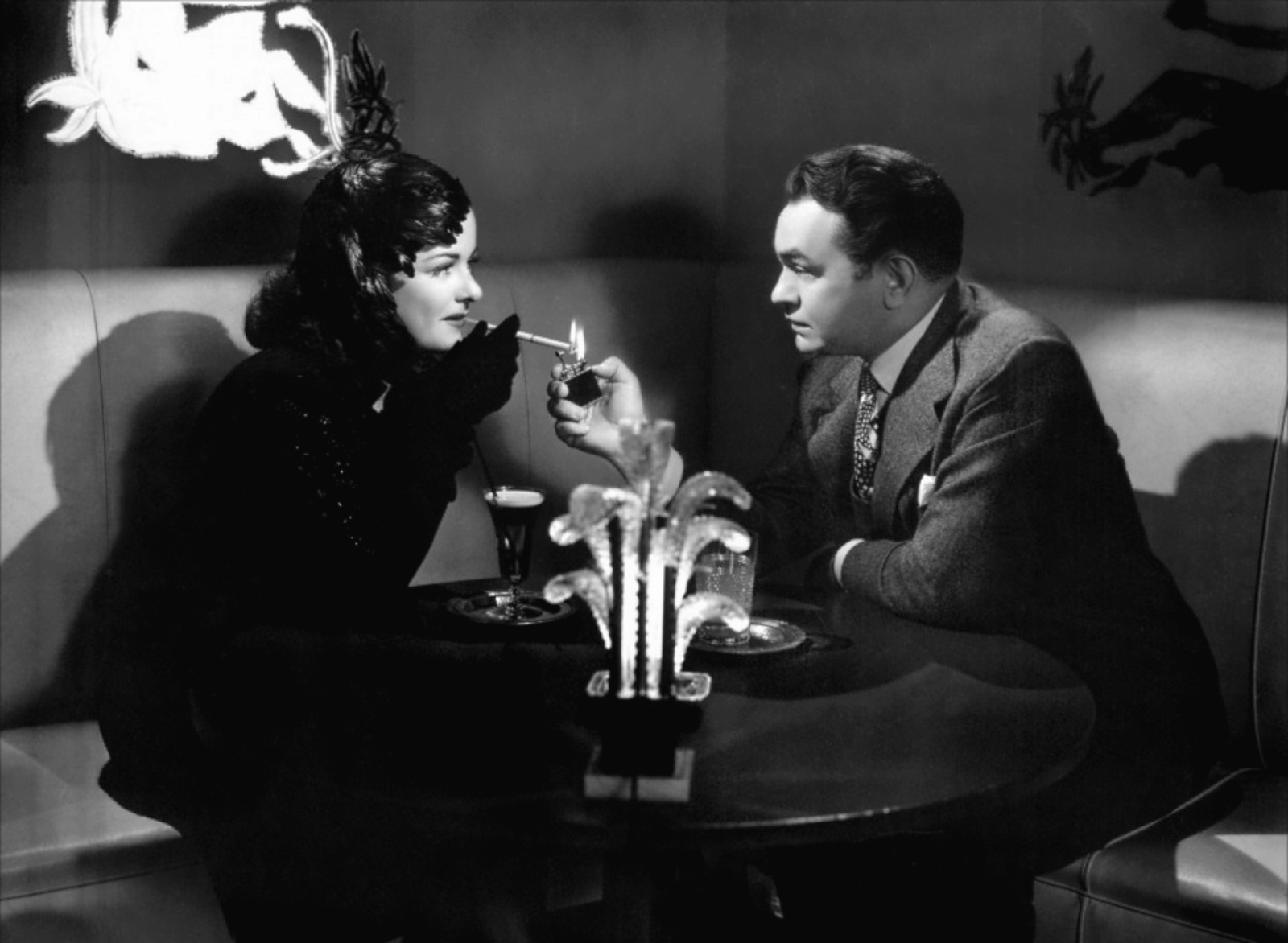
Woman in the Window – Fritz Lang’s entry in first great year of film noir (joining Double Indemnity and Laura) stars Edward G. Robinson (who also starred in Indemnity) as a comfortable middle-aged man who meets the mysterious woman in a painting (like Laura) and gets himself caught up in an accidental murder, a subsequent coverup and the inevitable blackmail. Robinson is wonderful, as usual, never quite as smart as he thinks he is. His panicked befuddlement as his plans seem to unravel is a joy to watch. This early in the genre’s development, there isn’t quite the sense of desolate misanthropy one finds in the 1950s films (like Lang’s own The Big Heat). Instead the film has the air of an almost comic murder mystery. Whatever steps Lang takes to darken the film’s tone are undermined by the ending, assuming it’s to be taken at face value. I’ve seen a lot of Fritz Lang movies, but I still don’t think I’ve got a handle on his sensibility as a director. He seems interested in systems and the way they trap and victimize individuals, lending many of his movies a kind of suffocating fatality. I think that’s why I admire, but don’t really love, his films. The #10 film of 1944.

Land of the Pharaohs – An oddity from director Howard Hawks in that it’s supposedly a big period epic along the lines of Ben-Hur or The Ten Commandments or something, but feels closer in sensibility to a Roger Corman/Vincent Price film. Maybe it’s the lackluster cast or the mediocre writing (co-written by William Faulkner, but who knows how much was actually written by him). Anyway, Jack Hawkins’s Pharaoh wants to build a thief-proof tomb, so he finds a brilliant architect amongst his slaves and agrees to free the slave’s people if he gets the pyramid he wants. Meanwhile, his second wife, Joan Collins, is evil and schemes to get the pharaoh’s treasure (instead of it being buried with him) and kill a few people along the way. It has some really cool sequences (the finale as the pyramid’s defenses fall into place, for one), but the period setting inhibits the snappy Hawks dialogue that helps make his films so much fun to watch and rewatch. It never really degenerates into camp though, and the story of the architect is quite moving. In all, it just doesn’t hold together as well as it should. The #23 film of 1955.
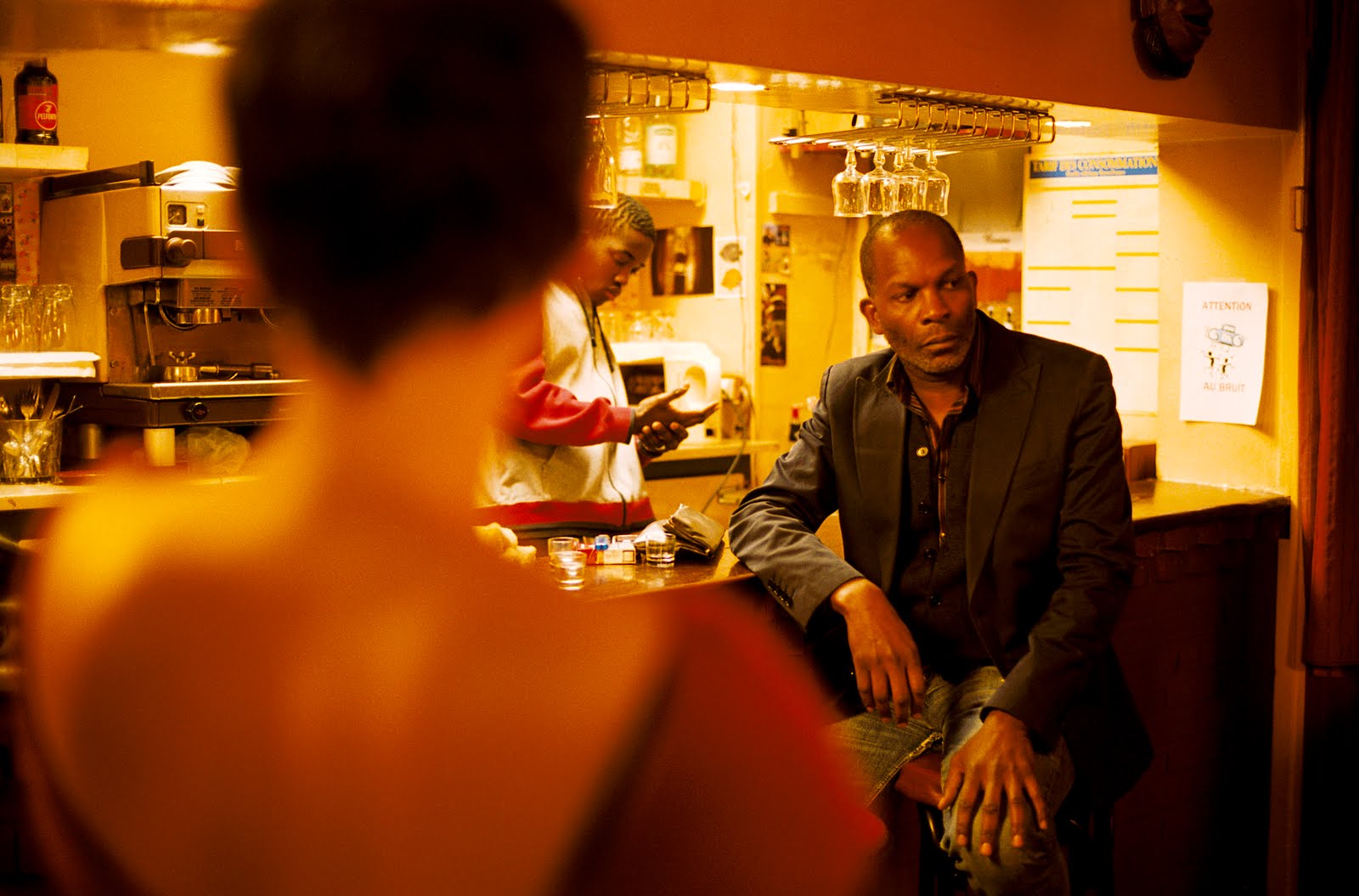
35 Shots of Rum – This highly acclaimed film from director Claire Denis is her tribute to the films of Yasujiro Ozu, and that influence is quite obvious. Like many an Ozu film, it’s the story of a father (Alex Descas, in a terrific performance) and a daughter and the father’s wishes for the daughter to marry and move out of his house (so she can be happy and get on with her life). In keeping with the current international style, Denis’s film is much slower and rather more obscure and somber than Ozu ever was The sense of light playfulness in Ozu, helped by the jazzy scores in so many of his films, is almost entirely missing here, but that’s OK, I guess. On the other hand, there’s a sense of warmth and community in a couple scenes in this film that are increasingly rare in contemporary film, and an underrated aspect of Ozu’s films, one that, as I recall, is mostly absent from Hou Hsiao-hsien’s Ozu tribute, the otherwise superior Café Lumière. This is my second Denis film, and while I liked this a lot more than Friday Night, I don’t love either film, though I can see why some folks do. The #23 film of 2008.
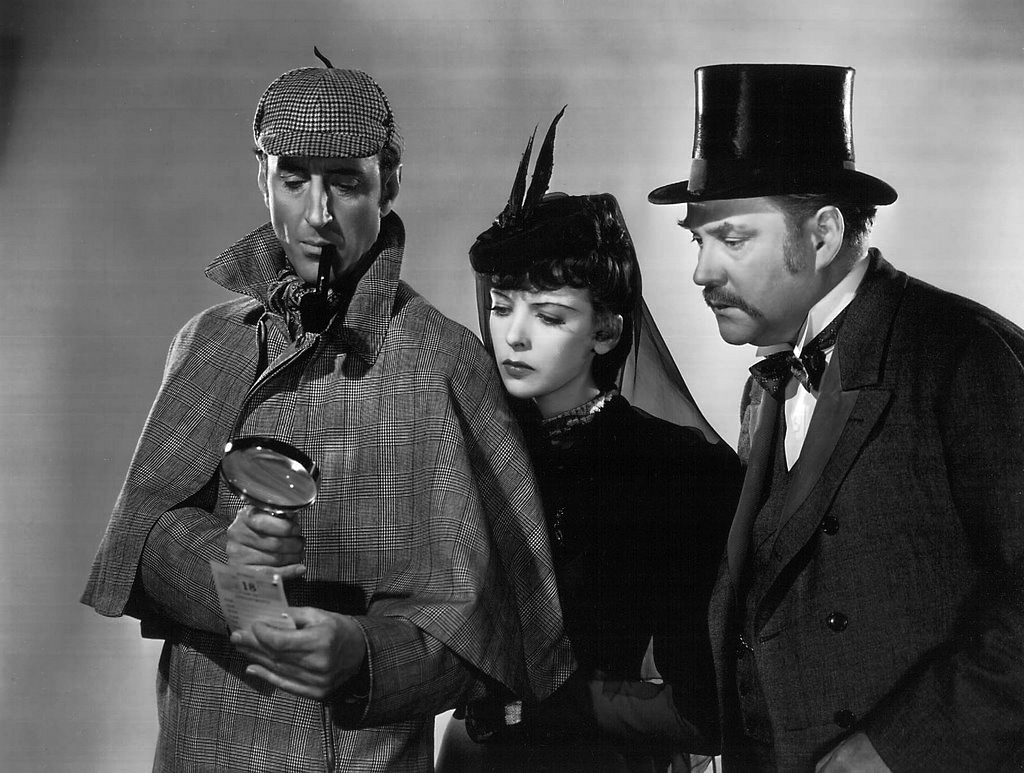
The Adventures of Sherlock Holmes – The second time Basil Rathbone played Sherlock Holmes (after The Hound of the Baskervilles, released five months earlier). It’s not much of a film really, based on a play about Holmes rather than an actual story by Arthur Conan Doyle and it shows: the mystery isn’t very mysterious and the villain, Prof. Moriarty, isn’t particularly smart. It’s a shame really, because the film also features a great performance from Ida Lupino as the woman who hires Holmes to protect her and her brother from a scary flute player. The direction by Alfred Werker is mediocre; it’d be hard not to get at least a little atmosphere out of the black and white London fog, but Werker tries his best. The #28 film of 1939.

The Secret of Kells – The surprise nominee for the Best Animated Film Oscar last year was certainly worthy of that honor, with its highly stylized telling of an Irish folktale. Brendan, a young monk growing up in a monastery dominated by fear of Viking invasion, longs to become a scribe and help the new monk in town write his Book. He ventures into the woods, befriends a fairy and endures the wrath of his uncle, all the while with the barbarians lurking on the borders. The hand-drawn animation is stunning, the closest analogue is a fancier, Celtic version of the great TV series Samurai Jack, at least in its angular character design and abstract backgrounds. There are few better films about keeping knowledge alive during the medieval period, and it’s admirable that even though it is essentially a kid’s movie, it never quite overplays its illuminated text vs. dark ages metaphor. The #17 film of 2009.

Walkabout – A bit less thematically subtle, while just as pretty-looking a film is this one by Nicolas Roeg. A teenaged girl and her six year old brother go for a picnic in the Outback with their dad, who promptly blows up their car and kills himself, leaving the two to find their own way back to civilization. They almost don’t make it, but for the timely intervention of a young Aborigine boy on his titular trip. The three becomes friends and have an idyllic time wandering through nature, until they inevitably get back to the modern world, where they have to go the separate ways. While the pretty nature vs. ugly modernity theme is a bit heavy-handed (and has only become more obvious in the 40 years since the film was made), Roeg must be commended for focusing almost as much on some ugliness bits of nature (bugs eating dead animals and such), though ultimately those shots are overwhelmed by the lengthy scenes of the three beautiful kids surrounded by beauty and being beautifully free and all that. The bitter ending firmly underlines what side of the debate Roeg wants us to fall on. But while I liked the ambiguity of his next film, Don’t Look Now, a lot more, I’d much rather watch this one again and again. The #3 film of 1971.

Will Success Spoil Rock Hunter? – I guess it should have been obvious that Tony Randall was a poor man’s Jack Lemmon, seeing as how he played the Lemmon role in the TV version of The Odd Couple, but somehow I’d never connected the two before. However, the opening of this film is so reminiscent of The Apartment, the Billy Wilder film Lemmon would star in three years later that the comparison finally became obvious enough for me to see it. Randall stars as an advertising writer about to lose his job who hits on the idea of getting an actress (Marilyn Monroe-ripoff Jayne Mansfield) endorsement for his firm’s big client, a lipstick company. When he goes to ask her, she uses him to make her muscle-bound boyfriend Bobo Branigansky (love that name) jealous. Word gets out and overnight Randall becomes a world famous lover. This is great for his professional career and standing with women and teenaged girls in general, but lousy for his girlfriend, who almost kills herself doing pushups in the hope they’ll give her a more Mansfieldian figure. This being a Frank Tashlin film, there’s a lot more craziness than that (some of the funniest bits being the commercial parodies that open the film). It has a whole lot in common with his previous Mansfield film, The Girl Can’t Help It, and like that one there’s a serious grounding of melancholy and 1950s dissatisfaction under all the zaniness. But I don’t think Randall’s got the depth to quite pull that off, though he is better than Tom Ewell was in the earlier film. It’s a shame Tashlin couldn’t get Jack Lemmon for those parts, he would have been perfect. The #11 film of 1957.

 The End of Cinema