Movies of the Year: 2009


As we are now more than two months into 2010, it’s time to present The End of Cinema list of the Best Films of 2009. As usual in this annual post, I’ve gone ahead and included films that are not necessarily 2009 films (they’re the ones in italics), but the official list (to be found in perpetuity on The Big List) will include only films that were originally released, somewhere in the world, in 2009.

1. Inglourious Basterds
2. Sita Sings the Blues
3. A Christmas Tale
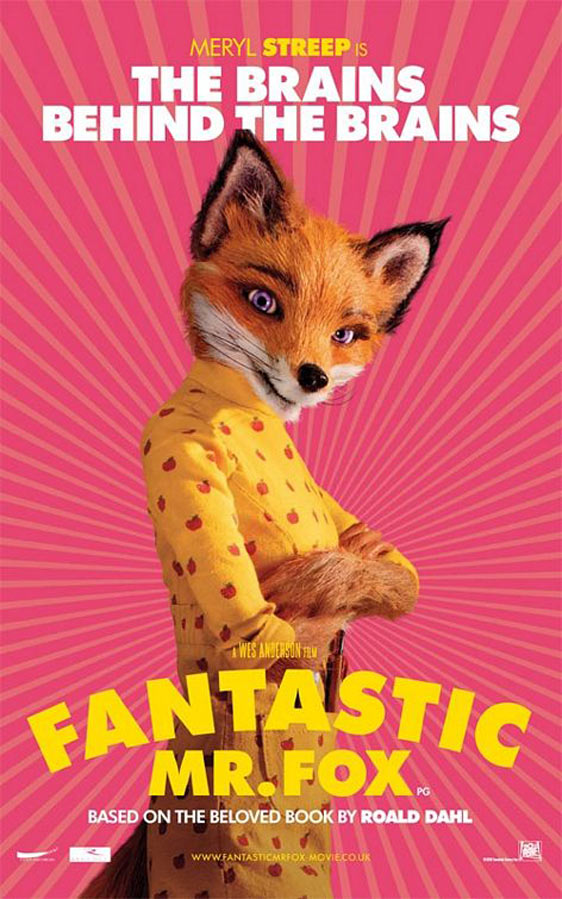
4. Fantastic Mr. Fox
5. Oxhide II
6. You, The Living
7. The Limits Of Control
8. Like You Know It All
9. 24 City
10. Still Walking
11. Summer Hours
12. A Serious Man
13. Sparrow
14. Two Lovers
15. Drag Me To Hell


16. Bad Lieutenant: Port Of Call New Orleans
17. The Hurt Locker
18. Written By
19. Eccentricities of a Blond Hair Girl
20. Up
21. (500) Days of Summer
22. Bluebeard
23. Tulpan
24. Star Trek
25. Ponyo on the Cliff by the Sea
26. Ballast
27. Rembrandt’s J’Accuse
28. In Search Of Beethoven
29. Bright Star
30. The Headless Woman
31. Air Doll


32. In the Loop
33. Public Enemies
34. Unmade Beds
35. Moon
36. Coraline
37. Face
38. Pelléas and Mélisandre: The Song of the Blind
39. Adventureland
40. The September Issue
41. The Young Victoria
42. Ong Bak 2: The Beginning
43. Funny People
44. Good Cats
45. ZMD: Zombies of Mass Destruction
46. Anvil! The Story of Anvil


47. Of Time and the City
48. Dakota Skye
49. Food, Inc
50. Way of Nature
51. An Education
52. Avatar
53. Where The Wild Things Are
54. 1939: Hollywood’s Greatest Year
55. Watchmen
56. The Cove
57. District 9
58. Kamui
59. Harry Potter VI
60. Queer China, ‘Comrade’ China
61. Humpday
62. Moroccan Labyrinth
63. Dear Zachary
64. Wolverine

Movies of the Year Awards: 2009

And here are the winners of this year’s Endys, presented along with my Oscar predictions, which haven’t been all that good of late. This year’s nominations can been found here. As always, only films that entered the cinema universe in 2009 are eligible, which eliminates from competition such fine films as: Sita Sings the Blues, A Christmas Tale, You the Living, Summer Hours, Still Walking, 24 City, Sparrow, Two Lovers, The Hurt Locker, Tulpan, Ballast and Rembrandt’s J’Accuse. And, of course, only movies I’ve seen can be eligible for an Endy.

Best Picture:

Endy: Inglourious Basterds
Oscar: The Hurt Locker

Best Director:

Endy: Quentin Tarantino, Inglourious Basterds
Oscar: Kathryn Bigelow, The Hurt Locker

Actor:

Endy: Nicholas Cage, Bad Lieutenant: Port of Call New Orleans
Oscar: Jeff Bridges, Crazy Heart

Actress:

Endy: Carey Mulligan, An Education
Oscar: Sandra Bullock, The Blind Side

Supporting Actor:

Endy: Christoph Waltz, Inglourious Basterds
Oscar: Christoph Waltz, Inglourious Basterds

Supporting Actress:

Endy: Mélanie Laurent, Inglourious Basterds
Oscar: Mo’Nique, Precious

Original Screenplay:

Endy: Quentin Tarantino, Inglourious Basterds
Oscar: Quentin Tarantino, Inglourious Basterds

Adapted Screenplay:

Endy: Wes Anderson & Noah Baumbach, Fantastic Mr. Fox
Oscar: Jason Reitman & Sheldon Turner, Up in the Air

Foreign Language Film:

Endy: Oxhide II
Oscar: El Secreto de Sus Ojos

Documentary Feature:

Endy: In Search of Beethoven
Oscar: The Cove

Animated Feature:

Endy: Fantastic Mr. Fox
Oscar: Up

Film Editing:

Endy: Inglourious Basterds
Oscar: The Hurt Locker

Cinematography:

Endy: Greig Fraser, Bright Star
Oscar: Barry Ackroyd, The Hurt Locker

Art Direction:

Endy: Fantastic Mr. Fox
Oscar: Sherlock Holmes

Costume Design:

Endy: Fantastic Mr. Fox
Oscar: The Young Victoria

Make-Up:

Endy: Drag Me to Hell
Oscar: Star Trek

Sound Mixing:

Endy: Inglourious Basterds
Oscar: The Hurt Locker

Sound Editing:

Endy: Avatar
Oscar: Avatar

Visual Effects:

Endy: Avatar
Oscar: Avatar

Original Score:

Endy: Boris, The Limits of Control
Oscar: Michael Giacchino, Up

Original Song:

Oscar: “The Weary Kind”, Crazy Heart

Documentary Short:

Oscar: China’s Unnatural Disaster: Tears of the Sichuan Province

Animated Short:

Oscar: A Matter of Loaf and Death

Live Action Short:

Oscar: Instead of Abracadabra

Soundtrack:

Endy: Adventureland

Movie Roundup: Oscar Eve Edition


The September Issue – RJ Cutler’s documentary is billed as being the Anna Wintour movie, but in fact is more about what its title claims it to be: the making of the September issue of Vogue magazine. There is, of course, quite a bit about the impenetrable Ms. Wintour, but because of her famous iciness (and perhaps out of a desire to show in her a better light than her relatively monstrous reputation) the heart of the film ends up elsewhere, in the form of Vogue’s Creative Director Grace Coddington. Coddington, a former model with a wild head of orange hair, struggles to get her images, some of them quite stunning, into the magazine while meeting Wintour’s often gnomic demands. The sense we get is of a real artist struggling to share her vision with a mass market audience (most of whom probably aren’t the least bit interested in her artistry). That Wintour has been able to successfully balance both the creative and business drives of her enterprise is a testament to her managerial abilities. And her remoteness, we might conclude (though this case isn’t really made by the film) is both the cause and consequence of her success. Cutler tells a fascinating story that isn’t particularly inventive but is none the less entertaining and, as one would expect in a documentary about fashion, full of interesting characters and beautiful images.


Intolerance: Love’s Struggle Through the Ages – I finally sat down to watch one of the most celebrated films of all-time, DW Griffith’s four-part epic about love that was reportedly his response to the criticisms of his earlier pro-KKK blockbuster Birth of a Nation. I’ve never learned whether this film was meant to be an atonement for that one’s sins (the Intolerance being the source material that he later realized was in fact evil) or the critics and protesters who tried (and in some places succeeded) in getting the film banned (the Intolerance being those who would dare to limit Griffith’s free speech rights). Watching the film doesn’t really answer that question, as it treats both Love and Intolerance more as organizing principles than as themes to be examined. The film is, as reputed, a marvel of technique, if it doesn’t invent it certainly consolidates and epitomizes the state of the art in filmmaking as of 1916: it’s a virtual instruction manual in the art of parallel editing, as well as the use of close-ups and crane shots (all of which were fairly novel at the time). More amazing to me, though, was how perfectly structured the film is. After several explanatory titles explaining the nature of the film (intercutting four different stories in four different times), Griffith gradually brings less and less attention to the transitions. The individual stories themselves don’t say much about the theme delineated in the title: some have very little to do with Intolerance, some very little to do with Love. It’s only when they are told as a whole does Griffith’s conception make a kind of sense. It’s not an intellectual argument so much as an emotional one, where the Modern Day Love story gives emotional resonance to the Intolerant brutality of the St. Bartholomew’s Day Massacre, and the detail of the sectarian strife in Ancient Babylon is given added resonance by the Passion in the Jerusalem story. That the whole ends up being greater than the sum of any one of its parts is the ultimate argument in favor of Griffith’s parallel editing style: no wonder it won. It deserves its reputation as one of the great works of cinema, and should replace the detestable Birth of a Nation in curricula everywhere. Also fun, look for people in small parts who later became famous: directors Frank Borzage, Tod Browning, WS Van Dyke, actor Donald Crisp and the virtually unrecognizable character actor Eugene Pallette. The #1 film of 1916.


Ong Bak 2: The Beginning – Tony Jaa’s prequel to his breakthrough low-budget action film about a country kid who goes to the big city to retrieve his village’s stolen artifacts. That film, and Jaa’s follow-up The Protector, had a lot of goofy, B-Movie charm (“You killed my father. . . and STOLE MY ELEPHANT!”) whereas this latest film is a big budget, CGI filled spectacle that’s one of the most brutal and emotionally bleak martial arts films I’ve ever seen. Jaa plays the sole survivor of a noble family that’s been wiped out by bad guys. He’s rescued and trained in many combat skills by a band of outlaws, of whom he becomes the eventual leader. He then embarks on a quest for bloody revenge. Jaa hasn’t improved much as an actor (his near refusal to speak in any of his films was comical in the first two, here it makes him kind of boring), but his stunt work is again extraordinary. The film doesn’t have anything as formally exciting as the repeated shots in the first Ong Bak or the already legendary tracking shot in The Protector, but the last half hour or so of the film, an extended action sequence (which starts, surprisingly enough, with a tremendous dance sequence by costar Primorata Dejudom) is as intense and breathtaking as anything he’s done before. This is only the first part of the prequel story, here’s hoping Jaa lets a little light into the next chapter. The #39 film of 2008.

Movies of the Year Award Nominations: 2009

It’s Oscartime again, and that means it’s time to hand out the annual End of Cinema awards (the Endys) for all the films and performances that will doubtless be overlooked this weekend. Only films with an imdb date of 2009 are eligible (which makes it hard, because many of the best 2009 films haven’t even been released in this country yet, but these are the rules. Someday, I’ll get around to revising previous years’ award winners with all the movies I’ve seen since handing them out.) These are the nominees; the winners, and the Movies of the Year list for 2009, will follow on Oscar morning.

Best Picture:

1. Fantastic Mr. Fox
2. Inglourious Basterds
3. The Limits of Control
4. Oxhide II
5. A Serious Man

Best Director:

1. Wes Anderson, Fantastic Mr. Fox
2. Quentin Tarantino, Inglourious Basterds
3. Jim Jarmusch, The Limits of Control
4. Liu Jiayin, Oxhide II
5. Joel & Ethan Coen, A Serious Man

Actor:

1. Nicholas Cage, Bad Lieutenant: Port of Call New Orleans
2. Ben Whishaw, Bright Star
3. Isaach De Bankolé, The Limits of Control
4. Sam Rockwell, Moon
5. Michael Stuhlbarg, A Serious Man

Actress:

1. Abbie Cornish, Bright Star
2. Alison Lohman, Drag Me to Hell
3. Carey Mulligan, An Education
4. Déborah François, Unmade Beds
5. Emily Blunt, The Young Victoria

Supporting Actor:

1. Alfred Molina, An Education
2. Christoph Waltz, Inglourious Basterds
3. Michael Fassbender, Inglourious Basterds
4. Brad Pitt, Inglourious Basterds
5. Peter Capaldi, In the Loop

Supporting Actress:

1. Marilou Lopes-Benites, Bluebeard
2. Melanie Laurent, Inglourious Basterds
3. Diane Kreuger, Inglourious Basterds
4. Tilda Swinton, The Limits of Control
5. Kelly Lin, Written By

Original Screenplay:

1. Quentin Tarantino, Inglourious Basterds
2. Hong Sang-soo, Like You Know It All
3. Liu Jiayin, Oxhide II
4. Joel & Ethan Coen, A Serious Man
5. Wai Ka-fai & Au Kin-yee, Written By

Adapted Screenplay:

1. William Finkelstein, Bad Lieutenant: Port of Call New Orleans
2. Catherine Breillat, Bluebeard
3. Manoel de Oliveira, Eccentricities of a Blond Hair Girl
4. Wes Anderson & Noah Baumbach, Fantastic Mr. Fox
5. Armando Iannucci et al, In the Loop

Foreign Language Film:

1. Oxhide II
2. Like You Know It All
3. Written By
4. Eccentricities of a Blond Hair Girl
5. Bluebeard

Documentary Feature:

1. 1939: Hollywood’s Greatest Year
2. The Cove
3. Food, Inc
4. In Search of Beethoven
5. The September Issue

Animated Feature:

1. Coraline
2. Fantastic Mr. Fox
3. Up

Film Editing:

1. Drag Me to Hell
2. Fantastic Mr. Fox
3. Inglourious Basterds
4. Public Enemies
5. A Serious Man

Cinematography:

1. Greig Fraser, Bright Star
2. Robert Richardson, Inglourious Basterds
3. Christopher Doyle, The Limits of Control
4. Dante Spinotti, Public Enemies
5. Richard Dawkins, A Serious Man*

Should be Roger Deakins, of course. An interesting Freudian slip there, I think.

Art Direction:

1. Fantastic Mr. Fox
2. Inglourious Basterds
3. The Limits of Control
4. Public Enemies
5. A Serious Man

Costume Design:

1. Bright Star
2. Fantastic Mr. Fox
3. The Limits of Control
4. Public Enemies
5. The Young Victoria

Make-Up:

1. District 9
2. Drag Me to Hell
3. Star Trek
4. Watchmen
5. The Young Victoria

Sound Mixing:

1. Avatar
2. Inglourious Basterds
3. Public Enemies
4. A Serious Man
5. Star Trek

Sound Editing:

1. Avatar
2. Fantastic Mr. Fox
3. Public Enemies
4. Star Trek
5. Up

Visual Effects:

1. Avatar
2. District 9
3. Star Trek
4. Watchmen
5. Written By

Original Score:

1. Paul Englishby, An Education
2. Alexandre Desplat, Fantastic Mr. Fox
3. Boris, The Limits of Control
4. Carter Burwell, A Serious Man
5. Michael Giacchino, Up

Soundtrack:

1. Adventureland
2. Fantastic Mr. Fox
3. Inglourious Basterds
4. In Search of Beethoven
5. The Limits of Control

Movie Roundup: Three Day Weekend Edition


Make Way For Tomorrow – One of the most tear-inducing movies I’ve ever seen, extremely sad, but never depressing, if that’s a distinction that makes sense. The theme is essentially the same as Tokyo Story, apparently Ozu’s screenwriter, Kôgo Noda, was a fan of the film, though reportedly Ozu himself had not seen it. An elderly couple (the wonderful Victor Moore and Beulah Bondi) come to realize that their kids don’t want them around when they’re forced to move in with them after losing their house. They’re separated by circumstance (none of the kids have room for the both of them), and eventually by a continent. It’s never sentimental and never melodramatic, and Moore and Bondi break your heart as they accept their failures and warm it with the depth of the joy they find in each other. I don’t know if it’s better than the Ozu film, but it’s just as perfect. The #1 film of 1937, ahead of The Awful Truth, also directed by the great Leo McCarey.


Dear Zachary – A deeply unpleasant film to watch, for a variety of reasons. First, and most obviously is the plot, in which the filmmaker chronicles the tragic circumstances around his friend’s murder and the custody battle the murdered friend’s parents fought with the accused murderer. This part of the story is both depressing as hell and strains harder to pull your tears than anything I’ve seen in awhile. Second is the filmmaking style: much of the film is made up of home movies, and the original material isn’t much more interesting to look at, but that’s mostly OK. The editing and soundtrack are hyperactively cut together, constantly underlining and all capping every emotion the filmmaker wants you to feel (and those emotions are very black and white: everyone in the film is great except for the villain, who is the devil or the government, whose side of the story (whatever it is) remains untold). Finally, the film simply made me feel very uncomfortable, not so much because it’s “misery porn”, but because of the voyeurism of it all. It felt like an overdose of reality TV, or those tragic memoirs that get featured on Oprah or Dr. Phil or something. I find that kind of thing deeply unsettling, which perhaps makes me strange, but I don’t want to see strangers’ home movies and I don’t want to read their diaries. If the film was 15 minutes long, say a story on 60 Minutes or something, I probably wouldn’t have had that objection to it. Or if it was a fictional story, I certainly wouldn’t have. I don’t quite understand why that is. Perhaps it has to do with the specificity and intimacy of the storytelling preventing the kind of abstraction or generalization or distance that allows me to relate comfortably to the narrative. The #62 film of 2008.

Movie Roundup: Pre-Oscar Catch-Up Edition


Food, Inc – Pretty much what you expect it to be. Though, it was nice to see it focus on the real bad guy in this area, corporate capitalism, as opposed to blaming meat-eaters or poor people who can’t afford to eat better than fast food. The only real revelation was the guy who runs an organic farm. He, and his suspenders, were really cool. Otherwise it’s just a better-looking version of those Robert Greenwald lefty documentaries.


The Cove – Same with this doc, it makes an unassailably correct argument, though manages to only include the other side in order to knock it down. The story of Ric Barry’s personal feelings of complicity in the dolphin craze, and his feelings of responsibility for it is quite moving, but the movie never feels like we’re getting the whole story of just what he’s done to get himself so ostracized. I suspect that a big part of the reason why issues like this have trouble getting addressed is because the people doing the arguing allow themselves to be so easily caricatured as hippie loons. This film does little to counter that idea.


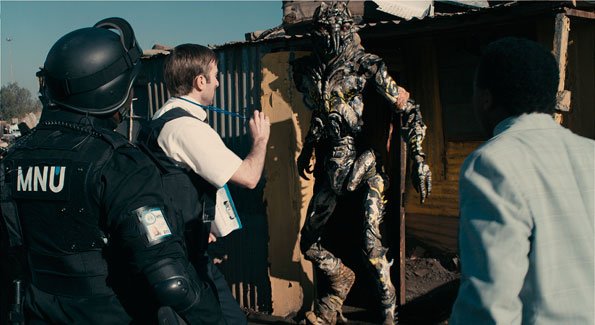
District 9 – A fine action film, notably mostly for its effectiveness on such a relatively low budget. Its vaunted social commentary amounts to little more than “hey these aliens in South Africa live in slums! In South Africa!” and the framing device of documentary-style interviews and found footage is undercut by so many scenes which aren’t shot in that style. Compared with last year’s low-budget action film, Cloverfield, District 9 falls short in its unwillingness to stick to the conceit it marks out for itself. Instead of increasing the immediacy of the action, it instead just feels like a (oft-used) gimmick.

Movie Roundup: I Haven’t Skied in 25 Years, but that Downhill Course Looks Like a Lot of Fun Edition


(500) Days of Summer – A very good romantic comedy that’s a little too much indebted to every other romantic comedy since, well, The Graduate, but still plenty of fun. Joseph Gordon Leavitt sorts through his recently ended relationship with Zooey Deschanel, and the film flits back and forth through time in a wholly unnecessary manner (like in Eternal Sunshine but less interesting) as he tries to get over the relationship. The romance is effectively comedic and its actually kind of fun playing spot the reference (the film is so infused with Woody Allen films I was sure it was set in New York until a third of the film had gone by and even now I’m not so sure they didn’t film it there and call it Los Angeles). I very much like the end, which is strikingly mature for a contemporary romantic comedy. The whole thing, in fact, feels like a breath of fresh air, unpolluted by the Apatovianity that has dominated the genre for the last five years or so (let alone the hideousness of the ones I can’t manage to stomach the trailers for, which all seem to star Sandra Bullock). I wouldn’t be insulting it to say it’s the Singles or Reality Bites of its era. Not an all-time great film, but perfectly enjoyable.


Dames – If such a thing as a by the numbers Busby Berkeley film is possible, this is it. There’s a slight, but pleasant and occasionally funny plot about a millionaire’s relative conniving to fund a broadway show. Dick Powell and Ruby Keeler do their thing (though Keeler’s tap dancing is sorely neglected). There’s a fine supporting performance from Zasu Pitts as Keeler’s mother. The Berkeley numbers at the end are mostly underwhelming, except for an inspired section Keeler’s image multiplies giving us dozens and dozens of Rubys. The film’s most notable for introducing the song “I Only Have Eyes For You,” which is one of the greatest songs ever and has been stuck in my head for the last week. The #17 film of 1934.


Shutter Island – I don’t know how to talk about the plot without spoiling it, so I’ll try to avoid that. Scorsese does a lot of really cool things to create a tense and unsettling mood, ranging from a dramatic classical, Kubrickian, score to some decent CGI create some wonderful effects with Robert Richardson’s lurid cinematography to editing rhythms that are just a little bit off, a little bit out of continuity. The large cast filled to the brim with excellent actors does an excellent job, and Leonado DiCaprio not only gives his usually very good performance, he’s also finally starting to show his age: for the first time I can recall, I actually thought he was a believable grown-up. The story’s initially unsatisfying, but after a couple of days, I’m thinking it has enough depth that it actually manages to be something a bit better than simply the best Christopher Nolan movie ever.


Anvil! The Story of Anvil – It’s everything it has been reputed to be: a terrific story about a 30 year old metal band keeping their dream alive despite an almost complete lack of success. It’s funny and moving and inspiring, but it somehow feels incomplete. One of the more interesting questions the film raises is why Anvil failed while their peers (the other metal bands of the 80s) succeeded? The film’s too much in love with the band (and that’s totally understandable, these guys are quite lovable) that it doesn’t really want to address anything negative about them or their music. The #39 film of 2008.