So I’m going to be reading Infinite Jest this summer, inspired by an old friend who mentioned that she’d be reading it along with a whole internet group of people (at infinitesummer.org). I first attempted to read it about eight years ago, but didn’t get very far (68 pages, if the subscription card bookmark I left in there can be believed). While I recall liking much of what I was reading, it all seemed so daunting, what with the book’s massive size and so many footnotes. My only other experience with David Foster Wallace comes from The New Yorker: a few essays that he wrote and a profile they ran not long after his death last year.
There are quite a few books I’ve read part of and given up on, not because I didn’t like them, but because I felt inadequate to the task of reading them at that point in my life. I’ll set them aside intending to pick them up again a few years down the line (Ulysses, Moby-Dick, Gravity’s Rainbow, among others) when I’m older and wiser. Hopefully, this will be one book I’ll be able to remove from that list.
We’re just about set to announce the next Metro Classics series, which will run through August and September. The theme this time around is Liars, Thieves and Cheats, and thus far we’ve booked L’Avventura, Charade, The Adventures Of Robin Hood, The Wild Bunch, The Sting and Crimes And Misdemeanors. Hopefully the last three will be set by the end of the week.
In the meantime, here’s a list of my Top 50 films of the 1930s. And here are the lists for the 40s, 50s, 60s, 70s, 80s, 90s and 00s.
1. The Rules Of The Game 2. Duck Soup 3. Stagecoach 4. Bringing Up Baby 5. Young Mr. Lincoln 6. Mr. Smith Goes To Washington 7. City Lights 8. Tabu: A Story Of The South Seas 9. The Adventures Of Robin Hood 10. Swing Time 11. M 12. Morocco 13. L’Atalante 14. Vampyr 15. Only Angels Have Wings 16. The Awful Truth 17. Shanghai Express 18. Top Hat 19. Modern Times 20. The Dawn Patrol 21. Alexander Nevsky 22. The Grand Illusion 23. The Thin Man 24. Ruggles Of Red Gap 25. The Lady Vanishes
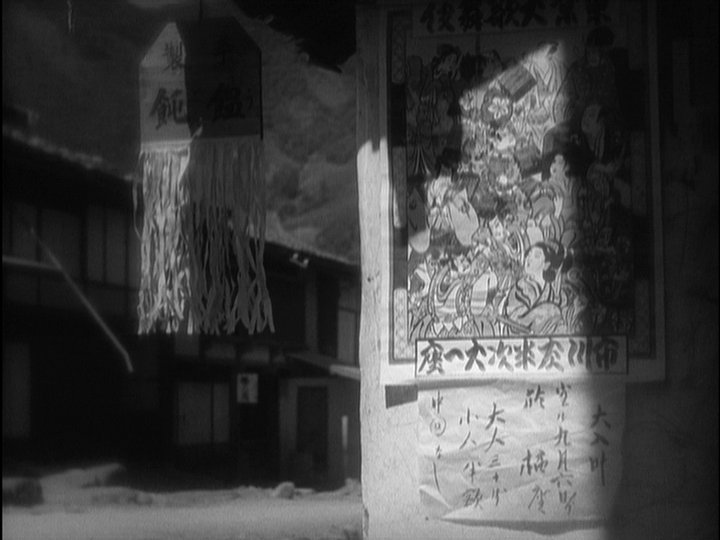
26. A Story OF Floating Weeds 27. The 39 Steps 28. City Girl 29. King Kong 30. Earth 31. Le Million 32. Scarface 33. Wee Willie Winkie 34. The Story Of The Late Chrysanthemums 35. Sisters Of the Gion 36. Ninotchka 37. Judge Priest 38. 42nd Street 39. Tokyo Chorus 40. Gunga Din 41. The Devil Is A Woman 42. Animal Crackers 43. Trouble In Paradise 44. I Was Born But. . . 45. Love Affair 46. Show Boat 47. The Wizard Of Oz 48. Baby Face 49. Fury 50. Destry Rides Again
Once again I am oh so far behind. I’ll try and get through these so I can rewatch more Deadwood and The Wire.
Histoire(s) du cinema – An impossible film to capsulize is Jean-Luc Godard’s decade-in-the-making essay on film. Using hundreds of film clips, usually unidentified and superimposed on each other, with Godard’s own rambling, meditative narration mixed with the films’ soundtracks and intercut with shots of a shirtless Godard smoking and banging away on a typewriter (looking eerily like Hunter S. Thompson). It’s an incomplete history of cinema (as if completeness was possible) leaving out large, important films, filmmakers and filmmaking countries. It’s also suffused with Godard’s own preoccupations (the first two chapters especially are focused on WW2, the Holocaust and the (im)possibility of revolutionary cinema). But then, there’s also Julie Delpy reading poetry in a bathtub. A monumental film that I need to see again and again. The #4 film of 1998.
Ruggles Of Red Gap– The first of many Leo McCarey films I’ve seen lately, and also the best. Charles Laughton plays a reserved English butler who is gambled into the service of frontier Americans. He is first made drunk, then brought to the Pacific Northwest, where he learns what it is to be American. Laughton is hilarious throughout, and his recitation of the Gettysburg Address is one of the very best things I’ve seen in a film all year (McCarey films the scene perfectly as well: slowly panning among a bar’s patrons as they try and fail to remember what Lincoln said, circling back to Laughton whispering the speech to himself). The #2 film of 1935.
Adventureland – Harmless coming of age film set in an amusement park. Not as Apatovian as its advertising, nor as moving as the films it’s actually aspiring to be (Richard Linklater’s Dazed And Confused, for example). Bill Hader and Kristen Wiig do their best to ruin the atmospheric moodiness, and Martin Starr does a fine job of playing the same character he played almost a decade ago on Freaks & Geeks.
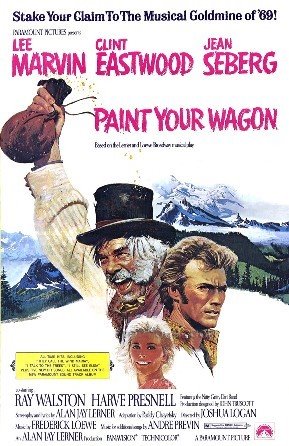
Paint Your Wagon – Not nearly as bad as I’d hoped it would be (it’s a musical Western directed by Joshua Logan). The songs are terrible, and neither Clint Eastwood or Lee Marvin can sing at all. But Marvin clearly had a lot of fun with the part (or was raging drunk, or both) and actually provides some real comedy to an absurdly overblown, poorly directed piece of nonsense. The #13 film of 1969.
Wolverine – Not the worst Marvel superhero film ever, about the same level as last year’s The Incredible Hulk. Occasionally manages to be better than mediocre, but only occasionally. Hugh Jackman does a fine job for the most part, though there’s way too many shots of him screaming at the heavens.
Thrilla In Manilla – Documentary attempt to “correct” the record of the Muhammed Ali – Joe Frazier rivalry that is essentially a hit piece on Ali, rehashing 40 year old grudges, rumors and innuendos all for the glorification of Frazier. Now, it may be the case that Frazier has been slighted by history, and Ali was certainly insulting to Frazier quite often at the height of their rivalry in the early 70s. But what that has to do with Ali’s religion, marriage or anything else I don’t know. The #42 film of 2008.
Show Boat – Lame remake of the James Whale film I wrote about here. All that greatness with Paul Robeson and the anti-racist subversions of the first film are ignored and marginalized in this version. They also change the ending to make Howard Keel’s character less of a heel, which then minimizes the redemption that same character receives at the end of the original. Bleh. The #22 film of 1951.
Dog Star Man – I think I’m just not an avant-garde cinema kind of guy. This film by Stan Brakhage is one of three I watched from the first disc of his Criterion Collection set “By Brakhage”. The first two (Desistfilm and Wedlock House: An Intercourse) were kind of goofy and fun, the fourth (The Act Of Seeing With One’s Own Eyes) I didn’t have the nerve to watch (it’s apparently a bunch of real-life autopsy footage). The third film was Dog Star Man, which is Brakhage’s most famous film. I was really into the first couple of parts of it, trying to figure out what all the crazy images were about and such, organizing it in my brain into some kind of meaning. The later chapters though, based almost entirely around endless repetitions of the same shots, only slightly different as Brakhage is trying to tell some kind of a story (he explains it all on the DVD). The problem is that the story’s pretty lame and not that hard to figure out and in no way deserves the time Brakhage devotes to it. In other words: it is boring. The #20 film of 1964.
Rebels Of The Neon God – Tsai Ming-liang’s first feature length film, and already his cinematic world is in place. Lee Kang-sheng plays Hsiao-kang, a quiet young man who doesn’t quite fit in, either with his parents (religious mom, cab driver dad) or the hip youths who hang around the local video game arcade, drive flashy motorcycles and commit petty crimes. The film focuses as much on the stories of two of those kids as it does on Hsiao-kang and his family, and with them Tsai is at his most conventional (though they do live in the requisitely flooded apartment). In the end, its more fun and less moving than some of his later films (I Don’t Want To Sleep Alone in particular is much different), but it’s a great place to start if you’re interested in his films. I’m looking forward to watching the rest of them in order of the next couple of years. The #10 film of 1992.
Star Trek – Tremendously slick, fun, entertaining. Love the lens flares, love the integration of the previous incarnations of the show into this alternate universe (much better than the willful ignorance practiced by recent reboots of the Batman and James Bond franchise). The cast is pretty good for the most part, capturing the essence of the original performances without being imitations. A bit too much action for the sake of action (or for the sake of padding the running time).
The Limits Of Control – Exactly the opposite of Star Trek, but just as much fun. There’s a plot, but we’re never clear on the details. What we get is a thriller without a McGuffin. It plays mostly as a series of conversations over coffee (two espressos in two cups), and in this way the film resembles Coffee & Cigarrettes, digressive conversations with famous movie people (Tilda Swinton, John Hurt, Gael Garcia Bernal) over caffeine. Isaac de Bankolé glides through the film as the epitome of cool, a globalized version of Jean-Pierre Melville’s Alain Delon. And there’s a great soundtrack by Japanese metal band Boris.
Jailhouse Rock – Elvis goes to jail for protecting an abused woman, becomes a music sensation and gets ripped off by his buddy. He’s Elvis and that’s great. So are the songs. The movie’s nothing special though. The #25 film of 1957.
My Little Chickadee – Mae West and WC Fields team up in the Old West, hilarity ensues. The plot is minimal, essentially an excuse for the two stars’ dueling one-liners. I’d give Fields the win. The #15 film of 1940.
Tillie’s Punctured Romance – Marie Dressler stars as a large woman who creates chaos wherever she goes. One of the unfortunate victims/causes of her distress is Charlie Chaplin. Dressler’s really good, but you can tell Chaplin’s the real star. The #1 (and only) film of 1914.
Stingaree – Irene Dunne wants to be an Australian opera singer and a bandit funds her rise to fame. I can’t say I remember much about it at all. The #17 film of 1934.
The Mark Of Zorro – I don’t know who’s responsible for the transfer of this Douglas Fairbanks silent action film, but the framerate they chose to run it at on TCM does it a real disservice. Or maybe the director (Fred Niblo) originally intended for it to be painfully slow with the intertitles (of which there are many) to remain on screen long enough to allow a first-grader time to read them over a dozen times. That might be the explanation, as the rest of the film, with the notable exception of Fairbanks’s action scenes, which are pretty great, crawls along as well. The #4 film of 1920.
Follow Me Quietly– A slick little B procedural about cops hunting a serial killer from director Richard Fleischer. Unable to get a look at the killer’s face, they post pictures of a faceless head wearing a fedora all over town, and even create a faceless mannequin to help witnesses identify the bad guy. Creepy. The #21 film of 1949.
Trust– It’s my third Hal Hartley film (also seen Henry Fool and Simple Men, liked the first, love the second). Like those other films, it’s stagey, fun quirky and actually rather forgettable. I’ve seen Simple Men at least four times, and barely have any idea what its about, I just know I really like it. Similarly, I saw Trust a month ago, and really don’t remember much of that great dialogue. I’m just left with the feeling that I had a good time watching it. Maybe that’s Hartley, maybe its something with my brain, I don’t know. The film is essentially a dual love/coming of age story with Adrienne Shelley changing from a New Jersey Valley Girl type to a sweet, calm, bookworm, while Martin Donovan changes from a suicidal misanthrope to a misanthrope who loves the much younger Shelley. Weirdly, Shelly seems like she’s playing a different character in the opening scenes than she is at any other time in the film. Her character doesn’t transform after meeting Donovan, she just changes instantly into his ideal girl. Much of her mother’s motivation in wanting to keep the two apart doesn’t make a whole lot of sense, and her scheme to trap Donovan in bed with Edie Falco (who plays Shelley’s older sister) so Shelly can see them is really dumb. I like the way Shelly plays its resolution, but Falco’s actions don’t really make any sense (“hey there’s a passed out guy in my bed! Guess I’ll take my clothes off too!”. Still, it’s a really good movie. I can’t say I’m in love with it, as so many others have seemed to have fallen. It’s really hard to emotionally connect to something that’s so intentionally artificial, stagey and written, and so it’s to Hartley’s credit that he’s able to inspire that in so many viewers. Similarly, despite the very writtenness of the film, it’s the emotions that linger for me as well (part of why I find his films so hard to remember, perhaps). Anyway, Trust is a very good film. But it’s not better than Unforgiven, Dead Man, Eyes Wide Shut or Reservoir Dogs. The #9 film of 1990.
Three Comrades – A really lovely film from director Frank Borzage about three WW1 veterans who meet Margaret Sullavan. One of them falls in love with and marries her, the other spends a lot of time fighting the nascent Nazis and the third watches over them all and tries to run their taxi business. It all goes wrong in the end though, as Sullavan does something really stupid that doesn’t make any sense in reality or for her character. Borzage should get more credit for being anti-Nazi long before the rest of Hollywood was (or was allowed to be). The #5 film of 1938.
Forbidden – Rather generic melodrama from Frank Capra saved by an excellent performance from the always great Barbara Stanwyck. She’s a poor girl who hooks up with the rich Adolphe Menjou while on vacation and has a kid with him. He, of course, is married and adopts the kid while Stanwyck becomes a journalist and marries her editor, Ralph Bellamy, who hates Menjou. Complications ensue. The #15 film of 1932.
Dark Victory – Bette Davis is the dying heroine in this film. She’s got a brain tumor. Her marries her anyway and won’t tell her how long she has to live. I think this would be illegal nowadays. Certainly grounds for a malpractice suit. Davis is great, Humphrey Bogart’s pretty good as the low class stable boy who digs her (though he’s got a lot of trouble keeping up his lame Irish accent), but George Brent is pretty plain as Davis’s doctor. The #19 film of 1939.
The Story Of GI Joe – Based on the work of WW2 correspondent Ernie Pyle, embedded off and on with an infantry unit first in North Africa, then for the bulk of the film in Italy. Burgess Meredith (was he ever young?) plays Pyle and is pretty good, but Robert Mitchum steals the film as the platoon’s captain, literally stuck in the mud and watching his men die around him in a pointless siege. A Samuel Fuller kind of war movie from William Wellman. The #9 film of 1945.
Penthouse – Warner Baxter plays a mob lawyer who enlists the help of his client (the nice gangster) to capture an even worse gangster. Myrna Loy also helps, in the role that helped break her out of playing Asian villains and got her the part of Nora Charles in The Thin Man. Pleasant enough. The #14 film of 1933.
Sunnyside – Chaplin short notable for a dream sequence in which he dances with many white-gowned nymphs. I must be missing the good Chaplin shorts, because other than The Immigrant (which is brilliant) I’ve been nothing but underwhelmed. The #3 film of 1919.
The Pursuit Of Happiness – Rich kid hippie runs over an old lady on a dark and rainy night . He refuses to listen to his dad’s expensive lawyers (or pay his backlog of parking tickets) and goes to jail for a few months. Right before he’s about to be released, he sees one of his fellow prisoners get killed and offers himself as a witness for the prosecution. Again, he acts like a complete moron and gets himself removed from the witness stand. On the way back to finish the last couple of days of his term, he escapes, picks up his girlfriend (a quite fetching Barbara Hershey) and flies off to Mexico. Stupid self-righteous baby boomer nonsense. The #10 film of 1971.
Tight Spot – Sweet little film noir from director Phil Karlson, and the first of his films I’ve seen. Ginger Rogers is released from prison so the cops can try and convince her to testify against a gangster (Lorne Greene) who’s managed to kill all their other witnesses. They set her up in a hotel room and Brian Donleavy and Edward G. Robinson do what the can to get her to talk. Rogers is alright, but her affected accent is grating and her hair is terrible. The rest of the actors are good though, and there’s even a killer twist near the end. The #17 film of 1955.
Blast Of Silence – Even better is this low-budget noir directed by and starring Allen Baron. He plays a hired killer out on a job, but he runs into an old friend and flirts with the idea of giving it all up. The characters and situations aren’t new, but the grittiness of the dialogue and the location shooting are striking for the time. It’s a New Wave film made years before the New Hollywood appropriated that title for their own glorification. The #10 film of 1961.
Devil’s Doorway – A shockingly progressive Western from Anthony Mann about a Shoshone Civil War hero who returns home to his family’s land, only to have The Man, in the satanic form of an explicitly racist Louis Calhern do everything they can to take it all away from him. The middle section of the film is a remarkable explication and indictment of the ways in which the American government used its own legal system to legitimize and justify the theft of much of this country and the genocide that went along with it. For this to appear in a film from 1950 is astounding, as is the characterization of the Shoshone, a Medal Of Honor winner who is the film’s protagonist throughout: everything we see is from his perspective and there is no question that he is the hero and we should take his side. The only unfortunate thing is that they couldn’t find an actual Indian to play him. But still, Robert Taylor gives a pretty good performance. The #11 film of 1950.
Drag Me To Hell – It’s great to have Sam Raimi back, The Quick And The Dead was far too long ago. Alison Lohman and that other guy from the Mac commercials star in this cautionary tale for all customer service workers: always be nice to old Gypsy women. The tongue in cheek horror is a lot of fun, and the continual shock cuts take on a life of their own, becoming ever more over the top and ridiculous as the film goes along. It all comes to an absolutely perfect conclusion. Not as jokey as the Evil Dead films, but still top notch Raimi.
Tom, Dick And Harry – Burgess Meredith is again looking old in this romantic comedy in which Ginger Rogers is trying to find a man. She goes through each of the titular boys, completely happy until she dreams of what their future lives will be like. Some kind of comment about the traps women fall in by getting married, I guess. But the whole thing’s too silly to take seriously, for which the blame has to lie with writer-director Garson Kanin. That, and whoever decided to cast actors who were 10-15 years too old for the part (Rogers was 30 at the time, essentially playing a dim-witted high school kid) . Bonus demerit: the movie got the “Tom, Dick Or Harry” song from Kiss Me Kate stuck in my head for the last week. The #19 film of 1941.
Once Upon A Honeymoon – Again with the Ginger Rogers, this time as a woman who unwittenly marries a Nazi spy in this Leo McCarey WW2 comedy. Cary Grant plays the journalist who convinces her of her husband’s evil, and helps her escape from him. The two then travel across Europe, always with the Nazis close behind. When at one point they lose their papers are mistaken for Jews and almost shipped off to a concentration camp, the film becomes one of the earliest filmic allusions to the Holocaust I’ve seen. The #13 film of 1942.
Lollilove – Cute little indie film Jenna Fischer (star of The Office) and her husband put together about rich Hollywood types who decide that their self-aggrandizing charity should be giving lollipops to homeless people. It’s a nice film that features an uncomfortable, in the light of Forgetting Sarah Marshall, appearance by Jason Segel and Linda Cardellini as a couple of potential investors. The #38 film of 2004.
Going My Way – Leo McCary’s Oscar-winning film about singing priest Bing Crosby’s attempts to reinvigorate the church in a poor New York neighborhood. Barry Fitzgerald is terrific as the aged priest who gets gently pushed aside by Crosby, and there’s a moving subplot with an aspiring singer and the landlord’s son she falls in love with. A heartfelt film that manages to show all the great things that Catholicism (or religion in general) can bring, both individually and to a community. The #6 film of 1944.
The Bells Of St. Mary’s – The sequel to Going My Way, this time with Crosby attempting to save a school run by Ingrid Bergman and a group of nuns. Bergman is terrific, and as lovely as ever, despite the habit. But the story isn’t nearly as good as the first film, with no depth to Crosby’s character an the event that saves the school not the result of careful relationship building of the kind Crosby engaged in in the other film, but instead a comical kind of, ahem, deus ex machina. And the final conflict around Bergman’s character (with again doctors and men conspiring to keep secrets from women about their own health) doesn’t work at all. The #10 film of 1945.
Since I’ve seen so many lately, here’s a ranked list of the Leo McCarey movies I’ve seen:
1. Duck Soup 2. Ruggles Of Red Gap 3. The Awful Truth 4. Going My Way 5. Love Affair 6. An Affair To Remember 7. The Bell’s Of St. Mary’s 8. Once Upon A Honeymoon
Still need to see Make Way For Tomorrow and The Milky Way (which is on the tivo). Any others I should watch out for?
Dead End – Humphrey Bogart plays a gangster who goes back to his old home, the “dead end” East River slum populated by gangs of kids, hard-working and underappreciated Sylvia Sydney, prostitute Claire Trevor and aspiring architect Joel McRea. The film started a vogue for urban youth gang movies (The Dead End Kids, The Bowery Boys, etc), which is kind of cool, depending on what you think of that genres ultimate expression: West Side Story. Solid direction by William Wyler and some really stunning shots put together by cinematographer Gregg Toland almost redeem the really stagey (though apparently very expensive) set built for the film. If any film needed to be shot on location, this was it. It needed that reality that Wyler/Toland’s arty stylization just isn’t designed to convey. The #11 film of 1937.
Well, the Mariners suck again and between the original series on Blu-Ray and the new movie, I’ve been geeking out on Star Trek for the last week or two. I’ve got a new work schedule (Five days in a row! Crazy!) and haven’t quite figured out when the best time for blog-related activities is going to be. So, for now, here’s a list of my top 50 films of the 1940s as of right now. And here are the lists for the 50s, 60s, 70s, 80s, 90s and 00s.
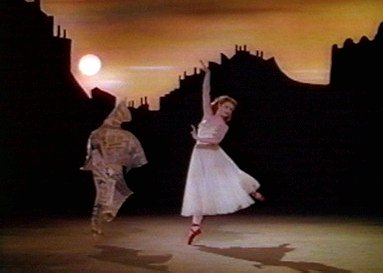
1. Casablanca 2. The Red Shoes 3. The Third Man 4. Black Narcissus 5. Citizen Kane 6. It’s A Wonderful Life 7. The Big Sleep 8. The Shop Around The Corner 9. Out Of The Past 10. A Canterbury Tale 11. Late Spring 12. Day Of Wrath 13. Notorious 14. Red River 15. Fantasia 16. The Philadelphia Story 17. The Life And Death Of Colonel Blimp 18. The Lady Eve 19. A Matter Of Life And Death 20. The Gang’s All Here 21. Cat People 22. To Have And Have Not 23. Ivan The Terrible Part 1 24. The Lady From Shanghai 25. Double Indemnity
26. His Girl Friday 27. The Palm Beach Story 28. Letter From An Unknown Woman 29. My Darling Clementine 30. The Maltese Falcon 31. Rebecca 32. The Pirate 33. Unfaithfully Yours 34. Brief Encounter 35. Children Of Paradise 36. Laura 37. The Letter 38. Sullivan’s Travels 39. Fort Apache 40. Suspicion 41. The Men Who Tread On The Tiger’s Tail 42. The Ox-Bow Incident 43. I Walked With A Zombie 44. The Shanghai Gesture 45. Leave Her To Heaven 46. Shadow Of A Doubt 47. How Green Was My Valley 48. Paisan 49. Air Force 50. Monsieur Verdoux
I feel like the Mariners have started the long slide back to where they probably belong, while the Blazers are showing their age. To help break out of this sports malaise, how about a nice list? Here’s my Top 50 movies from the 1950s. Previous Top 50 lists include the 1960s, 1970s, 1980s, 1990s and 2000s, all of which I probably should revise. Maybe tomorrow.
1. Seven Samurai 2. Singin’ In The Rain 3. Rear Window 4. The Searchers 5. Touch Of Evil 6. All About Eve 7. Vertigo 8. North By Northwest 9. Rashomon 10. Ugetsu 11. M. Hulot’s Holiday 12. The Band Wagon 13. Throne Of Blood 14. Rio Bravo 15. Funny Face 16. Voyage In Italy 17. Tokyo Story 18. The Seventh Seal 19. Hiroshma mon amour 20. Kiss Me Kate 21. Johnny Guitar 22. Written On The Wind 23. The Quiet Man 24. Nights Of Cabiria 25. Early Summer
26. Ikiru 27. The Steel Helmet 28. Harvey 29. An American In Paris 30. Sansho The Bailiff 31. Madame de. . . 32. Paths Of Glory 33. On the Waterfront 34. Sleeping Beauty 35. Some Like It Hot 36. Cranes Are Flying 37. The 400 Blows 38. Ivan The Terrible Part II 39. In A Lonely Place 40. Kiss Me Deadly 41. The River 42. Ordet 43. Anatomy Of A Murder 44. The Thing From Another World 45. Tokyo Twilight 46. Night Of The Hunter 47. Mogambo 48. Mr. Arkadin 49. Mon Oncle 50. Floating Weeds
Things have been awfully busy lately, and I haven’t had much time for movie-watching or writing about movie-watching. So here’s a roundup in the style of the small ball style I’m loving from the surprisingly first place Mariners.
Thirteen Women – A ridiculous film about a group of upper class women who are dying under mysterious circumstances after getting their fortunes sent to them by a psychic in the mail. Turns out it’s Myrna Loy, the half-Asian girl they were mean to in boarding school who’s using her hypnotic powers to exact her revenge. Loy’s as great as always, in her scary/sexy Fu Manchu mode; the movie’s got a certain charm. The #20 film of 1932.
Milk – Director Gus Van Sant doesn’t do much to differentiate this biopic from the rest of that tired genre. The performances are good, as they usually are in this kind of thing, and the real-life story is great. The movie, however, mostly fails to create a compelling character out of Dan White, something the fine documentary The Times Of Harvey Milk managed to do much better. The #13 film of 2008.
Synecdoche, New York – I’m not a Charlie Kaufman fan. I find him overly clever, narcissistic and depressing. All of that is here in this ambitious and opaque film, about a theatre director using a theatre grant to relentlessly gaze at his own icky navel. Like all of Kaufman’s films, its construction is ingenious and there are several moments of near-brilliance (the burning apartment, for one), but ultimately his misanthropy is so distancing that he film never manages the kind of transcendence it appears to be reaching towards. The #10 film of 2008.
A Scandal In Paris – The first of two collaborations I’ve seen recently between director Douglas Sirk and the great actor George Sanders. They’re early Sirk films, working in a noir genre that he largely abandoned when he started his string of melodrama masterpieces in the 1950s. Set in Napoleonic France, Sanders plays a master thief who gets redeemed by love and becomes the head of police. Light and fun, with flashes of Sirk’s brilliance in mise-en-scene (mirrors and such). The #16 film of 1946.
Lured – The other Sirk-Sanders film, this time with Lucille Ball as a showgirl hired by the police as bait for a high society serial killer. Sanders plays her rich boyfriend, who may or may not be the killer. Sanders is again terrific, but Ball appears out of place. The #8 film of 1947.
Two Lovers – Director James Gray is considered something of an auteur in Europe and a hack here in the US. I’ve only seen one of his other three films (Little Odessa, which I didn’t much care for), so I can’t really speak to that. But this is a fine film, a muted coming of age romance with Joaquin Phoenix as an unstable, occasionally suicidal, young man torn between the nice Jewish girl his parents want him to marry and the crazy shiksa next door (Gwyneth Paltrow). It’s the mellow pace and direction (the flashiest it gets is Gray’s alternation between warm colored indoor scenes with harsh blue-gray exteriors), along with the understated acting all-around (Isabella Rossellini stands out as Phoenix’s mother) that manage to turn this generic plot into a fine little movie. The #8 film of 2008.
The Devil And Daniel Webster – William Dieterle’s great adaptation of the Stephen Vincent Benet story about a poor farmer who sells his soul for money and then enlists the famous orator and senator to defend him when it’s time to pay up. Walter Huston is magnificent as the Devil, a cackling capitalist who haunts American history. Though set in the early 19th Century, the film is, of course, about the Great Depression: a leftist denunciation of the effects of greed on American society. With Simone Simon as the sexy maid the farmer leaves his wife for, Edward Arnold as Webster and the great Jane Darwell as the farmer’s mother. The #7 film of 1941.
La Chinoise – I don’t know how it’s intended (Godard’s thought at this time was in flux and accounts of it are hard to keep straight), but this film about student Maoists plays as a comedy to me, an affectionate parody of well-meaning, but generally clueless rich kids playing at revolution (not unlike the kids in Band Of Outsiders playing at being gangsters). One of Godard’s prettier films, with vibrant primary colors and a steady camera contrasting with the pedantic dialogue (the kids spend much of the film lecturing each other about class struggle). The #6 film of 1967.
The More The Merrier – Less funny is this screwball comedy with Jean Arthur renting out a room in her apartment to Charles Coburn, who then sublets to Joel McRea and tries to spark a romance between the two young people. Coburn’s great in a larger than usual role for him, but the film’s more dull than anything else. The #14 film of 1943.
Trafic – Jacques Tati’s last theatrical film, the follow-up to the colossal loss he took when his masterpiece, Playtime, flopped. Much to his apparent distress, he’s back playing M. Hulot, who is this time a car designer who must transport his invention from Paris to a car show in Amsterdam. Things of course keep breaking down, and hilarity ensues. More conventional than his other films, the gags lack the complexity of the ones in M. Hulot’s Holiday or Playtime, or those films’ sense of universality. It’s never boring, but it feels like Tati’s heart isn’t really in it. The #6 film of 1971.
Show Boat – This scene is truly amazing:
After the titles end, there’s a slow track across the natives relaxing to Max Steiner’s Asian-influenced score (not unlike the opening of another 1940 film, John Ford’s The Long Voyage Home). There’s an invisible wipe to a shot of the house in moonlight, followed by the first normal cuts, as the shots begin to ring out. The camera rushes forward as Bette Davis walks out of the house firing, followed by a shot of the moon being obscured by clouds. The scene (on lookers and Davis) are shrouded in darkness, then a shot of the cloud passing by and a reverse cut to Davis, who turns her head sharply, her face demented in the moon’s spotlight. A more breathtaking way of starting a film I haven’t seen in quite awhile. From that point, the film becomes more conventional, a murder mystery about why Davis shot the guy, and whether she’ll be convicted for it. It comes alive again in two other near-silent sequences: when she buys the eponymous incriminating letter and at the end, when the moonlight motif returns in a sequence that anticipates Jacques Tourner’s I Walked With A Zombie. Davis is incredible throughout the film, it makes me want to see every other one of her films. Or at least the ones she did with William Wyler, who’s direction in this film (as in their collaboration Jezebel) is often brilliant. The #6 film of 1940.
Love Me Or Leave Me – I had this on while writing this post, so I probably wasn’t paying close enough attention, but this movie seemed pretty lame. James Cagney plays an old gangster who helps Doris Day become a star singer, but gets jealous when she falls in love with another man. Cagney’s a great actor, of course, but both he and Day seemed totally lacking in energy, as did the direction by Charles Vidor – I swear there were only two camera setups through the first 30+ minutes of he film: Day on stage in a flat composition in front of musicians and a solid color backdrop with neither camera nor actors moving much at all and Day and Cagney in her dressing room arguing about something. Did I miss something, is this a film I should watch and pay closer attention to? For now, the #31 film of 1955.
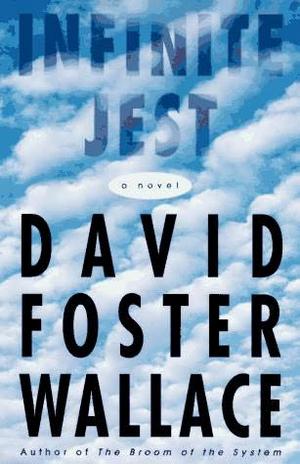 So I’m going to be reading Infinite Jest this summer, inspired by an old friend who mentioned that she’d be reading it along with a whole internet group of people (at infinitesummer.org). I first attempted to read it about eight years ago, but didn’t get very far (68 pages, if the subscription card bookmark I left in there can be believed). While I recall liking much of what I was reading, it all seemed so daunting, what with the book’s massive size and so many footnotes. My only other experience with David Foster Wallace comes from The New Yorker: a few essays that he wrote and a profile they ran not long after his death last year.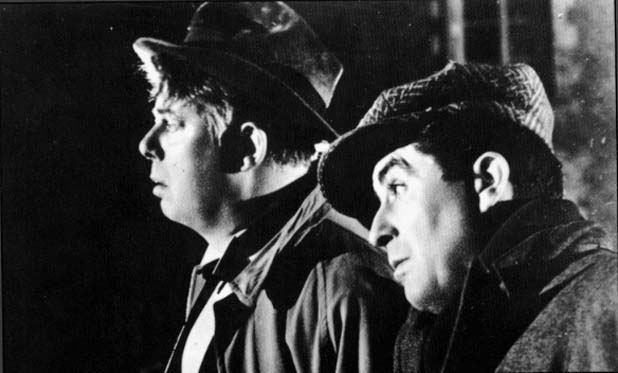










 The End of Cinema