
Movies Of The Year Awards: 1988
 Best Picture:
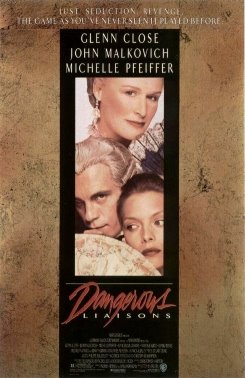
The End: Dangerous Liaisons
Oscar: Rain Man
Best Director:
The End: Martin Scorsese, The Last Temptation Of Christ
Oscar: Barry Levinson, Rain Man
Actor:
The End: John Malkovich, Dangerous Liaisons
Oscar: Dustin Hoffman, Rain Man
Actress:
The End: Susan Sarandon, Bull Durham
Oscar: Jodie Foster, The Accused
Supporting Actor:
The End: Alan Rickman, Die Hard
Oscar: Kevin Kline, A Fish Called Wanda
Supporting Actress:
The End: Michelle Pfeiffer, Dangerous Liaisons
Oscar: Geena Davis, The Accidental Tourist
 Original Screenplay:
The End: Ron Shelton, Bull Durham
Oscar: Ronald Bass and Barry Morrow, Rain Man
Adapted Screenplay:
The End: Christopher Hampton, Dangerous Liaisons
Oscar: Christopher Hampton, Dangerous Liaisons
Foreign Language Film:
The End: As Tears Go By
Oscar: Pelle The Conquerer
Documentary Feature:
The End: The Thin Blue Line
Oscar: Hotel Terminus
Film Editing:
The End: Thelma Schoonmaker, The Last Temptation Of Christ
Oscar: Arthur Schmidt, Who Framed Roger Rabbit
Cinematography:
The End: Andrew Lau, As Tears Go By
Oscar: Peter Biziou, Mississippi Burning
Art Direction:
The End: Dangerous Liaisons
Oscar: Dangerous Liaisons
 Costume Design:
The End: Dangerous Liaisons
Oscar: Dangerous Liaisons
Make-Up:
The End: Beetlejuice
Oscar: Beetlejuice
Sound:
The End: Die Hard
Oscar: Bird
Sound Effects Editing:
The End: Die Hard
Oscar: Who Framed Roger Rabbit
Visual Effects:
The End: Who Framed Roger Rabbit
Oscar: Who Framed Roger Rabbit
Original Score:
The End: Mason Daring, Eight Men Out
Oscar: Dave Grusin, The Milagro Beanfield War
Soundtrack:
The End: Bull Durham

Movie Roundup: Her? Edition
 Still flabbergasted by McCain’s VP choice, but enjoying the vetting process being done in the press that his campaign should have done months ago. Here’s what I’ve seen recently:
Pineapple Express – Stoner action comedy from The Apatow Group. Directed by David Gordon Green, who’s George Washington was quite pretty, I was hoping he might bring a unique visual style to an Apatow film, something we haven’t seen yet from those folks. Alas, but for a few nicely quiet moments, it looks pretty much like any other film. Still, it’s reasonably funny. And as a parody of the action genre, I enjoyed it more than Hot Fuzz, a film a lot of other people think is pretty great.
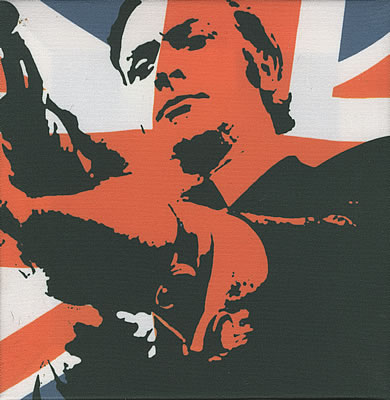
Get Carter – I like Michael Caine, but this role as a badass gangster looking to solve his brother’s murder seems to call for a Lee Marvin type. Maybe I’ve just always seen Caine in the wrong kind of film. Anyway, this is a pretty solid post-noir film, not as experimental as John Boorman’s Point Blank, or satirical like Robert Altman’s The Long Goodbye, or as arty as Michelangelo Antonioni’s Blow-Up, or as good as any of those films. But this seems like a family of films that I’m sure somebody’s studied. The quite excellent Out Of The Past podcast has ignored this period of noir, however. Well, with the exception of Chinatown, which is a period film. The crime film went in interesting directions after the collapse of the studio system: more graphic in terms of violence and sexuality, more extreme politically in terms of both fascism (arguably Dirty Harry and The French Connection) and existential nihilism (Chinatown and The Long Goodbye). Get Carter‘s pretty explicit, but I know how ambitious it is as a statement about anything. The #9 film of 1971.
Reel Paradise – John Pierson, an indie film producer and author of the book Spike, Mike, Slackers and Dykes (which I read a long time ago and recall being a fun read) goes to Fiji to run a free theatre for a year. This documentary chronicles his time there, but spends far too much time following the soap opera of his family as they adjust to the new country (I really didn’t care about any of that) and very little on the actual cinema. Compared to Henri Langlois: Phantom Of The Cinematheque, another documentary about a guy running a theatre, this film captures almost one of the sheer joy of showing movies that so motivates these guys. The #48 film of 2005.
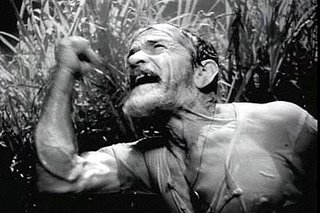
Beach Red – With this and The Naked Prey, Cornel Wilde showed himself to be a quite interesting director of thoughtful action pictures. Its too bad he doesn’t appear to have gotten more opportunities to direct. This WW2 film has a hole lot in common with Malick The Thin Red Line, in both films, the narrative of a US assault on a Japanese-held island is broken up by flashbacks as the soldiers try to reconcile their past lives with the horrors of their present. What Wilde doesn’t really have is Malick’s eye for beautiful imagery or his ability to create a lyrically dreamlike narrative flow. Instead, his technique is more straight-forward along the lines of Sam Peckinpah or Samuel Fuller. The combination of poetic construction and prose visual style is oddly jarring, but not exactly enjoyable. I should probably see this again. The #19 film of 1967.
Tropic Thunder – A bit funnier than Pineapple Express, but neither is particularly great cinema. Ben Stiller’s only mildly annoying, Nick Nolte and Steve Coogan are underused, Jack Black isn’t given a single interesting thing to do, Tom Cruise is reasonably funny, but Robert Downey Jr, and just about everything about his character, is brilliant. The film is worth seeing for him alone. Right now, on the strength of this and [i]Iron Man[/i] he’s the leading candidate for my Best Actor award. I’m sure he’s very excited after just missing the Supporting Actor award for Less Than Zero.
 Howl’s Moving Castle – I finally managed to watch a second Hayao Miyazaki film and I wasn’t disappointed. The plot, as far as I can tell, doesn’t make the least bit of sense, but this is a stunningly beautiful movie (and it looks fantastic on my TV, why isn’t there a Blu-Ray of this yet?). Most impressive for me: the way Miyazaki shifts the age of the main character so suddenly within a scene. I’m watching a scene and all of a sudden realize the main character has gotten 30 years younger and I’ve no idea how long she’s been that way. I can’t really explain why I find that so exciting. Anyway, I liked this much more than Mononoke, which I recall as been really hampered by a generic environmental politics message. The #9 film of 2004.
The Smiling Lieutenant – I may have liked this the best of all the Lubitsch Musicals in the recent Eclipse boxset, and that’s not entirely because I really just don’t care for Jeannette MacDonald, who stars in the other three. This one’s got Claudette Colbert and Miriam Hopkins vying for Maurice Chevalier’s affections. He’s the soldier who gets roped into marrying a princess (Hopkins) despite already having a girlfriend (Colbert). Colbert follows him to the princess’ country and some surprising complications ensue. It’s also the least musical of the set, which helps, since most of the songs in these films are, at minimum, not very memorable. The #10 film of 1931.
One Hour With You – The last and least of these Lubitsch Musicals. chevalier and MacDonald play a happily married couple who dally with infidelity but reunite. What can I say? I guess I prefer the Lubitsch non-musicals. These films aren’t without a historical interest, an they all have a certain charm (I don’t think Lubitsch can fail to be pleasant), but they simply can’t compare with greats like The Shop Around The Corner, To Be Or Not To Be, Trouble In Paradise or Ninotchka. The #13 film of 1932.
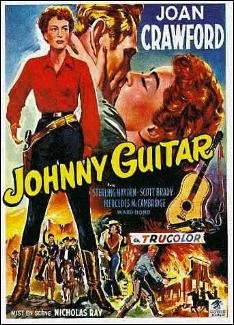 Johnny Guitar – Now here’s a film that lived up to the hype an was everything I’d hoped it would be. Nicholas Ray’s Western’s got just about everything going for it: complex and endlessly fascinating gender politics, a Joan Crawford always teetering on the edge of camp hysteria, Sterling Hayden in a fine reluctant gunfighter performance, Ward Bond, Ernest Borgnine, John Carradine and Mercedes McCambridge doing fine work in supporting roles, especially McCambridge as the violently repressed villain, Nicholas Ray’s personal fear of isolation and loneliness. This movie needs to be seen again and again and again. The #4 film of 1954.
Two-Faced Woman – Greta Garbo plays a ski instructor who marries the rich Melvyn Douglas on a whim. When the two start to fight, she pretends to be her own vivacious twin sister to test his fidelity. He fails, of course, but some how she learns her lesson and is put in her place. Pretty retrograde, I guess, and not nearly as charming as Ninotchka, the previous pairing of these two stars, despite the great George Cukor directing. The #17 film of 1941.
Two-Headed Spy – Just a coincidence with the two “Two”s back to back, I swear. This is an Andre DeToth WW2 film about a British spy who just happened to be a general in the German army and his efforts to help the Allies and undermine the German cause. If true, a remarkable story, but there seems to be some doubt about its reality. Regardless, Jack Hawkins is very fine in the lead role, and DeToth, a director some hold in high regard who I’ve little experience with, directs with a restrained, realist style that somewhat recalls Martn Ritt’s The Spy Who Came In From The Cold, without that film’s overwhelming sense of melancholy. The #18 film of 1958.
Rage In Heaven – Ingrid Bergman is at the center of a love triangle between crazy Robert Montgomery and awesome George Sanders. She marries Montgomery but loves Sanders, which makes Montgomery even crazier until he becomes violent, both toward animals and people. Directed by WS Van Dyke (among others) it’s lacking the noir feel and visual style that this plot would have received had it been made a decade later. Instead, it’s more of a social problem film with a rather silly race against the clock to solve the crime denouement. The #16 film of 1941.
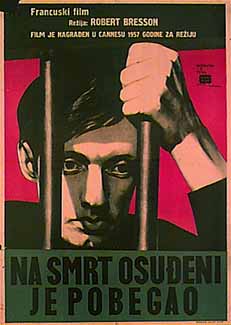 A Man Escaped – My latest Robert Bresson film, the title sums up the plot pretty well. We are shown a man’s incarceration and his various, painstaking plans for escape in intricate detail. It’s like all the fascinating process elements of a movie like The Great Escape, with all the star personality and action narrative eliminated. What’s left is the details, and the character that grows out of actions rather than an actors persona (or displays of emotion, this being Bresson). The effect is one of extreme realism, making the film that much more suspenseful because it draws the viewer in so much more. The #7 film of 1956.
The Vikings – I liked the opening sequence, with Orson Welles narrating over a Bayeux Tapestry type animation. After that, the film becomes a pretty generic Hollywood period film, along the lines of The Fall Of the Roman Empire or Cleopatra (or Gladiator and Kingdom Of Heaven, though without those films contemporary political aspirations, for that matter). It lacks the hard, slightly perverse edge Stanley Kubrick brought to Spartacus or the silly campy fun of the Ray Harryhausen period films. Kirk Douglas and Tony Curtis play the Vikings, fighting over Janet Leigh and fighting the English (or the Welsh, I’m not sure). I can see why they’d fight over Leigh, as for the rest: bleh. Director Richard Fleischer is well-respected. I can’t believe this is one of his best. The #19 film of 1958.
Movies Of The Year Awards: 1987
Best Picture:
The End: The Princess Bride
Oscar: The Last Emperor
Best Director:
The End: Stanley Kubrick, Full Metal Jacket
Oscar: Bernardo Bertolucci, The Last Emperor
Actor:
The End: Bruno Ganz, Wings Of Desire
Oscar: Michael Douglas, Wall Street
Actress:
The End: Holly Hunter, Broadcast News and Raising Arizona
Oscar: Cher, Moonstruck
Supporting Actor:
The End: William Hurt, Broadcast News
Oscar: Sean Connery, The Untouchables
Supporting Actress:
The End: Olympia Dukakis, Moonstruck
Oscar: Olympia Dukakis, Moonstruck
 Original Screenplay:
The End: James L. Brooks, Broadcast News
Oscar: John Patrick Shanley, Moonstruck
Adapted Screenplay:
The End: William Goldman, The Princess Bride
Oscar: Mark Peploe and Bernardo Bertolucci, The Last Emperor
Foreign Language Film:
The End: Wings Of Desire
Oscar: Babette’s Feast
Film Editing:
The End: Martin Hunter, Full Metal Jacket
Oscar: Gabriella Cristiani, The Last Emperor
Cinematography:
The End: Henri Alekan, Wings Of Desire
Oscar: Vittorio Storaro, The Last Emperor
Art Direction:
The End: The Last Emperor
Oscar: The Last Emperor
Costume Design:
The End: The Last Emperor
Oscar: The Last Emperor
 Make-Up:
The End: Predator
Oscar: Harry And The Hendersons
Sound:
The End: RoboCop
Oscar: The Last Emperor
Sound Effects Editing:
The End: Predator
Oscar: RoboCop
Visual Effects:
The End: Predator
Oscar: Innerspace
Original Score:
The End: Ryuichi Sakamoto, David Byrne and Cong Su, The Last Emperor
Oscar: Ryuichi Sakamoto, David Byrne and Cong Su, The Last Emperor
Original Song:
The End: “A Hazy Shade Of Winter”, Paul Simon/The Bangles, Less Than Zero
Oscar: “(I’ve Had) The Time of My Life”, Franke Previte, John DeNicola and Donald Markowitz, Dirty Dancing
Soundtrack:
The End: Ishtar
Movies Of The Year Awards: 1986
Best Picture:
The End: Hannah And Her Sisters
Oscar: Platoon
Best Director:
The End: Woody Allen, Hannah And Her Sisters
Oscar: Oliver Stone, Platoon
Actor:
The End: James Woods, Salvador
Oscar: Paul Newman, The Color Of Money
Actress:
The End: Isabella Rossellini, Blue Velvet
Oscar: Marlee Matlin, Children Of A Lesser God
Supporting Actor:
The End: Dennis Hopper, Blue Velvet and Hoosiers
Oscar: Michael Caine, Hannah And Her Sisters
Supporting Actress:
The End: Dianne Weist, Hannah And Her Sisters
Oscar: Dianne Weist, Hannah And Her Sisters
 Original Screenplay:
The End: Woody Allen, Hannah And Her Sisters
Oscar: Woody Allen, Hannah And Her Sisters
Adapted Screenplay:
The End: Andrew Birkin, Gérard Brach, Howard Franklin and Alain Godard, The Name Of The Rose
Oscar: Ruth Prawer Jhabvala, A Room With A View
Foreign Language Film:
The End: A Better Tomorrow
Oscar: The Assault
Film Editing:
The End: Claire Simpson, Platoon and Salvador
Oscar: Claire Simpson, Platoon
Cinematography:
The End: Chris Menges, The Mission
Oscar: Chris Menges, The Mission
Art Direction:
The End: The Name Of The Rose
Oscar: A Room With A View
Costume Design:
The End: The Mission
Oscar: A Room With A View
 Make-Up:
The End: The Fly
Oscar: The Fly
Sound:
The End: Aliens
Oscar: Platoon
Sound Effects Editing:
The End: Platoon
Oscar: Aliens
Visual Effects:
The End: Aliens
Oscar: Aliens
Original Score:
The End: Ennio Morricone, The Mission
Oscar: Herbie Hancock, ‘Round Midnight
Original Song:
The End: “If You Leave”, Orchestral Manoeuvres in the Dark, Pretty In Pink
Oscar: “Take My Breath Away”, Giorgio Moroder & Tom Whitlock, Top Gun
Soundtrack:
The End: Pretty In Pink
Movies Of The Year Awards: 1985
Best Picture:
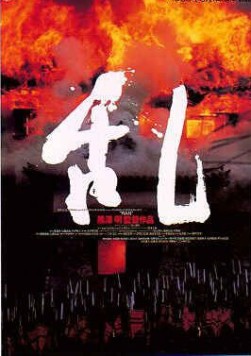
The End: Ran
Oscar: Out Of Africa
Best Director:
The End: Akira Kurosawa, Ran
Oscar: Sydney Pollack, Out Of Africa
Actor:
The End: Tatsuya Nakadai, Ran
Oscar: William Hurt, Kiss Of The Spider Woman
Actress:
The End: Meryl Streep, Out Of Africa
Oscar: Geraldine Page, The Trip To Bountiful
Supporting Actor:
The End: Danny Glover, Silverado and The Color Purple
Oscar: Don Ameche, Cocoon
Supporting Actress:
The End: Mieko Harada, Ran
Oscar: Anjelica Huston, Prizzi’s Honor
 Original Screenplay:
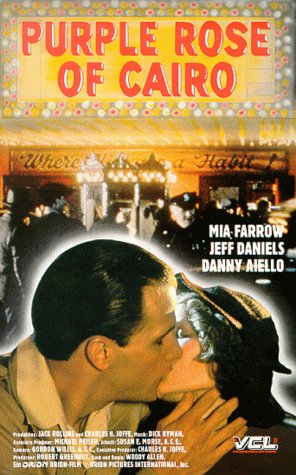
The End: Woody Allen, The Purple Rose Of Cairo
Oscar: Earl W. Wallace, William Kelley and Pamela Wallace, Witness
Adapted Screenplay:
The End: Kurt Luedtke, Out Of Africa
Oscar: Kurt Luedtke, Out Of Africa
Foreign Language Film:
The End: Ran
Oscar: The Official Story
Film Editing:
The End: Peter Cheung, Police Story
Oscar: Thom Noble, Witness
Cinematography:
The End: Takao Saitô, Asakazu Nakai and Masaharu Ueda, Ran
Oscar: David Watkin, Out Of Africa
Art Direction:
The End: Ran
Oscar: Out Of Africa
Costume Design:
The End: Ran
Oscar: Ran
 Make-Up:
The End: Ran
Oscar: Mask
Sound:
The End: Back To The Future
Oscar: Out Of Africa
Sound Effects Editing:
The End: Back To The Future
Oscar: Back To The Future
Visual Effects:
The End: Return To Oz
Oscar: Cocoon
Original Score:
The End: Tôru Takemitsu, Ran
Oscar: John Barry, Out Of Africa
Original Song:
The End: “Don’t You (Forget About Me)”, Simple Minds, The Breakfast Club
Oscar: “Say You, Say Me”, Lionel Richie, White Nights
Soundtrack:
The End: Back To The Future
Movies Of The Year Awards: 1984
Best Picture:
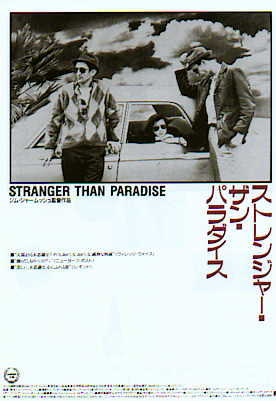
The End: Stranger Than Paradise
Oscar: Amadeus
Best Director:
The End: Jim Jarmusch, Stranger Than Paradise
Oscar: Milos Forman, Amadeus
Actor:
The End: Bill Murray, Ghostbusters
Oscar: F. Murray Abraham, Amadeus
Actress:
The End: Eszter Balint, Stranger Than Paradise
Oscar: Sally Field, Places In The Heart
Supporting Actor:
The End: M. Emmett Walsh, Blood Simple
Oscar: Haing S. Nior, The Killing Fields
Supporting Actress:
The End: Elizabeth Berridge, Amadeus
Oscar: Peggy Ashcroft, A Passage To India
 Original Screenplay:
The End: Dan Aykroyd and Harold Ramis, Ghostbusters
Oscar: Robert Benton, Places In The Heart
Adapted Screenplay:
The End: Peter Shaffer, Amadues
Oscar: Peter Shaffer, Amadeus
Film Editing:
The End: Nena Danevic and Michael Chandler, Amadeus
Oscar: Jim Clark, The Killing Fields
Cinematography:
The End: Tom DiCillo, Stranger Than Paradise
Oscar: Chris Menges, The Killing Fields
Art Direction:
The End: Amadeus
Oscar: Amadeus
Costume Design:
The End: Amadeus
Oscar: Amadeus
 Make-Up:
The End: The Terminator
Oscar: Amadeus
Sound:
The End: Amadeus
Oscar: Amadeus
Visual Effects:
The End: Ghostbusters
Oscar: Indiana Jones And The Temple Of Doom
Original Score:
The End: Randy Newman, The Natural
Oscar: Maurice Jarre, A Passage To India
Original Song:
The End: “Purple Rain”, Prince, Purple Rain
Oscar: “I Just Called To Say I Love You”, Stevie Wonder, The Woman In Red
Soundtrack:
The End: Purple Rain
Oscar: Purple Rain

Movies Of The Year(s): The Top 150
I haven’t done this for awhile, so I wanted to revise and update my Top 20 movies. Of course, in order to do that I needed a list of movies I loved, which I could whittle down to the requisite number. My initial list was 152 movies long. With two eliminated to avoid that inelegant number, I was left with these 150. At this moment, these are my 150 favorite films, the 150 movies that I think are the best.

150. L’Avventura
149. Magnolia
148. Big Night
147. Alien
146. The Life Of Brian
145. The Last Of The Mohicans
144. Modern Times
143. The World
142. Battleship Potemkin
141. Flight Of The Red Balloon
140. The Man Who Shot Liberty Valance
139. Happy Together
138. Children Of Paradise
137. Kill Bill, Vol. 1
136. The Wind Will Carry Us
135. Tropical Malady
134. LA Story
133. Mean Streets
132. The Princess Bride
131. The 36th Chamber Of Shaolin

130. Monty Python And The Holy Grail
129. Still Life
128. The Man With A Movie Camera
127. Zulu
126. Chimes At Midnight
125. Goodbye Dragon Inn
124. Shoot The Piano Player
123. I’m Not There
122. The Shining
121. The English Patient
120. Throne Of Blood
119. Lola
118. Three Times
117. Boogie Nights
116. A Matter Of Life And Death
115. Yojimbo
114. Taste Of Cherry
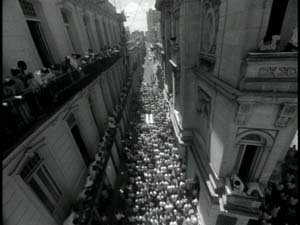
113. I Am Cuba
112. Pulp Fiction
111. Sansho The Bailiff

110. Jaws
109. Hiroshima mon amour
108. Last Life In The Universe
107. Day Of Wrath
106. Trainspotting
105. Star Wars
104. Ikiru
103. Hero
102. F For Fake
101. Chinatown
100. Bringing Up Baby
99. 2046
98. Punch-Drunk Love
97. Dazed And Confused
96. Top Hat
95. Tokyo Story
94. Nights Of Cabiria
93. Eyes Wide Shut
92. Taxi Driver
91. The Godfather

90. Hard-Boiled
89. Morocco
88. Swing Time
87. House Of Flying Daggers
86. Rushmore
85. The Lion In Winter
84. Slacker
83. Unforgiven
82. The General
81. Three Colors: Blue
80. The Thin Red Line
79. Raiders Of the Lost Ark
78. Dead Man
77. The Godfather Part II
76. Contempt
75. Psycho
74. Red River
73. Crouching Tiger, Hidden Dragon
72. The Passion Of Joan Of Arc
71. The Maltese Falcon

70. Apocalypse Now
69. Tabu
68. Satantango
67. Last Year At Marienbad
66. McCabe & Mrs. Miller
65. The Wind That Shakes The Barley
64. Fitzcarraldo
63. Celine And Julie Go Boating
62. Sherlock Jr.
61. 8 1/2
60. Mr. Smith Goes To Washington
59. M. Hulot’s Holiday
58. Rio Bravo
57. Stranger Than Paradise
56. Lawrence Of Arabia
55. Au hasard Balthazar
54. Sans soleil
53. Andrei Rublev
52. Two-Lane Blacktop
51. Out Of The Past

50. Once Upon A Time In The West
49. The New World
48. The Shop Around The Corner
47. Black Narcissus
46. Rashomon
45. City Lights
44. L’Eclisse
43. Funny Face
42. The Manchurian Candidate
41. The Seventh Seal
40. Young Mr. Lincoln
39. Ugetsu
38. A Canterbury Tale
37. North By Northwest
36. The Big Sleep
35. A Woman Is A Woman
34. It’s A Wonderful Life
33. Late Spring
32. Stagecoach
31. Steamboat Bill Jr

30. The Birds
29. Miller’s Crossing
28. The Empire Strikes Back
27. Dr. Strangelove
26. 2001: A Space Odyssey
25. Do The Right Thing
24. The Big Lebowski
23. Ran
22. The Rules Of The Game
21. Duck Soup
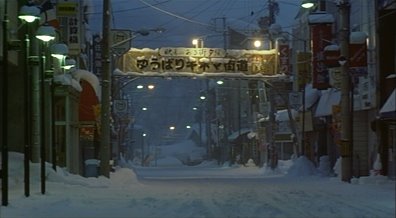
20. The Umbrellas Of Cherbourg
19. Citizen Kane
18. Millennium Mambo
17. Playtime
16. The Red Shoes
15. Manhattan
14. Vertigo
13. All About Eve
12. Days Of Heaven
11. The Third Man
10. Sunrise
9. The Searchers
8. Touch Of Evil
7. Rear Window
6. Pierrot le fou
5. Singin’ In The Rain
4. Annie Hall
3. Casablanca
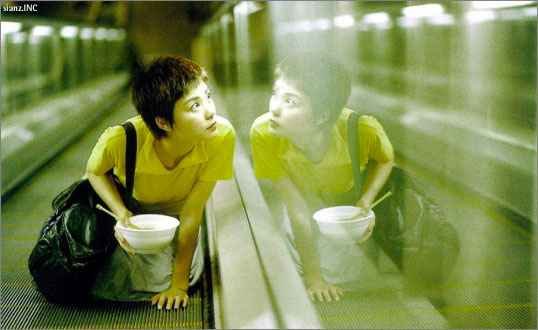
2. Chungking Express
1. Seven Samurai

 The End of Cinema