Uncategorized
Summer of Sammo: Encounters of the Spooky Kind
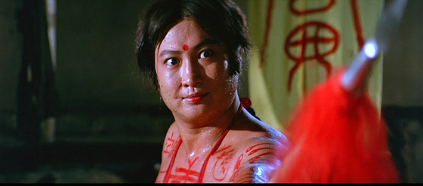
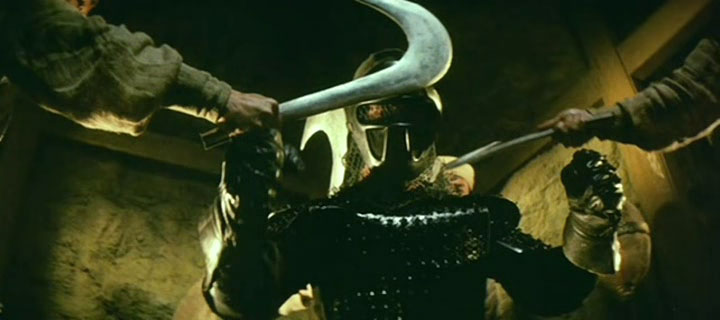
Sammo Hung plays a regular guy whose reputation as the boldest man in town makes him susceptible to all kinds of dares, leading him to an escalating series of encounters with the dead in this smash hit, one of the first major films to combine kung fu, horror and comedy. A Mr. Tam, a leading citizen of the town, is sleeping with Sammo’s wife and decides to get rid of him to cover his tracks. So he hires a renegade Taoist priest who has the ability to control the dead to kill him (by daring Sammo to spend the night in a temple holding a coffin). A fellow priest hears about this violation of Taoist beliefs and helps Sammo out, giving him instructions to counteract the killer corpses.
The first night, Sammo tries to hide from the corpse, which hops around like a bunny, unable to bend at the knees or elbows, it’s arms held out straight like a parody of Frankenstein’s monster. The second night, Sammo tries to keep the corpse in its coffin by throwing eggs at it when it tries to pop out. But he’s double crossed (some of the eggs are duck instead of chicken) and has to fight the corpse. This is the first real kung fu fight in the movie and it’s hilarious: the corpse’s stiffness making it look like a breakdancing robot. The third corpse Sammo confronts is accidental: after spending the night sleeping next to it (Sammo’s on the run from the cops after being framed for murder), it begins to mirror his movements. The result is a variation on the classic Marx Brothers gag, seen in Duck Soup, with Sammo trying to trick the corpse into beating itself up (“this corpse is too smart for me,” says Sammo.)
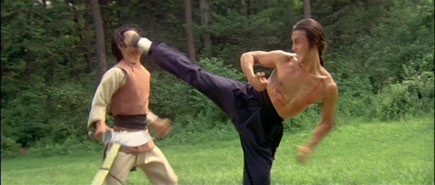
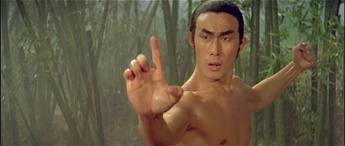
The second half of the film finds the priests taking a more direct role, employing a Taoist version of voodoo to take control of unsuspecting humans (this kind of ‘Spiritual Boxing’ was the subject of a 1975 Lau Kar-leung film). A teahouse showdown begins with Sammo losing control of his right hand, a sequence that surely inspired Sam Raimi’s Evil Dead. What follows is a spectacular kung fu fight, with Sammo showing off his otherworldy agility and speed taking on four swordsman armed only with a wooden bench, like an extended, souped up version of the fight from the end of Warriors Two. The fight ends with a Chaplinesque touch: Sammo defeats the swordsmen, twirls the bench around and places it on the ground. He crosses his arms with a satisfied grin and sits proudly on the bench, which immediately collapses, sending Sammo sprawling to the floor. These kind of silent comedy-inspired beats at the end of fights would become a Jackie Chan signature.
The film ends up in a rather disturbing place, evincing Hung’s penchant for mixing moods (as in Eastern Condors). The two priests meet for a final showdown, preparing their respective altars (“when two sides are evenly matched, whoever has the higher altar wins” is the film’s most important life lesson, as the priests position their altars on 30′ platforms) and raising spirits to possess various proxy fighters. Sammo, inhabited for a time by the monkey god, has his showdown with Tam. The good priest incinerates the bad one (in a spectacular, and what looks to have been highly dangerous, fire stunt). As the good priest falls, exhausted and injured from his altar, Sammo rushes to catch him. . . and just misses, an unexpected and darkly funny comic twist and the perfect place to end the movie. But then Sammo’s wife rushes out, pretending to have been a victim of Tam, kidnapped by him and held against her will. But instead of a goofy happy ending, with cuckold and wife reconciled, or even a darkly comic one with Sammo telling her off and sending her away, what we get is truly scary. Sammo grabs her, beats her repeatedly and throws her in the air. The final shot is a freeze frame of her flying, the shouted word “Bitch!” lingering in the air. It’s not funny at all but creepy and more than a little misogynistic. Sure, she cheated on him, but the punishment seems far in excess of her crime. Like the ending of Jackie Chan’s Police Story, where the nice guy cop, finally pushed to far, beats the crap out of an unarmed, surrendering criminal, the movie exposes a real aggression, a violent core to these martial artists. There is a darkness in Sammo Hung.
This Week in Rankings
This week I went to see my first-ever movie at the Seattle International Film Festival after 15 years living in the Seattle area. Johnnie To’s Drug War was as good as I’d hoped it would be, I’m hoping to write about it at some point in the near future. The SIFF experience was pretty mediocre. The last time I looked at their website, the Drug War page spelled To’s name three different ways (“Johnnie”, “Johnny” and “Jonny”) and for some reason there were over 15 minutes of trailers before the movie. Trailers are fun and all, but if you were trying to keep to a tight festival schedule they’d be extremely annoying. On the other hand, the SIFF venues are so spread out it’d be pretty hard to move quickly from one location to another anyway. Here’s hoping Vancouver works out a deal with a centrally-located multiplex this year after the Granville 7 closed.
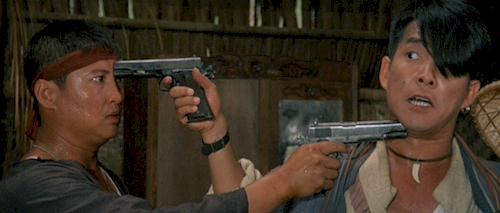
Inspired by how much I enjoyed his Eastern Condors last week, I’ve started a new series of Sammo Hung movies I’m calling Summer of Sammo. Along with that, I’m watching some Tsui Hark films. So far I’ve managed to review Zu Warriors, Warriors Two and The Butterfly Murders.
Noah Baumbach’s Frances Ha added another theatre this week, playing at the former Metro Cinemas. That’s easily my pick as the film to see in the Seattle area this week and I’m hoping to make it out there.
These are the movies I’ve watched and rewatched over the last week, along with where they place on my year-by-year rankings. Links are to my comments at letterboxd. And with Drug War‘s move into my Top 5, I’ve updated my letterboxd Best of 2012 list as well.
The Three Musketeers (Richard Lester) – 10, 1973
The Four Musketeers (Richard Lester) – 16, 1974
Warriors Two (Sammo Hung) – 8, 1978
The Butterfly Murders (Tsui Hark) – 11, 1979
Wheels on Meals (Sammo Hung) – 5, 1984
Iron Monkey (Yuen Woo-ping) – 11, 1993
Cruel Intentions (Roger Kumble) – 45, 1999
Zu Warriors (Tsui Hark) – 22, 2001
Drug War (Johnnie To) – 5, 2012
Summer of Sammo Bonus: On Tsui Hark’s The Butterfly Murders
Summer of Sammo: Warriors Two
Summer of Sammo: Zu Warriors
Last night I was flipping around hulu and found two movies with similar titles. One is labeled Zu: Warriors from the Magic Mountain, which is the title of Tsui Hark’s 1983 fantasy epic, and the other is called Zu Warriors: the Legend of Zu which is Tsui’s 2001 film based on the same source material. The earlier film is a classic, a hallmark in melding high-tech special effects into the Hong Kong kung fu genre, helping spawn a subgenre of martial arts fantasies and also inspiring John Carpenter’s Big Trouble in Little China. Zu was one of the first kung fu movies I’d ever seen, in either late 1998 or early ’99, at one of the last Hong Kong double features in Seattle.
I moved to the city just at the tail end of Hong Kong cinema’s trendiness: throughout the 90s, the Varsity Theatre (where I later worked) would play weekly double bills of Jet Li, John Woo, Jackie Chan, Chow Yun-fat, Ringo Lam, Tsui Hark and so on. But with the exodus of talent off the island in the wake of the handover to China (all of the above went to Hollywood, at least for awhile), the deterioration of existing prints and the rise in the cost of running repertory, as well as the inevitable change in what counted as fashionable cult cinema, the films disappeared from Seattle screens. Less than ten years later, when we were trying to book Jackie Chan’s Police Story for a little rep series we were running at the Metro, we were told that no one even knew who had the theatrical rights to those movies anymore. Any Chan, Li, or Shaw Brothers movie we could think of was met with shrugged shoulders and a blank stare by Landmark’s film booking department. We ended up playing Bruce Lee’s Enter the Dragon simply because it was owned outright by an American company (Warner Brothers). Anyway, I was excited to revisit Zu after 15 years, after becoming more fluent in Hong Kong and kung fu cinema in the interim and looking to spend this summer exploring the work of Tsui Hark and Sammo Hung in more depth. So seeing it was on hulu, and in a subtitled version no less, was very exciting.
But alas, both films on hulu are the 2001 movie. The one with the title of the ’83 film is the one I watched, it’s the longer, original cut of the 2001 film, running an hour and forty-five minutes. The other version is the Miramax US cut, which removes 20 minutes of exposition and character building, clocking in at less than 90 minutes. I watched the longer version (of course) and it was confusing enough. I can’t imagine the shorter version being the least bit comprehensible. Both versions are subtitled, but the character names don’t match the ones from either imdb or wikipedia, so I guess only a Chinese-speaker knows how many other ways Miramax fucked up this movie. (See my review of Yuen Woo-ping’s Iron Monkey for another rant about Miramax and the subtitling of Hong Kong movies).
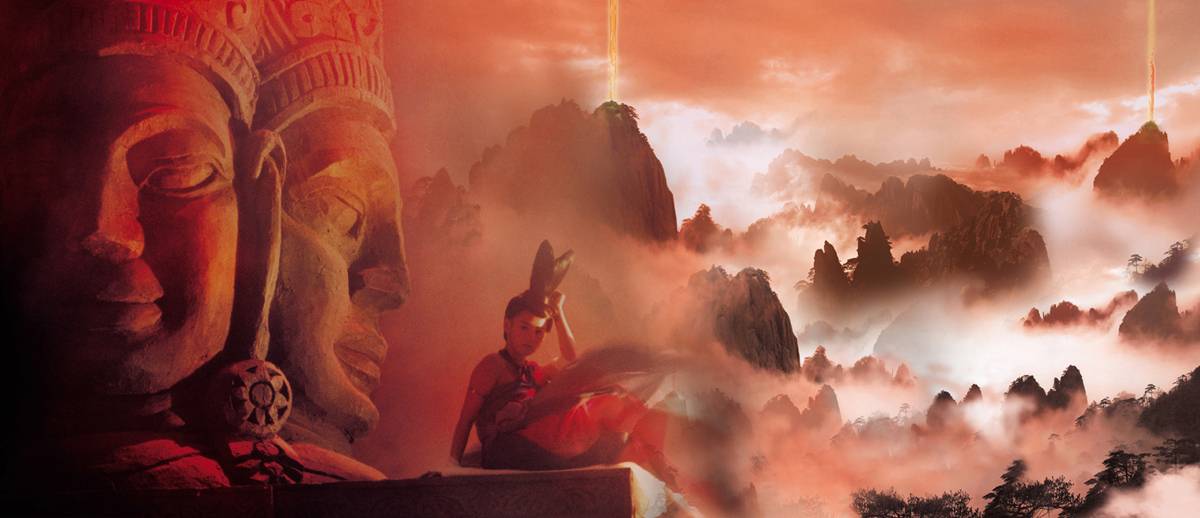
Anyway, the 2001 film, which I’m going to call Zu Warriors, is a CGI-driven fantasy epic, with a smattering of kung fu, lots of alien-to-Americans mythology and folklore and a more or less Buddhist allegory. The all-star cast includes Louis Koo, Zhang Ziyi, Sammo Hung, Cecilia Cheung and Ekin Cheng, but the real star is Tsui and his rapid-cutting, no time to breathe approach to story-telling. On top of some floating mountains, a bunch of immortals gather together to defeat Mordo (or Insomnia, or the Blood Demon), the embodiment and source of all evil (greed and jealousy), before he eats them all and infects the Earth below. Characters fly around, shoot spiritual energy out of their hands, get possessed, destroyed, reincarnated, enlightened and destroyed again. An endless cycle of creation and destruction where the only hope is unity: of the various mountain clans; of lightning and thunder; of human and immortal; of male and female; of mind, body and spirit.
The CGI effects have a fun comic book-quality, bright bursts of red and green and orange and blue stabbing across purple and yellow skies, at times recalling Harryhausen (an attack by an army of Mordo’s self-replicatiing minions brings to mind the skeletons of Jason and the Argonauts) or Brakhage (the abstract color explosions of the film’s final battle). They are decidedly not realistic, nor are they state-of-the-art, even for 2001, but surely those aren’t the only standards by which we can measure visual effects.
Both of the most recent Tsui films that I’ve seen, the kung fu whodunnit Detective Dee and the Mystery of the Phantom Flame and Flying Swords of Dragon Gate, his second remake of the 1967 King Hu film Dragon Gate Inn, which remains after 45 years one of great masterpieces of action cinema from anywhere in the world, feature extensive use of CGI, though both are significantly more grounded in reality than Zu Warriors. The use of computers reopens an on-going tension in action cinema between effects and realism. Where does the pleasure in such films come from: the photographic record of remarkable physical displays by immensely skilled human beings, as in the work of the famously unaided Jackie Chan or from cinema’s ability to capture the impossible, whether through judicious use of wires, trampolines and under-cranked cameras (as in the work of Jet Li), or digital effects that have no basis in physical reality whatsoever? Cinema can be a mirror or an illusion, but is one ‘better’ than the other?
This Week in Rankings
The big movie to see in the Seattle area this week is Johnnie To’s Drug War, playing at the Egyptian on Monday as part of the Seattle International Film Festival. It’s no longer To’s latest film, since his Blind Detective appeared to rave reviews at Cannes a few days ago, but it’s one of the few films with a 2012 date I’m still highly anticipating (along with Alain Resnais’s You Ain’t Seen Nothin’ Yet, which I don’t think has a local release planned yet; the documentary Leviathan, which I missed the two times it played here; and Noah Baumbach’s Frances Ha, which is opening today at one theatre in Seattle and one in Bellevue). Playing at the Grand in Tacoma this week is Christian Petzold’s Barbara, about which I’ve heard nothing but good things and which I might make it out to see. Also, there’s Star Trek.
I made some new director lists over at Letterboxd this week for Richard Linklater, Eric Rohmer and Jean-Luc Godard, and also one for James Stewart on his birthday. Here at The End, I reviewed a couple of Rouben Mamoulian’s early talkies, Applause and Dr. Jekyll & Mr. Hyde, and Sammo Hung’s Vietnam epic Eastern Condors.
Here are the movies I watched and rewatched over the past week, along with where they place on my year-by-year rankings, with links to my comments at Letterboxd.
The Crowd (King Vidor) – 8, 1928
Applause (Rouben Mamoulian) – 2, 1929
Lucky Star (Frank Borzage) – 6, 1929
Dr. Jekyll & Mr. Hyde (Rouben Mamoulian) – 9, 1931
Northwest Passage (King Vidor) – 15, 1940
Le pont du Nord (Jacques Rivette) – 6, 1981
Eastern Condors (Sammo Hung) – 12, 1987
Shanghai Triad (Zhang Yimou) – 25, 1995
Summer of Sammo: Eastern Condors
On Dr. Jekyll and Mr. Hyde
On Applause
Rouben Mamoulian’s 1929 film Applause seems to have fallen through the cracks of film history. Released in a year when many of the best films still were, at least partially, silent films (GW Pabst’s pair of masterpieces with Louise Brooks Pandora’s Box and Diary of a Lost Girl (made in Germany), Dziga Vertov’s experimental documentary The Man with a Movie Camera (the USSR), Yasujiro Ozu’s Days of Youth (Japan) and Luis Buñuel’s Un chien andalou (France)), Mamoulian’s film is an all-talking, all-singing, all-dancing backstage musical made shot on location in New York for Paramount Pictures. Early talkies are generally derided as a step backwards in the art of motion pictures, as stiff, stage-bound and poorly acted, the camera tied in place due to the technological restrictions of primitive microphones and with that showing none of the expressiveness of the late silent era. To some extent, that is true (the talking sequences in the otherwise masterful 1928 film Lonesome are so terrible that they function less as scenes in a movie and more as meta-commentary on the pointlessness of adding dialogue to cinema), what is at question is how long it took for talking pictures to get back up to speed.
Other films from 1929 fulfill the cliche: the first Marx Brothers feature, Cocoanuts, is particularly leaden and clunky, while that year’s Best Picture winner, the musical The Broadway Melody is better than its reputation, but still shockingly poorly made at times (a tap dancing sequence in which the frame cuts off the actors at the ankle so as to maintain a stage-like proscenium is particularly egregious). Ernst Lubitsch’s musicals with Maurice Chevalier are some of the most charming films of the period, but his elegant classical style suffered little from the transition to sound and, from what I’ve seen at least, Lubitsch never seemed interested in using the camera in the dynamic ways that FW Murnau, Fritz Lang or Josef Von Sternberg (whose The Blue Angel, made in Germany a year later, shares much of Applause‘s mileu and attitude, but pushes the depravity that seethes under the surface to the forefront) were exploring in the late 20s. Applause offers evidence that it took far less time than is generally believed to master the technology, that the reason for the poor quality of those other films might not be the technology, but the imagination and skill of the director.
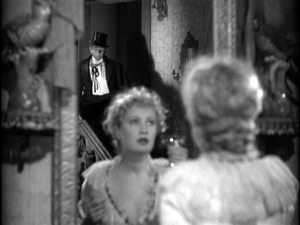
Rouben Mamoulian, making his first film, uses all the tricks of the late silent era to illuminate this standard, if resolutely pre-Code, melodrama about a burlesque dancer whose convent-raised daughter finds herself getting sucked into the degenerate family business. The mise-en-scene is Expressionist-influenced: in lighting and shadows both portentous, as in the crosses that dominate the convent sequences, and abstract, as when certain male characters become black spaces, dominating Helen Morgan’s doomed showgirl Kitty; and more subtly as in the countless multiplications of Kitty’s image in pictures and posters that lie in the background of many of the sets and become increasingly dominant until the film’s final haunting and darkly ironic image.
Mamoulian also makes extensive use of anti-theatrical camera movement and placement: relentlessly pushing in and out of the screen space (mimicking our attraction/repulsion to the sordid and pathetic main characters); high and low angle shots including overhead views of dance sequences that abstract the characters like a proto-Busby Berkeley; de-centering the image by focusing at key moments on the characters’ legs (for example during a sequence where the young woman April is being hit on by a number of men as she walks down the street) as well as abstracting bodies in a montage like the series of grotesque men’s faces watching Kitty’s burlesque show.
He even uses sound expressively: impressionistically like the subjective aural hallucinations Hitchcock used this same year in Blackmail (generally considered Britain’s first all-talking feature) but also in overlapping dialogue and background noise to create a densely layered sonic environment, something even the best early talkies hadn’t yet dared.
With Applause, Mamoulian created a fully-realized, three-dimensional cinematic world, fully integrating sound into the cutting-edge visual styles of the late 1920s. It premiered on October 7, 1929, exactly two years and one day after The Jazz Singer.