This Week in Rankings

What movies I’ve watched or rewatched recently and where each currently places in my yearly rankings.

The Pawnshop (Charles Chaplin) – 3, 1916
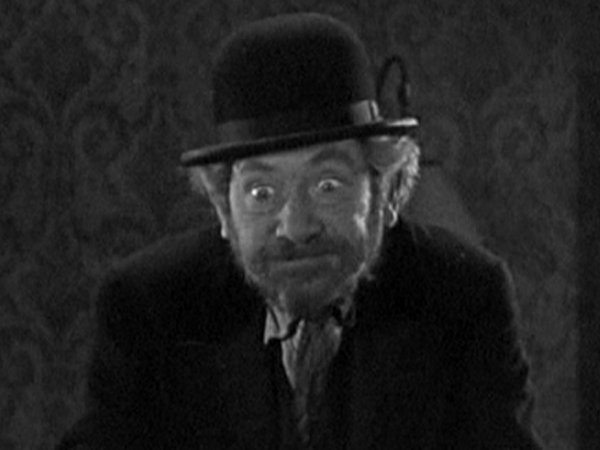
London After Midnight (Reconstruction) (Tod Browning) – 16, 1927

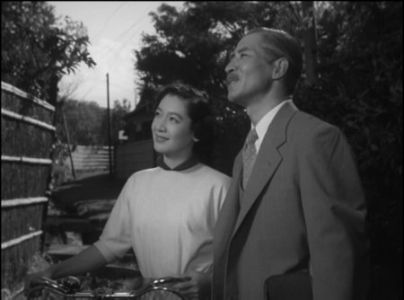
The Quiet Man (John Ford) – 2, 1952
Wind Across the Everglades (Nicholas Ray) – 8, 1958
The Reluctant Debutante (Vincente Minnelli) – 18, 1958
Two Weeks in Another Town (Vincente Minnelli) – 14, 1962

The Story of Film: An Odyssey (Mark Cousins) – 25, 2011
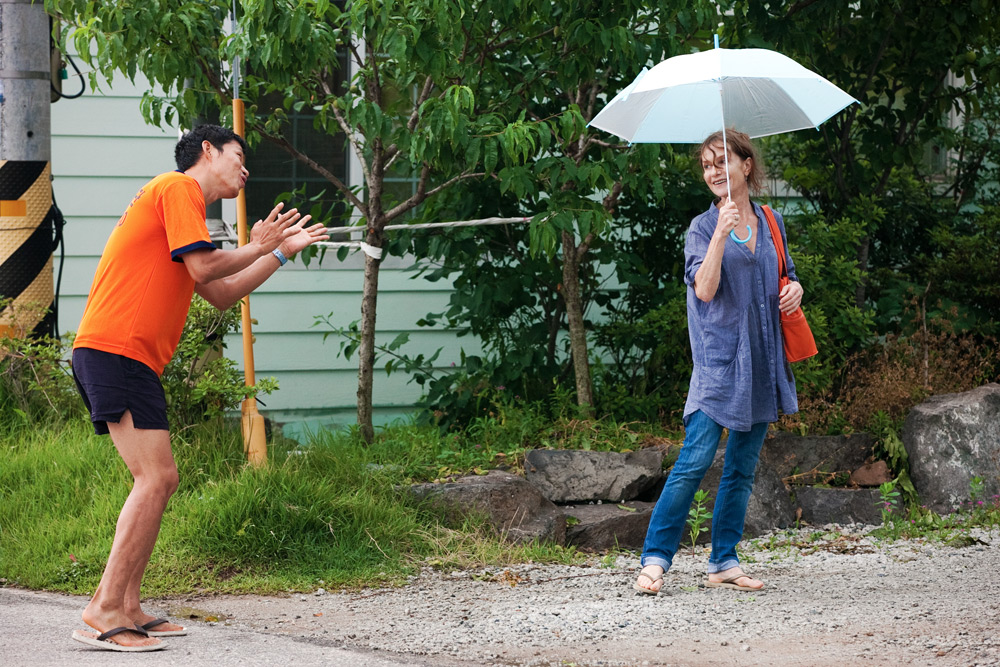
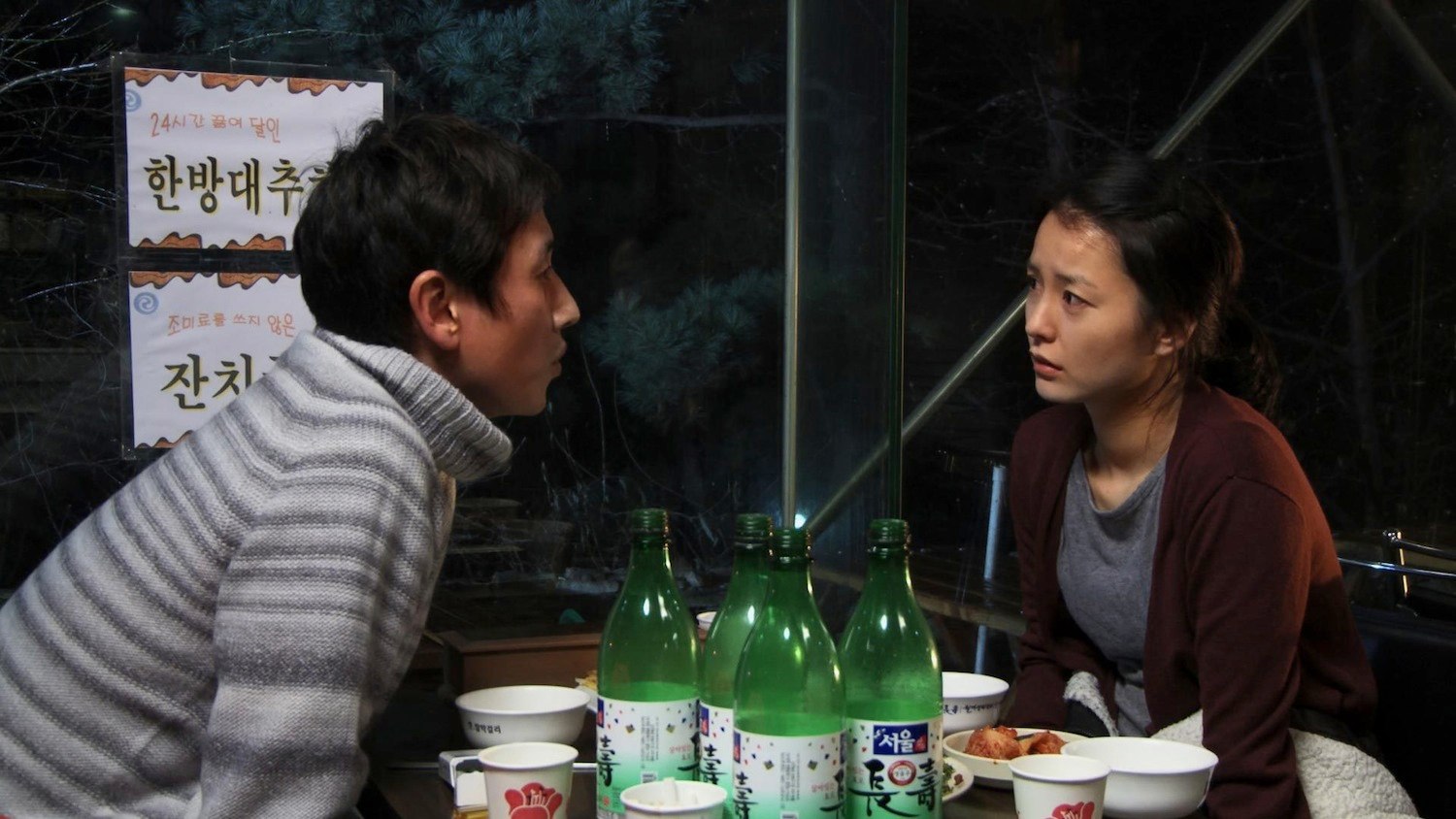
In Another Country (Hong Sangsoo) – 2, 2012

VIFF 2012: Mystery

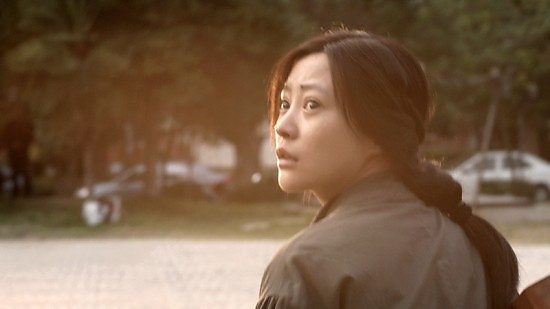
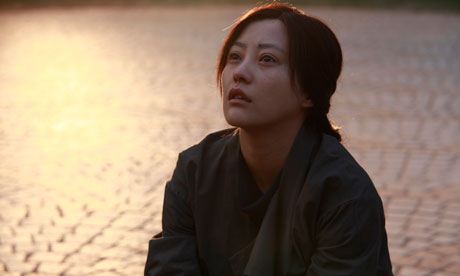
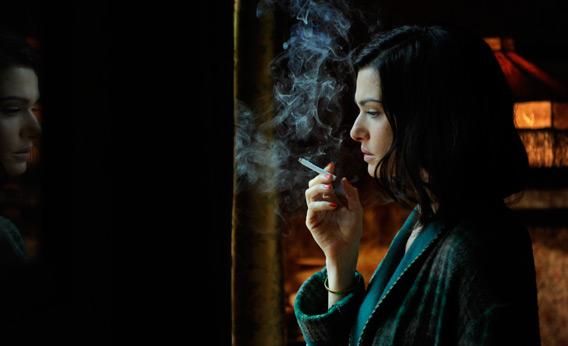
This is the first film I’ve seen by Chinese director Lou Ye, and it’s the first film he was able to make in China following a five-year filmmaking ban he received for submitting his Tiananmen Square-set Summer Palace to Cannes without government permission back in 2006 (he made a couple films in the intervening years outside the Mainland). It’s a slick,, clever neo-noir melodrama, the story of a happily married woman (played by Hao Lei) who discovers her husband is having an affair with a younger woman. The young woman will end up dead, of course. That death is actually how the film opens (a car full of rich, inebriated kids driving too fast down a rain-reluged street) before moving a bit back in time to introduce the main characters (beginning with the death and then moving backwards being a classic noir structure). The mystery (ahem) of how the girl got into the street, who will take the rap for it and who ultimately bears the responsibility for her death, is the heart of the film, and it suggests several different answers to a question more metaphysical than a simple “whodunnit?”.

The style Lou uses is one of grayish colors with a lot of fast-cut, handheld shots, with occasional extreme close-ups of the main characters. Normally the overuse of the shakycam drives me up the wall, but I think Lou might be on to something with the way he uses it here. Adapting classic noir imagery to modern film style has not been especially successful, given its reliance on the chiaroscuro effects of high-key black and white lighting. A film like Blade Runner creates an overwhelmingly shadowy world, emphasizing noir’s blacks, the hidden world of secrets and crime, whereas neo-noirs like Chinatown or The Long Goodbye desaturate the color, emphasizing grays of noir, the uselessness of traditional morality in a degraded world where good and evil are inseparable. Lou, more or less keeps Chinatown‘s shadowless, overcast color palate, but adds to that the instability of the shaky cam. Instead of a secret world engulfed in shadows, we get a world were everything is out of balance, off-focus and just a bit out of sight. The vision of crime he creates isn’t one of moral darkness but one of vertigo, an inability to find focus, concentration and balance. Lou’s noir world is out of whack, a rain-swept, tottering tangle of chance and disaster.

Which leads to the major knock against the film, at least in as few places as I’ve seen it discussed: the staggering array of coincidences that structure the plot. This is a feature (bug?) endemic to melodrama: it’s important to remember that noir is, fundamentally, melodrama, and that coincidence and chance lie at the heart of many of the best noirs, from Casablanca to Touch of Evil). And not all of Mystery‘s coincidences are as simple as they appear (the first one, which sets the whole chain in motion, turns out to have been fully planned). The film ultimately ends up being about chance, about accidents and randomness and how we assign moral responsibility for effects with multiple causes, and so to a certain extent the plot requires some degree of artificiality and, for lack of a better word, “unbelievability”. But when a major plot development requires a character to leave their wallet at the scene of a crime, and apparently not notice for several days, that might be a stupid too far, especially if you happen to be afflicted with a case of The Plausibles.

VIFF 2012: Like Someone in Love

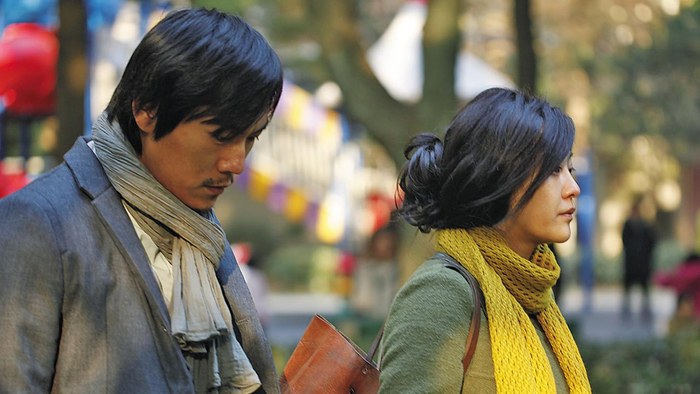
I find writing about this film, the latest from director Abbas Kiarostami (whose Certified Copy was my favorite film at VIFF 2010), to be nearly impossible without going into spoilery detail. Normally I wouldn’t mind that; whatever it is, this is not a movie-review site and most of what I write assumes the reader has either seen the film in question or doesn’t care too much about knowing the ending. But one of the real pleasures for me in watching Like Someone in Love was that I never knew what was going to happen next or even what kind of story Kiarostami was trying to tell. I took more notes during this screening than at any other at the festival, largely because I had no idea what details were going to prove significant or not, which information was crucial and what, if anything, was merely decoration. I’d hate to prevent anyone else from having that same experience by giving away too much.

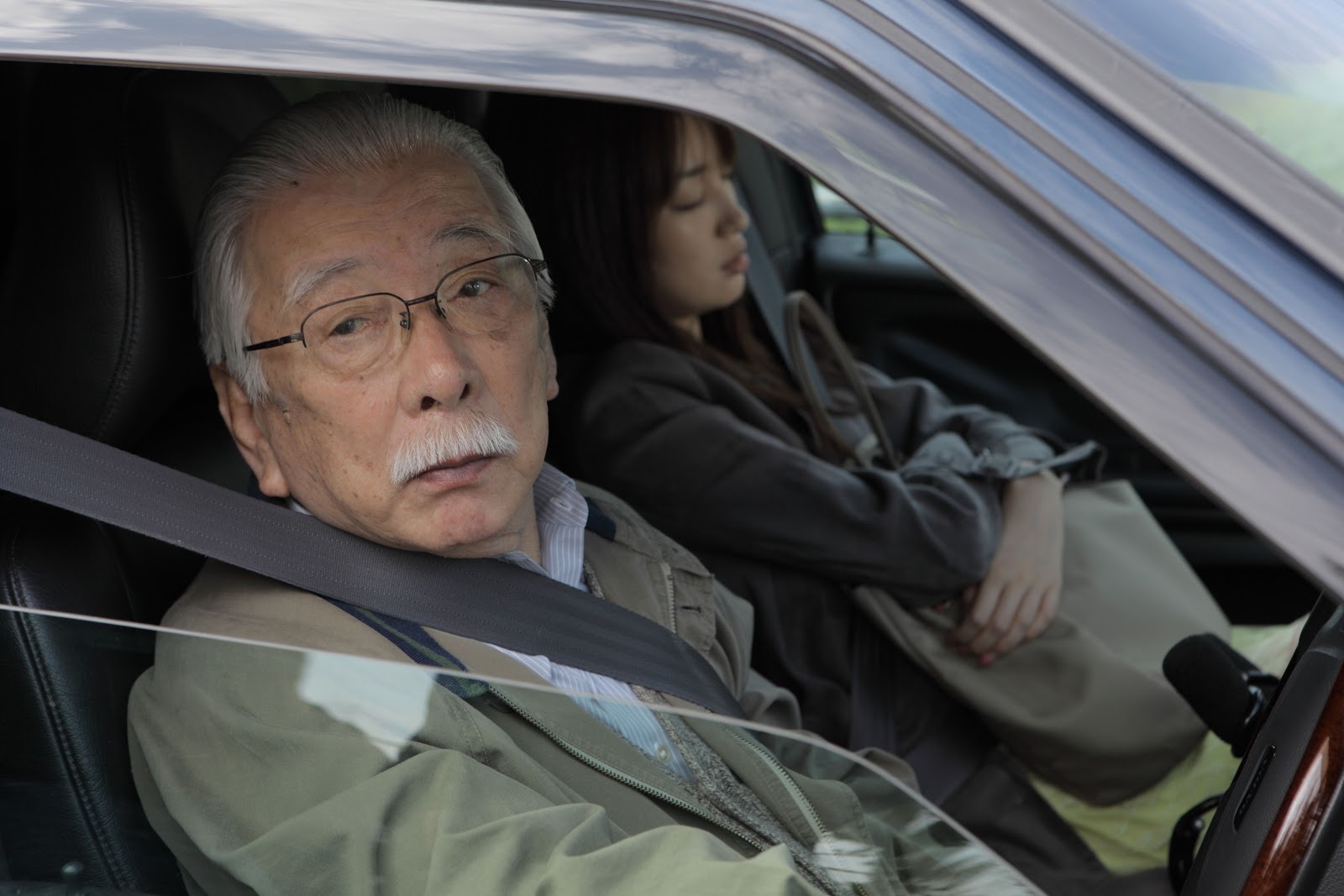
Generally speaking, Like Someone in Love is much like any other Kiarostami film: it’s structured around a series of conversations, usually between only two people, often filmed through the windows of cars as people move from one location to another in approximately-real-time. Unlike the previous films I’ve seen from him, it’s never entirely clear who the main character of the film is. It starts with one person, well, actually it starts with someone we don’t see, an off-screen voice, talking to that one person, a young Japanese call girl. She heads off on a job entertaining an old man, a kindly, slightly doddering professor. The next day, the professor meets her boyfriend (the two are having relationship issues) and gives him some grandfatherly advice. These sequences have a bit of a The More the Merrier vibe, with the old man playing the Charles Coburn role bringing together the young couple, played Jean Arthur and Joel McRea in that George Stevens classic. Tadashi Okuno, who plays the professor, even kind of looks like Coburn, or maybe Colonel Blimp. The trio eventually split up and are brought back together, along with the professor’s neighbor, another character we see only as an off-screen voice.

Every character adopts certain roles (they all act “like someone in love” at one time or another), somewhat similar to the identity games of Certified Copy, but more elaborate and diffuse. Instead of a couple playing a game the rules of which they understand better than the audience (Kiarostami encourages us to distrust the surfaces we see, explicitly in the dialogue but also in the film’s repeated use of reflections: mirrors, car windshields and works of art; visual metaphors which all recur in Like Someone In Love), the characters in this film seem less self-aware of their role-playing. It’s not so much a romantic/philosophic/aesthetic exercise for them as it is simply the way they manage to get through life: identity-construction and therefore the malleability of self is essential to their natures. Characters and situations double and redouble, with variations and permutations both obvious and obscure. If I remember correctly, the film even uses multiple versions of the title song: John Coltrane and Ella Fitzgerald (alas, no Björk).

I’m going to stop here. Like Someone in Love should be getting a wider release in the next few months, and I can’t wait to see it again. I suspect but want to confirm that it has a fractal design, where each scene, each character is a microcosm of the film and its themes taken as a whole. Where the plot doesn’t progress but merely shifts in time and space. That is, until . . . .

The Laurel & Hardy Project #14: Call of the Cuckoo

Like a few others in this series, this is only tangentially a Laurel & Hardy film. It’s actually a Max Davidson short, the second I’ve seen after Jewish Prudence, a very funny, well-constructed film I looked at back in February of last year. This is a much looser film, it feels more like the gang at the Hal Roach Studios just goofing around than a sophisticated comedy classic. Credited as director is Clyde Bruckman, a frequent Buster Keaton collaborator (The General, Our Hospitality, Sherlock Jr among others) making what (as far as I can tell is) his Roach debut, or at least his first film with Laurel & Hardy, shortly before Keaton made his disastrous move to MGM. The film has a lot in common with an early Buster Keaton short, One Week, which as far as I know Bruckman was not involved with in anyway.

Davidson plays an exasperated father who wants to sell his house so he, his wife, and their son can escape from the lunatics who live next door. A title card asserts that these guys, played by a Roach Murderer’s Row of Stan Laurel, Oliver Hardy, Charley Chase and James Finlayson, are training to be radio broadcasters, “the quicker they go daffy, the sooner they get a diploma”. I’m unsure how literally that’s supposed to be taken, but it doesn’t matter, the point is the four of them are incredibly annoying, making terrible jokes with bottom-of-the-barrell slapstick, the kind you’d expect from any random morning DJ pair (do they still have those?). The four cuckoos aren’t supposed to be funny and at that they succeed: their performance is as much a parody of terrible slapstick comics as it is of the radio. Seltzer bottles, a William Tell bit (Hardy gets shot in the ass), ridiculous outfits (Laurel wears his suspenders criss-crossed, Chase wears an over-sized sailor suit with a monocle), terrible intertitle puns and so on.

Anyway, someone comes along and offers to trade houses with Davidson, which he foolishly accepts, sight unseen. The second reel documents the travesty of a house (“it took two days to build and two years to sell” gossip a couple of neighbors) and its destruction. Light switches turn on lights in other rooms and occasionally showers, the kitchen faucet dispenses gas while the stove shoots out water, the parlor floor is slanted requiring the piano to be propped up with a chair lest it slide to a less desirable side of the room, the bathtub falls apart (giving us a side-nude shot of Max Davidson, which surely no one asked for). When Davidson’s extended family arrives for a house-warming party, things quickly escalate to an all-out brawl or no apparent reason, but it culminates in an inspired call-back as the chair holding the piano is removed (to be used as a weapon), sending the instrument crashing through one wall, then the front door, down the walk and into Davidson’s car, which promptly disintegrates. This is followed by the inevitable punchline, with the cuckoos announcing they’ve just bought the house next door. Not only does the respectable bourgeois family man abandon his perfectly nice house for a travesty, even then he can’t escape the agents of chaos that surround him.

One Week, in which Buster Keaton assembles a house using a corrupted set of instructions creating an architectural monstrosity which devolves in hilarious fashion, is one of the most brilliant works in silent comedy, if not all of film history, so this can be forgiven for not reaching that high standard of perverse home destruction. But I do think this could have been funnier. Davidson doesn’t really do much, he’s mostly confined to reaction shots (either shrugging his shoulders and scratching his chin, or bringing his palm to his cheek Jack Benny-style). Laurel, Hardy, Chase and Finlayson are pretty much relegated to cameos: the film’s structure isolates the funniest actors from the funniest prop (the house). Even still, it looks like everyone involved had a blast making it, which is enough.

On No Blood Relation

I’ll be watching a lot of films by Japanese director Mikio Naruse over the next few weeks, gearing up for another episode of the They Shot Pictures podcast.  Unlike the other directors covered in the episodes I’ve been on (Von Sternberg, Ozu and Hou), I know next to nothing about Naruse, so I’m starting at the beginning, with the set of his five extant silent films released by Criterion’s Eclipse label a couple of years ago.

The first, 1931’s Flunky, Work Hard! is a salaryman short in much the same vein as Yasujiro Ozu’s films from around the same time.  During the Depression, a working man tries to make money to support his family.  The film’s an interesting blend of comedy and drama, as the first half involves some slapstick hijinks between the father and a rival insurance salesman and the second finds the family in the hospital after the son is hit by a train.  It’s a weird tonal mix that I’m not sure is entirely successful.  Unlike his late film When a Woman Ascends the Stairs (before this project the only Naruse film I’d seen), the film is visually pretty wild, with quick editing and push-ins at especially dramatic and comedic moments used to emphasize and underline the on-screen emotions.  When a Woman, by contrast, is very restrained, almost invisible in style as far as I remember (I’ll be rewatching it eventually).
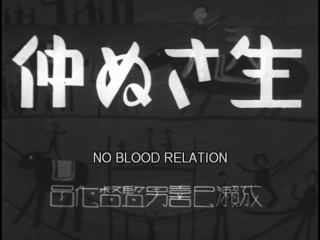
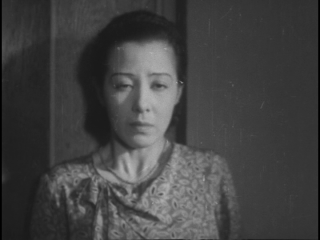
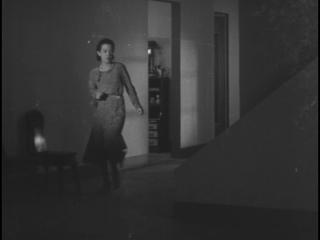
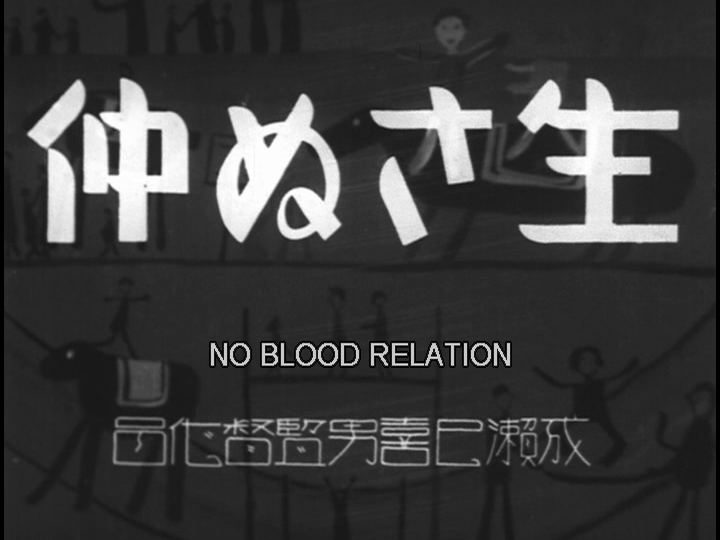
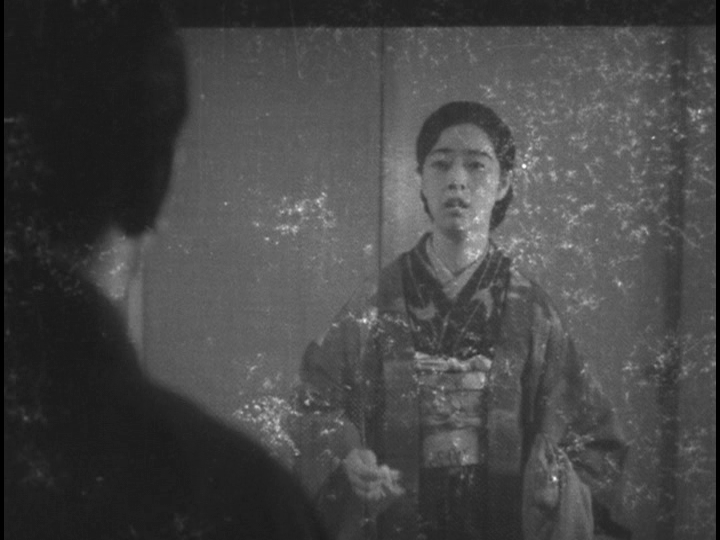
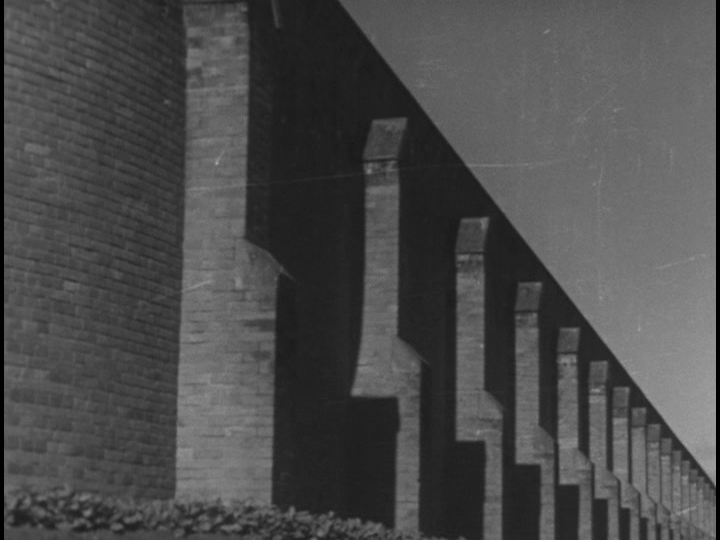
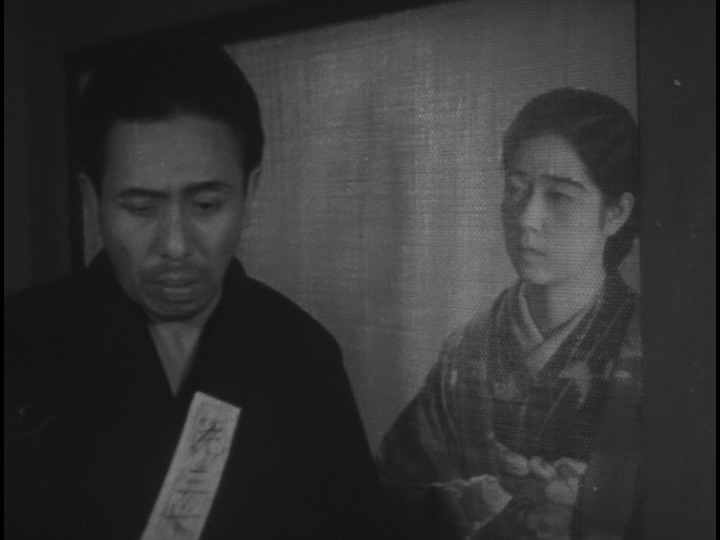
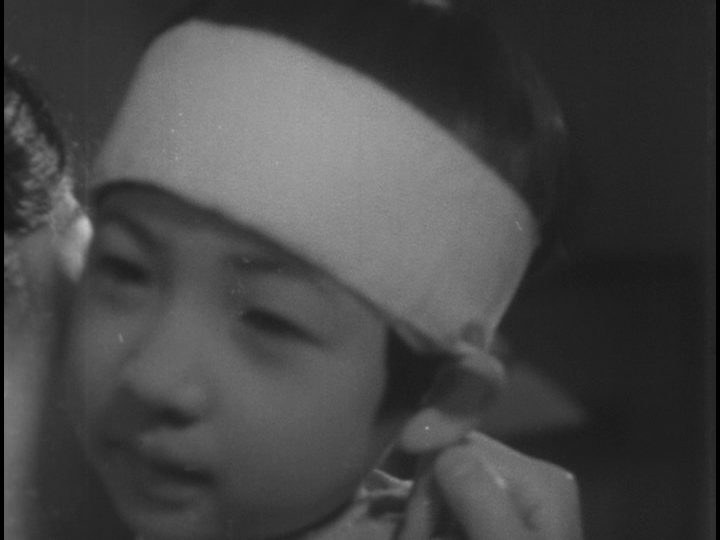
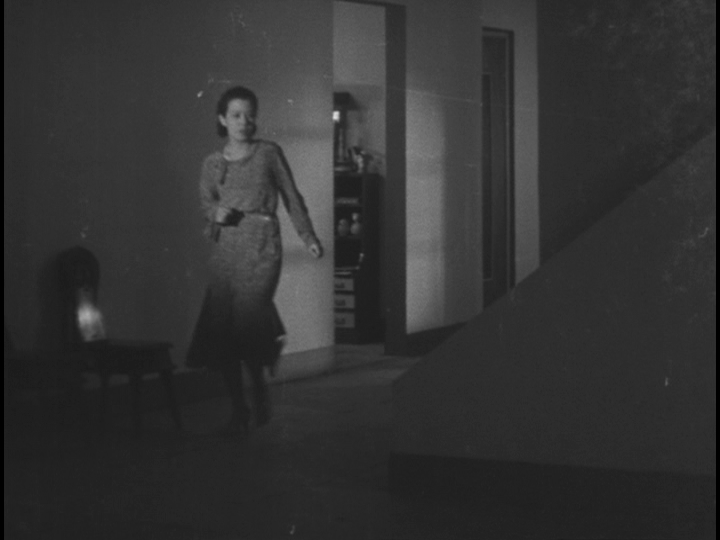
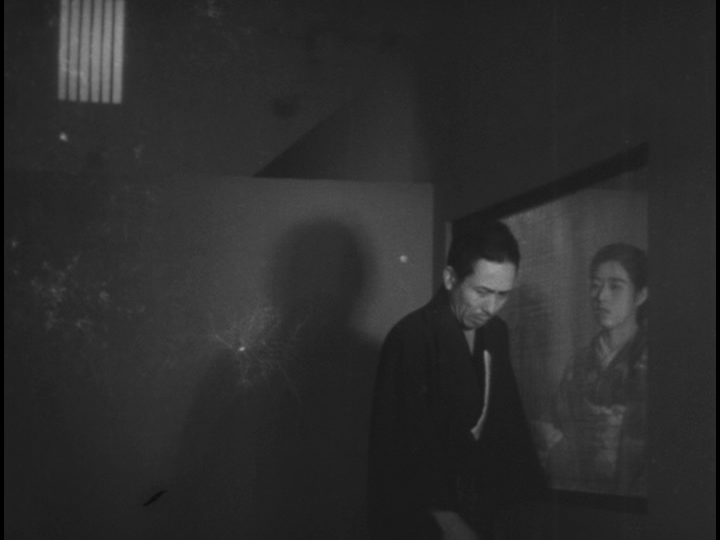
No Blood Relation, Naruse’s next oldest surviving film (and his 16th in three years) is even more of a stylistic explosion.  It starts with the opening shots: we get a title card “Purse snatcher!” followed by short whip pans quickly cutting through and following a crowd as a thief is being chased.  The thief runs toward the camera and dissolves into a reverse angle of him running away, as if he’d run right through us.  In less than 30 seconds, Naruse shows a mastery of action filmmaking, and he’s done so in the introduction to what will turn out to be not a crime film, but a maternal melodrama.  The scene ends with what will become the coolest stylistic trick in the film, a match-cut.

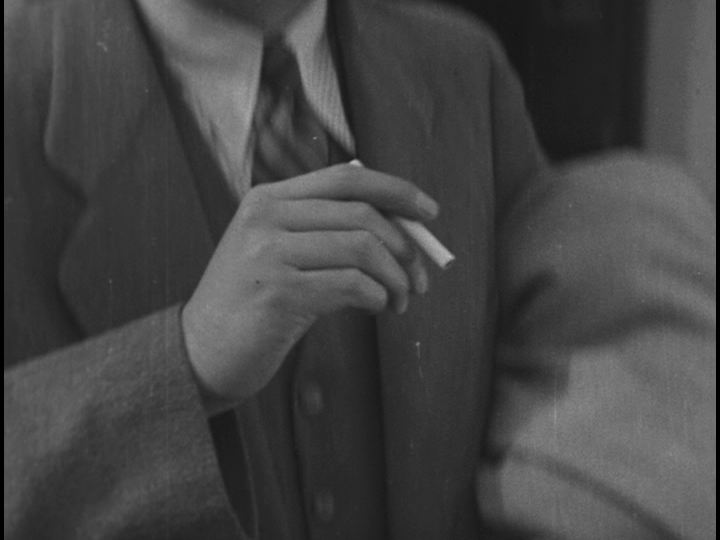
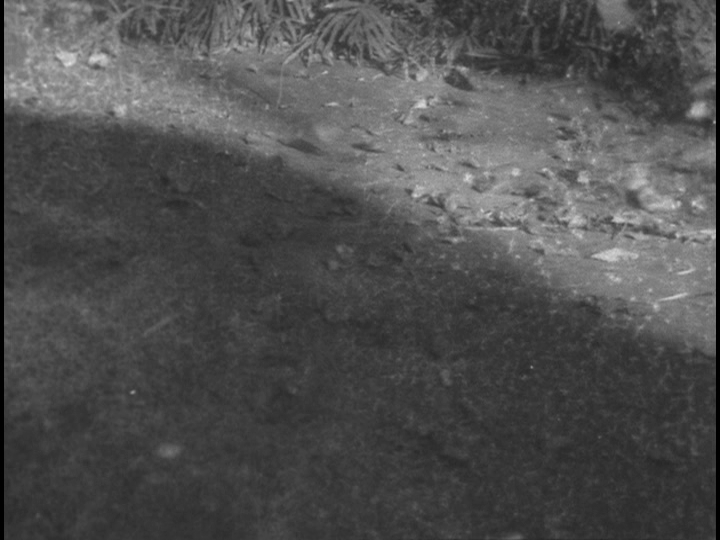
The thief will talk his way out of trouble and walk away as a man in a nice suit (who’d been interrogating him) pulls out a cigarette.

And as he puts it in his mouth, we cut to:

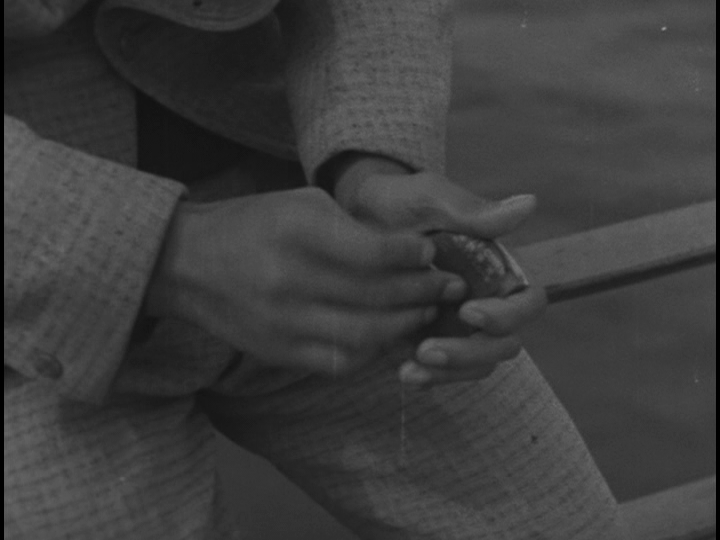
The thief striking a match and lighting his own cigarette.  The two men are actually in cahoots (the man in the suit has pocketed the stolen purse, thus allowing the thief to show he didn’t have it).  Naruse throughout the film uses these kind of match-cuts to link characters, not only across space but also emotionally.

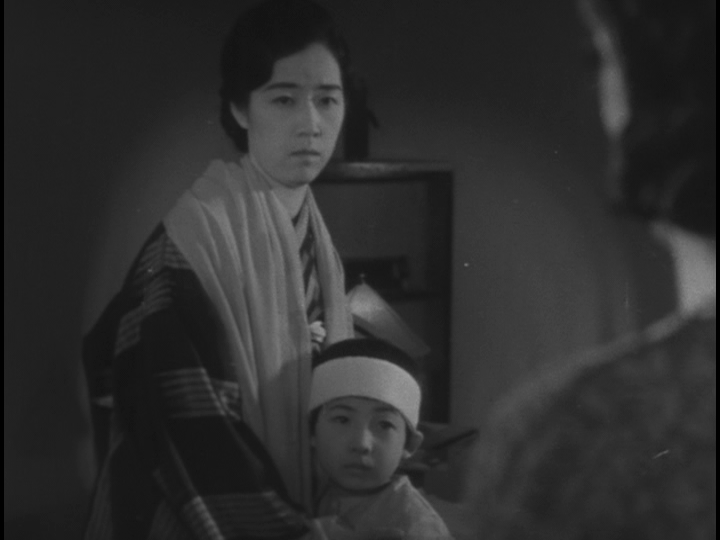
As the story proper starts, we learn that the man in the suit is the brother of a famous actress, who has just returned from America.  She’s a divorcée with a seven year old daughter she hasn’t seen for six years.  The daughter lives happily with her father and step-mother.  The actress wants to get the daughter back, but the kid prefers the step-mom.  The film thus somewhat inverts the traditional maternal melodrama story, wherein the birth mother lives a wretched life of sacrifice so the child can grow up in material comfort, usually with a fancy, maybe even snobbish, step-mother (see for example King Vidor’s Stella Dallas).  Here the step-mother is the poor one who sacrifices much for the child while the mother tempts her with riches the child rejects in favor of true (step-)maternal love.

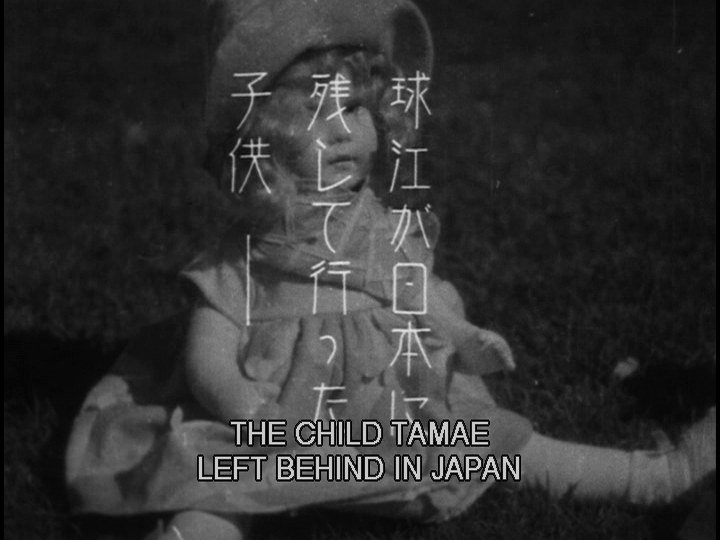
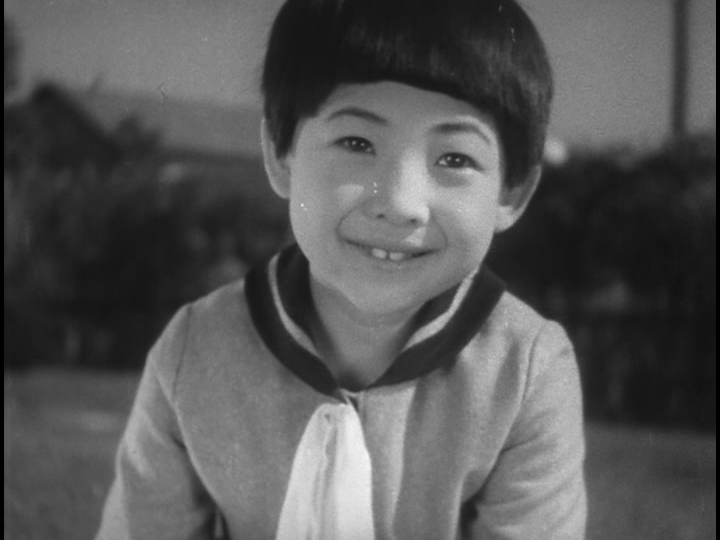
The daughter, Shigeko, is introduced in cutting from the actress’ arrival in Japan to this shot of a doll, complete with super-imposed titles, followed by a pan along the ground to the girl herself:

Already, Naruse has established the artificiality of the birth mother’s relationship to her daughter.  Not only is it implied that she views the girl as an object (to be acquired) but that her idea of the kid is generic: she doesn’t know her, she could be any girl, not the specific Shigeko that Masako, her step-mother knows.

The father (Atsumi) arrives home and the family, complete with Masako and Atsumi’s mother is assembled.  Atsumi has bad business news revealed in this sequence of shots:

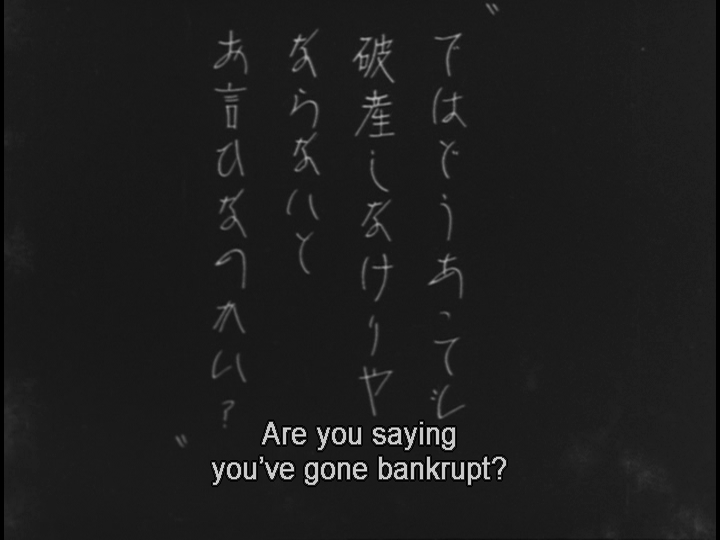
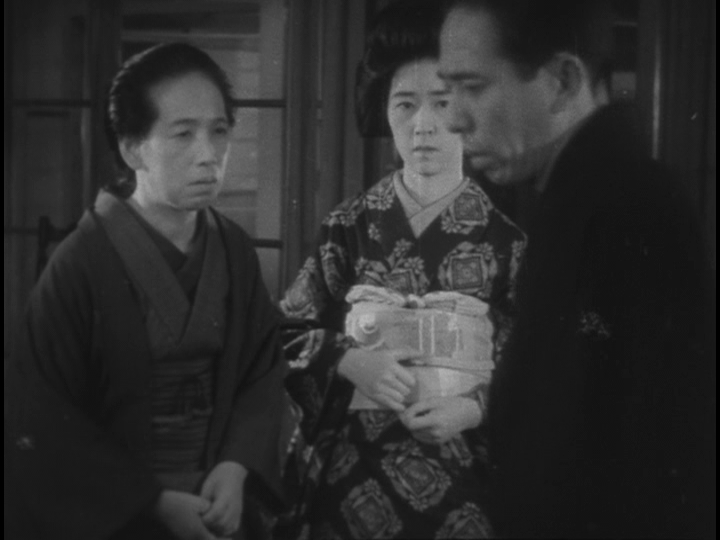
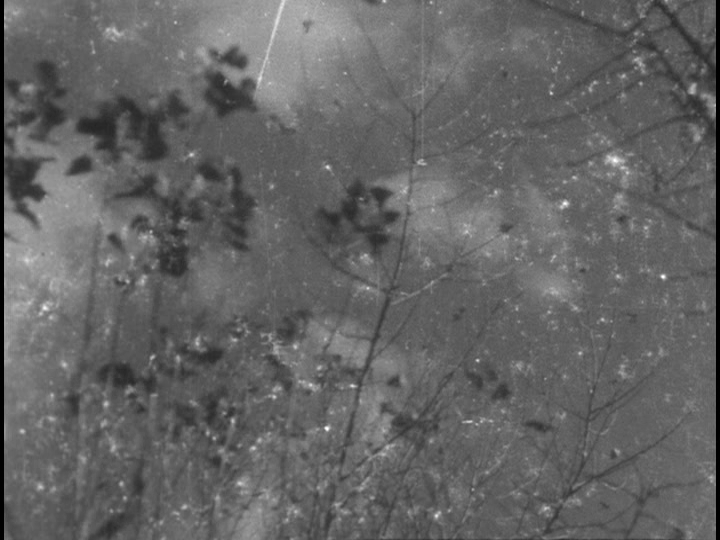
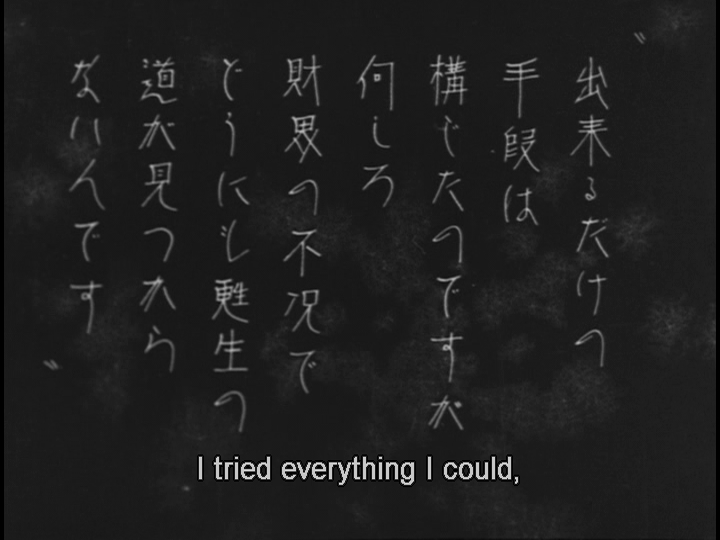
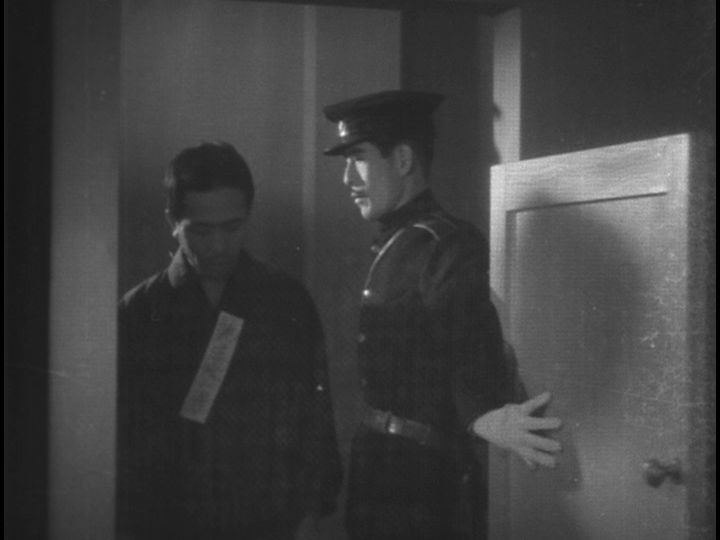
A kind of associational montage I don’t think I’ve ever seen before in a Japanese film of this period (you can see it a lot nowadays, though not often reputably: Gus van Sant’s Psycho and Django Unchained are the first that come to mind). His mother asks if he’s bankrupt, he nods, then a quick push in to a close up of her, followed by shots of wind through trees, rustling leaves and cigarette smoke: their wealth blowing away in the Depression.  We’ll see the same kind of thing later in the film when Atsumi is taken away by the police (something to do with his bankruptcy, it’s not important) and then again when he’s in prison.

The prison scene opens with this series of increasingly close shots:
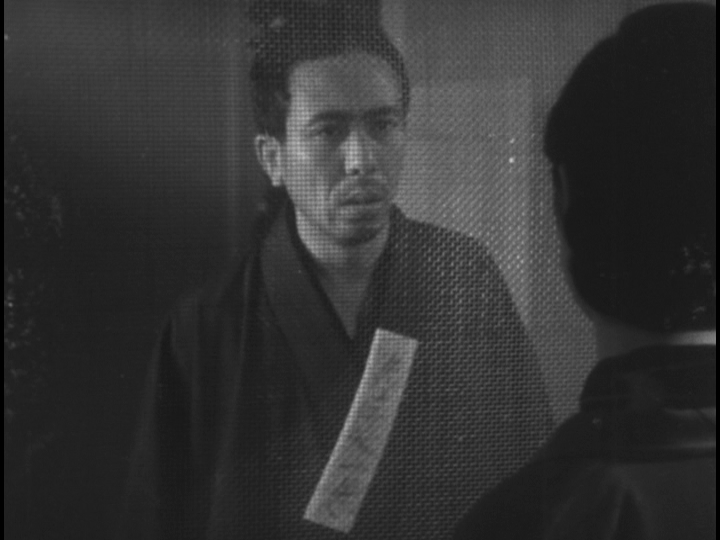
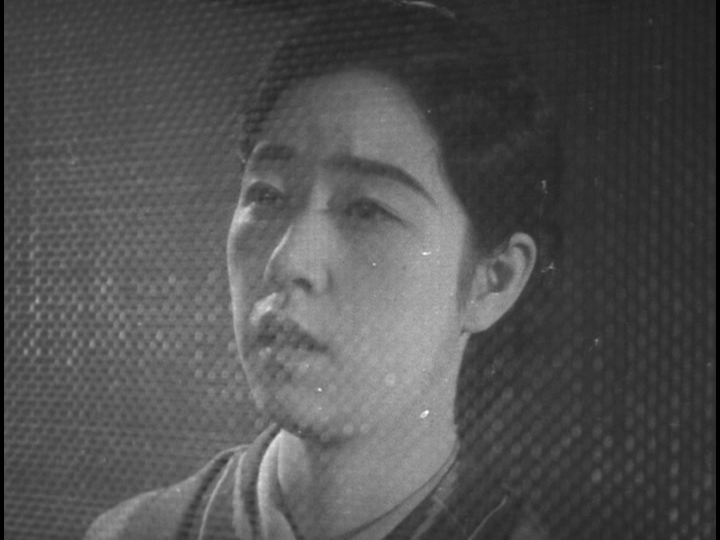
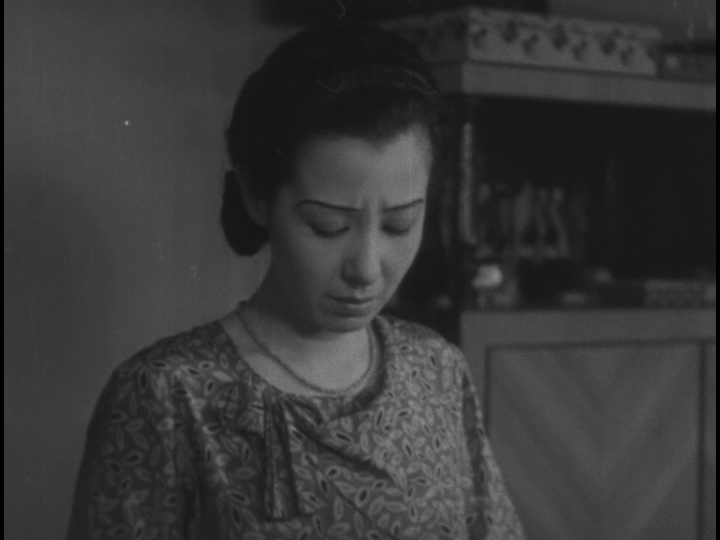
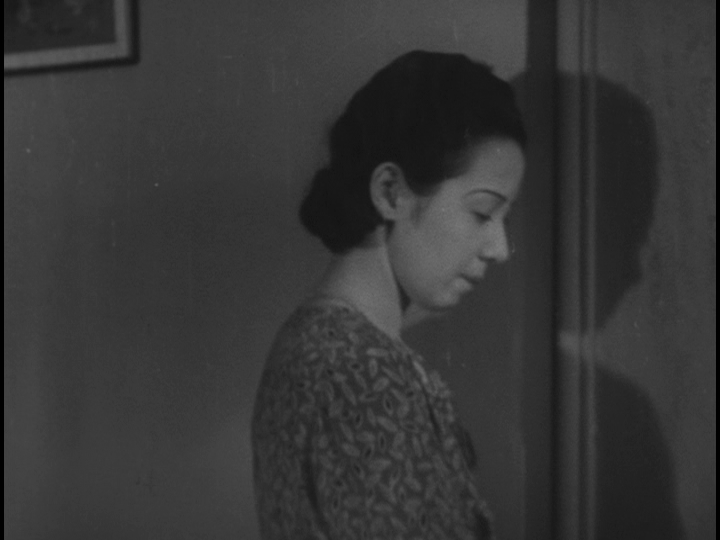
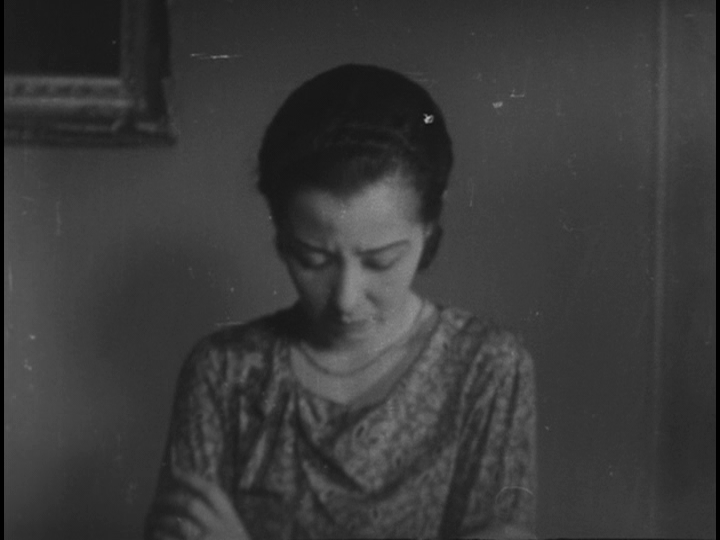
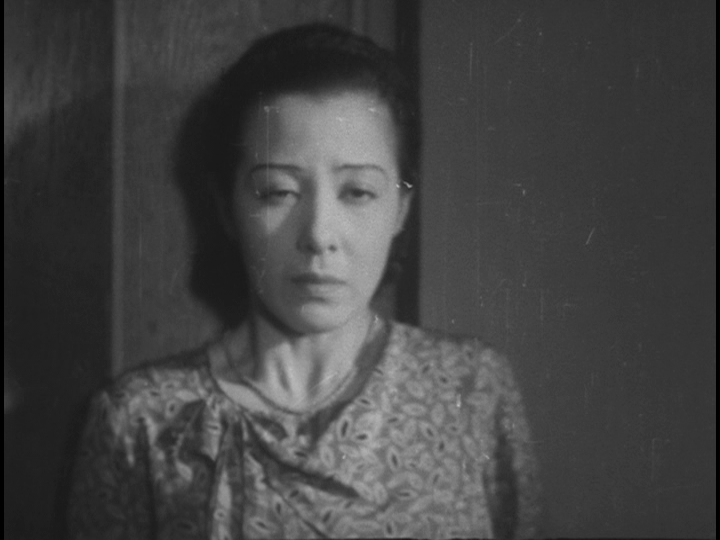
We see Atsumi being led to his wife, Masako, but then the camera begins to pull away all the way outside the prison, as if it cannot bear to watch her explain the breakup of their family, their dual humiliations (his as breadwinner, her’s at keeping their daughter safe) and then is sucked back in, the final shot being a push into Masako in close-up, a kind of literalization of the push-pull effect melodrama has on us in the audience: we don’t want to watch such misery, but we get sucked in and can’t look away:
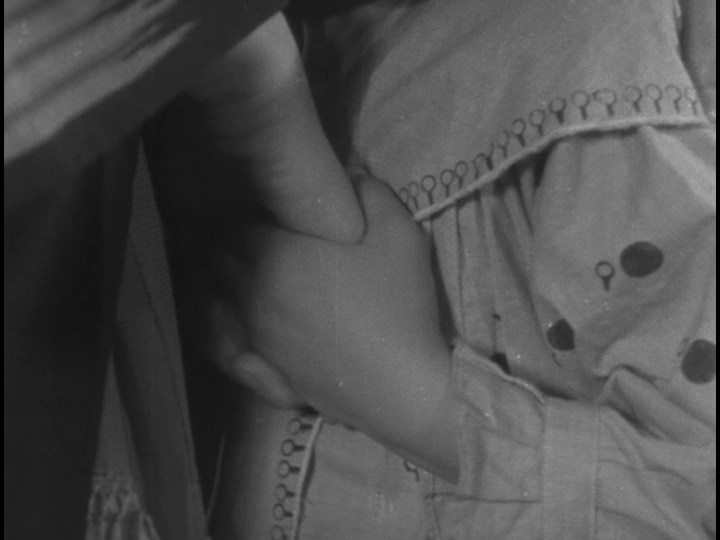
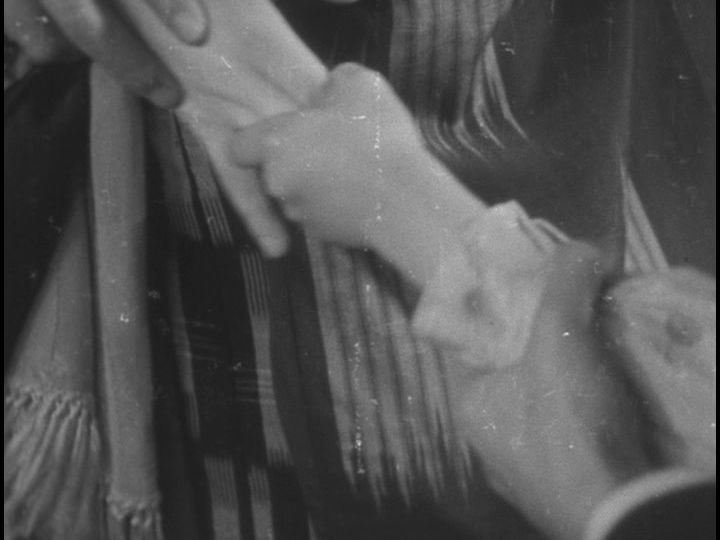
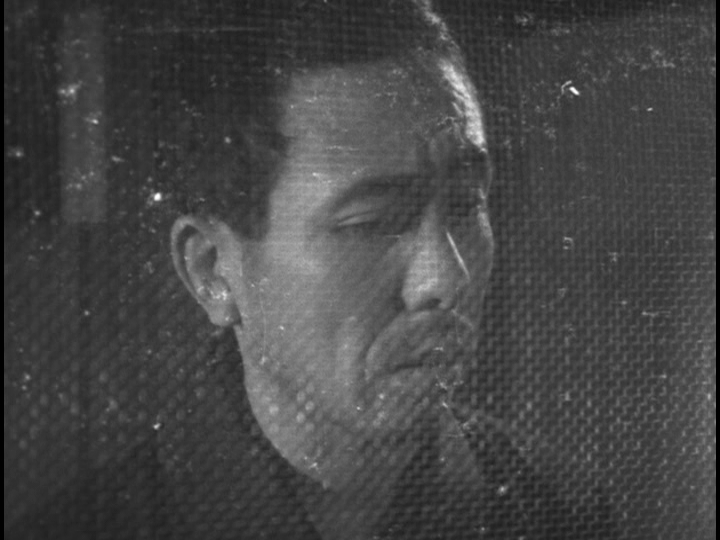
Before this scene is over, we’ll get another sequence of pillow shots like those during the bankruptcy announcement and arrest, ending with a lovely close shot of husband and wife touching hands through the prison screen.

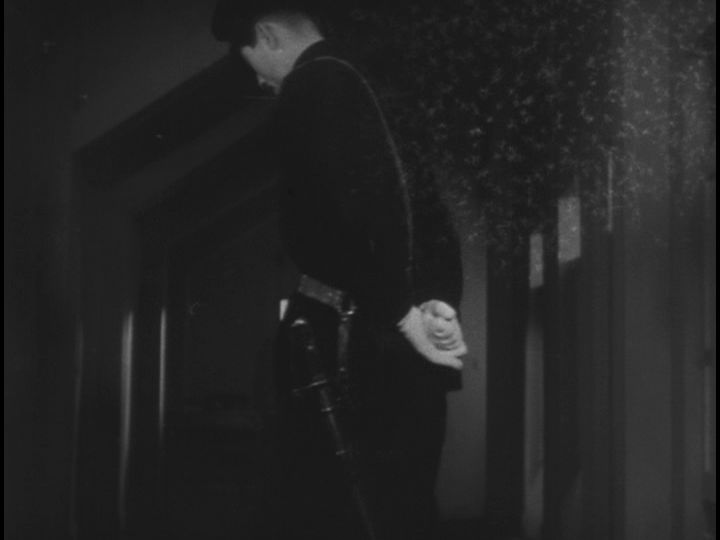
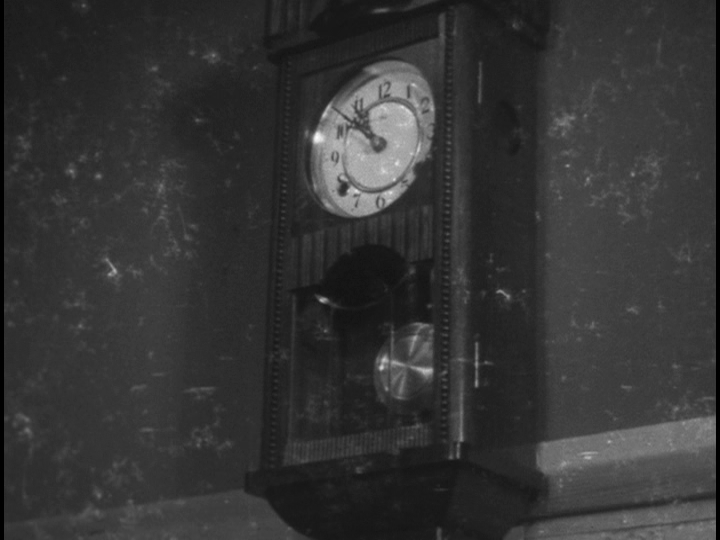
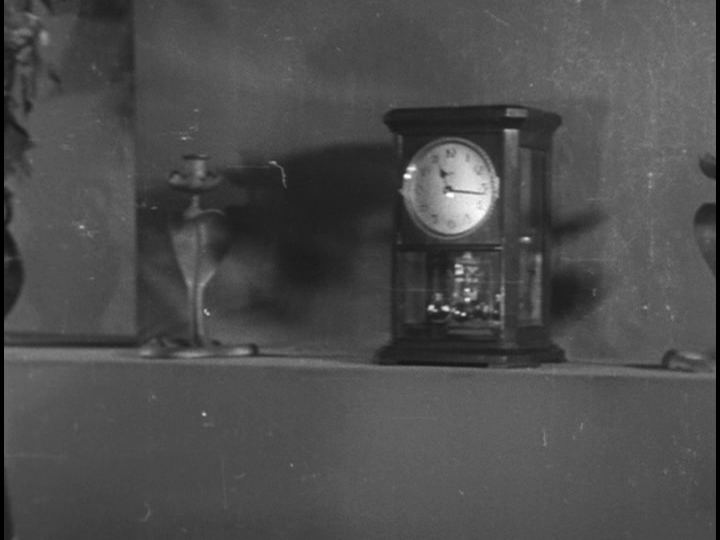
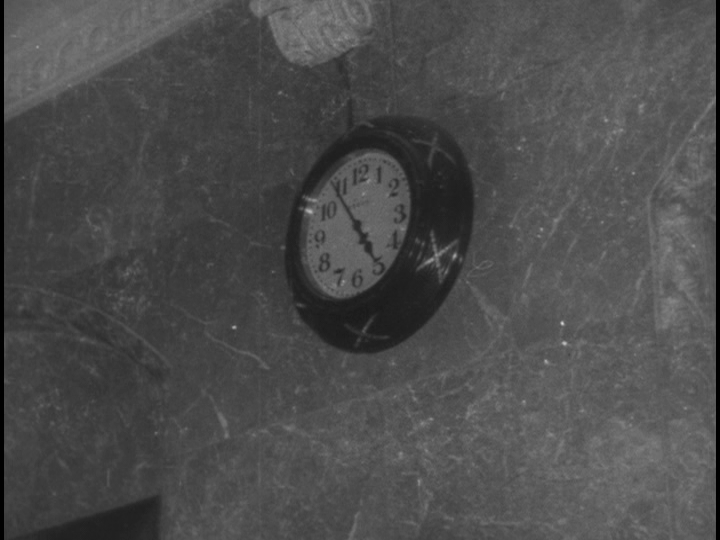
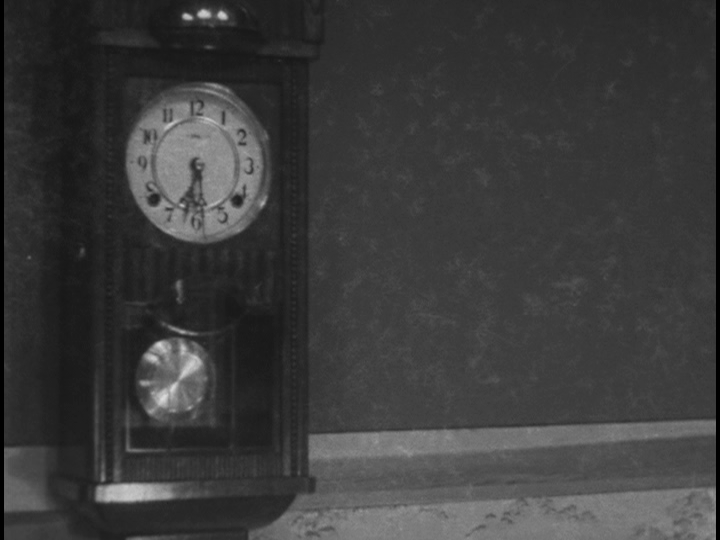
But I’ve gotten ahead of the plot.  After the bankruptcy announcement, before the arrest, Shigeko is out playing with her doll and almost gets hit by a car but the step-mother saves her, getting hit herself (sacrificing herself for the child).  There’s a short scene at Atsumi’s office when he explains to his employees that he can’t afford to pay them marked by long lateral tracks through the windows of the office building and along the rows of the assembled employees.  Naruse’s tracks are faster and the camera is closer to the action, but the graphical effect is similar to Jean-Luc Godard’s memorable tracks in Tout va bien.  When he returns to the house, all their furniture is being repossessed, his mother harangues him because she’ll now have to live in a smaller house and he gets taken away by the police.  Then we cut to some time later, with the daughter and step-mother in the smaller house when Naruse makes the first of two match cuts on clocks:
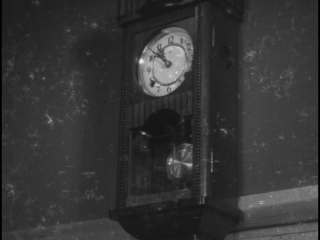
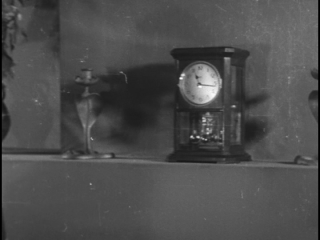
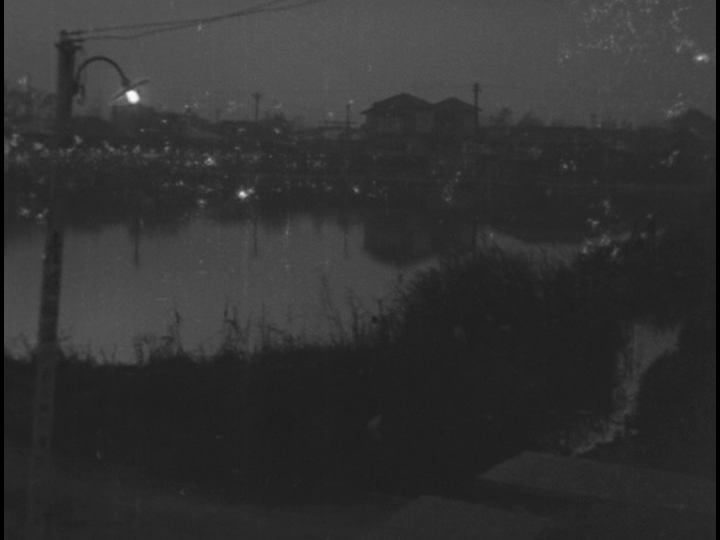
From the small house to the actress’ house.  Throughout the second half of the film, as the family unit is increasingly split up geographically, Naruse will use match cuts to link the various characters and elide time (notice the 20 minutes difference in a single cut). Here’s another one that starts with the step-mother, now working in a department store looks up at the clock, leading to a shot of the clock at her home, but this time with a pillow shot inserted between the match:

An hour and a half has elapsed, which might account for the pillow shot (it gives a greater sense of time passing), but there’s more.  When Masako arrives home, she finds her mother-in-law, unable to deal with their financial insecurity, has taken Shigeko to live with the actress.  The empty shot (a landscape with a lake, a blankness, in the center) in-between the match-cuts presages the emptiness in Masako’s home.

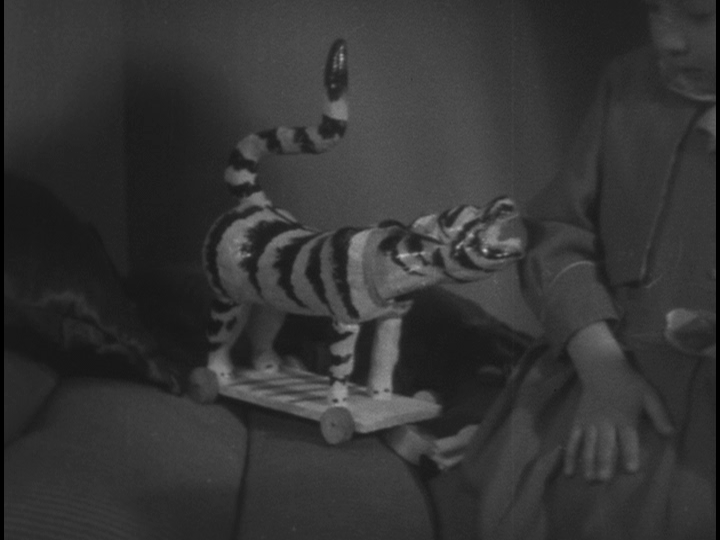
A neat match-cut occurs a bit later, as Masako’s friend Kusakabe (played by Joji Oka, who looks familiar but I can’t place him, he was in Ozu’s Dragnet Girl but I haven’t seen that) finds the actresses brother and his thief friend and accosts them outside a bar.  Kusakabe is a big man who carries a stick and has a pretty beard, so he throws the thief down easily, leading to this cut from the thief to the little girl in her apartment playing with a toy tiger:

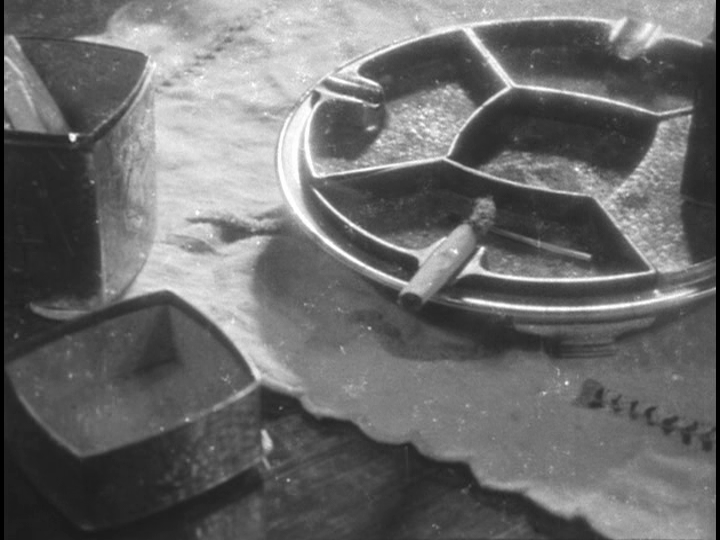
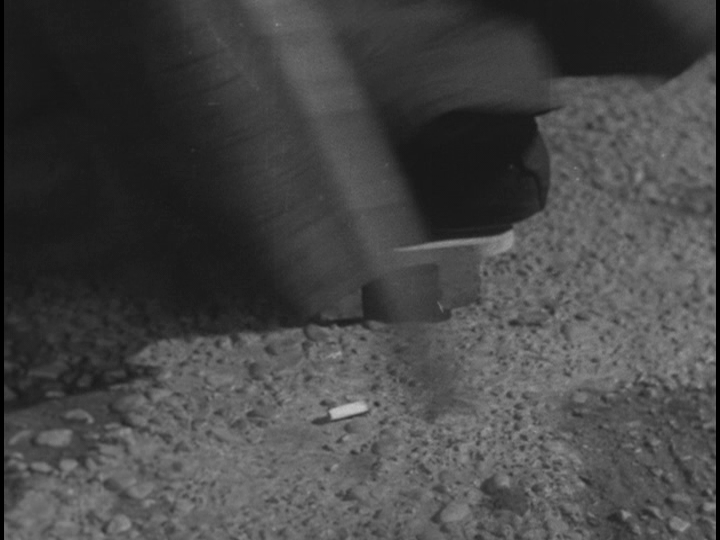
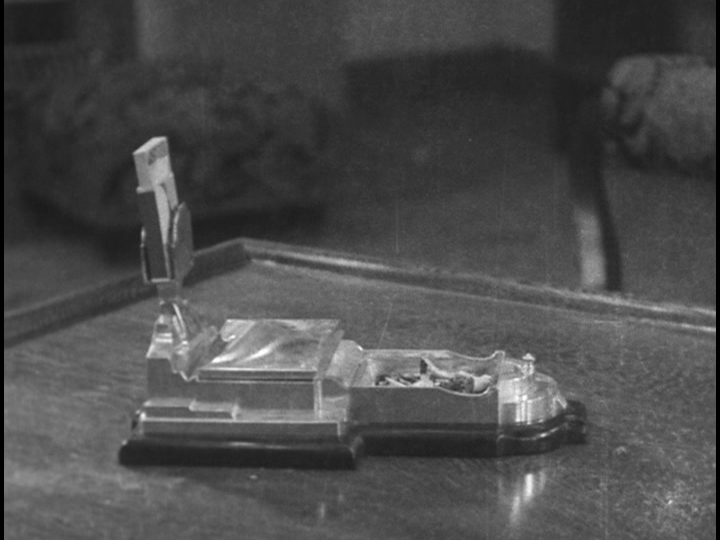
Another nifty cut comes late in the film, as Kusakabe is heading upstairs to the actress’ apartment.  He stubs his cigarette out on the ground outside, then Naruse cuts to an ashtray upstairs, where Kusakabe has arrived and is lighting another cigarette:

This is just pure joy of making cinema, craft for the sake of craft cutting virtuosity, the kind of show-offy thing not uncommon among young filmmakers.
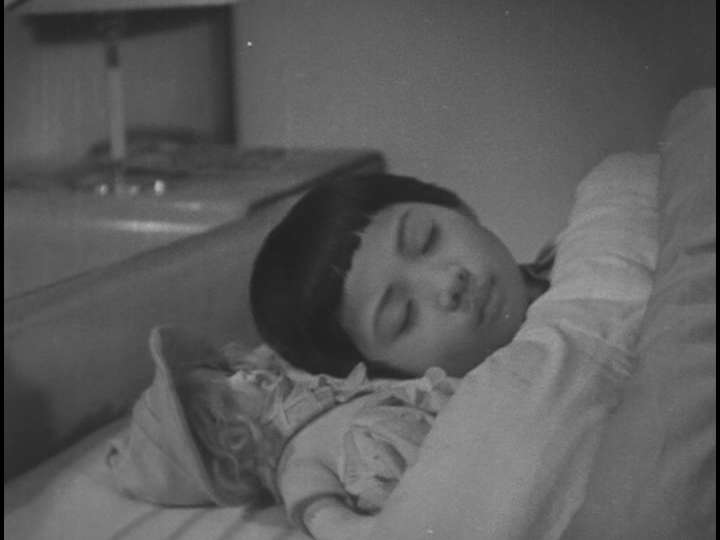
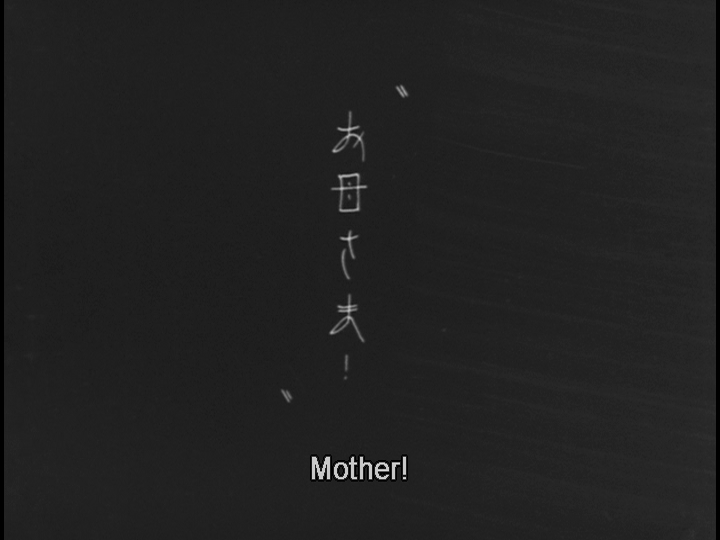
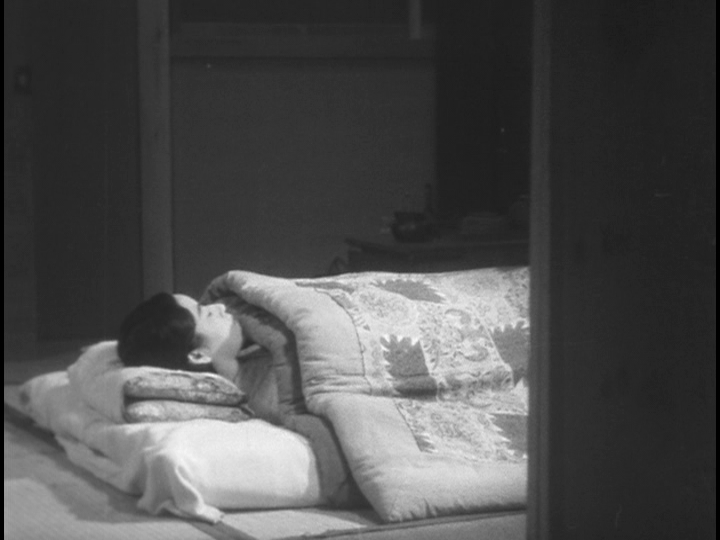
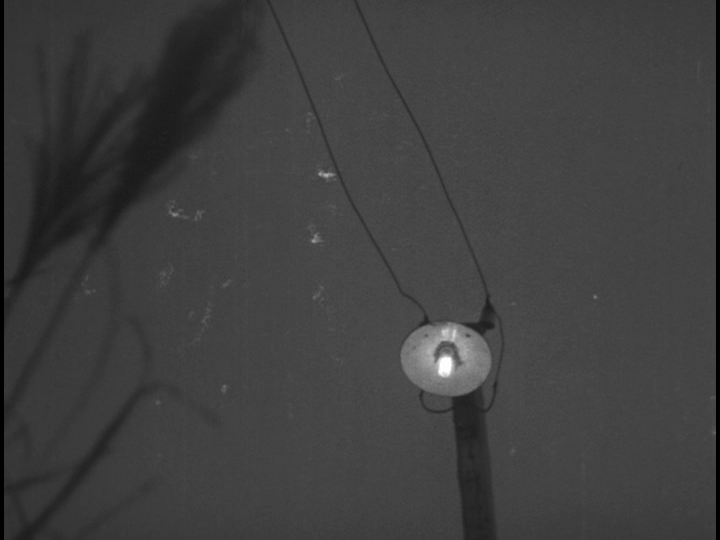
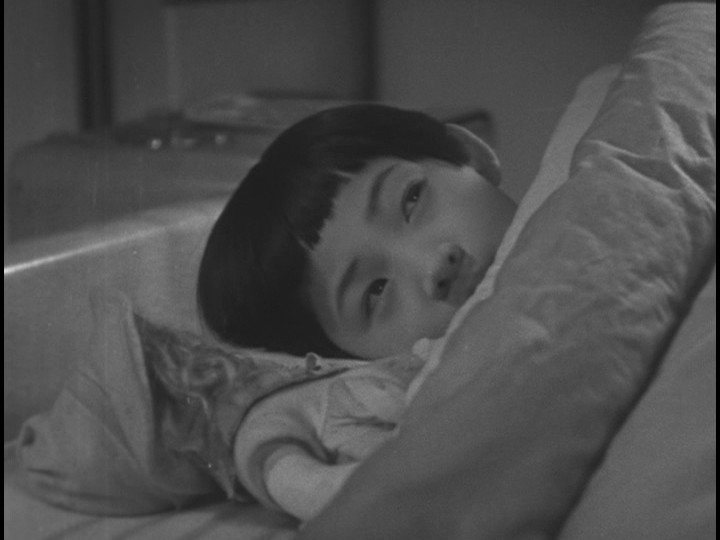
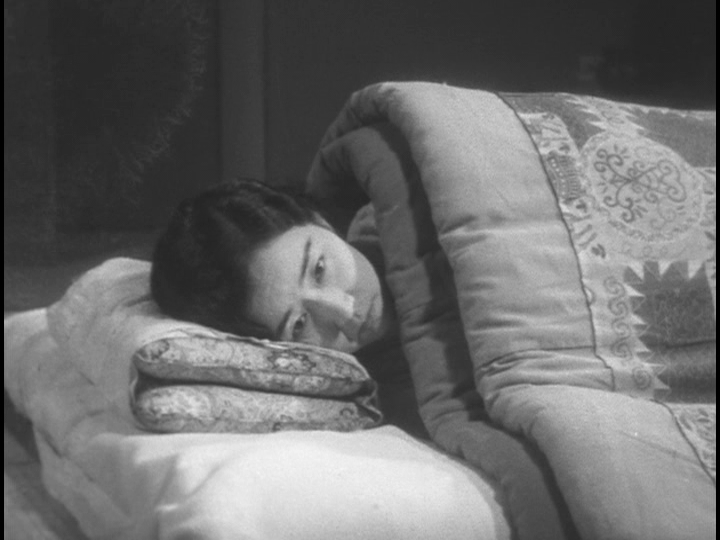
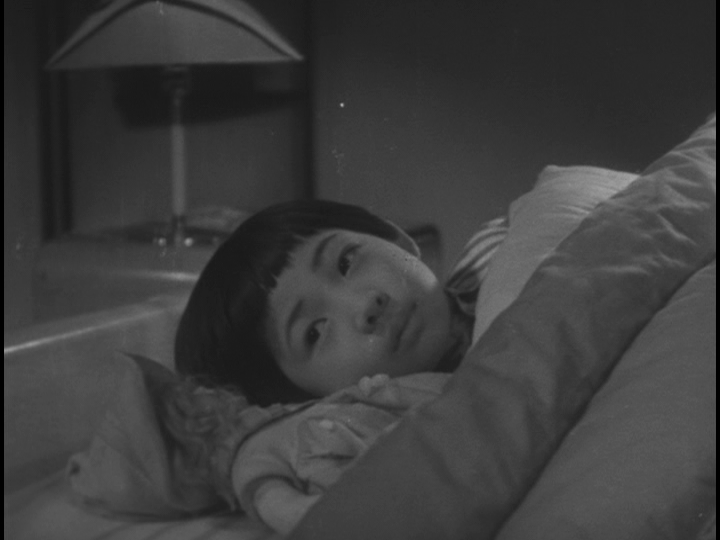
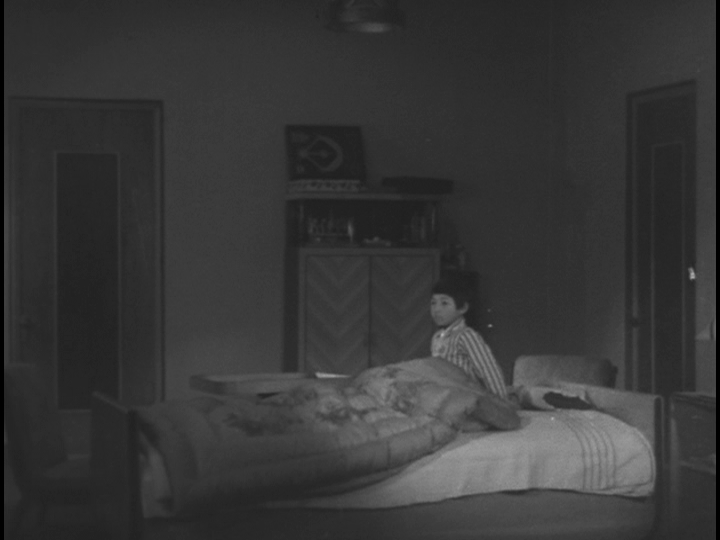
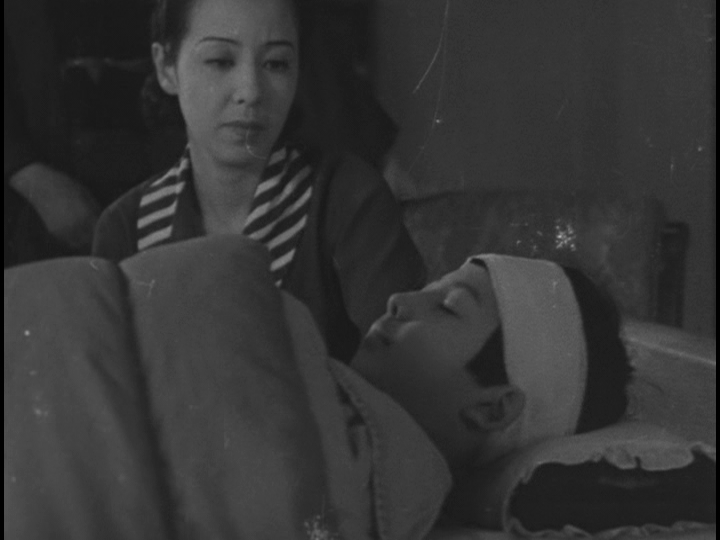
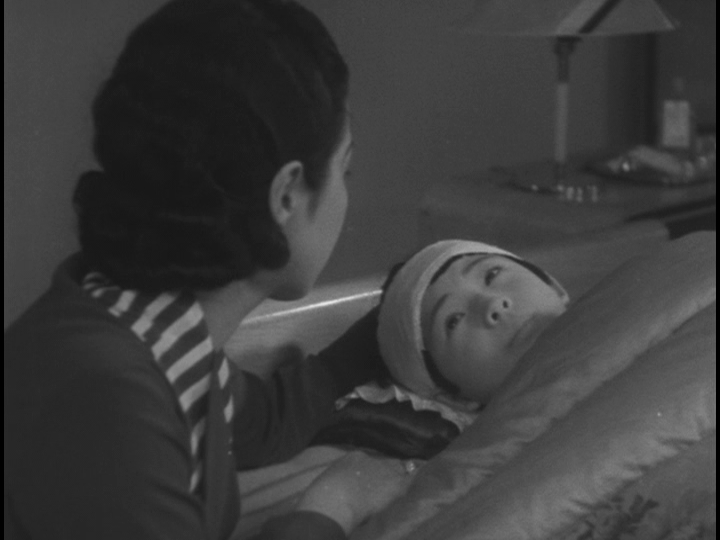
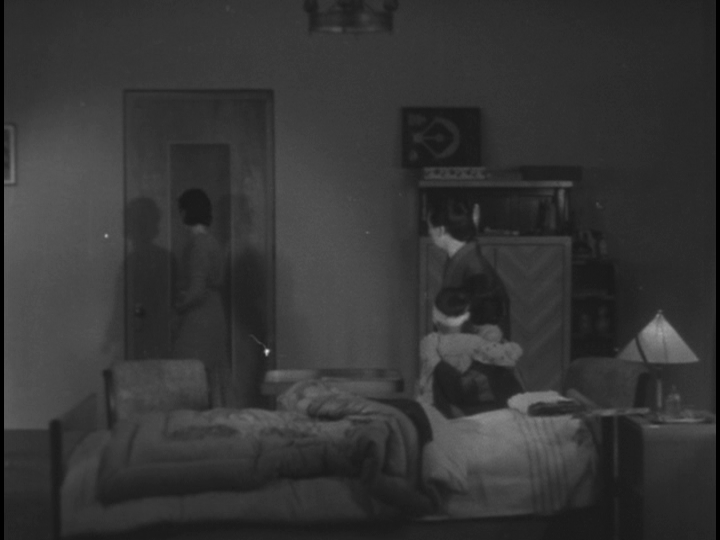
The most poignant series of edits come a few scenes earlier, as Masako and Shigeko, lying in bed in their separate homes seems to communicate across space via the medium of the match cut (with only a lamp between them):

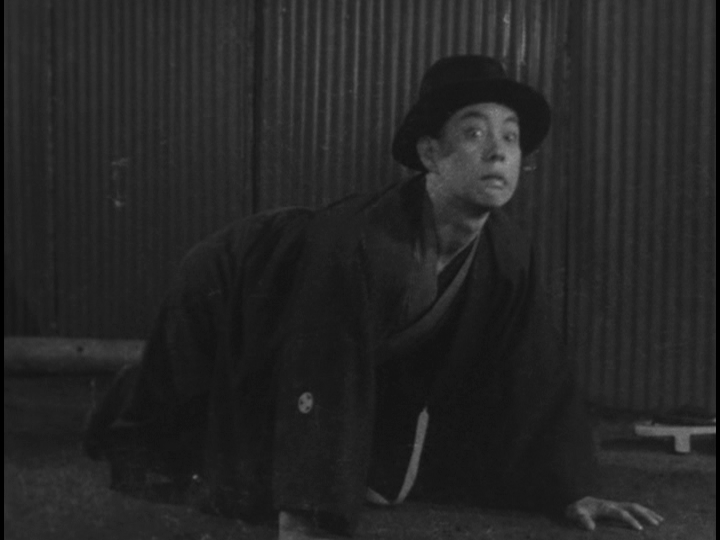
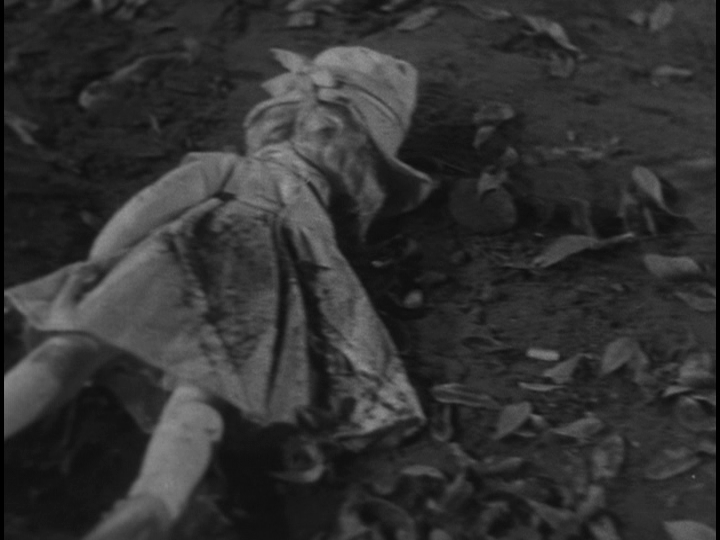
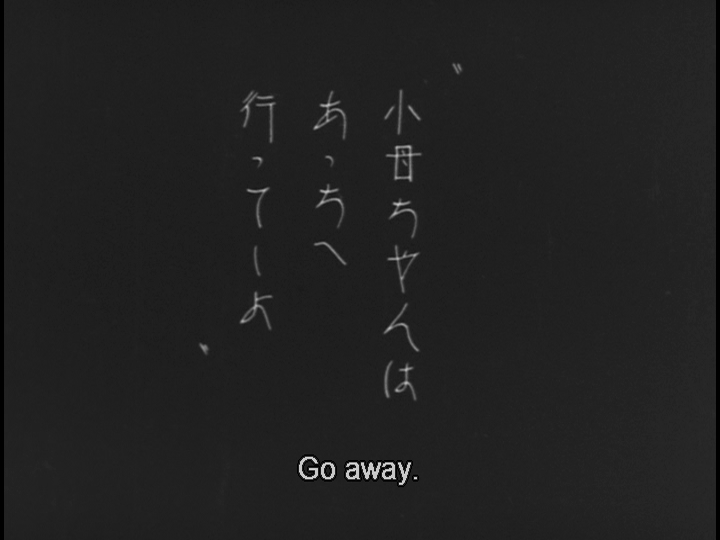
Shigeko runs away but is quickly found by the brother and the thief.  After a short struggle, she drops her doll and is hit by a passing bicyclist (Masako isn’t there to save her from traffic this time).  Now this sweetest match-cut is followed by the saddest, in turn followed by the coldest line in the film:

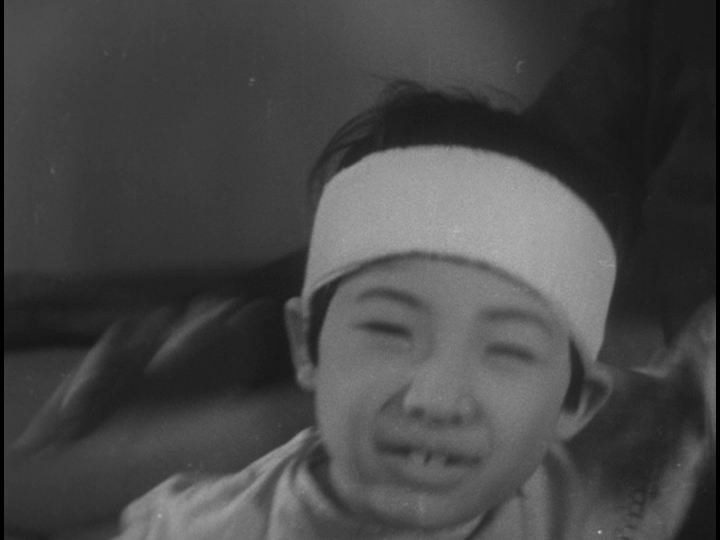
From the doll in the dirt to the wounded little girl who looks at her birth mother and says:

Ouch!

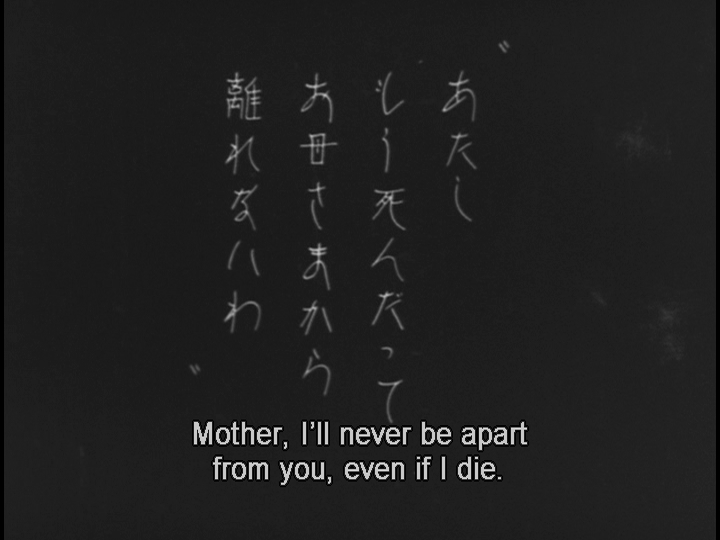
In addition to this flashy edit, Naruse also uses the push-in more extensively and more creatively than I’ve seen before.  When Shigeko first meets her birth mother, she shouts at her and the words, in titles, zoom forward followed quickly by rapid push-ins on the mother, as if the girl is hurling the insults at her.

Near the end of the film, Masako sneaks into the actress’ apartment where she and Shigeko are reunited.  They hug in a nice graphical match that seems to sum up the emotional content of the film’s match-cuts:

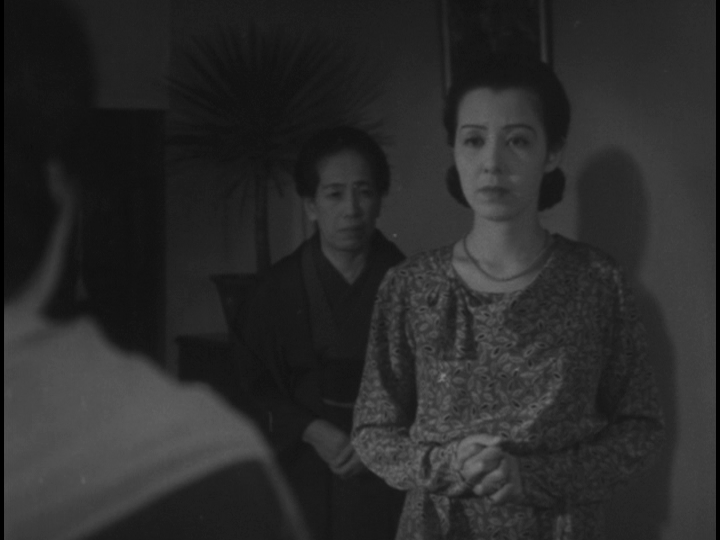
Followed by the actress bursting in and we have the four women for the first time in the same room at the same time.  Close-ups of each are followed by two-shots, of the actress and the mother-in-law and the step-mother and daughter, four people into two factions.

The actress looks at the little girl who in response pulls her step-mother’s hand to her chest.   The woman looks down and the camera pulls-out:

For the first time, she’s realized she can’t win, that her daughter is lost to her.  Unable to look at them, she turns and walks out the door:
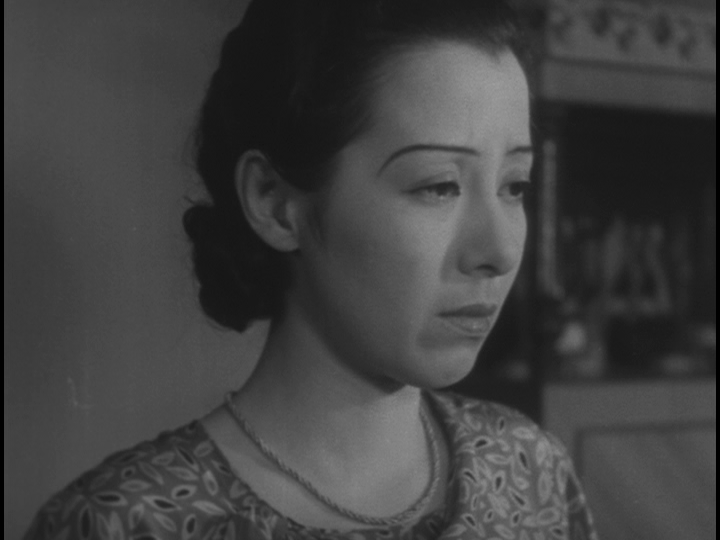
Just then, the brother and thief return and try to forcibly take back the little girl.  As the men and the step-mother struggle (and Masako is dragged out of the apartment), the camera repeatedly pushes in on the birth mother, imploring her to take action and give up the girl for the sake of her own happiness, pleading with her to sacrifice for her child the way mothers are expected to act in melodramas (and the way we’ve already seen Masako act when she saved Shigeko from the car).  

Four times the camera pushes in on her.  We pan with her as she paces.  We watch her in close up as she thinks and comes to a realization on the nature of motherhood and finally she moves.  She gets up and runs out the door after Masako to bring her back to her step-daughter.  In the end, it’s her motion and not the camera’s that brings the dramatic climax.
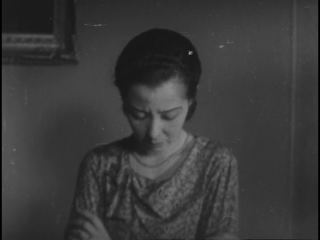
None of what Naruse does in this film is particularly new or innovative, but what it does show is that early on in his career (he was 27 years old here and had been a director for only three years) he had a masterful command of the film techniques of his time, as well as a willingness to experiment both with visual style and with story structure (though perhaps more of the credit there should go to writer Kogo Noda, Ozu’s frequent collaborator who adapted a contemporary play for this film).   The push-ins in particular are an interesting attempt at building an aesthetic out of a stylistic quirk that in the end didn’t work out (not every experiment leads to a coherent system the way Eisenstein’s or Ozu’s did).  I’m excited to see his style evolve from this youthful jubilance into the spare beauty of his more mature films of the 50s and 60s as I watch as much Naruse as I can over the next few weeks.

Best of 2012 Part Two: New Movies

After spending much of the last quarter of 2011 in the zombie state that is caring for a newborn, I made a strong movie-watching comeback in 2012, not only seeing a ton of great old movies but also more than twice as many movies from the current year as I’d seen at this point last year.  Much of that is thanks to a trip to the Vancouver International Film Festival for the fourth time in the last five years.  I saw over 30 films there this year, so many that I still have eight left to review (New Year’s Resolution #1: finish last year’s reviews).
As always with end of the year lists, there is the question of dates.  For every list on this site, I use the year given by imdb.  That’s the easiest, most consistent standard for movie years throughout history and across the world.  That means that a number of films which were theatrically released in the US in 2012 count as 2011 or even 2010 films for my lists, due to prior appearances at film festivals or in other countries.  It also means that a few of my favorite 2012 films will be showing up on other folks’ end of the year lists in 2013.

So first, here are some films that won’t be appearing on my 2012 list because I consider them to have come from earlier years:

Damsels in Distress (Whit Stillman, 2011)
Oki’s Movie (Hong Sangsoo, 2010)
Margaret (Kenneth Lonergan, 2011)
The Deep Blue Sea (Terence Davies, 2011)
Don’t Go Breaking My Heart (Johnnie To, 2011)
The Day He Arrives (Hong Sangsoo, 2011)
The Cabin in the Woods (Drew Goddard, 2011)
Romance Joe (Lee Kwangkuk, 2011)
Let the Bullets Fly (Jiang Wen, 2010)
Once Upon a Time in Anatolia (Nuri Bilge Ceylan, 2011)
Life Without Principle (Johnnie To, 2010)
Girl Walk // All Day (Jacob Krupnick, 2011)
I Wish I Knew (Jia Zhangke, 2010)
The Grey (Joe Carnahan, 2011)
Hahaha (Hong Sangsoo, 2010)
The Turn Horse (Bela Tarr, 2011)
Bernie (Richard Linklater, 2011)
The Kid with a Bike (The Dardenne Brothers, 2011)
Take This Waltz (Sarah Polley, 2011)

Additionally, there are quite a few 2012 films I haven’t managed to see yet, either because they haven’t yet been released in the Seattle area, or because I just haven’t found the time to watch them. I am constantly adding newly seen films to old lists with This Week in Rankings posts, for example there are now 49 films on my 2011 list, more than twice as many as the one in the end of the year post I wrote last year.

Here are a few of the notable 2012 films I haven’t seen yet:

Zero Dark Thirty (Kathryn Bigelow)
Room 237 (Rodney Ascher)
Flight (Robert Zemeckis)
Argo (Ben Affleck)
Life of Pi (Ang Lee)
Beast of the Southern Wild (Ben Zeitlin)
The Dark Knight Rises (Christopher Nolan)
Silver Linings Playbook (David O. Russell)
Seven Psychopaths (Martin McDonagh)
Killing Them Softly (Andrew Dominik)
Leviathan (Lucien Castaing-Taylor & Verena Paravel)
Magic Mike (Steven Soderbergh)
Haywire (Steven Soderbergh)
Barbara (Christian Petzold)
Frances Ha (Noah Baumbach)
To the Wonder (Terrence Malick)

And with that, here is my list for 2012, with links to reviews where appropriate:

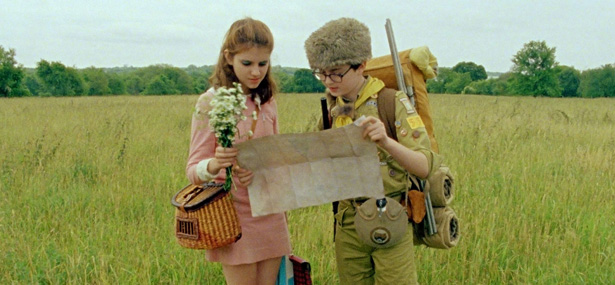
1. Moonrise Kingdom (Wes Anderson)
2. In Another Country (Hong Sangsoo)
3. Like Someone in Love (Abbas Kiarostami)
4. The Master (Paul Thomas Anderson)
5. Mekong Hotel (Apichatpong Weerasethakul)
6. Night Across the Street (Raul Ruiz)
7. Lincoln (Steven Spielberg)
8. Holy Motors (Leos Carax)
9. Tabu (Miguel Gomes)
10. When Night Falls (Ying Liang)
11. The Last Time I Saw Macao (João Pedro Rodrigues & João Rui Guerra da Mata)
12. Walker (Tsai Ming-liang)
13. Something in the Air (Olivier Assayas)
14. Django Unchained (Quentin Tarantino)
15. Memories Look at Me (Song Fang)
16. Neighboring Sounds (Kleber Mendonça Filho)
17. Thursday Till Sunday (Dominga Sotomayor)
18. Three Sisters (Wang Bing)
19. Cosmopolis (David Cronenberg)
20. Romancing in Thin Air (Johnnie To)
21. Emperor Visits the Hell (Li Luo)
22. Looper (Rian Johnson)
23. This is 40 (Judd Apatow)
24. Vamps (Amy Heckerling)
25. Shut Up and Play the Hits (Dylan Southern & Will Lovelace)

26. Reconversão (Thom Andersen)
27. The Unlikely Girl (Wei Ling Chang)
28. The Avengers (Joss Whedon)
29. Sleepwalk With Me (Mike Birbiglia & Seth Barrish)
30. Brave (Brenda Chapman & Mark Andrews)
31. People’s Park (JP Sniadecki and Libbie Cohn)
32. Everybody in Our Family (Radu Jude)
33. The Hobbit: An Unexpected Journey (Peter Jackson)
34. Amour (Michael Haneke)
35. Mother (Vorakorn Ruetaivanichkul)
36. In Search of Haydn (Phil Grabsky)
37. Mystery (Luo Ye)
38. The Angel’s Share (Ken Loach)
39. Cloud Atlas (The Wachowskis & Tom Tykwer)
40. Antiviral (Brandon Cronenberg)
41. Wreck-It Ralph (Rich Moore)
42. A Mere Life (Park Sanghun)
43. Beautiful 2012 (Various)
44. Prometheus (Ridley Scott)
45. Skyfall (Sam Mendes)
46. Moksha; the World, or I, How Does that Work? (Koo Sungzoo)
47. Game Change (Jay Roach)
48. Les Misérables (Tom Hooper)

And finally, here’s a list that follows the more general critical year-end list standard, which includes some 2011 movies, for comparison’s sake:

1. Moonrise Kingdom
2. Damsels in Distress
3. In Another Country
4. Oki’s Movie
5. Like Someone in Love
6. Margaret
7. The Master
8. The Deep Blue Sea
9.  Mekong Hotel
10. Night Across The Street
11. Lincoln
12. Don’t Go Breaking My Heart
13. The Day He Arrives
14. Holy Motors
15. Tabu
16. Romance Joe
17. Let the Bullets Fly
18. When Night Falls
19. The Last Time I Saw Macao
20. Life Without Principle
21. Girl Walk // All Day
22. The Cabin in the Woods
23. Walker
24. Something in the Air
25. Once Upon a Time in Anatolia

26. Django Unchained
27. I Wish I Knew
28. Memories Look at Me
29. Neighboring Sounds
30. The Grey
31. Hahaha
32. Thursday Till Sunday
33. Three Sisters
34. Cosmopolis
35. Romancing in Thin Air
36. The Turin Horse
37. Emperor Visits the Hell
38. Looper
39. This is 40
40. Vamps
41. Bernie
42. The Kid with a Bike
43. Flying Swords of Dragon Gate (Tsui Hark)
44. Shut Up and Play the Hits
45. A Fish (Park Hongmin)
46. Reconversão
47. The Unlikely Girl
48. Take This Waltz
49. The Avengers
50. East Meets West (Jeffrey Lau)

51. Sleepwalk with Me
52. Brave
53. People’s Park
54. Headshot (Pen-Ek Ratanaruang)
55. Everybody in Our Family
56. The Hobbit: An Unexpected Journey
57. Amour
58. Mother
59. In Search of Haydn
60. Mystery
61. The Angel’s Share
62. Cloud Atlas
63. 10+10 (Various)
64. Antiviral
65. Wreck-It Ralph
66. A Mere Life
67. Beautiful 2012
68. Prometheus
69. Skyfall
70. Moksha; the World, or I, How Does that Work?
71. Game Change
72. Les Misérables

Best of 2012 Part One: Old Movies

An annual tradition here at The End, these are the best movies I saw for the first time this year, not counting recent releases (anything less than three years old). As always, the rankings are not meant to be taken too seriously, I saw a lot of great movies this year and would recommend each and every one of these.  I’ve included links to the ones I’ve written and/or podcasted about.

1. Good Men, Good Women (Hou Hsiao-hsien, 1995)
2. Perceval le Gallois (Eric Rohmer, 1978)
3. A City of Sadness (Hou Hsiao-hsien, 1989)
4. A Brighter Summer Day (Edward Yang, 1991)
5. The Time to Live, the Time to Die (Hou Hsiao-hsien, 1985)
6. Breaking News (Johnnie To, 2004)
7. A Day in the Country (Jean Renoir, 1936)
8. Beau travail (Claire Denis, 1999)
9. My Neighbor Totoro (Hayao Miyazaki, 1988)
10. Pyaasa (Guru Dutt, 1957)
11. A Woman Under the Influence (John Cassavetes, 1974)
12. The Saga of Anatahan (Joseph von Sternberg, 1953)
13. The Taking of Pelham One Two Three (Joseph Sargent, 1974)
14. The Man Who Would Be King (John Huston, 1975)
15. The Incredible Shrinking Man (Jack Arnold, 1957)
16. Broadway Melody of 1940 (Norman Taurog, 1940)
17. Man’s Favorite Sport? (Howard Hawks, 1964)
18. Blind Husbands (Erich von Stroheim, 1919)
19. The Bellboy (Jerry Lewis, 1960)
20. Night and Day (Hong Sangsoo, 2008)

21. Island of Lost Souls (Erle C. Kenton, 1932)
22. Dust in the Wind (Hou Hsiao-hsien, 1987)
23. The Lodger: A Story of the London Fog (Alfred Hitchcock, 1927)
24. On the Bowery (Lionel Rogosin, 1956)
25. Where Now are the Dreams of Youth (Yasujiro Ozu, 1932)
26. Diary of a Lost Girl (GW Pabst, 1929)
27. Jet Pilot (Joseph von Sternberg, 1957)
28. Phantom of the Paradise (Brian DePalma, 1974)
29. A Summer at Grandpa’s (Hou Hsiao-hsien, 1984)
30. Safe in Hell (William Wellman, 1931)
31. Passage to Marseille (Michael Curtiz, 1944)
32. Le notti bianche (Luchino Visconti, 1957)
33. Ali: Fear Eats the Soul (Rainier Werner Fassbinder, 1974)
34. Cutter’s Way (Ivan Passer, 1981)
35. Days of Youth (Yasujiro Ozu, 1929)
36. China Gate (Samuel Fuller, 1957)
37. Men in War (Anthony Mann, 1957)
38. The River (Tsai, Ming-liang, 1997)
39. Objective: Burma! (Raoul Walsh, 1945)
40. Cockfighter (Monte Hellman, 1974)

41. Mad Monkey Kung Fu (Lau Kar-leung, 1979)
42. Swing High, Swing Low (Mitchell Liesen, 1937)
43. I am a Fugitive from a Chain Gang (Mervyn LeRoy, 1932)
44. Kanal (Andrzej Wajda, 1957)
45. Comrade X (King Vidor, 1940)
46. The Poor Little Rich Girl (Maurice Tourneur, 1917)
47. Yesterday Once More (Johnnie To, 2004)
48. Death Race 2000 (Paul Bartel, 1975)
49. The Lower Depths (Akira Kurosawa, 1957)
50. Band of Angels (Raoul Walsh, 1957)
51. 3:10 to Yuma (Delmer Daves, 1957)
52. Daughter of the Nile (Hou Hsiao-hsien, 1987)
53. City Streets (Rouben Mamoulian, 1931)
54. Stage Fright (Alfred Hitchcock, 1950)
55. They Died with Their Boots On (Raoul Walsh, 1941)
56. The Constant Nymph (Edmond Goulding, 1943)
57. The Rink (Charles Chaplin, 1916)
58. Bardelys the Magnificent (King Vidor, 1926)
59. Waterloo Bridge (James Whale, 1931)
60. Saint Joan (Otto Preminger, 1957)

61. Golden Swallow (Chang Cheh, 1968)
62. Caged Heat (Jonathan Demme, 1974)
63. Hallelujah! (King Vidor, 1929)
64. So Long at the Fair (Antony Darnborough & Terence Fisher, 1950)
65. Near Dark (Kathryn Bigelow, 1987)
66. The Flying Guillotine (Ho Meng Hua, 1975)
67. Ill Met By Moonlight (Powell & Pressburger, 1957)
68. Eraserhead (David Lynch, 1977)
69. In the Cut (Jane Campion, 2003)
70. The Boys from Fengkuei (Hou Hsiao-hsien, 1983)
71. Broadway Melody of 1936 (Roy del Ruth, 1935)
72. Thunderbolt & Lightfoot (Michael Cimino, 1974)
73. Murders in the Rue Morgue (Robert Florey, 1932)
74. Liliom (Fritz Lang, 1934)
75. Merrily We Live (Norman Z. McLoed, 1938)
76. Executioners from Shaolin (Lau Kar-leung, 1977)
77. Number Seventeen (Alfred Hitchcock, 1932)
78. Wichita (Jacques Tourneur, 1955)
79. Springfield Rifle (Andre de Toth, 1952)
80. Il Grido (Michelangelo Antonioni, 1957)

81. I Flunked, But . . . (Yasujiro Ozu, 1930)
82. The Lodger (John Brahm, 1944)
83. Northern Pursuit (Raoul Walsh, 1943)
84. Killer Clans (Chor Yuen, 1976)
85. I am Waiting (Koreyoshi Kurehara, 1957)
86. Douglas Fairbanks in Robin Hood (Allan Dwan, 1922)
87. The Manxman (Alfred Hitchcock, 1929)
88. Flunky, Work Hard (Mikio Naruse, 1931)
89. Blazing Saddles (Mel Brooks, 1974)
90. Project A (Jackie Chan, 1983)
91. Hearts and Minds (Peter Davis, 1974)
92. This Land is Mine (Jean Renoir, 1943)
93. The Lady and the Beard (Yasujiro Ozu, 1931)
94. Legend of the Mountain (King Hu, 1979)
95. The Crimson Pirate (Robert Siodmak, 1952)
96. Show People (King Vidor, 1928)
97. The House on 92nd Street (Henry Hathaway, 1945)
98. The Miracle Worker (Arthur Penn, 1962)
99. The Armor of God (Jackie Chan, 1986)
100. Our Vines Have Tender Grapes (Roy Rowland, 1945)

101. Swordsman (King Hu, 1990)
102. The Tin Star (Anthony Mann, 1957)
103. Midnight Cowboy (John Schlesinger, 1969)
104. The Devil and Miss Jones (Sam Wood, 1941)
105. Project A 2 (Jackie Chan, 1987)
106. Fire Down Below (Robert Parrish, 1957)
107. Cobra Woman (Robert Siodmak, 1944)
108. The Rising of the Moon (John Ford, 1957)
109. Busting (Peter Hyams, 1974)
110. The Edge of the City (Martin Ritt, 1957)
111. Les Girls (George Cukor, 1957)
112. Rabid Dogs (Mario Bava, 1974)
113. The Great Waltz (Julien Duvivier, 1938)
114. Annie Oakley (George Stevens, 1935)
115. Heroes for Sale (William Wellman, 1933)
116. Great Day in the Morning (Jacques Tourneur, 1956)
117. The Enemy Below (Dick Powell, 1957)
118. Cimarron (Wesley Ruggles, 1931)
119. State Fair (Henry King, 1933)
120. A Song to Remember (Charles Vidor, 1945)
121. Time Without Pity (Joseph Losey, 1957)
122. Peyton Place (Mark Robson, 1957)
123. The Green Green Grass of Home (Hou Hsiao-hsien, 1983)