Douglas Fairbanks in Robin Hood – 6, 1922
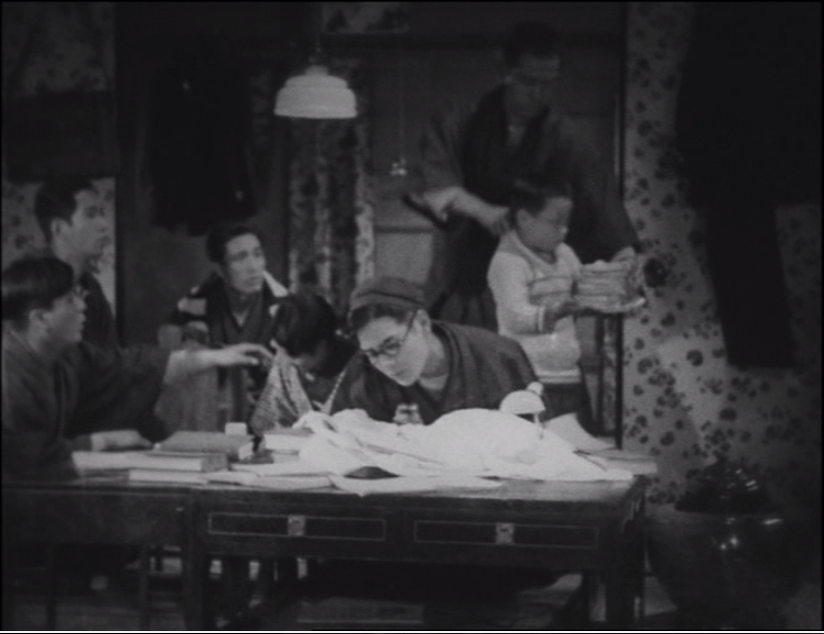
I Flunked, But. . . – 12, 1930
Baby Face – 10, 1933

Celine & Julie Go Boating – 1, 1974
Death Race 2000 – 9, 1975

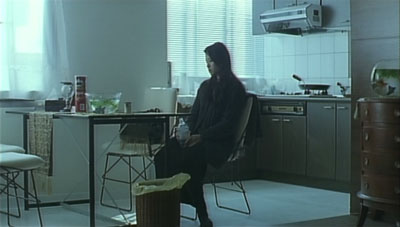
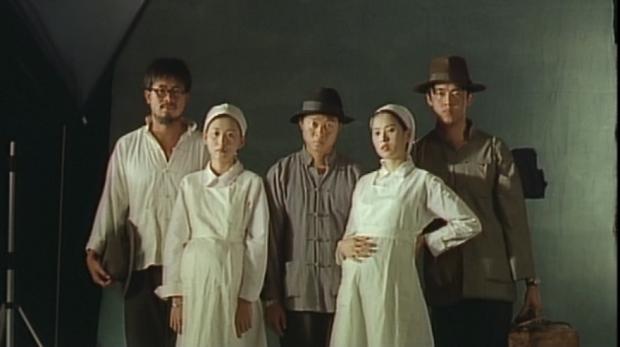
Good Men, Good Women – 2, 1995
We Need to Talk About Kevin – 5, 2011
Douglas Fairbanks in Robin Hood – 6, 1922
I Flunked, But. . . – 12, 1930
Baby Face – 10, 1933
Celine & Julie Go Boating – 1, 1974
Death Race 2000 – 9, 1975
Good Men, Good Women – 2, 1995
We Need to Talk About Kevin – 5, 2011


You can follow me on Twitter now @TheEndofCinema, because it’s finally 2008 here.
Follow @TheEndofCinema
!function(d,s,id){var js,fjs=d.getElementsByTagName(s)[0];if(!d.getElementById(id)){js=d.createElement(s);js.id=id;js.src=”//platform.twitter.com/widgets.js”;fjs.parentNode.insertBefore(js,fjs);}}(document,”script”,”twitter-wjs”);


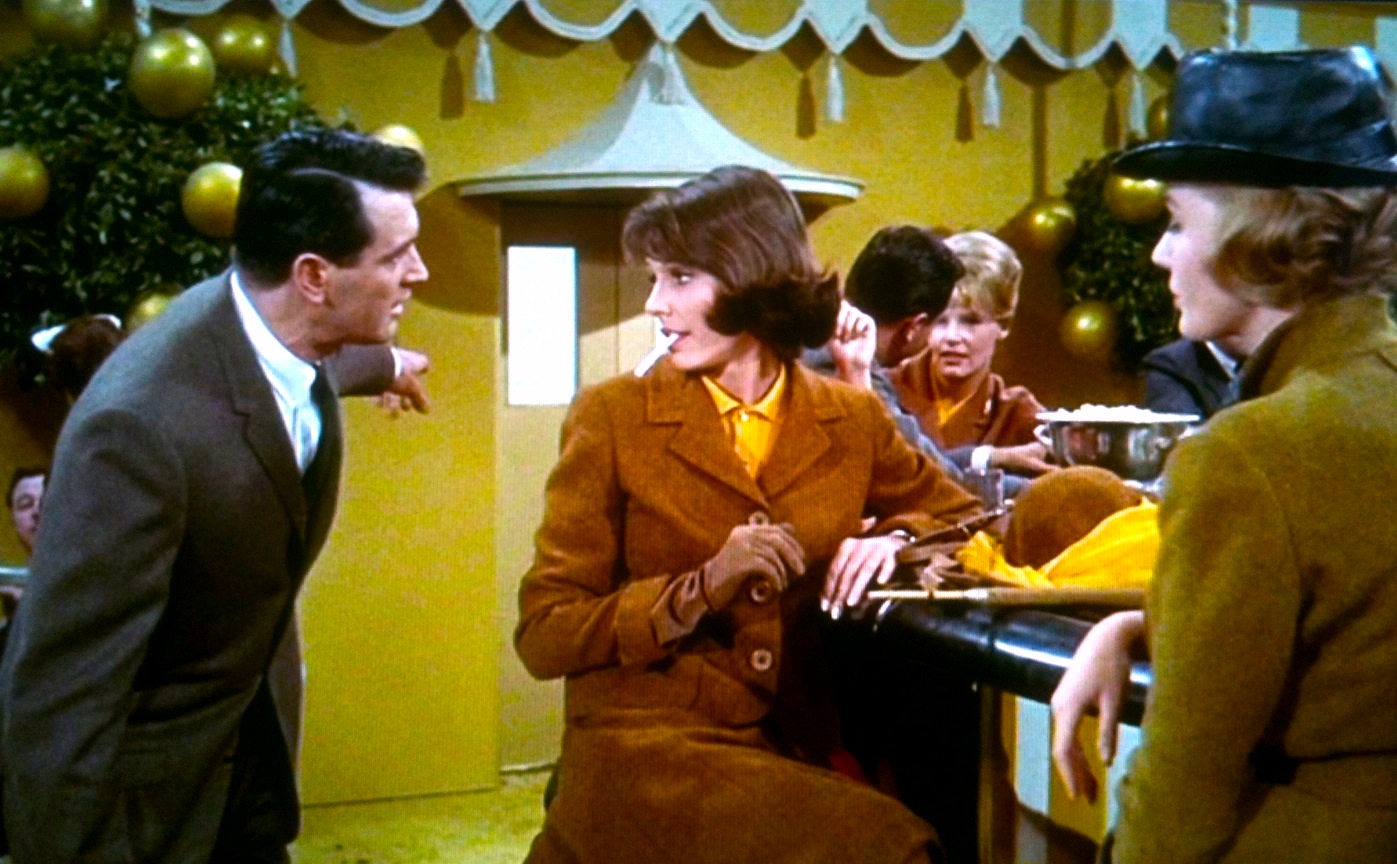
Late Howard Hawks reworking Bringing Up Baby with the relaxed, mellow episodic pace of Hatari!. In other words, pretty much perfect. Rock Hudson plays the Cary Grant part (Grant turned it down because he thought he was too old) and he’s much better than I expected. It’s uncanny at time how much he looks like the 1930s Grant (with a little bit of Kyle Chandler mixed in) and shows a surprising flair for physical comedy, both in an amazing early sequence with a car half his size and later as he repeatedly pratfalls into a lake. Paula Prentiss plays the screwball heroine, and she’s equal parts Mary Tyler Moore and Jane Fonda, very pretty and charming, if not quite as ideal the Hawks heroine as Angie Dickinson in Rio Bravo. This being late Hawks, it lacks the wild incandescent energy of Baby or His Girl Friday. It’s a slow-motion screwball, not because Hawks can’t get it up to 99 MPH anymore, but because in old age he’s simply no longer in a hurry.

There’s a scene fairly early on in this movie that pretty much sums up the problem I have with it and Ingmar Bergman in general. During the first of Victor Sjöström’s flashbacks, we see his “secret fiancee” get kissed by his good-for-nothing brother. (We know the brother’s good-for-nothing because the dialogue helpfully tells us several times that he is, in fact, good-for-nothing.) After the kiss, the girl, Sara, is anguished. We know this because she cries “Ah! I am anguished!” (or something like that, I don’t remember the dialogue exactly); because Bergman rushes in for a closer shot of her face, wearing an actorly expression of Anguish; because the kiss has spilled the Wild Strawberries she had been gathering to give her uncle, smearing her white dress–this is Symbolism (we know because Wild Strawberries is also the title of the film): her generous strawberry gift has been ruined by a selfish act, through this same act she has lost her innocence (despite the black and white, we can assume her white dress is now smeared red, please don’t make me explain what that is Symbolic of). Basically, Bergman is never content to let things be subtle, he will let you know exactly what he means in every way he possibly can in every scene. The film is utterly lifeless, over-determined and surprisingly sloppy.

Another example: we are told repeatedly that Sjöström’s is cold, a heartless old bastard, yet all we see is a slightly cantankerous, wistful old man who is nothing but nice to pretty blonde girls and anyone else he comes across. So when, at the end, he’s learned to be nice and wistful, we haven’t learned anything. We’ve gone on a journey through space and time but not character, as Sjöström’s flaws are only asserted in dialogue, never depicted. The flashbacks do nothing to deepen his character, they show how he was betrayed by women, but not why (we are told his marriage is bad, but we don’t ever see any evidence of it, or ever he and his wife together). This assertion as a substitute for dramatization applies to the character of Sjöström’s mother as well: we spend a long scene with her only to be told later that she’s “as cold as ice”. But on the evidence of the scene we just watched, I thought she seemed remarkably pleasant for a 96 year old lady that no one ever visits. This also applies to Gunnar Björnstrand as Sjöström’s son. Ingrid Thulin tells us about his horrible crime: he is also a cold bastard, our evidence is that when she tells him she’s pregnant he gets mad and says it’s evil to bring a child into the world and he wishes he was dead. This is clearly a man with serious psychological issues, or it would be if we actually took this nonsense seriously. Fortunately, we must not, as the whole situation is resolved in Björnstrand’s only other scene, where he explains that he now will have the kid because he can’t live without Thulin. Yippee! Glad that’s resolved!

I did like the opening dream sequence, with its overt reference to The Phantom Carriage and a neat little visual trick where Sjöström is walking along a sidewalk, past a lamppost whose shadow apparently falls on the side of a building, but when Sjöström passes, he moves in front of the shadow instead of through it–the shadow is painted on the wall. This opening sequence owes a huge debt to Cocteau and Buñuel, though it never reaches their height of surreality (Fellini does better in the opening dream of 8 1/2). The rest of the film as well does follow a kind of dream logic, I kinda like that Sjöström’s flashbacks aren’t really flashbacks (because they’re of things he couldn’t have seen) but rather Scroogelike ghostly visitations, but even that logic gets screwed up in the second flashback: Sjöström and his examiner (“You’ve been accused of guilt.” Blech) are watching Sjöström’s wife hook up with some dude in the woods in what first looks like rape but is apparently just infidelity. Our POV is Sjöström’s, looking out in long shot at the couple far off in the distance. But Bergman repeatedly violates that POV by cutting to close-ups of the couple as they struggle and then talk. And it isn’t just that Sjöström has moved closer, because those close shots are intercut with reverse angles of Sjöström and the examiner in the same distant location, with repeated POV shots of them again looking at the couple far off in the distance. You could probably get away with applying dream logic to that, except the examiner helpfully explains in dialogue that what we are seeing is a flashback, that Sjöström once stood in this same spot and saw and heard this exact scene. So the long shot and dialogue is the flashback while the closeups are the dream? I don’t buy it. I think it’s just shoddy filmmaking.
Seventh Seal is soooo much better than this.

I was honored to be invited to talk about Josef von Sternberg this week on the They Shot Pictures podcast. I was also nervous, terrified and highly caffeinated. We talk about two of my favorite films, The Docks of New York and Morocco, along with von Sternberg’s final film, The Saga of Anatahan. Give it a listen here at Reel Time or download it through iTunes.
One thing I forgot to mention is this quote from the end of a great essay on von Sternberg by Tag Gallagher at Senses of Cinema:
“Of one thing there is no doubt: Morocco reaffirms the magic of the movies, makes everything else look worn and faded, like a hot summer sunrise in the middle of a cold winter night.”

The Docks of New York – 1, 1928
Morocco – 1, 1930
Blonde Venus – 11, 1932
The Devil is a Woman – 2, 1935
Crime & Punishment – 15, 1935
A Day in the Country – 7, 1936
The King Steps Out – 27, 1936
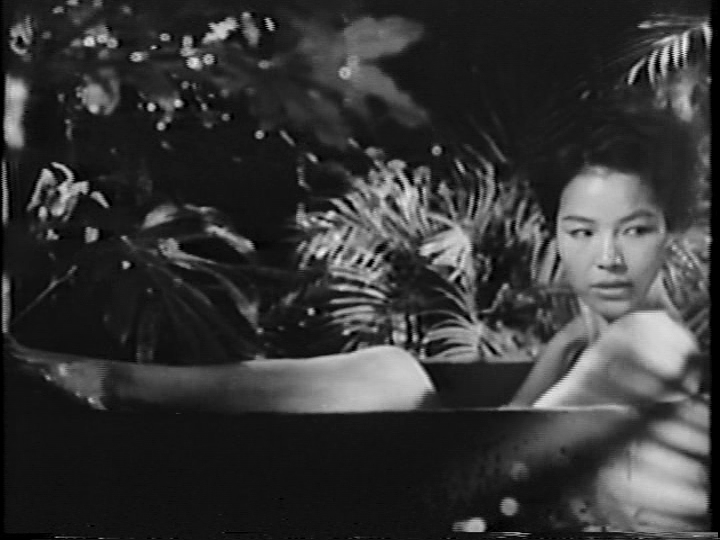
The Saga of Anatahan – 12, 1953
12 Angry Men – 63, 1957
Golden Swallow – 12, 1968
5 Shaolin Masters – 12, 1974
Irving Thalberg: Prince of Hollywood – 46, 2005
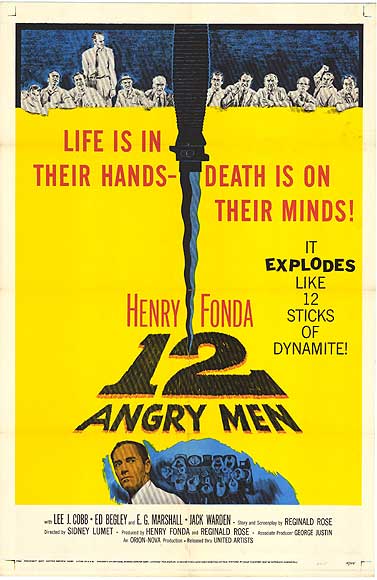
Hey, that guy!
And that guy!
Why are those guys yelling?
Isn’t it nice how everyone changes their verdict in order of their likability as human beings? The last four are the racist, angry dad, robot capitalist and wishy-washy ad guy while the first four to vote not guilty are liberal superman in the white linen suit, super nice old man, nice quiet guy from the slums and I Believe In America immigrant guy.
There’s no way any of this would be allowed to take place in a real jury room, would it? Let me check the wikipedia. . . .
(Sonia Sotomayor) told the audience of law students that, as a lower-court judge, she would sometimes instruct juries to not follow the film’s example, because most of the jurors’ conclusions are based on speculation, not fact. Sotomayor noted that events such as Juror 8 entering a similar knife into the proceeding, doing outside research into the case matter in the first place, and ultimately the jury as a whole making broad, wide ranging assumptions far beyond the scope of reasonable doubt (such as the inferences regarding the “Old Woman” wearing glasses) would never be allowed to occur in a real life jury situation, and would in fact have yielded a mistrial.
Is it OK to have a courtroom drama with a criminally bad defense attorney if the characters talk about how bad they think the defense attorney is? This can’t have been that difficult a case to handle, right? Isn’t checking if the eyewitnesses wear glasses taught on the first day of criminal trials 101?
It would have been interesting if the film actually dealt with race. I mean, everyone turning their backs on racist guy’s hate speech is nice and all (let’s all ignore racism! that’ll shame it into going away!), but the kid in question isn’t even specifically ethnic at all. I thought he looked Greek or Italian, wikipedia says he’s often Puerto Rican. I guess twelve white guys sitting in judgement on a black kid from the slums would have raised more complicated issues in 1957. Edge of the City at least tried.
The acting’s good, I guess. Fonda doing his Fonda thing. Maybe one of his 15 best performances. I dug Martin Balsam as the whiny foreman, especially in the beginning. I lost interest in his “hey this is a play so i get to give a speech now” speech though. Lee J. Cobb once again does Lee J. Cobb things. I wonder if there’s a movie with Lee J. Cobb and Rod Steiger together. That’d be one exciting bit of showy method shouting, wouldn’t it? E. G. Marshall I liked the best, but that’s probably just because he was forced to underplay, seeing as his character was an android.
Ebert quotes Lumet’s book on filmmaking as to the techniques he used to increase the claustrophobia and tension as the film goes on (camera moves from above to eye level to below through the film; lens changes shrink the perceived space). That’s cool, I guess. Contrivances like that would be more effective if the script wasn’t already so tightly schematic. I feel the claustrophobia and suffocation not from the closeness of the space, or the heat of the simulated day, but from the airlessness of the screenplay. It’s so tightly controlled, all in the service of its hit-you-over-the-head message that there’s no room to breathe. No spontaneity, no reality. The film has a lesson it wants me to learn and it won’t let me leave until my brain’s been pounded to mush.
That even might be OK if it was an interesting lesson. But no, the message is “Jury trials are swell! See how great humans can be when they get together and talk! All we need to do to defeat evil and prejudice and hatred is talk it out, man!” Not only is that wrong, it isn’t even particularly close to true. Well, juries are swell, that’s true. Yay America! For adopting a legal custom dating back thousands of years and codified in the English-speaking world for 800 years! USA! The rest is a liberal pipe dream that only works in the scenario because it stacks the deck so egregiously by making evil ugly, stupid and incompetent.
 The End of Cinema