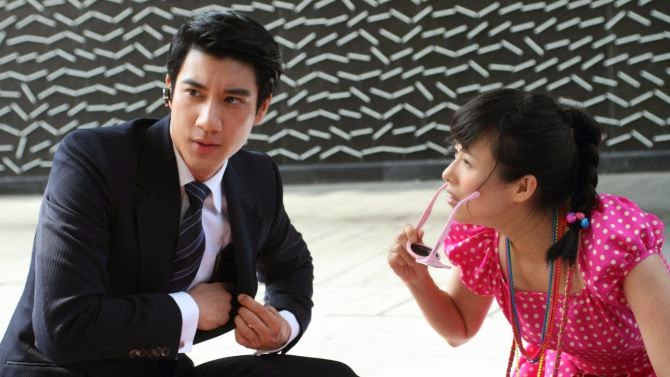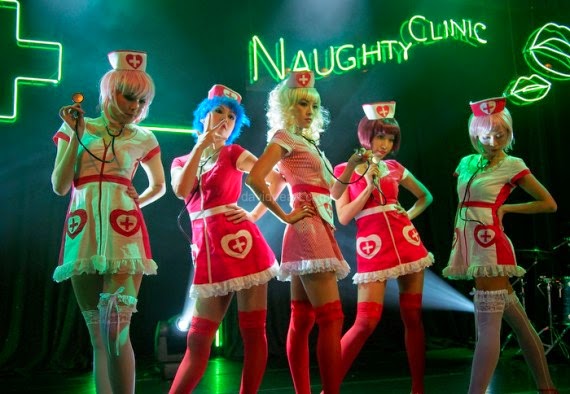
Running Out of Karma: On Tsui Hark’s The Taking of Tiger Mountain

Running Out of Karma is my on-going series on Johnnie To, Hong Kong and Chinese-language cinema. Here is an index.

Look deep into the movie listings this January, past the big name awards fodder, the PT Andersons and the Rob Marshalls, the biopics and social problem films, and you’ll find, in limited release, the latest picture from one of the most influential and important directors of the past 40 years, Tsui Hark, whose name remains so unknown in the US he’s as likely to be identified by his personal name as his family name (for the record: he is Mr. Tsui, not Mr. Hark; pronounced “Choy – Hok”). As director, producer, writer and even actor, Tsui has played a prominent role in every stage of Hong Kong cinema since the mid-1970s, from the New Wave through “heroic bloodshed” and the wuxia revival of the 80s and early 90s; from the pre-Handover exodus to Hollywood to the present-day integration with the Mainland and the proliferation of digital technology. With at least a dozen classics spanning just as many genres, Tsui stands among the most accomplished directors in film history, Hong Kong or otherwise.

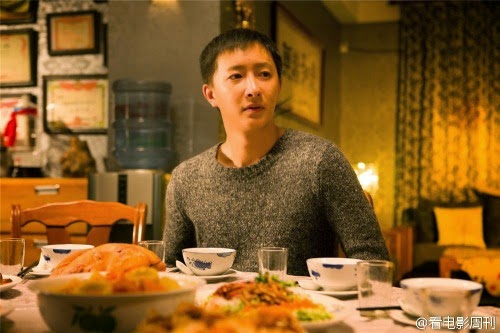
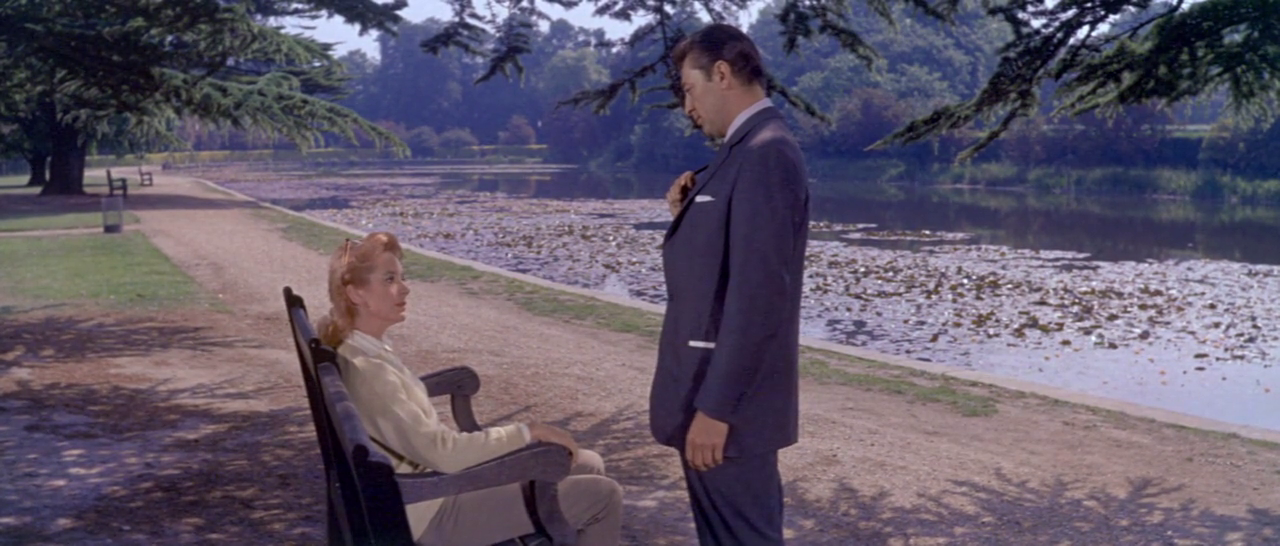
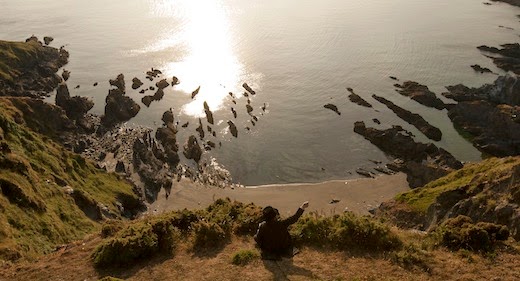
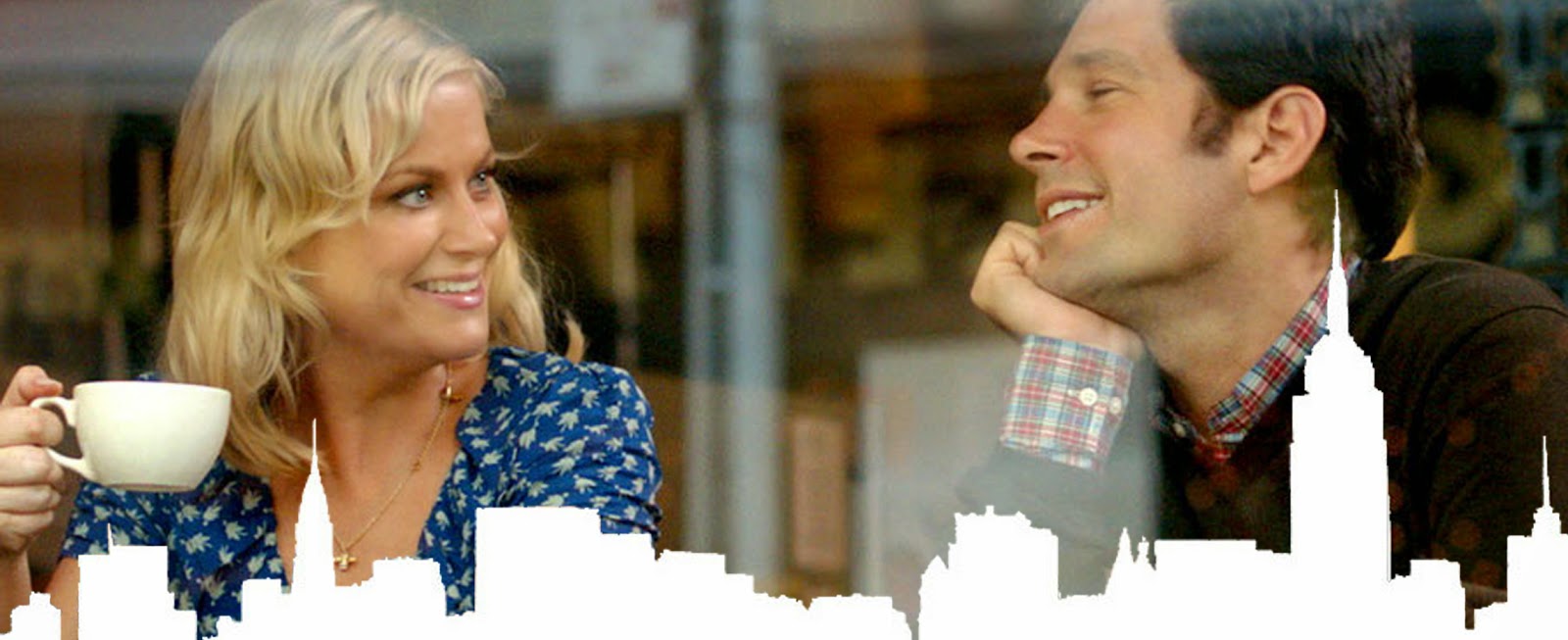
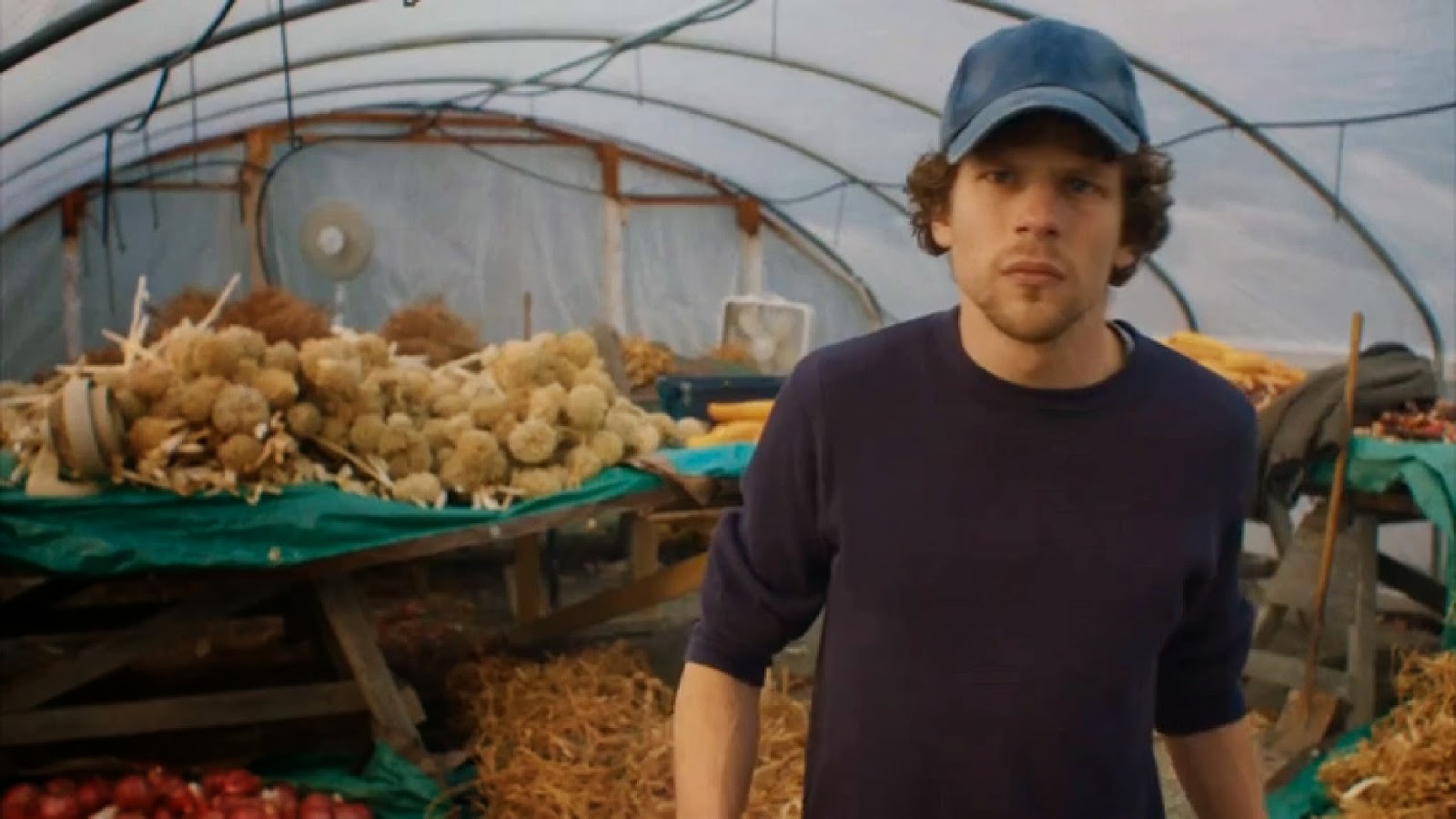
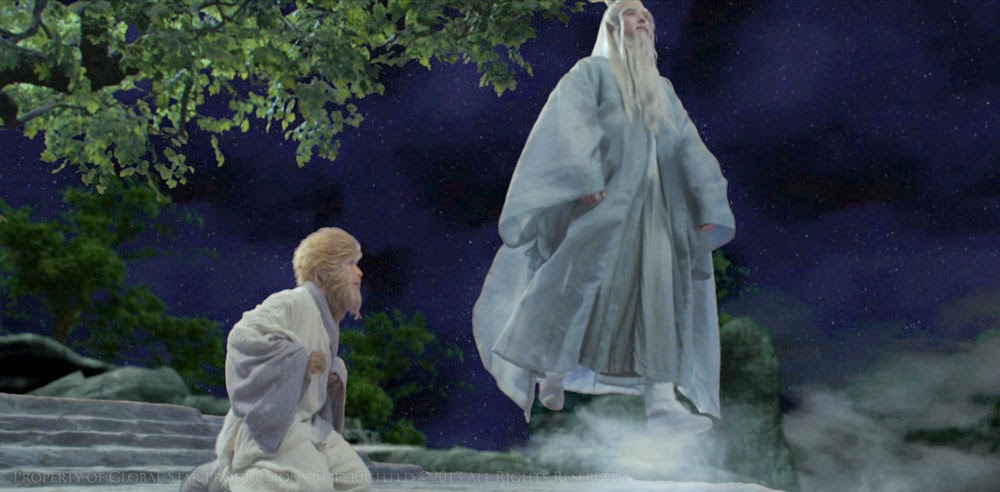
His latest film, The Taking of Tiger Mountain, like his previous two films shot in 3D, is the latest in a string of works linking traditional genres to contemporary digital technology, recasting gong’an crime fiction and King Hu-era wuxia in the language of modern CGI-spectacle with his Detective Dee films and Flying Swords of Dragon Gate, respectively. Tiger Mountain is ultimately based on a 1957 novel by Qu Bo called Tracks in the Snowy Forest, a story from which was adapted into the Peking Opera Taking Tiger Mountain by Strategy which was itself the chosen by Madame Mao as one of the Eight Model Operas during the Cultural Revolution. The film begins in the present, in New York City in the winter of 2015. A young man is at a cosmopolitan, multilingual and multi-racial party with friends  (it appears to be his own going-away party) and encounters on the karaoke machine a scene from the 1970 film version of the Tiger Mountain opera. (This is similar to Tsui’s own experience seeing the film when he was a young man in New York in the early 1970s, as he recounts in this interview.) It sends him into a fit of nostalgia (“It’s your hometown!” jokes one of his friends), a reverie that will last the course of the film as he takes a detour from his cross-country trip to a new job all the way back home to China, where he watches the opera-film on his telephone and a smash cut brings Tsui’s movie to life on-screen. We’ll return to the young man at the end of the film, his story will remain merely the frame through which we view our war movie.
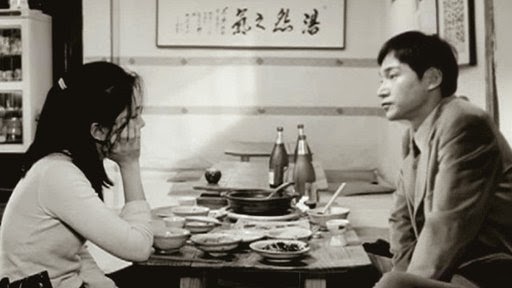
And a war movie it is, a fine example of a venerable genre. A small band of People’s Liberation Army fighters are in the midst of the civil war that followed Japanese defeat at the end of World War II, operating against the forces of the Nationalist Kuomintang Party and various gangs of criminal warlords in the snowy chaos of Northern China. Righteous defenders of the common people, the PLA set-up base in a ravaged village and try to take down a gang headquartered at a former Japanese fortress and arsenal on Tiger Mountain. One man, Yang Zirong (played by Mainland actor Zhang Hanyu), attempts to infiltrate the gang while the rest of the 30 or so cold and starving freedom fighters, led by a wise and stoic figure known only as Captain 203, dig-in to defend the village. (Somewhat interestingly: in Teddy Chan’s 2009 film Bodyguards and Assassins, Zhang played Sun Yat-sen, the revolutionary founder of the KMT, instrumental in the overthrow of the Qing Dynasty. Sun himself is a heroic figure as well in Tsui’s Once Upon a Time in China II). The bulk of the first half of the film is a series of war movie character-establishing cliches (nickname-based male camaraderie, women and children in peril), though the film is blessedly free of pathos-inspiring backstory, punctuated by brief bursts of suspense and action (most impressively when Yang is attacked in the forest by a giant CGI tiger). The Other Tony Leung plays Hawk, the villainous gang leader, a veteran of the anti-Japanese war twisted both morally and physically (he looks as much like Danny DeVito’s Penguin as he does the toweringly handsome Leung we’ve seen in so many other films), with a penchant for inventive means of punishing his enemies (you know you’re in for a night when 15 minutes into the film a bad guy gets eaten by a bird). The second half of the film is a series of increasingly spectacular action sequences, beginning with a long and impressive, mostly practical-effect-driven, defense of the village that recalls no less than Seven Samurai in its depiction of the geography of battle and culminating with an explosive assault on the mountain fortress built around increasingly implausible, but no less wildly enjoyable, computer effects.

The film returns to its frame at the end, with the young man back in his home village, visiting his (great-?)grandmother at Lunar New Year. This ending deviously recontextualizes the film we’ve just seen. Rather than simply a fine, if rather rote genre picture made by a filmmaker named Tsui Hark, we’re invited to see it instead as a product of the young man’s imagination: it is his picture, not Tsui’s. What Tsui gives us is his version of the way a person today might imagine what had been actual events, just as Madame Mao’s opera was her vision, just as Qu Bo’s novel was his version of events in the lives of the actual people who fought in the actual war, the actuality of which is impossible for us to experience or anyone to express. Thus the film’s limitations (and strengths) are instead the limitations (and strengths) of our own era’s imagination. Genre and tradition, the ways we tell stories, are the way we experience history, the way we keep the past alive. The way we depict the heroes of our past says more about us than it does about them, but if we do it right, the core of their experience, the heroism and idealism we valorize, will remain intact. What we pass on need not be the facts of heroism, the realism of it, but the spirit, the meaning of heroism. In this way, Tiger Mountain is somewhat similar to Nina Paley’s Sita Sings the Blues, in which a woman reinterprets the Ramayana (and the sad jazz of 1920s chanteuse Annette Hanshaw) to help cope with the collapse of her marriage. More of a stretch but I still think similar too are the transformations James Lapine and Stephen Sondheim made to their play Into the Woods for the current adaptation, toning down the darkness and complexity to reflect (and perhaps appeal more to) a broader, literally more Disney-fied, audience. With Tiger Mountain, Tsui takes the politics out of what had been a deeply propagandistic work: his PLA never mentions Mao, never talks about revolution or the proletariat. Not being overtly political is as much a fact of the present blockbuster as the enforced ideology of the Model Operas was. The film we see, the young man’s film, celebrates less controversial, more ancient, more universal virtues, virtues passed down from the past to the present, linked by the telling of a story. Tsui Hark has spent his career translating ancient stories to a contemporary vernacular, from The Butterfly Murders and Zu: Warriors of the Magic Mountain, to his epics chronicling folk hero Wong Fei-hung’s adventures from the Boxer Rebellion to the collapse of the Qing Dynasty, to updated versions of Chinese Ghost Stories, Green Snakes and Butterfly Lovers. With a giddy embrace of the new and a slyly anarchic wit that at times overflows with into an expression of nihilistic rage (The Blade, Dangerous Encounters-First Kind), Tsui keeps pushing the past into the future, but the translation has never before been so felt, the absence of the past’s conventions, or of a political point of view, so apparent. The young man, joyously, finds his connection to the past, yet we are adrift in history. We have great machinery for the telling of stories.

The Best Older Movies I Saw in 2014

An annual tradition here at The End, is a look at my favorite film discoveries of the year, any movie more than a few years old that I saw for the first time in 2014. Previous years include: 2013, 2012, 2011, 2010, 2009, 2008, 2007, and 2006. I watched 410 or so movies in 2014, roughly half of which qualify for this list. Here are 185 that I liked.

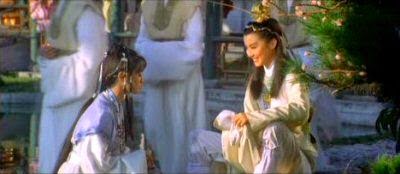
1. Shanghai Blues (Tsui Hark, 1984)
2. Ballet (Frederick Wiseman, 1995)
3. Kiki’s Delivery Service (Hayao Miyazaki, 1989)
4. They Live (John Carpenter, 1988)
5. Dishonored (Josef von Sternberg, 1931)
6. Choose Me (Alan Rudolph, 1984)
7. The Love Eterne (Li Han-hsiang, 1963)
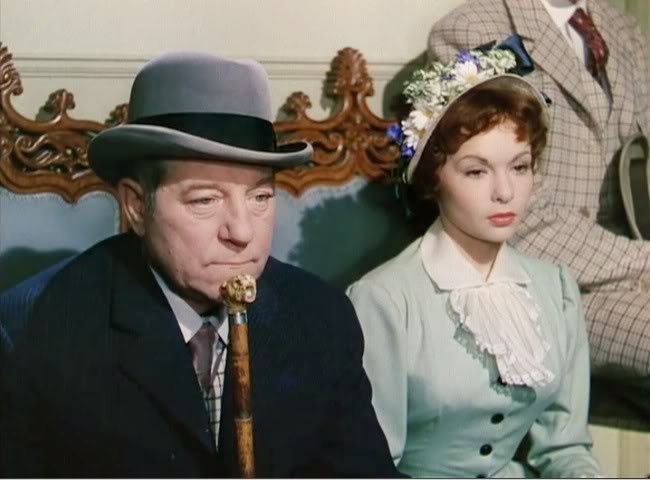
8. French Cancan (Jean Renoir, 1954)
9. Love in the Time of Twilight (Tsui Hark, 1995) 

10. Kriemhild’s Revenge (Fritz Lang, 1924)

11. Sorcerer (William Friedkin, 1977)

12. Wavelength (Michael Snow, 1967)

13. Stop Making Sense (Jonathan Demme, 1984)

14. It’s Such a Beautiful Day (Don Hertzfeldt, 2012)

15. Renaldo and Clara (Bob Dylan, 1978)

16. Awaara (Raj Kapoor, 1951)

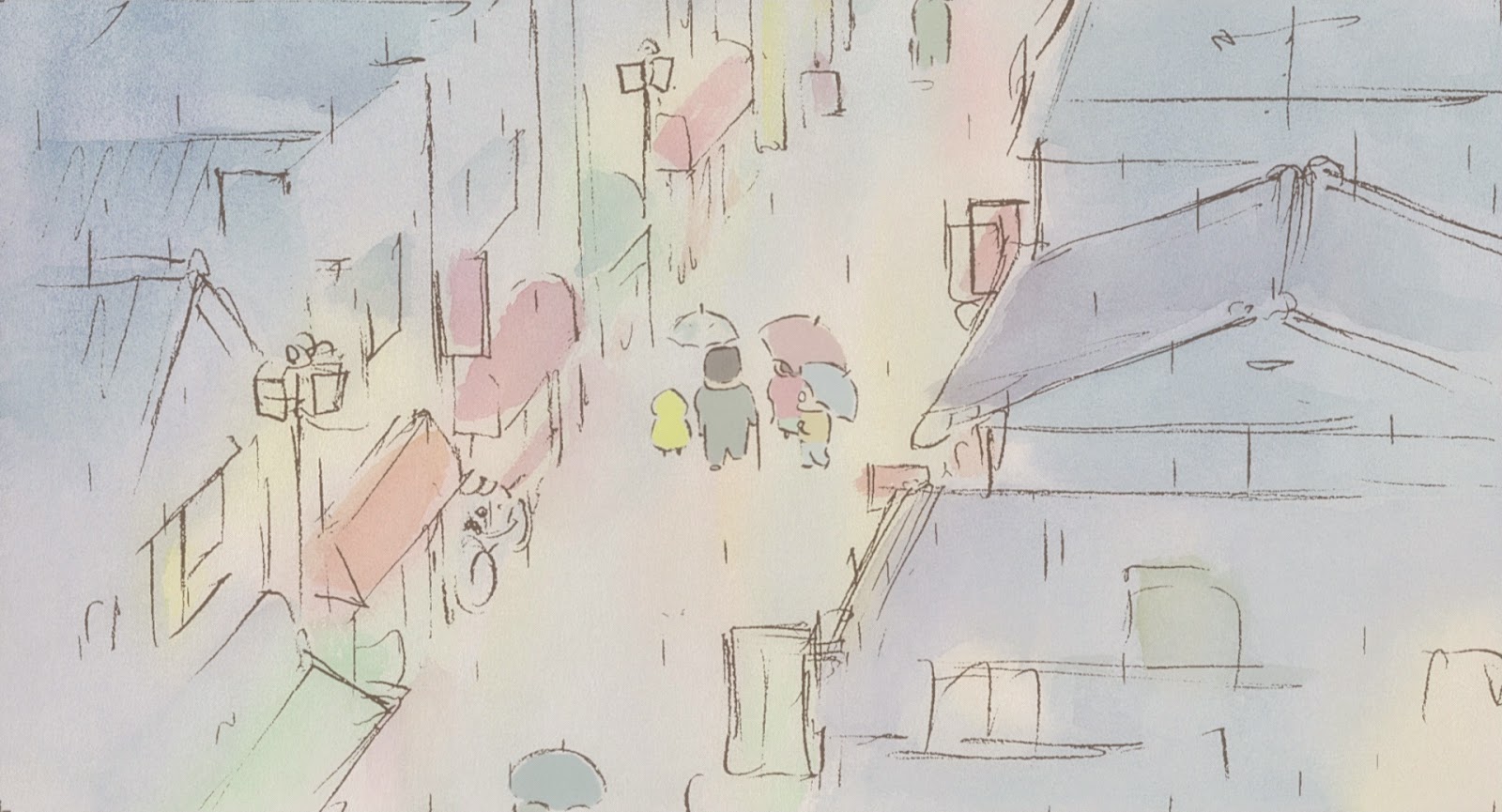
17. My Neighbors the Yamadas (Isao Takahata, 1999)

18. Two for the Road (Stanley Donen, 1967)

19. One from the Heart (Francis Ford Coppola, 1982)

20. Eat the Document (Bob Dylan, 1972)

21. Pitch Perfect (Jason Moore, 2012)

22. A Better Tomorrow III: Love and Death in Saigon (Tsui Hark, 1989)

23. The Enchanting Shadow (Li Han-hsiang, 1960)

24. Oxhide (Liu Jiayin, 2005)

25. Golden Chicken (Samson Chiu, 2002)

26. Chinese Odyssey 2002 (Jeffrey Lau, 2002)

27. Love in a Puff (Pang Ho-cheung, 2010)

28. High School (Frederick Wiseman, 1968)

29. Bye Bye Birdie (George Sidney, 1963)

30. The Doll (Ernst Lubitsch, 1919)

31. Napoleon (Abel Gance, 1927)

32. Virgin Stripped Bare By Her Bachelors (Hong Sangsoo, 2000)

33. Painted Faces (Alex Law, 1988)

34. Rock ‘n’ Roll High School (Allan Arkush, 1979)

35. The House of Mirth (Terrence Davies, 2000)

36. Siegfried (Fritz Lang, 1924)

37. Xiao Wu (Jia Zhangke, 1997)

38. Devils on the Doorstep (Jiang Wen, 2000)

39. Toute le mémoire du monde (Alain Resnais, 1956)

40. The Dream of the Red Chamber (Li Han-hsiang, 1977)

41. Videodrome (David Cronenberg, 1983)

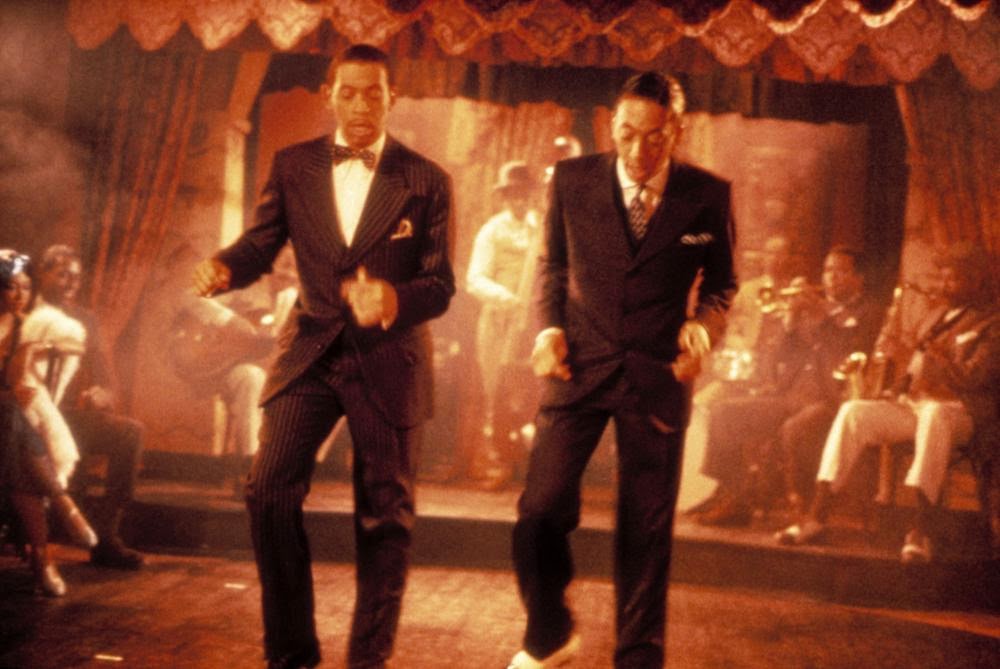
42. The Cotton Club (Francis Ford Coppola, 1984)

43. Tom Jones (Tony Richardson, 1963)

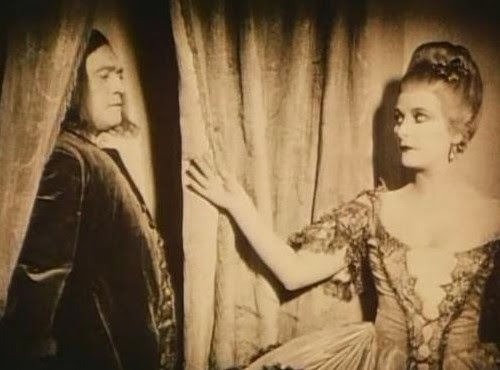
44. Tartuffe (FW Murnau, 1925)

45. The Bingo Long Travelling All-Sars and Motor Kings (John Balham, 1976)

46. The Blade (Tsui Hark, 1995)

47. The Last Movie (Dennis Hopper, 1971)

48. The Shopaholics (Wai Ka-fai, 2006)

49. They All Laughed (Peter Bogdanovich, 1981)

50. Tai Chi Zero (Stephen Fung, 2012)

51. Ghosts of Mars (John Carpenter, 2001)
52. Little Man, What Now? (Frank Borzage, 1934)
53. Way of the Dragon (Bruce Lee, 1972)
54. Wuxia (Peter Chan, 2011)
55. Accident (Soi Cheang, 2009)
56. King of Comedy (Stephen Chow & Lee Lik-chi, 1999)
57. He Ain’t Heavy, He’s My Father (Peter Chan, 1993)
58. Streets of Fire (Walter Hill, 1984)
59. The Bride with White Hair (Ronny Yu, 1993)
60. Furious (Tim Everitt & Tom Sartori, 1984)

61. Lola (Rainer Werner Fassbinder, 1981)
62. Isabella (Pang Ho-cheung, 2006)
63. The Golem (Carl Boese & Paul Wegener, 1920)
64. Sholay (Ramesh Sippy, 1975)
65. Ex (Heiward Mak, 2010)
66. Legend of the Fist: The Return of Chen Zhen (Andrew Lau, 2010)
67. Le pont des Arts (Eugène Green, 2004)
68. The Color Wheel (Alex Ross Perry, 2011)
69. Motorway (Soi Cheang, 20120
70. SPL: Sha Po Lang (Wilson Yip, 2005)

71. Never Give a Sucker an Even Break (Edward Cline, 1941)
72. Love Streams (John Cassavetes, 1984)
73. The American Dreamer (LM Kit Carson & Lawrence Schiller, 1971)
74. Golden Chicken 2 (Samson Chiu, 2003)
75. The Sun Also Rises (Jiang Wen, 2007)
76. Viva Las Vegas (George Sidney, 1964)
77. Mission to Mars (Brian DePalma, 2000)
78. Casa de Lava (Pedro Costa, 1994)
79. Love Battlefield (Soi Cheang, 2004)
80. Perhaps Love (Peter Chan, 2005)

81. Song of the Exile (Ann Hui, 1990)
82. The Legend is Born: Ip Man (Herman Yau, 2010)
83. Time and Tide (Tsui Hark, 2000)
84. Emperor of the North (Robert Aldrich, 1973)
85. The Lovers (Tsui Hark, 1994)
86. Coffy (Jack Hill, 1973)
87. Nausicaa of the Valley of the Wind (Hayao Miyazaki, 1984)
88. Dead End (Chang Cheh, 1969)
89. One Night in Mongkok (Derek Yee, 2004)
90. What’s Up, Doc? (Peter Bogdanovich, 1972)

91. Come and Get It (Howard Hawks and William Wyler, 1936)
92. Belfast, Maine (Frederick Wiseman, 1999)
93. Strike (Sergei Eisenstein, 1925)
94. Fist of Fury (Lo Wei, 1972)
95. 20 30 40 (Sylvia Chang, 2004)
96. Une chambre en ville (Jacques Demy, 1982)
97. The Adventures of Buckaroo Bonzai Across the 8th Dimension (WD Richter, 1984)
98. The Fury (Brian DePalma, 1978)
99. Martial Club (Lau Kar-leung, 1981)
100. The Boxer from Shantung (Chang Cheh, 1972)

101. You Were Never Lovelier (William A. Seiter, 1942)
102. The Sugarland Express (Steven Spielberg, 1974)
103. Kiss of Death (Henry Hathaway, 1947)
104. Mrs. Miniver (William Wyler, 1942)
105. Grave of the Fireflies (Isao Takahata, 1988)
106. Jade Goddess of Mercy (Ann Hui, 2003)
107. Piranha (Joe Dante, 1978)
108. Tempting Heart (Sylvia Chang, 1999)
109. Tai Chi Hero (Stephen Fung, 2012)
110. The Lady is the Boss (Lau Kar-leung, 1983)

111. You Shoot, I Shoot (Pang Ho-cheung, 2001)
112. Crazy Horse (Frederick Wiseman, 2011)
113. Toutes les nuits (Eugène Green, 2001)
114. Beyond the Great Wall (Li Han-hsiang, 1964)
115. Anna Magdalena (Yee Chung-man, 1998)
116. Knock Off (Tsui Hark, 1998)
117. Fantasia (Wai Ka-fai, 2004)
118. Creature from the Black Lagoon (Jack Arnold, 1954)
119. How to Marry a Millionaire (Jean Negulesco, 1953)
120. Liverpool (Lisandro Alonso, 2008)

121. The Postmodern Life of My Aunt (Ann Hui, 2006)
122. The Muppet Christmas Carol (Brian Henson, 1992)
123. The Valiant Ones (King Hu, 1975)
124. Painted Skin (King Hu, 1993)
125. Love in the Buff (Pang Ho-cheung, 2012)
126. The Driver (Walter Hill, 1978)
127. Christmas Holiday (Robert Siodmak, 1944)
128. The Road to Glory (Howard Hawks, 1936)
129. Seven Swords (Tsui Hark, 2005)
130. Castle in the Sky (Hayao Miyazaki, 1986)

131. Flash Point (Wilson Yip, 2007)
132. Tiger on the Beat 2 (Lau Kar-leung, 1990)
133. Love Aaj Kal (Imtiaz Ali, 2009)
134. La Comédie-Française (Frederick Wiseman, 1996)
135. The Vanishing (George Sluizer, 1988)
136. The Longest Yard (Robert Aldrich, 1974)
137. Mad Max (George Miller, 1979)
138. Spiritual Boxer II (Lau Kar-leung, 1979)
139. Games Gamblers Play (Michael Hui, 1974)
140. The Life of Emile Zola (William Dieterle, 1937)

141. The Grass is Greener (Stanley Donen, 1960)
142. Full Alert (Ringo Lam, 1997)
143. Sophie’s Revenge (Eva Jin, 2009)
144. Anne of the Indies (Jacques Turner, 1951)
145. Drunken Master 3 (Lau Kar-leung, 1994)
146. Legend of a Fighter (Yuen Woo-ping, 1982)
147. The Greatest Show on Earth (Cecil B. DeMille, 1952)
148. Lupin the Third: The Castle of Cagliostro (Hayao Miyazaki, 1979)
149. A Moment of Romance (Benny Chan, 1990)
150. Phantom (FW Murnau, 1922)

151. Tiger Cage (Yuen Woo-ping, 1988)
152. Exodus (Pang Ho-cheung, 2007)
153. Double Team (Tsui Hark, 1997)
154. Zodiac Killers (Ann Hui, 1991)
155. Heroes Shed No Tears (John Woo, 1986)
156. Jiang Hu: The Triad Zone (Dante Lam, 2000)
157. Shaolin Temple 3: Martial Arts of Shaolin (Lau Kar-leung, 1986)
158. The Great Ziegfeld (Robert Z. Leonard, 1936)
159. Matewan (John Sayles, 1987)
160. The Body Snatcher (Robert Wise, 1945)

161. Cocktail (Herman Yau & Long Ching, 2006)
162. High Noon (Heiward Mak, 2008)
163. The Raid (Gareth Evans, 2011)
164. Harper (Jack Smight, 1966)
165. Indiscreet (Stanley Donen, 1958)
166. Ziegfeld Follies (Vincente Minnelli et al, 1945)
167. The Thomas Crown Affair (Norman Jewison, 1968)
168. The Dead and the Deadly (Wu Ma, 1982)
169. The Chinese Boxer (Jimmy Wang Yu, 1970)
170. Maurice (James Ivory, 1987)

171. Diva (Heiward Mak, 2012)
172. Ninja (Isaac Florentine, 2009)
173. I Dood It (Vincente Minnelli, 1943)
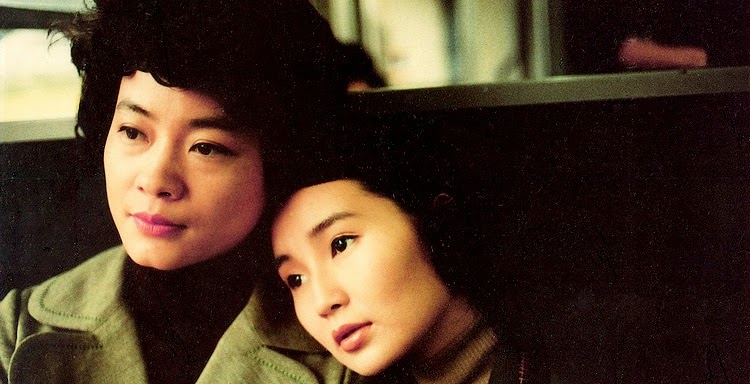
174. Summer Palace (Lou Ye, 2006)
175. Lovely to Look At (Melvyn LeRoy, 1952)
176. The Duel (Chang Cheh, 1971)
177. Symphonie diaganale (Viking Eggling, 1924)
178. Cover Girl (Charles Vidor, 1944)
179. The Pride of the Yankees (Sam Wood, 1942)
180. The Singing Thief (Chang Cheh, 1969)

181. The Magic Crystal (Wong Jing, 1986)
182. Dream of the Red Chamber (Bu Wancang, 1943)
183. Cat vs. Rat (Lau Kar-leung, 1982)
184. Tri-Star (Tsui Hark, 1996)
185. Revenge of the Nerds (Jeff Kanew, 1984)

A Top 50 Films of 2014, More or Less

As I did last year, I’m making a Best of the Year list following the conventional system for what counts as a 2014 film, mainly the nonsensical and ahistorical system that decrees that critics may only  consider movies to have existed once they have played for a week in a commercial venue in New York City. (This is the system that claims my favorite film of 2013 (La última película), which played for a week in Seattle in 2014, can only be considered a 2015 film because that is when it will finally get a New York release, probably). But alas, we all must bow to convention, however silly, every once in awhile.

My official 2014 list will come in a few months, right around Oscar-time, along with the 2014 Endy Awards and a special episode of The George Sanders Show. By that time I will have been able to see a number of my most-anticipated 2014 movies that haven’t yet been released here, including Inherent Vice, Selma and The Taking of Tiger Mountain Into the Woods (Tiger Mountain, which opens on December 24th in China, doesn’t open until January 2nd in New York, which means it’s a 2015 film by the New York standard. Thanks to Jaime Grijalba for the correction). Coming this week are our annual year-in-review episode of They Shot Pictures, as well as a look at the best films of 1984 on The George Sanders Show.

1. The Missing Picture (Rithy Panh)

2. The Tale of the Princess Kaguya (Isao Takahata)

3. National Gallery (Frederick Wiseman)

4. Don’t Go Breaking My Heart 2 (Johnnie To)

5. The Wind Rises (Hayao Miyazaki)

6. Actress (Robert Greene)

7. The Immigrant (James Gray)

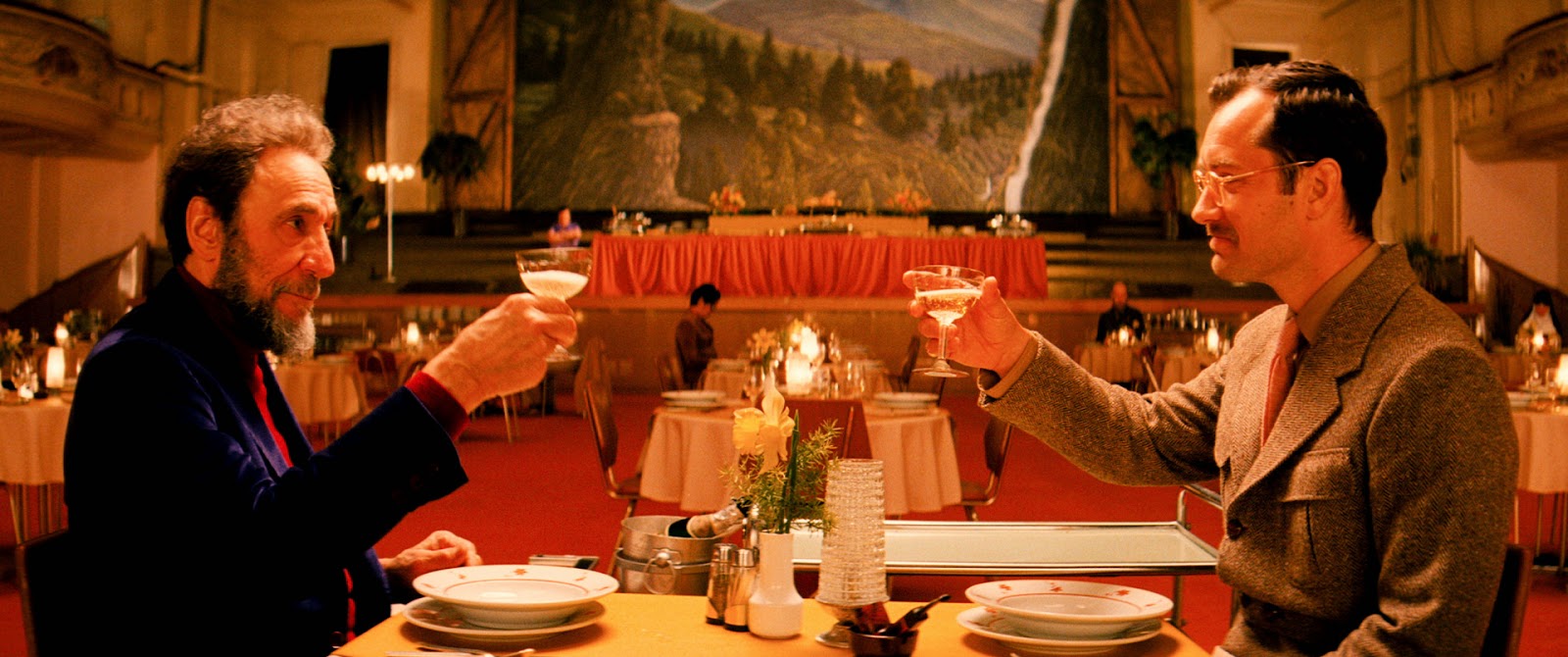
8. The Grand Budapest Hotel (Wes Anderson)

9. Journey to the West: Conquering the Demons (Stephen Chow & Derek Kwok)

10. Only Lovers Left Alive (Jim Jarmusch)

11. Stray Dogs (Tsai Ming-liang)

12. Adieu au langage (Jean-Luc Godard)

13. A Spell to Ward Off the Darkness (Ben Rivers & Ben Russell)

14. Gone Girl (David Fincher)

15. Obvious Child (Gillian Robespierre)

16. Listen Up Philip (Alex Ross Perry)

17. Pompeii (Paul WS Anderson)

18. Under the Skin (Jonathan Glazer)

19. Lucy (Luc Besson)

20. Highway (Imtiaz Ali)

21. Boyhood (Richard Linklater)

22. Happy Christmas (Joe Swanberg)

23. Jersey Boys (Clint Eastwood)

24. The Golden Era (Ann Hui)

25. Two Days, One Night (Jean-Pierre & Luc Dardenne)

26. The Kingdom of Dreams and Madness (Mami Sunada)

27. Mr. Turner (Mike Leigh)

28. Snowpiercer (Bong Joon-ho)

29. Winter Sleep (Nuri Bilge Ceylan)

30. The Raid 2 (Gareth Evans)

31. Aberdeen (Pang Ho-cheung)

32. The Babadook (Jennifer Kent)

33. Edge of Tomorrow (Doug Liman)

34. They Came Together (David Wain)

35. Night Moves (Kelly Reichardt)

And here are my favorite films of the year that aren’t eligible by this reckoning. The Best 2014 Films of 2015 (Hopefully):

1. Hill of Freedom (Hong Sangsoo)

2. The Midnight After (Fruit Chan)

3. Jauja (Lisandro Alonso)

4. Horse Money (Pedro Costa)

5. Uncertain Relationships Society (Heiward Mak)

6. Hit 2 Pass (Kurt Walker)

7. Journey to the West (Tsai Ming-liang)

8. La Sapienza (Eugène Green)

9. Welcome to New York (Abel Ferrara)

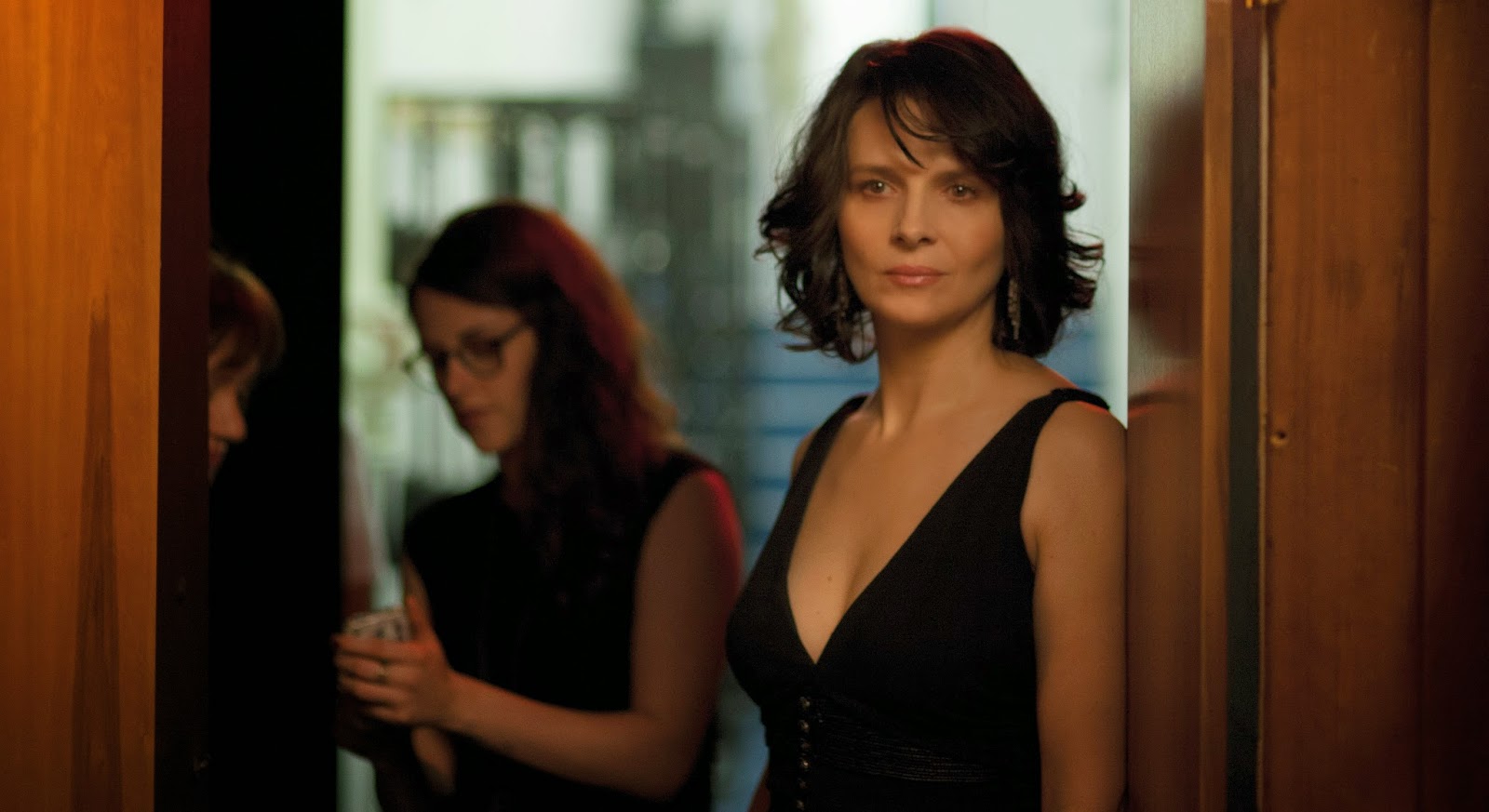
10. The Clouds of Sils Maria (Olivier Assayas)

11. Heaven Knows What (Ben & Joshua Safdie)

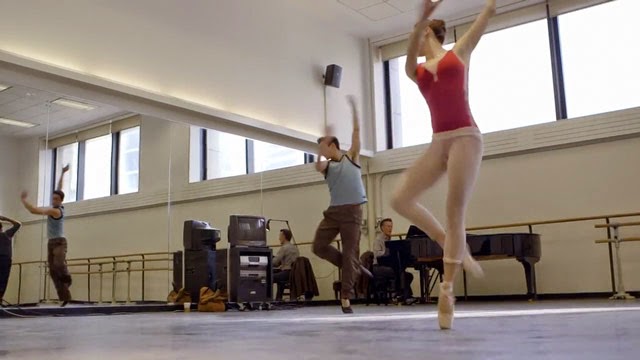
12. Ballet 422 (Jody Lee Lipes)

13. Black Coal, Thin Ice (Diao Yinan)

14. One Upon a Time in Shanghai (Wong Ching-po)

15. The Monkey King (Soi Cheang)

On Robert Greene’s Actress

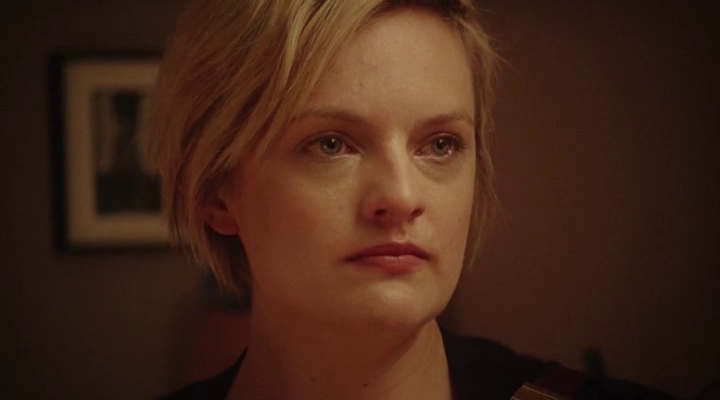
I think I “related” to parts of Robert Greene’s non-fiction film in the way so many other people “related” to Boyhood, in that when we join her, stay-at-home mom Brandy Burre is very much looking to reestablish an identity for herself outside the home. This manifests itself as one of the main threads of the film’s story: her preparing to restart her acting career after a several years’ hiatus. That need for a creative outlet, for a definition of self that doesn’t revolve around one’s children (and the guilt inherit in that, a little voice telling you that not devoting yourself 100% to your children makes you a bad parent) is something I imagine every parent experiences, especially for those of us who abandon our careers for full-time parenthood. But also, more obliquely and alien to my own experience, this identity shift for Ms. Burre manifests itself in the collapse of her relationship with her partner Tim. This ultimately becomes the dominant storyline of the film: while Burre looks for jobs and gets her hair done and meets with friends, nothing really happens on the job front, but the relationship story unfolds dramatically in time as Tim gradually moves out of the house and we learn ever so little about what actually happened to break them up (both the proximate events and the emotions that underlied it).
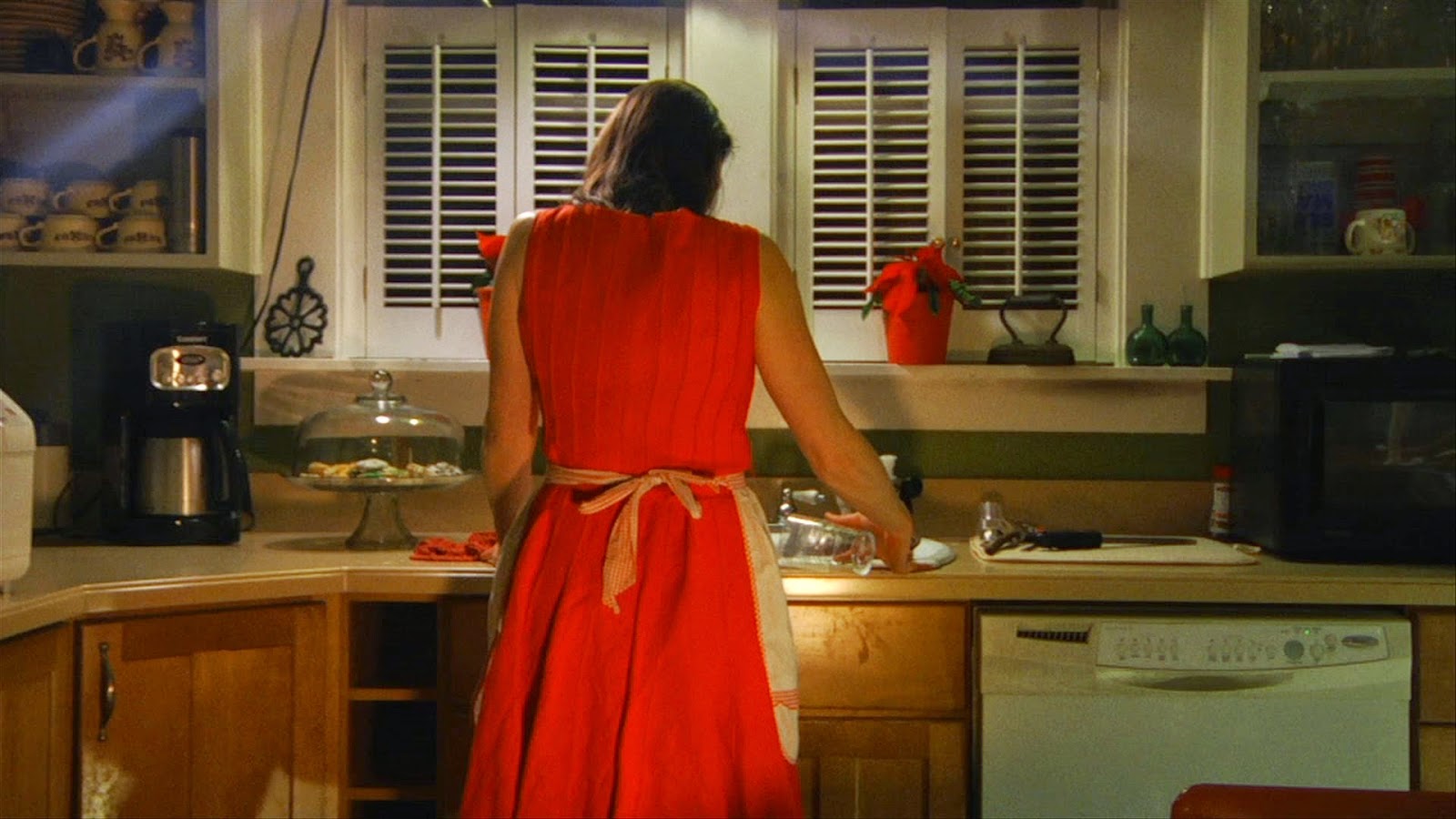
But how much of what we see is actually true? Early in the film, during a standard documentary-style “confessional”, Burre says a line and then repeats it, with a different emphasis, as if in another take of a staged scene. This, along with her profession as an Actress, clues us in to be wary of the “actuality” of what we see, at odds with the documentary-style of the film (hand-held camera, live (in one instance rudely interrupted) sound, natural lighting). Some shots are clearly staged, notably a slow motion one of Burre washing dishes in a 1950s style red dress, an image referenced in the film’s poster (and echoed in the old movie posters that line Burre’s home, which are pointedly revealed to not belong to her). Other shots are very “movie” shots: ice breaking up on the Hudson River, a cut to an abstract orange and pale blue of a sunset during one of Burre’s interviews, a shot of her walking along an overpass, briefly recalling Millennium Mambo (a film with which it would make a great double feature) in its sheer movie-star gorgeousness. Half the film looks like “reality”, the other half like “cinema”.

Doubling down on the ontological riddle is the fact that Burre’s conflict is identity-based: she finds herself playing a role (housewife) which is unsatisfying to her. Throughout the film she will adopt a series of other “roles”: singer, yoga instructor, party hostess, wife, daughter, unfaithful spouse, “other” woman, abuse victim, none of which fully encapsulate who she truly is (and some of which are explained away as mistaken identities, as when her facial bruises are explained to be the result of a simple fall but which people assume are domestic violence. At least that’s what she tells us.) In the same way Burre can’t find a single role that defines “her” (though for the outside world “that woman who was on The Wire” seems to apply), we are left knowing that we are unable to understand her or her life.

An actor is a relatablity machine. They are the medium through which we experience scenarios, stories, worlds, lives, roles that are (usually but not always) unavailable to us in our everyday lives. Everything an actor does is a lie, and yet, if done in a certain way, the emotions they inspire seem real. Actress is not so much an investigation into Simulation as The Real (or Hyper-Real), as a riff on the unreliability of our understanding of the relationship between cinema and reality. Like a puzzle box with pieces missing, it asks more questions than it answers. It’s a documentary about a woman who is an actress and who may be acting for all or part of the time we see her on-screen. Does it make a difference if the story of her breakup is real or staged? Does it make a difference if her to-the-camera expressions of her emotions are real or performed? Is it possible for the camera to capture the core of a person? Can anybody every really know anyone?

This, I think, is how Actress escapes Boyhood‘s relatability problem (which, it should be said is more a matter of that film’s reception than anything inherent in the film itself). To the extent that much of the critical response to Richard Linklater’s film seemed to rest on the fact that viewers’ saw reflected on-screen their own life experiences, it worked as a kind of self-reinforcement, a form of flattery. I don’t feel affirmed by Burre’s identity crisis, but to the extent that she expresses on-screen a conflict I’ve felt in my own life, I feel complicit in it. By undermining a layer of verisimilitude, Greene encourages not identification but questioning, both of the film’s storyline and of our own relationship to the roles we play. We’re asked to both be emotionally moved by the character while at the same time acknowledging that she is an Actress and that what we are seeing is potentially fake (and just as potentially real). I’ve experienced some of what Burre expresses, but not all of it, do I relate to those things in the same way, do they have the same emotional impact on me? Boyhood tells a story that for many reflects certain aspects of their self, which is fine and good and many films, Actress among them, do the same thing. But Actress pushes further, challenging our understanding of what the self is, asking why we want to see ourselves in performances, as performers.

What I really want to know is: can I nominate Burre for a Best Actress award this year, or not?

Running Out of Karma: Pang Ho-cheung’s Aberdeen

Running Out of Karma is my on-going series on Johnnie To, Hong Kong and Chinese-language cinema. Here is an index.

Pang Ho-cheung’s ambitious family melodrama chronicles the intersecting lives of an all-star cast, at times grasping towards Magnolia and Yi yi but ultimately settling at an ending so unsatisfying one hopes it’s meant satirically. Which, knowing Pang, it very well might be. It’s an inverted cousin to Fruit Chan’s The Midnight After. Where Chan’s characters are haunted by an unknowable, unexplainable future, lost on the edge of an apocalypse, Pang’s are haunted by the past, manifesting itself in increasingly obvious and over-explained metaphors (a bomb shelter, an actual unearthed bombshell, a beached whale) and speeches. Chan’s film is rough, with jagged cuts and unpredictable shifts in tone and style, smashing comedy, horrific violence,  and eerie ghostliness together in an unwieldy expression of anxiety. But Pang’s camera glides through a sleekly modern Hong Kong, gorgeous images of light and color connecting the various characters to their city and to each other with a flowing seamlessness. It’s airlessly beautiful, Hong Kong as iPhone packaging.

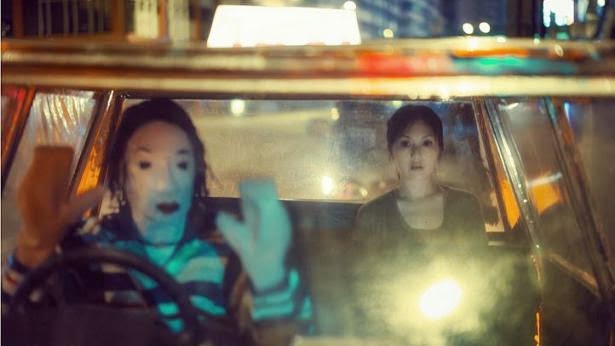
The story of a father (Ng Man-tat) a Taoist priest in an absurd toupee, and his two children. Miriam Yeung is married to Eric Tsang. She’s convinced her dead mother never loved her, manifested as a returned-to-sender package of the paper she had burnt for her mother after her death (a Chinese tradition is the burning of paper money for the dead to use in the afterlife. Various Chinese rituals and traditions will be contrasted throughout the film with the ultra-modern environments of contemporary Hong Kong). Her husband, Tsang, is a doctor who is sleeping with his nurse. Yeung’s brother is Louis Koo, a motivational speaker who is married to Gigi Leung, an aging model and actress. Koo is convinced his daughter isn’t pretty enough, while Leung tries to navigate her unseemly professional world, where the line between actress/model and prostitute is increasingly thin. Interspersed throughout are marvelous dream sequences: a scale model of Hong Kong, used as pillow shots early in the film, becomes the literal stomping ground of the child’s pet lizard; Yeung one night finds herself in a Hong Kong made of paper, beckoned by a ringtone of the theme song to Alfred Hitchcock Presents  (Gounod’s “Funeral March of a Marionette”) on a two-dimensional taxi ride.

In the end, everything comes together in a way that implies resolution: the family finally eats together (at a McDonald’s!), the music rises, people look happily at each other and the bright dawn of a new day. But weirdly, nothing is actually resolved in anything like a satisfactory manner. Miriam and Gigi give speeches (Gigi’s only to herself), Eric doesn’t change a thing and Louis decides that it’s OK if his daughter is ugly because she can always get plastic surgery. What? Is this simply Pang being dumb, misogynistic and/or sloppy? Trying to cover-up the deficiencies in his own screenplay with virtuosic displays of glossiness? Or is it a satire that lies so far beneath the surface as to become almost invisible? These terrible men don’t learn a thing and don’t change a bit. The women are slightly better off: at least Miriam is. Gigi might be even worse off than when the film started. Early on she stands up defiantly to a producer who implies that her only way of getting a role is by sleeping with the boss. In the end, she’s relieved when her husband agrees that plastic surgery is awesome so she doesn’t have to tell him about her own past beauty-enhancing medical interventions. She doesn’t confront the past that haunts her, it just kind of floats away.

The Midnight After has been for most of 2014 one of my favorite films of the year, its inexplicability and refusal to answer the questions it raises or explore the many facets and potentialities of its plot seems to me intentional and highly satisfying, an encapsulation of the limits of knowledge in a wildly entertaining genre film package. I don’t know if Aberdeen is good or not. In its over-determination and over-explanation, I find it more mysterious and incomplete a whole than Chan’s intentionally-fragmentary movie. Pang has made a movie that is stunningly, vibrantly, frustratingly dead.

This Week in Rankings

Since the last rankings update, we recorded and released the long-anticipated King Hu episode of They Shot Pictures, as well as a couple episodes of The George Sanders Show, one on Bob Dylan, one on Bollywood and one dedicated to Henri Langlois. The Dylan show featured our on-location report on Johnnie To’s latest, Don’t Go Breaking My Heart 2, which I also reviewed here. In other Running Out of Karma coverage, I wrote about Zhang Ziyi’s My Lucky Star and To’s own 1988 smash hit The Eighth Happiness.

These are the movies I’ve watched and rewatched over the last few weeks and where they place on my year-by-year rankings. Short reviews for most of these can be found over at letterboxd.

Hellzapoppin’ (HC Potter) – 4, 1941
Awaara (Raj Kapoor) – 3, 1951
Duck Amuck (Chuck Jones) – 4, 1953
Come Drink With Me (King Hu) – 9, 1966
Harper (Jack Smight) – 22, 1966

Eat the Document (Bob Dylan) – 9, 1972
The Fate of Lee Khan (King Hu) – 7, 1973
Sholay (Ramesh Sippy) – 5, 1975
Renaldo & Clara (Bob Dylan) – 4, 1978
Legend of the Mountain (King Hu) – 5, 1979

Project A (Jackie Chan) – 12, 1983
The Eighth Happiness (Johnnie To) – 17, 1988
The Day a Pig Fell into the Well (Hong Sangsoo) – 25, 1996
Young and Dangerous (Andrew Lau) – 33, 1996
Anna Magdalena (Yee Chung-man) – 15, 1998

The Power of Kangwon Province (Hong Sangsoo) – 18, 1998
Jiang Hu: The Triad Zone (Dante Lam) – 26, 2000
You Shoot, I Shoot (Pang Ho-cheung) – 22, 2001
Turn Left, Turn Right (Johnnie To) – 7, 2003
Masked and Anonymous (Larry Charles) – 21, 2003

One Night in Mongkok (Derek Yee) – 18, 2004
Flash Point (Wilson Yip) – 25, 2007
Exodus (Pang Ho-cheung) – 41, 2007
Don’t Go Breaking My Heart (Johnnie To) – 7, 2011
Diva (Heiward Mak) – 57, 2012

Unbeatable (Dante Lam) – 36, 2013
My Lucky Star (Dennie Gordon) – 62, 2013
Don’t Go Breaking My Heart 2 (Johnnie To) – 5, 2014
Obvious Child (Gillian Robespierre) – 10, 2014

Happy Christmas (Joe Swanberg) – 16, 2014
Life Itself (Steve James) – 32, 2014
Too Many Cooks (Chris ‘Casper’ Kelly) – 38, 2014
The Monkey King (Soi Cheang) – 40, 2014

Running Out of Karma: The Eighth Happiness

Running Out of Karma is my on-going series on Johnnie To, Hong Kong and Chinese-language cinema. Here is an index.

When I started this Running Out of Karma project 53 weeks ago, the intent was to go through each of Johnnie To’s films in chronological order, tracing his career as it developed with equal attention paid to his early and late films, his comedies and action dramas. As To’s career is intricately woven through the past 40 years of Hong Kong cinema, I knew this would lead to many tangents and side trips as I explored not just his films, but their context as well. I’d have to familiarize myself with his contemporaries as well as their influences. But the intention was to maintain the chronological To as the spine of the series. But it hasn’t really worked out that way.

Since the project began, I’ve watched somewhere in the neighborhood of 175 Chinese-language films,  from 1939’s Empress Wu Zetian to 2014’s The Midnight After, with extended forays into the work of King Hu, Lau Kar-leung and Tsui Hark, but I’ve only written about six Johnnie To films: the first three (The Enigmatic Case, Happy Ghost III and Seven Years Itch) and the most recent three (Drug War, Blind Detective and Don’t Go Breaking My Heart 2). The one that had me stumped was his fourth film, The Eighth Happiness.

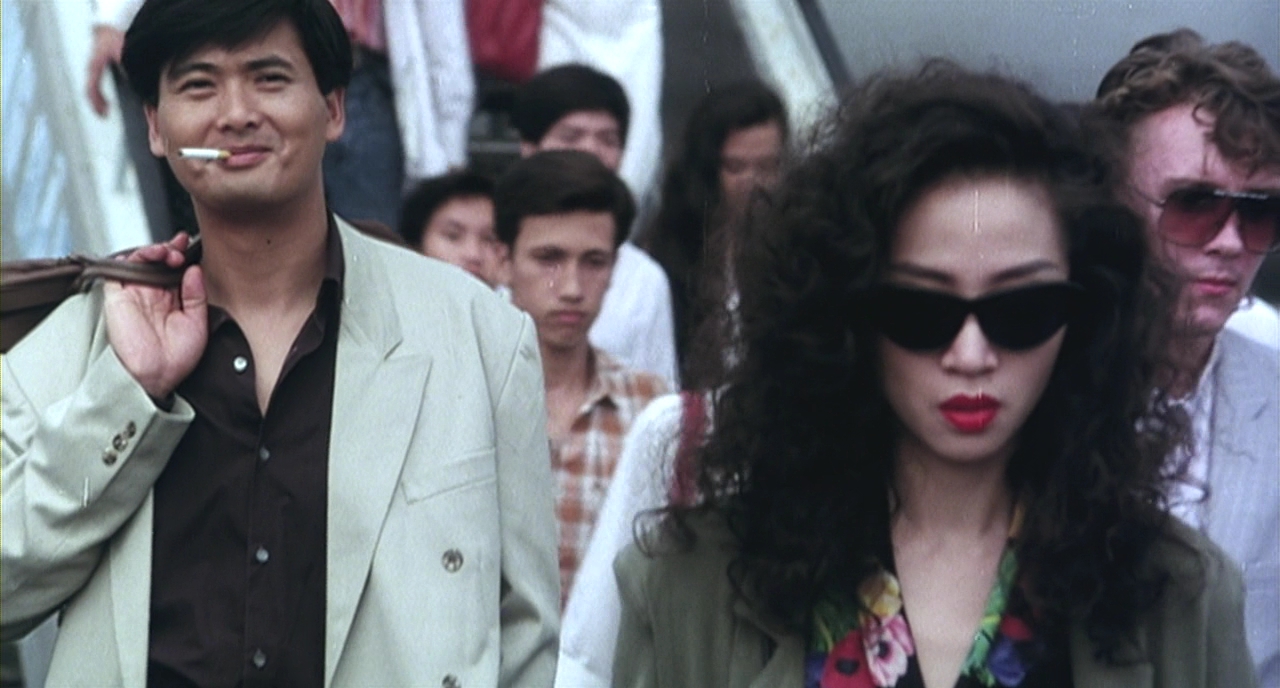
Following up on the Cinema City romantic comedy Seven Years Itch, To re-teamed with producer-writer-star (not necessarily in that order) Raymond Wong Bak-Ming for an ensemble film designed for release during the Lunar New Year holiday, a week-long (more or less) celebration that is the highlight of the Hong Kong film release calendar, when all of the big, star-studded blockbusters hit theatres. Wong plays the eldest of three brothers, each of whom will have a series of romantic misadventures. Chow Yun-fat, at this time the biggest star in the colony, hot off the smashing success of A Better Tomorrow, plays the middle brother while pop star Jacky Cheung, himself on the road to a successful film career (he’d win the Supporting Actor Hong Kong Film Award this year for his work in Wong Kar-wai’s debut feature As Tears Go By), plays the youngest.

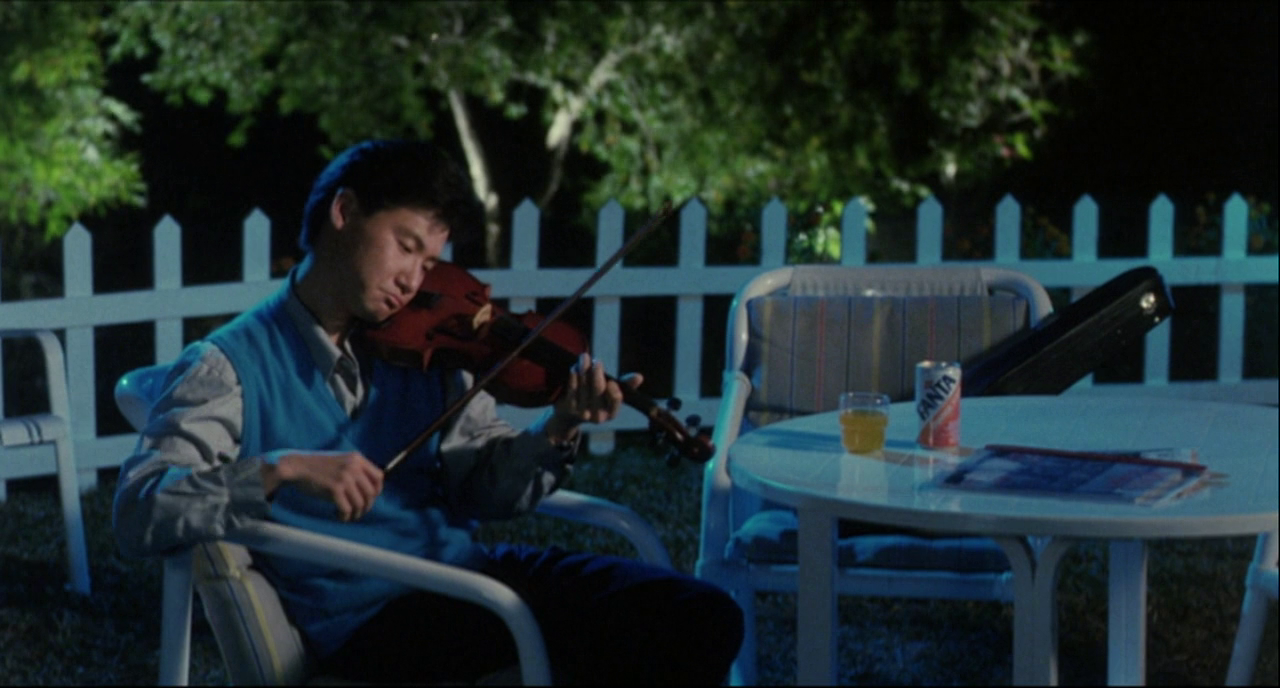
Cheung’s story is the cutest and the briefest: first he’s mistaken (a couple of times) for a sexual predator (he isn’t), then he has to stand up to a Ping-Pong bully in order to win his girl. It’s mostly innocuous and easily forgettable, but for Cheung’s mid-plot scene of sadness, playing the violin to a half-empty glass of Fanta. Most likely much of his story was edited out, including a thread about his career as an aspiring cartoonist, which we see the resolution of at the climax, the first time it is mentioned, a hint of the slapdash approach to story that characterizes much of the film, apparently To and his actors improvised a lot, basically making it up as they went along. This is far from the highly controlled and determined feel of To’s Milkyway work, with intricately designed plot structures and purposeful images, though I imagine the freewheeling, collaborative element still survives in the joint writing process that occurs before filming begins, leading many of the later films to be credited as much to “the Milkyway Creative Team” as to any single screenwriter.

Playing the most subdued and “normal” brother, Wong works as a television host of some kind, doing interviews and cooking segments and financially supporting his siblings in a palatial (by Hong Kong standards) house. He meets a woman who performs Cantonese opera whose husband has recently left her and her son. The have a romance that might have been sweet, but before it is crushed by the chaos created by his brothers, Wong has managed to make himself as unlikeable as any of the more obviously cruel figures in the film. The big date we see them go on is to a Raymond Wong film (Papa, Can You Hear Me Sing?, I believe) the sight of which brings them all to tears (it’s a melodrama, he curses the filmmaker (which was him) for making it so sad) and he spends most of the evening asking the weather to intervene so he can sleep with the poor woman. She ditches him when she learns that he and his brother are the ones that have been prank-calling her every night for months.

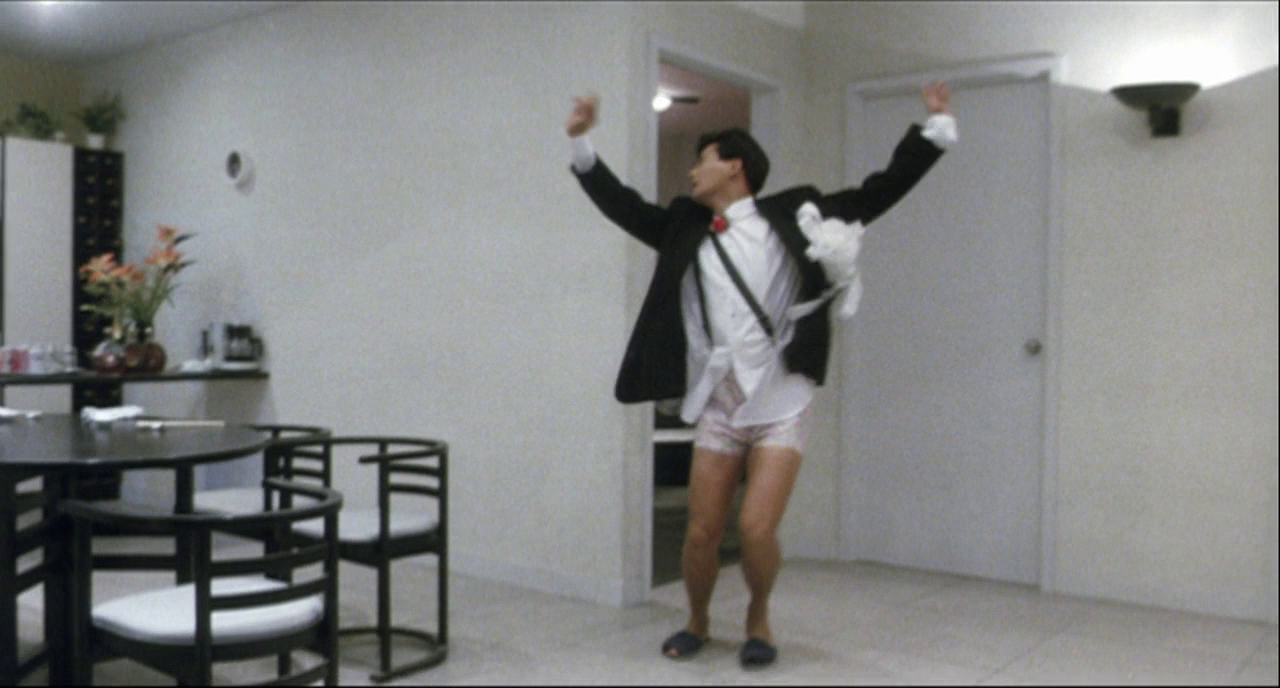
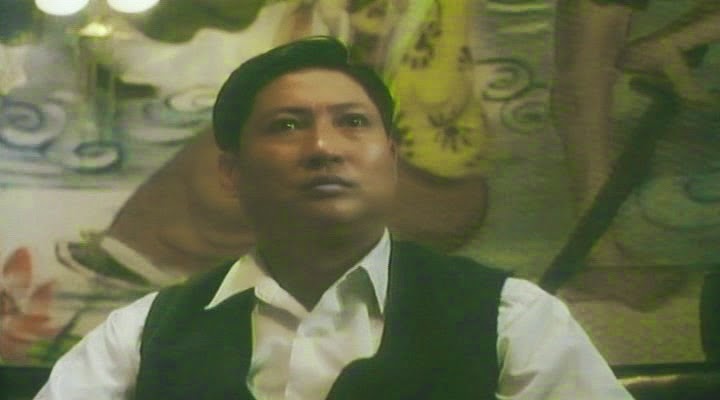
Which leads us to the third brother, played by Chow Yun-fat. A flamboyantly fabulous sociopathic womanizer, Chow relentlessly pursues an equally amoral shopgirl played by Cherie Chung. He’s also engaged to a very nice and very forgiving flight attendant played by Do Do Cheng. We hear Chow, in voiceover, explain his seduction technique (he plays the “sissy” or as one subtitle translation spelled it, the “cizzy”) as one of disarming women with his femininity so they’re more trusting of his advances, as well as its origins (he blames Wong for “making him wear dresses” as a young child). The implications and stereotypes of Chow’s performance are simply too dense for me to unpack, and I’ve watched the movie three times and had a year to think about it. I simply don’t know if it’s good or bad. It’s appallingly broad and offensive, but quite obviously intentionally so. I’ve never seen anything like it before or since. But he is the essential figure, both in the plot (it’s his anarchic actions that complicate and resolve his brothers’ romances) and in the film’s appeal. You can’t look away from him whenever he’s on-screen, despite the utter awfulness of everything he does. It’s not just a performance in bad taste, it’s a performance utterly liberated from any idea of what taste is. The freedom it represents, the freedom to be truly, deeply horrible, is what makes the film some kind of great. Early in the film, Chow dances half-dressed in tuxedo shirt and jacket, no pants, suspenders slung bunched over one shoulder (as he will wear them throughout the film) to an electric Cantonese variation on the Blue Danube Waltz and it’s as pure an expression of joy as there is in film history.

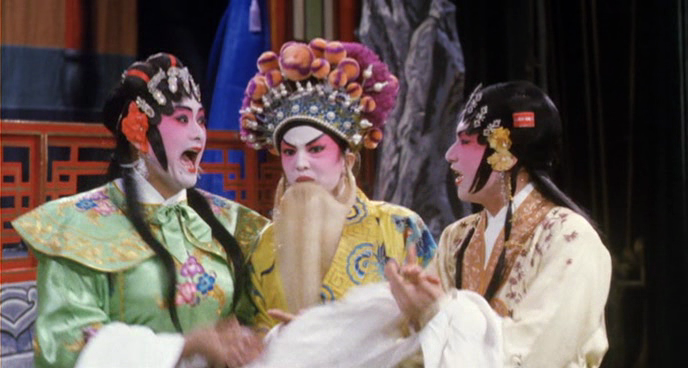
The film’s conclusion seems an obvious nod to Tsui Hark’s Peking Opera Blues, with most of the main characters on-stage in full Cantonese Opera dress singing the plot resolution (Wong apologizing to the woman he loves) while the audience (featuring cameos from Karl Maka, John Sham and Ringo Lam, among others) howls with laughter. The most interesting part of the movie though comes shortly after, in a short epilogue. Chow and Cheung live happily ever after with their girls, but right after the show we’ve just seen, Wong’s woman’s husband (Teddy Robin Kwan, naturally) returns and she runs off with him. Leaving Raymond Wong sad and alone and completely nullifying any sense of resolution that came from the film’s climax, rendering pointless its entire plot. And then the whole cast gathers to wish us all a Happy New Year. It’s glorious.

I suspect it’s Chow’s performance that made the film such a hit. To see the stoic and dignified Chow, the elegant romantic hero of soaps both on TV and in film as well as the iconic gunman of so many John Woo and Ringo Lam pictures act like a demented loon is undeniably appealing. The film was the first big hit of Johnnie To’s career, topping the Hong Kong box office for 1988 (a feat he and Chow would repeat the next year with All About Ah-long). It still might be the film To is most famous for among Cantonese audiences, helping to usher in a wave of imitators that is still on-going, most notable the Alls Well, Ends Well series that began in 1992 under the direction of Clifton Ko (who directed the first two Happy Ghost films for Raymond Wong) and which continues into the present, the latest entry being released in 2012. The first one at least is pretty good, with some great work from Stephen Chow. Wong Jing’s parodic inversion of the formula, 1993’s Boys Are Easy is also pretty special. There will be much more about Chow Yun-fat, Wong Jing and Stephen Chow as  this series rolls along, as Johnnie To’s career will be heavily intertwined with theirs for the next five years. But this is pretty much it for Raymond Wong.

Running Out of Karma: Don’t Go Breaking My Heart 2

Running Out of Karma is my on-going series on Johnnie To, Hong Kong and Chinese-language cinema. Here is an index.

The latest film from Johnnie To and Milkyway Image snuck onto screens across North America today with little, actually no, fanfare. It’s playing as part of a package of Asian films that occasionally grace multiplex screens in some major markets. As far as I could track down, it opened today on single screens in Seattle, New York, Los Angeles, Boston, San Francisco, Toronto and Vancouver, mostly at AMC theatres (it’s playing here in Seattle at the Pacific Place), and nowhere does it appear that there was any kind of advance publicity (AMC’s website actually uses the poster from the first film to advertise it). My George Sanders Show co-host Mike randomly discovered that it was being released while perusing the imdb at work, and it seemed to catch much of film critic twitter by surprise. Mike and I quickly changed our plans to catch the movie on opening night, we ended up recording this week’s podcast in the lobby of the theatre, before and after the movie. You can hear our discussion of it, begun about ten minutes after the credits stopped rolling, as soon as I edit and publish the episode (I’ll come back and link to it here), but for now I want to write a bit about the film as well.

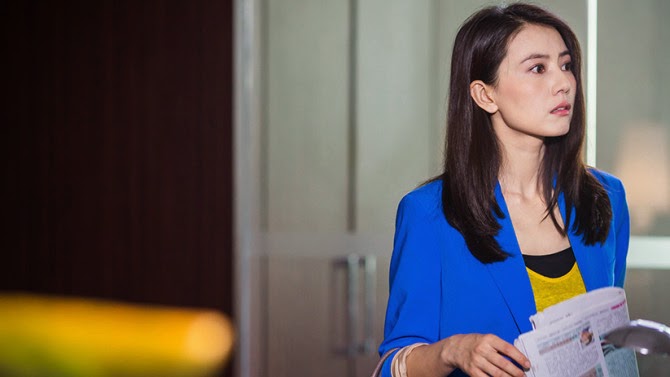
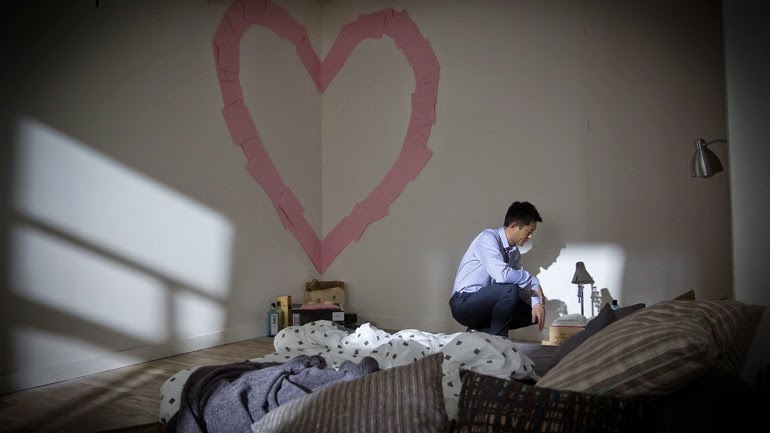
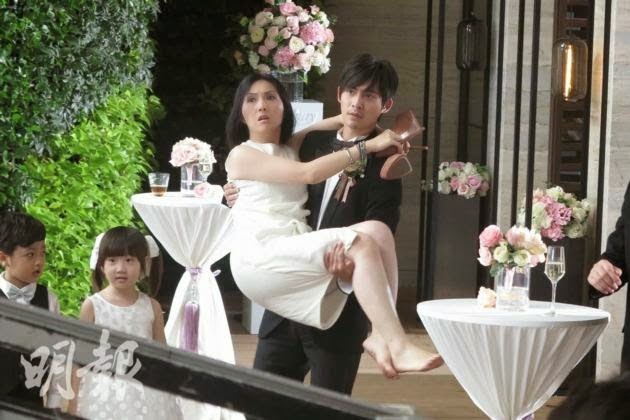
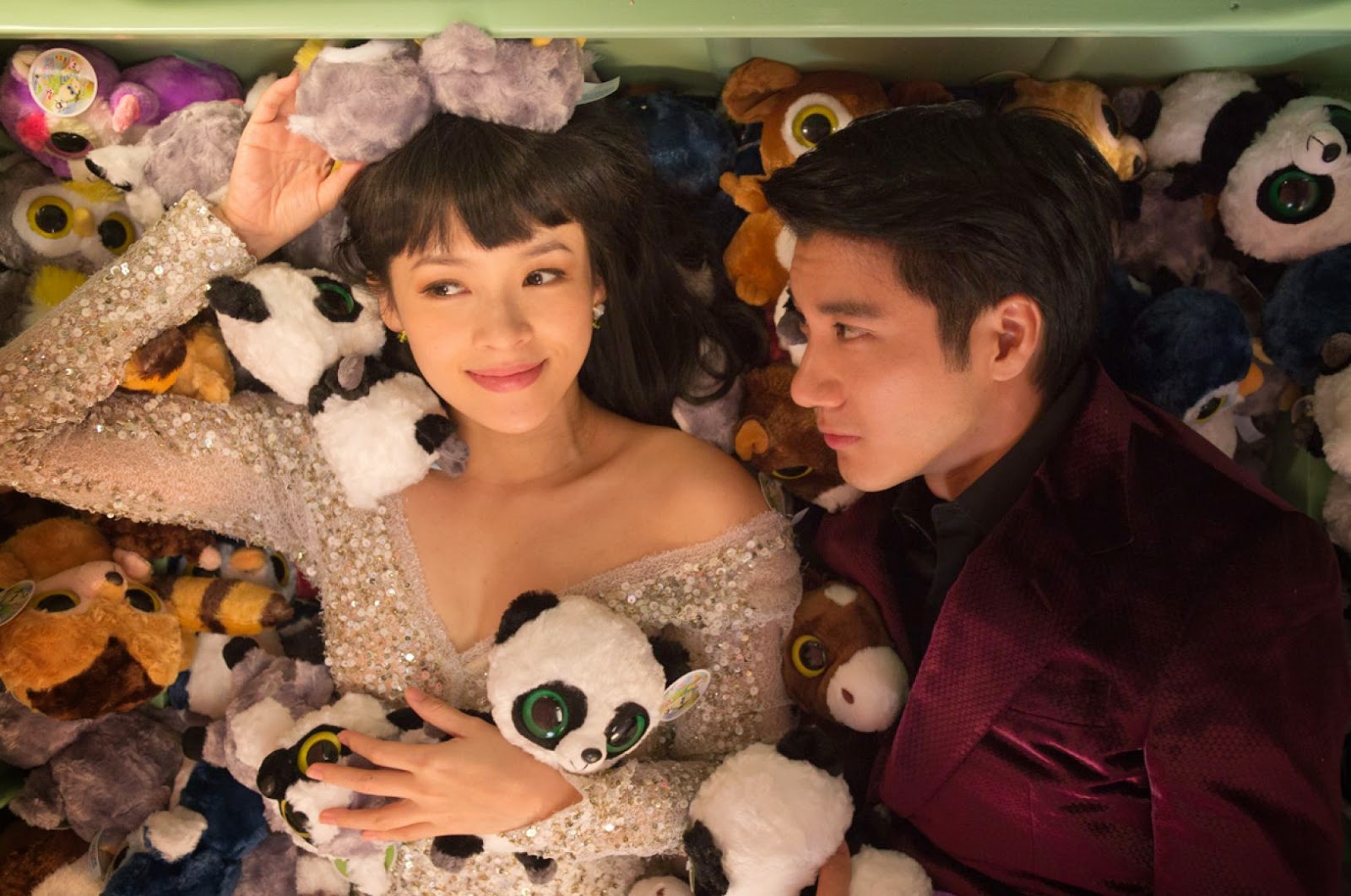
Beginning one year after the first film ends, financial analyst Cheng Zixin (Gao Yuanyuan) is still engaged to the winner of that film’s love triangle, reformed alcoholic Qihong (Daniel Wu) (recall that for her he quit drinking and built a skyscraper in the shape of her shadow). They communicate only via Skype, however, as Wu is back in Suzhou putting the finishing touches on his/her building. The loser of the earlier battle, wealthy playboy financier Cheung Shen-ren (Louis Koo), is back to his womanizing ways, sleeping with any woman whose breasts are big enough to give him a nose bleed. Zixin gets a new job working for Yang Yang-yang (Miriam Yeung in the film’s best performance: she’s brilliant) and in the meantime shops for wedding dresses with her brother, Paul (Vic Chou). Yeung and Koo are rivals who quickly begin dating (as the story begins they open new offices in opposing skyscrapers, they flirt through the windows as Koo and Gao did in the first film), while Yeung is also wooed by Chou and Koo secretly is still in love with Gao while also sleeping with other random women. The relationships inevitably entangle in a screwball series of mistaken identities, twists and physical assaults, culminating in a climax that at long last unites The Graduate and Safety Last.

The sequel builds on the first film in several ingenious ways, doubling and inverting just about everything from its predecessor. More romantic than comic, if the first film had a flaw, it was that it was so sweetly, almost innocently joyous in its cuteness. Koo and Wu chase after Gao with increasingly implausible displays of charm and conspicuous consumption, the luxury world the characters inhabit blissfully untouched by the economic catastrophe of 2008 that launches the film’s plot (as such, it is a companion piece to To’s other film from 2011, Life Without Principle which looks explicitly at the fallout from the collapse from the perspective of a cop, a gangster and a low-level banker). The sequel raises the price tag while further disassociating its characters from reality (only once does Gao take public transportation this time around, and only to prove a point, rejecting both Yeung’s Ferrari and Koo’s Maserati). Central to the inversion is a trope Yeung’s character introduces, that of “reverse thinking”. She hires Gao because she’s wrong about a prediction, as being consistently wrong is just as valuable as being consistently right, ably demonstrated by an octopus Yueng and Chou steal from a seafood restaurant (doubling the legs of the totemic animal from the first film, Wu’s frog). This is a film about people who constantly make bad decisions, who always do the opposite of what they should. The sweetness of the first film gradually gives way to a deep, uncertain melancholy. In one of the film’s first crushing reveals we see that Koo still watches the video he took of Gao dancing in the first film, projecting it on a wall every night accompanied by the sickly sweet love ballad she’s silently singing, it’s the only way he can get to sleep. The past haunts him and destroys him, Koo is aging gracefully as an actor, and his weariness and dawning realization that his playboy life is nothing but pathetic (on the heels of a perfect storm of flight attendants) goes a long way toward humanizing a nearly impossible character. Koo is the most dramatic example, but the film reveals layers of darkness, self-hatred and lunacy within each of its principals. When the ending comes, it isn’t the grand triumph of the first film, with Koo and Wu exchanging smiles and a friendly “thumbs-up”, it’s a world-shattering smash, the most powerful final shot since Abbas Kiarostami’s Like Someone in Love.

Much has been made in early reviews of the film after its premiere at the Toronto Film Festival about its visual “flatness” and the fact that for the first time in quite awhile, cinematographer Cheung Siu-keung is not credited, with To Hung Mo instead taking the reins. This coincides with the film being shot digitally, a first for To, if I’m not mistaken. Well, To Hung Mo is no guy just off the street, having been in the camera department at Milkyway Image since 1998 and serving as co-DP with Cheung on Vengeance, Romancing in Thin Air as well as the first Don’t Go Breaking My Heart. For sure the film is not as wildly shot as To’s earlier comedies, which tend to use space-distorting lenses and unusual setups. The aesthetic here though is one of surfaces and reflections, necessarily flat images. The windows of the opposing skyscrapers are used much more creatively, expanding their Rear Window stages (increasing the size of the office window panes, the aspect ratio is doubled and tripled) transparent and opaque as needed, even in one glorious shot reflecting each other back in on themselves like an impenetrable hall of mirrors. Similarly flat and digital are the films the characters are always creating of each other with their phones (love objects for Koo and Chou, a necessary form of communication for Gao, both with Wu and her sidekick Lam Suet). The wide angles and swooping cranes of My Left Eyes Sees Ghosts would be wholly inappropriate here, in this world so glossy, so phony, so blindingly manufactured. It’s a movie about straight lines: up and down and parallel parking.

Running Out of Karma: My Lucky Star

Running Out of Karma is my on-going series on Johnnie To, Hong Kong and Chinese-language cinema. Here is an index.

In 2009, Zhang Ziyi starred and produced the ultra-manic-pixie Sophie’s Revenge, a romcom in which she plays a cartoonist that nonetheless lacks a tenth of the nuance or emotional maturity of Caroline in the City. It was a big hit.

In 2013, she made a prequel, I guess, in which she reprises her role as Sophie. There’s almost no connection to the previous film, the prequel status I guess comes from the fact that she’s not yet a successful cartoonist, instead working at a travel agency. Also, instead of strictly a romantic comedy, Sophie finds herself, on vacation in Macao, getting accidentally mixed up in a James Bond film (a la Romancing the Stone, the story she finds herself in is eerily similar to the comics she’s been writing, a hint of a deeper level of mental illness to Sophie the film never bothers to explore, instead it just lies there as a flat meta-joke and scene transition device, where the characters transform into drawn versions of themselves, a technique that felt stale 20 years ago in the first Young and Dangerous film). She meets a debonair spy, mangles his operation and gets targeted by the film’s villain, who, in the film’s weirdest twist, is played by none other than Hou Hsiao-hsien’s favorite screen avatar, Jack Kao. The director is Dennie Gordon, a veteran of television and director of the David Spade classic Joe Dirt and the Amanda Bynes epic What a Girl Wants.

The spy story is rote and the comedy is both lame and boring, but the film, like Sophie’s Revenge, is weirdly fascinating. Zhang, a brilliant dramatic actress and by all nonsense one of the more beautiful movie stars in the world, seems pathologically intent on goofing up her persona, ratcheting the gawkiness to levels that, in the hands of a more skilled director, almost remind one of Jerry Lewis. But given the inchoate swirl of digital fakery that surrounds her (the first film, though set in Bejing, weirdly had almost no sense of place; this one, spread through the Chinese speaking world in Singapore, Hong Kong, and Macao, with a brief coda in Europe, is even less rooted in any kind of recognizable place), the main effect we get is not of a clumsy and awkward girl, but of an actress who really, really wants you to think she’s clumsy and awkward.

This kind of flagellation of the beautiful actress is a constant trope in the romantic comedy genre, of course, but Zhang takes it to uncomfortable levels (like everything else in the film, it isn’t committed enough to make something truly obscene or transgressive, just kind of gross). She gets a dance sequence, which she of course clumsies up before being rescued at the last minute (by her man, who takes over a drum set and gives her a driving beat, which is, um, a metaphor I guess). To be fair, the dance is both choreographed and shot better than Zhang’s dance in Rob Marshall’s Memoirs of a Geisha, but that’s not saying much. Why only Zhang Yimou has been able to capture Zhang’s gracefulness as a dancer on film remains a mystery to me.

The man saves her and they continue their mission. The villain, Kao’s boss, runs out to be a woman, naturally enough. She’s got a black widow tattoo on her neck, and she has four dead husbands. Of course, she’s also in love with the hero, and his betrayal of her is what sets the plot in motion (she’s heartbroken and so wants to blow up Bermuda — seriously) and ultimately proves to be her undoing. Sophie tags along and constantly screws up their operations until the climax, when her determination and spunk, well, don’t exactly win the day, but lead her to be in the right place at the time when her brainless awkwardness accidentally causes something good to happen while the hero wins the day. Then she goes home, alone, because the man rejects her (he’s a spy, just doing his job).

Back in Beijing she uses her new-found confidence to quit the job she’s terrible at anyway and gets a dog. And somehow she’s in Italy drawing pictures of people on the street. And then her prince comes and rescues her, for some reason, and they live happily ever after. Except they don’t I guess because this is a prequel and there’s no relation between how this one ends and the Sophie we know from the other film so what the hell.

This Week in Rankings

I’ve been to Vancouver and back since the last update. Here’s an index of my coverage of VIFF 2014. Since I’ve been back, I’ve been watching some Hong Kong movies, naturally enough, with reviews of Blind Detective, A Better Tomorrow III and Flying Swords of Dragon Gate (I also reviewed Accident before I left). We’ve also had three episodes of The George Sanders Show, on Wavelength and Videodrome, on How to Marry a Millionaire and Down with Love and on Gone Girl and The Vanishing.

All of my various lists are up-to-date over on letterboxd, including my Running Out of Karma list, which is now up to 157 films. I’ve also got short reviews over there for most of the films I don’t cover here.

These are the movies I’ve watched and rewatched over the last few weeks, and where they place on my year-by-year rankings.

Little Man, What Now? – 5, 1934
Cat People (Jacques Tourneur) – 2, 1942
The Leopard Man (Jacques Tourneur) – 5, 1943
I Walked with a Zombie (Jacques Turner) – 7, 1943
The Body Snatcher (Robert Wise) – 25, 1945

How to Marry a Millionaire (Jean Negulesco) – 25, 1953
Creature from the Black Lagoon (Jack Arnold) – 27, 1954
Toute la mémoire du monde (Alain Resnais) – 7, 1956
The Nutty Professor (Jerry Lewis) – 9, 1963
Beyond the Great Wall (Li Han-hsiang) – 21, 1964
Videodrome (David Cronenberg) – 7, 1983

The Vanishing (George Sluizer) – 33, 1988
A Better Tomorrow III: Love and Death in Saigon – 7, 1989
King of Comedy (Stephen Chow & Lee Lik-chi) – 9, 1999
Toutes les nuits (Eugène Green) – 24, 2001
Russian Ark (Alexander Sokurov) – 7, 2002
Down with Love (Peyton Reed) – 10, 2003

Love Battlefield (Soi Cheang) – 15, 2004
Fantasia (Wai Ka-fai) – 19, 2004
The Death Curse (Soi Cheang) – 41, 2004
The Shopaholics (Wai Ka-fai) – 14, 2006
Cocktail (Herman Yau & Long Ching) – 31, 2006

High Noon (Heiward Mak) – 43, 2008
Ex (Heiward Mak) – 9, 2011
The Color Wheel (Alex Ross Perry) – 12, 2011
Flying Swords of Dragon Gate (Tsui Hark) – 31, 2011
The Tale of the Princess Kaguya (Isao Takahata) – 3, 2013

Blind Detective (Johnnie To) – 4, 2013
The Wolf of Wall Street (Martin Scorsese) – 10, 2013
Miss and the Doctors (Axelle Ropert) – 33, 2013
So Young (Zhao Wei) – 36, 2013
The Owners (Adilkhan Yerzhanov) – 53, 2013

130919: A Portrait of Marina Abramovic (Matthu Placek) – 61, 2013
Hill of Freedom (Hong Sangsoo) – 2, 2014
The Midnight After (Fruit Chan) – 3, 2014
Jauja (Lisandro Alonso) – 4, 2014
Uncertain Relationships Society (Heiward Mak) – 6, 2014

Horse Money (Pedro Costa) – 7, 2014
National Gallery (Frederick Wiseman) – 8, 2014
Adieu au langage (Jean-Luc Godard) – 10, 2014
Listen Up Philip (Alex Ross Perry) – 11, 2014
Gone Girl (David Fincher) – 12, 2014

La Sapienza (Eugène Green) – 13, 2014
White, Heat, Lights (Takashi Nakajima) – 15, 2014
Winter Sleep (Nuri Bilge Ceylan) – 18, 2014
Highway (Imtiaz Ali) – 19, 2014
Welcome to New York (Abel Ferrara) – 20, 2014
The Rehearsal (Carl-Antonyn Dufault) – 21, 2014

Heaven Knows What (Ben & Joshua Sadie) – 23, 2014
Ballet 422 (Jody Lee Lipes) – 24, 2014
The Golden Era (Ann Hui) – 26, 2014
Two Days, One Night (Jean-Pierre & Luc Dardenne) – 27, 2014
Mr. Turner (Mike Leigh) – 28, 2014

Ow (Yohei Suzuki) – 29, 2014
The Furthest End Awaits (Chaing Hsiu-chiung) – 34, 2014
Everything Will Be (Julia Kwan) – 35, 2014
Magnificent View (Nam Keun-hak) – 37, 2014
Exit (Chenn Hsiang) – 40, 2014
Broken Palace (Ross Munro) – 2014