
Uncategorized
Movie Roundup: Bunt-Happy Edition
 Things have been awfully busy lately, and I haven’t had much time for movie-watching or writing about movie-watching. So here’s a roundup in the style of the small ball style I’m loving from the surprisingly first place Mariners.
Thirteen Women – A ridiculous film about a group of upper class women who are dying under mysterious circumstances after getting their fortunes sent to them by a psychic in the mail. Turns out it’s Myrna Loy, the half-Asian girl they were mean to in boarding school who’s using her hypnotic powers to exact her revenge. Loy’s as great as always, in her scary/sexy Fu Manchu mode; the movie’s got a certain charm. The #20 film of 1932.
Milk – Director Gus Van Sant doesn’t do much to differentiate this biopic from the rest of that tired genre. The performances are good, as they usually are in this kind of thing, and the real-life story is great. The movie, however, mostly fails to create a compelling character out of Dan White, something the fine documentary The Times Of Harvey Milk managed to do much better. The #13 film of 2008.
Synecdoche, New York – I’m not a Charlie Kaufman fan. I find him overly clever, narcissistic and depressing. All of that is here in this ambitious and opaque film, about a theatre director using a theatre grant to relentlessly gaze at his own icky navel. Like all of Kaufman’s films, its construction is ingenious and there are several moments of near-brilliance (the burning apartment, for one), but ultimately his misanthropy is so distancing that he film never manages the kind of transcendence it appears to be reaching towards. The #10 film of 2008.
A Scandal In Paris – The first of two collaborations I’ve seen recently between director Douglas Sirk and the great actor George Sanders. They’re early Sirk films, working in a noir genre that he largely abandoned when he started his string of melodrama masterpieces in the 1950s. Set in Napoleonic France, Sanders plays a master thief who gets redeemed by love and becomes the head of police. Light and fun, with flashes of Sirk’s brilliance in mise-en-scene (mirrors and such). The #16 film of 1946.

Lured – The other Sirk-Sanders film, this time with Lucille Ball as a showgirl hired by the police as bait for a high society serial killer. Sanders plays her rich boyfriend, who may or may not be the killer. Sanders is again terrific, but Ball appears out of place. The #8 film of 1947.
Two Lovers – Director James Gray is considered something of an auteur in Europe and a hack here in the US. I’ve only seen one of his other three films (Little Odessa, which I didn’t much care for), so I can’t really speak to that. But this is a fine film, a muted coming of age romance with Joaquin Phoenix as an unstable, occasionally suicidal, young man torn between the nice Jewish girl his parents want him to marry and the crazy shiksa next door (Gwyneth Paltrow). It’s the mellow pace and direction (the flashiest it gets is Gray’s alternation between warm colored indoor scenes with harsh blue-gray exteriors), along with the understated acting all-around (Isabella Rossellini stands out as Phoenix’s mother) that manage to turn this generic plot into a fine little movie. The #8 film of 2008.
The Devil And Daniel Webster – William Dieterle’s great adaptation of the Stephen Vincent Benet story about a poor farmer who sells his soul for money and then enlists the famous orator and senator to defend him when it’s time to pay up. Walter Huston is magnificent as the Devil, a cackling capitalist who haunts American history. Though set in the early 19th Century, the film is, of course, about the Great Depression: a leftist denunciation of the effects of greed on American society. With Simone Simon as the sexy maid the farmer leaves his wife for, Edward Arnold as Webster and the great Jane Darwell as the farmer’s mother. The #7 film of 1941.

La Chinoise – I don’t know how it’s intended (Godard’s thought at this time was in flux and accounts of it are hard to keep straight), but this film about student Maoists plays as a comedy to me, an affectionate parody of well-meaning, but generally clueless rich kids playing at revolution (not unlike the kids in Band Of Outsiders playing at being gangsters). One of Godard’s prettier films, with vibrant primary colors and a steady camera contrasting with the pedantic dialogue (the kids spend much of the film lecturing each other about class struggle). The #6 film of 1967.
The More The Merrier – Less funny is this screwball comedy with Jean Arthur renting out a room in her apartment to Charles Coburn, who then sublets to Joel McRea and tries to spark a romance between the two young people. Coburn’s great in a larger than usual role for him, but the film’s more dull than anything else. The #14 film of 1943.
Trafic – Jacques Tati’s last theatrical film, the follow-up to the colossal loss he took when his masterpiece, Playtime, flopped. Much to his apparent distress, he’s back playing M. Hulot, who is this time a car designer who must transport his invention from Paris to a car show in Amsterdam. Things of course keep breaking down, and hilarity ensues. More conventional than his other films, the gags lack the complexity of the ones in M. Hulot’s Holiday or Playtime, or those films’ sense of universality. It’s never boring, but it feels like Tati’s heart isn’t really in it. The #6 film of 1971.
Show Boat – This scene is truly amazing:
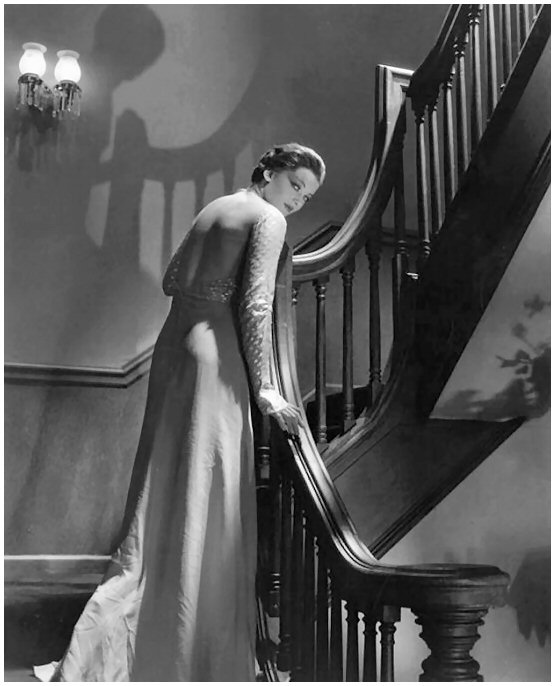
After the titles end, there’s a slow track across the natives relaxing to Max Steiner’s Asian-influenced score (not unlike the opening of another 1940 film, John Ford’s The Long Voyage Home). There’s an invisible wipe to a shot of the house in moonlight, followed by the first normal cuts, as the shots begin to ring out. The camera rushes forward as Bette Davis walks out of the house firing, followed by a shot of the moon being obscured by clouds. The scene (on lookers and Davis) are shrouded in darkness, then a shot of the cloud passing by and a reverse cut to Davis, who turns her head sharply, her face demented in the moon’s spotlight. A more breathtaking way of starting a film I haven’t seen in quite awhile. From that point, the film becomes more conventional, a murder mystery about why Davis shot the guy, and whether she’ll be convicted for it. It comes alive again in two other near-silent sequences: when she buys the eponymous incriminating letter and at the end, when the moonlight motif returns in a sequence that anticipates Jacques Tourner’s I Walked With A Zombie. Davis is incredible throughout the film, it makes me want to see every other one of her films. Or at least the ones she did with William Wyler, who’s direction in this film (as in their collaboration Jezebel) is often brilliant. The #6 film of 1940.
Love Me Or Leave Me – I had this on while writing this post, so I probably wasn’t paying close enough attention, but this movie seemed pretty lame. James Cagney plays an old gangster who helps Doris Day become a star singer, but gets jealous when she falls in love with another man. Cagney’s a great actor, of course, but both he and Day seemed totally lacking in energy, as did the direction by Charles Vidor – I swear there were only two camera setups through the first 30+ minutes of he film: Day on stage in a flat composition in front of musicians and a solid color backdrop with neither camera nor actors moving much at all and Day and Cagney in her dressing room arguing about something. Did I miss something, is this a film I should watch and pay closer attention to? For now, the #31 film of 1955.



Movies Of The 60s

Between Gonzaga’s inexorable march through the NCAA Basketball Tournament and the World Baseball Classic (who in their right mind starts Carlos Silva over Felix Hernandez??), I haven’t been watching many new movies over the last couple of weeks. I’ve also not yet managed to watch The Story Of GI Joe, which I have on the tivo and want to see before writing my Movies Of The Year: 1945 post. So this week, I’ll just be posting a list of my Top 50 films from the 1960s. Lists for the 70s, 80s, 90s and 00s can be found on the sidebar.
1. Playtime
2. Pierrot le fou
3. The Umbrellas Of Cherbourg
4. Dr. Strangelove
5. 2001: A Space Odyssey
6. Psycho
7. L’Eclisse
8. A Woman Is A Woman
9. Andrei Rublev
10. Once Upon A Time In The West
11. Lawrence Of Arabia
12. The Manchurian Candidate
13. The Birds
14. The Man Who Shot Liberty Valance
15. Au hasard Balthazar
16. I Am Cuba
17. 8 1/2
18. Last Year At Marienbad
19. The Lion In Winter
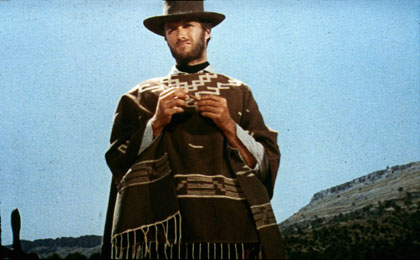
20. The Good, The Bad & The Ugly
21. The Battle Of Algiers
22. Lola
23. A Touch Of Zen
24. Blow Up
25. Don’t Look Back

26. Zulu
27. The Young Girls Of Rochefort
28. Butch Cassidy And The Sundance Kid
29. Yojimbo
30. The Exterminating Angel
31. The Great Escape
32. Contempt
33. Chimes At Midnight
34. Night Of The Living Dead
35. Come Drink With Me
36. Masculin feminin
37. 7 Women
38. L’Avventura
39. Breakfast At Tiffany’s
40. The Sword Of Doom
41. Week End
42. Hell In the Pacific
43. The Spy Who Came In From The Cold
44. Rosemary’s Baby
45. Shoot The Piano Player
46. Age Of Consent
47. Charade
48. Cleo From 5 To 7
49. High And Low
50. The Color Of Pomegranates

Movie Roundup: The Virgin Suicides vs. Schindler’s List
No blog specific content again today, as I spent most of today writing this for another website. Apologies once more if you’ve already read it.
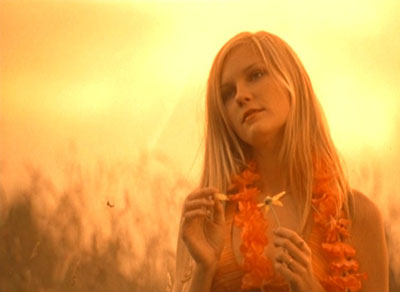
This was the first time I’d seen The Virgin Suicides, but I’ve not been a big fan of Sofia Coppola’s other films. I had some hope for this one, however, given that it is based on a well-regarded novel, and my primary problem with Coppola’s films has been her screenplays. Unfortunately, this is one of those adaptations that leaves you with the feeling that a whole lot of the book was left out, both dramatically and thematically.
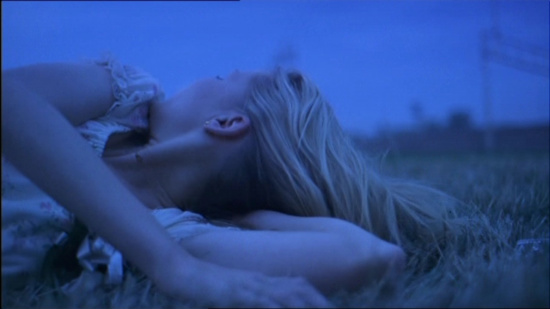
Ostensibly the story of five sisters who kill themselves, and even more, of the boys who try to befriend the girls and are mystified by their act for the rest of their lives, the film instead chooses to focus on just one of the girls (played by Kirsten Dunst) and the bulk of the film’s middle is taken up with the story of her romance with heartthrob Josh Hartnett. This limited focus is seemingly motivated by the narration, which states that the boys had a hard time learning about the girls, except from Hartnett. But the film doesn’t strictly hold to this limited perspective, as we see a few scenes that couldn’t have been witnessed by any of the boys. Regardless, the effect of limiting the film to the Dunst-Hartnett storyline is twofold: first, we get to enjoy many many many shots of pretty young actors being pretty, walking in slow motion, rolling around in the grass, etc; second, none of the other characters ever mean anything to us. This profoundly undermines the central mystery of the film, namely, why did these girls kill themselves.
It is asserted in the narration that the boys have been pondering the question for 25 years, but the narrator never bothers with a theory to explain it. We’re left to assume that they did it because their mom overreacted to Dunst staying out all night by locking them in the house for a couple of weeks. Which seems kinda stupid to me. Of course, the film has an answer for that: the narrator asserts that no one can ever know why anyone does anything (or words to that effect), that human behavior is necessarily inexplicable. But in the context of this film, where every action until the end is motivated and reasonably explained, it feels like a cheat.

Anyway, visually the film is quite pretty: Edward Lachman is a terrific cinematographer, and he does great work here. Much of the film is built around alternating shots suffused with warm or cold light, often changing tone within a shot/reverse shot setup in a single scene. I don’t know, though, that there’s any rhyme or reason to that, other than merely looking cool. There’s a whole lot of empty aestheticism in Coppola’s work: she has a great eye, but doesn’t appear to have much to say with it. Often, in this film (as well as Marie Antoinette, where it is thematically motivated) this makes one think that she’s more interested in the objects on display than a narrative or thematic or emotional statement. Her approach to period detail in this film is overwhelming, it might even be fetishistic.
But the soundtrack is great. Coppola’s really good with music, she has great taste and a real understanding of how to use music in film. All things considered, I actually liked the film. It didn’t make me as angry as Lost In Translation did, nor is it quite as empty as Marie Antoinette (which I think is good, but was overrated when it came out).


I saw Schindler’s List three times in the first two weeks after its theatrical release during my senior year in high school. At that time, and from my limited perspective, it seemed to me that is was the pinnacle of cinematic art, and I recall claims for it as one of the greatest films of all-time. The combination of the film’s exemplary technique, brilliant performances, Important Subject Matter and pleasantly liberal humanist message gave it a weight that crushed all opposition and all but prevented any kind of real examination of the film’s merits. At least, that’s how it seemed to me.
Later in the decade, under the influence of contrarian critics and the sheer fun of deflating the piously praised, I became enamored of the idea that it was a bad film, one that used its considerable resources to trivialize the Holocaust, a profoundly pure evil about which Hollywood films with great sound effects, beautiful cinematography, actorly acting and simple morals (“one man can make a difference” “there’s good in everybody, even womanizing Nazi war-profiteers”) have a pernicious influence on the human mind, actually making us stupider and more complacent (not to mention the argument that a movie wherein a German rescues a bunch of Jews is somehow racist, that one doesn’t make a whole lot of sense). Basically, the pendulum swung the other way around, where Schindler’s List‘s status as the big liberal elephant in the room causes the concomitant ideological objections against liberal elephants to come spewing forth, which of course, does as much to obscure the true nature of the film as the unquestioning worship does.

So, the task at hand is to disentangle the film itself from all the ideological seaweed it’s accumulated over the last 15 years, and try to see it for what it really is. Well, I watched it again last night, for the first time in a decade or so, and I’m surprised at how sloppy the narrative feels. Not so much the Schindler story: that’s pretty simple. He begins the film as a purely amoral capitalist hoping to become a war-profiteer. He has no definite opinion about Jews, neither for nor against them; his only concern is making money. He begins to soften with the liquidation of the Krakow ghetto and through the second half of the film, as he (and we) witness more and more atrocities, he wholly commits himself to helping as many Jews as he can, at the potential loss of his life, and even more importantly (to his old self), of his entire fortune. It’s a coming of age story.

Ralph Fiennes’s story, on the other hand, feels slight and even caricaturish. He’s the evil Nazi Amon Goeth who commands the liquidation of the Ghetto, and later runs the prison camp with depraved and often random acts of murder. He represents the pure, un-understandable evil of Nazism. Schindler spends large sections of the middle of the film befriending and attempting to reform Goeth and it is Schindler’s final understanding of Goeth’s psychosis that moves him to more extreme action on behalf of the Jews. This feels like a cop out. Was the Holocaust only possible because of psychopaths like Goeth? Or is it just because the crazies were in charge? For all its seeming intent to be The Holocaust Film, Schindler’s List never attempts to truly understand the minds of the people who committed and allowed these horrors. Instead, it chalks it up to an unfathomable evil, when in actuality there were a lot more perfectly sane people doing atrocious things than lunatics. As such, Goeth never really feels like a character, more a force or an argument, a symbol of something Schindler needs to learn about rather than a real person. Even still, when he disappears in the final section of the film, it feels like we’re missing something like a conclusion to his story.
The real heart of the film, as well as its truest hero, is Ben Kingsley’s Itzhak Stern, the Jewish accountant who runs Schindler’s business and, from the very beginning, works behind the scenes to protect as many Jews as he can (he stockpiles Schindler’s factory with musicians and professors and rabbis, women, children, and the elderly, knowing those people would be most at risk of extermination). I would say a film about Stern would have been just as interesting, and moving, as one about Schindler, but Hollywood films require a protagonist that changes, and Stern never changes. He’s the opposite of Goeth, the absolute good to his absolute evil. It is to Kingsley’s credit that Stern feels more human than Goeth. Played differently, the film might succumb to the angel vs. devil on Schindler’s shoulders dynamic that structures the narrative. Instead, he grounds the film in a kind of reality, one that links the semi-documentary style of its horror scenes with the melodrama of the central character arc.

The film is extremely well-made, technically speaking. Janusz Kaminski’s black and white cinematography is lustrous and vibrant, and he and Spielberg create some wonderful images with shadows and beams of light. Spielberg’s always made striking use of light, and it’s good to know he does just as well with chiaroscuro imagery as he does in color. The score is appropriately, but not overwhelmingly, mournful, and the sound is a marvel. The opening shots of Schindler preparing for his big night at the cabaret blew be away in high school and continue to do so: it’s the sound (the rub of the silk tie, the tactile thumb of the cufflinks on the dresser top, the reassuringly heavy clunk of the drawers) that bridges the gap between our time and the colorless past to create a realistic world.

In all, the film’s merits outweigh its flaws (which, in addition to the simplistic narrative and approach to character include a few oversteps of the maudlin variety (I’m looking at you, cute little girl in the red coat), and a rather confused metaphor about names and lists (paperwork and names are repeated motifs, with both positive and negative connotations (Schindler refers to his workers by name, thus treating them as humans instead of “units” as the Nazis call them); there are bad lists (those kept by the Nazis) and good ones (the one Schindler and Stern create), everywhere there are references to an overwhelming amount of paperwork. This idea of the Holocaust as a triumph of bureaucracy over humanity is an interesting one, but it is left unexamined in favor of the unthinking evil represented by Amon Goeth.
It’s an extremely competent melodrama given inflated importance (both positively and negatively) by its subject matter. Schindler’s List is more Gone With The Wind than Citizen Kane, but that’s OK.
 The End of Cinema