Movie Roundup: Chinatown Death Cloud Peril Edition

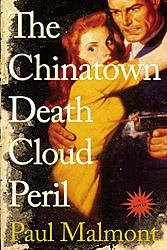
I’m just about finished with The Chinatown Death Cloud Peril, a novel by Paul Malmont recommended by the guys who do the Out Of The Past film noir podcast (see their link on the sidebar). It’s a lot of fun, set in the late 30s world of pulp novelists and featuring wall-to-wall name-dropping (including a spot-on version of Orson Welles and his ideas about film). It’s the book you’d hoped The Amazing Adventures Of Kavalier & Clay would turn out to be but wasn’t. Great title too.
In the spirit of investigating where the real ends and the pulp begins, here’s some comments on some recently seen non-fiction films:

Billy Wilder Speaks
Woody Allen: A Life In Film – A pair of documentaries about to of the all-time great directors of comedies that aired recently on TCM and were rather underwhelming. Both directors are articulate and interesting about their work. The Wilder film, directed for German TV by Volker Schlöndorff, has some fun anecdotes about life directing films in the studio era but nothing I hadn’t heard before. There’s also the zillionth version of the Marilyn Monroe “Where’s the bourbon?” story, which was interesting the first, and only the first time.
The Allen film, written and directed by film critic Richard Schickel is only slightly better. Apparently a promotional bit for the Permanently Unseen Hollywood Ending, the film attempts a weak justification for Allen’s equally weak late career comedies. More interesting is Allen’s comments on his earlier work, mainly focusing on his 70s films. His take on Stardust Memories is interesting in his insistence that the character he plays isn’t the least bit autobiographical and that the bulk of the film is meant to be seen as a dream sequence (yeah, right on both counts). Allen claims to be misunderstood: he’s not an intellectual, he just looks like one, neither a particularly believable claim. The most interesting part is his explanation of where his talent lies: he says that just as some people are good at math, and some good at music, he’s good at telling jokes. He doesn’t know why or where it comes from, it’s just the thing he’s always been good at. Those who have seen Hollywood Ending, Small-Time Crooks, The Curse Of the Jade Scorpion, or Anything Else may disagree. The #23 film of 2002

Be Here To Love Me: A Film About Townes Van Zandt – Another documentary, this one about the country singer-songwriter that Steve Earle used to repeatedly claim on his radio show was a better writer than Bob Dylan. I don’t know about that (I have a good guess though), but Van Zandt certainly appears to have been a very good artist. The film has a lot of loving anecdotes about him, and a lot of stories about him being a crazy drunken idiot, but there’s not a whole lot about the music. The few bits here and there that we get to hear and are discussed are very interesting indeed. But for some reason iTunes has removed almost all his music (presumably some family rights issue). With only two songs from him in my collection, both of which are truly outstanding (that’d be Mr. Mudd & Mr. Gold and Pancho & Lefty), it’s too early for me to form a coherent opinion on him as an artist. And this film didn’t really help matters, what with only providing bits and pieces of songs I really need to listen to in their entirety. An artist worthy of further investigation, but this documentary doesn’t help all that much. The #29 film of 2004.

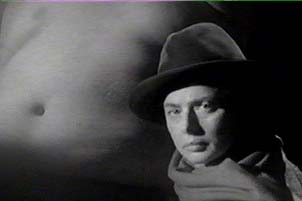
My Dad Is 100 Years Old – Isabella Rosellini wrote and stars in this short film about he father, the director Roberto Rosselini. It’s directed by Guy Maddin in what I understand is his style (it is, as of now, the only one of his films I’ve seen, though there’s a 2 feature/1 short set that’s been at the top of my Netflix queue for months). Isabella plays all of the film’s characters (except her father), who are engaged in an argument about Roberto’s importance and aesthetic as a filmmaker. Roberto himself is portrayed as a gigantic belly, and Isabella plays herself, her mother (Ingrid Bergman), Alfred Hitchcock, Federico Fellini and David O. Selznick. A loving and inventive tribute to her father that’s also an interesting and insightful debate about film theory, it’s a wonderful film and one of the better shorts I’ve ever seen. The #10 film of 2005.

Blogger ain’t letting me post pictures, so I’ll get them up in the morning. I’ve a book to finish.

Movie Roundup: It’s Freakin’ Hot Edition

Almost 30 to be capsuled films have I got here, and I’m gonna try to get as many done as I can. Fueled by a refreshing vodka martini and with Orson Welles’s Othello (green-eyed monster indeed) playing on the tivo.

Cars – I’ve only managed to see three Pixar films (this, Toy Story and The Incredibles), and only one (Toy Story) on the Big Screen, so I was taken aback at how cool the film looked in the theatre. Very high definition, great detail on the cars and such, but my favorite visuals were the backgrounds: clouds in car shapes, Monument Valley-style mesas in the shape of hood ornaments. They just exist there in the background, never being forced into view as you’d expect to find in a kids film. This is an animated film with an actual visual style, which is rare indeed in the genre of Disney animation (save Sleeping Beauty and maybe a couple others). I am a little bothered by the potential conservatism of the film’s message: that progress is bad, that the image we have of a 1950s on Route 66 is a paradise and what we should be striving to remake. On the other hand, the film can be interpreted as an Eastern call for renunciation of modern concerns with speed and wealth creation in favor of simplicity, community and personal peace and enlightenment. So, if anything, it highlights the conservative tendency in hippie politics, I guess. I walked out of the film asking myself why there weren’t any African-American cars. then it was pointed out to me that there was (Flo, the “wife” of the Hispanic tattoo-artist car). So I wonder if that says something about the film’s depiction of racial stereotypes or my own (in)ability to recognize such stereotypes when I see them.

Devil In A Blue Dress – Denzel Washington is great in this film noir set in post-WW2 Los Angeles, specifically that city’s black communities. He’s a war veteran with a mortgage and no job who gets suckered into working as a detective for rich, politically connected white people, one of whom has lost his girlfriend, a woman who likes to hang out in the, shall we say, darker areas of town. Movement back and forth between white and black, socially, geographically and racially is a recurring motiff of the film, but I’m not entirely sure the film has anything coherent to say about the subject. It works entertainingly enough as a noir, mainly due to terrific performances by the always great Washington and Don Cheadle.

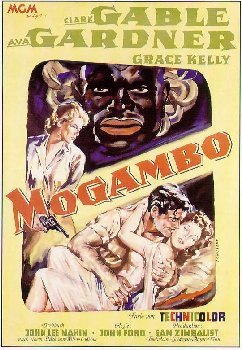
Mogambo – Forgettable misfire by John Ford. The three great popular American directors of the 40s and 50s, Ford, Howard Hawks and John Huston all managed to get the money to send them off to Africa to make films, but only one of them managed to make something really interesting (Huston’s The African Queen), and even that spawned a very fine Clint Eastwood film about its making (White Hunter, Black Heart, #11, 1990). Mogambo stars Clark Gable, who I’ve never been a big fan of, outside of It Happened One Night, and this film certainly didn’t convert me. He runs safaris in Africa and has to deal with two women who love him, for some reason. There’s the slutty Ava Gardner and the prim Grace Kelly. I imagine there was a time when this plot was fresh and interesting, but I’m certain that by the time sound was introduced to film, it’s was a dull cliché.

Palm Beach Story – I had a weird experience watching this on the old tivo a few weeks ago. I’d always counted it among the Preston Sturges films I hadn’t seen, yet while watching it, I remembered everything about it. Either a case of filmic deja vu, or I’d seen it before. The thing is, I have no idea when or where or how I would have watched it. Anyway, it’s a Sturges screwball comedy about the dissolution of a marriage. Greedy Claudette Colbert runs away to get a divorce from low-wage earning dreamer Joel McRea. He follows her to Florida where them become involved with a pair of wealthy siblings, Mary Astor and Rudy Vallee. Much complex hilarity ensues.

Back To Bataan – John Wayne and Anthony Quinn fight the Japanese in the Phillipines during World War 2. Maybe I wasn’t paying close enough attention, but there wasn’t anything memorable about this film for me. The director, Edward Dmytryk has a good reputation, though I wasn’t a big fan of his previous film, Murder, My Sweet. Standard Hollywood WW2 fare, not bad, but not especially interesting either.

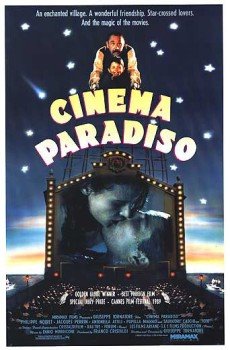
Cinema Paradiso – Talk about a disappointment. After hearing and reading so many raves about this film, about how every movie geek on Earth loves or will love it, imagine my surprise when I discover that it’s nothing but a sentimental coming of age story of the most generic kind. The only interesting thing about it is it’s setting (a movie theatre, naturally). But even that managed to annoy me, what with the film’s not so much implication as blatant assertion that a film projectionist’s job could quite easily be done by a 10 year old boy. Ouch. There are some nice moments here, but I don’t know that it’s worth sitting through all the schmaltz.

The Naked Spur – Anthony Mann-James Stewart Western, with Stewart as a bounty hunter who captures Robert Ryan (and his sort-of girlfriend, a surprisingly unattractive Janet Leigh) and takes him on a long trek to Kansas and his reward. Stewart plays another dark, unheroic character, as he did a lot of in the 50s, and the battle of wills between him and Ryan is tense and entertaining. Mann once again plays with conventions by making the Ryan character the far more attractive character: he’s funny, and charismatic, Stewart is dull, mean and not all that bright. Ralph meeker and Millard Mitchell give fine supporting performances, but Ryan’s the real find. For an actor I couldn’t tell you a thing about a year ago, he sure has had a lot of great performances in a lot of great films: Flying Leathernecks, The Set-Up, King Of Kings, The Longest Day, etc.

The Private Life Of Sherlock Holmes – The sad diminution of age afflicted the great Billy Wilder as well in this mediocre, not especially funny Holmes film that plays with the possibility that Holmes may have been gay for no apparent reason other than that the idea of a famous character being gay is a bit amusing. That whole theme though is dropped after the first 20 minutes or so as Holmes and Watson get tangled up in a rather uninteresting mystery involving german spies and the Loch Ness Monster, during which Holmes carries on a quite heterosexual relationship with their client, played by Geneviève Page.

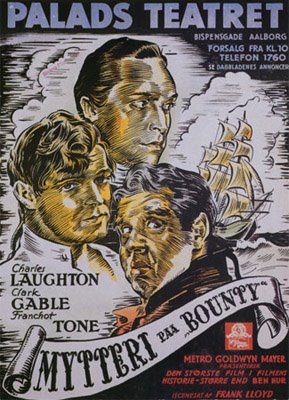
Mutiny On The Bounty – In the last couple weeks I’ve watched both the 1935 and 1962 versions of this story, to go along with The Bounty, the 1984 film (#14 that year) starring Anthony Hopkins and Mel Gibson that I’ve seen a couple of times. The ’35 version (directed by Frank Lloyd, the number two directing Frank of the 30s, after Capra) features Clark gable as mutineer Fletcher Christian and Charles Laughton as Captain Bligh. Laughton, who I think may simultaneously be the greatest and ugliest actor in film history, plays Bligh as a sadist, he takes a physical pleasure in the beatings he inflicts on his crew. he’s a perverse authoritarian, and contrasted with Gable’s Christian, he’s an unmistakable synonym for the sadistic authoritarians in vogue in the mid-30s (Hitler, Mussolini, Stalin and Franco). Gable, in contrast to this, is essentially George Washington and Thomas Jefferson and Winston Churchill (I know it’s an anachronism) rolled into one. His mutiny is not an act of self-interest, greed, lust or cowardice, but an assertion of the rights of man and the necessity for democracy. The society he eventually creates on Pitcairn Island is America in miniature.
The ’62 film (directed by Lewis Milestone (All Quiet On The Western Front, Ocean’s Eleven) after Carol Reed was fired), on the other hand, has Marlon Brando playing Christian as a wealthy fop of questionable heterosexuality (at least until he hooks up with a hot Tahitian chick). Brando, being the brilliant actor he is, is hilarious in his sarcastic sneer and the titled nonchalance with which he goes about his first mate duties on-board ship. It’s only when Trevor Howard’s Bligh actually kicks him that Brando fights back. That Bligh’s somewhere in-between Laugton’s sick freak and Hopkins’s neurotic coward. He’s a bureaucrat more than anything else. I like Howard, he’s great in films like The Third Man and Brief Encounter, but these three films feature perhaps my three all-time favorite actors (Laughton, Brando and Hopkins) and he really can’t compete in that class. Regardless, this film sees Christian not as a hero but as a rich man who ultimately acts only in his own self-interest (he only decides to mutiny after he’s struck Bligh in a moment of blind rage/self-defense and his own fate is already sealed (the penalty for striking a superior officer being death). In an odd coda to the film, on Pitcairn, Brando’s Christian decides they need to sail the ship back to England so they can all take their punishment honorably. His crew then sets fire to the ship, and Brando is fatally burned in the blaze. Either the film’s trying to assert that Christian really was an honorable man, or it’s making his selfishness absolutely clear.
Anyway, neither film is as good as The Bounty (directed by Roger Donaldson (No Way Out, Cocktail, Dante’s Peak, White Sands, Cadillac Man, Thirteen Days, The Getaway and The World’s Fastest Indian, but with a screenplay by the great Robert Bolt (Lawrence Of Arabia, A Man For All Seasons, Dr. Zhivago and The Mission)) the the ’35 is probably better, if only because in all the 3 1/2 hours of the 1962 version they still managed to gloss over the one truly remarkable fact about the whole incident: that Bligh managed to sail a little longboat across thousands of miles of ocean with very little food and nothing more than a tiny sail and a decent compass. A fact Patrick O’Brian has much praise for in Desolation Island, in which Captain Jack Aubrey and Dr. Stephen Maturin are sent to Australia to rescue Bligh, who’s managed to have an entire prison colony mutiny against him. I’d take Master And Commander over the whole lot of them. Maybe even Pirates Of the Caribbean 2, for that matter. Must have a weakness for Captain Jacks, or something.

Movies Of The Year: 1963

Well, it’s been awhile, but back to the list. As always, you can find disclaimers and such along with an up to the minute list of all the years from 1964 to 2005 at The Big List.

14. Son Of Flubber – Sequel to 1961’s much better Disney film The Absent-Minded Professor, in which wacky scientist Fred MacMurray invents a very bouncy substance. It has all the flaws you’d expect in a bad sequel.

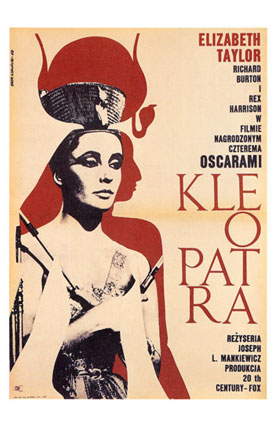
13. Cleopatra – I haven’t actually seen this famously disastrous film in years, so it may be better than I remember it being as a kid. It’s a big technicolor Hollywood epic with bad special effects and scenery chewing stars. In addition to the famous pairing of Richard Burton and Elizabeth Taylor, the movie also features Rex Harrison, Hume Cronyn, Martin Landau, Roddy McDowell and Carroll O’Connor. Joseph Mankiewicz (All About Eve, Julius Caesar) ended up as the director, and the film gives story credit to Plutarch, Suetonius, and Appian, which for some reason I find hilarious.

12. The Incredible Journey – A cat and two dogs lose their humans on vacation and have to find their way home. A pretty simple set-up to a very fine live-action Disney film. There’s no singing, and the animals don’t talk, which is great. There is a fine narration and some pleasant scenery. A classic of anthropomorphism.

11. The Sword In The Stone – Another Disney film, this one the animated telling of the King Arthur story, sort of. It’s Arthur as a boy who gets picked on, Cinderella-style, until he meets up with Merlin, his fairy godfather, or something. This was the first Disney animated film credited to a single director, Wolfgang Reitherman, who went on to direct all of them until 1977’s The Rescuers. It’s a silly slapstick comedy, even by Disney standards, but it’s entertaining enough.

10. Hud – One of Paul Newman’s great anti-hero roles is this performance as a selfish, drunken misanthropist Texas rancher. The main interest in the film is the performances, not just Newman’s, but also Patricia Neal as a housekeeper and Melvyn Douglas as Newman’s father. Based on a Larry McMurtry novel (The Last Picture Show, Lonesome Dove, Brokeback Mountain) and directed by Martin Ritt (The Spy Who Came In From The Cold, #3, 1965).

9. Donovan’s Reef – Colorful and relatively inoffensive comedy from John Ford and John Wayne, which I reviewed a couple weeks ago here. It’s certainly isn’t as profound as their best work, but it’s very entertaining and even surprisingly affecting, at times.

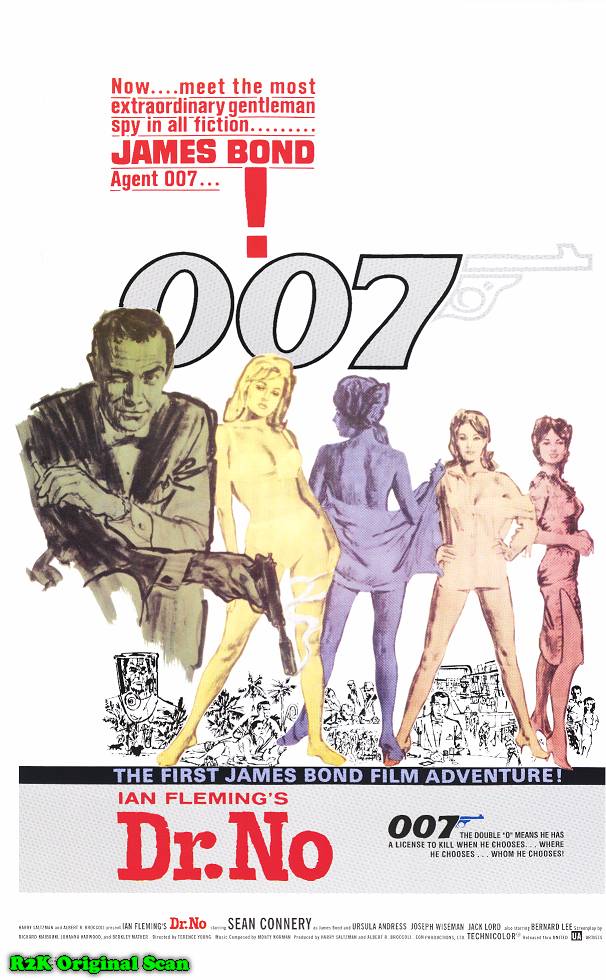
8. From Russia With Love – My personal favorite of all the James Bond films, this is the one with the crazy old commie woman with the knife in her shoe. Sean Connery is at his best as Bond, and Robert Shaw (Jaws, A Man For All Seasons) costars along with Pedro Armendáriz (Fort Apache, The 3 Godfathers). Bond’s out to get some code-breaking machine from a defecting Russian, or something. Of course, it all turns out to be a trap set by the evil SPECTRE.

7. Contempt – Jean-Luc Godard’s film stars a very hot Brigiitte Bardot as the annoying wife of a screenwriter, Michel Piccoli (The Discreet Charm Of The Bourgeoisie, Belle de Jour, The Young Girls Of Rochefort, among many other classic French art films of the 60s and 70s) who gets hired by Jack Palance to write a film about Ulysses (Homer, not Joyce) to be directed by Fritz Lang playing himself). Palance, Lang and Piccoli argue about film while Piccoli and Bardot’s marriage collapses. It’s a beautiful film, with a great use of color (reds and whites and such) with an entertaining performance by Palance as the philistine producer. But something bothers me about this film, I’m not sure what it is, it just seems lifeless and dull compared to Godard’s other films, all the ones of which I’ve seen I’ve really enjoyed. I probably just need to watch it again.

6. Shock Corridor – Wacked out Samuel Fuller masterpiece about a reporter who gets himself committed to a mental institution to follow a lead on a big, Pulitzer-worthy story. What he uncovers, as he himself goes insane (of course) is not the key to the murder he was after, but rather that the whole of society is freakin’ crazy. The best, most famous and most iconic image is the young black man who went nuts after desegregating a school and now thinks he’s a KKK member. Fuller’s style is perfect for out-of-kiltering the world: frantic, shockingly angled shots, over-the-top expressive acting and his screenplay’s hard-boiled prose. He flooded the set for the last scene so the studio couldn’t change the ending.

5. Charade – Audrey Hepburn and Cary Grant star in this thriller-comedy about mistaken identity and killers in Paris. It plays off the popularity of Grant’s roles in several classic Hitchcock films (North By Northwest being the most obvious, but also Notorious, To Catch A Thief, and Suspicion) to create a Hitchcockian vibe without and of the disturbing sexual perversion that was becoming more and more apparent in Hitchcock’s films at the time (Vertigo, Psycho, Marnie). Hepburn’s husband gets murdered and a bunch of guys are after the loot he stole. Grant may or may not be one of them, but James Coburn and George Kennedy definitely are, and who knows what Walter Mattheau’s up to. Directed by Stanley Donen, who did Singin’ In The Rain, Funny face and On The Town, with a score by Henry Mancini. Jonathan Demme remade it a few years ago as The Truth About Charlie, but I don’t know why.

4. The Great Escape – Classic World War 2 adventure film directed by John Sturges (The Magnificent Seven). The all-star cast includes the great Steve McQueen, as well as Charles Bronson, James Coburn, James Garner, Richard Attenburough and Donald Pleasance. The Nazi’s come up with the brilliant idea of locking all the most commonly escaping POWs into one super-prison camp. Shockingly, they all decide to escape. The screenplay’s by James Clavell, who wrote Shogun, but don’t hold that against it.

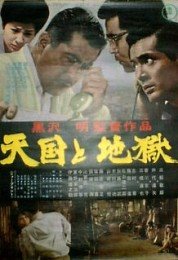
3. High And Low – The closest Akira Kurowsawa came to a real film noir (well, either this or Stray Dog), this film, as it’s title indicates, is split in half. The first half takes place almost entirely on one set with one set-up, a shot of the interior of a house. A shoe executive has just risked all his money in an attempt to takeover his company when he learns the son of his driver has been kidnapped, after being mistaken for his own son. When the kidnapper discovers the mix-up, he demands the ransom anyway. This first half of the film revolves around the executive, played brilliantly (as always) by Toshiro Mifune and his dilemma over whether or not to pay the ransom, save the kid and face financial ruin. That’s the ‘High’ part. The ‘Low’ is the second half, set in the streets of Yokohama as the police track down the kidnapper. St this point the film turns from a static, intense drama into a noirish police procedural. One of Kurosawa’s most successful non-period films, it manages to convey his political thoughts without descending into sentimentality like some of his others (Dodeskaden, Record Of A Living being, parts of Dreams). Tatsuya Nakadai and Takashi Shimura plays two of the cops.

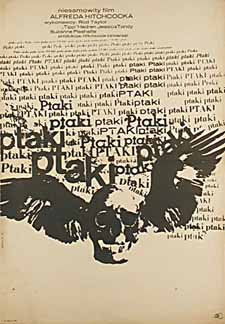
2. The Birds – By far the scariest Alfred Hitchcock movie, it stars ultimate object of Hitchcock’s obsession Tippi hedren as a woman haunted by masses of birds for some unknown reason (likely because she’s kind of slutty). The film’s filled with terrifying (and famous) images (ravens flocking outside a schoolhouse, a house filled with and surrounded by birds just creepily sitting there (memorably referenced in the best Simpsons episode ever). The cast is pretty good, with a great performance by Jessica Tandy, fine work from Suzanne Pleshette and Veronica Cartwright. The only thing that keeps it from being one of my favorite movies ever, or my favorite Hitchcock is the lame performance by leading man Rod Taylor. It’s just hard to believe that Tippi Hedren would be so attracted to a brick that an entire species would devote itself to her destruction as a punishment.

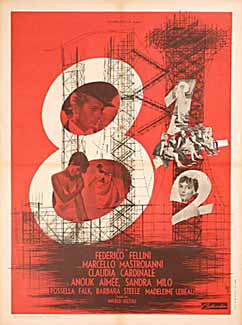
1. 8 1/2 – Federico Fellini’s best film (I’ve only seen three) is generally thought to be a movie about movies, but though it’s set in the film world, it’s more a movie about writing and the creative process (or lack thereof) in general. It’s about the difficulty of writing when you’ve got writer’s block, abut the narcissism of trying to adapt your own life and memories into narratives, about the neuroses of a wealthy cosmopolitan Roman Catholic European in the mid-20th Century. Marcello Mastroianni stars as Guido, the director who can’t decide what he wants to do next. Through a series of dreams/flashbacks/whatever, he recounts to himself his various encounters with and fantasies about women (Claudia Cardinale and Anouk Aimée among them.) He spends some time at a spa for cranky rich people who need better water and eventually gets to work on his weird sci-fi movie. The film’s poetry starts with the opening scene, as Guido escapes from his poisonous car and floats out over and away from a traffic jam and out to the beach, only to be pulled back to earth by annoying people who want him to do stuff. It’s one of my favorite scenes in all of film, and the movie only gets weirder, if never quite as funny or beautiful again. One of My Top 20 Movies Of All-Time.

Some good Unseen Movies this year, including a couple Godard’s (he had three this year) and films by Jacques Demy, Billy Wilder, Luchino Visconti, Kon Ichikawa and a couple by Ingmar Bergman.

The Pink Panther
Le Petit Soldat
Les Carabiniers
Youth Of The Beast
Bay Of Angels
Muriel, or The Time Of Return
An Actor’s Revenge
The Haunting
Irma La Duce
The Leopard
The Nutty Professor
Tom Jones
The Silence
Winter Light
55 Days At Peking
This Sporting Life

Movie Roundup: Dread Pirates Edition

Trying a martini with gin in it. I’ve never been much of a gin fan, and I think I’ll end up sticking with vodka. It’s not bad, mind you, it’s just all the herb flavor is a little weird for my taste, can’t really taste the olive, you know.

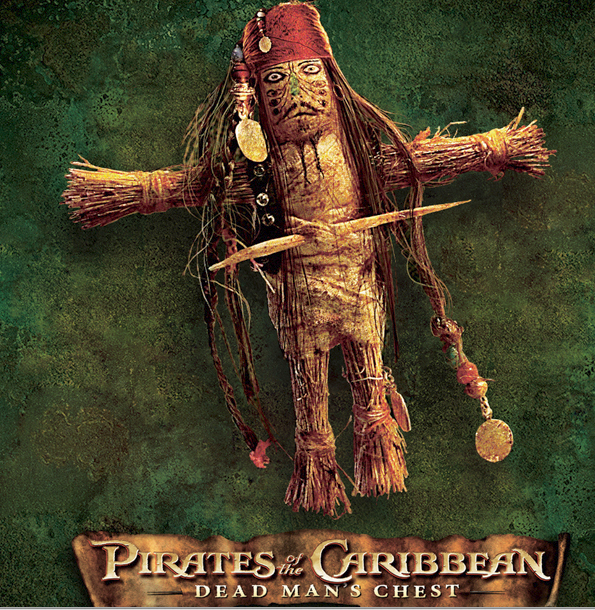
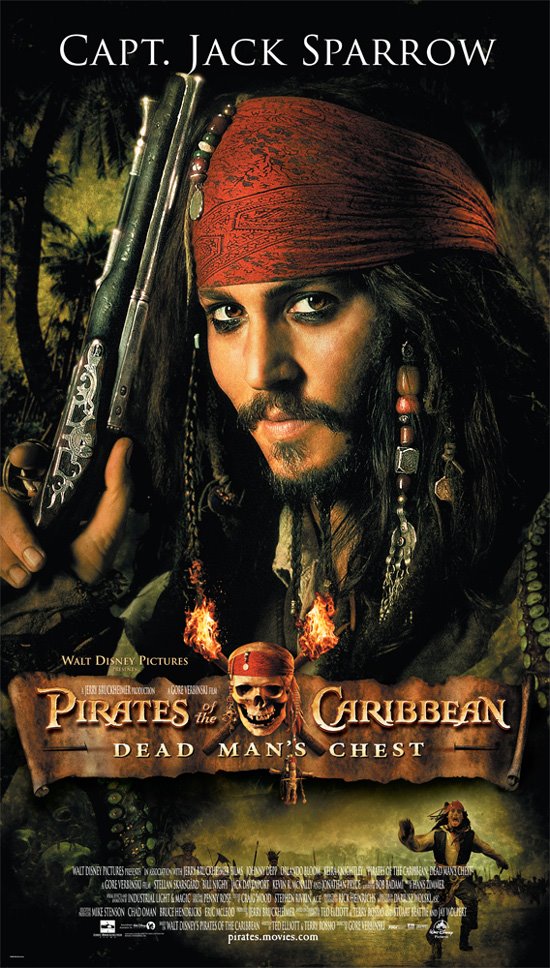
Pirates Of the Caribbean: Dead Man’s Chest – Yeah, I think it’s the best movie of the year so far. There’s a whole lot of fun swashbuckling action, some really great special effects (Davy Jones and The Kraken especially), some well-designed action sequences, with a nice Looney Tunes style as well as some complex action visuals with lots of things going on in multiple planes of a frame-full of happenings. There’s also some pregnancy to the relationship of Keira Knightley and Johnny Depp’s characters and there relationship to The Feminine (see this post from AICN, as quoted at MovieCityNews, which does contain SPOILERS:

what this movie is really about
by Muki July 7th, 2006
06:01:18 PM CST
What this film is really all about is the power of the feminine. Not to go all ‘film student essay’ on you but here are just a few examples of what I mean: The very first shot of the movie shows Elizabeth slouched in the rain, thoroughly pissed off that her wedding day has been ruined. This opening scene sets the tone for the rest of the movie which is to say hell hath no fury like a woman scorned. Elizabeth manipulates Beckett into giving her the warrant on Jack Sparrow – threatening him with a pistol (read: phallus). She succeeds in this where her father failed. In the same scene, Elizabeth complains about being deprived of her wedding night and allusions are made to her being a virgin. Again, hell hath no fury like a woman scorned – or in this case deprived of her mate and the opportunity to reproduce. Elizabeth not only gets to dress like a man in this movie but is also given not one but two swords (read: phallus) Elizabeth is able to manipulate the crew of the Edinburgh by using her wedding dress to represent a ghost. She plays upon the fears of the sailors who believe any ship with a woman on board is cursed. Her gender gives her power over them. Elizabeth uses her sexuality to essentially trick Captain Jack Sparrow and seal his fate at the hands…er tentacles of the Kraken. Captain Jack Sparrow basically gets consumed by a giant vagina with huge sharp teeth. He swings his phallic shaped sword in defence but it is completely inadequate against it – how very Freudian. It is a woman (Tia Dalma) who suggests a way of bringing Captain Jack Sparrow back from the dead and she also reveals the return of Barbossa – essentially illustrating the power of women as the givers of life. When he ultimately returns at the end of the movie, Barbossa eats an apple – conjuring allusions to Eve in the garden of Eden and woman’s defiance of man. Just my thoughts…

I wasn’t a big fan of the first movie, but I’ve seen this one twice since Thursday night. There’s less superfluous talking and more action and this being a sequel, there’s less need to develop the characters through dialogue and tedious exposition. Instead, we get to see the interplay of archetypes in comic-action motion, which is just fine with me. There’s a reason this film is setting box office records left and right (we sold out every evening show last night, which is unheard of for a Monday at my theatre). Unlike the depressing “dramatic” action films we’ve been plagued with this year (M:I 3 I’m looking at you) this film is actually fun, and there’s something that every demographic or intellectual level can find to enjoy in it. It’s the Kung Fu Hustle of this year and that ended up my #3 film for 2004.

Movies Of The Year: 2006

It’s about time for a list of the best films of the year so far. Cinecast did it a couple weeks ago, and Ebert and Dumbass did it last week (get well Roger!). Most of these films I’ve already written about here on TINAB (you can find them using the search box at the top of the page (is that new?), the ones I haven’t will be featured in future installments of the Movie Roundup. This is just a list.

By the way, I’m using the imdb dates for films, so there’s a number of movies that were widely released for the first time in 2006 that are on my 2005 list and won’t be listed here. Some of those are: Dave Chappelle’s Block Party, Brick, Thank You For Smoking, V For Vendetta and Tristram Shandy.

10. The DaVinci Code
9. X-Men: The Last Stand
8. Friends With Money
7. Nacho Libre
6. Mission: Impossible 3
5. United 93
4. Inside Man
3. Cars
2. The Break-Up
1. Pirates Of The Caribbean: Dead Man’s Chest

By the way, it’s not #1 simply because random people insist on telling me I look like Johnny Depp, though that is all too true. It really is a great film, a classic swashbuckler in the vein of Indiana Jones And the Temple Of Doom or The Adventures Of Robin Hood.

The Unseen movies list for this year is pretty good already, even without The Proposition, a 2005 film:

A Scanner Darkly
A Prairie Home Companion
Superman Returns
Day Watch
Akeelah And The Bee
Art School Confidential
The Sentinel
The Omen
Poseidon
Over The Hedge
An Inconvenient Truth
American Dreamz

Movie Roundup: Down With Portugal Edition

It’s hard to get excited about Independence Day when the last book I read was Lies My Teacher Told Me and I’m currently enmeshed in The People’s History Of The United States. All those slave-owning, Indian-killing, rich white men revolting against one tyranny so they can inflict their own on the native and slave populations of an entire continent? Bleh.

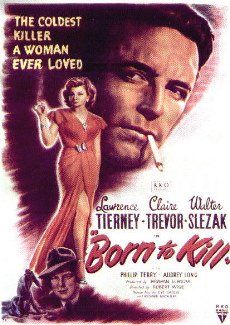
Born To Kill – Yet another Claire Trevor movie. This time, she plays a recent divorcee who becomes the object of obsession of a sociopathic killer played by Lawrence Tierney, who you’ll recognize from his performance as the gang leader in Reservoir Dogs (#2, 1992). Tierney, on the run for a murder in Reno, tries to get closer to Trevor by marrying her adopted sister, a rich heiress. Trevor’s got her own racket going as she’s trying to marry a rich guy for his money, but is secretly having an affair with Tierney. The body count piles up as they realize a private detective is on their trail. And somewhere in there, the great Elisha Cook Jr shows up as Tierney’s best friend. Directed by Robert Wise, it’s not as good as his The Set-Up, but it’s still a fun, twisted little noir.

Nacho Libre – As has been said elsewhere, your enjoyment of this film depends entirely on whether or not you think the idea of Jack Black as a no-talent Mexican wrestler is funny. Since that’s the only joke in the film, and I think it’s mildly amusing, I found the film itself to be mildly amusing. A matter of too many chefs, perhaps, with the director of Napoleon Dynamite, the writer of School Of Rock and Jack Black’s camera-hogging mugging all fighting for apparent creative control of the film, it just ends up a mediocre mess.


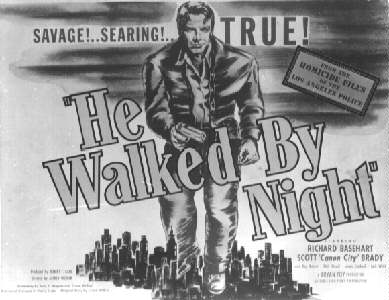
He Walked By Night – This b film marks the intersection of the film noir and police procedural genres. When they reviewed it a couple weeks ago, the great noir podcast Out Of The Past seemed to be crediting with inventing the whole police procedural genre, which it didn’t, of course. If nothing else, Fritz Lang’s M from 1931 has many of the elements you look for in the genre, as well as being an early noir. Anyway, He Walked By Night’s main claim to fame is being the inspiration for the radio and TV series Dragnet, and thus every cop and detective TV show from the last 50 years (combine Dragnet and Perry Mason and you get Law & Order; CSI is actually very close to He Walked By Night, focusing as the film does on the new technologies of police work in the post-war period.) Jack Webb, the creator and star of Dragnet has a small but memorable role as a technician, one of the boys down at the crime lab. None of the other performances are remarkable, but the direction, by an uncredited Anthony Mann and the cinematography by John Alton is as good as any of their other work.

TINAB All-Stars

The Major League Baseball All-Star teams were announced today. Predictably, they screwed everything up. One of the fun things about being a baseball fan is bitching about the All-Star selections, which are invariably idiotic. In that spirit, I offer my own choices for the game, to be played a week from now. The guiding principle is the one espoused by Baseball Prospectus (see the link in the sidebar) writer Joe Sheehan: if you would feel stupid picking a player for the All-Star game in February, he’s not an All-Star in July. A good three months does not an All-Star make: the game is to reward and highlight the best players in the game, not the one’s with the best first half of a season. I’m also following the one All-Star per team rule.

AL Starters:

C: Joe Mauer
1B: David Ortiz
2B: José Lopez
SS: Derek Jeter
3B: Alex Rodriguez
OF: Ichiro!
OF: Manny Ramirez
OF: Vladimir Guerrero

AL Bench:

C: Victor Martinez
1B: Travis Hafner
1B: Jim Thome
1B: Jason Giambi
SS: Michael Young
SS: Miguel Tejada
SS: Carlos Guillen
3B: Troy Glaus
OF: Grady Sizemore
OF: Vernon Wells
OF: Raul Ibañez
OF: David DeJesus

AL Pitchers:

SP: Johan Santana
SP: Francisco Liriano
SP: Roy Halladay
SP: Scott Kazmir
SP: Curt Schilling
SP: Mike Mussina
SP: Barry Zito
RP: BJ Ryan
RP: Mariano Rivera
RP: JJ Putz
RP: Jonathon Papelbon

NL Starters:

C: Brian McCann
1B: Albert Pujols
2B: Chase Utley
SS: José Reyes
3B: David Wright
OF: Bobby Abreu
OF: Jason Bay
OF: Andruw Jones

NL Bench:

C: Michael Barrett
1B: Nomar Garciaparra
1B: Lance Berkman
1B: Ryan Howard
2B: Jeff Kent
3B: Miguel Cabrera
3B: Scott Rolen
OF: Carlos Lee
OF: Barry Bonds
OF: Ken Griffey Jr
OF: Adam Dunn

NL Pitchers:

SP: Brandon Webb
SP: Pedro Martinez
SP: Tom Glavine
SP: Carlos Zambrano
SP: Bronson Arroyo
SP: Jason Schmidt
SP: Brad Penny
SP: Chris Carpenter
SP: Roy Oswalt
SP: Dontrelle Willis
RP: Trevor Hoffman
RP: Brian Fuentes

#$@^*%!#$#

Mike Hargrove is so obviously mind-numbingly stupid the universal outrage of Mariner fans has caused USSMariner to crash. I want to get excited about this team, it has played so well for the last month, but with him at the helm, only excruciating disaster can be expected.

And now Eddie Guardado’s coming in. Ugh, I can’t watch. . . .

Movie Roundup: 39-39 Edition

Still trying to catch up with all the movies I’ve seen. I count 22 that I’ve yet to record for the internet here on TINAB. So let’s see how for we can get before the beer takes over.

Irma Vep – Another in the fine tradition of indie movies about making indie movies. This one stars TINAB favorite Maggie Cheung as Hong Kong action star Maggie Cheung, in France to play the lead in the remake of the classic silent serial Les Vampires. Directed by Louis Feuillade (pronounced, if I remember my French correctly, “Foo-yad”) in 1915, Les Vampires is the story of a criminal gang headed by mysterious female Irma Vep (an anagram for vampire, naturally). I’ve yet to see the serial, but it’s on the list. I understand a pretty good DVD edition of it was released last year. Anyway, director Olivier Assayas, who was married to Cheung for a few years after the making of this movie, has made a fine, funny little movie here. It’s not as crazy or as over the top or as flat-out funny as it’s American genre counterpart, Tom DiCillo’s Living In Oblivion (#25, 1995), but it make up for it with a very cool, subtle cleverness. Playing the film’s director is Antoine Doinel himself, jean-Pierre Léaud, who’s always nice to see. The #13 film of 1996.

In Harm’s Way – Otto Preminger’s surprisingly dull movie about Pearl Harbor and its aftermath has a great cast: John Wayne, Kirk Douglas, Patricia Neal, Burgess Meredith, Franchot Tone, Dana Andrews, Slim Pickens, Carroll O’Connor, Larry Hagman, George Kennedy and Henry Fonda. But after the initial bombing, which is very exciting and well-done, the film descends into family melodrama and middle-aged romance as Wayne and Neal start some kind of relationship. It’s got some good parts, but they’re buried by the excessive length. The #14 film of 1965.

The Cowboys – One of the later John Wayne movies is this Mark Rydell film about an aging rancher who has to hire a bunch of kids to help drive his cattle because all the adults have run off in search of gold. Rydell would later direct The Rose, On Golden Pond (#14, 1981) and For The Boys, so this’d most likely be his best film. It’s one of Wayne’s best performances too, much better than his award-winning scenery chewing in True Grit (#6, 1969). It’s a fun little coming of age Western, helped by some pretty good supporting performances by Collen Dewhurst, Bruce Dern and future soap opera superstar (soaperstar?) A Martinez. The #7 film of 1972.

Shaft – I saw the two sequels, Shaft’s Big Score and Shaft In Africa many years ago, but I never actually watched all of this first one. Anyway, Richard Roundtree plays a black private dick who’s a sex machine with all the chicks. It’s interesting for it’s translation of film noir conventions (and I do mean conventions) into an early 70s Black Power milieu. Also interesting is that of the two women he sleeps with, Shaft is very nice to the black girl and cruel and misogynistic to the white one. I don’t know quite what to make of that, but it’s there. The #8 film of 1971.

For Me And My Gal – The most lackluster Busby Berkeley film I’ve seen stars Judy Garland and Gene Kelly (in his film debut, no less) as a couple of vaudevillians who don’t and then, of course, do like each other. There’s some interesting bits, of course, with these principals there can’t help but be good parts, but the whole doesn’t add up to much more than decent.

Cabin In The Sky – More interesting is this early Vincente Minelli film, his first as a credited director. It’s a musical with an all-black cast from a time when such things were not done on a mainstream level (1943, a mere 4 years after the execrable Gone With The Wind). The film stars Eddie “Rochester” Anderson (from the Jack Benny Show), a gambler who gets himself shot, but before he can be carried off to Hell, his wife prays real hard and gets him a 6 month reprieve. Over that time, the forces of evil do everything they can to corrupt him, including sicking Georgia Brown (played by Lena Horne) on him. Also feature Louis Armstrong, as a trumpeter, of course.

His Kind Of Woman – This truly weird pseudo-film noir was directed by John Farrow (Mia’s dad) and stars Robert Mitchum as a gambler who gets bribed to go to Mexico. There, he hooks up with Jane Russell, the girlfriend of a slumming Hollywood action star (Vincent Price). Eventually, he gets kidnapped by a gangster and learns that he was lured to Mexico so said gangster, played by Raymond Burr, what to have Mitchum’s face surgically implanted on his own so he can return to the US. It’s even stranger than it sounds, when Price’s certainly not straight actor loading up on guns and enlisting the Mexican townspeople in a quest to rescue Mitchum from Burr’s clutches, it becomes perhaps the most bizarre noir I’ve ever seen. Good stuff.

Track Of The Cat – This William Wellman film stars Robert Mitchum as the handiest member of a snowed in pioneer ranch family who has to hunt down an evil mountain lion that’s killing his cattle. Wellman designed the color film such that
it would appear black and white with only flashes of red for dramatic emphasis (mostly bloody). When the film is following Mitchum’s cat hunt, it’s great, cool-looking and very tense. It’s the family melodrama that dominates the last two thirds of the film that is really rather boring. An odd decision to mix a theatrical-style drama (think lesser Strindberg or Chekov in a pioneer setting) with a man vs. nature action story, and it doesn’t exactly work, but is still a fine film and worth seeing. The screenplay’s by AI Bezzerides, who wrote the great Kiss Me Deadly, along with They Drive By Night and Thieves’ Highway.

Waking Life – Richard Linklater’s animation experiment is wildly pretentious, even more so than his classic second film Slacker (#7, 1991), a personal favorite of mine. Wiley Wiggins plays the lead, a guy stuck in a dream that he can’t manage to wake up from. In his dream, he encounters any number of characters who expound on random philosophical and political notions to him. Your enjoyment of the film will be entirely dependent on your tolerance for such ramblings. I expected to find the animation annoying, but instead was thoroughly entertained by the changing nature of it, the way it becomes more and less abstract as the dream rolls along. The #9 film of 2001.

A Foreign Affair – Even a brilliant director has to make a mediocre film once in a while, and this is his. A paean to post-war Berlin, it’s clear this was a labor of nostalgia for Wilder and star Marlene Dietrich, refugees from the Nazis both. Jean Arthur plays a congresswoman in Berlin to inspect the nature of the Occupation. There she’s incensed to learn that her GIs are fraternizing with the local Germans. Her guide, played quite badly by John Lund, in order to cover his own romance with Dietrich, one of those unsavory Germans, begins to romance her as well. A love triangle ensues, but not an especially interesting one.

The Big Music List

Just to prove that movies aren’t the only things I can make lists of, I’ve managed to come up with a Top 100 Songs Of All-Time list. Like any list, it’s not meant to be definitive, but argumentative. I’ve only included songs that I own, as this is actually just an iTunes playlist, though I can’t think of any songs I like enough to be on the list that I don’t already own. I’m also not including any classical works (sorry Beethoven, Bach, and Mozart! Better luck next time!)

Presented in alphabetical order by artist. Someday I may try to rank them, but I’ve no doubt that would be even more futile than attempting to rank films, as my opinions on songs seem to be much more mutable than about movies.

Here Comes The Sun — The Beatles
Across The Universe — The Beatles
Everybody’s Got Something To Hide Except For Me And My Monkey — The Beatles
Lord Only Knows — Beck
There’s More To Life Than this — Bjork
Tangled Up In Blue — Bob Dylan
Shelter From The Storm — Bob Dylan
Love Minus Zero//No Limit — Bob Dylan
Just Like Tom Thumb’s Blues — Bob Dylan
Floater (Too Much Too Ask) — Bob Dylan
High Water (For Charley Patton) — Bob Dylan
It’s Alright, Ma (I’m Only Bleeding) (Live) — Bob Dylan
Don’t Think Twice, It’s Alright — Bob Dylan
A Hard Rain’s A-Gonna Fall (Live) — Bob Dylan
Mack The Knife — Bobby Darin
Rosalita (Come Out Tonight)– Bruce Springsteen
Johnny B. Goode — Chuck Berry
Lost In The Supermarket — The Clash
Have You Ever Seen The Rain? — Creedence Clearwater Revival
Just Like Heaven — The Cure
Ants Marching — The Dave Matthews Band
Life On Mars — David Bowie
I Hear A Symphony — Diana Ross And The Supremes
Sultans Of Swing — Dire Straits
(What’s So Funny ’bout) Peace, Love And Understanding — Elvis Costello
Burning Love — Elvis Presley
Yoshimi Battles The Pink Robots, Pt. 1 — The Flaming Lips
Love Is Here To Stay — Frank Sinatra
Ripple — The Grateful Dead
St. Stephen (Live) — The Grateful Dead
Me And Bobby McGee — Janis Joplin
Hallelujah — Jeff Buckley
All Along The Watchtower — The Jimi Hendrix Experience
Braver Newer World — Jimmie Dale Gilmore
Instant Karma! — John Lennon
Watching The Wheels — John Lennon
I Walk The Line — Johnny Cash
Coyote (Live) — Joni Mitchell And The Band
Love Will Tear Us Apart — Joy Division
Over The Hills And Far Away — Led Zeppelin
Take This Waltz — Leonard Cohen
Stardust — Louis Armstrong
California (All The Way) — Luna
Free Bird (Live) — Lynyrd Skynyrd
Reno Dakota — The Magnetic Fields
I’m Free Now — Morphine
Cowgirl In The Sand — Neil Young
Thrasher — Neil Young
Pocahontas — Neil Young
99 Luftballoons — Nena
Bizarre Love Triangle — New Order
Temptation — New Order
Where Did You Sleep Last Night (Live) — Nirvana
Smells Like Teen Spirit — Nirvana
Breed — Nirvana
(Sittin’ On) The Dock Of The Bay — Otis Redding
Wish You Where Here — Pink Floyd
San Tropez — Pink Floyd
Debaser — The Pixies
Dress — PJ Harvey
Fairytale Of New York — The Pogues
The Broad Majestic Shannon — The Pogues
Sally MacLennane — The Pogues
Welcome To The Terrordome — Public Enemy
Under Pressure — Queen And David Bowie
Find The River — REM
(Don’t Go Back To) Rockville — REM
Half A World Away — REM
The National Anthem — Radiohead
Let Down — Radiohead
(I Can’t Get No) Satsifaction — The Rolling Stones
New Slang — The Shins
The Boxer — Simon And Garfunkel
The Sounds Of Silence (Live) — Simon And Garfunkel
Landslide — Smashing Pumpkins
Teen Age Riot — Sonic Youth
The Joker — The Steve Miller Band
Birthday — The Sugarcubes
Goodbye Stranger — Supertramp
Alienation’s For The Rich — They Might Be Giants
Hearing Aid — They Might Be Giants
Ana Ng — They Might Be Giants
American Girl — Tom Petty And The Heartbreakers
One — U2
Stay (Faraway, So Close) — U2
Where The Streets Have No Name — U2
Brown-Eyed Girl — Van Morrison
Heroin — The Velvet Underground
Sweet Jane (Live) — The Velvet Underground
American Music — Violent Femmes
Add It Up (Live) — Violent Femmes
The Good Life — Weezer
The Union Forever — The White Stripes
Baba O’Reilly — The Who
I Am Trying To Break Your Heart — Wilco
Adieu — Yoko Kanno
Cherry Chapstick — Yo La Tengo
Blue Line Swinger — Yo La Tengo
Taco Wagon — Young Fresh Fellows
La Grange — ZZ Top