Chinese Cinema Today

A couple months ago I was asked to write this brief overview of the state of contemporary Chinese language cinema for the Estonian arts magazine Sirp. You can read this essay in Estonian on their website, and here, with their kind permission, is the original English language version.

Long one of the most vibrant and diverse film cultures in the world, the landscape of Chinese-language film has shifted dramatically over the last few years. Beginning with the handover of Hong Kong to Mainland China in 1997, the previously separate industries in China, Taiwan and Hong Kong have become increasingly enmeshed, and with the rapid expansion of theatrical exhibition on the mainland and an economic boom that has opened up a massive potential audience, China is set to overtake the United States as the largest movie market in the world. Chinese companies have begun investing heavily in Hollywood productions, while American companies are seeking closer ties with their Chinese counterparts. A Chinese company (Wanda) now owns the largest chain of exhibitors in the US (AMC Theatres), as well as an American production company (in January of 2016 they purchased Legendary Entertainment, producers or co-producers of Jurassic World, Blackhat, Pacific Rim and Christopher Nolan’s Batman films, among other blockbusters). Warner Brothers recently launched a new production house in cooperation with Chinese company CMC to remake Warners properties like Miss Congeniality, and release original films from veteran Hong Kong filmmakers Peter Chan and Stephen Fung along with Jackie Chan and Brett Ratner. CMC also has a joint venture with Dreamworks Animation, Oriental Dreamworks, which released Kung Fu Panda 3 this past January. Complicating this vast influx of cash into film production is China’s oft-arcane system of censorship and import quotas, which limit the kinds of films that can be shown in the nation’s theatres, as well as a tradition of gaming the system, if not outright corruption, in box office accounting. In the past few weeks, widespread fraud in the reporting of the grosses of Donnie Yen’s Ip Man 3 was discovered, leading to punitive action against the film’s local distributor and participating exhibitors.

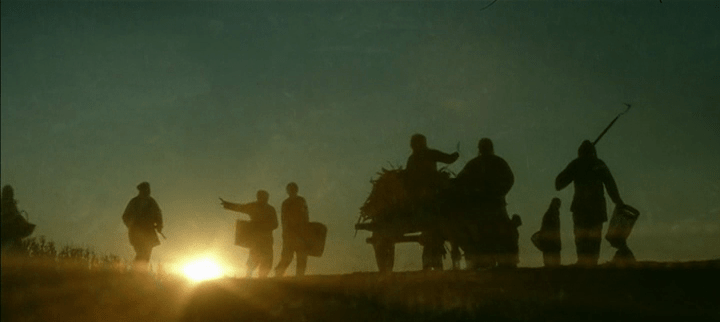
With this dynamic and rapidly developing film culture, trying to predict what Chinese-language cinema is going to be like in five or ten years is a fool’s game. Instead, by taking a snapshot look at a few examples from the past year, we can get a sense of where the culture is at right now. From The Mermaid’s astounding box office success, to Go Away Mr. Tumor’s unique disregard for generic expectations; from Jia Zhangke’s idiosyncratic move toward the mainstream of the international art house with Mountains May Depart, to Bi Gan’s microbudgeted, experimental and defiantly local debut Kaili Blues, Chinese cinema is one of the most financially lucrative and aesthetically innovative cinemas in the world.
Continue reading

This Week in Rankings

With the Seattle International Film Festival just around the corner, I’ve been spending the last couple of weeks reading actual books (Joan Didion, John McPhee and James Agee) and watching baseball (and playing Out of the Park) rather than watching movies, trying to save up energy for the endless slog that is the world’s most exhausting film festival. But before that little break, I did write some stuff: I watched a bunch of Chinese language films from 1996 to compile an Underrated ’96 piece for Rupert Pupkin Speaks, including Johnnie To’s A Moment of Romance III. I wrote about Richard Linklater’s Everybody Wants Some!! and Alexander Sokurov’s Francofonia for Seattle Screen Scene, along with the Chinese thriller Chongqing Hot PotI also wrote about the state of Chinese cinema for the Estonian magazine Sirp. You can read it here in Estonian, I plan to publish the original English version in a few days.

Since the last update we’ve done four episodes of The Frances Farmer ShowMysterious Object at Noon and Gates of the NightProspero’s Books and The Princess of FranceYouth of the Beast and Sonatine, and A Brighter Summer Day, SPL 2 and Purple Rain.

These are the movies I’ve watched and rewatched over the last few weeks and where they place on my year-by-year rankings.

Gates of the Night (Marcel Carné) – 14, 1946
Dirty Gertie from Harlem USA (Spencer Williams) – 17, 1946
Youth of the Beast (Seijun Suzuki) – 15, 1963
Battles Without Honor and Humanity (Kinji Fukasaku) – 6, 1973
Deadly Fight in Hiroshima (Kinji Fukasaku) – 12, 1973

Proxy War (Kinji Fukasaku) – 21, 1973
Final Episode (Kinji Fukasaku) – 18, 1974
Police Tactics (Kinji Fukasaku) – 31, 1974
Purple Rain (Albert Magnoli) – 12, 1984
Under the Cherry Moon (Prince) – 30, 1986

Violent Cop (Takeshi Kitano) – 19, 1989
A Brighter Summer Day (Edward Yang) – 2, 1991
Prospero’s Books (Peter Greenaway) – 7, 1991
Sonatine (Takeshi Kitano) – 9, 1993

Mahjong (Edward Yang) – 2, 1996
Viva Erotica (Derek Yee & Law Chi-leung) – 8, 1996
Stage Door (Shu Kei) – 21, 1996
Beyond Hypothermia (Patrick Leung) – 22, 1996
Ebola Syndrome (Herman Yau) – 28, 1996

Big Bullet (Benny Chan) – 31, 1996
Black Mask (Daniel Lee) -41,  1996
A Moment of Romance III (Johnnie To) – 42, 1996
The Stunt Woman (Ann Hui) – 47, 1996
Dr. Wai in “The Scripture with No Words” (Ching Siu-tung) – 49, 1996

Shanghai Grand (Poon Man-kit) – 57, 1996
Twinkle Twinkle Lucky Star (Wong Jing) – 66, 1996
Yes, Madam 5 (Lau Shing) – 78, 1996
Mysterious Object at Noon (Apichatpong Weerasethakul) – 15, 2000
The Princess of France (Matías Piñeiro) – 40, 2014

Cemetery of Splendour (Apichatpong Weerasethakul) – 13, 2015
SPL 2: A Time for Consequences (Soi Cheang) – 14, 2015
The Force Awakens (JJ Abrams) – 20, 2015
Francofonia (Alexander Sokurov) – 72, 2015

Lemonade (Beyoncé Knowles & Jonas Åkerlund) – 1, 2016
Everybody Wants Some!! (Richard Linklater) – 2, 2016
Chongqing Hot Pot (Yang Qing) – 6, 2016
Confirmation (Rick Famuyiwa) – 10, 2016
Get a Job (Dylan Kidd) – 11, 2016


Running Out of Karma: A Moment of Romance III

Running Out of Karma is my on-going series on Johnnie To, Hong Kong and
Chinese-language cinema. Here is an index.

For his final film before launching the Milkyway Image studio, Johnnie To took a super-generic script, applied a Steven Spielberg visual aesthetic, and almost made an FW Murnau movie out of it. A rarity for To, a period film, a romance set during the second World War, with Andy Lau as a pilot who crash lands in a remote village and is nursed back to health by Jacklyn Wu (these two stars are the only connection to the other A Moment of Romance films: in Hong Kong, spiritual sequels can be numbered as actual sequels, they need not be in any other way related). They fall in love and when he returns to the war effort, she follows him to the big city, splitting the film neatly into country/city halves like Crocodile Dundee.

Continue reading

This Week in Rankings

Since the last update, I wrote about Stephen Chow’s The Mermaid at the Mubi Notebook and talked wuxia films on the Filmspotting podcast. Here at The End I wrote about 30 Essential Wuxia Films, continued my chronological Johnnie To series with The Fun, the Luck and the Tycoon, and reviewed the new Crouching Tiger, Hidden Dragon sequel Sword of Destiny. Over at Seattle Screen Scene I wrote about The Witch and Rise of the Legend.

Ater 83 episodes we wrapped up The George Sanders Show with a look at Canyon PassageThe Razor’s Edge and the Best Films of 2015. Then we launched The Frances Farmer Show, which is basically exactly the same show, but based at Seattle Screen Scene instead. On the first episode, we talked about The Big Sleep and Fire Walk with Me.

Also since the last update, I announced the winners of the 2015 Endy Awards. Concurrently I updated a number of previous awards based on some of the films listed below (1992, 1994 and 2006 in particular saw some major revisions) and I’ve now got fake movie awards from every year from 1990-2015.

These are the movies I watched and rewatched over the last few weeks, and where they place on my year-by-year rankings.

The Big Sleep (Howard Hawks) – 1, 1946
Canyon Passage (Jacques Tourneur) – 5, 1946
Beauty and the Beast (Jean Cocteau) – 10, 1946
The Razor’s Edge (Edmund Goulding) – 11, 1946
The Strange Woman (Edgar G. Ulmer) – 19, 1946

Donald’s Double Trouble (Jack King) – 24, 1946
The Dark Corner (Henry Hathaway) – 29, 1946
Dressed to Kill (Roy William Neill) – 32, 1946
The Flame and the Arrow (Jacques Tourneur) – 21, 1950
Desk Set (Walter Lang) – 43, 1957

The Heroic Ones (Chang Cheh) – 4, 1970
A Moment of Romance (Benny Chan) – 26, 1990
The Fun, the Luck & the Tycoon (Johnnie To) – 40, 1990
Fire Walk with Me (David Lynch) – 5, 1992
Ashes of Time (Wong Kar-wai) – 4, 1994

The Blade (Tsui Hark) – 9, 1995
The God of Cookery (Stephen Chow & Lee Lik-chi) – 18, 1996
Thirdworld (Apichatpong Weerasethakul) – 22, 1998
Blissfully Yours (Apichatpong Weerasethakul) – 3, 2002
Tropical Malady (Apichatpong Weerasethakul) – 1, 2004

Worldly Desires (Apichatpong Weerasethakul) – 32, 2005
Syndromes and a Century (Apichatpong Weerasethakul) – 2, 2006
The Anthem (Apichatpong Weerasethakul) – 20, 2006
Luminous People (Apichatpong Weerasethakul) – 38, 2007
Vampire (Apichatpong Weerasethakul) – 32, 2008

Phantoms of Nabua (Apichatpong Weerasethakul) – 8, 2009
A Letter to Uncle Boonmee (Apichatpong Weerasethakul) – 21, 2009
Haiku (Apichatpong Weerasethakul) – 37, 2009
Uncle Boonmee Who Can Recall His Past Lives – 4, 2010
Rise of the Legend (Roy Chow) – 73, 2014
Knight of Cups (Terrence Malick) – 11, 2015

Office (Johnnie To) – 17, 2015
The Witch (Robert Eggers) – 45, 2015
Forget Me Not (Kei Horie) – 49, 2015
The Mermaid (Stephen Chow) – 2, 2016
10 Cloverfield Lane (Dan Trachtenberg) – 3, 2016
The Sword of Destiny (Yuen Woo-ping) – 5, 2016

2015 Endy Awards

These are the 2015 Endy Awards, wherein I pretend to give out maneki-neko statues to the best in that year in film. Awards for many other years can be found in the Rankings & Awards Index. Eligibility is determined by imdb date and by whether or not I’ve seen the movie in question. Nominees are listed in alphabetical order. And the Endy goes to. . .

201512031024511460

Best Picture:

1. Arabian Nights
2. The Assassin
3. Baahubali: The Beginning
4. Blackhat
5. Cemetery of Splendour
6. Happy Hour
7. Kaili Blues
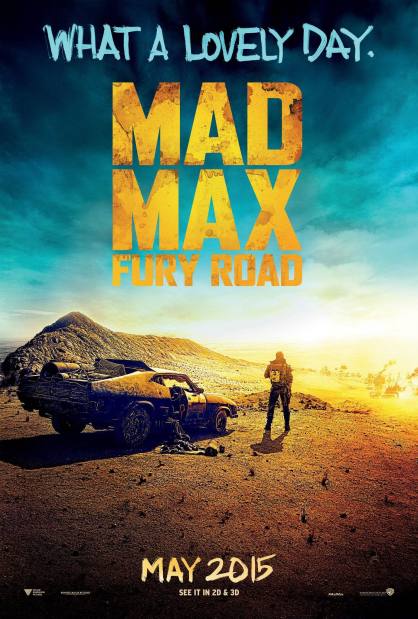
8. Mad Max: Fury Road
9. Mountains May Depart
10. The Royal Road

Best Director:

1. Miguel Gomes, Arabian Nights
2. Hou Hsiao-hsien, The Assassin
3. Bi Gan, Kaili Blues
4. George Miller, Mad Max: Fury Road
5. Jia Zhangke, Mountains May Depart

Best Actor:

1. Michael B. Jordan, Creed
2. Wang Baoqiang, Detective Chinatown
3. Samuel L. Jackson, The Hateful 8
4. Aaron Kwok, Port of Call
5. Jung Jaeyung, Right Now, Wrong Then

Honorable Mentions: Jafar Panahi (Taxi), Subaru Shibutani (La La La at Rock Bottom), Tom Courtenay (45 Years), Elmer Bäck (Eisenstein in Guanajuato), John Boyega (The Force Awakens), Li Wen (Li Wen at East Lake), Matt Damon (The Martian), Kurt Russell (The Hateful 8), Nick Cannon (Chi-Raq), Feng Xiaogang (Mr. Six), Guy Pearce (Results), and Tony Jaa (SPL 2).

Best Actress:

1. Shu Qi, The Assassin
2. Saoirse Ronan, Brooklyn
3. Daisy Ridley, The Force Awakens
4. Zhao Tao, Mountains May Depart
5. Kim Minhee, Right Now, Wrong Then

Honorable Mentions: Rooney Mara (Carol), Tang Wei (A Tale of Three Cities), Crista Alfaiate (Arabian Nights), Lola Kirke (Mistress America), Charlize Theron (Mad Max: Fury Road), Katana Kiki Rodriguez (Tangerine), Jenjira Pongpas (Cemetery of Splendour), Isabella Leong (Murmur of the Hearts), Ai Hashimoto (Little Forest: Winter/Spring), Bai Baihe (Go Away Mr. Tumor), Sarina Suzuki (La La La at Rock Bottom), Charlotte Rampling (45 Years), Elizabeth Moss (Queen of Earth), Carey Mulligan (Far from the Madding Crowd), Nithya Menen (O Kadhal Kanmani), Anya Taylor-Joy (The Witch), Agyness Deyn (Sunset Song), Akari Hayami (Forget Me Not) and the entire cast of Happy Hour.

Supporting Actor:

1. Michael Keaton, Spotlight
2. Richard Jenkins, Bone Tomahawk
3. Emory Cohen, Brooklyn
4. Harrison Ford, The Force Awakens
5. Walton Goggins, The Hateful 8

HM: Tom Hardy (The Revenant), Oscar Isaac (Ex Machina), Michael Ning (Port of Call), Kevin Corrigan (Results), Mark Rylance (Bridge of Spies), Liev Schreiber (Spotlight), Adam Scott (Sleeping with Other People), Sylvester Stallone (Creed), Chow Yun-fat (Office), Chico Chapas (Arabian Nights), and Liev Schreiber (Spotlight).

Supporting Actress:

1. Jennifer Jason Leigh, The Hateful 8
2. Greta Gerwig, Mistress America
3. Sylvia Chang, Mountains May Depart
4. Tang Wei, Office
5. Mya Taylor, Tangerine

HM: Cate Blanchett (Carol), Emma Stone (Aloha), Rebecca Ferguson (Mission: Impossible – Rogue Nation), Jessie Li, (Port of Call), Viola Davis (Blackhat), Katherine Waterston (Queen of Earth), Sylvia Chang (Office), Tang Wei (Blackhat), Tang Wei (Monster Hunt), Hana Saeidi (Taxi), and Tessa Thompson (Creed).

聶隱娘

Original Screenplay:

1. Evan Johnson, Robert Kotyk & Guy Maddin, The Forbidden Room
2. Luo Li, Li Wen at East Lake
3. Greta Gerwig & Noah Baumbach, Mistress America
4. Jenni Olson, The Royal Road
5. Don Hertzfeldt, World of Tomorrow

Adapted Screenplay:

1. Miguel Gomes, Mariana Ricardo & Telmo Churro, Arabian Nights
2. Hou Hsiao-Hsien, Chu Tien-wen, Hsieh Hai-Meng & Zhang Acheng, The Assassin
3. Phyllis Nagy, Carol
4. Andrew Haigh, 45 Years
5. George Miller, Brendan McCarthy & Nico Lathouris, Mad Max: Fury Road

Tough to leave a pair of adventurous Chinese films out of the Original Screenplay mix: Murmur of the Hearts and Kaili Blues. Laurie Anderson’s script for Heart of a Dog was another painful omission. And of course, the fact that Hong Sangsoo isn’t nominated is major Endy news. In fact, this is only the second year this century (the other being 2005) that neither a Hong nor a Johnnie To/Wai Ka-fai film is nominated for Best Screenplay.

Non-English Language Film:

1. Arabian Nights (Miguel Gomes)
2. The Assassin (Hou Hsiao-hsien)
3. Baahubali: The Beginning (SS Rajamouli)
4. Happy Hour (Ryusuke Hamaguchi)
5. Mountains May Depart (Jia Zhangke)

Baahubali is the big surprise here, as Rajamouli’s gonzo CGI musical epic gets the nod over fine films from established Endy favorites Johnnie To, Apichatpong Weerasethakul and Hong Sangsoo.

Non-Fiction Feature:

1. Heart of a Dog (Laurie Anderson)
2. In Jackson Heights (Frederick Wiseman)
3. Junun (Paul Thomas Anderson)
4. The Royal Road (Jenni Olson)
5. The Thoughts that Once We Had (Thom Andersen)

This is the strongest set of five Non-Fiction Feature nominees in Endy history.

Animated Feature:

1. Anomalisa (Charlie Kaufman & Duke Johnson)
2. Inside Out (Pete Docter & Ronnie del Carmen)
3. The Peanuts Movie (Steve Martino)
4. Shaun the Sheep Movie (Mark Burton & Richard Starzak)

Short Film:

1. Bring Me the Head of Tim Horton (Guy Maddin, Evan Johnson & Galen Johnson)
2. Greed: Ghost Light (Kim Nakyung)
3. Night Without Distance (Lois Patiño)
4. No No Sleep (Tsai Ming-liang)
5. World of Tomorrow (Don Hertzfeldt)

Unseen Film:

1. Aferim! (Radu Jude)
2. Afternoon (Tsai Ming-liang)
4. No Home Movie (Chantal Akerman)

TheForbiddenRoomPoster
Film Editing:

1. The Assassin
2. 88:88
3. The Forbidden Room
4. Mad Max: Fury Road
5. SPL 2: A Time for Consequences

Cinematography:

1. The Assassin
2. Kaili Blues
3. Mad Max: Fury Road
4. Mountains May Depart
5. Night Without Distance

Production Design:

1. The Assassin
2. Baahubali: The Beginning
3. Crimson Peak
4. Office
5. The Witch

Costume Design:

1. The Assassin
2. Carol
3. Crimson Peak
4. Far from the Madding Crowd
5. Mad Max: Fury Road

Make-up:

1. Baahubali: The Beginning
2. Crimson Peak
3. The Forbidden Room
4. Jupiter Ascending
5. Mad Max: Fury Road

10847706_612489692189889_5238430175185260928_o

Original Score:

1. The Assassin
2. Blackhat
3. Heart of a Dog
4. O Kadhal Kanmani
5. The Revenant

Adapted Score:

1. Arabian Nights
2. The Hateful 8
3. La La La at Rock Bottom
4. Mountains May Depart
5. Office

Sound Design:

1. The Assassin
2. Blackhat
3. 88:88
4. Heart of a Dog
5. Topophilia

Sound Editing:

1. Blackhat
2. Crimson Peak
3. The Force Awakens
4. Mad Max: Fury Road
5. Mission: Impossible – Rogue Nation

Visual Effects:

1. Baahubali: The Beginning
2. The Forbidden Room
3. The Force Awakens
4. Go Away, Mr. Tumor
5. Jupiter Ascending

11190720_ori

Predictions for the 88th Annual Academy Awards

These are my picks for the winners of this year’s Academy Awards. On Sunday night, I’ll be tweeting out the winners of the 2015 Endy Awards during the Oscar ceremony. You can follow me there @theendofcinema. Here are the current 2015 Endy Award Nominees. We also had a special Oscar edition of The George Sanders Show last weekend, picking our 2015 favorites and discussing two Oscar films from 1946, best Picture nominee The Razor’s Edge and Best Song nominee Canyon Passage. My predictions are the ones in bold.
Continue reading

Running Out of Karma: Crouching Tiger, Hidden Dragon: Sword of Destiny

Running Out of Karma is my on-going series on Johnnie To, Hong Kong and
Chinese-language cinema. Here is an index.

A straight-to-Netflix multinational English language collaboration that is the sequel to the highest-grossing foreign language film in American history, Sword of Destiny reunites star Michelle Yeoh with the action choreographer from the first film, Yuen Woo-ping. Belonging more rightly to the CGI-driven Chinese wuxias of the 2010s (and the cheaper ones at that: it’s more Reign of Assassins than than Journey to the West: Conquering the Demons) the digitally-aided filmic art house wuxias of the early 2000s, the new film is worlds apart from Ang Lee’s original, and that’s, as much as anything, the difference between Lee and Yuen. What made the first film truly great is the combination their two sensibilities: Lee’s character-based approach to personal drama, romantic relationships constricted by social rules reflected in carefully composed, controllingly symmetrical compositions added to Yuen’s gorgeous choreography, every movement of the actors and stunt performers motivated by an ideology of fighting, reflecting their personalities, their worldview (Chow’s patient precision, Cheng’s wild flailing, Zhang’s exuberant virtuosity, Yeoh’s passionate intellectuality).

Continue reading

30 Essential Wuxia Films

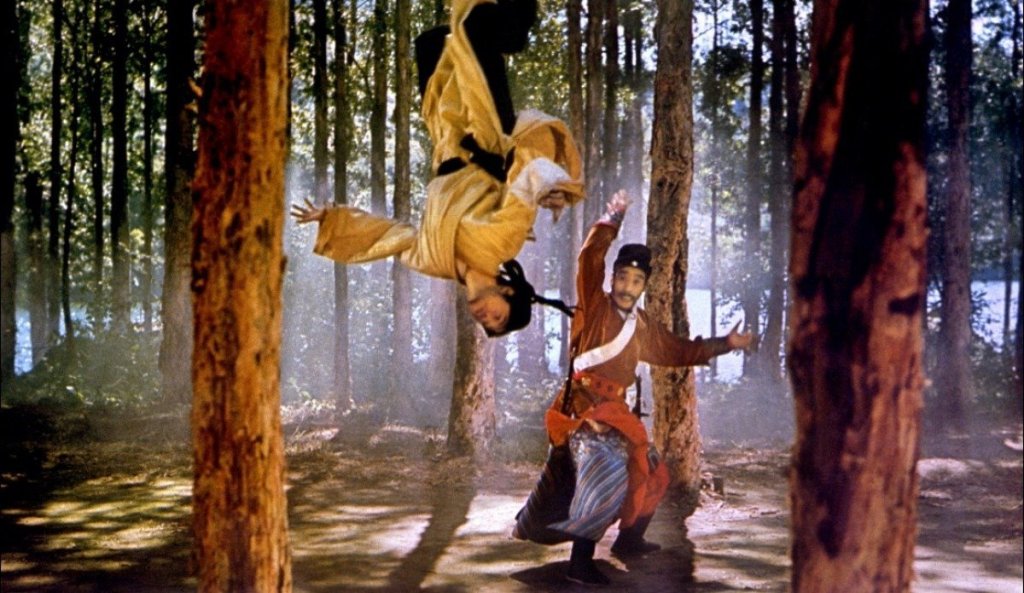
With the highly-anticipated release of two King Hu masterpieces on home video by the Masters of Cinema organization, as well as the critical success of Hou Hsiao-hsien’s The Assassin last year, it seems like the wuxia film is making some inroads into the Western critical consciousness. So I thought I’d put together a guide to some of the essential films of the genre. The Chinese martial arts movie is generally split into two primary subgeneres: the kung fu film and the wuxia film. The kung fu film is newer and focuses primarily on hand-to-hand combat, it’s steeped in traditional fighting forms and there’s a general emphasis on the physical skill of the performer: special effects are generally disdained. Bruce Lee and Jackie Chan are its most famous practitioners and Lau Kar-leung its most important director.

Wuxia is a much older form, based ultimately in the long tradition of Chinese adventure literature, in classic novels such as The Water Margin or Journey to the West, or more contemporary works by authors like Louis Cha and Gu Long. Its heroes follow a very specific code of honor as they navigate the jianghu, an underworld of outlaws and bandits outside the normal streams of civilization. Wuxia films often incorporate fantasy elements, using special effects to allow their heroes to fly, shoot concentrated chi energy out of their hands (or eyes) and in other ways violate the laws of physics. Strictly speaking, wuxia should probably be confined to stories of code-following traveling knights-errant, but genres are a fluid and conventional thing, especially in Hong Kong, where films regularly mash together comedy, action, romance, melodrama and horror elements into a single impure whole, and as such, stark lines are difficult to draw. King Hu and Tsui Hark are the essential wuxia directors, and Jet Li, Ti Lung and Jimmy Wang Yu the genre’s greatest stars. The following is a list of 30 of the genre’s highlights, taking a reasonably expansive view of generic boundaries and arranged in chronological order:

Continue reading