This Week in Rankings

One thing I forgot to mention in the last rankings update was that a thing I wrote for the website The Vulgar Cinema got published a while back. It was written to go along with a series of essays on Lau Kar-leung, which I guess didn’t materialize, but it’s a kind of timeline of Shaolin-related stories, mapping all the films I could think of into a generational chronology, from San Te and the 36th Chamber through the destruction of the Shaolin Temple, the spread of its various disciples and their fighting styles throughout Southern China, folk heroes like Fong Sai-yuk, Wong Fei-hung, Wing Chun up to Lau himself.

Some other reviews since the last update include the next step in the Running Out of Karma Johnnie To chronology, All About Ah-Long, and over st Seattle Screen Scene: The Coen Brothers’s new film Hail, Caesar!, the pair of Ip Man 3 and Monster Hunt, Charlie Kaufman’s Anomalisa and Michael Bay’s 13 Hours. As well anticipation is building for the 2015 Endy Awards. Nominations are up now, winners to be announced on Oscar Night at the end of this month. I’ve finished reformatting all the past Endy Awards posts for the new website, and I’ve also been cleaning up the Running Out of Karma, Review and Podcast Indices.

On The George Sanders Show, we’ve talked about Donnie Yen in Iron Monkey and Mismatched Couples and The Bad Sleep Well and Bastards.

These are the movies I’ve watched or rewatched over the last few weeks, and where they place on my year-by-year rankings.

So Dark the Night (Joseph H. Lewis) – 19, 1946
The Bad Sleep Well (Akira Kurosawa) – 14, 1960
Cracked Actor (Alan Yentob) – 20, 1975
Mismatched Couples (Yuen Woo-ping) – 38, 1985
Labyrinth (Jim Henson) – 27, 1986

All About Ah-Long (Johnnie To) – 13, 1989
Iron Monkey (Yuen Woo-ping) – 5, 1993
The Clone Wars (Dave Filoni) – 64, 2008
Bastards (Claire Denis) – 20, 2013
Top Five (Chris Rock) – 65, 2014

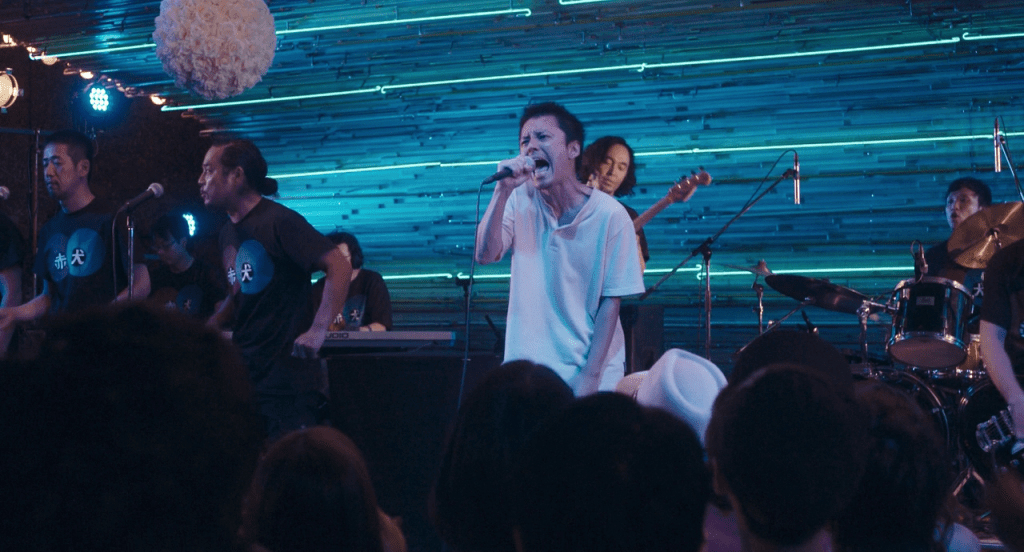
La La La at Rock Bottom (Nobuhiro Yamashita) – 16, 2015
Bring Me the Head of Tim Horton (Guy Maddin, Evan Johnson, & Galen Johnson) – 21, 2015
No No Sleep (Tsai Ming-liang) – 33, 2015
O Kadhal Kanmani (Mani Ratnam) – 37, 2015
Junun (Paul Thomas Anderson) – 42, 2015

In the Shadow of Women (Philippe Garrel) – 47, 2015
Anomalisa (Charlie Kaufman & Duke Johnson) – 53, 2015
2015 Rolling (Apichatpong Weerasethakul) – 82, 2015
Xiao Kang (Tsai Ming-liang) – 84, 2015
Ip Man 3 (Wilson Yip) – 87, 2015

Monster Hunt (Raman Hui) – 90, 2015
The Big Short (Adam McKay) – 95, 2015
Straight Outta Compton (F. Gary Gray) – 98, 2015
Delusional Mandala (Lu Yang) – 105, 2015
From Vegas to Macau II (Wong Jing) – 109, 2015

Hail, Caesar! (The Coen Brothers) – 1, 2016
13 Hours (Michael Bay) – 2, 2016
The Monkey King 2 (Soi Cheang) – 3, 2016

Running Out of Karma: All About Ah-Long

Running Out of Karma is my on-going series on Johnnie To, Hong Kong and
Chinese-language cinema. Here is an index.

We’re now over two years into this project, intended as both a chronological journey through the work of Johnnie To and a highly digressive exploration of Chinese cinema. The digressions were in full effect in 2015, as I wrote and talked about the careers of Hou Hsiao-hsien and John Woo in detail. However, I’ve fallen farther behind than I would have liked on the filmography of To himself, with only two films covered over the past two years. I’m hoping to correct that this spring, with the goal of getting through To’s pre-Milkyway Image period by the end of 2016. We’ll see how that goes, but here’s the story so far:

After an auspicious, if commercially unsuccessful, debut with the New Wave wuxia The Enigmatic Case in 1980, To spent the early 80s working in Hong Kong television. In 1986 he returned to film working under Raymond Wong Bak-ming at the Cinema City studio, he he made the popular, if not especially distinguished comedies Happy Ghost 3 and Seven Years Itch. These were followed in 1988 by a pair of films, the smash hit farce The Eighth Happiness and the contemporary crime picture The Big Heat. He followed that up in 1989 with All About Ah-Long, a domestic melodrama that became the number one film of the year at the Hong Kong box office, the second year in a row a To film had accomplished that feat. The film reunited To with Eighth Happiness star Chow Yun-fat and Seven Years Itch star Sylvia Chang. Like all of To’s previous four films it was produced by Raymond Wong for Cinema City, but it is a much more dramatically ambitious work. Cinema City at their best was a freewheeling, anarchic studio where anything was possible. The loose atmosphere was responsible for some of the greatest films of the decade (in Hong Kong or otherwise), but also a whole lot of just bizarrely silly nonsense (the Yuen-Woo-ping directed Mismatched Couples, for example, in which Yuen tried to make Donnie Yen a star with a breakdancing comedy). The Eighth Happiness exemplified the lunatic side of the studio, an improvisational, tasteless and often hilarious comedy that helped establish the template for a certain type of all-star Lunar New Year comedy (a tradition that continues to this day).

Continue reading

This Week in Rankings

14reyface

A lot of 2015 films in this rankings update, as I spent the last month trying to catch up at the end of the year. There’s more to come over the next six weeks or so (or really, forever, it’s not exactly impossible to actually catch up, as there are a finite number of films that were released in 2015, but it’s functionally so), leading up to the Endys/Oscars at the end of February (Endy nominations will be out this week).

Since the last update I’ve written a few reviews: Creed, Spotlight, and BrooklynMacbethSistersMojin: The Lost LegendConcussion, and Mr. Six at Seattle Screen Scene; and John Woo’s The Crossing Parts 1 & 2 here at The End. We’ve done George Sanders Shows on Alexander, Nightmare Alley and Our 2015 DiscoveriesThe Force AwakensHelp!, A Pistol for Ringo and the Best of 1965, and Noroît and The Black Pirate.

I polled a bunch of local critics and programmers for the first annual Seattle Screen Scene Seattle Film Poll, listed the Best Older Movies I Saw in 2015, handed out the Endy Awards for 1965, and posted a Top 50 Films of 2015 (More or Less).

These are the movies I’ve watched or rewatched over the last few weeks and where they place on my year-by-year rankings.

Grand Display of Brock’s Fireworks at Crystal Palace (George Albert Smith) – 1, 1904
The Black Pirate (Albert Parker) – 8, 1926
Nightmare Alley (Edmund Goulding) – 23, 1947
Help! (Richard Lester) – 23, 1965
A Pistol for Ringo (Duccio Tessari) – 26, 1965

Duelle (Jacques Rivette) – 5, 1976
Noroît (Jacques Rivette) – 8, 1976
Return of the Jedi (Richard Marquand) – 11, 1983
Eddie Murphy: Delirious (Bruce Gowers) – 24, 1983
The Phantom Menace (George Lucas) – 51, 1999

Attack of the Clones (George Lucas) – 27, 2002
Alexander (Oliver Stone) – 11, 2004
Revenge of the Sith (George Lucas) – 7, 2005
Silver Linings Playbook (David O. Russell) – 75, 2012
Girlhood (Céline Sciamma) – 44, 2014

Arabian Nights (Miguel Gomes) – 4, 2015
Heart of a Dog (Laurie Anderson) – 9, 2015
Mistress America (Noah Baumbach) – 10, 2015
The Force Awakens (JJ Abrams) – 13, 2015
Baahubali: The Beginning (SS Rajamouli) – 14, 2015

Tangerine (Sean Baker) – 22, 2015
Cemetery of Splendour
(Apichatpong Weerasethakul) – 24, 2015
The Hateful 8 (Quentin Tarantino) – 30, 2015
The Mend (John Magary) – 37, 2015
Experimenter (Michael Almereyda) – 49, 2015

Bone Tomahawk (S. Craig Zahler) – 52, 2015
Pitch Perfect 2 (Elizabeth Banks) – 56, 2015
Sisters (Justin Moore) – 59, 2015
Chi-Raq (Spike Lee) – 64, 2015
Macbeth (Justin Kurzel) – 67, 2015

The Revenant (Alejandro González Iñárritu) – 71, 2015
The Crossing Part 2 (John Woo) – 72, 2015
Far from the Madding Crowd (Thomas Vinterberg) – 74, 2015
Mr. Six (Guan Hu) – 75, 2015
Amy (Asif Kapadia) – 83, 2015

Wild Card (Simon West) – 89, 2015
Concussion (Peter Landesman) – 93, 2015
Magic Mike XXL (Gregory Jacobs) – 96, 2015
Mojin: The Lost Legend (Wu Ershan) – 100, 2015

A Top 50 Films of 2015, More or Less

As I did last year, I’m making a Best of the Year list following the conventional system for what counts as a 2015 film, mainly the nonsensical and ahistorical system that decrees that critics may only consider movies to have existed once they have played for a week in a commercial venue in New York City. (This is the system that claims my favorite film of 2013 (La última película), which played for a week in Seattle in 2014, can only be considered a 2015 film because that is when it finally got a New York release, although it will only play Los Angeles in 2016). (Not to mention the absurdity that is the fact that Tsai Ming-liang’s 1992 debut feature is qualified for this list.) But alas, we all must bow to convention, however silly, every once in awhile.

My 2015 list of course will never be finalized, as there’s no such thing as a final list here at The End: there are always more new movies to discover and old movies to reevaluate. But in a couple of weeks I’ll have the nominations up for the 2015 Endy Awards, with the winners to be announced during the Academy Awards ceremony. This list is a snapshot of my favorites of 2015 as they stand now, on the last day of the year.

16ASSASSINS-master675

1. The Assassin (Hou Hsiao-hsien)

mad-max-fury-road-desktop-hd-wallpaper

2. Mad Max: Fury Road (George Miller)

20142808_1_IMG_FIX_700x700

3. La última película (Raya Martin & Mark Peranson)

Viggo-Mortensen

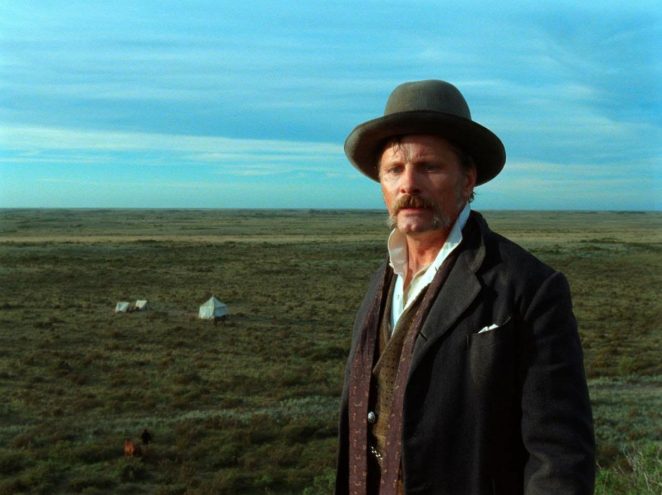
4. Jauja (Lisandro Alonso)

forbidden-room-mathieu-amalric

5. The Forbidden Room (Guy Maddin & Evan Johnson)

tang-wei-in-blackhat-movie-1

6. Blackhat (Michael Mann)

horse-money

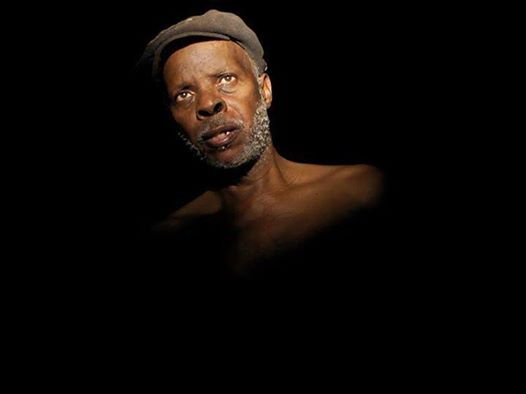
7. Horse Money (Pedro Costa)

412314-1_1600x1200_2677435586_gen

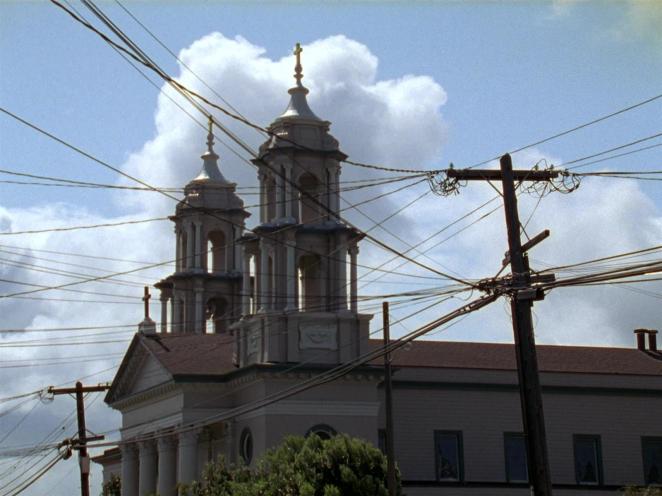
8. The Royal Road (Jenni Olson)

maxresdefault

9. Carol (Todd Haynes)

WorldOfTomorrow-970x545

10. World of Tomorrow (Don Hertzfeldt)

Continue reading

The Best Older Movies I Saw in 2015

An annual tradition here at The End, this is a look at my favorite film discoveries of the year, any movie more than a few years old that I saw for the first time in 2015. Previous years include: 2014, 2013, 2012, 2011, 2010, 2009, 2008, 2007, and 2006. I watched 368 or so movies in 2015, roughly third of which qualify for this list. That’s a sizable decline from last year, where half the films I watched were discoveries, a result of spending more of my movie-time this year on new releases for Seattle Screen Scene and on rewatches for They Shot Pictures. Here are 75 that I liked.

2e212805fa2fe72d21aab47867fc1d99

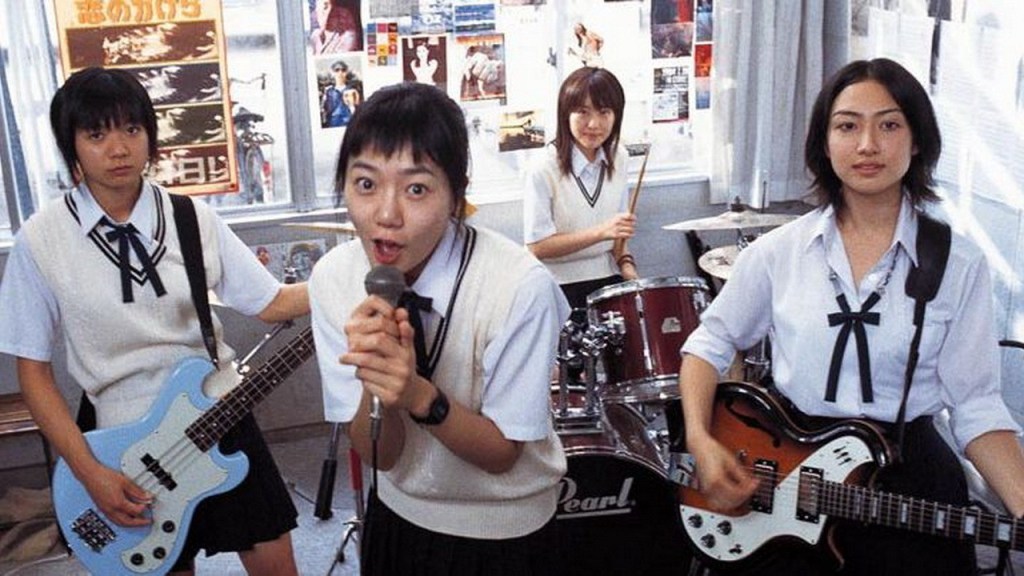
1. Linda Linda Linda (Nobuhiro Yamashita, 2005)

itfeltlikeakiss1

2. It Felt Like a Kiss (Adam Curtis, 2009)

News_from_Home_byChantalAkerman_Film_02

3. News from Home (Chantal Akerman, 1977)

pather_panchali_satyajit_ray_02

4. Pather Panchali (Satyajit Ray, 1955)

bonheur6

5. Le bonheur (Agnès Varda, 1965)

3677994277_c3c8a25d38

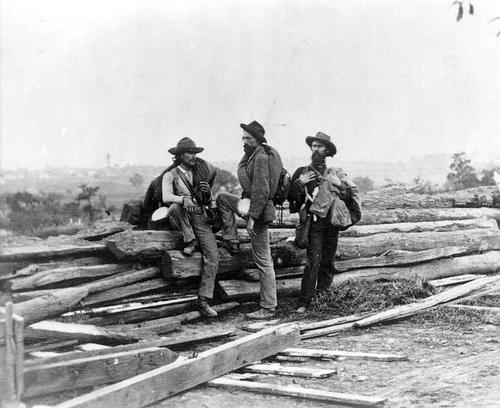
6. The Civil War (Ken Burns, 1990)

Man of Aran 1

7. Man of Aran (Robert Flaherty, 1934)

Screen-Shot-2013-09-23-at-8.33.54-PM

8. Tokyo Olympiad (Kon Ichikawa, 1965)

christmasinjuly

9. Christmas in July (Preston Sturges, 1940)

wpboD2y

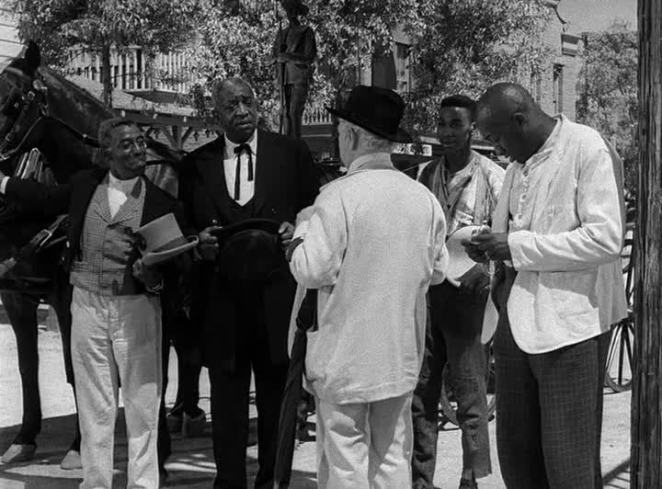
10. The Sun Shines Bright (John Ford, 1953)

Continue reading

1965 Endy Awards

These are the 1965 Endy Awards, wherein I pretend to give out maneki-neko statues to the best in that year in film. 1965 is the year we covered in 2015 on The George Sanders Show, on our year-end wrap-up episode and with reviews scattered throughout the year. Awards for many other years can be found in the Rankings & Awards Index. Eligibility is determined by imdb date and by whether or not I’ve seen the movie in question. Nominees are listed in alphabetical order and the winners are bolded. And the Endy goes to. . .

LE BONHEUR - French Poster by Georges Kerfyser

Best Picture:

1. Le bonheur
2. Chimes at Midnight
3. Pierrot le fou
4. Red Beard
5. The War Game

Best Director:

1. Agnès Varda, Le bonheur
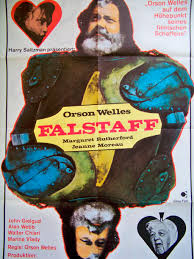
2. Orson Welles, Chimes at Midnight
3. Jean-Luc Godard, Pierrot le fou
4. Akira Kurosawa, Red Beard
5. Kon Ichikawa, Tokyo Olympiad

Best Actor:

1. Orson Welles, Chimes at Midnight
2. Omar Sharif, Dr. Zhivago
3. Lee Van Cleef, For a Few Dollars More
4. Jean-Paul Belmondo, Pierrot le fou
5. Toshiro Mifune, Red Beard

Best Actress:

1. Claire Drouot, Le bonheur
2. Carol Lynley, Bunny Lake is Missing
3. Anna Karina, Pierrot le fou
4. Edie Sedgwick, Poor Little Rich Girl
5. Catherine Deneuve, Repulsion

Supporting Actor:

1. Laurence Olivier, Bunny Lake is Missing
2. John Gielgud, Chimes at Midnight
3. Jim Hutton, Major Dundee
4. King Hu, Sons of the Good Earth
5. Oskar Werner, The Spy Who Came in From the Cold

Supporting Actress:

1. Anna Karina, Alphaville
2. Senta Berger, Major Dundee
3. Kyōko Kagawa, Red Beard
4. Sylvia Pinal, Simon of the Desert
5. Claire Bloom, The Spy Who Came in From the Cold

images

Original Screenplay:

1. Agnès Varda, Le bonheur
2. Charlies Schulz, A Charlie Brown Christmas
3. Luciano Vincenzo, Sergio Leone & Sergio Donati, For a Few Dollars More
4. Harry Julian Fink, Sam Peckinpah & Oscar Saul, Major Dundee
5. Peter Watkins, The War Game

Adapted Screenplay:

1. Orson Welles, Chimes at Midnight
2. Jean-Marie Staub & Danièle Huillet, Not Reconciled
3. Jean-Lu Godard, Pierrot le fou
4. Masato Ide, Hideo Oguni, Ryûzô Kikushima & Akira Kurosawa, Red Beard
5. Julio Alejandro & Luis Buñuel, Simon of the Desert

Non-English Language Film:

1. Le bonheur (Agnès Varda)
2. Pierrot le fou (Jean-Luc Godard)
3. Red Beard (Akira Kurosawa)
4. Simon of the Desert (Luis Buñuel)
5. Tokyo Olympiad (Kon Ichikawa)

Documentary Film:

1. Dizzy Gillespie (Les Blank)
2. Tokyo Olympiad (Kon Ichikawa)

Animated Film:

1. A Charlie Brown Christmas (Bill Melendez)
2. The Dot and the Line (Chuck Jones)

Unseen Film:

1. The Holy Man (Satyajit Ray)
2. Juliet of the Spirits (Federico Fellini)
3. The Saragossa Manuscript (Wojciech Has)
4. Shadows of Forgotten Ancestors (Sergei Paradjanov)
5. Vinyl (Andy Warhol)

 tumblr_mq5srkCp4T1r6ivyno1_1280

Film Editing:

1. Le bonheur
2. Chimes at Midnight
3. For a Few Dollars More
4. Not Reconciled
5. Pierrot le fouCinematography:1. Le bonheur
2. Chimes at Midnight
3. Dr. Zhivago
4. Pierrot le fou
5. Tokyo Olympiad

Art Direction:

1. Alphaville
2. Chimes at Midnight
3. Dr. Zhivago
4. Planet of the Vampires
5. Red Beard

Costume Design:

1. Chimes at Midnight
2. Dr. Zhivago
3. For a Few Dollars More
4. Planet of the Vampires
5. Temple of the Red Lotus

Make-up:

1. Chimes at Midnight
2. Dr. Zhivago
3. For a Few Dollars More
4. Major Dundee
5. The War Game

red-beard-cuban-movie-poster-1964

Original Score:

1. Alphaville
2. A Charlie Brown Christmas
3. Dr. Zhivago
4. For a Few Dollars More
5. Help!

Adapted Score:

1. Bunny Lake is Missing
2. A Charlie Brown Christmas
3. Poor Little Rich Girl
4. The Sound of Music

Original Song:

1. “Christmastime is Here”, Vince Guaraldi, A Charlie Brown Christmas
1. “I Need You”, The Beatles, Help!
2. “Lara’s Theme”, Maurice Jarre, Dr. Zhivago
3. “Ticket to Ride”, The Beatles, Help!
4. “You’ve Got to Hide Your Love Away”, The Beatles, Help!

Sound:

1. Alphaville
2. The Sound of Music
3. The Spy Who Came in From the Cold
4. Tokyo Olympiad
5. The War Game

Sound Editing:

1. Alphaville
2. For a Few Dollars More
3. Major Dundee
4. The Spy Who Came in From the Cold
5. The War Game

Visual Effects:

1. Alphaville
2. Dr. Zhivago
3. For a Few Dollars More
4. Major Dundee
5. The War Game

 519cQDC2sAL._SY300_

Running Out of Karma: John Woo’s The Crossing

Here are reviews of the two separately released parts of The Crossing. We talked about John Woo’s career in general on They Shot Pictures a few months ago.

maxresdefault

The Crossing – reviewed August 13, 2015

The first part of John Woo’s latest epic (the second part was recently released in China to little fanfare, but isn’t available here yet) is a romantic war movie in the style of The Big Parade or Doctor Zhivago, with a half dozen characters caught up in the Chinese civil war following the defeat of the Japanese in 1945. The most direct connection is probably Cai Chusheng and Zheng Junli’s 1947 film The Spring River Flows East which follows the ups and downs of a family awash in the same history, and was also released separately in two parts.

Leaving the nautical disaster that’s led the project to be dubbed “John Woo’s Titanic” for the second half, this first part follows the three major stars and their satellite characters through the civil war: Zhang Ziyi as an illiterate nurse trying to get by while searching for the man she loves (a soldier), Takeshi Kaneshiro as a Taiwanese doctor who has lost the woman he loves (a Japanese girl), and Huang Xiaoming as a Nationalist general who falls in love with and marries a young woman before shipping her to safety in Taiwan (where she lives in Kaneshiro’s girlfriend’s old house). It’s lush and romantic (a quite pretty score by Taro Iwashiro, who also did the stirring and lovely music for Woo’s Red Cliff), with golden hues, wind blowing through grasslands, pointed freeze frames and slow motion (yes, and doves), balanced by the horrors of war: starving children, students and dancing girls beaten in the streets, freezing trenches and explosive heroism. Nobody mixes action and melodrama with more seriousness than John Woo.

One person’s old fashioned and sappy is another person’s classical and heartfelt. And I am nothing if not a sucker.

20150801190257

The Crossing II – reviewed December 2, 2015

Such a strange movie, less a continuation of the story of Part One than a partial remake of it (pointedly perhaps its title is “The Crossing II” and not “The Crossing Part II“), as the first half hour not only recapitulates what went before, but completely replays whole scenes with slightly different editing and a few extra scenes added in. The next hour or so continues the rhythm of the first film, intercutting between the various leads as they all slowly make their way to the doomed boat (a title card at the opening gives us all the details of the impending disaster, with some of this information to be repeated verbatim at the end of the film). The emphasis is on Takeshi Kaneshiro’s doctor, first in his friendship with Song Hye-kyo (the wife of Nationalist general Huang Xiaoming), then with his family (ostensibly his younger brother who wants to run off from Taiwan to Shanghai to become a prostitute, but as it plays the relationship is more with his mother and sister-in-law (his older brother’s widow), who is played by Woo’s daughter Angeles), and finally, on the boat, with Zhang Ziyi, the idealistic young woman willing to do anything up to and including prostitution in her quest to survive long enough to find the army man she loves (“When I believe someone, I believe him whole-heartedly. Shouldn’t it be that way?” she says, in a line that does much to summarize Woo’s entire career).

Recentering the film in this manner makes it less an ensemble piece about love in a time of war, as the first one is, than a film about the endurance of women in the face of tragedy. Perhaps this is the influence of Tsui Hark, brought in at the last minute to help assemble the final cut of this film. The whole thing feels like it was hastily assembled in response to the box office failure of the first film. I’m very curious how the second half was to play out in its initial conception, as I quite liked Part One, it had the sweep and loveliness of a great historical melodrama, like Woo’s version of the great 1947 Shanghai film The Spring River Flows East. The second part though would probably play better, or at least just as well, as a single film, in isolation from the first. The jumbling repetitions of the first film irreparably break the rhythm, we’re left wondering why we’re seeing these scenes again, and why the new scenes were deleted from the first film, rather than being caught up in the emotions on-screen.

For all its billing, this is not “John Woo’s Titanic“. In its loveliness, deep anxiety about the past and the horrors of history (one of the many fascinating things about it’s look at the Civil War is that both sides are pretty much equally terrible, while good people populate the ranks of both armies), breathtaking romanticism and flights of digital expressionism, this is nothing less (and nothing more) than John Woo’s War Horse.

This Week in Rankings

rooney-mara-carol-01-600x350

Because I’m not very smart, the end of the year finds me scrambling not only to catch up with the deluge of high quality late 2015 releases, but also a whole slew of films from 1965, in preparation for our annual end of the year episode of The George Sanders Show. With all these movies to watch (and they pile up faster than I can watch them), and a couple of as yet unpublished projects, there hasn’t been much time for writing actual movie reviews. I do have a few over at Seattle Screen Scene: Takashi Miike’s Yakuza Apocalypse, Robert and Monica Flaherty’s Moana with Sound, and Nelson George’s A Ballerina’s Tale, along with George Sanders Shows on Major Dundee and The Heroes of Telemark and Star Wars and Turkish Star Wars, along with a handful of capsule reviews linked in the list below.

This is of course the beginning of award season (and a reminder that when it comes to this time of year, be careful not to fall prey to the Intended Ignorance of the awards bloggers). The Endy Award Nominees for 2015 will be announced at the same time as the nominees for the Academy Awards, and I’ll be live-tweeting the winners during the Oscar telecast as I did last year. At the end of this month I’ll have a few year-in-review posts here: a list of my Top Film Discoveries (older movies I saw for the first time) of 2015, a list of my Top Films of 2015 by New York-release date reckoning, along with a list of the Top Films of 2015 that haven’t been released yet, according to that system. Depending on how much I’m able to see between now and the end of the year, I may have an actual Best of 2015 list as well. Or I may save that for Oscar week (when we’ll have our 2015 episode of George Sanders as well). Of course, all lists and awards here at The End are subject to change, because I’m never finished watching movies.

These are the movies I’ve watched and rewatched over the past few weeks, and where they place on my year-by-year rankings. Links are to capsule reviews over at letterboxd.

A Girl in Every Port (Howard Hawks) – 12, 1928
A Day in the Country (Jean Renoir) – 4, 1936
French Cancan (Jean Renoir) – 5, 1954
Hatari! (Howard Hawks) – 2, 1962
Tokyo Olympiad (Kon Ichikawa) – 4, 1965

Major Dundee (Sam Peckinpah) – 7, 1965
For a Few Dollars More (Sergio Leone) – 9, 1965
Not Reconciled (Jean-Marie Straub & Danièle Huillet) – 15, 1965
Samurai Assassin (Kihachi Okamoto) – 16, 1965
Tattooed Life (Seijun Suzuki) – 18, 1965
The Heroes of Telemark (Anthony Mann) – 35, 1965

Star Wars (George Lucas) – 2, 1977
Moana with Sound (Robert & Monica Flaherty) – 16, 1980
The Man Who Saves the World (Çetin İnanç) – 45, 1982
Rocky V (John G. Avildsen) – 58, 1990
Rocky Balboa (Sylvester Stallone) – 36, 2006

Here’s to the Future! (Gina Teliroli) – 29, 2014
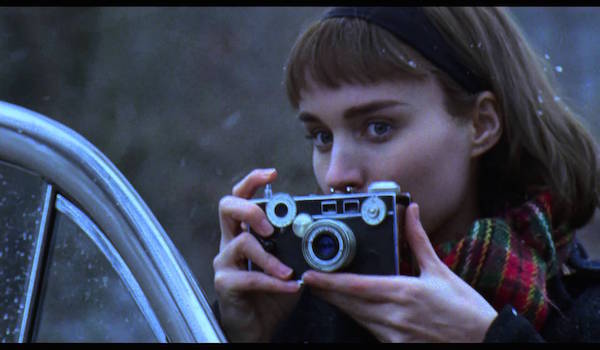
Carol (Todd Haynes) – 6, 2015
Spotlight (Tom McCarthy) – 12, 2015
In Jackson Heights (Frederick Wiseman) – 13, 2015
Creed (Ryan Cooler) – 19, 2015
Hitchcock/Truffaut (Kent Jones) – 26, 2015

By the Sea (Angelina Jolie-Pitt) – 47, 2015
Brooklyn (John Crowley) – 50, 2015
Ex Machina (Alex Garland) – 54, 2015
Aloha (Cameron Crowe) – 55, 2015
The Peanuts Movie (Steve Martino) – 57, 2015
Judy Judy Judy (C. Mason Wells) – 60, 2015

This Week in Rankings

The biggest change here at The End since the last rankings update is the most obvious: we’ve a new home. I’ve been slowly, painfully, reformatting old posts and indices and changing links to the new .net address, but it’s going to take forever. The Rankings & Awards index at the top of the page is partially done. My year-by-year rankings are now sorted by decade, which should make them easier to use. Several of the Endy Awards posts are still a jumbled mess, but they should be all fixed before too long. The Reviews and Podcasts indices are up-to-date and formatted correctly, but most of the review links head back to the old site and that’ll likely remain the case indefinitely.

Over at Seattle Screen Scene I wrote about a week I spent watching movies at the multiplex, with reviews of the five movies I saw there. On The George Sanders Show we talked about a couple of 60s sic-fi vampire movies and films by Chantal Ackerman and Agnès Varda.

These are the movies I’ve watched and rewatched over the last couple of weeks, and where they place on my year-by-year rankings.

The Skeleton Dance (Walt Disney) – 7, 1929
The Haunted House (Walt Disney) – 16, 1929
Skeleton Frolics (Ub Iwerks) – 26, 1937
Le bonheur (Agnès Varda) – 3, 1965

Poor Little Rich Girl (Andy Warhol) – 10, 1965
Planet of the Vampires (Mario Bava) – 21, 1965
Dizzy Gillespie (Les Blank) – 22, 1965
The Face of Fu Manchu (Don Sharp) – 33, 1965
Goke, Body Snatcher from Hell (Hajime Satô) – 21, 1968

Je, tu, il, elle (Chantal Akerman) – 14, 1974
Star Wars (George Lucas) – 2, 1977
News from Home (Chantal Akerman) – 3, 1977
The Empire Strikes Back (Irvin Kershner) – 1, 1980
The Witches of Eastwick (George Miller) – 16, 1987

Beetlejuice (Tim Burton) – 16, 1988
The Assassin (Hou Hsiao-hsien) – 1, 2015
The Martian (Ridley Scott) – 11, 2015
Bridge of Spies (Steven Spielberg) – 17, 2015
Crimson Peak (Guillermo del Toro) – 28, 2015

SPL 2: A Time for Consequences (Soi Cheang) – 37, 2015
Yakuza Apocalypse (Takashi Miike) – 41, 2015
Sicario (Denis Villeneuve) – 48, 2015
Steve Jobs (Danny Boyle) – 50, 2015
A Ballerina’s Tale (Nelson George) – 60, 2015

A Brief Impression of The Age of Innocence (Martin Scorsese, 1993)

r-SCORCESE-AGE-OF-INNOCENSE-large570

Rewatch confirms what I’ve suspected for awhile: this is Martin Scorsese’s very best movie . . . poor Newland Archer, always thinking he’s the smartest person in the room when in fact he’s the dumbest . . . and what rooms, those sweeping tracking shots, rooms cluttered with objects, the conspicuous wealth of the 1870s, generated on the backs of the wholly absent poor . . . a world of unimaginable riches and power, so seductive, its occupants entirely unaware of its exceptionality: a simple matter of fact that their universe is the way it is because they are destined to lead it, their system of unexpressed rules governing their every motion . . . Archer thinks he understands it, and looks down upon those he doesn’t understand, those poor simple women who lack his self-awareness, his understanding of the ritual . . . his late realizations that not only is he caught in a web of conspiracy, that his darkest secrets are public knowledge and, ultimately, that his apparently vacant wife his a far more deft manipulator of the levers of power than he could ever hope to be . . . Archer ultimately refuses freedom, he’s old-fashioned, preferring to live in his constructed reality (ala Shutter Island or Solaris), lacking the imagination to step outside the social order imposed upon him . . . Day-Lewis and Ryder are brilliant of course: he taking a character that should be insufferable and making him a tragic hero, a foolish, arrogant prig who fails in every pathetic scheme, yet is ultimately almost admirable in his refusal to be anything other than what he is; she hiding May’s depths behind bright eyes and a sunny smile, never cracking but always twisting the knife, bending the world with a will far stronger than Archer can imagine . . . Pfeiffer might be a weak link, saying her lines as if she’s always out of breath, but perhaps that’s just the way Archer sees the Countess, her eyes betray a steeliness and wry arrogance that belies Archer’s view of her as the embodiment of his desires for sex and freedom . . . in a film so much about the unspoken rules and systems that underlie an excess of conversation, actors that play on multiple levels are essential, and no actors contains more multitudes than Daniel Day-Lewis . . . Scorsese captures it all of course, the beauty (that shot of the light house on the shore!), the isolation (that cube mansion in the middle of an undeveloped Manhattan) and the seductive power of the objects that surround them, the food, the cutlery, the hands of stone, such a luscious prison . . . and the dissolves, oh wow, the dissolves . . .