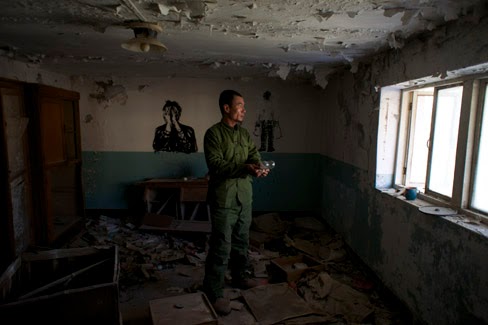
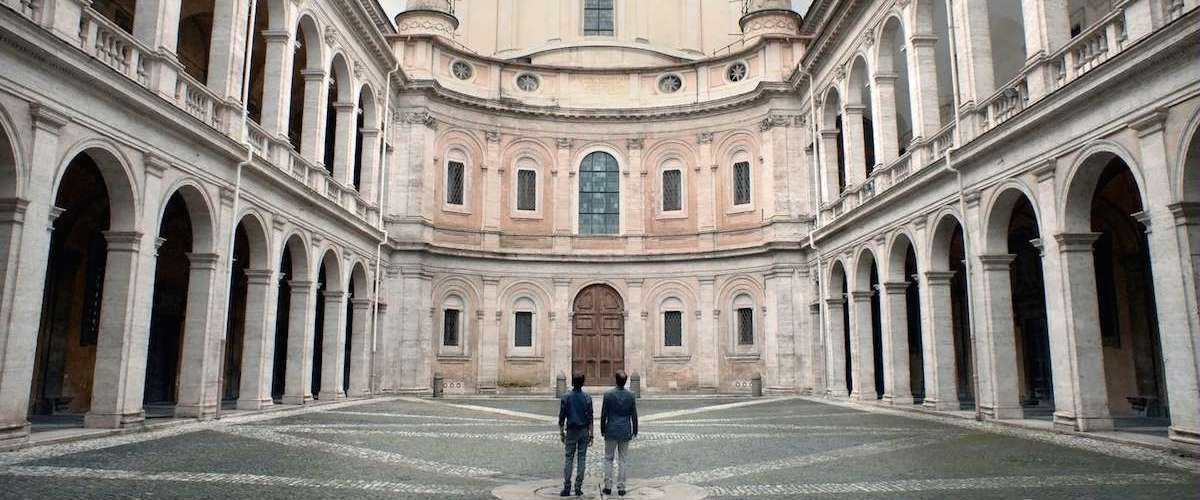
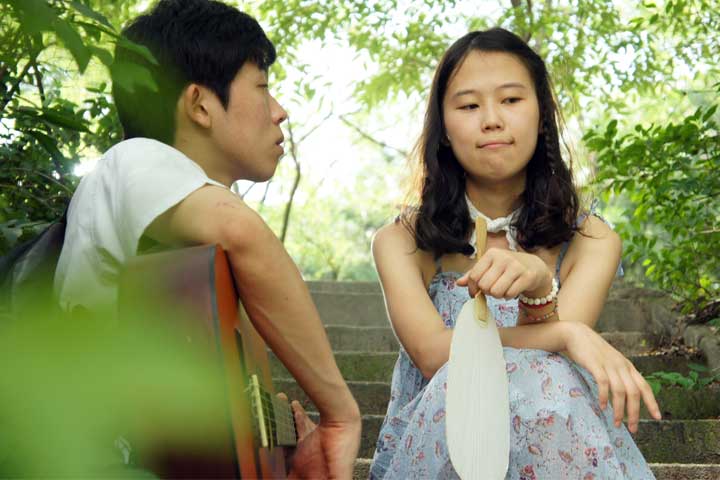
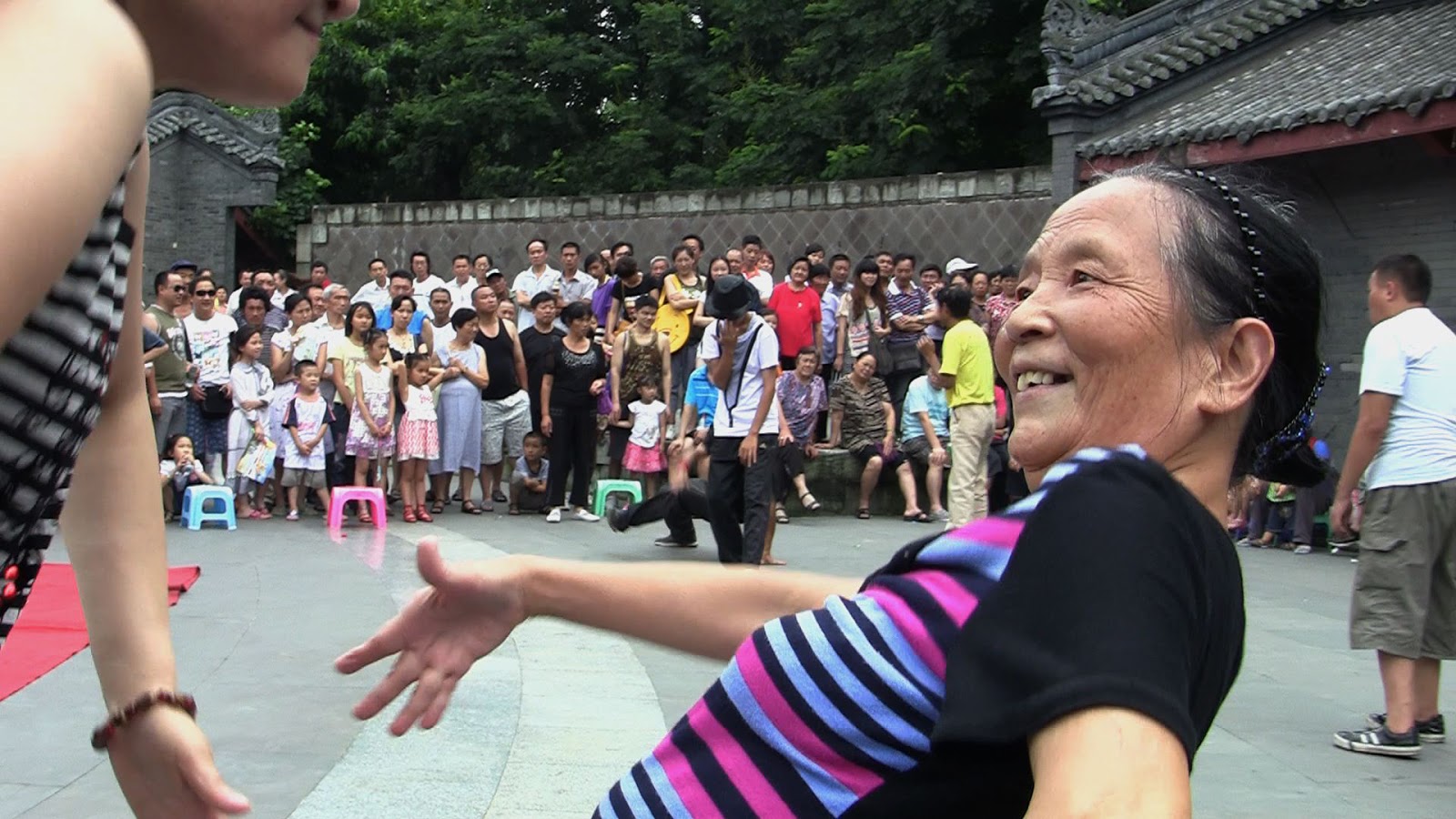
This Week in Rankings

It’s been almost two months since the last rankings update. In that time I posted my annual Top 100 Films of All-Time list and covered the 2015 Vancouver International Film Festival. On The George Sanders Show we did our annual Top Tens episode, covered the release of Johnnie To’s Office on location and recorded two podcasts in Canada. At Seattle Screen Scene we had extensive coverage of the festival as well, and before that I wrote about the Jackie Chan/John Cusack film Dragon Blade, M. Night Shyamalan’s welcome return The Visit, the bittersweet Chinese film Go Away, Mr. Tumor, Joe Swanberg’s  mediocre Digging for Fire, Korean action film Memories of the Sword and two terrific American romantic comedies, Noah Baumbach’s Mistress America and Peter Bogdanovich’s She’s Funny That Way.

These are the movies I’ve watched and rewatched over the last few weeks and where they place on my year-by-year rankings. Short comments or capsule reviews for them can be found over at letterboxd.

The Wizard of Oz (Victor Fleming) – 8, 1939
Voyage in Italy (Roberto Rossellini) – 3, 1954
The Lion in Winter (Anthony Harvey) – 3, 1968
Trouble in Mind (Alan Rudolph) – 10, 1985
The Civil War (Ken Burns) – 9, 1990

The Age of Innocence (Martin Scorsese) – 1, 1993
The Mirror (Jafar Panahi) – 7, 1997
The Soong Sisters (Mabel Cheung) – 16, 1997
The Transporter (Corey Yuen) – 33, 2002
Transporter 2 (Louis Leterrier) – 57, 2005

Police, Adjective (Corneliu Porumboiu) – 15, 2009
Weekend (Andrew Haigh) – 35, 2011
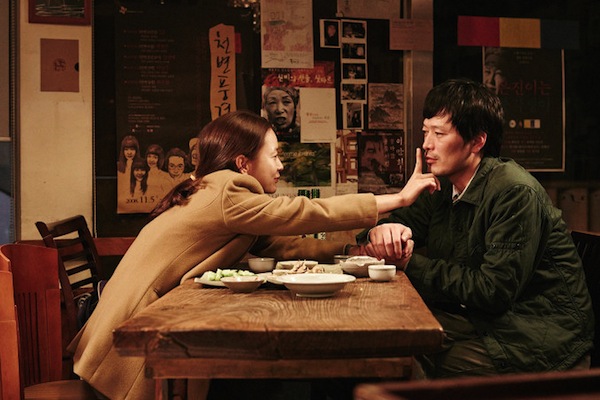
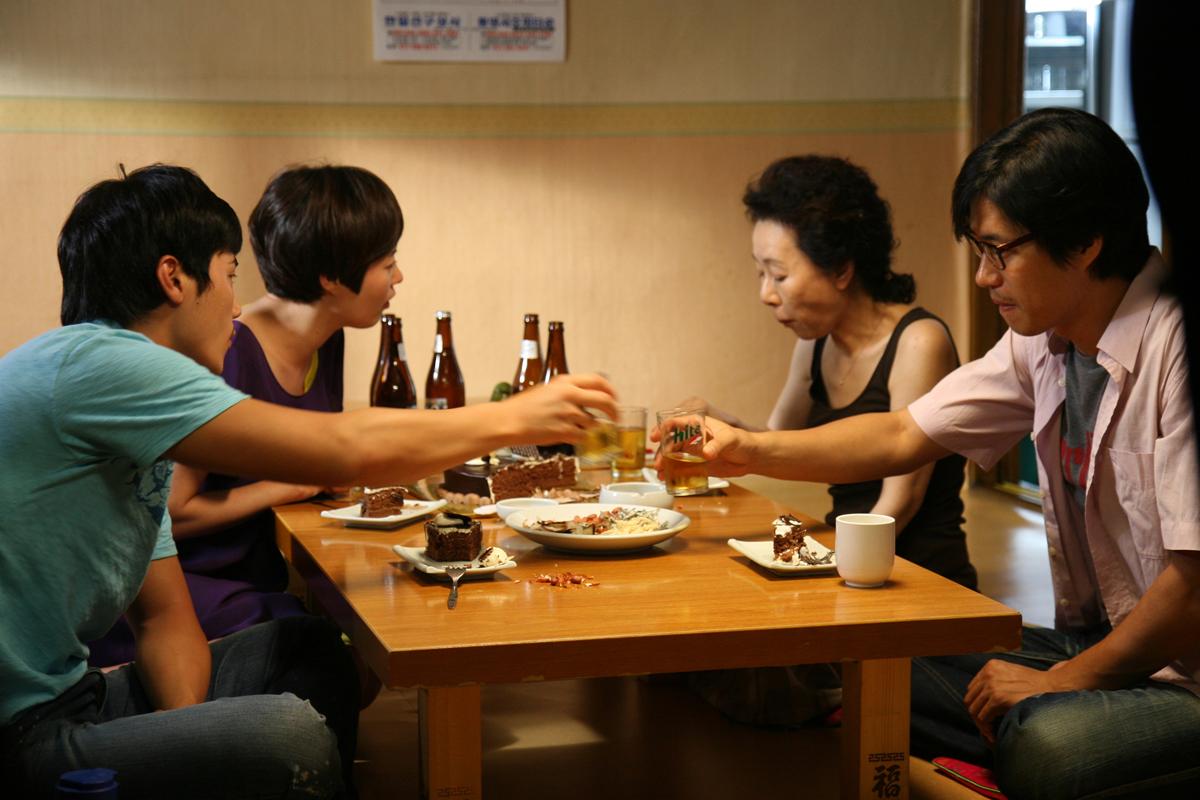
A Matter of Interpretation (Lee Kwangkuk) – 11, 2014
She’s Funny That Way (Peter Bogdanovich) – 19, 2014
Regarding Susan Sontag (Nancy D. Kates) – 77, 2014

Exodus: Gods and Kings (Ridley Scott) – 87, 2014
The Dream of Shahrazad (Francois Verster) – 98, 2014
Love is All (Kim Longinotto) – 108, 2014
The Assassin (Hou Hsiao-hsien) – 1, 2015
The Forbidden Room (Guy Maddin) – 3, 2015

88:88 (Isiah Medina) – 6, 2015
Mountains May Depart (Jia Zhangke) – 9, 2015
Arabian Nights Volume 2: The Desolate One (Miguel Gomes) – 10, 2015
The Thoughts That Once We Had (Thom Andersen) – 11, 2015
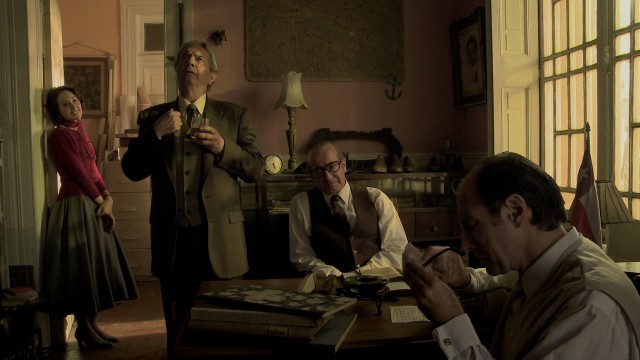
Li Wen at East Lake (Luo Li) – 12, 2015

Office (Johnnie To) – 13, 2015
Kaili Blues (Bi Gan) – 14, 2015

Taxi (Jafar Panahi) – 15, 2015
Murmur of the Hearts (Sylvia Chang) – 16, 2015
Right Now, Wrong Then (Hong Sangsoo) – 17, 2015

Port of Call (Philip Yung) – 19, 2015
The Visit (M. Night Shyamalan) – 20, 2015
Queen of Earth (Alex Ross Perry) – 21, 2015
A Tale of Three Cities (Mabel Cheung) – 22, 2015
45 Years (Andrew Haigh) – 23, 2015

Go Away, Mr. Tumor (Han Yan) – 24, 2015
My Golden Days (Arnaud Desplechin) – 26, 2015
The Pearl Button (Patricio Guzmán) – 27, 2015
Topophilia (Peter Bo Rappmund) – 29, 2015
Arabian Nights Volume 3: The Enchanted One (Miguel Gomes) – 32, 2015

The Treasure (Corneliu Porumboiu) – 33, 2015
Greed; Ghost Light (Kim Nakyung) – 34, 2015
The Exquisite Corpus (Peter Tscherkassky) – 35, 2015
Dead Slow Ahead (Mauro Herce) – 39, 2015
Mustang (Deniz Gamze Ergüven) – 44, 2015
Wondrous Boccaccio (The Taviani Brothers) – 45, 2015

Paradise (Sina Ataeian Dena) – 49, 2015
Digging for Fire (Joe Swanberg) – 50, 2015
Magicarena (Andrea Prandstraller & Niccolò Bruna) – 51, 2015
Memories of the Sword (Park Heung-shik) – 52, 2015
What Happened in Past Dragon Year (Sun Xun) – 53, 2015
It’s Already Tomorrow in Hong Kong (Emily Ting) – 57, 2015

Alice in Earnestland (Ahn Gooc-jin) – 58, 2015
Dragon Blade (Daniel Lee) – 59, 2015
Tandem (King Palisoc) – 61, 2015
The Transporter Refueled (Camille Delamarre) – 62, 2015
Argentina (Carlos Saura) – 63, 2015

VIFF 2015: The Last Five Days

Part of my coverage of the 2015 Vancouver International Film Festival


I’ve been home from Vancouver for almost a week now, still suffering from the cold I catch there every year (something unhealthy about not eating properly, drinking copious amounts of caffeine and sharing breathing space with hundreds of other people ten hours a day for a week). Since my report on a few films from the First Four Days of the festival, we covered a number of movies on a second episode of The George Sanders Show, namely Right Now Wrong Then, The Assassin, Taxi, A Matter of Interpretation, Landfill Harmonic, The Dream of Shahrazad and Arabian Nights. Of the 29 features and 4 shorts I saw during my nine days in Vancouver, there are a few more standouts I want to mention.

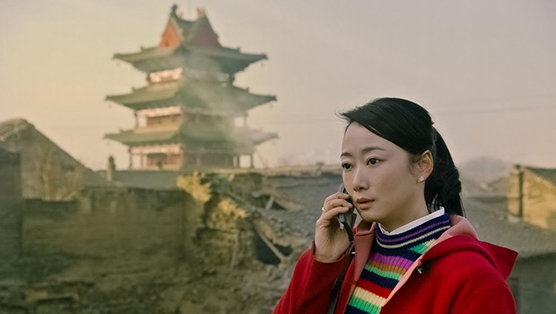
Jia Zhangke’s Mountains May Depart is one of the more polarizing films of the year. It marks a radical shift in Jia’s formal technique, abandoning the long-shot/long-take aesthetic that has made him one of the preeminent examples of 21st Century Asian Minimalism. Instead, working with his longtime cinematographer, the artist Yu Lik-wai, Jia films in a conventional mainstream style: the camera moves, he edits within a scene and we get close-ups of the actors. This is in keeping with the broad melodrama of the story’s construction. A schematic story of a love triangle told in three different time periods, Mountains is the most baldly emotional movie Jia has yet made. His first use of close-ups reveals what we long-suspected but that the old long shots tended to obscure, namely that Zhao Tao is one of the great actors of her generation. Her performance here is nothing less than phenomenal. In the first story, set in 1999, she’s the pivot point of a love triangle with two men, one a poor coal miner, the other an aspiring capitalist. She ultimately chooses the rich man, which leads to the shattering heartbreaks of the second chapter, set in 2014, a story itself split in two halves, first about the miner (and his wife), then about Zhao and her now-estranged son, who is sent home to attend his grandfather’s funeral. The third story, set in 2025, follows the son, now emigrated to Australia where he has forgotten his Chinese past, the language, and even his mother. He connects with another Chinese immigrant, his much older teacher (played by Sylvia Chang), and the Oedipal nature of their relationship is no less subtle than the boy’s name (he was aspirationally christened “Dollar” by his ludicrous father).

This third section has come under fire (usually under the vaguely racist rubric of “Jia can’t direct in English”) for its obvious schematicism and the artificiality of Dong Zijian’s performance as Dollar. I suspect this is largely a category error, that we’re used to Jia making withdrawn, somewhat obscure films like Platform and Still Life, films whose equally schematic melodrama is hidden behind long takes and a lack of emotionally direct dialogue. The issues Jia is addresses are not new, no one has more obsessively followed the dislocations and disruptions of the Chinese family in the wake of the imperatives of modern capitalism than he has over the past 20 years. But as with his previous film, A Touch of Sin, a series of violent short stories loosely related to the Chinese action film tradition (though not really wuxia in particular), he’s now addressing those issues in a more conventionally generic mode. The mix of reality and surreality has long been a part of Jia’s work, from the flash animation and theme park environment of The World to the alien craft and bridge light romanticism of Still Life, resting uneasily alongside documentary footage of China’s changing landscapes (see also his actual documentaries 24 City and I Wish I Knew, which audaciously mix actorly performances into their real life accounts), it’s only now that the surrealism has overtaken an entire narrative. And there is no filmic form more surreal than the classical melodrama. And, if you’re paying attention to the world today and where it’s headed, it only seems logical that the absurd is the only true way to capture it. This is Jia’s lunatic masterpiece.

Sylvia Chang is terrific, as usual in Mountains May Depart, even better than she is in Johnnie To’s Office, which she co-adapted from her own play. But that’s not all she’s had for us in 2015, she also directed Murmur of the Hearts, like Mountains a family melodrama taking place across multiple time periods. It stars Isabella Leong, making a long-awaited return to the screen after several years in retirement following her marriage in 2008 (don’t miss her in Pang Ho-Cheung’s Isabella from 2006). She plays a young woman dating an aspiring boxer. The boxer has vision problems, and Isabella, an artist, is haunted by memories of her parents, who split up when she was a child, which also separated her from her brother. We also meet the brother, now a tour guide on the small island off the coast of Taiwan where they grew up. Chang deftly weaves together the characters’ present lives and memories of their parents with a splash of magic realism in the form of a mermaid and a quite fashionable ghost/bartender. It’s a more conventional art house movie than Mountains, in that it’s the kind of Taiwanese film that seems rather inexplicable for the first 40 minutes or so and, as everything becomes clear and all the various connections are resolved, becomes deeply moving as the story comes together with a satisfying click. It isn’t as meta-cinematic as the other Chang-directed films I’ve seen (the very good Tempting Heart and 20 30 40), but it’s warm and sweet and quite lovely, a nice flipside to the acidic Office.


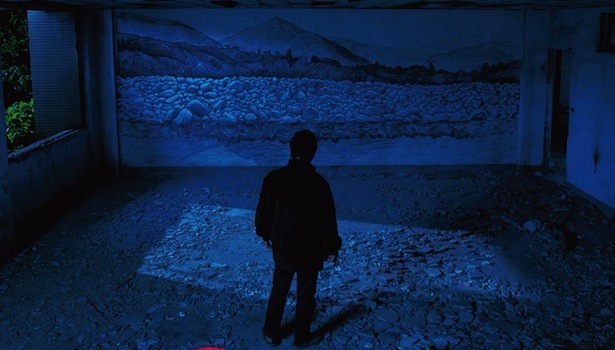
Yet another Chinese film blurring the boundaries between past and present is Kaili Blues, from first-time director Bi Gan.  A middle aged man, a doctor, helps watch over his nephew while his brother, the boy’s father, gambles and gets himself in trouble. When he learns that his brother may have sold the boy in another town, he heads out to bring him home. But what he finds there is an inexplicable kind of temporal loop, chronicled in a breath-taking 40+ minute single-shot, as the man, his driver, the driver’s girlfriend, a local band, and various other characters wander around a river spanning village.  The doctor’s past, and that of his fellow doctor, now an elderly woman, seemingly come to life in the village, along with his nephew’s future. There’s no apparent rationale for the loop, it’s simply a world where the past, present and future exist together, an endless cycle repeating itself, or the infinite possibilities of an unknowable universe. It was the most satisfyingly confounding film of the festival and an audacious debut, one that in past years would have earned its director a Dragons & Tigers award.

Moving away from China but sticking with the experimental, I lastly want to mention a trio of films. Portuguese director Lois Patiño’s Night Without Distance is a semi-narrative short about smugglers waiting in the Galician borderland while cops lie in wait for them. Patiño films the whole thing in negative, but not black and white, rather mind-blowingly colored. Purples and yellows dominate the inverted landscape, with gorgeous drops of rain bursting from a stream, while the people stand still, haunting the otherworldly spaces. It’s a documentary vision of our Earth as filmed from the land of ghosts. I’ve never seen anything like it. Paired with it was Topophilia, by director Peter Bo Rappmund. Painstakingly assembled out of thousands of still images covering the length of the Trans-Alaskan Pipeline, it’s a fascinating rumination of the effect of technology on environment, and the way the two seem to meld together. With an eerily assaultive soundtrack largely built out of the sounds of the pipeline itself, the impact of the machinery on the natural world is undeniable, and yet, the natural world goes on all around it, taking no notice. Mauro Herce’s Dead Slow Ahead is another film about machinery, chronicling the life of a massive transport ship as it traverses the Mediterranean. Here gives us the kind of otherworldly closeups familiar from Leviathan, while putting more emphasis on the ways the ship technology dwarfs the humans that work within it. A long final section echoes with recordings of the workers as they call home, leaving messages, talking to distant wives, mothers, children, living ghosts in the machine.

VIFF 2015: Hou Hsiao-hsien’s The Assassin


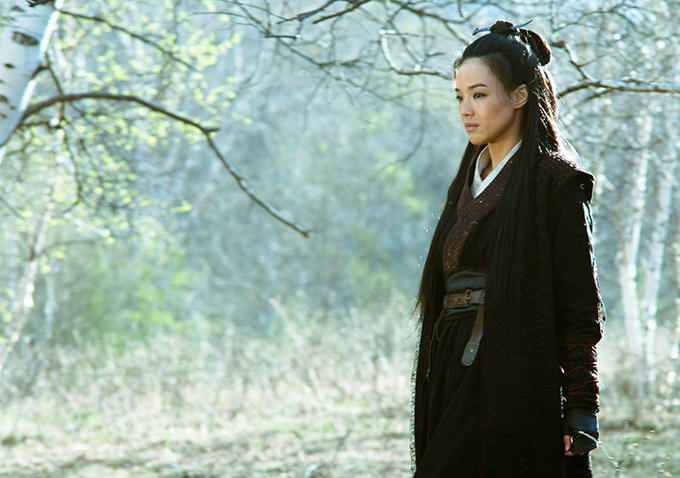
If you wanted to design to film perfectly and specifically for me, it would probably be something like The Assassin. A film by my favorite contemporary filmmaker, one from whom I spent months earlier this year studying and writing about in detail for a theatrical retrospective, working in one of my favorite film genres, the one I’ve spent the better part of the last three years exploring. There was simply no way this wasn’t going to be a movie I liked. But since whether a critic likes a film or not is easily the least interesting aspect of any decent review, thankfully that task is quickly disposed with and we can proceed to more interesting concerns, the what and why of the film. Hou Hsiao-hsien’s latest, his first film since 2007’s Flight of the Red Balloon, is set in the late Tang Dynasty period, starring Shu Qi as a young woman who returns home after ten years as a killer-in-training to wreak vengeance on the local ruler. The film follows a typical wuxia plot structure, with motivations gradually revealed and complicated, schemes exposed, punctuated by regularly occurring fight sequence set-pieces. But Hou has adapted that structure to his own unique rhythm, presenting a languid, patient narrative of long takes exploring lush sets and landscapes. It’s the stillest action movie there’s ever been.
In tone the closest analogue in Hou’s previous work might be Millennium Mambo, a hypnotic film that could seemingly spin on forever. Right up until the director’s credit came on screen, I kept expecting another hour of narrative. I had no idea how much time was passing, or what the shape of the story was, until it ended. This is one of the distinct pleasures of some of Hou’s best work, from The Time to Live, The Time to Die to Goodbye South Goodbye to Flight of the Red Balloon. Looked at in total, however, the plot could easily be that of a late 70s Chor Yuen film (but not at all a Chang Cheh film, for a number of reasons, the gender of the protagonist and the ultimate optimism of the work first among them). It’s just that Hou refuses to match the pace of the film to the complexity of the story. He teases out exposition in long dialogue scenes, but shoots those scenes with such intricate beauty that it’s hard to pay attention to the words being spoken when the pictures are so fascinating. An example: a long, central scene between Chang Chen’s governor (the target of the assassination plot) and his favorite concubine explains much of the Shu Qi character’s past and the volatile tangle of competing interests that lead to his family breaking off Chang’s engagement with Shu in favor of another woman, a humiliation which lead to Shu’s exile. It also demonstrates the bond between Chang and the concubine, which motivates a further complication in the plot, as Chang’s wife has a murderous scheme of her own. But rather than the actors, who form a loving triangle in the center middle distance of the frame and remain mostly still, our eye is drawn to the edges of the frame. The left is dominated by a line of three flames, reflections of candle lights that appear to have no on-screen referent; the right by a curtain that billows in and out throughout the scene, blown by a similarly unsourced wind, shrouding the actors in gauze when it blows in, revealing them in crystal clarity when it blows out. You get so lost in the image, it’s easy to miss the thread of the plot.

But plot there is (this is not, as my pal Neil so tweeted, a film “about a bunch of veils and curtains”). Hou’s films, from The Boys from Fengkuei on, have a distinctly languid place, regardless of how much actually occurs in the narrative. Flowers of Shanghai is an opium dream of a film, one in which there’s almost no dramatic action, a fair amount in dialogue and a torrent of emotional churning under the surface. A City of Sadness is a multi-layered, multi-character historical epic. Millennium Mambo and The Puppetmaster are narrated tales, one about the entropic life of a club girl in modern Taipei, the other a 50 year biopic about a man caught up in the sweep of history. In mood and pace the films are the same, with long single take scenes of apparently mundane and occasionally inexplicable behavior drawing us into the feel of the protagonists’ world, an effect amplified by the highly subjective nature of the narration. That subjectivity is the essential element in all of Hou’s films, as he is ever seeking to capture an individual’s experience of the world, and to inspire a deep empathy in the audience. His films eliminate any sense of moral judgment: whatever bad or dumb things his heroes may do, he doesn’t allow us any distance from them. We are inside them, left to understand their lives as they do. The Assassin is no different in this respect. Its dense plot of maneuvering factions in the present inspired by the secret schemes of the past is revealed slowly, like Flowers almost entirely in dialogue. Our identification with Shu Qi’s hero is established in a new way, however. Rather than linger over lengthy shots of Shu at work or in repose, as in Mambo, we instead observe things as she is observing them. Not strictly from her point of view, but often Hou will show us a long scene of character interaction only to cut at the end to Shu observing silently from some hiding spot (invisibly ninja-style in the rafters, for example). Her motivations remain opaque through the length of the film, right up until the very end we don’t really know what she wants or how she plans to go about achieving it. Of course, when that “Directed By” credit does appear on-screen, everything makes perfect sense.

What she ends up achieving is a bold rejection of the traditional wuxia narrative, the first major development in the genre in decades. This century’s art house wuxia films have all taken the form of homage, usually to King Hu. A mix of spectacular and (more importantly perhaps) spectacularly shot action with a bit of Buddhism and above all a devotion to a code of honor that demands personal unhappiness, films like Crouching Tiger Hidden Dragon, House of Flying Daggers and The Grandmaster follow the strictly established rules of the genre, which itself is as old as cinema and reaches back through centuries of Chinese literature. For all their technical facility, they remain merely highly polished variations on Hu’s work from the 1970s, while lacking the sense of experimentation that makes films like A Touch of Zen or Legend of the Mountain so unfathomable to this day. There hasn’t really been anything new in the genre since Hu’s titanic pair of of Legend of the Mountain and Raining in the Mountain in 1979. That is, until now (unless you count Tsui Hark’s various variations on the genre, which add to the traditional form outlandish special effects, breath-taking speed and an anarchic wit. At their core, though, they’re still traditional narratives). Obviously in adapting his highly idiosyncratic style to the genre, Hou was bound to come up with something interesting. But I’m surprised at how much he actually bent his career-long aesthetic. In The Assassin, Hou cuts within a scene, he uses different film stocks and aspect ratios (it’s all in the archaic 1.33 ratio (which emphasizes the verticality of traditional Chinese painting, the influence of which is felt strongly in the landscape scenes, aided immeasurably by the natural beauty of China’s landscapes and fortuitous fogs rolling in to mimic the vast negative spaces so distinctive in that art form), like last year’s Horse Money and Jauja, but for two flashback shots, on slightly grainier film stock, which are 1.85, possibly to accommodate the shape of a long musical instrument), he has insert shots, and the camera moves into the frame, all techniques he’d abandoned 30 years ago when he moved from mainstream romantic comedies into art house minimalism. But as the demands of wuxia changed Hou, so did Hou change wuxia. There are fight scenes in The Assassin, but they are quick. Elegant and brief, they are over before the heroes of a Lau Kar-leung film would be even a little bit warmed-up. The de-emphasis on action is vital: Shu Qi is an assassin who rejects assassination, a wuxia knight-errant who rejects the world of violence, the jianghu. She rejects everything that defines a wuxia hero: the whole Confucian edifice of blind obedience to ones master, of defining honor as the strict following of a code that has little to do with morality or even common sense, the reification of abstract concepts over basic human happiness (the film also enacts a recurring opposition in Hou’s work, that of the country and city, as Shu leaves the lushly ornate interiors of imperial life for the rough open skies of the country and an itinerant village existence). The fact that she’s a woman isn’t especially unusual, there have been female warriors in wuxia stories for centuries, and they’ve been consistently represented on-screen. But usually they behave exactly the same as the male characters, while occasionally falling victim to romantic desires as well. Shu avoids the tragic fate of a Zhang Ziyi character by doing something Zhang never could, despite the obvious evils or inhumanity of her various masters. Shu, in explicitly rejecting everything the wuxia ethos stands for, turns the wuxia hero from a tragic figure into a truly inspirational one. She’s the first one I’ve ever seen that actually succeeds in reinventing the world, in making it a more perfect place.

VIFF 2015: The First Four Days

Things at the Vancouver International Film Festival have gotten off to a leg-numbing pace, as there’s been hardly a moment since I was freed from Customs on Friday afternoon when I’ve had enough time to write in combination with a working internet connection. Here it is Tuesday already and I’ve seen eighteen movies and I haven’t written more than a tweet about a single one of them. Mike’s been writing a bunch over at Seattle Screen Scene, you should definitely check out his stuff over there. We’ve also got a few reviews from local critic Neil Bahadur and Melissa will be adding some stuff sometime as well. We also managed to record an episode of The George Sanders Show last night wh
erein we discussed several of the films we’ve been watching, including Guy Maddin’s
The Forbidden Room, Miguel Gomes’s Arabian Nights, Thom Andersen’s The Thoughts That Once We Had, Luo Li’s Li Wen at East Lake, Lee Kwangkuk’s A Matter of Interpretation and Philip Yung’s Port of Call. I might write about some of those here as well, but for now I’m just going to attempt to cover some of the films we didn’t get to on the show.

Unbelievably, despite having just finished watching it a mere 90 minutes before we began recording, both of us neglected to talk about Hong Sangsoo’s latest release, one of our most-anticipated films of the festival. The Hong film is a perennial highlight of every VIFF (I’ve seen Like You Know it All, Oki’s Movie, Hahaha, In Another Country, Our Sunhi and Hill of Freedom here over the years) and Right Now, Wrong Then is no disappointment. It’s a very good film,  while lacking the formal experimentation that distinguishes his best work (Oki’s Movie, The Day He Arrives) or the sheer giddy pleasure of his funniest movies (Hill of Freedom, In Another Country), it has a precision and focus that assures that, despite a certain conventionality, it will become one of his more popular features. Split evenly in two halves, it follows a film director, in town for a festival showing and Q & A, as he wanders about a tourist site where he meets a young woman. They talk, drink soju, make awkward approaches at romance and ultimately split when the director is proven to be a dishonest, womanizing lout. Then the film resets, complete with a new title card (the first half is “Right Then, Wrong Now”, the second “Right Now, Wrong Then”) and we replay the same day but with significant differences. The director in this version is honest and open (perhaps to a fault, as when a drunken overheating compels him to strip naked in front of his companions). Hong significantly varies his camera setups in the second section, creating more balanced compositions where in the first half the setups tended to privilege the director’s perspective (including a Hong rarity: an actual POV shot). It’s a mature film, relaxed and confident with a simple truth to tell. But underlying it all is a palpable loneliness. It’s played as sadness, as tragedy, in the first half, where the director’s faults lead to failure and angry isolation, and as wistful melancholy in the second, where people can find happiness in connecting with an other, with the full knowledge that any such connection is necessarily temporary. It’s a quiet and sweet film, a warm room on a cold night, and vice versa.

We talked a bit about Port of Call on the podcast, but I didn’t mention one idea I had about the film, which is that it’s a kind of update/companion to Peter Chan’s 1996 masterpiece Comrades, Almost a Love Story. In that film, Maggie Cheung plays a woman who immigrates from the Mainland to Hong Kong, works a number of jobs to survive (including at a local McDonald’s), has a deep connection with a character played by a major pop star (Leon Lai) with whom she bonds over a shared love of another pop star, Teresa Teng, and falls in with a big guy, a man of violence who loves her and takes care of her. In Port of Call, Jessie Li plays a woman who immigrates from the Mainland to Hong Kong, works a variety of jobs to survive (including at a local McDonald’s), has a deep connection with a character played by a major pop star (Aaron Kwok – though the two characters never meet, of course, their relationship, or rather, his with her, is the defining element of the film), and is obsessed with another pop star (Sammi Cheng). She too falls in with a bad crowd, and her relationship with a large man capable of violence leads to her doom. Chan’s film is one of nostalgia, with Hong Kong as an aspirational place of freedom and opportunity, where one can move, work hard and eventually make it big (and then, prior to the Handover, make it to America). Its characters look backwards to their home villages, with Teng’s music as the aching symbol of the world they left behind. Yung’s is a film of horror, based on true events that occurred in the 2008-2010 period, the Hong Kong it finds is no longer one of hope, but of desperation, with the poor set upon each other in twisted games of manipulation and violence, where even a glimmer of a true connection (facilitated by an internet chat) can lead to disaster.  Cheng’s music is the aspiration, it’s what Li and her sister listened to when they were trying to learn Cantonese, it’s the music of hope amid failure. Yung set the film in the recent past, as much because that’s the time when the actual events occurred as because given the pace of change in China, the situation has already shifted dramatically. In his Q & A, he suggested that economic conditions have balanced so much between Hong Kong and the Mainland’s urban centers, that such aspirational immigration is far less common (in fact, he points out that even in 2008, the dream of moving to Hong Kong was Li’s mother’s dream, the younger generation doesn’t look at the former colony in the same way). But there’s nothing particularly unique about the idealization of Hong Kong. If the Mainland is catching up with or even surpassing it in the realm of fantasy-creation, there will always be a disconnection between that dream, say the candy-colored consumer paradise of Go Away Mr. Tumor, and the gruesome reality of the poor folks who fall into nightmare.

Emily Ting’s It’s Already Tomorrow in Hong Kong is a different kind of fantasy, one of ex-patriates in Hong Kong and, more distressingly, of indie filmmakers weaned on Before Sunrise. Jamie Chung plays an American from Los Angeles (her grandparents emigrated from Hong Kong) lost in the city who runs into a fellow American named Josh. He’s the Joshiest Josh in film history, working in finance but really, an aspiring novelist. Actor Bryan Greenberg looks like the child of Michael Rappaport and John Krasczinski, but with even worse hair than that implies. He shows her around, lets slip way too late in the evening that he has a girlfriend and the couple splits. . . only to reunite a year later for another walk (once again hitting places best seen in Wong Kar-wai and Johnnie To films) and faux-naturalistic conversation (and a trip to a bar to see a Hong Kong knock-off of Arcade Fire, which is exactly as appalling as that sounds). After a century of Parisian dominance, it’s clear to me that Hong Kong is the most cinematic city in the world, and it certainly doesn’t let Ting down. The film is gorgeous, the bright lights of Hong Kong providing enough inherent pleasure that one is able to overlook the constructed obviousness of the script and the bland nothingness that is Greenberg’s performance. Chung fares better, her lines are just as generic but she sells them with big eyes and a world-saving smile. Pretty as the city is, it’s a problem when during the romantic climax of your film, the most interesting thing on screen is the multi-layered play of lights on a taxi cab window. Not even a cameo from the great Richard Ng can bring it to life.

A vastly more successful Hong Kong romance comes from the team of Mabel Cheung and Alex Law (she directs, he produces, they both write). Based on the life of Jackie Chan’s parents (though the story ends long before he was born) A Tale of Three Cities stars Tang Wei and Lau Ching-wan (weirdly billed as “Sean Lau”, which I haven’t seen him marketed as in years, a sign perhaps that the film is trying for a North American release) as a couple kept desperately apart by war (first against the Japanese, then against the Communists). In a Brady Bunch-like set-up, Tang has two young daughters and a husband she didn’t care for who gets killed by a clock during an air raid, while Lau has two sons and a wife dying of some unknown disease. They meet when, in the course of his duty as a Nationalist soldier, he catches her smuggling opium and lets her go. It turns out she’s his wife’s cousin and they meet up again when the war forces them from Shanghai to the smaller town of Anhui. He’s loud, illiterate and usually drunk, she’s quiet, refined and very smart. Of course they fall in love, but first the war (Lau is captured by the Japanese) and then family keep them apart (Tang’s mother doesn’t think he’s classy enough for her girl). The performances of the two leads are exceptional, Lau playing a typical role for him: a hard man with soft eyes. Tang though, is proving herself to simply be one of the best actors in the world right now. Last year at VIFF she carried Ann Hui’s biopic The Golden Era (set during the same period, but much more experimental in style and tone) with a finely modulating performance as a psychologically unstable writer. Already in 2015 she’s been brilliant in a nearly a wordless performance in Michael Mann’s Blackhat and as the emotionally explosive center of Johnnie To’s musical Office. Her performance here is halfway between those two, with simple eye movements and precise gestures, she is curiosity and determination in the interior scenes, and in the many scenes of disaster she is broad and heart-wrenching, an expressive anguish that goes beyond melodrama. The film is a series of brief unions and long separations, as the two find themselves apart from each other and their children for increasingly long periods of time, mirroring the coming together and tearing apart of the nation itself. Cheung expertly keeps things focused, despite the leaps in time and location, and the film is a masterpiece of classical storytelling, the kind of lush historical romantic epic that Hollywood hasn’t managed to make in almost 20 years (Titanic is the last good one I can think of). Along with another such epic, 2014’s The Crossing Part One, directed by John Woo, it’s clear that these veterans of the Hong Kong film industry have once again bested Hollywood at its own game.

VIFF 2015 Preview Part Three: The Mirror and Weekend

Every year before heading over to the festival, I try to familiarize myself with some of the directors whose films are playing there that I haven’t yet seen. Last year I watched films by Pedro Costa, Lisandro Alonso, Imtiaz Ali and Heiward Mak, all of which I liked a lot and all of whom had films at VIFF I ended up enjoying a great deal. This year I haven’t been able to see as much as I would have liked. There was the discussion of Corneliu Porumboiu’s Police, Adjective on The George Sanders Show I linked to a couple of days ago, but other than that there’s just these two movies, Jafar Panahi’s The Mirror and Andrew Haigh’s Weekend.

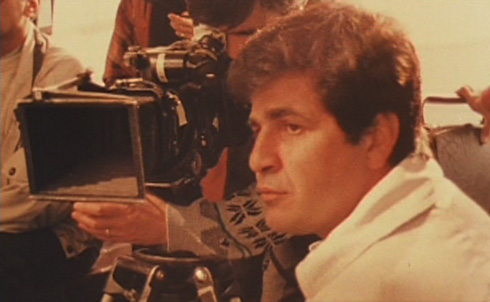
Panahi is mostly famous these days for continuing to smuggle films out of Iran despite having been officially banned from doing so in 2010. His This is Not a Film won wide-spread acclaim the following year, and his Closed Curtain was a film I was hoping to see at VIFF 2013 but for scheduling reasons didn’t make it. (I have hard luck with Iranian films in general at the festival, a number of interesting ones have played there over the years, but other than the two Abbas Kiarostami films Certified Copy and Like Someone in Love, I haven’t managed to get to a single one.) His new film is called Taxi (well, it’s called been retitled Jafar Panahi’s Taxi for North American release, apparently so people don’t confuse it with the 2004 Jimmy Fallon-Queen Latifah movie). My experience with Iranian cinema in general is woefully inadequate, I only caught up with Asghar Farhadi and A Separation earlier this year, for example, so rather than simply go with Panahi’s recent work, I decided to watch one of his earliest films, the 1997 feature The Mirror, which won the Locarno Film Festival that year.

It’s an idea for a film so simple in its provocation that I’d be surprised if it’d never been done before. There’s something elemental about it, like an idea that’s always been there in cinema but never quite been expressed so well or so effectively before (John Cage’s 4’33” came to mind). A young girl, six or seven years old, has to make her way home from school after her mom fails to pick her up on time. She doesn’t quite know the way, and maneuvers in and out of buses, cabs and crosswalks with the mostly ineffectual help of strangers. Along the way we see a cross-section of the city in its particular time and place (Teheran in the mid-90s), a kind of neo-realist city-symphony. But then, after 40 minutes, the girl looks at the camera and decides she doesn’t want to be in the movie anymore and storms off. The film stock abruptly shifts and we see Panahi and his crew debating what to do next, a pseudo-documentary of a film production in a panicked moment. They let her go, while leaving her microphone on and follow her home, surreptitiously filming the girl’s journey now in reverse as she in “real” life must accomplish the same tasks her character did in fiction.

It’s a nifty gimmick and anchored beautifully by the performance of Mina Mohammad Khani as the girl. But that’s just a MacGuffin for the film’s true interest, which is the portrait of Teheran in all its cacophony and chaos. A dozen little stories spin around the girl (the young couple separated by the enforced gender divide on the public bus; the man who just wants his poor relations to dress nicely at his daughter’s wedding) but mostly in the first half, the constructed narrative section. The people in the second half are more incoherent, their plotlines less clear, their characters not so cleanly delineated with cinematic shorthand. Some characters recur, including an old woman that throws a monkey wrench into even that distinction. We heard her talking in the narrative section, complaining about the lack of respect she gets from her children. When the girl meets her again in the second, she explains that she wasn’t acting in the earlier scenes, they just paid her to show up and she made up her lines out of her own life. Fiction, reality: it’s all the same. The important thing is to invest in traffic lights and make your kids memorize their home addresses.

From an inauspicious beginning as an assistant editor on Gladiator, British director Andrew Haigh burst on the scene with his 2011 romantic drama Weekend, about a brief but intense relationship between two men in Nottingham. Played by Tom Cullen and Chris New, the two bond over long naturalistic conversations about life, family, friends, sexual histories and the difficulties of being gay in a predominantly straight world. It’s firmly in the tradition of the romantic drama, with shades of Brief Encounter, Before Sunrise, Waterloo Bridge, Morocco and Lost in Translation (among others), a talky film about two people trying to figure out their place in the world and if that place has room for anyone else. As such it’s expertly done, but Haigh brings to it something special with a unique contrast of styles. The interiors, the dialogue and party scenes, are shot intimately, with a fuzzy off-handedness that is the signal for realism in contemporary cinema. We skip forward in time catching only glimpses of much longer conversations, many of which are mumbled or lost in a cacophony background (this is entirely realistic: I loved how in the party and bar scenes I couldn’t understand any of what anyone was saying, just like I can’t in such real-life situations).

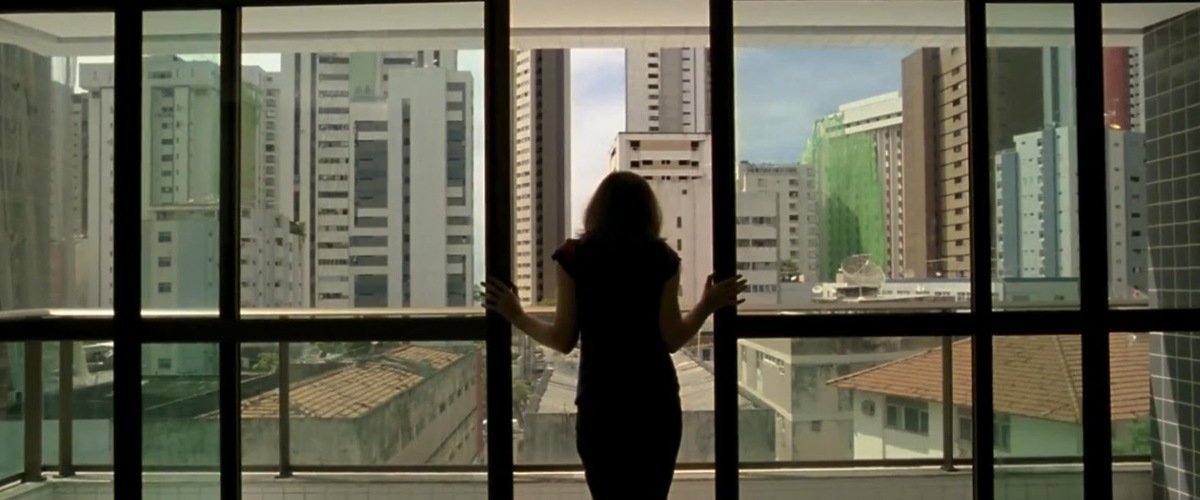
This isn’t in itself remarkable, but what separates those scenes is. All the exterior shots are carefully framed, with long straight lines forming sharp corners and diagonals. These usually (but not always) function as pillow shots, popularized by Yasujiro Ozu as the institial spaces for contemplation between scenes of plot. As in Ozu, Haigh’s are precisely framed, but where in Ozu’s films they are brightly scored with jaunty music that often belies the serious dramatics at work in his characters lives, in Weekend the shots are oppressive and constricting, a constructed world of boundaries imposing public limits on the expression of the relationship possibilities that thrive behind apartment tower windows. My favorite are the three shots with the setup pictured above. In each shot, Cullen watches New walk away from his apartment. In each shot New is wearing a different colored jacket (yellow, black, red: the three colors are unified in the outfit New wears in his final scene). Each time, New hesitates a bit as he walks away, his motion, and Cullen’s shadow, depicting the emotional course of their relationship in minute gestures. If the film depicted of just these three shots, that would be enough to make it something special. Like with The Mirror, Weekend is at its heart a fairly simple cinematic and thematic idea, but one that is likewise all the more powerful for the purity of its expression. Haigh’s new film 45 Years won wide acclaim at the just-concluded Toronto Film Festival, I can’t wait to see it at VIFF.

VIFF 2015 Preview Part Two: A Big List of VIFF Movies

I went to my first Vancouver International Film Festival in 2008 and have attended every year since but one (2011, when a kid was born two weeks before the festival started). As I look forward to this year’s edition, I thought it might be nice to take a look back at some of my favorite films from previous festivals. Here are my Top 50 VIFF Movies, which given the current exchange rate, yields 66 titles.

1. Oki’s Movie (Hong Sangsoo, 2010)
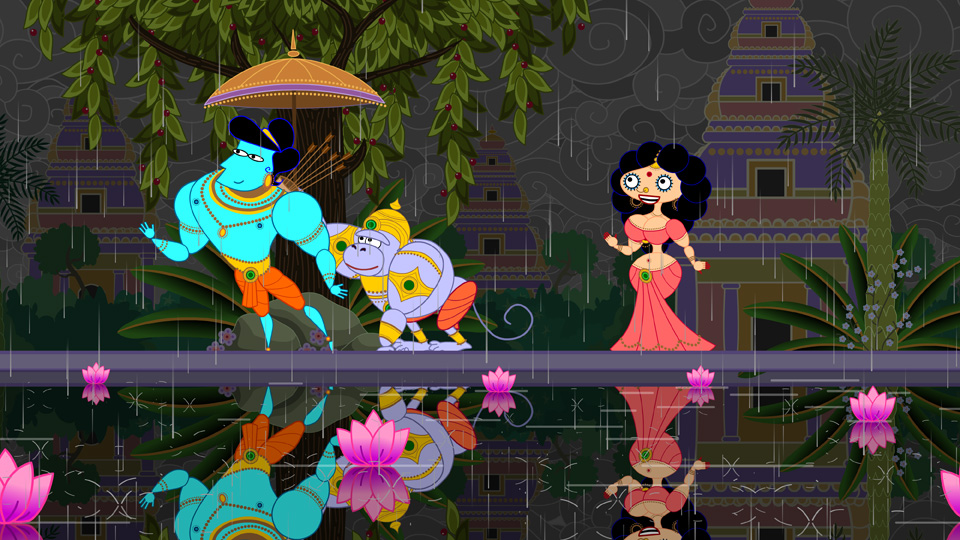
2. Sita Sings the Blues (Nina Paley, 2008)
3. Oxhide II (Liu Jiayin, 2009)
4. Certified Copy (Abbas Kiarostami, 2010)
5. Sparrow (Johnnie To, 2008)
6. La última película (Raya Martin & Mark Peranson, 2013)
7. The Midnight After (Fruit Chan, 2014)
8. The Missing Picture (Rithy Panh, 2013)
9. Hill of Freedom (Hong Sangsoo, 2014)
10. Like Someone in Love (Abbas Kiarostami, 2012)
11. Night Across the Street (Raúl Ruiz, 2012)
12. Jauja (Lisandro Alonso, 2014)
13. Uncle Boonmee Who Can Recall His Past Lives (Apichatpong Weerasethakul, 2010)
14. Wolf Children (Mamoru Hosada, 2012)
15. National Gallery (Frederick Wiseman, 2014)
16. Horse Money (Pedro Costa, 2014)
17. A Touch of Sin (Jia Zhangke, 2013)
18. Romance Joe (Lee Kwangkuk, 2012)
19. Stray Dogs (Tsai Ming-liang, 2013)
20. Carlos (Olivier Assayas, 2010)
21. In Another Country (Hong Sangsoo, 2011)
22. Tabu (Miguel Gomes, 2012)
23. Mekong Hotel (Apichatpong Weerasethakul, 2012)
24. Thomas Mao (Zhu Wen, 2010)
25. Written By (Wai Ka-fai, 2009)
26. Our Sunhi (Hong Sangsoo, 2012)
27. A Spell to Ward Off the Darkness (Ben Rivers & Ben Russell, 2013)
28. The Last Time I Saw Macao (João Pedro Rodrigues & João Rui Guerra da Mata, 2012)
29. When Night Falls (Ying Liang, 2012)
30. Hahaha (Hong Sangsoo, 2010)
31. 607 (Liu Jiayin, 2010)
32. Eccentricities of a Blonde-Haired Girl (Manoel de Oliveira, 2009)
33. Yumen (JP Sniadecki, Xu Ruotao & Xiang Huang, 2013)
34. Adieu au langage (Jean-Luc Godard. 2014)
35. La Sapienza (Eugène Green, 2014)
36. Memories Look at Me (Song Fang, 2012)
37. Three Sisters (Wang Bing, 2012)
38. Bluebeard (Catherine Breillat, 2009)
39. Happy-Go-Lucky (Mike Leigh, 2008)
40. Hard to Say (Lee Kwangkuk, 2011)
41. Two Days, One Night (Jean-Pierre & Luc Dardenne, 2014)
42. Walker (Tsai Ming-liang, 2012)
43. Four Ways to Die in My Hometown (Chai Chunya, 2012)
44. Heaven Knows What (Josh & Benny Safdie, 2014)
45. Ballet 422 (Jody Lee Lipes, 2014)
46. People’s Park (JP Sniadecki & Libbie Cohn, 2012)
47. Rachel Getting Married (Jonathan Demme, 2008)
48. Highway (Imtiaz Ali, 2014)
49. Like You Know it All (Hong Sangsoo, 2009)
50. The Great Passage (Yûya Ishii, 2013)
51. The Headless Woman (Lucrecia Martel, 2008)
52. Something in the Air (Olivier Assayas, 2012)
53. Emperor Visits the Hell (Luo Li, 2012)
54. I Wish I Knew (Jia Zhangke, 2010)
55. The Golden Era (Ann Hui, 2014)
56. Mahjong (João Rui Guerra da Mata, 2013)
57. Neighboring Sounds (Kleber Mendonça Filho, 2012)
58. Thursday Till Sunday (Dominga Sotomayor, 2012)
59. Uncertain Relationships Society (Heiward Mak, 2014)
60. The Sleeping Beauty (Catherine Breillat, 2010)
61. Trap Street (Vivian Qu, 2013)
62. Waltz with Bashir (Ari Folman, 2008)
63. Gallants (Clement Cheng & Derek Kwok, 2010)
64. Rembrandt’s J’Accuse (Peter Greenaway, 2008)
65. Welcome to New York (Abel Ferrara, 2014)
66. East Meets West (Jeffrey Lau, 2011)

VIFF 2015 Preview Part One: Office, Police Adjective, The Soong Sisters and A Matter of Interpretation

Leading up to the 2015 Vancouver International Film Festival, I’m hoping to catch up with and review some films from directors who have films featured at this years festival, directors who are reasonably new to me. This is the first installment.

Office (Johnnie To, 2015) and Police, Adjective (Corneliu Porumboiu, 2009)

The George Sanders Show Episode #69

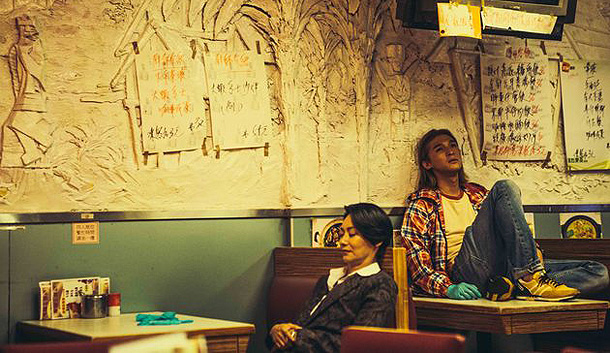
Johnnie To’s latest film is, unfortunately, not playing at this year’s festival, continuing a worrying trend from 2014 wherein the To film (Don’t Go Breaking My Heart 2) only played at the Toronto Film Festival before receiving a very limited North American theatrical release targeted solely at the diasporic film market. Office is written and produced by Sylvia Chang, who also stars. It’s an adaptation of her play Design for Living and marks a reunion of the actress with To, who directed her and Chow Yun-fat in the 1989 film All About Ah-Long, a family melodrama (also based on a screenplay by Chang, co-written with Chow) and one of the biggest hits of To’s career. In addition to being an accomplished actress, writer and pop singer, Chang has also directed a number of excellent films, the latest being Murmur of the Hearts, which will be playing at this year’s VIFF.
Also at VIFF this year is Romanian director Corneliu Porumboiu’s The Treasure. A leading member of the New Romanian Cinema that has found international prominence over the last decade or so, we of The George Sanders Show had yet to see any of his work. So for this week’s episode, we took a look at his 2009 black comedy Police, Adjective. We also discuss Office, the films of Johnnie To and discuss several of the less well-known films we’re looking forward to seeing at this year’s festival.

The Soong Sisters (Mabel Cheung, 1997)

Mabel Cheung’s A Tale of Three Cities, based on the life of Jackie Chan’s parents and starring the intriguing pair of Lau Ching-wan and Tang Wei, is playing at this year’s festival. The only other one of Cheung’s films I’ve seen was 1987’s An Autumn’s Tale, with Chow Yun-Fat, so I decided to take a look at her 1997 historical epic about three sisters. 
The oldest (Michelle Yeoh) marries one of the richest men in China, a direct descendant of Confucius. The second (Maggie Cheung) marries Sun Yat-sen while he’s in the midst of overthrowing the Qing Dynasty and establishing his Republic. The youngest (Vivian Wu) marries Chiang Kai-shek while he’s in the midst of turning Sun’s Republic into a military dictatorship more concerned with killing Communists than fighting the Japanese that happen to be invading the country. Director Mabel Cheung introduces it as a fairy tale, three princesses getting the things they want (money, prestige and power, respectively) at the expense of the family bond. The second marriage estranges Maggie from her father (played by Jiang Wen), the third estranges Vivian and Maggie, and all the while Michelle tries to hold the family together, more for the control over the nation that their unity gives them as for any feeling of familial piety. The allegories are obvious (a nation split apart, first with Western influence (the girls are sent away to America as children) then with internal disputes (finally the three settle in three different Chinas: Hong Kong, Taiwan and the PRC itself). The film has the gorgeous sweep and cliched dramatics of Zhang Yimou’s films from the same period, but with a harder edge, a radical sting lying just under the surface. The women are vibrant, dynamic and highly intelligent. Their men are buffoonish, pompous, and ineffectual. The men are limited, the women capable of anything.

A Matter of Interpretation (Lee Kwangkuk, 2014)

One of our favorite films from this year’s Seattle International Film Festival was the latest from Korean director Lee Kwangkuk. The follow-up to Romance Joe, which I saw and loved at the 2012 VIFF, and which remains one of the great undistributed-in-the-US films of recent years, Lee’s films are somewhat reminiscent if his mentor Hong Sangsoo, but with important and interesting differences. I’m looking forward to watching A Matter of Interpretation again at VIFF, as I was only able to watch a mediocre screener at SIFF. Like the previous film, it’s a romantic comedy lost amid a swirl of narrative experimentation. Rather than the nested flashbacks and films within films (or rather, ideas for films within films) of his first film, Lee here layers his story as a series of dreams (as in his 2013 short Hard to Say, which also played at VIFF), related by the various characters to each other as they attempt to puzzle them out. A grumpy actress, her lost ex-boyfriend, a friendly detective and his damaged sister form the web of enchanted melancholy, with the help of a little soju. Mike reviewed it for us in more detail at Seattle Screen Scene.

VIFF 2015 Index

This is an index of my coverage of the 2015 Vancouver International Film Festival. Also be sure to check out the coverage we did over at Seattle Screen Scene.

Previews:

Introduction and Proposed Schedule – Sept. 04, 2015
Preview #1: Office, Police Adjective, The Soong Sisters and A Matter of Interpretation – Sept. 21, 2015
Preview #2: A Big List of VIFF Movies – Sept. 22, 2015
Preview #3: The Mirror and Weekend – Sept. 23, 2015

Reviews:

The George Sanders Show #70: VIFF Report #1 – Sept. 28, 2015
VIFF 2015: The First Four Days – Sept. 29, 2015
The George Sanders Show #71: VIFF Report #2 – Oct. 3, 2015
The Assassin (Hou, 15) – Oct. 9, 2015
VIFF 2015: The Last Five Days – Oct. 11, 2015
The George Sanders Show #72: VIFF Wrapup – Oct 19, 2015

A Ranked List:

1. The Assassin
2. The Forbidden Room
3. Mountains May Depart
4. Arabian Nights Part 2
5. The Thoughts That Once We Had
6. Li Wen at East Lake
7. Kaili Blues
8. A Matter of Interpretation
9. Taxi
10. Murmur of the Hearts
11. Night Without Distance
12. Right Now, Wrong Then
13. Port of Call
14. A Tale of Three Cities
15. 45 Years
16. My Golden Days
17. The Pearl Button
18. Topophilia
19. Arabian Nights Part 3
20. The Treasure
21. Greed; Ghost Light
22. The Exquisite Corpus
23. Dead Slow Ahead
24. Mustang
25. Wonderous Boccaccio
26. Magicarena
27. Paradise
28. What Happened in Past Dragon Year
29. It’s Already Tomorrow in Hong Kong
30. The Dream of Shahrazad
31. Alice in Earnestland
32. Tandem
33. Argentina
34. Love is All

A Top 100 Films of All-Time

It is time once again for a Top 100 Films of All-Time list. As I’ve done for the last few years, the first ten spots on the list comprise a hypothetical Sight & Sound-style ballot. We’ll be discussing them on this week’s episode of The George Sanders Show. This top ten is presented here in chronological order. The remaining 90 films were randomly selected from a consideration set of 902 films, which excluded films that made my Top Tens in 2012, 2013 and 2014.

1. Sherlock, Jr. (Buster Keaton, 1924)
2. City Lights (Charles Chaplin, 1931)
3. Out of the Past (Jacques Turner, 1947)
4. All About Eve (Joseph L. Mankiewicz, 1950)
5. Journey to Italy (Roberto Rossellini, 1954)
6. The Lion in Winter (Anthony Harvey, 1968)
7. A Touch of Zen (King Hu, 1971)
8. The Killer (John Woo, 1989)
9. The Age of Innocence (Martin Scorsese, 1993)
10. Sita Sings the Blues (Nina Paley, 2008)
11. The Life and Death of Colonel Blimp (Michael Powell & Emeric Pressburger, 1943)
12. Lady Snowblood (Toshiya Fujita, 1973)
13. Fat Choi Spirit (Johnnie To & Wai Ka-fai, 2002)
14. The Double Life of Veronique (Krzysztof Kieślowski, 1991)
15. Private Fears in Public Places (Alain Resnais, 2006)
16. Ivan the Terrible Part 2 (Sergei Eisenstein, 1958)
17. American Graffiti (George Lucas, 1973)
18. The Midnight After (Fruit Chan, 2014)
19. The Man with a Movie Camera (Dziga Vertov, 1929)
20. Flight of the Red Balloon (Hou Hsiao-hsien, 2007)

21. Eight Men Out (John Sayles, 1988)

22. Damsels in Distress (Whit Stillman, 2011)

23. Star Wars (George Lucas, 1977)

24. Wee Willie Winkie (John Ford, 1937)

25. The Sting (George Roy Hill, 1973)

26. The Fate of Lee Khan (King Hu, 1973)

27. Alien (Ridley Scott, 1979)

28. I’m Not There (Todd Haynes, 2007)

29. Dream of the Red Chamber (Li Han-hsiang, 1977)

30. Last Hurrah for Chivalry (John Woo, 1979)

31. The Man Who Shot Liberty Valance (John Ford, 1962)

32. Dune (David Lynch, 1984)

33. Starman (John Carpenter, 1984)

34. Wolf Children (Mamoru Hosada, 2012)

35. Zu: Warriors from the Magic Mountain (Tsui Hark, 1983)

36. Applause (Rouben Mamoulian, 1929)

37. Cabaret (Bob Fosse, 1972)

38. One from the Heart (Francis Ford Coppola, 1981)

39. Fort Apache (John Ford, 1948)

40. Don’t Look Now (Nicolas Roeg, 1973)

41. Window Water Baby Moving (Stan Brakhage, 1959)

42. Pather Panchali (Satyajit Ray, 1955)

43. Mekong Hotel (Apichatpong Weerasethakul, 2012)

44. Run of the Arrow (Samuel Fuller, 1957)

45. The Lady Vanishes (Alfred Hitchcock, 1938)

46. New Rose Hotel (Abel Ferrara, 1998)

47. Dodsworth (William Wyler, 1936)

48. Man on Fire (Tony Scott, 2004)

49. The Age of the Medici (Roberto Rossellini, 1972)

50. Bambi (David Hand, 1942)

51. Tokyo Story (Yasujiro Ozu, 1953)

52. Women on the Verge of a Nervous Breakdown (Pedro Almodóvar, 1988)

53. 7 Women (John Ford, 1966)

54. Stalker (Andrei Tarkovsky, 1979)

55. A History of Violence (David Cronenberg, 2005)

56. I am Cuba (Mikhail Kalatozov, 1964)

57. I Walked with a Zombie (Jacques Turner, 1943)

58. Red Beard (Akira Kurosawa, 1965)

59. Intimate Confessions of a Chinese Courtesan (Chor Yuen, 1972)

60. Midnight (Mitchell Leisen, 1939)

61. They Live (John Carpenter, 1988)

62. Mulholland Dr. (David Lynch, 2001)

63. The Last of the Mohicans (Michael Mann, 1992)

64. Only Lovers Left Alive (Jim Jarmusch, 2013)

65. What Price Glory (Raoul Walsh, 1926)

66. Syndromes and a Century (Apichatpong Weerasethakul, 2006)

67. The Godfather (Francis Ford Coppola, 1972)

68. Goodbye South, Goodbye (Hou Hsiao-hsien, 1996)

69. Pom Poko (Isao Takahata, 1994)

70. Magnificent Obsession (Douglas Sirk, 1954)

71. The Many Adventures of Winnie the Pooh (John Lounsbery & Wolfgang Reitherman, 1977)

72. Breathless (Jean-Luc Godard, 1960)

73. The Sun Also Rises (Jiang Wen, 2007)

74. Dark Star (John Carpenter, 1974)

75. Margaret (Kenneth Lonergan, 2011)

76. Kiss Me Deadly (Robert Aldrich, 1955)

77. Romance Joe (Lee Kwangkuk, 2011)

78. The French Connection (William Friedkin, 1971)

79. The World of Apu (Satyajit Ray, 1959)

80. The Royal Road (Jenni Olson, 2015)

81. Rashomon (Akira Kurosawa, 1950)

82. Louisiana Story (Robert Flaherty, 1948)

83. Gertrud (Carl Theodor Dreyer, 1964)

84. The Thin Man (WS Van Dyke, 1934)

85. Sansho the Bailiff (Kenji Mizoguchi, 1954)

86. Golden Swallow (Chang Cheh, 1968)

87. Moonrise (Frank Borzage, 1948)

88. Porco Rosso (Hayao Miyazaki, 1992)

89. Brazil (Terry Gilliam, 1985)

90. Godzilla (Ishirô Honda, 1954)

91. Two Rode Together (John Ford, 1961)

92. Suspiria (Dario Argento, 1977)

93. They Live By Night (Nicholas Ray, 1948)

94. Zero Dark Thirty (Kathryn Bigelow, 2012)

95. An American in Paris (Vincente Minnelli, 1951)

96. Madame de. . . (Max Ophuls, 1953)

97. Thieves’ Highway (Jules Dassin, 1949)

98. McCabe & Mrs. Miller (Robert Altman, 1971)

99. The Wold Shadow (Stan Brakhage, 1972)

100. Kung Fu Hustle (Stephen Chow, 2004)

VIFF 2015: Introduction and Proposed Schedule

Part of my coverage of the 2015 Vancouver International Film Festival.

It is time once again for the Vancouver International Film Festival. This will be my seventh year making the trip, every year since 2008 with the exception of 2011. Here at The End, I’ll be reviewing as many movies as I can for as long as I can, probably in the same digest format I used last year. In a somewhat exciting development this year, the entire cast of The George Sanders Show will be attending the festival, and we plan on doing some on-the-spot recording while we’re there as well (we also have a preview episode planned for the weekend before the festival begins). We’ll have coverage of the festival over at Seattle Screen Scene as well, even though Vancouver is obviously not Seattle (except in In the Line of Duty 4 and Paycheck, of course), because it’s a reasonably short train ride and VIFF is better than SIFF.

Once again there’s a great selection at VIFF, with several films from international festival circuit along with more obscure titles from the Dragons & Tigers series highlighting Asian cinema, the largest such program outside of Asia. Again the loss of the Dragons & Tigers Award is sadly felt, and last year’s consolation award for New Directors is missing as well. It looks like the festival is simply repositioning itself as a forum for local film and television production, with an emphasis on the VIFF Industry sidebar conference, and away from the kind of festival that would seek out and fly-in directors from around the world, like former award-winners Hong Sangsoo, Jia Zhangke, Liu Jiayin, Kore-eda Hirokazu, and so on.

Because I’m only able to be there for 10 of the festival’s 16 days, there are a handful of anticipated titles I won’t be able to see. These include: Arabian Nights, In the Shadow of Women, Son of Saul, Francofonia, Our Little Sister, Aferim! and Cemetery of Splendor, as well as The Royal Road, which I saw at SIFF earlier this year and was hoping to see again. Fortunately I should be able to catch up with most of these at a later date, but missing out on the Miguel Gomes and Apichatpong Weerasethakul films in Vancouver is especially heart-breaking.

In addition to the podcast coming up in a couple of weeks, I’ll be doing some pre-festival viewing again, trying to catch up on previous works by directors I’m hoping to see this year. Those titles are to-be-determined, but I’m certain Sylvia Chang will be involved.

This is a rough draft of the schedule I’m looking to follow at the 2015 festival. Showings that conflict with each other are listed without a space in-between, with the film I’m leaning toward attending listed first. There are a lot more conflicted time slots this year than in years past, which is either because there are fewer films I’m really excited about or more films I’m somewhat excited about, or both.

Friday, September 25:

Paradise (Sina Ataeian Dena)

Li Wen at East Lake (Luo Li)
The Thoughts that Once We Had (Thom Andersen)

The Pearl Button (Patricio Guzmán)
A Tale of Three Cities (Mabel Cheung)
The Visit (An Alien Encounter) (Michael Madsen)


Saturday, September 26:

A Matter of Interpretation (Lee Kwangkuk)

The Sky Trembles and the Earth Is Afraid and the Two Eyes Are Not Brothers (Ben Rivers)
The Thoughts that Once We Had (Thom Andersen)

Alice in Earnestland (Ahn Goocjin)
The Club (Pablo Larraín)


Sunday, September 27:

Dead Slow Ahead (Mauro Herce)

A Tale of Three Cities (Mabel Cheung)
Drunk Stoned Brilliant Dead (Douglas Tirola)
Entertainment (Rick Alverson)

Beeba Boys (Deepa Mehta)

The Forbidden Room (Guy Maddin & Evan Johnson)


Monday, September 28:

Port of Call (Philip Yung)

It’s Already Tomorrow in Hong Kong (Emily Ting)

Right Now, Wrong Then (Hong Sangsoo)

Erbarme dich – Matthäus Passion Stories (Ramón Gieling)

Gonin Saga (Ishii Takashi)


Tuesday, September 29:

Love is All/Exquisite Corpus (Kim Longinotto/Peter Tscherkassky)

From Scotland with Love (Virginia Heath)

Topophilia (Peter Bo Rappmund)
Dead Slow Ahead (Mauro Herce)

Tharlo (Pema Tseden)
31st October (Shivaji Lotan Patil)


Wednesday, September 30:

The Visit (An Alien Encounter) (Michael Madsen)
Lost and Beautiful (Pietro Marcello)

Mr. Zhang Believes (Qiu Jiongjiong)

Kaili Blues (Bi Gan)

The Assassin (Hou Hsiao-hsien)

Three Stories of Love (Hashiguchi Ryosuke)
The Lobster (Yorgos Lanthimos)


Thursday, October 1:

Wondrous Boccaccio (Paolo & Vittorio Taviani)

Taxi (Jafar Panahi)
Argentina (Carlos Saura)

Magicarena (Andrea Prandstraller & Niccolò Bruna)

The Dream of Shahrazad (François Verster)
Paulina (Santiago Mitre)
Embrace of the Serpent (Ciro Guerra)
Disorder (Alice Wincour)


Friday, October 2:

Murmur of the Hearts (Sylvia Chang)
Three Stories of Love (Hashiguchi Ryosuke)
Dheepan (Jaques Audiard)

Monty Python: The Meaning of Live (Roger Graef & James Rogan)

My Golden Days (Arnaud Desplechin)
Louder than Bombs (Joachim Trier)

High-Rise (Ben Wheatley)
London Road (Rufus Norris)
100 Yen Love (Take Masaharu)

AAAAAAAAH! (Steve Oram)


Saturday, October 3:

45 Years (Andrew Haigh)

Into the Forest (Patricia Rozema)
Taxi (Jafar Panahi)

The Treasure (Corneliu Porumboiu)


Sunday, October 4:

The Summer of Sangailé (Alanté Kavaïté)
Chevalier (Athina Rachel Tsangari)

Mountains May Depart (Jia Zhangke)