VIFF 2013: Dragons and Tigers Awards

Part of my on-going coverage of VIFF 2013. Here is an index.

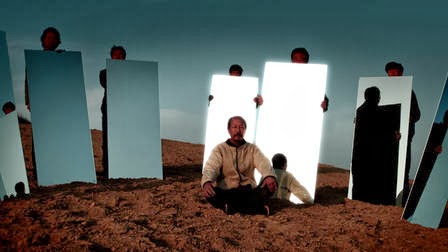
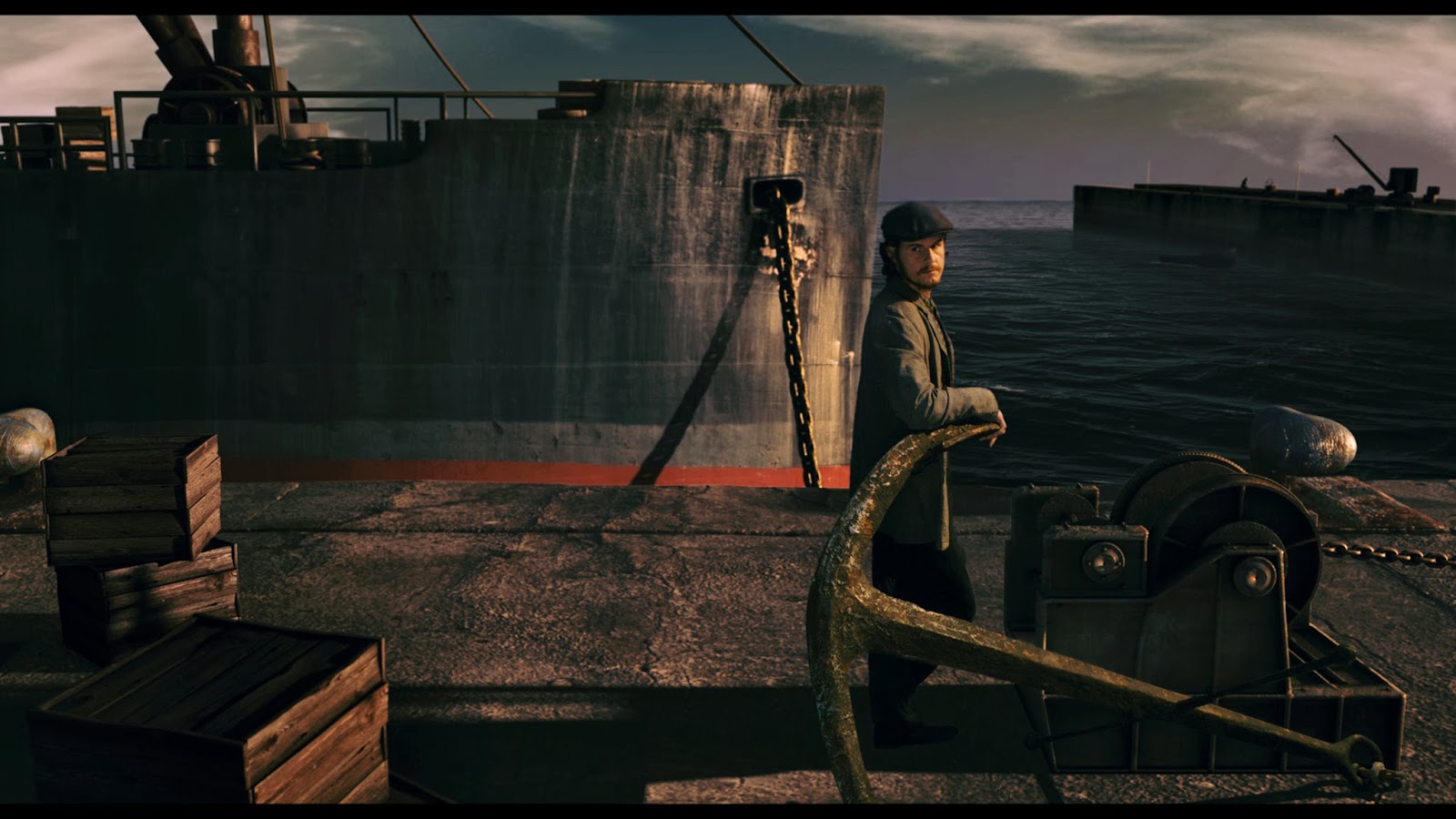
Last night at the festival, the annual Dragons and Tigers Award for Young Cinema, awarded to a distinctive film made early in a filmmaker’s career which has not yet won international recognition, was handed out. For the first time, I not only managed to see all of the competing films, but I attended the awards ceremony as well. The jury, composed of critic/programmers Adam Cook, Tom Charity and Geoff Gardener chose to recognize two films in addition to the overall winner: a special mention for Chai Chunya and Four Ways to Die in My Hometown and a first runner-up for Vivian Qu and Trap Street. The winner was Ikeda Akira, for his Anatomy of a Paperclip. These were my three favorites in the competition as well, all very good and well-deserving their recognition, though I probably would have reversed the order with Four Ways winning and Paperclip third. It was a great series of films and a fun competition, I’m already looking forward to next year.

I managed to snap some pictures with my phone from my seat ten rows back:

Professor Bordwell taking a picture of the jury and Dragons and Tigers programmer Tony Rayns.

A picture of the VIFF camera guy recording video of Tony Rayns giving his introductory speech.

Chai Chunya getting his award from Tom Charity and Tony Rayns.

Vivian Qu getting her award from Tom Charity and Tony Rayns.

Winner Ikeda Akira getting his award from Tom Charity and Tony Rayns.
I’ve managed to write about only two of the competition films thus far, Burn, Release, Explode, the Invincible and Four Ways to Die in My Hometown, but I’ll get to the others eventually, along with the film that followed the awards presentation, A Touch of Sin, by former D&T award winner Jia Zhangke. About that film, suffice it to say for now: whoa.

VIFF 2013: Four Ways to Die in My Hometown

Part of my on-going coverage of VIFF 2013. Here is an index.

In the early 20th century, a number of intrepid researchers delved deep into rural America, looking to record the last vestiges of our-preindustrial past – folk songs, Scotch-Irish ballads, itinerant blues musicians, backwoods gospel preachers and singers. One collection of these recordings, compiled by Harry Smith and released in 1952, The Anthology of American Folk Music, served as a key inspiration for much of the popular music that dominated the latter half of the century – country and western, rhythm and blues, rock and roll. Its 84 tracks form an essential record of what Griel Marcus dubbed “The Old, Weird America” in his definitive study of Bob Dylan’s Basement Tapes, a series of samizdat recordings designed explicitly to evoke that lost world, a project Dylan has returned to again and again throughout his career, most notably in his early 90s folk albums Good As I Been To You and World Gone Wrong, and in his late masterpiece Love and Theft. The recordings are old, passed from generation to generation, and literate or not, they carry their history with them. The recordings are weird: a volatile clash of cultures, the sound of the pot melting as cultural traditions from Europe, Africa and the Caribbean work to forge the unruly mess that is America.

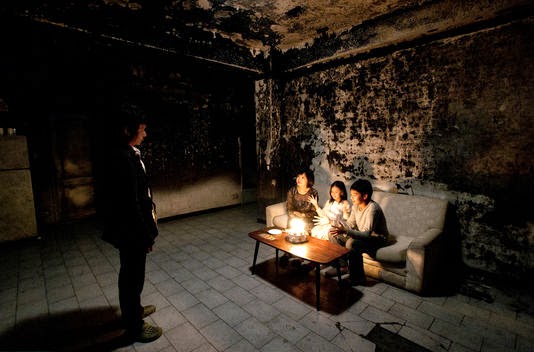
Chai Chunya’s Dragons and Tigers entry Four Ways to Die in My Hometown might just as well be called The Old, Weird China. Set as the title says in his hometown, located in the Gansu province, a borderland between Han China, Tibet and Muslim Central Asia, its stories and rituals are an amalgam of these disparate cultural and religious influences. The plot of the film is both allegorically mystical and semi-documentary in approach – the ‘four ways’ of the title, four deaths provide the spine for the stories of his fellow townspeople. Mostly centered on two young girls whose father is in hiding (he has lived in a coffin in a locked room for seven years) because humans are evil. The older girl explores the nearby river and has an affinity for animals (she sets a chicken free, floats with baby birds and plays with the family camel). The younger encounters a madman who lives in a cave and preaches about the beginning of the world (in darkness – the people need light) and later hangs around with a woman who, since an accident at a young age, can see dead people.

Less an attempt at making a kind of logical of even symbolic sense, the film is instead an evocation of the particular myths and mysteries of a specific geography, one that is rapidly disappearing as China modernizes and the children move away, into the far away, globally-connected metropolises. Some of the most memorable characters in the film are three aged shadow puppeteers, men who learned their trade out of necessity (always economic rather than artistic, as they tell it) in the middle of the most radically disruptive century in China’s multi-millenial history. They haven’t performed in years, but they put on a show for the film (One of a few performances in the film, each of which is interrupted: a Chinese opera, kids dancing before a bonfire (and wearing modern sunglasses). It’s magical, but there’s no audience. The last shot we see of their world is their carefully prepared screen, engulfed in flames.

The film opens with a song, a young man sitting by the riverside, playing his acoustic guitar and singing a catchy tune, a modern one obviously influenced by American music. Each chapter, each death, ends with a recurring rhythmic tune, a kind of chanting, driving hum, meant, as Chai said in the Q & A, to give the sense of continuity, a sense that someone or some force is watching over these people. Of course it would be musical.

VIFF 2013: Burn, Release, Explode, the Invincible

Part of my on-going coverage of VIFF 2013. Here is an index.

This year at VIFF I’m going to attempt to see all the films in competition for the Dragons & Tigers Award for Young Cinema, an award previously won by such future luminaries as Jia Zhangke, Hong Sangsoo, Koreeda Hirokazu, Lee Changdong, Liu Jiayin and Wisit Sasanatieng. The first film up is this one by Korean director Kim Soohyun, a portrait of actress Kim Sanghyun (who gives a remarkable performance, one that fully earns every word of the title), famous throughout Korea for her video game voiceover work. Opening in a swirl of inexplicable action, Kim stealing a drink from a coffee stand, muttering incoherently and wandering crazily throughout the city, the film quickly settles into a documentary-style rhythm as she talks about her work, her difficulty dealing with her employers and conducts a long audition interview with a director, Park Heeson, who wants her to star in an adaptation of Bertolt Brecht’s play The Good Person of Szechuan. The play becomes the structuring metaphor for the film we’re watching. In it, Shan Te, a kind-hearted woman that everyone in town takes advantage of, invents a split, evil personality for herself but is then betrayed by the man she can’t help but love. Intercut through the interview is a production of the play (perhaps a memory of the version Kim herself starred in while in college), actors performing on a black stage, often just Kim and a Greek-style chorus. Shan Te’s experience is directly correlated to the experience of the actress (“when I started getting recognized, people started bothering me, as if they wanted to live their lives through me”) and Park describes this as a kind of prostitution and compares it to Kim’s own work, where she must act as the director demands, changing her natural voice (more gender-neutral and authoritative than the stereotypical woman’s voice, neither “warm and nurturing” or “sexy and girlish”) to suit the whims of her boss/client.

The scene then shifts to a production, where Park is directing Kim in voiceover and acts in exactly the callous exploitive manner they discussed (eventually even the lines are the same). This then cuts to a continuation of the story that opened the film, Kim as madwoman, wandering the streets unable to communicate and settling on a bridge, where she apparently contemplates jumping. But then, a coffee shop worker comes along and begins playing a drum. he’s quickly joined by other boys playing percussion in a joyous take-off on a kind of exorcism ceremony (based on an actual folk ceremony, the real one would not be performed by men, according to Tony Rayns at the Q & A), inciting Kim to dance and twirling, twirling, twirling towards freedom. The final shot is a close up of Kim’s face on a beach, waves crashing behind her. Calm and indomitable, alone above a raging sea.

VIFF 2013: Bends

Part of my on-going coverage of VIFF 2013. Here is an index.

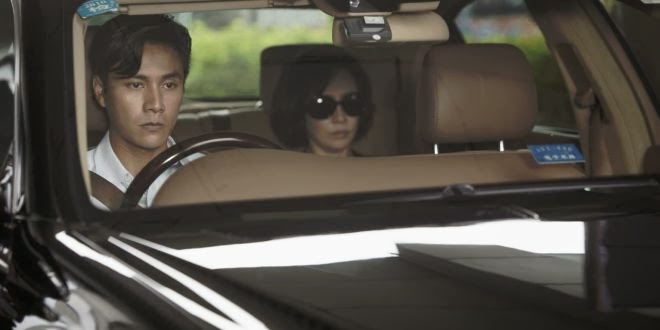
Veteran Hong Kong actress Carina Lau in a starring role (she’s outstanding in supporting performances in movie like Days of Being Wild or He’s a Woman She’s a Man) was the main reason I chose to see this film, and on that front at least, it did not disappoint. In an otherwise solidly unspectacular film, Lau gives a queitly nuanced performance, full of humor, cheer and creeping anxiety. She plays a wealthy housewife, charity events, expensive feng shui consultations, the works (she also wears what is easily the chunkiest necklace I have ever seen). Lucille Bluth without all the evil. Her husband appears to be a financier of some type, he seems to engage in some shading dealings near the beginning of the film. But suddenly, Lau’s credit cards no longer work and her world begins to slowly crumble. No explanation is given for these events: piece by piece her things are simply taken away from her. The husband has disappeared and won’t answer her phone calls, but he does put their luxurious home up for sale. Lau’s daughter won’t answer her calls either, though that is unrelated: she will call once her money supply dries up.

The story is given an Upstairs/Downstairs dynamic with the adventures of Lau’s chauffeur, Fai, played by Chen Kun. He’s a Hong Kong citizen, but his wife is a mainlander and they live just across the border in Shenzhen. The border is seen multiple times throughout the film, and is given a helpful title at the beginning. It’s seen both as a winding river and a curved road, a thing to cross and the means of crossing it, both of which “bend”. Fai’s wife is pregnant with their second child, and they can’t afford the fine for violating the one-child policy if she gives birth in China, or the cost of a bribe to get his wife a stay in a Hong Kong maternity ward. The bulk of the film is made up of Fai’s various attempts to call in favors or raise money (notably selling off parts of Lau’s Mercedes without her noticing, another piecemeal dismantling of her wealth)*, while hiding his wife and calling on neighbors to help watch over their daughter.

As melodrama, the film is calm and understated, and first-time feature director Flora Lau shows an assured and almost too-tasteful hand, ably assisted by superstar DP Christopher Doyle’s crisp and bright images. As a tale of a borderland, the film is not without interest: the shimmer of Hong Kong, capitalism and wealth standing as a beacon to the Mainland, while itself precariously perched on quicksand, ready to dissolve into nothingness at any moment. In a repeated visual motif, Carina Lau places various objets d’art on a low table in front of one of the windows of her apartment, obscuring her view of a tall, green, solid mountain, a blocking out of reality with things. In the end, faced with an actual crisis, she does the right thing.

*”Mercedes-Benz” = “Mercedes-Bends” I just got that.

VIFF 2013: Gebo and the Shadow

Part of my on-going coverage of VIFF 2013. Here is an index.

It’s almost too tempting to compare Manoel de Oliveira’s latest to Carl Theodor Dreyer’s final film Gertrud. Both are resolutely odd, theatrical in a way that would seem anti-cinematic in the hands of a lesser director. Both films consist almost entirely of actors talking, exquisitely framed in extremely long takes. But where Dreyer’s camera moves with the actors and eschews editing, Oliveira’s never moves, holding his perfectly composed shots and only occasionally (and with striking effect) breaking for an insert – a POV look at a window or doorway, or a reverse shot of the other participants in a conversation.

The story, set in the same indeterminate (at least too me) past as the other two Oliveira’s I’ve seen (The Strange Case of Angélica and Eccentricities of a Blonde-Haired Girl, at VIFFs 2010 and 2009, respectively), revolves around the household of Gebo (soft ‘G’) an elderly debt collector played by Michael Lonsdale. He lives with his wife (Claudia Cardinale) and daughter-in-law (Leonor Silveira) in a modest four room row house, though we only ever see the apparently tiny central room (I say apparently because Oliveira’s lens choice seems to dramatically flatten the space in his 1.66 frame, so as to make it appear all the more painting-like). It seems Gebo’s son has been missing for eight years, but he and the daughter-in-law have convinced the wife that he’s still in communication. The first third of the film takes place in a single evening as each of the women has a conversation with Gebo, mostly about how miserable and unhappy their lives are. Then the son returns.

The next long scene, taking place a day or a few later, is given a much-need jolt of levity by Jeanne Moreau, playing a neighbor who comes over for coffee and a chat. With the addition of a friend of Gebo’s (who will carry on a cute flirtation with Moreau, he explains how in his youth he wooed women with his flute playing), Oliveira gets to indulge in some shot/reverse shot cutting. Gebo and friend are seen in much the same setup as the previous scene, center frame, nicely balanced with a bunch of herbs hanging on the wall in the top left corner, while the two women (Cardinale and Moreau) are seen from the opposite side of the table in a shot just as painstakingly symmetrical, the candle lamp close in the foreground perfectly splitting the frame in half with the actresses on either side. This long middle section concludes with the son, returned and baffled by his family’s resignation and boring complacency railing against them for being ‘buried alive’ while he alone has truly lived and experienced life. That his life appears to largely revolve around being a criminal, a cold starving thief in the night, is immaterial.

The film seems to me a dialogue between two kinds of awful: the black evil of the son’s amoral soul and the mundane hypocrisy and cowardice of Gebo – forever asserting his  honesty (all his peers became rich but only he had the integrity to remain risk-free and poor) while creating a fantasy world for his wife, a lie for which he honors himself as a sacrifice. His son may be a thief, but at least he’s honest about it. In the end, Gebo will sacrifice himself again. To protect his son, to preserve his wife’s illusions, as his own way out of a trap. He lies about being a thief, a man chasing his shadow.

VIFF 2013: The Great Passage and Good Vibrations

Part of my on-going coverage of VIFF 2013. Here is an index.

I’m sitting in the Grade “A” Chinese/Canadian Restaurant (two different menus, I opted for the ham, cheese and mushroom omelette with hash browns, toast and coffee) across from my hotel, reflecting on my first, not entirely unsuccessful, day at VIFF 2013. I woke up at the ungodly 5 AM to catch the train from Seattle to Vancouver, a train occupied by an unsurprising assortment of ridiculous old white people and quietly polite Koreans. The train was late in arriving, and customs delays gave me my first long line of the day. The second quickly followed, as dozens of people queued up for a cab on this rainy Saturday morning at the station. After a traffic delay (variously ascribed to the weather, a soccer game and road construction by my driver), I finally arrived at the hotel, just in time to miss the first movie I’d hoped to see (The Missing Picture, I’ll be able to catch it later in the week, fortunately). So I had plenty of time to charge my phone, eat my first meal of the day (clam chowder, Cesar salad and sourdough toast at Earl’s) before heading over to the Pacific Cinematheque for my first film of the festival.

The Great Passage

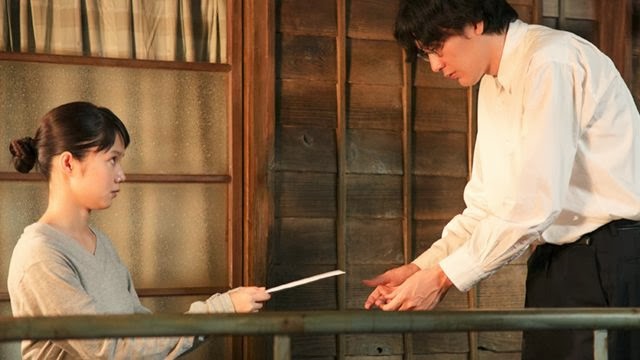
Japan’s submission for the 2013 Best Foreign Language Film Oscar, director Ishii Yuya’s quietly sweet comic drama chronicles the creation of a dictionary and the lives of the unusual people who devote 15 years of their lives to it. The central character is Mitsuya Majime, a reserved and book-obsessed young man who gets hired to help edit a new kind of dictionary in the fall of 1995. It’s to be a living dictionary, incorporating slang and modern usage while still reflecting the traditional language (“we’ll have notes about how the words are being misused” says the project’s leader, an aged and kindly curious professor). The dictionary is conceived as a boat that people can use to cross the vast, mysterious sea of words that inhibits people’s ability to communicate with each other. The metaphor is literalized throughout the film, with non-diegetic wave-lapping sounds and a recurring dream of an ocean in which Majime finds himself drowning. Majime, who in life finds communication with other humans almost impossible, proves a perfect fit for the job, and as he dives into the project begins to open up slightly, inching along the Asperger’s spectrum towards love and fulfillment. It’s these personal interactions, as Majime makes friends, falls in love and loses a father figure, warmly underplayed by all involved, that are the film’s strength. Ishii films with a relaxed dignity and the generous pacing gives his remarkable cast of actors time to develop their unassuming and often very funny characters. The biggest emotional beats in the film are barely indicated: a slight nod, a melt of the eyes and a barely perceptible smile makes as moving a declaration of love as I’m likely to see at the festival this year. That cast is uniformly excellent, featuring veterans like Go Kato (Samurai Rebellion) and Misake Watanabe (Kwaidan) alongside newer stars like Aoi Miyzaki (Eureka), Joe Odagiri (Princess Raccoon, Air Doll) and Ryuhei Matsuda (Gohatto). Matsuda as Majime and Miyazaki as his love interest, the aspiring chef (another job exacting in its dedication to detail) Kaguya, in particular stand out, both in their tenderly tentative courtship and in their later life, admiring and adoring each other still. “You’re so interesting.”

My next film required a bit of a hike. VIFF is without longtime headquarters the Granville 7, a multiplex that served as an ideal central location for the festival. Forced to adapt in the wake of that theatre’s closing, the festival is now spread across downtown Vancouver. It was a long, damp 20 minute walk from the Cinematheque to the International Village for my second film, where I arrived just in time to join another line. Technical delays made that wait much longer, and made me wish I’d taken a more relaxed pace on my walk, or at least taken the time to grab some real food. Instead, devouring a much-too-large bag of mediocre popcorn, I settled in for film #2.

Good Vibrations

No less sentimental in theme, but wildly different in style is this biopic about Terri Hooley, a record shop owner instrumental in the late 70s Belfast punk scene. As loud and abrasive as The Great Passage is subdued, directors Lisa Barros D’Sa and Glenn Leyburn use every trick in the playbook to throw their hectic comic drama in your face: hyperactive narration, rapidly cut stock footage, a peripatetic soundtrack, quick swings from farce to melodrama and back again. The obvious comparison is to Michael Winterbottom’s 24 Hour Party People, set in a similar milieu at the same time (it’s set in Manchester), but where that film had a simple rise and fall structure, cocaine-fueled and anchored by an increasingly manic Steve Coogan, Good Vibrations doesn’t follow a clear progression, instead lurching from high to low and back again as Hooley repeatedly finds himself on the precipice of success but never quite breaks through. The film’s peaks are a lot of fun: Terri’s first discovery of punk (hearing Rudi’s “Big Time”), the joy of hearing legendary DJ John Peel unprecedentedly playing one of his band’s singles twice in a row (The Undertones’s “Teenage Kicks”), a final singalong to Sonny Bono. But the film’s infectious charm is ham-handedly leavened by strained dramatic moments (Terri gets beat up by Nazi IRA youths, Terri inexplicably abandons his wife (Broadchurch‘s Jodie Whittacker) and newborn daughter to sorrowfully drink in dingy bars). Richard Dormer is ingratiatingly scampy as Wooley, I totally failed to recognize him from Game of Thrones (he’s apparently not related to Natalie Dormer, who also appears on that show). Thickly-accented crowd-pleasers from the UK are a bit of a tradition here at VIFF, and this film ably joins The Angels’ Share and Made in Dagenham trailing well-behind Mike Liegh’s Happy-Go-Lucky. In the end, it’s the second-best Good Vibrations, well-behind the Beach Boys’ pop masterpiece but well-ahead of Marky Mark and the Funky Bunch.

VIFF 2013 Preview: Blind Detective

Part of my on-going coverage of VIFF 2013. Here is an index.

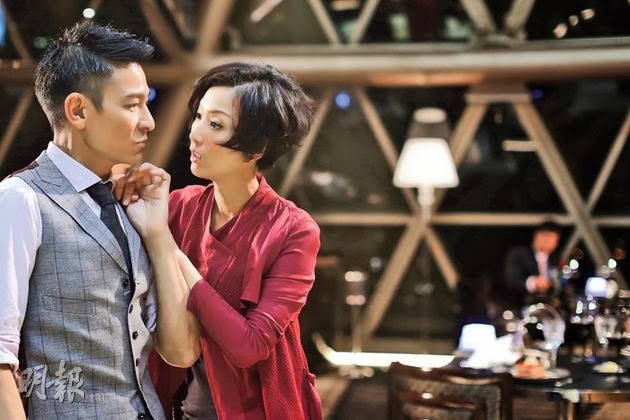
I’d heard of Johnnie To before I ever went to the Vancouver Film Festival, having read David Bordwell on him at his website. I’d even seen a few of his movies before: dubbed versions of the Heroic Trio films during my first brush with Hong Kong movies in the late 90s, and Election 2 on Instant Netflix (under its American release title, Triad Election, I watched it not knowing it was a sequel). But seeing Sparrow at my first trip to VIFF in 2008 was a revelation. I knew To as a Hong Kong action director, John Woo with more shadows, less Chow Yun-Fat. But Sparrow was something else entirely, that same heroic bloodshed world but with a Jacques Demy twist. Light, colorful, whimsical and warm. In the years since, I’ve dipped in and out of To’s Milkyway world (including a lengthy run through his filmography earlier this year, in preparation for a They Shot Pictures episode about him), loving almost all I’ve seen, including Written By by his longtime collaborator Wai Ka-fai, which I saw at VIFF 2009. I missed Vengeance that year and Drug War last year (though I caught up with them a few months later at the San Francisco and Seattle Film Festivals, respectively. Neither fest holds a candle to VIFF, of course) and, much to my dismay, my train leaves town in the middle of the screening of his latest film, Blind Detective at this year’s VIFF. So, as part of my warm-up for the festival, resorted to other means to see it (it’s out on Blu-Ray in Hong Kong already, pretty easy to find).

The big draw in Blind Detective is the reunion of Andy Lau and Sammi Cheng. Pop stars and cultural icons, it was the series of romantic comedies they made with To in the early 2000s that essentially saved his Milkyway Image company from collapse. The first few years of the studio saw the release of several dark gangster dramas, mostly ghost-directed by To, that failed to find much of an audience. But Needing You, an office romance with Lau and Cheng, proved to be a big hit and for years thereafter To would mix wacky romances in with his more serious crime films. Cheng and Lau each made six films with To from 2000 to 2004, including two where they were paired together (Love on a Diet and Yesterday Once More). But after 2004 neither worked with To again until 2012’s Romancing in Thin Air (in which Cheng stars opposite Louis Koo, who is playing a very Andy Lau-type movie star). This period also coincides with a more serious turn in To’s work. From 2005 until 2011, he didn’t make a single romantic comedy, and with the notable exception of Sparrow, the films are serious melodramas (albeit often darkly sardonic ones) all taking place in the triad gangster world (except for the strangely inert romantic drama Linger, from 2008, a more straightforward, less interesting version of the 2002 Cheng vehicle My Left Eyes Sees Ghosts). But in 2011, To returned to the romance genre with the lush screwball Don’t Go Breaking My Heart, and 2012’s meta-epic Romancing in Thin Air.

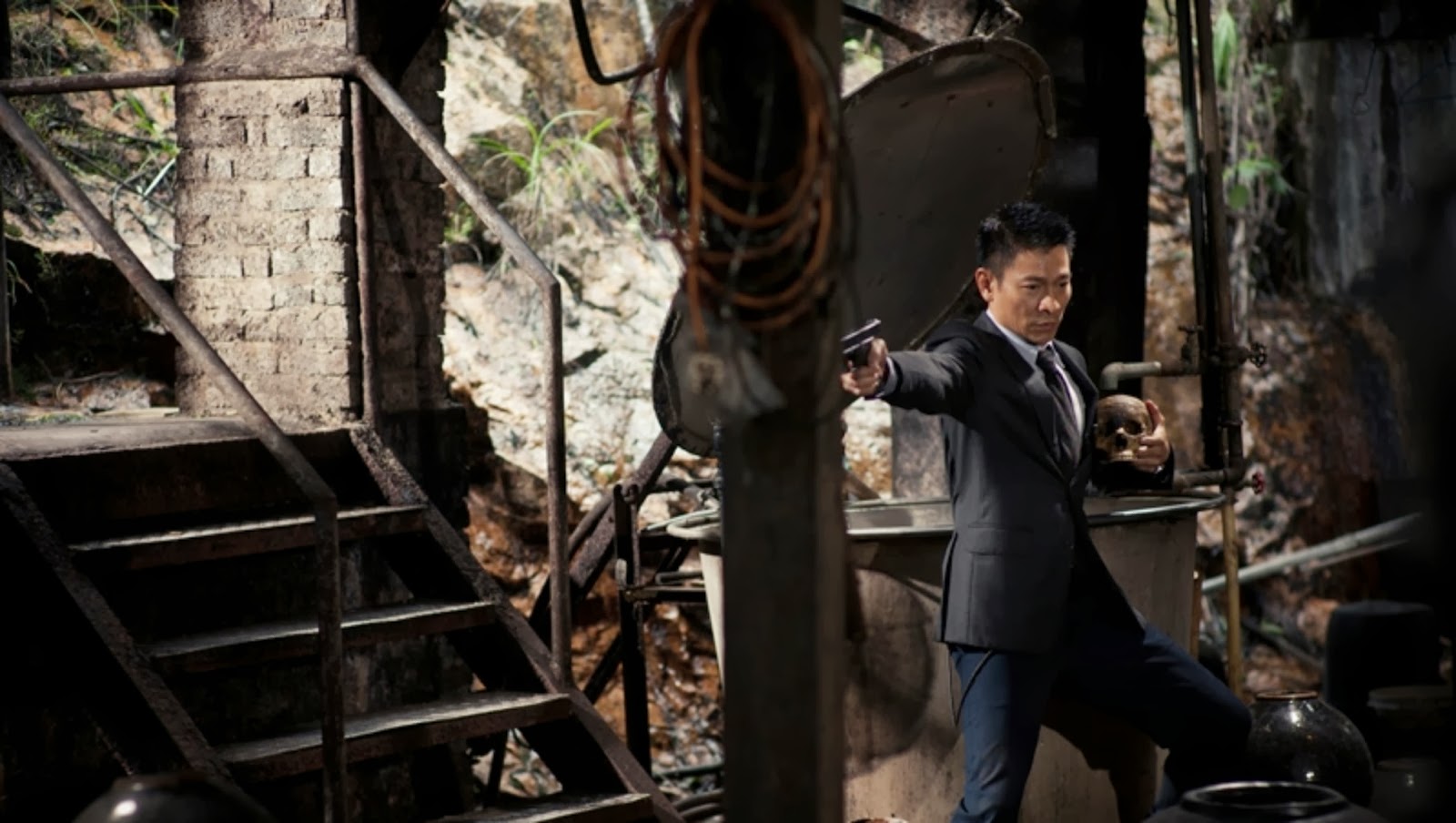
Johnnie To’s filmography is so dense and so vast, that part of the fun of each new release is in finding the connections between it and his previous work. Drug War, for example, forms part of a trilogy with Expect the Unexpected and PTU, each film a procedural following a team of cops tracking a group of criminals and ending in a dramatic gunfight. The 2009 film Vengeance forms a rough trilogy about groups of hitmen with The Mission and Exiled, all ultimately about the pointlessness of the revenge demands in the Triad honor code. Similarly, both his 2011 films deal with the fallout of the financial crisis, with Life Without Principle‘s crime drama highlighting its effects on the various middle and criminal classes and drawing somewhat unexpected parallels between them, where Don’t Go Breaking My Heart uses the crisis as a plot point that barely registers as a blip in the lives of its upper class financier characters, consciously recalling the fanciful milieux of Depression Era screwball comedies. Romancing in Thin Air is a summarizing film, one that incorporates and synthesizes elements of romantic films from throughout To’s career into a single grand statement on the cathartic power of cinema; it’s To’s 2046. Blind Detective presents a couple of interesting contrasts. The most obvious is with 2007’s Mad Detective, which has a similar title and is also the story of a young cop enlisting the eponymous former cop to help solve a recent crime. Lau Ching Wan’s Mad Detective approaches his investigations with the same techniques as Andy Lau’s Blind Detective: he goes through the criminals’ motions until he sees exactly what they did, and we see his vision of the recreation on-screen. These visions recall as well Running on Karma, in which Andy Lau plays a former monk who can see people’s karma, the crimes they committed in past lives. Again, he’s called in to help a young detective solve a crime.  Like that film as well, there’s a strong romantic element to Blind Detective, though it’s played here as comedy where in Karma it’s tragedy (there’s a smaller tragic love story in Mad Detective as well). The new film then represents not only the third part of a “vision”-based crime solving trilogy, but a synthesis of To’s comedies with his crime films. (Yesterday Once More accomplished something similar, in combining elements of the romantic comedies with To’s Running Out of Time caper films). The violence in these films is at times stomach churning, the dark and depraved killings clashing tonally with the wide-open romanticism of To’s heroes, as if to say “the world is scary and terrible, but. . .”

Most interesting to me is the formal contrast between Blind Detective and Drug War. The latter might be To’s tersest film: its characters are almost entirely defined by action, with no back story, no history, no personal lives or small talk. They are professionals, cops and criminals alike, and the story is relentlessly forward-moving, like the long non-stop drives the cops must endure as they crisscross the country pursuing the crooks, it never lets up until the explosive finale. Blind Detective, though, meanders here and there, taking its time, losing itself down subplots of other, unrelated crimes actual (with To stalwart Lam Suet) and romantic (with Gao Yuanyuan, who sparkled in Don’t Go Breaking My Heart but is clearly outshone by Cheng here) all while indulging in Andy Lau’s prodigious appetite (this may be the most food-obsessed of all Johnnie To’s movies, even more so than Love on a Diet, which was largely about Andy and Sammi wearing fat suits and eating everything they came across). Where Drug War is tension and suspense and momentum, Blind Detective is leisurely digression. It’s the Hatari! to Drug War‘s Scarface.
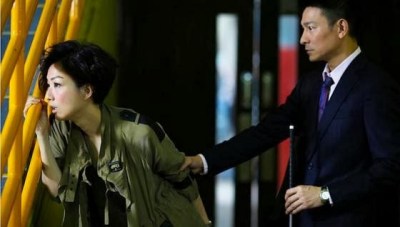
Similarly, Andy Lau’s performance is in contrast to his prior work. His character resembles the one he played in Tsui Hark’s very popular Detective Dee and the Mystery of the Phantom Flame. Like that film, Blind Detective is a mystery rather than a noirish gangster melodrama like most of To’s crime films, and Lau plays the Holmes/Poirot figure. But where Detective Dee matches Lau’s suave star persona, the Blind Detective is something new. He looks and dresses like the coolest guy on the planet Andy Lau of previous To collaborations Running Out of Time and Yesterday Once More, but he’s wildly antic, shouting his lines and gleefully running with abandon from one inspiration to the next. (One of the film’s best jokes involves someone finding Lau’s partner, Guo Tao, to be the “cool” one of the pair). At times Lau almost seems to be parodying Lau Ching Wan’s manic To performances (most obviously the one in Mad Detective). More than 30 years after his breakthrough in Ann Hui’s Boat People, I can’t recall a more buoyant, more childlike, more aggressively open Andy Lau.

At over two hours long, this is one of the longest of Johnnie To’s films (they usually clock in around 100 minutes). It’s even longer than the Sammi Cheng-starring wuxia farce Wu yen, a similarly digressive tale, but one that tends to sag with the accumulation of subplots and wild gags. Blind Detective never drags. The more time we get to hang out with Andy and Sammi, the better. And the more romantic comedies from Johnnie To, the better as well. For too long they’ve been shunted aside in favor of the supposedly more “serious” crime films. His next film is Don’t Go Breaking My Heart 2, and I can’t wait.

Nobody’s Daughter Haewon (Hong Sangsoo, 2013)

nobodys_daughter_haewon_7

I saw my first Hong Sangsoo movie at the 2009 Vancouver Film Festival. It was Like You Know It All and it was my second favorite of the 18 movies I saw there that year. Shortly after I sought out a couple earlier Hong films (The Woman on the Beach and Woman is the Future of Man) and was underwhelmed. The familiar tropes were there (blocked director on vacation, crimes of the heart, drinking, bifurcated narrative structures reflecting in on themselves) but the moves just didn’t seem as much fun. I chalked it up to the particular circumstances of that first viewing: seeing a film at a film festival that pokes fun at the insular and more than a little absurd festival experience. Perhaps he just wasn’t as great as I thought he was.

But Hong redeemed himself in my eyes at the 2010 festival, where his Oki’s Movie and Hahaha were again two of my favorites, each film taking his formal playfulness in bold new directions while retaining the self-effacing comic spirit that initially won me over. Since then I’ve managed to see almost all of Hong’s films (including In Another Country, the most charming film of VIFF 2012 and Romance Joe, another VIFF 2012 favorite by Hong’s longtime assistant director Lee Kwangkuk). These films, along with 2008’s comparatively epic Night and Day and 2011’s Marienbad-esque The Day He Arrives amount to as remarkable an on-going streak of greatness as any director working today (Oki’s Movie remains my favorite of the dozen I’ve seen so far). Since he took 2007 off after Woman on the Beach, Hong’s made eight features in six years, counting 2013’s Our Sunhi (one of my most anticipated films of VIFF 2013) and Nobody’s Daughter Haewon, which premiered at festivals earlier this year. Hong has yet to see his festival popularity translate into proper theatrical distribution in the US. Oki’s Movie, The Day He Arrives and In Another Country all played in New York in 2012, but only the last one saw a wider release, most likely due to the art house popularity of its (French) star, Isabelle Huppert. Several of his films are available on the various streaming platforms, but he doesn’t even have his own Director’s Section at Scarecrow Video. Maybe this will be the year he finally breaks through to attain arthouse star status. My fingers remain crossed.

20137266_5_IMG_FIX_700x700

Continuing a recent trend, one that denotes a sharp break with his pre-2008 work, the film focuses on a female protagonist, though one who isn’t any more heroic than Hong’s usual cast of drunken, lecherous filmmaker/professors. Haewon is a pretty girl who is constantly told how pretty she is and seems to have become dependent on that flattery, no matter how poisonous it ultimately becomes to herself and the people around her. In each of the film’s sections, she conjures a man that adores her, and the film’s mysterious final line (“Waking up, I realized he was the nice old man from before”) recalls the profound final rumination from Oki’s Movie (“Things repeat themselves with differences I can’t understand”) a line that has come to epitomize so much of Hong’s work for me. One of the great pleasures of diving into the Hong universe is that each movie gains in relation to the others. No other director I know of more obsessively explores the same basic elements in film after film: a film director/student/professor who has an affair he shouldn’t have (with a friend’s wife/girlfriend, with a student, or both) while wandering cold, unglamorous Korean cities and/or vacation spots; studies of venal, hypocritical drunks that critique without judgement, the foibles of Hong’s people being ours and his rather than cruelly displayed objects for scorn, scolding and ridicule. With these basic characters and settings, and his deadpan minimalist visual style (marked most distinctively by the utterly atypical use of zooms), Hong conjures seemingly endless variations.

Haewon finds its closest companion in Oki’s Movie, which focuses on a student who had an affair with her professor and takes a couple of hikes up a mountain. Haewon’s affair occurred at some point in the past, though she considers rekindling it. She also takes two trips up a mountain, the location of an old fort-turned-tourist spot. Like In Another Country, Haewon features a lackadaisical to the point of abstraction framing device: three days that begin with Haewon describing them in her journal (public table, cup of coffee, handwriting in a notebook, voiceover narration) where the earlier film had the narrator writing three versions of a film she wanted to make about a French woman on vacation in Korea. On each day, the narrative is abruptly interrupted as she wakes from a dream, erasing and resetting the story as we’d known it (this also happens in the middle section of In Another Country, as well as in Night and Day). With these films, along with the four-short film structure of Oki’s Movie, the endless repetitions of The Day He Arrives, the self-delusions of Hong’s heroes have taken a metaphysical turn: not only are they not honest with themselves and each other in their romantic lives, but the very nature of their world has become unstable, liable to be rearranged or erased with the stroke of a pen or a sharp cut in the film. Where the earlier films (and also Hahaha) were built around coincidence and repetition, the later films have become Duck Amuck with horny, drunken film school denizens.

fullsizephoto269840

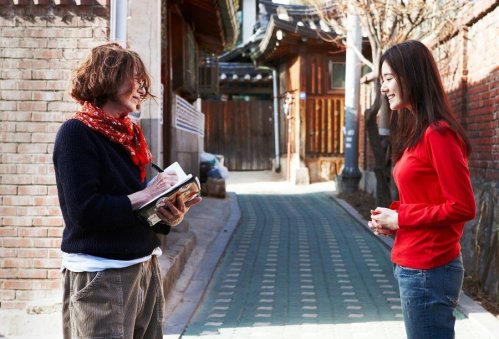
I find myself pondering the title as much as anything else. Hong usually favors straightforward titles, ones whose meaning is immediately apparent (at least lately, his early titles are beguiling in their lingering prose: The Day a Pig Fell Into the Well, On the Occasion of Remembering the Turning Gate, Woman is the Future of Man, Virgin Stripped Bare By Her Bachelors). The first section explains quite clearly that Haewon is somebody’s daughter, as it involves her spending a day with her mother on the eve of the latter’s move to Canada (Vancouver, I assume, for the film festival). The film itself begins with Haewon meeting Jane Birkin (unnamed in the film) and telling her how much she admires her daughter (actress Charlotte Gainsbourg, also unnamed). The title then has, at least, two possible meanings: given the relative fame of Birkin, Haewon’s mother is a “nobody” and perhaps this is what is keeping Haewon from becoming the successful actress she wants to be (she says she’d give her soul to have Gainsbourg’s career). Or, being sad and abandoned by her mother’s move, Haewon is forced to become an adult: she is no longer simply somebody’s daughter and must take care of herself, become an individual in her own right. She then spends the next two thirds of the film pursuing relationships with a couple of older men (both professors and therefore father-type figures) while brushing off men her own age in some kind of Freudian irony. Parent-child relationships have largely been absent in Hong’s work thus far (most of the kids have been little and mostly off-screen, as the director’s child is in Haewon). Though a mother-daughter conversation does open In Another Country. Perhaps these are the first-steps in the integration of another trope into the Hong universe, another fraught relationship with which to play and poke and have fun.


VIFF 2013 Preview: Proposed Schedule

Part of my on-going coverage of VIFF 2013. Here is an index.

One week from today, I’ll be arriving in lovely Vancouver, BC for my fifth trip to the Vancouver International Film Festival. I’ll be there for a week, about half of the festival’s run, which is as long as I could trick the wife into taking care of the kids for me. Over the next few days, I’ll be watching a few movies to get me in the mood, films I haven’t seen yet from directors I’ve discovered over the years at the festival: Johnnie To, Hong Sangsoo and Liu Jiayin.

But before then, I thought I’d start with a list of the films I’m hoping to see while I’m there. As usual, there’s a ton of stuff I’d like to see, much more than I’ll physically be able to make it to, for reasons of geography, chronology and my own health (there seems to be a limit to how many four and five movie days in a row I can manage before catching a cold). So I look at this list as more aspirational than a prediction of what I’ll actually make it to see. Some of the films overlap and so I’ll have to choose only one, these are marked with an * while I try and decide. If you’ve got a case for or against any of these (or if you think I’m overlooking something), feel free to let me know.

Sean’s Theoretical VIFF 2013 Schedule:

Saturday, Sep 28

The Missing Picture (Rithy Panh)

The Great Passage (Ishii Yuya)

Good Vibrations (Lisa Barros D’Sa & Glenn Leyburn)

Sunday, Sep 29

Gebo and the Shadow (Manoel de Oliveira)

Bends (Flora Lau)*
A Field in England (Ben Wheatley)*

Burn, Release, Explode, the Invincible (Kim Soohyun)

Four Ways to Die in My Hometown (Chai Chunya)

Monday, Sep 30

Stray Dogs (Tsai Ming-liang)

Yumen (Xu Ruotao, J.P. Sniadecki, Huang Xiang)

My First Love (Tsuruoka Keiko)

Our Sunhi (Hong Sangsoo)

Tuesday, Oct 01

New World (Park Hoonjung)

Boomerang Family (Song Haesung)*
Heli (Amat Escalante)*
9 Muses of Star Empire (Lee Harkjoon)*

A Spell to Ward Off the Darkness (Ben Rivers, Ben Russell)

The Past (Asghar Farhadi)*
3x3D (Jean-Luc Godard, Peter Greenaway, Edgar Pêra)*

Wednesday, Oct 02

Stand Clear of the Closing Doors (Sam Fleischner)

Trap Street (Vivian Qu)*
Closed Curtain (Jafar Panahi, Kambuzia Partovi)*

The Summer of Flying Fish (Marcela Said)*
The Spider’s Lair (Jason Paul Laxamana)*
The Dirties (Matt Johnson)*

Distant (Yang Zhengfan)

La última película (Raya Martin, Mark Peranson)

Thursday, Oct 03

The Invisible Woman (Ralph Fiennes)

Anatomy of a Paperclip (Ikeda Akira)

Rhymes for Young Ghouls (Jeff Barnaby)*
A Time in Quchi (Chang Tso-chi)*

A Touch of Sin (Jia Zhangke)

Redemption/The King’s Body/Mahjong (Miguel Gomes, João Pedro Rodrigues, João Rui Guerra da Mata)

Friday, Oct 04

Exhibition (Joanna Hogg)

Once Upon a Forest (Luc Jacquet)

Camille Claudel, 1915 (Bruno Dumont)

The Story of My Death (Albert Serra)

Saturday, Oct 05

The Gardener (Mohsen Makhmalbaf)*
Blue is the Warmest Color (Abdellatif Kechiche)*
Like Father, Like Son (Koreeda Hirokazu)*
Wolf Children (Hosoda Mamoru)*
Longing for the Rain (Yang Lina)*

This Month in Rankings

It’s been a month since I updated these rankings, and a few weeks since I’ve written anything here at all other than my annual All-Time Top 100 List. In that time, I brought the Summer of Sammo to an end, with final reviews of Ashes of Time Redux, Crouching Tiger, Hidden Dragon, My Heart is that Eternal Rose and Boat People. In all I watched 83 movies during the Summer of Sammo, roughly from Memorial Day to Labor Day, and of course I have a ranked list of them all over at Letterboxd.

In other media, several episodes of The George Sanders Show have been recorded: on Sons of the Desert and Ishtar, on The Grandmaster and A Touch of Zen, on The Top Ten Films of All-Time, on The Killing and The Black Stallion, and on Once Upon a Time in America and The Roaring Twenties. The first of several planned episodes of They Shot Pictures on director John Ford is up as well, this one covering his Westerns and focusing on Stagecoach, She Wore a Yellow Ribbon and Two Rode Together in particular. Our second Akira Kurosawa episode, covering his samurai films, should be up any day now as well.

Coming up over the next few weeks, I’m heading once again to the Vancouver International Film Festival. This will be my fifth trip to VIFF, and for the first time I’ll be there as an officially recognized member of the press. So look for a bunch of reviews from that. Before heading out, I plan to watch and review a few VIFF-related films to get me warmed-up, and hopefully I’ll write that one last review to complete my coverage of VIFF 2012. We’ll have a festival recap episode of They Shot Pictures as well, comparing my Vancouver experience with Seema’s time at the Toronto Film Festival. I’m also just starting research for our Claire Denis episode. Meanwhile, The George Sanders Show will be taking a look at two Harakiris and then the two Solarises.

These are the movies I watched and rewatched over the last month or so, and where they place on my year-by-year rankings.

The Gold Rush (Charles Chaplin) – 1, 1925
The Music Box (James Parrott) – 6, 1932
Sons of the Desert (William A. Seiter) – 12, 1933
Smart Blonde (Frank McDonald) – 29, 1937
The Roaring Twenties (Raoul Walsh) – 11, 1939
The Men Who Tread on the Tiger’s Tail (Akira Kurosawa) – 6, 1945
Seven Samurai (Akira Kurosawa) – 1, 1954
The Killing (Stanley Kubrick) – 7, 1956

Sons of the Good Earth (King Hu) – 17, 1965
A Touch of Zen (King Hu) – 1, 1971
A New Leaf (Elaine May) – 4, 1971
The Black Stallion (Carroll Ballard) – 6, 1979
The Sword (Patrick Tam) – 21, 1980
The Happenings (Yim Ho) – 23, 1980
Boat People (Ann Hui) – 8, 1982

Once Upon a Time in America (Sergio Leone) – 11, 1984
Cherie (Patrick Tam) – 23, 1984
Ran (Akira Kurosawa) – 1, 1985
A Chinese Ghost Story (Ching Siu-tung) – 19, 1987
Rouge (Stanley Kwan) – 2, 1988
Chocolate (Claire Denis) – 7, 1988
My Heart is that Eternal Rose (Patrick Tam) – 9, 1989
He’s a Woman, She’s a Man (Peter Chan) – 17, 1994

I Can’t Sleep (Claire Denis) – 22, 1994
Crouching Tiger, Hidden Dragon (Ang Lee) – 4, 2000
Zoolander (Ben Stiller) – 17, 2001
After This, Our Exile (Patrick Tam) – 32, 2006
Ashes of Time Redux (Wong Kar-wai) – 4, 2008
Ip Man 2 (Herman Yau) – 43, 2010
The Grandmaster (Wong Kar-wai) – 2013