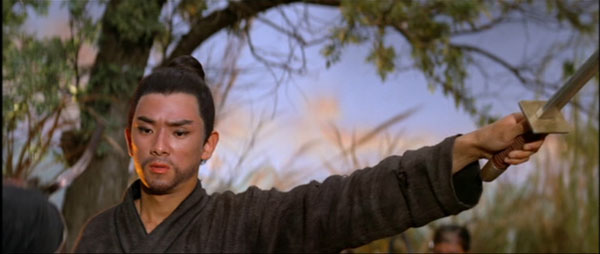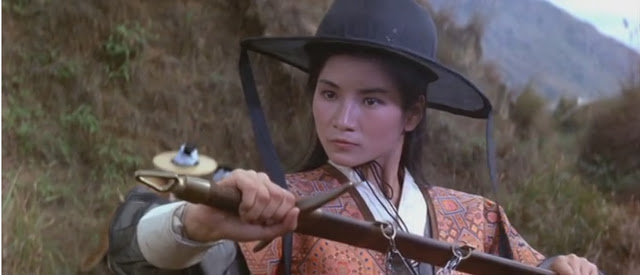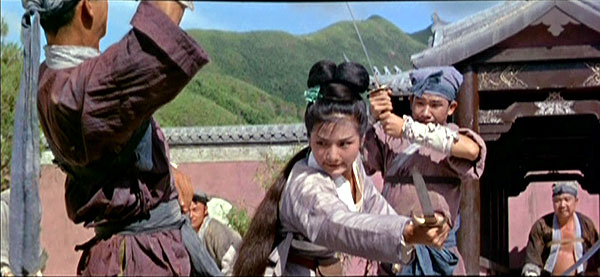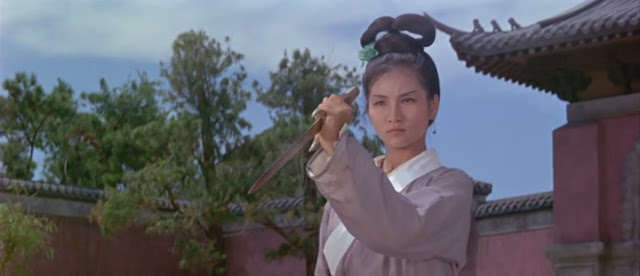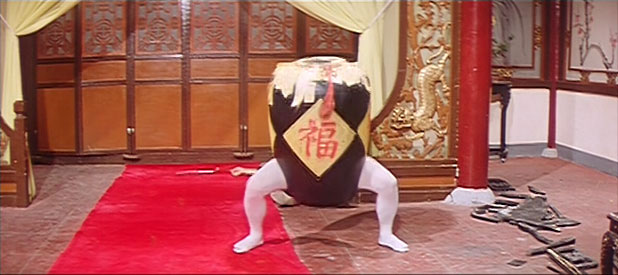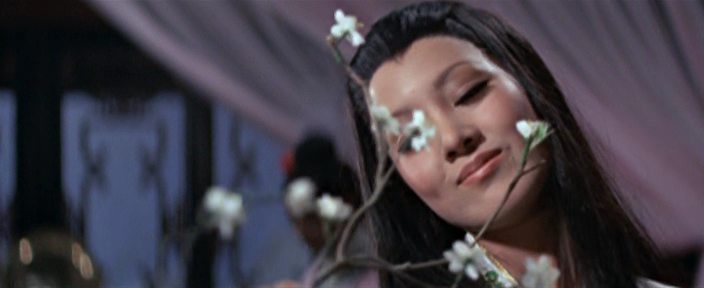
Summer of Sammo: The Spiritual Boxer


I’ve declared this the summer of 2013 to be the Summer of Sammo. Throughout these months I’ve been writing about films starring or directed by Sammo Hung, as well as other Hong Kong genre films of the Sammo Hung era. Here’s an index.

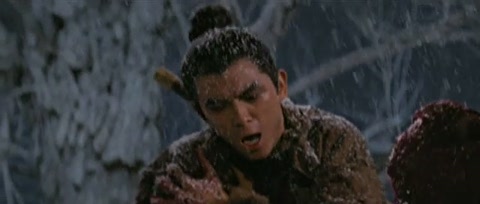
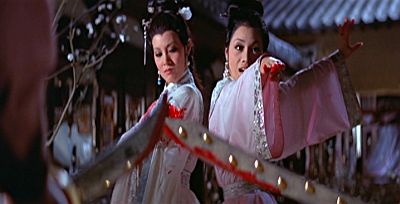
The most interesting thing about this, Lau Kar-leung’s first film as a director after a distinguished career as action choreographer and stunt man, is the prologue, which takes a sidelong glance at the Boxer Rebellion, in which groups of disaffected Chinese men, apparently convinced that through rigorous kung fu training and devout religious belief they could make themselves impervious to foreign weapons and attain a variety of other superpowers, rose up against the various imperialist forces that had been colonizing China for most of the 19th Century, slaughtering thousands of Christians and Europeans, and ultimately further weakening the Qing Dynasty in its last days as the various foreign powers unified to crush them. Lau calls out the Boxers as charlatans, exposing the trickery that enables them to convince the Dowager Empress of their abilities (as Chen Kuan-tai and Ti Lung appear invulnerable before her under the protective spell of a Taoist priest). The Boxers themselves, and Chen and Ti, don’t appear in the rest of the film, which is an amiable comedy about a small-time huckster who more or less accidentally does some good deeds. But the implications of the prologue loom large. For the Boxers’ trickery is that of the moviemakers: falsifiers of images, magicians who trick the audience into believing the impossible.

His first act as a director being the exposure of martial fraudulence, Lau then proceeds to build his career as a director on a contrary verisimilitude, on the depiction of actual martial arts by actual martial artists. This extends to the particular movements performed onscreen: Lau reportedly had serious clashes with Jackie Chan on the set of Drunken Master II over Chan’s refusal to perform the orthodox Drunken Boxing style. Most of Lau’s films will begin with a non-diegetic performance by the star or stars, in which the particular movements and kung fu styles that will be used in the film are demonstrated against a stark, one- or two-toned background. They are the baseline melodies of his films, the action scenes that follow are the variations and improvisations on these themes.
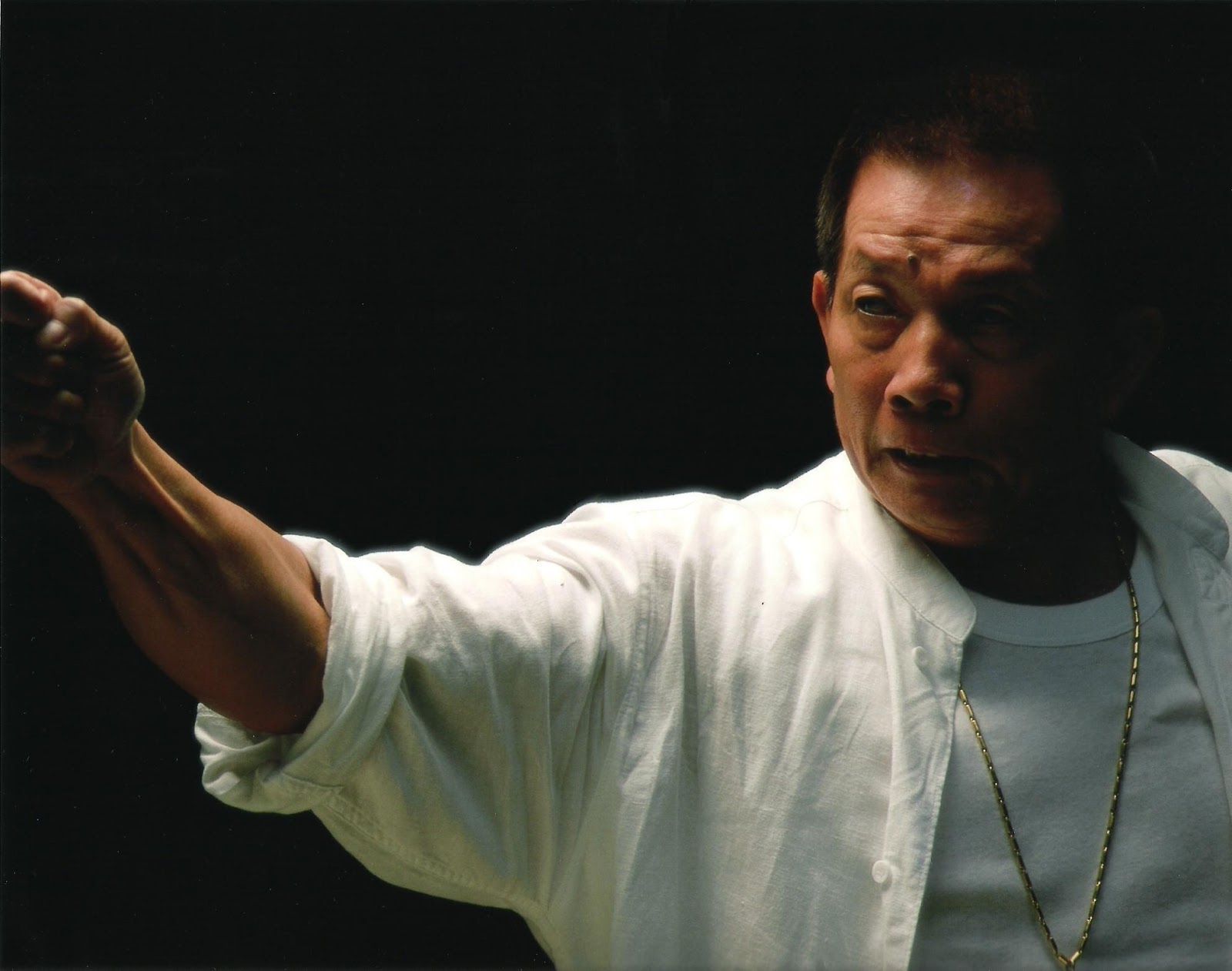
But of course, Lau will exaggerate. No one actually gets sliced, chopped or mutilated or killed in a Lau film. No one actually gets their teeth pulled out at the end of The Eight-Diagram Pole Fighter. What he brought to the martial arts genre was not documentary realism, but rather a grounding of his fictions in a basic reality, prefaced by a warning that not everything we see is to be believed, even stunts performed by the most skilled martial artists (as Chen Kuan-tai and Ti Lung, Lau’s phony Boxers, most definitely are). Rather than cut around performers who can’t actually perform the stunts required of them, or obfuscate with the rapid-editing, nauseatingly hectic handheld camera style of so many inelegant Hollywood action films, Lau’s films are as much about capturing an actual athletic performance as it actually occurred as they are about anything else: we see complete movements and he cuts for clarity and emphasis, not obfuscation. He’s not above the use of a trampoline to exaggerate the height of an actor’s leap, but the commitment to reality remains, though the edges may get a little smudged.

I’ve often said in these Summer of Sammo reviews that the key theme of the kung fu movie is the conflict between the desire for revenge and the moral imperative to forgive, between the demands of loyalty and duty and the desire to withdraw from worldly concerns in search of enlightenment and spiritual peace. The tension between fakery and realism is a a kind of meta-theme of the genre as well, an opposition between fantasy wuxia films, crazy movies where people perform impossible feats with magical swords and spiritual energy has a marked similarity to laser beams (such as the films of Tsui Hark or Ching Siu-tung), and kung fu films proper, which are set in a more real world and are more grounded in their special effects and tend to feature hand-to-hand combat rather than fights using weapons (the films of Sammo Hung, Corey Yuen and Jackie Chan – Yuen Woo-ping distinguishes himself as a master of both subgenres). There are exceptions and cross-pollinations across all these distinctions, but the setup generally works, I think, to identify two very different approaches to film, and two different ways we in the audience process those films: as wild imaginative spectacle or with wonderment at the possibilities of the human body. I treasure both experiences, but Lau positions himself firmly on the side of humanism versus abstract expression, and against the belief in the impossible.
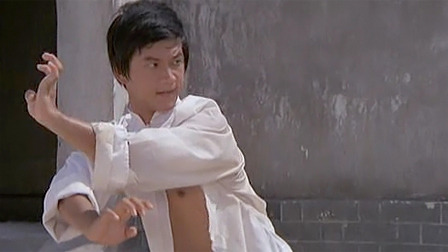
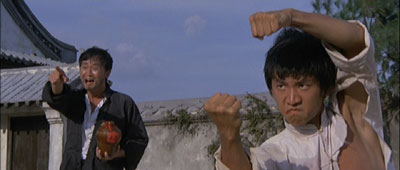
Circling back to the Boxers, the belief in them, and their own apparent belief in themselves, rested on a kind of credulity, that of a poor people living in an apocalyptic age, beset by calamity after calamity (invasion, natural disaster, economic collapse, governmental corruption, epidemic drug abuse) and turning an irrational eye toward leaders who would then exploit them for their own ends. The Boxers, when they’re shown as true believers, are tragic figures. Often when depicted in film (in Tsui Hark’s Once upon a Time in China II, or Lau’s later film Legendary Weapons of China), they’ll be played both ways: the masses as heroic yet pathetic victims of cynical leaders who tricked and manipulated them into committing terrorist and/or revolutionary acts. Lau’s Boxers are fakes tricking the Empress herself into believing in them. But the hero of The Spiritual Boxer is also a fraud, in that he does not really have the ability to act as an avatar of the various gods he gulls people into believe he can call upon. He knows his special effects are phony but comes to realize the very real power of his actual martial arts skills, taught to him by the same master who taught him to be a cheat and a con-man. He is a skilled fighter and he scores very real victories against the various villainous figures he encounters. Without the bells and whistles, the religion and the trick swords, he can defend the weak and defeat the villains.

The Best 2012 Movies of 2013, So Far

Due to the vagaries and inanities of motion picture distribution, most of the best movies of the year just now half completed had their premieres last year, either on the festival circuit, in limited engagements in The Only Cities That Matter (that’s NY & LA), or both. This kind of thing always results in chronological chaos: when a film’s eligibility is determined by local theatrical release date a movie can be a 2012 film in one city and a 2013 one in another and no one knows what to do with festival movies.  Take the case of Hong Sangsoo: In Another Country played festivals and in New York City in 2012, but opened in Seattle in 2013. But I, a Seattle-based critic (more or less), saw it at the Vancouver Film Festival in 2012. I also saw Hong’s Oki’s Movie at VIFF, but in 2010. However, it didn’t premiere theatrically in the US (New York or anywhere else) until 2012 (as did his The Day He Arrives, which played festivals in 2011 but I didn’t see until I rented it on DVD in 2012, a few weeks before it played (briefly) in a New York theatre – it has yet to play in a Seattle theatre to my knowledge). His latest film (Nobody’s Daughter Haewon) has played festivals in some cities, but has yet to become available at a theatre or video store near me, as far as I can tell. What year are the Hongs?

My solution for all my lists here at The End is to go by imdb date, which is based on the first time a film plays for an audience, festival or commercial, anywhere in the world. It makes more sense to say Hong made a film in each of 2010, ’11, ’12 and ’13, and that those films should be ranked (if we’re going to rank films) against the other films made that year (and set aside the fact that movies aren’t always initially released the year they were made, for it’s possible to go too far down the rabbit hole). Going by non-festival US theatrical release gives us no eligible Hongs for 2010 or 2011, and either two or three Hongs eligible for 2012 and zero or one or two for 2013, depending on where the list-maker just happens to live. Listological chaos.

(I won’t even mention the havoc going by local release dates plays with historical titles. Suffice it to say that Tokyo Story would become a 1953 film for a Japanese critic, a 1964 film for a Swedish one and a 1972 film for a New Yorker. This kind of absurdity played out in reality in 2006 when several critics (not just New Yorkers) put Jean-Pierre Melville’s 1969 classic Army of Shadows on their end of the year Best Of lists, more than 20 years after Melville’s death.)

By this standard, my 2013 Best of the Year so far list would contain only two titles, one of which is a TV series that as far as I know only played as a film at the Sundance Film Festival (Top of the Lake). But many of my favorite films of 2012 are showing up on a number of critics’ lists, as they follow a less logical system. So here I present my list of the Top Ten 2012 Movies that Show Up On Other People’s Best of 2013 So Far Lists Even Though They Really Shouldn’t Be Considered As Such:

1. Like Someone in Love (Abbas Kiarostami)

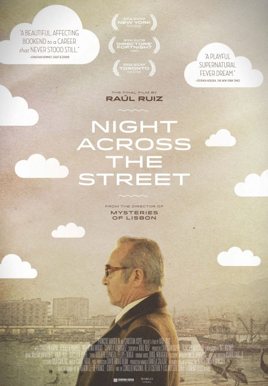
2. Night Across the Street (Raúl Ruiz)

3. Drug War (Johnnie To)

4. To the Wonder (Terrence Malick)

5. In Another Country (Hong Sangsoo)

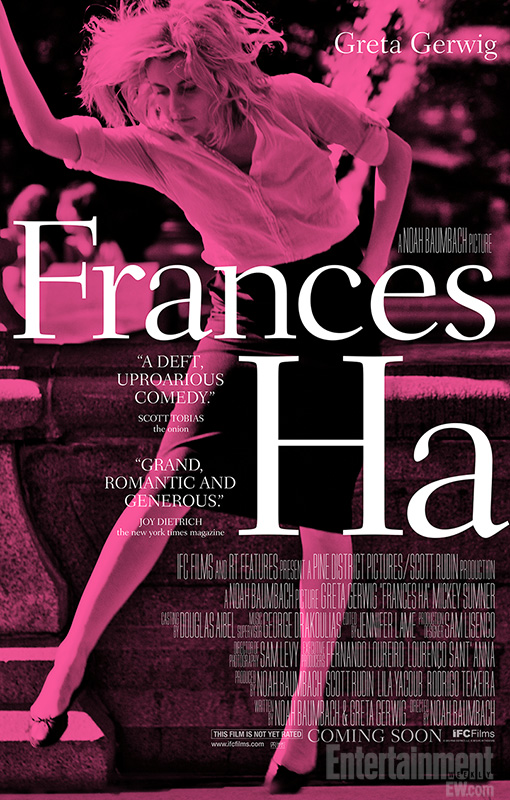
6. Frances Ha (Noah Baumbach)

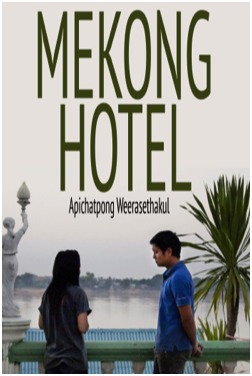
7. Mekong Hotel (Apichatpong Weerasethakul)

8. Tabu (Miguel Gomes)

9. Much Ado About Nothing (Joss Whedon)

10. When Night Falls (Ying Liang)

Note that of these, I’m pretty sure that numbers 2 and 10 have yet to play theatrically in Seattle, though they have played New York, while number 3 played the Seattle Film Festival but has yet to have a commercial release here or elsewhere around the US (though it played theatres in China last year, where Johnnie To already has had another film released this year).

Links are to my reviews, either here, on letterboxd or in podcast form.

Update October 2013: Current lists for 2012, 2013 and lots of other years can be found here.

Summer of Sammo: The One-Armed Swordsman


I’ve declared this the summer of 2013 to be the Summer of Sammo. Throughout these months I’ve been writing about films starring or directed by Sammo Hung, as well as other Hong Kong genre films of the Sammo Hung era. Here’s an index.

Probably not the first superhero origin story movie, or even the first great one, but it’s the earliest one I can think of and it remains one of the best in that now ubiquitous genre. After a bloody prologue, in which a man is killed protecting his master from gangsters, the film finds our hero, Jimmy Wang Yu as the son of the fallen hero, now a student of that same master, but one constantly picked on by the other, higher class students. Wang resolves to leave, but is met by his tormentors in the woods by Shaw studio moonlight. In a fit of psychopathic impetuosity, the master’s daughter lops off Wang’s arm.

Director Chang Cheh blows up the insanity of this act, as Wang stumbles away in through snow and the soundtrack goes wild with a free jazz freakout. Eventually rescued by a young farm girl and nursed back to health, the philosophical conflict of the film slowly reveals itself. Wang must choose between a simple, non-violent life as a farmer or the kung fu world, where he owes his master a filial debt of loyalty and is duty-bound to protect him and his family.

This central section of the film alternates between Wang learning a new, one-armed fighting style (gleaned from half a book the farm girl gives him: half a book for half a man, it requires too the use of half a sword – his father’s broken weapon he’d saved for many years as a relic) and the schemes of an evil gang, led by the mysterious (because we only see him from behind until the climax of the film) Long-Armed Devil (the name a contrast to Wang’s disability, a penis joke, or both). The gang has developed a weapon that locks onto the master’s broadsword, leaving him open to be knifed in the belly. The gang uses this weapon to kill off many of the master’s disciples, and then challenges the man himself at his compound. Only the One-Armed Swordsman can save them. That is, if he decides that the demands of loyalty trump his desire for a nice quiet life as the One-Armed Farmer.

Of course he comes to their rescue, killing and/or dismembering many a bad guy (including action director Lau Kar-leung), choosing honor over domestic happiness. But, in the end he gets the farm girl too and they head out for their new life together. It’s an unusually optimistic ending for Chang Cheh, the Sam Peckinpah of kung fu movies. In his later films, the price of loyalty will prove much greater and the conflict between personal happiness and martial obligation will prove irresolvable. Hints of the darker reality are seen in the pile of slaughtered men littering the master’s home in the wake of the Long-Armed Devil’s attack. But as Wang and his girl walk away, accompanied by a rollicking beat and blaring 1960s horns, in these early days of the kung fu movie Golden Age, happy endings are still possible.

The George Sanders Show: Episode Three – Charade and The Truth About Charlie

This week, on the occasion of the release of a 50th Anniversary Blu-Ray of Stanley Donen’s classic suspense thriller/romantic comedy, Mike and I decided to talk about Charade and its remake, Jonathan Demme’s much-maligned 2002 film The Truth About Charlie. We also discuss our own Essential Remakes, what to get at the big Criterion DVD sale, the career of Stanley Donen and the intentionality of Marky Mark Wahlberg’s hats.

You can subscribe to the show in iTunes, or download it directly from our website.

Next week: We head to Thailand to escape Ryan Gosling and Only God Forgives by watching the Chang Cheh Shaw Brothers film Duel of Fists, starring Ti Lung and David Chiang, along with Wisit Sananatieng’s award-winning Thai Western Tears of the Black Tiger from 2000.

Summer of Sammo: Come Drink With Me

I’ve declared this the summer of 2013 to be the Summer of Sammo. Throughout these months I’ve been writing about films starring or directed by Sammo Hung, as well as other Hong Kong genre films of the Sammo Hung era. Here’s an index.

There’s the ending, and then the ending after the ending. And then there’s the ending after the ending that undermines the other two endings by trying to play the moral of the film both ways by espousing the rejection of bloody vengeance, but giving the audience the violent thrill anyway. This is the central theme of the era of the genre this film initiated: the conflict between the moral imperative for forgiveness and the just demand for revenge, oft-dramatized as a conflict between Confucian filial piety (respect for one’s father/master/family demands vengeance on their behalf) and the Buddhist and Taoist belief in the cyclical nature of violence, that only by withdrawing from worldly concerns can the circle be broken. The moral and the bloody, the spiritual and the earthly, the desire to enlighten and the need to entertain.
The plot and locations are elegantly, archetypically simple: a gang of crooks wants their imprisoned leader back so they kidnap the son of the governor. A hero is sent to rescue him. She’s aided in her quest by a drunken beggar who turns out to be a kung fu master, one who has a history with the evil monk who turns out to be the true leader of the gang. Two opposed earthly factions: the hero and the gang; two opposed spiritual factions: the drunk and the monk. Four locations: inn, temple, cabin in the woods, countryside.
Cheng Pei-pei plays the hero, Golden Swallow, in the role that made her a superstar. Her actions scenes build slowly: a small one set in an inn as she demonstrates her skills with a variety of tricks, but little in the way of actual killing. Later in a temple a much bigger set-piece as she is besieged and takes on the gang single-handedly. Long and deliberately-paced, Cheng’s dancing movements and Hu’s precision editing creating the illusion of kung fu skill as Swallow is repeatedly encircled by men, breaks free and is encircled again. She slashes through most of them, but is defeated when Chan Hung-lit, playing the white-robed and white-faced villain (white being the color of death) shoots her with a poisoned dart hidden in his fan (a sneaky, feminine attack to be sure). After convalescing at the cabin in the woods belonging to the drunken master, Swallow engages in her third battle: an all-out fight as she and her band of women soldiers attempt to free the hostage from the gangsters on a grassy hillside.
It’s here that the convoluted series of endings begins. Swallow defeats the white-faced villain and chases after him as he runs away, bloody and afraid. She hopes to kill him but is stopped by the evil monk, who reminds her of the imperative for mercy. The monk then faces the drunk and is in turn defeated and shown mercy. Two endings: the earthly and the spiritual, both resolved in accordance with the moral imperative. Evil is defeated but not destroyed, good has acted justly but without cruelty.

But apparently that is unsatisfactory. We get an epilogue, back at the cabin in the woods where the evil monk again tries to kill the drunk. This battle is the goriest in the film, topping the ending of Kurosawa’s Sanjuro in the audacious use of arterial spray. Apparently this final ending of the film was the result of studio interference, an imposition by the Shaw Brothers, the fight over which led to King Hu’s leaving the studio for Taiwan, where he’d make the masterpieces Dragon Gate Inn and A Touch of Zen, among other films. Dragon Gate Inn is a straight-ahead action movie, a chase that starts at an inn and ends on a hillside and leaves little time for philosophical contemplation. It was a massive hit. A Touch of Zenis a sprawling epic that begins as a worldly comedy, detours through action scenes at a dilapidated mansion and a bamboo forest and ends on a note of transcendence. It was the first Chinese language film to win an award at Cannes.
The 14 year old Sammo Hung reportedly worked as an assistant action director on Come Drink With Me, and Jackie Chan claims to have been one of the children singing with the drunk in an early scene, though this is in some dispute and I don’t think any of the kids actually look much like him. The fact that the drunk spends his time singing with kids shows just how far this movie is from the drunken master characters Chan, Hung and Yuen Woo-ping would popularize a decade later. Cheng Pei-pei reprised her role a year later in Golden Swallow, this time under the direction of Chang Cheh and co-starring with Jimmy Wang Yu, Lo Lieh and Lar Kar-leung. More about that one another time.

This Week in Rankings

I posted another two podcasts this week, with Episode Two of The George Sanders Show, on Dead Man and Ride Lonesome and Episode #17 of They Shot Pictures, on the movies of Sammo Hung. I also wrote about Chor Yuen’s Intimate Confessions of a Chinese Courtesan. That review and my other recent writings about Hong Kong genre cinema can be found in the Summer of Sammo Index. Over at Letterboxd I have new director lists for Jim Jarmusch and Stanley Donen.

These are the movies I’ve watched and rewatched over the last week, and where they place on my year-by-year rankings. Links are to short reviews at Letterboxd.

The Maltese Falcon (John Huston) – 5, 1941
Ride Lonesome (Budd Boetticher) – 7, 1959
Charade (Stanley Donen) – 2, 1963
The Private Life of Sherlock Holmes (Billy Wilder) – 8, 1970
Blood Brothers (Chang Cheh) – 19, 1973
The Way We Were (Sydney Pollack) – 26, 1973
The Miracle Fighters (Yuen Woo-ping) – 5, 1982
The Eight-Diagram Pole Fighter (Lau Kar-leung) – 3, 1984
Righting Wrongs (Corey Yuen) – 15, 1986
Dead Man (Jim Jarmusch) – 1, 1995
Drunken Monkey (Lau Kar-leung) – 13, 2003

They Shot Pictures #17: Sammo Hung

While Seema is out of town, Jhon Hernandez of Cinema on the Road and I snagged the keys to They Shot Pictures and recorded an episode all about Sammo Hung. We cover his Magnificent Butcher, Wheels on Meals and Pedicab Driver, and a bunch of other kung fu movie topics as well, including: Jackie Chan, Yuen Biao, Yuen Woo-ping, Tsui Hark, Jet Li, Lau Kar-leung, Wong Fei-hung, the tastelessness of certain Hong Kong comedies and how Wong Jing is to blame for all of it. Jhon’s mic is pretty bad, sorry about that. It does get better around the 15 minute mark.

You can find the episode over on the They Shot Pictures website, or by subscribing in iTunes. Next up on the show will be Seema talking Abbas Kiarostami. Next up for me around the end of this month will be the first of our shows on John Ford, covering his Westerns Stagecoach, She Wore a Yellow Ribbon and Two Rode Together. Details can be found on the Upcoming Episodes page.

Summer of Sammo: Intimate Confessions of a Chinese Courtesan


I’ve declared this the summer of 2013 to be the Summer of Sammo. Throughout these months I’ve been writing about films starring or directed by Sammo Hung, as well as other Hong Kong genre films of the Sammo Hung era. Here’s an index.


As angry and passionate an attack on institutional prostitution as anything you’ll see from Mizoguchi or anywhere else, director Chor Yuen uses all the opulent romanticism of the Shaw Brothers style at its peak to expose the twisted black heart of the brothels that casually make up the background of so many adventure films. Kidnapped and enslaved to a whorehouse, the hero Ainu is beaten and raped (by the leading citizens of the town) into submission. The one man who tries to help her is a servant at the brothel who knows that what is happening is evil but pretends to be mute. When eventually he attempts to save her, he proves too weak. Later, as she begins taking her revenge, killing all the men who abused her one by one, the local police officer tries to stop her. Though he’s not unsympathetic to her cause, the law prosecutes murderers and is not interested in what goes on behind whorehouse doors. As one of his fellow cops tells him, “Whores have no history. They are either forced or they volunteer.” The tautology of that second sentence sticks with me: of course those are the only two options. The state is willfully ignorant. Ainu can only protect herself, and she does so by twisting the lust of her tormentors against themselves, not just her ‘clients’ but also the madam who loves her. “You deserve to die, you horny bastard.” Ainu tells one of her victims, and its hard for us to disagree with her.

This idea of revenge lies at the heart of so many kung fu films, and many action films in general. Not just in Hong Kong, but also in the vigilante cycle of American action films that popped up also in the early 1970s (Death Wish, the Dirty Harry movies and so on), as well as the series of rape/revenge horror movies that Courtesan could be more specifically identified with. In talking about his 1986 film Righting Wrongs (aka Above the Law), in which he plays a prosecutor who begins killing the gangsters he can’t legally convict, Yuen Biao specifically identifies this as a Western theme, as something they’re borrowing from American action films. I don’t know that the theme becomes substantially different when filtered through Confucian/Buddhist ethics instead of Judeo-Christian ethics. These things are universal.

What differentiates this film from the typical Shaw revenge fantasy is the sexual nature of the crimes (at this point Shaws was a pretty chaste studio, though that changed as the 70s progressed, with competition from the more graphic Golden Harvest studio) and the identification of the audience with the victim. In many a kung fu film, the hero is taking revenge for crimes committed against his family, his master, and only occasionally himself (usually he gets beaten up by the villains). For example, in Sammo Hung’s directorial debut The Iron-Fisted Monk, the hero comes to the aid of a friend, a dye-worker who’s wife, mother and sister have been raped and murdered by local thugs. The revenge motive is there, but the audience is somewhat distanced from the experience, though Hung depicts the rapes more explicitly. Director Chor, however, locks us into Ainu’s point-of-view from the beginning of the film and we stay there for the first 20 minutes or so as she’s abused (though he tastefully freezes the frame rather than graphically depict the rapes, not that that decreases the horror). As such, we in the audience find ourselves greatly looking forward to her revenge. It’s here that Chor slows the pace for the last hour, giving us space to think about the consequences and meanings of her, and our, blood lust. Yes, we’ll get the catharsis of seeing the villains punished, but the mise-en-scene complicates that satisfaction.

This might be the most pictorially beautiful Shaw Brothers film I’ve ever seen, opposing the ugliness of the subject matter with lushly romantic environments. Typically gorgeous period costumes and sets are blanketed by a layer of snow and moonlight, giving these scenes of horrible vengeance a kind of magical, fairy tale quality. Chor’s staging is never uninteresting, he uses a lot of close-up two shots, with the actors on different plans and looking in different directions, with shallow focus: figures isolated despite a shared space. The beauty of Ainu’s environments is literally other-worldly, a world her trauma has disconnected her from, and that she can never experience or enjoy. The revenge she takes is not triumphant, it can only be tragic.

The George Sanders Show: Episode Two – Dead Man and Ride Lonesome

Rather than talk about thus week’s blockbuster The Lone Ranger, Mike and I decided to chat about another, undoubtedly better, Johnny Depp Western, Jim Jarmusch’s Dead Man. We’ve paired it with Budd Boetticher’s Randolph Scott collaboration Ride Lonesome, from 1959.

Between reviews we spend some time talking about the representations of Native Americans in Hollywood, specifically in Westerns and in relation to my apparently controversial review of the documentary These Amazing Shadows.

We also discuss the career of character actor Lee Van Cleef and our most essential movies about loneliness.

All this can be found at our website, on twitter or you can subscribe on iTunes.

This Week in Rankings

In the two weeks since the last rankings update, I’ve managed to complete more podcasts than written reviews. The Jane Campion episode of They Shot Pictures went up a couple days ago, covering An Angel at My Table, Portrait of a Lady and Top of the Lake. The Sammo Hung episode of TSP will be posted this weekend, discussing Magnificent Butcher, Wheels on Meals and Pedicab Driver. I also started a new podcast with my old Metro Classics compatriot Mike, The George Sanders Show. The first episode posted last weekend, on Fritz Lang’s The Big Heat and Johnnie To’s Drug War. This’ll be a weekly show, with Budd Boetticher’s Ride Lonesome and Jim Jarmsuch’s Dead Man scheduled for this week’s show. You can follow both shows on twitter (@GeoSandersShow and @TSP_Podcast), in addition to following me personally @TheEndofCinema.

The two reviews I did write are for Huang Feng’s Hapkido and Lau Kar-leung’s Dirty Ho, two more entries in the Summer of Sammo. The rest of my reviews related to this dive into Hong Kong genre cinema are now compiled into the Summer of Sammo Index, now conveniently located in the link sidebar on every page. I added a new director list over at Letterboxd, for Fritz Lang, and updated a number of others.

Here are the movies I’ve watched and rewatched over the last week or so, and where they place on my year-by-year rankings with links to my short letterboxd reviews, where applicable:

The Big Heat (Fritz Lang) – 6, 1953
The Big Boss (Lo Wei) – 11, 1971
Hapkido (Huang Feng) – 4, 1972
The Paper Chase (James Bridges) – 11, 1973
Robin and Marian (Richard Lester) – 3, 1976

Dirty Ho (Lau Kar-leung) – 5, 1976
Challenge of the Masters (Lau Kar-leung) – 11, 1976
Magnificent Butcher (Yuen Woo-ping & Sammo Hung) – 12, 1979
Dangerous Encounters – First Kind (Tsui Hark) – 6, 1980
The Buddhist Fist (Yuen Woo-ping) – 17, 1980

Dreadnaught (Yuen Woo-ping) – 11, 1981
The Prodigal Son (Sammo Hung) – 16, 1981
An Exercise in Discipline – Peel (Jane Campion) – 17, 1982
Tiger on Beat (Lau Kar-leung) – 26, 1988
Sweetie (Jane Campion) – 15, 1989

An Angel at My Table (Jane Campion) – 7, 1990
The Piano (Jane Campion) – 9, 1993
Drunken Master II (Lau Kar-leung) – 4, 1994
The Portrait of a Lady (Jane Campion) – 12, 1996
Top of the Lake (Jane Campion) – 2013