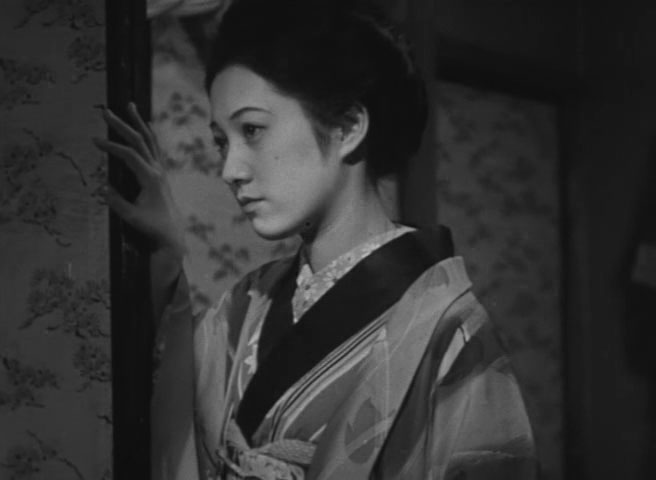
No Blood Relation – 16, 1932
Apart From You – 14, 1933
Every-Night Dreams – 18, 1933
Street Without End – 13, 1934
A Cat in Paris – 53, 2010
No Blood Relation – 16, 1932
Apart From You – 14, 1933
Every-Night Dreams – 18, 1933
Street Without End – 13, 1934
A Cat in Paris – 53, 2010
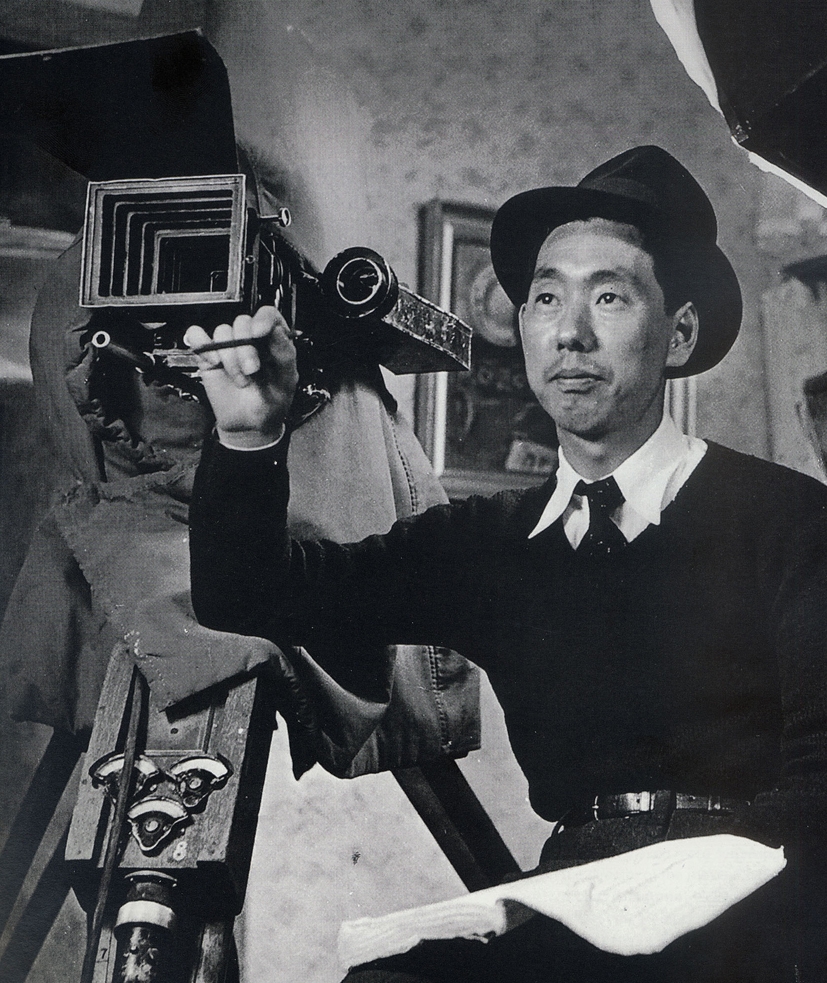
I’ll be watching a lot of films by Japanese director Mikio Naruse over the next few weeks, gearing up for another episode of the They Shot Pictures podcast. Unlike the other directors covered in the episodes I’ve been on (Von Sternberg, Ozu and Hou), I know next to nothing about Naruse, so I’m starting at the beginning, with the set of his five extant silent films released by Criterion’s Eclipse label a couple of years ago.
The first, 1931’s Flunky, Work Hard! is a salaryman short in much the same vein as Yasujiro Ozu’s films from around the same time. During the Depression, a working man tries to make money to support his family. The film’s an interesting blend of comedy and drama, as the first half involves some slapstick hijinks between the father and a rival insurance salesman and the second finds the family in the hospital after the son is hit by a train. It’s a weird tonal mix that I’m not sure is entirely successful. Unlike his late film When a Woman Ascends the Stairs (before this project the only Naruse film I’d seen), the film is visually pretty wild, with quick editing and push-ins at especially dramatic and comedic moments used to emphasize and underline the on-screen emotions. When a Woman, by contrast, is very restrained, almost invisible in style as far as I remember (I’ll be rewatching it eventually).
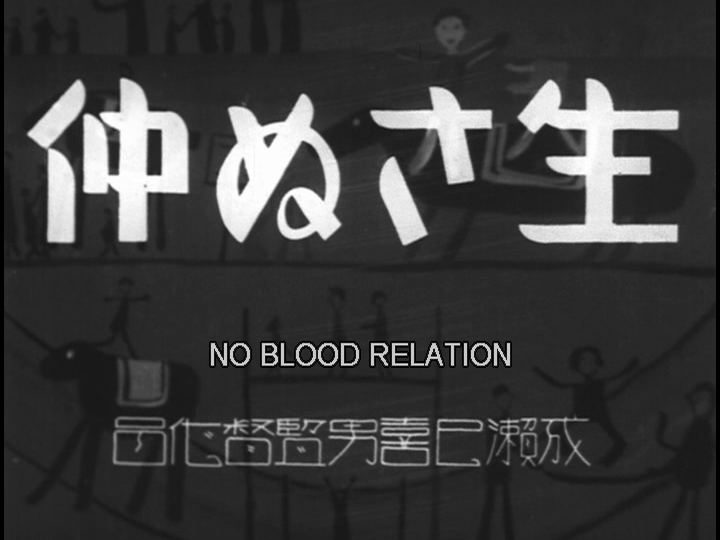
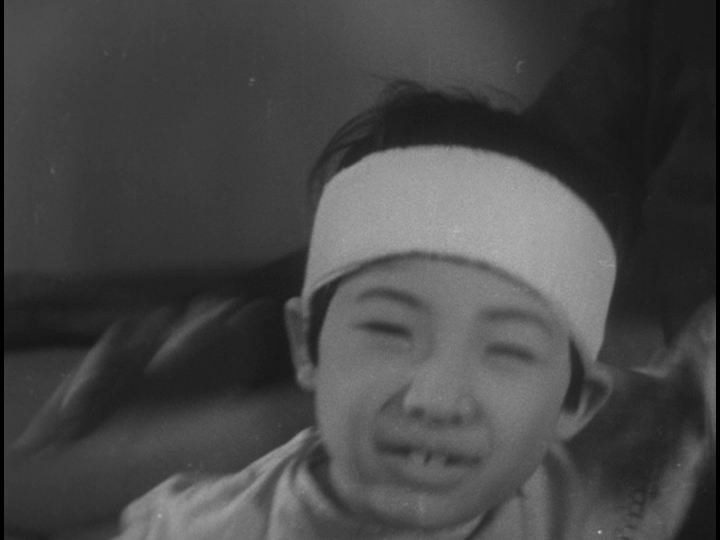
No Blood Relation, Naruse’s next oldest surviving film (and his 16th in three years) is even more of a stylistic explosion. It starts with the opening shots: we get a title card “Purse snatcher!” followed by short whip pans quickly cutting through and following a crowd as a thief is being chased. The thief runs toward the camera and dissolves into a reverse angle of him running away, as if he’d run right through us. In less than 30 seconds, Naruse shows a mastery of action filmmaking, and he’s done so in the introduction to what will turn out to be not a crime film, but a maternal melodrama. The scene ends with what will become the coolest stylistic trick in the film, a match-cut.
The thief will talk his way out of trouble and walk away as a man in a nice suit (who’d been interrogating him) pulls out a cigarette.
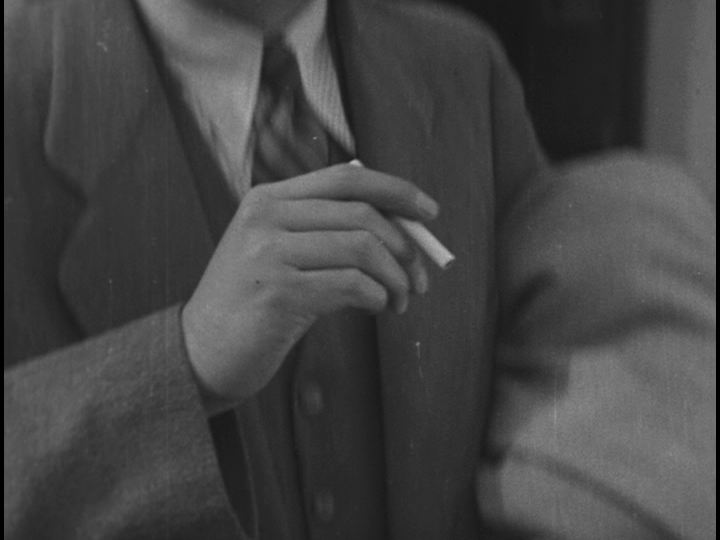
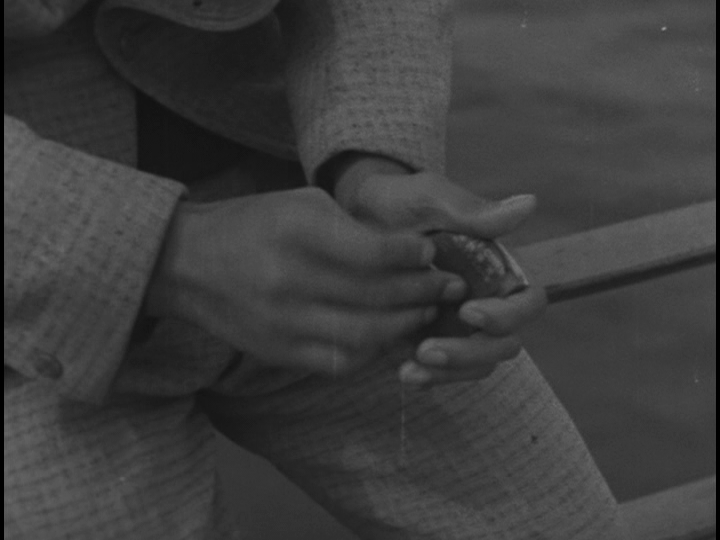
The thief striking a match and lighting his own cigarette. The two men are actually in cahoots (the man in the suit has pocketed the stolen purse, thus allowing the thief to show he didn’t have it). Naruse throughout the film uses these kind of match-cuts to link characters, not only across space but also emotionally.
As the story proper starts, we learn that the man in the suit is the brother of a famous actress, who has just returned from America. She’s a divorcée with a seven year old daughter she hasn’t seen for six years. The daughter lives happily with her father and step-mother. The actress wants to get the daughter back, but the kid prefers the step-mom. The film thus somewhat inverts the traditional maternal melodrama story, wherein the birth mother lives a wretched life of sacrifice so the child can grow up in material comfort, usually with a fancy, maybe even snobbish, step-mother (see for example King Vidor’s Stella Dallas). Here the step-mother is the poor one who sacrifices much for the child while the mother tempts her with riches the child rejects in favor of true (step-)maternal love.
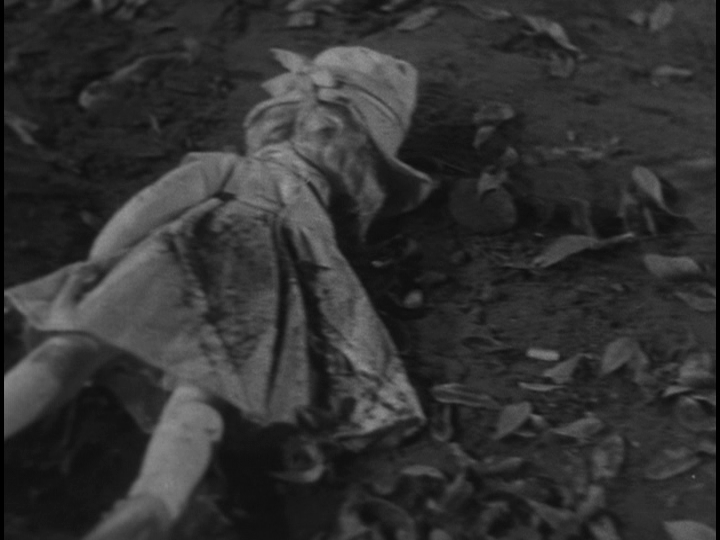
The daughter, Shigeko, is introduced in cutting from the actress’ arrival in Japan to this shot of a doll, complete with super-imposed titles, followed by a pan along the ground to the girl herself:
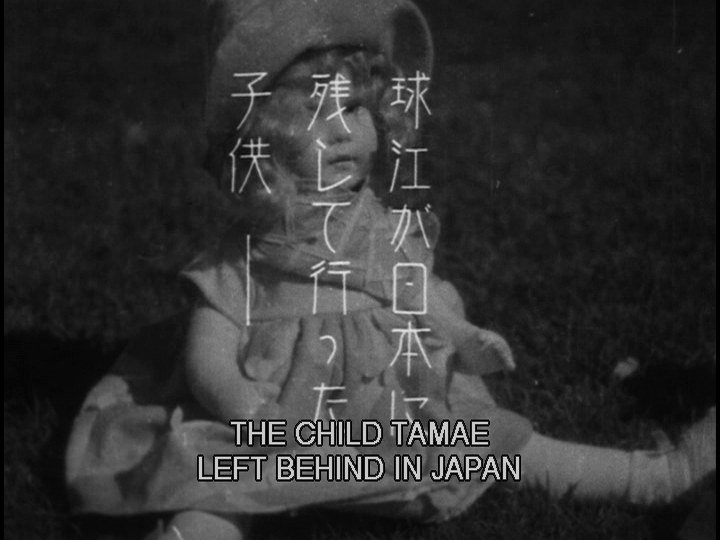
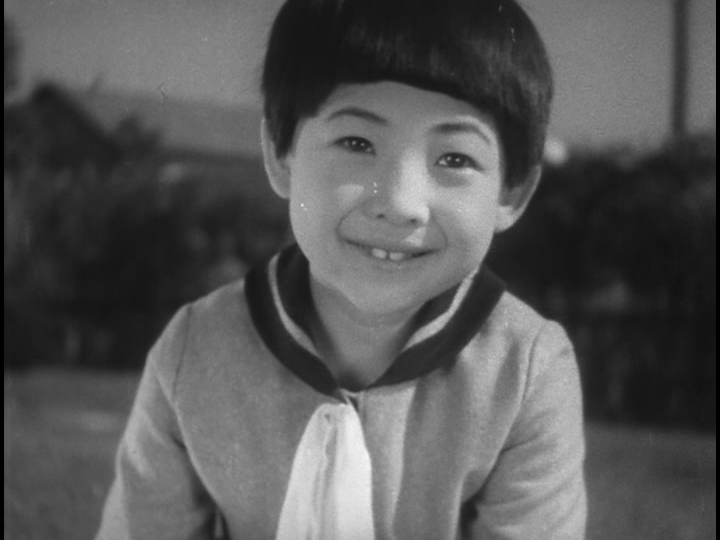
Already, Naruse has established the artificiality of the birth mother’s relationship to her daughter. Not only is it implied that she views the girl as an object (to be acquired) but that her idea of the kid is generic: she doesn’t know her, she could be any girl, not the specific Shigeko that Masako, her step-mother knows.
The father (Atsumi) arrives home and the family, complete with Masako and Atsumi’s mother is assembled. Atsumi has bad business news revealed in this sequence of shots:
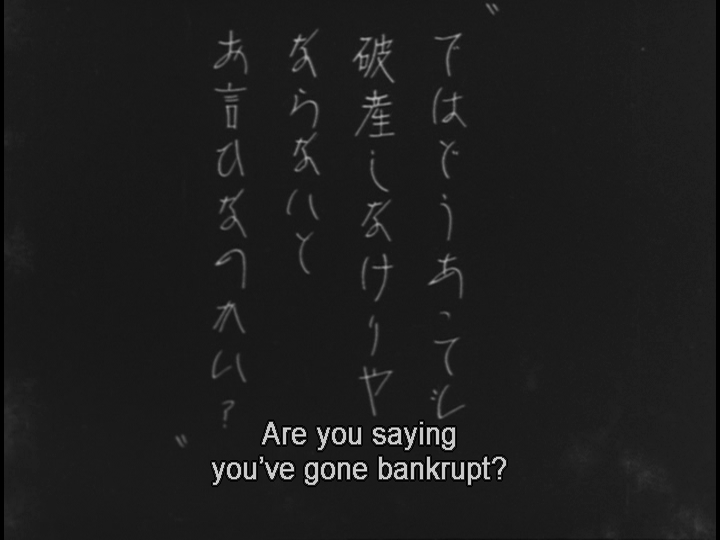
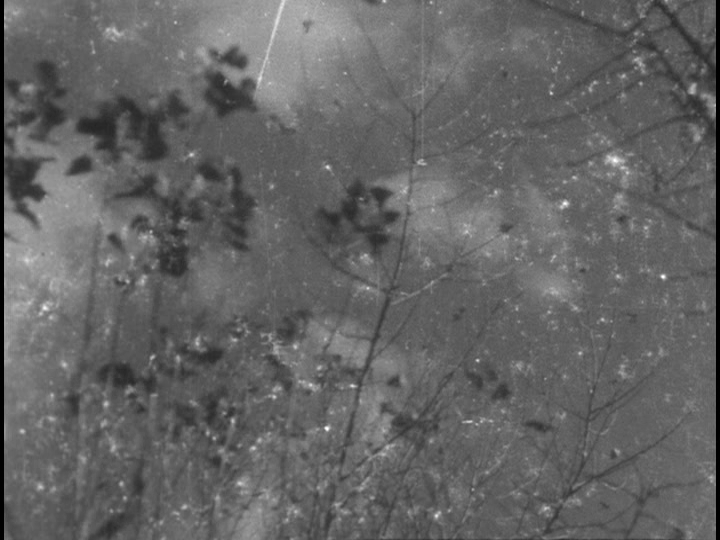
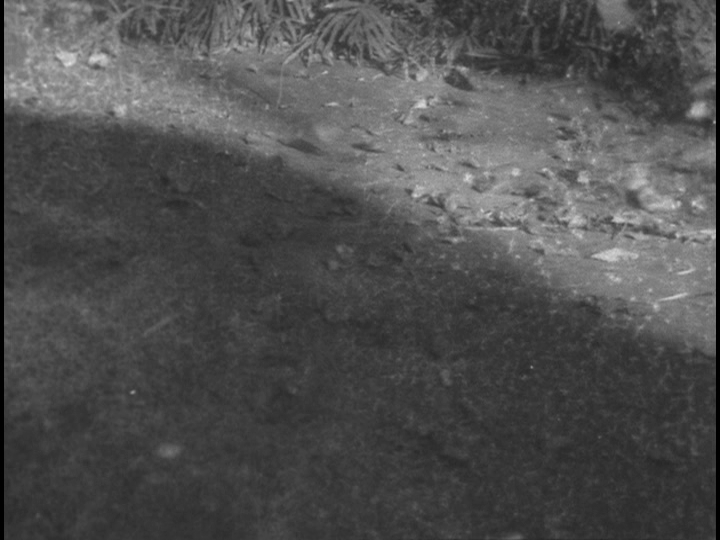
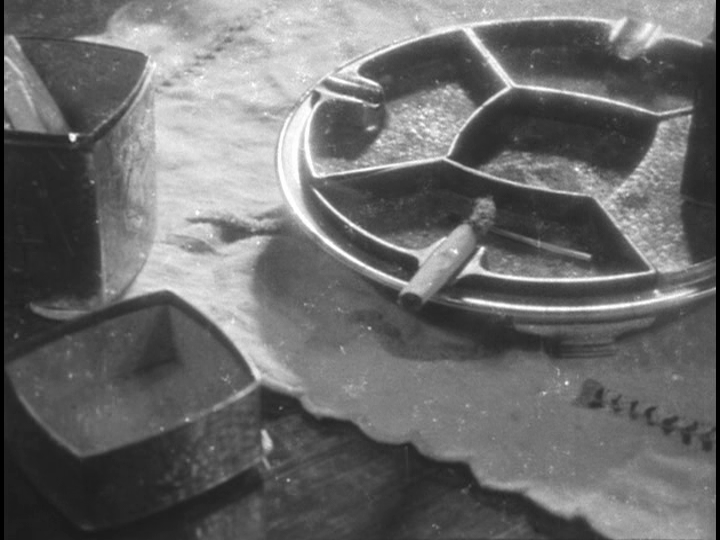
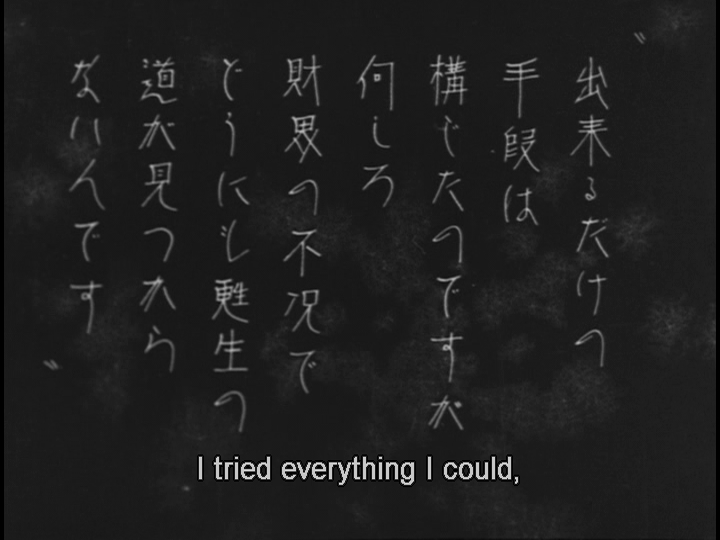
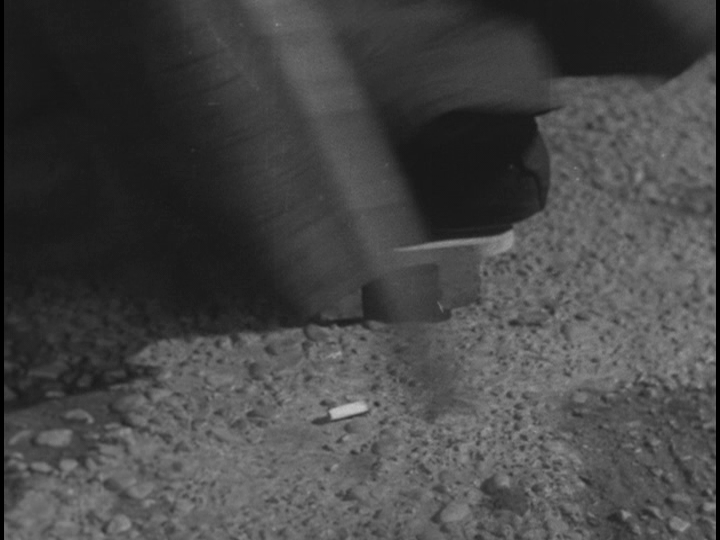
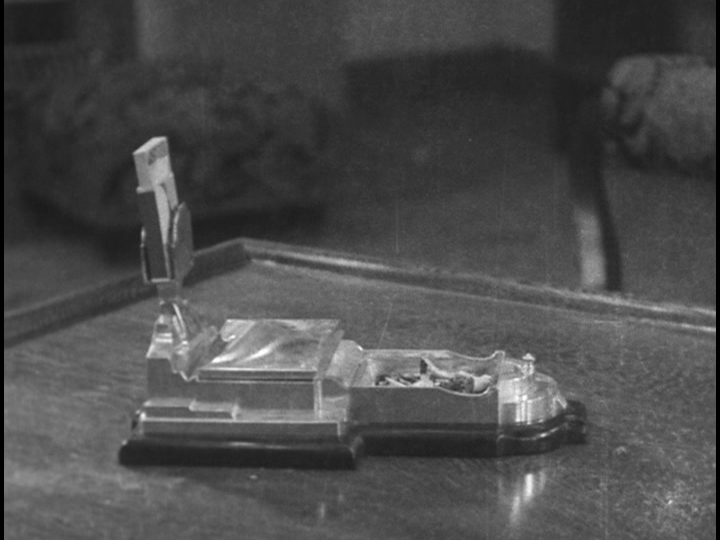
A kind of associational montage I don’t think I’ve ever seen before in a Japanese film of this period (you can see it a lot nowadays, though not often reputably: Gus van Sant’s Psycho and Django Unchained are the first that come to mind). His mother asks if he’s bankrupt, he nods, then a quick push in to a close up of her, followed by shots of wind through trees, rustling leaves and cigarette smoke: their wealth blowing away in the Depression. We’ll see the same kind of thing later in the film when Atsumi is taken away by the police (something to do with his bankruptcy, it’s not important) and then again when he’s in prison.
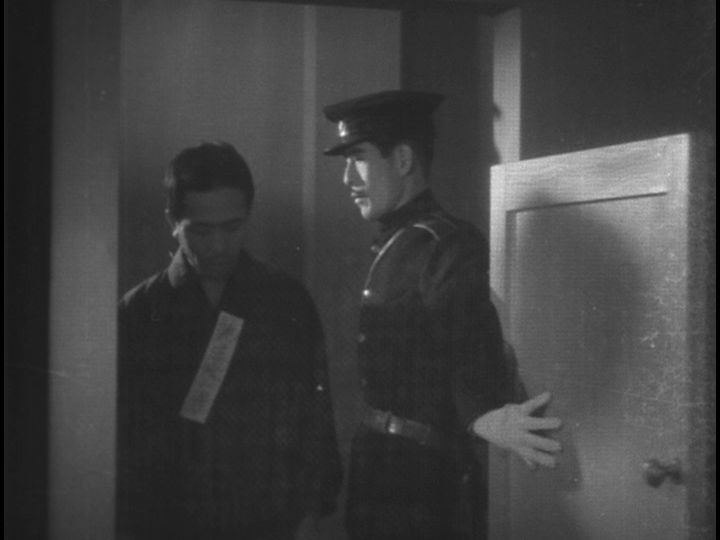

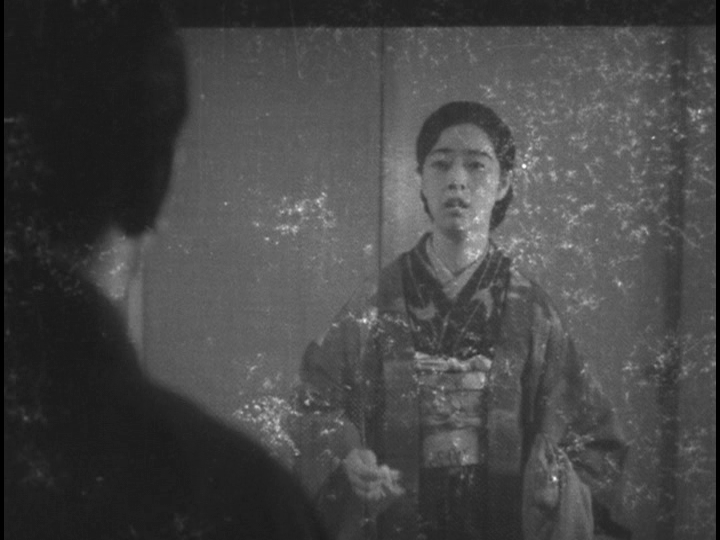
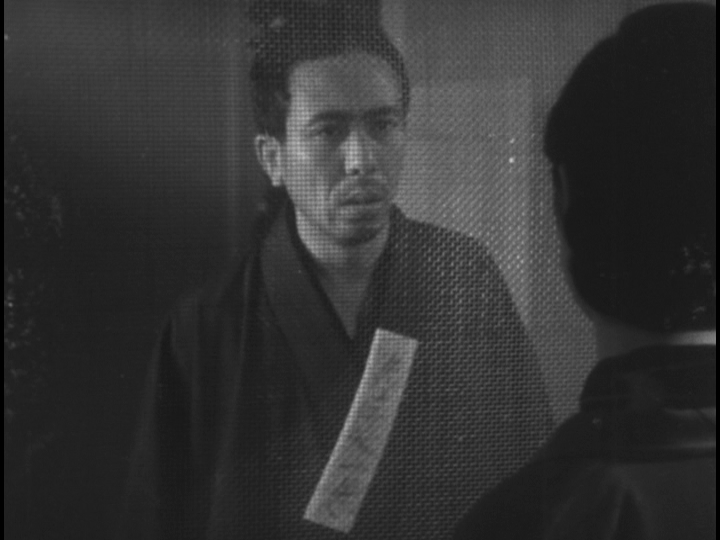
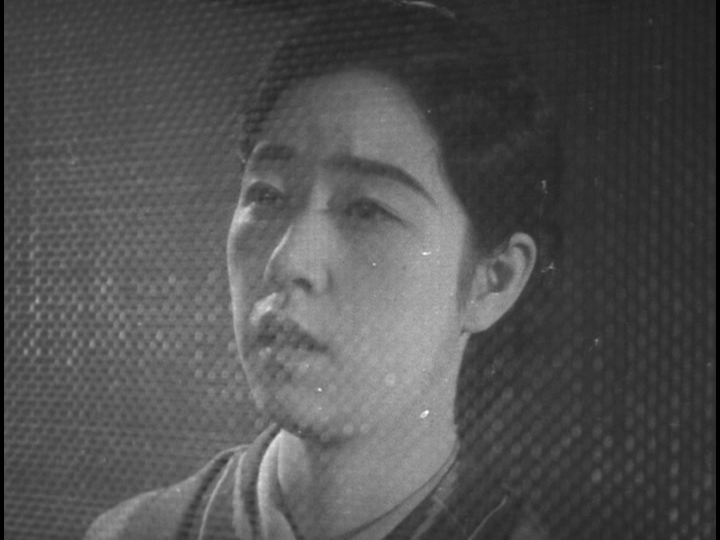
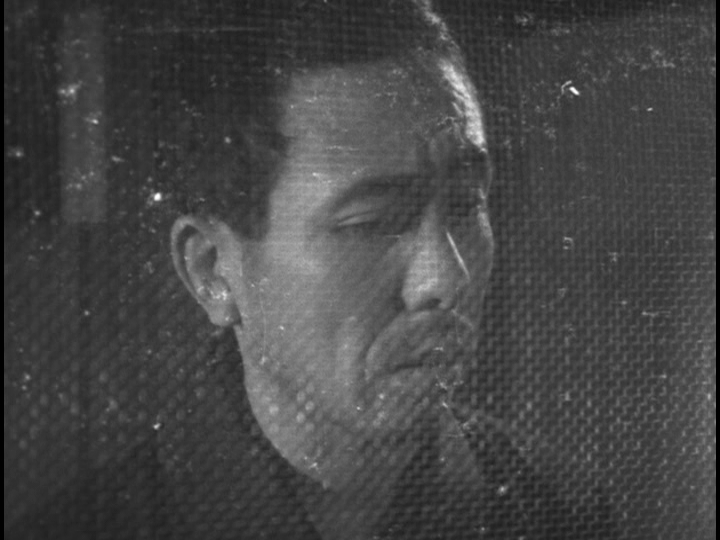
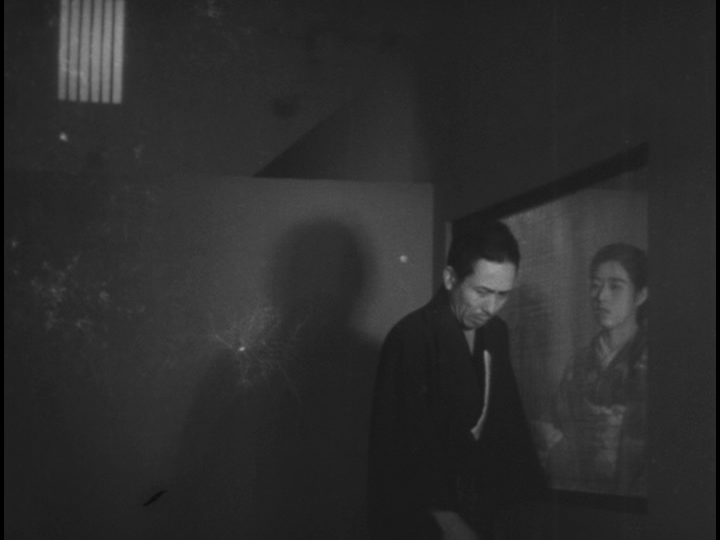
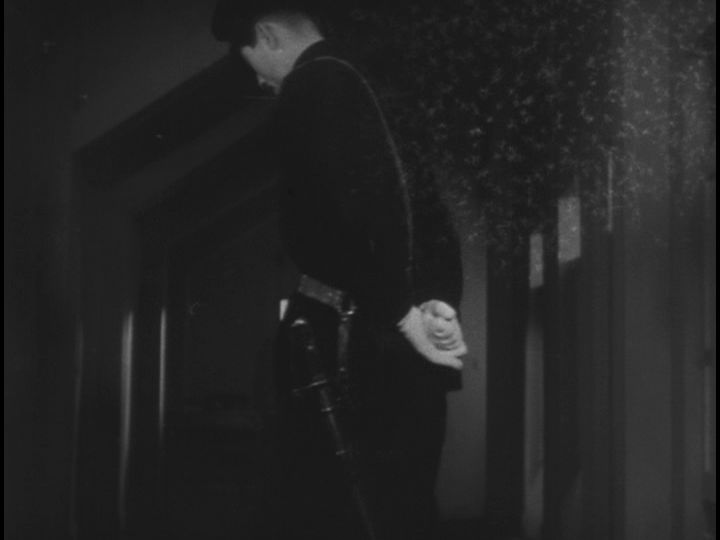
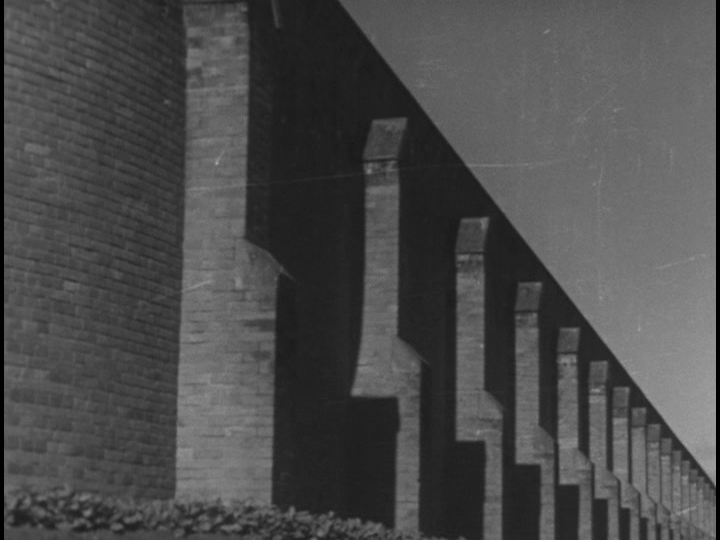
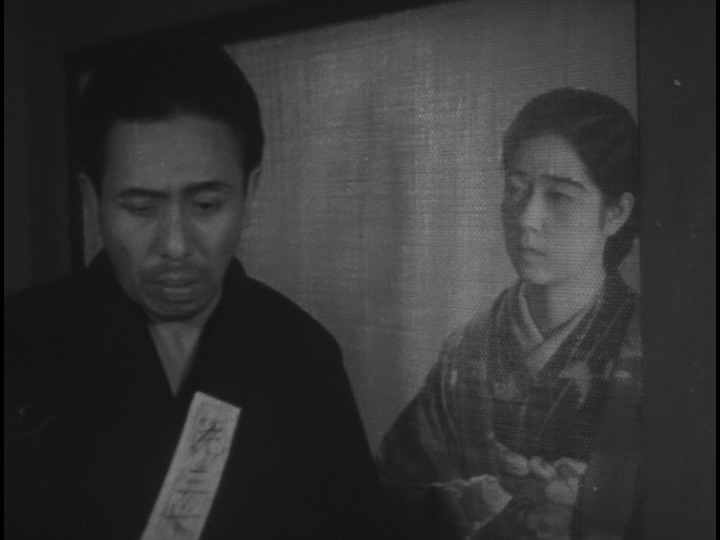
But I’ve gotten ahead of the plot. After the bankruptcy announcement, before the arrest, Shigeko is out playing with her doll and almost gets hit by a car but the step-mother saves her, getting hit herself (sacrificing herself for the child). There’s a short scene at Atsumi’s office when he explains to his employees that he can’t afford to pay them marked by long lateral tracks through the windows of the office building and along the rows of the assembled employees. Naruse’s tracks are faster and the camera is closer to the action, but the graphical effect is similar to Jean-Luc Godard’s memorable tracks in Tout va bien. When he returns to the house, all their furniture is being repossessed, his mother harangues him because she’ll now have to live in a smaller house and he gets taken away by the police. Then we cut to some time later, with the daughter and step-mother in the smaller house when Naruse makes the first of two match cuts on clocks:
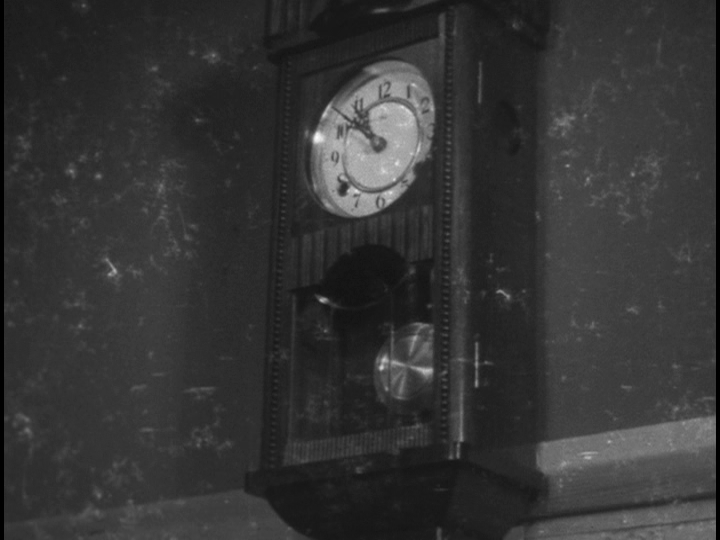
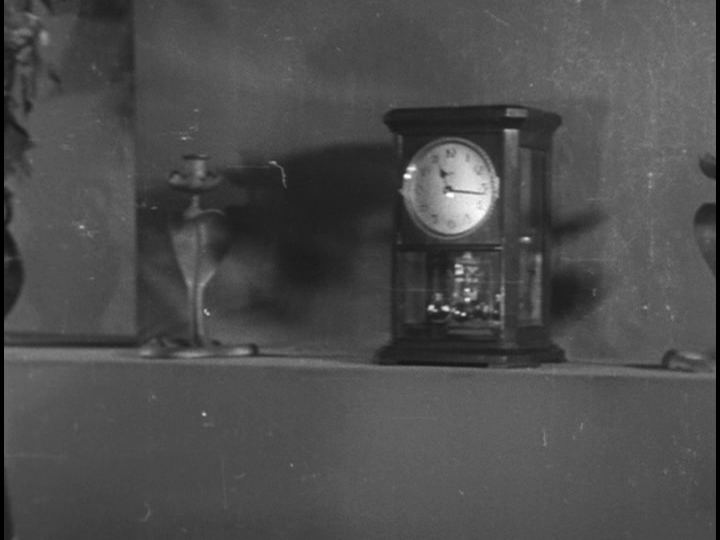
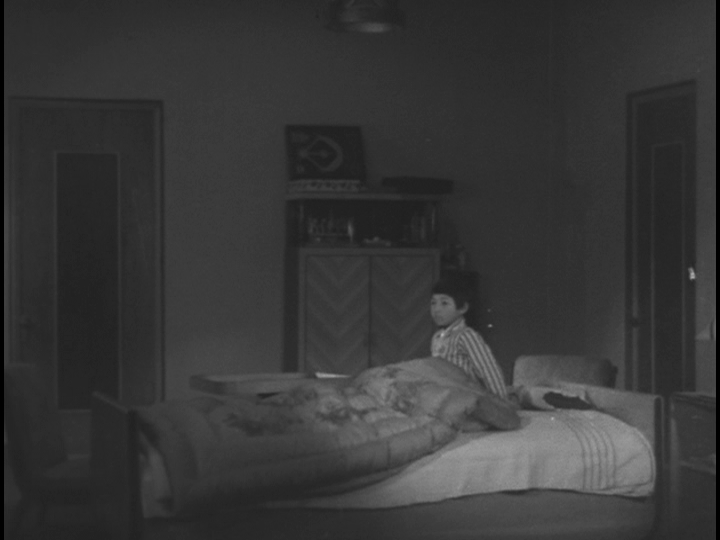
From the small house to the actress’ house. Throughout the second half of the film, as the family unit is increasingly split up geographically, Naruse will use match cuts to link the various characters and elide time (notice the 20 minutes difference in a single cut). Here’s another one that starts with the step-mother, now working in a department store looks up at the clock, leading to a shot of the clock at her home, but this time with a pillow shot inserted between the match:
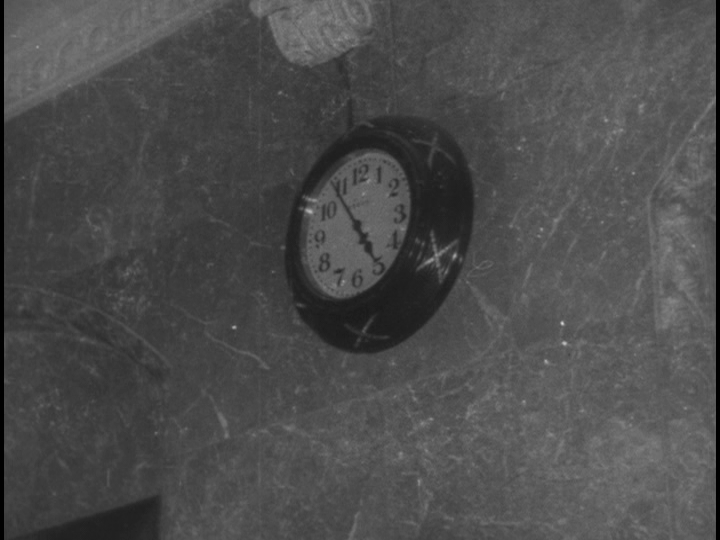
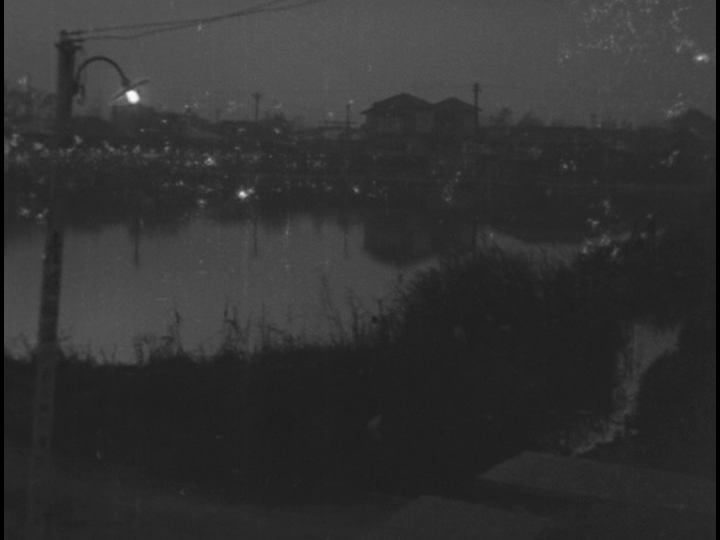
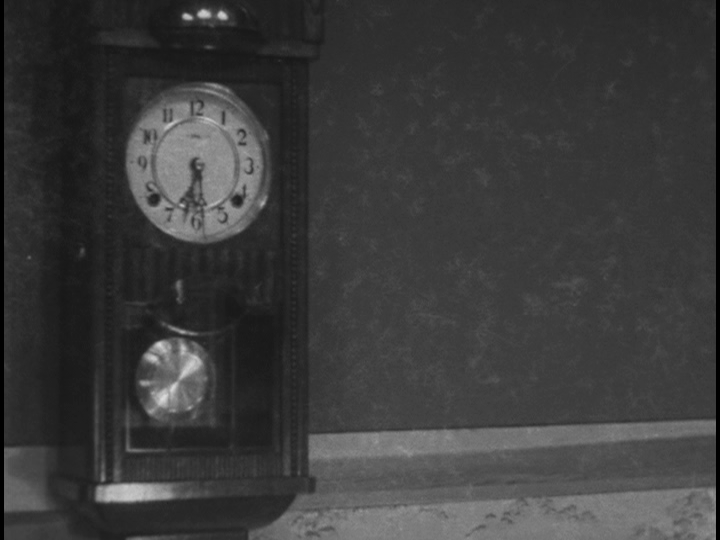
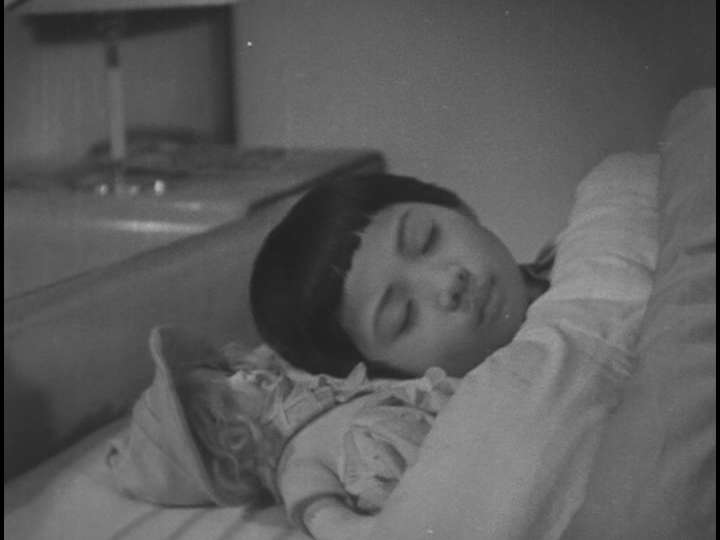
An hour and a half has elapsed, which might account for the pillow shot (it gives a greater sense of time passing), but there’s more. When Masako arrives home, she finds her mother-in-law, unable to deal with their financial insecurity, has taken Shigeko to live with the actress. The empty shot (a landscape with a lake, a blankness, in the center) in-between the match-cuts presages the emptiness in Masako’s home.
A neat match-cut occurs a bit later, as Masako’s friend Kusakabe (played by Joji Oka, who looks familiar but I can’t place him, he was in Ozu’s Dragnet Girl but I haven’t seen that) finds the actresses brother and his thief friend and accosts them outside a bar. Kusakabe is a big man who carries a stick and has a pretty beard, so he throws the thief down easily, leading to this cut from the thief to the little girl in her apartment playing with a toy tiger:
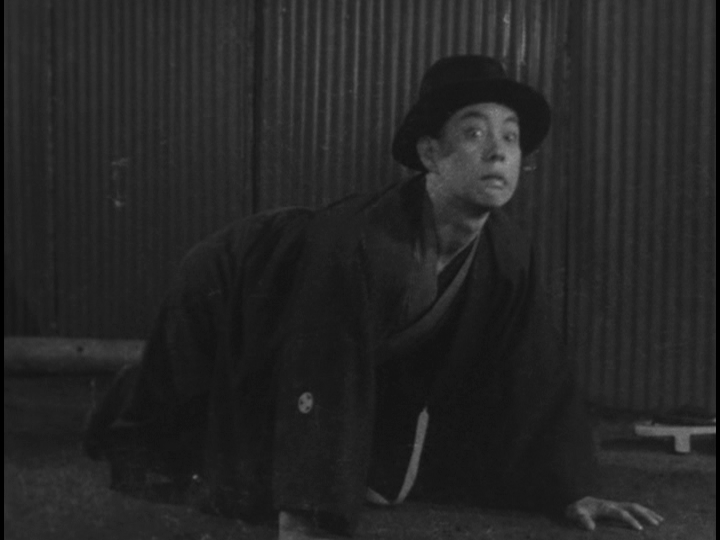
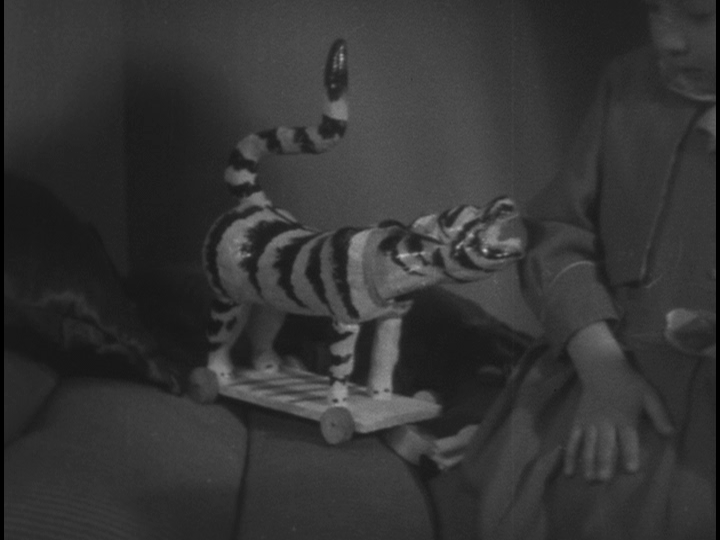
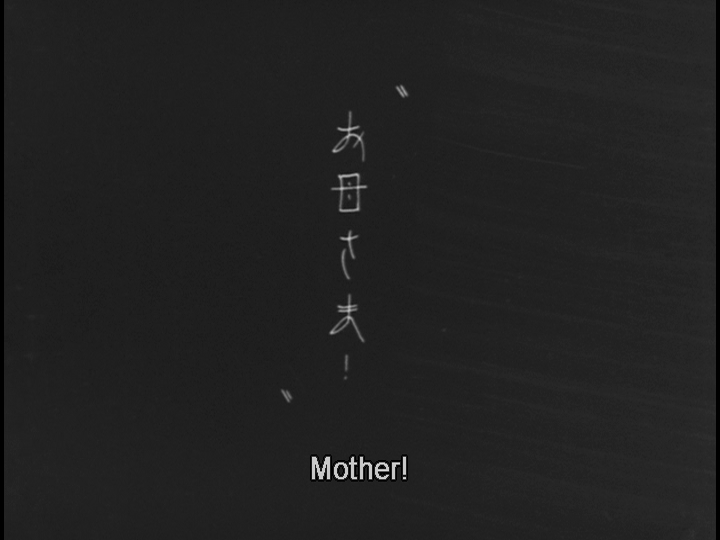
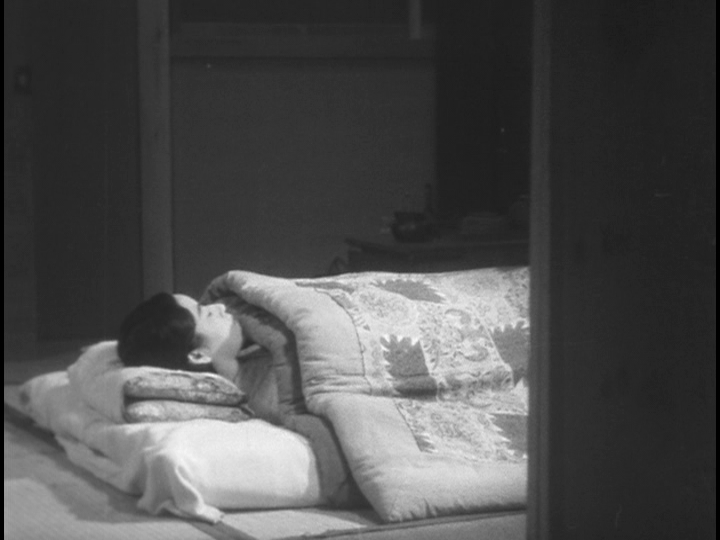
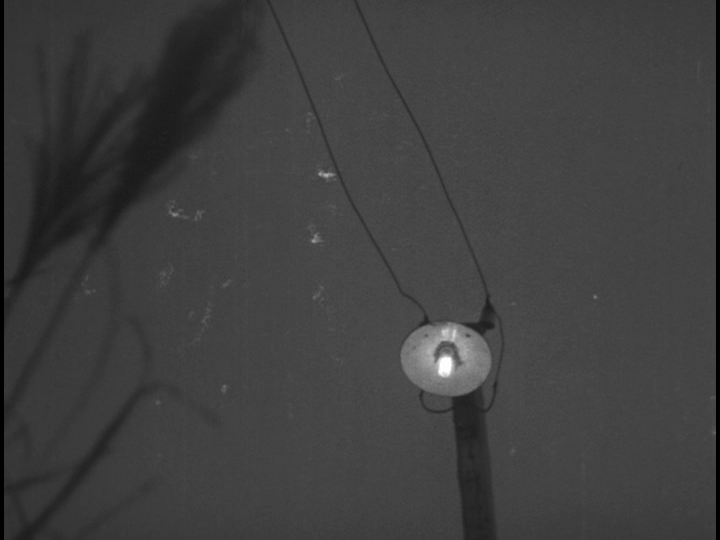
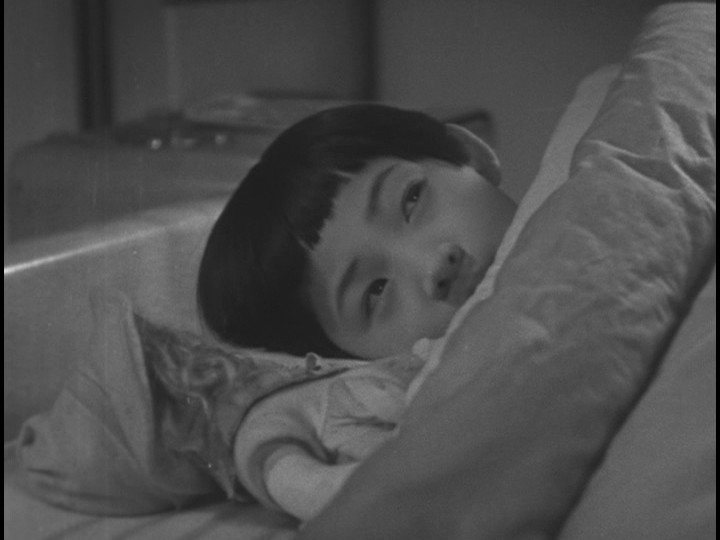
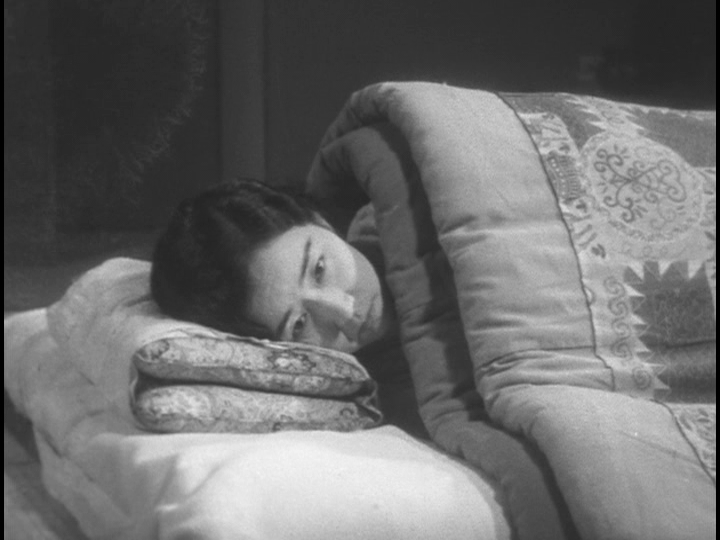
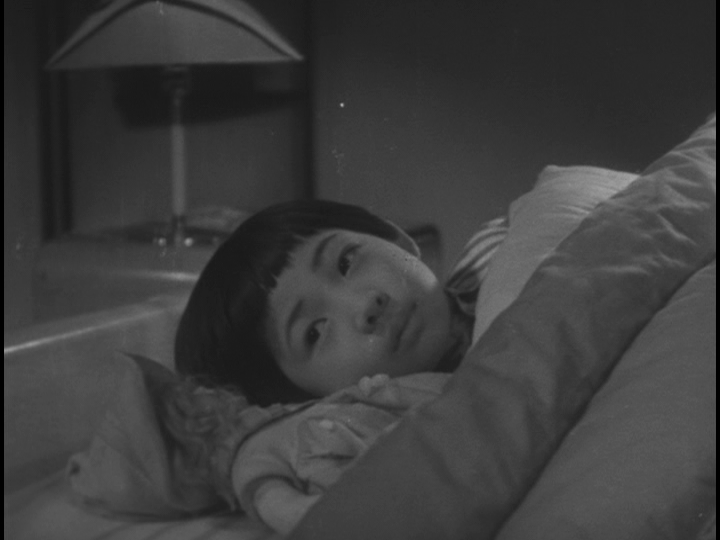
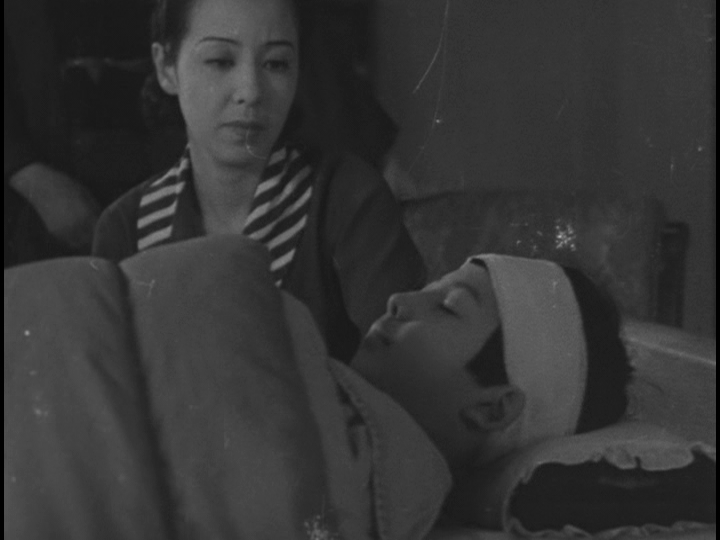
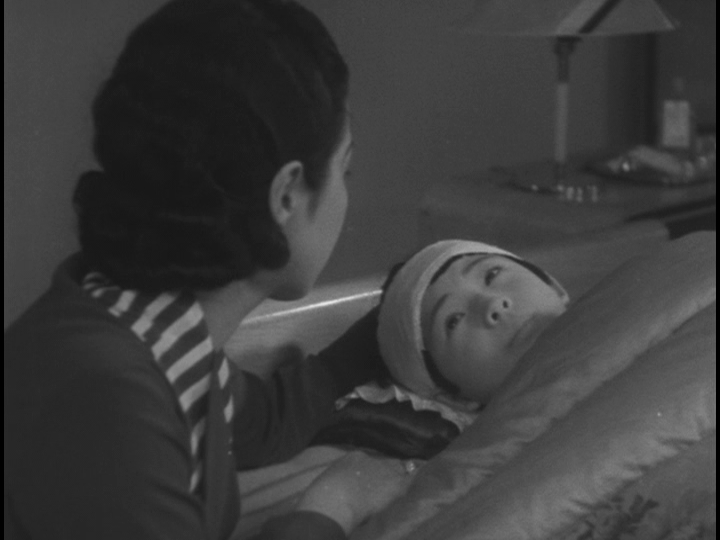
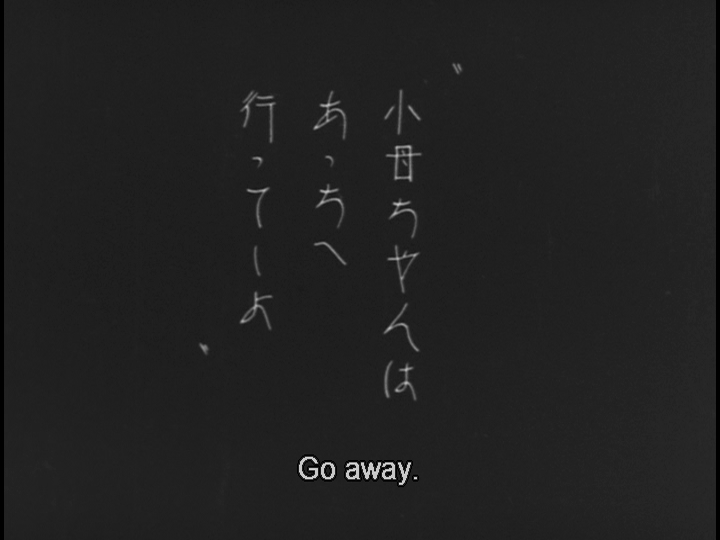
In addition to this flashy edit, Naruse also uses the push-in more extensively and more creatively than I’ve seen before. When Shigeko first meets her birth mother, she shouts at her and the words, in titles, zoom forward followed quickly by rapid push-ins on the mother, as if the girl is hurling the insults at her.
Near the end of the film, Masako sneaks into the actress’ apartment where she and Shigeko are reunited. They hug in a nice graphical match that seems to sum up the emotional content of the film’s match-cuts:
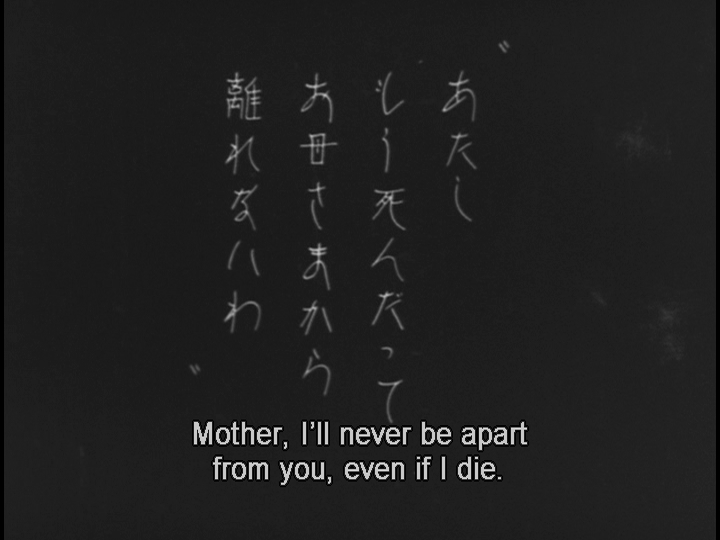
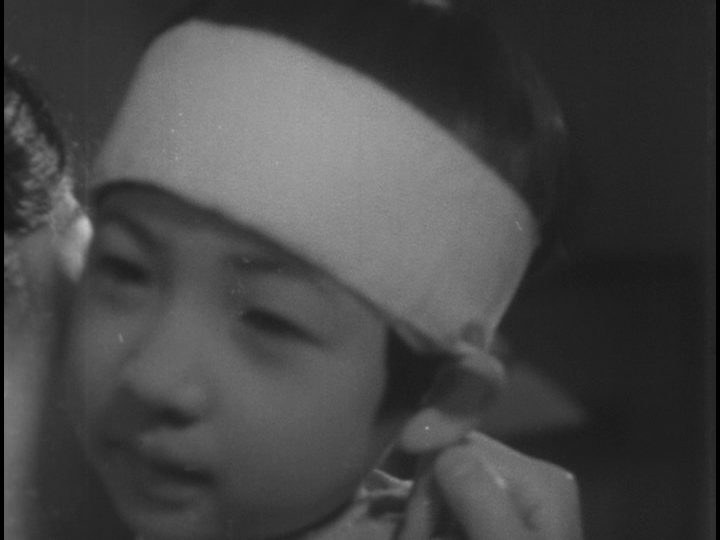

Followed by the actress bursting in and we have the four women for the first time in the same room at the same time. Close-ups of each are followed by two-shots, of the actress and the mother-in-law and the step-mother and daughter, four people into two factions.
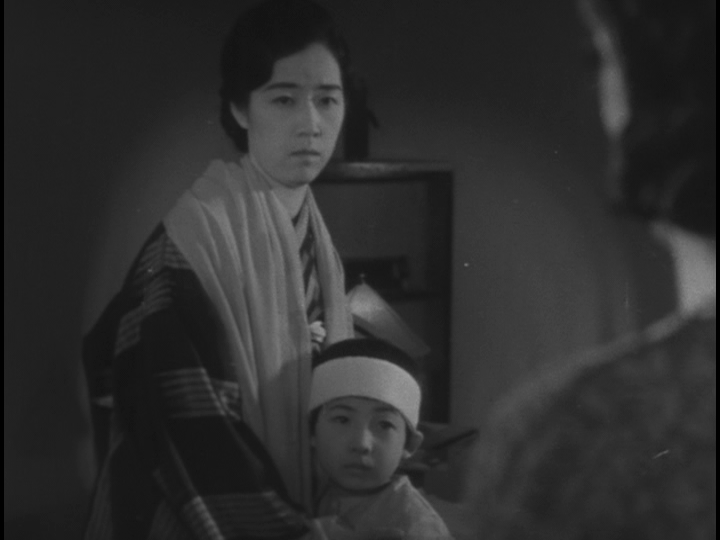
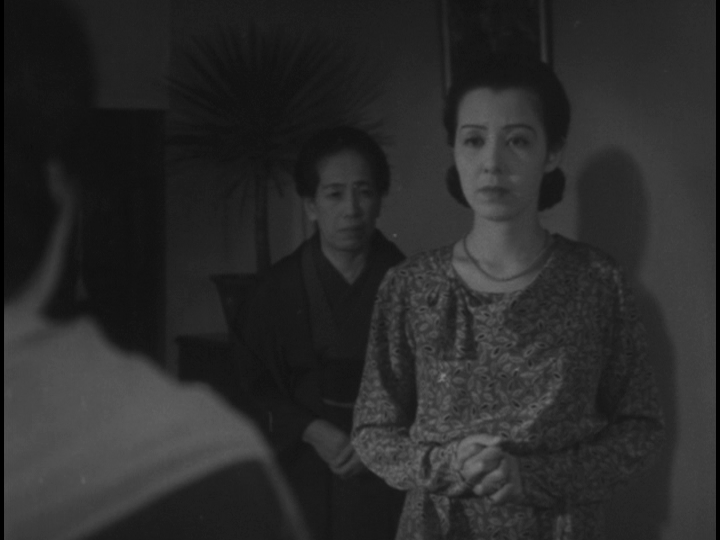
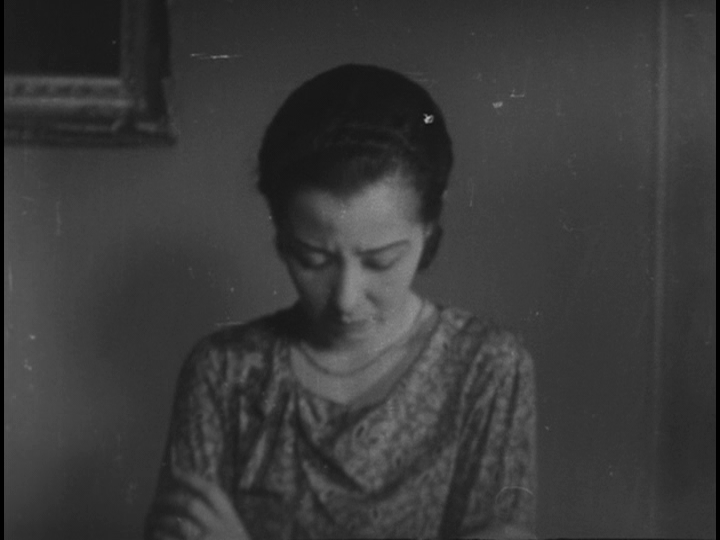
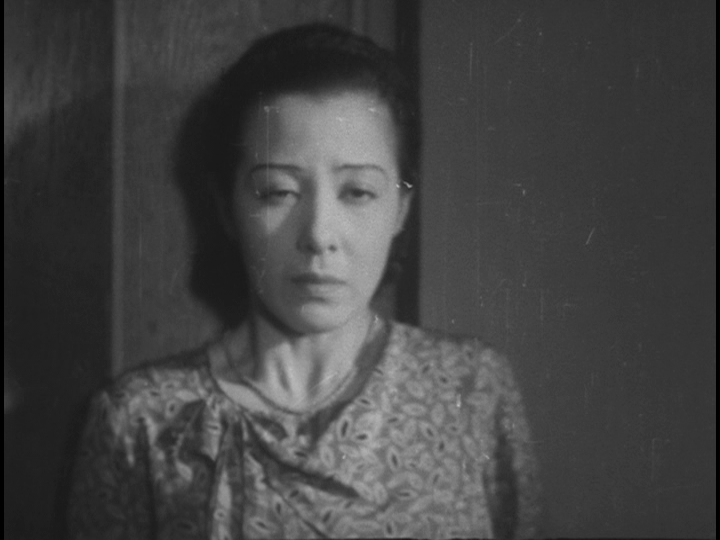
The actress looks at the little girl who in response pulls her step-mother’s hand to her chest. The woman looks down and the camera pulls-out:
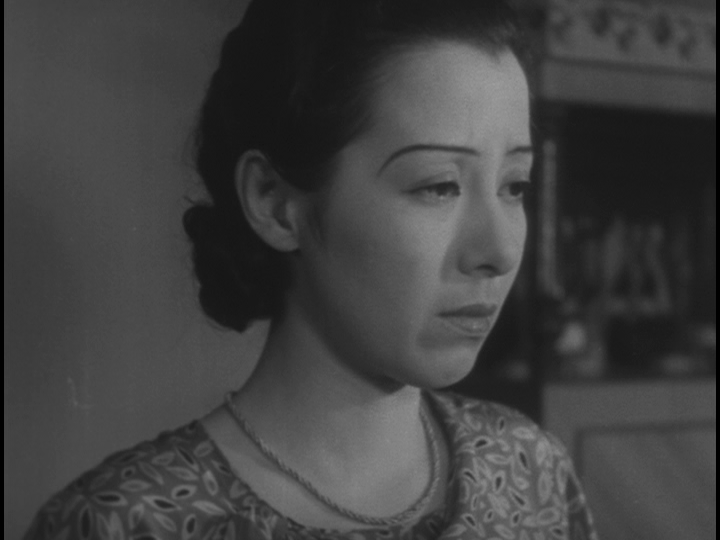
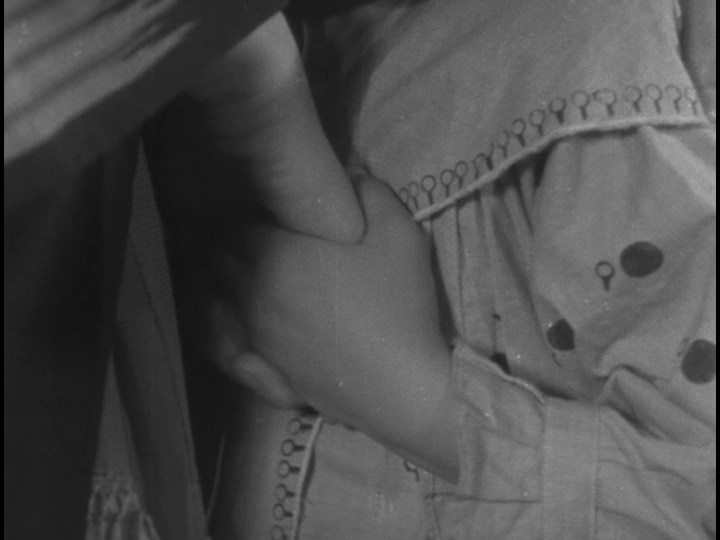
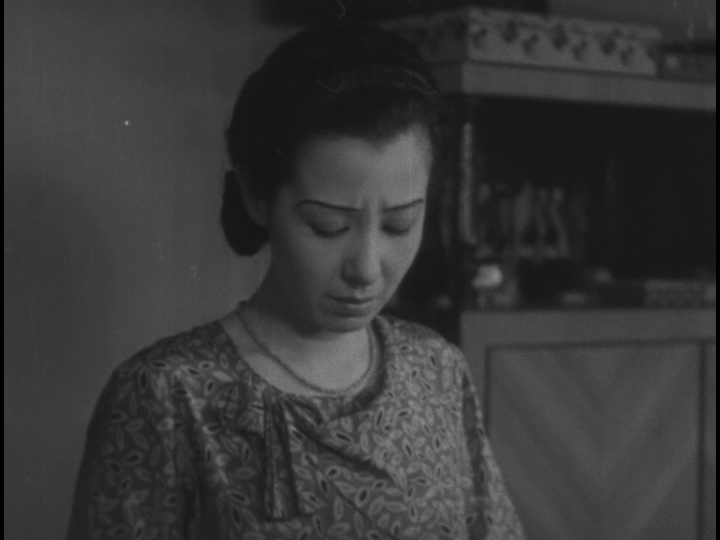
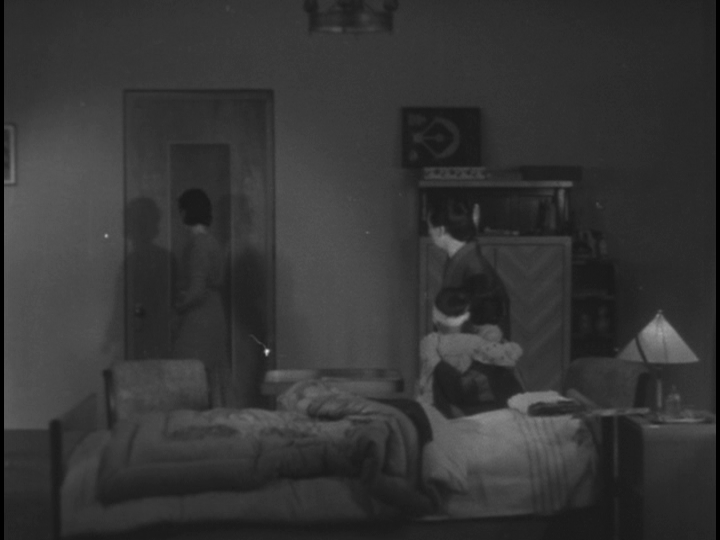
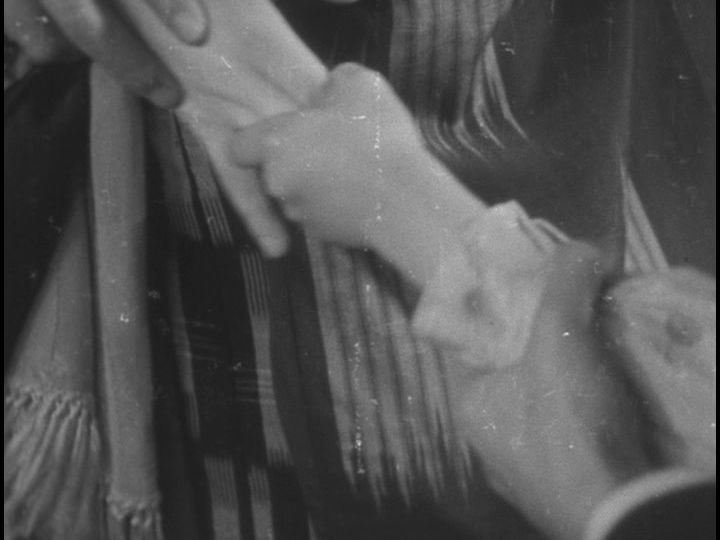
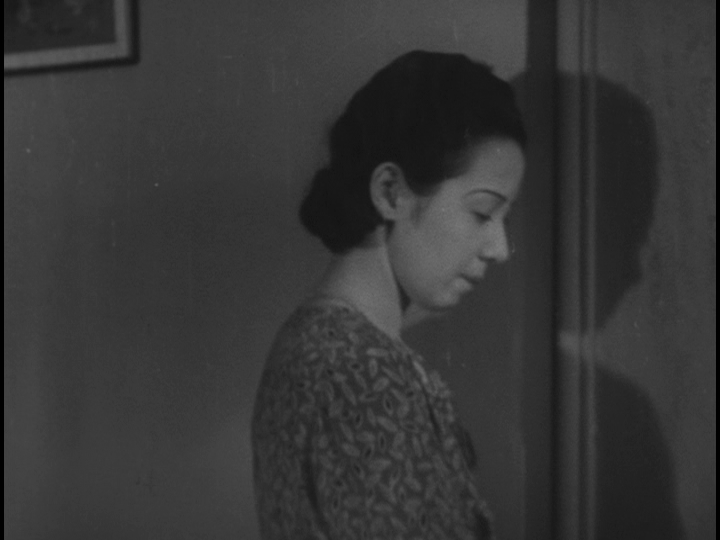
Four times the camera pushes in on her. We pan with her as she paces. We watch her in close up as she thinks and comes to a realization on the nature of motherhood and finally she moves. She gets up and runs out the door after Masako to bring her back to her step-daughter. In the end, it’s her motion and not the camera’s that brings the dramatic climax.
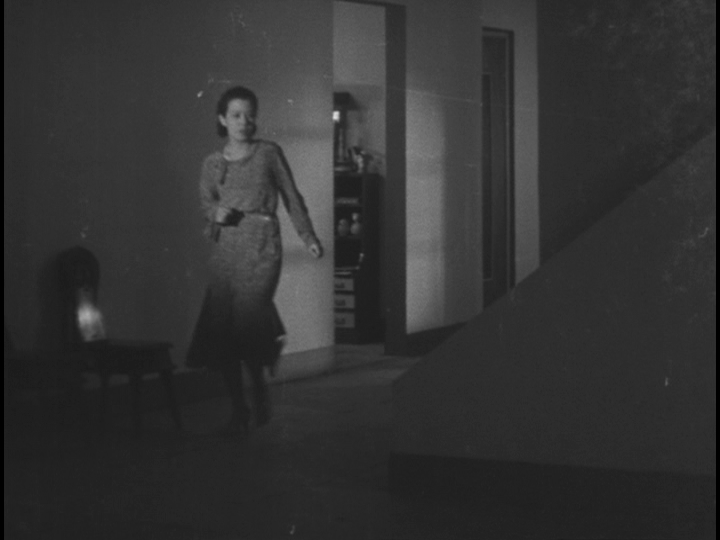
None of what Naruse does in this film is particularly new or innovative, but what it does show is that early on in his career (he was 27 years old here and had been a director for only three years) he had a masterful command of the film techniques of his time, as well as a willingness to experiment both with visual style and with story structure (though perhaps more of the credit there should go to writer Kogo Noda, Ozu’s frequent collaborator who adapted a contemporary play for this film). The push-ins in particular are an interesting attempt at building an aesthetic out of a stylistic quirk that in the end didn’t work out (not every experiment leads to a coherent system the way Eisenstein’s or Ozu’s did). I’m excited to see his style evolve from this youthful jubilance into the spare beauty of his more mature films of the 50s and 60s as I watch as much Naruse as I can over the next few weeks.
After spending much of the last quarter of 2011 in the zombie state that is caring for a newborn, I made a strong movie-watching comeback in 2012, not only seeing a ton of great old movies but also more than twice as many movies from the current year as I’d seen at this point last year. Much of that is thanks to a trip to the Vancouver International Film Festival for the fourth time in the last five years. I saw over 30 films there this year, so many that I still have eight left to review (New Year’s Resolution #1: finish last year’s reviews).
As always with end of the year lists, there is the question of dates. For every list on this site, I use the year given by imdb. That’s the easiest, most consistent standard for movie years throughout history and across the world. That means that a number of films which were theatrically released in the US in 2012 count as 2011 or even 2010 films for my lists, due to prior appearances at film festivals or in other countries. It also means that a few of my favorite 2012 films will be showing up on other folks’ end of the year lists in 2013.
So first, here are some films that won’t be appearing on my 2012 list because I consider them to have come from earlier years:
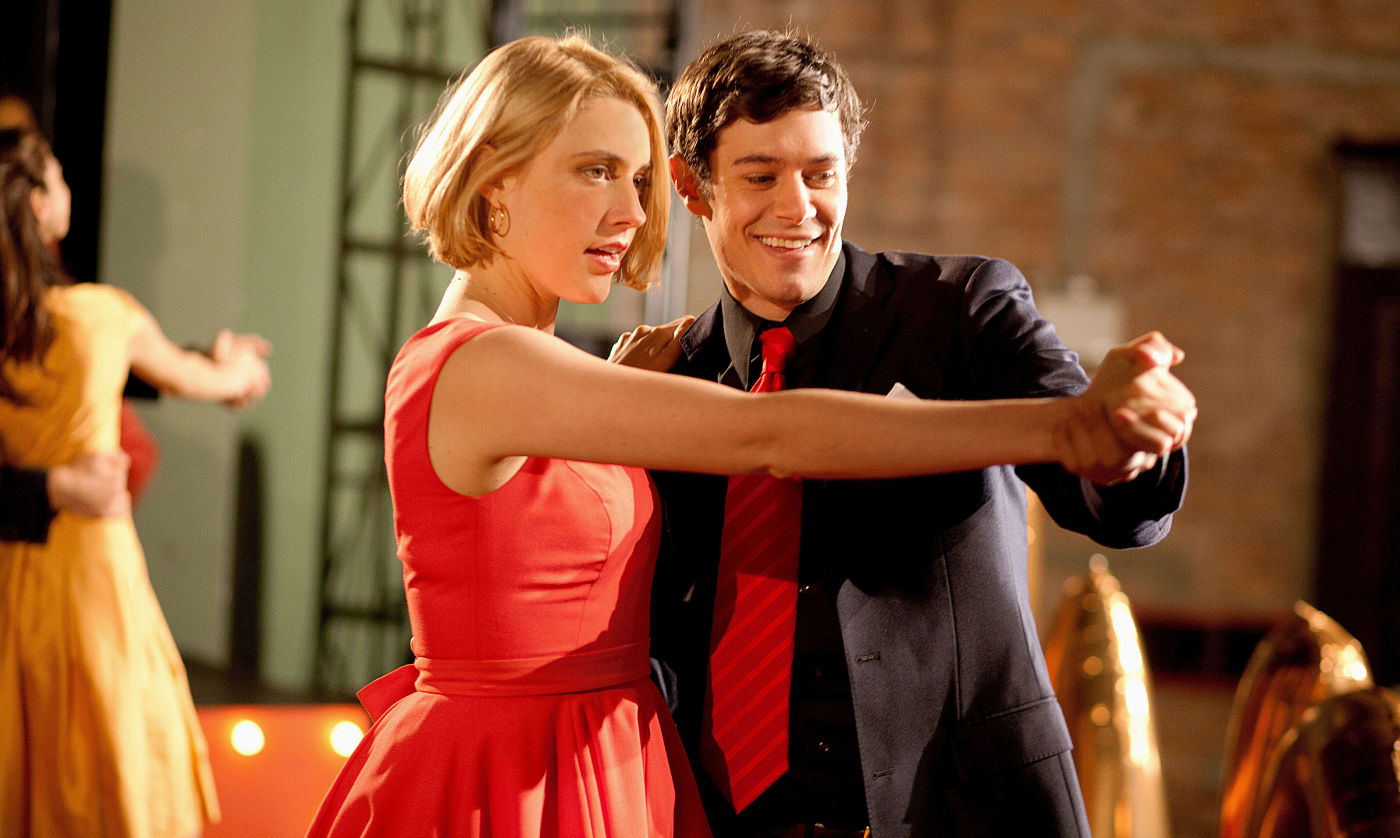
Damsels in Distress (Whit Stillman, 2011)
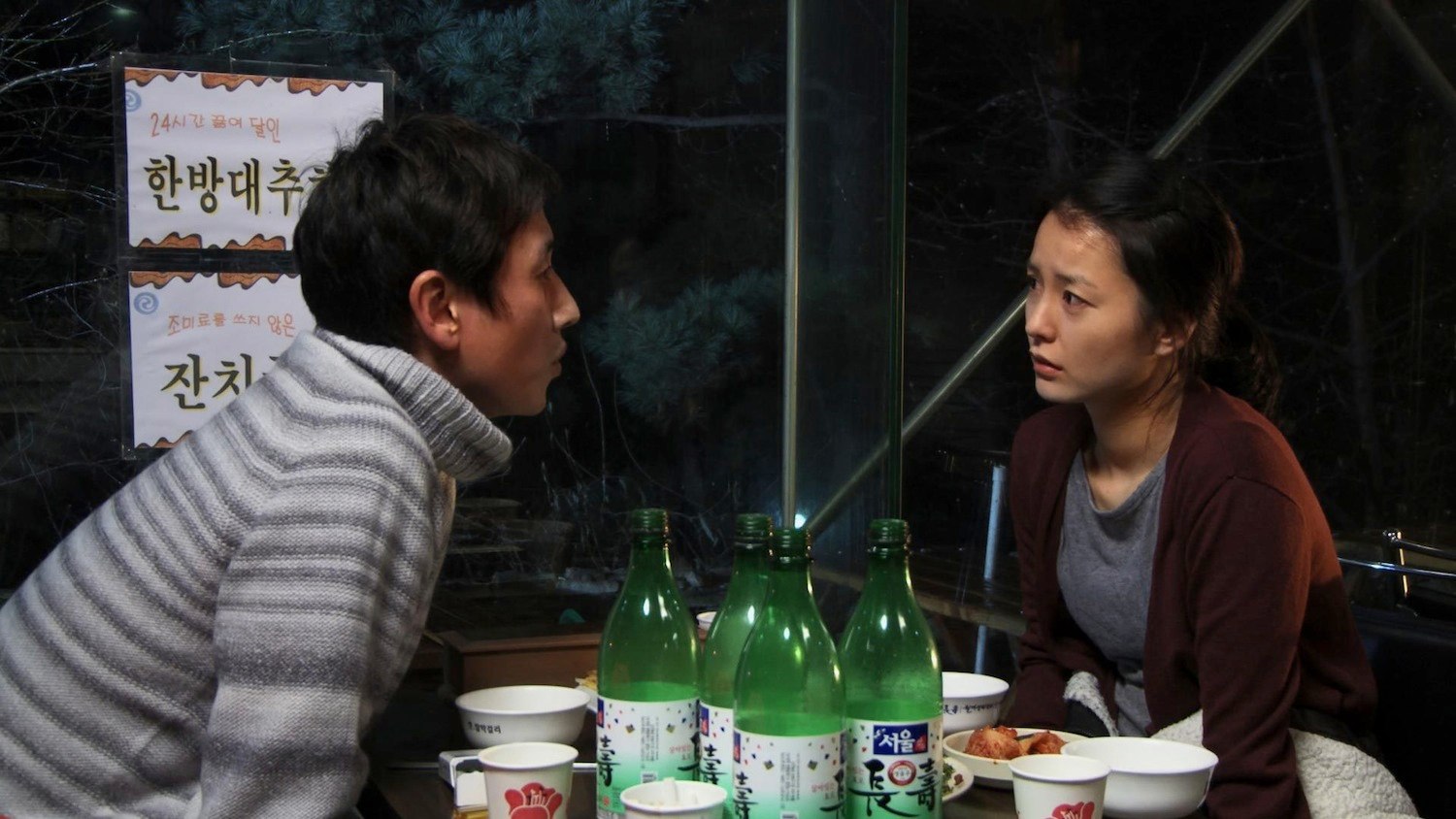
Oki’s Movie (Hong Sangsoo, 2010)
Margaret (Kenneth Lonergan, 2011)
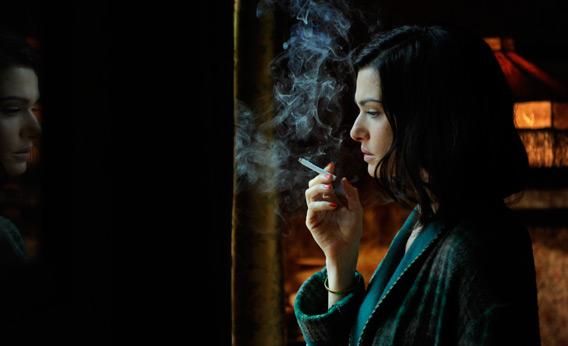
The Deep Blue Sea (Terence Davies, 2011)
Don’t Go Breaking My Heart (Johnnie To, 2011)
The Day He Arrives (Hong Sangsoo, 2011)
The Cabin in the Woods (Drew Goddard, 2011)
Romance Joe (Lee Kwangkuk, 2011)
Let the Bullets Fly (Jiang Wen, 2010)
Once Upon a Time in Anatolia (Nuri Bilge Ceylan, 2011)
Life Without Principle (Johnnie To, 2010)
Girl Walk // All Day (Jacob Krupnick, 2011)
I Wish I Knew (Jia Zhangke, 2010)
The Grey (Joe Carnahan, 2011)
Hahaha (Hong Sangsoo, 2010)
The Turn Horse (Bela Tarr, 2011)
Bernie (Richard Linklater, 2011)
The Kid with a Bike (The Dardenne Brothers, 2011)
Take This Waltz (Sarah Polley, 2011)
Additionally, there are quite a few 2012 films I haven’t managed to see yet, either because they haven’t yet been released in the Seattle area, or because I just haven’t found the time to watch them. I am constantly adding newly seen films to old lists with This Week in Rankings posts, for example there are now 49 films on my 2011 list, more than twice as many as the one in the end of the year post I wrote last year.

Here are a few of the notable 2012 films I haven’t seen yet:
Zero Dark Thirty (Kathryn Bigelow)
Room 237 (Rodney Ascher)
Flight (Robert Zemeckis)
Argo (Ben Affleck)
Life of Pi (Ang Lee)
Beast of the Southern Wild (Ben Zeitlin)
The Dark Knight Rises (Christopher Nolan)
Silver Linings Playbook (David O. Russell)
Seven Psychopaths (Martin McDonagh)
Killing Them Softly (Andrew Dominik)
Leviathan (Lucien Castaing-Taylor & Verena Paravel)
Magic Mike (Steven Soderbergh)
Haywire (Steven Soderbergh)
Barbara (Christian Petzold)
Frances Ha (Noah Baumbach)
To the Wonder (Terrence Malick)
And with that, here is my list for 2012, with links to reviews where appropriate:
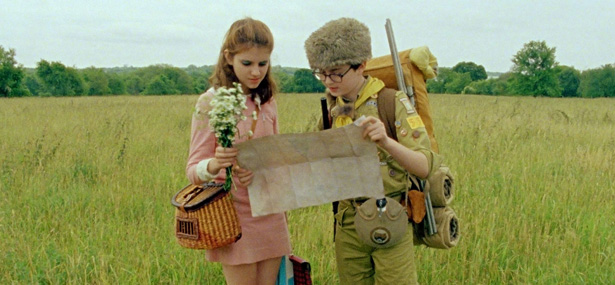
1. Moonrise Kingdom (Wes Anderson)
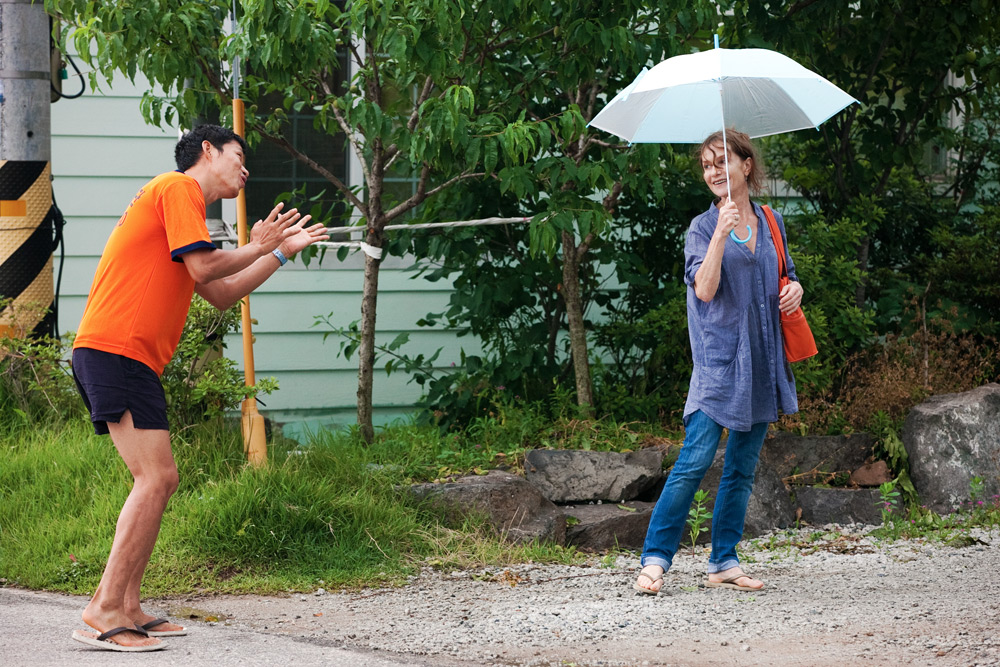
2. In Another Country (Hong Sangsoo)
3. Like Someone in Love (Abbas Kiarostami)
4. The Master (Paul Thomas Anderson)
5. Mekong Hotel (Apichatpong Weerasethakul)
6. Night Across the Street (Raul Ruiz)
7. Lincoln (Steven Spielberg)
8. Holy Motors (Leos Carax)
9. Tabu (Miguel Gomes)
10. When Night Falls (Ying Liang)
11. The Last Time I Saw Macao (João Pedro Rodrigues & João Rui Guerra da Mata)
12. Walker (Tsai Ming-liang)
13. Something in the Air (Olivier Assayas)
14. Django Unchained (Quentin Tarantino)
15. Memories Look at Me (Song Fang)
16. Neighboring Sounds (Kleber Mendonça Filho)
17. Thursday Till Sunday (Dominga Sotomayor)
18. Three Sisters (Wang Bing)
19. Cosmopolis (David Cronenberg)
20. Romancing in Thin Air (Johnnie To)
21. Emperor Visits the Hell (Li Luo)
22. Looper (Rian Johnson)
23. This is 40 (Judd Apatow)
24. Vamps (Amy Heckerling)
25. Shut Up and Play the Hits (Dylan Southern & Will Lovelace)

26. Reconversão (Thom Andersen)
27. The Unlikely Girl (Wei Ling Chang)
28. The Avengers (Joss Whedon)
29. Sleepwalk With Me (Mike Birbiglia & Seth Barrish)
30. Brave (Brenda Chapman & Mark Andrews)
31. People’s Park (JP Sniadecki and Libbie Cohn)
32. Everybody in Our Family (Radu Jude)
33. The Hobbit: An Unexpected Journey (Peter Jackson)
34. Amour (Michael Haneke)
35. Mother (Vorakorn Ruetaivanichkul)
36. In Search of Haydn (Phil Grabsky)
37. Mystery (Luo Ye)
38. The Angel’s Share (Ken Loach)
39. Cloud Atlas (The Wachowskis & Tom Tykwer)
40. Antiviral (Brandon Cronenberg)
41. Wreck-It Ralph (Rich Moore)
42. A Mere Life (Park Sanghun)
43. Beautiful 2012 (Various)
44. Prometheus (Ridley Scott)
45. Skyfall (Sam Mendes)
46. Moksha; the World, or I, How Does that Work? (Koo Sungzoo)
47. Game Change (Jay Roach)
48. Les Misérables (Tom Hooper)
And finally, here’s a list that follows the more general critical year-end list standard, which includes some 2011 movies, for comparison’s sake:
1. Moonrise Kingdom
2. Damsels in Distress
3. In Another Country
4. Oki’s Movie
5. Like Someone in Love
6. Margaret
7. The Master
8. The Deep Blue Sea
9. Mekong Hotel
10. Night Across The Street
11. Lincoln
12. Don’t Go Breaking My Heart
13. The Day He Arrives
14. Holy Motors
15. Tabu
16. Romance Joe
17. Let the Bullets Fly
18. When Night Falls
19. The Last Time I Saw Macao
20. Life Without Principle
21. Girl Walk // All Day
22. The Cabin in the Woods
23. Walker
24. Something in the Air
25. Once Upon a Time in Anatolia

26. Django Unchained
27. I Wish I Knew
28. Memories Look at Me
29. Neighboring Sounds
30. The Grey
31. Hahaha
32. Thursday Till Sunday
33. Three Sisters
34. Cosmopolis
35. Romancing in Thin Air
36. The Turin Horse
37. Emperor Visits the Hell
38. Looper
39. This is 40
40. Vamps
41. Bernie
42. The Kid with a Bike
43. Flying Swords of Dragon Gate (Tsui Hark)
44. Shut Up and Play the Hits
45. A Fish (Park Hongmin)
46. Reconversão
47. The Unlikely Girl
48. Take This Waltz
49. The Avengers
50. East Meets West (Jeffrey Lau)
51. Sleepwalk with Me
52. Brave
53. People’s Park
54. Headshot (Pen-Ek Ratanaruang)
55. Everybody in Our Family
56. The Hobbit: An Unexpected Journey
57. Amour
58. Mother
59. In Search of Haydn
60. Mystery
61. The Angel’s Share
62. Cloud Atlas
63. 10+10 (Various)
64. Antiviral
65. Wreck-It Ralph
66. A Mere Life
67. Beautiful 2012
68. Prometheus
69. Skyfall
70. Moksha; the World, or I, How Does that Work?
71. Game Change
72. Les Misérables

An annual tradition here at The End, these are the best movies I saw for the first time this year, not counting recent releases (anything less than three years old). As always, the rankings are not meant to be taken too seriously, I saw a lot of great movies this year and would recommend each and every one of these. I’ve included links to the ones I’ve written and/or podcasted about.

1. Good Men, Good Women (Hou Hsiao-hsien, 1995)
2. Perceval le Gallois (Eric Rohmer, 1978)
3. A City of Sadness (Hou Hsiao-hsien, 1989)
4. A Brighter Summer Day (Edward Yang, 1991)
5. The Time to Live, the Time to Die (Hou Hsiao-hsien, 1985)
6. Breaking News (Johnnie To, 2004)
7. A Day in the Country (Jean Renoir, 1936)
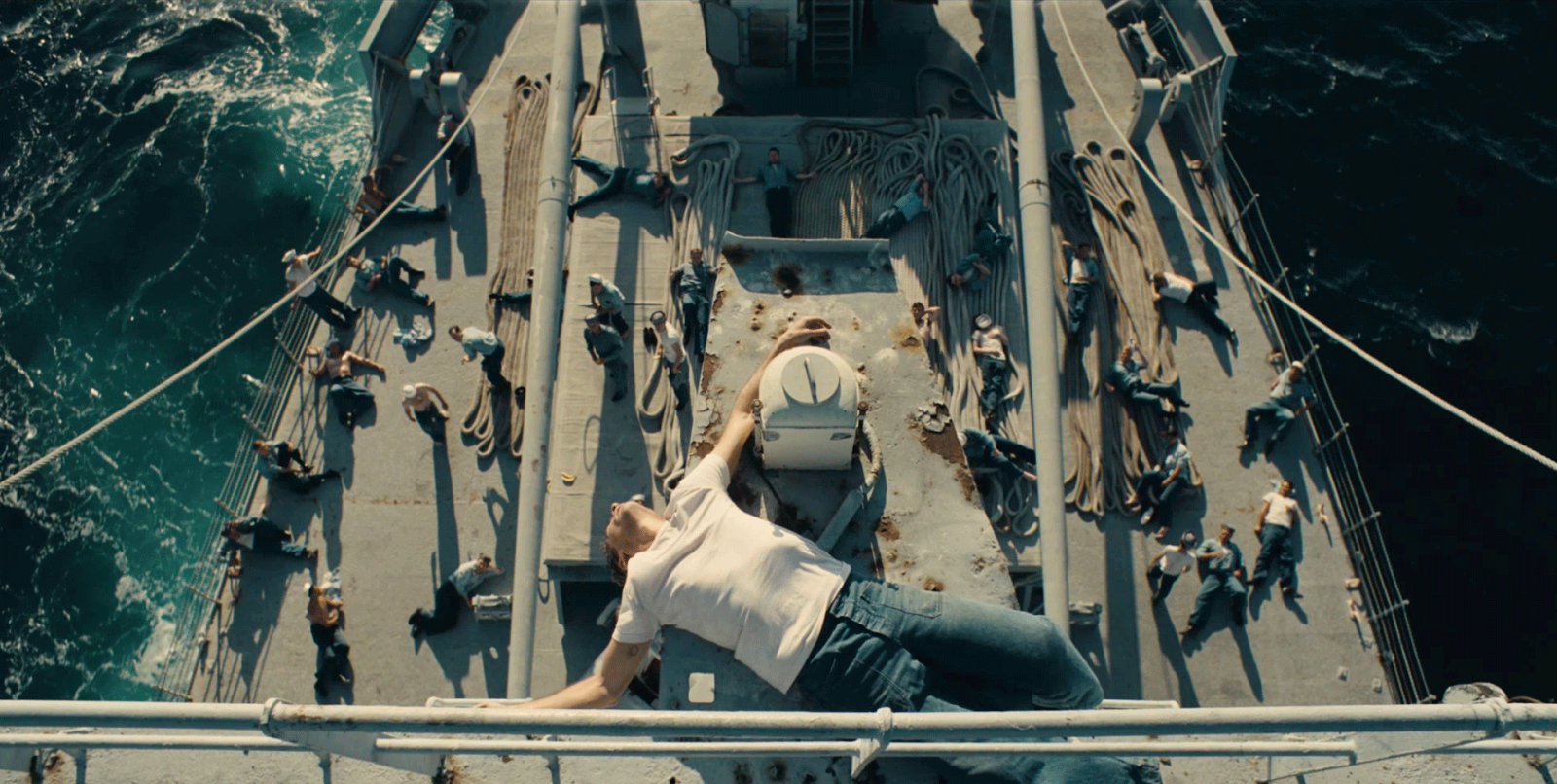
8. Beau travail (Claire Denis, 1999)
9. My Neighbor Totoro (Hayao Miyazaki, 1988)
10. Pyaasa (Guru Dutt, 1957)
11. A Woman Under the Influence (John Cassavetes, 1974)
12. The Saga of Anatahan (Joseph von Sternberg, 1953)
13. The Taking of Pelham One Two Three (Joseph Sargent, 1974)
14. The Man Who Would Be King (John Huston, 1975)
15. The Incredible Shrinking Man (Jack Arnold, 1957)
16. Broadway Melody of 1940 (Norman Taurog, 1940)
17. Man’s Favorite Sport? (Howard Hawks, 1964)
18. Blind Husbands (Erich von Stroheim, 1919)
19. The Bellboy (Jerry Lewis, 1960)
20. Night and Day (Hong Sangsoo, 2008)
21. Island of Lost Souls (Erle C. Kenton, 1932)
22. Dust in the Wind (Hou Hsiao-hsien, 1987)
23. The Lodger: A Story of the London Fog (Alfred Hitchcock, 1927)
24. On the Bowery (Lionel Rogosin, 1956)
25. Where Now are the Dreams of Youth (Yasujiro Ozu, 1932)
26. Diary of a Lost Girl (GW Pabst, 1929)
27. Jet Pilot (Joseph von Sternberg, 1957)
28. Phantom of the Paradise (Brian DePalma, 1974)
29. A Summer at Grandpa’s (Hou Hsiao-hsien, 1984)
30. Safe in Hell (William Wellman, 1931)
31. Passage to Marseille (Michael Curtiz, 1944)
32. Le notti bianche (Luchino Visconti, 1957)
33. Ali: Fear Eats the Soul (Rainier Werner Fassbinder, 1974)
34. Cutter’s Way (Ivan Passer, 1981)
35. Days of Youth (Yasujiro Ozu, 1929)
36. China Gate (Samuel Fuller, 1957)
37. Men in War (Anthony Mann, 1957)
38. The River (Tsai, Ming-liang, 1997)
39. Objective: Burma! (Raoul Walsh, 1945)
40. Cockfighter (Monte Hellman, 1974)

41. Mad Monkey Kung Fu (Lau Kar-leung, 1979)
42. Swing High, Swing Low (Mitchell Liesen, 1937)
43. I am a Fugitive from a Chain Gang (Mervyn LeRoy, 1932)
44. Kanal (Andrzej Wajda, 1957)
45. Comrade X (King Vidor, 1940)
46. The Poor Little Rich Girl (Maurice Tourneur, 1917)
47. Yesterday Once More (Johnnie To, 2004)
48. Death Race 2000 (Paul Bartel, 1975)
49. The Lower Depths (Akira Kurosawa, 1957)
50. Band of Angels (Raoul Walsh, 1957)
51. 3:10 to Yuma (Delmer Daves, 1957)
52. Daughter of the Nile (Hou Hsiao-hsien, 1987)
53. City Streets (Rouben Mamoulian, 1931)
54. Stage Fright (Alfred Hitchcock, 1950)
55. They Died with Their Boots On (Raoul Walsh, 1941)
56. The Constant Nymph (Edmond Goulding, 1943)
57. The Rink (Charles Chaplin, 1916)
58. Bardelys the Magnificent (King Vidor, 1926)
59. Waterloo Bridge (James Whale, 1931)
60. Saint Joan (Otto Preminger, 1957)
61. Golden Swallow (Chang Cheh, 1968)
62. Caged Heat (Jonathan Demme, 1974)
63. Hallelujah! (King Vidor, 1929)
64. So Long at the Fair (Antony Darnborough & Terence Fisher, 1950)
65. Near Dark (Kathryn Bigelow, 1987)
66. The Flying Guillotine (Ho Meng Hua, 1975)
67. Ill Met By Moonlight (Powell & Pressburger, 1957)
68. Eraserhead (David Lynch, 1977)
69. In the Cut (Jane Campion, 2003)
70. The Boys from Fengkuei (Hou Hsiao-hsien, 1983)
71. Broadway Melody of 1936 (Roy del Ruth, 1935)
72. Thunderbolt & Lightfoot (Michael Cimino, 1974)
73. Murders in the Rue Morgue (Robert Florey, 1932)
74. Liliom (Fritz Lang, 1934)
75. Merrily We Live (Norman Z. McLoed, 1938)
76. Executioners from Shaolin (Lau Kar-leung, 1977)
77. Number Seventeen (Alfred Hitchcock, 1932)
78. Wichita (Jacques Tourneur, 1955)
79. Springfield Rifle (Andre de Toth, 1952)
80. Il Grido (Michelangelo Antonioni, 1957)

81. I Flunked, But . . . (Yasujiro Ozu, 1930)
82. The Lodger (John Brahm, 1944)
83. Northern Pursuit (Raoul Walsh, 1943)
84. Killer Clans (Chor Yuen, 1976)
85. I am Waiting (Koreyoshi Kurehara, 1957)
86. Douglas Fairbanks in Robin Hood (Allan Dwan, 1922)
87. The Manxman (Alfred Hitchcock, 1929)
88. Flunky, Work Hard (Mikio Naruse, 1931)
89. Blazing Saddles (Mel Brooks, 1974)
90. Project A (Jackie Chan, 1983)
91. Hearts and Minds (Peter Davis, 1974)
92. This Land is Mine (Jean Renoir, 1943)
93. The Lady and the Beard (Yasujiro Ozu, 1931)
94. Legend of the Mountain (King Hu, 1979)
95. The Crimson Pirate (Robert Siodmak, 1952)
96. Show People (King Vidor, 1928)
97. The House on 92nd Street (Henry Hathaway, 1945)
98. The Miracle Worker (Arthur Penn, 1962)
99. The Armor of God (Jackie Chan, 1986)
100. Our Vines Have Tender Grapes (Roy Rowland, 1945)

101. Swordsman (King Hu, 1990)
102. The Tin Star (Anthony Mann, 1957)
103. Midnight Cowboy (John Schlesinger, 1969)
104. The Devil and Miss Jones (Sam Wood, 1941)
105. Project A 2 (Jackie Chan, 1987)
106. Fire Down Below (Robert Parrish, 1957)
107. Cobra Woman (Robert Siodmak, 1944)
108. The Rising of the Moon (John Ford, 1957)
109. Busting (Peter Hyams, 1974)
110. The Edge of the City (Martin Ritt, 1957)
111. Les Girls (George Cukor, 1957)
112. Rabid Dogs (Mario Bava, 1974)
113. The Great Waltz (Julien Duvivier, 1938)
114. Annie Oakley (George Stevens, 1935)
115. Heroes for Sale (William Wellman, 1933)
116. Great Day in the Morning (Jacques Tourneur, 1956)
117. The Enemy Below (Dick Powell, 1957)
118. Cimarron (Wesley Ruggles, 1931)
119. State Fair (Henry King, 1933)
120. A Song to Remember (Charles Vidor, 1945)
121. Time Without Pity (Joseph Losey, 1957)
122. Peyton Place (Mark Robson, 1957)
123. The Green Green Grass of Home (Hou Hsiao-hsien, 1983)

A Charlie Brown Christmas – 3, 1965
The Flying Guillotine – 11, 1975
Killer Clans – 10, 1976
Executioners from Shaolin – 11, 1977
Mad Monkey Kung Fu – 10, 1979
Django Unchained – 2012
Cosmopolis – 2012
This is 40 – 2012
Vamps – 2012
Les Misérables – 2012

If I had to pick a favorite Shaw Brothers director, and thankfully I don’t, Lau Kar-leung would be my choice. His visual style isn’t particularly innovative or beautiful, and he doesn’t bring the raw, anguished physicality that distinguishes the work of Chang Cheh, or the sense of the spiritual transcendence found in the work of King Hu. His direction is elegant and precise, valuing the clarity of the image above all else, particularly if those images involve bodies in motion. In this sense, he’s the kung fu heir of Fred Astaire, who famously demanded that his dances be shot with as few cuts as possible, with the actors visible in full, head-to-toe shots. I’m willing to bet that Lau’s average shot length is higher than most Shaw directors, as his films always seem to have a few scenes of extended single-take action, with dual combatants engaged in a series of movements as intricately intertwined as any Astaire-Rogers foxtrot.


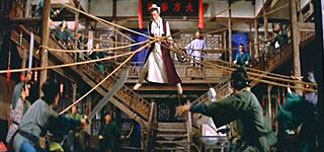
Showing more of a noir-by-way-of-Yojimbo influence than most Shaw Brothers films, this Chor Yuen-directed adaptation of a novel by Ku Lung shows that there’s more to kung fu movies than simple revenge and enlightenment plots. Chor takes his time setting up a world ruled by devilishly clever gangsters demanding absolute loyalty from their subjects. A master swordsman, Meng Sheng Wen, an assassin for hire, is ordered by his boss to kill the head of the Lung Men Society, Uncle Sun Yu. He takes his time heading out for the job (distracted as he is by a pretty, poetry-reciting girl living in the local Butterfly Forest) and in the meantime a gang war is started between the Lung Men Society and the Roc Society, a rival criminal organization. Various bodyguards are killed on both sides, and Uncle Sun’s secret weapon, Lo Lieh playing a mysterious man with a deadly, razor sharp hat, is killed, but by who? Was it Meng? A weaselly assistant-turned traitor? Or was it Uncle Sun’s right-hand man, the master of 72 secret weapons, Lu Hsiang Chuan (played by Yueh Hua, from Come Drink With Me)?

The film is simply bursting with minor characters that Chor, along with the great stable of actors at his disposal at Shaws, is able to give more depth than their screen-time really earns. The most poignant, and disturbing, scene in the film comes near the end, as Uncle Sun makes his painstaking (and rather unbelievable) escape from an assassination attempt. A man who owes him his life helps him, and the price for that loyalty, as he well knows, is that he’ll have to kill himself to prevent Uncle Sun’s enemies from getting any information from him. Unfortunately, both the man’s wife and two children also see Uncle Sun. So the man and wife commit the group murder-suicide honor demands. It’s absolutely heart-breaking, and pushes the bounds of good taste, not unlike Hitchcock blowing up the kid on the bus in Sabotage. It’s telling though that in a film about disloyalty and betrayal, it’s those who are most loyal and honorable to their bosses who seem to suffer the most. Not only this simple peasant family, but everyone who aids Uncle Sun’s escape dies for the cause while only by betraying his master does Meng Sheng Wen defeat the “bad guys” and ride off with the pretty girl.

Meng doesn’t have a “code” and he doesn’t do his job. He just does what he likes when he likes, like Mifune in the Yojimbo films. He has his own sense of right and wrong, and that is what dictates his actions, not some social construct like “honor” or “loyalty”. His greatest trait is that he’s flexible, where everyone else in the film is bound by their social status and proscribed role. Uncle Sun spends decades thinking up an elaborate escape route (to the point that he has a man living in the sewer below his house for years, waiting for the one day he’ll be able to help him escape on a boat) but never imagines that he could be betrayed by the person closest to him. Meng brings the Taoist corrective to the rigid Confucian world the gangs exploit. Meng is played by Chung Wa and while he brings a fine relaxed energy to the often overwrought Shaw Brothers world, but the role might have been better served with some Mifune-esque electric charisma. As it is, his character disappears for large sections of the movie, and at times he ends up seeming more passive and lucky than wise.

Much like the anti-Qing struggle referenced in the first night of A Very Shaw Brothers Christmas, the legend of the destruction of the Shaolin Temple is a common narrative backdrop in kung fu movies. Respectively they’re kind of akin to the role the Civil War and Little Big Horn play in American Westerns. The Temple story is also a subset of the larger Qing-Ming war, as in addition to being a Buddhist monastery with a sideline in innovative kung fu techniques, the Temple was also, according to legend, a center for anti-Qing activism in the decades after they took over the country (late 1600s-early 1700s). Central to the story is the character of Pai Mei (or Bak Mei), one of the five elders who survived the burning of the Temple and in some versions of the story brought about its destruction by collaborating with the Qing (he’s the Shaolin Judas or Benedict Arnold). You might recognize the name from Kill BIll Vol. 2, where Pai Mei is the white-robed kung fu master who instructs all of David Carradine’s assassins, including Uma Thurman. In that film, Pai Mei is played by the great Shaw Brothers star Gordon Liu, made up with a long white beard and eyebrows (“Pai Mei” apparently means “white eyebrows”).
Gordon Liu plays a small but notable role in Executioners of Shaolin, directed by his adopted brother Lau Kar-leung. The two would of course make several great films together over the next decade, the greatest of which was made the next year, 1978’s The 36th Chamber of Shaolin, which takes place earlier in the Temple’s history and chronicles its entrance into the wider political struggle. Executioners starts at the end of the battle for the Temple, with a fight between Pai Mai (played by Lo Lieh) and one of the temple masters played out before an abstract red backdrop as the credits roll, a Lau trademark. After Pai Mai kills him, we cut to various monks fleeing the destruction and Gordon Liu gets his standout scene as he takes on the Qing forces so his brothers can escape. From then, the film follows the life of Hung Hsi-kuan, played by The Flying Guillotine star Chen Kuan-tai as he practices for 20 years or so to avenge his master’s death.

But here’s where the film gets weird. Instead of simply training and working out the various martial tactics he’ll need, as in many another kung fu film (Shaolin Mantis, say, or in the best case, The 36th Chamber of Shaolin) or the search for a kind of spiritual enlightenment that’ll provide him with untold power (The Tai Chi Master or 8 Diagram Pole Fighter), Hung meets a nice girl, gets married and has a son. The whole middle section of the film is in fact a marital comedy. Hung meets Ying Chun, played by Lily Li, when he and his fellow fugitive monks are posing as street performers and keep interrupting her own performances. They argue over whose kung fu is superior: his Tiger Style or her Crane Style and end up falling in love. Over the next decade, while she does the laundry and raises their son and he trains to defeat Pai Mai, he repeatedly rejects her suggestion that he learn some of her Crane Style too. When ten years have gone by, he challenges Pai Mai and loses, but escapes. Pai Mai’s secret is that he can move his vital points (attacking said points are the key to defeating him) from his groin to his head at will, such that when Hung (and his master before him) kick Pai Mai there, their foot gets stuck in the empty space where his testicles should be. Hung goes back to the drawing board (in this case, a copper statue filled with marbles, I’m unclear how this works) and figures out that he needs to attack Pai Mai only at certain times of day. He trains for seven more years, again refusing to adopt elements of his wife’s Crane Style, challenges him again and loses.
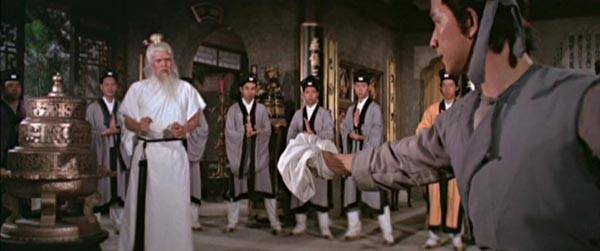
Here the son, Wen-ding, enters the picture. By his father’s orders, he’s only been trained in his mother’s kung fu style. But the two of them find an old moth-eaten Tiger Style manual and Wen-ding trains for a year to take on Pai Mai. By using a combination of both his parents’ styles, Wen-ding is able to defeat Pai Mai. So, the unstoppable villain is a man who can willfully castrate himself. A man alone is unable to defeat him, no matter his skill at the manly (Tiger) style of fighting. Only through the combination of male and female (Crane) styles can he be bested. Yin or Yang alone cannot defeat the void, the absence of Yin or Yang, it needs to be a balance of both together.
I’m not sure how much of the Hung story is original and how much based in legend. It sounds very similar to the stories about Fong Sai-yuk, whose mother trained him in kung fu (she was the daughter of one of the Five Master of the Shaolin Temple who survived its destruction) while his father was active in anti-Qing resistance. In one version of the legend, Fong Sai-yuk is killed by Pai Mai. Jet Li played Fong in a pair of excellent films from the early 90s, but neither of them make reference to Pai Mai or the Temple, as far I as can remember.
Lau would return to the martial arts as marital comedy style of film to great effect a few years later in Heroes of the East (aka Shaolin vs. Ninja) in which a married couple argue over which nation’s martial arts are superior, his Chinese or her Japanese. But I don’t think I’ve seen anything like the transgressive view of gender on display here from Lau before, or in any other kung fu film, for that matter. Not until the gender-bending of Ching Siu-tung’s Swordsman II at least, and even that film is pretty misogynistic.
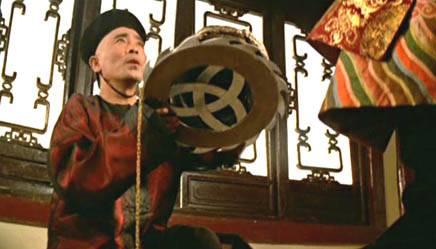
A crazed Qing Emperor suspects everyone around him of disloyalty, and when two well-respected advisors dare to suggest that maybe he shouldn’t have killed a bunch of innocent teachers and intellectuals, he decides to kill them, along with anyone else who might be disloyal. He tasks another advisor with developing a hit squad of a dozen assassins utilizing that advisor’s newly developed super-weapon, the flying guillotine, a combination of razor-sharp frisbee and basket on a chain that in trained hands can decapitate a person from 100 yards and occasionally, inexplicably, explode.
Inevitably, certain members of the squad, though initially chosen for their martial arts skill and loyalty to the Emperor, begin to have second thoughts when they realize the nature of the people they’re assigned to brutally murder. This leads to the revolt and escape of the group’s most talented member, Ma Teng, played by Chen Kuan Tai (one of the villains in Crippled Avengers and one of the aged stars of Clement Cheng’s Gallants). The multi-year hunt for Ma, combined with the self-serving schemes of the most evil member of the squad (Ah Kun, played by Wai Wang), tears the group apart and eventually kills them all. The Emperor, of course, survives unscathed.
Director Ho Meng Hua is one of the lesser-known Shaw Brothers directors, though he was one of their most prolific. He started there in the mid-50s, working in all kinds of genres before the kung fu boom of the late 60s and 70s. I’ve seen a few of his other movies (The Lady Hermit, Vengeance is a Golden Blade and Shaolin Handlock) and while they’re all fine, he hasn’t really stood out to me, this is easily the most creative visually (lots of Lo Wei-style overhead shots to go along with the expected excellence in action editing) and interesting politically. Lots of kung fu movies are set during the early years of the Qing dynasty, when the northern Manchu took over the country from the Ming Dynasty, leaving the nation’s dominant ethnic group, the Han, powerless for the first time in 2000 years or so (not counting the few hundred years of Mongol rule). The situation is ripe for allegorical interpretation. Whether you’re a Maoist celebrating the struggle against first the sclerotic Qing, then the invading Japanese and finally the Nationalist Kuomintang or an anti-communist refugee fled to British-ruled Hong Kong, you can see yourself on the side of right in the Ming-Qing battle. Even Chinese gangsters (triads) like to see themselves as descendants of the secret pro-Ming societies that fought the Qing (see Johnnie To’s Election for the triads’ view of themselves as historical actors).
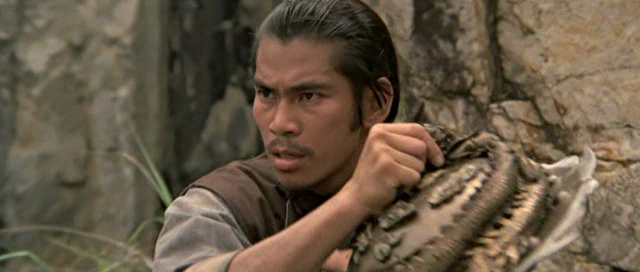
What we get with The Flying Guillotine comes at the tail end of the Cultural Revolution on mainland China, a decade of government-sponsered internal terrorism, with intellectuals, teachers, and just about anyone else being purged for lack of loyalty to the regime and/or ideological incorrectness. In the film, we see the inner-workings of an assassination squad, under the thumb of an Ivan the Terrible-like emperor and armed with an unstoppable weapon. Even under these circumstances, though, basic human decency shines through, as Ma Teng (and a couple other assassins) see the light and do their best to escape (the Emperor is far too powerful to actually be defeated). On the run, Ma starts a family and lives a noble, peaceful life as a farmer, his drive to quiet domesticity contrasted with Ah Kun’s deceitfulness and backstabbing ambition that leads to the disintegration of the hit squad. So, the film is therefore a neat allegory for the strife caused by the tyrannical PRC over the previous decade, with subjects encouraged to fight amongst themselves or simply hide-out, unable and unwilling to challenge the dominant power structure. Or, conversely, the life of a peasant farmer was idealized during the Cultural Revolution: those intellectuals who survived got themselves corrected by being sentenced to the country to work on collective farms. Thus, the film is about the struggle of the decent, communist farmer against the destructive ambitions unleashed by modern capitalism, with the Emperor standing in for the KMT’s dictator Chiang Kai-shek and Ah Kun, I don’t know, Nixon or somebody. Or maybe it’s about the revolution in general, about how radical revolutions always decay into petty in-fighting over ideological purity leading to mass execution as happened in Russia, China and France (“guillotine!”). Such are the perils of political allegory in Chinese film. It is, after all, a nation that allows Taiwan to be its own country as long as everyone pretends it’s actually part of China.
Also, lots of people get their heads cut off. That flying guillotine really is a horrific sight, and Ho does well to match it with the sound of it spinning through the air, such that by the end of the film, all it takes is that distinctive whir to set us on edge, unconsciously shrink our heads into our shoulders and wish we had ourselves a steel umbrella.

Dr. Horrible’s Sing-Along Blog – 6, 2008
Let the Bullets Fly – 9, 2010
The Deep Blue Sea – 4, 2011
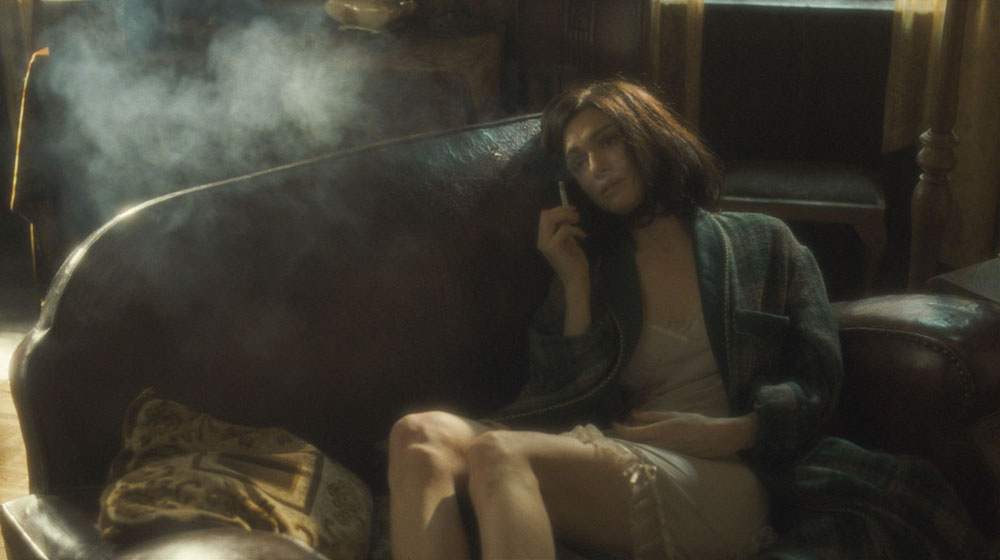
Girl Walk // All Day – 10, 2011
Pina – 22, 2011
The Kid with a Bike – 26, 2011
The Hobbit: An Unexpected Journey – 2012
 The End of Cinema