VIFF 2012: Tabu

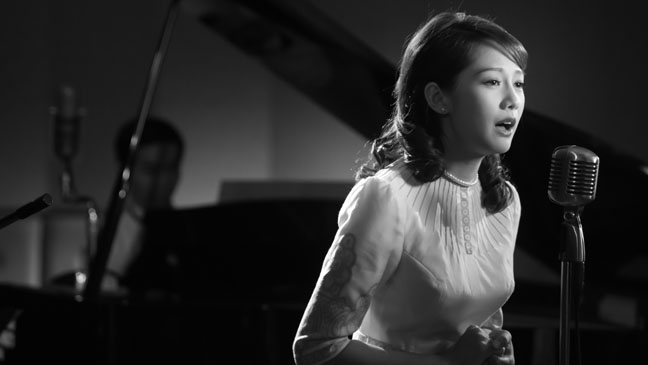
“She had a farm in Africa.  She had a farm in Africa.”  With that refrain echoing the opening lines of Isak Dinesen’s Out of Africa, the second half of Miguel Gomes’s festival favorite Tabu begins, shattering the realism of the first half in favor of the kind of romanticism best found in the movies.  We’re not unprepared for this seismic stylistic shift, for the first section of the film is preceded by a brief prologue, shot and narrated like a late 20s-early 30s jungle adventure film, about a man who, in the wake of his wife’s death, sentences himself to “wander desolately over inhospitable plains” of Africa, only to be hounded everywhere he goes by his wife’s ghost.  In the end, after he dies throwing himself into croc-infested waters, the villagers will speak of a vision of the lady wandering the jungle accompanied by “a sad and melancholy crocodile.”

We experience this as though it were a movie being watched by the main character of the first half of the film, Pilar, a bit of a sad sack middle-aged woman.  Pilar has a old lady neighbor, Aurora, who appears quite senile, if not downright insane: she goes on gambling jags, accuses her maid of practicing witchcraft on her and so on.  Pilar is one of those nice ordinary people that everyone seems to rely on, at least a little, but that no one ever notices.  Even the Polish nun she’s agreed to host blows her off to hang out with cooler, more interesting people.  The only time she seems to feel a real emotional connection with anything is at the movies: we watch her as she watches, and cries, at an unnamed, unseen film that features a Portuguese cover of The Ronettes’ “Be My Baby”.  When Aurora falls ill, Pilar is sent to fetch the mysterious Gian Luca Ventura, who appears to be some kind of elderly Indiana Jones-type (leather jacket, anachronistic fedora).  It is Ventura who tells the tale of the second half of the film, about his life with Aurora in Africa.

The plot for this section follows the general contours of many a romance film, Out of Africa among them.  Aurora is the beautiful, intelligent, spirited heroine trapped in a marriage to a man she likes but doesn’t really love who falls for the dashing young adventurer whose only fear is commitment.  The young Ventura is played by Carlotta Cotta, he kind of looks like what you’d imagine Johnny Depp playing Matthew McConaughey would look like, and when he’s not romancing Aurora, he’s playing in a rock band with her husband and a couple other friends: they prove to be quite popular in their little Portuguese community in Mozambique, they have a hit playing another Ronettes song “Baby, I Love You” (this time lip-synched to the version by The Ramones).  This half of the film, shot in 16mm unlike the first half’s standard 35 (both sections are black-and-white), is entirely narrated: there is no on-screen dialogue, though there are sound effects (if I remember correctly).  It is entirely an imagining of the story told by Ventura, presumably through the mind of cinephile Phil Spector fan Pilar.  Where the first half of the film is told in the kind of deadpan realist minimalism that’s become the standard form of contemporary art cinema, the second half is wildly emotional and florid (Ventura at one point finds himself with “a feral despair beneath a cloak of amiability”), where even the maps the explorers make of their previously uncharted colony are “very beautiful but, it turn(s) out, hardly scientific.”

It’s tempting to read the movie as a political metaphor, set as the second half of the film is in the last stages of the Portuguese Empire, with the natives eyeing hungrily the decadent parties and love affairs of their colonizers, colonizers destined to end up lonely old women in tiny apartments thousands of miles away.  But more so the film is about memories and stories, and the ways in which our love of cinema alters them, making them less real and yet connecting us to them more powerfully.  Perhaps that’s where the decadence lies: when fiction becomes more meaningful to us than reality.

In Another Country (Hong Sangsoo, 2012)

In Another Country.mkv_snapshot_00.07.53_[2012.12.10_00.45.00]

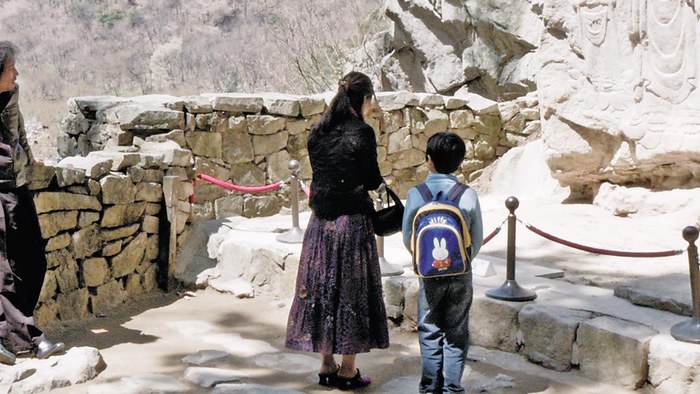
It wouldn’t be a trip to VIFF without a Hong Sangsoo movie, though it’d be tough for him to top the double he pulled at VIFF ’10 with Oki’s Movie and Hahaha, two of his very best movies. This one though is right up there, as Hong just keeps refining his quirky style, making it funnier, more elegant, and more subtly weird. Like Yasujiro Ozu or Eric Rohmer, Hong seems content to spend years creating endless variations of the same central subjects (in his case, vacations, infidelity, drinking, and lazy filmmakers) within the same self-mirroring narrative style (where is first films tended to have a dual structure, with the first half of the film varying the second, his later films have expanded that to threes, fours and more). And like Ozu and Rohmer, I never fail to find his films delightful. This might be Hong’s gentlest film, warm and hilarious. If there’s any justice, the Huppert name will finally get him the wider American art house audience he deserves.

Continue reading

VIFF 2012: A Fish

The second film I saw in the the Dragons & Tigers competition comes from South Korean director Park Hongmin, who used some homemade digital wizardry to make it in 3D, though unfortunately we were unable to see that version here (though we are assured it looks great).  It’s an off-beat story about a professor who tracks down his wife with the help of a disreputable detective.  Seems the wife has run off to Jindo, an island that is home to an ancient religious order: the wife is going to become a shaman.  The film opens with a nice long shot that sets the disorienting tone for what is to follow: first we see a quiet pastoral landscape that is shattered when a hand knocks on the frame revealing the scene to be a reflection in a car window.  As the window rolls down, a street scene is revealed, not only are the reflection and reality opposed, but so are nature and civilization.  Park will keep us on our toes for the course of the film, as reality will always be shifting under our feet.

The central metaphor of the film is a shamanic ritual wherein stuck souls are fished out of the sea so they can continue their way on through the afterlife.  There’s a series of funny interludes in the film focusing on two fishermen on a fog-enshrouded boat.  At first their conversation revolves around typical fishing topics: how to fish and the meaning of life (“Why do the fish take the bait?” “Some of them think the bait will take them to a new world.” Fish cultists believing in the Hook as the Rapture, apparently).  Eventually, after an encounter with a talking fish, they begin to question, like the main characters of Rosenkrantz & Guildenstern are Dead, how exactly they got on the boat in the first place.  Unlike in Tom Stoppard’s play, however, the question isn’t a meta-fictional one but a spiritual allegory, enmeshed in Korean Buddhist and shamanistic traditions.

Eventually, as twists and realities pile onto one another, it becomes hard to follow the thread of causality.  Exactly who is dead and who is alive and how they got that way doesn’t exactly come together in a particularly explicit way (or if it did, I didn’t quite catch it).  But that’s not to say the film isn’t coherent.  On the contrary, it makes absolute emotional sense. The tragedy of death and the weird and wonderful ways we cope with it.

VIFF 2012: Reconversão

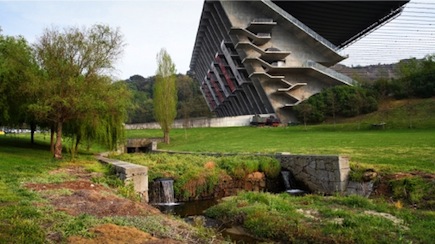
This is the third documentary I’ve seen by Thom Andersen, and the first not about the architecture of his hometown Los Angeles.  The last one I saw was here at VIFF a couple years ago, a shortish look at billboards around town with a spinning radio dial soundtrack called Get Out of the Car, the first was the magisterial Los Angeles Plays Itself, about the depictions of the city through the years in Hollywood films, a slyly witty examination of how film transforms, misrepresents, ignores, violates and masks the city he loves.  But this year, Andersen has traveled halfway around the world to examine the work of Portuguese architect Eduardo Souto Moura, who mainly works in the north of the country, in and around the city of Porto.

Unlike Andersen’s other films, this is structured more like a traditional documentary, as he looks at various buildings, one after the other and describes what he thinks is interesting about them, the theory behind them and the artistry that went into their construction or conception.  More than once the project never manages to get built as planned: architectural art, though it is necessarily the largest, most monumental art form, may be more ephemeral than any other: more difficult to make than a movie, easier to compromise and harder to maintain in its original state.  It’s this last sense that interests Souto Moura and Andersen most: Souto Moura’s most distinctive trait as an architect has to do with his attitude toward ruins: he likes to “reconvert” them into functional spaces (walls especially, Andersen and Souto Moura both lavishly praise the granite walls of Northern Portugal).  The film is full of their ruminations on the meaning of ruins, I noted a few quotes, forgive me if the wordings aren’t exact:

“The ruin ceases to be architecture and becomes nature.”

“The city is functional when its objects survive to take on functions beyond that which they were designed for.”

“Ruins are like animals: they move, they resist.”

This is explicitly a rejection of the Romantic idealization of ruins: it’s not about reveling in the glory of the past, or the beautiful decay of all things, Souto Moura finds this attitude itself decadent.  His art is about making the past a fundamental, functional part of the present.  It’s not hard to see why an Angeleno, a man from a city the most notorious trait of which is that it is almost utterly without a visible past, would be fascinated by the idea.

The most unusual element of the film is its photographic technique, frequently using a series of still frames, shot once or twice per second and then animated, looking like film projected at a single frame per second (or two seconds) rather than the normal film speed of 24 frames per second.  According to the VIFF program notes, this results in a higher resolution image.  I don’t really know how that’s supposed to work, I mostly just found the technique distracting.

VIFF 2012: Beautiful 2012

This terribly-titled omnibus film collects four shorts from directors from four East Asian countries commissioned by the Hong Kong Film Festival.  The films are much longer than the ones in the other collection I’ve seen here, 10 + 10, running about 20-30 minutes each.  Also unlike that film, there doesn’t seem to be a real unifying theme behind the works (“Beautiful” is not a theme, and even if it was, it’s a stretch to apply it to a couple of these). The first film, You are More than Beautiful comes from South Korean director Kim Tae-Young.  A variation on the plot of Buffalo 66, it’s about a guy who picks up a girl (a hooker?) to pass off to his father as his fiancée.  Unlike Vincent Gallo’s film, however, the father is dying and when the couple arrive at his hospital he’s in a coma.  The guy pays the manic pixie girl off, but she sneaks back into the father’s hospital room, packed to the gills with similarly dying old men, and starts talking to him.  Then she bursts into an impromptu aria from a Korean opera.  It’s silly, but it totally worked for me.  I’m a sucker for these kooky girls that break into song.  Kim’s direction is crisp and unassuming.  I’m curious to see one of his features.

The second short in the film is easily the highest profile, Walker by Tsai Ming-liang, his first film since Visage, which I saw back at VIFF 2009 (and which my wife almost walked out of).  It’s been awhile since then and I don’t quite remember how it ends, but apparently Lee Kang-sheng, the star and main character of all Tsai’s films, is now a monk, and this film is the chronicle of his walking, very, very, verrrrrry slowly through the city.  It starts with him exiting, one minute movement at a time from a stone staircase, out of the past, into the bustling sidewalk.  There follows a series of still shots (Tsai of course doesn’t move the camera) with Lee seemingly in slow motion while the city moves on around him.  It’s like the shot in Chungking Express where Tony Leung and Faye Wong are in slow motion at the lunch counter while the passersby move in blurs around them.  At first, people don’t seem to be paying much attention to the monk, there’s a scene in a square with a woman pounding something and chanting while passersby take her photograph and ignore the monk in their midst.  Later though, there’s a long shot of the monk moving down the street while crowds gather and watch him and, more interestingly to them apparently, photograph Tsai’s camera crew.  The space around the monk is open, the crowds keeping their distance as he forms an oasis of stillness in the middle of the city.  Later an ice cream truck plays a tinkly version of a Strauss waltz as the monk walks by, decidedly out of time with the tune.  One overhead shot includes an apartment window filled with an aquarium, much like the one in Lee’s parents’ apartment in Tsai’s other movies.  He’s glimpsed in the space between buses; he moves out of focus past a giant crystal clear advertisement.  Occasionally it can be hard to pick him out of a long shot until you realize that he’s the thing that’s not moving.  It is, perversely enough, Tsai’s fastest-paced film, the editing more rapid than anything I’ve seen from him before (though the shots are still much longer than the typical film).  Eventually, Lee comes to a stop, his path has lead him to a door that prominently declares “No Entry”.  Finally he slowly raises his head and slowly takes a bite of the egg mcmuffin he’s been slowly carrying for a day a night and another day.  Looks like it tasted great.

The third film is by Chinese director Gu Changwei and I can’t say I liked it much at all. Seemed to me like a compendium of the worst art house clichés.  There’s even a slow motion shot of a cat meowing, like something out of an SNL parody video.  Maybe it just had too much going on after Tsai’s sublime minimalism.  But the fourth film, My Way, by Hong Kong director Ann Hui, is very sweet. Francis Ng plays a transgender woman about to go in for her operation.  We see her going out to the movies, hanging out with her friends and arguing with her ex-wife.  There’s a brief flashback to their fight after she figures out her situation, and so a very real sense of relief and joy when she shows up after her operation to wish her well.  The subject is an under-discussed one in the Chinese-speaking world, even more so than it is here.  But Hui manages to tell this simple, humane story with warmth and, well, beauty.

VIFF 2012: Mother & Mekong Hotel

These two shortish films (about an hour long each) from Thailand were paired together here at VIFF, though they don’t have a whole lot in common other than a sensibility that mixes fiction and documentary, reality and mythology into a more or less seamlessly whole vision of the world as a place where anything is possible at any time.

Mother is an experimental film directed by Vorakorn Ruetaivanichkul (Billy) and is part documentary about his own mother’s various health problems (mental and physical), part dramatization of some events that happened, part fiction and part fantasy.  The most striking bit is a long dream sequence, shot in black and white and scored with a harshly droning kind of minimalist music mixed with a chorus chanting by Thai composer Phil_WC, it sounded to me like some of the György Ligeti music Kubrick used in 2001.  Another sequence finds the mother in a grocery store grabbing things off the shelves apparently at random, the camera mounted on the shopping cart looking back at her, in the style of Martin Scorsese or Spike Lee.  Throughout the film there are hyper-extreme closeups of a person’s face, so close that they cease to be recognizable as human but instead become alien landscapes.  The documentary sequences are less successful, though certainly emotionally wrenching, they’re shot in a first-person shaky cam that mostly just made me dizzy.  Perhaps I’m just getting old.

Mekong Hotel was one of my most anticipated films coming into the festival, the first feature by Apichatpong Weerasethakul (Joe) since his Cannes-winner Uncle Boonmee Who Can Recall His Past Lives (which I saw here at VIFF 2010).  It’s partly bits of a story Weerasethakul had written years ago about a young couple who are haunted by a pob ghost throughout their lives (pob ghosts are spirits that eat the entrails of animals and humans, like a Thai chupacabra I guess), but most of the film is simply Joe and his actors and composer hanging out at the titular hotel overlooking the Mekong River, the border between Thailand and Laos, chatting about politics and how high the water will rise in this year’s floods.  The composer, Chai Dhatana, noodles his score on a guitar throughout the movie, an ambling, aimless tune with hints of Southern blues that evokes not only the endless flow of the Mekong, but the Mississippi as well, both rivers oft-flooded borderlands conducive to lazy afternoon conversations and where the line between myth and reality is a little more porous than it probably should be.  I have written down in my notes the line “device to allow your spirit to wander”.  I don’t remember the context, who said it or what the device is, but it seems to me that that describes Joe’s movies pretty perfectly.

VIFF 2012: A Mere Life

The Vancouver International Film Festival’s annual Dragons & Tigers competition has an impressive pedigree, honoring young filmmakers over the years such as Jia Zhangke, Hong Sangsoo, Koreeda Hirokazu, Lee Changdong, Wisit Sasanatieng and Liu Jiayin.  I think I’m going to make it to about half the competition films this year, and this film by Park Sanghun is the first.  It’s an unrelentingly grim movie that I’m surprised to find I actually liked quite a bit, given that I don’t normally warm to dark or depressing movies.

It starts off with a family visiting a Buddhist shrine.  The mother encourages her son to help her place a stone on top of a rock pile (the act has a religious significance of which I’m wholly ignorant).  When the precariously balanced pile collapses, the mother does a comical double take and runs away, leaving her exasperated husband (named Park Il-rae) to rebuild the pile (or face karmic wrath?, again, I’m ignorant).  That’s about the last bit of light comedy the film has to offer.  From there, it becomes a grunge-realist story of poverty and the husband’s drunken incompetence that comes to a head when he is scammed out of their savings and brings some poison home.

It’s here that the film takes an unexpected turn.  It certainly is a bold choice to have your main character murder his wife and child halfway through your movie, and Park doesn’t shy away from the horror or detestability of that act.  But that’s not the end of the story either.  Instead of making a film about how simply awful it is to be poor and married to a drunk, Park gives us something I haven’t quite seen before, a story about an irredeemable man that asks us not only to understand but to try to forgive him.  It asks the rare question, what do you do after you’ve committed an unforgivable act?  Park Il-rae sentences himself to walking the earth as a destitute wretch, while he keeps trying and failing to kill himself.  His father tracks him down (a striking fire-lit scene as the father burns all of Park’s meager possessions in his troll-like under-the-bridge home) and tries to kill him but dies of a heart attack instead.  He tries to hang himself, but the rope breaks.  We leave him wandering aimlessly alone in a desolate grey mudflat, shot with a nauseatingly unstable shaky cam.  Death would be too good for him, so karma (or whatever) simply won’t let him die.  It’s not simply that life is his punishment, I get the feeling he’ll be left to wander until he finds forgiveness, from the people he’s killed, from himself, and from us.

VIFF Day Two: 10 + 10

20 directors were commissioned by the Golden Horse Film Festival to each make a five minute film about something Taiwanese and the result is this collection, an unusually successful entry in the portmanteau film genre.  Ten of the directors are veterans, ten are relative newcomers (hence the title), but aside from a couple names I recognized (Wu Nien-jen and Hou Hsiao-hsein, of course), I couldn’t tell you which was which, I guess that bodes well for the Taiwanese film industry.  Seen as a whole, the film presents a compelling vision of Taiwan in all its diversity and weirdness, with some glances at serious issues thrown in.

My favorites: Wang Toon’s opener Ritual about a couple of guys hiking to a remote shrine to give thanks for a lottery win (they’ve brought the gods a DVD of Avatar, which they watch together on a sheet strung across the hillside); Shen Ko Shung’s Bus Odyssey, a grim black and white film notable mostly for its sound design (especially given that direct sound was practically unheard of in Taiwanese cinema only 20 years ago); Wei Te-sheng’s Debut a pretty cheesy but heartfelt prayer for success in spreading knowledge about indigenous Taiwanese at a film festival; Hippocamp Hair Salon, a kind of Eternal Sunshine with a Wong Kar-wai look and a darkly funny twist  by Chen Yu-hsun; Sylvia Chang’s Dusk of the Gods, a moving meditation on religion and capital punishment (“Will a bad person like me get my good soul back when I’m executed?”); The Debut, by Chen Ko-fu, about a singer getting a True Romance-style pep talk from a glamorous phantom in 1968; Hou Chi-jan’s Green Island Serenade, another singer, this time singing for the radio in the black and white past, panning to the full color present, music as time travel; Leon Dai’s Key about the urban loneliness of a woman who pretends to have forgotten her key in the hopes of getting to talk to someone, erupting into a flash-cut ballet sequence; Unwritten Rules, a clever and hilarious indie film set comedy about trying to coverup the Nationalist flag a crew finds on location (line of the night: “Thank you for saving Taiwanese cinema.”); and finally Hou Hsiao-hsien’s La Belle Epoque, with Shu Qi hearing the story of her family’s golden heirlooms and posing for a portrait, which finds Hou for the first time (as far as I know) intercutting what appears to be archival or at least black and white footage into one of his films.

Romance Joe (Lee Kwangkuk, 2012)

My two favorite discoveries in four years of festival going are the films of Hong Sangsoo and the team of Johnnie To and Wai Ka-fai.  I surely would have encountered these guys eventually in the regular world, but it was in seeing their films here at VIFF (Like You Know it All and Sparrow, in 2009 and 2008, respectively) that I fell in love with them.  Subsequently, with each new festival I’ve looked forward to another trip into their worlds and this year is no exception.  While I’ll be seeing the latest Hong film, In Another Country, this evening, I was a bit disappointed to find there would be no new To and/or Wai film here this year.  Fortunately, the gap of narrative playfulness that so joyously marks their work (Wai’s especially, see for example, Written By, from VIFF 2009) I found in abundance in Romance Joe, by first-time director Lee Kwangkuk.

Lee is a former assistant director for Hong Sangsoo, and the film begins very much as a kind of mishmash of various Hong situations (a director has writer’s block, gets drunk, goes to a hotel in the countryside).  However, Lee takes Hong’s narrational games, usually limited to a bifurcated story structure with later parts serving as variations on earlier ones, in a wholly original direction, piling story upon story in a complicated flashback structure.  I counted at least six different time levels in the narration (topping Passage to Marseille‘s mere four), with “real” memories and made-up stories featuring the same characters and actors colliding in unpredictable ways.  I’m going to attempt to roughly chart it out.

The film starts with the parents of a director talking to his friend about how the director has gone missing (1).  The friend tells them he was just drinking with the director, and he was sad because he had writer’s block (2).  We then see the director being abandoned by his agent in a rural hotel in an attempt to force him to get to work (3).  The director in his hotel calls a local prostitute, who tells him the story of the time she met another director, who she calls Romance Joe (4).  When she met him, Joe was thinking about killing himself, remembering a time when he was a teenager that he saved a girl, Cho-hee, from killing herself. (5)  Then, we cut back to the first story, and the friend starts telling the parents about his idea for a new screenplay, about a boy who tries to track down his mother, a prostitute, but instead ends up hanging around another call girl instead (6).

At this point, Lee begins to intercut between the various narrative layers, with fictional and real characters showing up in the “wrong” stories, and no one ever quite remembering if they’ve known each other before (there’s more than half a dozen stories, but apparently(?) only one woman), all governed by an explicit Alice in Wonderland reference.  But that’s not to say there isn’t an emotional core to the film.  In particular the budding romance between Joe and Cho-hee is lovely and touching, though it ends drenched in the neon sadness of Seoul.  As the director’s mother sighs “All these fine young lives wasted on film and whatnot.”

VIFF Day One: Antiviral

Brandon Cronenberg’s first feature is a slick, darkly comic scifi/horror film that should not be seen by anyone with a fear of needles.  At some point, humanity’s obsession with celebrity has metastasized to the point that the world’s biochemists, seeing a market opportunity (as they always do) have begun selling people the real thing: viruses drawn from celebrity bodies so you can be infected with the same thing as the pretty girl in the tabloids; steaks grown from celebrity cell scrapings so you can make your dinner a literal communion.

One of the virus salesmen, played by Caleb Landry Jones, has a sideline in the black market, infecting himself with the celebrity bugs and selling them to disreputable folks.  But when he infects himself with a new virus that appears designed to kill its celebrity, the film becomes a modern version of the film noir classic DOA, will our hero figure out who poisoned him in-time?

Cronenberg films in static takes, in frames almost completely white but for some black highlights and the occasional splatter of blood (an effect of the virus).  Jones fits this scheme perfectly: gaunt, pale and freckled, with red-hair and glassy eyes, his body mirrors not only the effects of the virus but the world around him in the remarkably physical performance this remarkably physical film demands.

Unfortunately, the premise of the film totally misinterprets the nature of celebrity obsession.  While many celebrities are beautiful, it’s not their bodies that attract such attention: there’s something more ephemeral about fame, more transcendental.  The act of celebrity worship, like all worship, is less about the body than about the spirit, about moving beyond our own bodies into a higher, non-physical realm.  The film asserts instead that it’s the desire to touch physical perfection that drives the celebrity machine.  Such a materialistic view of fame misses its most important aspect, and thus the film doesn’t really work as satire because a world like this could never actually exist; satire requires grounding in a recognizable reality.  But if you ignore that and accept the crazy logic of its world, Cronenberg’s created a very twisted place that’s a lot of fun to get grossed-out by.