


Movie Roundup: Halloween Edition

Horror of Dracula – The first of Hammer Films’s Dracula films, starring Christopher Lee (Attack of the Clones) as the Count and Peter Cushing (Star Wars) as the vampire hunter Dr. Van Helsing. The story follows the Bram Stoker novel reasonably well, though in this version Jonathan Harker is hired as the Count’s new librarian while he is in fact going undercover as part of a scheme with Van Helsing to stake the vampire. More violent and bloody than previous versions (Tod Browning’s with Bela Lugosi and FW Murnau’s with Max Shreck, for example), it’s also the chronologically first Dracula film I’ve seen in color, and director Terrence Fisher uses it to make one of the bloodiest pre-60s films I’ve ever seen. Lee’s very good as Dracula, despite having only a few lines of dialogue, starting as a snippy jerk and quickly turning into a scary beast. Cushing is wonderful as well: he’s got a great voice. I also have their first horror pairing, The Curse of Frankenstein here, but I didn’t manage to get it watched before the holiday ended. The #14 film of 1958.
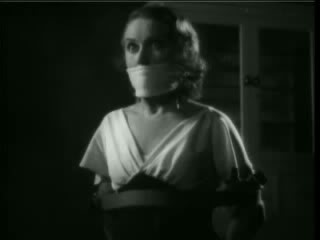
The Vampire Bat – Director Frank Strayer strives to accomplish the seemingly impossible: cast Fay Wray in a horror film and don’t let her scream. Why anyone would want to do such a thing I don’t know, but poor Fay, her greatest skill as an actress closed to her, has pretty much has nothing to do in this film about a serial blood drainer preying on a small German village. It’s half an indictment of lynching as the townspeople, convinced of vampirism, single out and attack the local mentally handicapped kid. The other half is a weak screwball comedy, as Melvyn Douglas, of all people, tries to act as the voice of wise-cracking, sardonic reason and solve the crime spree rationally. With Lionel Atwill as the local scientist who may very well be mad. The #22 film of 1933.
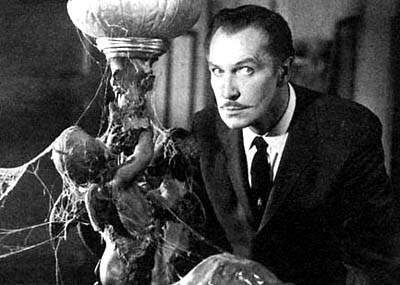
The House on Haunted Hill – Wealthy eccentric Vincent Price invites a group of strangers to stay in Elisha Cook Jr.’s house, and collect $10,000 if they survive the night in William Castle’s classic film. None of the people know each other, but as Cook explains, seven people have been killed in the house, all in egregiously fiendish fashions. There’s a pit of acid in the wine cellar, the servants are horrifying, blood drips from the ceiling and most of the guests appear to have drinking problems. Add to that an obnoxious test pilot, a nervous secretary and Price’s problematic relationship with his gold-digging wife, and you have one swell party. The plot doesn’t resolve itself quite satisfactorily, but there’s enough creepiness to make it worthwhile nonetheless. The #18 film of 1959.

Curse of the Cat People – It’s not really a horror film, and it doesn’t really have anything to do with The Cat People, though it is most definitely a sequel to Cat People, Jacques Tourneur’s great film about a woman (Simone Simon) who’s convinced she’s possessed by a demon cat spirit. Actually, it’s relation to that film is about the same as the relation between Spirit of the Beehive and Frankenstein. In that film, a young girl is convinced that the Monster is real and seeks it out, which causes lots of trouble for both her and her family. In this film, Simon’s husband from the first film has remarried and has a six year old girl with his new wife. The girl is weird and dreamy and friendless and has trouble distinguishing reality from her imagination. She then makes friends with the ghost of Simon’s character from the first film, which may or may not be real or tragic. Feeling more like an extended version of the great Halloween sequence from Meet Me in St. Louis (which was released eight months later) than anything else, the film is one of the more touching explorations of childhood loneliness ever made. The #8 film of 1944.

The Hands of Orlac – Known as Mad Love in the US, but I like the British title better (it’s less likely to be confused with a Drew Barrymore film as well). Peter Lorre, in his first American film, is an eminent surgeon who’s obsessed with an actress (Frances Drake) who acts out torture scenes in a wax museum/house of horrors. He goes to see her every night, but is sad to eventually learn she’s married to Colin Clive’s up and coming concert pianist. But, when Clive’s hands are crushed in a train accident, Lorre manages to transplant another crash victims hands for him. Unfortunately, those hands belonged to a knife-throwing murderer! As Clive’s hands begin to act beyond his control, Lorre’s obsession with the man’s wife grows ever more lunatic, leading to a horrific disguise and fantastic conclusion The direction by famous cinematographer Karl Freund (The Last Laugh, Metropolis, I Love Lucy) is expressionistic in all the right places. The #13 film of 1935.

Eyes Without a Face – Pierre Brasseur plays a doctor who, feeling guilty for his daughter’s disfigurement in a car accident, kidnaps young women, removes their faces and attempts to transplant them onto his daughter’s face (only her eyes are undamaged by the accident. Helping him in his crimes is his assistant Alida Valli, who has herself had her face repaired by him in the past. Director Georges Franju was the co-founder, with Henri Langlois of the Cinematheque Française, and the film feels like it was made by someone with a very real understanding of film history; it feels as much like a New Wave film as anything else, though Robert Bresson (in the subdued acting and editing rhythms) and the German Expressionists are in there somewhere as well. The big surgery sequence is pretty gruesome, but it’s the mood of the whole thing (and the daughter’s mask, those masks always freak me out) that’s truly scary about the film. The #14 film of 1960.
Movie Roundup: Shaw Brothers Marathon Edition

8 Diagram Pole Fighter – Gordon Liu’s family, renowned for their excellent pole fighting skills, is challenged by a rival clan. But treachery abounds and all his brothers and father are killed (except for one brother who goes nuts). Liu escapes and makes his way to the local Shaolin Temple, where he learns some even better pole fighting moves before getting his revenge. It’s a darker than usual film from director Lau Kar-Leung, even if the setup is familiar. In The 36th Chamber of Shaolin, for example, Liu also escapes the bad guys, finds refuge in a Temple, learns kung fu and then gets his revenge. But in that film, the real emphasis is on the philosophy and spirituality and artistry of kung fu, whereas here, Liu makes no real attempt to adopt the Shaolin philosophy, he just works at mastering their pole fighting technique while always keeping his mind set on his totally unBuddhalike quest for revenge. However, the scene where he finally demonstrates that mastery, and actually achieves some kind of spiritual transcendence despite himself, is one of the great scenes in the genre’s history. That and the marvelously bloody final battle sequence (far more gruesome than anything I’ve seen from Lau before) are enough to make this a truly great film. The #5 film of 1984.
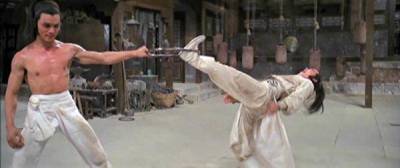
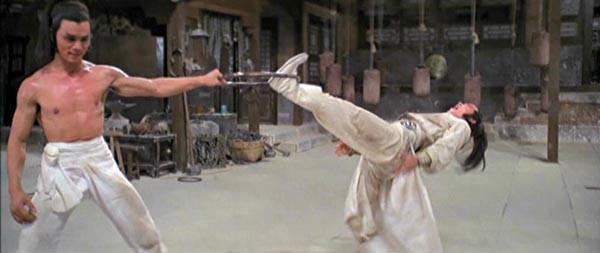
Crippled Avengers – If Lau Kar-Leung is the John Ford of kung fu films, with The 36th Chamber of Shaolin as his My Darling Clementine, then Chang Cheh is the Sam Peckinpah and this is his Wild Bunch. Lau’s films, when they aren’t being outright comic, emphasize the spiritual and communal side of martial arts more than any non-King Hu director I’ve seen. But Cheh’s are all about the brutality of the violence and how it eats up its practitioners, no matter which side of the good/evil divide they fall on. After his son is maimed in an attack, a Tiger Style expert makes him some metal hands and the two proceed to terrorize a town for decades. When they cripple three regular guys and a kung fu expert who tried to defend them (one loses his legs, another his eyesight, the third his hearing, the kung fu guy is turned into a crazy fool) they team up, learn kung fu and seek their revenge. This film has the reputation of having the best fight sequences in the entire genre and from what I’ve seen, that is entirely true. Chang reunited the team from his previous film, The Five Deadly Venoms (this group were so popular they appeared in several other films together as well), and while I found that film to be largely lame, a weak detective story salvaged by a brilliant final fight sequence, this film is non–stop beautifully choreographed hardcore action. I really can’t say enough about it, partially because I just don’t have the vocabulary, but also because despite all the kung fu films I’ve seen in my life, I’ve still never seen anything like the action in this film. The #3 film of 1978.


The Water Margin – The Water Margin is one of those massive classics of Chinese literature that get adapted again and again into films (like The Three Kingdoms, which last year brought us John Woo’s massive and masterful spectacle Red Cliff, as well as a wonderful video game series). This film, as the intro explains, is an adaption of five chapters in the middle of the saga. The story concerns a gang of outlaws fighting political corruption who attempt to free a kung fu master who’s been framed by his servant who’s been sleeping with the master’s wife so they can enlist the master in a fight against an evil government agent and his evil minions. There’s a dizzying amount of characters (familiar, I’m sure, to those who know the book) and the plot isn’t really as confusing as I made it sound, keeping in mind that it’s really one tiny section in the middle of a vast story. Anyway, the film’s a lot of fun, with a pronounced spaghetti Western influence (some parts of the score were direct ripoffs actually), an epic scale rare in the Shaw Brothers films I’ve seen and with some good performances, especially from David Chiang, an actor I wasn’t familiar with before, but will see a lot of in the future. Another film by Chang Cheh, it does have his trademark nihilist streak, especially in the final sequence, which features a pretty brutal bit of nonsensical dying for wrongheaded ideals (think Kagemusha without the guns). The #11 film of 1972.

Vengeance is a Golden Blade – A solid film from director Ho Meng Hua about a man who’s betrayed by his wife to the Vicious Long Brothers. Crippled, he flees to the mountains with his daughter to live with an herbalist and his son. After spending the next 15 years or so crafting a sword which will defeat his stolen Golden Blade, he inexplicably does everything he can to keep his daughter, who’s apparently been training for this her whole life, from taking revenge. Much of the plot of Josef von Sternberg’s The Shanghai Gesture ensues, which makes for some interesting melodramatics for a kung fu film. Chin Ping is pretty good as the daughter, but there’s never really enough fighting here to keep things interesting, and the final sword fight is pretty anticlimactic, given the hype created by that killer title. The #16 film of 1969.

Have Sword Will Travel – The title’s a dead giveaway, of course, but this is another Western-influenced kung fu film. The director again is Chang Cheh and David Chiang plays the stranger who wanders into town, talking to his horse, who no one is sure they can trust but ends up saving the heroine and defeating the bad guys (spoiler!). Chiang is a great screen presence, slight and sardonic, he’s like a goofier, more athletic Tony Leung. He falls in with a couple who are trying to defend a money shipment from a gang of thieves (seems the famous master who usually escorts the annual shipments has gotten so old he’s lost his kung fu, but he daren’t admit it). The guy in the couple totally doesn’t trust Chiang, not least because his fiancee is obviously into him. It all culminates in a bloody extended fight sequence, equal parts Throne of Blood, Game of Death and, say, Bring Me the Head of Alfredo Garcia as Chiang’s determination to prove his honorability and save the day for all involved reaches gruesome proportions. The #13 film of 1969.
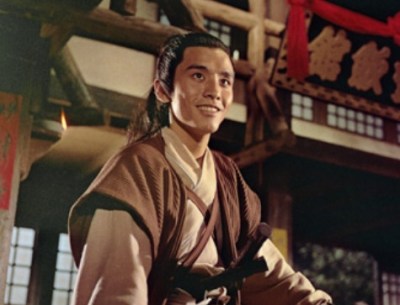
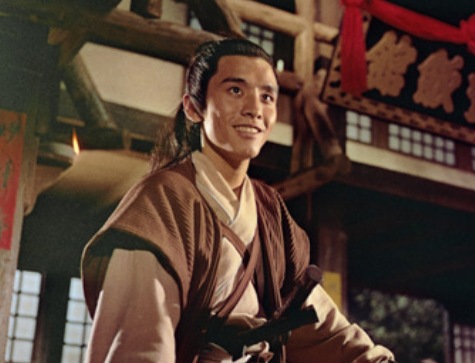
The Wandering Swordsman – A slightly lesser version of the same story, again teaming director Cheh with star Chiang. It’s the subtitles, I’m sure, but Chiang’s character here repeatedly gives his name as “Wandering Swordsman” which just isn’t silly enough to be cool. His character here is a lot dumber than in the previous film, as he gets duped into helping a gang steal a bunch of money from the good guys. When he finally realizes his mistake (which seems to take a painfully long time) he takes his revenge in a most satisfactory manner. While the melodramatics aren’t as bold as Have Sword, which is a bit of a plus, it seems more like that’s because everyone was more going through the motions rather than a conscious choice to pare things down. Still, I’ve yet to see a Chang Cheh film that doesn’t have at least a couple of fantastic fight sequences, and David Chiang is a charismatic enough performer that he almost manages to sell his character’s idiocy. The #13 film of 1970.
Movie Roundup: Pre-Vacation Backlog Edition (Part Three)
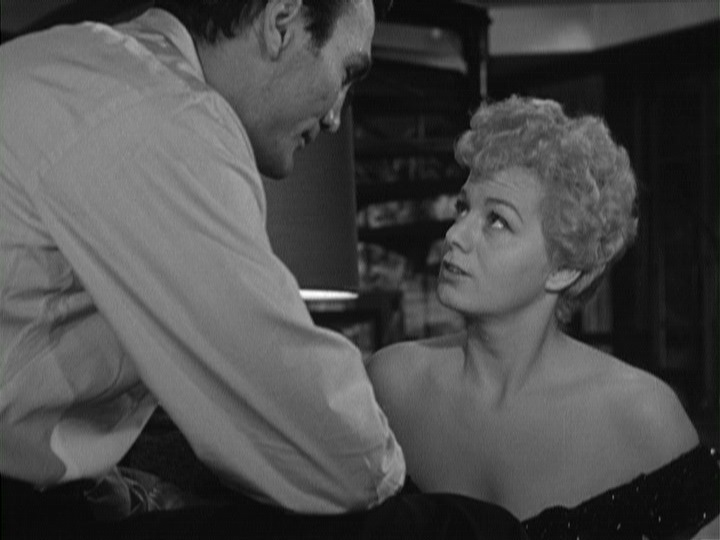
The Big Knife – A mid-50s adaptation of a Clifford Odets play that feels exactly like a mid-50s adaptation of a Clifford Odets play. Director Robert Aldrich adds some noirish touches and a bit of visual flair, but the movie never really takes off from its stagy origins. Jack Palance plays an actor with relationship problems who doesn’t want to sign a long-term contract with his studio (which would have been a terrible idea at the time, what with studios collapsing left and right). The studio boss, played by Rod Steiger, as bigger signifier that we’re in store for a bunch of method acting indulgences, tries to blackmail him into the deal sicne he covered up a crime Palance had committed a few months earlier. With Ida Lupino as Palance’s estranged wife and Shelly Winters (another method ringer) as a slutty wannabe actress. It’s probably better than I’m giving it credit for, but I just can’t drum up much excitement for what is essentially candy for actors and playwrights. The #25 film of 1955.
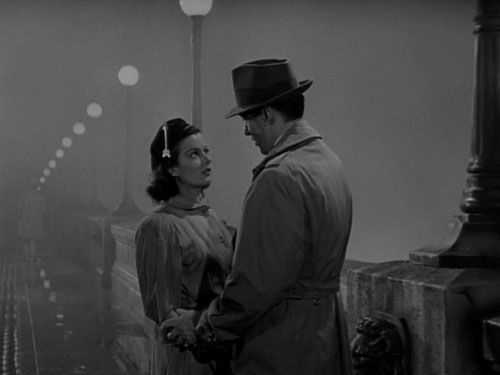
Man Hunt – A very fun action movie from director Fritz Lang. Walter Pidgeon plays an English hunter (the World’s Greatest Hunter, naturally) who tracks Hitler down and almost gets a shot off against him before getting captured by Nazis. He escapes and makes his way back to England, with head Nazi George Sanders hot on his trail. Pidgeon hooks up with Joan Bennett then makes a lot of silly decisions that are nonetheless plot-necessary and which lead to some great chase sequences (including one with John Carradine) and a pretty intense, if ultimately ludicrous, finale. A great, and occasionally literal, example of Fritz Lang’s penchant for characters that find themselves trapped in boxes of their own making. The #7 film of 1941.

The Secret Beyond the Door – Another Fritz Lang thriller, this one a kind of variant on Rebecca or Bluebeard. Joan Bennett again stars, marrying Michael Redgrave, who she meets on vacation in Mexico. When she moves into his fancy house, she learns he’s pretty much totally nuts. Turns out his hobby is recreating, in pain-staking life-sized detail, rooms wherein women have been murdered. But the door to one of the room’s is locked, what lies beyond it?!? It’s more prestigious and tasteful than it should be, what with a score by Mikos Rosza and cinematography by Stanley Cortez. I longed for some low budget sleaziness or the barely controlled atmosphere of a Val Lewton film. Instead, Lang keeps everything well under wraps, which makes for a fine, but not really great, film. After seeing quite a lot of his films, I just don’t think I’m a Lang kind of guy. The #8 film of 1947.

Anna Karenina – The version with Greta Garbo as Anna. She’s the upper class wife who falls for the dashing soldier, and suffers for her infidelity. Garbo’s pretty Garboish, pretty but icy and all that. Frederic March is her lover, Count Vronsky, and much as I’ve learned to appreciate him in the last couple of years, there’s just no way any sane woman would ruin her life because of an unquenchable lust for Frederic March. Especially when her husband is Basil Rathbone, who looks about the same but can’t help but be cooler. Really though, the only really attractive person in the film (Garbo’s coldness turns me off, or maybe it’s that mullet she’s sporting) is Maureen O’Sullivan as Kitty. I really couldn’t see why Vronsky didn’t drop all that Karenina melodrama for her instead. The #16 film of 1935.
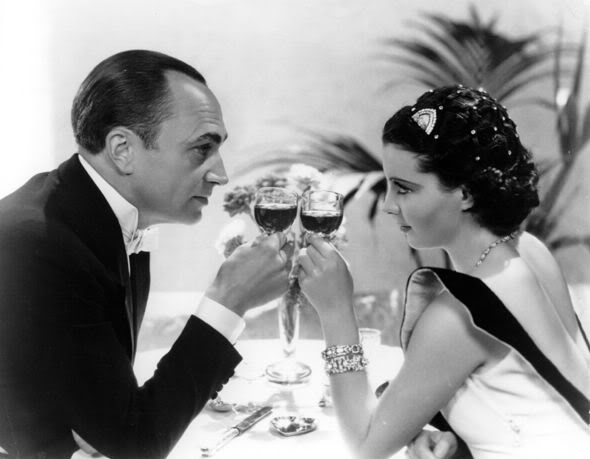
Dark Journey – A thoroughly enjoyable spy film with Vivien Leigh as a fashion designer who’s also a secret agent, or double agent, or triple agent, for England and/or Germany during World War I. Complications for her complicated life ensue: not only are the counterespionage agents for both countries close to nabbing her, but her new boyfriend, Conrad Veidt, is a German officer and either she or he or both or neither of them are totally faking their affection for each other. Director Victor Saville keeps everything light and the film flies by at only 77 minutes. The #11 film of 1937.

Storm in a Teacup – A British attempt at capturing the magic of the American screwball comedy, one that doesn’t quite succeed. Vivien Leigh stars and is funnier than you’d think she’d be, given that she almost never did comedy. Rex Harrison is her co-star, and more surprisingly isn’t very good, especially considering that his performance in Preston Sturges’s Unfaithfully Yours is one of the best comic performances of all-time, screwball or otherwise. Anyway, he’s an obnoxious journalist who comes to her small town and exposes her father, who’s running for office, as a snooty jerk who doesn’t care about poor people (specifically an annoying woman who refuses to license her dog and therefore the dog will be executed). It all gets blown comically out of proportion (hence the title). It’s got some really funny moments, but for the most part, Vivien Leigh is very, very pretty. The #18 film of 1937.

The Big Clock – Halfway through this film noir, I realized I’d seen a remake of it. Kevin Costner’s solid 1987 thriller No Way Out is based on it (though it confusingly takes its title from another, totally unrelated noir). This one is better. Ray Milland plays the editor of a crime magazine run by a Luce-esque magazine emperor played by Charles Laughton (sporting the worst mustache in the history of facial hair). Milland wants to go on vacation with his family, but Laughton won’t let him. When Milland misses his flight, he ends up drinking a lot with a sympathetic woman who just happens to be Laughton’s mistress. Milland leaves without hooking up, but Laughton then shows up at the girl’s apartment and kills her. When Laughton and George Macready (and a mute Henry Morgan) cover up the crime, all the evidence leads to Milland, who has in turn been put in charge of the investigation by Laughton. Make sense? It’s a double version of the investigating yourself noir subgenre and director John Farrow pulls it off so efficiently that it always totally makes sense. The tremendous cast helps as well, and it also includes Maureen O’Sullivan and the always awesome Elsa Lanchester. A slick film from an excellent year, so it only ranks as the #17 film of 1948.
Movie Roundup: Pre-Vacation Backlog Edition (Part Two)

The Shopworn Angel – A simple setup for a romantic comedy: naive country kid (James Stewart) stops off in the big city on his way to deployment in WWI. He passes off the photo of a showgirl (Margaret Sullavan) as his girlfriend to impress his buddies, then convinces her to play along when they all actually meet her. Naturally, the pretend romance turns real. The tone is perfectly modulated between the silliness of this setup and the desperate realities of young men on the precipice of death and a cynical woman who’s been around the block a few times, and all kinds of credit is due these two stars (as well as Walter Pidgeon as the rich cad who might actually love Sullavan as well). This is the first film I’ve seen by HC Potter, but I don’t know that he has the reputation for this kind of thing. Perhaps more credit is due screenwriter Waldo Salt? Regardless, it’s a delightful film, of not really on the level of other Stewart/Sullavan pairings like The Shop Around the Corner or The Mortal Storm. The #8 film of 1938.
Give a Girl a Break – One of three great Debbie Reynolds musicals from 1953, along with The Adventures of Dobie Gillis and I Love Melvin. Like Dobie Gillis, this one also features Bob Fosse, this time playing a much more important role (he’s actually the romantic lead) while not demonstrating as much his unique choreographic style (which was on display in Dobie Gillis and another great 1953 musical, Kiss Me Kate). Reynolds is one of three actresses auditioning for a big show on Broadway, and Fosse is the director’s assistant who falls for her and does as much as he can to get her the part (this is essentially the plot dynamic of I Love Melvin). The other two women include the director’s ex (this pair are played by Broadway star Marge and Gower Champion) and a woman the producer is smitten with, a dancer who is secretly married. The film doesn’t have the anarchic wackiness of the other Reynolds or Fosse films from 1953, director Stanley Donen instead maintains control and focuses the film on a few brilliant emotional moments (Reynolds and Fosse together are particularly charming, as are the film’s final climaxes). The #13 film of 1953.

Hound of the Baskervilles – I’m afraid that these Sherlock Holmes films just aren’t working for me. Yes, Basil Rathbone is excellent, perhaps definitive as the detective, and this is definitely an improvement over the same year’s The Adventures of Sherlock Holmes, which told an original, and largely stupid, story. But you’d think there’d be more horror and spookiness to the moor than there is in this film, at least there is in the original story (and the werewolf episode of Doctor Who, as well). And that’s probably my problem: the Holmes stories in my memory are a lot better than any cinematic versions I’ve yet seen. Still, by sticking largely to Conan Doyle’s plot and characters, director Sidney Lanfield has succeeded in making a watchable motion picture. The #27 film of 1939.
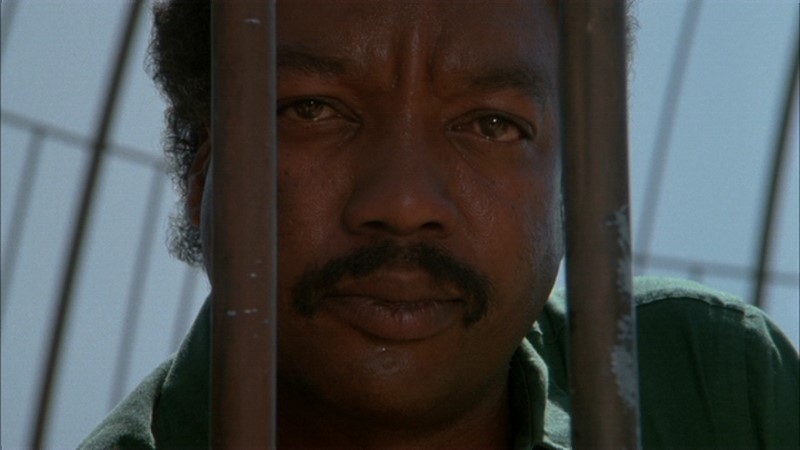
White Dog – This Samuel Fuller film about a racist dog is one of the most fascinating and complex looks at American racism ever made, and perhaps unsurprisingly it was shelved by its distributor after accusations that the film itself was racist. Why the NAACP thought it was is baffling: I can’t imagine anyone who actually saw the film thinking that, but such is the level of discourse about such things, and things haven’t changed much in the intervening 30 years. Anyway, Kristy McNichol finds this German shepherd, adopts it, and is initially proud of its violent behavior (when it saves her from an attacker) then horrified (when it attacks one of her co-actors in the middle of a shoot). She takes it to some animal trainers (the excellent Burl Ives and Paul Winfield) who explain that the dog was trained to hate and attack black people. Winfield makes it his mission to retrain the dog, and the rest of the film is about his attempts to teach the animal that black people are nothing to be afraid of. The film is based on a real event and a real phenomenon: dogs were trained this way and when an actress (Jean Seberg) found one and her husband wrote a book about it. Like in most Fuller, the metaphor is both obvious and yet more complex than it seems. Yes, the dog training is as much about whether individuals in society in general can unlearn the racism they’ve been taught (while accepting as a given that racist behavior is something that is learned), but while the film has that liberal hope at its center, Fuller is more pessimistic about how easy or likely it is to achieve. It’s telling, though, that the film’s protagonists are a team comprised of a young white woman, a black man and an elderly white man. The #3 film of 1982.

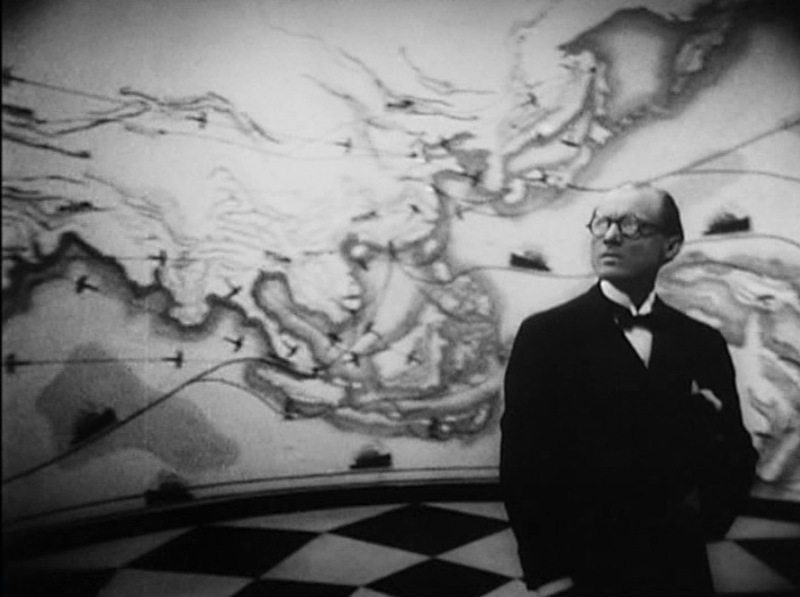
L’Argent – Maybe it’s just because I saw it last night, but I can’t help but think of The Social Network when thinking about this film. Not much of what I’ve heard about Fincher’s new film has to do with its perspective on capitalism, though I think it’s more coherently about that than anything else. Anyway, this film, a late silent from director Marcel L’Herbier is quite upfront in letting everyone know what it’s about: capitalism and the many ways in which it sucks, more or less. Unkempt and overweight, moneyman Saccard is nearly undone by manipulative speculation on his company by the refined Gunderman. To make a comeback, Saccard exploits an aviator’s scheme for oil drilling in Guyana while lusting after the aviator’s wife. Not only is Saccard’s greed and amorality critiqued, but so are Gunderman’s even more villainous snobbery and far more subtle manipulations of people and money (the critique of Gunderman is correspondingly subtle as well). The only mostly moral people in the film are the aviator and his wife, who are for most of the film nothing but saps. L’Herbier was part of the French Impressionist school of filmmaking, a group that I have little familiarity with (this is, I believe, the only French silent film I’ve seen from beginning to end). The film is a visual marvel: the camera always in motion, either subtly reframing characters to express the dynamism of the shifting power relationships or ostentatious set pieces set in the Paris Stock Exchange or a complex climax intercutting various actions with a musical performance on stage (in a silent film). It’s a marvel, and one that I imagine will only get better on future viewings. The #6 film of 1928.
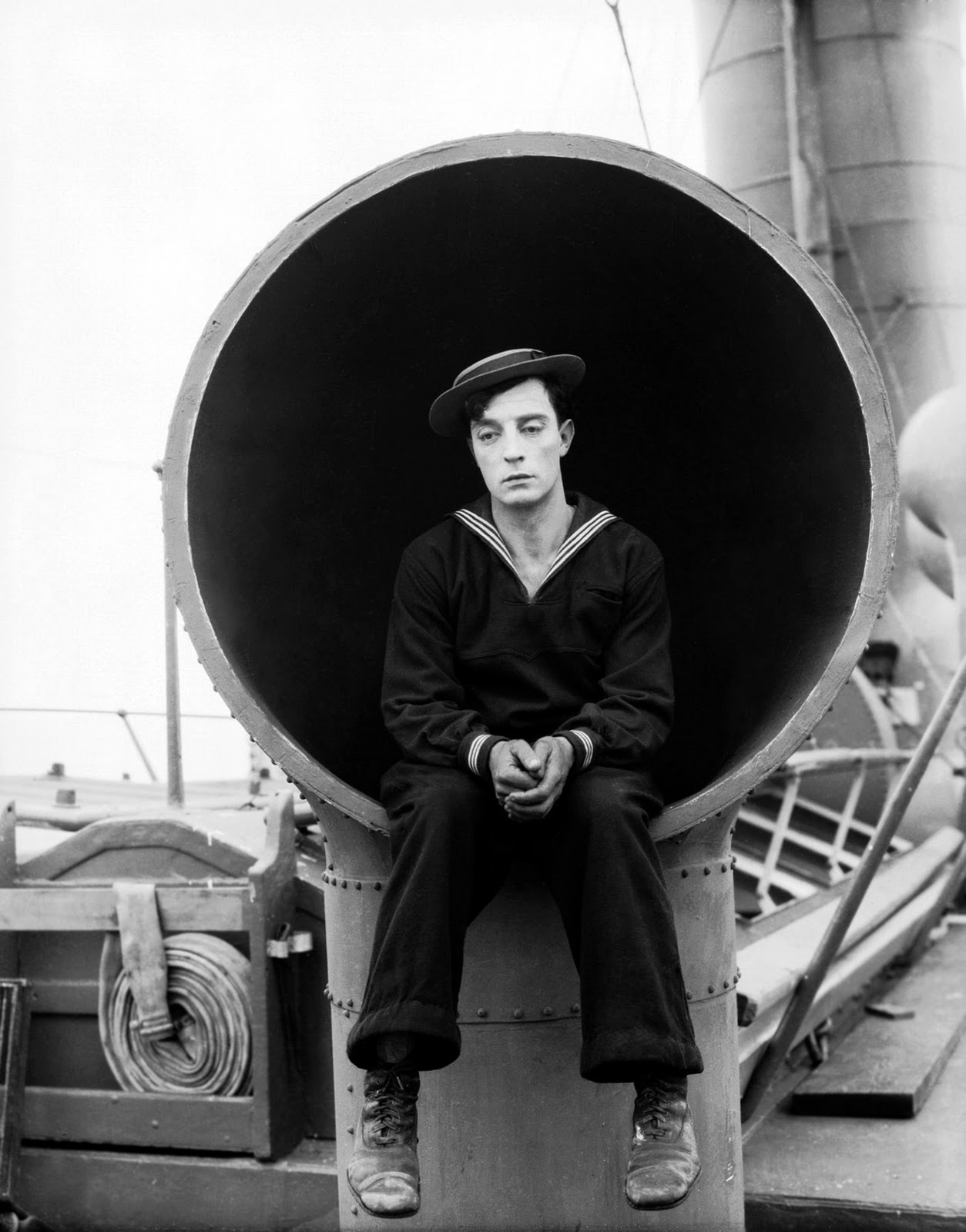
The Navigator – One of the major Buster Keaton features that I’d somehow managed to not see until now. He plays a clutzy rich kid who gets stuck alone on a massive boat with a pretty girl. The initial setup is wonderfully done, especially an iconic sequence of the two of them looking for and just missing each other when they first begin to suspect someone else is on the boat and the couple’s first night on the boat, that manages to be both hilarious and terrifying (thanks to the floating head of co-director Donald Crisp). Adrift on the open sea, the two have to learn for themselves not merely how to function on a boat, but the basics of life such as can-opening and coffee-making. Eventually, Keaton has to venture underwater to fix a propeller (like Humphrey Bogart in The African Queen, but not really) and the two have to fight a tribe of cannibals that try to eat them. It’s got a lot of great sequences, but it isn’t quite at the level of Keaton’s greatest work. The #5 film of 1924.

The Shining Hour – Joan Crawford in a Frank Borzage melodrama with Margaret Sullavan and Robert Taylor? No, I wouldn’t think she’d fit in either. But of course, that’s why it works, because her character, a dancer who marries into a wealthy and uptight Wisconsin (?!) family, doesn’t fit in either. She marries Melvyn Douglas, the brother of Taylor, whose wife is Sullavan and whose sister is Fay Bainter who is really mean to poor Joan Crawford. Seems Bainter thinks Crawford’s going to disrupt the family by sleeping with Taylor, which, of course, she does, because that’s the kind of girl Joan Crawford is. The Midwestern setting is strange for this kind of thing, you’d expect New England Puritan repression or Southern gentility masking horrible crimes or something. Instead, Bainter is mean but right and Margaret Sullavan, as always, suffers nobly. Good times. The #12 film of 1938.
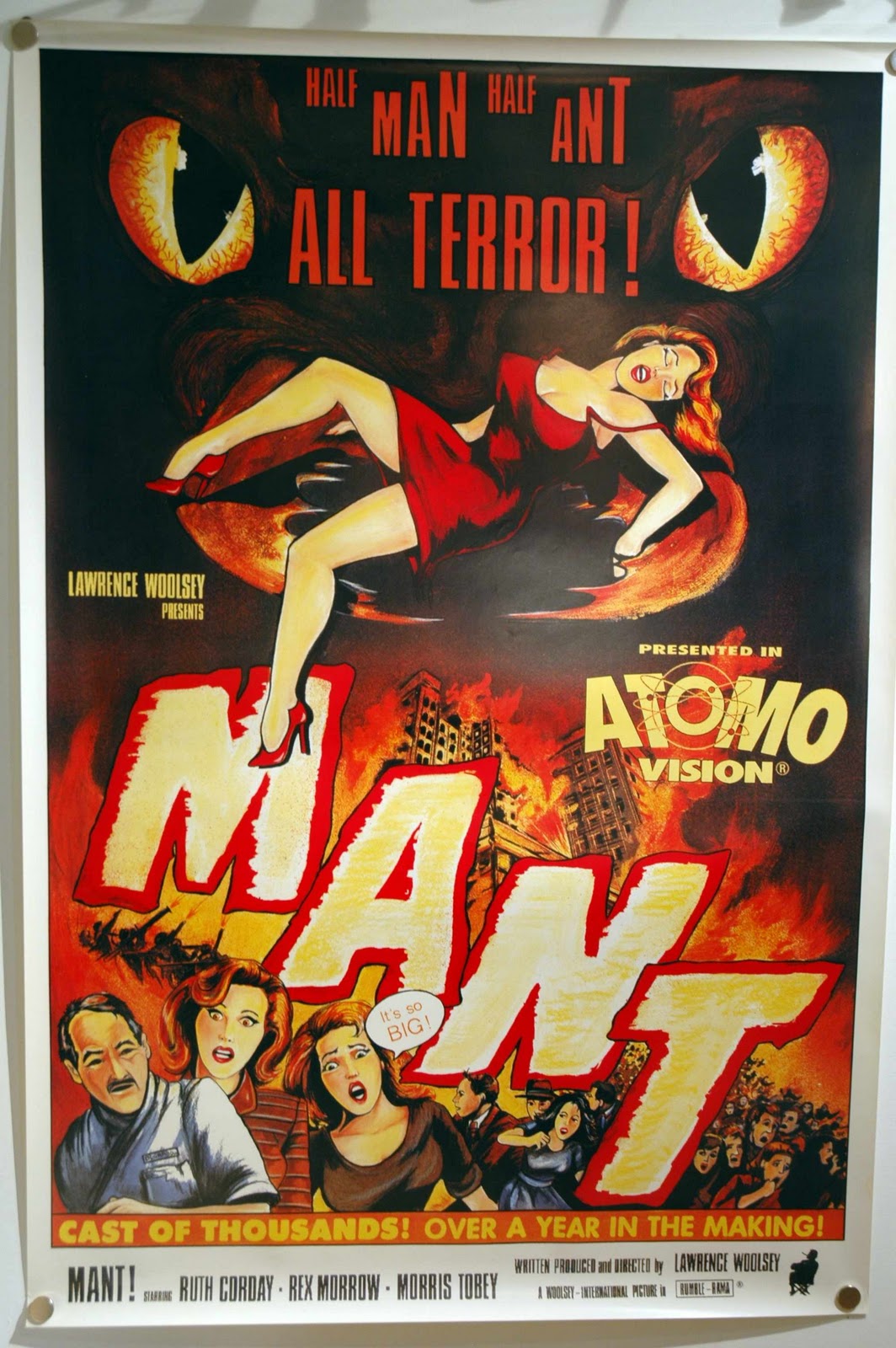
Matinee – Joe Dante might be the most underrated Hollywood director of the last 25 years. Looking at his filmography, I’m shocked to learn that I’ve seen almost all of his theatrical features; I’m less shocked that I’ve liked every one of them. This might be his masterpiece. It’s an ode to the world of b-level sci-fi films from the 50s and 60s and the theatres where they played and the experience of seeing them and not being entirely sure whether they depicted things that were possible in reality or not. John Goodman is the producer/auteur who comes to Key West around the time of the Cuban Missile Crisis to premiere his latest film, Mant, about a man who turns into an ant thanks to a freakish dental accident. However, Dante wisely centers the film not on Goodman’s character, but on the group of kids who go see the movie. The film is expertly constructed, with the various characters and relationships set up in the beginning, along with the complex effects that will enhance the film’s premiere with everything clicking smoothly into place during the increasingly chaotic screening. It’s a textbook example of how to build to a farcical climax. Add to that the nostalgic heart and pure love of cinema that the film oozes, and Goodman’s usual outsized hilarity, and you have a truly great film from a great filmmaker. The #7 film of 1993.

 The End of Cinema