
Movie Roundup: Opening Day Edition


Green Zone – Matt Damon and Paul Greengrass reunite in a misguided attempt to either bring real-world political relevance to a Bourne-style action film, or to bring a Bourne-style excitement to the real world political thriller genre. It’s one of those schizophrenic movies where neither style entirely works and the combination of the two makes the whole even worse than it should be. Greengrass’s editing here is generally better than it was in the incoherently hyperactive Bourne films, but the plot is full of holes and really quite nonsensical: its dumbass conspiracy theory succeeds in making the reasons the US went to war in Iraq look comparatively logical and well-thought out.

Under the Roofs of Paris – A fantastic little early musical from French director René Clair (Le Million, À nous la liberté) about an itinerant sheet music salesman who falls in love with a girl with an abusive gangster boyfriend (who also happens to be married). He wins the girl, gets framed for a crime and loses the girl to his best friend. And there are songs. Clair should get more credit: his early 30s musicals are better than Lubitsch’s in pretty much every way: his camera moves more and more expressively, the songs and singing are better and the stories, with their bittersweet mix of comedy and tragedy are much more interesting. The #5 film of 1930.

The Mummy – Boris Karloff plays the title character in this excellent 30s horror film directed by Karl Freund, the great cinematographer of German Expressionism (The Last Laugh, Metropolis). Karloff is brought to life by Egyptologists, and walks the Earth in search of the woman he loved thousands of years earlier, who conveniently enough is reincarnated in the body of the only woman in the film. The plot is essentially the same as the Brendan Fraser remake, but treating it seriously makes it even more effective than that admittedly entertaining film. It manages to be both moving and funny on its own terms, without any of the winkiness of the post-modern adventure film. Karloff doesn’t wander around in bandages, by the way, he’s in human form with a ton of great extreme closeups like the one above. The #10 film of 1932.

Wordplay – A fine documentary about crosswords and the people who do them, focusing on Will Shortz, the editor of the New York Times crossword puzzle. It’s entertaining enough, especially for someone like me, who has at times, had issues with crossword addiction. There’s a bunch of celebrity interviews, and we see the likes of Bill Clinton, Jon Stewart, Ken Burns, Daniel Okrent (who kind of invented fantasy baseball, which you think they should have mentioned here) and the Indigo Girls working on and talking about the Times puzzle. The dramatic structure of the film is the big Crossword tournament, which honestly isn’t that dramatic, partially because the contestants, while likable enough, aren’t particularly compelling. They’re essentially just a nice, friendly group of geeks. The #30 film of 2006.

Women on the Verge of a Nervous Breakdown – A farcical melodrama from Pedro Almodóvar, with Carmen Maura as a voiceover actress who breaks up with her boyfriend, badly, tries stalking him, sets her apartment on fire, helps her friend, who may have unwittingly abetted Islamic terrorists and meets Antonio Banderas, her boyfriend’s son. The first half of the film drags a bit, as we’re trying to piece together exactly who all these characters are and what they are doing, but halfway through, when most everyone assembles in Maura’s apartment, the film takes off in a whirl of wackiness. I liked it a lot more than the more accomplished, less fun and kind of distasteful Talk to Her. The #8 film of 1988.
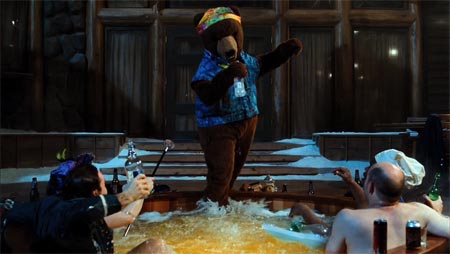
Hot Tub Time Machine – John Cusak, Craig Robinson and Rob Corddry get caught in the titular device and travel back to 1986, the time when they were in high school and their lives completely fell apart. They attempt to follow traditional time travel rules, but give that up in hopes of making themselves, and their futures, better. The film is pretty funny, lots of wacky humor and a fair amount of gross inappropriateness. Craig Robinson is that standout, as he is on The Office, and Rob Corddry tries really hard and is sometimes successful. Cusack, though, seems to be sleepwalking through the whole thing, and his is the least interesting storyline and character. A great, charming actor like, say, John Cusak could have done great things with the role. Too bad he didn’t show up here.

Red Cliff – I watched the two part, five hour international version of this, because that’s the kind of guy I am. It’s John Woo’s adaptation of the Three Kingdoms, familiar as China’s great national epic to Chinese literature scholars and video game players. And as an adaptation it’s wonderful: most of the elements in the film are straight out of the book. It chronicles the early stages of a civil war during a lull in the Han Dynasty as Prime Minister Cao Cao invents a pretext to attack Liu Bei (a popular general from the West) and the area of Wu (the prosperous and independent-minded South). Liu Bei’s advisor Zhu-ge Liang (Takeshi Kaneshiro) goes south to form an alliance with Wu, their leader (Chang Chen) and greatest general Zhou Yu (Tony Leung). The first half of the film follows the forming of the alliance, the second half the lead up to the Battle of Red Cliff and the actual battle itself. The actors are pretty good, especially the two leads, though I do think the film might have worked better with the original casting: Chow Yun-fat as Zhou Yu and Tony Leung as Zhu-ge Liang). It’s a film almost without precedent, most comparable to the painstaking recreation in Gettysburg, its also the kind of film that Kingdom of Heaven should have been but mostly failed at. That Ridley Scott film got bogged down in melodrama and in ascribing complex historical forces to personal animosities. Red Cliff does that as well, but it works the same way The Illiad does: it’s mythical enough that the incongruity between history and melodrama doesn’t interfere with the enjoyment of the film. The #8 film of 2008.

Gold Diggers of 1935 – The last of the films in my Busby Berkeley boxset, and unfortunately it’s more Dames than 42nd Street, Gold Diggers of 1933 or Footlight Parade. I think the main difference between those great movies and these latter two duds is that they’re about a group of people at work, whereas the other two are about madcap rich people at play. Amateurs putting on a show as opposed to professionals trying to survive in a business. That gave the backstage musicals a hard edge to counteract the general syrupiness of Dick Powell and/or Ruby Keeler, without it, the films are unmoored in a not particularly funny world of froth. Even the musical numbers here aren’t that great: “Lullaby of Broadway” is a great tune, and it has a bold ending, but it’s nothing compared either of the last two numbers in Footlight Parade, and the song certainly doesn’t get stuck in your head the way even Dames‘s “I Only Have Eyes For You” does. The sequence does have some fantastically massive synchronized tapping, and the film’s other number has a funny reference to King Vidor’s The Crowd, with moving grand pianos in place of workers at their desks. The #17 film of 1935.

Movie Roundup: Gloria Swanson Edition

For a slightly longer version of this, see the Metro Classics website.

Why Change Your Wife? – This time, it’s the husband (Thomas Meighan, who looks a bit like Joseph Cotton, or a unholy mix of Jude Law and Norm MacDonald) who’s dissatisfied, seems his wife is always interrupting his shaving, trying to get him to quit smoking, looks down on his reading movie magazines and turning off his hot new foxtrot music and making him listen to some violin piece called “The Dying Poet”. To try and spice things up, he buys her some lingerie, which she’s too shy to wear properly, so he goes to a show with the lingerie model (a typical flapper-type). Divorce, followed by the realization that Spouse #2 is even worse, ensues. This is pretty much in the same style as the first film, and Swanson is just as good (still hardly any closeups, though). There’s a long, expensive-looking sequence at a hotel pool that features some of the craziest, most impractical swimwear you’ve ever seen. Swanson I guess was famous at the time for her interest in haute couture, and for being one the first famous fashion stars. Personally, I think most of the clothes are pretty hideous and totally unflattering, but what do I know? The #3 film of 1920.

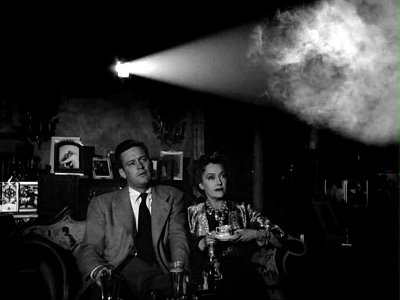
Queen Kelly – Swanson’s first and only collaboration with director Erich von Stroheim, her Sunset Blvd. costar, was this unfinished film. She and her boyfriend at the time, Joseph Kennedy (yes, that one) produced it and she hired von Stroheim to direct. The projected film would have been about five hours long, but she fired von Stroheim about one-third of the way (and $800,000 or so) through. It seems her changed the script without her approval (or the approval of the Hays Office) to have most of the last section of the film take place in a brothel instead of a “dance hall”, and knowing it would get censored, Swanson killed it. She went back later (with Gregg Toland) and shot a quick ending to the surviving footage, and Kino’s used some production stills to recreate and give a sense of von Stroheim’s version of the film. As it stands, neither version is particularly satisfying. The completed section is pretty terrific, with Swanson as a young convent girl (Kelly) whom the Queen’s fiancé falls in love with. The Queen herself (Regina V, played by Seena Owen) is crazy and violent and likes to whip people and walks around naked with only a cat covering her breasts. All this is a lot of fun, but in the long version, it would have only been a sort of prologue, with the rest of the film taking place in Africa has Swanson is forced to marry an evil looking guy (an incredibly creepy Tully Marshall), take over her aunt’s brothel and become a madam. All that survives of that is the forced marriage sequence, which is suitably horrifying. Swanson’s ending cuts out all of that, taking an abrupt conclusion on to the Prince & Queen story. The #5 film of 1929.
Movie Roundup: Tough Draw for Gonzaga Edition

Up in the Air – It’s one of those movies that tries to enact as profound and movie an existential or emotional crisis that surely the main character would have resolved long before the event in the film take place. Meaning, George Clooney’s cynical loner, a guy who lives to travel and fire people, surely would have experienced the temptations of love and family before middle age, wouldn’t he? If so, what did he learn here that he hadn’t already learned? Are we to believe that a character who has spent enough time developing his philosophy of unattachment so as to give lectures on it had really never once had a chance at a romantic relationship? And he looks like George Clooney? The characters played by Anna Kendrick and Vera Farmiga are nicely played and are much more believable, so the film isn’t a complete loss. They help raise it to solidly mediocre. The #28 film of 2009.

October – Sergei Eisenenstein’s film reenactment of the Russian Revolution on its tenth anniversary. The action can be very difficult to follow if you don’t already know what happens (and I only read half of its source, Jack Reed’s Ten Days That Shook the World), but you get the general idea: the Bolsheviks win (Spoiler alert!). There is, as you would expect, a lot of montagey goodness, especially in an early sequence of the Provisional Government cracking down on the people (and at least one horse) that’s like a miniature version of the Odessa Steps sequence from Potemkin. The finale, though, doesn’t seem nearly as exciting as it should, but that may be history’s fault, rather than Eisenstein’s. It is a lot of fun to see how he demonizes Provisional Government leader Kerensky: it’s kind of a preview of the effects Eisenstein would use in the Ivan the Terrible films (based on lighting and staging more than editing). The #4 film of 1928.

Bride of Frankenstein – I rewatched James Whale’s Frankenstein before this, and liked it a lot more than I remembered. And I liked it more than this sequel, which I understood was supposed to be superior. Colin Clive as the mad doctor is quite sympathetic in the first film: a good man driven crazy by his own ambition and knowledge who comes to recognize and atone for his sins. In the second, he’s a patsy, pushed around and manipulated by the pure evil Dr. Pretorius; a cardboard mad scientist if ever there was. There’s some nice sequences with the Monster of course, as Boris Karloff learns to talk and makes friends with a blind violinist. And the payoff with the creation of the Bride at the end is justifiably iconic. It’s a lot of fun, but the first film resonated more with me. The #9 film of 1935.

The Invisible Man – Another James Whale mad scientist film, with Claude Rains as the man who experiments on himself with an invisibility drug that has the unfortunate side-effect of making him criminally insane. There follows some great suspense and action as Rains wreaks havoc throughout the English countryside as the police and his former colleagues try to find him and stop his murderous rampage. The opening sequence with him trying to work in a country inn is marvelous, though Una O’Connor is possibly even more annoying than she was in Bride of Frankenstein. Rains is terrific, acting with just his marvelous voice and the general shape of his face and body. The rest of the cast is pretty good as well (including Gloria Stuart, the old lady from Titanic and Henry Travers, Clarence the Angel in It’s a Wonderful Life). The #9 film of 1933.
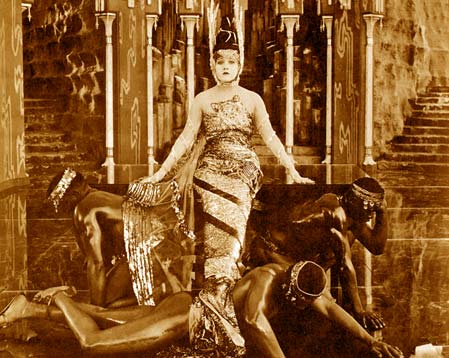
Don’t Change Your Husband – Gloria Swanson doesn’t get any close-ups in this Cecil B. DeMille film from 1919. This seems a little too early for that kind of thing, at least for him. Most of the scenes play out in two shots, with occasional inserts for close-ups of objects. DeMille keeps it all moving though, so the film ends up feeling as light and pleasant as its story (and there’s some wonderful fantasy sequences as Swanson imagines what her new life would be like, they’ve got the same spirit of spectacle that would eventually take over DeMille’s filmmaking). The plot has Swanson dissatisfied with her husband (he’s a slob, he appears to eat nothing but onions, he can’t dance), so she divorces him and marries the romantic young man who’s been wooing her. But the new guy turns out to be even worse! He’s a gambler and a drunk and he’s cheating on her with a girl named ‘Toodles’. Meanwhile, Husband #1 has got himself a rowing machine, shaved his mustache and become even richer as the head of the new Hemp Trust (seriously!). Has poor Gloria learned her lesson? It’s really quite a fun film, and it’s always good to be reminded that romantic comedy plots haven’t advanced one bit in at least the last 90 years. The #3 film of 1919.

Movie Roundup: Daylight Savings Edition

Ponyo on the Cliff by the Sea – The latest Hayao Miyazaki film is pretty much the cutest thing ever. I’m glad I watched it in Japanese: any Jonases or Cyruses might make it unbearable. It’s the Little Mermaid story, except the love story is between five-year old kids. Ponyo’s the fish who wants to be human (and eat ham); Sosuke’s the boy who loves her. The film is much lighter in tone and less narratively complex than Miyazaki’s last three films, though there are hints of a darker side (sights of the polluted ocean in the beginning, trouble between Sosuke’s parents (his dad is a sailor who doesn’t always come home when he should) but these are largely abandoned in the last half of the film. Similarly, and this is more typical of Miyazaki, there are no real villains in the film. The lack of darkness and any real conflict has its benefits: the film has the relaxed tone of a work by a true master, but it also leaves the impression of slightness, a lack of seriousness that we grownups like to have in the animation we admit to liking. Me, I’d take this over the straining Princess Mononoke any time. The #15 film of 2008.

True Heart Susie – Lillian Gish plays the eponymous and slightly clueless young girl who sells her cow, chickens and ducks to send the neighbor boy (who she’s in love with and who looks a bit like Matt LeBlanc) to college. He then comes home, becomes a minister and marries the first gold-digging flapper who looks in his direction (she listens to jazz, wears makeup and ankle-length dresses that are somewhat form-fitting, dances and kisses boys and drinks), much to poor Susie’s surprise. The absurdity of Susie’s lack of assertiveness is made clear, but the film also adores her for her steadfast stubbornness and patience in waiting for the boy to wise up. Yet for all the silliness of the plot, the movie works because of Gish’s performance and the way Griffith captures it with all those terrific close-ups. The #2 film of 1919.

Dracula – The 1931 version directed by Tod Browning and starring Bela Lugosi. I’ve only seen one other Browning film (Freaks) but I’ve yet to be really impressed by him (James Whale seems a much better director of early 30s horror). The cinematography here, especially in the early and final scenes, and shot by German Expressionist master Karl Freund is terrific, but the middle scenes aren’t anything special. Lugosi’s performance is iconic, of course, and very much different from Max Schrek’s in Murnau’s Nosferatu. This is the fourth version of the story I’ve seen, and I’ve got to say the ones by Murnau, Herzog and Coppola are a lot better. Of those, this one is closest to Coppola’s I’d say, at least in how it emphasizes the sexuality of the story. Herzog goes more for dark humor, and Murnau outright creepiness. The #15 film of 1931.
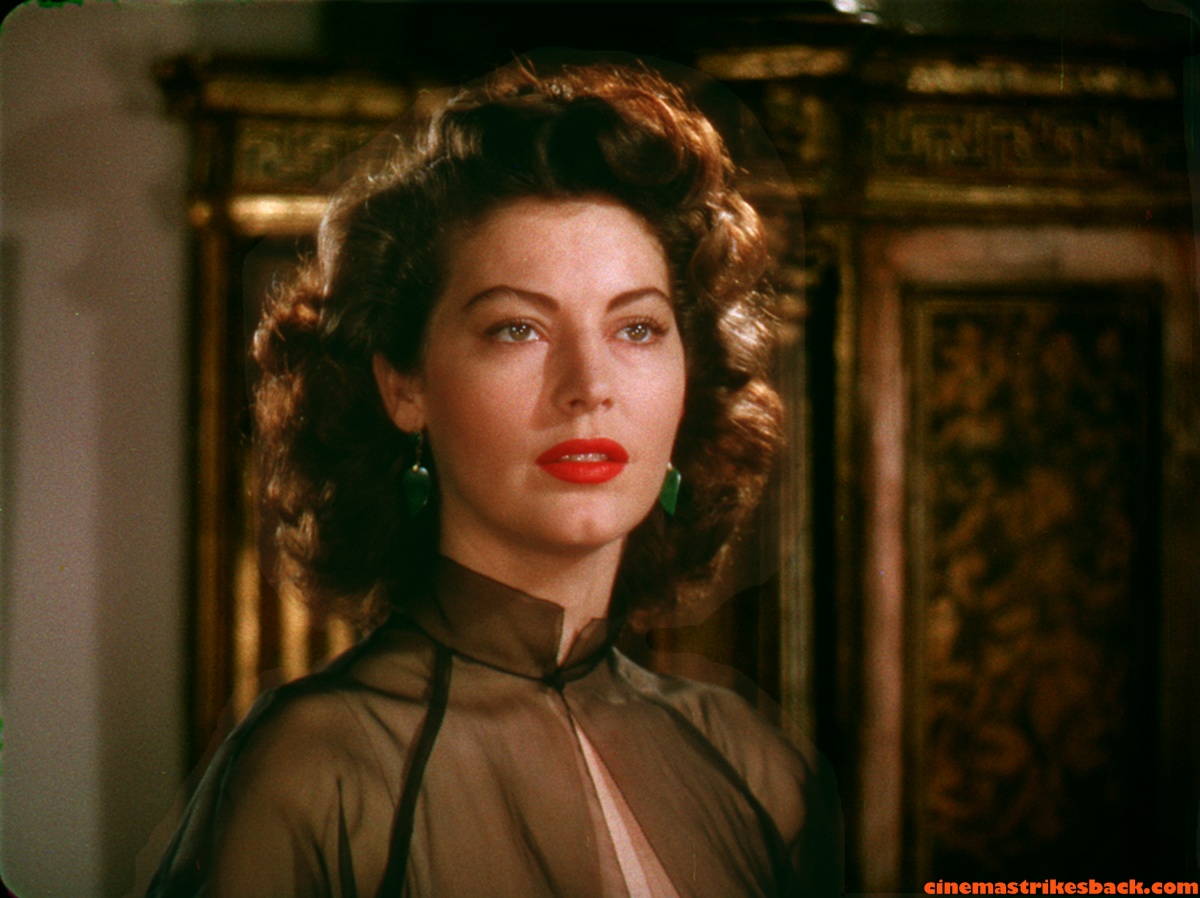
Pandora and the Flying Dutchman – It’s not just the brilliant Technicolor cinematography by Jack Cardiff that makes this Albert Lewin film feel like it was instead a Powell & Pressburger film, nor is it the appearance of Marius Goring (star of The Red Shoes). No, there’s something about the tragic romantic scope of it, the melodrama that reaches a kind of spiritual level. Ava Gardner plays Pandora, the beautiful woman that everyone falls in love with, and James Mason is the Dutchman, who may or may not be the mythical figure who killed his wife and is sentenced to roam the seas for eternity, coming ashore once every seven years to see if he can find a woman who loves him enough to sacrifice her life for his soul. Everything about it is quite wonderful. The #6 film of 1951.

Heaven Can Wait – This 1943 Ernst Lubitsch film is no relation to the 1978 Warren Beatty film (which is instead a remake of Here Comes Mr. Jordan) which I haven’t seen. But since that film doesn’t star Gene Tierney, I can’t imagine it’s as good as this. Don Ameche plays a dead man telling the story of his life to the devil, explaining why he doesn’t think he belongs in heaven. The film is made up of flashbacks of his life filled with petty lies and indiscretions and a great romance with Tierney, his wife, who he may or may not have been entirely faithful to. Despite what seems clear inferences of his dalliances, we never actually see it, and we get the feeling that Ameche’s all talk: not nearly as charming or successful as he thinks he is. It’s that lack of clarity that makes the film great: he and Tierney are nuanced, complicated characters who are never exactly like what we expect them to be. This subtlety of characterization is a key element of Lubitsch’s style, along with the peculiar mixture of light comedy and serious darkness. He’s the kind of director who presents the film’s most melodramatic moment obliquely and in narration, which makes it far more devastating than acting it out would have been. The #3 film of 1943.
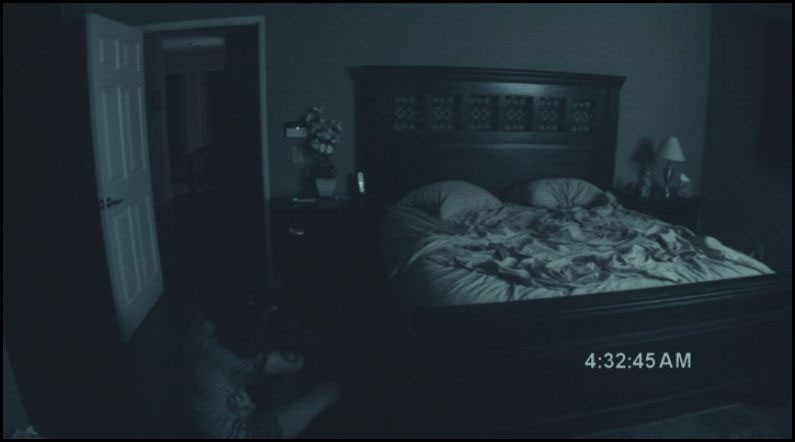
Paranormal Activity – If Speed is Die Hard on a bus, then this must be The Blair Witch Project in a house. A couple is haunted, so the man decides to record the nocturnal goings-on in their bedroom in an attempt to figure out what’s really happening and despite the increasingly direct protests of his girlfriend. The film alternates between scenes of them talking about what’s happening, meeting a specialist in ghosts and such, and the stationary shots of the camera on its tripod at night. These night shots are the film’s true standouts: they’re truly creepy. They’re as if Sam Raimi had decided to make a film using Tsai Ming-liang’s aesthetics. The two actors are terrific, with Katie Featherston looking a bit like a combination of Jenna Fischer and Mary-Lynn Rajskub and Micah Sloat perfectly evoking a pig-headed day-trading jackass. The #27 film of 2007.
 The End of Cinema