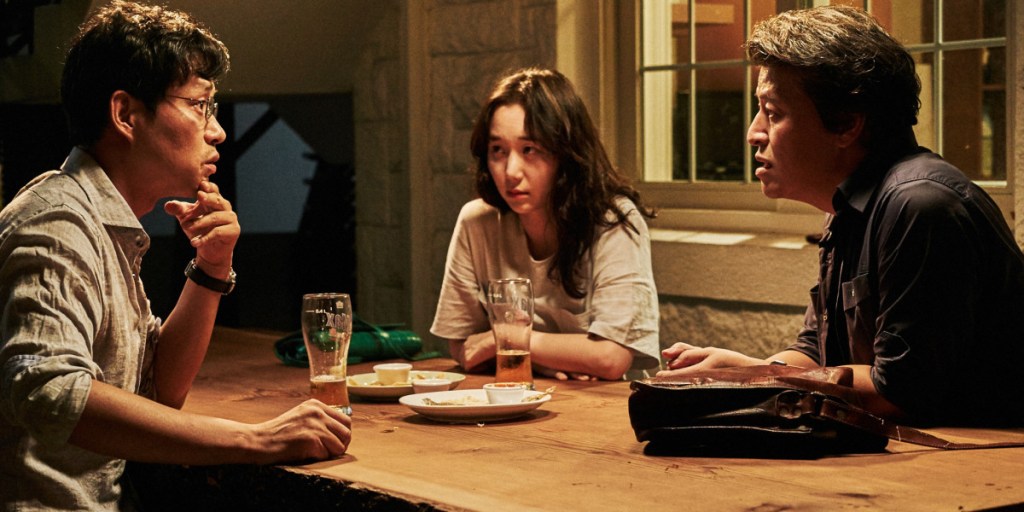
This Week in Rankings

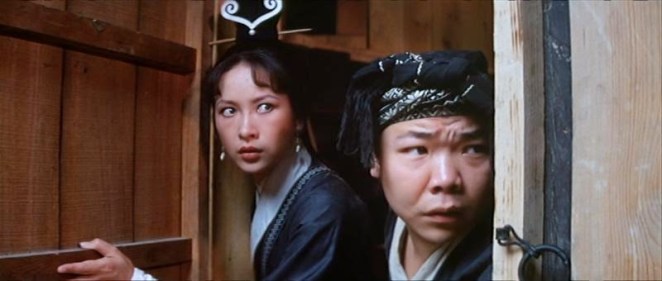
RainingintheMountain2.jpg

The end of the year came and went since the last rankings update, which meant a handful of round-up posts here at The End: Books (and Other Words), Film Discoveries, and Endy Award Nominations.

At Seattle Screen Scene I reviewed The PostThe Last JediThe Disaster ArtistPitch Perfect 3DownsizingHostiles, and Goldbuster. We also recorded a couple episodes of The Frances Farmer Show: one on The Last Jedi and one a 2017 Year-in-Review.

At Frame.land, I wrote about the films of Chang Cheh and contributed a brief review of Private Eye Blues. At Mubi, I launched a column on Contemporary Chinese Cinema. The first two are on 2017 in Chinese Film and the pair of Youth and The Thousand Faces of Dunjia.

I wrote some brief year-end stuff at other sites as well: Double Features for Mubi, Cinematic Moments (Claire’s Camera) and Underseen Movies (Our Time Will Come) for Frame.land, and about On the Beach at Night Alone for InReview Online’s Year in Review. This year we of the Seattle Film Critics Society gave out our first official awards, which named Get Out Best Picture and somehow didn’t nominate Baahubali: The Conclusion for anything at all.

Over at The Chinese Cinema, I’ve been rewatching all of Hong Sangsoo’s films in chronological order and reviewing them along the way. So far I have reviews up for The Day a Pig Fell Into the Well, The Power of Kangwon Province, Virgin Stripped Bare by Her Bachelors, On the Occasion of Remembering the Turning Gate, Woman is the Future of Man  and Tale of Cinema. I’ve revised all of my previous writing about Hong Sangsoo and indexed it, and done the same for my writing about King Hu. I also reviewed Evan Yang’s Sun, Moon and Star and Johnnie To and Wai Ka-fai’s Running on Karma. My The Chinese Cinema List at letterboxd is up-to-date with 434 titles as well. And I also made a list of Shu Qi’s movies.

If you like what I do here or at Seattle Screen Scene, The Chinese Cinema, or anywhere else, please consider donating at my kofi page. Every little bit helps.

These are the movies I’ve watched or rewatched over the last few weeks, and where they place on my year-by-year rankings.

Sun, Moon and Star (Evan Yang) – 19, 1961
A Charlie Brown Christmas (Bill Melendez) – 4, 1965
Legend of the Mountain (King Hu) – 3, 1979
Raining in the Mountain (King Hu) – 11, 1979
Dance of the Drunken Mantis (Yuen Woo-ping) – 25, 1979

The Miracle Fighters (Yuen Woo-ping) – 3, 1982
Return of the Jedi (Richard Marquand) – 12, 1983
Drunken Tai Chi (Yuen Woo-ping) – 45, 1984
Flirting (John Duigan) – 12, 1991
In the Heat of the Sun (1994) – 4, 1994

The Day a Pig Fell into the Well (Hong Sansgoo) – 31, 1996
The Dream Factory (Fen Xiaogang) – 37, 1997
The Power of Kangwon Province (Hong Sangsoo) – 16, 1998
Virgin Stripped Bare by Her Bachelors (Hong Sansgoo) – 7, 2000
Bring It On (Peyton Reed) – 20, 2000

On the Occasion of Remembering the Turning Gate (Hong Sangsoo) – 4, 2002
Running on Karma (Johnnie To & Wai Ka-fai) – 1, 2003
Woman is the Future of Man (Hong Sangsoo) – 37, 2004
Tale of Cinema (Hong Sangsoo) – 8, 2005
Assembly (Feng Xiaogang) – 28, 2007

If You are the One 2 (Feng Xiaogang) – 37, 2010
Inherent Vice (Paul Thomas Anderson) – 3, 2014
The Force Awakens (JJ Abrams) – 29, 2015
Rogue One (Gareth Edwards) – 40, 2016
Kedi (Ceyda Torun) – 69, 2016
Citizen Jane (Matt Tyrnauer) – 112, 2016

Mother! (Darren Aronofsky) – 5, 2017
Lady Bird (Greta Gerwig) – 6, 2017
Phantom Thread (Paul Thomas Anderson) – 13, 2017
The Last Jedi (Rian Johnson) – 17, 2017
Downsizing (Alexander Payne) – 21, 2017
The Burden of Other People’s Thoughts (Don Hertzfeldt) – 22, 2017

Lucky (John Carroll Lynch) – 26, 2017
Youth (Feng Xiaogang) – 35, 2017
Kaatru Veliyidai (Mani Ratnam) – 45, 2017
The Work (Jairus McLeary & Gethin Aldous) – 55, 2017
Pitch Perfect 3 (Trish Sie) – 63, 2017
Blade of the Immortal (Takashi Miike) – 70, 2017

Girls Trip (Malcolm D. Lee) – 71, 2017
Joan Didion: The Center Will Not Hold (Griffin Dunne) – 80, 2017
Last Flag Flying (Richard Linklater) – 90, 2017
Goldbuster (Sandra Ng) – 94, 2017
Molly’s Game (Aaron Sorkin) – 96, 2017

Wonder Woman (Patty Jenkins) – 97, 2017
The Thousand Faces of Dunjia (Yuen Woo-ping) – 98, 2017
The Disaster Artist (James Franco) – 103, 2017
I, Tonya (Craig Gillespie) – 106, 2017
The Fate of the Furious (F. Gary Gray) – 107, 2017
Hostiles (Scott Cooper) – 113, 2017

This Week in Rankings

The last few weeks have been eventful here at The End. Since the last update I made a list of 150 of my Favorite Chinese-Language Films and announced a grand restructuring of my now four-year long and seemingly never-ending project on The Chinese Cinema. It was also awards time, and in addition to the 2016 Endys, I handed out fake movie awards to the films of 1989 and 1988.

Over at Seattle Screen Scene, I wrote about Hong Sangsoo’s Yourself and Yours, Zhang Yimou’s The Great Wall, and Raoul Peck’s I Am Not Your Negro. At the Mubi Notebook, I wrote about Tsui Hark and Stephen Chow’s Journey to the West: Demons Strike Back.

These are the movies I’ve watched and rewatched over the last few weeks, and where they place on my year-by-year rankings.

First Avenue, Seattle, Washington, No. 8 (James H. White) – 1897
Romance of a Fruit Peddler (Zhang Shichuan) – 10, 1922
Romance of the Western Chamber (Hou Tao) – 8, 1927
The Goddess (Wu Yonggang) – 18, 1934
Song of China (Fei Mu & Luo Mingyou) – 25, 1935

Sunday in Peking (Chris Marker) – 30 1956
Diao Chan (Li Han-hsiang) – 18, 1958
Eight Taels of Gold (Mabel Cheung) – 10, 1989
A Fishy Story (Anthony Chan) – 18, 1989
Miracles: Mr. Canton & Lady Rose (Jackie Chan) – 30, 1989

James Baldwin: The Price of the Ticket (Karen Thorsen) – 40, 1990
Once Upon a Time in China IV (Yuen Bun) – 71, 1993
Once Upon a Time in China V (Tsui Hark) – 45, 1994
Journey to the West: Conquering the Demons (Stephen Chow & Derek Kwok) – 6, 2013
Our Sunhi (Hong Sangsoo) – 12, 2013

Blanket Statement #2: It’s All or Nothing (Jodie Mack) – 54, 2014
Yourself and Yours (Hong Sangsoo) – 10, 2016
I Am Not Your Negro (Raoul Peck) – 15, 2016
Curses (Jodie Mack) – 47, 2016
Cave of Sighs (Nathan Douglas) – 53, 2016

A Chinese Odyssey Part 3 (Jeffrey Lau) – 79, 2016
The Great Wall (Zhang Yimou) – 99, 2016
Weeds on Fire (Chan Chi-fat) – 109, 2016
On the Beach at Night Alone (Hong Sangsoo) – 1, 2017
Get Out (Jordan Peele) – 2, 2017

Chang-ok’s Letter (Shunji Iwai) – 3, 2017
Journey to the West: Demons Strike Back (Tsui Hark) – 4, 2017
The LEGO Batman Movie (Chris McKay) – 5, 2017
John Wick Chapter 2 (Chad Stahelski) -6, 2017

Predictions for the 89th Annual Academy Awards

These are my Oscar predictions. During the ceremony tomorrow night, as I’ve done for the past couple of years, I’ll be live-tweeting the winners of the 2016 Endy Awards, the nominees for which can be found here. Follow along on twitter @TheEndofCinema.

BEST PICTURE

Arrival
Fences
Hacksaw Ridge
Hell or High Water
Hidden Figures
La La Land
Lion
Manchester by the Sea
Moonlight

BEST DIRECTOR

Denis Villeneuve, Arrival
Mel Gibson, Hacksaw Ridge
Damien Chazelle, La La Land
Kenneth Lonergan, Manchester by the Sea
Barry Jenkins, Moonlight

BEST ACTOR

Casey Affleck, Manchester by the Sea
Andrew Garfield, Hacksaw Ridge
Ryan Gosling, La La Land
Viggo Mortensen, Captain Fantastic
Denzel Washington, Fences

BEST ACTRESS

Isabelle Huppert, Elle
Ruth Negga, Loving
Natalie Portman, Jackie
Emma Stone, La La Land
Meryl Streep, Florence Foster Jenkins

BEST SUPPORTING ACTOR

Mahershala Ali, Moonlight
Jeff Bridges, Hell or High Water
Lucas Hedges, Manchester by the Sea
Dev Patel, Lion
Michael Shannon, Nocturnal Animals

BEST SUPPORTING ACTRESS

Viola Davis, Fences
Naomie Harris, Moonlight
Nicole Kidman, Lion
Octavia Spencer, Hidden Figures
Michelle Williams, Manchester by the Sea

BEST ORIGINAL SCREENPLAY

Hell or High Water
La La Land
The Lobster
Manchester by the Sea
20th Century Women

BEST ADAPTED SCREENPLAY

Arrival
Fences
Hidden Figures
Lion
Moonlight

BEST CINEMATOGRAPHY

Arrival
La La Land
Lion
Moonlight
Silence

BEST FILM EDITING

Arrival
Hacksaw Ridge
Hell or High Water
La La Land
Moonlight

BEST VISUAL EFFECTS

Deepwater Horizon
Doctor Strange
The Jungle Book
Kubo and the Two Strings
Rogue One: A Star Wars Story

BEST PRODUCTION DESIGN

Arrival
Fantastic Beasts and Where to Find Them
Hail, Caesar!
La La Land
Passengers

BEST COSTUME DESIGN

Allied
Fantastic Beasts and Where to Find Them
Florence Foster Jenkins
Jackie
La La Land

BEST MAKEUP & HAIRSTYLING

A Man Called Ove
Star Trek Beyond
Suicide Squad

BEST ORIGINAL SCORE

Jackie
La La Land
Lion
Moonlight
Passengers

BEST ORIGINAL SONG

“Audition (The Fools Who Dream),” La La Land
“Can’t Stop the Feeling,” Trolls
“City of Stars,” La La Land
“The Empty Chair,” Jim: The James Foley Story
“How Far I’ll Go,” Moana

BEST SOUND EDITING

Arrival
Deepwater Horizon
Hacksaw Ridge
La La Land
Sully

BEST SOUND MIXING

Arrival
Hacksaw Ridge
La La Land
Rogue One: A Star Wars Story
13 Hours: The Secret Soldiers of Benghazi

BEST ANIMATED FEATURE

Kubo and the Two Strings
Moana
My Life as a Zucchini
The Red Turtle
Zootopia

BEST DOCUMENTARY

Fire at Sea
I Am Not Your Negro
Life, Animated
O.J.: Made in America
13th

BEST FOREIGN LANGUAGE FILM

Land of Mine
A Man Called Ove
The Salesman
Tanna
Toni Erdmann

BEST DOCUMENTARY SHORT SUBJECT

Extremis
4.1 Miles
Joe’s Violin
Watani: My Homeland
The White Helmets

BEST LIVE ACTION SHORT

Ennemis Intérieurs
La Femme et le TGV
Silent Nights
Sing
Timecode

BEST ANIMATED SHORT

Blind Vaysha
Borrowed Time
Pear Cider and Cigarettes
Pearl
Piper

Predictions for the 88th Annual Academy Awards

These are my picks for the winners of this year’s Academy Awards. On Sunday night, I’ll be tweeting out the winners of the 2015 Endy Awards during the Oscar ceremony. You can follow me there @theendofcinema. Here are the current 2015 Endy Award Nominees. We also had a special Oscar edition of The George Sanders Show last weekend, picking our 2015 favorites and discussing two Oscar films from 1946, best Picture nominee The Razor’s Edge and Best Song nominee Canyon Passage. My predictions are the ones in bold.
Continue reading

This Week in Rankings

The biggest change here at The End since the last rankings update is the most obvious: we’ve a new home. I’ve been slowly, painfully, reformatting old posts and indices and changing links to the new .net address, but it’s going to take forever. The Rankings & Awards index at the top of the page is partially done. My year-by-year rankings are now sorted by decade, which should make them easier to use. Several of the Endy Awards posts are still a jumbled mess, but they should be all fixed before too long. The Reviews and Podcasts indices are up-to-date and formatted correctly, but most of the review links head back to the old site and that’ll likely remain the case indefinitely.

Over at Seattle Screen Scene I wrote about a week I spent watching movies at the multiplex, with reviews of the five movies I saw there. On The George Sanders Show we talked about a couple of 60s sic-fi vampire movies and films by Chantal Ackerman and Agnès Varda.

These are the movies I’ve watched and rewatched over the last couple of weeks, and where they place on my year-by-year rankings.

The Skeleton Dance (Walt Disney) – 7, 1929
The Haunted House (Walt Disney) – 16, 1929
Skeleton Frolics (Ub Iwerks) – 26, 1937
Le bonheur (Agnès Varda) – 3, 1965

Poor Little Rich Girl (Andy Warhol) – 10, 1965
Planet of the Vampires (Mario Bava) – 21, 1965
Dizzy Gillespie (Les Blank) – 22, 1965
The Face of Fu Manchu (Don Sharp) – 33, 1965
Goke, Body Snatcher from Hell (Hajime Satô) – 21, 1968

Je, tu, il, elle (Chantal Akerman) – 14, 1974
Star Wars (George Lucas) – 2, 1977
News from Home (Chantal Akerman) – 3, 1977
The Empire Strikes Back (Irvin Kershner) – 1, 1980
The Witches of Eastwick (George Miller) – 16, 1987

Beetlejuice (Tim Burton) – 16, 1988
The Assassin (Hou Hsiao-hsien) – 1, 2015
The Martian (Ridley Scott) – 11, 2015
Bridge of Spies (Steven Spielberg) – 17, 2015
Crimson Peak (Guillermo del Toro) – 28, 2015

SPL 2: A Time for Consequences (Soi Cheang) – 37, 2015
Yakuza Apocalypse (Takashi Miike) – 41, 2015
Sicario (Denis Villeneuve) – 48, 2015
Steve Jobs (Danny Boyle) – 50, 2015
A Ballerina’s Tale (Nelson George) – 60, 2015

This Week in Rankings

It’s been almost two months since the last rankings update. In that time I posted my annual Top 100 Films of All-Time list and covered the 2015 Vancouver International Film Festival. On The George Sanders Show we did our annual Top Tens episode, covered the release of Johnnie To’s Office on location and recorded two podcasts in Canada. At Seattle Screen Scene we had extensive coverage of the festival as well, and before that I wrote about the Jackie Chan/John Cusack film Dragon Blade, M. Night Shyamalan’s welcome return The Visit, the bittersweet Chinese film Go Away, Mr. Tumor, Joe Swanberg’s  mediocre Digging for Fire, Korean action film Memories of the Sword and two terrific American romantic comedies, Noah Baumbach’s Mistress America and Peter Bogdanovich’s She’s Funny That Way.

These are the movies I’ve watched and rewatched over the last few weeks and where they place on my year-by-year rankings. Short comments or capsule reviews for them can be found over at letterboxd.

The Wizard of Oz (Victor Fleming) – 8, 1939
Voyage in Italy (Roberto Rossellini) – 3, 1954
The Lion in Winter (Anthony Harvey) – 3, 1968
Trouble in Mind (Alan Rudolph) – 10, 1985
The Civil War (Ken Burns) – 9, 1990

The Age of Innocence (Martin Scorsese) – 1, 1993
The Mirror (Jafar Panahi) – 7, 1997
The Soong Sisters (Mabel Cheung) – 16, 1997
The Transporter (Corey Yuen) – 33, 2002
Transporter 2 (Louis Leterrier) – 57, 2005

Police, Adjective (Corneliu Porumboiu) – 15, 2009
Weekend (Andrew Haigh) – 35, 2011
A Matter of Interpretation (Lee Kwangkuk) – 11, 2014
She’s Funny That Way (Peter Bogdanovich) – 19, 2014
Regarding Susan Sontag (Nancy D. Kates) – 77, 2014

Exodus: Gods and Kings (Ridley Scott) – 87, 2014
The Dream of Shahrazad (Francois Verster) – 98, 2014
Love is All (Kim Longinotto) – 108, 2014
The Assassin (Hou Hsiao-hsien) – 1, 2015
The Forbidden Room (Guy Maddin) – 3, 2015

88:88 (Isiah Medina) – 6, 2015
Mountains May Depart (Jia Zhangke) – 9, 2015
Arabian Nights Volume 2: The Desolate One (Miguel Gomes) – 10, 2015
The Thoughts That Once We Had (Thom Andersen) – 11, 2015
Li Wen at East Lake (Luo Li) – 12, 2015

Office (Johnnie To) – 13, 2015
Kaili Blues (Bi Gan) – 14, 2015
Taxi (Jafar Panahi) – 15, 2015
Murmur of the Hearts (Sylvia Chang) – 16, 2015
Right Now, Wrong Then (Hong Sangsoo) – 17, 2015

Port of Call (Philip Yung) – 19, 2015
The Visit (M. Night Shyamalan) – 20, 2015
Queen of Earth (Alex Ross Perry) – 21, 2015
A Tale of Three Cities (Mabel Cheung) – 22, 2015
45 Years (Andrew Haigh) – 23, 2015

Go Away, Mr. Tumor (Han Yan) – 24, 2015
My Golden Days (Arnaud Desplechin) – 26, 2015
The Pearl Button (Patricio Guzmán) – 27, 2015
Topophilia (Peter Bo Rappmund) – 29, 2015
Arabian Nights Volume 3: The Enchanted One (Miguel Gomes) – 32, 2015

The Treasure (Corneliu Porumboiu) – 33, 2015
Greed; Ghost Light (Kim Nakyung) – 34, 2015
The Exquisite Corpus (Peter Tscherkassky) – 35, 2015
Dead Slow Ahead (Mauro Herce) – 39, 2015
Mustang (Deniz Gamze Ergüven) – 44, 2015
Wondrous Boccaccio (The Taviani Brothers) – 45, 2015

Paradise (Sina Ataeian Dena) – 49, 2015
Digging for Fire (Joe Swanberg) – 50, 2015
Magicarena (Andrea Prandstraller & Niccolò Bruna) – 51, 2015
Memories of the Sword (Park Heung-shik) – 52, 2015
What Happened in Past Dragon Year (Sun Xun) – 53, 2015
It’s Already Tomorrow in Hong Kong (Emily Ting) – 57, 2015

Alice in Earnestland (Ahn Gooc-jin) – 58, 2015
Dragon Blade (Daniel Lee) – 59, 2015
Tandem (King Palisoc) – 61, 2015
The Transporter Refueled (Camille Delamarre) – 62, 2015
Argentina (Carlos Saura) – 63, 2015

VIFF 2015: The Last Five Days

Part of my coverage of the 2015 Vancouver International Film Festival


I’ve been home from Vancouver for almost a week now, still suffering from the cold I catch there every year (something unhealthy about not eating properly, drinking copious amounts of caffeine and sharing breathing space with hundreds of other people ten hours a day for a week). Since my report on a few films from the First Four Days of the festival, we covered a number of movies on a second episode of The George Sanders Show, namely Right Now Wrong Then, The Assassin, Taxi, A Matter of Interpretation, Landfill Harmonic, The Dream of Shahrazad and Arabian Nights. Of the 29 features and 4 shorts I saw during my nine days in Vancouver, there are a few more standouts I want to mention.

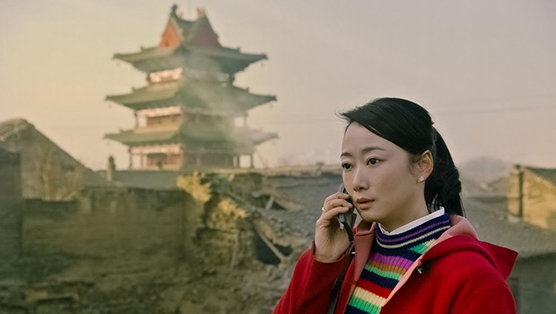
Jia Zhangke’s Mountains May Depart is one of the more polarizing films of the year. It marks a radical shift in Jia’s formal technique, abandoning the long-shot/long-take aesthetic that has made him one of the preeminent examples of 21st Century Asian Minimalism. Instead, working with his longtime cinematographer, the artist Yu Lik-wai, Jia films in a conventional mainstream style: the camera moves, he edits within a scene and we get close-ups of the actors. This is in keeping with the broad melodrama of the story’s construction. A schematic story of a love triangle told in three different time periods, Mountains is the most baldly emotional movie Jia has yet made. His first use of close-ups reveals what we long-suspected but that the old long shots tended to obscure, namely that Zhao Tao is one of the great actors of her generation. Her performance here is nothing less than phenomenal. In the first story, set in 1999, she’s the pivot point of a love triangle with two men, one a poor coal miner, the other an aspiring capitalist. She ultimately chooses the rich man, which leads to the shattering heartbreaks of the second chapter, set in 2014, a story itself split in two halves, first about the miner (and his wife), then about Zhao and her now-estranged son, who is sent home to attend his grandfather’s funeral. The third story, set in 2025, follows the son, now emigrated to Australia where he has forgotten his Chinese past, the language, and even his mother. He connects with another Chinese immigrant, his much older teacher (played by Sylvia Chang), and the Oedipal nature of their relationship is no less subtle than the boy’s name (he was aspirationally christened “Dollar” by his ludicrous father).

This third section has come under fire (usually under the vaguely racist rubric of “Jia can’t direct in English”) for its obvious schematicism and the artificiality of Dong Zijian’s performance as Dollar. I suspect this is largely a category error, that we’re used to Jia making withdrawn, somewhat obscure films like Platform and Still Life, films whose equally schematic melodrama is hidden behind long takes and a lack of emotionally direct dialogue. The issues Jia is addresses are not new, no one has more obsessively followed the dislocations and disruptions of the Chinese family in the wake of the imperatives of modern capitalism than he has over the past 20 years. But as with his previous film, A Touch of Sin, a series of violent short stories loosely related to the Chinese action film tradition (though not really wuxia in particular), he’s now addressing those issues in a more conventionally generic mode. The mix of reality and surreality has long been a part of Jia’s work, from the flash animation and theme park environment of The World to the alien craft and bridge light romanticism of Still Life, resting uneasily alongside documentary footage of China’s changing landscapes (see also his actual documentaries 24 City and I Wish I Knew, which audaciously mix actorly performances into their real life accounts), it’s only now that the surrealism has overtaken an entire narrative. And there is no filmic form more surreal than the classical melodrama. And, if you’re paying attention to the world today and where it’s headed, it only seems logical that the absurd is the only true way to capture it. This is Jia’s lunatic masterpiece.

Sylvia Chang is terrific, as usual in Mountains May Depart, even better than she is in Johnnie To’s Office, which she co-adapted from her own play. But that’s not all she’s had for us in 2015, she also directed Murmur of the Hearts, like Mountains a family melodrama taking place across multiple time periods. It stars Isabella Leong, making a long-awaited return to the screen after several years in retirement following her marriage in 2008 (don’t miss her in Pang Ho-Cheung’s Isabella from 2006). She plays a young woman dating an aspiring boxer. The boxer has vision problems, and Isabella, an artist, is haunted by memories of her parents, who split up when she was a child, which also separated her from her brother. We also meet the brother, now a tour guide on the small island off the coast of Taiwan where they grew up. Chang deftly weaves together the characters’ present lives and memories of their parents with a splash of magic realism in the form of a mermaid and a quite fashionable ghost/bartender. It’s a more conventional art house movie than Mountains, in that it’s the kind of Taiwanese film that seems rather inexplicable for the first 40 minutes or so and, as everything becomes clear and all the various connections are resolved, becomes deeply moving as the story comes together with a satisfying click. It isn’t as meta-cinematic as the other Chang-directed films I’ve seen (the very good Tempting Heart and 20 30 40), but it’s warm and sweet and quite lovely, a nice flipside to the acidic Office.


Yet another Chinese film blurring the boundaries between past and present is Kaili Blues, from first-time director Bi Gan.  A middle aged man, a doctor, helps watch over his nephew while his brother, the boy’s father, gambles and gets himself in trouble. When he learns that his brother may have sold the boy in another town, he heads out to bring him home. But what he finds there is an inexplicable kind of temporal loop, chronicled in a breath-taking 40+ minute single-shot, as the man, his driver, the driver’s girlfriend, a local band, and various other characters wander around a river spanning village.  The doctor’s past, and that of his fellow doctor, now an elderly woman, seemingly come to life in the village, along with his nephew’s future. There’s no apparent rationale for the loop, it’s simply a world where the past, present and future exist together, an endless cycle repeating itself, or the infinite possibilities of an unknowable universe. It was the most satisfyingly confounding film of the festival and an audacious debut, one that in past years would have earned its director a Dragons & Tigers award.
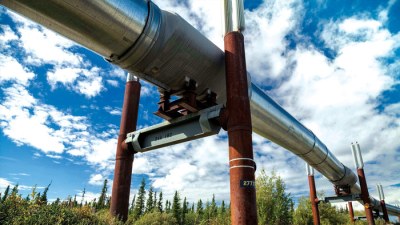
Moving away from China but sticking with the experimental, I lastly want to mention a trio of films. Portuguese director Lois Patiño’s Night Without Distance is a semi-narrative short about smugglers waiting in the Galician borderland while cops lie in wait for them. Patiño films the whole thing in negative, but not black and white, rather mind-blowingly colored. Purples and yellows dominate the inverted landscape, with gorgeous drops of rain bursting from a stream, while the people stand still, haunting the otherworldly spaces. It’s a documentary vision of our Earth as filmed from the land of ghosts. I’ve never seen anything like it. Paired with it was Topophilia, by director Peter Bo Rappmund. Painstakingly assembled out of thousands of still images covering the length of the Trans-Alaskan Pipeline, it’s a fascinating rumination of the effect of technology on environment, and the way the two seem to meld together. With an eerily assaultive soundtrack largely built out of the sounds of the pipeline itself, the impact of the machinery on the natural world is undeniable, and yet, the natural world goes on all around it, taking no notice. Mauro Herce’s Dead Slow Ahead is another film about machinery, chronicling the life of a massive transport ship as it traverses the Mediterranean. Here gives us the kind of otherworldly closeups familiar from Leviathan, while putting more emphasis on the ways the ship technology dwarfs the humans that work within it. A long final section echoes with recordings of the workers as they call home, leaving messages, talking to distant wives, mothers, children, living ghosts in the machine.

VIFF 2015 Preview Part Three: The Mirror and Weekend

Every year before heading over to the festival, I try to familiarize myself with some of the directors whose films are playing there that I haven’t yet seen. Last year I watched films by Pedro Costa, Lisandro Alonso, Imtiaz Ali and Heiward Mak, all of which I liked a lot and all of whom had films at VIFF I ended up enjoying a great deal. This year I haven’t been able to see as much as I would have liked. There was the discussion of Corneliu Porumboiu’s Police, Adjective on The George Sanders Show I linked to a couple of days ago, but other than that there’s just these two movies, Jafar Panahi’s The Mirror and Andrew Haigh’s Weekend.

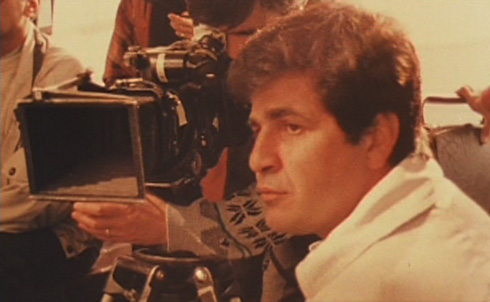
Panahi is mostly famous these days for continuing to smuggle films out of Iran despite having been officially banned from doing so in 2010. His This is Not a Film won wide-spread acclaim the following year, and his Closed Curtain was a film I was hoping to see at VIFF 2013 but for scheduling reasons didn’t make it. (I have hard luck with Iranian films in general at the festival, a number of interesting ones have played there over the years, but other than the two Abbas Kiarostami films Certified Copy and Like Someone in Love, I haven’t managed to get to a single one.) His new film is called Taxi (well, it’s called been retitled Jafar Panahi’s Taxi for North American release, apparently so people don’t confuse it with the 2004 Jimmy Fallon-Queen Latifah movie). My experience with Iranian cinema in general is woefully inadequate, I only caught up with Asghar Farhadi and A Separation earlier this year, for example, so rather than simply go with Panahi’s recent work, I decided to watch one of his earliest films, the 1997 feature The Mirror, which won the Locarno Film Festival that year.

It’s an idea for a film so simple in its provocation that I’d be surprised if it’d never been done before. There’s something elemental about it, like an idea that’s always been there in cinema but never quite been expressed so well or so effectively before (John Cage’s 4’33” came to mind). A young girl, six or seven years old, has to make her way home from school after her mom fails to pick her up on time. She doesn’t quite know the way, and maneuvers in and out of buses, cabs and crosswalks with the mostly ineffectual help of strangers. Along the way we see a cross-section of the city in its particular time and place (Teheran in the mid-90s), a kind of neo-realist city-symphony. But then, after 40 minutes, the girl looks at the camera and decides she doesn’t want to be in the movie anymore and storms off. The film stock abruptly shifts and we see Panahi and his crew debating what to do next, a pseudo-documentary of a film production in a panicked moment. They let her go, while leaving her microphone on and follow her home, surreptitiously filming the girl’s journey now in reverse as she in “real” life must accomplish the same tasks her character did in fiction.

It’s a nifty gimmick and anchored beautifully by the performance of Mina Mohammad Khani as the girl. But that’s just a MacGuffin for the film’s true interest, which is the portrait of Teheran in all its cacophony and chaos. A dozen little stories spin around the girl (the young couple separated by the enforced gender divide on the public bus; the man who just wants his poor relations to dress nicely at his daughter’s wedding) but mostly in the first half, the constructed narrative section. The people in the second half are more incoherent, their plotlines less clear, their characters not so cleanly delineated with cinematic shorthand. Some characters recur, including an old woman that throws a monkey wrench into even that distinction. We heard her talking in the narrative section, complaining about the lack of respect she gets from her children. When the girl meets her again in the second, she explains that she wasn’t acting in the earlier scenes, they just paid her to show up and she made up her lines out of her own life. Fiction, reality: it’s all the same. The important thing is to invest in traffic lights and make your kids memorize their home addresses.

From an inauspicious beginning as an assistant editor on Gladiator, British director Andrew Haigh burst on the scene with his 2011 romantic drama Weekend, about a brief but intense relationship between two men in Nottingham. Played by Tom Cullen and Chris New, the two bond over long naturalistic conversations about life, family, friends, sexual histories and the difficulties of being gay in a predominantly straight world. It’s firmly in the tradition of the romantic drama, with shades of Brief Encounter, Before Sunrise, Waterloo Bridge, Morocco and Lost in Translation (among others), a talky film about two people trying to figure out their place in the world and if that place has room for anyone else. As such it’s expertly done, but Haigh brings to it something special with a unique contrast of styles. The interiors, the dialogue and party scenes, are shot intimately, with a fuzzy off-handedness that is the signal for realism in contemporary cinema. We skip forward in time catching only glimpses of much longer conversations, many of which are mumbled or lost in a cacophony background (this is entirely realistic: I loved how in the party and bar scenes I couldn’t understand any of what anyone was saying, just like I can’t in such real-life situations).

This isn’t in itself remarkable, but what separates those scenes is. All the exterior shots are carefully framed, with long straight lines forming sharp corners and diagonals. These usually (but not always) function as pillow shots, popularized by Yasujiro Ozu as the institial spaces for contemplation between scenes of plot. As in Ozu, Haigh’s are precisely framed, but where in Ozu’s films they are brightly scored with jaunty music that often belies the serious dramatics at work in his characters lives, in Weekend the shots are oppressive and constricting, a constructed world of boundaries imposing public limits on the expression of the relationship possibilities that thrive behind apartment tower windows. My favorite are the three shots with the setup pictured above. In each shot, Cullen watches New walk away from his apartment. In each shot New is wearing a different colored jacket (yellow, black, red: the three colors are unified in the outfit New wears in his final scene). Each time, New hesitates a bit as he walks away, his motion, and Cullen’s shadow, depicting the emotional course of their relationship in minute gestures. If the film depicted of just these three shots, that would be enough to make it something special. Like with The Mirror, Weekend is at its heart a fairly simple cinematic and thematic idea, but one that is likewise all the more powerful for the purity of its expression. Haigh’s new film 45 Years won wide acclaim at the just-concluded Toronto Film Festival, I can’t wait to see it at VIFF.

VIFF 2015 Preview Part Two: A Big List of VIFF Movies

I went to my first Vancouver International Film Festival in 2008 and have attended every year since but one (2011, when a kid was born two weeks before the festival started). As I look forward to this year’s edition, I thought it might be nice to take a look back at some of my favorite films from previous festivals. Here are my Top 50 VIFF Movies, which given the current exchange rate, yields 66 titles.

1. Oki’s Movie (Hong Sangsoo, 2010)
2. Sita Sings the Blues (Nina Paley, 2008)
3. Oxhide II (Liu Jiayin, 2009)
4. Certified Copy (Abbas Kiarostami, 2010)
5. Sparrow (Johnnie To, 2008)
6. La última película (Raya Martin & Mark Peranson, 2013)
7. The Midnight After (Fruit Chan, 2014)
8. The Missing Picture (Rithy Panh, 2013)
9. Hill of Freedom (Hong Sangsoo, 2014)
10. Like Someone in Love (Abbas Kiarostami, 2012)
11. Night Across the Street (Raúl Ruiz, 2012)
12. Jauja (Lisandro Alonso, 2014)
13. Uncle Boonmee Who Can Recall His Past Lives (Apichatpong Weerasethakul, 2010)
14. Wolf Children (Mamoru Hosada, 2012)
15. National Gallery (Frederick Wiseman, 2014)
16. Horse Money (Pedro Costa, 2014)
17. A Touch of Sin (Jia Zhangke, 2013)
18. Romance Joe (Lee Kwangkuk, 2012)
19. Stray Dogs (Tsai Ming-liang, 2013)
20. Carlos (Olivier Assayas, 2010)
21. In Another Country (Hong Sangsoo, 2011)
22. Tabu (Miguel Gomes, 2012)
23. Mekong Hotel (Apichatpong Weerasethakul, 2012)
24. Thomas Mao (Zhu Wen, 2010)
25. Written By (Wai Ka-fai, 2009)
26. Our Sunhi (Hong Sangsoo, 2012)
27. A Spell to Ward Off the Darkness (Ben Rivers & Ben Russell, 2013)
28. The Last Time I Saw Macao (João Pedro Rodrigues & João Rui Guerra da Mata, 2012)
29. When Night Falls (Ying Liang, 2012)
30. Hahaha (Hong Sangsoo, 2010)
31. 607 (Liu Jiayin, 2010)
32. Eccentricities of a Blonde-Haired Girl (Manoel de Oliveira, 2009)
33. Yumen (JP Sniadecki, Xu Ruotao & Xiang Huang, 2013)
34. Adieu au langage (Jean-Luc Godard. 2014)
35. La Sapienza (Eugène Green, 2014)
36. Memories Look at Me (Song Fang, 2012)
37. Three Sisters (Wang Bing, 2012)
38. Bluebeard (Catherine Breillat, 2009)
39. Happy-Go-Lucky (Mike Leigh, 2008)
40. Hard to Say (Lee Kwangkuk, 2011)
41. Two Days, One Night (Jean-Pierre & Luc Dardenne, 2014)
42. Walker (Tsai Ming-liang, 2012)
43. Four Ways to Die in My Hometown (Chai Chunya, 2012)
44. Heaven Knows What (Josh & Benny Safdie, 2014)
45. Ballet 422 (Jody Lee Lipes, 2014)
46. People’s Park (JP Sniadecki & Libbie Cohn, 2012)
47. Rachel Getting Married (Jonathan Demme, 2008)
48. Highway (Imtiaz Ali, 2014)
49. Like You Know it All (Hong Sangsoo, 2009)
50. The Great Passage (Yûya Ishii, 2013)
51. The Headless Woman (Lucrecia Martel, 2008)
52. Something in the Air (Olivier Assayas, 2012)
53. Emperor Visits the Hell (Luo Li, 2012)
54. I Wish I Knew (Jia Zhangke, 2010)
55. The Golden Era (Ann Hui, 2014)
56. Mahjong (João Rui Guerra da Mata, 2013)
57. Neighboring Sounds (Kleber Mendonça Filho, 2012)
58. Thursday Till Sunday (Dominga Sotomayor, 2012)
59. Uncertain Relationships Society (Heiward Mak, 2014)
60. The Sleeping Beauty (Catherine Breillat, 2010)
61. Trap Street (Vivian Qu, 2013)
62. Waltz with Bashir (Ari Folman, 2008)
63. Gallants (Clement Cheng & Derek Kwok, 2010)
64. Rembrandt’s J’Accuse (Peter Greenaway, 2008)
65. Welcome to New York (Abel Ferrara, 2014)
66. East Meets West (Jeffrey Lau, 2011)