The Laurel & Hardy Project #10: With Love and Hisses

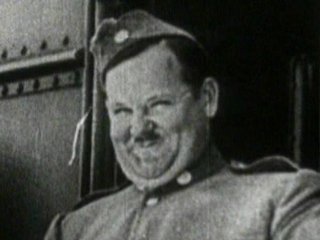
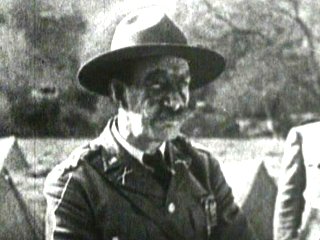
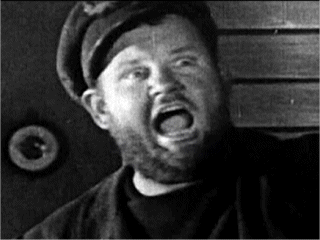
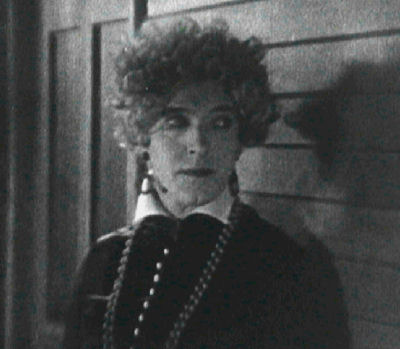
This is another pre-official team status pairing of Laurel and Hardy, and their characters and relationship are beginning to come into a bit more focus.  The story this time is a military one, with Laurel as a new Home Guard recruit, Hardy as his sergeant and James Finlayson (seen most recently in Love ‘Em and Weep) as their captain.

The first reel follows a repeated joke pattern, each time escalating the crazy though never quite reaching the comic heights they would in later films.  While the troop is boarding their train to head out for camp, Laurel unwittingly (literally) sets Hardy up to get in trouble with the captain: by leaving his luggage in the way so the captain trips over it and blames Hardy, by convincing him that two girls flirting with the captain are actually flirting with Hardy, by taking the captain’s private cabin, only to have Hardy take it over and eat the captain’s food.  It’s a one-note joke that doesn’t really go anywhere interesting, though the sight of Hardy taking his shirt off and devouring an entire fruit basket is pretty funny (why does he take his shirt off?  Because it’s awesome, that’s why).  But the relationship between the two leads is promising, with Laurel again and again getting Hardy into a fine mess.

In the middle of the film is a cute little scene where Laurel is trapped on the train with an annoying bunkmate who is eating raw green onions and garlic sandwiches.  Errol Flynn as Custer in They Died with Their Boots On also made a point of always eating raw onions, I like to think Flynn’s Custer smelled just as bad as Laurel’s nemesis.  The sequence ends with the smelly guy offering Laurel a berry pie (presumably also slathered in garlic), which Laurel promptly throws out the window.  This being the end of reel one, the pie of course lands several cars down the train in Finlayson’s face.  I believe this marks the first pie in the face of this series, though I might be wrong about that.

The second reel details two sequences at camp.  In the first, Finlayson is inspecting the troops while Laurel is being clueless.  This is the best sequence in the film, Laurel really shines with the physical comedy here.  After a misunderstanding over the nature of the “dress, right” stance, which Laurel takes as a bit of flirting between himself and the captain, with Laurel doing a Chaplinesque coquette routine.  This will pay off in the scene’s capper.  Next though, when presenting his gun to the Captain, he opens the bolt-action only for the assembly to come flying off in his hands.  Laurel sells the gag by holding a deadpan expression for several seconds longer than you’d think would be necessary.  It’s the surprise wait that makes you laugh.  As Finlayson attempts to put the gun back together, he orders the men to about face, but, in a beautifully balletic move, Laurel can’t manage the necessary half turn, but can only do a full pirouette.  The first time he does it, it’s merely silly, the second time, it’s just lovely.  Finally, Finlayson throws the gun at Laurel, who throws it right back.  The two throw the gun back and forth for awhile until it hits Laurel in the nose.  In a perfect childlike action, Laurel pauses, then breaks into his “weepy” face.  This is his signature comic touch, and he uses it here better than he has to date.  More than just a silly looking expression, Laurel sells the fact that his nose and his feelings really are hurt by the captain (“Now I really am mad at you.”).  He continues to make a big production of it until the troops march off, wherein he catches the captain’s eye and instantly changes from weepy back to his flirty coquette look.  And just like that we know the weepy face is all an act, that all of this is an artifice and that Laurel built it.

The final sequence involves Hardy, Laurel and the troops marching to a pond, where they disrobe and go for a swim.  But, after Hardy inadvertently burns up all their clothes, they have to return to camp for inspection disguised as a billboard for the latest Cecil B. DeMille epic The Volga Boatman (heads peeking through the picture’s bodies, like in one of those novelty photo stands).  They’re all saved from disgrace thanks to a swarm of bees they run through (they’re being chased by a skunk) which attack everyone at camp.  It’s a ridiculous way to end a ridiculous film, but one that points to better things to come.

On Kanal

I liked the only other Andrzej Wajda films I’ve seen, Ashes and Diamonds, though I thought it was a bit overstuffed with Style! and Symbolism!, which is strange because generally I like that kind of thing (Cranes are Flying, for example, is all Style!, though less so with the Symbolism!).  This film is a bit more subtle, though that hardly seems an appropriate way to describe a film that equates war with Andy Dufresne’s escape from Shawshank, except instead of crawling through “five hundred yards of shit smelling foulness I can’t even imagine, or maybe I just don’t want to”, Wajda’s freedom fighters are trapped there, seemingly for eternity.  The first third of the film is typical war movie stuff, introducing the characters and their relationships and making clear the hopelessness of their situation, in the waning days of the Polish revolt against the Nazis.  Soon the small band is cut off and their only escape route is through the sewers of Warsaw, and ancient labyrinth that looks back to Dante and ahead to Apocalypse Now.  Wandering in the darkness, wounded and poisoned by the noxious gasses, the group splits and splits again, until we’re left with only a couple small groups of soldiers: a woman who knows the sewers well leading her dying lover to the sea, a composer who loses his mind, doomed to wander the tunnels blowing a haunting tune on an ocarina, and most poignantly, the platoon’s Lieutenant, who, with an attendant, makes it to safety only to find the platoon had been left behind him long ago.  In a film so relentlessly hopeless, the Lieutenant’s final act, descending again into hell to try to rescue his men, is miraculous.  He knows they’re doomed, he knows he’s doomed.  But he does it anyway.  It’s as pure an act of heroism as you’ll ever see in a film, done with resignation and horror.

The Laurel & Hardy Project #9: Why Girls Love Sailors

This is just the second time in the series that Laurel & Hardy are paired as the stars of the film, after Duck Soup, though they are not yet an official comedy team and their personae have yet to fully mature.  They come close here, with Laurel playing up his crybaby mugging portraying a wimpy-looking young man ( “the great periwinkle fisherman”) in love with a girl (Viola Richard, in her first film) who gets kidnapped by a much taller sea captain.  Laurel begins the film flirting with the girl, giving her a seashell necklace and twirling away in a bit of Chaplinesque acrobatics.  He then rolls around playfully on a bed, childlike and not the least bit erotic.  When the captain bursts in and pours a pitcher of water down his shirt, Laurel gives his longest weeping face to date, extending the single joke for almost a minute, until the captain takes the girl.  I really don’t know what to do with this face.  I still don’t think it’s particularly funny, but it’s Laurel’s signature move and I’m starting to appreciate the absurdity with which he commits to it.

Anyway, Laurel chases the captain and his girl back to the ship and, pulling his turtleneck up over his head, attacks one of the crew Ichabod Crane-style (“The headless man. . . he gave me the evil eye!”  The titles by HM Walker are pretty great).  After deciding haunting the ship won’t get his girl back, Laurel dresses up in drag (his third disguise, after child and ghost).  One by one, he lures the crew members behind a wall, knocks them unconscious, then tricks Hardy (the ship’s ornery first mate) to throw them overboard by posing the crew members behind him thumbing their noses and hitting Hardy on the head.  Every time this happens, it’s filmed from the front, with Hardy looking at the front right and Laurel in the left back corner of the screen, out of sight of Hardy, but clearly visible to us as he does a hilarious happy dance each time a crew member gets thrown over.

The crew dispatched, Laurel goes after the captain and flirts with him, a plan which doesn’t seem particularly well thought out.  Fortunately, the captain’s wife shows up and, after knocking out Hardy with one punch, shoots the captain while Laurel and the girl make their escape.  In the last shot of the film, the wife shoots at them too, blowing their pants off.

This is clearly a showpiece for Laurel, and while it has some funny bits and his mastery of physical comedy is obvious, the film never really escalates to anything particularly interesting or chaotic.  Hardy is wasted, his character doesn’t have much to do or much personality, and while I like the idea of a woman knocking him out after Laurel had been throwing things at his head all night to no effect, it’s weird that his character just disappears in the final act.  This film was out of circulation and considered lost for decades.  Wikipedia cites this factoid, “Why Girls Love Sailors went missing in the U.S. for nearly fifty years.  Cinémathèque Française had a 16mm print, French film critic Roland Lacourbe saw it in 1971, and pronounced it mediocre.”  Which sounds about right to me.

The Laurel & Hardy Project #8: Fluttering Hearts

Possibly the funniest short to date, though it lacks the formal brilliance of Jewish Prudence, is this Charley Chase film featuring Oliver Hardy.  Chase is one of the most well-regarded comics of the silent period, though he isn’t nearly as well-known as the superstars.  This is, I think, the first film I’ve seen him in (though he did have a small part in the first film in this series, Thundering Fleas).  He looks a bit like John Cleese: tall, gawky and angular with a little mustache and, at least in this film, an air of bemused competence.  He’s not always in control of his world, but he’s having fun in it nonetheless.

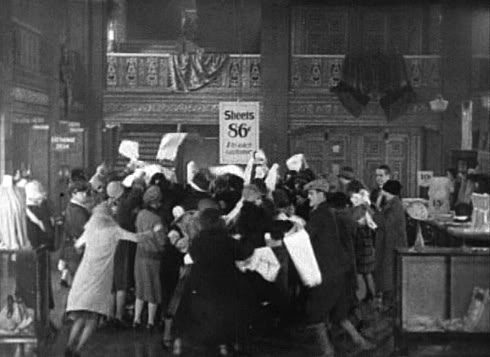
Chase plays an idle millionaire who helps a cop (the always welcome Eugene Pallette) chase down an even idler girl who’s driving like a maniac through the streets of Los Angeles (one of the little pleasures of silent films: the time capsule look at the city as it was when it was little more than a series of undeveloped villages loosely connected by dirt roads).  They catch the girl but she’s so cute and charming they decide to help her buy some linens.  You know those solemn news stories every Thanksgiving weekend about the craziness at Black Friday sales and how we can’t believe society has sunk so low that people will actually physically fight each other for a shot at a decent bargain?  Yeah, that’s not new.  This marks the third silent I’ve seen wherein the violent lunacy of sale-shoppers is a major set-piece (the others being Chaplin’s The Floorwalker from 1916 and Harold Lloyd’s 1923 Safety Last!).  After the sale, the girl (played by Martha Sleeper, who was also in Thundering Fleas and whose last screen appearance was in Leo McCarey’s The Bells of St. Mary’s) tells Chase her father hates idlers and so Chase becomes his chauffeur, setting in motion the second half of the film.

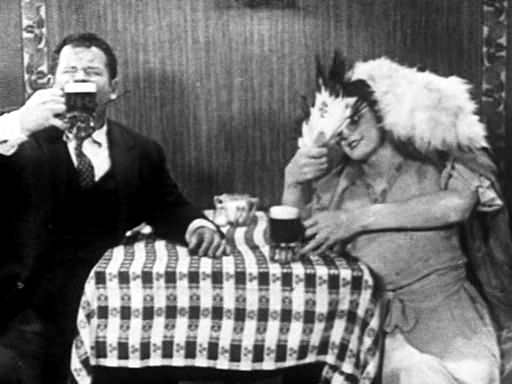
The father is being blackmailed by Oliver Hardy (playing “Big Bill”), who possesses an incriminating letter.  The father and Chase go to a local speakeasy to get the letter back, but the bouncer won’t let them in unless accompanied by a woman.  Their first attempt (dressing the father in drag) is foiled and ends with the father being chased away by the police (“That she is a he!”), so Chase gets a mannequin and, manipulating it Weekend at Bernie’s style, uses it to flirt with Hardy and get the letter back.  This culminates in a charming fight scene wherein everyone in the bar throws bottles and plates at Chase while he bats the objects right back at them (knocking them all unconscious) using a drum and a banjo like tennis rackets.  The reveal of the whole bar piled up with unconscious bodies is perfectly timed and one of the comic high points of the series thus far.  As is the film’s capper, when Chase mistakes the girl for the mannequin and attempts (off-screen) to retrieve the letter from its hiding place in her dress with disastrous results.

On The Buster Keaton Story

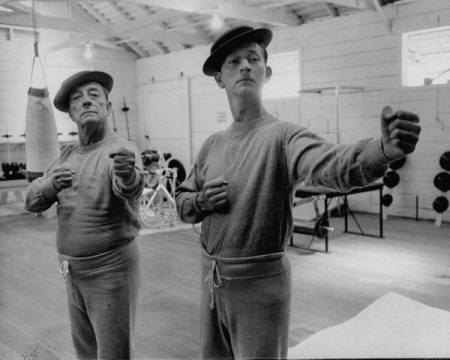
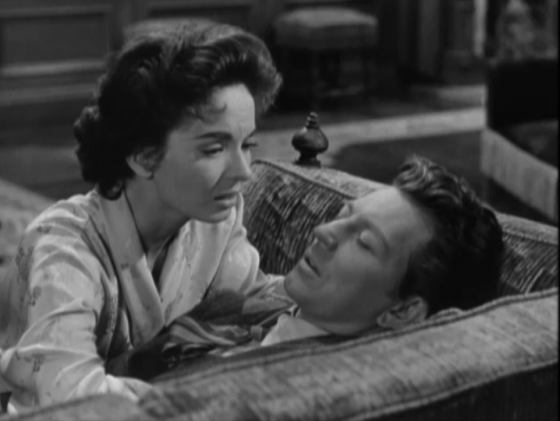
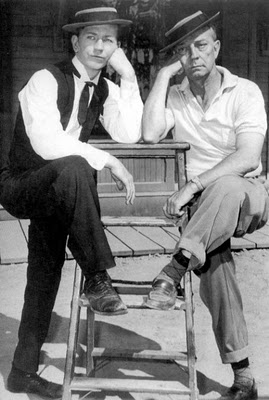
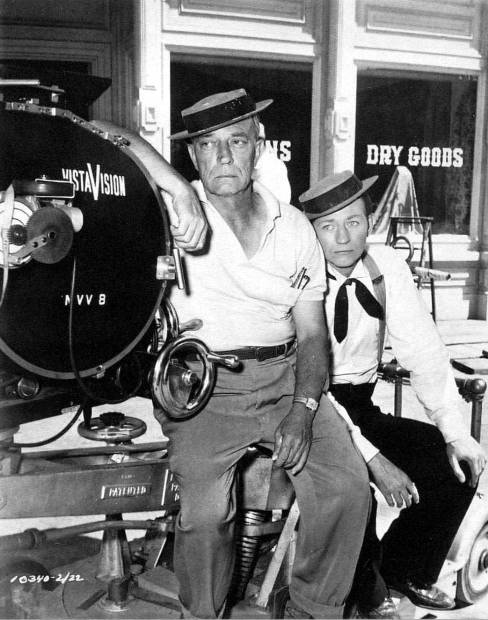
There is almost nothing in this biopic that has any basis in fact, historical or otherwise.  A couple of the film titles are correct (The Balloonatic, The General, College and The Boat are referenced) others are completely made-up.  The longest bit of Keaton recreation comes in a fake film called The Criminal that has elements of Cops, The Goat and Sherlock Jr.  Donald O’Connor, playing Keaton, does OK with the physical comedy, though he overplays everything (despite the fact that the “Keaton” character is remarked to have a “dead pan”, O’Connor mugs as usual for him).  When it comes to the facts of Keaton’s life, the film gets two things right: he did grow up in vaudeville and he did have a drinking problem.  Everything else appears to be a product of writer-director Sidney Sheldon’s imagination (including the timing of and causes for Keaton’s alcoholism).

The most egregious of the film’s many transgressions is the way it paints Keaton’s relations with his studios.  In the film, Keaton shows up at a studio and talks his way into a contract in which he will star and direct his own films after appearing in a small role in one film (and despite the best efforts of an obstinate director played by Peter Lorre, of all people).  He then happily works at that studio (“Famous Studio”, seriously it is called that) for years, making hit after hit with his silent films, only to be unable to transition to sound (because of an inability to say his lines properly) which exacerbates his drinking problem to the point that he’s no longer able to function.  Through all this, his wife (played by Ann Blyth) loyally and understandingly stands by him, until she doesn’t.  In the end, Keaton triumphantly returns to vaudeville where he finds happiness reenacting his old routines and making people laugh.

In reality, Keaton worked for quite awhile before getting a starring role, most prominently as a sidekick for Fatty Arbuckle, one of the biggest stars of the era.  It was only after the scandal that killed Arbuckle’s career that Keaton became a star in his own right, and even then he only occasionally was his own director, more often working in collaboration with Edward Cline or someone else.  During the silent era, he didn’t work for a studio, rather he worked with independent producer Joseph Schenk.  It was at the end of this era, when sound came in, that Keaton signed with MGM (after the financial disaster of The General), where he made his last silents and several talkies.  Far from being unable to transition, Keaton’s talkies were immensely successful commercially, though fairly weak artistically, mostly because the studio system limited his creative input as much as possible and refused to let him even co-direct.  (I reviewed all the late Keaton films here).

Keaton was an alcoholic, and his problem became increasingly worse during the MGM years.  But all accounts I’ve seen place the blame for that on his awful marriage (his second) to Mae Scriven (1933-36).  Both of these marriages are unmentioned in the film, though the marriage that is in the film seems roughly comparable to his third and final one (to Eleanor Norris) from 1940 until his death in 1966, that he credited with helping him kick alcohol and restart his career.  A career which far from being confined to the vaudeville stage, had him steadily working in film and television for 25 years.

But does any of this matter?  Does a film, even a biographical picture, have to be bound by the basic facts of history?  Shouldn’t it be allowed to tell its own story in its own way, as long as that story is itself, entertainingly told?  I do think there’s a limit beyond which the truth can be stretched too far in the name of art.  Despite our best efforts to ignore, obfuscate, reframe, mythologize and narrativize them, things actually did happen in the past just as they continue to happen in the present and will keep on happening in the future.  There really was a Buster Keaton.

The Laurel & Hardy Project #7: Love ‘Em and Weep

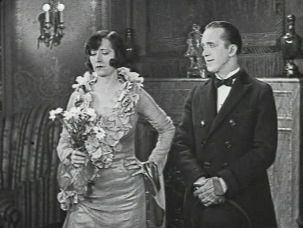
Once again in the same film but not yet as an official comedy team and hardly in any scenes together at all, this film does feature both Stan Laurel and Oliver Hardy.   It’s part of a series Hal Roach was trying in 1927, the All-Star Comedy series, in which various contract players were mixed and matched with varyingly prominent parts, from leads to bit players.  Mae Busch gets top billing here, though Laurel probably has the most screen time and James Finlayson plays the ostensible lead character.  Hardy has only a very minor role (he nonetheless makes the most of it).  Finlayson plays a rich, married businessman, Laurel his employee (a title card claims Laurel has a “commanding power over women”).  Finlayson’s old flame Busch appears brandishing a photo of the two of them in swimming attire and threatening blackmail unless he pays her off at 7 o’clock.  Finlayson, however, is with his wife hosting Hardy and his wife at that time, so he gets Laurel to try and keep Busch away.  This fails, of course, and when Laurel and Busch arrive at the dinner party, mildly amusing antics and violence ensue.

Finlayson doesn’t work very well as a lead.  Short, slight and bald with a broad fake mustache, his go-to comic move is to look at the audience, bug out his eyes and wiggle his whiskers.  It’s cute in its own way, but he uses it way too much.  Laurel, by comparison, uses his own trademark mug (facing the camera and making an exaggerated “weeping” face) only once in the film, where we get Finlayson’s fourth wall shattering twitch a half dozen times in the film’s first reel.  Finlayson would go on to play supporting roles in many Laurel & Hardy films, for which I’m sure he’ll prove to be much more suited, lasting in Hollywood until Royal Wedding in 1951.

Mae Busch, on the other hand, is pretty funny.  In the opening sequence, she gets to hide from Finlayson’s wife behind a paper towel dispenser, which is as silly looking as it sounds.  In the middle section of the film, where she fights with Laurel in a restaurant, she doesn’t really do much other than hit Stan and yell (Laurel steals this with some wonderfully non-sequiter stunts: falling down the stairs followed by being sniffed by the maitre’d for alcohol, opening a door into his face (a move I practiced often in high school and that I still think is hilarious) followed by the flying hat trick (when you put the hat on your head, only to have it pop off onto the floor) and backing his car into a much odler old car that immediately collapses in a heap of junk) but once they get to the dinner party and Busch faints (there’s an errant bit of gunfire), she shines.  Laurel and Finlayson have to figure out how to get her unconscious body out of the house, and she plays the role of a limp body perfectly (imagine Weekend at Bernie’s type antics).    Busch, too, would go on to appear in many Laurel & Hardy films, often playing Hardy’s wife.  She started in Hollywood in 1912, had what appears to have been a big role in Ertich von Stroheim’s 1922 blockbuster Foolish Wives and worked continuously until her death in 1946.

This Week in Rankings

A few weeks ago, I talked with Edwin of The Isolated Moviegoer about John Huston’s The Man Who Would Be King.  You can read our conversation over at his website.

Here are the movies I’ve watched and rewatched over the last week or so and where they each land on The Big List.

Waterloo Bridge – 12, 1931
The Strange Love of Molly Louvain – 24, 1932

Springfield Rifle – 21, 1952

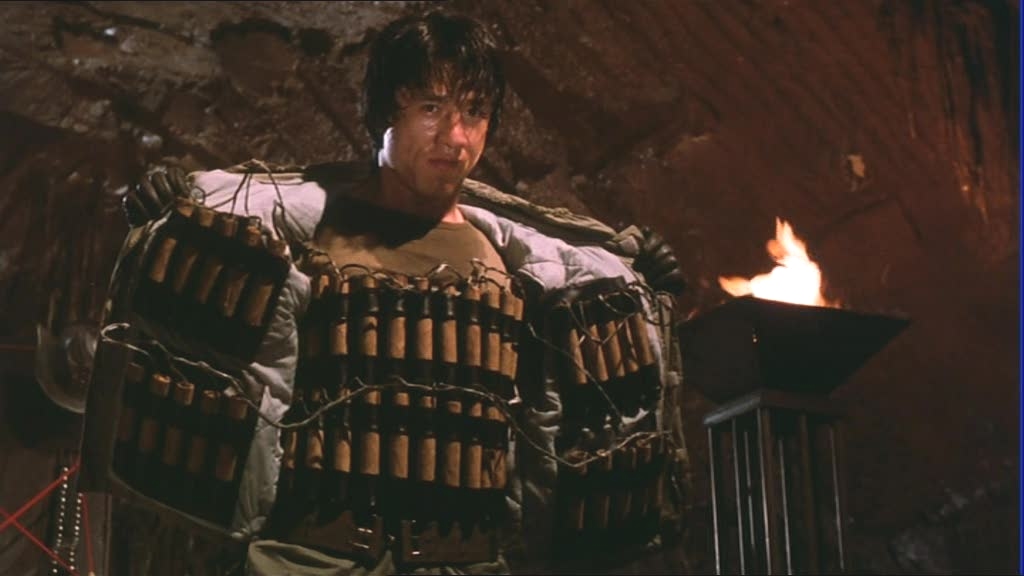
Project A – 10, 1983
The Armor of God – 16, 1986
Project A 2 – 11, 1987
Night and Day – 5, 2008

On The Miracle Worker

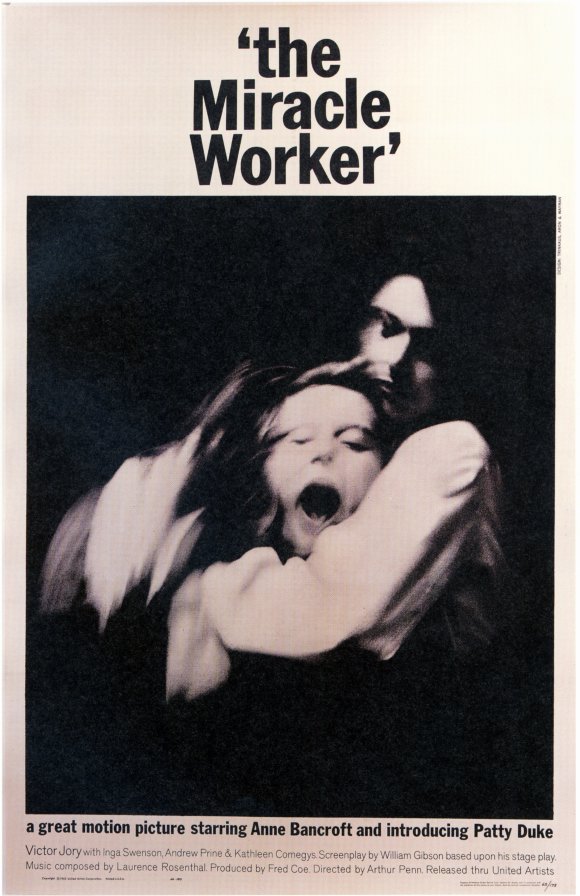
Anne Bancroft and Patty Duke both won Academy Awards in 1962 for reprising their roles as Anne Sullivan and Helen Keller.  They had played the parts together on Broadway, for which Bancroft also won a Tony.  The play itself was written by William Gibson, based on his own script for the TV drama series Playhouse 90.  That pretty much should indicate most of the strengths and weaknesses of the film.  The actresses playing the two leads are really, really good but the script at times veers into the kind of playwriting you expect to see on television: everything is always stated a little too clearly, a little too often.  If you’re not sure why Sullivan is using a particular tactic in trying to teach Keller, don’t worry, she’ll explain it to you at least three times.

Fortunately, also reprising his role from the Broadway show was director Arthur Penn, making his second feature film after the very solid revisionist Billy the Kid Western The Left-Handed Gun, starring Paul Newman.  Penn, of course, is most famous today for directing Bonnie & Clyde and helping to make mainstream the influence of the French New Wave in Hollywood.  Already with The Miracle Worker, though, Penn is starting to break down the classical style into something rawer and more immediate.  While several scenes in the film textually involve nothing more interesting than Bancroft reciting the script’s Big Themes, Penn frames them expressionistically, with deep shadows, odd angles, close foregrounds, etc, which helps prevent the film from descending into the “filmed theatre” trap that ensnared many theatrical/television adaptations in the late 1950s and early 60s (Marty and The Big Knife, I’m looking at you).

The best thing about the film is the centerpiece sequence where Bancroft, as Sullivan, the partially blind teacher is attempting to get Keller, the blind, deaf and mute 7 year old to eat breakfast properly at table.  Because of her disability, Keller’s family has been allowing her to do whatever she wants: wander around the table, grabbing food from people’s plates at will, eating with her hands, and generally making an unholy mess.  For the first time in her life, Keller is told “no” when Sullivan tries to get her to sit still and eat with a spoon.  She reacts with an outrageous tantrum and the two of them brutally fight, destroying the dining room in the process.  Penn films it in a dynamic, unmoored style, putting us in the midst of the action, and extends the scene for a remarkable nine minutes.  The fierceness and reckless abandon with which the actresses throw themselves into the fight is breathtaking: I’d say they earned their Oscars just for this sequence alone.  I can’t think of a better fight sequence in any American film of the 1960s.  Maybe the opening shots of Samuel Fuller’s The Naked Kiss have the same kind of visceral impact.  For a fight scene between two women, it might be unmatched by any film I’ve seen up until Michelle Yeoh and Zhang Ziyi in Crouching Tiger, Hidden Dragon.

This is one of my favorite things about film.  You can take a heartwarming, inspirational, start-writing-your-Oscar-acceptance-speech-now piece of filmed theatre and in the right hands and the right time, it can manage to become something entirely different, something totally new.  The fight sequence captures the essence of the film better than any of its speeches, and of its grand actorly moments.  If the film consisted of nothing more than it and a few surrounding contextualizing minutes (say from when the family first sets down to eat to when Sullivan emerges triumphant only to be told that it’s now time for dinner) it would express exactly the same themes, have exactly the same meaning.  Instead of Sullivan’s determination and unwillingness to accept Keller as a lesser human being, one unworthy of being treated like anyone else (the soft bigotry of low expectations?) being explained in painstaking detail like it is in the rest of the film, we see it in action and understand it better than we ever would otherwise.  It’s a little bit of cinema at the heart of a TV play.

This Week in Rankings

The Poor Little Rich Girl – 2, 1917
Island of Lost Souls – 8, 1932
Bombshell – 23, 1933
Girl Missing – 27, 1933
Havana Widows – 34, 1933
The Merry Wives of Reno – 21, 1934

Stella Dallas – 8, 1937
Etoile sans lumière – 20, 1946
Cheyenne – 12, 1947

War and Peace – 22, 1956
Around the World in 80 Days – 24, 1956
The Miracle Worker – 20, 1962
Inside Daisy Clover – 18, 1965
The Man Who Would Be King – 7, 1975

50/50 – 15, 2011