Running Out of Karma: Flying Swords of Dragon Gate

Running Out of Karma is my on-going series on Johnnie To, Hong Kong and Chinese-language cinema. Here is an index.

Tsui Hark’s second variation on Kung Hu’s masterpiece, after 1992’s New Dragon Gate Inn (nominally directed by Raymond Lee). While that version added Tsui’s Bluesmovie style sexual complications, gender-ambiguity and a healthy dose of cannibalism while minimizing the fighting, this one ramps up the action and throws the whole thing into a 3D-CGI blender. The result is an uneasy mix of old school wuxia filmmaking with modern technology and Tsui’s off-beat sense of character and coolness.

It begins as the other films do, with the evil eunuch leader of the East Bureau, a Gestapo force that’s been terrorizing the populace in the name of the Emperor, holding a show trial for some honest officers that had been trying to expose his crimes. But right away, Tsui diverges from the traditional story: a black-clad assassin played by Jet Li bursts in and fights the eunuch (played by none other than Gordon Liu). This intergenerational showdown ends shockingly abruptly, and Tsui unmasks the new villains for his film: the West Bureau, and even eviler Gestapo led by an even more evil bad guy. This guy is the favored consort of the Emperor’s most evil concubine, and the chase that will send everyone to the Dragon Gate Inn is a search for a pregnant maid, possibly but probably not carrying the Emperor’s child. And also buried treasure.

The usual assortment of heroes and villains in disguise arrive at the inn, and like the other two versions of the story, the first half or so of the film involves everyone figuring out who everyone else is. There’s a nod to the cannibalism of the 1992 film (itself an homage to The Black Tavern, a 1972 Shaw Brothers wuxia directed by Teddy Yip Wing-cho), but it isn’t a major plot point. Added to the usual cast of estranged lovers are a gang of Tartar warriors, led by a tattooed and dreadlocked woman played by Gwei Lun-mei. Jet Li and his old friend Zhou Xun are the main romantic pairing: she’s carried a flute for him (an homage to Brigitte Lin’s flute in the 1992 film, perhaps) for many years and the two of them talk wistfully of the jianghu (the underground world of wandering knights that forms the homeland of the wuxia genre) and the sacrifices they’ve had to make because of it, a plot that leans heavily on memories of Crouching Tiger, Hidden Dragon.

Finally though, the fighting begins. Tsui retains his frenetic approach to action from his analogue collaborations with Ching Siu-tung in the late 80s and early 90s, adding to them modern technology. Tsui’s first real commercial breakthrough as a director, after several edgier failures, was with 1983’s Zu: Warriors from the Magic Mountain, in which he imported Hollywood technicians to make a fantasy spectacular. He did much the same thing with 2001’s phantasmagoric CGI-fueled Zu Warriors remake. With Flying Swords, Tsui made the first 3D wuxia film (there have been several since, I particularly enjoyed Stephen Fung’s Tai Chi Zero and Tai Chi Hero and Stephen Chow’s Journey to the West: Conquering the Demons, which was only released in 2D here). I haven’t been able to see it in that format, or his second 3D film, Young Detective Dee and the Rise of the Sea Dragon, so I can’t speak to how well he utilized that technology. What I do know is that Flying Swords represents an extreme in Tsui’s approach to wuxia action.

In 1995’s The Blade, Tsui pushed the dizzying effects of camera movement and editing as far in the direction of bloody darkness as he could, creating a highly disturbing variation on Chang Cheh’s The One-Armed Swordsman template, drawing out the blackest aspects of Chang’s and Tsui’s worldview, an overwhelmingly visceral vision of the jianghu as hell on earth. Flying Swords, on the other hand, couldn’t be brighter or less realistic. It is wuxia as cartoonish fantasy, a world of freedom where literally anything is possible. There’s hardly a realistic movement in the entire film, hardly a shot that hasn’t been modified or manipulated by technology. This jianghu is a world without limits. Where if you want Jet Li to fight a dude while spinning madly hundreds of feet in the air inside a raging tornado, sure, we can do that.

Each generation gets the Dragon Gate Inn it deserves, I guess. King Hu’s is a classicist masterpiece, one of the most efficient action films ever made. New Dragon Gate Inn captures the spirit of post New Wave Hong Kong cinema, reframing old genres with an exuberantly cockeyed sense of humor and a cast of gorgeous movie stars. Flying Swords attempts to merge this sensibility with the 21st century vision of action as the destruction of simulated cities, with an inhuman weather event both wiping out the iconic Inn and unveiling an older, more mysterious palace: the wuxia Shangri-La or Kingdom of the Crystal Skull. But we only get a glimpse of it before it too is digitally erased, leaving our actors alone, in the desert. Yet, despite all the whiz-bang, what I’ll remember are the purely human elements, the way Gwei lounges in a collapsed frame, at ease yet poised to strike, her eyes alone betraying her excitement at the upcoming action. And Jet Li’s sad eyes, the tired face of a man who has spent a lifetime fighting only to see the world grow ever crazier. And Zhou Xun’s grim determination to join him on his hopeless quest.

Running Out of Karma: A Better Tomorrow III: Love and Death in Saigon

Running Out of Karma is my on-going series on Johnnie To, Hong Kong and Chinese-language cinema. Here is an index.

I don’t know all the behind-the-scenes details about this, I’m not sure that anyone aside from Tsui Hark and John Woo really know for sure, but as I understand it the story is: following the breakout success of the Woo-directed and Tsui-produced 1986 film A Better Tomorrow, the two reunited a year later for a sequel. It was a very contentious shoot, with Woo walking off at some point and Tsui finishing the film. They worked together again on The Killer, but split for good during the early days of the making of A Better Tomorrow III, conceived as a prequel set during the Vietnam War. They both made their own version of the story, with Tsui’s official sequel released in 1989 and Woo’s coming out the next year as Bullet in the Head.

The first A Better Tomorrow, itself inspired by Lung Kong’s 1967 Story of a Discharged Prisoner, tells of the friendship between two mid-level gangsters, Mark and Ho, played by Chow Yun-fat and Ti Lung, respectively, and Ho’s policeman younger brother Kit, played by Leslie Cheung. It’s a crime saga about the unbearable demands of loyalty and honor among thieves and family bonds both literal and metaphorical. It was wildly successful and vaulted Chow to superstardom. The sequel is a fascinating mess, it seems exactly like the work of two highly individualistic and independent creators who don’t agree at all on what kind of film they’re trying to make. To solve the problem that Chow’s superstar killer Mark dies at the end of the first film, Tsui and Woo invent a heretofore unmentioned twin brother for him and shoehorn him into the plot. With wildly over-the-top comedy, melodrama and violence, it’s 80s Hong Kong excess of the highest order.

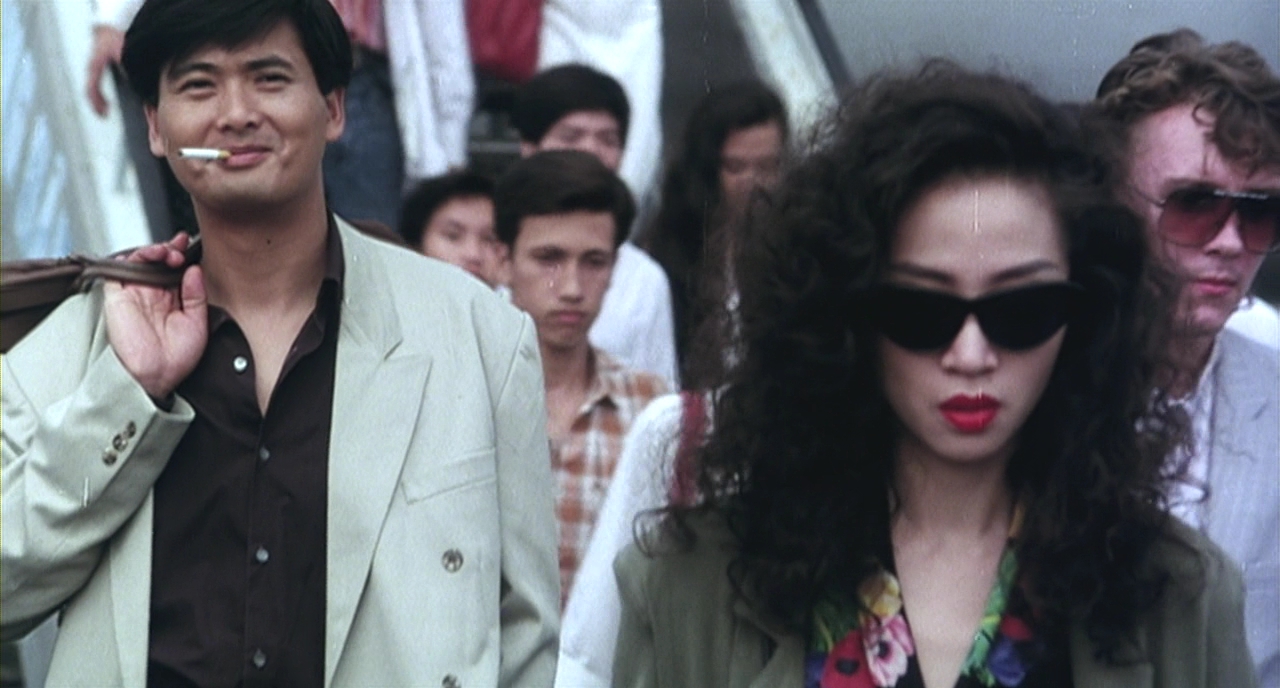
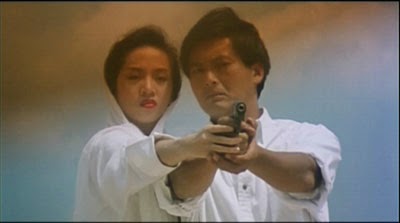
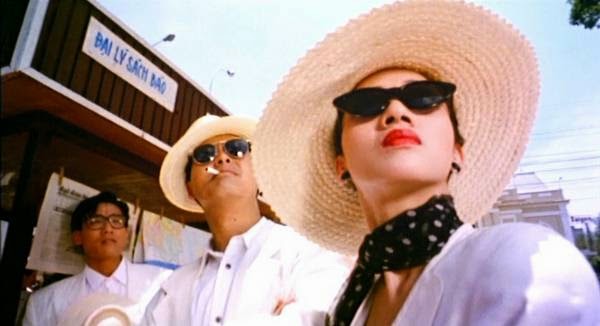
The third film is a prequel, which proves a much more reasonable and interesting way of getting Chow back into the story. Set in the final months of the Vietnam War, Mark travels to Saigon to help his cousin Mun (played by The Other Tony Leung) convince Mun’s father to return with them to Hong Kong before the North wins the war. The father is played by Shek Kin, the villain in many a Kwan Tak-hing Wong Fei-hung serial and also in Bruce Lee’s Enter the Dragon. This was one of his final films, although he lived to be 96, dying in 2009. As all of Mun’s schemes for getting his father out involve criminal activity, he and Mark quickly become involved with a mysterious badass woman, played by Anita Mui, named Kit. At the point we meet him here, Mark is a regular guy, a poor shot and not particularly cool. But he’s tough and resourceful and we see him slowly turn into the superhero of the first film, right down to the origin stories of his iconic wardrobe: Alain Delon sunglasses, black duster jacket and matchstick in his mouth (for the first half of the film, he dangles an unlit cigarette from his lips; as he becomes more aggressive it changes to a matchstick: his oral fixation progresses from the thing that is burnt to the thing that starts the fire).

As is inevitable, both men fall for Kit, a situation only complicated by the return of her long-lost boss-gangster boyfriend Ho. (Here is where I point out how weird these character names are: Ho and Kit, recall, being the names of Ti Lung and Leslie Cheung’s characters in the first film. It’s like this universe contains an infinite number of potential Marks (the spontaneously generating twin of the second film) but a very finite number of character names for those Marks to interact with). Things escalate, trips are made back and forth to Hong Kong, everyone gets shot to hell and it all ends on the last flight out of Saigon.

The differences between Tsui and Woo’s versions of the same backstory are striking and varied. Most obviously is the presence of Mui, a strong female character, the smartest and most capable individual in the whole film by far, the likes of which is wholly absent from Woo’s work. Compare her to Cherie Chung’s marginalized woman in Once a Thief, the part of the heist trio (with Chow Yun-fat and Leslie Cheung) that stays home and does the housework for the boys, or Thandie Newton’s Girl Spy in Peril in Mission: Impossible II, a film almost entirely derailed the moment she goes from interesting antihero to passive objective. Chow’s Mark was the iconic figure of Hong Kong cinema in the late 80s, an icon so widespread you see its influence still in Jia Zhangke’s Still Life 20 years later. But in Tsui’s film, the person Mark idolizes, the person who teaches him to be cool is Anita Mui. Between this and the balanced approach Tsui gives to the woman’s point of view in many of his romantic films (Working Class, The Lovers, Love in the Time of Twilight, Green Snake, etc) as well as the brilliant job he and Carina Lau do in re-envisioning the notorious Empress Wu in the Detective Dee films, I wonder if Tsui should be getting more credit for progressiveness in his depictions of women, especially relative to such macho directors as Woo, Sammo Hung, Jackie Chan, Ringo Lam, Wong Kar-wai and others of that generation.

More than that though is the metaphysical difference in the films. Woo’s “heroic bloodshed” films are about the codes of honor among men of action, with the tragedy coming from the ultimate incompatibility of those codes with the amorality of modern life in Hong Kong, as epitomized by his gangster villains, laissez-faire nihilists of the Randian variety that flourished in the latter days of Hong Kong’s hyper-capitalist colonial life. This is all seen through a prism of Christian, specifically Catholic, iconography as his noble but doomed heroes sacrifice themselves for the sake of innocents. Bullet in the Head has much more in common with Michael Cimino’s The Deer Hunter than it does with A Better Tomorrow III, though they’re sourced in the same original screenplay. Tsui doesn’t go in for grand statements about The State of Things, and sure as hell never puts anything into a religious context, Christian or otherwise. His heroes live in the same chaotic world as Woo’s, but their losses aren’t sacrifices, they’re simply losses. Where Woo elevates everything he shows, with slow motion, melodramatic music and a seemingly endless supply of doves, Tsui drags us down to earth, down to the practical comedy and pragmatic horror of everyday life. The love triangle in Tsui’s film isn’t spiritual, it’s mundane, and the conflict at its heart isn’t between honor and dishonor, between heroes who follow a code and those who don’t. Everyone in the film has essentially the same amount of honor: they’re all crooks, to be sure, but no one’s particularly vicious about it: it’s not personal and not ideological; strictly business. Even Ho, the ostensible villain of the picture, isn’t any worse a guy than Mark, he just happened to have loved Kit first, that’s all.

That’s not to say that Tsui’s films aren’t political, they most assuredly are. But what they aren’t, at least relative to Woo’s, are moralistic. Tsui began his career with a remarkable trio of punk anarchist films that, along with his fellows in the New Wave, turned Hong Kong cinema on its ear. As his career progressed, his films became more conventional, with wacky comedies, effects-driven extravaganzas, traditionalist martial arts films and lush romances. But that early spirit still lingers, in even his most mainstream films. If Woo is always reaching for something transcendent, something ineffable in his tales of sacrifice, Tsui is always knocking us down, urging us to see things as they really are, however absurd or inexplicable. Woo’s heroes famously fire dozens of bullets without ever needing to reload, Tsui’s are always finding that after a shot or two, their weapons are empty.

Running Out of Karma: Further Notes on Blind Detective

Running Out of Karma is my on-going series on Johnnie To, Hong Kong and Chinese-language cinema. Here is an index.

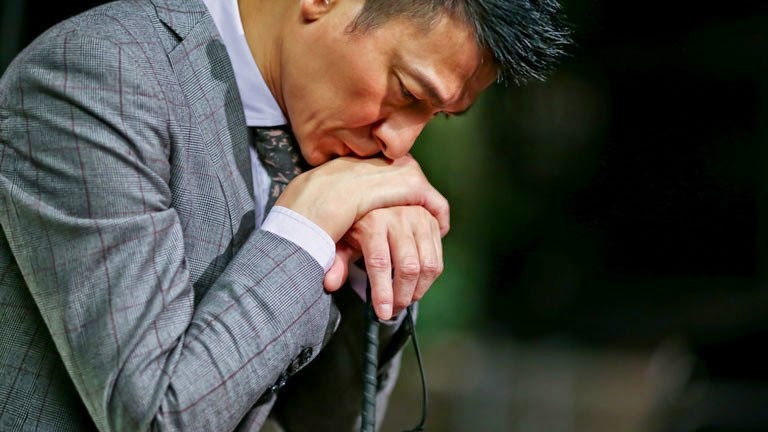
I reviewed this a year ago and it’s all still true. It’s a terrific film, one of Johnnie To’s best recent works. But rewatching it, another couple of things jumped out at me beyond what I mentioned there.

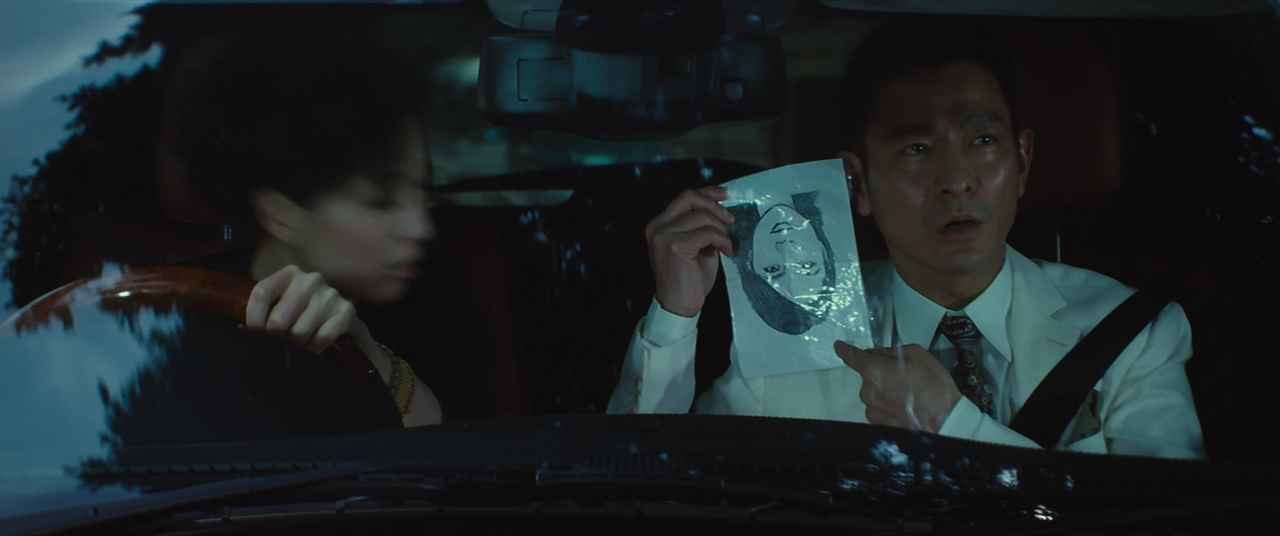
It’s more intricately structured that it appeared to me at first, with a series of doublings between Andy Lau’s detective Johnston and his suspects. The serial killer in particular is signified as an evil version of Lau: he dresses like his victims, he eats a lot, and he’s obsessed with eyes.

Also: Lam Suet is a cab driver just like the serial killer (also the role Lau plays in the imagined recreations).

All of the crimes revolve around not-seeing, or at least hiding in plain sight. One killer hides a body, implicating a victim in his crime, a couple of killers hide in closets, the initial killer hides in the crowd, the hordes of people wandering and shopping the busy streets. The serial killer hides far out of town, and goes untracked for so long because his victims, rejected lonely women, are ignored and unseen by the world at large.

The dancing motif is present right from the first meeting of Lau and Sammi Cheng, their fighting off the acid-thrower being performed as a series of tango steps. I don’t know much about the tango, but it seems like a dance where not looking at your partner (or looking at them with a particular kind of intensity) is especially important.

There’s also a great touch when Lau finally talks to Gao Yuanyuan, the dance instructor he’s had a crush on since before his blindness. They dance and he’s much better than her: she keeps stepping on his toes. Because she’s caught off-guard by him, or because he’s practiced so much that he’s surpassed her?

Interesting too that Gao, the center of the love triangle in Don’t Go Breaking My Heart is here the love interest that the hero must get over in order to begin a relationship with Sammi Cheng, which is the same role she plays in Romancing in Thin Air.

Both this and Romancing involve the hero creating a narrative to help Sammi get over a trauma. In the first movie, Louis Koo literally makes a film to help her resolve the loss of her husband. In this one, Lau uses the Method acting like approach to detective work to create a narrative that ultimately solves (explains) an event from Cheng’s youth that’s haunted her for her whole life.

Both Running on Karma and Mad Detective use the same visualization approach to solving crimes. But those films are more spiritual, with karma and (possibly) ghosts aiding the police work. Blind Detective is resolutely materialist, turning the scene in Mad Detective where Lau Ching-wan eats an improbable amount of food into a two-hour movie.

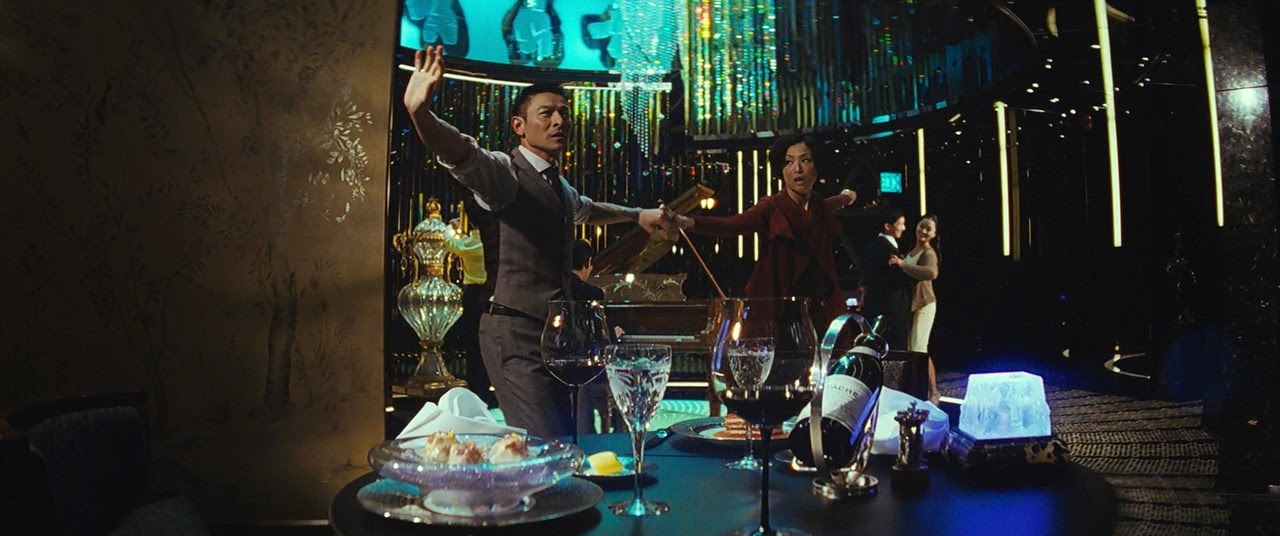
The film is relentlessly monochrome, Andy and Sammi almost always clothed in black or gray, with only a few bursts of color (Gao Yuanyuan’s red dress, the rich browns of the serial killer’s mountain hovel) breaking the noir color palate. There’s a signature To shot: overhead on a black street at night, three streetlights forming white spotlight circles that a young girl (imagined) runs through. This is in contrast to the whites and greens of Romancing and the popping blues and reds of Don’t Go‘s screwball fantasy world. Typically To’s comedies are very colorful while his dramas are more stark. Here he takes the slightly distorting wide-angle lenses of his comedies and puts them to use in the sombre world of crime, mixing his tones visually as much as the script does in narrative.

I just read the five reviews of Blind Detective linked to on its wikipedia page and they are uniformly bad. Not just in their view of the film, but in their writing and analysis. The laziest possible critical ways out. (Broad acting! Tonally inconsistent! Looks great! Silly and therefore a step back from his serious films like Drug War or Election!) That wouldn’t be a big deal, there’s no shortage of awful film criticism in the world, except that I’m pretty sure that the reason this didn’t get a release in the US of any kind is because of these reviews in influential publications (the Hollywood Reporter, Screen Daily, Film Business Asia (which gave it a 2(!) out of 10)). At least Justin Chang’s review in Variety does the film justice. Of course, it’s not on the wikipedia page. This is an under-publicized problem with our system of art house and foreign film distribution: quite often the critics with the biggest or most influential platforms are, through ignorance or overwork or any of the random mood-altering events that can color your initial impression of a film, terrible at determining which films we should be allowed to see.

Eight More Films from VIFF 2014

Part of my coverage of the 2014 Vancouver International Film Festival.

After a fantastic eight days in Vancouver, I’m back home in Tacoma now. My cinematic viewing has abruptly shifted from Godard, Alonso and Ceylan to Growing Up with Hello Kitty 2 (at the point where Hello Kitty and her friend decide to build a “Cinderella Castle”, my 3-year-old daughter gets the same expression of pure joy on her face that I had throughout the running time of Hill of Freedom). Before I leave the festival behind completely, however, I want to take another look back at some of the highlights. This one will focus on some of the big name directors who had films at the festival. I’ll have another about some lesser-known filmmakers and short films when naptimes allow.

Fruit Chan’s The Midnight After was my favorite film from the Seattle Film Festival earlier this year, and it remains a favorite after seeing it again in Vancouver. It’s no less mysterious than it was on that initial viewing. Its dizzying series of inexplicablities seem more than ever to me an attempt at creating something more unsettling than the goriest horror movie: a film about the inability to comprehend the world as it is now, played out in a series of confrontations: generational, romantic, judicial, political, spiritual. The audience in Vancouver was much different than in Seattle. Bigger (the large auditorium was sold out, the pre-show lineup snaking through the mall further than I could track) and largely Chinese and Chinese-Canadian, the crowd was much more in tune with its daft chaos, laughing at all the right moments (the 40 or so people I saw it with in Seattle seemed more baffled than entertained). And seeing it at the end of a remarkable week in Hong Kong, with the instability and unknowability and fear of what will come when and if Hong Kongers get to vote for their own rulers in the coming years sparking massive protests throughout the former colony, only added to the film’s sense of urgency. One of the biggest and uneasiest laughs of the night came when the lost passengers, learning that they are now six years in the future, wonder if this strange world they’ve found themselves in is the result of the 2016 elections.

Another favorite was Lisandro Alonso’s Jauja, wherein Viggo Mortensen (who also produced) plays a Danish captain in the Argentine military out on campaign against the local population. His 14-year-old daughter runs of with one of his soldiers, into the wild, despite the presence somewhere out there of a mad former soldier, gone murderously native. Mortensen sets off alone to track her down, one part Ethan Edwards, one part Aguirre. Like Alonso’s previous film, Liverpool, the only other one of his films I’ve yet seen, Jauja is composed of long, deliberate takes, but this is slow cinema that burns with purpose, always grasping into the unknown. I don’t know that I’ve ever seen a film as obsessed with what is not on the screen: every shot seemingly involves someone looking at or talking to someone or something off-camera, or heading out into space we can’t see. The unusually square aspect ratio (with rounded corners that make the film look like a slide projection) only heightens this effect, magnifying the blackness and blankness that surround our searcher. In contrast to the industrial whites of Liverpool, Jauja is gorgeously colored, the blues and reds of Mortensen’s uniform popping unnaturally against the greens and browns and grays of the desert, with an impossibly starry sky imparting a feel of fairy tale whimsy to what might have been a dour and bloody saga of futility. And then things get weird: our minimalist film becomes something extraordinary, equal parts Apichatpong Weerasethakul, Alain Resnais (specifically the coda of Wild Grass) and the Insanity Pepper episode of The Simpsons.
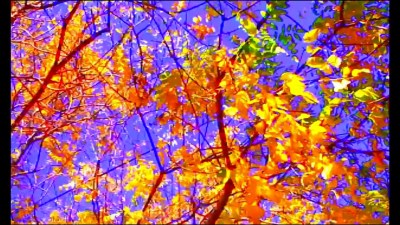
Speaking of talking dogs, Roxy Miéville is the star of Jean-Luc Godard’s latest, Adieu au langage (the title is translated into English for its release here, which I don’t really understand. It isn’t like the French title is opaque to English-only speakers, even for the most Francophobic of viewers, and puns on the French title are one of the primary structuring elements of the film. I’m sticking with the original.) A compendium of riffs and jokes and experiments, ruminations on the modern world (and Hitler, of course), I certainly would need to see the film several more times to feel like I have a firm grasp on it. Godard’s films, especially the later ones I’ve seen, are so densely packed with information (images, multiple images, epigrammatic narration, text on-screen) that it’s impossible to parse in a single viewing. I just kind of latch on to a few things and enjoy the ride. And what stuck here (aside from the brain-bending experiments in 3D technology) was the dog, running around the woods, playing in the snow, basically doing dog stuff. And the trees. Godard shoots with a variety of technologies, but whatever camera he’s using, I don’t think I’ve ever seen trees look as beautiful as they do in Adieu au langage, shades of orange and green I don’t recognize against the bright blue sky, the 3D giving them a kind of depth and motion that’s never before existed in the cinema and probably doesn’t in nature. These wondrous natural images, combined with Godard’s gnomic narrational musings made me realize for the first time just how much he has in common with Terrence Malick.

A slightly different approach to nature comes in Mr. Turner, Mike Leigh’s biopic of JMW Turner, 19th Century British painter of landscapes, seascapes and boats. As played by Timothy Spall, Turner is a giant ball of grunt, thick accents, and lower-class taste disguising an erudite and romantic soul. In other words, the film very capably filled the role of “tasteful British picture about class and/or costumes” in my festival schedule (joining such memorable company as Made in Dagenham, The Young Victoria, The Angels’ Share, and Good Vibrations). It’s a perfectly fine, very likable movie, but I’d rather have just watched National Gallery again.

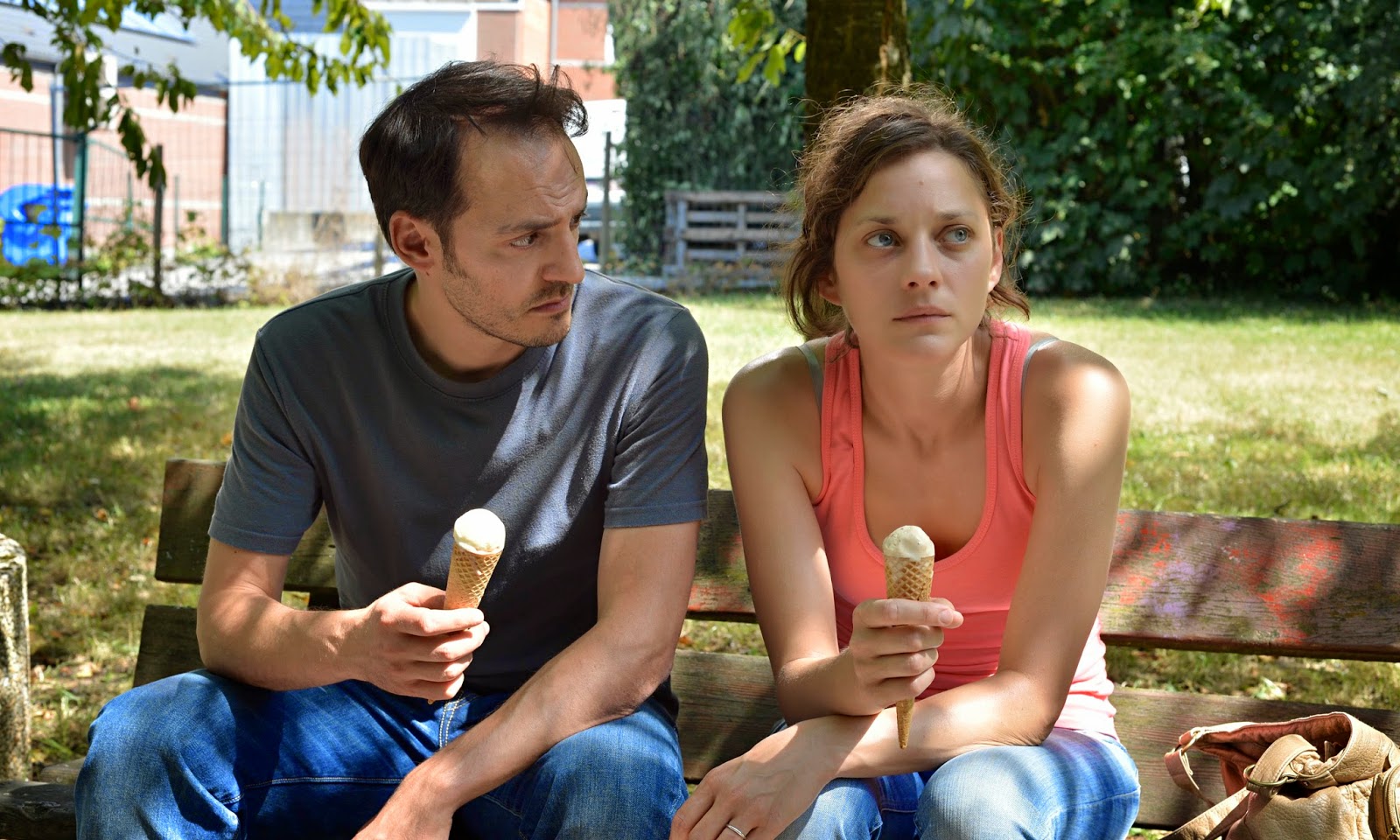
Also perfectly fine and perfectly without surprise is the latest from Jean-Pierre and Luc Dardenne, Two Days, One Night (a correctly translated title that is nonetheless also odd because the film very clearly takes place over four days, though there is only one night scene). Major Actress Marion Cotillard plays a factory worker (solar panels) who has been laid off because her boss made her co-workers vote on whether they’d rather she continue to work or they get their annual bonus. It’s an absurdly blunt premise that the Dardennes, whatever its worth, remain firmly committed to. After earning a revote, the bulk of the film follows Cotillard’s Sandra (barely recovered from a suicidal depression) visiting each of her coworkers in turn to beg them to vote for her to keep her job when, after the weekend, a second vote will take place. She’s aided in her quest by her husband, played by Fabrizio Rongione, who also played the architect in La Sapienza (This makes Rongione the only actor two star in two different films I saw at the festival, as far as I can tell). Anyway, the fact that the Dardennes manage to make such a didactic and schematic premise watchable at all is a credit to their skill, but there’s only a few places this story could go, and when it ends up at its most obvious destination, the result is not transcendence but a pleasant shrug.
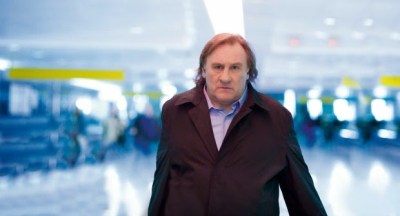
What is resolutely not what I expected it to be is Welcome to New York, Abel Ferrara’s adaptation of the Dominique Strauss-Kahn story, with Gerard Depardieu the massive presence in the center (it’s unclear who would win the award for Gruntiest Performance of VIFF 2014 between him and Mr. Turner‘s Timothy Spall). He’s M. Deveraux, head of an international banking organization and potential future president of France with a prodigious appetite for sex. After an evening of debauchery, which Ferrara shows us in clinical, resolutely unsexy detail for the first 20 minutes or so of the film, Deveraux sexually assaults a hotel maid. He’s caught at the airport and, mirroring the opening, we follow in exacting detail the process of his arrest, booking and arraignment. The rest of the film is almost lyrical, as Deveraux and his wife (Jacqueline Bisset) argue over the fallout of what he’s done and what it means for their past and their future. Deveraux, a leftist economist, despite devoting his life to helping the less fortunate, is exposed as no less a Randian egotist than the worst right-wing cartoon: his utterly unshakeable belief in the inviolability of his own self-interest the only guiding principle of his existence. I had expected the film, when I first heard about it, to concern itself with the mystery of the crime itself. A did-he or didn’t-he exploration of the legal system and our attitudes toward powerful men who commit crimes against women. Ferrara, though, ditches all of that. We know he’s guilty right from the beginning, and the film becomes even more darkly political as a result. There’s no balance, no epistemology, no other side of the story: there’s the insular, protected, heedlessly destructive world of the super-rich and powerful (right and left) and everything else is the margin.
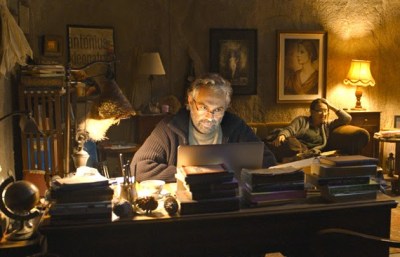
Nuri Bilge Ceylan’s Plame d’Or-winner Winter Sleep also concerns itself with the selfishness of a powerful man, but rather on the misdemeanor side of the ledger. Taking place almost entirely at a remote hotel in the Turkish hinterland, built, like the nearby village, out of the undulating cliffs and hills of the landscape, like something out of Tolkein. The hotel is run by Aydin (a masterful performance from Haluk Bilginer), a former actor who inherited a bunch of land and likes to write essays in the local paper (he’s also nearly finished researching his book: a history of Turkish Theater. Gonna start writing it any day now.). He lives with his sister, a divorcee, and his much younger wife, and their servants. One of the servants also works as a debt collector for the lands Aydin rents out. A rental dispute sets the film in motion: a family that can’t pay its debt feels humiliated by the man on the hill, who stubbornly refuses to understand why (he doesn’t get involved, he hires people to deal with such things). This thread is duplicated in Aydin’s interaction with the women in his life, the sister who attempts to puncture his pomposity and the wife who desperately tries to carve out a little world for herself without having him criticize or condescend to her. As viscous a satire of the culture of male intellectual pretension as Listen Up Philip, albeit at much greater length thanks to Ceylan’s icy rhythms and patient exploration of the alien and timeless Anatolian landscape. Alex Ross Perry’s film feels resolutely of the 21st Century as does Abel Ferrara’s, whereas Ceylan’s could have taken place at any point in the last 3,000 years or so, give or take a millennia.

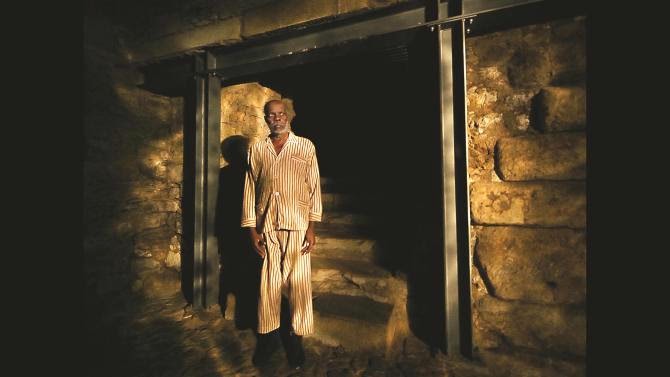
Finally, Pedro Costa’s Horse Money, possibly the richest and most-baffling film of the entire festival. A trip through the underworld, or purgatory at least, as one man, Ventura, relieves his past through the black and brown industrial landscapes of Lisbon’s Fontainhas district. A haunted, ghostly presence, Ventura slips in and out of memories and hospitals, wandering through impossible black spaces, both above and below the industrial ruins that pass as living spaces for much of the world’s forgotten classes and talking to acquaintances and friends, obliquely recounting crimes committed, mistakes made and losses witnessed. Dominated by shadow, splitting the screen, creating ancient irises, forming a primal void from which yellow apartment lights float like islands of life in a universe of emptiness, vertical lines relentlessly drawing our eye upwards, out of the archaic 1.33 frame. It’s an astonishing film, unique and yet deeply cinephilic, forging connections across a century of cinema, not just The Man Who Shot Liberty Valance. Here is a partial list of the movies I thought of while watching Horse Money: The Phantom Carriage, Goodbye Dragon Inn, It’s a Wonderful Life, Pedicab Driver, The Thin Man, A Matter of Life and Death, Apocalypse Now, Ikiru, The Phantom of the Opera, Occurrence at Owl Creek Bridge and well, just DW Griffith in general. After watching it, I was overwhelmed, but sure that this would be a one-time experience, so draining and difficult was it to watch at times. After a couple of days though, all I really wanted to do was see Horse Money again.

Four Films From VIFF 2014 Thus Far

Part of my coverage of the 2014 Vancouver International Film Festival.

Films covered: La Sapienza (Eugène Green); The Golden Era (Ann Hui); National Gallery (Frederick Wiseman); Ballet 422 (Jody Lee Lipes)

We’re now a few days into the festival and there’s definitely a different vibe at VIFF this year. The familiar faces are all here, though I’ve yet to see Tony Rayns or Bérénice Reynaud. Professors Bordwell and Thompson are here of course, along with a special guest. Also here are the eclectic mix of Asian films, hits from the international festival circuit and local Canadian products. Crowds are very strong, almost every auditorium I’ve been in thus far has been packed, something I haven’t seen since the 2010 festival — even in the remarkable 2012 year, masterpiece attendance was hit and miss. But the schedule is oddly lumpy, with evenings like the first Friday night stacked with half a dozen want-to-see films while other times (Sunday night, pretty much all of Tuesday) filled with films of the “yeah, I guess I could go see that, but maybe I should take a nap. Or, better yet, drink a mojito in a boot instead” variety. Some big films (the Godard, the Costa) get three shows, while others have only one (the Takahata, which had its sole screening at 11:30 am Saturday morning, as if they assumed the only people who’d be interested in seeing it were children that spoke fluent Japanese (the “print” was subtitled)). The new Hong Sangsoo movie plays twice, but only at the odd time of 5:15 for both shows, which effectively prevents one from seeing sows in the 3-4 and 6-7 block surrounding it. Weird problems of overlap abound. For example: the most appealing of Sunday afternoon’s shows, Listen Up Philip, didn’t get out until 6:25, yet all but one of the next set of shows started at 6:30 (this is why I missed out on the interesting-looking Hong Kong documentary Flowing Stories – it was simply impossible to make it across town in time to catch it). These scheduling issues are inevitable, of course. It’s exceedingly difficult to put together a multi-screen movie schedule (I speak from experience), especially in a festival environment with four or five movies playing a single auditorium every day. And a schedule that’s proven to be a pain for me may very well work great for someone else, or even the majority of festival attendees. One of the great things about film festivals is that everyone makes it their own. But this is the most trouble I’ve had in six years here. Perhaps the remarkable thing is that those other years went so well.

Some highlights from my festival thus far:

The week kicked off for me with disappointment. I knew I was going to miss Isao Takahata’s The Tale of Princess Kaguya, one of my most-anticipated films of the year, because my train wasn’t set to arrive until 11:45 Saturday. I did hope to make the second half of the de facto Princess double feature, however, with Matías Piñeiro’s The Princess of France, playing at 1:45. Unfortunately, my train was delayed, and long lines at the station meant I didn’t even make it to downtown until five minutes before showtime. Undaunted, I proceeded to the next film on the schedule, Eugène Green’s La Sapienza. Like Green’s other films (I watched Toutes les units and Le Pont des Arts in preparation for the fest), it features an unusually declamatory acting style, with a Bressonian minimization of emotion (though notably not as extremely robotic). Also Bressonian is a penchant for introducing scenes and characters with close-ups of their feet, or rather, their shoes. Green apparently is a big fan of shoes (not that there’s anything wrong with that). He films his characters’ conversations at right angles, a two-shot with them facing each other, perpendicular to the camera, followed by medium close-ups of each actor as they face the camera directly and speak in turn, Green not cutting until they’ve finished what they have to say. This combination of effects reminds me very much of Manoel de Oliveira, though the artifice is apparently indebted as much to Baroque theatrical technique as any cinematic fore-bearer. Green is said to be an expert in this, and knowing absolutely nothing about the subject myself, I’m in no position to disagree.

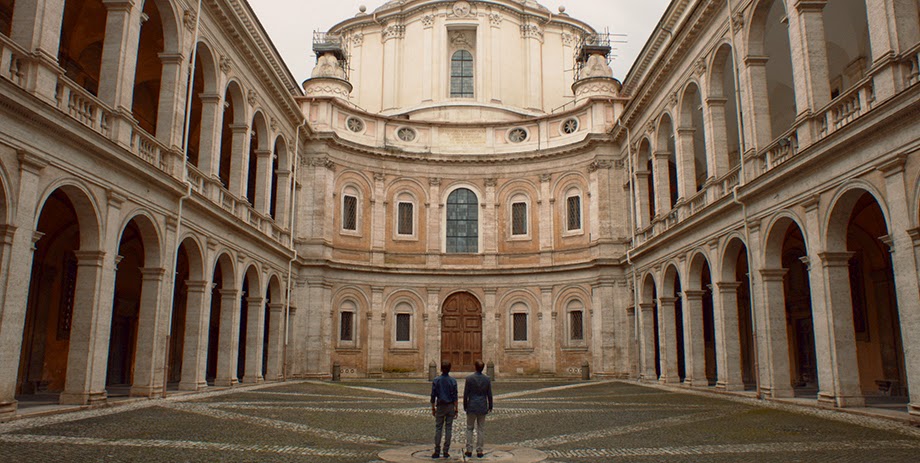
La Sapienza concerns itself with a married couple, an architect and a social worker, who seem very depressed and go on vacation in Switzerland. They meet a young brother and sister and become attached to them. The girl has fainting spells (“wasting sickness” perhaps, which should have died out in 1914, we’re told), the boy is an aspiring architect. The wife sends the boy with her husband on a tour of Baroque churches, while the two women stay behind and have frequent talks. The man is obsessed with the story of Borromini, a dreamer of an architect who had a more rational-minded rival and came to a bad end. As the film progresses, he tells us their story as he explains it to the young man, while Green lovingly points out the marvels they constructed, gorgeous pans and tilts following the lines of their churches as the reach toward the heavens. Like Voyage to Italy, the film’s most obvious reference point, the touch with the past transforms and reinvigorates the middle-aged.

The remarkable thing about the film, aside from the fact that I saw it on a Saturday afternoon, in a sold out auditorium that was 100% into it, laughing at all the right places and genuinely moved, is that it, and Green himself, even exist at all. How wonderful a world is it that provides a space for a weird expatriate-American Francophile, obsessed with Baroque theatre, to make odd little romances about the persistence and continuing relevance of ancient arts and archaic words? Green himself has a role in the film, bigger than the cameos in the other films of his I’ve seen, where he plays an old man the wife meets on a park bench at night. He explains that he is a refugee, a Chaldean from the Ninevah plain, an ethnic group she believed to be extinct. But no, they are still very much around, though in diminished numbers. A more fitting role for M. Green I cannot imagine.

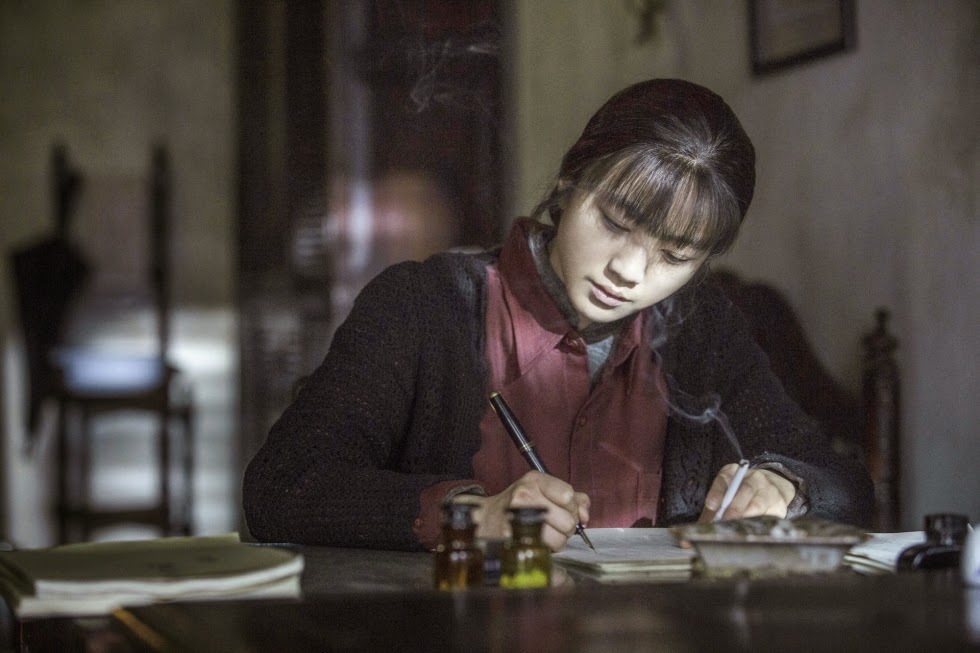
The Golden Era capped my first day at the festival. Ann Hui’s bio-epic about 1930s writer Xiao Hong is long, beautiful and not quite exactly what you’d expect. The only sign of Hui’s usual twisting of expectations is in the film’s narration, with witness interviews in the style of Reds, except the witnesses are played by the same actors portraying those characters in the film proper. Unlike Stanley Kwan’s Centre Stage (a film to which this has been compared, not entirely without reason), the actors never comment about the events as themselves (as also, for example, in Peter Watkins’s La Commune (Paris 1871)), but always remaining in character. It’s an ingenious solution to the difficulty in recreating the life of someone who died young, leaving little in the way of personal history. It effectively captures the ways in which Xiao Hong the person is as much a memory in the lives of the people she met as she has been for the later generations who have discovered her only through her writings (which appear to be exceptionally beautiful tales of misery). But Hui pretty much plays it straight. Only once do the narrational accounts differ, and while Tang Wei’s performance does have some notable shifts in tone, there wasn’t a pattern to the changes that I was able to discern (with one narrator remembering her as happy and jubilant, another as morose, all at the same time, for example). Rather than foreground her experiments, Hui seems content to let her above-average prestige picture play itself out in heart-wrenching yet familiar terms.

Each of my next two days in Vancouver began with a documentary. Sunday was the latest from Frederick Wiseman, National Gallery, about the British art museum of the same name. In a brisk three hours, Wiseman takes us on a tour of the place, following his now well-established structure: alternating long sequences of people at work, both “on-stage” (the tour guides, the restorers) and off (the frame-makers, the construction workers and janitorial crew) and administrative meetings where the war between commerce and art is fought, with breaks in-between made of “pillow shots”, in this case usually close-ups of people looking at the art interspersed with close-ups of the faces in the art itself. He even manages to weasel in a couple of “interviews” wherein he films a person being interviewed, rather than having to break his cinematic code and interview them on-camera himself. It’s great of course. I’ve watched a lot of Wiseman in the last month and I simply can’t get enough of his films, the ones about art especially. It’s beautiful and fascinating and that structure is so entrenched because it works so well to make a very long movie seem much shorter than it really is. But one thing is for sure: next time I go to a museum, I’m going to join a tour. Those guides are terrific. The less I say about the dance scene at the end, however, the better.

Ballet 422, which opened my Monday, owes a very great debt to Wiseman, especially his dance films (Ballet, La Danse and Crazy Horse). Director Jody Lee Lipes follows the Wiseman template (albeit with a very few explanatory title cards, kind of necessary in the beginning to set the story, less so to mark time as the clock ticks on our hero’s deadline. The film follows 25-year-old dancer/choreographer Justin Peck as he has two months to put together the New York City Ballet’s 422nd original production, his first choreographic work on such a large scale. As in the Wiseman films, the movie proceeds from early rehearsal footage through the final performance, with shots of the backstage workers (particularly the wardrobe department) interspersed and pillow shots (prominently close-ups of shoes, again) providing syncopating breaks in the narrative. Again as in Wiseman there are no interviews, the cinematic apparatus remaining invisible (though there is a moment when the cameraman hilariously realizes he can see himself in a rehearsal mirror and quickly reframes his shot). The rehearsal footage is great, as is Peck’s production itself, brisk and lively and charmingly danced by the company, particularly the three leads (Tiler Peck, Stirling Hyltin and Amar Ramasar). The company appears to have a warm and friendly camaraderie: it’s much funnier than the Wiseman films (at one point one of the dancers in the chorus is worried about her outfit. A wardrobe woman tells her: “Girl, you got nothing to worry about: if it comes out, it’s cute.”) The best revelation comes at the end, though, when we see Peck make his way backstage, down an empty hall to his dressing room. He changes clothes and begins putting his makeup on. He’s performing in the third performance of the night, as part of the chorus. Like the generic title indicates: despite all the artistry and inspiration and fun and music and dance, the ballet is, as much as anything else, work.

VIFF 2014: Fruit Chan’s The Midnight After

Part of my coverage of the 2014 Vancouver International Film Festival. This is a revised version of my review from the 2014 Seattle International Film Festival.

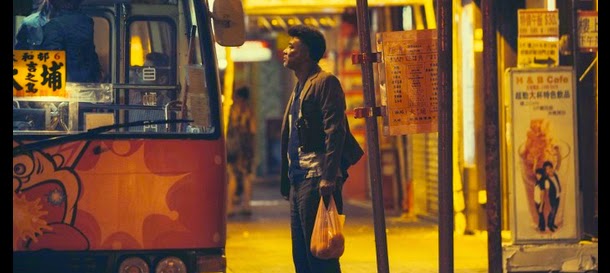
The end of the world, maybe. A late-night minibus, packed with commuters traveling from (if my geography is correct) the center of the city to one of its satellite neighborhoods, seems to drive instead into the Twilight Zone: everyone else in Hong Kong seemingly disappears, and then the passengers themselves begin dying in unusual ways. Lam Suet drives the bus, Simon Yam (sporting perhaps his most incredible haircut yet) grabs a leadership role being the oldest and loudest, Kara Hui spouts metaphysical mumbo-jumbo about the Photon Belt and their impeding transportation (over 1000 years) to their new home near Sirius, while the younger generation (soccer fans, punk kids and college students) have no theories as to what’s going on and no direction (the girl Yuki and boy Chi withhold possibly relevant information at every turn, a married couple apparently sees the world through soccer metaphors, a computer programmer has some tools but no idea what to do with them).

As it becomes clear that director Fruit Chan won’t give us, or them, a clear explanation of what has happened, he offers a handful of possibilities, based on the insecurities and anxieties of contemporary Hong Kongers both primal and political: is it a Fukushima-type disaster, from a nuclear plant on the Mainland? A plot by the North Koreans (who claim to be the source of all Chinese culture)? A SARS-style epidemic? Is it somehow related to the fact that Hong Kongers are soon to be allowed to vote for their own Chief Executive? Is it ghosts? Aliens? Are they ghosts? What does David Bowie have to do with it all?

Based on a serialized web novel called Lost on a Red Minibus to Taipo by PIZZA (a pseudonym, one assumes), the film is as hilarious as it is horrifying. It’s full of beautiful grotesqueries, primally disturbing imagery (a man in a gas mask, a woman with unnaturally flowing hair, a red red rain) but the eeriest of all are the empty streets of Hong Kong. One of the most densely populated places on Earth (even at 2:30 in the morning, when the film begins, it should be bustling with human activity) suddenly emptied of people and vehicles and noise. But what it isn’t is a concise and coherent narrative. On-screen titles give us the exact time and location of every event (like in Psycho) but that information only gives us a false sense of security, of order. Knowing the time and place is nice, but that doesn’t free you from the random whims of the universe (like in Psycho). Images and events are left unexplained: mysterious phone calls, vanished memories, flashbacks to pasts both sad and happy. Members decline to share possibly important (and bizarre) facts with the other members of the group. An impromptu justice system is established and an execution agonizingly botched. A prime mover of the first half of the story mostly disappears from the back half, his mysteries left unresolved. All of this dangling and inexplicability and incongruence is not a failure, of course, it is The Point. The film is the horror of death as Unanswered Question, and as the end of the possibility of Answering Questions.

VIFF 2014: Tsai Ming-Liang’s Journey to the West

Part of my coverage of the 2014 Vancouver International Film Festival.

When I was young, in the first half of the 1980s, whenever I committed some minor childhood infraction, my punishment (this being before the adoption of the “timeout” lingo) was to stand facing a wall for some indeterminate amount of time, usually around ten minutes, which of course feels like an hour or two to the temporally expansive pre-adolescent mind. I committed a lot of infractions, so I became quite used to this, and eventually even learned to enjoy it. I’d stare at the wood-paneling (again, 1980s), count the small nail holes, follow the flow and swirl of the knots and the minute contours of the wood, the various shades of beige and brown swirling in an alien, pre-historic landscape. Forced to stare at an apparently empty, action-less space, I learned that if you look at it long enough, anything can become interesting. I learned that boredom is a state of mind, not a state of being.

Little did I know this experience was training me to watch Tsai Ming-liang films. This hour-long short, a continuation of his even shorter film Walker (which I reviewed at VIFF 2012), observes Tsai’s muse Lee Kang-sheng as he walks, dressed as a monk in flowing red robes, through a city. In Walker he walked through Taipei, carrying a mysterious parcel through streets and crowds, finally reaching his destination, whereupon he unwrapped and took a bite out of a sandwich, made all the more delicious by the very long time it took to take it home. This time the monk is in Marseille, and there appears to be a plot, and a co-star, none other than French cinema icon Denis Levant. The story is hinted at in the title and somewhat clarified in an accompanying note from Tsai:

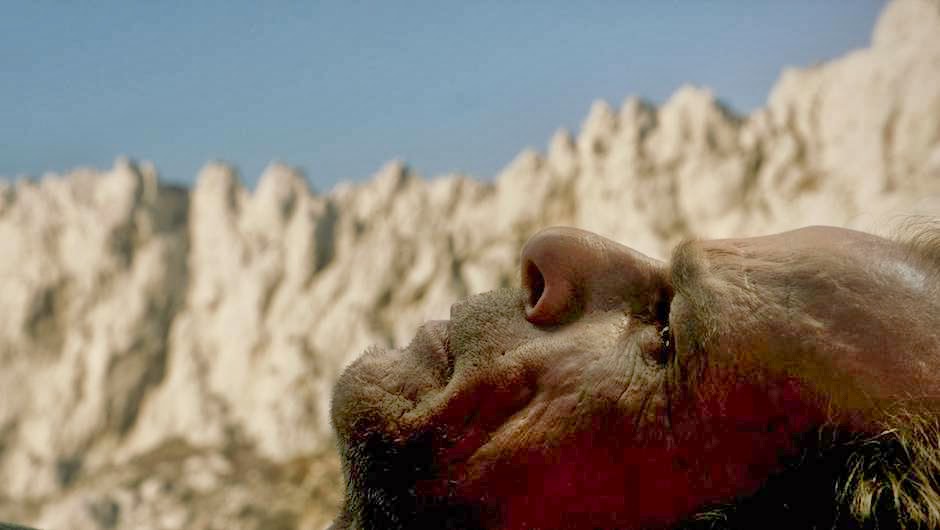
“His walking, so special and so slow, in all the four corners of the world recalls that of Xuanzang, the holy monk of the Tang dynasty, who traveled thousands of kilometers seeking the holy scriptures. In the classical Chinese novel “The Journey to the West”, Xuanzang frees the Monkey King from his prison at the foot of a mountain. In Marseille, there is a rock that resembles the face of a monkey: in the bay of monkeys. Fashioned by the effects of time, Denis Lavant’s face is like these rocky shapes and I am irresistibly attracted to it. That was how I started to think of Lee Kang-sheng walking on his face…”

The film opens with its longest shot, an extreme closeup of Levant’s face, lying on a diagonal, half in shadow. As Tsai forces us to stare at it at seemingly interminable length, the face becomes something else, an alien landscape of valleys and mountains and rivers and crevasses; every pore, every grey hair a story, every fold of Levant’s now 50+ year old face containing multitudes. We’ll revisit this face at the seaside, I assume at the Bay of Monkeys Tsai refers to, making literal the transformation from face to landscape.

Most of the film though chronicles the monk’s journey through the city in a series of long shots, the camera even more static than the monk. These shots inspire a fun, Where’s Waldo-esque challenge where you try to pick the monk out of the crowd (hint: he’s the thing that’s not moving). But they also seem to be allegories for Xuanzang’s journey. A pungent red wall becomes perhaps the scene of a mighty battle the monk witnesses, a long staircase a descent into the underworld. The monk begins to appear in reflections, the mirror in a man’s apartment, a glossy wall overlooking a plaza packed with travelers and people at play (a crowd gathers around a man playing the piano, another man sets adrift giant bubbles). Are the mirrors indicative of his journey to “the other side”? In one of the film’s final shots, the monk is being followed by what looks to me like Denis Levant, also walking very slowly past a sidewalk cafe, following a patch of sunlight. The Monkey King, freed at last, being led back to the East?

It’s a fact about the way I watch movies, some might call it a defect, that I tend to narrativize everything I see, to try to build a story out of the images on-screen, whether any particular story is necessarily intended. Even in the most abstract of experimental films I find myself creating theories and explanations for what I’m seeing, a background and a future. I think Tsai invites this kind of theorizing, and one of my favorite films from VIFF 2013, his Stray Dogs, provides a great example of this kind of filmmaking, wherein a movie can be about any number of things and the viewer finds themselves with the choice of actively fitting all the pieces together to tell a coherent story or not, of letting it work simply as image and sound, mood and emotion. Tsai gives us hints of possible avenues to walk down, but he never tells us exactly what he thinks is going on in his movies. I choose to take the title literally and see this as an adaptation of Journey to the West, as much or maybe even more so than the similarly-titled (and just as good) Journey to the West: Conquering the Demons directed by Stephen Chow that was also released this year. The two films would make a great, if whiplash-inducing, double feature.
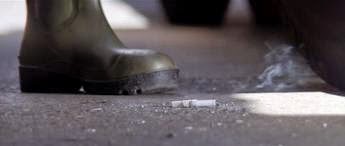
In the end, Tsai leaves us with this postscript, some famous lines from the Diamond Sutra, one of the Sanskrit texts translated by Xuanzang into Chinese:

All composed things are like a dream,
A phantom, a drop of dew, or a flash of lightning,
That is how to meditate on them,
That is how to observe them.

Running Out of Karma: Soi Cheang’s Accident

Running Out of Karma is my on-going series on Johnnie To, Hong Kong and Chinese-language cinema. Here is an index.

Essentially a Milkyway Image version of The Conversation, a internalized paranoia thriller with metaphysical implications and a visual style that lodge it firmly in the Johnnie To/Wai Ka-fai universe even though they (probably) had relatively little to do with the production. Louis Koo plays The Brain, the leader of a group of hired killers who specialize in making their hits look like (wildly improbable) accidents, Rube Goldberg assassinations. Implicit in their work is the belief that because they create “random” events, nothing in the world is a matter of chance. As Koo explains, they are not the only ones in this business and in killing certain folks, they likely have created powerful enemies. Koo, driven by the film’s opening image (a woman dying in a car accident, his wife) sees enemies and conspiracies everywhere. When a hit goes wrong, it must be a work of a rival, or a betrayal by his team. The universe is not random, it is actively trying to destroy him.

Images of chaos abound: balloons, bouncing balls, a broken watch, falling leaves. As Koo becomes obsessed with his suspect, he spies on him, first with a small monocular, tunneling his vision of the man at work to a small iris. We later see a wide shot of his office building (the suspect in an insurance agent, a man who makes his living betting against chance), a massive grid of circles, like a Connect Four board infinitely multiplying Koo’s vision: potential suspects are everywhere. Koo eventually installs himself in the apartment below the suspect, where he listens to his every move Lives of Others-style, mapping its layout on his ceiling, a desperate attempt not at imposing order on chaos, but at solving the conspiratorial order that must lie behind everything that he sees.

This was Soi Cheang’s first film for Milkyway. (He would make another with Motorway in 2012,  a getaway car heist movie in which the car chases rely on stasis, specifically a 90-degree turn performed from a dead stop. An audacious move for a genre that has for 40+ years hinged on more and more reckless uses of speed). The screenplay is credited to the team of Szeto Kam-yuen and Nicholl Tang, who previously worked on Cheang’s The Death Curse and Home Sweet Home (Szeto as well had been with Milkyway since 1997, having worked on Wai’s Too Many Ways to Be No. 1, three 1998 films and Exiled, as well as the non Milkyway Wilson Yip/Donnie Yen films SPL and Flash Point. He died in 2012 at the age of 48 due to lung cancer.). It’s also credited to the “Milkyway Creative Team” a catch-all sometimes used by the studio to indicate its committee process at work, wherein the various screenwriters and producers working for the company have some input on the final film, but not so much to earn an individual writing credit. Like Motorway, Accident fits snugly within the visual style Johnnie To has established as the Milkyway norm: crisp images with vibrant color, deep black shadows shot through with unexpected shafts of bright white light and elegance in composition that allows for spatial clarity in the editing of suspense and action sequences. These are the only two of Cheang’s films I’ve seen so far, though I hear and very much believe that his earlier stuff is well-worth watching.

It’s the thematic interactions with To and Wai’s previous work that strike me as most interesting about Accident. One of the running theories of the Running Out of Karma series (if I ever get back to actually writing about To, as opposed to the dozens of other Chinese-language cinema tangents I find myself getting lost within) is that the governing interaction (conflict isn’t the right word at all) in To’s films is that between fate and chance, between the complex web of forces that rule our lives (fate, karma, traditional moral and filial imperatives, even government itself) and the seemingly random ways in which those forces manifest themselves. Encounters (or the lack thereof) between lovers and enemies, coincidences, and luck routinely form the basis of the plots of the Milkyway films, which are in turn populated by doomed characters, fated to play out a pre-ordained role with little free will to be found. The Election films are the darkest, while the slapstick romantic comedies are the lightest, but the underlying metaphysics remain remarkably consistent in film after film. Life is a game and the degree to which the game is rigged marks the line between comedy and drama, between violence and farce.

So Accident, then, takes this vision of a universe governed by fate and administered through chance and turns in into paranoid fantasy. Louis Koo, The Brain, convinces himself that sinister forces are controlling his life (much as they indeed did for Koo’s gangster in Election 2) because he, like To and his writers, has devoted his life and career to creating elaborate illusions of chance. The set pieces in Accident are as cunningly designed as the culminating randomness of PTU or Expect the Unexpected. But where To’s heroes are constantly striving outwards, struggling against the system despite the hopelessness of the task (even if they don’t even know anymore why they’re doing it, as in Vengeance), The Brain retreats ever further inward, lost in his delusion (think of the mirrors which Koo carefully positions around his apartment, allowing him to see all the angles at once so that no one may sneak up on him with the fracturing of identity in the mirror-shattering climaxes of The Longest Nite and Mad Detective), his universe collapsing in on itself until even it too is erased by the inevitable consequence of an accident.

This Week in Rankings

Since my last rankings update, I went on a fake-movie-award-giving binge, handing out new Endy Awards and revising old ones for the last 14 years. Johnnie To, naturally enough, is the big winner of the century thus far. I’m going to attempt to update these every time I do one of these rankings posts as well, but we’ll see how that goes. I also wrote about a pair of Frederick Wiseman films (Ballet and Crazy Horse) and revisited Tsui Hark’s Shanghai Blues. And, as Labor Day passed, I put together a new Top 100 Films of All-Time list (and a special George Sanders Show Top Ten Episode as well). As always, I continue to make lists and write short reviews and comments over at letterboxd.

Looking ahead, next weekend I make my way north once again to the Vancouver International Film Festival. I’ve got a potential schedule posted already, and am looking to get some preview reviews up sometime soon.

These are the movies I’ve watched and rewatched over the last several weeks, and where they place on my year-by-year rankings.

Strike (Sergei Eisenstein) – 6, 1925
Dishonored (Josef von Sternberg) – 5, 1931
Viva Las Vegas – (George Sidney) – 21, 1964
Come Drink with Me (King Hu) – 9, 1966
Wavelength (Michael Snow) – 9, 1967

High School (Frederick Wiseman) – 9, 1968
No Way to Treat a Lady (Jack Smight) – 26, 1968
The Valiant Ones (King Hu) – 12, 1975
Piranha (Joe Dante) – 20, 1978

Raining in the Mountain (King Hu) – 10, 1979
Rock ‘N’ Roll High School (Allan Arkush) – 13, 1979
Mad Max (George Miller) – 22, 1979
Shanghai Blues (Tsui Hark) – 3, 1984
Stop Making Sense (Jonathan Demme) – 6, 1984

Matewan (John Sayles) – 24, 1987
Orlando (Sally Potter) – 9, 1992
Ballet (Frederick Wiseman) – 5, 1995
Casa de Lava (Pedro Costa) – 10, 1995
La Comédie-Française (Frederick Wiseman) – 19, 1996

Tempting Heart (Sylvia Chang) – 25, 1999
Belfast, Maine (Frederick Wiseman) – 29, 1999
Mission to Mars (Brian DePalma) – 21, 2000
Ghosts of Mars (John Carpenter) – 16, 2001
Jade Goddess of Mercy (Ann Hui) – 22, 2003

Kung Fu Hustle (Stephen Chow) – 5, 2004
Le Pont des Arts (Eugène Green) – 10, 2004
20 30 40 (Sylvia Chang) – 15, 2004
The Postmodern Life of My Aunt (Ann Hui) – 22, 2006
Liverpool (Lisandro Alonso) – 31, 2008

Accident (Soi Cheang) – 7, 2009
Love Aaj Kal (Imtiaz Ali) – 16, 2009
Crazy Horse (Frederick Wiseman) – 21, 2011
Pitch Perfect (Jason Moore) – 15, 2012
Rock of Ages (Adam Shankman) – 83, 2012

VIFF 2014: Introduction and Proposed Schedule

Part of my coverage of the 2014 Vancouver International Film Festival.

In just over two weeks, I’ll be heading to the Vancouver International Film Festival for the sixth time in the past seven years (a streak only interrupted by the birth of child #1 in 2011). As always, I plan to review as many of the films I see there as possible. In 2012 I managed to cover 30 out of 31 (I still plan to get to that last one someday), and last year I had eleven long reviews, a whole lot of letterboxd capsules and one two-part podcast. As with last year, I’m planning on some preview coverage this year, as I’d like to watch some films from directors who will feature at this year’s festival, mostly people from whom I’ve never seen anything before.

The festival looks to be much the same as in previous years, with a wide selection of world cinema, with a special focus on East Asian film in the Dragons & Tigers series programmed by Tony Rayns and Shelly Kraicer. Unfortunately, this year there will be no Dragons & Tigers competition, the award for young filmmakers that I had a lot of fun following along with the last couple of years. It leant a predictable structure to the festival, two films showing per night at one venue, followed by repeat performances during the day at another venue on the opposite end of downtown, with the whole competition viewable in only four days, followed by the gala awards ceremony. Instead there’s now a more general award for new directors, and the competition includes a slate of eleven films. Their showings are spread apparently at random throughout the first week, as if the award were a late addition and the competitors cobbled together from elements of the already-programmed festival as a whole. I might be able to make it to five of the competition films (marked with an * in the schedule below). Making it to all of them will probably be impossible as there are just too many other things to see during the eight days I’ll be in town.

This is a rough draft of the schedule I’m looking to follow at the 2014 Festival. Shows that conflict with each other are listed without a space in-between, with the filming I’m currently leaning towards attending listed first.

Saturday, Sept. 27:

The Princess of France (Matías Piñeiro)

La Sapienza (Eugène Green)

The Golden Era (Ann Hui)

Sunday, Sept. 28:

National Gallery (Frederick Wiseman)

Exit (Chenn Hsiang)*

Listen Up Philip (Alex Ross Perry)

Flowing Stories (Tsang Tsui Shan)

The Owners (Adilkhan Yerzhanov)

Monday, Sept. 29:

Ballet 422 (Jody Lee Lipes)

God Help the Girl (Stuart Murdoch)

Horse Money (Pedro Costa)

Uncertain Relationships Society (Heiward Mak)
Maps to the Stars (David Cronenberg)
The Vancouver Asahi (Yuya Ishii)

The Furthest End Awaits (Chiang Hsiu-Chiung)
Mommy (Xavier Dolan)

Tuesday, Sept. 30:

Miss and the Doctors (Axelle Ropert)*
Revivre (Im Kwontaek)

Free Fall (György Pálfi)

Heaven Knows What (Benny & Joshua Safdie)

Rekorder (Mikhail Red)*

Güeros (Alonso Ruíz Palacios)

Wednesday, Oct. 1:

Uncle Victory (Zheng Meng)

Two Days, One Night (Jean-Pierre & Luc Dardenne)

Hill of Freedom (Hong Sangsoo)

Winter Sleep (Nuri Bilge Ceylan)

Thursday, Oct. 2:

Mr. Turner (Mike Leigh)

Violent (Andrew Huculiak)
Foxcatcher (Bennett Miller)
An Eye for Beauty (Denys Arcand)

The Boy and the World (Alê Abreu)
Welcome to Me (Shira Piven)

The Iron Ministry (JP Sniadecki)
The Clouds of Sils Maria (Olivier Assayas)

Friday, Oct. 3:

Ow (Yohei Suzuki)*

Adieu au langage (Jean-Luc Godard)

August Winds (Gabriel Mascaro)*

Welcome to New York (Abel Ferrara)

Phoenix (Christian Petzold)

Saturday, Oct 4:

Blind Massage (Lou Ye)

Jauja (Lisandro Alonso)
Life of Riley (Alain Resnais)

Highway (Imtiaz Ali)

The Midnight After (Fruit Chan)
The Two Faces of January (Hossein Amini)

Sunday, Oct. 5:

Queen and Country (John Boorman)

Above Us All (Eugenie Jansen)

My biggest regrets are going to be missing The Tale of Princess Kaguya (Isao Takahata) which plays only once, just as I arrive in town and The Clouds of Sils Maria (Olivier Assayas) which overlaps with a pair of films I’m unlikely to be able to see anywhere else. The Takahata is opening in Seattle in October, so that won’t be too bad, but it looks like the Assayas won’t have a US release until 2015. The biggest regret of all, of course, is that Johnnie To’s Don’t Go Breaking My Heart 2 isn’t playing the festival at all, though it is playing at Toronto. I don’t know how I’m going to be able to catch that one.

Here is a list of my planned preview coverage.

Casa de Lava (Pedro Costa)
The Color Wheel (Alex Ross Perry)
Ex (Heiward Mak)
Hahaha (Hong Sangsoo)
Jab We Met (Imtiaz Ali)
Liverpool (Lisandro Alonso)
Love Aaj Kal (Imtiaz Ali)
Les Pont des Arts (Eugène Green)
Viola (Matías Piñeiro)