Summer of Sammo Bonus: Lau Kar-Leung’s Dirty Ho

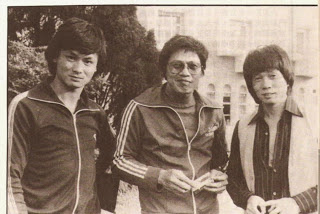
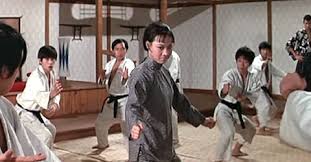
A twist on the master-student narrative, where the student, a petty thief and scoundrel (‘Dirty’ Ho Jen, played by Wang Yue) has to be tricked into following the master (Gordon Liu), who himself turns out to be a Manchurian prince. The Manchus are almost always the villains in these stories, standing in for all kinds of enemies of China, from the Japanese, to European colonists to Mao’s Communists. So we have a hero who isn’t very heroic and a master from a reviled class.

Liu’s character grows more complicated still. His brothers are all competing to succeed their father, the Emperor, but he doesn’t want the job. All he enjoys are antiques, art, good wine and practicing kung fu. He seems to have a moral sense, and this is why he tricks Ho into becoming his student (because he wants to set him on the right path and sees the potential for good in him), but issues of social justice, of pursing the best interests of the Empire, are alien to him. He spends the entire film hiding his identity and power, preferring the decadence of the artistic life and the withdrawal of epic kung fu training sessions to political engagement.

The final moments of the film thus prove a stunning display of the power of class and the resilience of the social order. After finally making it to the imperial palace in Beijing, Ho twice asks the general sent to assassinate Liu who is behind him, which of the other princes ordered the hit job. Both times Liu angrily tells Ho to shut up, that that question is between Liu and the other princes and that ‘slaves’ are not allowed to ask such things. There is an unbridgeable gulf between Liu and Ho, despite the closeness of the master-student relationship, the dynamic is truly a master-slave one. The film ends with Ho, after helping Liu quickly get properly dressed to meet his father in the reception hall, being flung out of the palace doors, a freeze frame holding indefinitely his expulsion and exclusion from the inner circle of power.

This being a Lau Kar-leung film, the fight scenes are spectacular. The opening credit sequence provides a neat twist on Lau’s traditional ‘Gordon Liu performs kung fu before a blank screen’ opening by opening with a Busby Berkeley-style overhead shot of some thieves gathered around treasure, with first Wang Yue stealing it and then Gordon Liu coming along and fighting and then joining him, a musical kung fu sequence that wordlessly establishes the basic premise of the film we’re about to see, with a black and white color scheme (white backdrop, black outfits and credits, further emphasizing the old Hollywood influence.

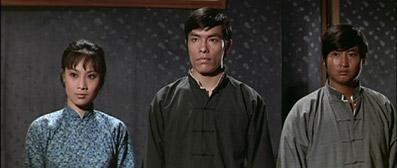
Several other fights scenes are tremendous, some of Lau and Liu’s best work, and Wang gets a couple of group fights, the first a parody-in-advance of Chang Cheh’s masterpiece Crippled Avengers which is pretty funny, the second one in which he gets hypnotized by a gang of creepy losers which is not. While Liu’s solo fights are nifty, always performed as he’s trying to hide the fact that he’s fighting, which makes them hilariously passive aggressive in their small movements, the film’s best sequences are a trio of group fights. The first comes fairly early in the film where Liu uses Kara Hui as a puppet to fight Ho, without letting on that’s he’s behind it, the three actors moving beautifully together. The second an ambush when Ho and a wheelchair-bound Liu are attacked by a horde of assassins in an apocalyptic ghost town, a rush of mass movement in a wild, abstract space. The third the film’s final battle, where Wang and Liu take on the general (played by the always great Lo Lieh) and two of his minions. The coordination of these sequences is impeccable, multiple actors moving as one, finishing each others movements and extending into the next series of motions fluidly, transcending the staccato rhythm of many a Shaw Brothers kung fu sequence. It’s a testament to Lau’s skill and attention to detail as a choreographer, which allows the camera to run for long takes capturing dozens of synchronized movements and interactions between stars and extras alike. The effect is mesmerizing, the frame always filled with more motion than the brain can process, not because of its speed (or the blur of rapid cutting) but because of so much captured intricacy. The takes aren’t nearly as long, or as distant, as in the modernist art film, but there’s something positively Tati-esque in Lau’s approach to filming his action scenes. There’s always something new to see.

Summer of Sammo Index

This is an index of the things I’ve written this summer on Sammo Hung movies:

Podcasts:

They Shot Pictures #17: Sammo Hung – Jul 08, 2013
The George Sanders Show Episode 10: The Grandmaster and A Touch of Zen – Aug 29, 2013

Long Reviews:

Eastern Condors (Hung, 87) – May 24, 2013
Zu Warriors (Tsui, 01) – May 29, 2013
Warriors Two (Hung, 78) – May 30, 2013
Encounters of the Spooky Kind (Hung, 80) – Jun 01, 2013
Winners & Sinners (Hung, 83) – Jun 04, 2013
Pedicab Driver (Hung, 89) – Jun 06, 2013
The Iron-Fisted Monk (Hung, 77) – Jun 08, 2013
Hapkido (Huang, 72) – Jun 20, 2013
Ashes of Time Redux (Wong, 08)Aug 26, 2013

Capsules at Letterboxd:

Wheels on Meals (Hung, 84) – May 24, 2013
Enter the Fat Dragon (Hung, 78) – Jun 14, 2013
Twinkle Twinkle Lucky Stars (Hung, 85) – Jun 17, 2013
The Prodigal Son (Yuen, 81) – Jun 26, 2013
Wheels on Meals (Hung, 84) – Jul 09, 2013
Mr. Vampire (Lau, 85) – Jul 15, 2013

A Touch of Zen (Hu, 71) – Jul 17, 2013

Ip Man 2 (Yip, 10) – Aug 22, 2013

And as the Summer of Sammo has expanded to Hong Kong genre and New Wave cinema in general, here are reviews of some Sammo-less movies:

Long Reviews:

The Butterfly Murders (Tsui, 79) – May 31, 2013
Dirty Ho (Lau, 76) – Jun 30, 2013
Intimate Confessions of a Chinese Courtesan (Chor, 72) – Jul 07, 2013
Come Drink With Me (Hu, 66) – Jul 10, 2013
The One-Armed Swordsman (Chang, 67) – Jul 12, 2013
The Spiritual Boxer (Lau, 75) – Jul 15, 2013
Heroes Shed No Tears (Chor, 80) – Jul 16, 2013
Dragon Gate Inn (Hu, 67) – Jul 17, 2013
Heroes Two (Chang, 74) – Jul 22, 2013
The Sentimental Swordsman (Chor, 77) – Jul 23, 2013
Five Shaolin Masters (Chang 74) and Shaolin Temple (Chang 76) – Jul 24, 2013
Return of the One-Armed Swordsman (Chang, 69) – Jul 25, 2013
Heaven Sword and Dragon Sabre Parts One & Two (Chor, 78) – Jul 25, 2013
Vengeance! (Chang, 70) – Jul 27, 2013
The Heroic Ones (Chang, 70) – Jul 29, 2013
Days of Being Wild (Wong, 90) – Aug 16, 2013
Nomad (Tam, 82) – Aug 20, 2013
Crouching Tiger, Hidden Dragon (Lee, 00) – Aug 28, 2013
My Heart is that Eternal Rose (Tam, 89) – Sep 02, 2013
Boat People (Hui, 82) – Sep 03, 2013

Capsules at Letterboxd:

Iron Monkey (Yuen, 93) – May 25, 2013
The Chinese Feast (Tsui, 95) – Jun 04, 2013
We’re Going to Eat You (Tsui, 80) – Jun 08, 2013
Once Upon a Time in China (Tsui, 91) – Jun 13, 2013
Drunken Master (Yuen, 78) – Jun 13, 2013
Once Upon a Time in China II (Tsui 92) – Jun 14, 2013
Wing Chun (Yuen, 94) – Jun 15, 2013
The Buddhist Fist (Yuen, 80) – Jun 21, 2013
Dreadnaught (Yuen, 81) – Jun 24, 2013
Dangerous Encounters – First Kind (Tsui, 80) – Jun 25, 2013
Drunken Master II (Lau, 94) – Jun 26, 2013
The Big Boss (Lo, 71) – Jun 28, 2013
Challenge of the Masters (Lau, 76) – Jun 29, 2013
Tiger on the Beat (Lau, 88) – Jul 01, 2013
Eight Diagram Pole Fighter (Lau, 84) – Jul 03, 2013
Blood Brothers (Chang, 73) – Jul 04, 2013
Righting Wrongs (Yuen, 86) – Jul 05, 2013
The Miracle Fighters (Yuen, 82) – Jul 08, 2013
Drunken Monkey (Lau, 03) – Jul 08, 2013
The Magic Blade (Chor, 76) – Jul 13, 2013
Boxer Rebellion (Chang, 76) – Jul 20, 2013
The House of 72 Tenants (Chor, 73) – Jul 21, 2013
Shaolin Temple (Chang, 76) – Jul 21, 2013
Heaven Sword and Dragon Sabre (Chor, 78) – Jul 22, 2013
Five Element Ninjas (Chang, 82) – Jul 28, 2013
Raining in the Mountain (Hu, 79) – Aug 04, 2013
Return of the Sentimental Swordsman (Chor, 81) – Aug 12, 2013
Full Contact (Lam, 92) – Aug 18, 2013
Rouge (Kwan, 88) – Aug 20, 2013
He’s a Woman, She’s a Man (Chan, 94) – Aug 24, 2013
The Sword (Tam, 80) – Aug 24, 2013
The Happenings (Yim, 80) – Aug 26, 2013
After This, Our Exile (Tam, 06) – Aug 27, 2013
A Chinese Ghost Story (Ching, 87) – Aug 31, 2013
Cherie (Patrick Tam, 84) – Sep 08, 2013

Podcast:

The George Sanders Show Episode Four: Duel of Fists (Chang, 71) and Tears of the Black Tiger (Sasanatieng, 00) – Jul 20, 2013

And here are the Summer of Sammo movies I’ve seen but not yet written about:

Knockabout (Hung, 79) – Jun 06, 2013
Yes, Madam (Yuen, 85) – Jun 07, 2013
My Lucky Stars (Hung, 85) – Jun 10, 2013
Zu: Warriors from the Magic Mountain (Tsui, 83) – Jun 11, 2013
Snake in the Eagle’s Shadow (Yuen, 78) – Jun 12, 2013
Dragons Forever (Hung, 88) – Jun 16, 2013
Magnificent Butcher (Yuen & Hung, 79) – Jun 17, 2013
Golden Swallow (Chang, 68) – Jul 12, 2013
As Tears Go By (Wong, 88) – Aug 14, 2013
Full Moon in New York (Kwan, 90) – Aug 18, 2013
Sons of the Good Earth (Hu, 65) – Sep 03, 2013

And because why not, here are some older reviews from the last couple of years’ Christmas with the Shaw Brothers:

The Shadow Whip (Lo, 71) – Jan 16, 2011
The Deadly Breaking Sword (Sun, 79) – Jan 16, 2011
Shaolin Intruders (Tang, 83) – Jan 16, 2011
Brave Archer and His Mate (Chang, 82) – Jan 16, 2011
Holy Flame of the Martial World (Lu, 82) – Jan 16, 2011
Journey of the Doomed (Cha, 85) – Jan 16, 2011
The Flying Guillotine (Ho, 75) – Dec 20, 2012
Executioners from Shaolin (Lau, 77) – Dec 21, 2012
Killer Clans (Chor, 76) – Dec 26, 2012
Mad Monkey Kung Fu (Lau, 79) – Dec 27, 2012


And some other old Hong Kong stuff:

Dragon Gate Inn (Hu, 67) – Jan 14, 2010
Ong-Bak 2: The Beginning (Jaa & Rittikrai, 08) – Mar 06, 2010
Red Cliff (Woo, 08) – Apr 04, 2010
Return of the One-Armed Swordsman (Chang, 69) – Jul 27, 2010
Return to the 36th Chamber (Lau, 80) – Aug 21, 2010
The Eight-Diagram Pole Fighter (Lau, 84) – Oct 28, 2010
Crippled Avengers (Chang, 78) – Oct 28, 2010
The Water Margin (Chang, 72) – Oct 28, 2010
Vengeance is a Golden Blade (Ho, 69) – Oct 28, 2010
Have Sword Will Travel (Chang, 69) – Oct 28, 2010
The Wandering Swordsman (Chang, 70) – Oct 28, 2010
All Men Are Brothers (Chang, 75) – Dec 03, 2010
Brothers Five (Lo, 70) – Dec 03, 2010
Disciples of the 36th Chamber (Lau, 85) – Dec 23, 2010
Shaolin Mantis (Lau, 78) – Dec 23, 2010
Swordsman (Hu, 90) – Sep 26, 2012
Swordsman 2 (Ching, 92) – Sep 26, 2012

They Shot Pictures Episode #16: Jane Campion

This week’s episode of They Shot Pictures on director Jane Campion is now available. Seema and I talk about An Angel at My Table, The Portrait of a Lady and Top of the Lake with Melissa Tamminga from A Journal of Film. You can download the show or subscribe to it in iTunes over at the They Shot Pictures website. There as well you can find all our past shows, and you can follow us on twitter @TSP_podcast. Next up this weekend is our Sammo Hung episode (discussing Magnificent Butcher, Wheels on Meals and Pedicab Driver), followed by Abbas Kiarostami and the John Ford to round out July. Check out the Upcoming Episodes page for more information.

And speaking of podcasts, The George Sanders Show is now available on iTunes. Our next episode should be up this weekend, discussing Dead Man and Ride Lonesome.

The George Sanders Show: Episode One

My pal Mike and I went and started yet another podcast, The George Sanders Show, in which every week we discuss and old movie and a new movie, along with some other odds and ends. The first episode is live now on the website, and should be coming to iTunes soon. You can follow the show on twitter @GeoSandersShow and check out our website here. It’s got one of those fancy new blogger designs that look nice but that I find horribly confusing. 
Because I like redundancy which is something I like, here’s a copy of the show post from the website:
In this inaugural episode of The George Sanders Show, Sean and Mike discuss Fritz Lang’s classic 1953 film noir The Big Heat and Johnnie To’s upcoming crime epic Drug War. They also talk about their favorite cinematic highs and lament the demise of Seattle’s Egyptian Theatre and the deaths of two great artists.
You can listen or subscribe with iTunes via these links:
Listen Now:
icon for podbean  Standard Podcasts: Hide Player | Play in Popup | Download  iTunes
Some show-related letterboxd links:
Sean’s director lists: Johnnie To and Fritz Lang
Short reviews of Drug War: Sean and Mike
Short reviews of The Big HeatSean and Mike
Some Johnnie To-related stuff Sean did earlier this year:

Quote of the Day

“Hardcore fans display innocent mania, but aesthetes are the dandies of fandom. They relish not merely chases and fights; they treasure peculiar spectacle and piquant ruptures of tone. Steeped in Camp and other alternative pleasures, they often subscribe to J. Hoberman’s notion of “vulgar modernism,” the possibility that mass cinema’s off-center products parallel the avant-garde in the high arts. The good things in popular art, according to this postsurrealist view, are the moments of radical dépaysement, absurdly farfetched plot twists, violations of taste and logic. The fan’s spontaneous “Whoa, where did this come from?” becomes a self-conscious principle, a connoisseurship of radical weirdness.”

                                                              — David Bordwell, Planet Hong Kong

Summer of Sammo: Hapkido

An early supporting role for Sammo Hung as he and Angela Mao (the film’s alternate title is the somewhat awesome Lady Kung Fu) travel from Japanese-occupied Korea to China in 1934 to establish a martial arts school, teaching the newly invented style of “Hap Ki Do” which looks like a melding of kung fu punching and kicking with judo flipping. Of course, once in China, they immediately run afoul of the local Japanese-run martial arts school, leading to many bloody encounters with Japanese students and the Chinese and Korean turncoats who have joined the enemy. Eventually the metaphor becomes even more blatant as the evil Japanese Master (who sports a Hitler mustache, naturally) decides he’s going to annex the Hap Ki Do school and make it a part of his own school. Once they’re all under the Japanese umbrella, there would be no reason for fighting; they’ll be one happy family.

Sammo plays the youngest, most hotheaded Hap Ki Do brother, brave but always getting into trouble by defending the weak against the Japanese bullies. The one word their master gave them, the one warning, was “Forbearance”. Not to strike out against the enemy but to endure and outlast it. His students, but most especially Sammo, repeatedly fail to follow this advice (despite Sammo going so far as to write the character on his hand as a reminder), and the film, more than it is about the peculiarities of early 30s Japanese aggression, is about the conflict that lies at the heart of many a kung fu movie: that between the Confucian ideal of filial piety, respect for one’s elders and the Buddhist/Taoist ideal of withdrawal from the material concerns of the world on the one side and the demands of social and political justice on the other. This is often expressed in anti-colonial terms, whether against the Manchurians (The 36th Chamber of Shaolin, Fong Sai Yuk), Europeans (Once Upon a Time in China, Drunken Master II) or Japanese (Fist of Legend and this film).

Director Huang Feng keeps the plot moving briskly, if occasionally at the expense of cutting out some, probably tedious, connective scenes. He films the fights with an eclectic mix of POV shots, shaky handheld camera, overhead shots and standard Shaw Brothers-style head-to-toe framing, with fairly long takes that show off Mao’s impressive kicking abilities and the manic intricacies of the stunt choreography. I haven’t seen any of Huang’s other work, though he did co-write Sammo’s directorial debut The Iron-Fisted Monk. The only thing I’d seen Angela Mao in before this was Enter the Dragon (she has a brief but memorable appearance as Bruce Lee’s doomed sister). She’s terrific, easily holding her own against the ridiculously good stunt team Huang and the Golden Harvest studio had assembled: Sammo (who also served as stunt coordinator), Yuen Biao, Corey Yuen, Billy Chan, Lam Ching-wing and Jackie Chan. Mao has a palpable look of desperation when she fights, rather than the placidity of a Gordon Liu or the cool intensity of Bruce Lee, she really looks like she’s scared but determined to keep fighting regardless. Michelle Yeoh and Cheng Pei-pei sometimes seem afraid to show too much emotion when they’re fighting, as if people will take them less seriously because they’re women. Mao apparently has no such qualms, and her emotionality adds depth to her action sequences. Sammo, on the other hand, plays his fights straighter than he would in his own later films, with less acrobatics (a casualty of the film’s chosen fighting style) and less humor. He does give a fantastic double take after being hit in the head with a metal pole, a brief blank look at the camera that doesn’t oversell the comedy (like he and Jackie Chan would become prone to do later on). As an actor, this might actually be one of his best performances.

The end of the film has a nifty twist on the compromised ending of King Hu’s Come Drink With Me. In that film, Cheng Pei-pei, who’d played the hero throughout, is unable to defeat the final villain and must be rescued by a man (this is reportedly not how Hu wanted things to end, but rather a Shaw Brothers imposition). In Hapkido, Mao brings in a ringer for her final fight, the male head student of the Korean school. Tall and powerful, we think he’ll be the one to defeat the Japanese Master, but he fails. In the end, the woman gets to come to his rescue.

This Week in Rankings

I inadvertently became a source for the biggest story of the week, as my tweet about the imminent closing of Landmark’s Egyptian Theatre in Seattle was the first to break the news. It’s weird being cited as a source in a newspaper, even an online version of one, especially since I don’t really know anything about the story. I was at the Neptune Theatre when Landmark failed to keep it open, and left the Metro Cinemas (where I had spent 11 years, not counting my brief tenure at the Neptune) just months before Landmark lost it as well. When lamenting the state of the arts on Capital Hill, or speculating on what exciting things can be done with this new space, try to keep in mind the dozen or so people who genuinely love the movie theatre business who just lost their jobs with less than two weeks notice.

I was back on They Shot Pictures this week, with the first of two episodes we’ll be doing on Akira Kurosawa. This one focuses on No Regrets for Our Youth, The Idiot and Red Beard. I’ve got two more They Shot Pictures coming up this week, one on Sammo Hung and the other on Jane Campion. I may have some other podcasts in the works as well.

I only managed to finished one Summer of Sammo review this week, on his directorial debut The Iron-Fisted Monk. But I did post two more VIFF reviews, on Amour and Emperor Visits the Hell. That leaves only one more (on The Unlikely Girl) and I’ll be done with the film festival that ended nine months ago. Surely there’s plenty of time to finish that before VIFF 2013 comes around.

I did make a bunch of director lists over on letterboxd: Tsui Hark, Lau Kar-leung, Chang Cheh, King Hu, John WooCorey Yuen, Yuen Woo-ping, Jackie ChanSammo HungVincente Minnelli and King Vidor.

Here are the movies I watched and rewtached over the past week, and where they place on my year-by-year rankings. Links are to comments at letterboxd, where applicable.

Diary of a Chambermaid (Jean Renoir) – 12, 1946
Ruby Gentry (King Vidor) – 9, 1952
Drunken Master (Yuen Woo-ping) – 6, 1978
Snake in the Eagle’s Shadow (Yuen Woo-ping) – 10, 1978
Enter the Fat Dragon (Sammo Hung) – 15, 1978

We’re Going to Eat You (Tsui Hark) – 10, 1980
Zu: Warriors from the Magic Mountain (Tsui Hark) – 6, 1983
Twinkle Twinkle Lucky Stars (Sammo Hung) – 15, 1985
My Lucky Stars (Sammo Hung) – 19, 1985
Dragons Forever (Sammo Hung) – 22, 1988

Once Upon a Time in China (Tsui Hark) – 5, 1991
Once Upon a Time in China II (Tsui Hark) – 19, 1992
Wing Chun (Yuen Woo-ping) – 15, 1994
The Mummy (Stephen Sommers) – 49, 1999
Frances Ha (Noah Baumbach) – 8, 2012

They Shot Pictures Episode #15: Akira Kurosawa, Part One

After a two month baby-related hiatus, I’m back on They Shot Pictures this week to talk about Akira Kurosawa. This is the first of two episodes we have planned for him, focusing this time on his non-samurai films: the more obscure, perhaps for good reason, No Regrets for Our Youth, The Idiot and Red Beard. I liked all of these movies, though each are flawed in different ways. Hopefully discussing those flaws brings us closer to an understanding of Kurosawa’s work and his somewhat lesser critical standing than his rough contemporaries Yasujiro Ozu, Mikio Naruse, Nagisa Oshima and Kenji Mizoguchi, the Kinks to Kurosawa’s Beatles. We’ll be back again to talk about his samurai films in August.

You can listen to or download the show at the They Shot Pictures website, or on iTunes (where you can also give us a rating or a review). There you can find links to all our past shows. You can also follow us on twitter @TSP_Podcast. Over at letterboxd I’ve made a list of all 46 movies that have been discussed on the first 15 episodes. There you can also check out my ranked list of the 23 Kurosawa movies I’ve seen.

Coming up in the next week or so I’ll be talking Sammo Hung movies (Magnificent Butcher, Wheels on Meals, Pedicab Driver) with Jhon from Cinema on the Road and Seema and I will be talking Jane Campion movies (An Angel at My Table, Portrait of a LadyTop of the Lake) with Melissa from A Journal of Film. Check out our Upcoming Episodes page to see what we else have planned for the rest of the summer.

VIFF 2012: Emperor Visits the Hell

The Dragons & Tigers Award for Young Cinema at the Vancouver International Film Festival has an illustrious history. Handed out every year since 1994, previous winners include such now-vitally important filmmakers as Hong Sangsoo, Jia Zhangke, Kore-eda Hirokazu, Liu Jiayin, Lee Changdong and Wisit Sasanatieng. Winning the award this year, or should I say last year, was Chinese director Li Luo, for this, his third feature. I managed to see only five of the eight films in competition but my top choice would have been Song Fang’s Memories Look at Me, with Li’s film coming in second (the others I saw were A FishA Mere Life and Moksha: the World or I, How Does that Work?).  
Shot in a minimalist black and white, Emperor Visits the Hell is a modern-day retelling of three chapters from the Ming Dynasty epic Journey to the West, one of the foundational texts of Chinese literature and a never-ending font of film and television stories. After the Dragon King, a local gangster, disobeys an order from Heaven and changes the weather, he appeals to the Emperor, a government bureaucrat, to protect him from a death sentence at the hands of Heaven’s Executioner. The Emperor, Li Shimen (played by Li Wen) does his best to protect him, but the Messenger falls asleep and manages to kill the Dragon King in a dream, which is enough to kill him in reality. The Dragon King, as a ghost, then haunts the Emperor and causes his death. But, with the Executioner along to guide him through the underworld, the Emperor finds away to bribe his way back to life by altering what is written in the Book of Life and Death, a bureaucratic solution to a supernatural problem. It’s not that the Emperor breaks the rules, rather he bends them to conform to his desires. The Dragon King’s crime was outright, the specific defiance of a heavenly command. The Emperor obeys the rules as written, he just changes the writing, like Captain Kirk with the Kobayashi Maru. The film ends with the Emperor drunk and pontificating at a celebratory feast in a loud and crowded restaurant, and here the distinction between film story and reality itself breaks down, as the actor begins speaking as himself, rather than his character, a kind of riff on the ending of Abbas Kiarostami’s Taste of Cherry. Novel, film, reality, these too are arbitrary categorizations that one with enough power, like a motion picture director, can render meaningless.
In presenting its award, the Dragons & Tigers jury cited not only the film’s “mordant humor” but it’s “audacious integration of multiple levels of storytelling and filmmaking”, which it most certainly accomplishes. The film demolishes every border it comes across: dream and reality, past and present, film and literature, fiction and documentary. The Emperor, a man with both money and governmental authority, bends reality to his needs, a none-too-subtle crack at the state of contemporary Chinese society, where the meanings of laws and borders and even words can change depending on one’s wealth, position and connections. The use of black and white and the deadpan sense of humor immediately call Jim Jarmusch to mind, and there’s a blankness to the performances and a just slightly off the beat editing style that recalls nothing so much as Jarmusch’s masterpiece Dead Man, another film about a trip through the underworld where the normal rules and structures of reality fail to apply. It’s this dreamy rhythm that still haunts me nine months later, much more than the film’s post-modern satire.