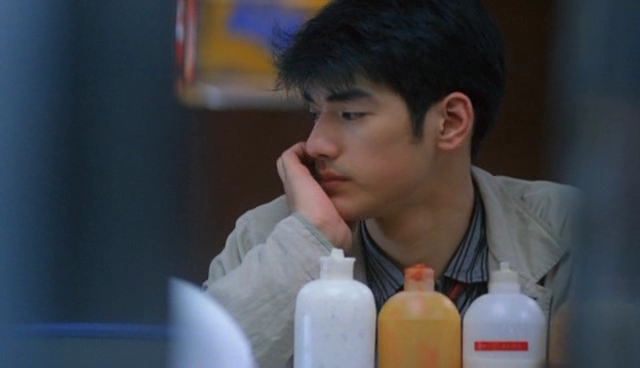
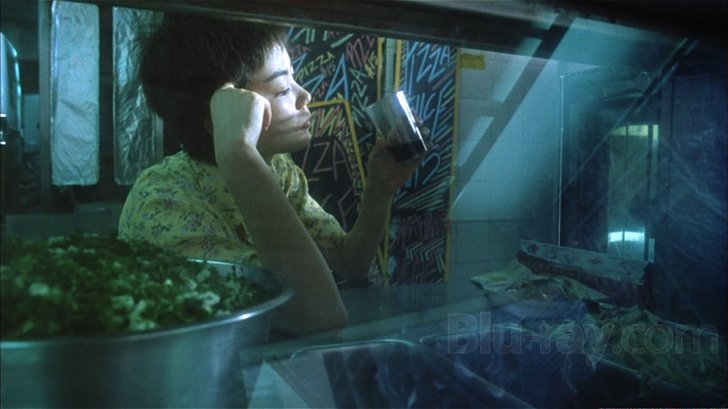
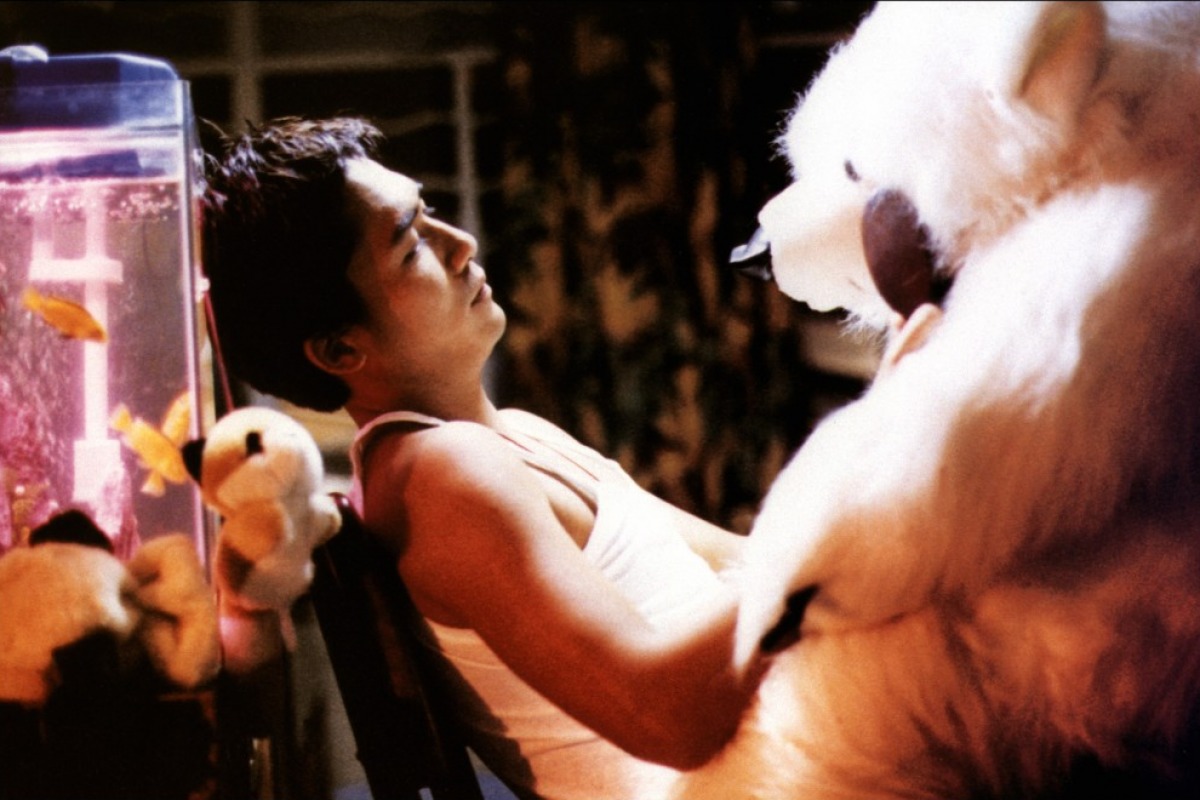
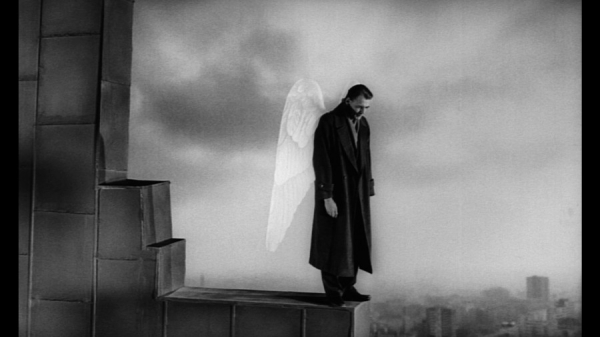
This Week in Rankings
Cockfighter – 10, 1974
Legend of the Mountain – 12, 1979
A Brighter Summer Day – 6, 1991
Café Lumière – 6, 2003
Breaking News – 6, 2004
Flight of the Red Balloon – 4, 2007
Margaret – 3, 2011
The Day He Arrives – 4, 2011
Don’t Go Breaking My Heart – 6, 2011
The Deep Blue Sea – 7, 2011
Romancing in Thin Air – 2012
Last Notes on the Sight & Sound Poll
All the critics’ ballots for the 2012 Sight & Sound poll went online today, along with a Top 250 films. You can click on any film title and see who voted for it, as well as search by director, year, country or whatever. It’s today’s easiest way to get lost on the internet.
I realize I never actually created my own hypothetical ballot, which should be somewhat different from the Top Ten of the last big list I put together. Being limited to only ten movies rather than 100, or 1000, I want the list to be as representative as possible of cinema as I see it and love it, and so I’m creating some arbitrary restrictions (one film per director, genre, era etc). With my Top 100, it’s not a big deal if, for example, no Powell & Pressburger film is in the top ten because they’re well represented with four in the top 100, but I can’t imagine a Top Ten without them. That said, I’m inevitably leaving out a ton anyway (Ozu, Hou, Sternberg, and Renoir, for starters. Sigh). Anyway, here’s a stab at what my Sight & Sound ballot would look like right now, in no particular order:
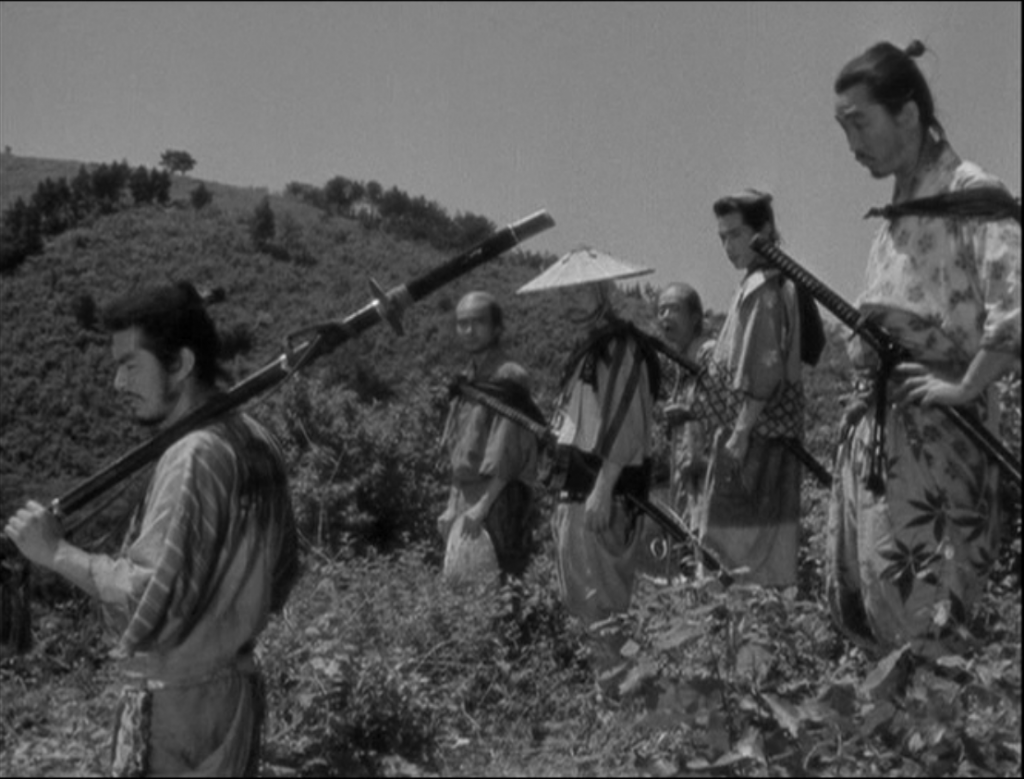
1. Seven Samurai
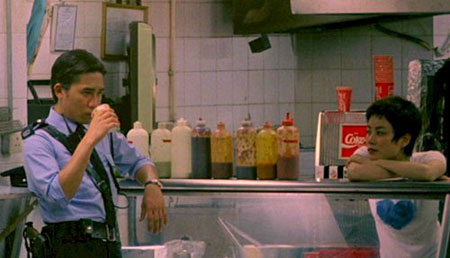
2. Chungking Express
3. Sunrise: A Song of Two Humans
4. Casablanca
5. Pierrot le fou
6. Night of the Hunter
7. La Commune (Paris 1871)
8. Days of Heaven
9. Rio Bravo
10. The Red Shoes
To answer a question I raised in my last post on the poll on the chances of a consensus forming around In the Mood for Love enough to get it into the Top Ten, Wong Kar-wai films received 71 votes, 42 of which were for In the Mood leaving 29 for the rest put together, including 12 for my favorite, Chungking Express (sadly, no one voted for Fallen Angels, though Kenji Fujishima would have). 23 of those voters would have had to have voted for In the Mood this year for it to surpass 8 1/2 for tenth place. Unlikely, but with some new voters added, it’s not impossible to see it moving up that high in the next couple decades.
Finally, here are the 45 films in the Top 250 that I have yet to see, most of which I’m looking forward to watching over the next decade:
Shoah
Pather Panchali
La Maman et la putain
Beau travail
Fanny & Alexander
A Brighter Summer Day
Touki Bouki
Fear Eats the Soul
Wavelength
The Traveling Players
Los olvidados
Performance
L’Age D’or
Mouchette
Amarcord
Out 1
L’Argent (Bresson)
Memories of Underdevelopment
Napoleon
Marketa Lazarova
Distant Voices, Still Lives
Werckmeister Harmonies
Breaking the Waves
Faces
Listen to Britain
Eraserhead
Red Desert
Chelsea Girls
Kings of the Road
Berlin Alexanderplatz
Videodrome
Daisies
West of the Tracks
A Tale of Tales
Wanda
Germany Year Zero
Salo
The Devil Probably
The Turin Horse
Love Streams
Floating Clouds
Melancholia
The House is Black
The World of Apu
Kes
Old Movie List Discovered: Provokes Mild Embarrassment, Rethinking of Life
A while back I rescued from the hard drive of a now 20 year old computer, a list of the Best Movies Ever that I put together back in the summer of 1998. That was the year I moved to Seattle (a couple blocks away from the Best Video Store in the World) and watching movies became the thing I did for school and work instead of the thing I did instead of school or work. The list is reflective of the lack of viewing options I had as a young moviegoer in the cinema wasteland that was Spokane in the mid-90s, possibly (hopefully) the last time in history that a person’s geographic location was a major limiting factor in what films they could see. It also shows the influence of my pre-film studies reading: I’d spent the previous year and a half reading every movie book I could get my hands on, working my way up from Leonard Maltin, Roger Ebert and VideoHound’s Golden Movie Retriever to Pauline Kael, François Truffaut and Jonathan Rosenbaum, along with scholarly books on Orson Welles (James Naremore), Akira Kurosawa (Donald Richie), Alfred Hitchcock (Truffaut as well as David Sterritt) and Martin Scorsese (Lawrence Friedman).
So, like all lists, it’s a snapshot of a particular person at a particular time. And also like all lists, it’s notable as much for its omissions as for what it includes. But still, looking back on it fourteen years later, I can help but be a little surprised at it. Not because there are films ranked highly that I no longer think are any good (though there are a couple of slight embarrassments), but rather at how many of the films that I ranked highly then continue to occupy the top spots on the lists I’ve made more recently (I have four here at The End: a Top 150 from 2008, a Top 250 from 2009, a Top 600 from 2010 and a Top 1000 from 2011). Of course that shouldn’t be a surprise, as these are many of my favorite films, and one of the ways I define that inescapably vague term “favorite film” is by how long I’ve lived with them, not simply in terms of rewatchability (though several of these I’ve seen many, many times), but in how over time these particular movies have come to define what I think cinema is, what it should be, and what it can be.
With the release of the latest Sight & Sound poll this week, and Labor Day Weekend, the time of year I traditionally create a new Best of All-Time, fast approaching, lists have been on my mind. Every year, my Best Lists have gotten bigger and bigger, culminating last year, when I spent a month or so creating a Top 1000 list, an inherently ridiculous task that was as fun as it is absurd. I could keep that trend going, with ever longer and more tedious lists (1500!, 2000!, 5000!), or I could try something new. And so I’m going to follow the advice of the great Kristin Thompson, who in a post at her blog in March on the topic of Best Of lists suggested abandoning the repetitive reassertions of the canon that inevitably result from consensus-based polls like Sight & Sound‘s in favor an approach more like that of the National Film Registry:
I think this business of polls and lists for the greatest films of all times would be much more interesting if each film could only appear once. Having gained the honor of being on the list, each title could be retired, and a whole new set concocted ten years later. The point of such lists, if there is one, is presumably to introduce people who are interested in good films to new ones they may not have seen or even known about.
And so I’m going to create a The End of Cinema Hall of Fame, inducting a few movies each year and writing about them along the way. Sometime soon, I’ll name 25 films, then spend the next year writing about them every two weeks or so until it’s time to name the next class. I’m not going to rank them, instead I’ll just go along with the assumption that all Hall of Famers are equally canonical. I haven’t decided what, if any, criteria I’m going to use: just naming my Top 25 films as of that moment or maybe using a quota system (Best film noir, Best Western, Best French movie, etc) or perhaps some kind of a combination of the two. Rest assured, it’ll be arbitrary.
As a warm-up, here’s my recently unearthed1998 Top 200 Movies of All-Time List:
1 Manhattan
2 Casablanca
3 Seven Samurai
4 Annie Hall
5 Citizen Kane
6 Miller’s Crossing
7 Ran
8 Singin’ in the Rain
9 The Birds
10 Mean Streets
11 Lawrence of Arabia
12 The Rules of the Game
13 The Empire Strikes Back
14 Psycho
15 L. A. Story
16 Dr. Strangelove, or How I Learned to Stop Worrying and Love the Bomb
17 The Philadelphia Story
18 The Godfather Part II
19 It’s a Wonderful Life
20 Goodfellas
21 The Wizard of Oz
22 Rashomon
23 Do the Right Thing
24 On the Waterfront
25 Taxi Driver
26 Three Colors: Blue
27 The Lion in Winter
28 The Mission (Joffe)
29 The Godfather
30 Close Encounters of the 3rd Kind
31 Star Wars
32 Pulp Fiction
33 Kiss Me Deadly
34 North by Northwest
35 The Manchurian Candidate
36 Duck Soup
37 American Graffiti
38 Six Degrees of Separation
39 Harvey
40 Throne of Blood
41 The Big Sleep
42 Touch of Evil
43 Schindler’s List
44 Amadeus
45 Sanjuro
46 8 1/2
47 Raging Bull
48 The Red Shoes
49 Children of Paradise
50 Crimes and Misdemeanors
51 Kagemusha
52 Dangerous Liaisons
53 The English Patient
54 Quiz Show
55 Unforgiven
56 Hannah and Her Sisters
57 Jaws
58 Platoon
59 Patton
60 The Seachers
61 Boogie Nights
62 Broadcast News
63 Out of the Past
64 Vertigo
65 Blood Simple
66 Seven
67 All About Eve
68 Henry V (Branagh)
69 The Seventh Seal
70 The Graduate
71 Suspicion
72 The Third Man
73 Stranger than Paradise
74 The Spy Who Came in from the Cold
75 The Last of the Mohicans (Mann)
76 Bringing Up Baby
77 The Player
78 Bugsy
79 Trainspotting
80 Yojimbo
81 Rebecca
82 The Maltese Falcon
83 The Shawshank Redemption
84 Brief Encounter
85 Bonnie and Clyde
86 Fantasia
87 Silence of the Lambs
88 JFK
89 Raiders of the Lost Ark
90 Zelig
91 The Men Who Tread on the Tiger’s Tail
92 Fargo
93 Mr. Smith Goes to Washington
94 Sleeping Beauty
95 The Age of Innocence
96 Reservoir Dogs
97 High Plains Drifter
98 A Clockwork Orange
99 Laura
100 The Outlaw Josey Wales
101 Stagecoach
102 Day for Night
103 Ugetsu
104 Wings of Desire
105 Swingers
106 The Lady from Shanghai
107 To Have and Have Not
108 Empire of the Sun
109 Three Colors: Red
110 Barton Fink
111 ET: the Extra Terrestrial
112 Out of Africa
113 Chasing Amy
114 Bull Durham
115 It Happened One Night
116 The Lady Vanishes
117 Double Indemnity
118 Kicking and Screaming
119 Clerks
120 The Thin Man
121 Big Night
122 The Princess Bride
123 Rope
124 Play It Again, Sam
125 The Right Stuff
126 Shadow of a Doubt
127 High and Low
128 Jules and Jim
129 Rear Window
130 The Fisher King
131 Sunset Boulevard
132 Hard Eight
133 The 39 Steps
134 The Last Temptation of Christ
135 Shoot the Piano Player
136 The Awful Truth
137 Le Samourai
138 Chinatown
139 The General
140 Monty Python’s the Life of Brian
141 The Asphalt Jungle
142 Z
143 Rosencrantz and Guildenstern are Dead
144 Force of Evil
145 Das Boot
146 The Man Who Shot Liberty Valence
147 Slacker
148 Point Blank
149 Kundun
150 The Big Lebowski
151 2001: A Space Odyssey
152 When Harry Met Sally. . .
153 Monty Python and the Holy Grail
154 Halloween
155 Notorious
156 The Good, the Bad, and the Ugly
157 Steamboat Bill, Jr
158 Kids
159 The Hidden Fortress
160 Top Hat
161 Party Girl
162 She Wore a Yellow Ribbon
163 The Sorrow and the Pity
164 Once Were Warriors
165 Sleeper
166 Marnie
167 Dreams
168 The Purple Rose of Cairo
169 Red River
170 Grand Hotel
171 Blow Out
172 Field of Dreams
173 Shadowlands
174 Nobody’s Fool
175 Fort Apache
176 Sullivan’s Travels
177 Beautiful Girls
178 Shampoo
179 Rosemary’s Baby
180 The Grand Illusion
181 The Ice Storm
182 Brazil
183 The Natural
184 Dazed and Confused
185 The Night of the Hunter
186 In the Company of Men
187 Love and Death
188 Judgement at Nuremburg
189 Nashville
190 Scream
191 Metropolitan
192 Edward Scissorhands
193 The Day the Earth Stood Still
194 The Hustler
195 Night on Earth
196 The Wild Bunch
197 The Magnificent Ambersons
198 Return of the Jedi
199 Afterhours
200 The Secret of NIMH
More on the 2012 Sight & Sound Poll
A couple days ago, on the eve of the announcement of the seventh decennial Sight & Sound Poll of the Greatest Films of All-Time, I predicted this for the Critics Top Ten:
1. Vertigo (Hitchcock, 1958)
2. 2001: A Space Odyssey (Kubrick, 1968)
3. Citizen Kane (Welles, 1941)
4. Rio Bravo (Hawks, 1959)
5. Singin’ in the Rain (Donen & Kelly, 1952)
6. Sunrise: a Song of Two Humans (Murnau, 1927)
7. Ran (Kurosawa, 1985)
8. Rules of the Game (Renoir, 1939)
9. In the Mood for Love (Wong, 2000)
10. 8 1/2 (Fellini, 1963)
This was the actual Top Ten:
1. Vertigo (Hitchcock, 1958)
2. Citizen Kane (Welles, 1941)
3. Tokyo Story (Ozu, 1953)
4. Rules of the Game (Renoir, 1939)
5. Sunrise: a Song of Two Humans (Murnau, 1927)
6. 2001: A Space Odyssey (Kubrick, 1968)
7. The Searchers (Ford, 1956)
8. Man with a Movie Camera (Dziga Vertov, 1929)
9. The Passion of Joan of Arc (Dreyer, 1927)
10. 8 ½ (Fellini, 1963)
I’d say I did alright, but not spectacular by any means. I had the wrong Western (no Howard Hawks film made the top 50(!) while John Ford’s The Searchers returned to the Top Ten) and the wrong Japanese film (I really underestimated how well Ozu would do, I’m quite happy to see). Singin’ in the Rain dropped down to #20 and I’m very surprised the Dreyer and Vertov films moved ahead of it. The Vertov seems to have shocked everyone, it appears to have supplanted Sergei Eisenstein’s Battleship Potemkin as the Top Ten’s representative of Silent Soviet Cinema, though Potemkin did end up at #11, so maybe its more a matter of Camera also getting a lot of pro-documentary and -avant-garde votes (it’s a landmark of both types of film). The Dreyer film has been in and out of the Top Ten for decades, so it’s less of a shocker, though I don’t think anyone predicted three silent films in the Top Ten. In the Mood for Love was a long shot, but it did end up at #24, the highest ranked film of the last 33 years (1979’s Apocalypse Now at #14 is the next most recent) and a mere 22 votes (out of 846) behind 8 1/2 for tenth place.
Here’s the Top Ten with where I ranked them last year in my Top 1000 Films list:
1. Vertigo (13)
2. Citizen Kane (38, 3rd among Welles films)
3. Tokyo Story (112, 2nd Ozu)
4. Rules of the Game (9)
5. Sunrise: a Song of Two Humans (6)
6. 2001: A Space Odyssey (44)
7. The Searchers (10)
8. Man with a Movie Camera (298)
9. Passion of Joan of Arc (459)
10. 8 1/2 (148)
And the films in my top ten that did not make the S&S Top Ten and their rank in the S&S Top 50, if any:
1. Seven Samurai (17)
2. Chungking Express
3. Casablanca
4. Annie Hall
5. Singin’ in the Rain (20)
7. Duck Soup
8. Night of the Hunter
I’m looking forward to being able to pour through the individual ballots, both for the critics and the filmmakers who participated in the Directors Poll (where Kane also finished second, but in this case to Tokyo Story). I suspect that when we get a look at the full list, beyond the Top 50, it will look a bit less dominated by the same old established films that make up the Top Ten (only Man with a Movie Camera had never been in the Top Ten before this year, and it’s over 80 years old).
With the most recent film on the Top Ten being Kubrick’s 43-year old 2001: A Space Odyssey, there’s been much complaint (on Twitter if not more reputable places) that the voters are biased towards the films of the post-war Baby Boomer era, or at least against more recent films. Bicycle Thieves topped the original list in 1952 a mere four years after its release, and L’avventura came in second about two years after its cacophonous reception at Cannes. On the contrary, though, I’d say we’re seeing the effects of exactly the opposite phenomenon.
It took only 64 votes to make the Top Ten. 64 out of 846 ballots, or 7.6%. You would expect that the more familiar a group is with a certain era of film history, the more films from that era they would vote for, spreading the votes around to such a degree that they’re unable to coalesce enough votes around any given film from that era. The list tends to be dominated older films and Official Best films (Best Western: The Searchers; Best Japanese Film: Tokyo Story (which moved ahead of Seven Samurai in ’92 and remains, despite the one being only the second or third best Ozu and the other being the Best Movie Ever); Best Musical: Singin’ in the Rain; and so on). A voter who is very familiar with the films of the last 40 years but not so much with the ones from the previous 70 has a wider pool of recent films to vote for than older ones. So support for recent films is diffused while the past consensus films live on. If this is the case, then the poll results we have indicate that the voting critics are not familiar enough with the first 70 years of cinema and are instead too focused on recent films.
Lower on the list we are starting to see consensus build on certain more recent titles (In the Mood for Love at #24, Mulholland Dr. at #28 (a couple years ago, it was our #2 movie of the 2000s over at Metro Classics), maybe Beau Travail at #78) while Coppola and Scorsese struggle to cohere enough support around a single film (Apocalypse Now (#14) or one of the Godfathers (#s 21 & 31)? Taxi Driver (#31) or Raging Bull (not in the Top 50 this year after finishing 6th in the 2002 Directors Poll)?) in the way a consensus has determined the best films of Ozu, Ford, Welles, Dreyer, Renoir, Fellini, Hitchcock (votes for Rear Window went steadily downward over the decades as Vertigo climbed its way to the top), Murnau, Kubrick, etc. This vote-splitting is, I think, the biggest reason Godard has yet to crack the Top Ten (he had four films in the Top 50, more than any other director), and why Kurosawa (Rashomon stealing votes from my beloved Seven Samurai), Antonioni, Mizoguchi, Tarkovsky and Bergman find themselves on the outside these days.
For evidence of the growing consensus on the top films of the past 40 years, note that 13 of the 11-50th ranked films are from after 1970:
14. Apocalypse Now (53 votes)
19. Mirror (47)
21. The Godfather (43)
24. In the Mood for Love (42)
28. Mulholland Dr. (40)
29. Stalker (39)
29. Shoah (39)
31. Godfather 2 (38)
31. Taxi Driver (38)
35. Jeanne Dielman (34)
35. Satantango (34)
42. Close-Up (31)
48. Histoire(s) du cinema (30)
If only 23 out of 804 people voted for non-In the Mood for Love Wong Kar-Wai films, (I’d guess that’s a pretty safe bet, but we’ll know for sure in a few days) and those people switched their votes from Chungking Express or Happy Together or Days of Being Wild or whatever to In the Mood, then there’d be a film from this century in the Top Ten.
What’s most shocking about the poll is not its repetition of staid consensus, but just how eclectic it is. Over 2,000 films received votes. That only ten of them managed to get even 7.5% of the vote is an argument for just how volatile and in flux the film canon truly is. Given this environment, the stability of the Top Ten is better seen as a remarkable fluke, or at least a last gasp, than a representative of some kind of critical imperialist tyranny.

On the 2012 Sight & Sound Poll
The latest edition of the British magazine Sight & Sound‘s decennial poll of the greatest movies of all-time is due to be announced about 12 hours from when this posts. In a field overflowing with Best Of lists and Top Tens and AFI DVD-selling ploys, the Sight & Sound poll stands out as the most prestigious, most long-running canon-defining survey we have. Every ten years since 1952, they’ve polled critics from around the world (this year’s edition sought out “more than 1,000 critics, programmers, academics, distributors, writers and other cinephiles” according to editor Nick James) to come up with a consensus Top Ten Greatest Movies of All-Time. The winner in ’52 was Vittorio De Sica’s Bicycle Thieves, and every year since the list has been topped by Citizen Kane, which is one of the main reasons that film has held the unofficial title of Best Movie Ever for so long.
My own history with the list goes back to the mid-90s, when, as a nascent cinephile working at a video store in Spokane, I would copy titles from the yearly lists that Roger Ebert printed in an appendix to one of his books and scour every video store in town looking for them. Many of the films listed were unavailable in Spokane in those pre-DVD, pre-internet video, VHS desert days, but I made sure to see them as soon as I could (and when I finally moved to Seattle, I did finally get to see most of them: there are two I haven’t yet: 1962’s #9 La terra trema and 1992’s #6 Pather Panchali). This is, of course, the main function of Greatest Whatever lists. It’s not just that they’re fun to make and argue about, it’s that in creating a reasonable version of a canon, they form a roadmap, a concise set of suggested paths to take for those who want to explore the movie world beyond the overexposed ubiquity of new releases.
There’s never been a Sight & Sound poll that matches my tastes exactly and it’d be extremely weird and creepy if there were. Generally, the poll tends to celebrate my second or third favorite films of some of my favorite directors (Kane over Touch of Evil, Tokyo Story over Late Spring, L’avventura over L’eclisse, The General over Sherlock Jr) alongside personal favorites (The Searchers, The Rules of the Game, Seven Samurai, Sunrise) and the occasional movie I like but don’t really love (The Godfathers, Battleship Potemkin). There’s never been a Top Ten film I’ve out-and-out hated; Bicycle Thieves is probably my least favorite. My favorite film, Seven Samurai, has only made the poll once, in 1982, and it’s either that poll or 2002’s that most closely resembles my own idea of the Top Ten. I make Best of Lists every year here at The End (last year I did a Top 1000), and the Sight & Sound films tend to do fairly well (the lowest ranked of 2002’s Top Ten on my list last year was Potemkin, at #503). I tend to rate comedies more highly than the poll does, but that’s probably just a side effect of the collective process: comedies tend to be more idiosyncratic and generational in appeal than dramas, so maybe its a bit harder to form a consensus around them.
Now, my prediction for this year’s Sight & Sound Top Ten Critics Poll:
1. Vertigo
2. 2001: A Space Odyssey
3. Citizen Kane
4. Rio Bravo
5. Singin’ in the Rain
6. Sunrise
7. Ran
8. The Rules of the Game
9. In the Mood for Love
10. 8 1/2
I’m predicting the triumphant return of the director of my favorite movie to the list, but with my second or third favorite of his films (Akira Kurosawa with Ran), along with my third favorite Wong Kar-wai film (In the Mood for Love instead of Chungking Express or 2046). I think the Western genre will return to the list, but with Howard Hawks and Rio Bravo a decade after John Ford’s The Searchers fell out of the Top Ten. I suspect Stanley Kubrick will continue his march to the top with 2001: A Space Odyssey, moving past longtime list veterans Singin’ in the Rain, Sunrise, The Rules of the Game and 8 1/2, but he’ll be held out of the #1 spot by Alfred Hitchcock and Vertigo, which I predict will become the third #1 film in the polls history, finally knocking Citizen Kane of its lofty perch. Finally, I predict that no longer burdened with Greatest Movie of All-Time status, a new generation of movie-goers will begin to appreciate Citizen Kane for the wildly entertaining film it really is.