Tsui Hark

Tsui Hark

Reviews:

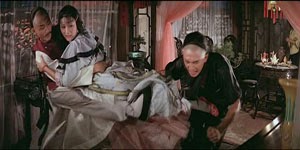
The Butterfly Murders (Tsui, 79) – May 31, 2013
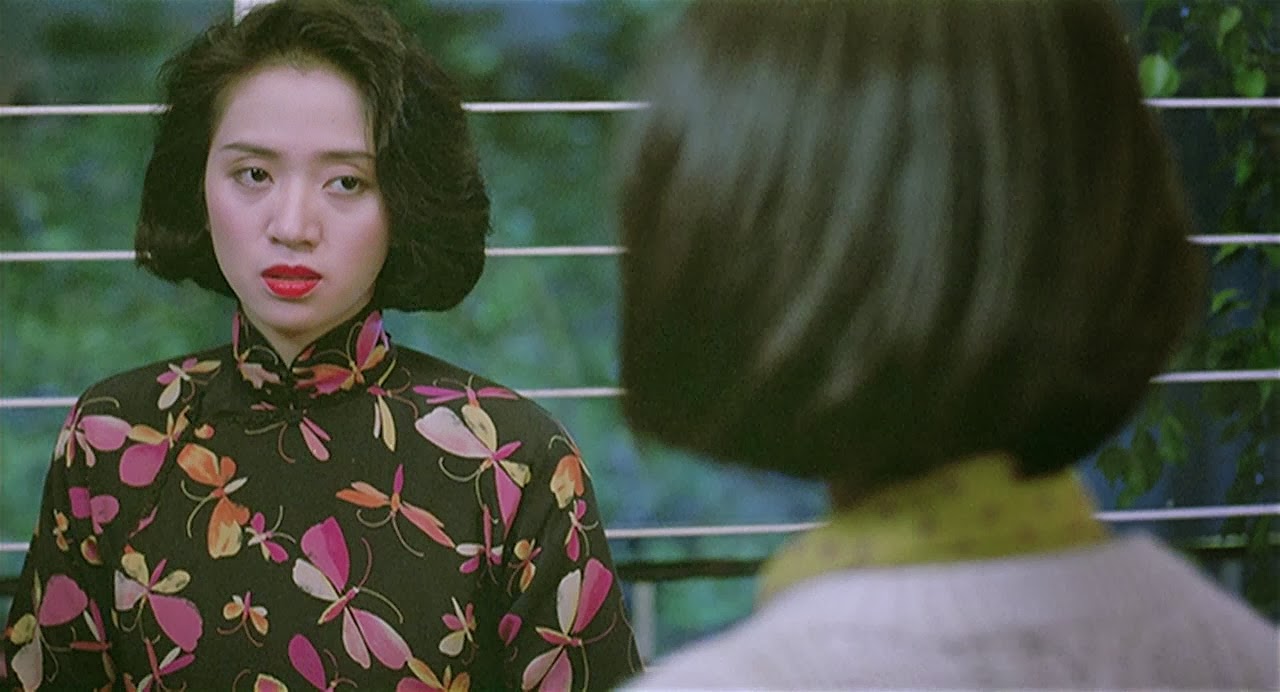
Shanghai Blues (Tsui, 84) – Aug 28, 2014
Working Class (Tsui, 85) – Dec 07, 2013
Peking Opera Blues (Tsui, 86) – Nov 22, 2013
A Better Tomorrow (Woo, 86) – Jun 26, 2015
A Better Tomorrow II (Woo, 87) – Nov 21, 2013

The Big Heat (To et al, 88) – Jan 09, 2015
The Killer (Woo, 89) – Aug 24, 2015
A Better Tomorrow III: Love and Death in Saigon (Tsui, 89) – Oct 21, 2014
Just Heroes (Woo & Ma, 89) – Aug 16, 2015
Swordsman and Swordsman 2
(Ching et al, 90 and Ching, 92) – Sep 26, 2012
Once Upon a Time in China (Tsui, 91) – Jan 16, 2017
Once Upon a Time in China II (Tsui, 92) – Jan 17, 2017

New Dragon Gate Inn (Lee, 92) – Apr 24, 2014
Green Snake (Tsui, 93) – Oct 25, 2013
The Lovers (Tsui, 94) – Apr 04, 2014
The Blade (Tsui, 95) – Mar 19, 2014
Love in the Time of Twilight (Tsui, 95) – Apr 04, 2014
Zu Warriors (Tsui, 01) – May 30, 2013

Seven Swords (Tsui, 05) – Mar 11, 2014
The Flying Swords of Dragon Gate (Tsui, 11) – Oct 29, 2014
Young Detective Dee and the Rise of the Sea Dragon (Tsui, 13) – Feb 27, 2014
The Taking of Tiger Mountain (Tsui, 14) – Jan 14, 2015
Sword Master (Yee, 16) – Dec 9, 2016
Journey to the West: The Demons Strike Back (Tsui, 17) – Feb 7, 2017

Podcasts:

Iron Monkey (Yuen, 93) – Jan 23, 2016

Capsules:

We’re Going to Eat You (Tsui, 80) – Jun 08, 2013
Dangerous Encounters – First Kind (Tsui, 80) – Jun 25, 2013
Dangerous Encounters – First Kind (Tsui, 80) – Jan 20, 2017
All the Wrong Clues for the Right Solution (Tsui, 81) – Nov 27, 2013
Aces Go Places III: Our Man from Bond Street (Tsui, 84) – Dec 04, 2013
The Banquet (Tsui et al, 91) – Dec 13, 2013

Twin Dragons (Tsui & Lam, 92) – Apr 14, 2015
The East is Red (Ching & Lee, 93) – Jun 22, 2015
Once Upon a Time in China III (Tsui, 93) – Jan 18, 2017
Burning Paradise in Hell (Lam, 94) – Nov 22, 2016
The Chinese Feast (Tsui, 95) – Jun 04, 2013
Black Mask (Lee, 96) – Mar 22, 2016
Shanghai Grand (Poon, 96) – Mar 20, 2016

Double Team (Tsui, 97) – Apr 04, 2014
Knock Off (Tsui, 98) – Apr 07, 2014
Time and Tide (Tsui, 00) – Mar 25, 2014
Time and Tide (Tsui, 00) – Sep 05, 2016
Triangle (Lam, Tsui & To, 07) – Mar 09, 2013
Missing (Tsui, 08) – Jan 25, 2017
Detective Dee and the Mystery of the Phantom Flame (Tsui, 2010) – Apr 24, 2014

List:

Tsui Hark Movies

This Week in Rankings

I’ve watched a few movies since the last rankings update, but I spent a lot more time caught up in the Super Bowl run of the Seattle Seahawks. My TV was tuned to the NFL network for two weeks and I watched the game itself three or four times, along with various NFL highlights productions. I’m still trying to decide if I can include these things on my Best of 2014 lists. And with the Winter Olympics on-going now, there’s been a lot more sports-watching than movie-writing at here The End. I did write about Hellzapoppin’ though, which is probably the best movie I’ve seen so far this year.

I have a new episode of They Shot Pictures that should be posted anytime now, on FW Murnau, and we’re starting the research for my next one, on Hayao Miyazaki and Studio Ghibli, which should come out sometime in early March. We’ve had two episodes of The George Sanders Show recently, on Her and The Doll and on The Train and Emperor of the North. We’ll be recording our Oscar episode of George Sanders next weekend, and in conjunction with that I’ll be posting my Endy Award nominees and winners for 2013.

These are the movies I’ve watched and rewatched over the last few weeks, and where they place on my year-by-year rankings, with links to my comments at letterboxd.

The Doll (Ernst Lubitsch) – 2, 1919
Phantom (FW Murnau) – 10, 1922
Tartuffe (FW Murnau) – 4, 1925
Faust (FW Murnau) – 2, 1926
City Girl (FW Murnau) – 4, 1930

Hellzapoppin’ (HC Potter) – 4, 1941
The Train (John Frankenheimer) – 11, 1964
Emperor of the North (Robert Aldrich) – 13, 1973
The Longest Yard (Robert Aldrich) – 28, 1974
Nausicaa of the Valley of the Wind (Hayao Miyazaki) – 14, 1984
Castle in the Sky (Hayao Miyazaki) – 17, 1986

Red Flag (Alex Karpovsky) – 52, 2012
Jack Reacher (Christopher McQuarrie) – 62, 2012
Her (Spike Jonze) – 18, 2013
The Lone Ranger (Gore Verbinski) – 34, 2013
American Hustle (David O. Russell) – 42, 2013

On Hellzapoppin’

Sign me up for the “Hellzapoppin’ is the Greatest Thing Ever” club.

I thought Busby Berkeley’s 1943 The Gang’s All Here was the glorious endpoint of the 1930s Hollywood/backstage musical form. But here Olsen & Johnson’s deconstructo ad absurdum anticipates Berkeley’s delirium by two years. While Berkeley plays it relatively straight, allowing the looney excess of his Technicolor musical sequences to finally overwhelm the bounds of their plot (and thus their apparent reason for existing), the zaniness of Carmen Miranda ultimately triumphing over the pale fragility of Alice Faye, Hellzapoppin’ takes the musical apart piece by piece, mocking and discarding every constituent element of genre and film form itself, giving their own film (or rather, the plotline Universal actually insisted Olsen & Johnson include when adapting their stage show) the MST3K treatment (“Not another movie with a show in it” one of them sighs in regards to the show within the movie within the movie of their show) and leaving behind nothing but a smoking wreck of dancing girls and random surreality. It makes Gang’s look like just another staid expression of a bankrupt corporate convention, like it starred Jeannette MacDonald or something.

This is the film I imagine many ex-vaudvillians wanted to make upon their arrival in Hollywood. Ole Olsen & Chic Johnson, though, don’t merely serve as sideline agents of chaos as the neutered Marx Brothers do in their MGM films, instead they’re the ringmasters, with the silly triteness of the imposed love story put in its proper place. Buster Keaton might have accomplished this in Free and Easy or Speak Easily but was too lazy, too powerless or too drunk (or some combination thereof) to make the destruction of pallid entertainment the centerpiece of his film, content to let the screenwriting Elisha Cook’s of the world have their soul-crushing way with cinema. WC Fields might have come the closest, in moving his muttering asides to the center of his escalatingly bizarre stories, but I haven’t seen enough of his work to say for sure.

I have never seen Olsen or Johnson in anything before, so I have no idea if this is typical for them. I’ve seen a couple of director HC Potter’s other films, neither of which seem remotely like this one: while amiable, the Cary Grant vehicle Mr. Blandings Builds His Dreamhouse never reaches the absurd heights it seems destined for (instead settling for a drawn-out, much less fun variation on Keaton’s One Week) and The Shopworn Angel is a very solid, undermentioned World War I melodrama with Margaret Sullavan and James Stewart, most memorable for the performances of those two great actors. The supporting cast of Hellzapoppin’ does include some familiar faces: Martha Raye (almost as volcanic as her performance in Chaplin’s Monsieur Verdoux) as a man-hungry actress; Mischa Auer as her target, an apparent refugee from Lubitsch’s continental comedies; and Shemp Howard as the greatest depiction of a movie theatre projectionist in the history of film (yes, even better than Sherlock Jr, which would make a great double feature with this, with Chuck Jones’s Duck Amuck played in-between). There are some terrific musical sequences, including a water ballet that anticipates George Sidney’s work with Esther Williams (as in the sublime weird Jupiter’s Darling), another poolside number that brings to mind Jane Russell’s celebration of the male body in Gentlemen Prefer Blondes, and a remarkable all-black Lindy Hop number that builds from an impromptu jam session to some of the most exuberant and physically exhausting group choreography I’ve ever seen on film.

Apparently due to copyright issues stemming from the stage production, the film is not in print on DVD in the US. Appropriately so, as something this subversive should only exist in a kind of samizdat form, something those on the margins sneak around on gray market DVDs, or pass from download to download in the more piratical corners of cinephilia. I, of course, rented it at Scarecrow Video, which has two copies available.

This Week in Rankings

The end of the year came and went since my last rankings update. I posted a list of the Best Older Movies I Saw Last Year and a Best of 2013, More or Less. (That second one is already outdated and inaccurate, as I’ve since seen a few more 2013 films and learned that one of the films I thought had been distributed (Nobody’s Daughter Haewon) had not and one of the films I thought hadn’t been distributed (The Missing Picture) may have been, but only in a tiny, unpublicized run solely for the purposes of Oscar qualification, which due to the inane system that governs list-making at large, probably means it won’t be eligible for most critics’ 2014 Best Of lists.)

I’ll have a real Best of 2013 list up right around Oscar Time, along with a 2013 Endy Awards post. For our end of the year episode of The George Sanders Show, we picked our favorites of 1933, and I handed out Endys for that year as well. We’re putting out George Sanders every other week for the time being, and our first episode of 2014 is up, on The Wolf of Wall Street and L’Argent.

I’ve only written a pair of actual reviews lately, on Peter Chan’s Comrades, Almost a Love Story and Fritz Lang’s Die Nibelungen. I’ve also made and updated some lists on letterboxd, for Fritz Lang, Run Run Shaw, Andy Lau, Stephen Chow, and Martin Scorsese, along with my ongoing tracking of Running Out of Karma.

These are the movies I’ve watched or rewatched over the last few weeks, and where they place on my year-by-year rankings. Links are to my reviews at letterboxd.

The Golem: How He Came Into the World (Paul Wegener & Carl Boese) – 3, 1920
The Haunted Castle (FW Murnau) – 14, 1921
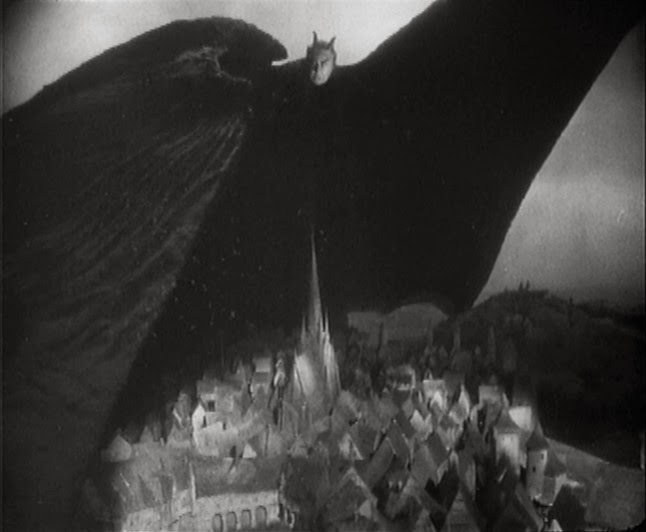
Nosferatu: A Symphony of Horror (FW Murnau) – 1, 1922
Die Nibelungen (Fritz Lang) – 2, 1924
L’argent (Marcel L’Herbier) – 11, 1928

Japanese Girls at the Harbor (Hiroshi Shimizu) – 2, 1933
Dragnet Girl (Yasujiro Ozu) – 22, 1933
I’m No Angel (Wesley Ruggles) – 33, 1933
House of Mystery (William Nigh) – 24, 1934
A Charlie Brown Christmas (Bill Melendez) – 3, 1965

Two for the Road (Stanley Donen) – 6, 1967
Games Gamblers Play (Michael Hui) – 28, 1974
Ninja in the Dragon’s Den (Corey Yuen) – 13, 1982
The Adventures of Buckaroo Banzai Across the 8th Dimension (WD Richter) – 22, 1984
The Magic Crystal (Wong Jing) – 37, 1986

No Retreat, No Surrender (Corey Yuen) – 43, 1986
Rich and Famous (Taylor Wong) – 42, 1987
The Romancing Star (Wong Jing) – 48, 1987
Painted Faces (Alex Law) – 9, 1988
Tiger Cage (Yuen Woo-ping) – 21, 1988

The Eighth Happiness (Johnnie To) – 37, 1988
God of Gamblers (Wong Jing) – 18, 1989
Casino Raiders (Wong Jing & Jimmy Heung) – 22, 1989
All for the Winner (Corey Yuen & Jeffrey Lau) – 23, 1990
Tricky Brains (Wong Jing) – 21, 1991

God of Gamblers II (Wong Jing) – 25, 1991
Boys are Easy (Wong Jing) – 20, 1993
Four Weddings and a Funeral (Mike Newell) – 21, 1994
Comrades, Almost a Love Story (Peter Chan) – 1, 1996
Love Actually (Richard Curtis) – 43, 2003

Ninja (Isaac Florentine) – 58, 2009
For the Love of Movies: The Story of American Film Criticism (Gerald Peary) – 61, 2009
The Wolf of Wall Street (Martin Scorsese) – 5, 2013
Inside Llewyn Davis (The Coen Brothers) – 11, 2013
Ninja: Shadow of a Tear (Isaac Florentine) – 19, 2013
Star Trek Into Darkness (JJ Abrams) – 28, 2013
Deceptive Practice: The Mysteries and Mentors of Ricky Jay (Molly Bernstein) – 33, 2013

Fritz Lang’s Die Nibelungen

Part One: Siegfried


Siegfried, heir to the throne of Xanten, begins his story as an apprentice blacksmith, forging an awesome sword. Having demonstrated his mastery of the craft, he’s sent out into the world where he kills a dragon, bathes in its blood because a bird told him it’d make him invulnerable, kills a dwarf and steals his treasure, then falls in love with Kriemhild, the pretty-ish sister of the Gunther, King of Burgundy. Gunther gets him to use his magic cloak to trick the Queen of Iceland, Brunhild, into marrying him, which Siegfried does, at first gladly and then more shamefully when Gunther (prodded by his evil advisor, the fearsome eagle-helmed warrior Hagen Tronje) basically forces Siegfried to rape Brunhild (while disguised as Gunther) on their wedding night. Then things start to get really tragic.

This is much different from what I was expecting, given what I know of Richard Wagner’s version of The Nibelungen: there are no Norse gods, no Ring, Brunhild’s not a Valkyrie and the story doesn’t end in fire (or the end of Valhalla), at least not yet (as I’m writing this, I haven’t watched the second part of the movie). The Burgundians are Christian, but Siegfried seems to belong to an earlier unspecifically pagan belief system (there’s a powerful contrast between a Christian wedding ceremony in a cathedral and the bonding of blood brothers before a great tree). Lang’s film seems a chronicle of a transition, from mystical pagan to chivalric Christian Germany.

There are narrative gaps that are either the result of sloppiness (possible, lets blame Thea von Harbou for all the film’s faults because she was a Nazi or something) or knowing elisions based on assumed familiarity with the material (the source stories go back centuries, as foundational to German culture as Homer’s epics were to the Greeks): why does Alberich the Dwarf King try to kill Siegfried? How does everyone seem to know about his one Achillean vulnerability? Why can Siegfried suddenly understand bird song? Why is Brunhild’s castle surrounded by fire? Assuming we know Wagner (or other versions of the saga), we’d have the answer to some or all of these questions, but then Lang is counting on our comparing his version to others and noting their dissimilarities, putting in stark relief his major variations: both their religious differences and his reframing the twisted psychodrama that leads to the tragedy in more natural terms: no love potion here, it’s Siegfried’s true love for Kriemhild that leads him to abuse Brunhild for the sake of Gunther. Brunhild comes off best in this world where everyone is a pretty terrible person, though limiting her revenge to just Siegfried seems a bit unfair. But he was the best of them, the one who purported to be a “hero” and should have acted like one.


Part Two: Kriemhild’s Revenge

While Part One of Lang’s Nibelungen paralleled its hero Siegfried’s transition form the world of myth (dragons and dwarfs) to the betrayals of reality (intrigue in the Burgundian court), Part Two finds us firmly planted in the actual, no magic helmets or talking birds to be found, just the single-minded quest for bloody revenge by Siegfried’s widow.

As the film begins, she remarries, to none other than Attila the Hun, setting us up for what is sure to be some badass war scenes as she inspires his horsemen to lay waste to the armies of Burgundy, bolstered by the fearsome appearance of Attila himself, by that perpetual avatar of Expressionism, Rudolph Klein-Rogge (who was also married to screenwriter Thea von Harbou, she left him for Lang in 1920). But the war never comes. Instead, years later, after Kriemhild and Attila have a young son, she finally persuades him to invite the Burgundian court to their home castle. Suspecting her foul intentions, Attila agrees, but on the condition that they be safe while they’re guests in his land, an ancient ideal of hospitality and safe passage. Attila won’t be her instrument of vengeance, neutered by fatherhood and his wife’s devotion to her dead hero he spends much of the film sulking and aghast at what unfolds before him.

Lang sets the drama in a relatively few sets, the ahistorical High Medieval style of the Burgundians’ costumes and castles (full chain mail armor, long shields) contrasted with the primitive loincloths and mud brick huts of the Huns. The Burgundians stand erect, tall and blond with their honor stiffening their backs, while the Huns scurry about, low to the ground like vermin or Tolkein’s goblins. Through it all Kriemhild appears impassive, wrapped in a great cloak, single-minded and impervious to reason, dominating and directing the action from dark corners of the screen, a granitic wraith.

What follows is a tragedy of conflicting imperatives as tangled as that in any Hong Kong Triad saga: Kriemhild must exact her revenge, the Burgundians must protect Siegfried’s murderer (the terrifying and ruthless, one-eyed Hagen Tronje) and Attila must not allow the Burgundians to come to harm. Destruction is inevitable given the demands of the honor code. (That the Burgundians’ steadfast loyalty to Hagen despite his many crimes was surely a foundational myth to the cause of German nationalism makes the film all the more disturbing: he may be Hitler, but he’s our Hitler.)

Wagner’s Ring of the Nibelungen (“Nibelung” applies to the followers of Siegfried, alternately applied to the Burgundians, who stole Siegfried’s gold (which he had taken from the Dwarves, called Nibelungs, after killing their King, Alberich) and used it either as the foundation for their great wealth (Burgundy being one of the more impressive pre-Charlemagne kingdoms) or threw it into the Rhine because it was cursed) is based on a different version the story, based on Nordic mythology and focused more on Siegfried and Brunhild. Lang’s follows fairly closely the Nibelungenlied, a epic poem composed somewhere around 1200. Wagner’s story ends with the death of Siegfried, as Brunhild burns his body, rides into the fire and it spreads to Valhalla, bringing about the destruction of the gods. Lang’s story also ends in apocalypse, albeit a terrestrial that leaves Attila the Hun as the most moral man alive.

Running Out of Karma: Peter Chan’s Comrades, Almost a Love Story

Running Out of Karma is my on-going series on Johnnie To and Hong Kong cinema. Here is an index.

Last night I rewatched one of my favorite new-to-me films of 2013 as my last film of the year, and happily it remains as great as I initially thought it was. A descendant of Paul Fejos’s 1928 Lonesome, about two people who find love in the urban crowd and then lose it. The crowd here is Hong Kong in 1986 and the people are Maggie Cheung and Leon Lai. Freshly emigrated from Northern China, Lai barely speaks Cantonese or English but gets a tiny space to live and a job delivering chickens by bicycle. On his long-anticipated first trip to McDonalds, he meets Maggie Cheung, who knows the lingo(s) and offers to help him get English lessons (from none other than Christopher Doyle). They become friends, and then friends who sleep together. They fall in love to the sounds of Teresa Tang, the Taiwanese singer who was wildly popular in the Mainland in the 70s and early 80s: their fandom marks them as outsider hicks in trendy, ultra-modern, present-obsessed Hong Kong. But inevitably they break-up because Lai has a girlfriend back home and Cheung has a dream of financial, not domestic, success.

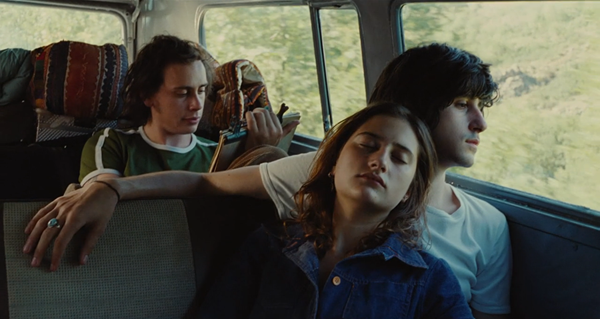
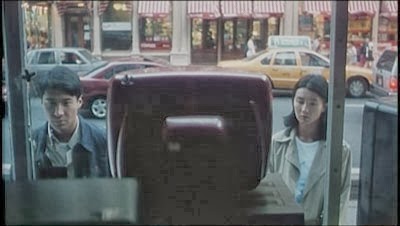
A few years later, they meet again, Lai married to the girl from home and Cheung shacked up with Eric Tsang, a Triad boss with a heart of gold (a rare serious performance from Tsang, normally a lunatic ball of farcical nonsense). But again the timing is not right, and a brief failure to maintain mere friendship ends in rain-drenched heartbreak. The film’s final sequences are almost entirely dialogue-free. Several years and another continent later, Cheung and Tsang are hiding out in New York, while Lai is working at a Chinatown restaurant. Cheung thinks she glimpses Lai and chases him through Times Square, but she loses him in the crowd. A few years later, hearing the news that Teresa Teng died, Cheung wanders the streets, Teng’s music running through her head. She stops to watch the news on some TVs in a shop window and as the music swells, notices that Lai has been standing next to her, watching the same news. The film ends on their smiles, followed by a brief coda recasting the opening shot of Lai’s arrival in Hong Kong on the train, we learn that Cheung arrived on that train as well, that the two had bit sitting next two each other the whole time, sleeping back to back, their heads touching.

Director Peter Chan takes an unusual approach to the urban isolation romance. Rather than frame his characters in long shots, emphasizing the crowds around them (as in Lonesome) or their missed connections (as in Johnnie To and Wai Ka-fai’s Turn Left, Turn Right), he shows them in tight close-ups and two shots, adoringly close explorations of the stars’ lovely faces. While there are occasional establishing shots of crowds (Lai bicycling through the Tsimshatsui district, narrating his life in a letter home; Lai navigating a crowd lined up for new housing, bringing water and chocolate to Cheung), for most of the film we are seeing the two leads either alone or together (a few times from the point-of-view of an ATM machine, the pair alone in a small square patch of screen space) while the world outside is reduced to blurry, fragmented noise. Even Eric Tsang is introduced to us only in pieces: first his massive, tattooed back, then brief glimpses of his face. It’s not until his relationship with Cheung is established that we see him as a whole.

Similarly we snatch bits of other romances that surround them: Christopher Doyle and Lai’s Thai hooker roommate Cabbage, barely dramatized but which will end sadly. Lai’s aunt and her obsession with a single night she claims she spent with William Holden, the high point of her life, a night so perfect the rest of her life could never hope to match it. Even the sad story of Teresa Teng, a star beloved in her youth who died young at 42. The flip side of romance is tragedy, just as the immigrant’s dream is a romantic one, the yearning for a better world, for perfection, and the failure to realize it, or, even worse, of finding it and failing to keep it. The film captures this whole range, and thus is Comrades the most romantic of films, not just a love story (almost).

A Top 25 Films of 2013 List, More or Less

It’s the end of the year, so I’m going to go ahead and make a Best Films of the Year list, even though I haven’t seen any of the big recently released films yet (Wolf of Wall Street, Inside Llewyn Davis, Her, 12 Years a Slave, American Hustle and so on). I’ll have a more official list come Oscar time, to go along with my award nominees and winners. That list will follow the strict imdb definition of all the other lists here at The End, but for this one, I’m going to use the flawed, but more generally accepted US theatrical release “standard”, by which I mean I’m going to include a bunch of 2012 movies and exclude a bunch that have only played festivals so far. Here’s the list, with links to my reviews or podcasts.

1. Like Someone in Love (Abbas Kiarostami)

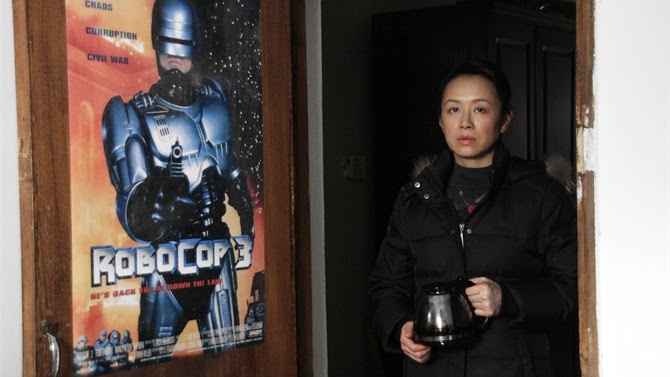
2. Drug War (Johnnie To)

3. Night Across the Street (Raúl Ruiz)

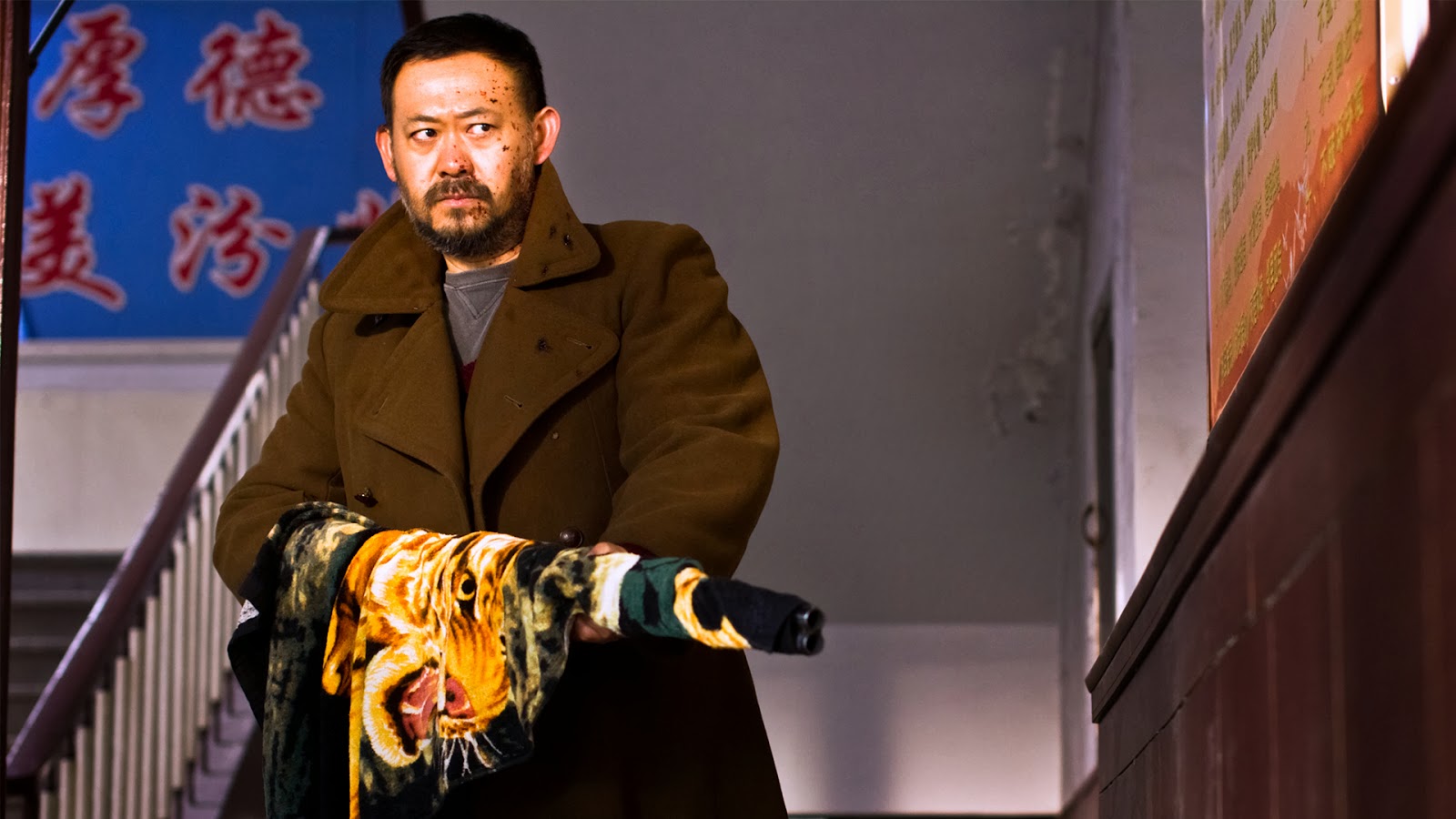
4. A Touch of Sin (Jia Zhangke)

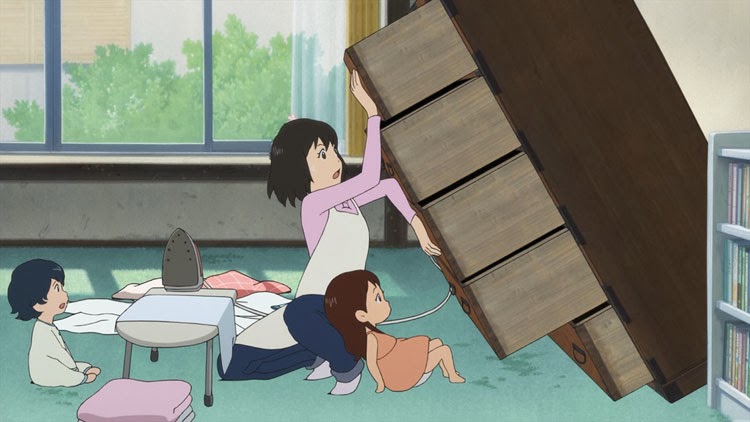
5. Wolf Children (Mamoru Hosada)

6. Leviathan (Lucien Castaing-Taylor & Verena Paravel)

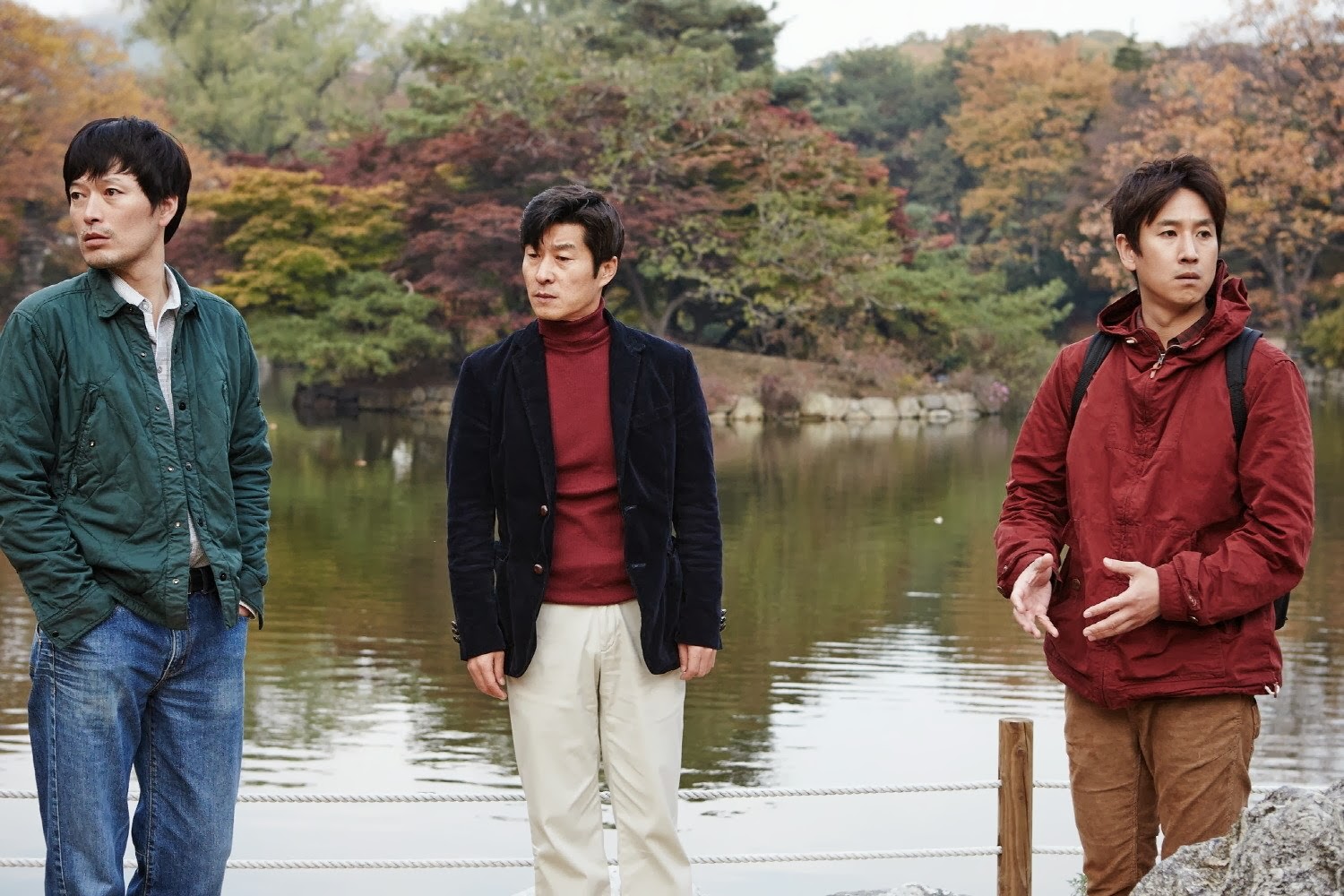
7. Nobody’s Daughter Haewon (Hong Sangsoo)
8. The Grandmaster (Wong Kar-wai)
9. At Berkeley (Frederick Wiseman)

10. To the Wonder (Terrence Malick)

11. Frances Ha (Noah Baumbach)

12. Computer Chess (Andrew Bujalski)
13. Much Ado About Nothing (Joss Whedon)

14. The World’s End (Edgar Wright)
15. Before Midnight (Richard Linklater)
16. When Night Falls (Ying Liang)

17. The Last Time I Saw Macao (João Pedro Rodrigues & João Rui Guerra da Mata)

18. Something in the Air (Olivier Assayas)

19. Memories Look at Me (Song Fang)

20. You Ain’t Seen Nothin’ Yet (Alain Resnais)

21. Three Sisters (Wang Bing)

22. People’s Park (JP Sniadecki & Libbie Cohn)

23. Neighboring Sounds (Kleber Mendonça Filho)

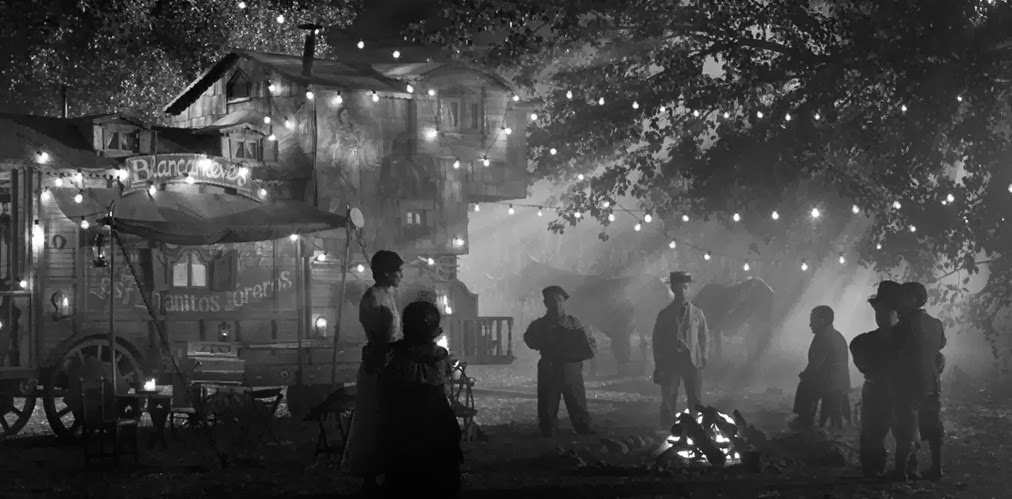
24. Blancanieves (Pablo Berger)

25. Emperor Visits the Hell (Li Luo)

And because I can’t let it go, these are 10 films I saw in 2013 that I had to cut out because they haven’t had a US theatrical release as far as I can tell. Call them the Best 2013 Films of 2014 (if they get released in New York next year):

1. La última película (Raya Martin & Mark Peranson)

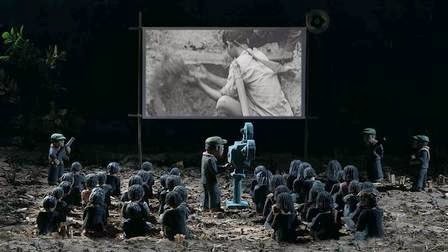
2. The Missing Picture (Rithy Panh)

3. Blind Detective (Johnnie To)

4. Our Sunhi (Hong Sangsoo)

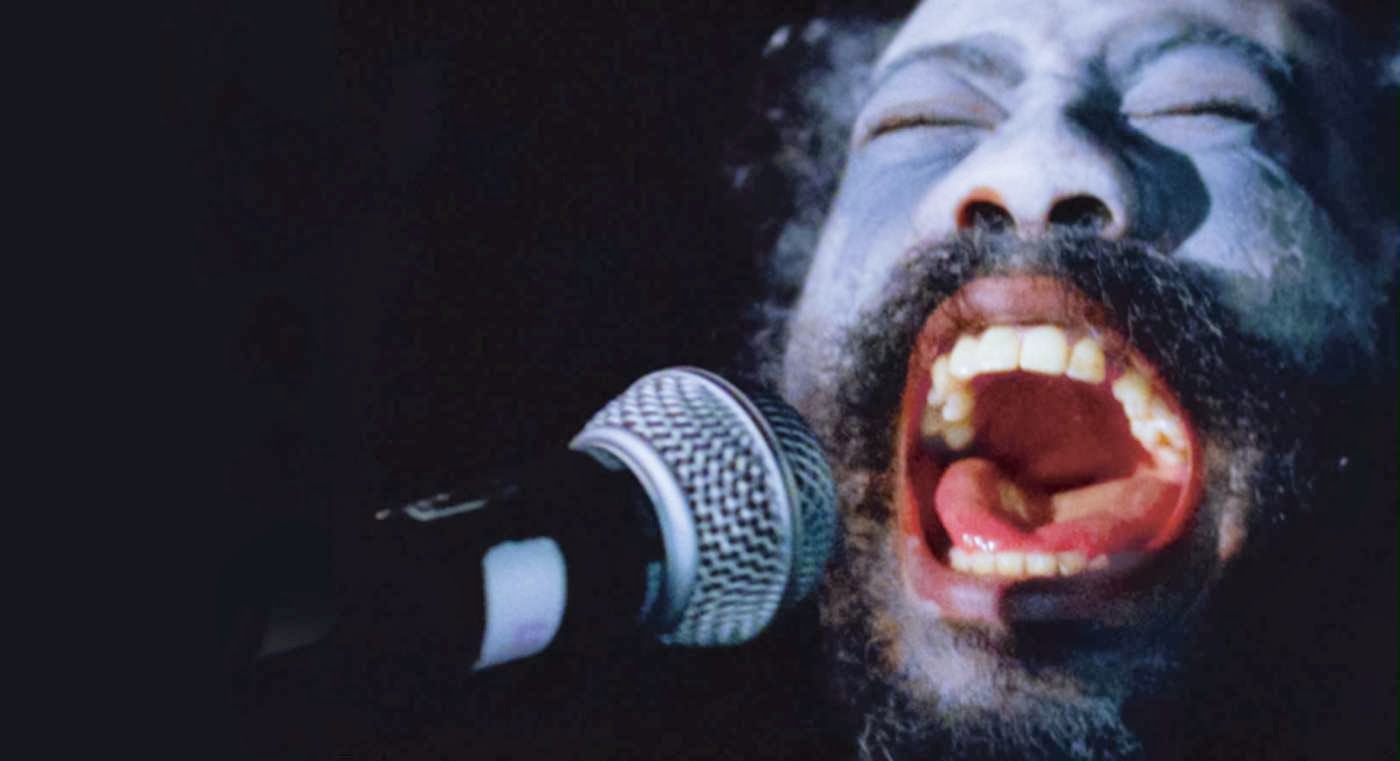
5. A Spell to Ward Off the Darkness (Ben Rivers & Ben Russell)

6. Stray Dogs (Tsai Ming-liang)

7. Four Ways to Die in My Hometown (Chai Chunya)

8. Yumen (JP Sniadecki)

9. The Great Passage (Yuya Ishii)

10. Trap Street (Vivian Qu)

The Best Older Movies I Saw in 2013

An annual tradition here at The End, these are the best movies I saw for the first time this year, not counting recent releases (anything less than three years old). We also did a George Sanders Show on this subject. As always, the rankings are not meant to be taken too seriously, I saw a lot of great movies this year and would recommend each and every one of these. I’ve included links for the ones I’ve written and/or podcasted about. Shorter comments for most of these, along with more lists and such can be found on my Letterboxd page.

1. Throw Down (Johnnie To, 2004)
2. Comrades: Almost a Love Story (Peter Chan, 1996)
3. Peking Opera Blues (Tsui Hark, 1986)
4. The Red and the White (Miklos Jancso, 1967)
5. Pedicab Driver (Sammo Hung, 1989)
6. Yearning (Mikio Naruse, 1964)
7. Wheels on Meals (Sammo Hung, 1984)
8. Whisper of the Heart (Yoshifumi Kondo, 1995)
9. Flowing (Mikio Naruse, 1956)
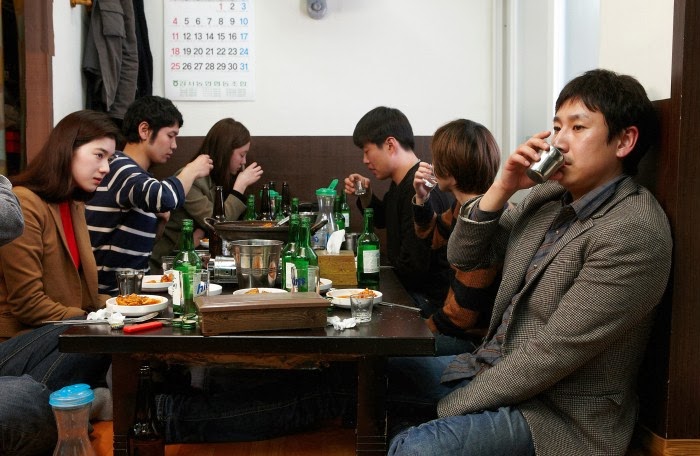
10. Nomad (Patrick Tam, 1982)

11. Dirty Ho (Lau Kar-leung, 1976)
12. My Left Eye Sees Ghosts (Johnnie To & Wai Ka-fai, 2002)
13. Dangerous Encounters – First Kind (Tsui Hark, 1980)
14. Applause (Rouben Mamoulian, 1929)
15. A New Leaf (Elaine May, 1971)
16. Bullet in the Head (John Woo, 1990)
17. The Contract (Michael Hui, 1978)
18. Robin and Marian (Richard Lester, 1976)
19. Only Yesterday (Isao Takahata, 1991)
20. Window Water Baby Moving (Stan Brakhage, 1962)

21. Rouge (Stanley Kwan, 1988)
22. The Sound of the Mountain (Mikio Naruse, 1954)
23. Obsession (Brian DePalma, 1976)
24. The Victim (Sammo Hung, 1980)
25. Pom Poko (Isao Takahata, 1994)
26. An Angel At My Table (Jane Campion, 1990)
27. Lonesome (Paul Fejos, 1928)
28. Dark Star (John Carpenter, 1974)
29. Porco Rosso (Hayao Miyazaki, 1992)
30. Fat Choi Spirit (Johnnie To & Wai Ka-fai, 2002)

31. Eastern Condors (Sammo Hung, 1987)
32. Righting Wrongs (Corey Yuen, 1986)
33. The Miracle Fighters (Yuen Woo-ping, 1982)
34. Le pont du Nord (Jacques Rivette, 1981)
35. Breaking News (Johnnie To, 2004)
36. Pilgrimage (John Ford, 1933)
37. Yes, Madam (Corey Yuen, 1985)
38. The Wold Shadow (Stan Brakhage, 1972)
39. Déjà vu (Tony Scott, 2006)
40. Repast (Mikio Naruse, 1951)

41. Running on Karma (Johnnie To & Wai Ka-fai, 2003)
42. Intimate Confessions of a Chinese Courtesan (Chor Yuen, 1972)
43. Too Many Ways to Be No. 1 (Wai Ka-fai, 1997)
44. No Regrets for Our Youth (Akira Kurosawa, 1946)
45. The Chess Players (Satyajit Ray, 1977)
46. Modern Romance (Albert Brooks, 1981)
47. The Black Cat (Edgar G. Ulmer, 1934)
48. Thief (Michael Mann, 1981)
49. The Muppet Movie (James Frawley, 1979)
50. Running Out of Time 2 (Johnnie To, 2001)

51. Crank (Neveldine/Taylor, 2006)
52. Red Beard (Akira Kurosawa, 1965)
53. Dr. Jekyll & Mr. Hyde (Rouben Mamoulian, 1931)
54. Hapkido (Huang Feng, 1972)
55. Turn Left, Turn Right (Johnnie To & Wai Ka-fai, 2003)
56. Sergeant Rutledge (John Ford, 1960)
57. On the Occasion of Remembering the Turning Gate (Hong Sangsoo, 2002)
58. Boat People (Ann Hui, 1982)
59. Iron Monkey (Yuen Woo-ping, 1993)
60. Running Out of Time (Johnnie To, 1999)

61. The Heroic Ones (Chang Cheh, 1970)
62. The Three Musketeers (Richard Lester, 1973)
63. Expect the Unexpected (Patrick Yau, 1998)
64. My Heart is that Eternal Rose (Patrick Tam, 1989)
65. Body Double (Brian De Palma, 1984)
66. In the Mouth of Madness (John Carpenter, 1993)
67. Sons of the Desert (William A. Seiter, 1933)
68. Yesterday Once More (Johnnie To, 2004)
69. The Crowd (King Vidor, 1928)
70. The Holy Mountain (Alejandro Jodorowsky, 1973)

71. Green Snake (Tsui Hark, 1993)
72. Man on Fire (Tony Scott, 2004)
73. Fantomas (Feuillade, 1913)
74. Chocolat (Claire Denis, 1988)
75. Encounters of the Spooky Kind (Sammo Hung, 1980)
76. Raining in the Mountain (King Hu, 1979)
77. Casino Raiders (Wong Jing & Jimmy Heung, 1989)
78. Le Doulos (Jean-Pierre Melville, 1962)
79. Magnificent Butcher (Sammo Hung & Yuen Woo-ping, 1979)
80. Lucky Star (Frank Borzage, 1929)

81. Prince of Darkness (John Carpenter, 1987)
82. Northwest Passage (King Vidor, 1940)
83. The House of 72 Tenants (Chor Yuen, 1973)
84. He’s a Woman, She’s a Man (Peter Chan, 1994)
85. Full Contact (Ringo Lam, 1992)
86. Lady for a Day (Frank Capra, 1933)
87. Butterfly Murders (Tsui Hark, 1979)
88. The Moderns (Alan Rudolph, 1988)
89. Belle toujours (Manoel de Oliveira, 2006)
90. The Fate of Lee Khan (King Hu, 1973)

91. Royal Warriors (David Chung, 1986)
92. A Chinese Ghost Story (Ching Siu-tung, 1987)
93. In the Line of Duty 4 (Yuen Woo-ping, 1989)
94. Mother (Mikio Naruse, 1952)
95. Tricky Brains (Wong Jing, 1991)
96. Ninja in the Dragon’s Den (Corey Yuen, 1982)
97. Tale of Cinema (Hong Sangsoo, 2005)
98. The Four Musketeers (Richard Lester, 1974)
99. The Sentimental Swordsman (Chor Yuen, 1977)
100. Wind Across the Everglades (Nicholas Ray, 1958)

101. Magnificent Warriors (David Chung, 1987)
102. Me and My Gal (Raoul Walsh, 1932)
103. The Happening (Yim Ho, 1980)
104. Two English Girls (François Truffaut, 1971)
105. The Odd One Dies (Patrick Yau, 1987)
106. Love in a Fallen City (Ann Hui, 1984)
107. Help!!! (Johnnie To & Wai Ka-fai, 2000)
108. Something Wild (Jonathan Demme, 1986)
109. Dressed to Kill (Brian DePalma, 1980)
110. Knockabout (Sammo Hung, 1979)

111. Floating Clouds (Mikio Naruse, 1955)
112. The Day a Pig Fell Into the Well (Hong Sangsoo, 1996)
113. All About Ah-Long (Johnnie To, 1989)
114. The Pawnshop (Charles Chaplin, 1916)
115. Whirlpool (Otto Preminger, 1949)
116. Dreadnaught (Dreadnaught, Yuen Woo-ping, 1981)
117. Boys Are Easy (Wong King, 1993)
118. No Blood Relation (Mikio Naruse, 1932)
119. The Garden of Earthly Delights (Stan Brakhage, 1981)
120. Domino (Tony Scott, 2005)

121. The Sword (Patrick Tam, 1980)
122. Dragnet Girl (Yasujiro Ozu, 1933)
123. Drunken Monkey (Lau Kar-leung, 2003)
124. Boxer Rebellion (Chang Cheh, 1976)
125. Shaolin Temple (Chang Cheh, 1976)
126. Scattered Clouds (Mikio Naruse, 1967)
127. One AM (Charles Chaplin, 1916)
128. The Portrait of a Lady (Jane Campion, 1996)
129. Point Break (Kathryn Bigelow, 1991)
130. Vengeance! (Chang Cheh, 1970)

131. Alls Well, Ends Well (Clifton Ko, 1992)
132. Mothlight (Stan Brakhage, 1963)
133. I Can’t Sleep (Claire Denis, 1994)
134. Winners & Sinners (Sammo Hung, 1983)
135. Ingeborg Holm (Victor Sjostrom, 1913)
136. We’re Going to Eat You (Tsui Hark, 1981)
137. Universal Soldier: Regeneration (John Hyams, 2009)
138. Wife! Be Like a Rose! (Mikio Naruse, 1935)
139. The Diary of a Chambermaid (Jean Renoir, 1946)
140. Ruby Gentry (King Vidor, 1952)

141. Trouble Every Day (Claire Denis, 2001)
142. She Shoots Straight (Corey Yuen, 1990)
143. The Longest Nite (Patrick Yau, 1998)
144. Prison on Fire (Ringo Lam, 1987)
145. The Idiot (Akira Kurosawa, 1951)
146. The Spiritual Boxer (Lau Kar-leung, 1975)
147. Just Pals (John Ford, 1920)
148. Snake in the Eagle’s Shadow (Yuen Woo-ping, 1978)
149. Security Unlimited (Michael Hui, 1982)
150. Apart from You (Mikio Naruse, 1933)

151. The Big Trail (Raoul Walsh, 1930)
152. Resident Evil: Afterlife (Paul WS Anderson, 2010)
153. Working Class (Tsui Hark, 1985)
154. Two Weeks in Another Town (Vincente Minnelli, 1962)
155. Sweetie (Jane Campion, 1988)
156. Heaven Sword & Dragon Sabre I & II (Chor Yuen, 1978)
157. Duel (Steven Spielberg, 1971)
158. The Fog (John Carpenter, 1980)
159. The Idle Class (Charles Chaplin, 1921)
160. Love for All Seasons (Johnnie To & Wai Ka-fai, 2003)

161. The Prodigal Son (Sammo Hung, 1981)
162. Warriors Two (Sammo Hung, 1978)
163. Eye in the Sky (Yau Nai-hoi, 2007)
164. L’Intrus (Claire Denis, 2004)
165. Enter the Fat Dragon (Sammo Hung, 1978)
166. Mr. Vampire (Ricky Lau, 1985)
167. Poltergeist (Tobe Hooper, 1982)
168. The Private Eyes (Michael Hui, 1976)
169. Millionaire’s Express (Sammo Hung, 1987)
170. Heroes Shed No Tears (Chor Yuen, 1980)

171. Twinkle Twinkle Lucky Stars (Sammo Hung, 1985)
172. The Iron-Fisted Monk (Sammo Hung, 1977)
173. The Big Boss (Lo Wei, 1971)
174. Mama (Zhang Yuan, 1990)
175. The Magic Blade (Chor Yuen, 1976)
176. Heroes Two (Chang Cheh, 1974)
177. After This, Our Exile (Patrick Tam, 2006)
178. An Exercise In Discipline – Peel (Jane Campion, 1982)
179. Blood Brothers (Chang Cheh, 1973)
180. Challenge of the Masters (Lau Kar-leung, 1976)
181. Zu Warriors (Tsui Hark, 2001)
182. Late Chrysanthemums (Mikio Naruse, 1954)
183. Dragons Forever (Sammo Hung & Corey Yuen, 1988)

1933 Endy Awards

In conjunction with the year-end episode of The George Sanders Show, looking back 80 years at the best films of 1933, here are my choices for award winners in the various Oscar-type categories for that year. I haven’t done any of these for awhile, but in the Endy Awards Index you can find entries for 20111932, 193919641957 and 1994, along with a bunch of much older, less good award posts. Eligibility is determined by imdb date and by whether or not I’ve seen the movie in question. Nominees are listed in alphabetical order and the winners are bolded. And the Endy goes to. . .
Best Picture:

1. Design for Living
2. Duck Soup
3. Gold Diggers of 1933
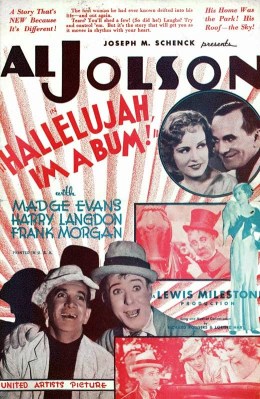
4. Hallelujah, I’m a Bum
5. Japanese Girls at the Harbor

Best Director:

1. Ernst Lubitsch, Design for Living
2. Leo McCarey, Duck Soup
3. Hiroshi Shimizu, Japanese Girls at the Harbor
4. Fritz Lang, The Testament of Dr. Mabuse
5. William Wellman, Wild Boys of the Road

Best Actor:

1. Groucho Marx, Duck Soup
2. James Cagney, Footlight Parade
3. Al Jolson, Hallelujah, I’m a Bum
4. Claude Rains, The Invisible Man
5. Spencer Tracy, Man’s Castle

Best Actress:

1. Barbara Stanwyck, Baby Face
2. Miriam Hopkins, Design for Living
3. Loretta Young, Man’s Castle
4. Henrietta Crosman, Pilgrimage
5. Greta Garbo, Queen Christina
Supporting Actor:

1. Franchot Tone, Bombshell
2. Harpo Marx, Duck Soup
4. Harry Langdon, Hallelujah, I’m a Bum
3. Frank Morgan, Hallelujah, I’m a Bum
5. Ned Sparks, Lady for a Day

Supporting Actress:

1. Sumiko Mizukubo, Apart from You
2. Margaret Dumont, Duck Soup
3. Ginger Rogers, Gold Diggers of 1933
4. Glenda Farrell, Mystery of the Wax Museum
5. Elsa Lanchester, The Private Life of Henry VIII

Original Screenplay:

1. Gene Markey & Katheryn Scola, Baby Face
2. Burt Kalmar & Harry Ruby, Duck Soup
3. Ben Hecht & S. N. Behrman, Hallelujah, I’m a Bum
4. Tôma Kitabayashi & Mitsu Suyama, Japanese Girls at the Harbor
5. Frank Craven, Sons of the Desert

Adapted Screenplay:

1. Rian James & James Seymour, 42nd Street
2. Ben Hecht, Design for Living
3. Jo Swerling, Man’s Castle
4. Barry Connors & Philip Klein, Pilgrimage
5. Sonya Levien & Paul Green, State Fair

Non-English Language Film:

1. Apart From You (Mikio Naruse)
2. Japanese Girls at the Harbor (Hiroshi Shimizu)
3. Passing Fancy (Yasujiro Ozu)
4. The Testament of Dr. Mabuse (Fritz Lang)
5. Zéro de conduite (Jean Vigo)

Short Film:

1. The Three Little Pigs (Walt Disney)
2. Zéro de conduite (Jean Vigo)

Unseen Film:

1. Alice in Wonderland (Norman Z. McLoud)
2. The Emperor Jones (Dudley Murphy)
3. Liebelei (Max Ophuls)
4. Morning Glory (Lowell Sherman)
5. The Power & the Glory (William K. Howard)
Film Editing:

1. 42nd Street
2. Dragnet Girl
3. Japanese Girls at the Harbor
4. King Kong
5. The Testament of Dr. Mabuse

Cinematography:

1. Sol Polito, Gold Diggers of 1933
2. Taro Sasaki, Japanese Girls at the Harbor
3. Edward Linden, J. O. Taylor & Vernon L. Walker, King Kong
4. Karl Vash & Fritz Arno Wagner, The Testament of Dr. Mabuse
5. Boris Kaufman, Zéro de conduite

Original Score:

1. 42nd Street
2. Duck Soup
3. Gold Diggers of 1933
4. Hallelujah, I’m a Bum
5. King Kong

Original Song:

1. “42nd Street”, 42nd Street
2. “The Gold Diggers’ Song (We’re in the Money)”, Gold Diggers of 1933
3. “Shadow Waltz”, Gold Diggers of 1933
4. “You Are Too Beautiful”, Hallelujah, I’m a Bum
5. “Who’s Afraid of the Big Bad Wolf?”, The Three Little Pigs

Art Direction:

1. 42nd Street
2. Duck Soup
3. Footlight Parade
4. King Kong
5. The Testament of Dr. Mabuse

Costume Design:

1. 42nd Street
2. Design for Living
3. Footlight Parade
4. Gold Diggers of 1933
5. King Kong

Make-up:

1. 42nd Street
2. Design for Living
3. Gold Diggers of 1933
4. King Kong
5. Mystery of the Wax Museum

Sound Mixing:

1. 42nd Street
2. Footlight Parade
3. Gold Diggers of 1933
4. King Kong
5. The Testament of Dr. Mabuse

Sound Editing:

1. 42nd Street
2. Footlight Parade
3. Gold Diggers of 1933
4. King Kong
5. The Testament of Dr. Mabuse

Visual Effects:

1. The Invisible Man
2. King Kong
3. Mystery of the Wax Museum